Free Printable Plate Tectonics Worksheets for Class 11
Class 11 plate tectonics worksheets from Wayground help students master continental drift, seafloor spreading, and tectonic processes through comprehensive printables, practice problems, and answer keys in convenient PDF format.
Explore printable Plate Tectonics worksheets for Class 11
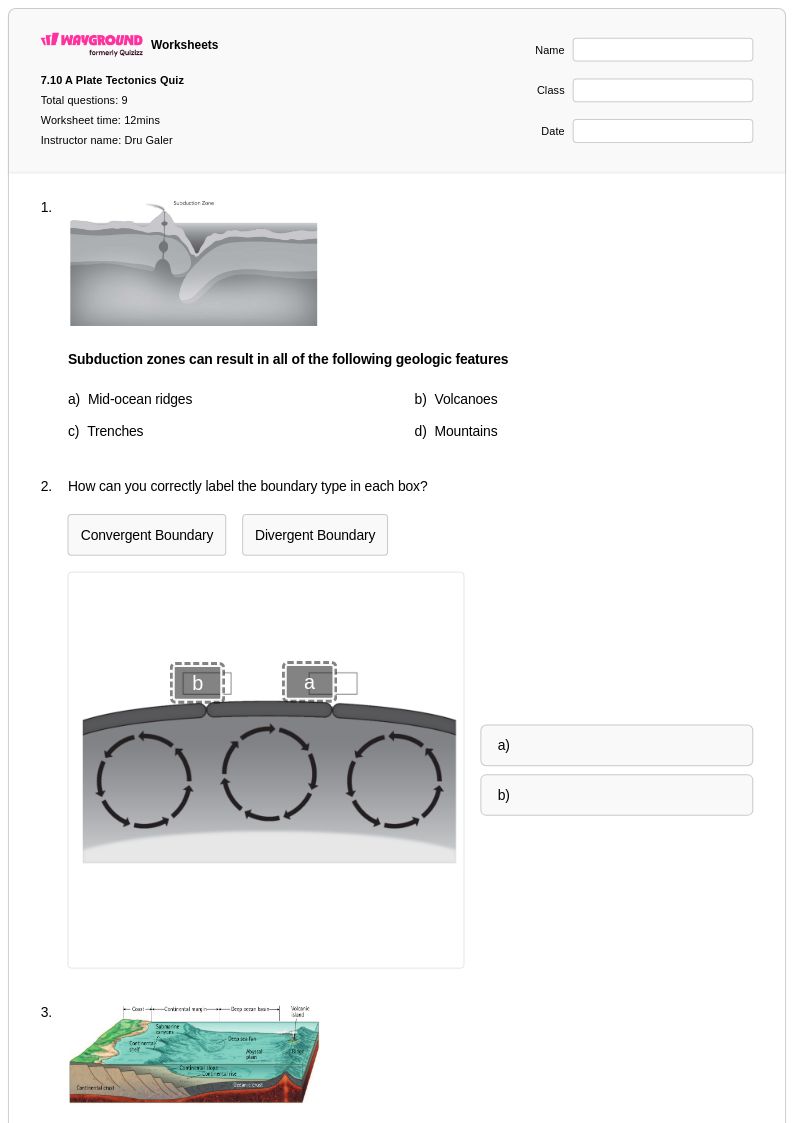
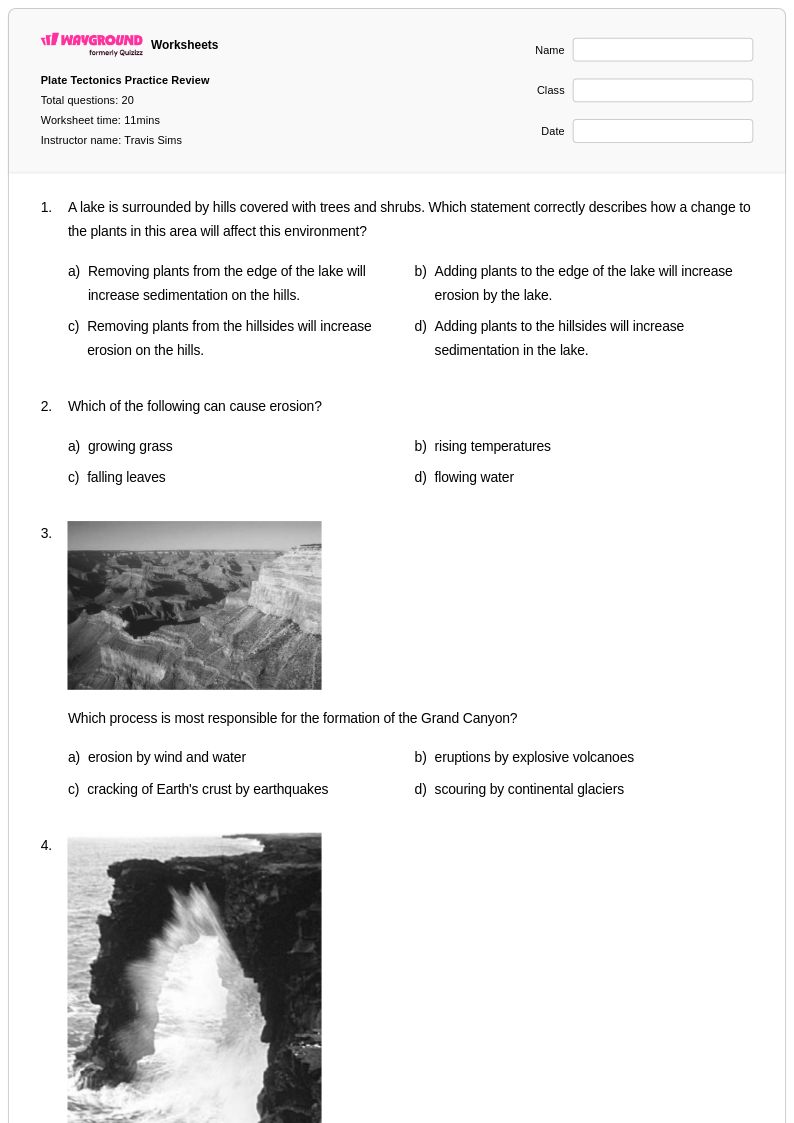
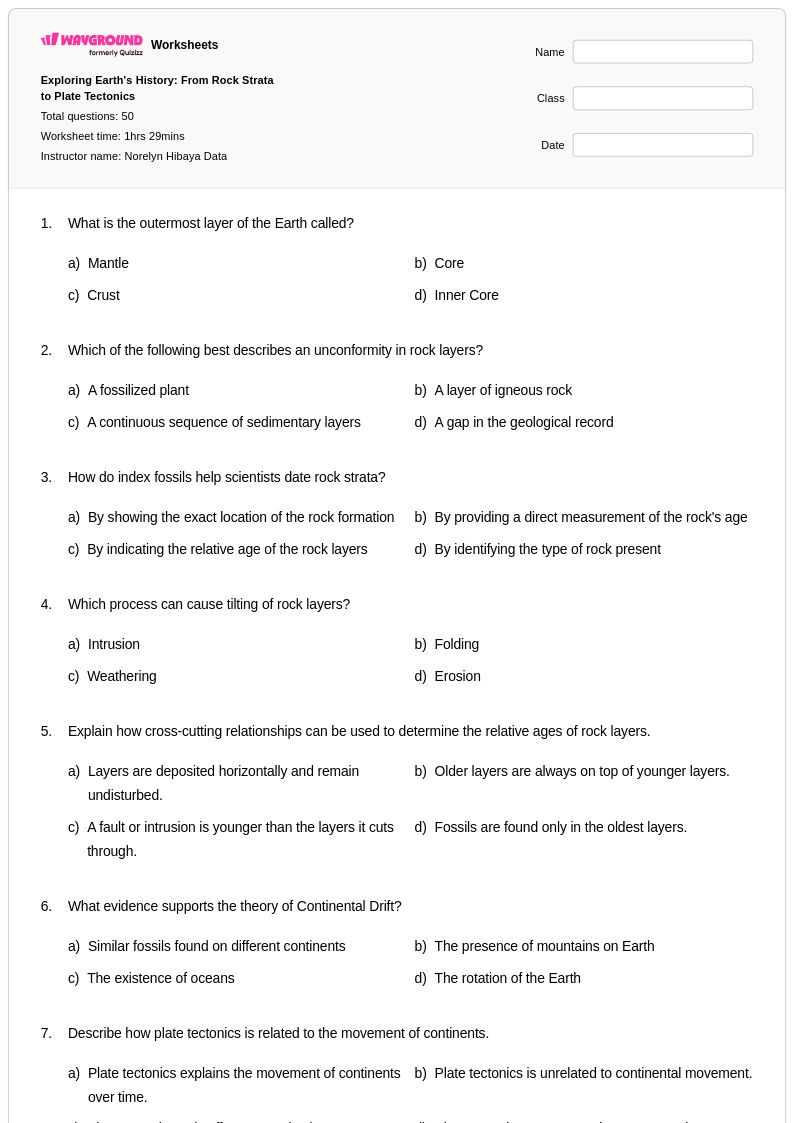
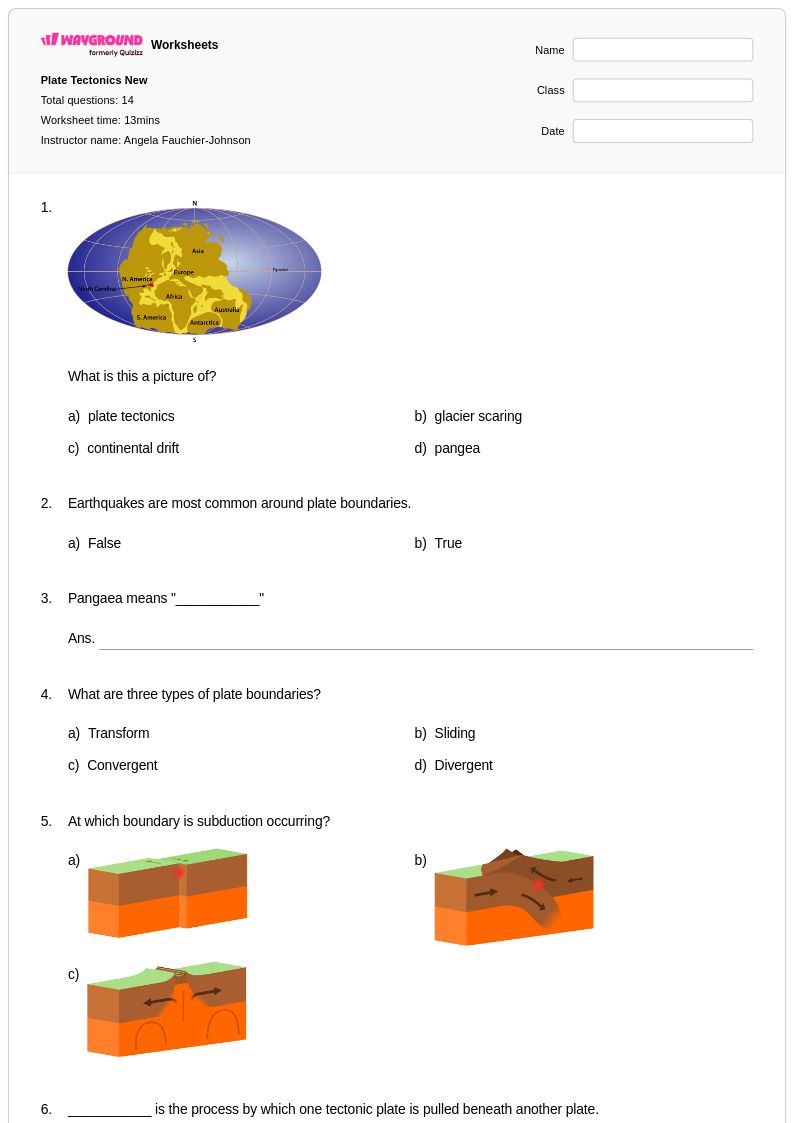
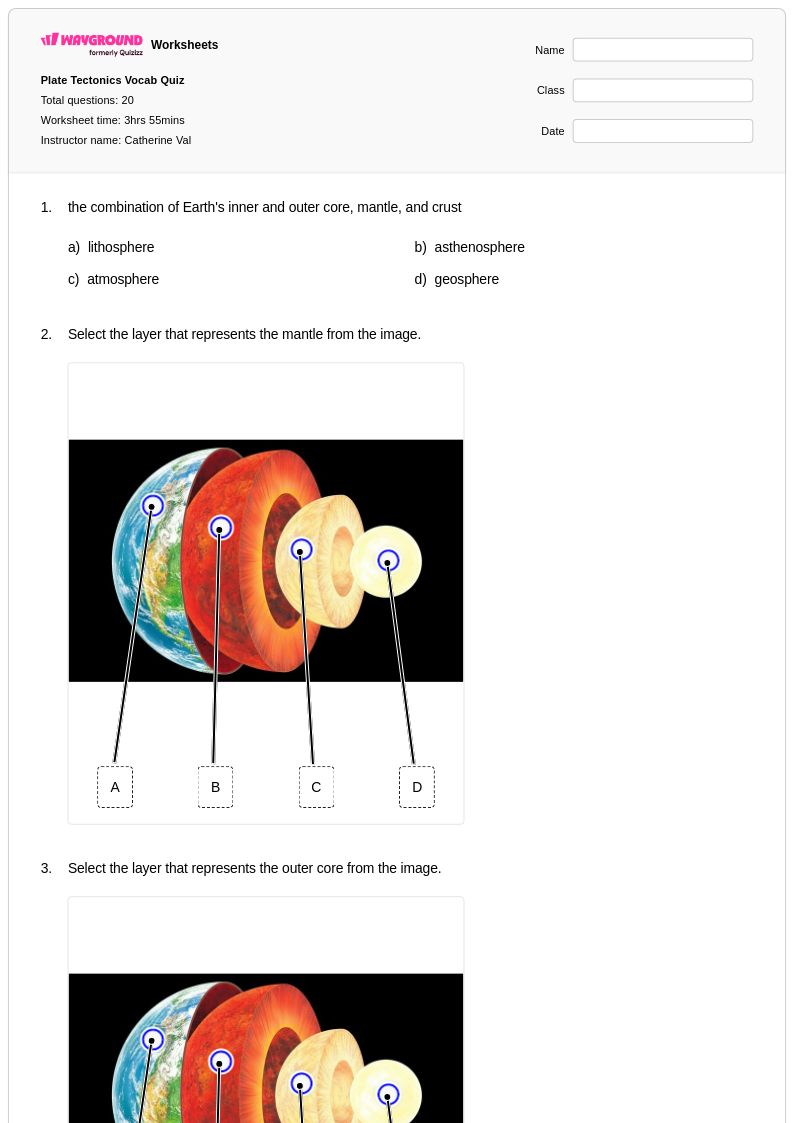
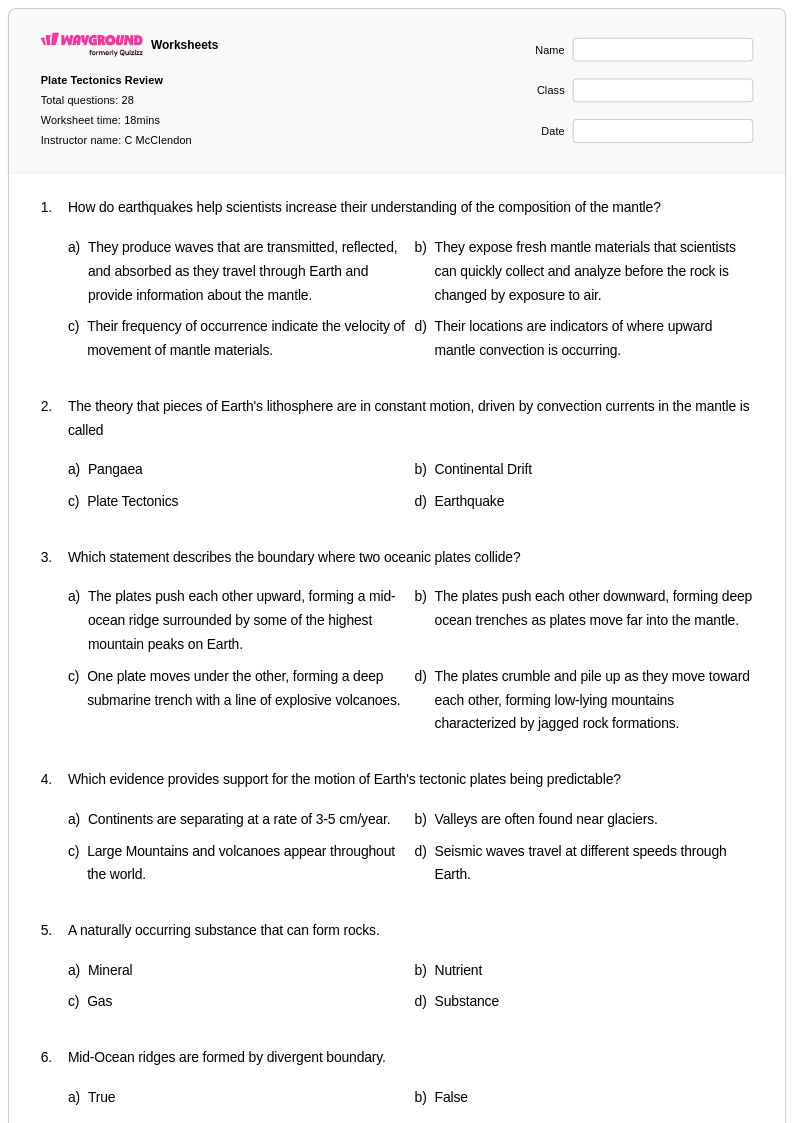
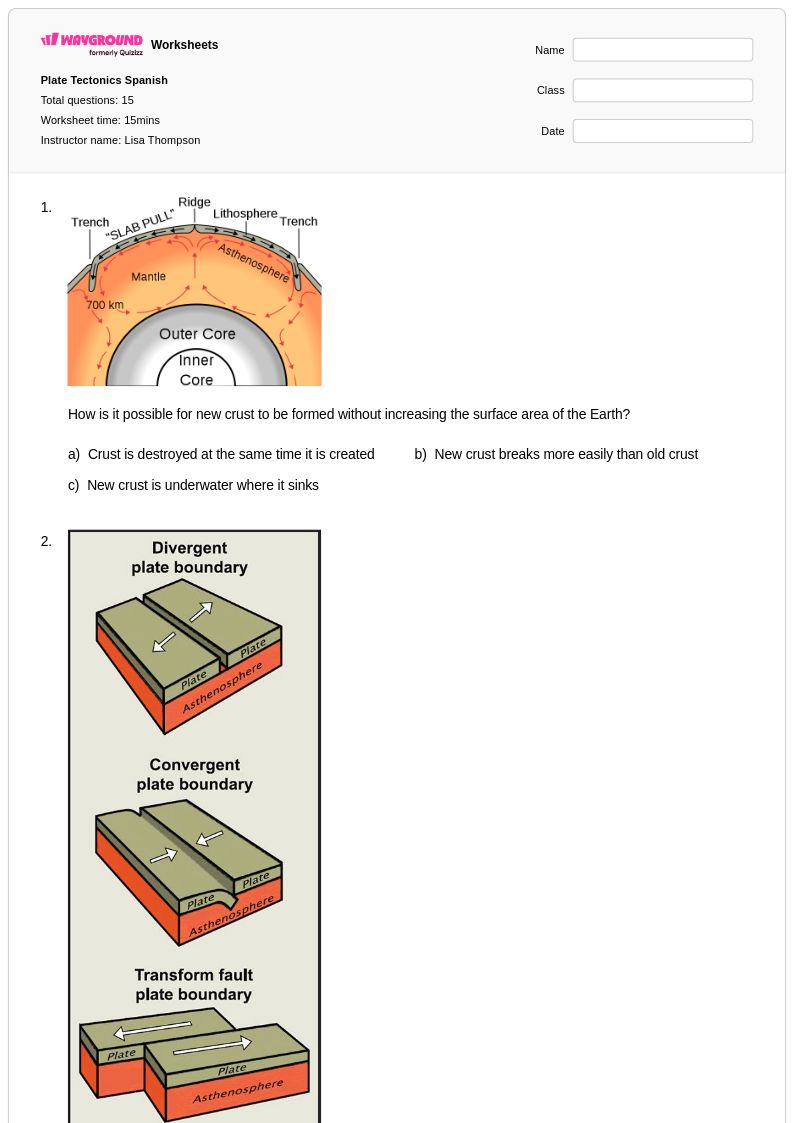
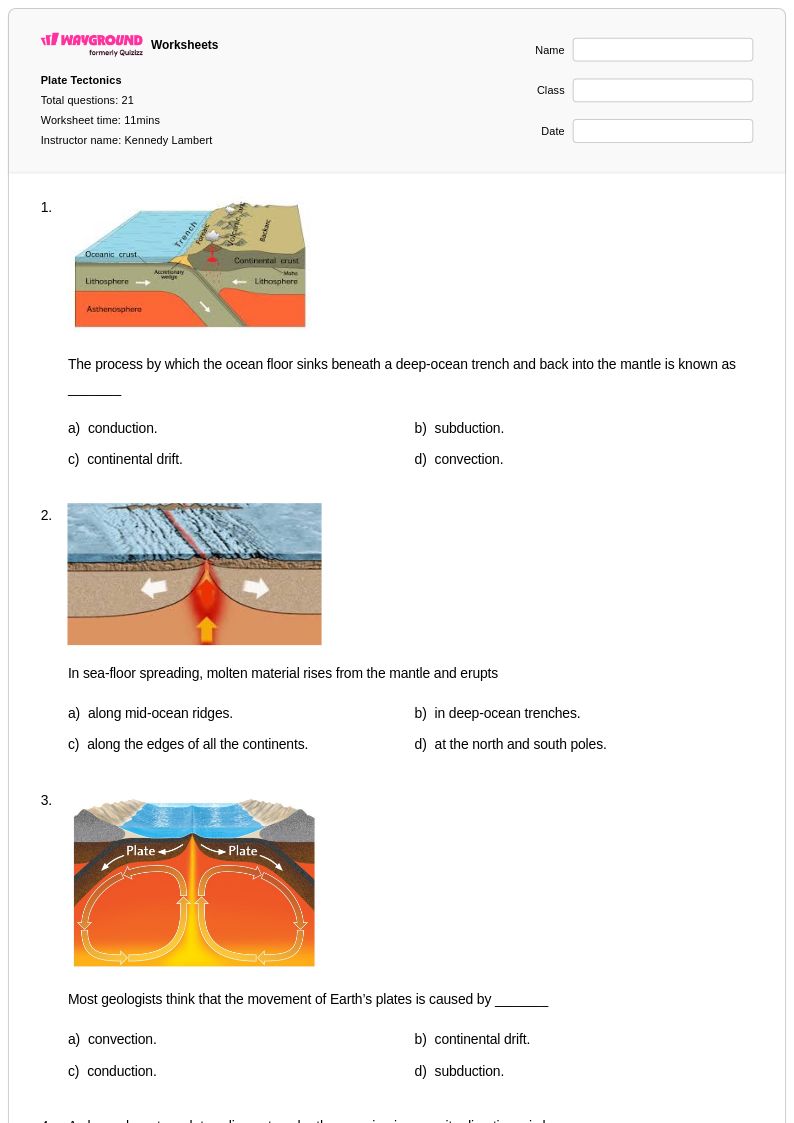
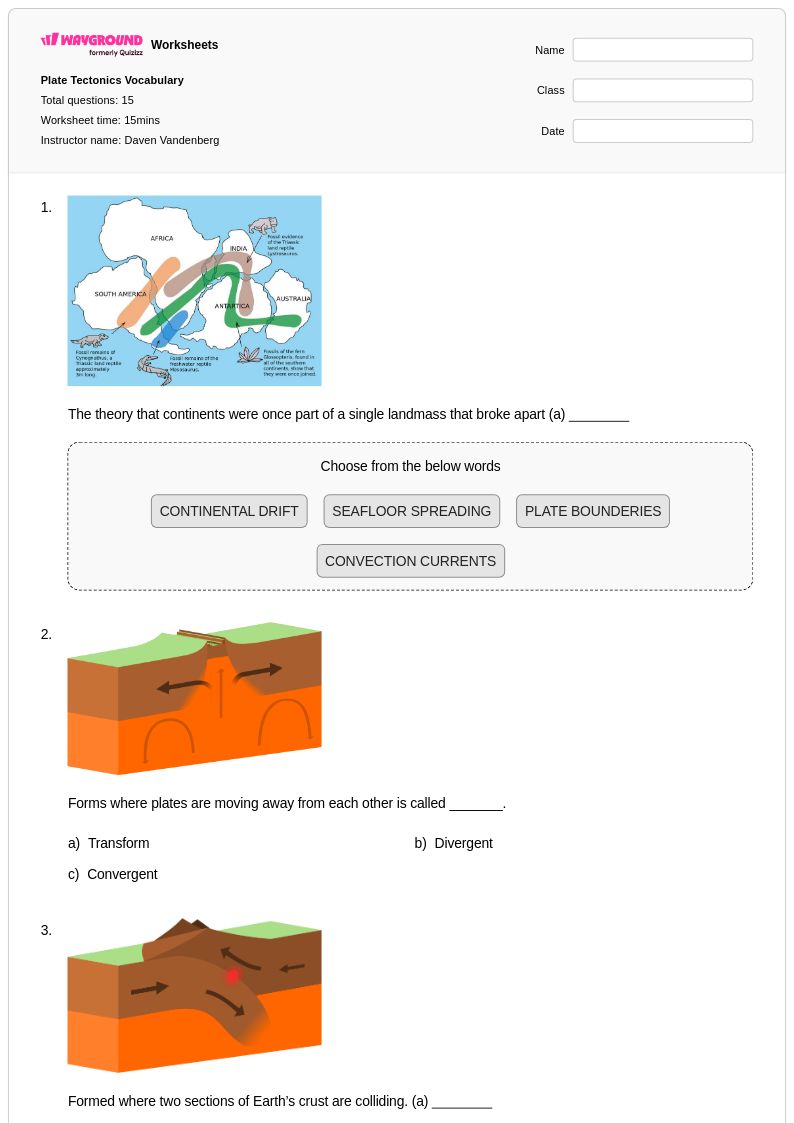
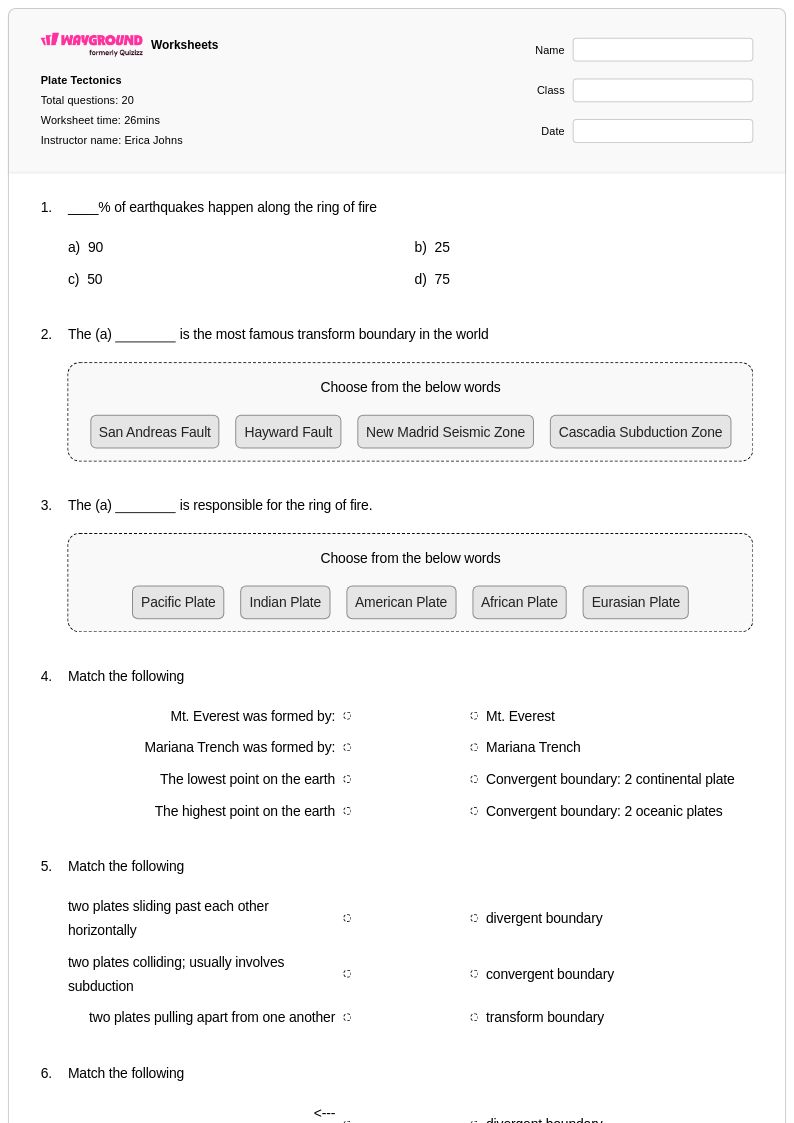
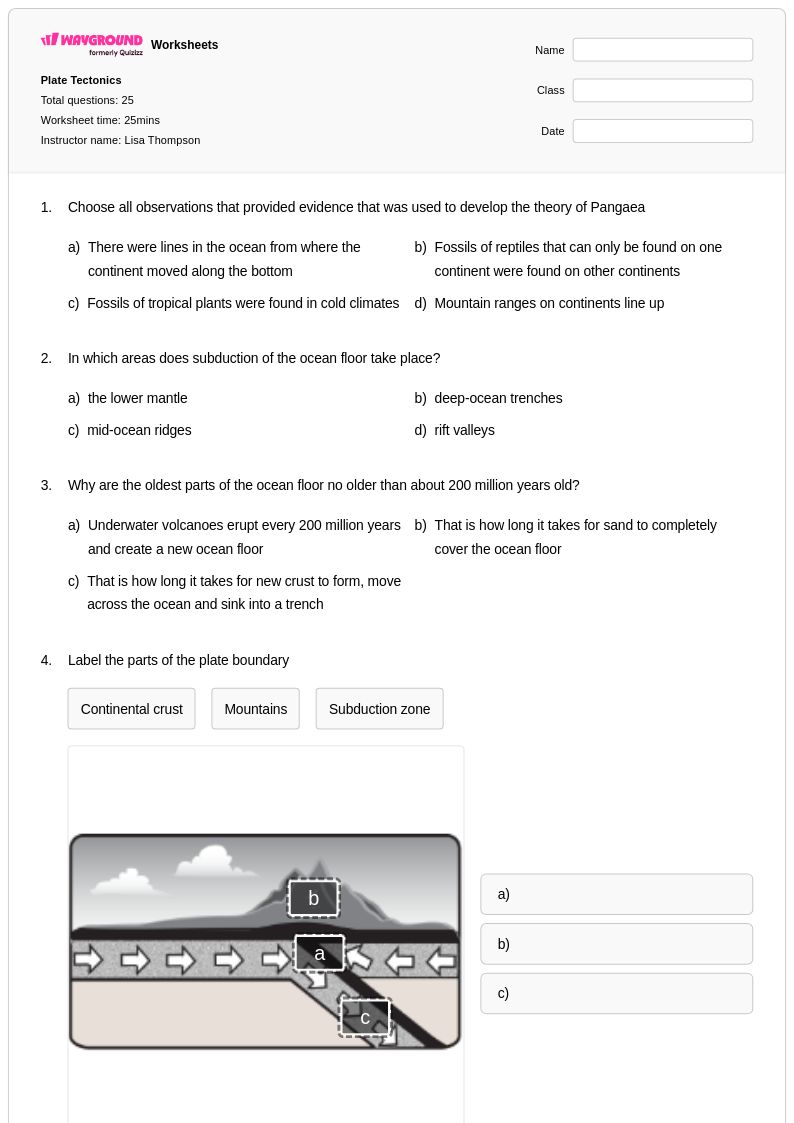
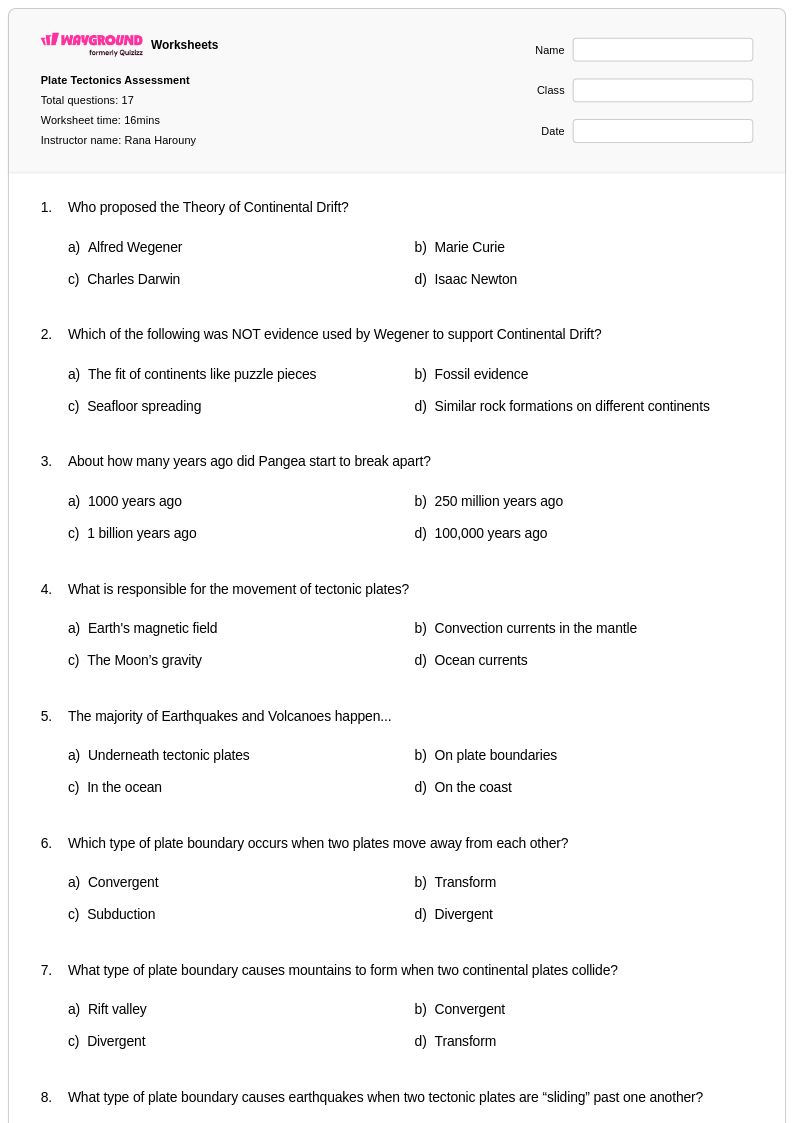
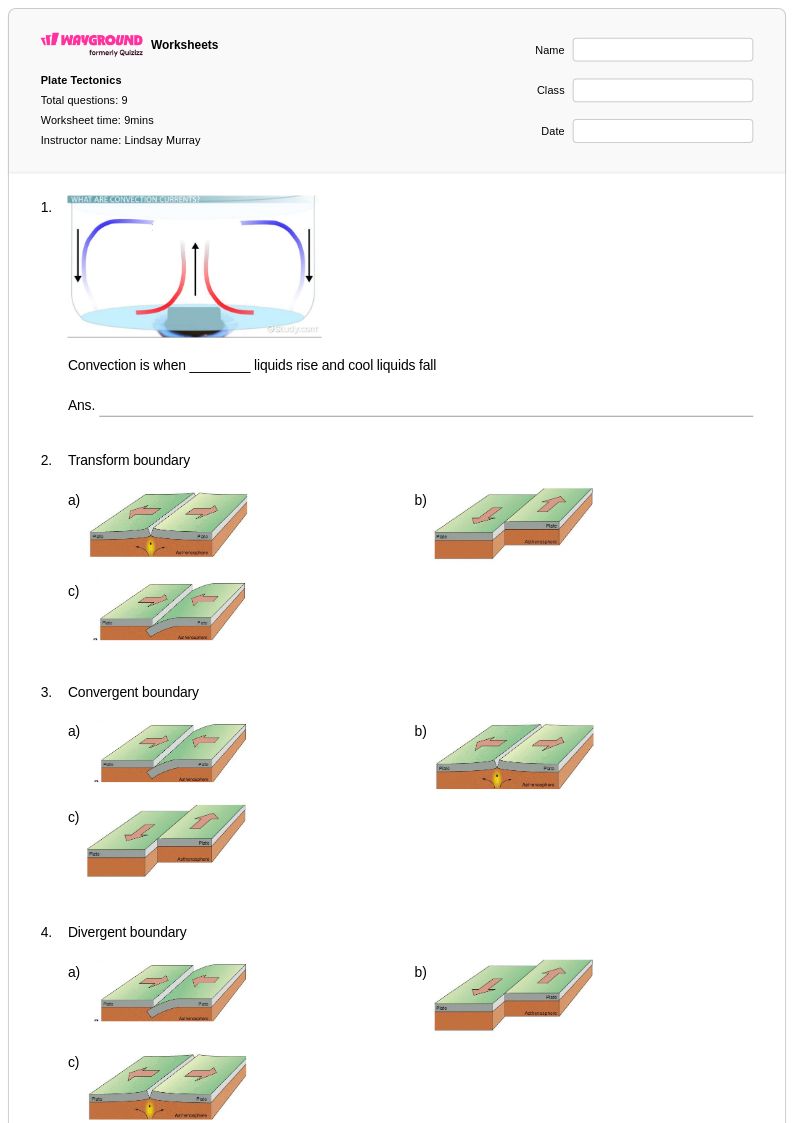
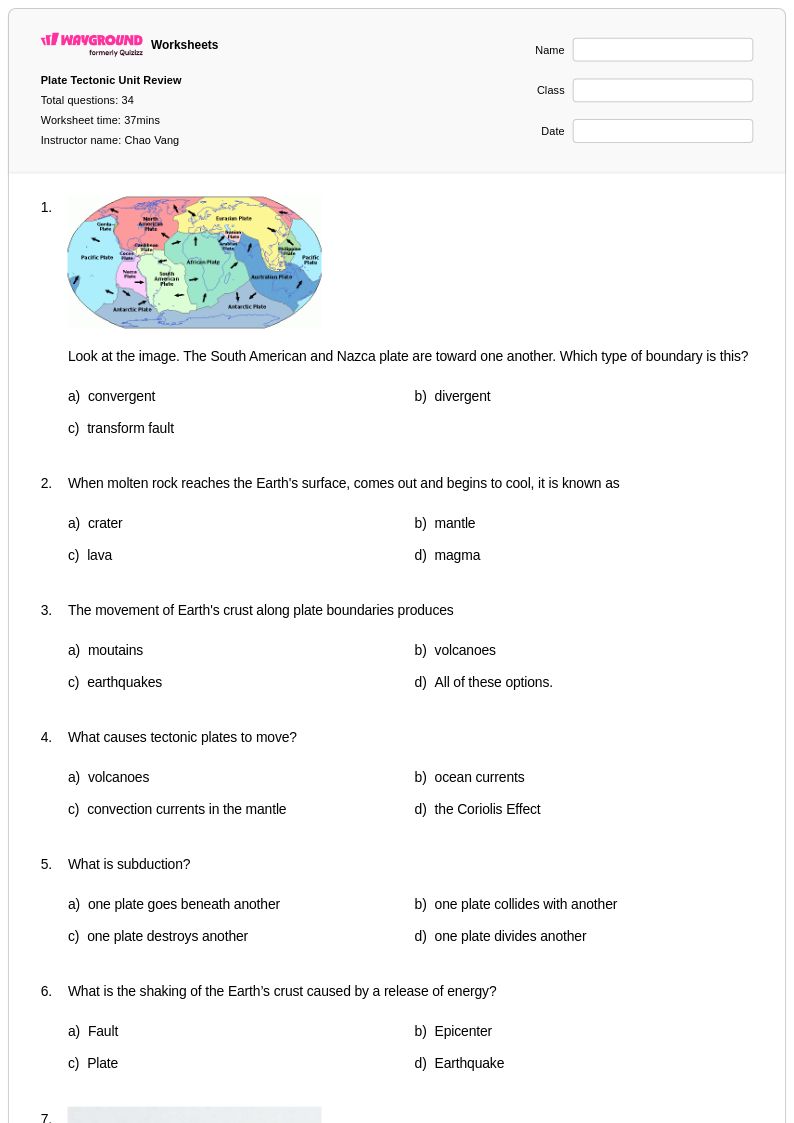
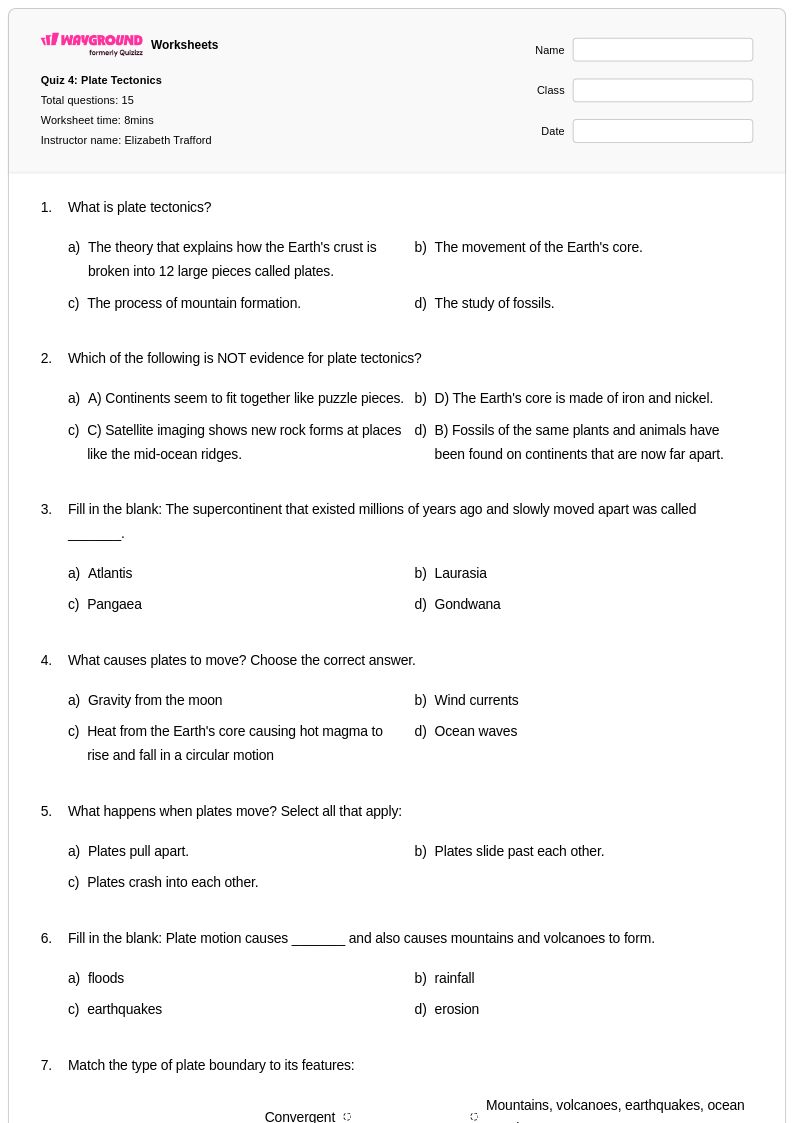
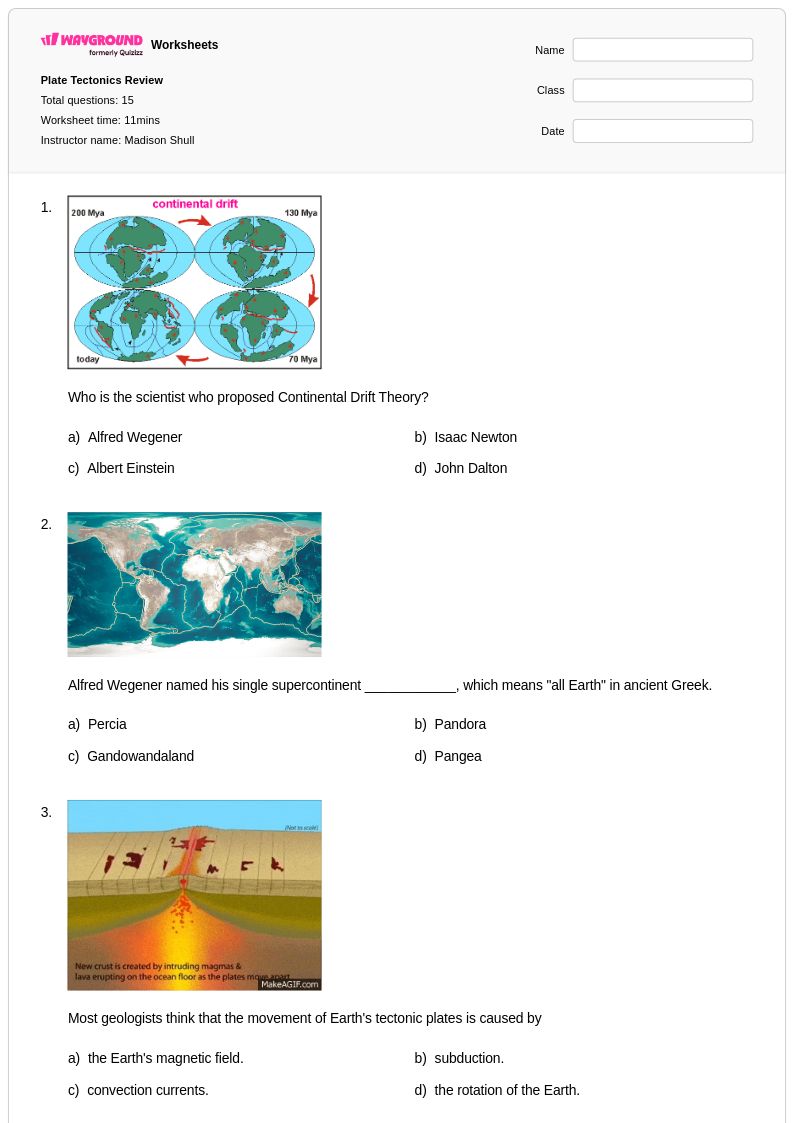
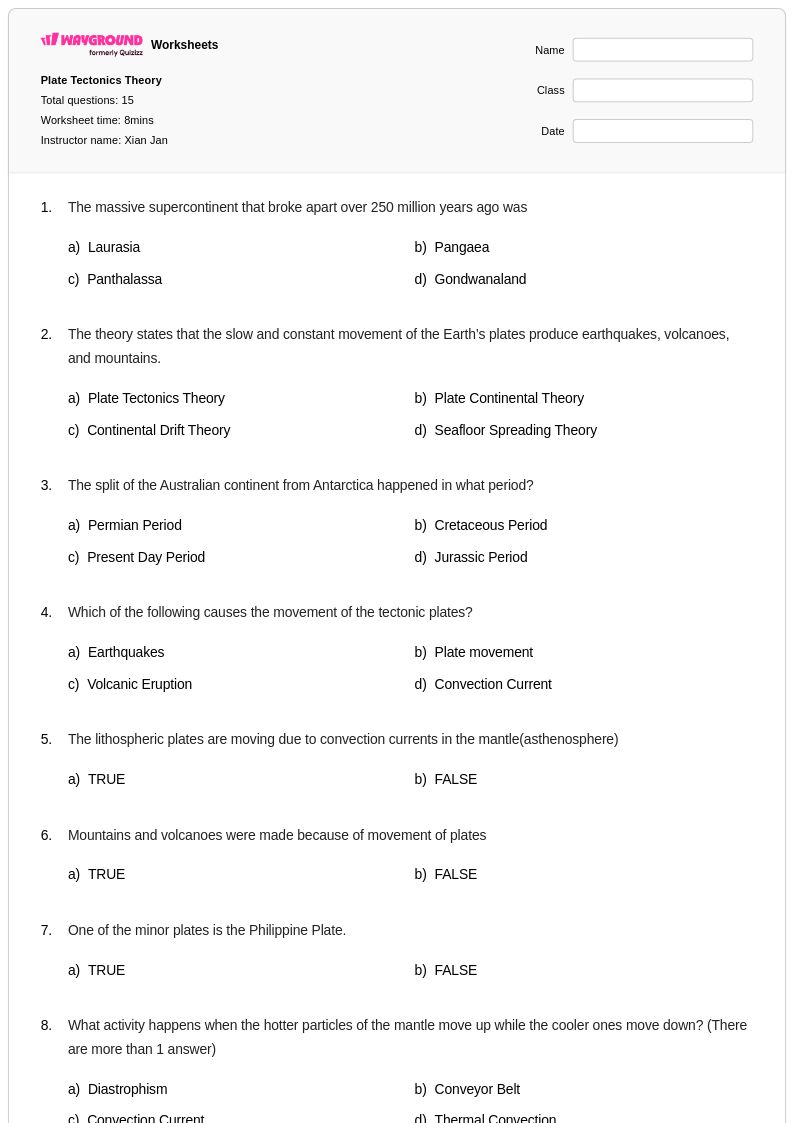
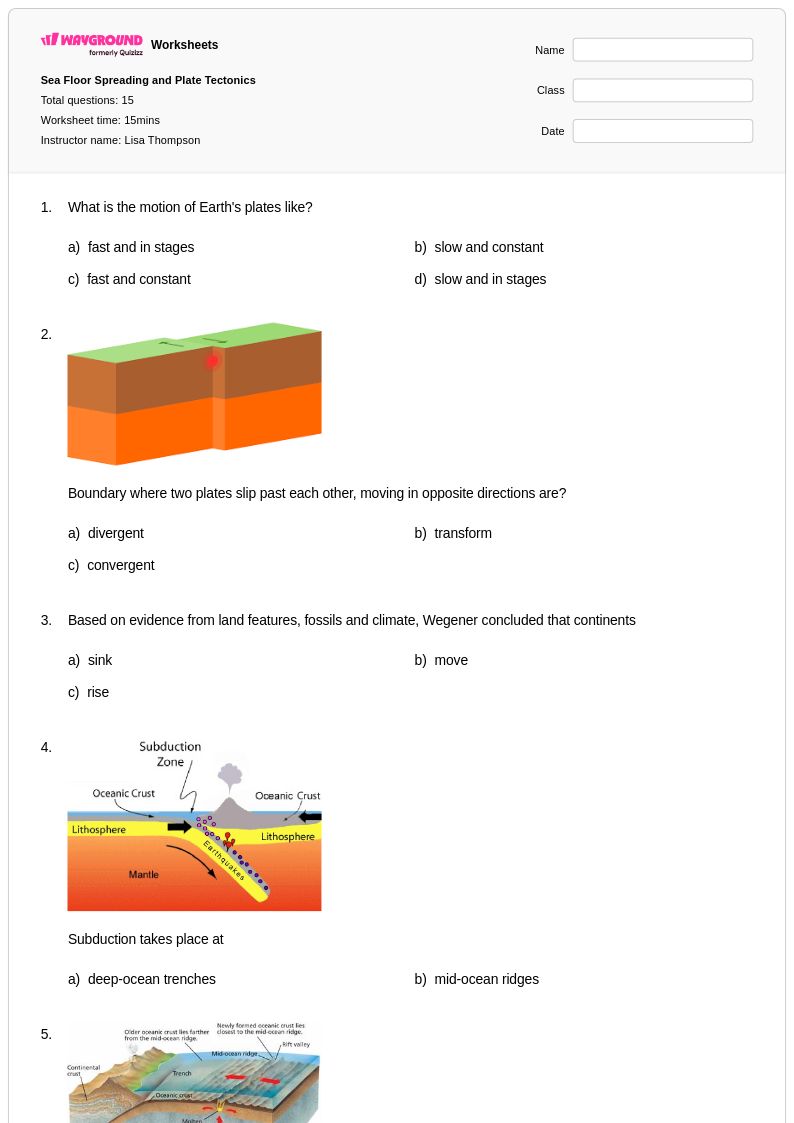
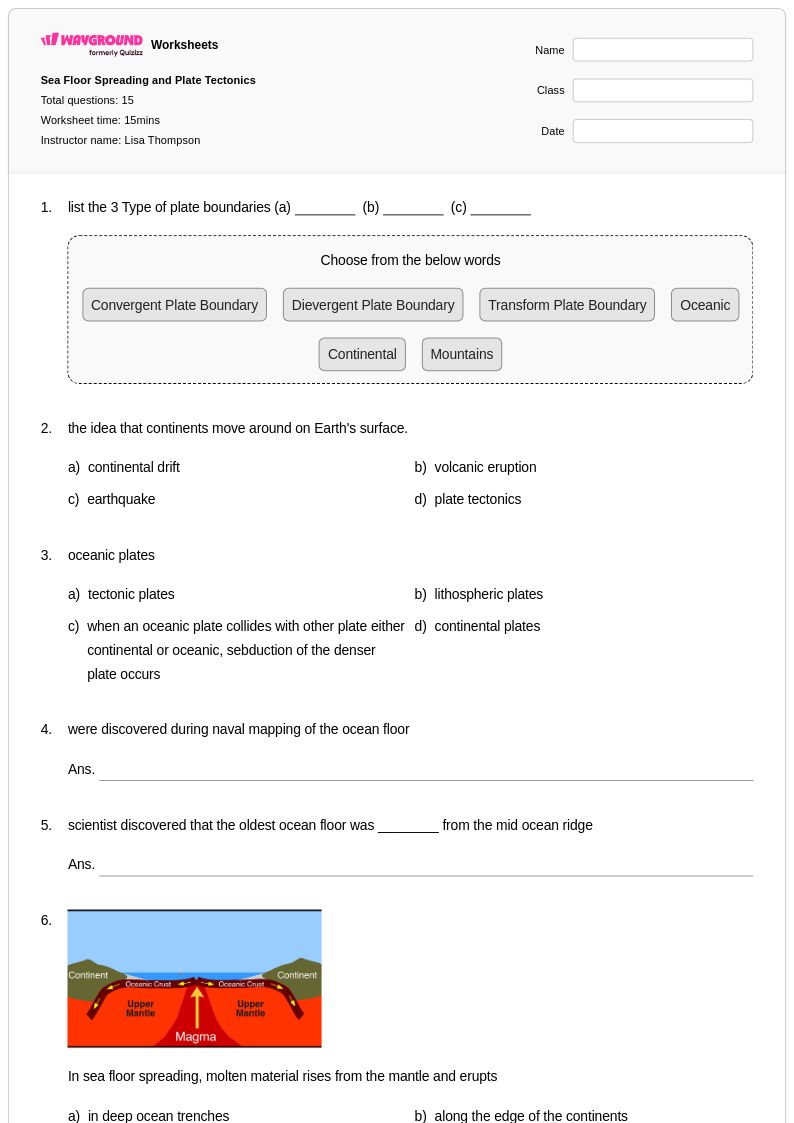
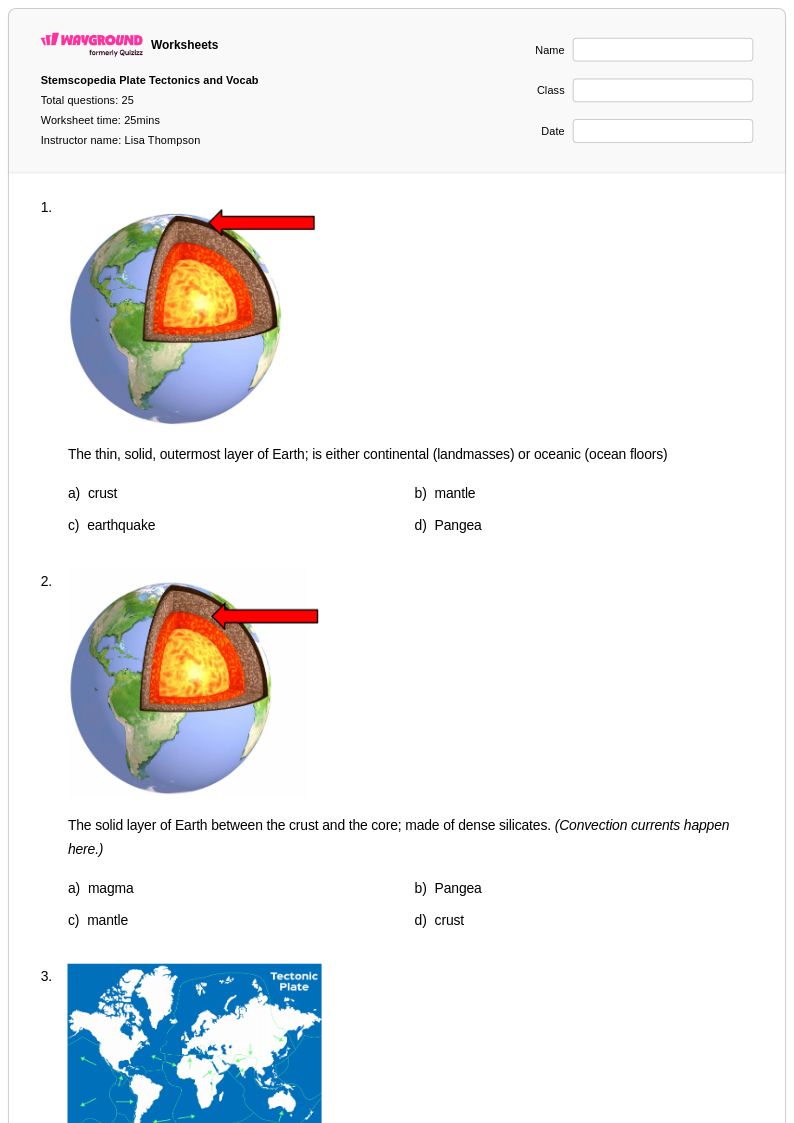
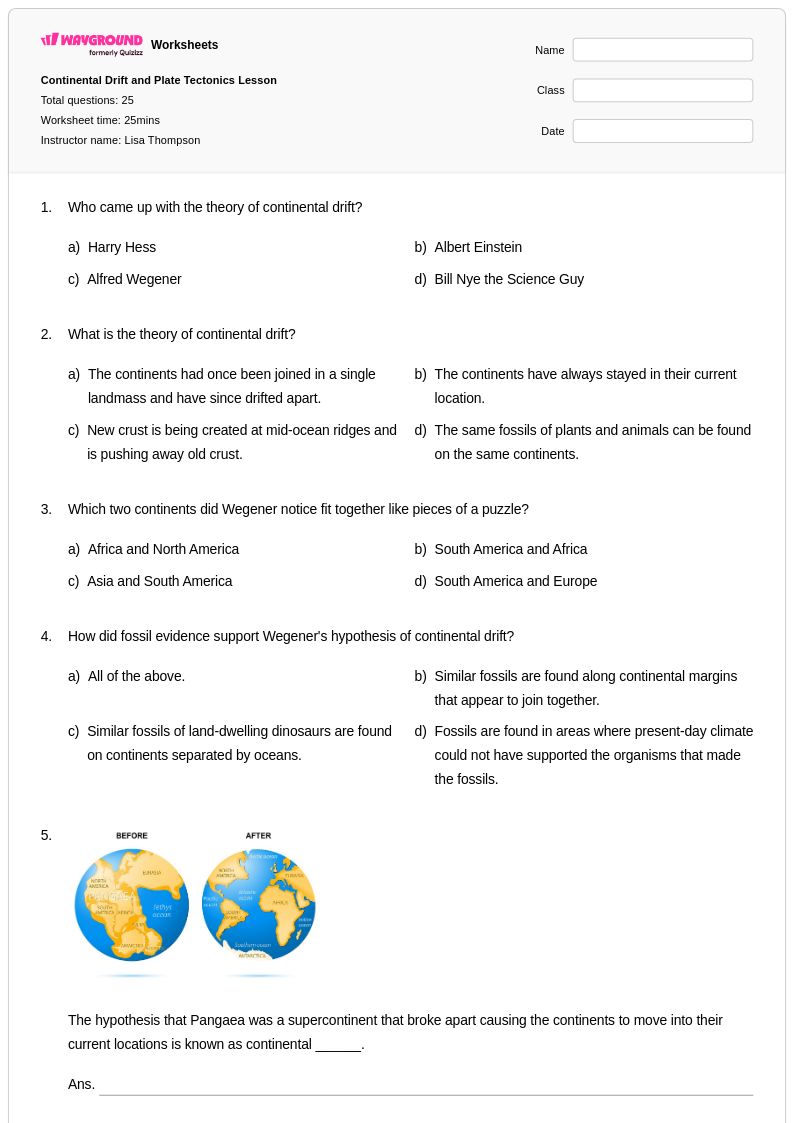
Plate tectonics worksheets for Class 11 students available through Wayground (formerly Quizizz) provide comprehensive coverage of Earth's dynamic crustal processes and geological phenomena. These educational resources strengthen students' understanding of continental drift theory, seafloor spreading, convergent and divergent plate boundaries, and the formation of major geological features including mountain ranges, ocean trenches, and volcanic island arcs. The practice problems within these worksheets challenge students to analyze seismic data, interpret geological maps, and connect plate movement patterns to real-world examples of earthquakes and volcanic activity. Each worksheet includes a detailed answer key to support independent learning and self-assessment, while the free printables offer flexible implementation options for both classroom instruction and homework assignments in pdf format.
Wayground (formerly Quizizz) empowers educators with access to millions of teacher-created plate tectonics resources that streamline lesson planning and enhance student engagement with complex geological concepts. The platform's robust search and filtering capabilities allow teachers to quickly locate worksheets aligned with specific educational standards and differentiated for varying ability levels within Class 11 classrooms. Customization tools enable instructors to modify existing materials or combine multiple resources to address individual learning needs, supporting both remediation for struggling students and enrichment opportunities for advanced learners. These versatile worksheet collections are available in both printable and digital formats, including downloadable pdf versions, making them ideal for traditional classroom settings, remote learning environments, and blended instructional approaches that require targeted skill practice in Earth and space science concepts.
FAQs
How do I teach plate tectonics to middle or high school students?
Start by grounding students in the structure of Earth's layers before introducing the concept of lithospheric plates. Use visual models to show how plates interact at convergent, divergent, and transform boundaries, then connect each boundary type to real-world phenomena like mountain ranges, ocean trenches, and earthquake zones. Building from concrete examples — such as the Himalayas forming from a continental collision or the Mid-Atlantic Ridge from seafloor spreading — helps students see plate tectonics as an active, ongoing process rather than an abstract theory.
What are good practice exercises for students learning plate tectonics?
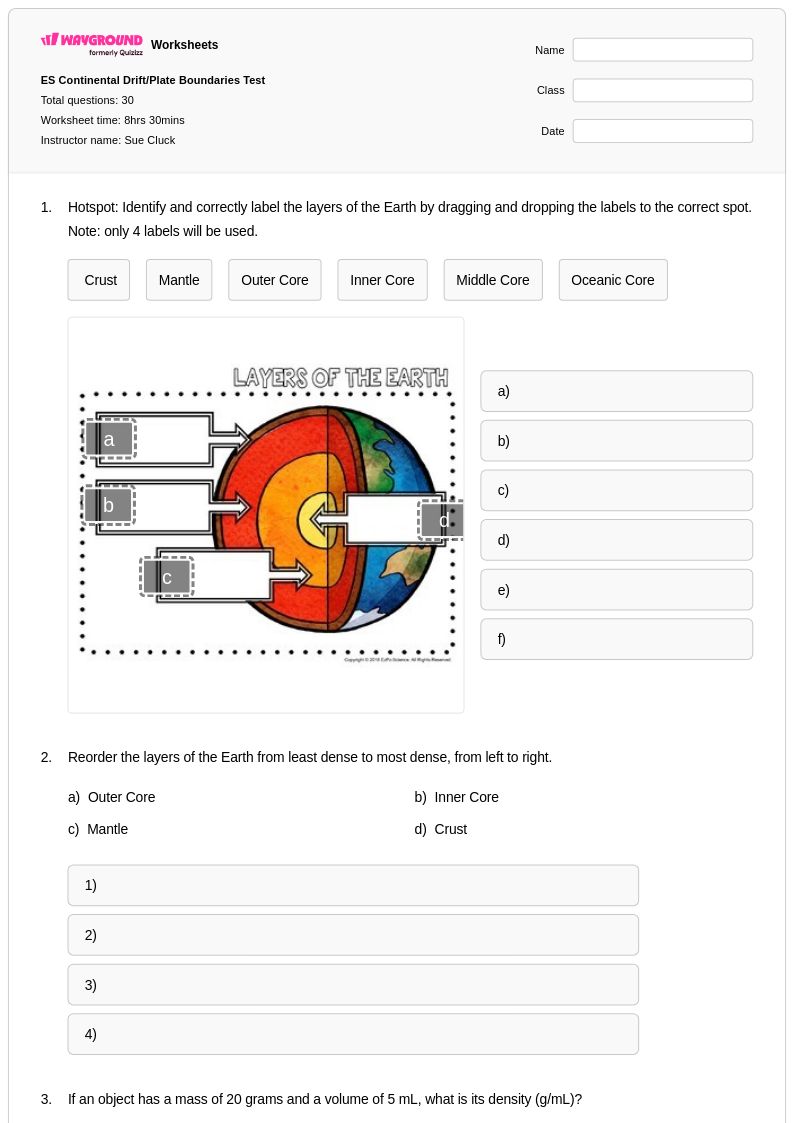
Effective practice exercises include labeling diagram worksheets where students identify plate boundary types and predict associated geological activity, as well as map interpretation tasks that ask students to locate major tectonic plates and match them to seismic and volcanic data. Practice problems that ask students to explain the relationship between plate movement and specific geological features — such as rift valleys, subduction zones, or island arcs — reinforce conceptual understanding while building scientific reasoning skills.
What misconceptions do students commonly have about plate tectonics?
One of the most common misconceptions is that tectonic plates move fast enough to observe directly, when in reality most plates move only a few centimeters per year. Students also frequently confuse the terms 'crust' and 'lithosphere,' or assume that all earthquakes and volcanoes occur only at plate boundaries, overlooking hotspot activity like the Hawaiian Islands. Another persistent error is conflating continental drift — the historical observation — with plate tectonics, the broader explanatory theory that includes seafloor spreading and mantle convection.
How do I help struggling students understand the difference between convergent, divergent, and transform boundaries?
Use a consistent visual anchor for each boundary type: two blocks of foam or clay physically demonstrating collision, separation, and lateral sliding can make the distinction tactile and memorable. Pair each boundary type with a specific, named real-world example — the Cascadia subduction zone for convergent, the East African Rift for divergent, and the San Andreas Fault for transform — so students always have a concrete reference to return to. Worksheet exercises that ask students to predict geological outcomes from a boundary type, rather than just label them, deepen understanding by requiring applied reasoning.
How can I use Wayground's plate tectonics worksheets in my classroom?
Wayground's plate tectonics worksheets are available as printable PDFs for traditional classroom use and in digital formats for technology-integrated environments, giving teachers flexibility across in-person, hybrid, and remote settings. Teachers can also host worksheets as a live or assigned quiz directly on Wayground, which allows for real-time student progress tracking. For classes with diverse learning needs, Wayground's accommodation tools — including read aloud, extended time, and reduced answer choices — can be applied to individual students without affecting the rest of the class, making it straightforward to differentiate within a single assignment.
How does plate tectonics connect to other Earth science topics I'm teaching?
Plate tectonics functions as a unifying framework for much of Earth science, directly explaining the distribution of earthquakes and volcanoes, the formation of mountain ranges and ocean basins, and the cycling of rock through subduction and volcanic activity. It also connects to historical geology through the fossil and rock evidence used to reconstruct past continental positions, and to climate science through the long-term influence of continental arrangement on ocean circulation and atmospheric patterns. Teaching plate tectonics as a central organizing concept — rather than an isolated unit — helps students build a more coherent understanding of how Earth systems interact.