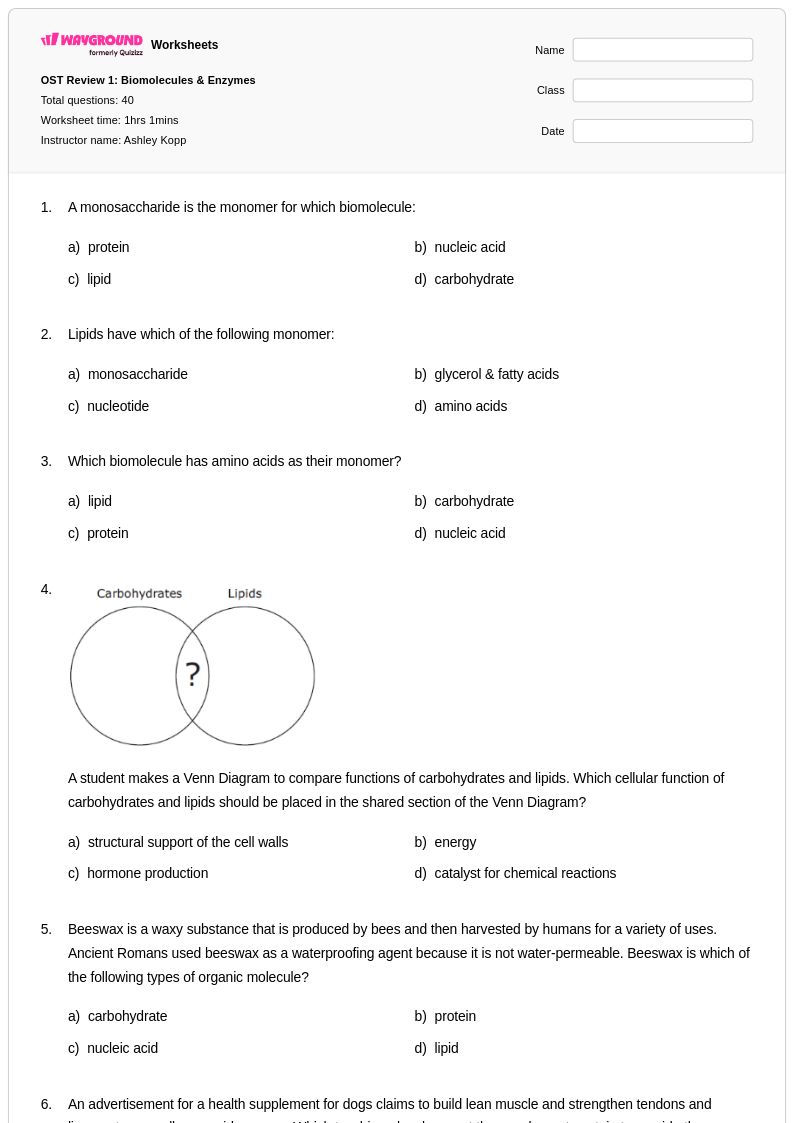
Discover comprehensive Class 10 protein worksheets and free printables from Wayground that help students master protein structure, functions, and synthesis through engaging practice problems and detailed answer keys.
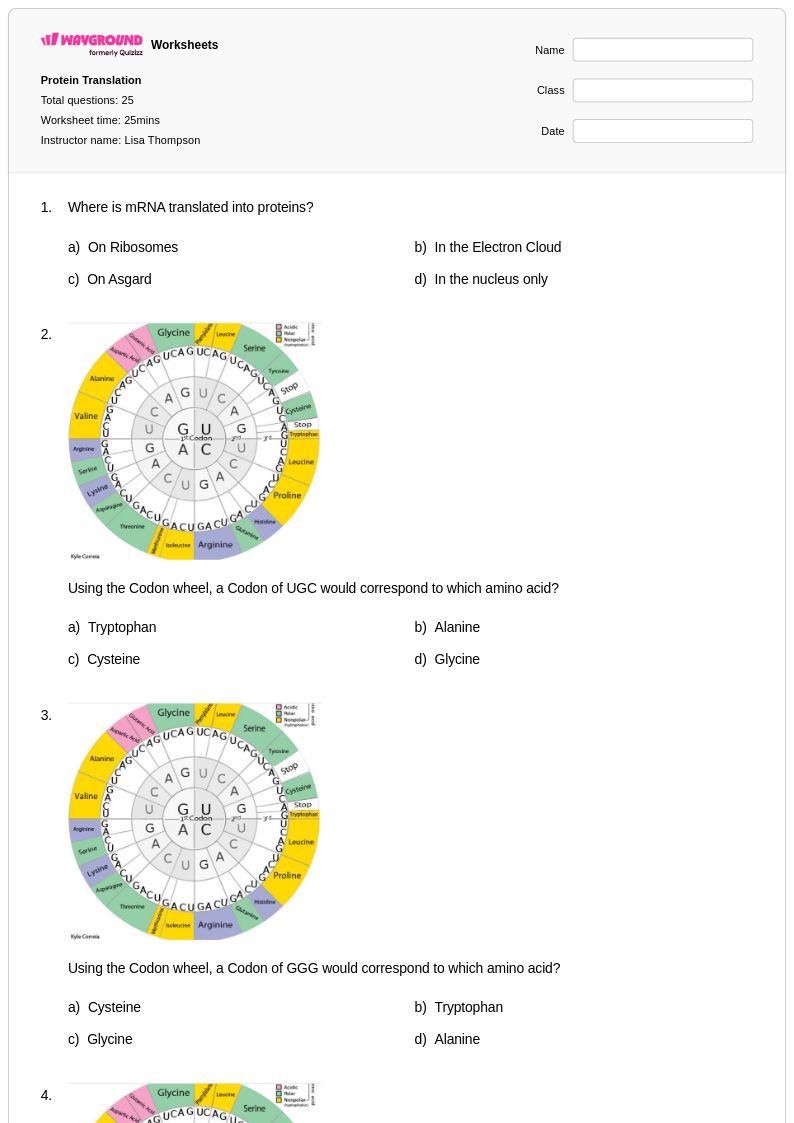
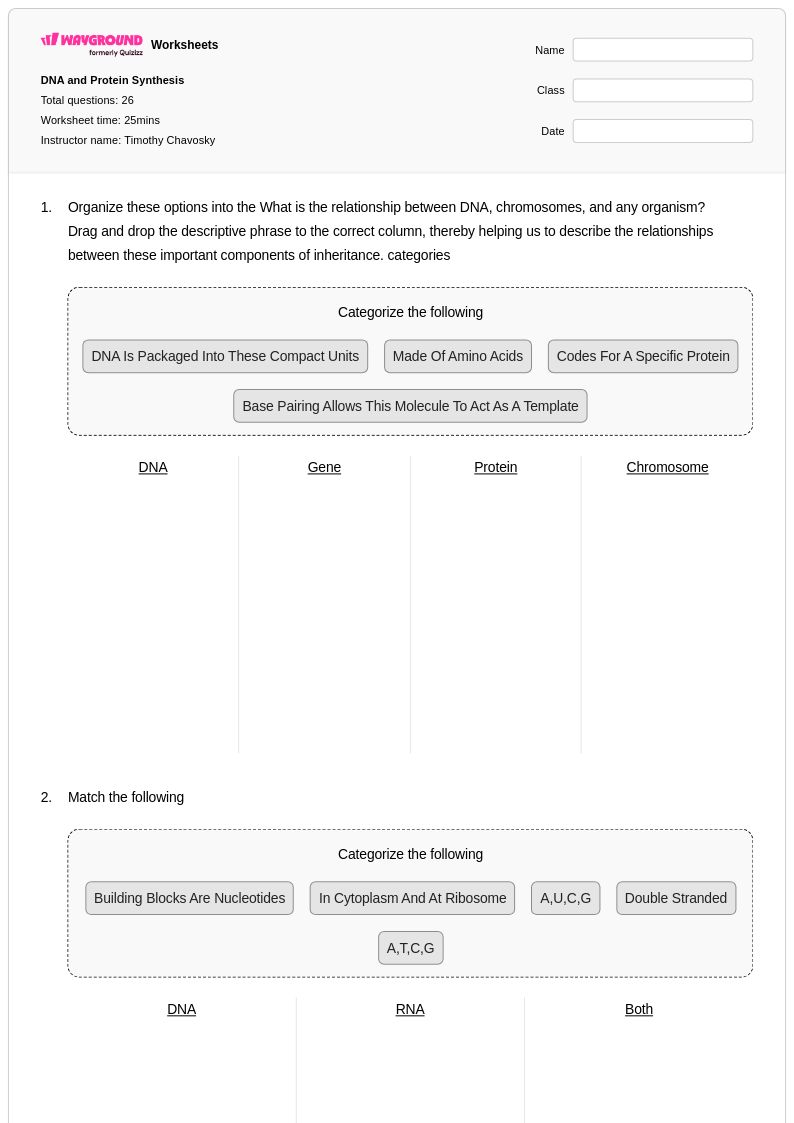
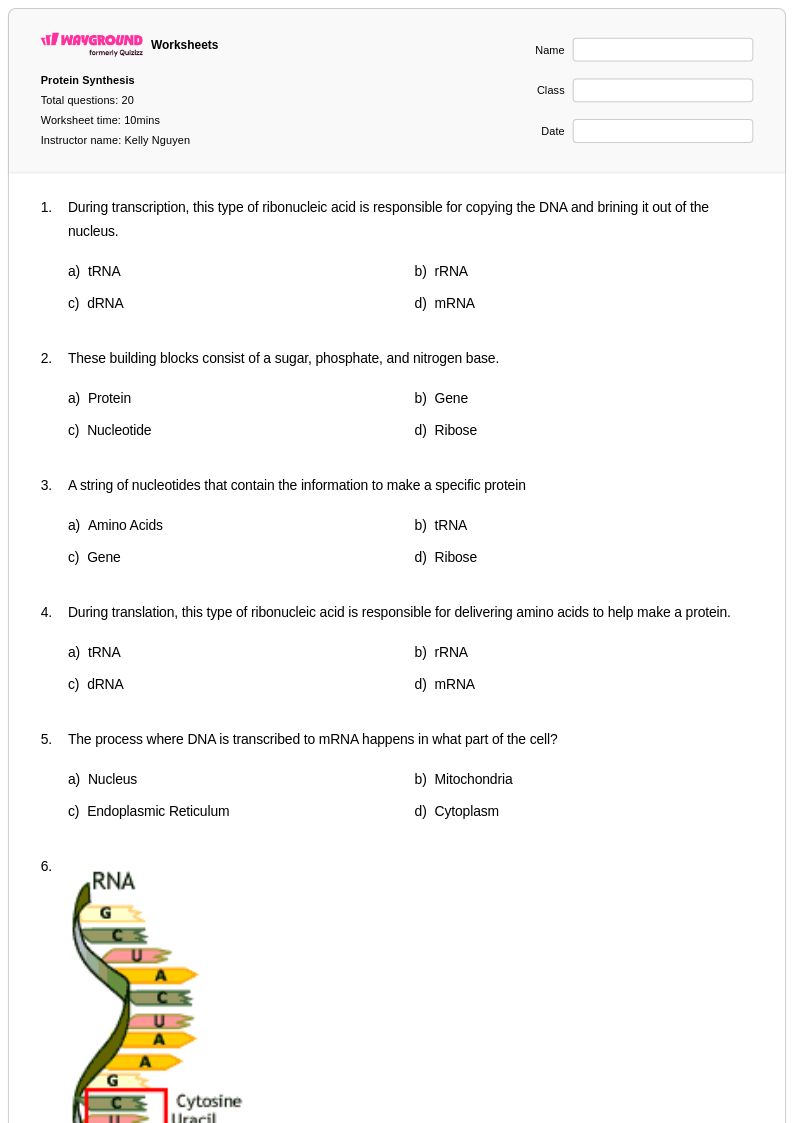
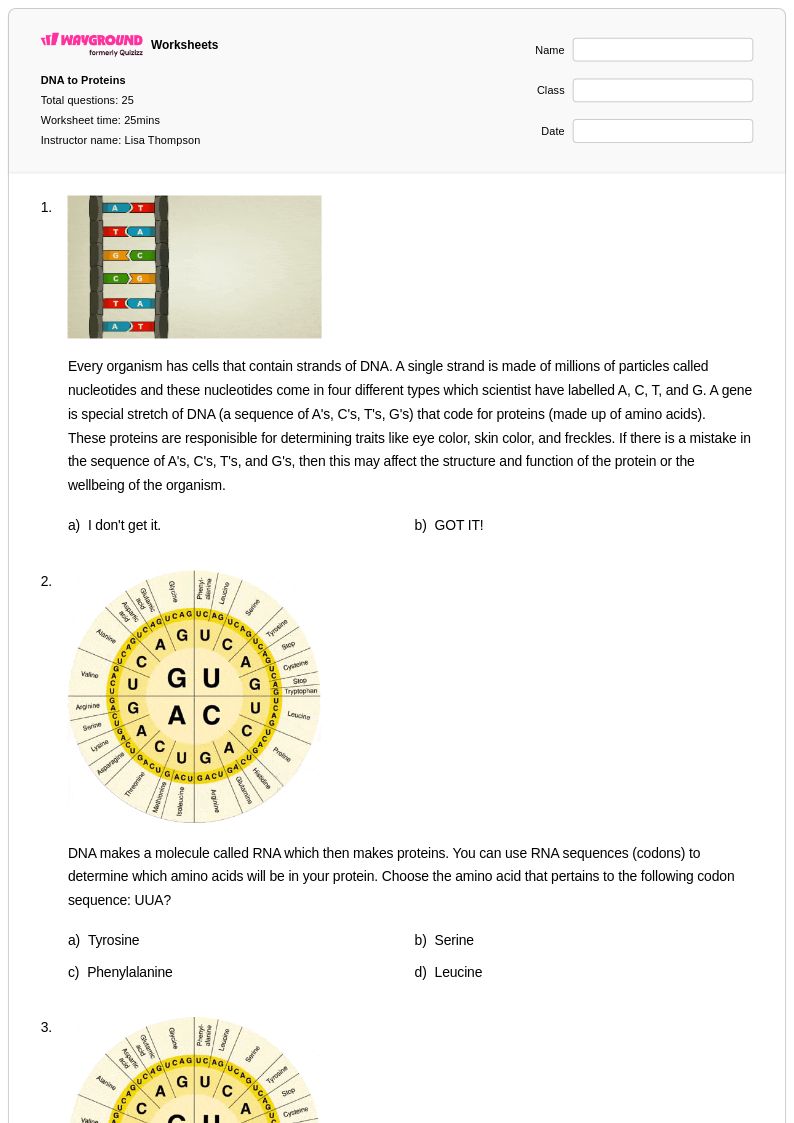
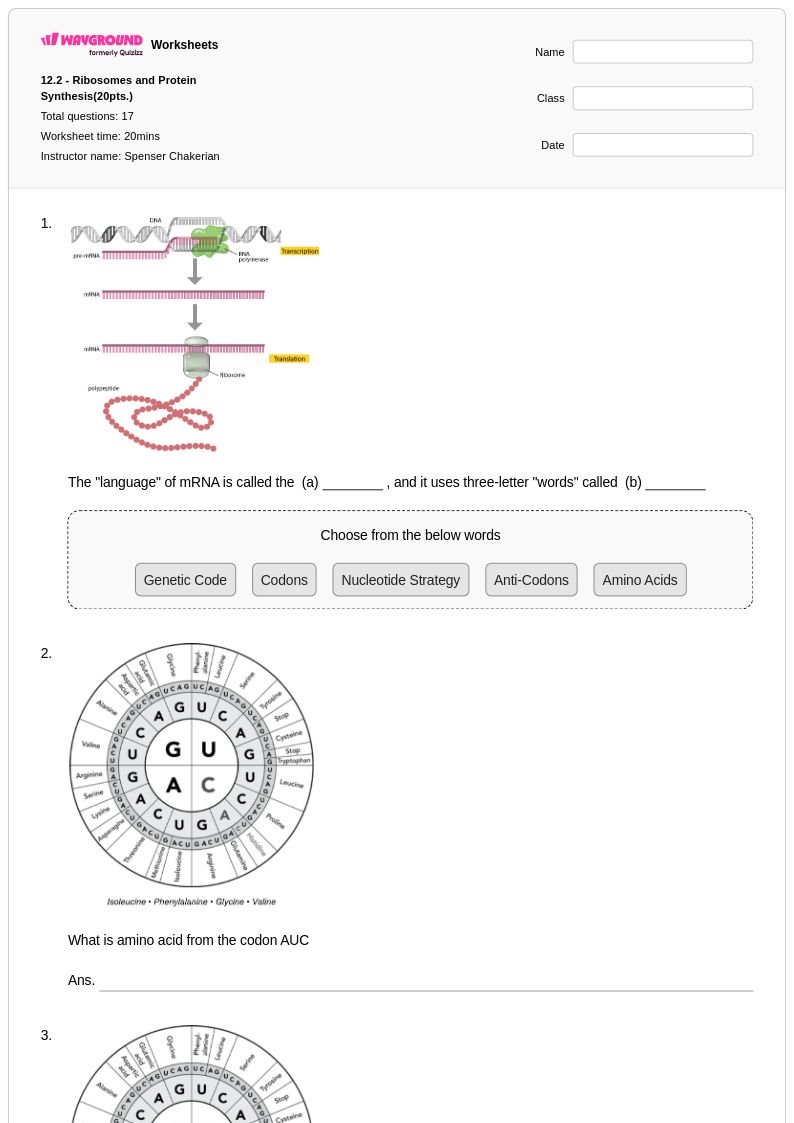
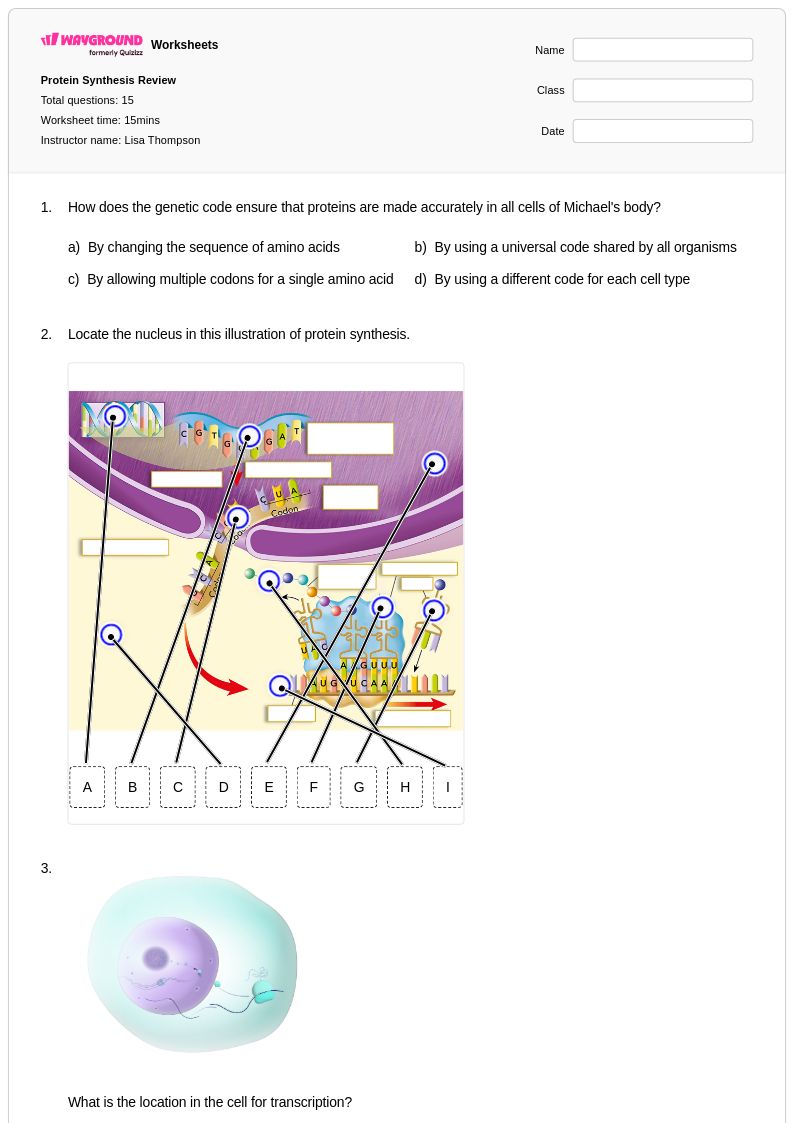
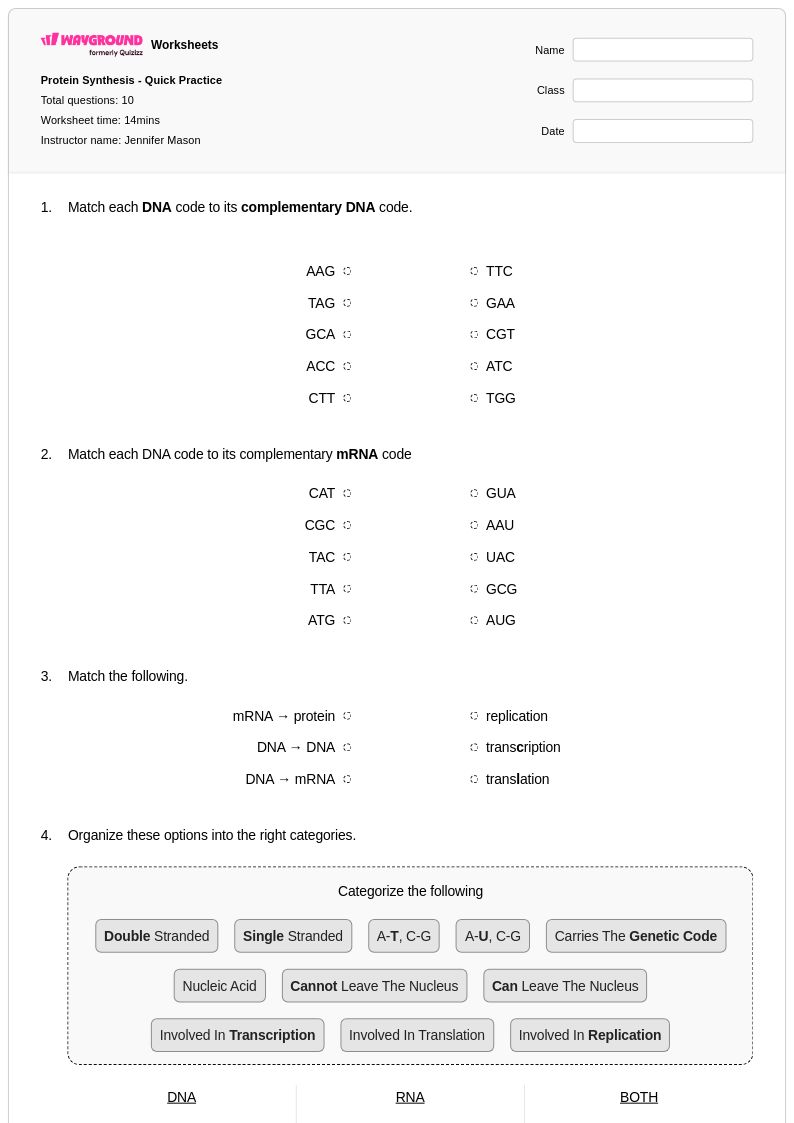
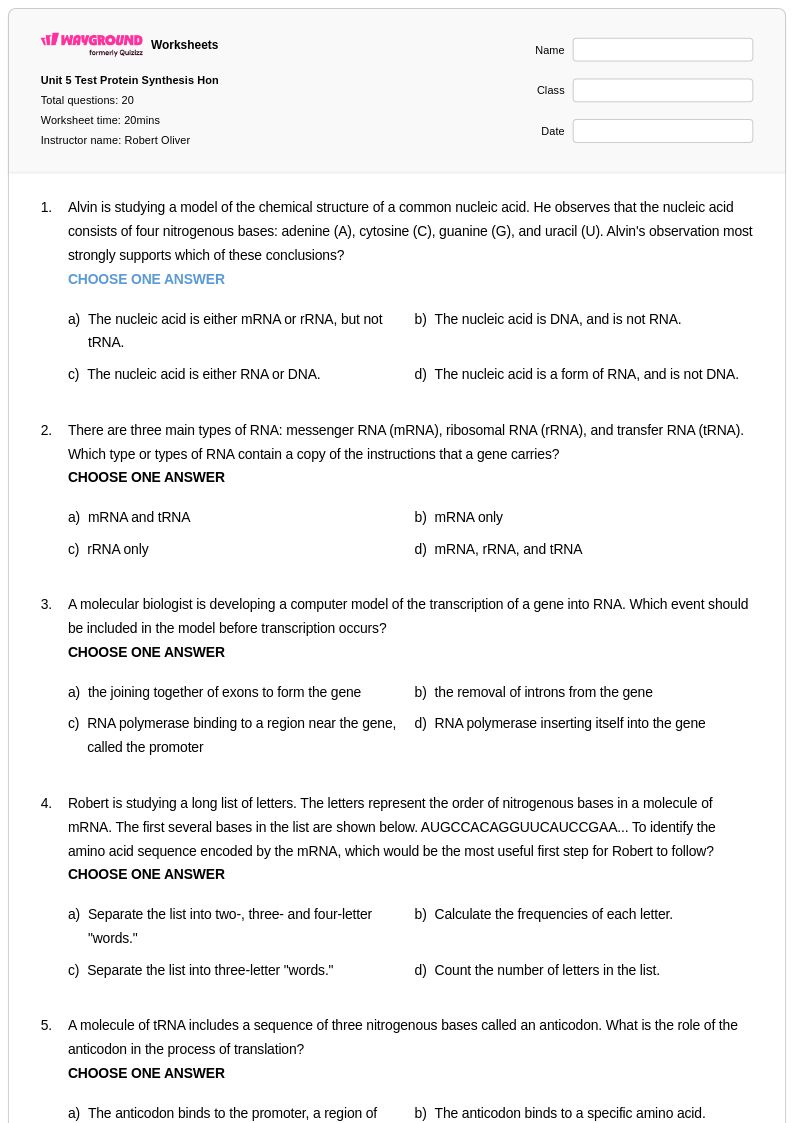
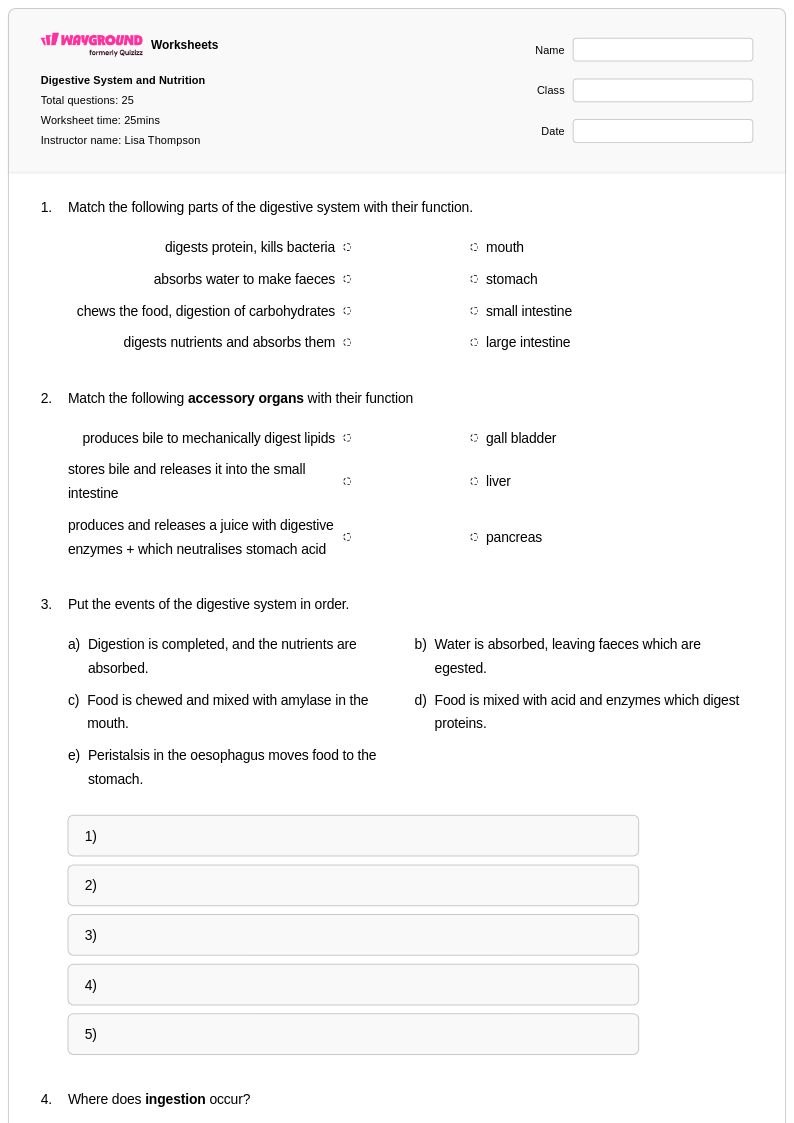
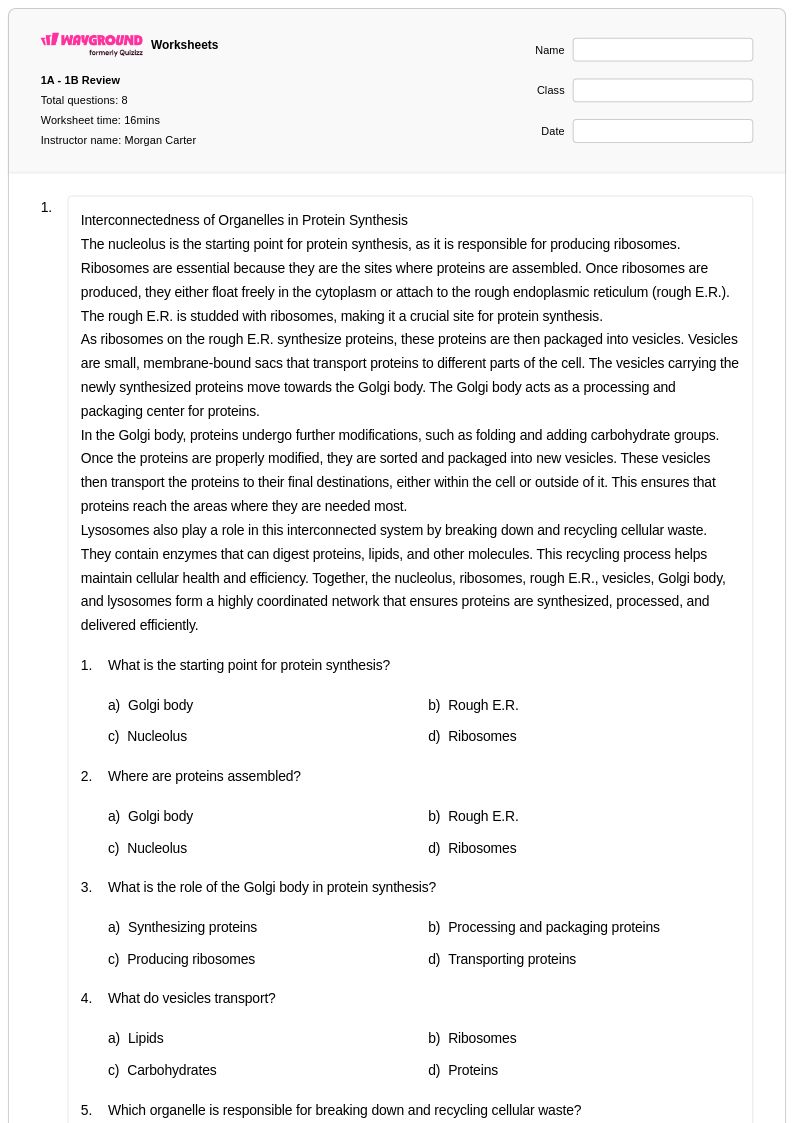
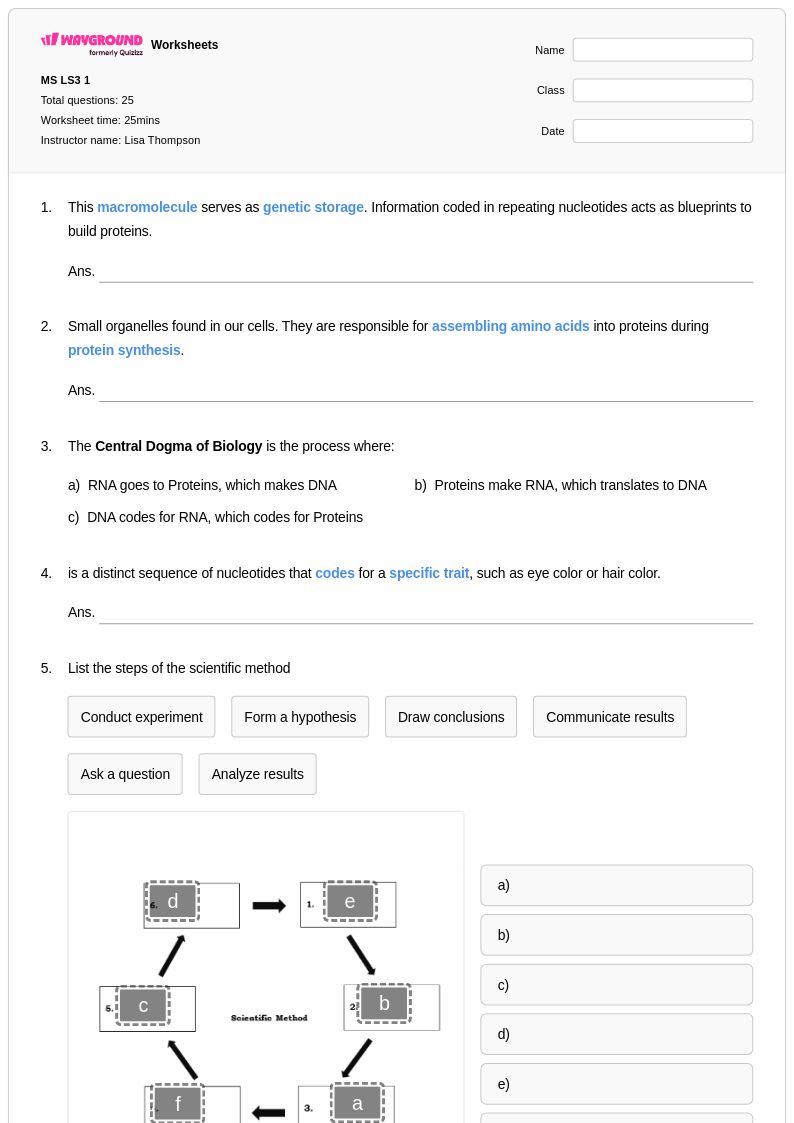
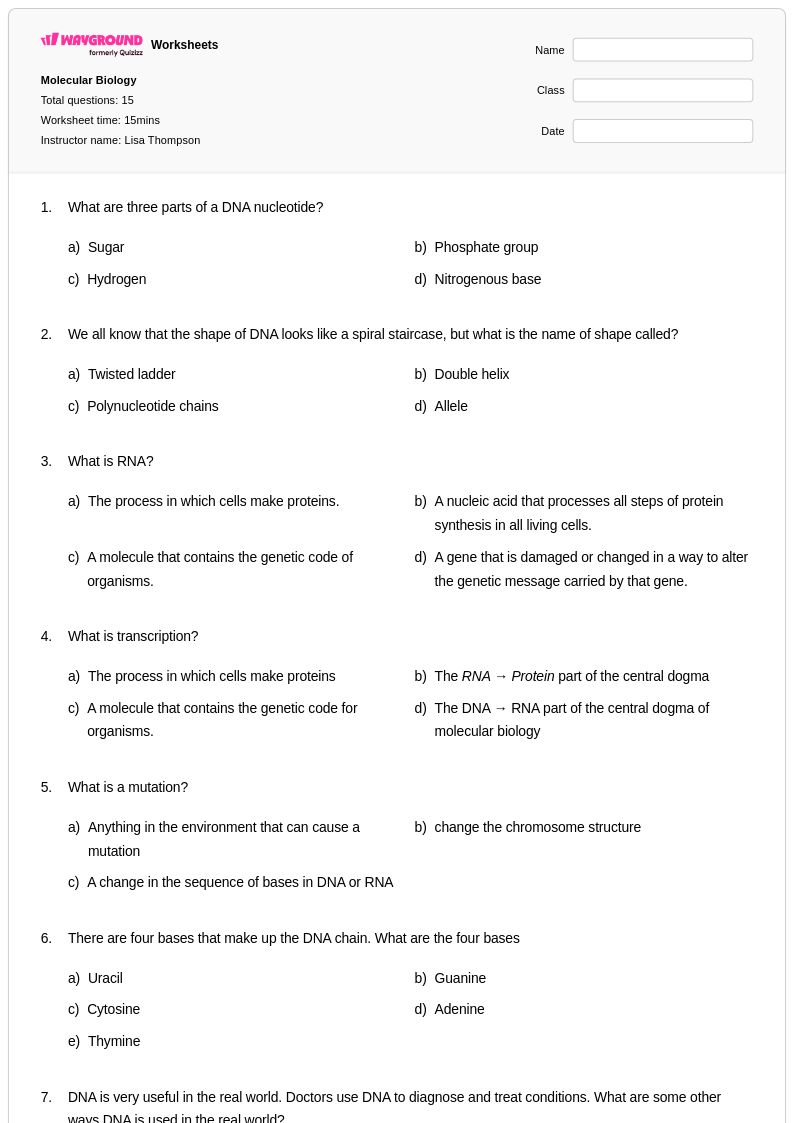
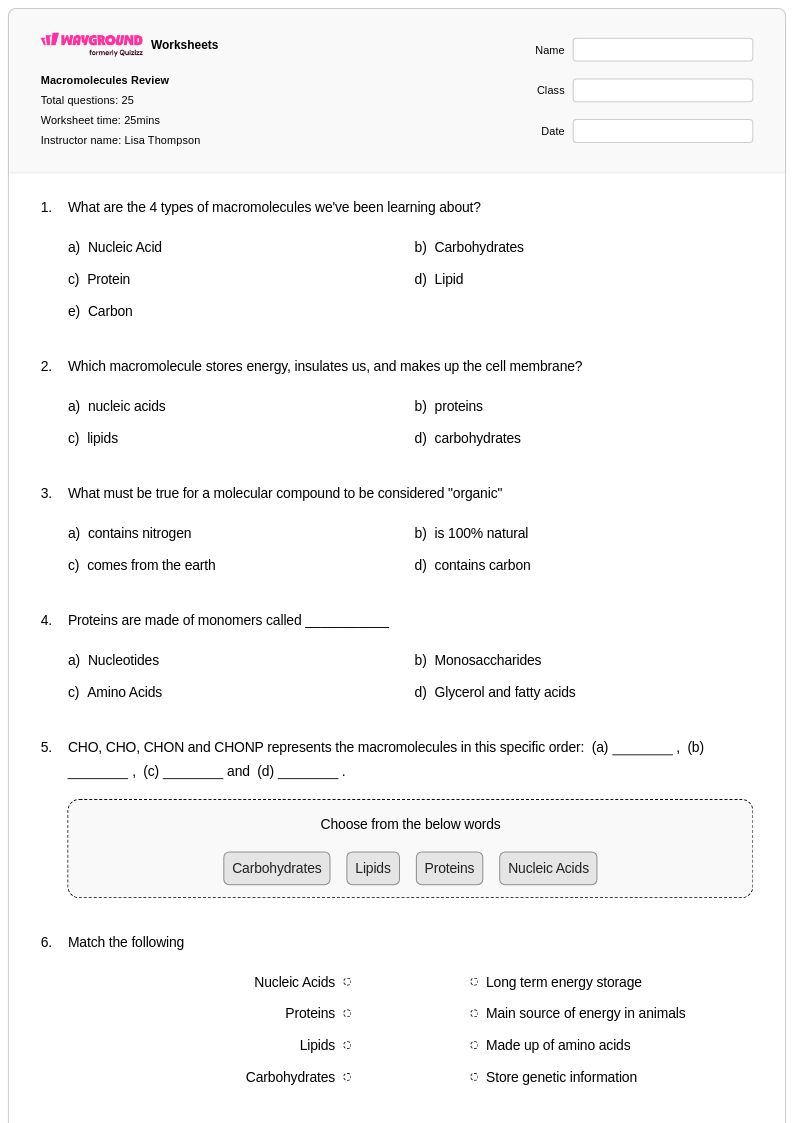
Protein worksheets for Class 10 students available through Wayground (formerly Quizizz) provide comprehensive coverage of this fundamental biological macromolecule, enabling students to master complex concepts essential for advanced biology coursework. These educational resources strengthen critical analytical skills by guiding students through protein structure hierarchies, enzyme function mechanisms, and the intricate relationships between amino acid sequences and biological activity. The worksheet collections include detailed practice problems that challenge students to identify protein types, analyze denaturation processes, and understand the role of proteins in cellular metabolism and genetic expression. Each resource comes with a complete answer key to support independent learning and self-assessment, while the free printables offer flexible options for both classroom instruction and homework assignments, ensuring students can access high-quality pdf materials that reinforce their understanding of protein biochemistry.
Wayground (formerly Quizizz) empowers educators with access to millions of teacher-created protein worksheet resources, featuring robust search and filtering capabilities that allow instructors to quickly locate materials aligned with specific learning objectives and educational standards. The platform's differentiation tools enable teachers to customize worksheets based on individual student needs, supporting both remediation for struggling learners and enrichment opportunities for advanced students ready to explore protein synthesis pathways and molecular interactions in greater depth. Available in both printable and digital formats including downloadable pdf versions, these worksheet collections streamline lesson planning while providing teachers with versatile options for skill practice sessions, formative assessments, and comprehensive review activities that reinforce essential Class 10 biology concepts related to protein structure and function.
FAQs
How do I teach protein structure to high school biology students?
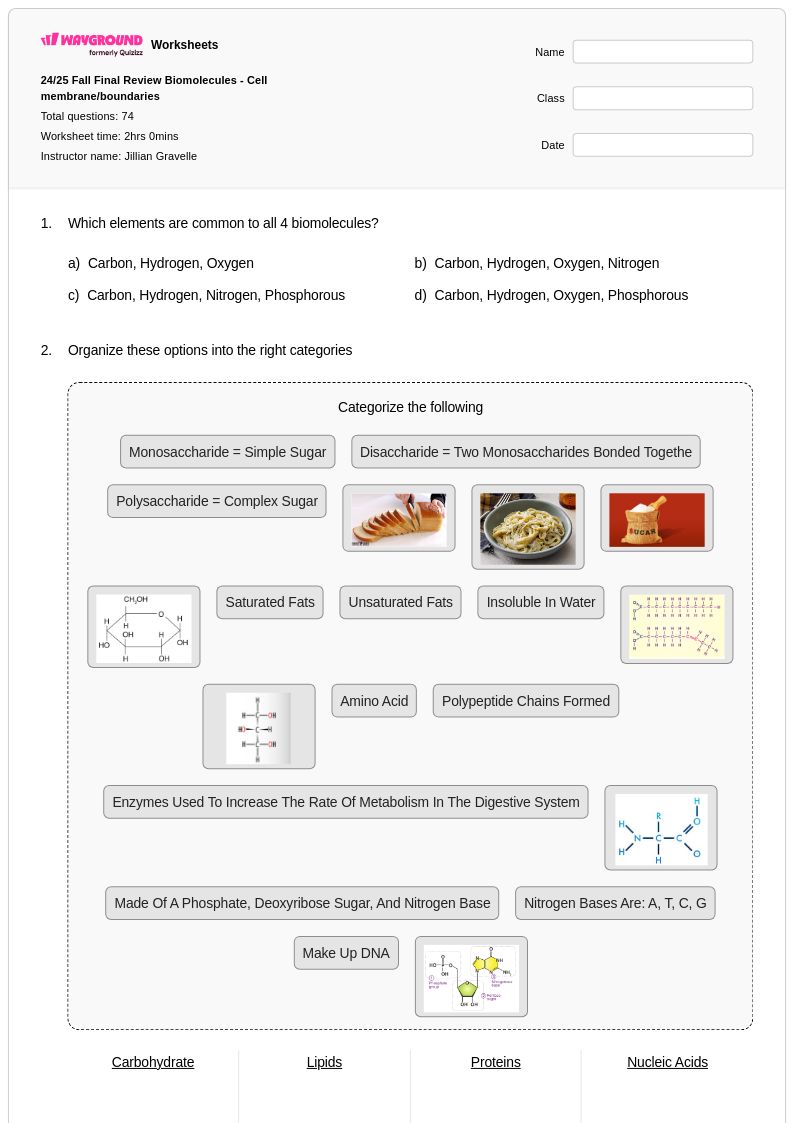
Teaching protein structure effectively means building from the ground up: start with amino acid chemistry and peptide bond formation before introducing the four levels of structure (primary, secondary, tertiary, and quaternary). Use visual models and diagrams to show how the sequence of amino acids determines folding, and connect each structural level to a functional consequence, such as how tertiary structure creates enzyme active sites. Anchoring abstract biochemistry to real examples like hemoglobin or enzymes helps students retain the concept rather than memorize isolated facts.
What exercises help students practice identifying protein structure levels?
Labeling diagrams of polypeptide chains, identifying hydrogen bonds in alpha-helices and beta-pleated sheets, and matching structural descriptions to their correct level (primary through quaternary) are highly effective practice formats. Students also benefit from practice problems that ask them to predict how a change in amino acid sequence affects protein shape and function, reinforcing the structure-function relationship central to biology curricula.
What common mistakes do students make when learning about protein synthesis?
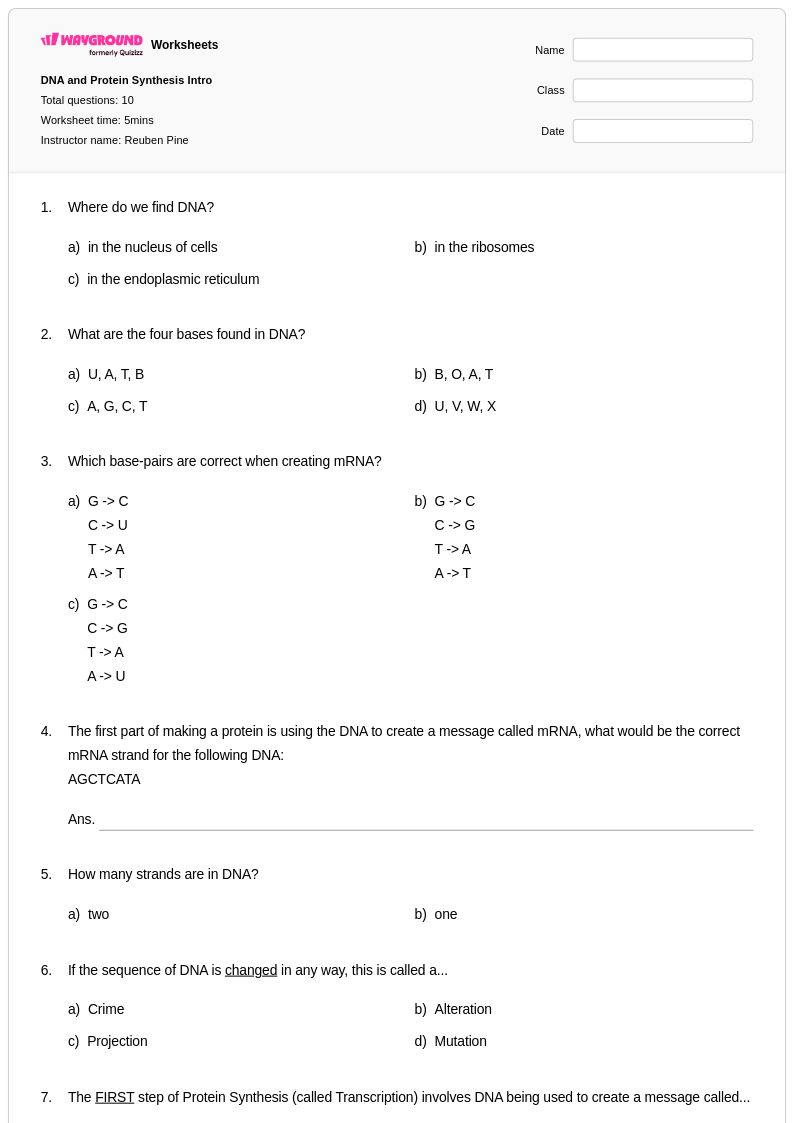
A frequent misconception is confusing transcription and translation, including which molecule is produced at each stage and where in the cell each process occurs. Students also commonly conflate mRNA codons with tRNA anticodons, or forget that the ribosome reads mRNA in the 5' to 3' direction. Another persistent error is assuming that a protein is functional immediately after translation, overlooking post-translational modifications and folding requirements.
How do students often misunderstand enzyme function in relation to protein structure?
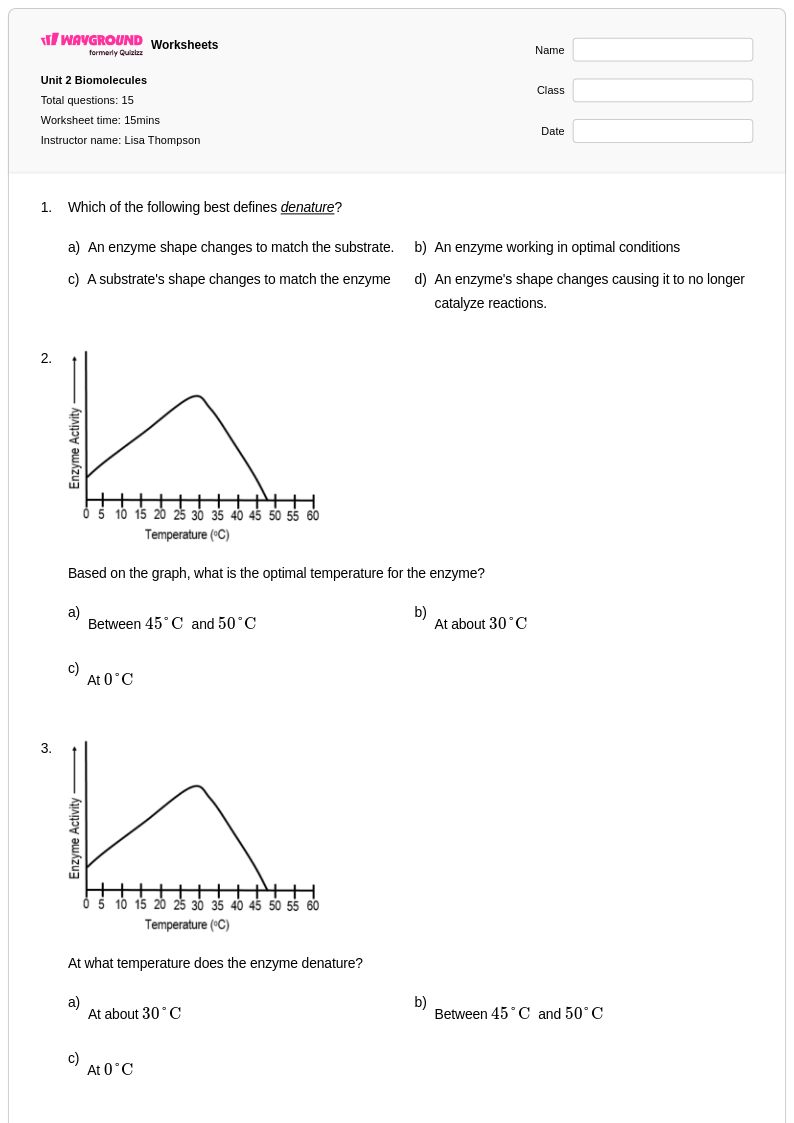
Students frequently treat enzymes as consumable reactants rather than reusable catalysts, and many do not connect enzyme specificity to the three-dimensional shape of the active site. A related misconception is that denaturation simply 'destroys' a protein without understanding that it specifically disrupts the tertiary or quaternary structure, eliminating function without breaking peptide bonds. Emphasizing that shape is function helps students reason through these errors more consistently.
How do I use Wayground's protein worksheets in my classroom?
Wayground's protein worksheets are available as printable PDFs for traditional classroom use and in digital formats for technology-integrated instruction, making them flexible across in-person, hybrid, and remote environments. Teachers can host worksheets as a quiz directly on Wayground, and all materials include answer keys for immediate feedback and self-assessment. Wayground also supports student-level accommodations such as extended time, read aloud, and reduced answer choices, which can be assigned individually so that students with different needs receive appropriate support without disruption to the rest of the class.
How can I differentiate protein worksheet activities for advanced versus struggling students?
For struggling students, focus on foundational tasks such as matching amino acid properties to structural outcomes or sequencing the steps of protein synthesis before introducing enzyme kinetics or quaternary structure. Advanced learners benefit from open-ended analysis problems, such as predicting the effect of a missense mutation on protein folding or comparing enzyme efficiency under varying pH conditions. On Wayground, teachers can use built-in differentiation tools to adjust difficulty and content focus, and can apply individual accommodations like reduced answer choices or read aloud to support students who need additional scaffolding.