
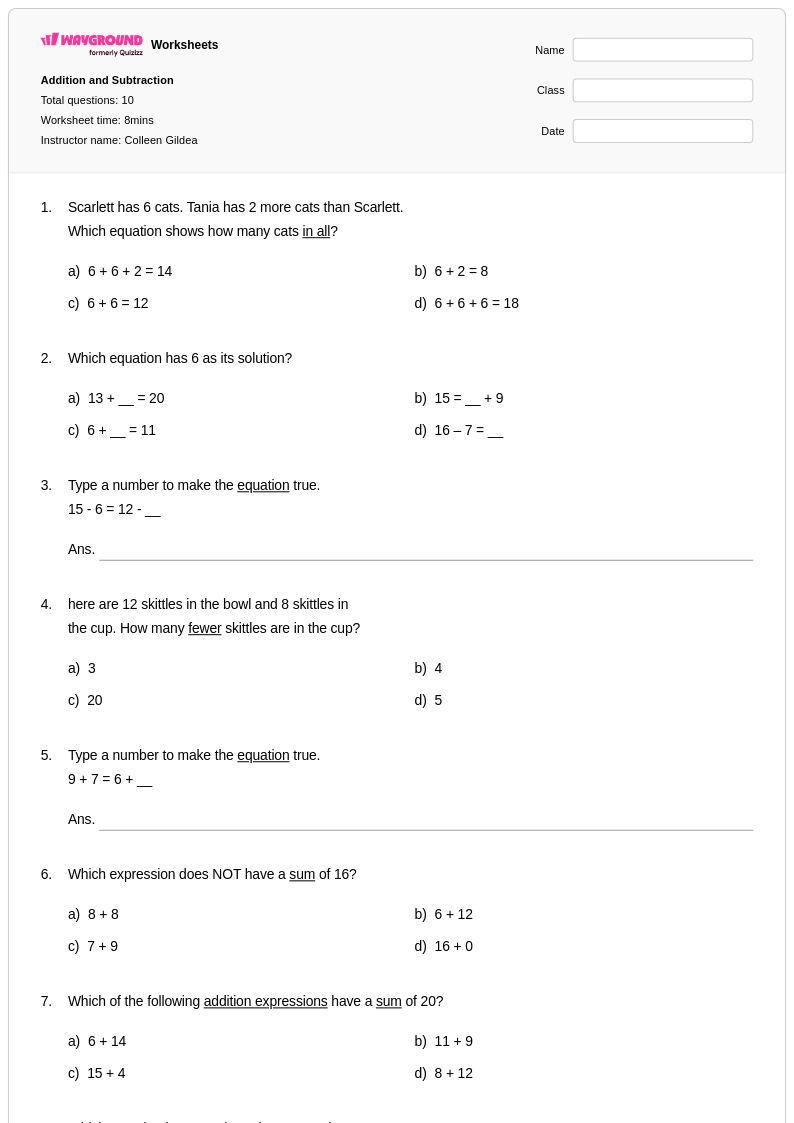
10 Q
2nd
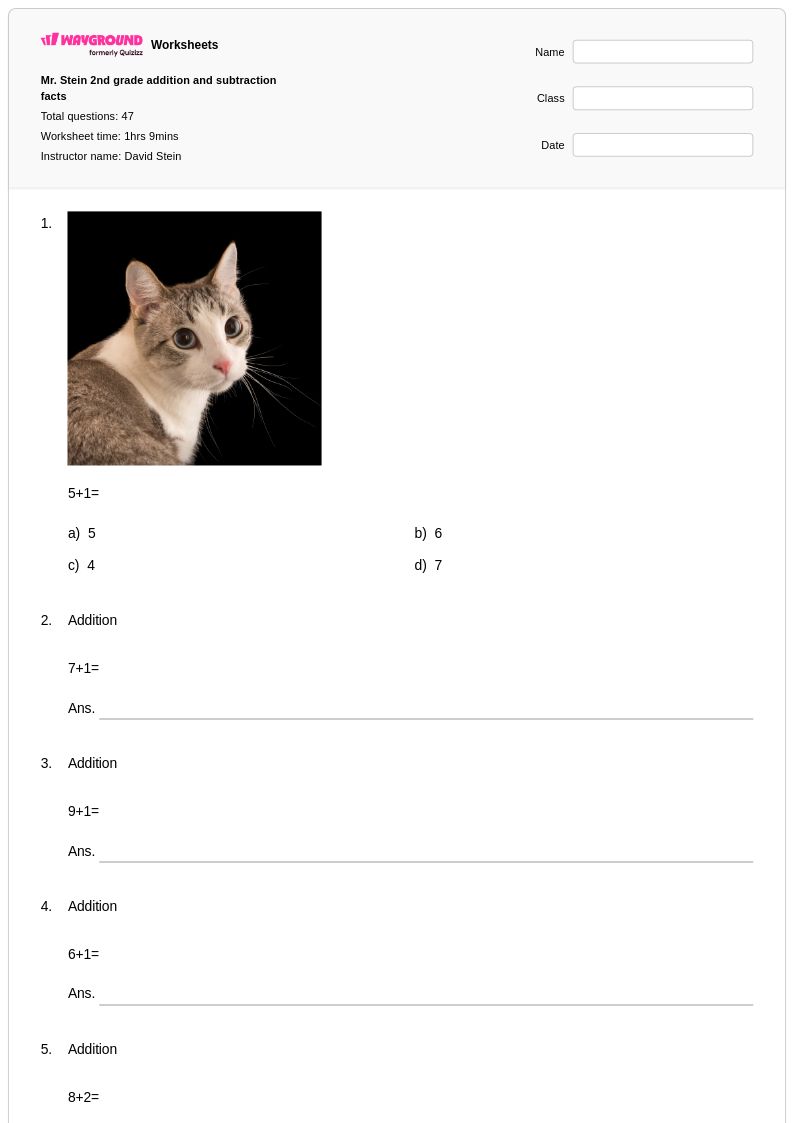
47 Q
2nd
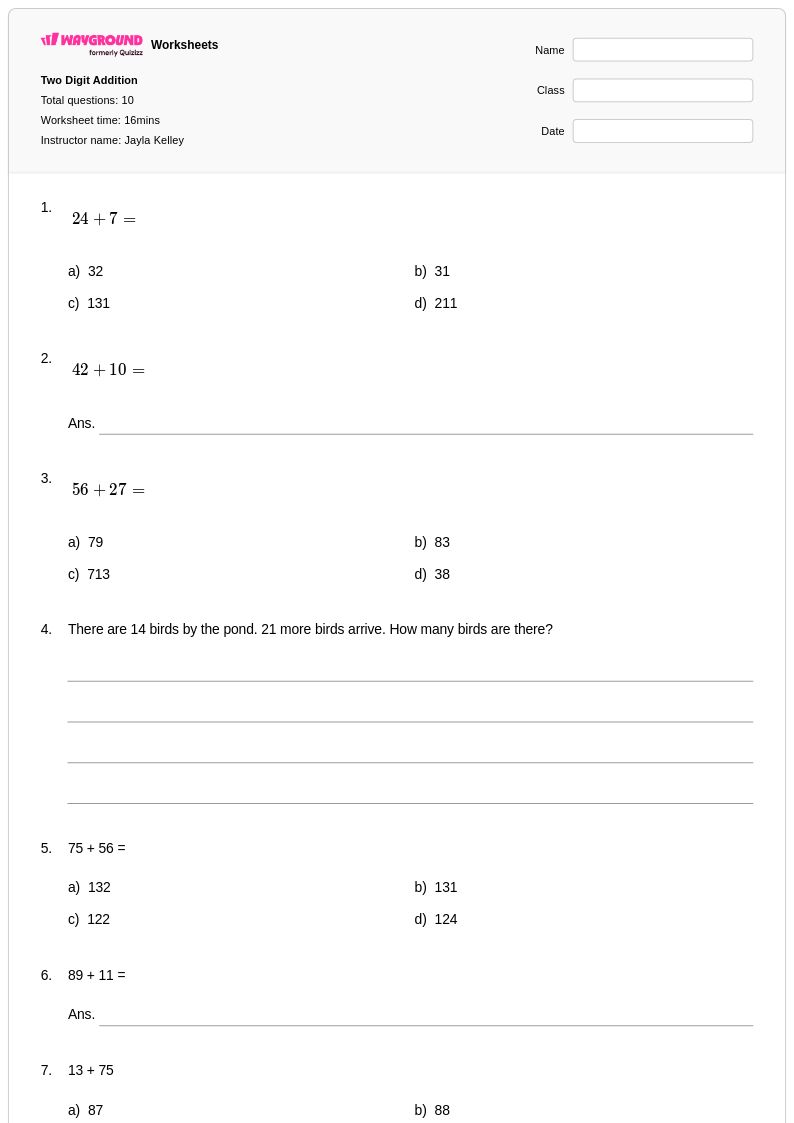
10 Q
2nd
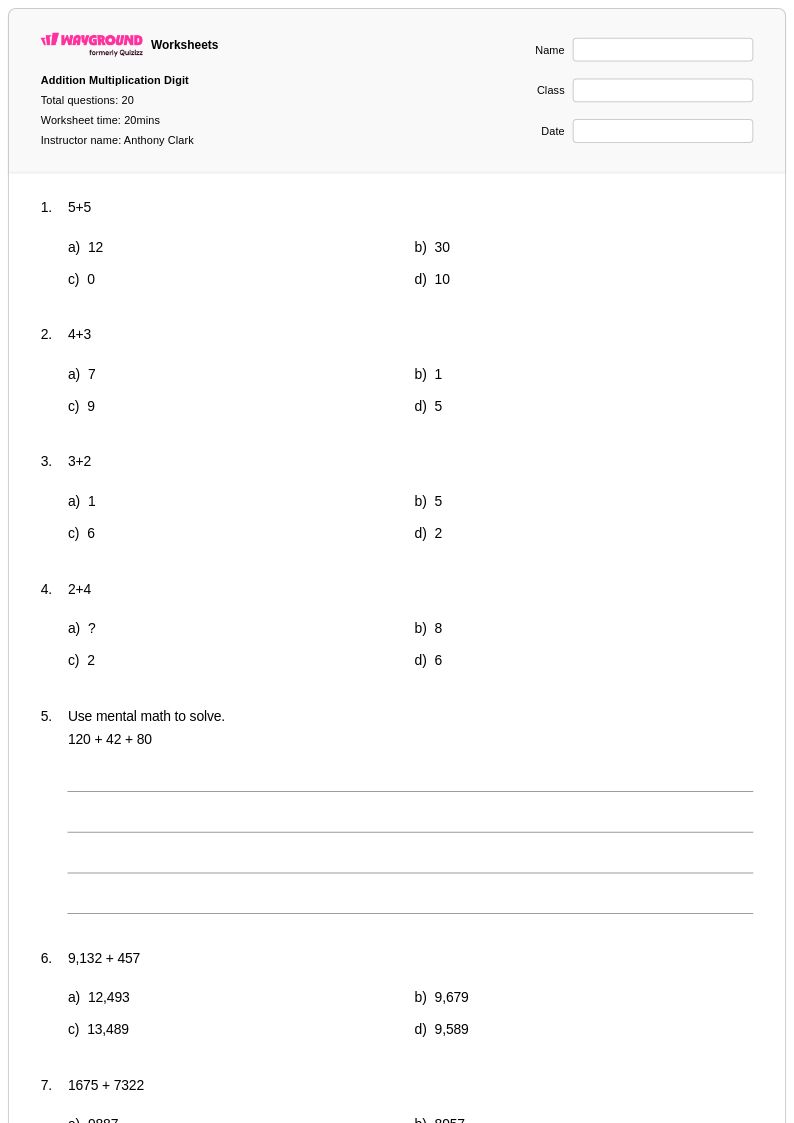
20 Q
2nd - Uni
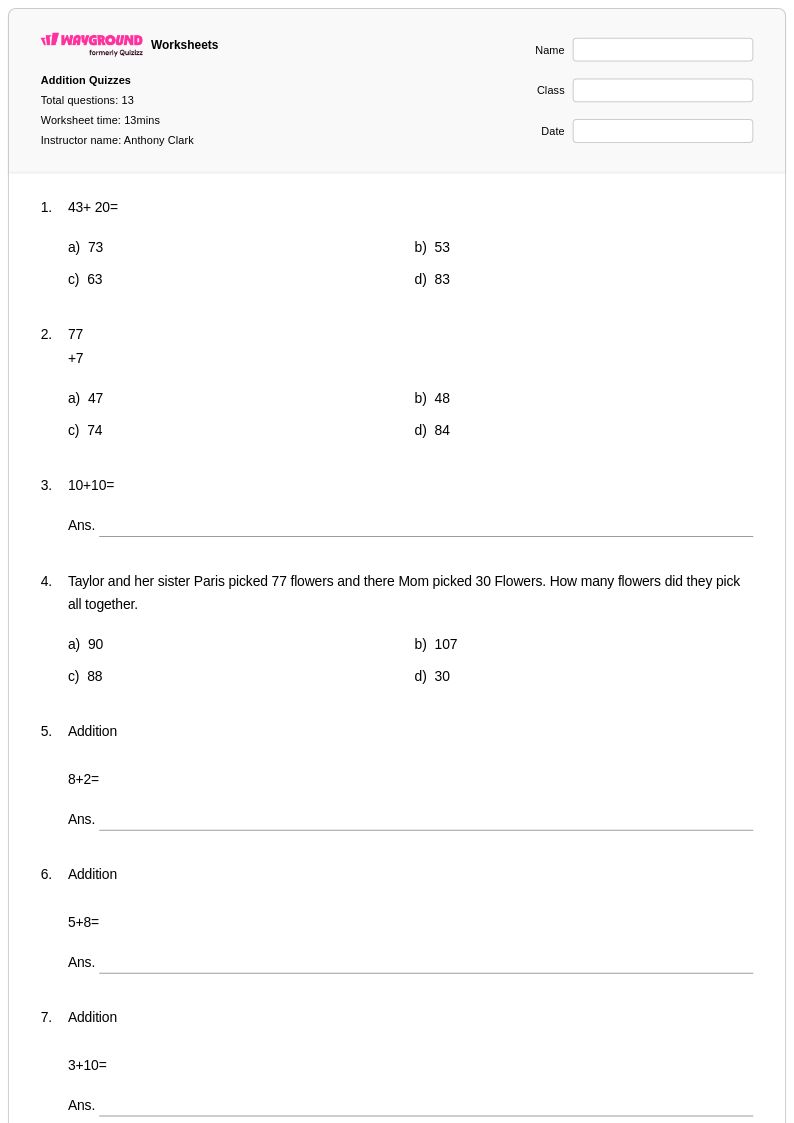
13 Q
1st - Uni
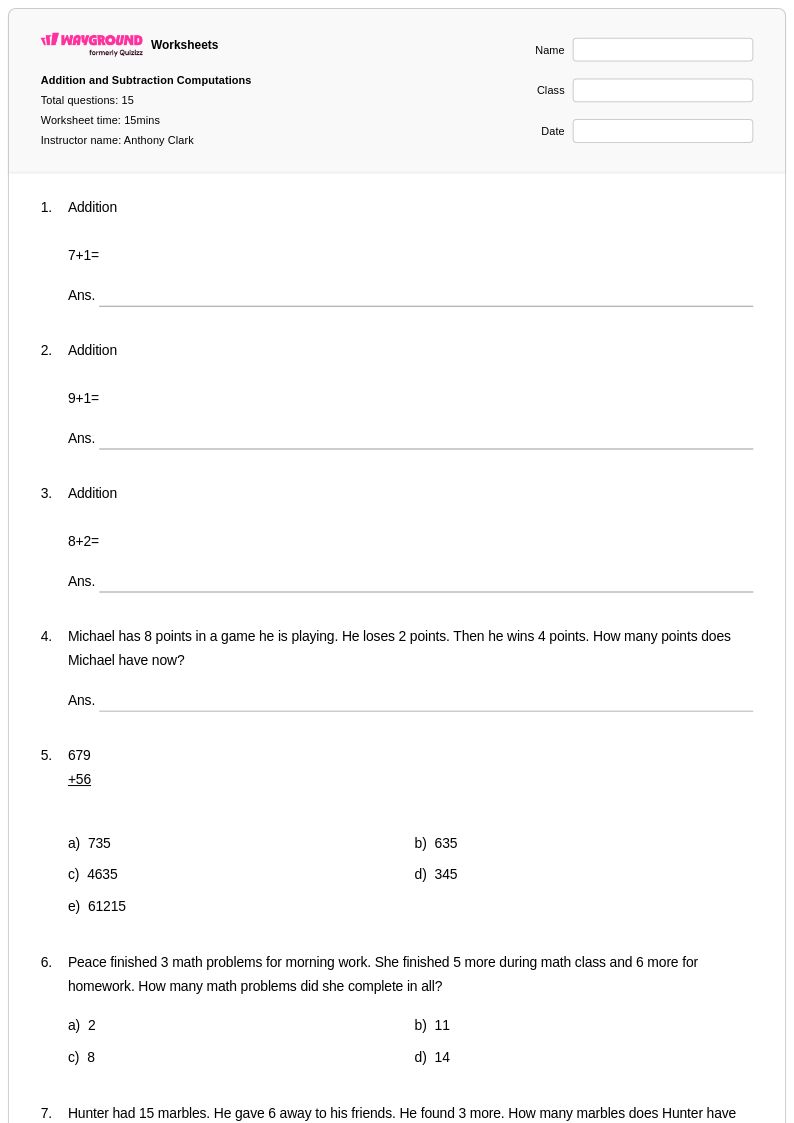
15 Q
1st - Uni
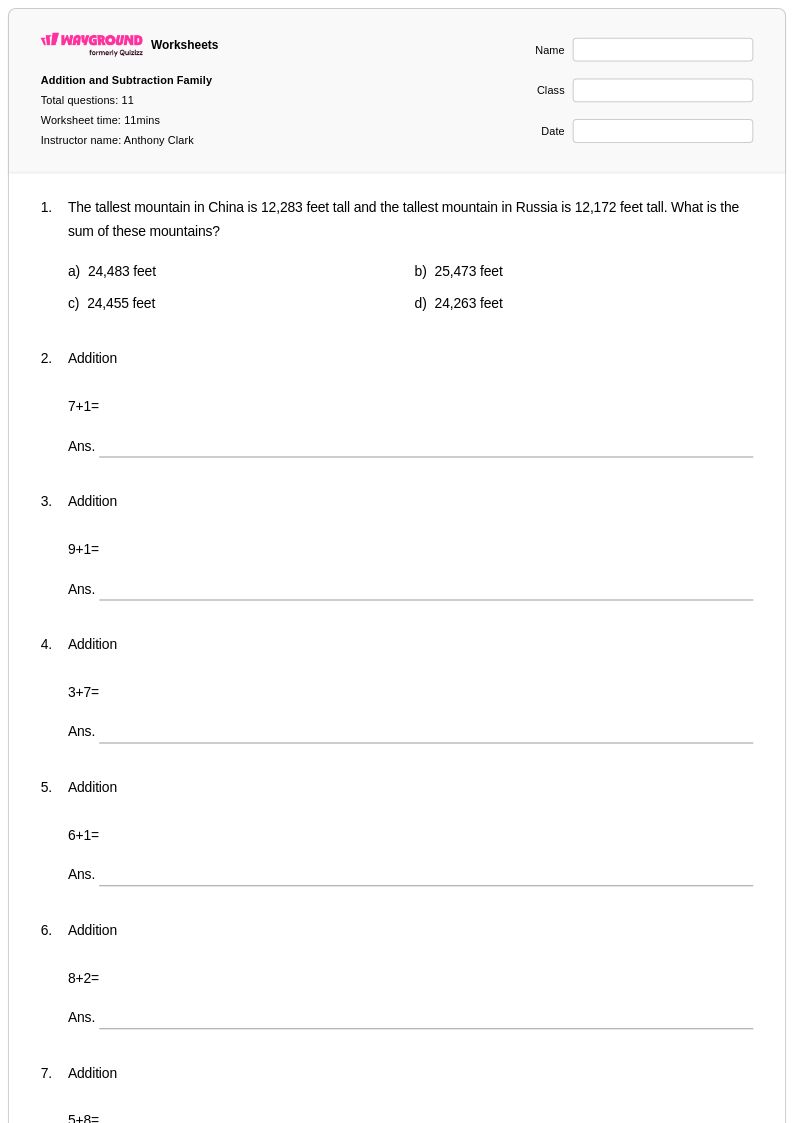
11 Q
2nd - Uni
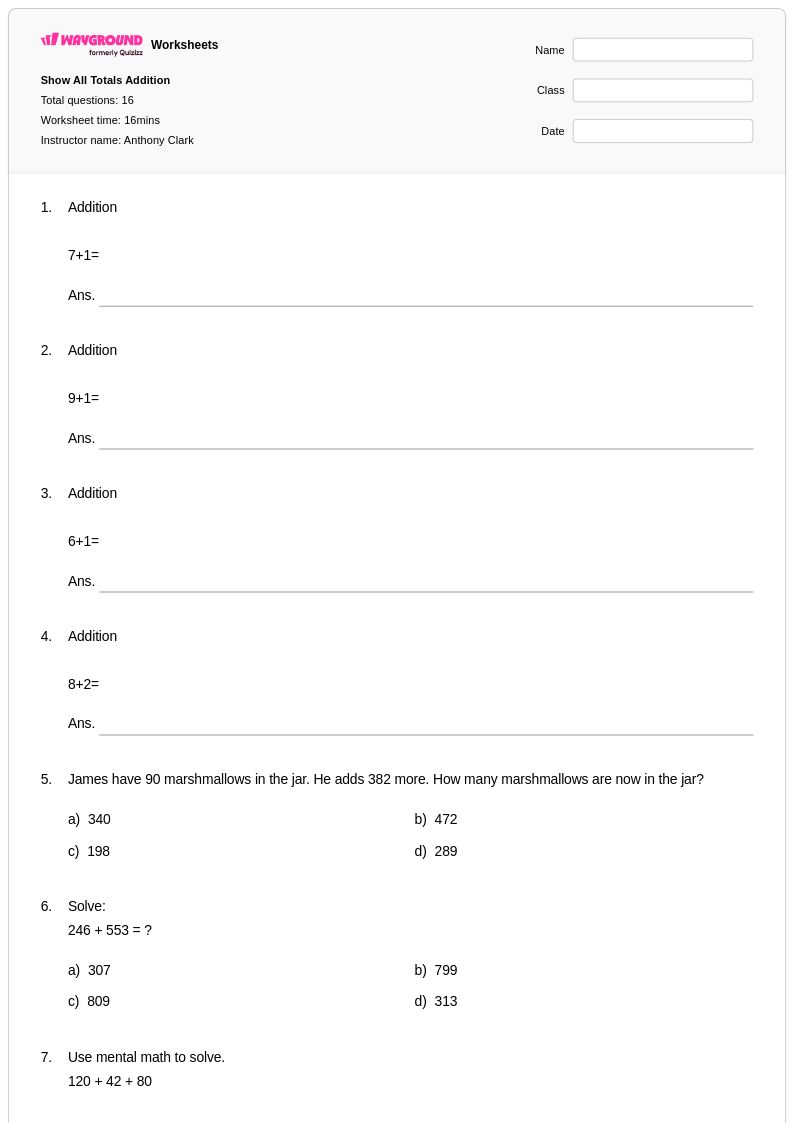
16 Q
2nd - Uni
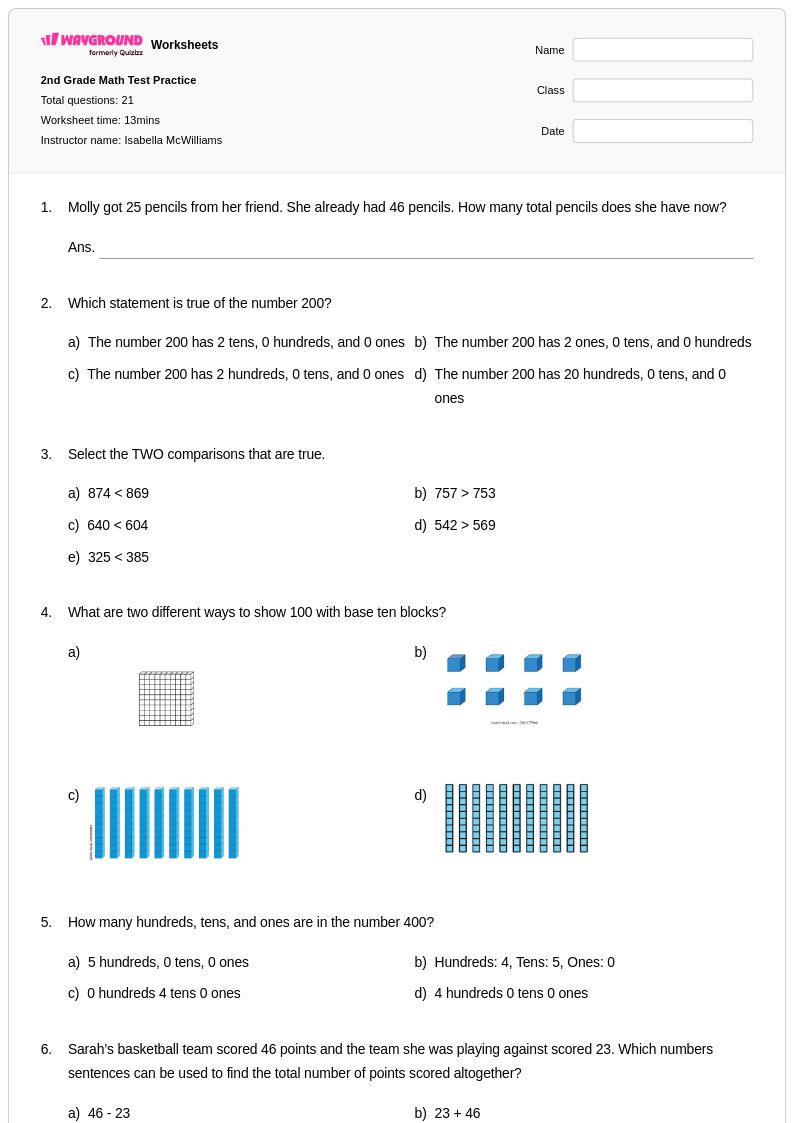
21 Q
2nd
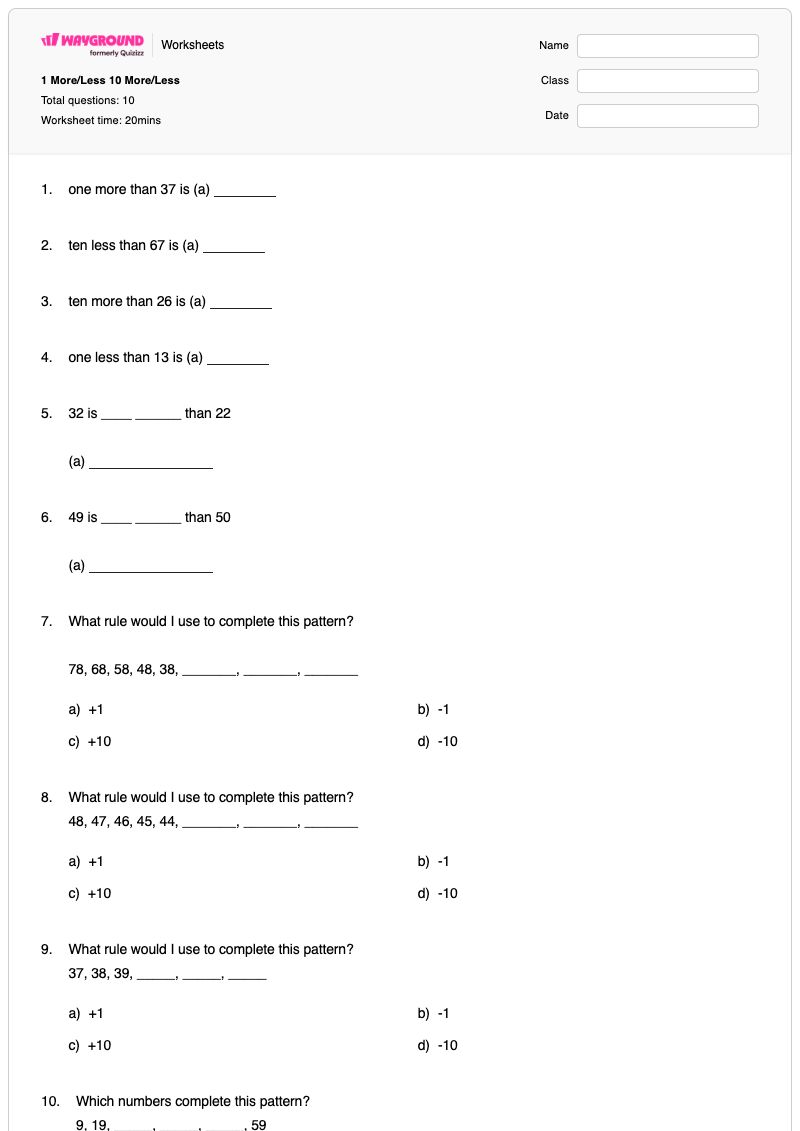
10 Q
2nd
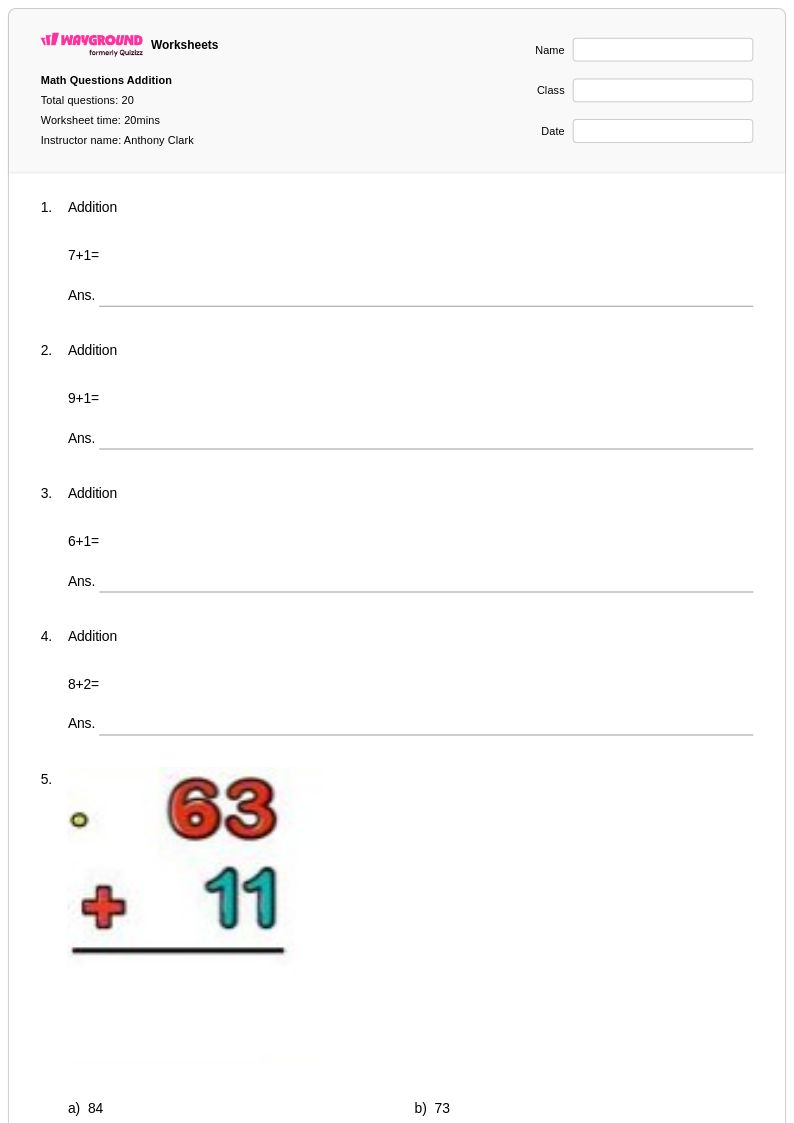
20 Q
2nd - Uni
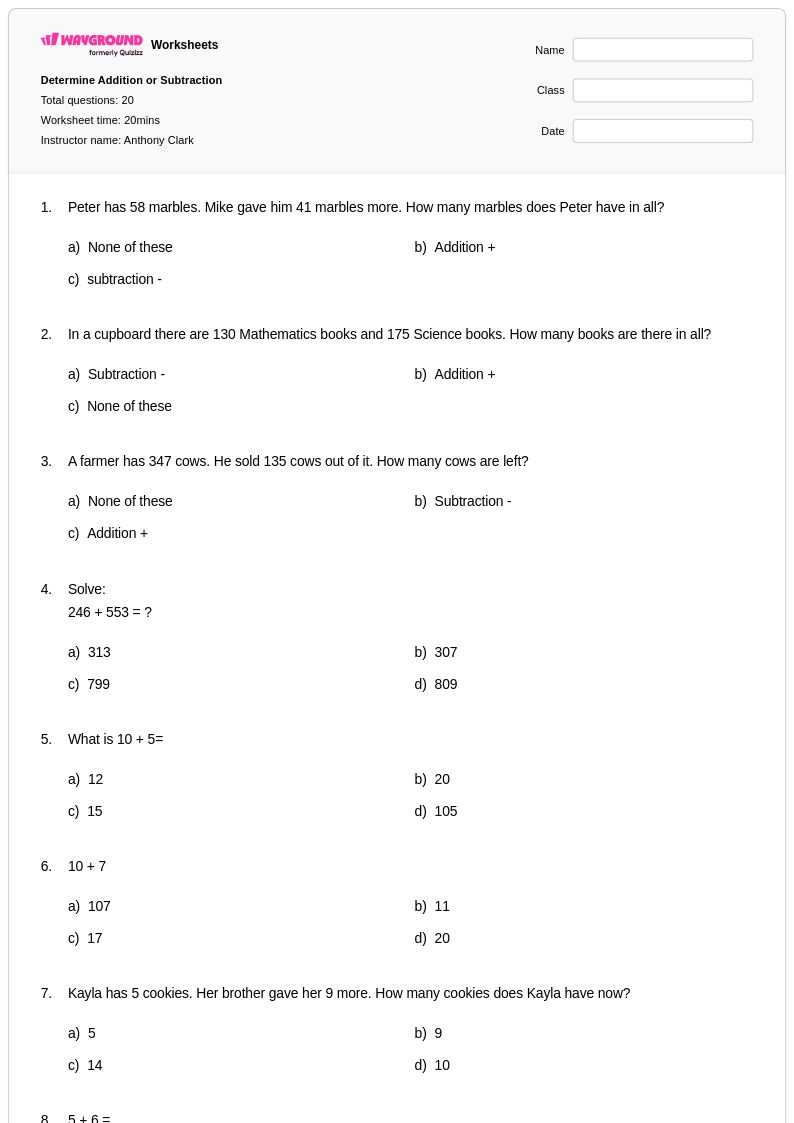
20 Q
2nd - Uni
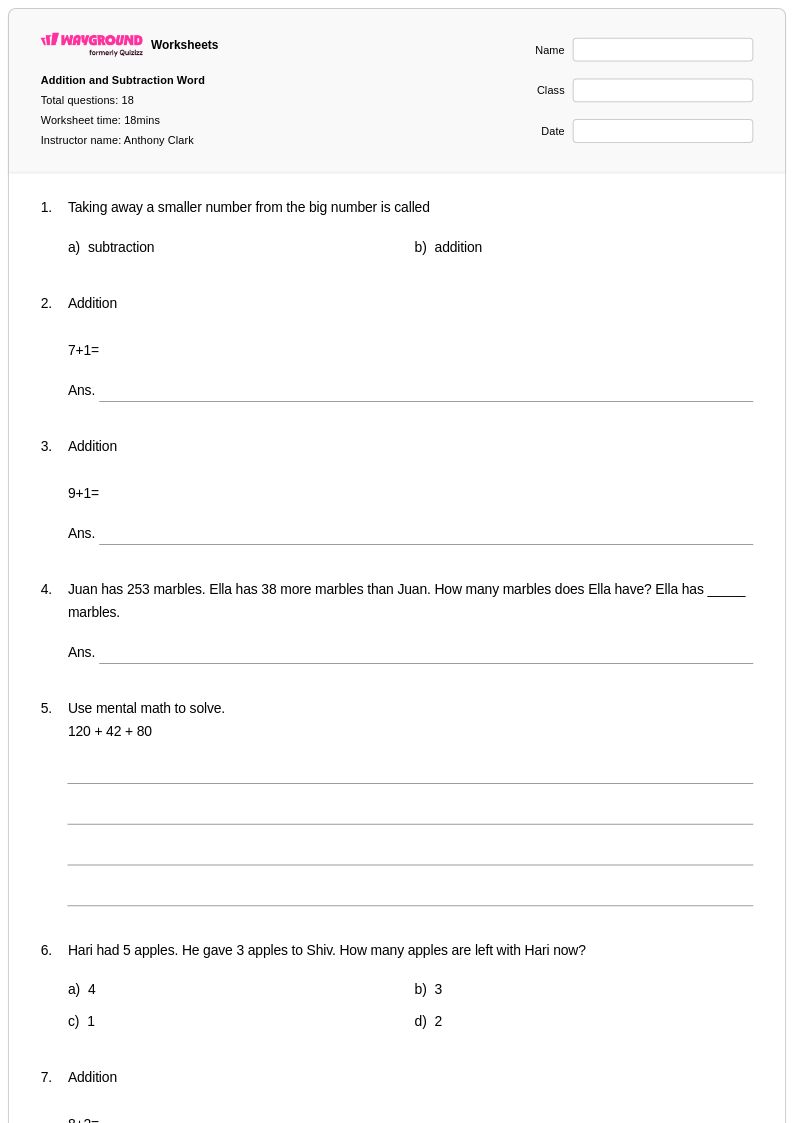
18 Q
2nd - Uni
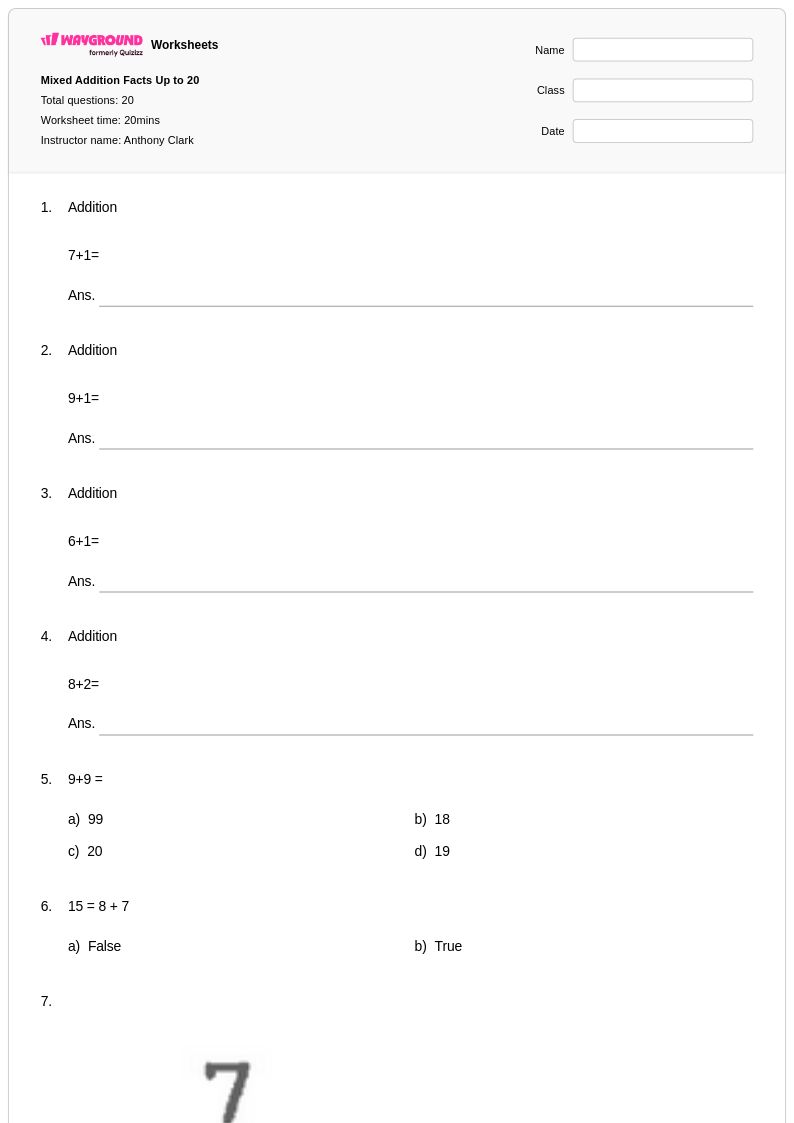
20 Q
2nd - Uni
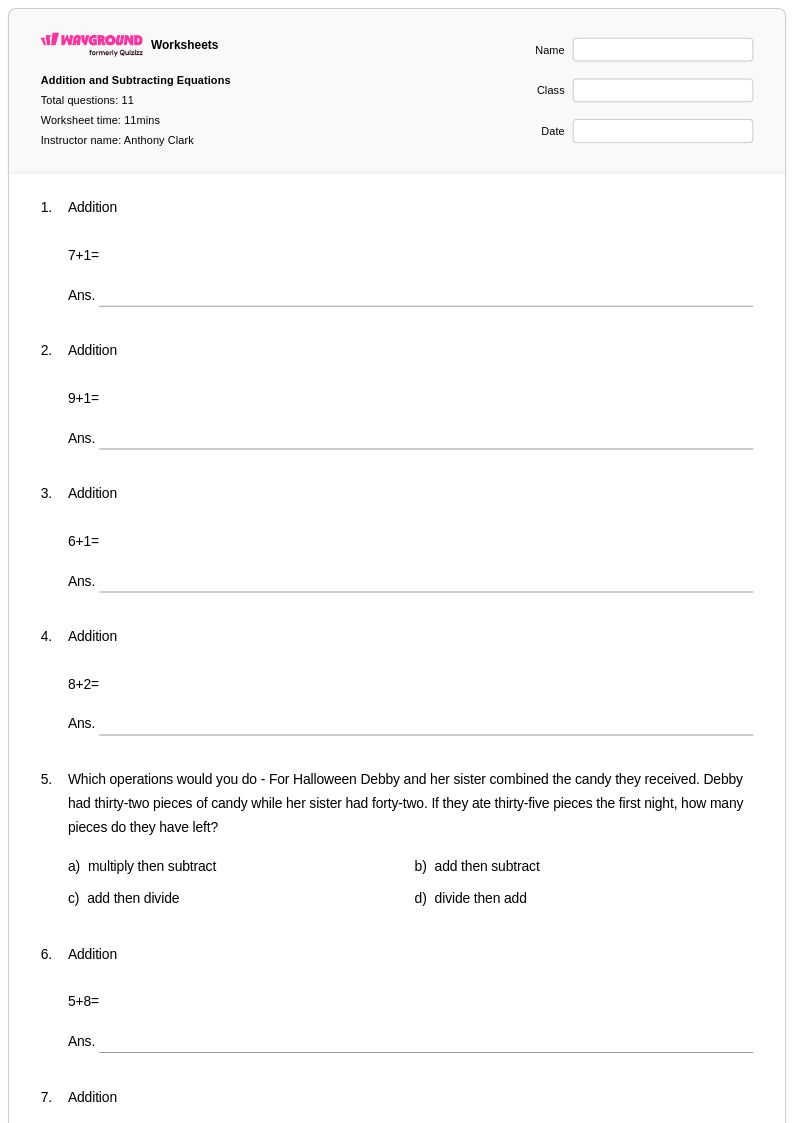
11 Q
2nd - Uni
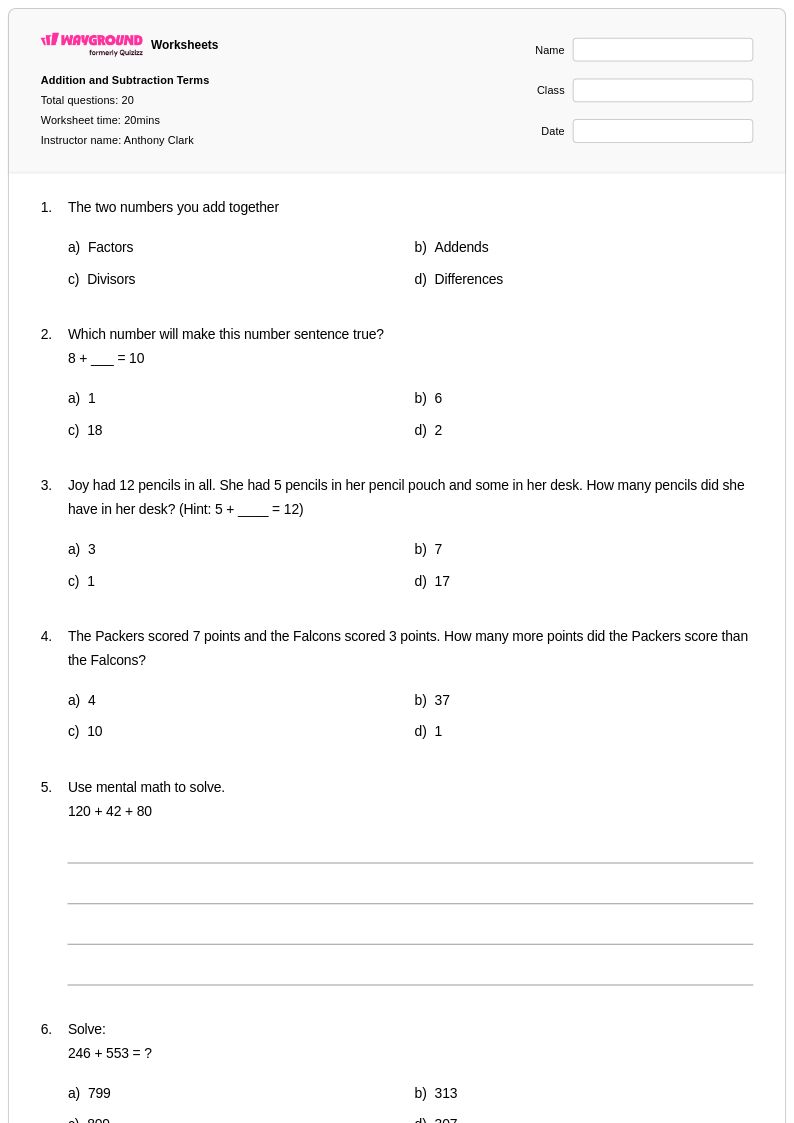
20 Q
2nd - Uni
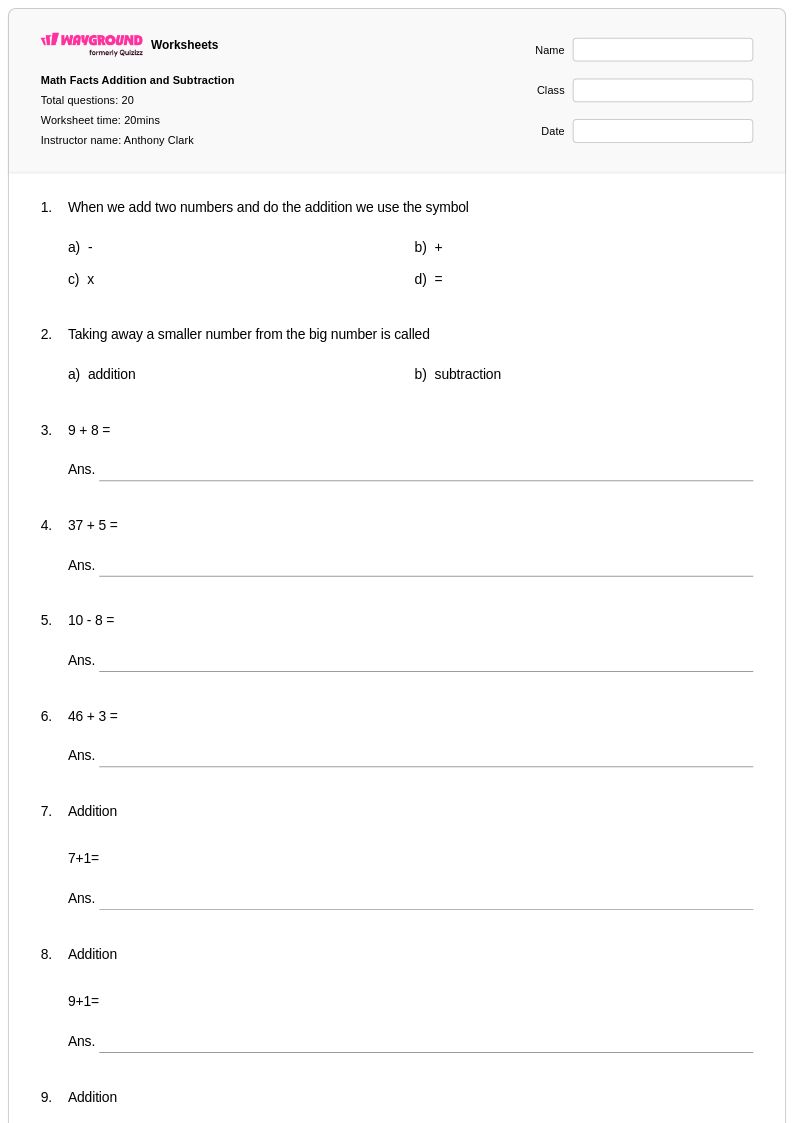
20 Q
2nd - Uni
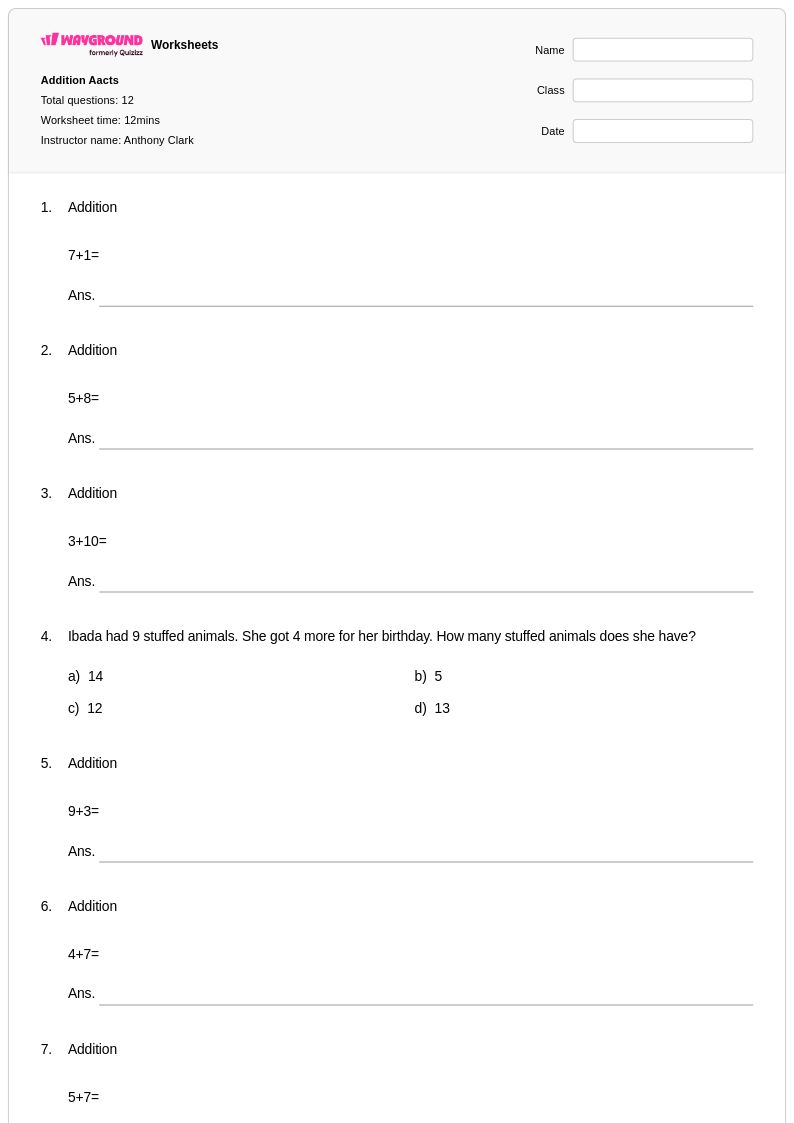
12 Q
1st - Uni
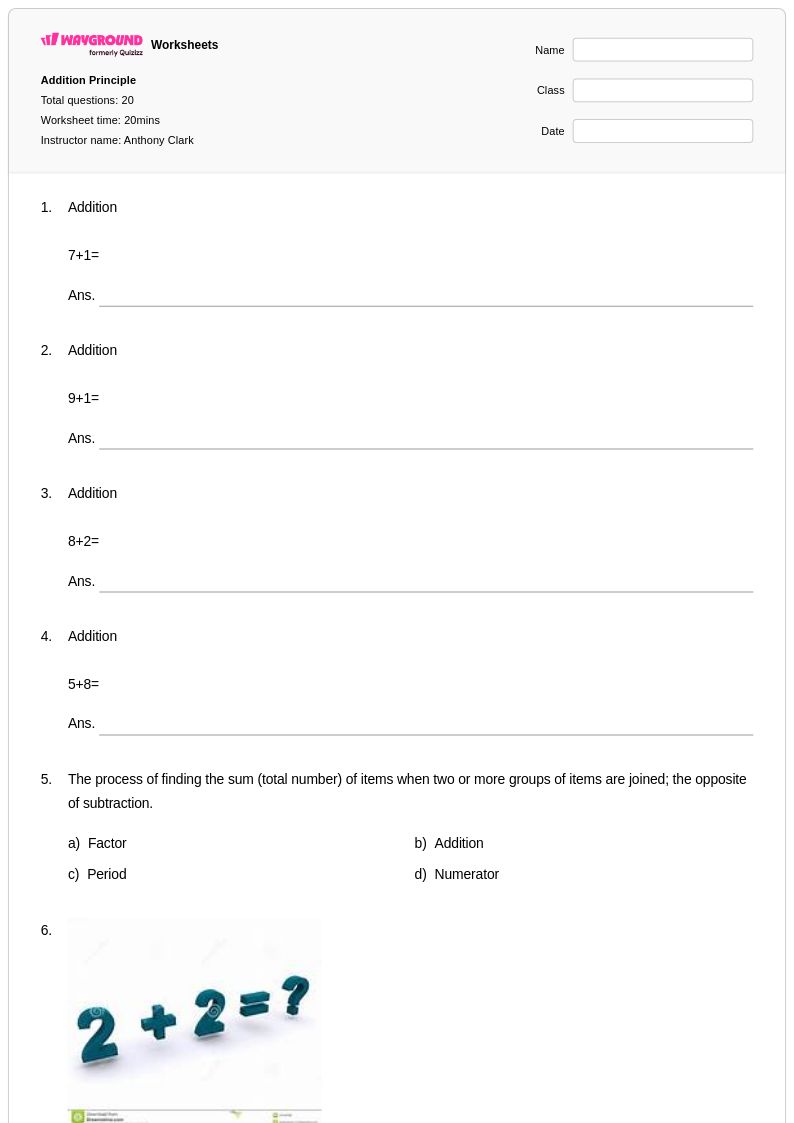
20 Q
2nd - Uni
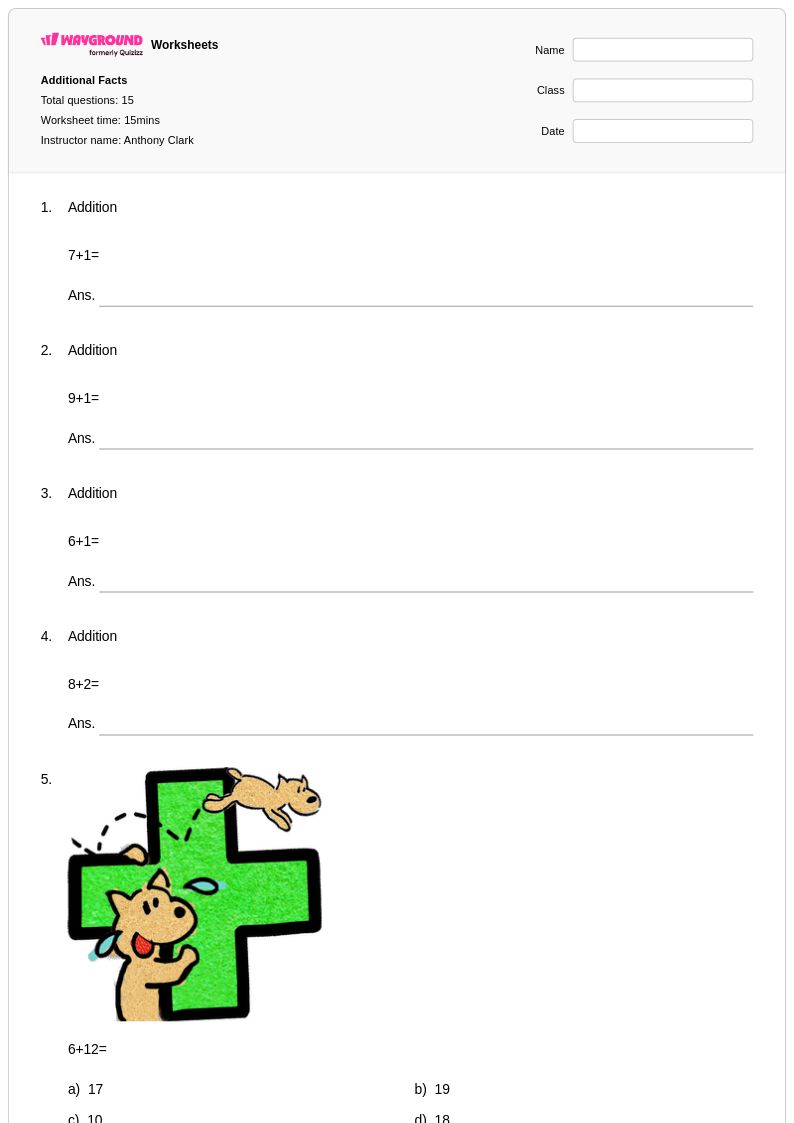
15 Q
1st - Uni
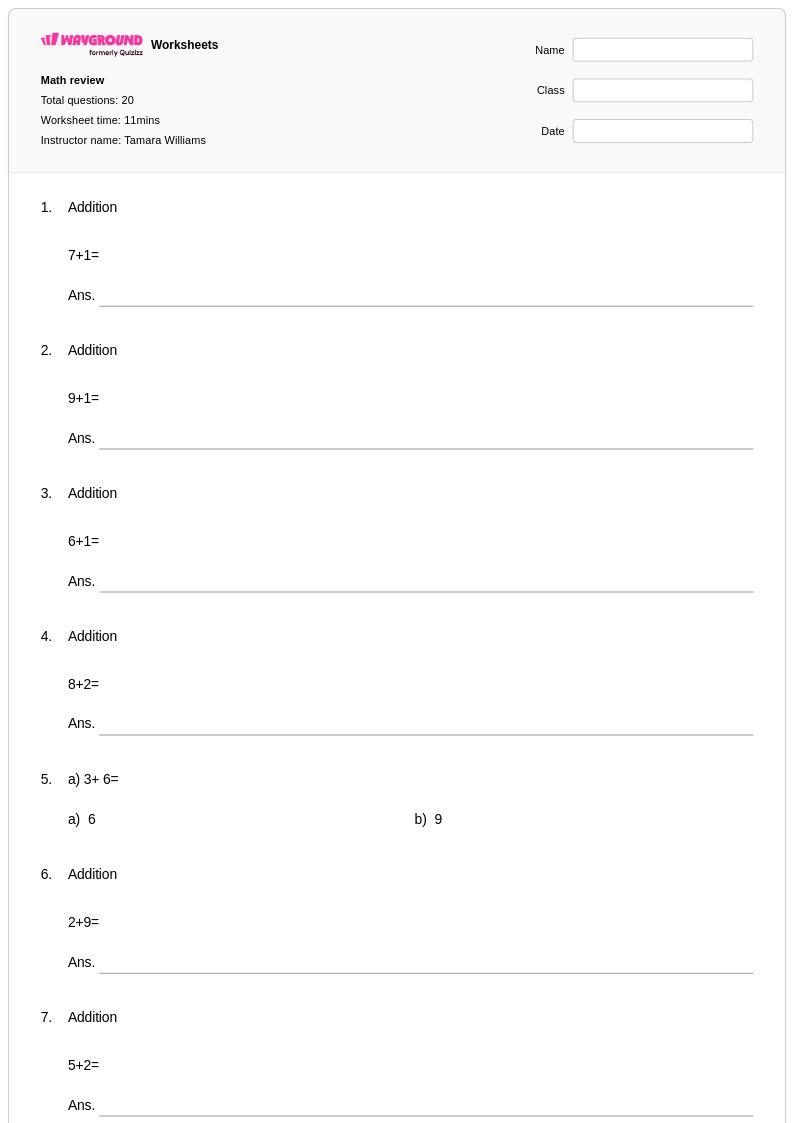
20 Q
1st - 2nd
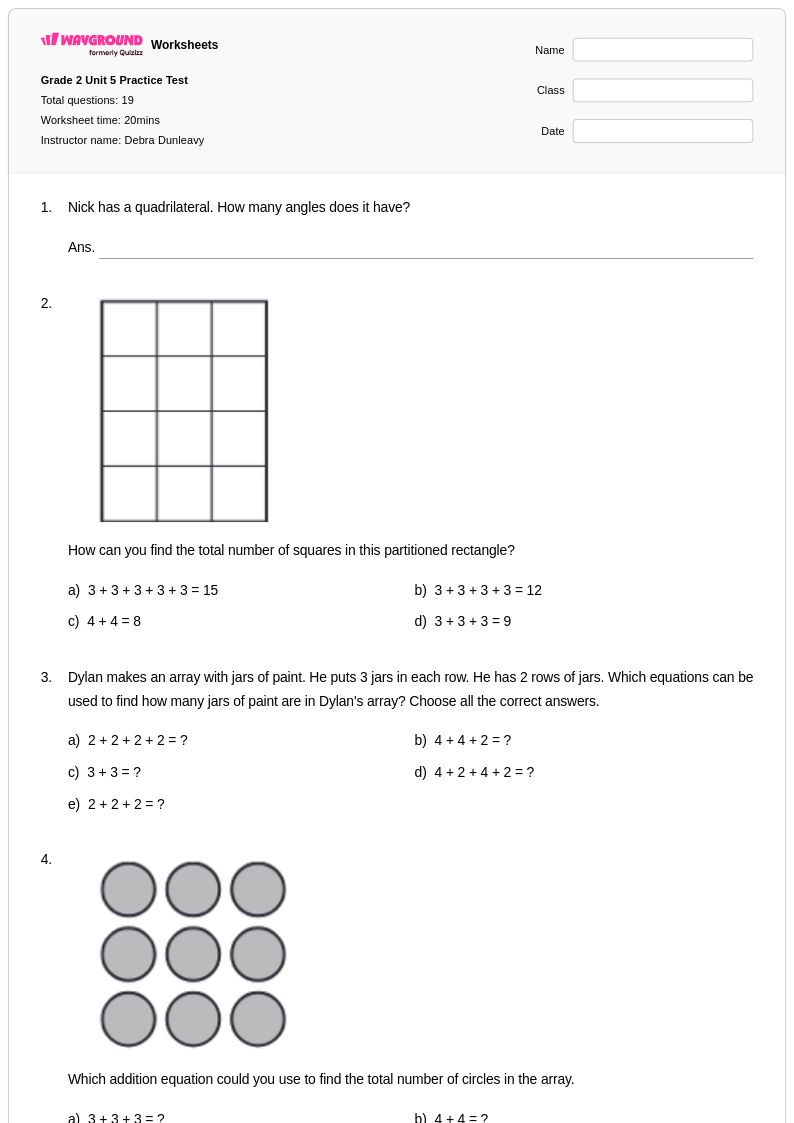
19 Q
2nd
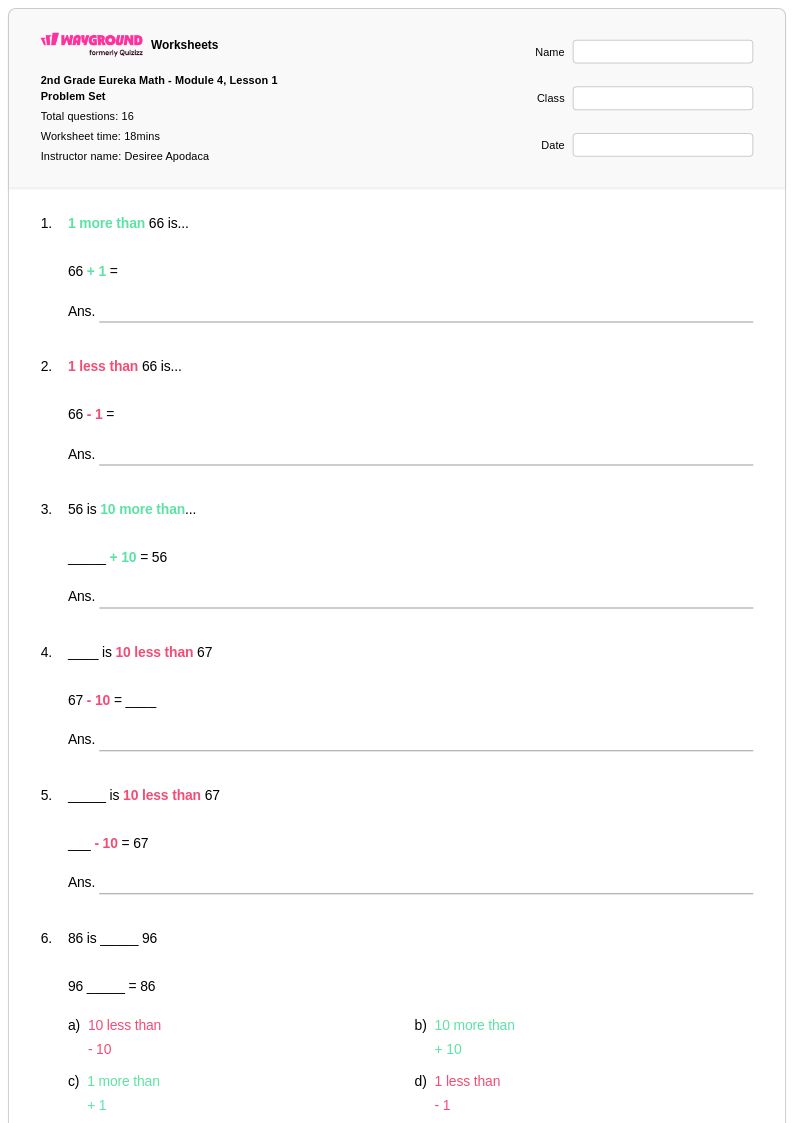
16 Q
2nd
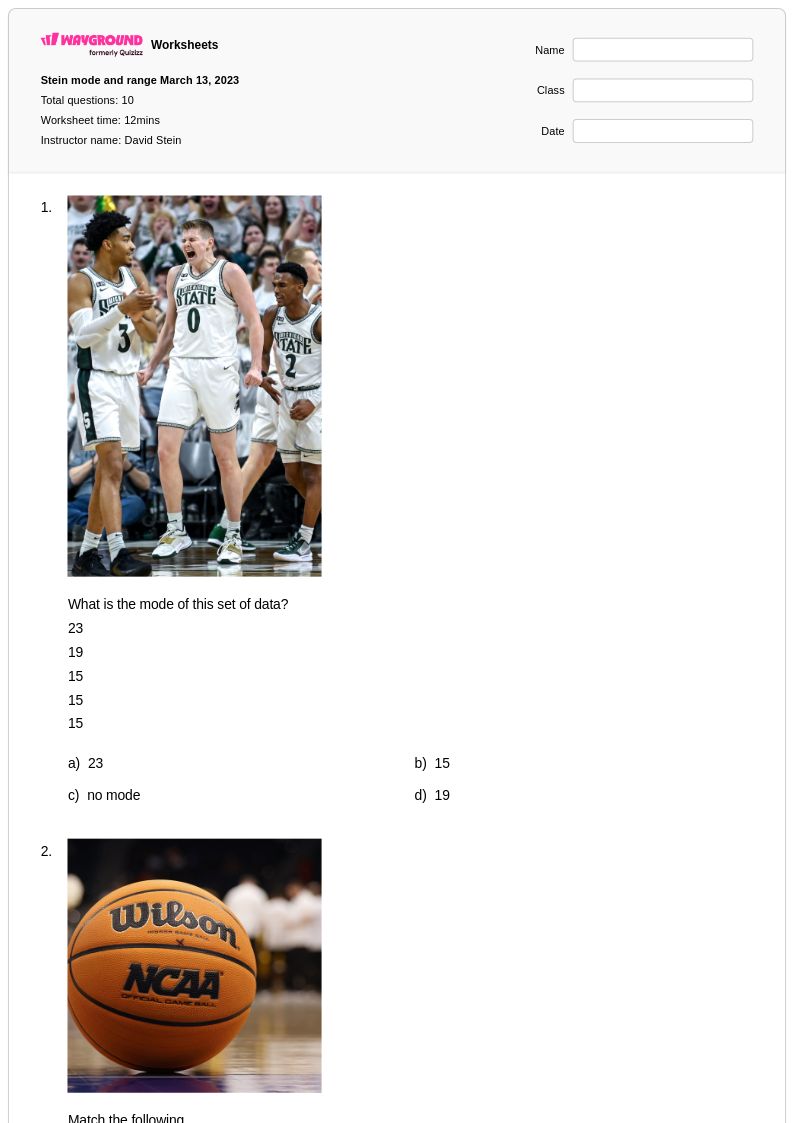
10 Q
2nd
Explore Addition and Patterns of One More Worksheets by Grades
Explore Other Subject Worksheets for grade 2
Explore printable Addition and Patterns of One More worksheets for Grade 2
Addition and Patterns of One More worksheets for Grade 2 students available through Wayground (formerly Quizizz) provide structured practice opportunities that help young learners master fundamental counting strategies and recognize numerical relationships. These carefully designed printables focus on building conceptual understanding of how adding one to any number creates predictable patterns, strengthening students' number sense and mental math abilities. Each worksheet collection includes comprehensive practice problems that guide second graders through systematic exploration of the "one more" concept, from concrete counting exercises to abstract pattern recognition tasks. Teachers can access complete answer keys and free pdf downloads that support both independent student work and guided instruction, ensuring students develop fluency with this essential mathematical building block.
Wayground (formerly Quizizz) empowers educators with millions of teacher-created resources specifically designed for Grade 2 Addition and Patterns of One More instruction, featuring robust search and filtering capabilities that help teachers locate materials perfectly matched to their students' needs. The platform's standards alignment ensures worksheets support curriculum objectives while differentiation tools allow teachers to customize content for varying ability levels within their classrooms. These flexible resources are available in both printable and digital formats, including downloadable pdf options, making them ideal for in-class practice, homework assignments, remediation sessions, and enrichment activities. Teachers can efficiently plan targeted skill practice, identify students who need additional support through formative assessment, and provide engaging worksheet collections that reinforce the critical mathematical understanding that underlies more complex addition strategies.
FAQs
How should I teach one-more patterns in second grade?
What exercises help second graders practice adding one more?
What errors do second graders make when adding one?
How can I use these one-more worksheets for Grade 2 practice?
How does the one-more pattern support the Grade 2 Common Core progression?
How can I differentiate one-more worksheets for second graders?
Why are second graders still practicing adding one more?