
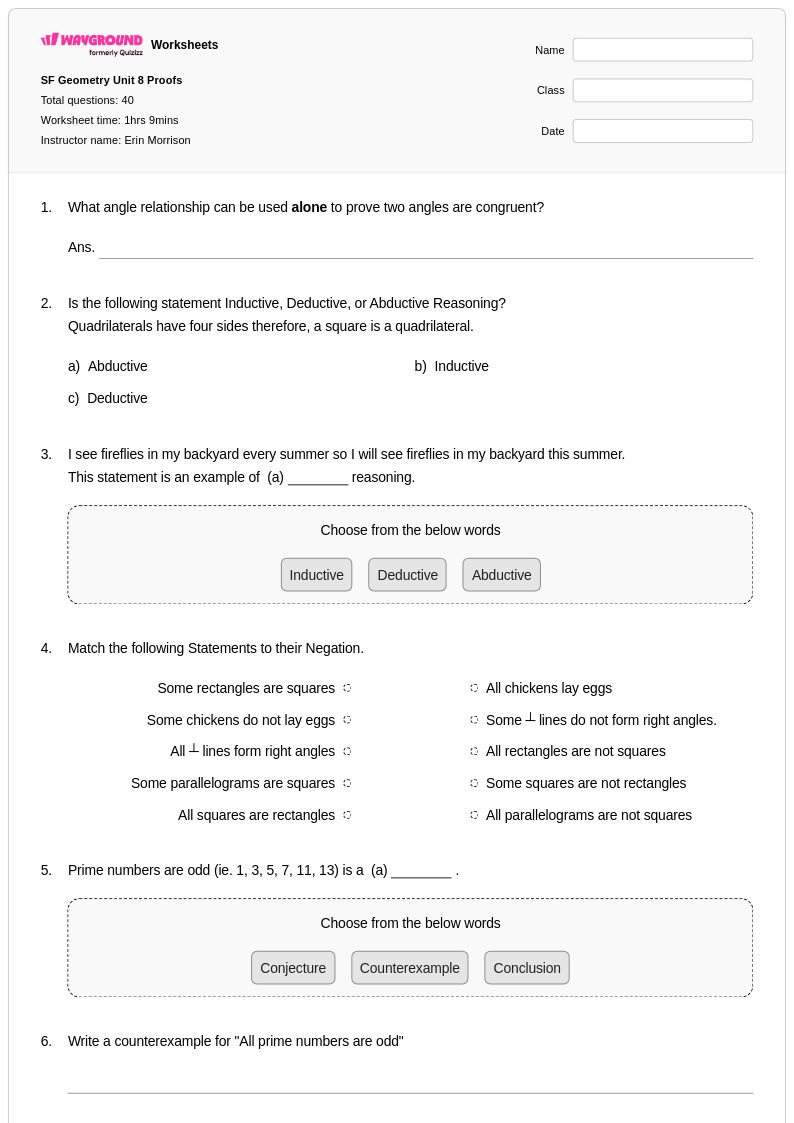
40 Q
9th - 12th
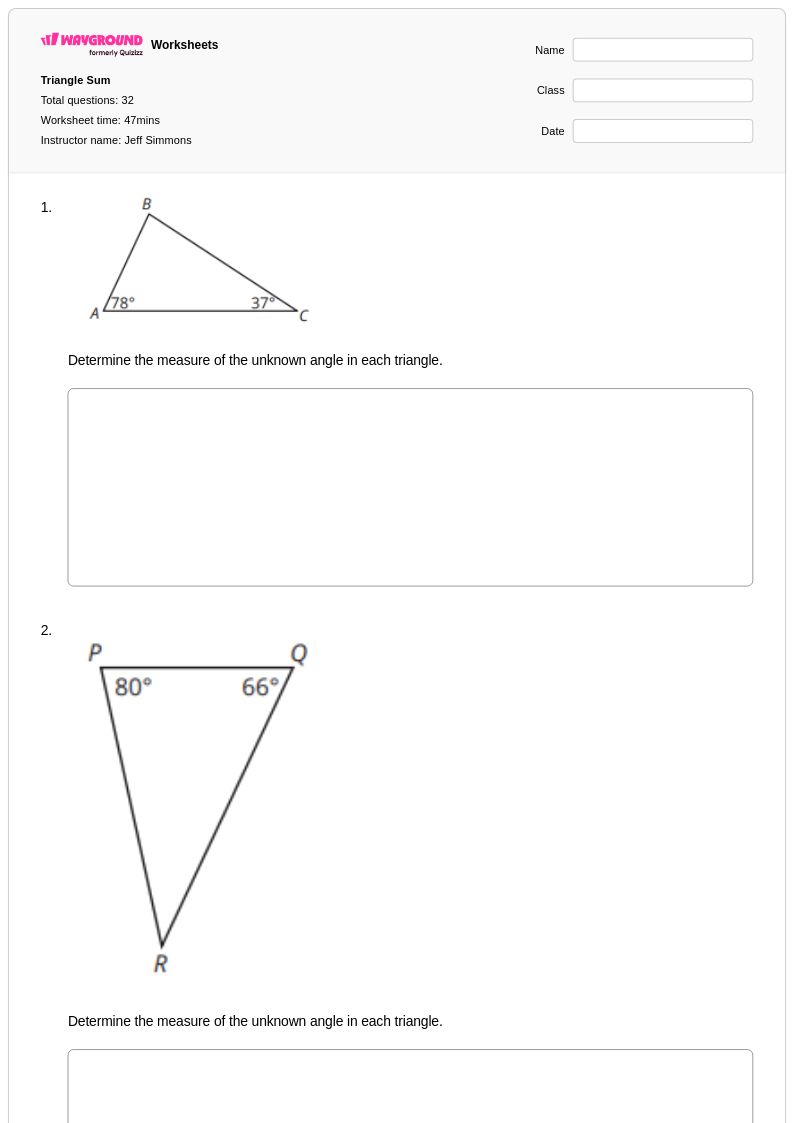
32 Q
8th
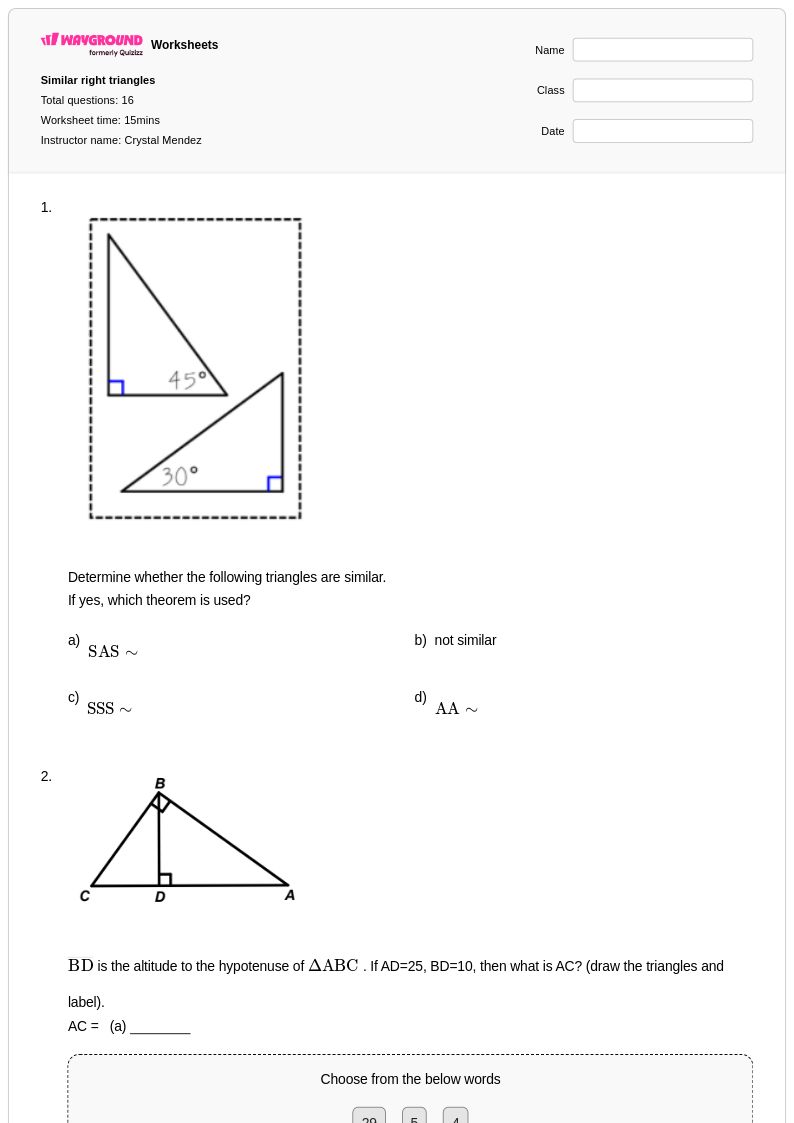
16 Q
10th
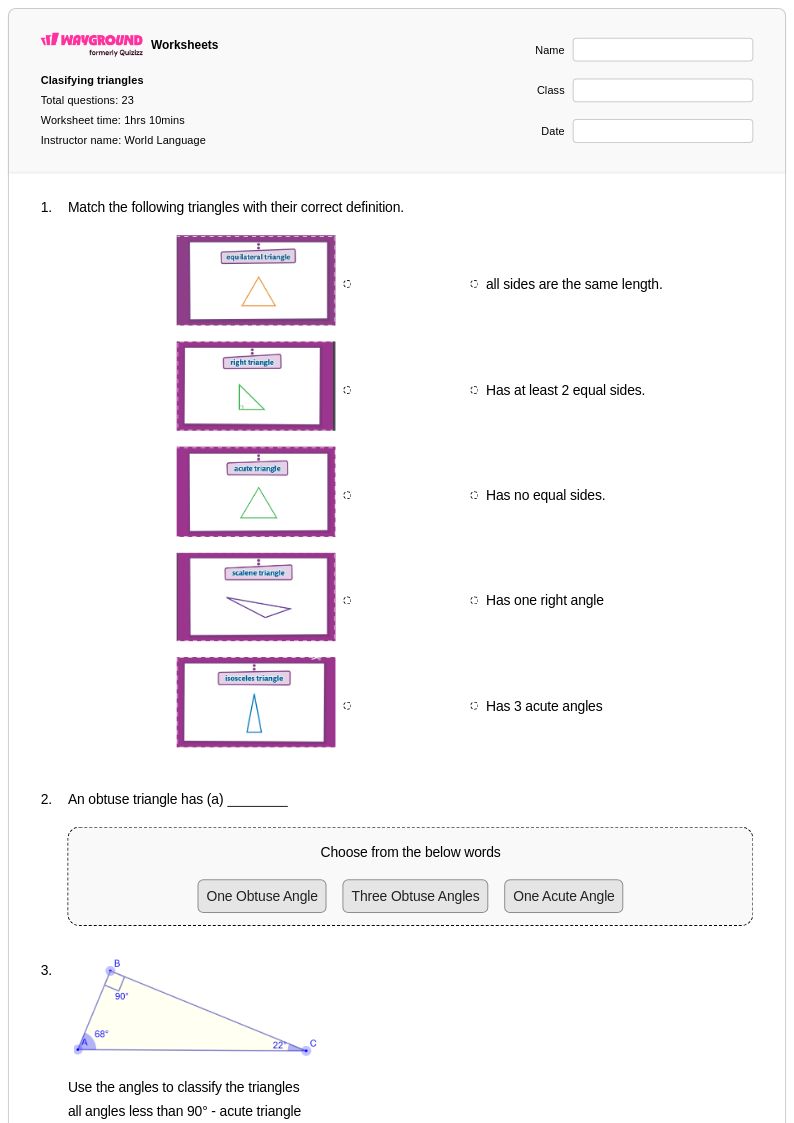
23 Q
5th
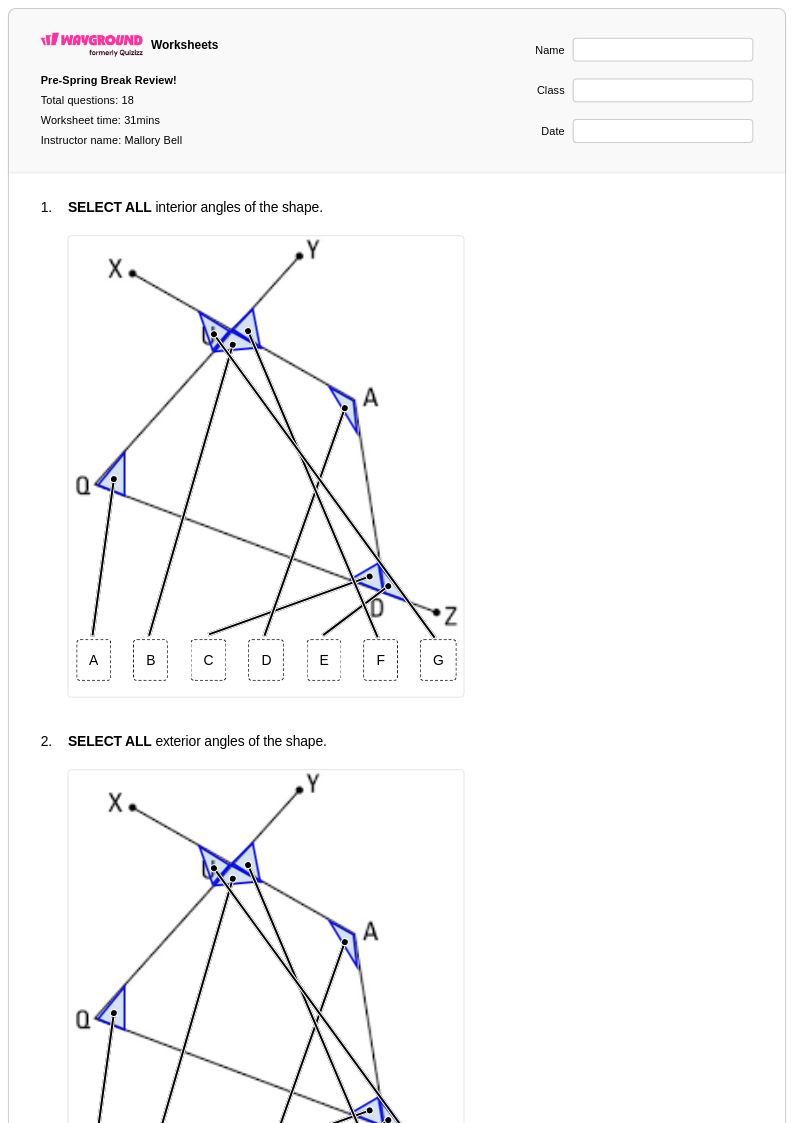
18 Q
9th - 12th
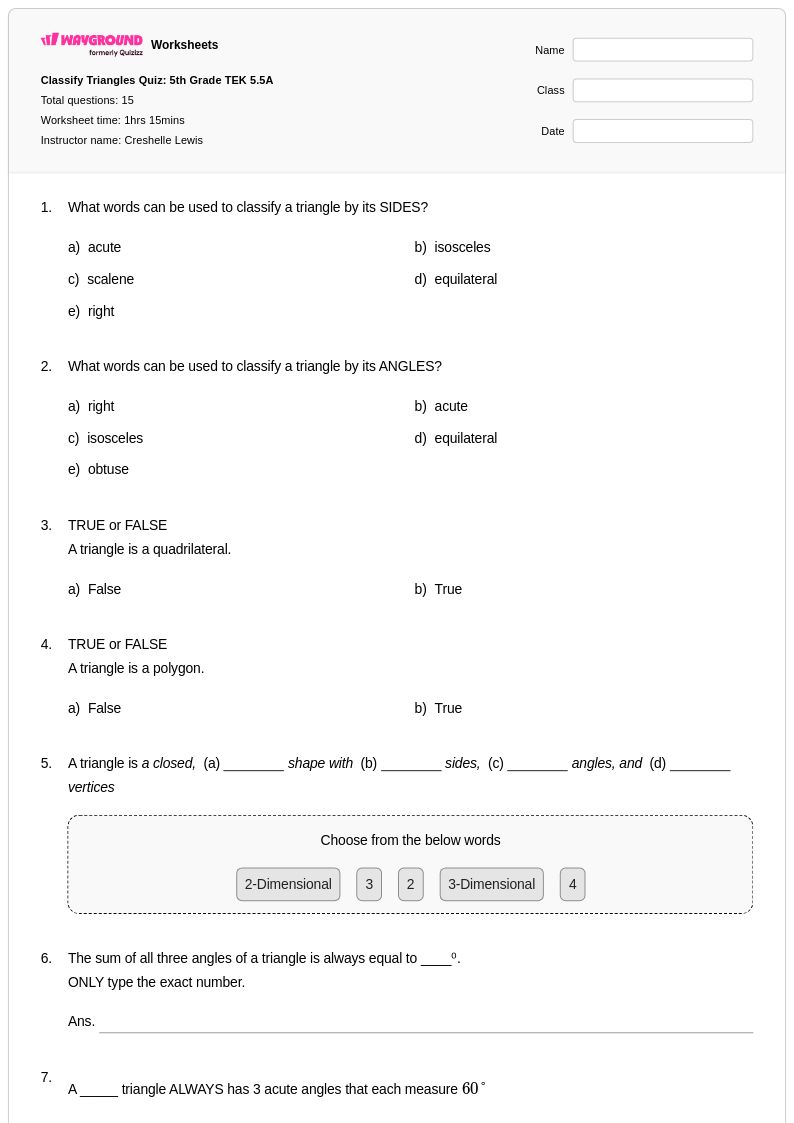
15 Q
5th
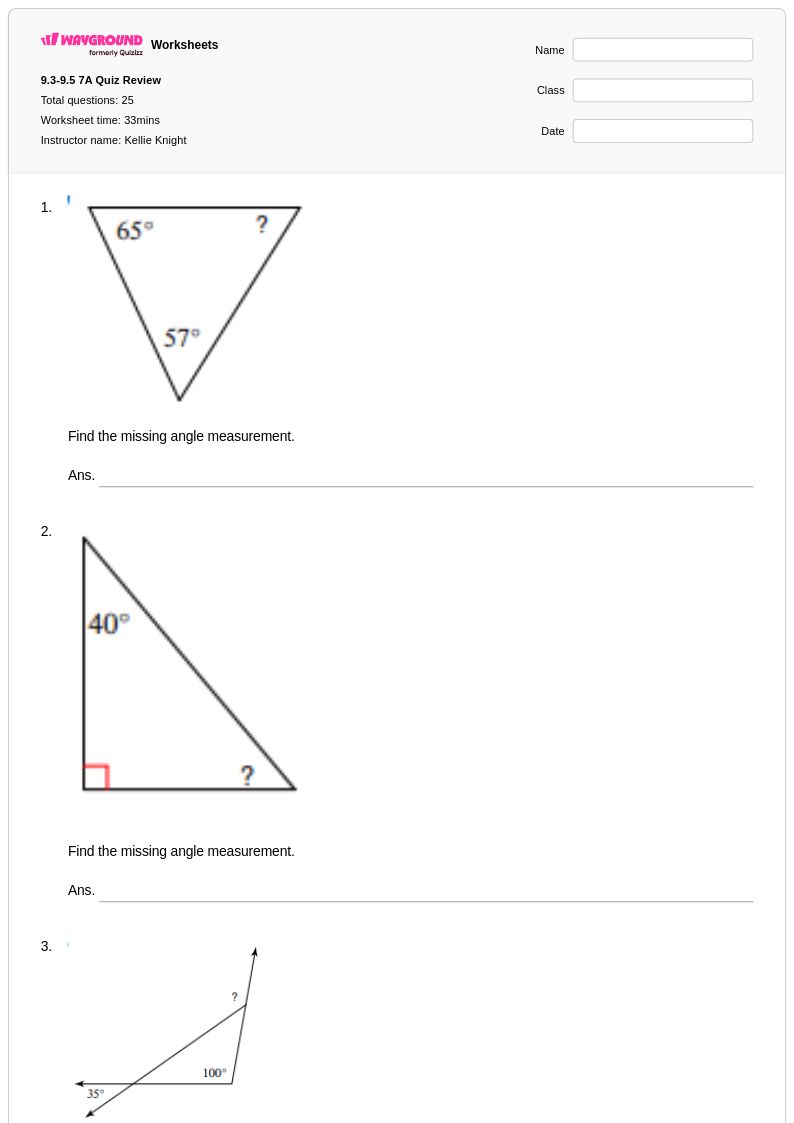
25 Q
7th
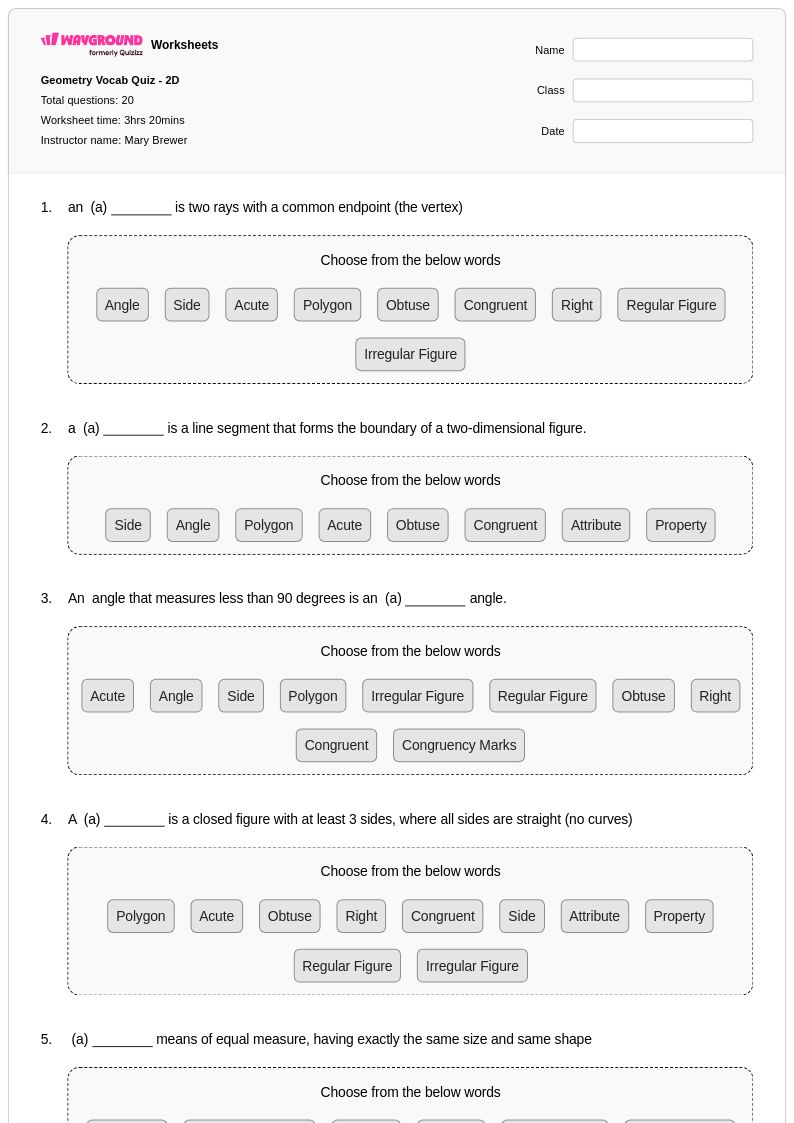
20 Q
5th
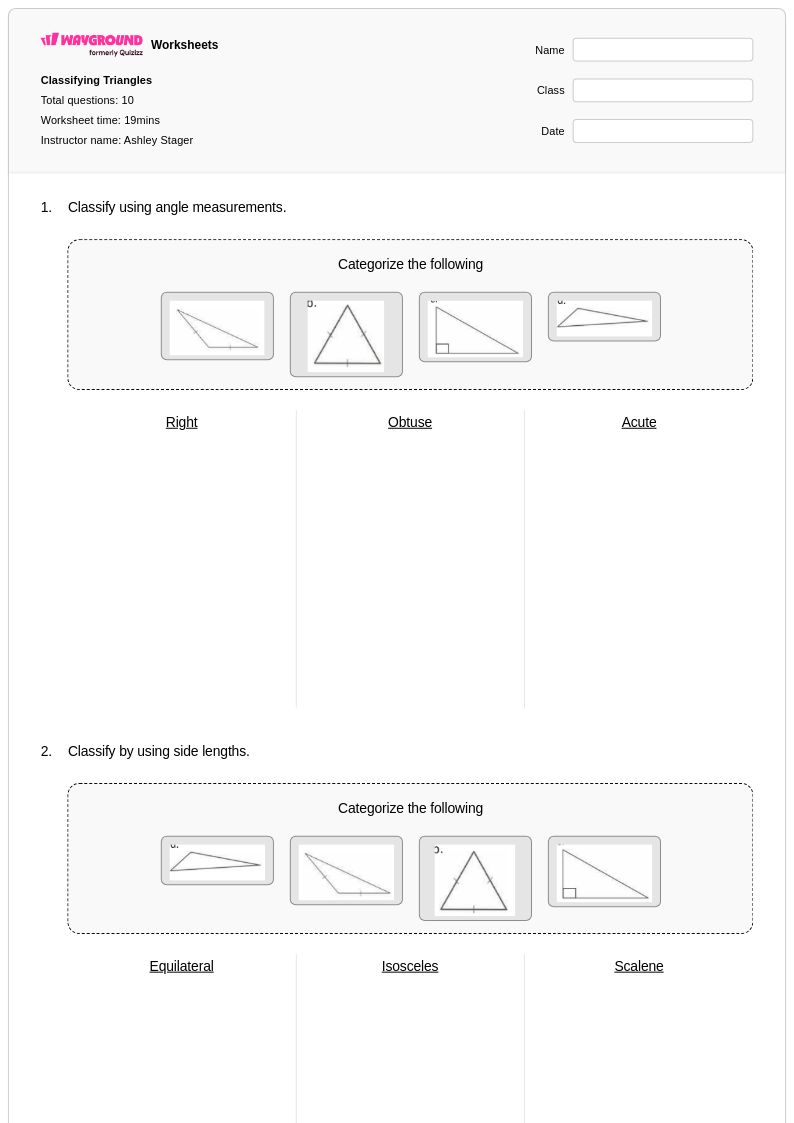
10 Q
5th
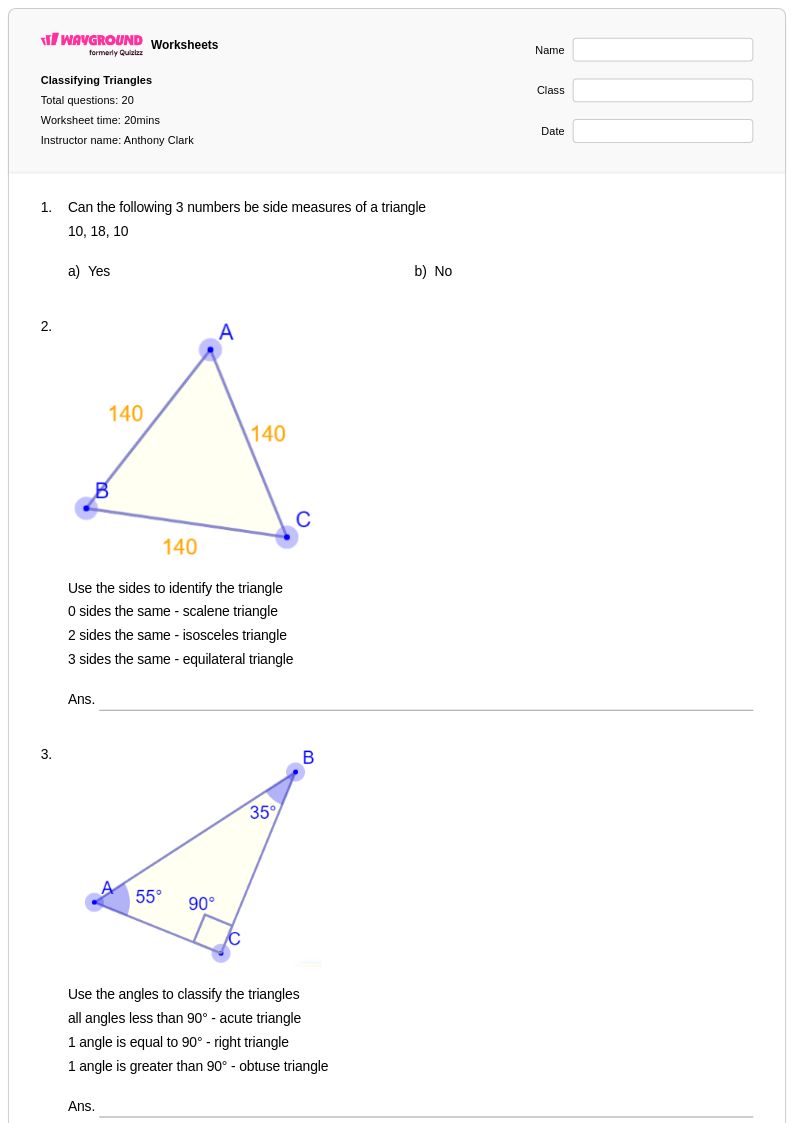
20 Q
7th - Uni
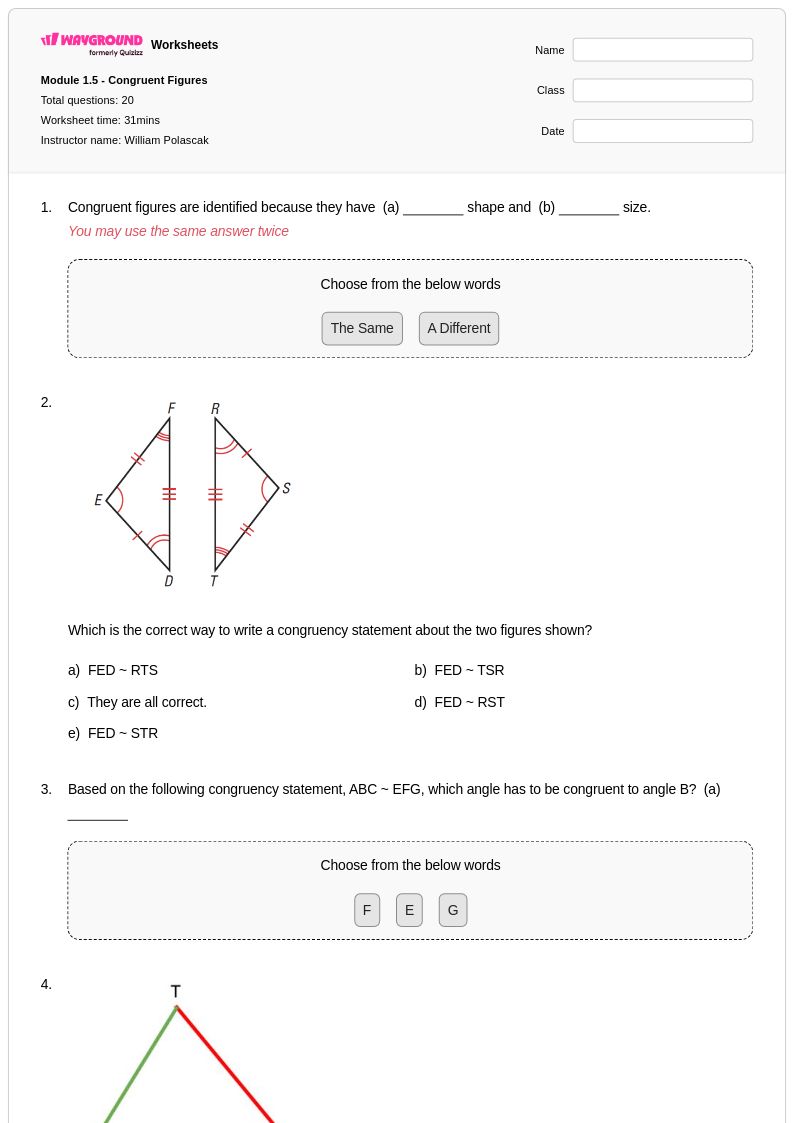
20 Q
8th
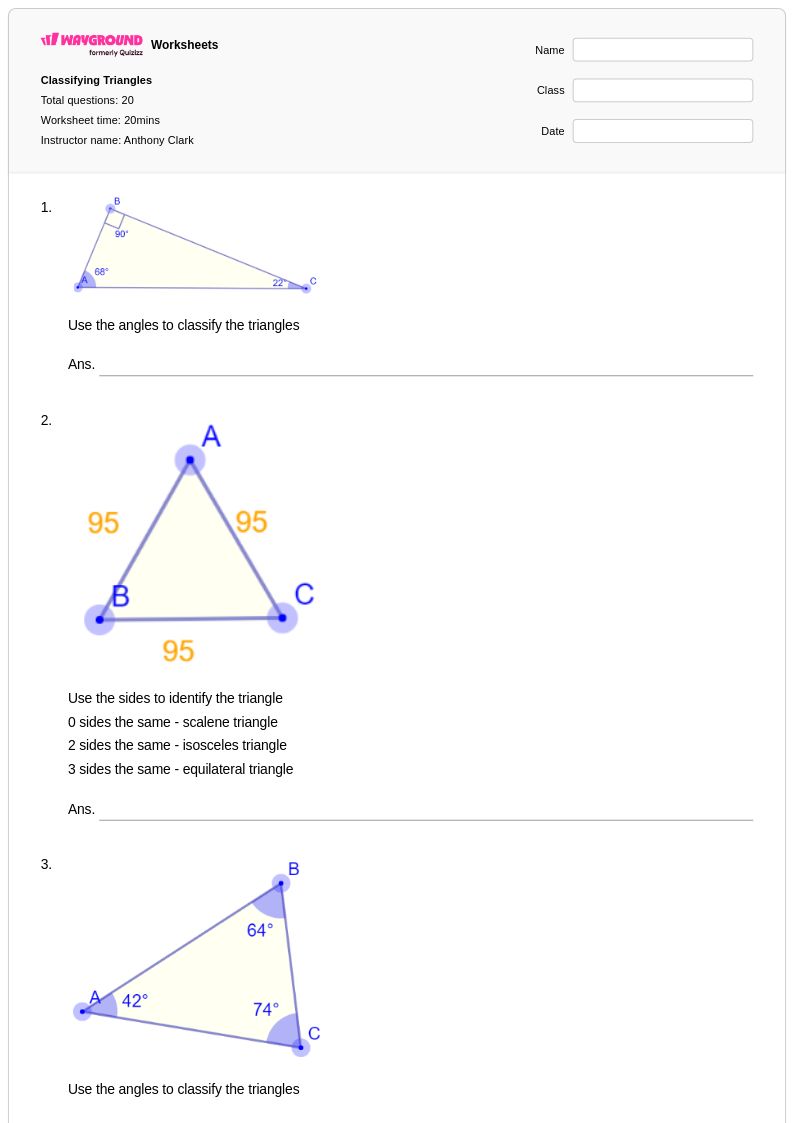
20 Q
7th - Uni
20 Q
7th - Uni
20 Q
10th
11 Q
9th - 12th
20 Q
10th - Uni
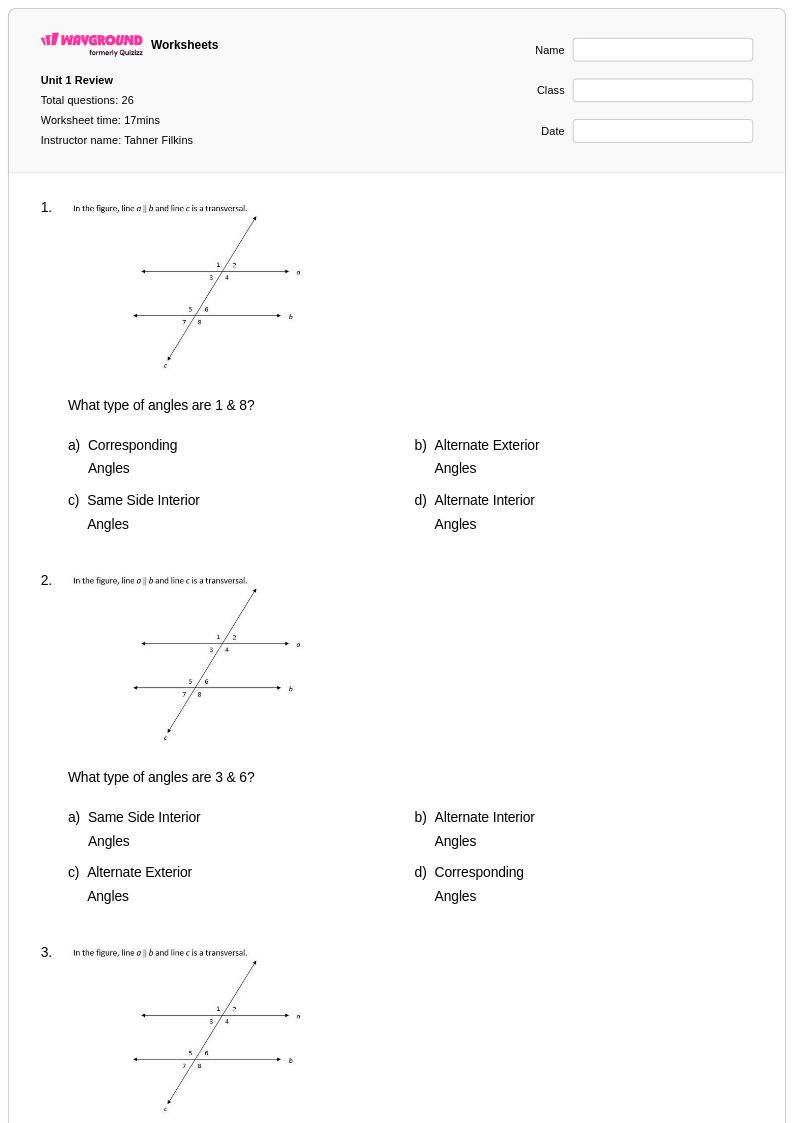
26 Q
10th
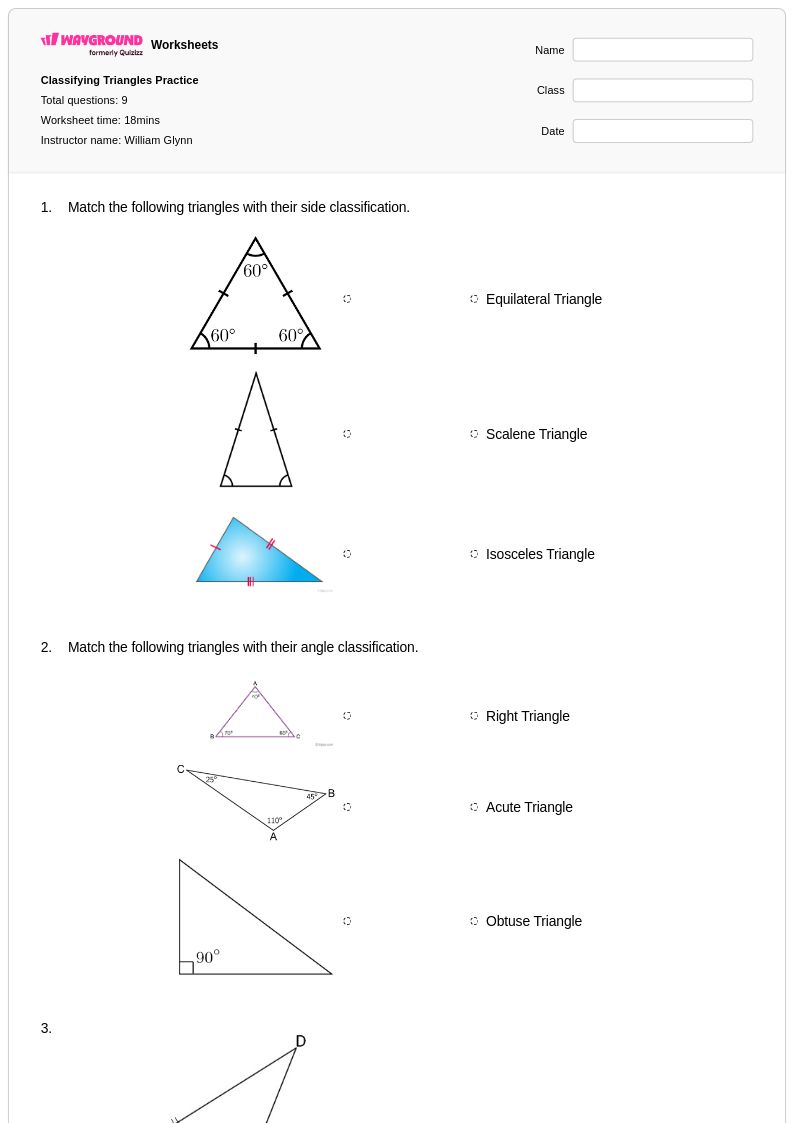
9 Q
10th
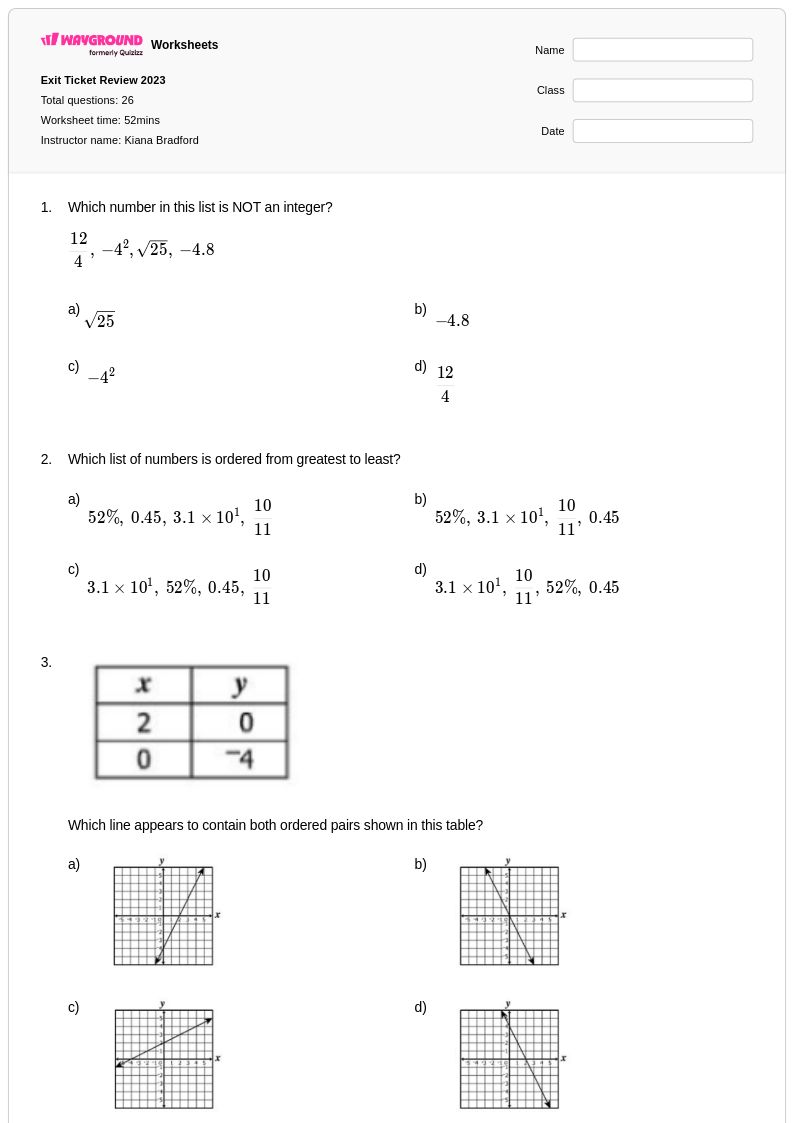
26 Q
8th
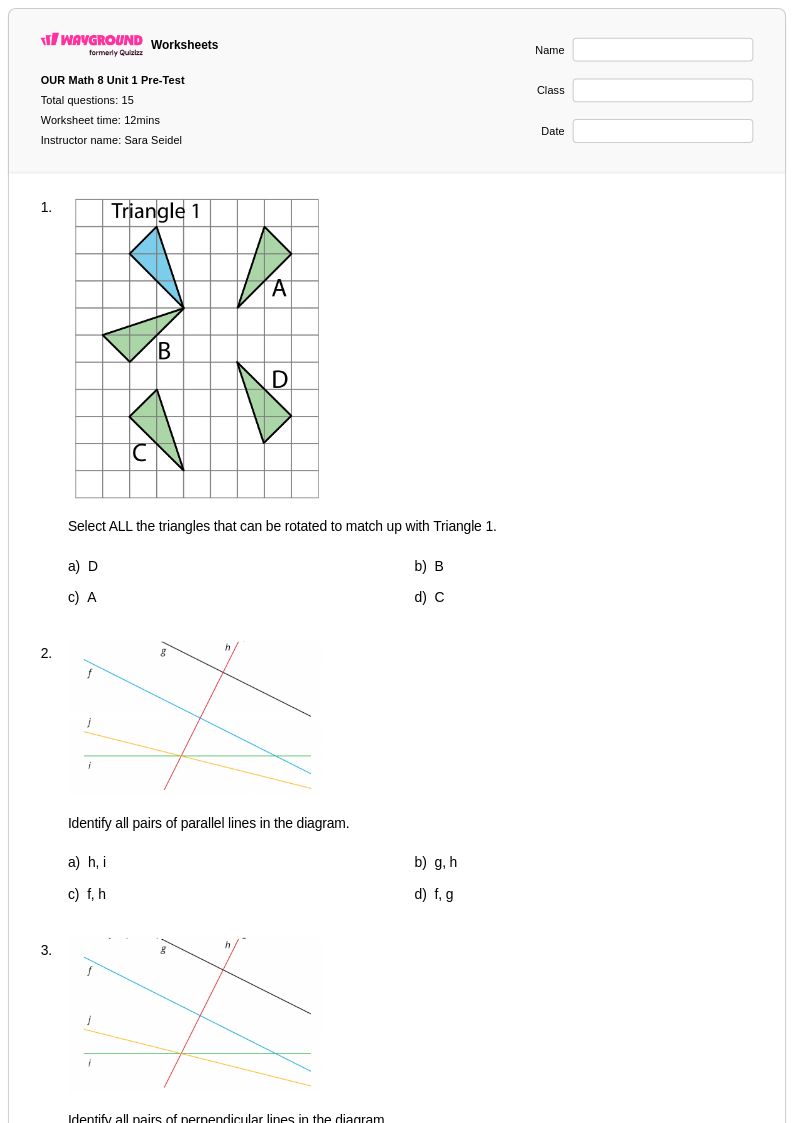
15 Q
8th
14 Q
8th
20 Q
10th
16 Q
12th
18 Q
9th - 11th
Explore Worksheets by Subjects
Explore printable Angle Side Relationships in Triangles worksheets
Angle side relationships in triangles represent a fundamental concept in geometry that establishes the critical connections between the measures of angles and the lengths of their opposite sides. Wayground's comprehensive collection of angle side relationship worksheets provides students with structured practice problems designed to master key theorems including the triangle inequality theorem, the relationship between angle measures and opposite side lengths, and the properties that govern how sides and angles correspond in various triangle configurations. These free printable resources feature carefully scaffolded exercises that guide learners through identifying the longest and shortest sides based on angle measures, determining possible side lengths given angle constraints, and applying these relationships to solve real-world geometric problems. Each worksheet includes a detailed answer key that supports independent learning and allows students to verify their understanding of these essential geometric principles through systematic practice.
Wayground, formerly Quizizz, empowers educators with millions of teacher-created resources specifically focused on angle side relationships in triangles, offering robust search and filtering capabilities that enable quick identification of materials aligned with specific learning objectives and educational standards. The platform's differentiation tools allow teachers to customize worksheets based on individual student needs, providing options for remediation through foundational concept review or enrichment through advanced application problems. These resources are available in both printable PDF format for traditional classroom use and digital formats for interactive learning environments, giving educators the flexibility to seamlessly integrate angle side relationship practice into their instructional planning. The extensive collection supports targeted skill development through varied problem types, enabling teachers to address gaps in understanding while building student confidence in analyzing the geometric relationships that govern triangle properties.
FAQs
How do I teach angle-side relationships in triangles?
What exercises help students practice angle-side relationships in triangles?
What mistakes do students make with angle-side relationships in triangles?
How can I use an angle-side relationships in triangles worksheet from Wayground?
How do angle-side relationships in triangles fit the Common Core geometry progression?
How can I differentiate angle-side relationship practice?