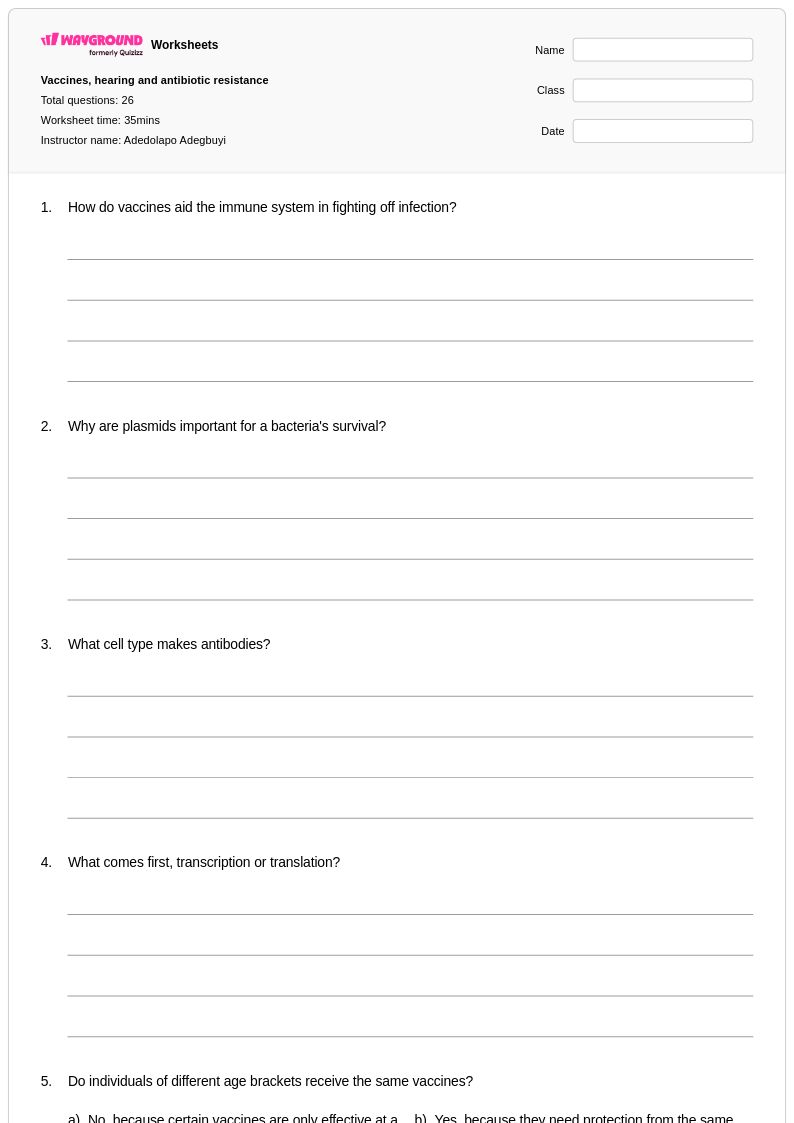
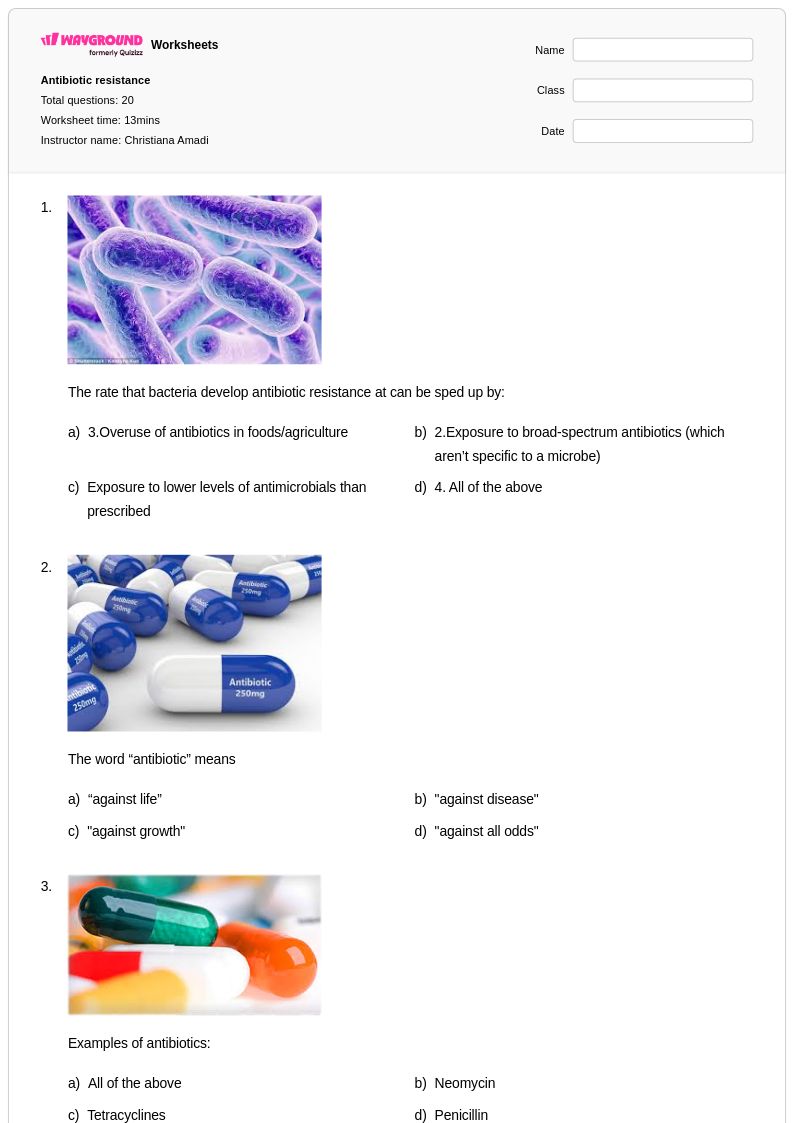
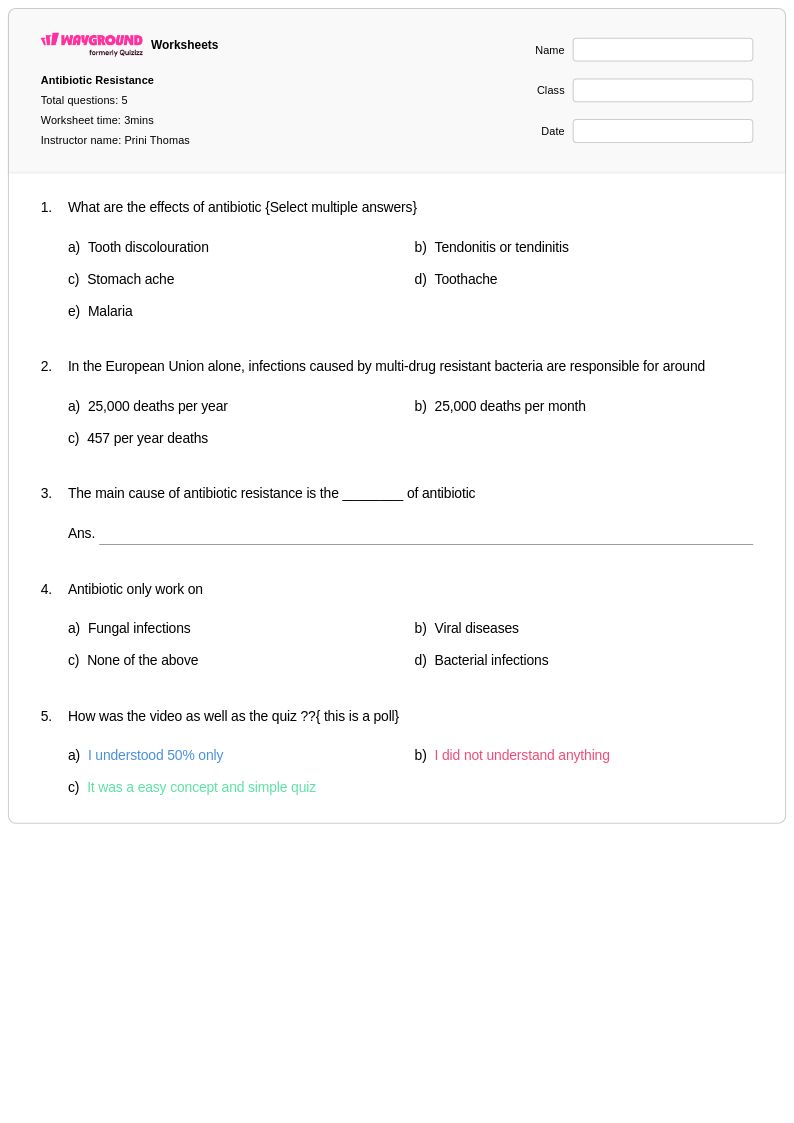
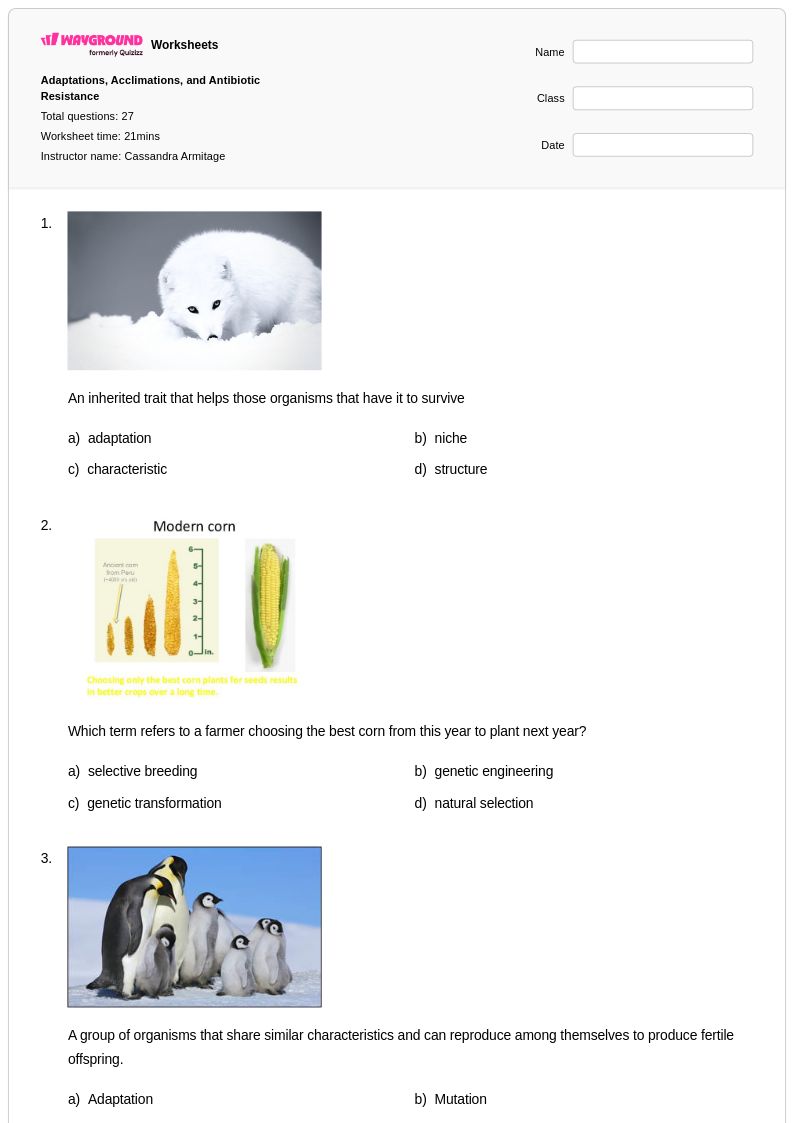
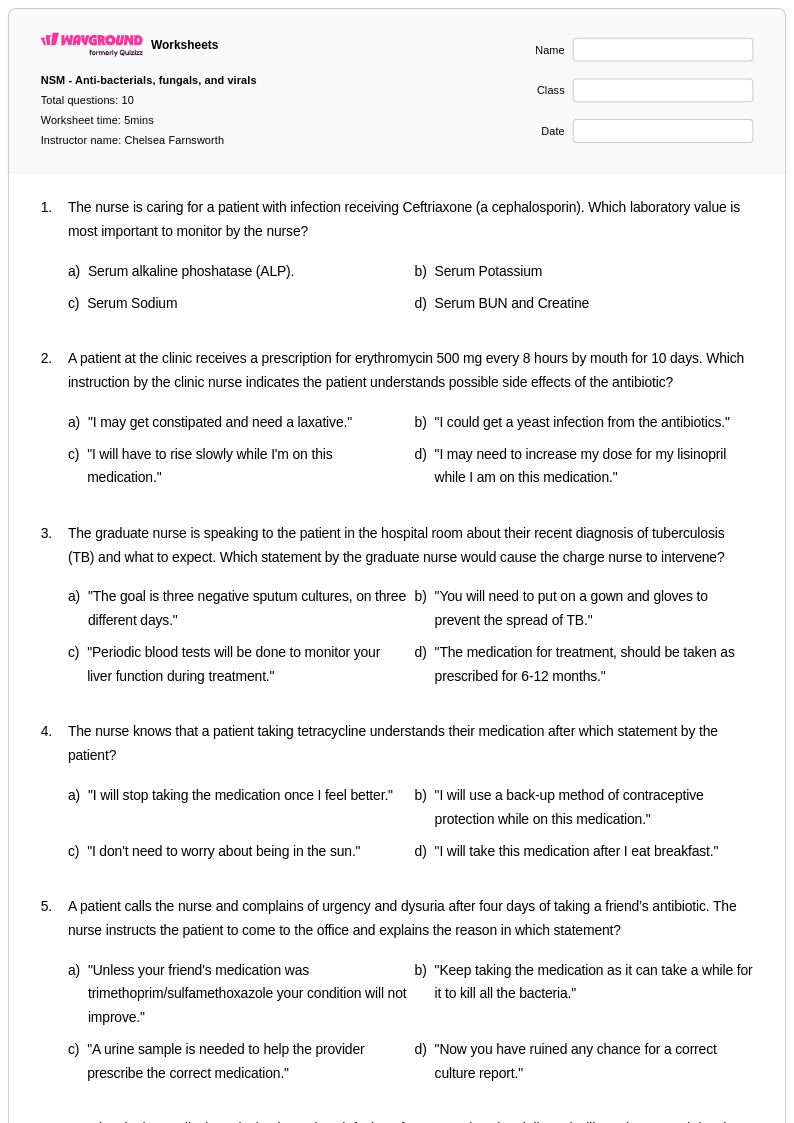
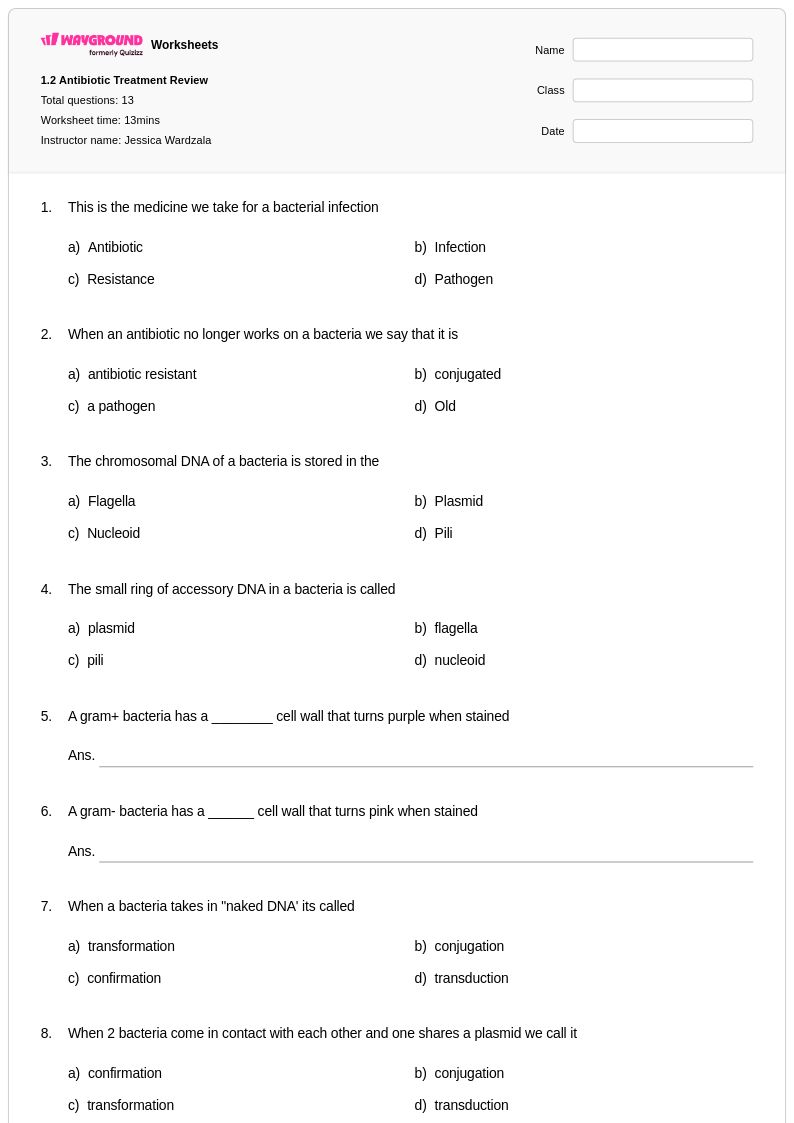
Enhance student understanding of antibiotic resistance with Wayground's comprehensive collection of free biology worksheets, featuring printable PDFs, practice problems, and detailed answer keys for effective learning.
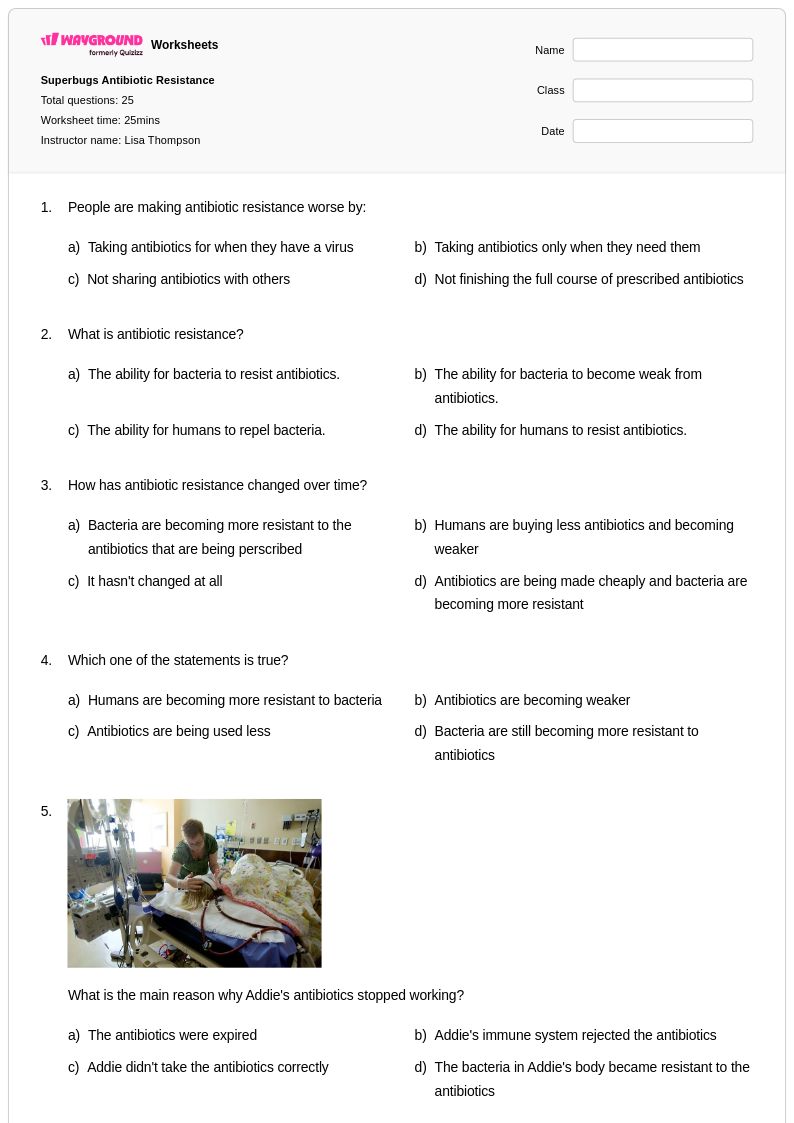
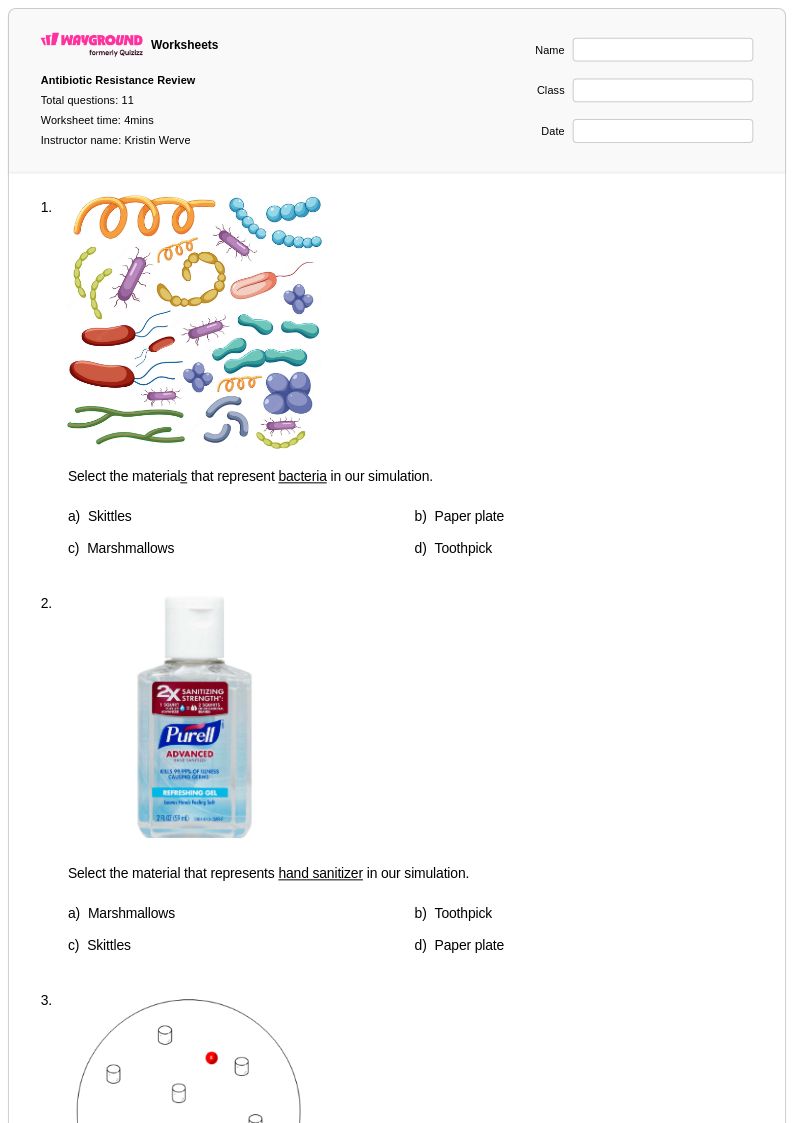
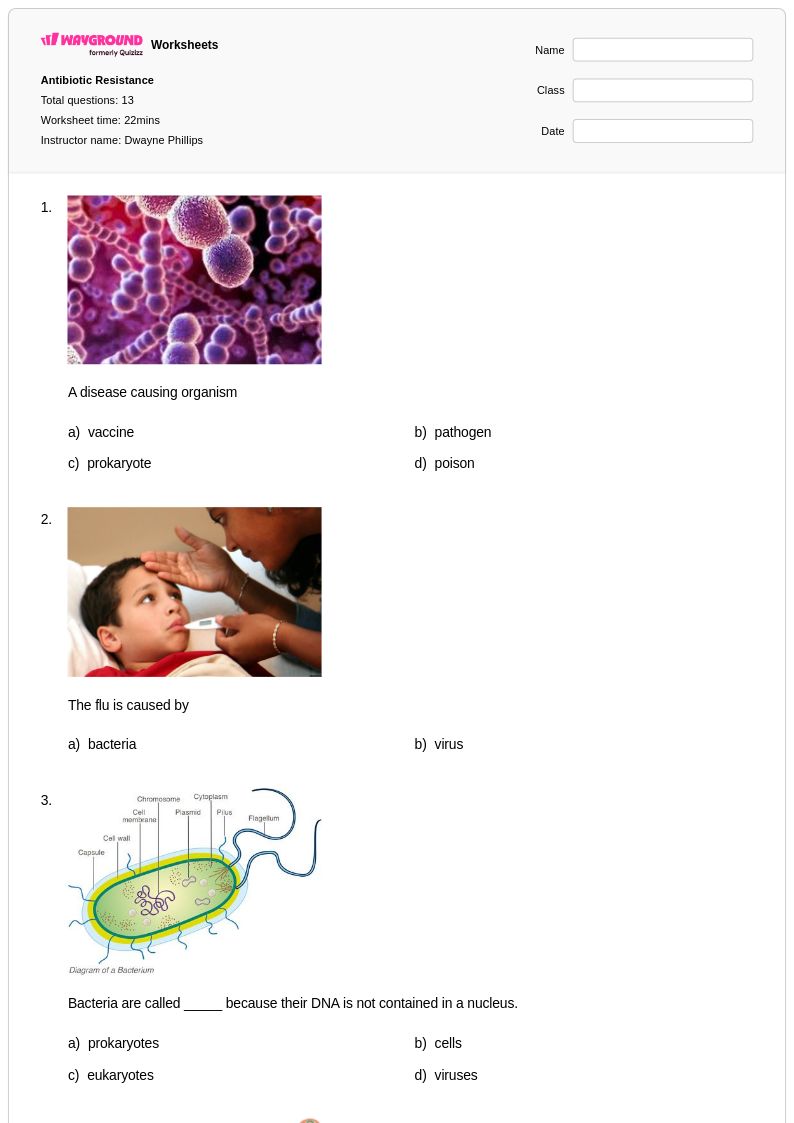
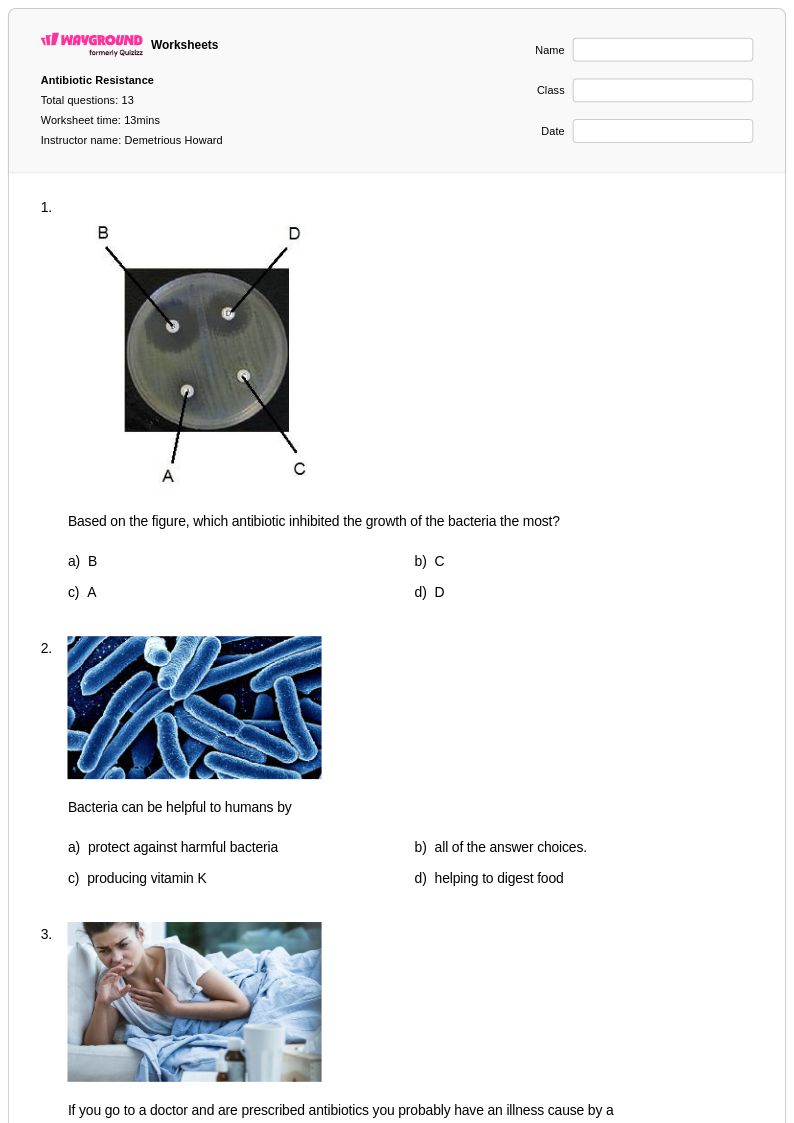
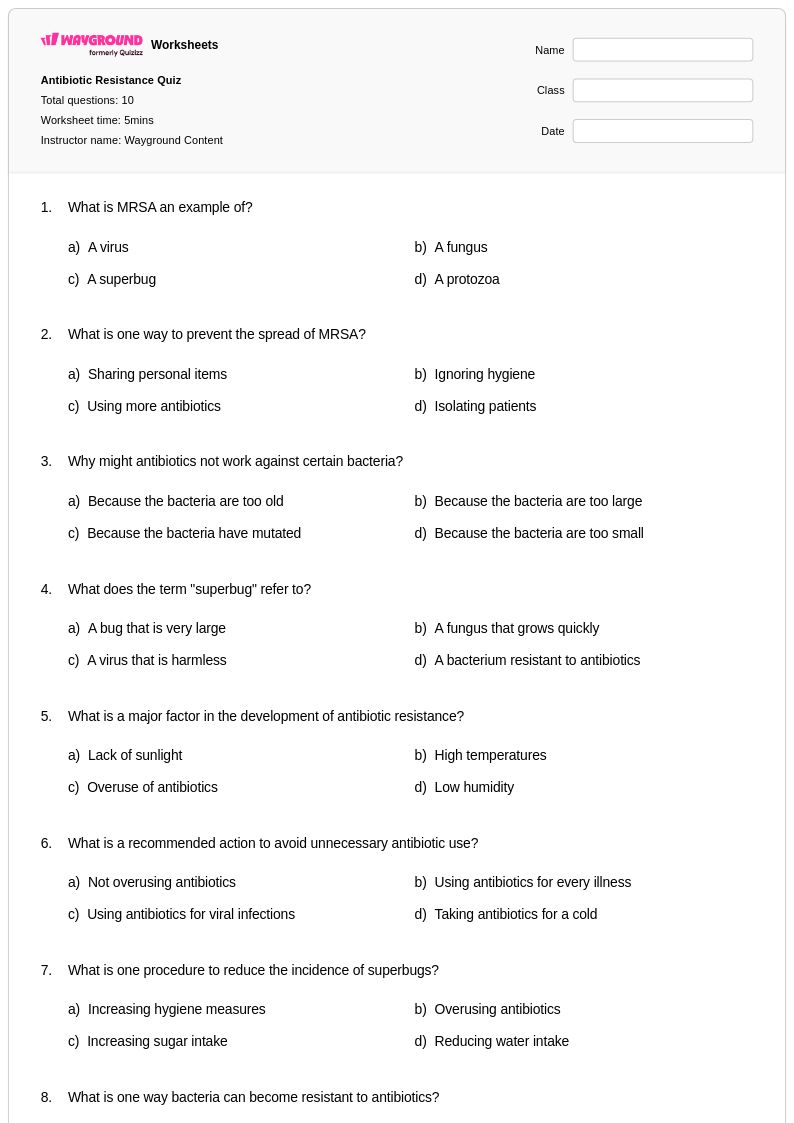
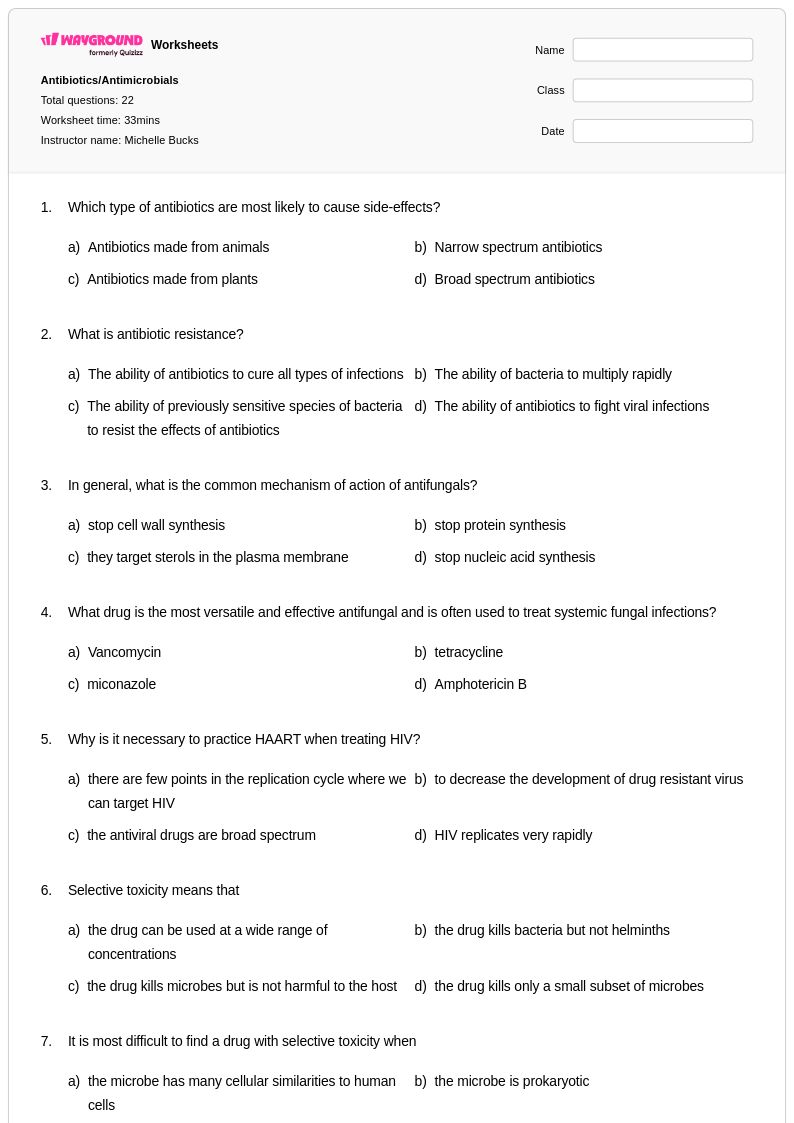
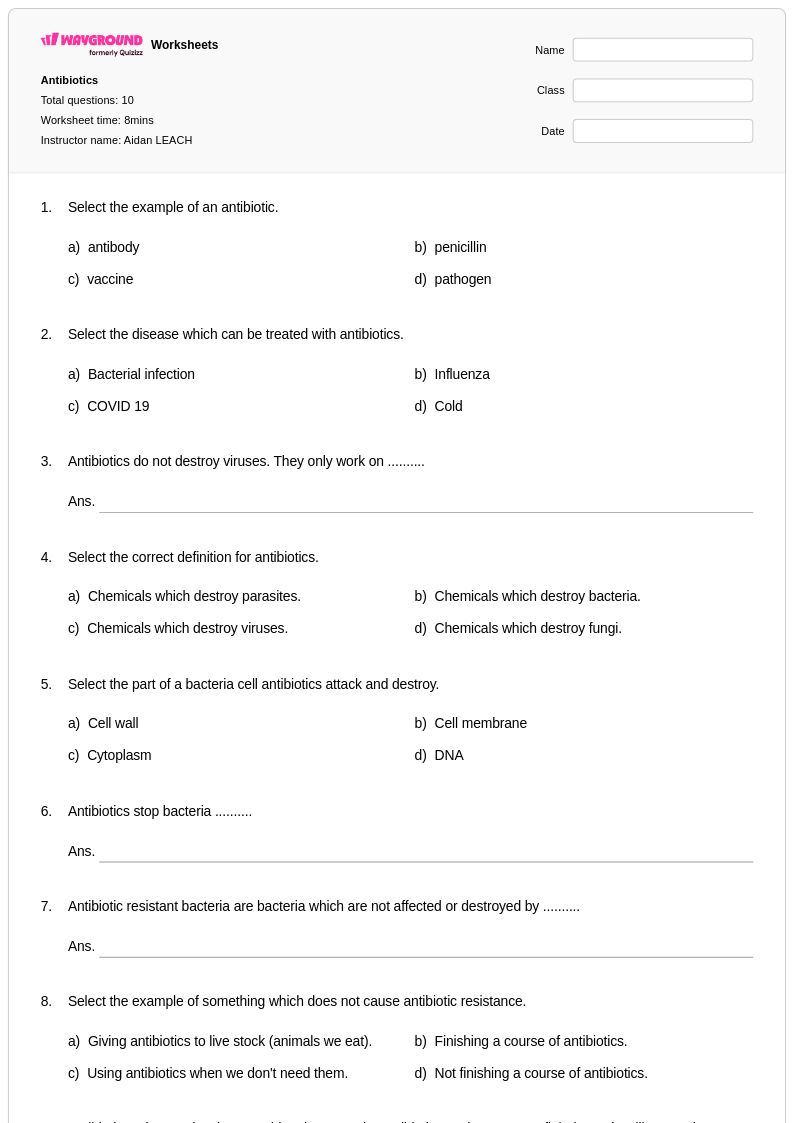
Antibiotic resistance worksheets available through Wayground (formerly Quizizz) provide comprehensive educational resources that help students understand one of the most pressing challenges in modern medicine. These expertly crafted materials guide learners through the complex mechanisms by which bacteria develop resistance to antimicrobial drugs, exploring concepts such as genetic mutations, horizontal gene transfer, and selective pressure. The worksheets strengthen critical thinking skills by challenging students to analyze real-world scenarios involving MRSA, tuberculosis, and other resistant pathogens, while practice problems reinforce understanding of evolutionary principles and public health implications. Each resource includes detailed answer keys that support both independent study and classroom instruction, with free printables available in convenient pdf format to accommodate diverse learning environments.
Wayground's extensive collection draws from millions of teacher-created resources, ensuring educators have access to high-quality antibiotic resistance materials that align with current scientific standards and curriculum requirements. The platform's robust search and filtering capabilities allow teachers to quickly locate worksheets tailored to specific learning objectives, whether focusing on molecular mechanisms, epidemiological trends, or prevention strategies. Advanced differentiation tools enable instructors to customize content complexity and presentation style, supporting both remediation for struggling students and enrichment opportunities for advanced learners. Available in both printable and digital formats, these resources facilitate flexible lesson planning and provide essential skill practice that helps students grasp the interconnections between microbiology, evolution, and global health policy in our ongoing battle against resistant bacterial infections.
FAQs
How do I teach antibiotic resistance in a biology class?
Teaching antibiotic resistance effectively means grounding the concept in evolutionary principles first — students need to understand natural selection before they can make sense of why bacteria survive drug treatment. From there, connect mechanisms like genetic mutation and horizontal gene transfer to real-world cases such as MRSA and drug-resistant tuberculosis. Using patient case studies or outbreak scenarios helps students see how microbiology, public health, and personal behavior intersect in ways that feel immediate and relevant.
What exercises help students practice understanding antibiotic resistance?
Practice problems that ask students to trace the steps of resistance development — from initial antibiotic exposure through selective pressure to resistant population dominance — build the most durable understanding. Scenario-based questions involving real pathogens like MRSA or multidrug-resistant tuberculosis push students to apply evolutionary reasoning rather than memorize definitions. Worksheet exercises that connect molecular mechanisms to epidemiological outcomes are especially effective at reinforcing the public health dimensions of the topic.
What misconceptions do students commonly have about antibiotic resistance?
The most persistent misconception is that individual people become resistant to antibiotics, when in fact it is the bacteria that develop resistance. Students also frequently confuse antibiotic resistance with antibiotic allergy or assume that stopping a course of antibiotics early is harmless. A related error is failing to connect overuse and misuse of antibiotics to the acceleration of resistance, which requires explicit instruction linking individual behavior to population-level consequences.
How does horizontal gene transfer relate to antibiotic resistance, and how do I explain it to students?
Horizontal gene transfer allows bacteria to share resistance genes directly with other bacteria — even across different species — without reproduction, which is why resistance can spread far faster than traditional inheritance alone. The three main mechanisms are transformation, transduction, and conjugation, with conjugation via plasmids being the most clinically significant. Using a diagram showing a plasmid carrying a resistance gene moving between two bacterial cells makes this concept concrete and distinguishes it clearly from vertical gene transmission.
How can I use antibiotic resistance worksheets to differentiate instruction for different skill levels?
For students who are still building foundational biology knowledge, worksheets that focus on vocabulary, basic mechanisms, and guided reading questions provide necessary scaffolding. More advanced learners benefit from open-ended analysis tasks that ask them to evaluate prevention strategies or interpret epidemiological data. On Wayground, teachers can apply accommodations such as read aloud support, reduced answer choices, and extended time to individual students, allowing the same core material to serve diverse learners without singling anyone out.
How do I use Wayground's antibiotic resistance worksheets in my classroom?
Wayground's antibiotic resistance worksheets are available as printable PDFs for traditional classroom use and in digital formats for technology-integrated environments, giving teachers flexibility to assign them as independent practice, homework, or in-class assessments. Teachers can also host worksheets as a quiz directly on Wayground, allowing students to complete work digitally while generating immediate response data. Each worksheet includes a complete answer key, so both independent student review and teacher-led correction are straightforward.