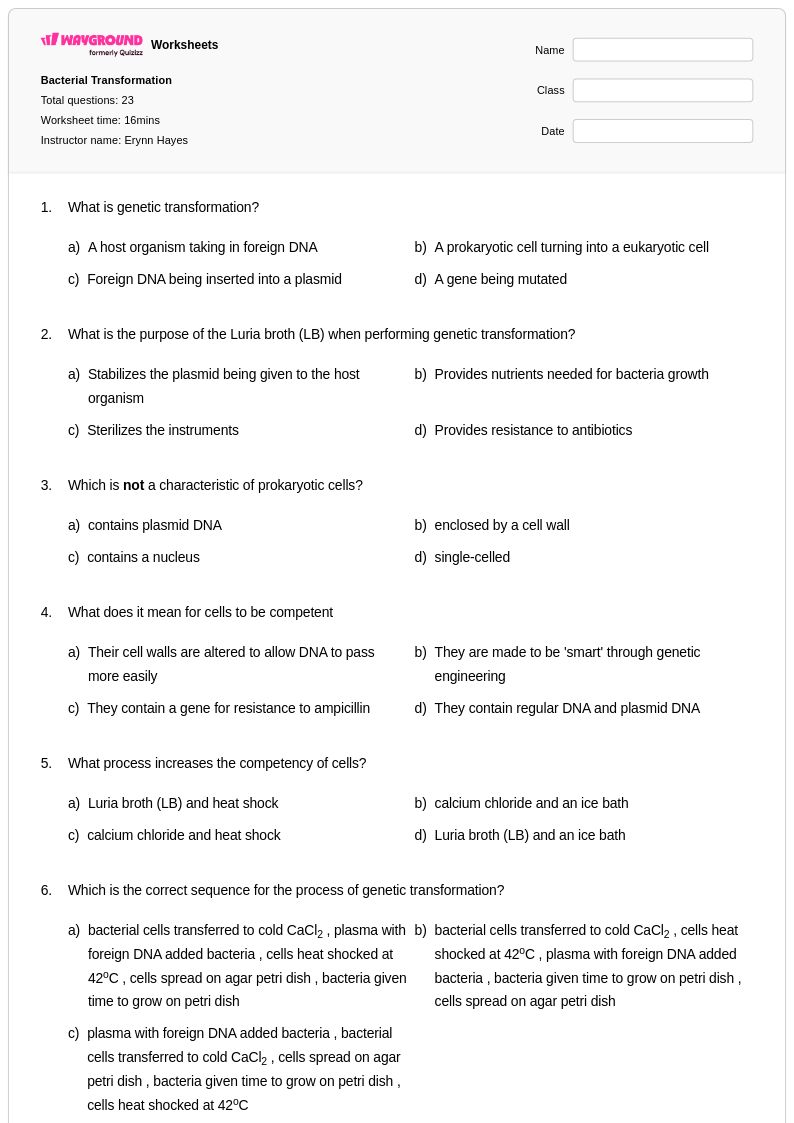
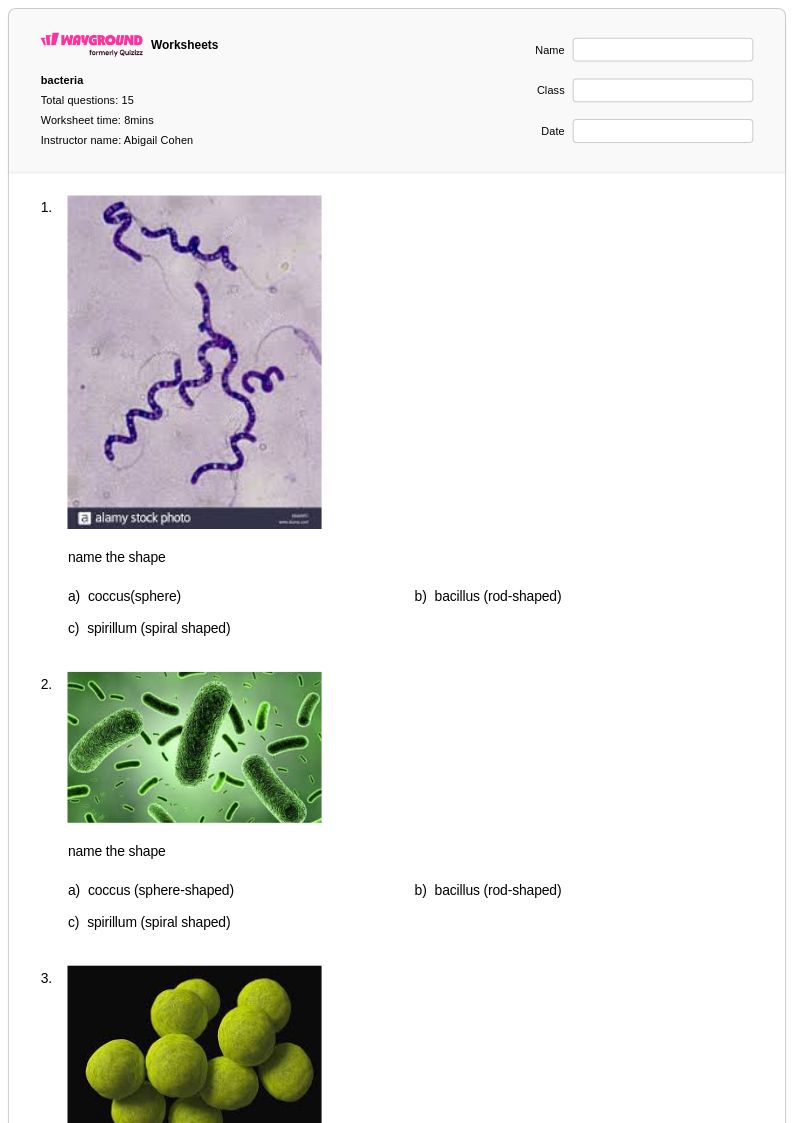
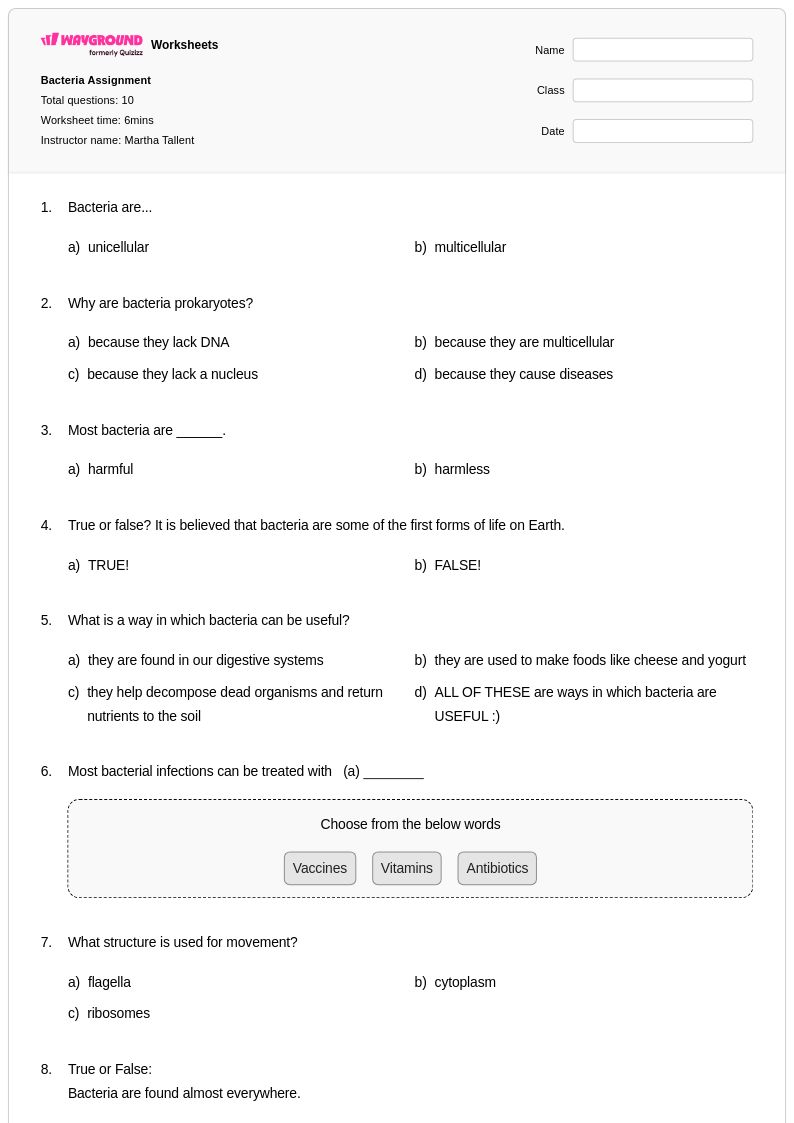
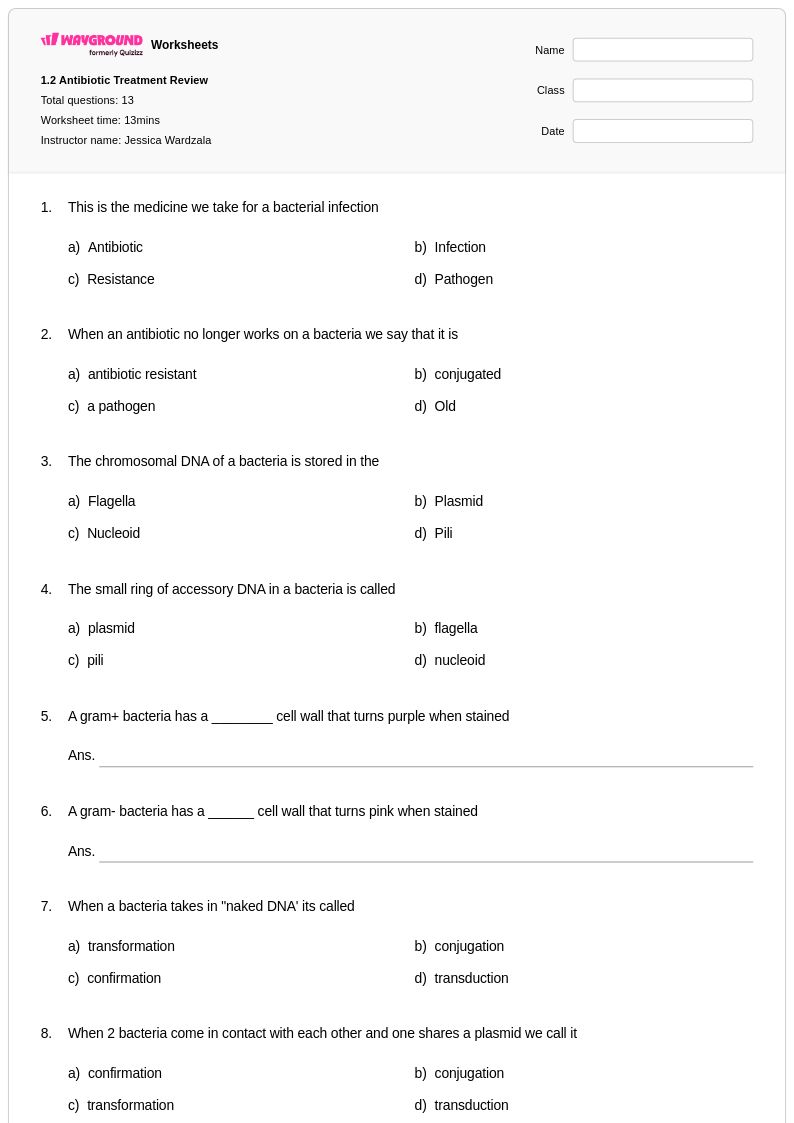
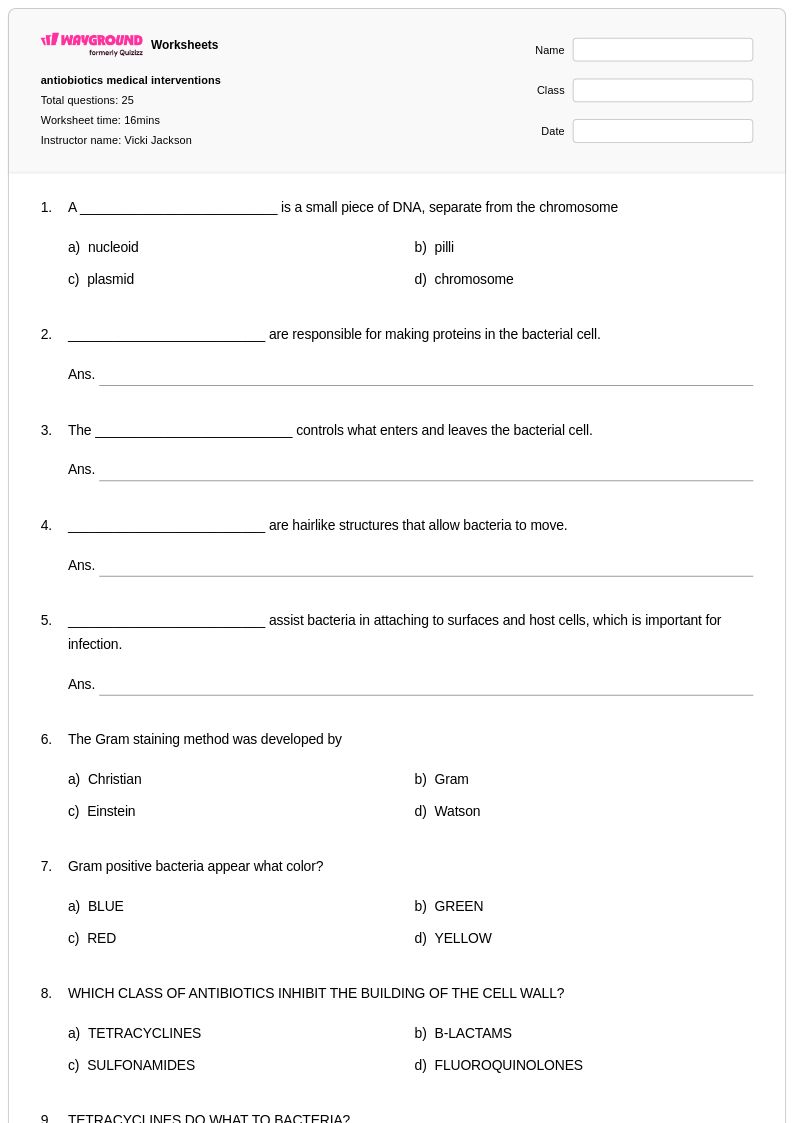
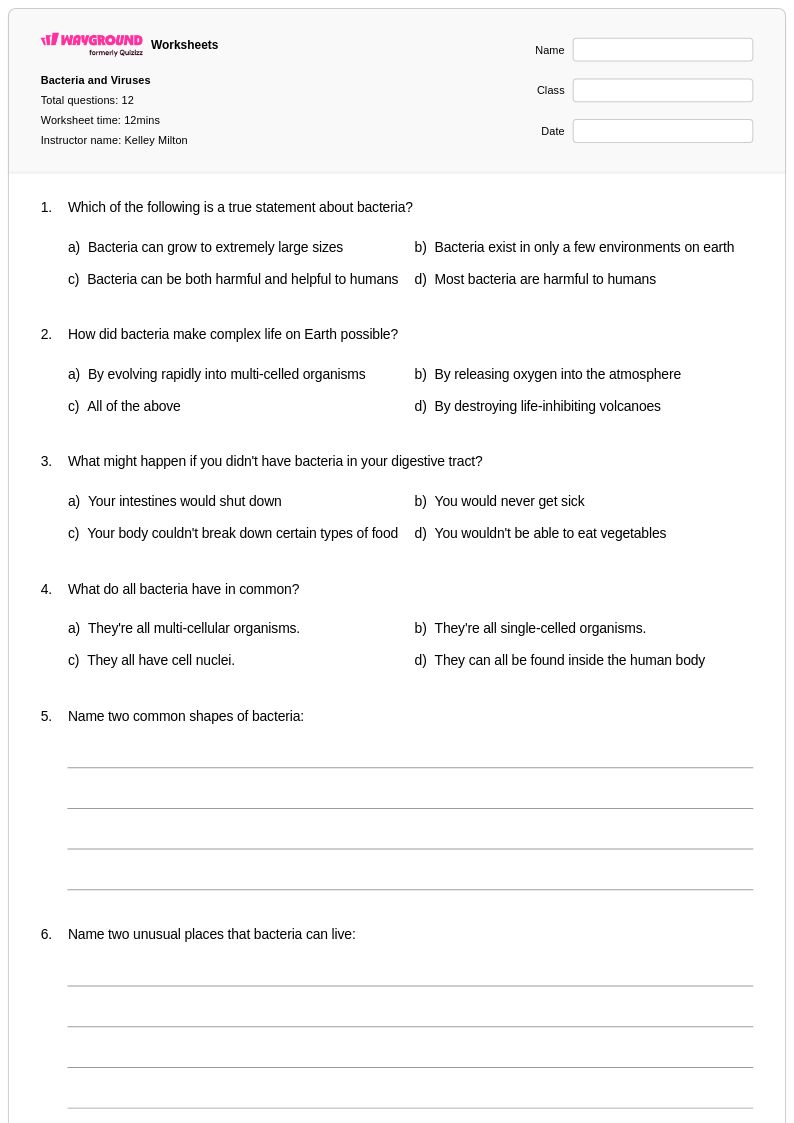
Explore Wayground's comprehensive collection of bacterial resistance worksheets featuring printable PDFs and free practice problems with answer keys to help students master antibiotic resistance mechanisms and microbial adaptation concepts.
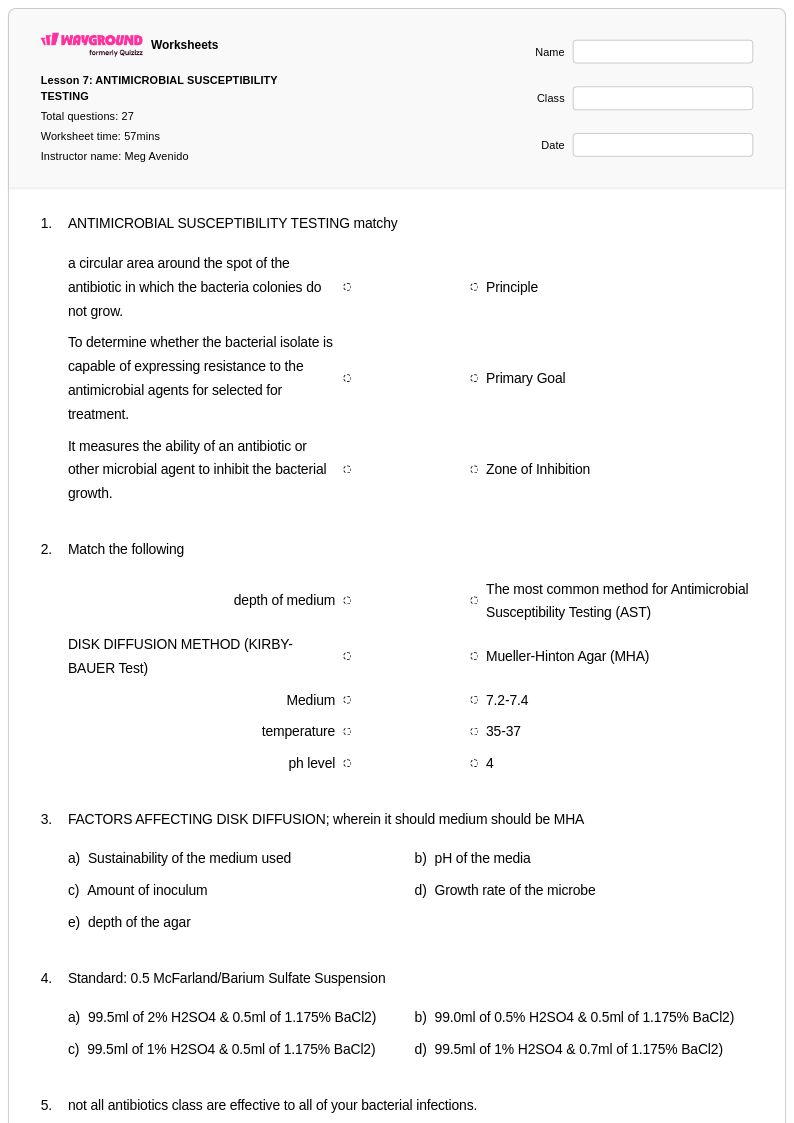
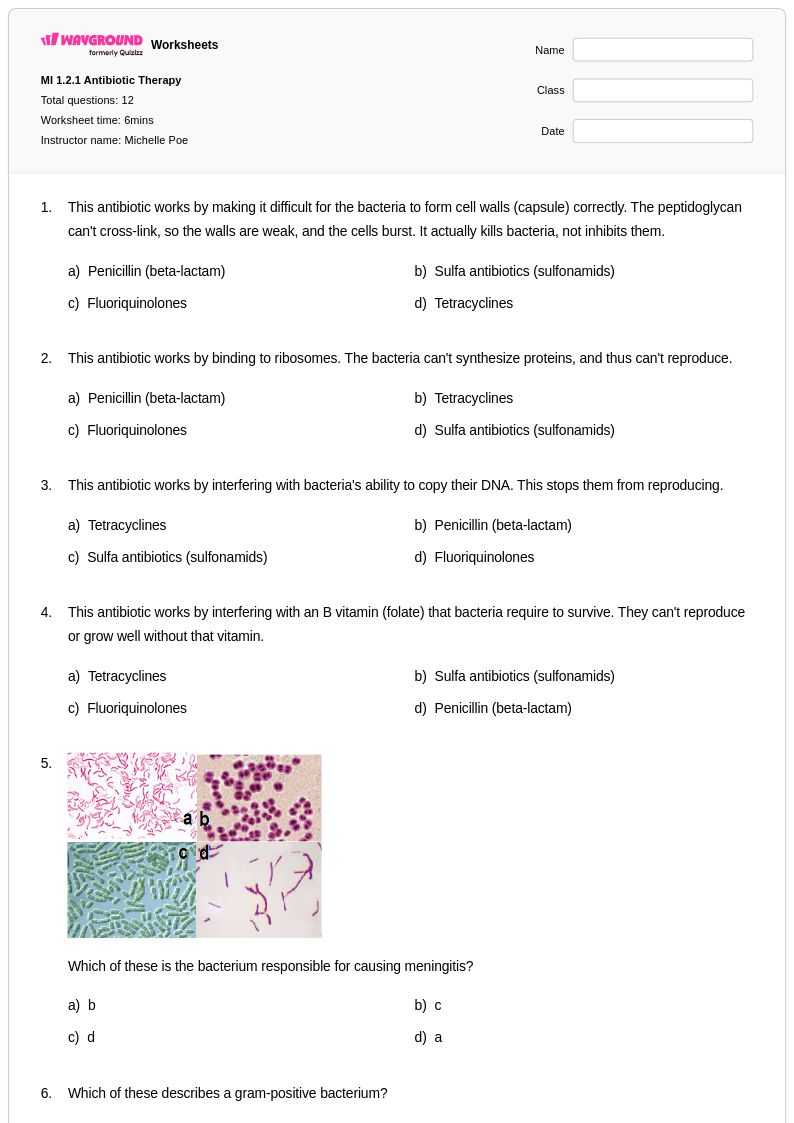
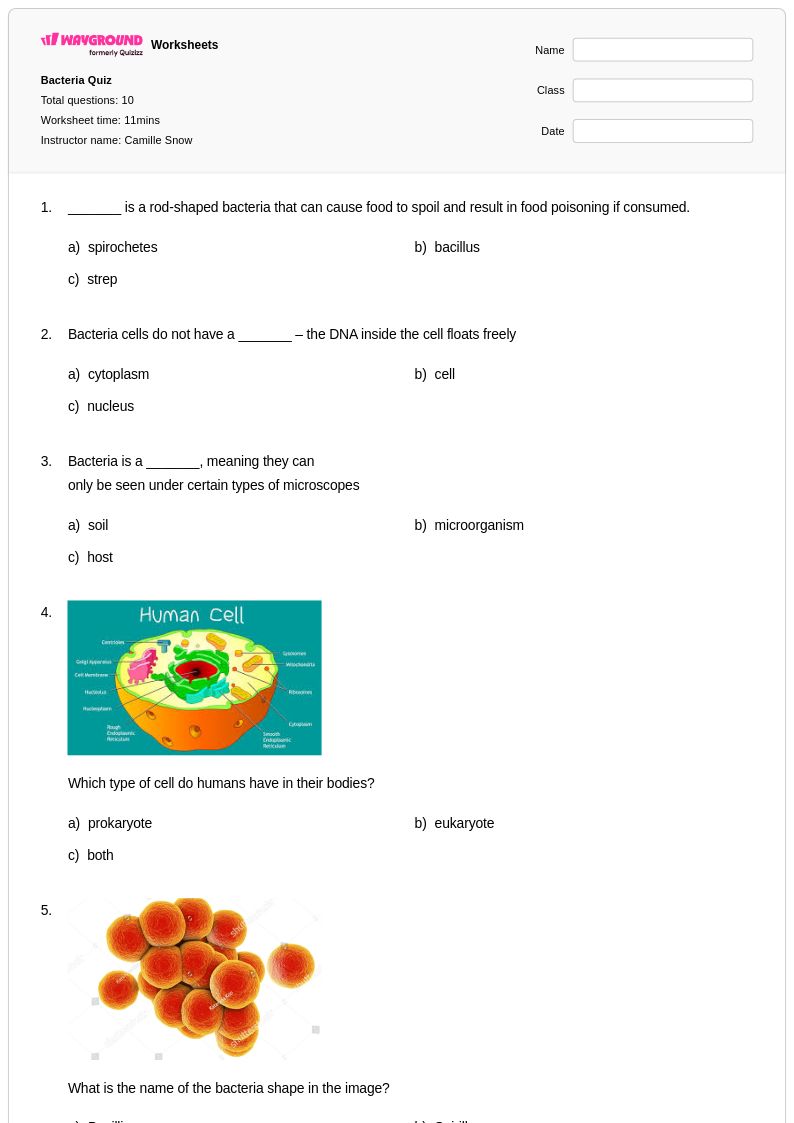
Bacterial resistance worksheets available through Wayground (formerly Quizizz) provide comprehensive resources for exploring one of the most critical challenges in modern medicine and microbiology. These expertly designed materials guide students through the complex mechanisms by which bacteria develop resistance to antibiotics, including genetic mutations, horizontal gene transfer, and selective pressure dynamics. The worksheets strengthen essential scientific skills such as analyzing data from antibiotic susceptibility tests, interpreting evolutionary concepts, and evaluating the impact of human behavior on resistance patterns. Each resource includes detailed answer keys and practice problems that reinforce understanding of concepts like minimum inhibitory concentrations, resistance genes, and the role of biofilms in bacterial survival. Available as free printables and pdf downloads, these materials help students connect molecular-level processes to real-world public health challenges.
Wayground (formerly Quizizz) supports science educators with millions of teacher-created bacterial resistance resources that can be easily discovered through robust search and filtering capabilities. The platform's extensive collection includes worksheets aligned to various educational standards, ensuring that content matches curriculum requirements while providing differentiation tools to accommodate diverse learning needs. Teachers can customize these materials to focus on specific aspects of bacterial resistance, from basic concepts of antibiotic action to advanced topics like multi-drug resistant organisms and hospital-acquired infections. The flexible availability in both printable and digital formats, including convenient pdf options, makes these resources invaluable for lesson planning, targeted remediation for struggling students, enrichment activities for advanced learners, and regular skill practice that builds scientific literacy around this increasingly important biological phenomenon.
FAQs
How do I teach bacterial resistance to high school biology students?
Start by grounding students in natural selection before introducing antibiotic resistance as a real-world application. Explain how bacteria with random mutations that reduce antibiotic effectiveness survive and reproduce, passing those traits on — this is selective pressure in action. From there, layer in mechanisms like horizontal gene transfer and the role of biofilms, connecting molecular processes to public health outcomes such as hospital-acquired infections and multi-drug resistant organisms. Case studies involving MRSA or tuberculosis help students see why resistance patterns matter beyond the lab.
What exercises help students practice understanding antibiotic resistance mechanisms?
Practice problems that ask students to interpret antibiotic susceptibility test data are especially effective, as they require applying concepts like minimum inhibitory concentrations to realistic scenarios. Exercises involving diagram analysis of horizontal gene transfer — including conjugation, transformation, and transduction — reinforce the genetic basis of resistance. Students also benefit from evaluating human behaviors, such as incomplete antibiotic courses or agricultural antibiotic use, and tracing how those behaviors accelerate resistance patterns at the population level.
What misconceptions do students commonly have about bacterial resistance?
The most widespread misconception is that individual bacteria 'become resistant' in response to antibiotics, as if they consciously adapt. In reality, resistance arises through random genetic mutations that pre-exist antibiotic exposure — the antibiotic selects for bacteria that already carry those mutations. Students also frequently conflate antibiotic resistance with the human body becoming resistant, confusing bacterial evolution with immune response. Another common error is underestimating the speed of resistance development, particularly in contexts involving biofilms or multi-drug resistant strains.
How does horizontal gene transfer contribute to antibiotic resistance, and how do I explain it to students?
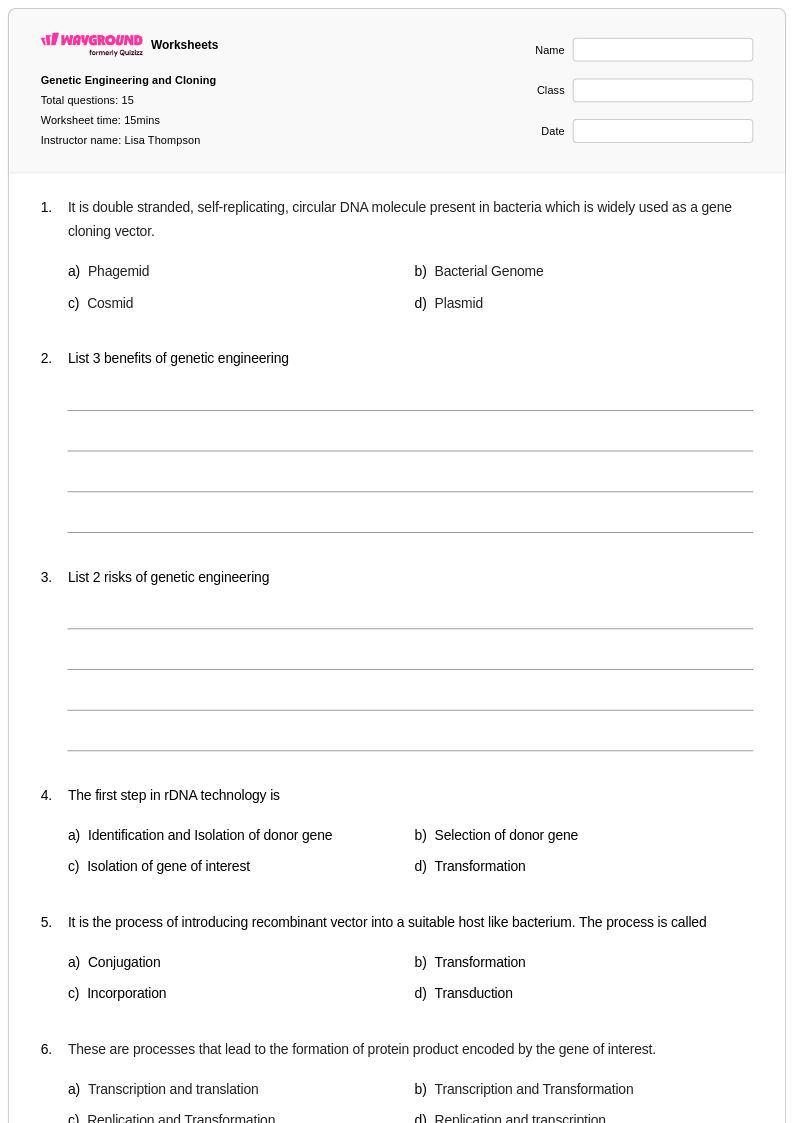
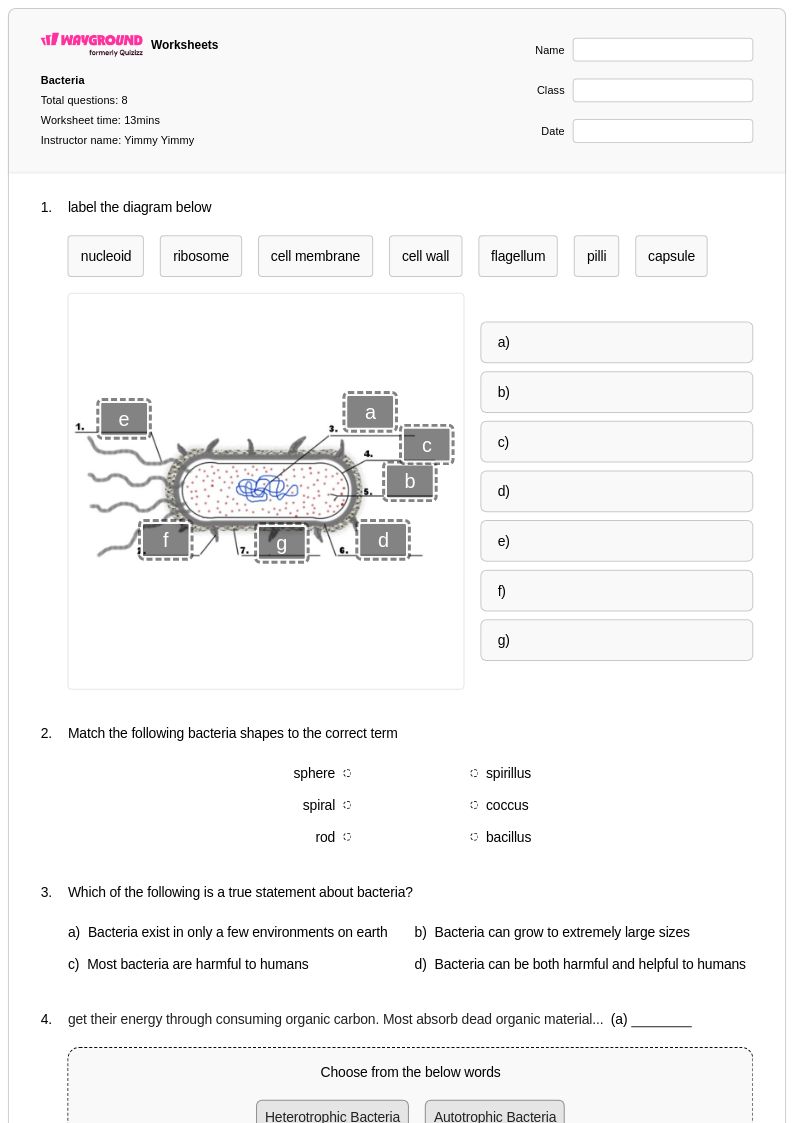
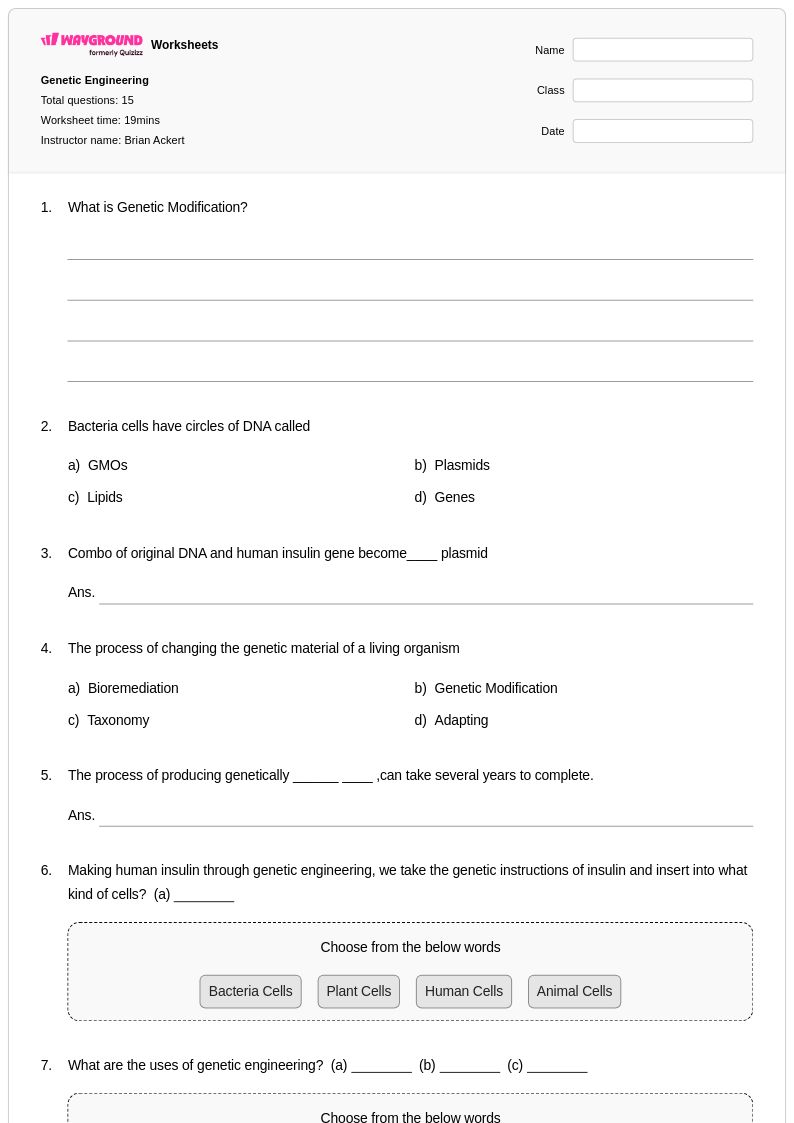
Horizontal gene transfer allows bacteria to share resistance genes directly with other bacteria — even across different species — without reproduction. The three main mechanisms are conjugation (direct cell-to-cell transfer via plasmids), transformation (uptake of free DNA from the environment), and transduction (gene transfer via bacteriophages). This is why resistance can spread so rapidly through bacterial populations: a resistance gene that appears in one strain can move into entirely unrelated bacteria within a single generation. Visual diagrams and step-by-step labeling exercises are effective for helping students distinguish between these three pathways.
How can I use bacterial resistance worksheets in my classroom?
Bacterial resistance worksheets on Wayground are available as printable PDFs for traditional classroom use and in digital formats for technology-integrated learning environments, including the option to host them as a live quiz on Wayground. This flexibility makes them suitable for in-class instruction, independent practice, homework, or targeted remediation for students who need additional support with evolutionary or molecular concepts. Each worksheet includes answer keys, so teachers can use them for self-paced learning or quick formative checks without additional prep time.
How do I differentiate bacterial resistance instruction for students at different levels?
For foundational learners, focus on the core natural selection narrative — mutation, selection, survival, reproduction — before introducing mechanisms like gene transfer or biofilms. Advanced students can engage with multi-drug resistance, the molecular structure of resistance genes, or data analysis from real susceptibility studies. On Wayground, teachers can apply student-level accommodations such as reduced answer choices to lower cognitive load for struggling learners, read-aloud support for students with reading needs, and extended time settings — all configurable per student without affecting the rest of the class.