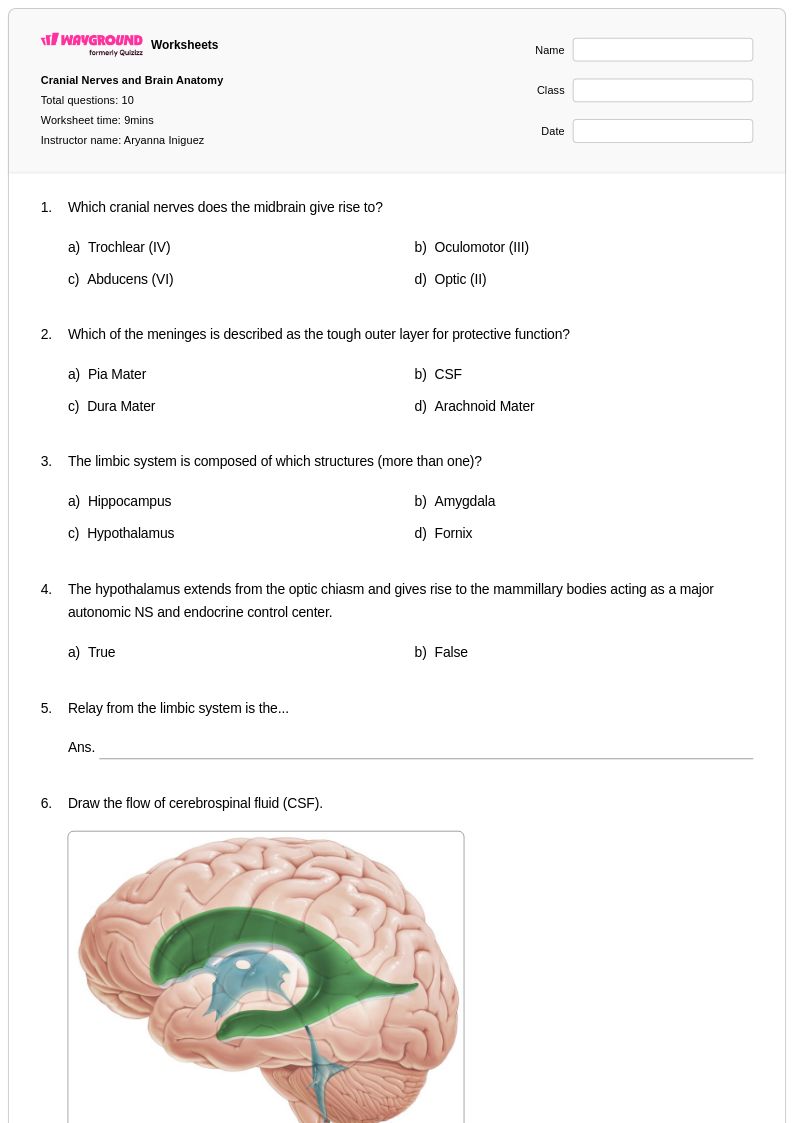
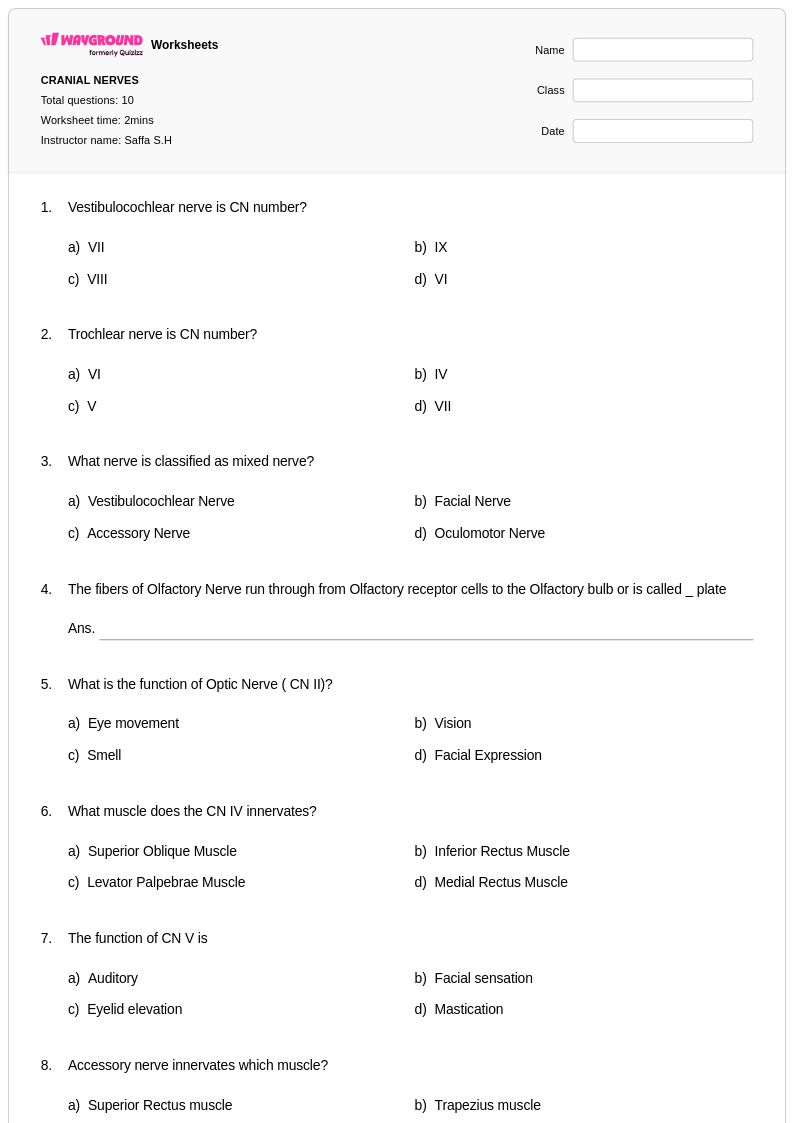
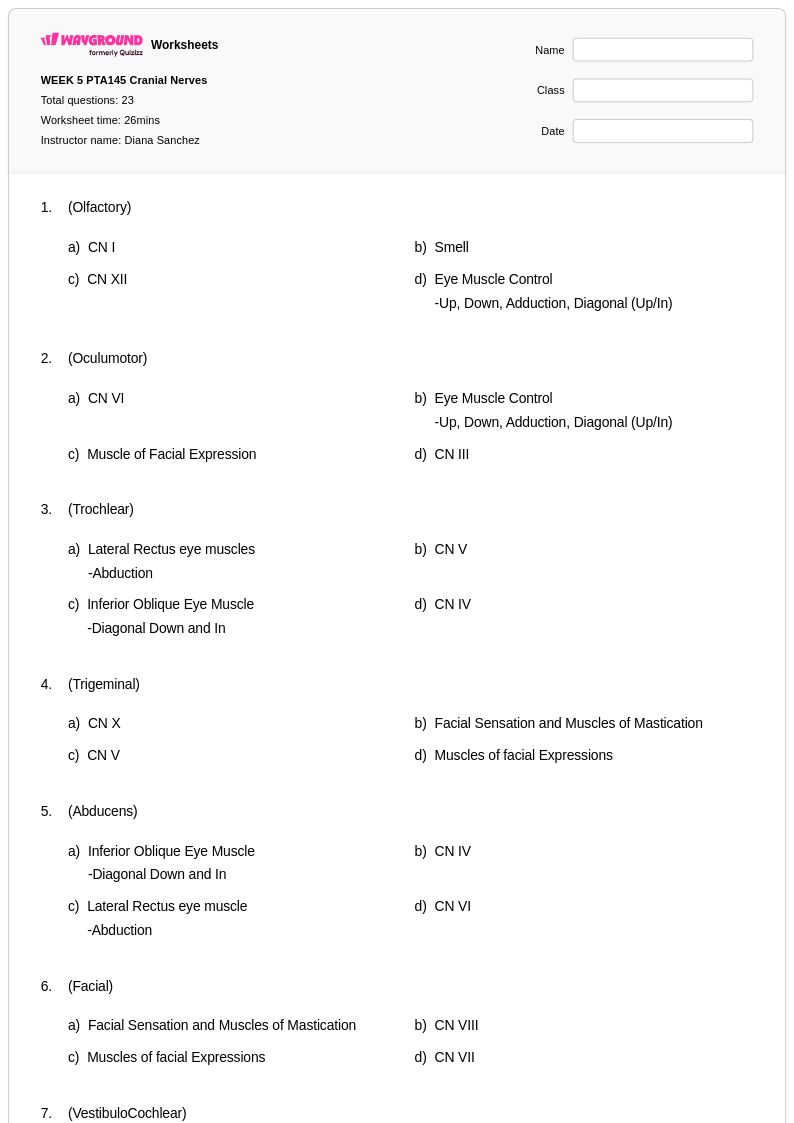
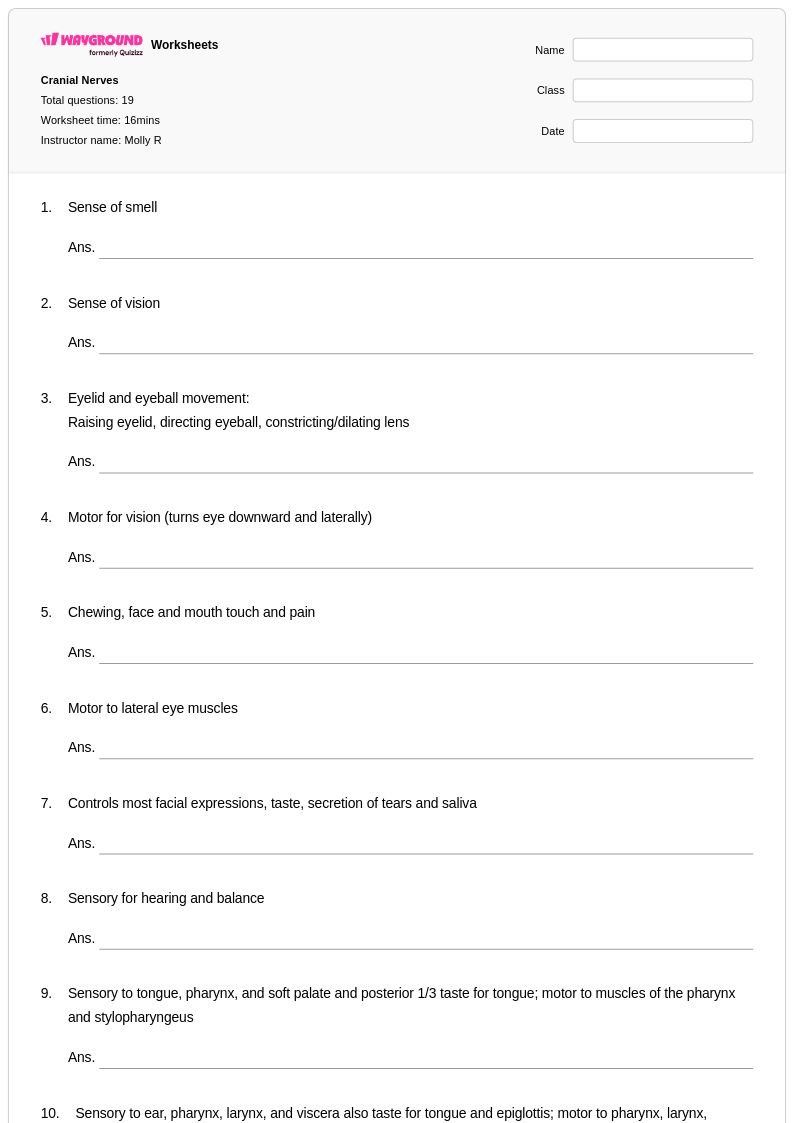
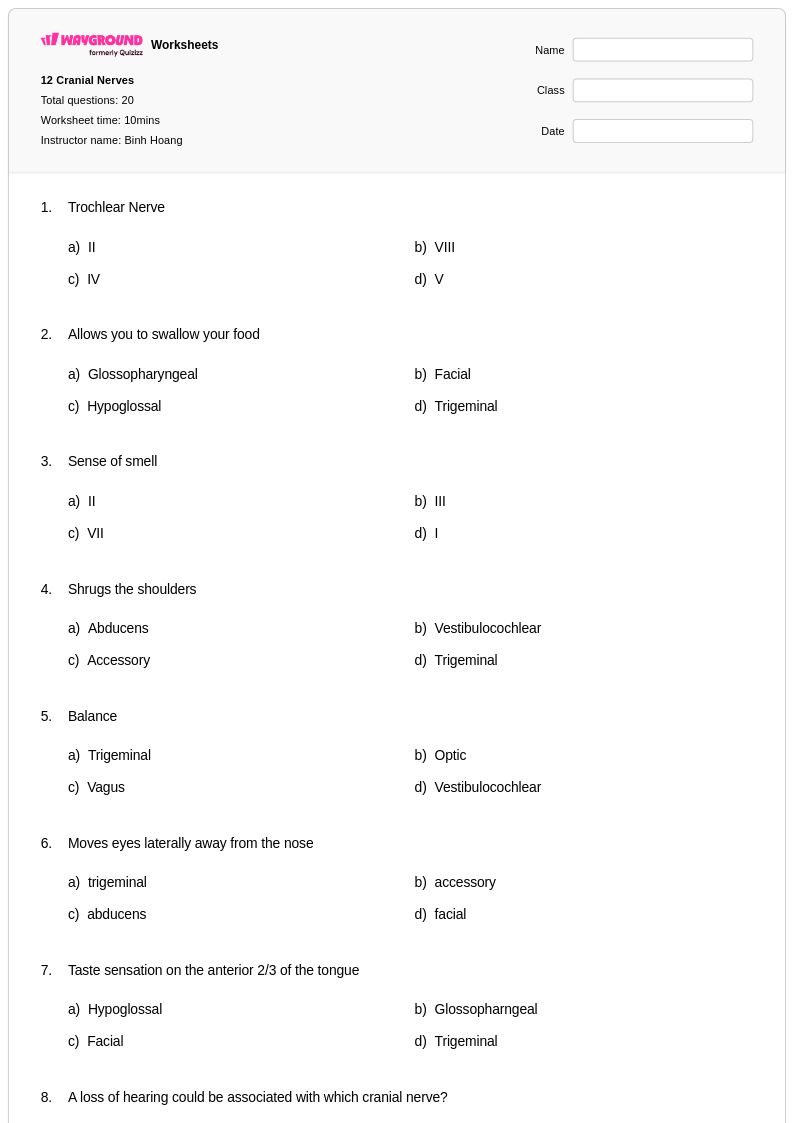
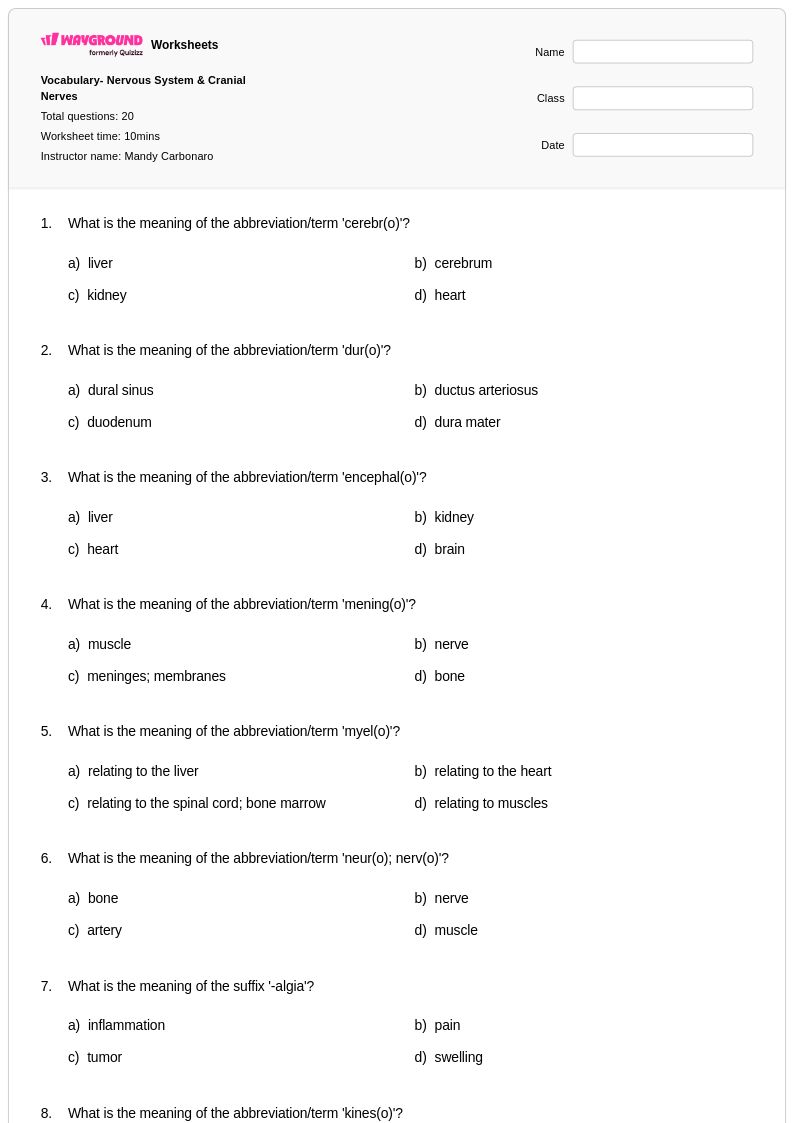
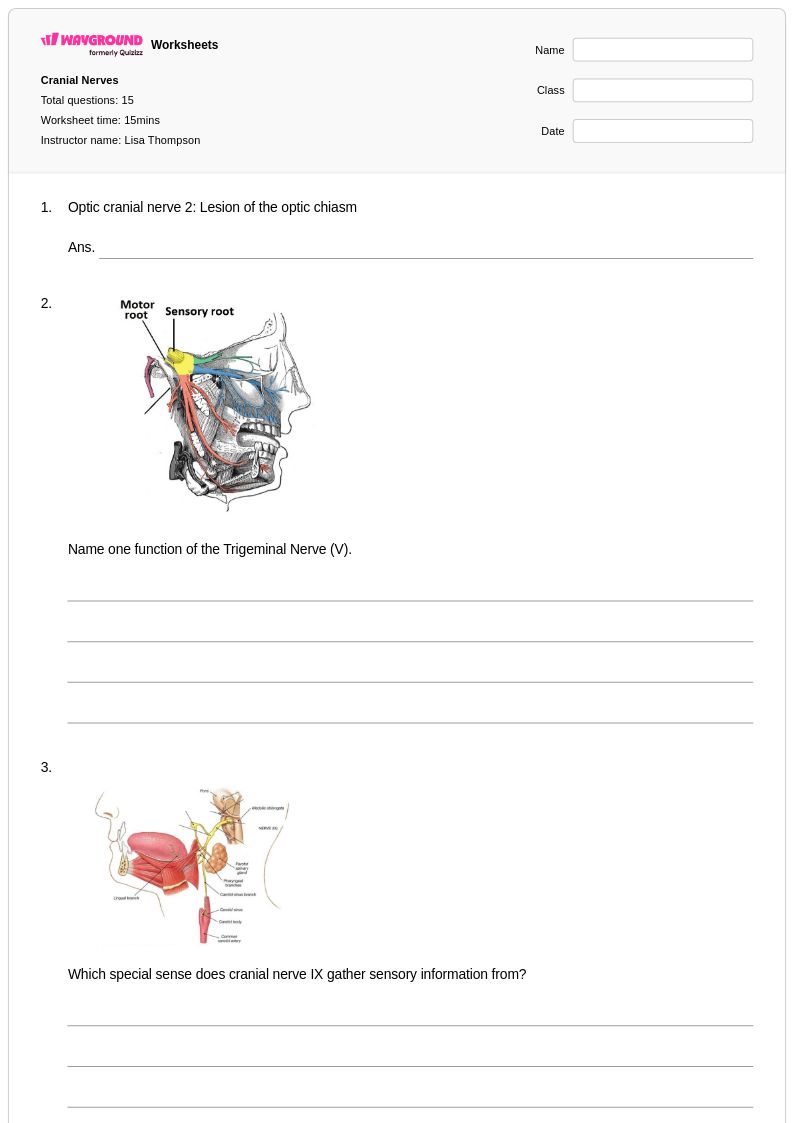
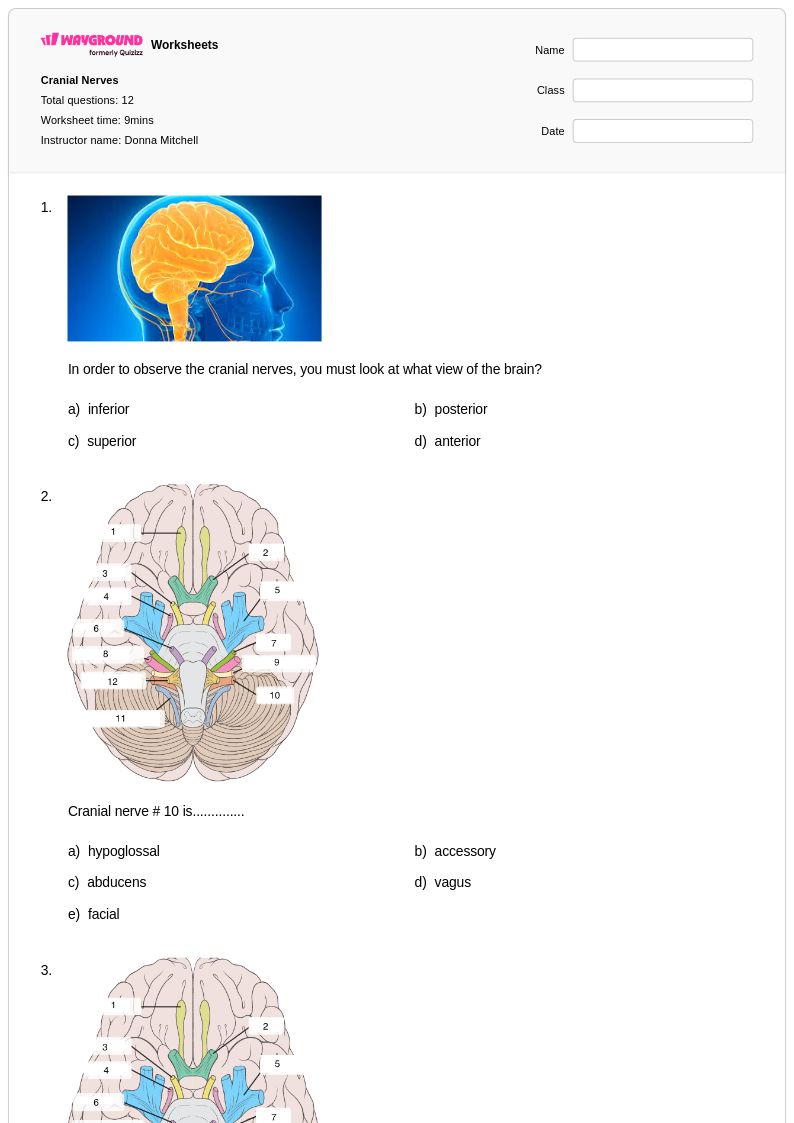
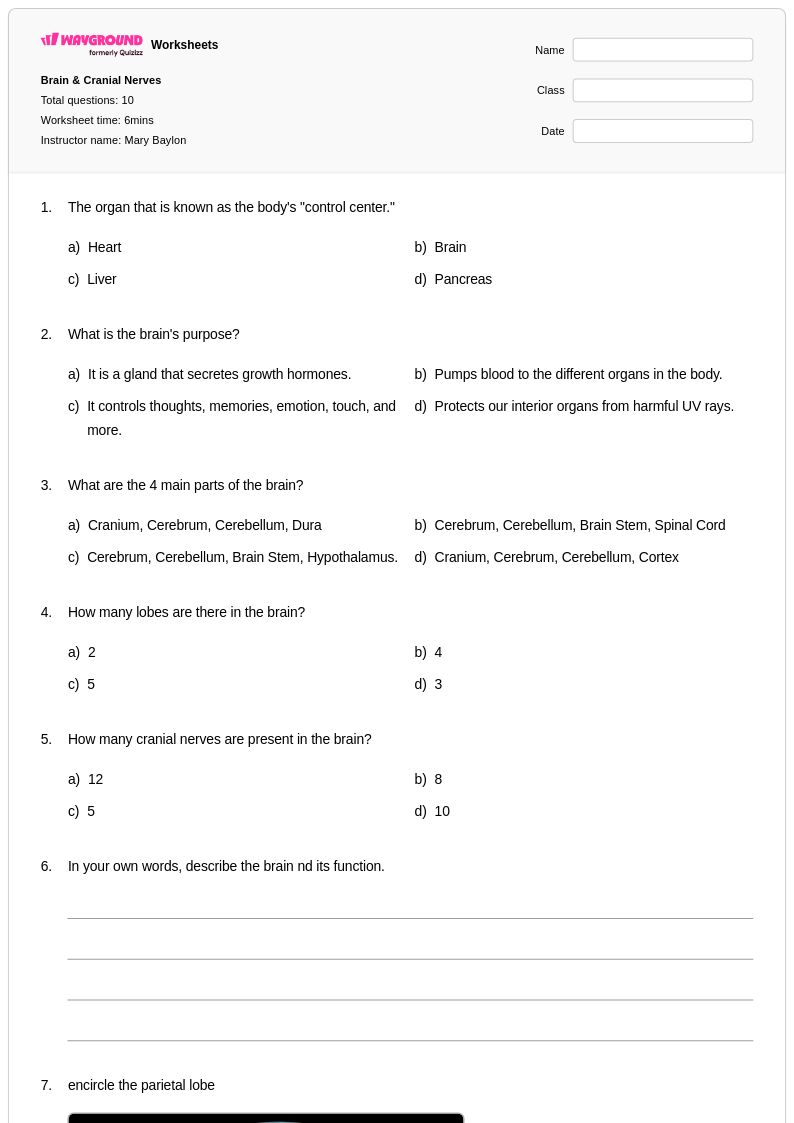
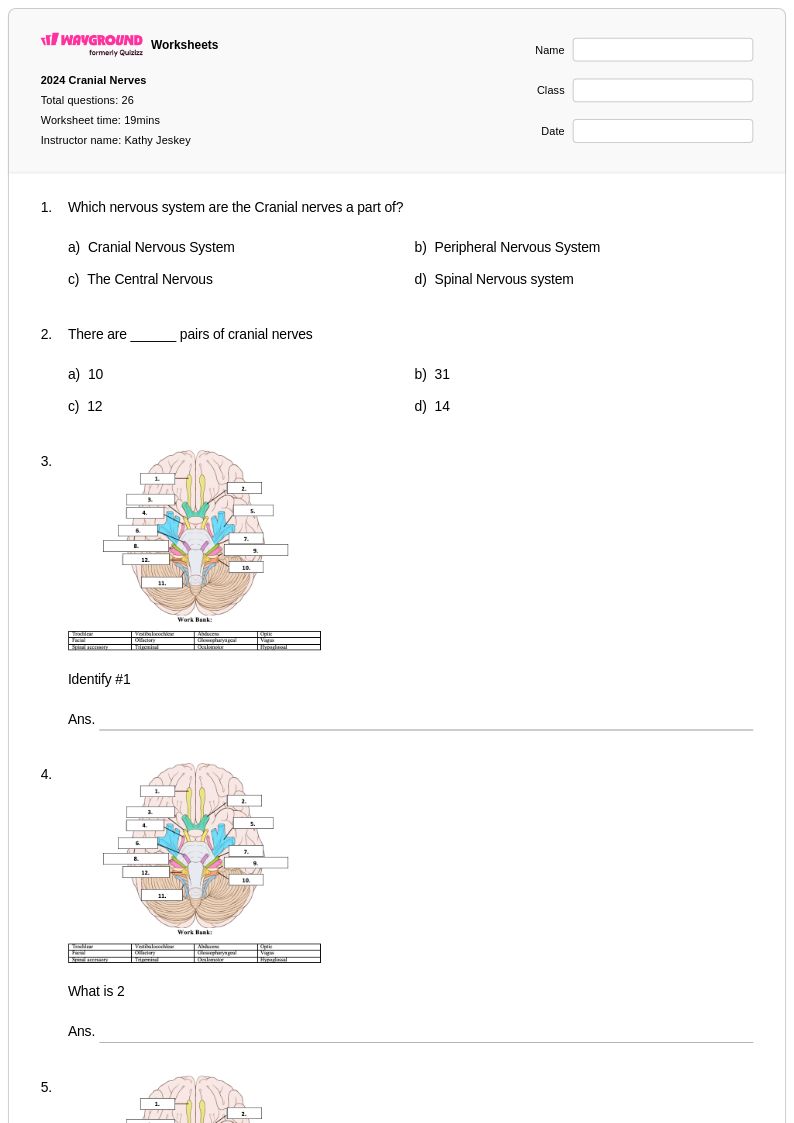
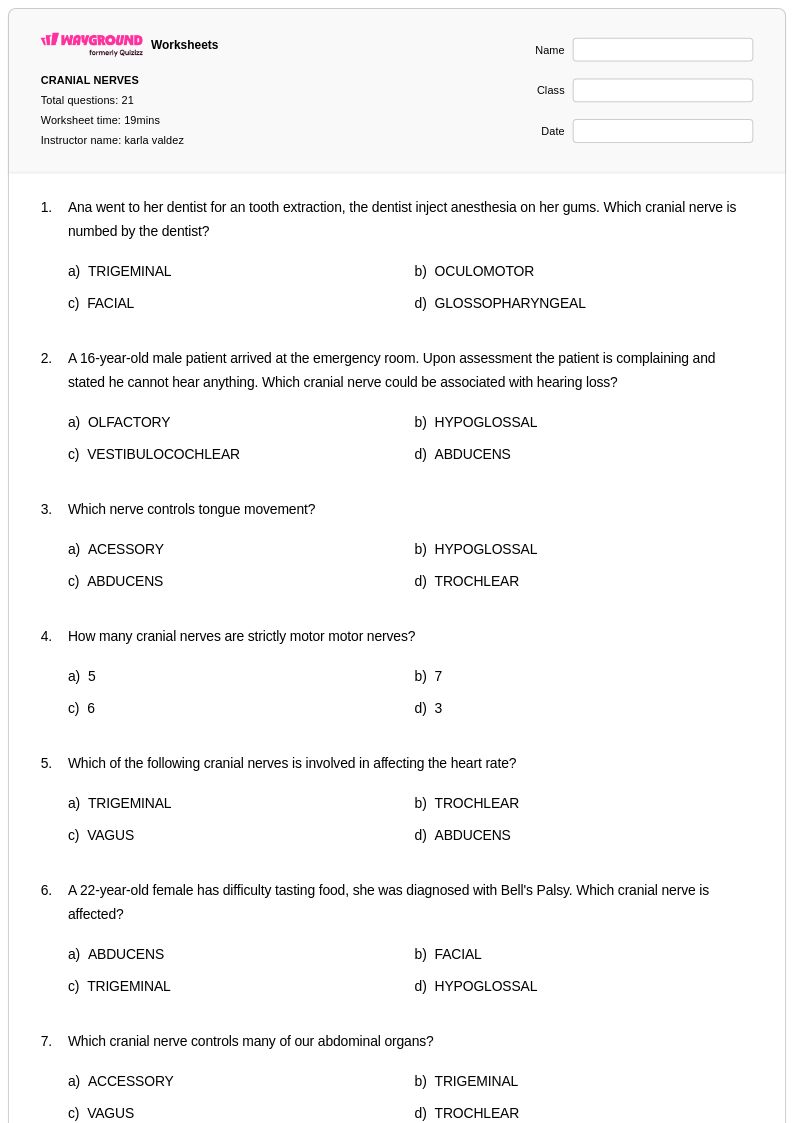
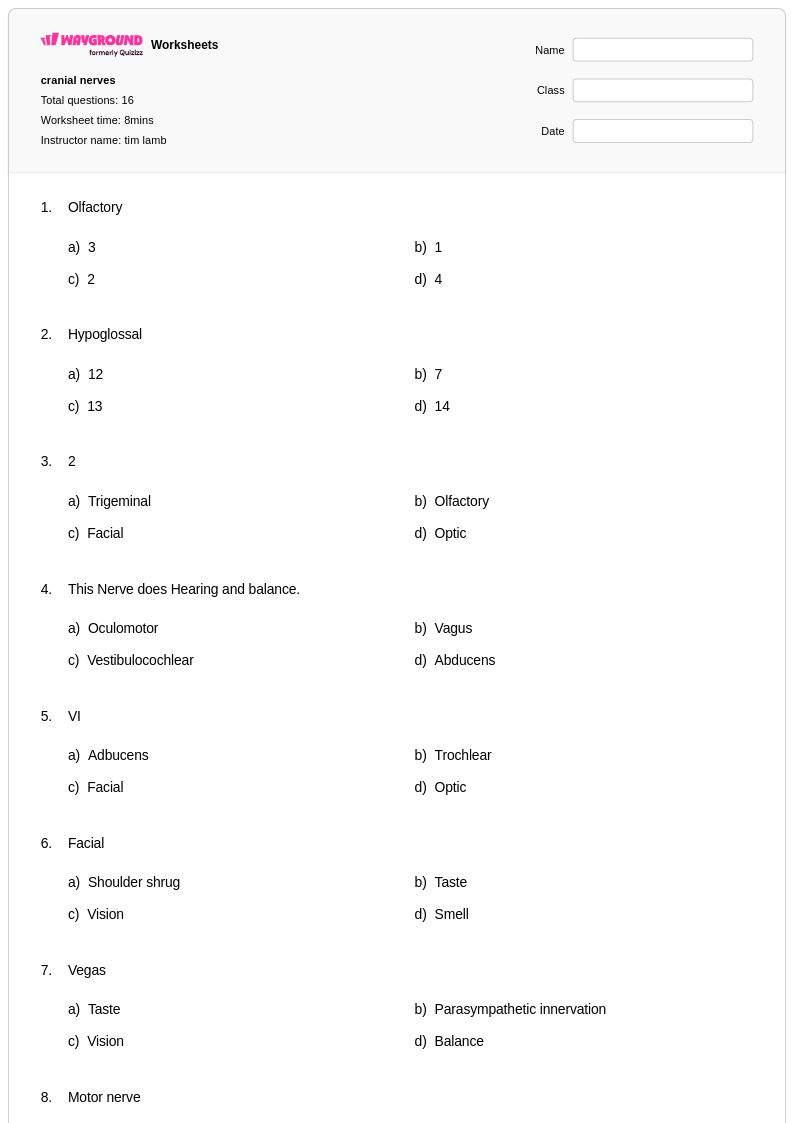
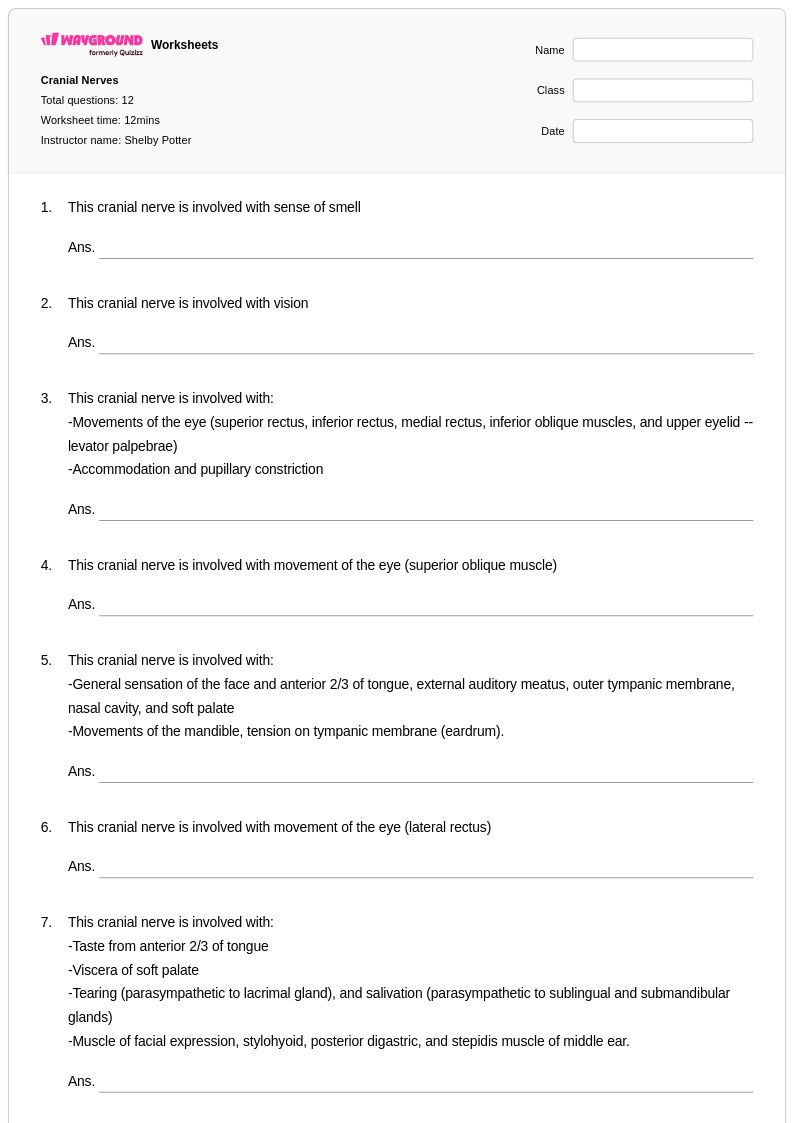
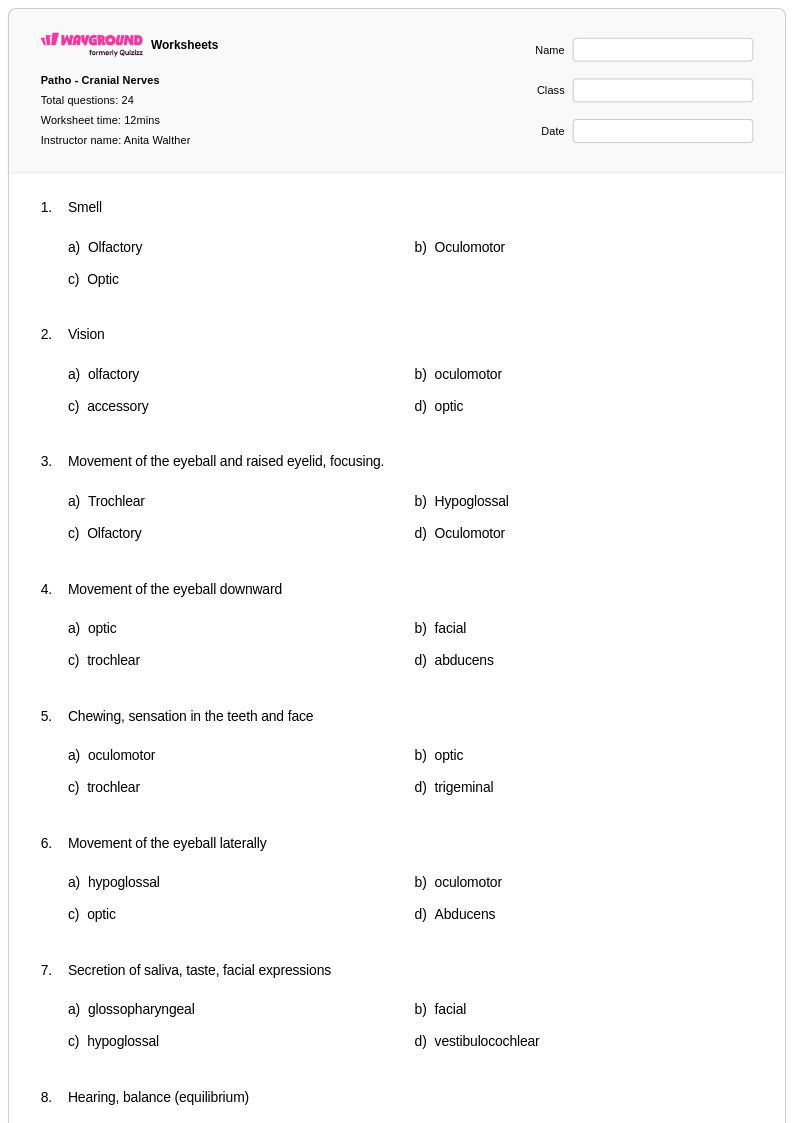
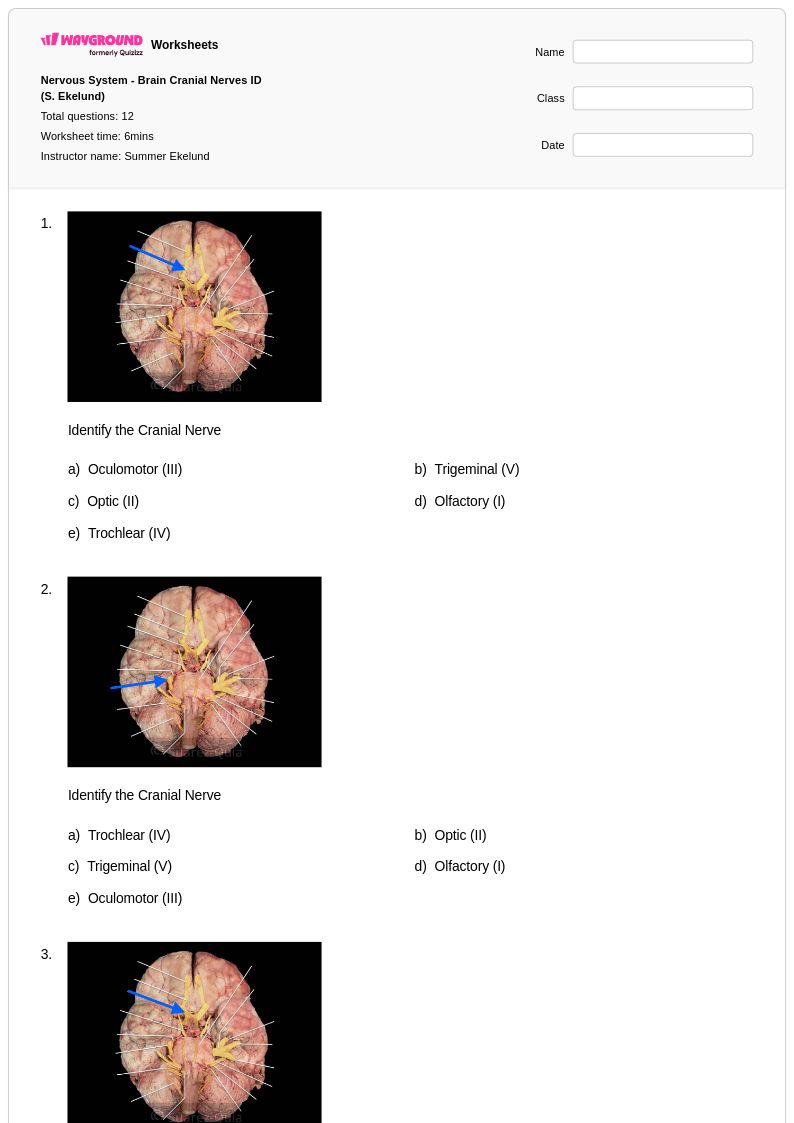
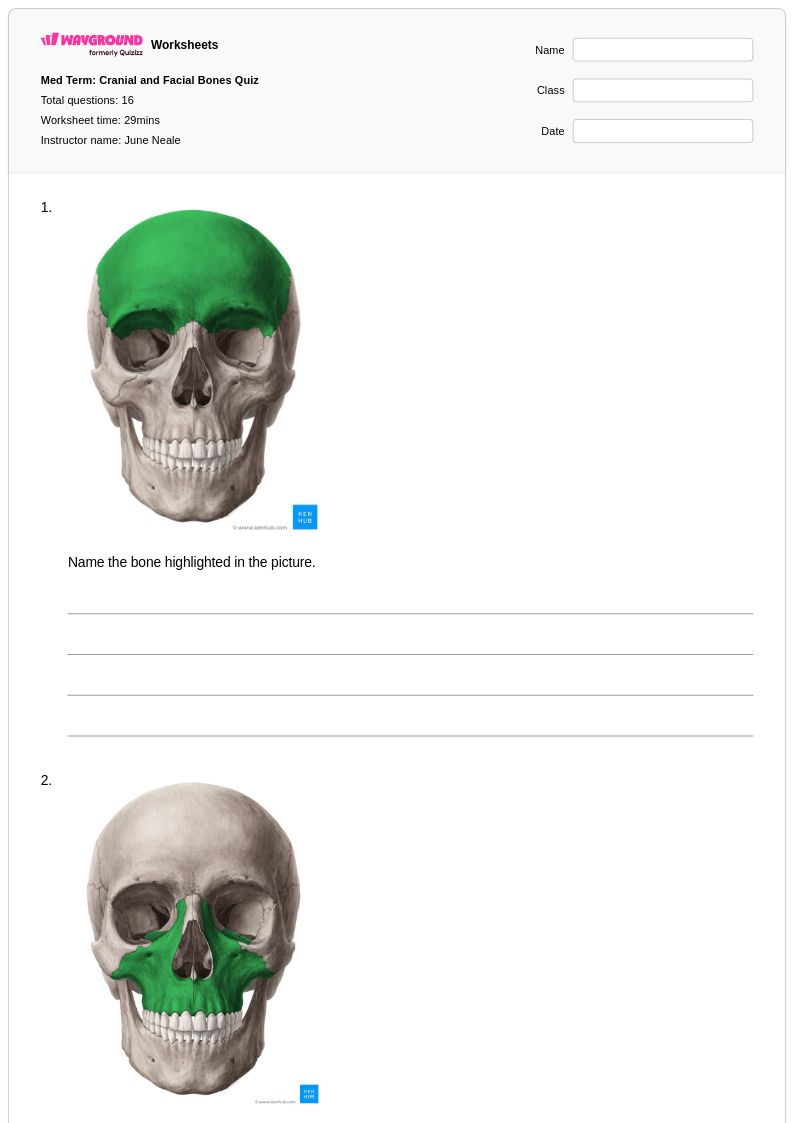
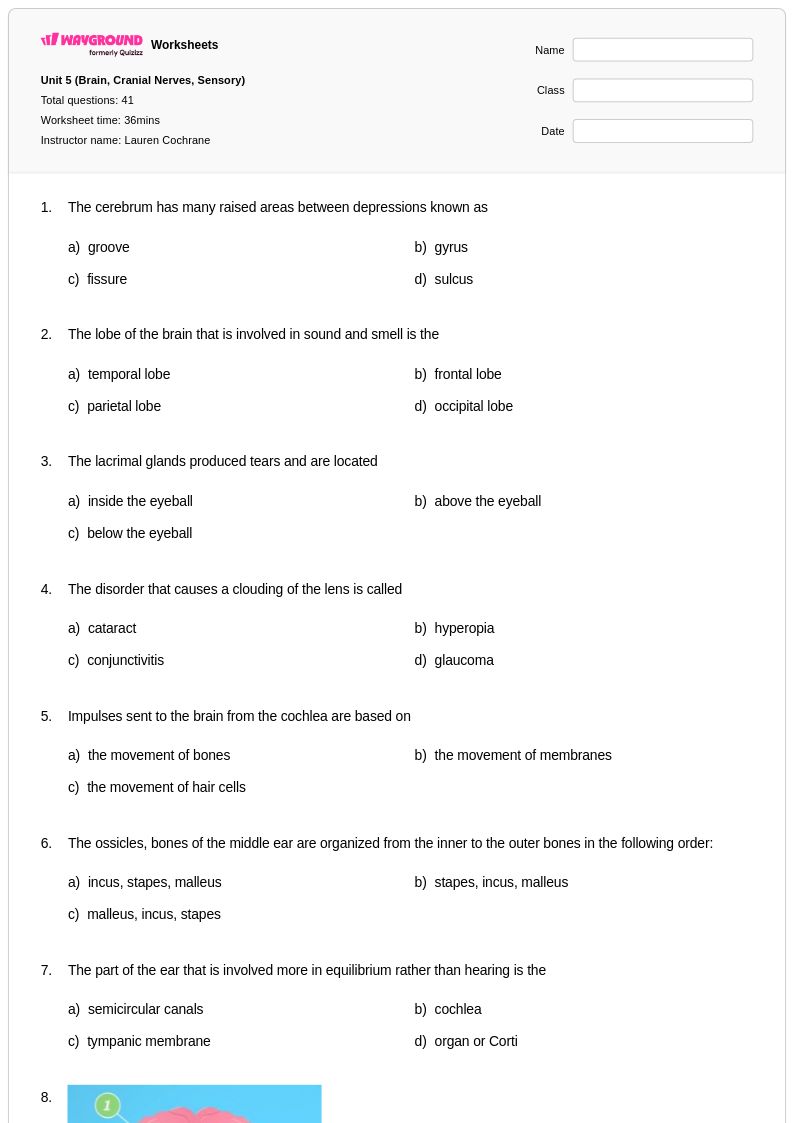
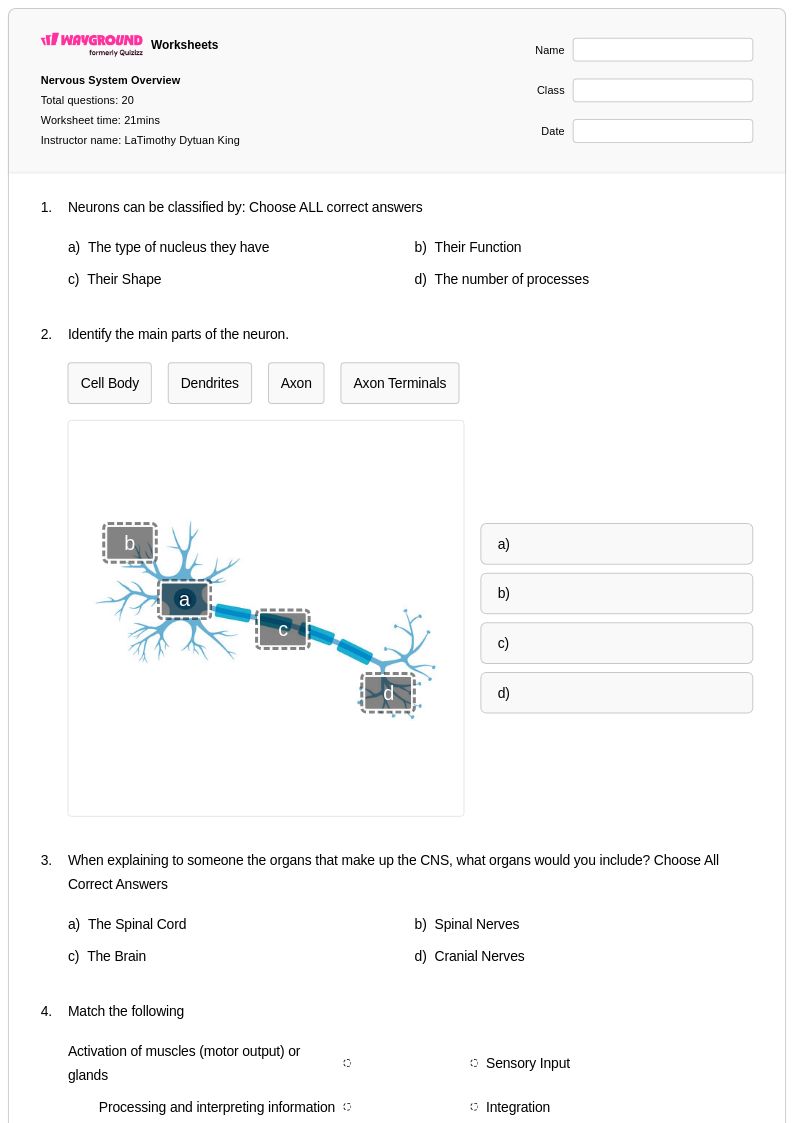
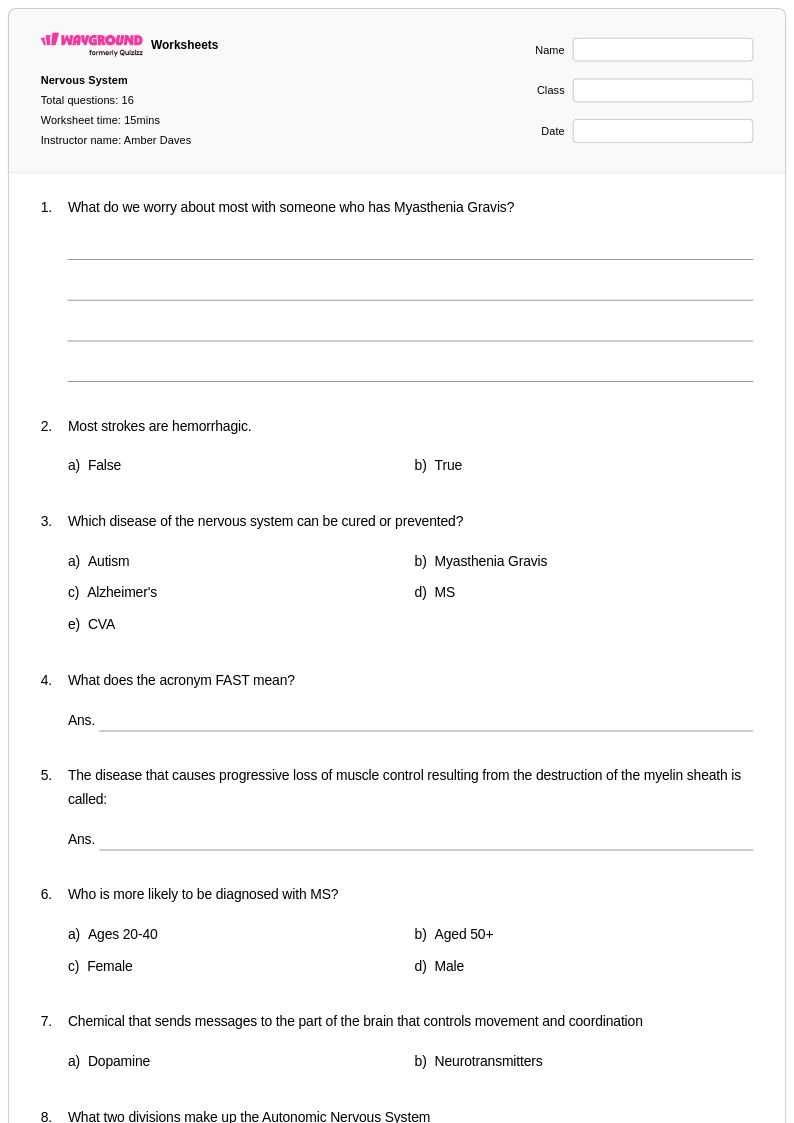
Free cranial nerves worksheets and printables help biology students master the twelve pairs of nerves through practice problems, detailed diagrams, and comprehensive answer keys for effective learning.
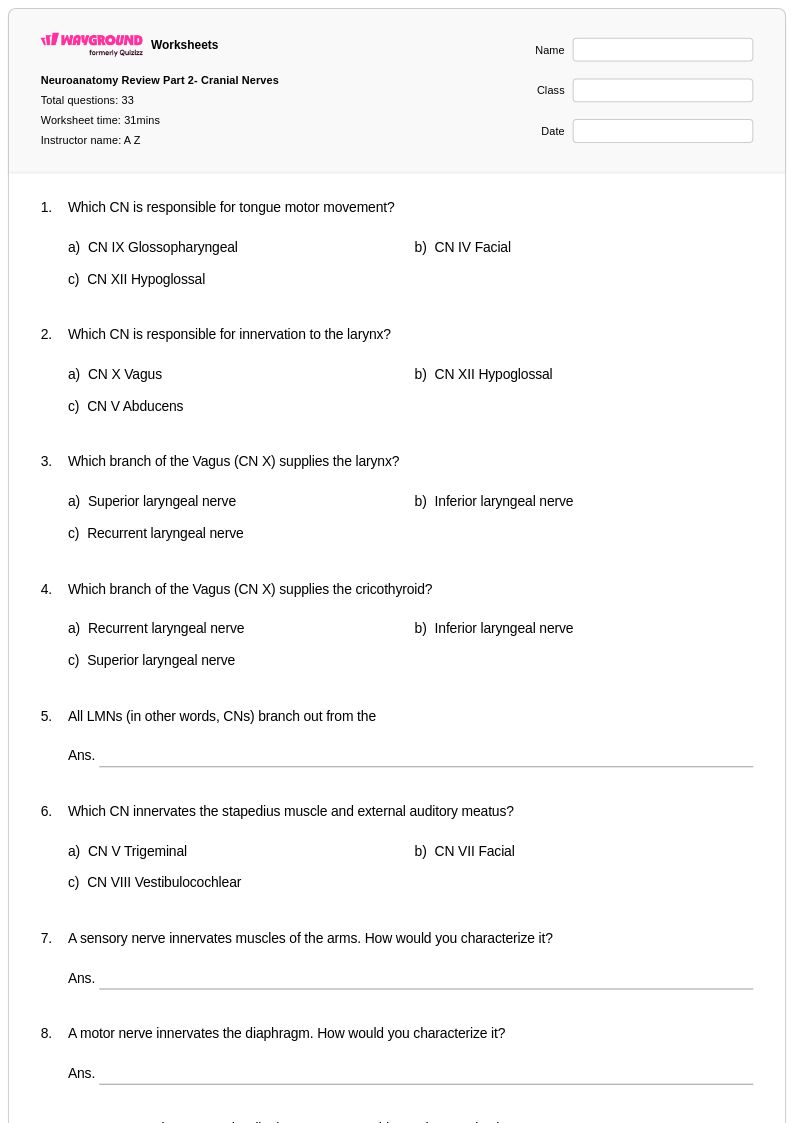
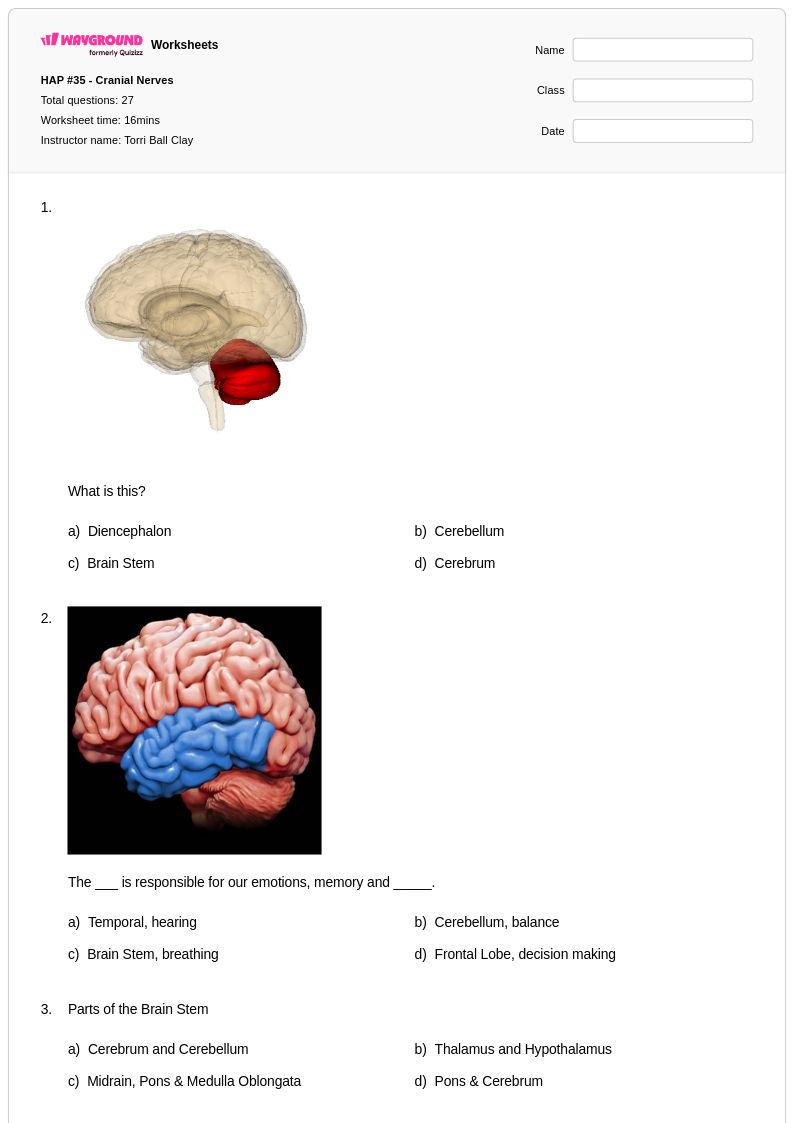
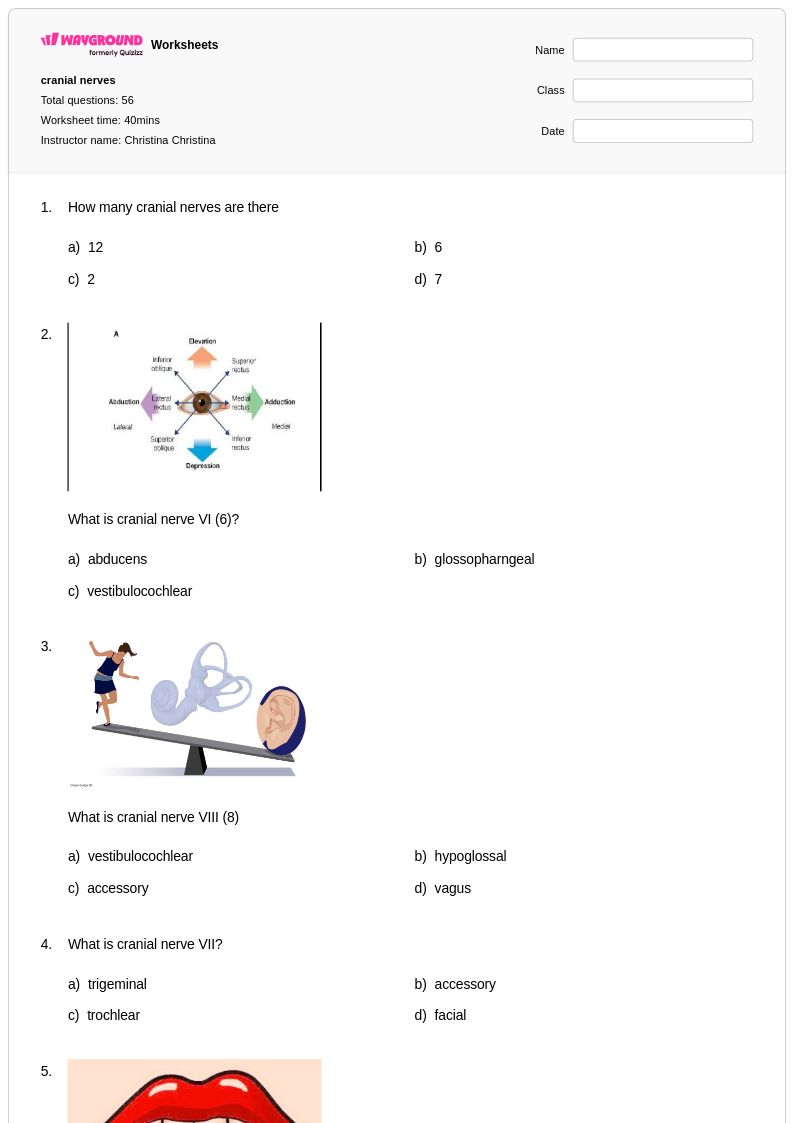
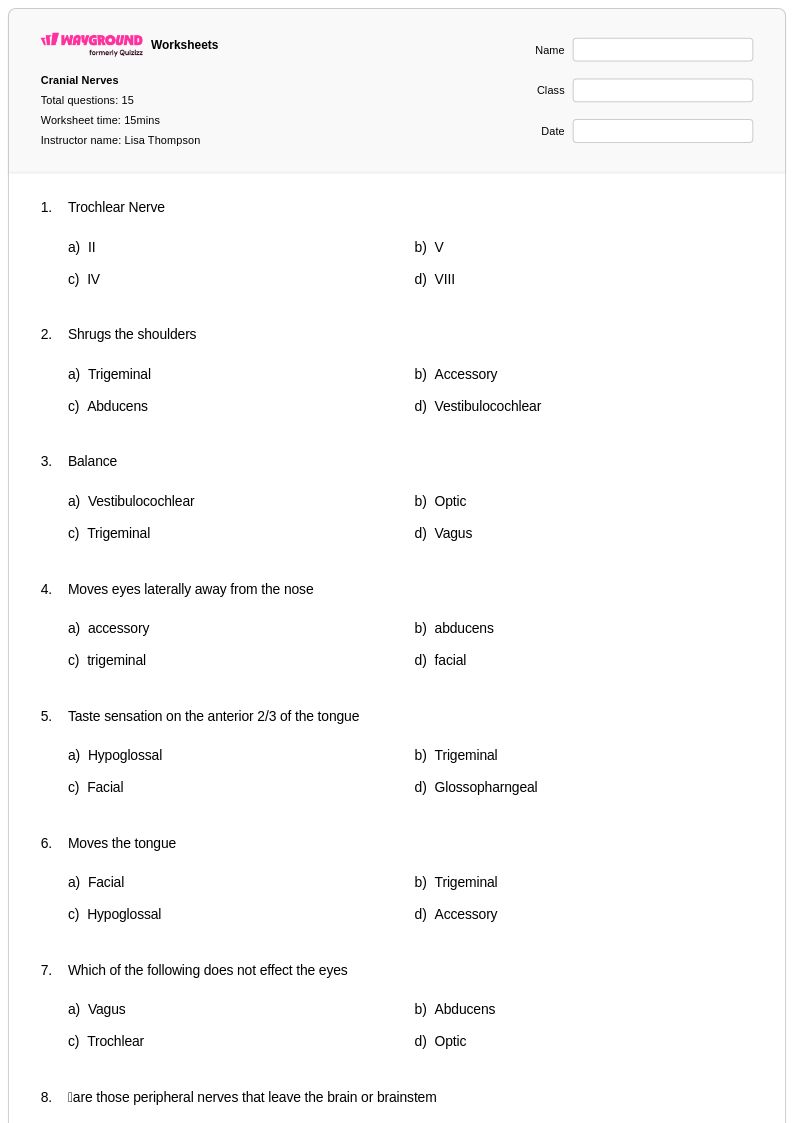
Cranial nerves worksheets available through Wayground (formerly Quizizz) provide comprehensive educational resources designed to help students master one of anatomy's most complex neurological systems. These expertly crafted worksheets focus on the twelve pairs of cranial nerves, their anatomical pathways, functional classifications, and clinical significance in human physiology. Students engage with practice problems that reinforce identification of cranial nerve numbers, names, and primary functions, while detailed answer keys support independent learning and immediate feedback. The free printable resources strengthen critical thinking skills through diagrams, labeling exercises, and scenario-based questions that connect theoretical knowledge to real-world medical applications, making these pdf worksheets invaluable for both introductory and advanced biology coursework.
Wayground (formerly Quizizz) supports educators with millions of teacher-created cranial nerves worksheet collections that feature robust search and filtering capabilities, enabling quick access to grade-appropriate content aligned with educational standards. The platform's differentiation tools allow teachers to customize worksheets based on individual student needs, offering both remediation support for struggling learners and enrichment opportunities for advanced students. These versatile resources are available in both printable and digital pdf formats, facilitating seamless integration into lesson planning whether for in-person instruction, homework assignments, or remote learning environments. Teachers can efficiently address varying skill levels within their classrooms while ensuring comprehensive coverage of cranial nerve anatomy, from basic identification exercises to complex clinical correlation practice problems.
FAQs
How do I teach the 12 cranial nerves to biology students?
Teaching the cranial nerves effectively requires pairing memorization strategies with functional context. Mnemonics like 'On Old Olympus Towering Tops' help students recall the sequence, but students retain information better when they also understand each nerve's role, such as the vagus nerve's widespread autonomic functions or the trigeminal nerve's role in facial sensation. Diagram labeling activities and scenario-based questions that connect nerve damage to clinical symptoms are especially effective for reinforcing both identification and application.
What exercises help students practice identifying the cranial nerves?
The most effective practice exercises for cranial nerve identification include blank diagram labeling, numbered nerve-to-function matching, and fill-in-the-blank tables that cover nerve name, number, type (sensory, motor, or mixed), and primary function. Scenario-based questions, such as describing a patient with a drooping eyelid and asking students to identify which cranial nerve is affected, push students beyond rote memorization toward functional understanding.
What mistakes do students commonly make when learning the cranial nerves?
The most common errors involve confusing nerves with overlapping functions, particularly CN III, IV, and VI, which all control eye movement but innervate different muscles. Students also frequently misclassify nerves as purely sensory or motor when many, such as the facial nerve (CN VII) and vagus nerve (CN X), are mixed. Another persistent mistake is conflating cranial nerve numbering with spinal nerve numbering, leading to sequencing errors on assessments.
How can I differentiate cranial nerve instruction for students at different skill levels?
For students who are struggling, start with the most clinically prominent nerves, such as the olfactory, optic, and vagus, before introducing the full set of twelve. Reduced-complexity worksheets that focus on name and basic function before adding anatomical pathways can prevent cognitive overload. Advanced students benefit from clinical correlation tasks, such as analyzing nerve lesion case studies or distinguishing upper versus lower motor neuron involvement, which deepen their understanding beyond simple identification.
How do I use Wayground's cranial nerves worksheets in my classroom?
Wayground's cranial nerves worksheets are available as printable PDFs for traditional classroom use and in digital formats for technology-integrated learning environments, making them suitable for in-class instruction, homework assignments, and remote learning. Teachers can also host the worksheets as a quiz directly on Wayground, allowing for immediate student feedback. Each worksheet includes a complete answer key, so students can self-assess and teachers can use them efficiently without additional preparation.
How do I help students connect cranial nerve anatomy to real clinical scenarios?
Connecting cranial nerve anatomy to clinical outcomes is one of the most effective ways to solidify retention. Present students with symptom descriptions, such as loss of smell after head trauma (CN I) or inability to shrug the shoulders (CN XI), and ask them to identify the affected nerve and explain why that symptom occurs. This approach reinforces both anatomical pathways and functional classifications while giving students a framework for applying the material in medical or allied health contexts.