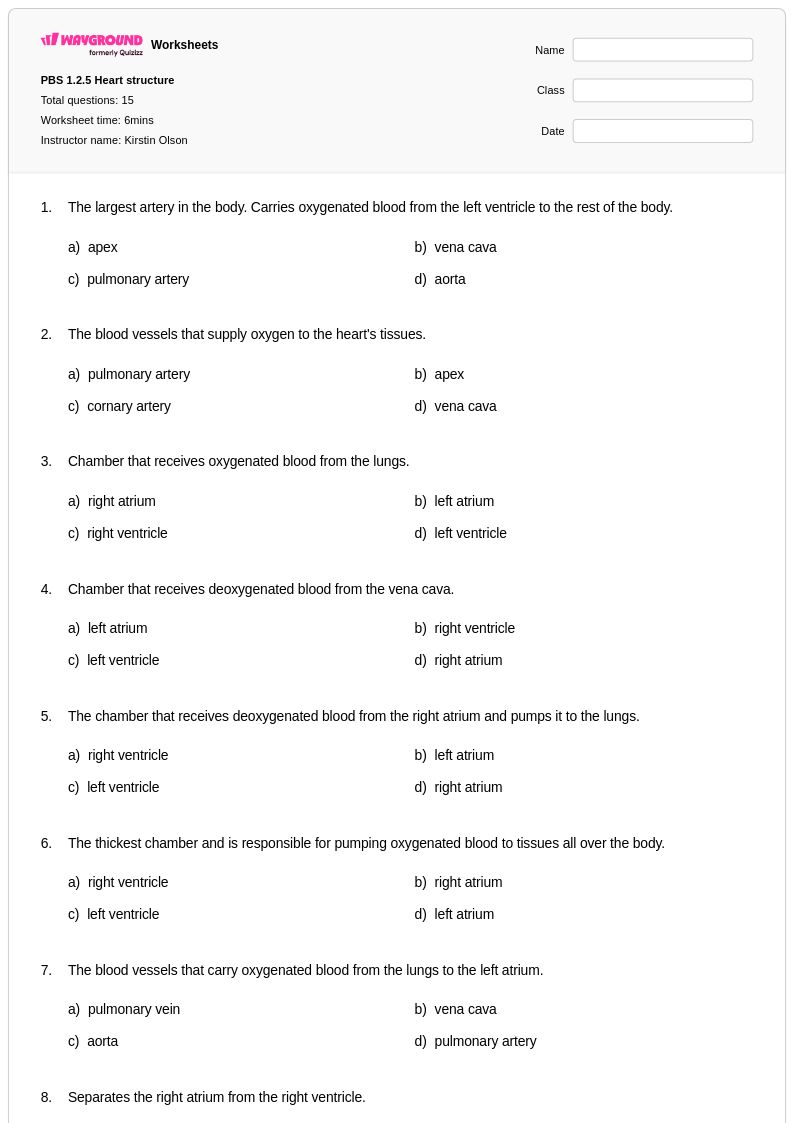
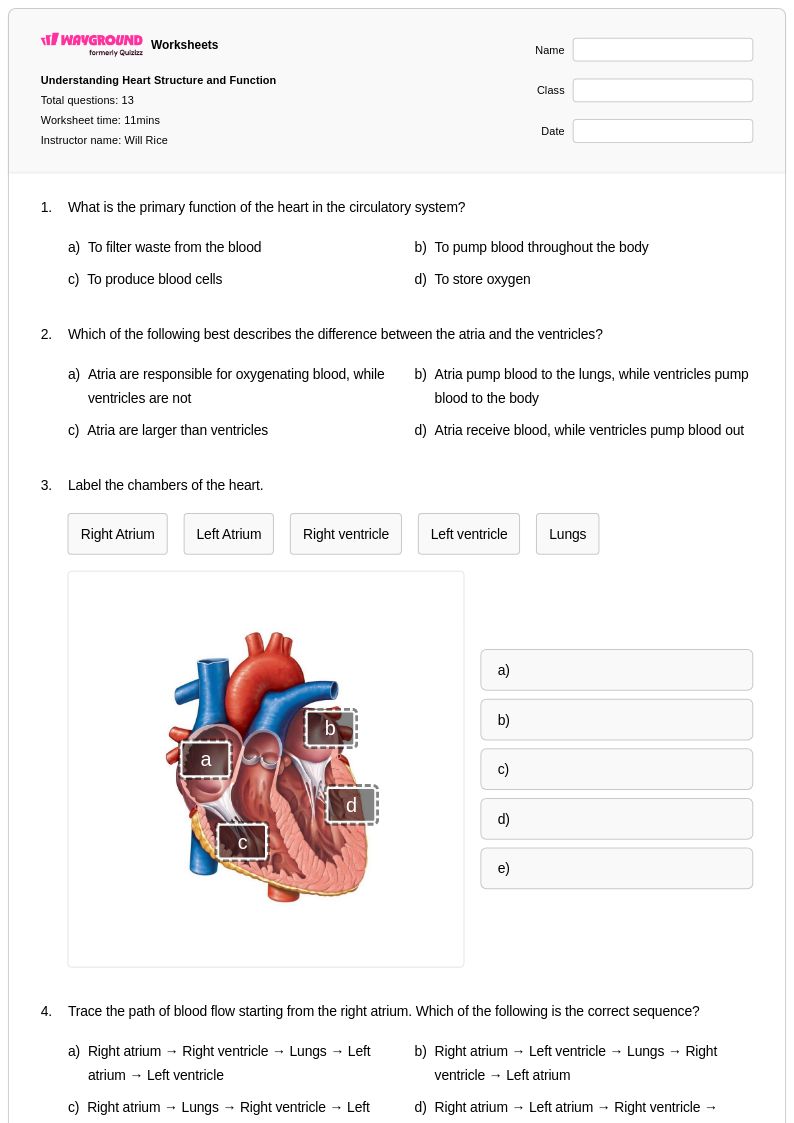
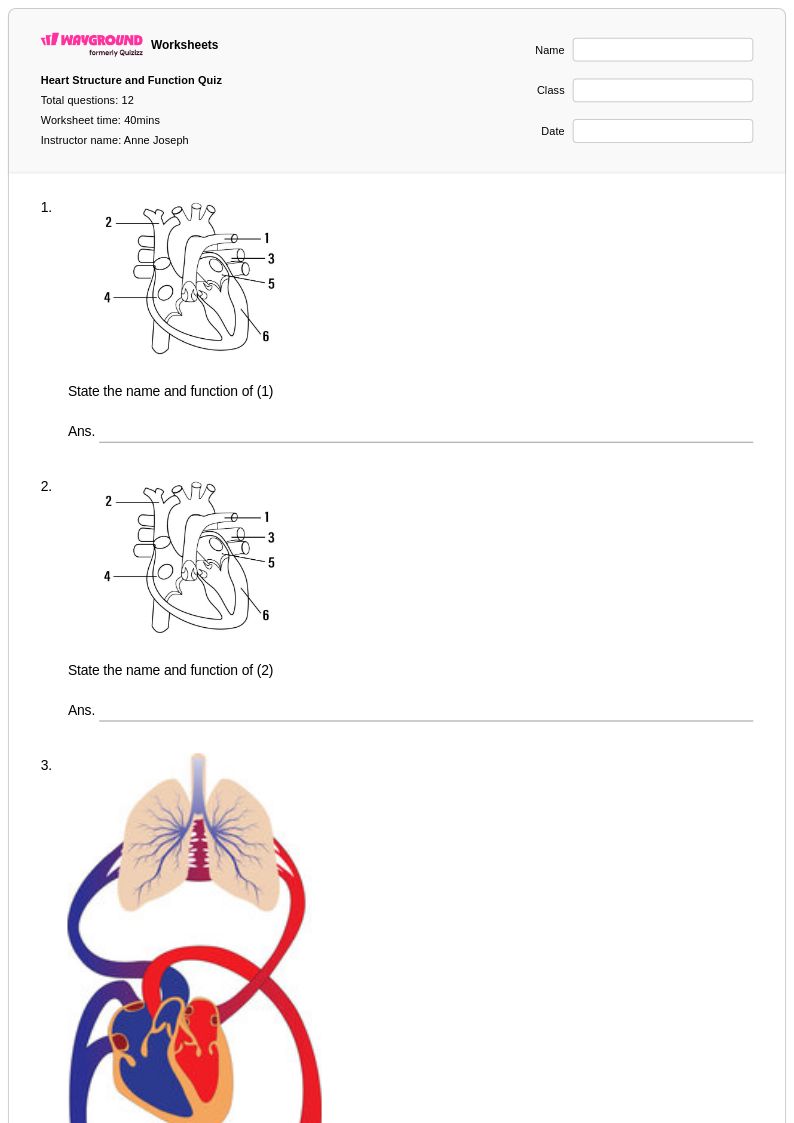
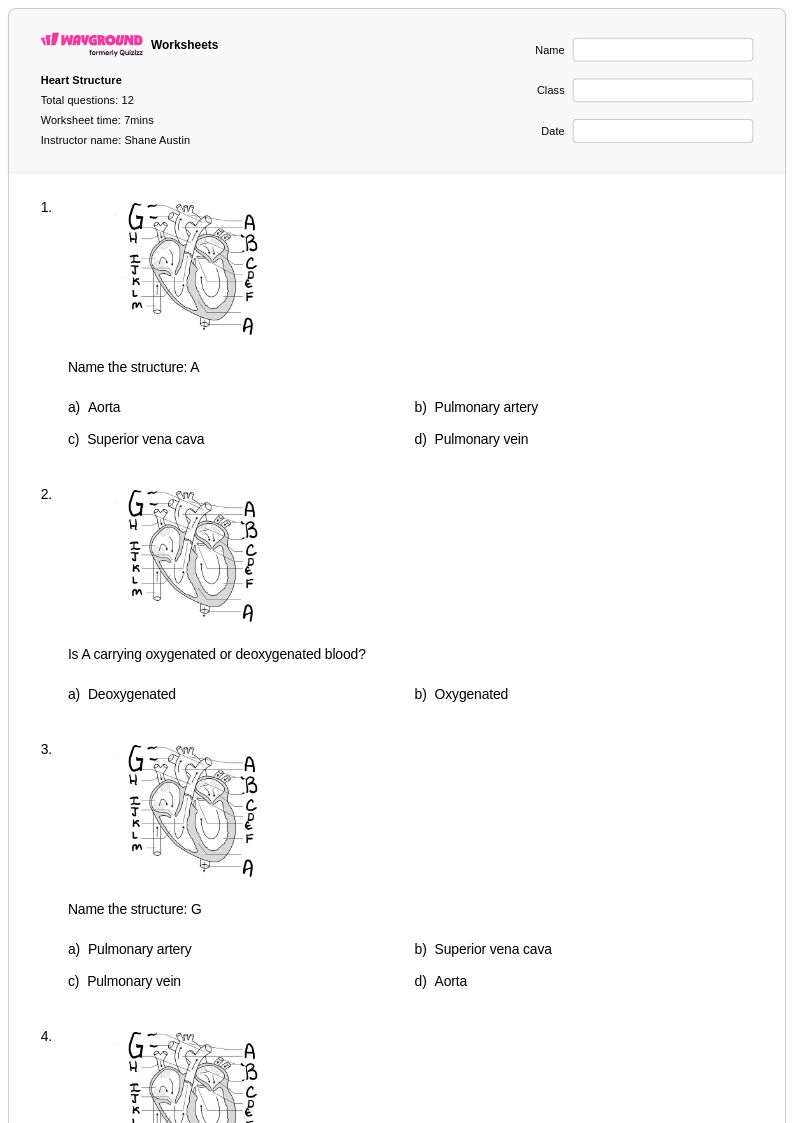
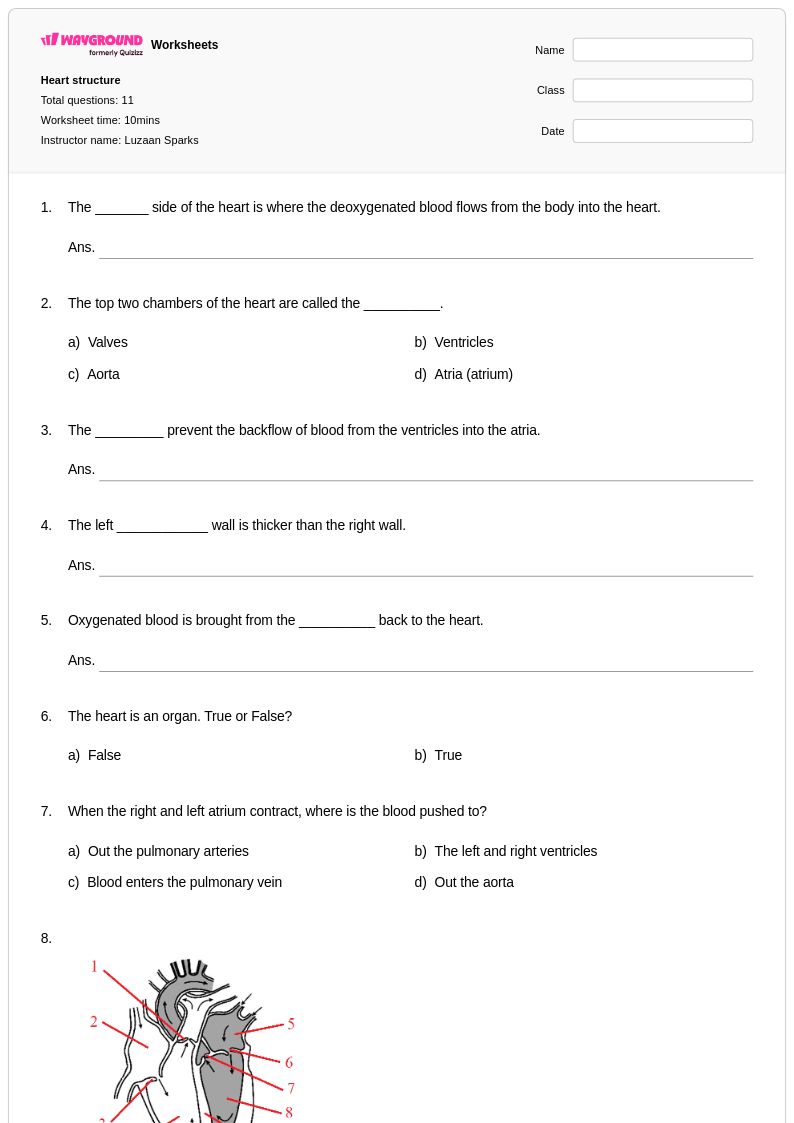
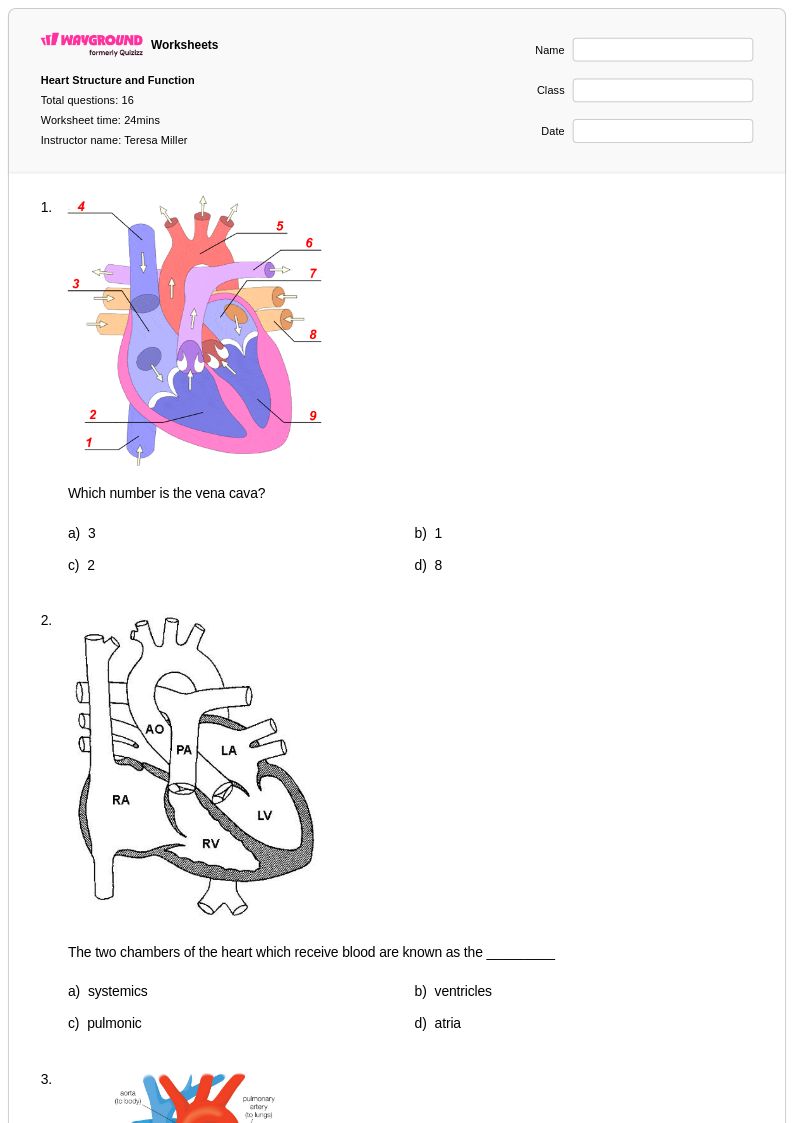
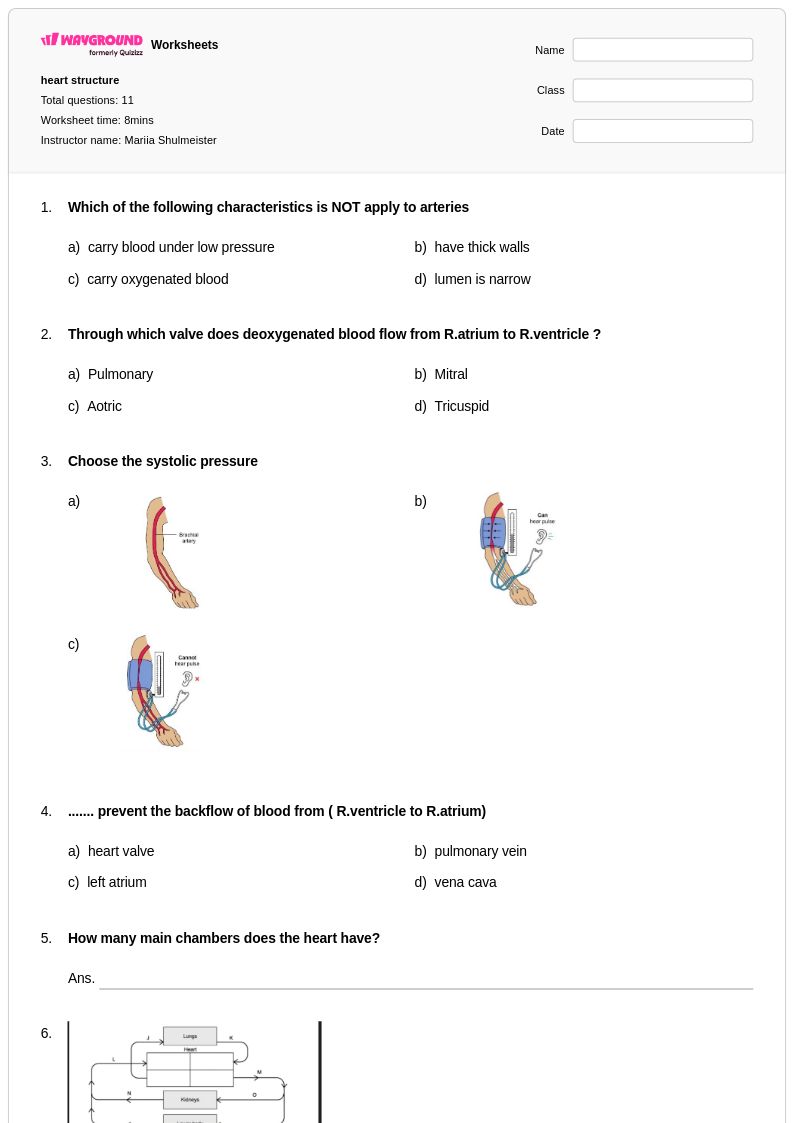
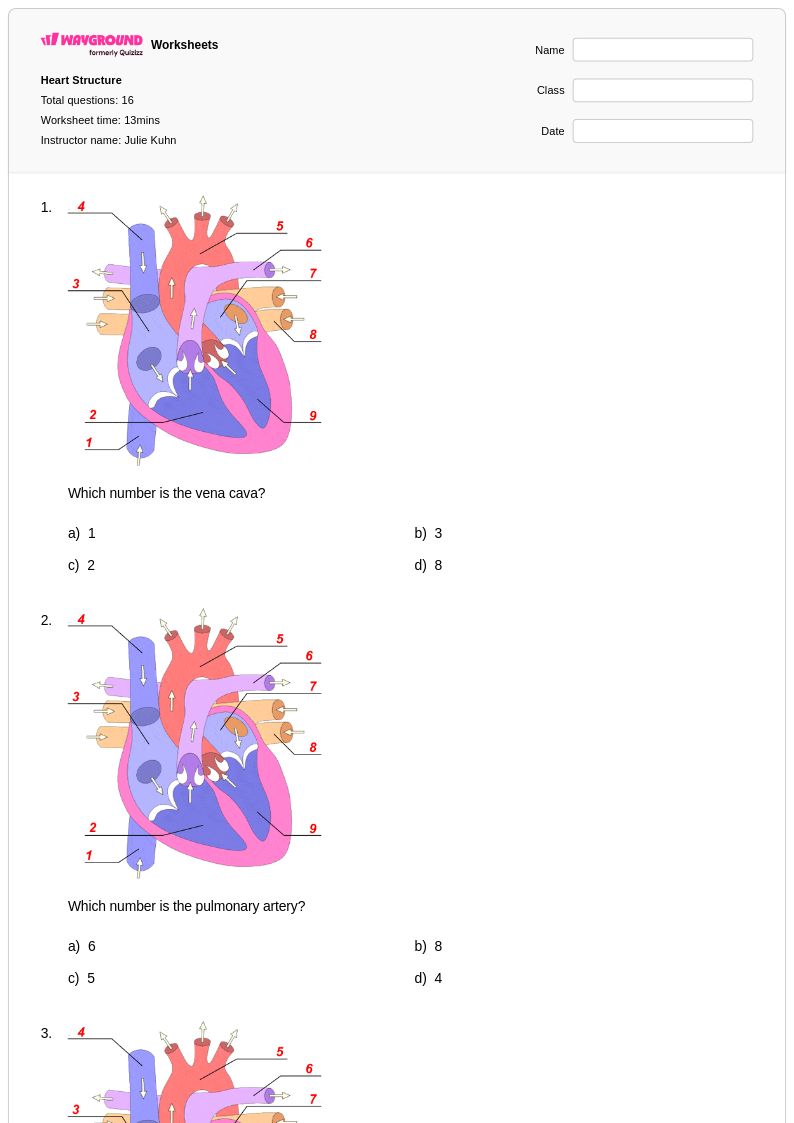
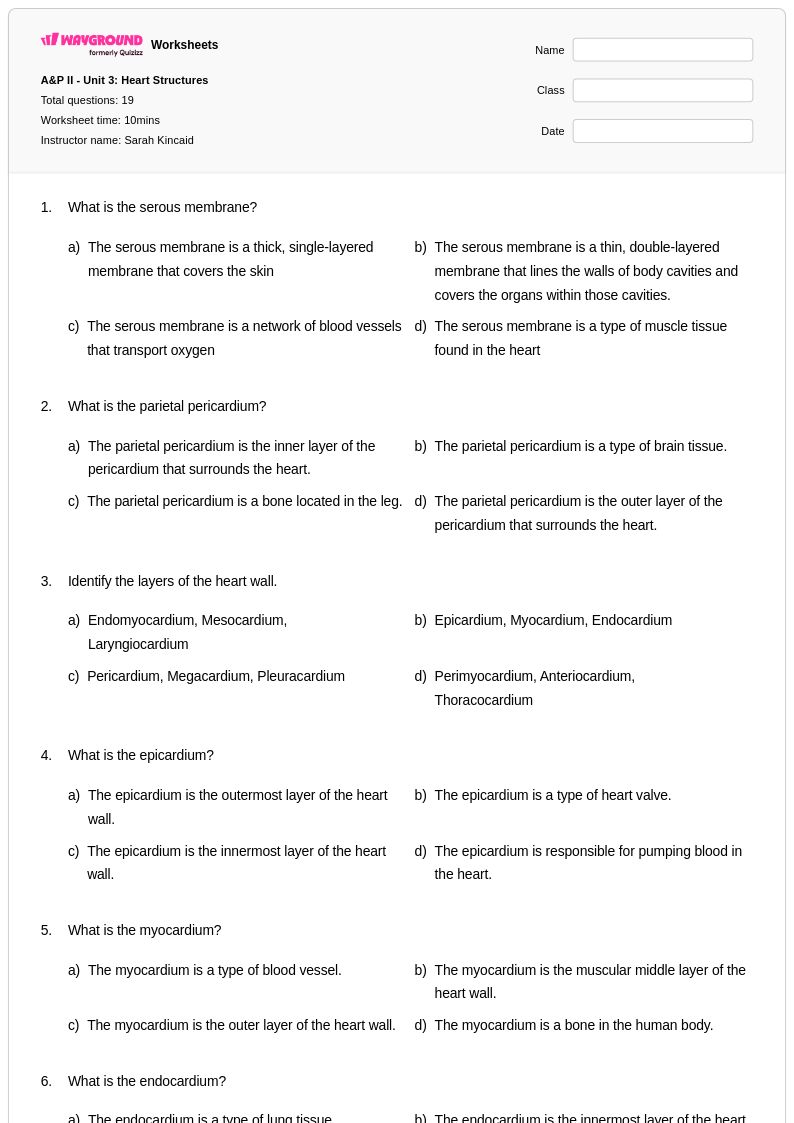
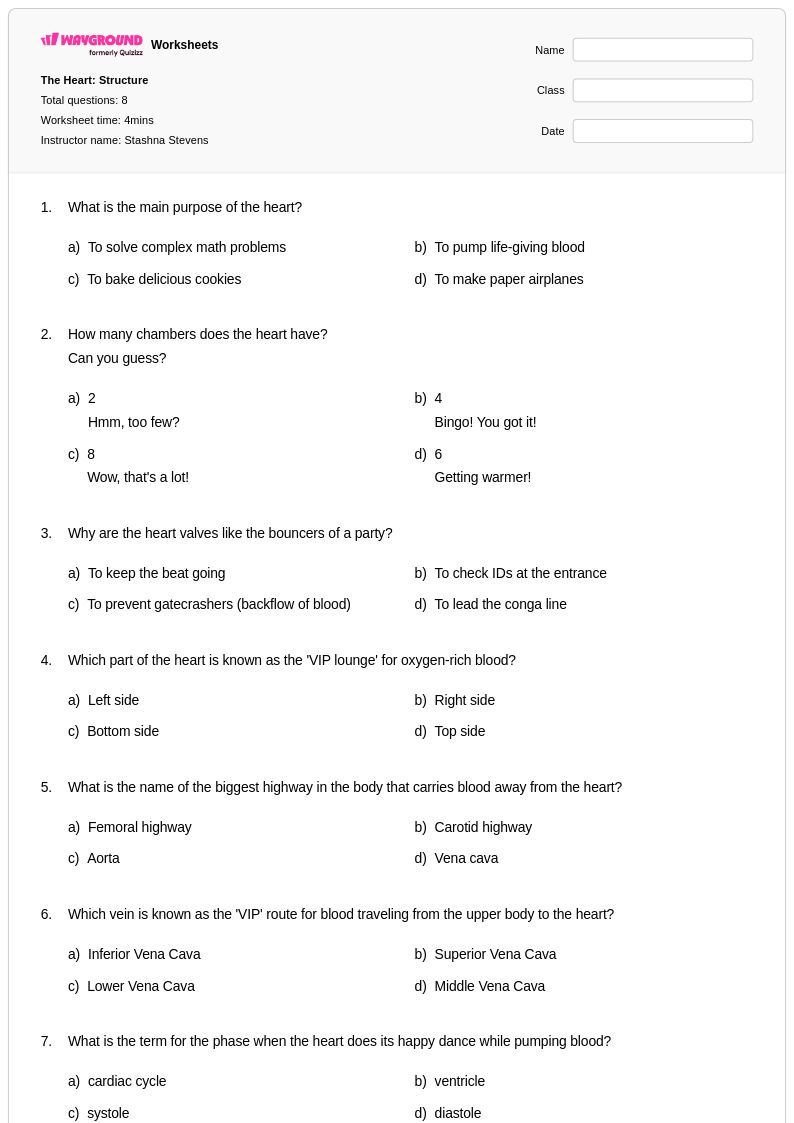
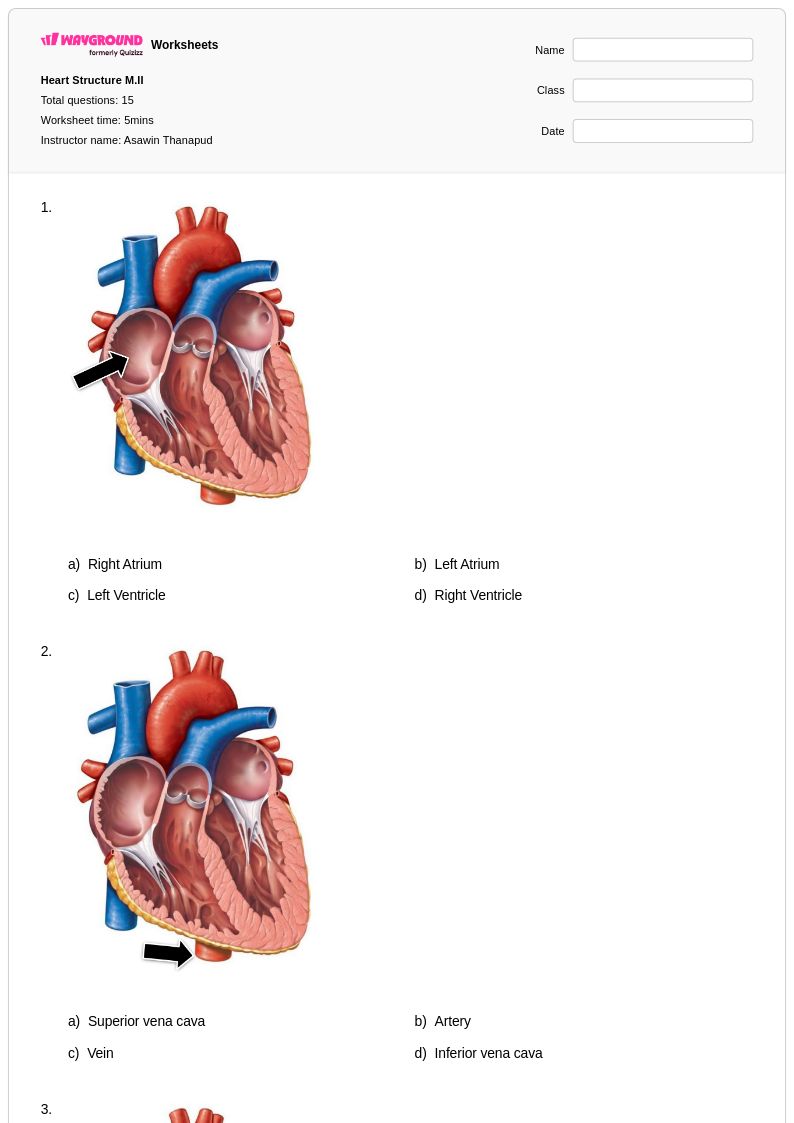
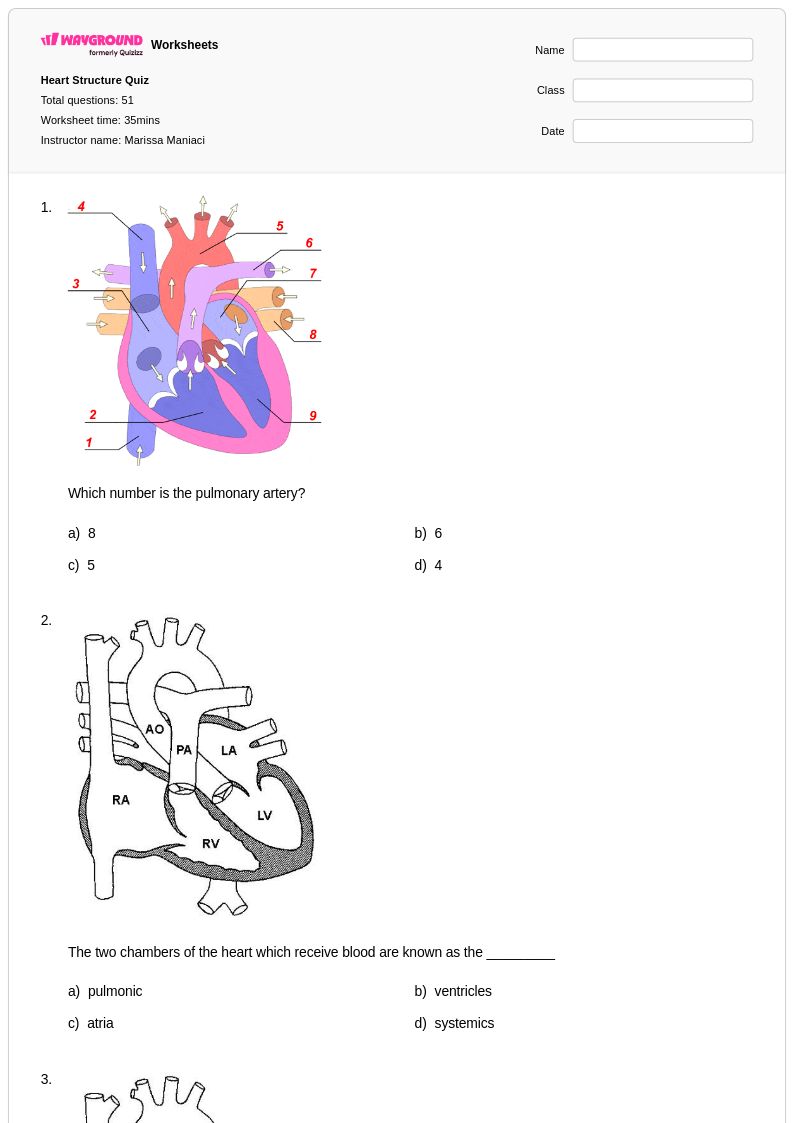
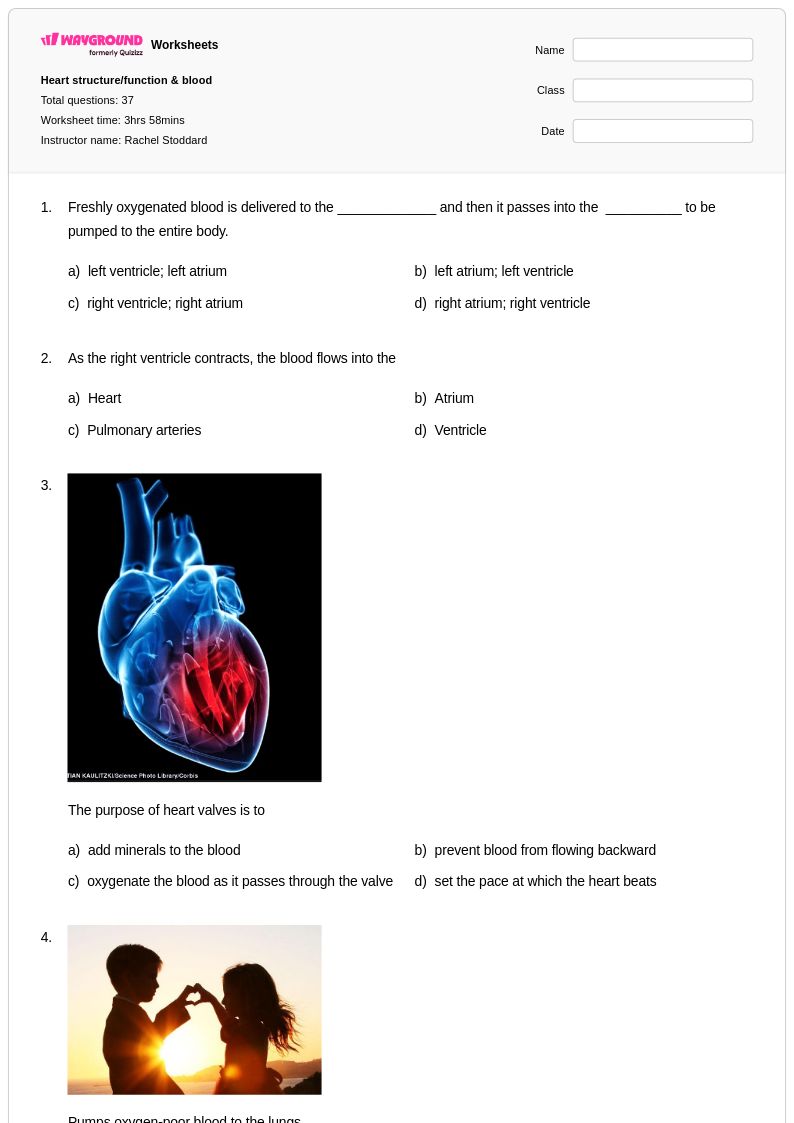
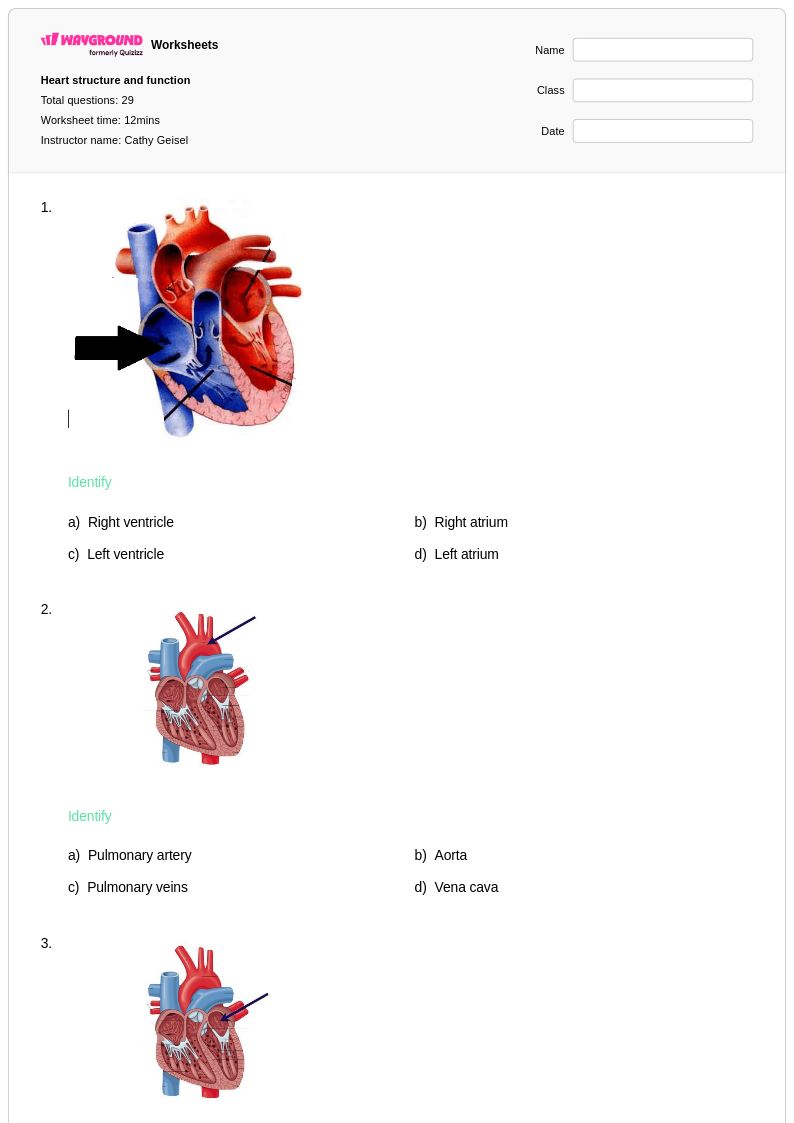
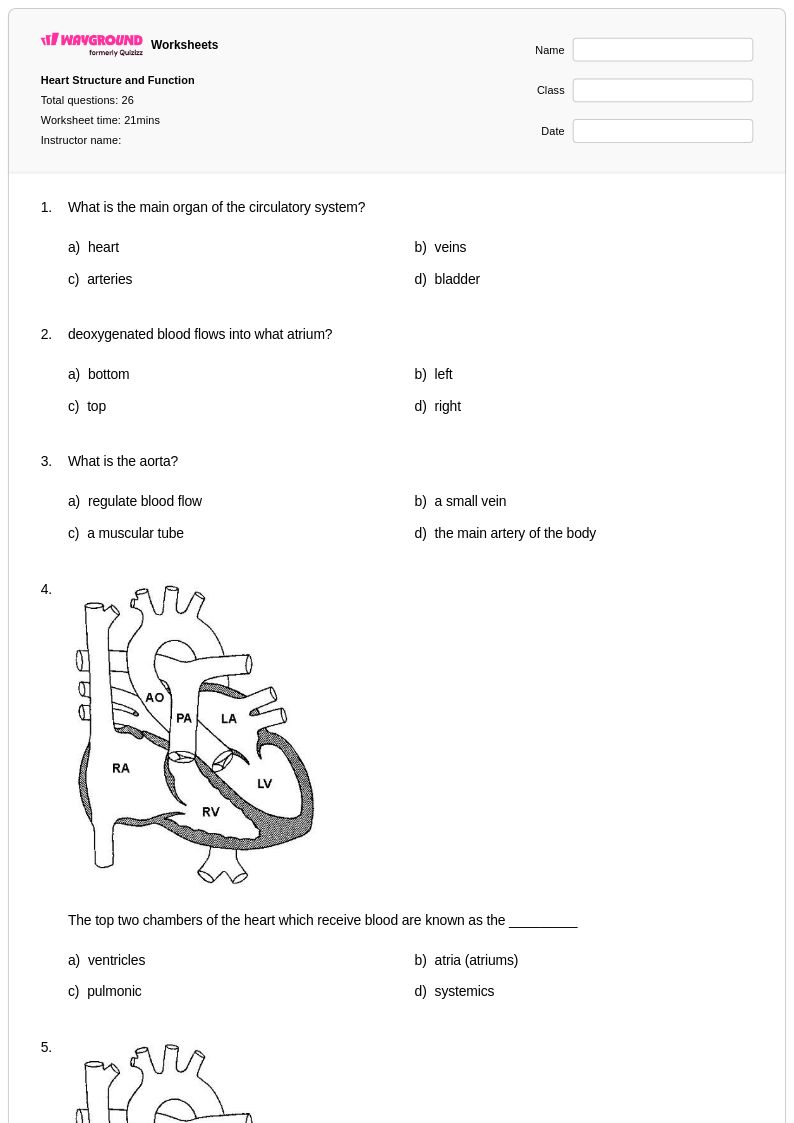
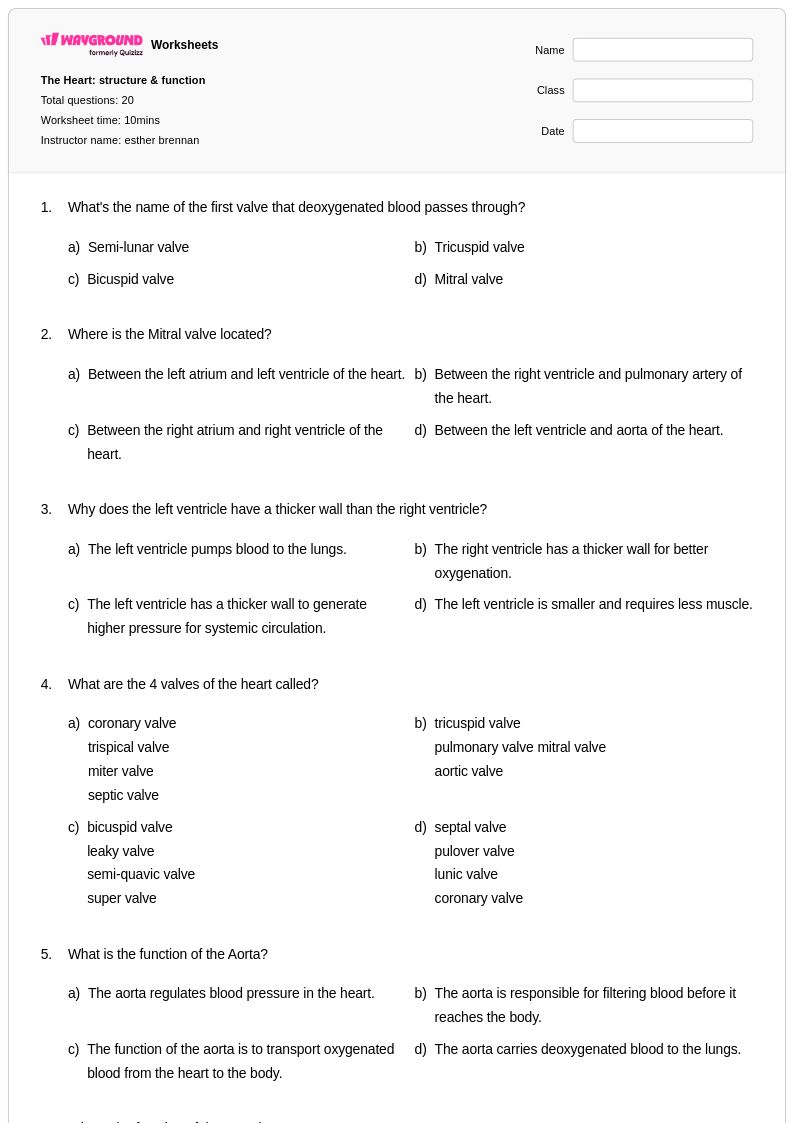
Explore Wayground's free heart structure worksheets and printables that help students master cardiac anatomy through detailed practice problems, diagrams, and comprehensive answer keys in PDF format.
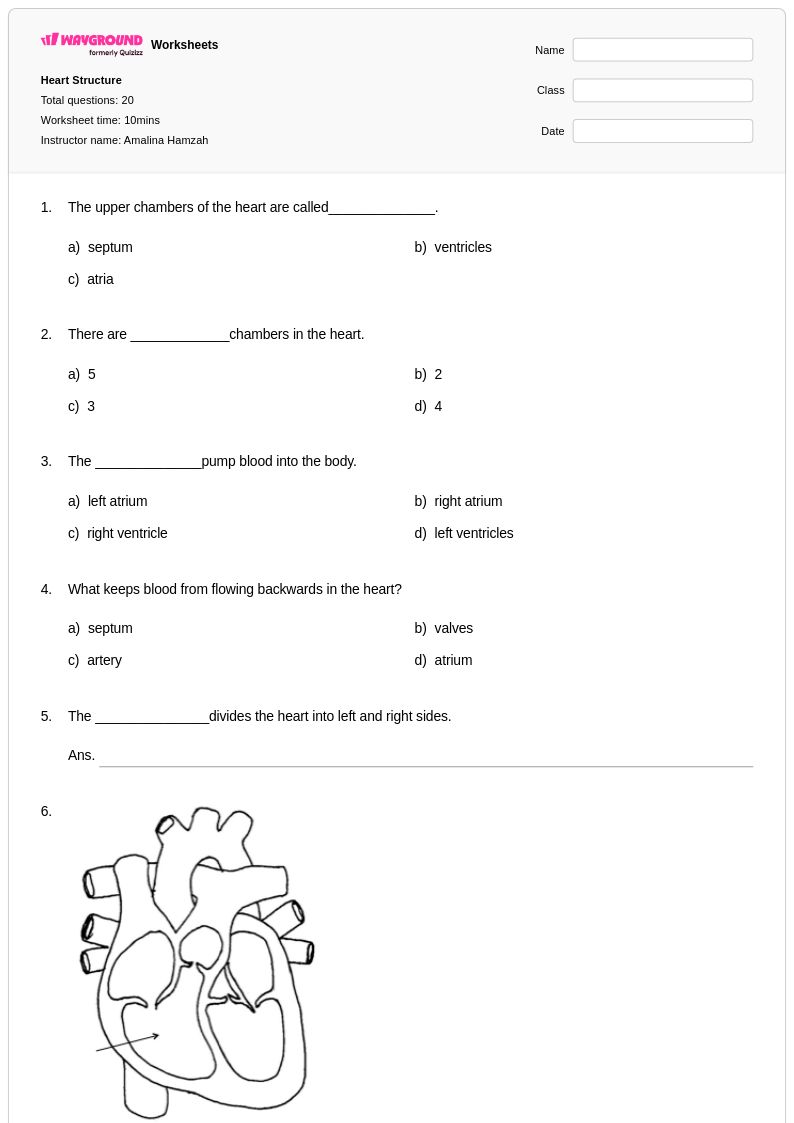
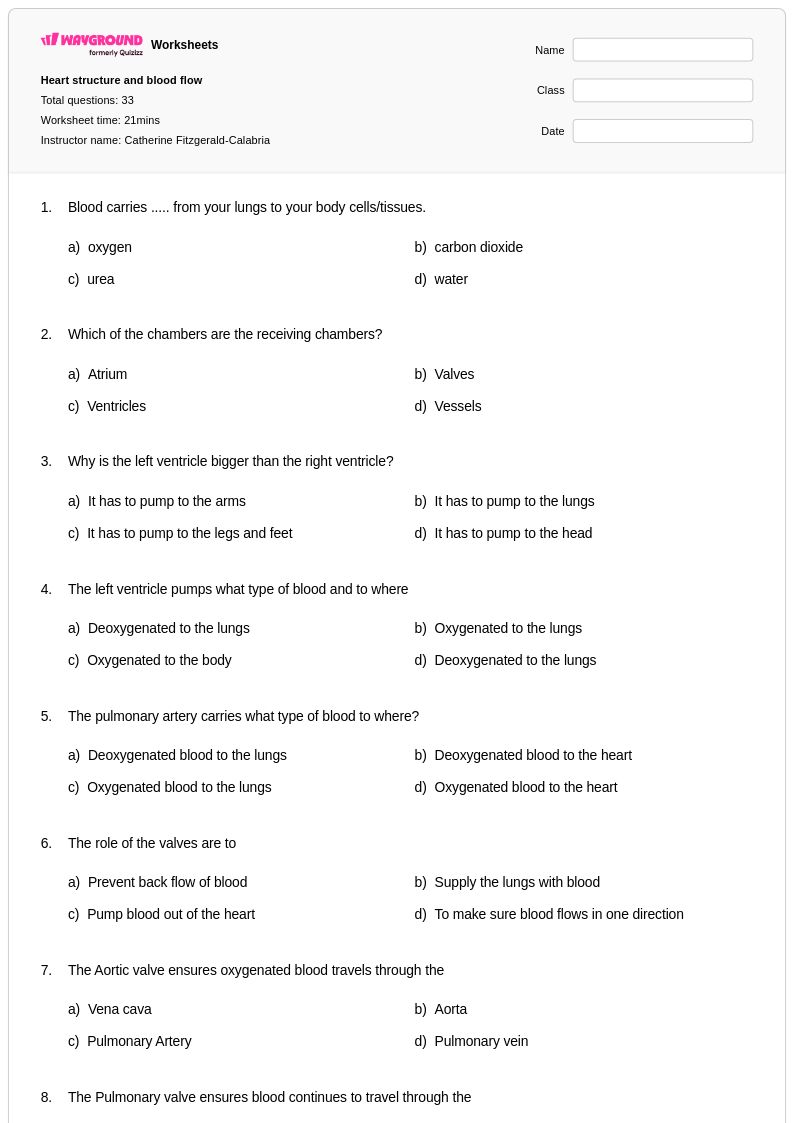
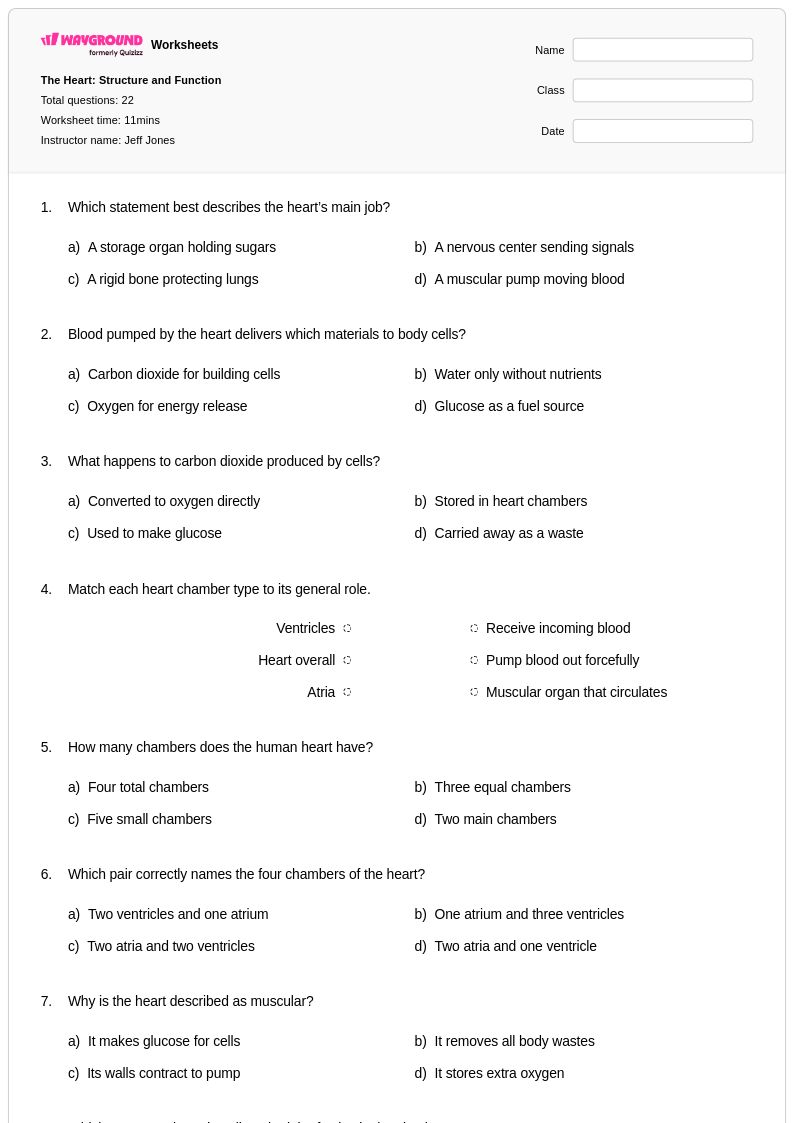
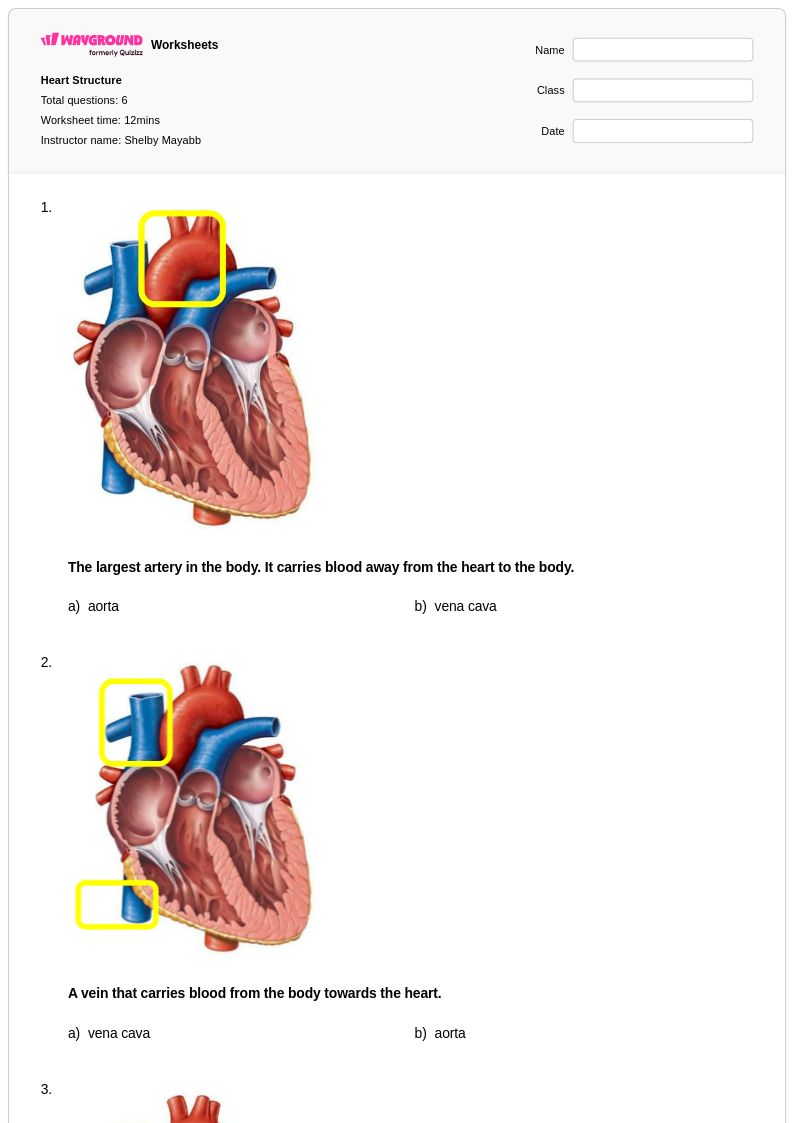
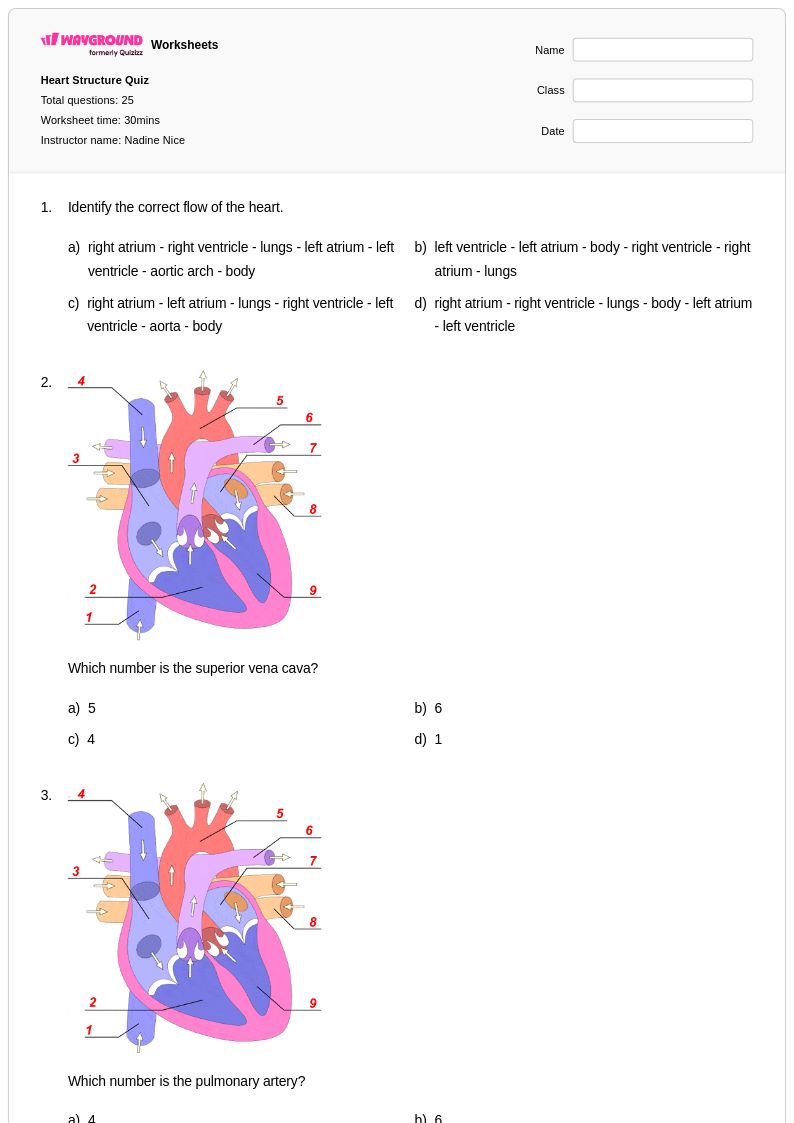
Heart structure worksheets available through Wayground (formerly Quizizz) provide comprehensive educational resources designed to help students master the complex anatomy and physiology of the cardiovascular system's central organ. These expertly crafted materials strengthen critical scientific skills including anatomical identification, structure-function relationships, and physiological process understanding through detailed diagrams, labeling exercises, and analytical practice problems. Students engage with the four chambers, major blood vessels, valve systems, and specialized cardiac tissues while developing scientific vocabulary and spatial reasoning abilities essential for biological sciences. Each worksheet collection includes comprehensive answer keys and is available as free printable pdf resources, ensuring educators have complete instructional support for both classroom instruction and independent student practice.
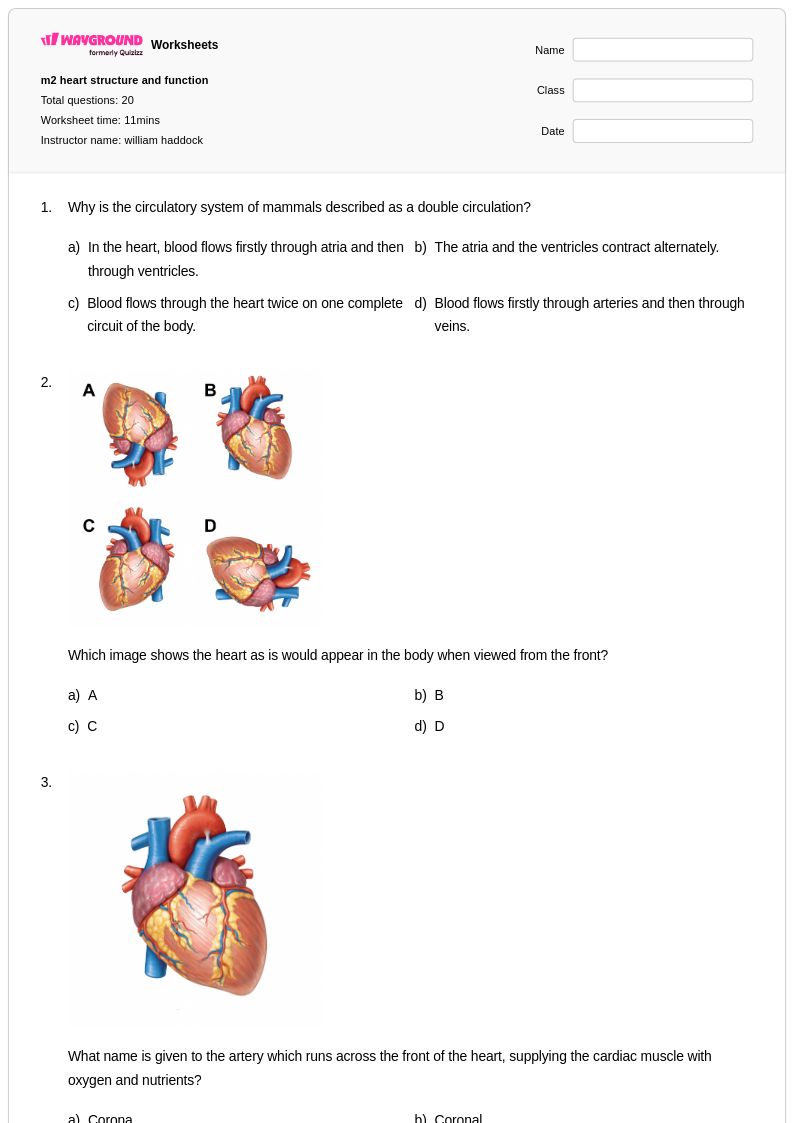
Wayground (formerly Quizizz) supports science educators with an extensive library of millions of teacher-created heart structure worksheets that feature robust search and filtering capabilities, enabling quick identification of materials aligned with specific curriculum standards and learning objectives. The platform's differentiation tools and flexible customization options allow teachers to modify content complexity, adjust visual elements, and tailor exercises to meet diverse student needs across various skill levels. These resources are seamlessly available in both printable and digital pdf formats, facilitating integration into traditional classroom settings, hybrid learning environments, and remote instruction scenarios. Educators utilize these comprehensive worksheet collections for lesson planning, targeted remediation of misconceptions about cardiac anatomy, enrichment activities for advanced learners, and systematic skill practice that builds foundational knowledge essential for understanding broader cardiovascular system concepts.
FAQs
How do I teach heart structure to students effectively?
Teaching heart structure is most effective when students move from the whole organ to its components systematically — beginning with the four chambers, then the valve systems, major blood vessels, and finally the pathway of blood flow. Using labeled diagrams alongside written explanations helps students build both spatial reasoning and scientific vocabulary simultaneously. Connecting each structural feature to its function (e.g., why the left ventricle has thicker walls than the right) gives students a conceptual anchor rather than isolated facts to memorize.
What exercises help students practice identifying the parts of the heart?
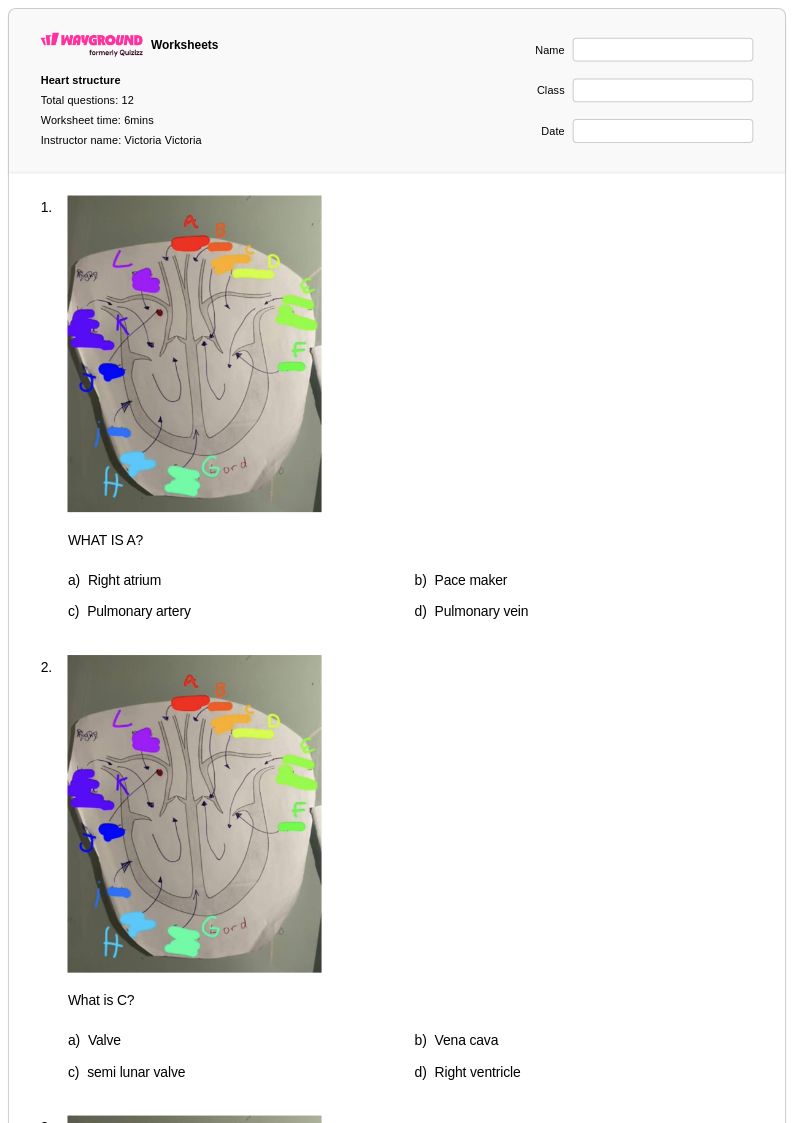
Labeling diagrams is the most direct practice method for heart anatomy, requiring students to identify chambers, valves, and major vessels like the aorta, pulmonary artery, and vena cava from visual representations. Tracing blood flow pathways — from the body through the right side of the heart, to the lungs, and back through the left side — reinforces structure-function relationships in a way that pure labeling does not. Combining both exercise types in a single worksheet session builds both recognition and comprehension.
What misconceptions do students commonly have about heart structure?
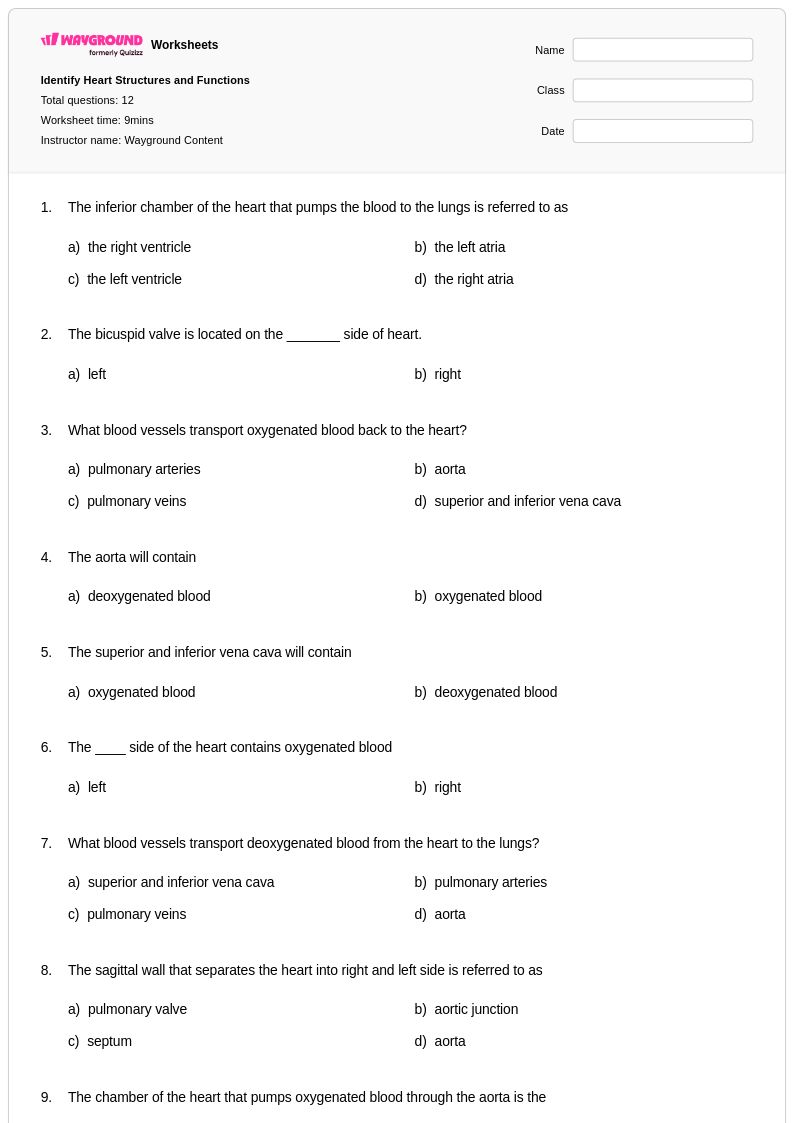
One of the most common misconceptions is that the right side of the heart pumps oxygenated blood — students often conflate 'right' with the dominant or stronger side, when in fact the right side handles deoxygenated blood en route to the lungs. Students also frequently confuse the atria and ventricles, reversing which chambers receive and which pump blood. Another error is treating heart valves as passive structures rather than understanding that they open and close in response to pressure differences between chambers.
How can I differentiate heart structure worksheets for students at different skill levels?
For students who need additional support, provide partially labeled diagrams or word banks to reduce the cognitive load of recall while still requiring structural identification. More advanced students can be challenged with open-ended questions about why specific structures are shaped or sized the way they are, or asked to compare cardiac anatomy across different organisms. On Wayground, teachers can apply accommodations such as reduced answer choices or read-aloud features to individual students without affecting the experience of the rest of the class.
How do I use Wayground's heart structure worksheets in my classroom?
Wayground's heart structure worksheets are available as printable PDFs for traditional classroom use and in digital formats for technology-integrated or remote learning environments. Teachers can also host worksheets as interactive quizzes directly on the Wayground platform, which adds an assessment layer to what would otherwise be independent practice. Each worksheet includes a complete answer key, so teachers have everything needed for guided instruction, independent work, or review sessions without additional preparation.