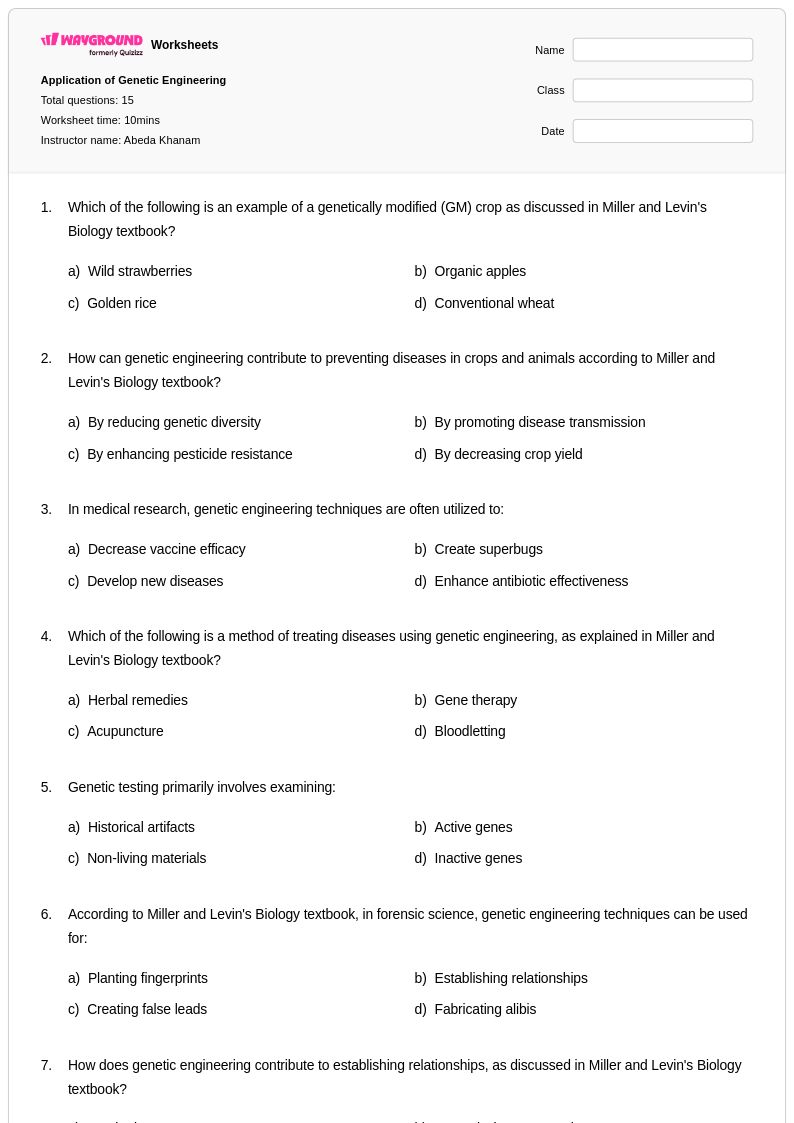
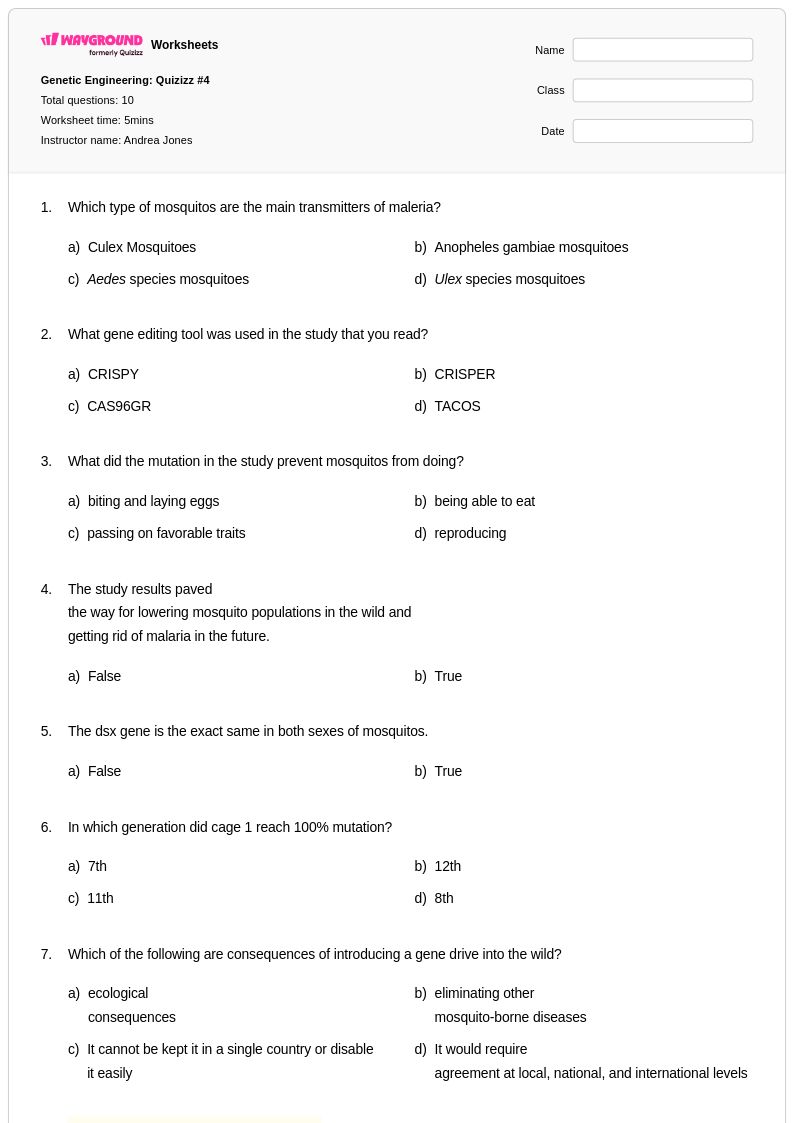
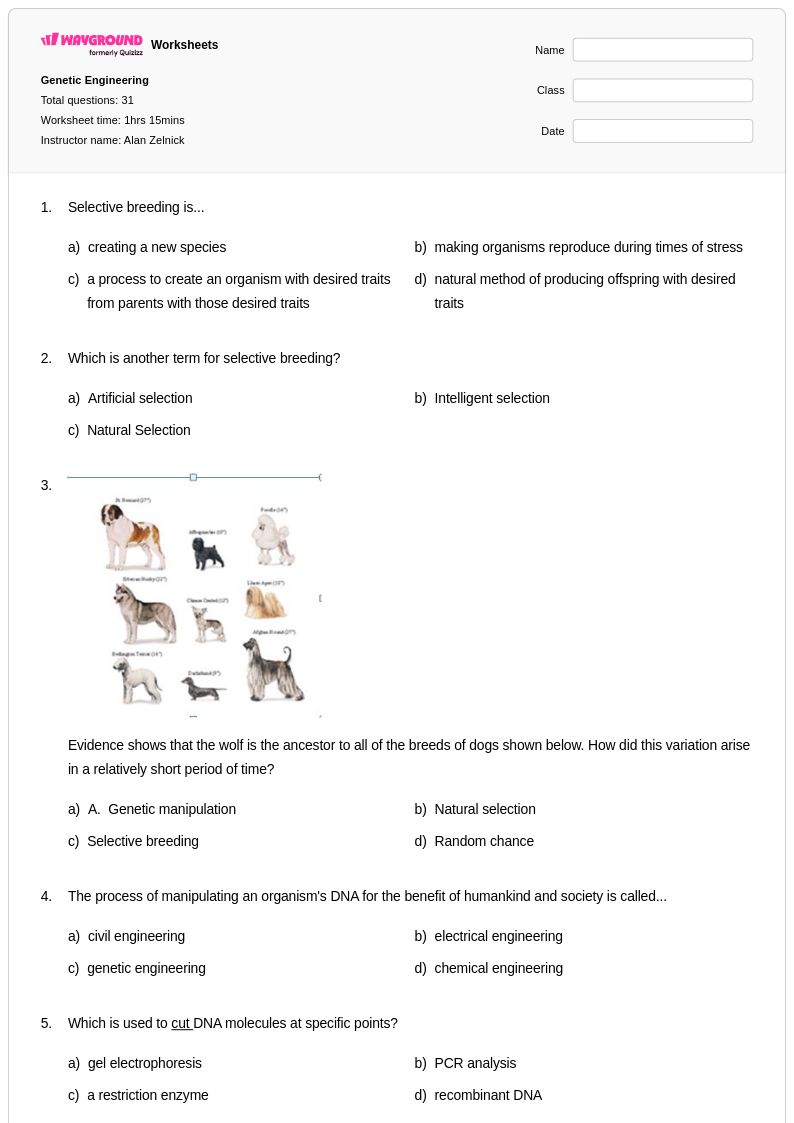
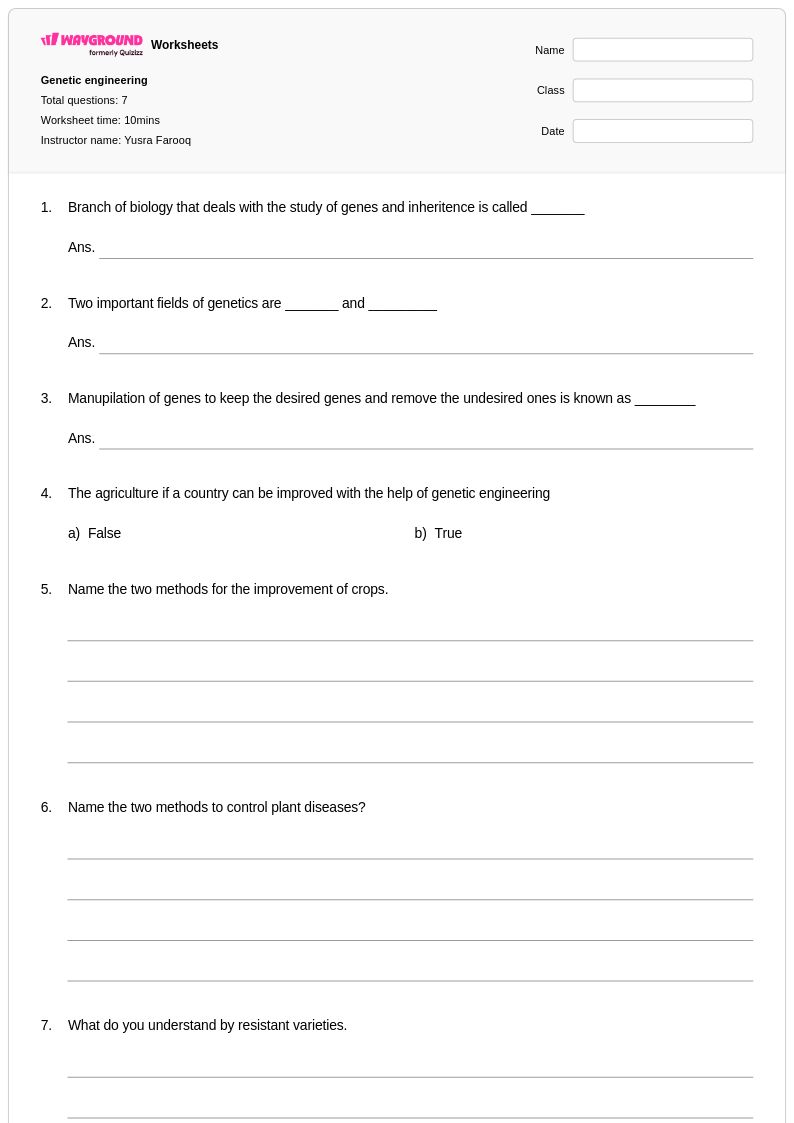
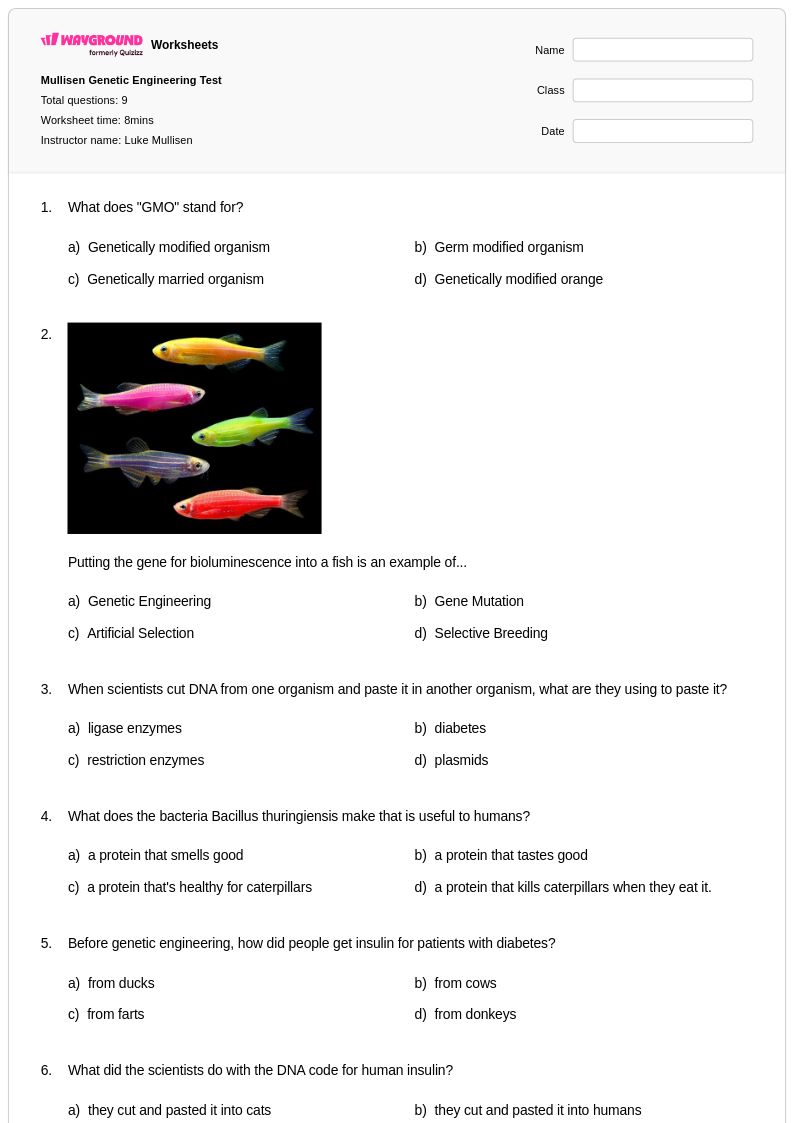
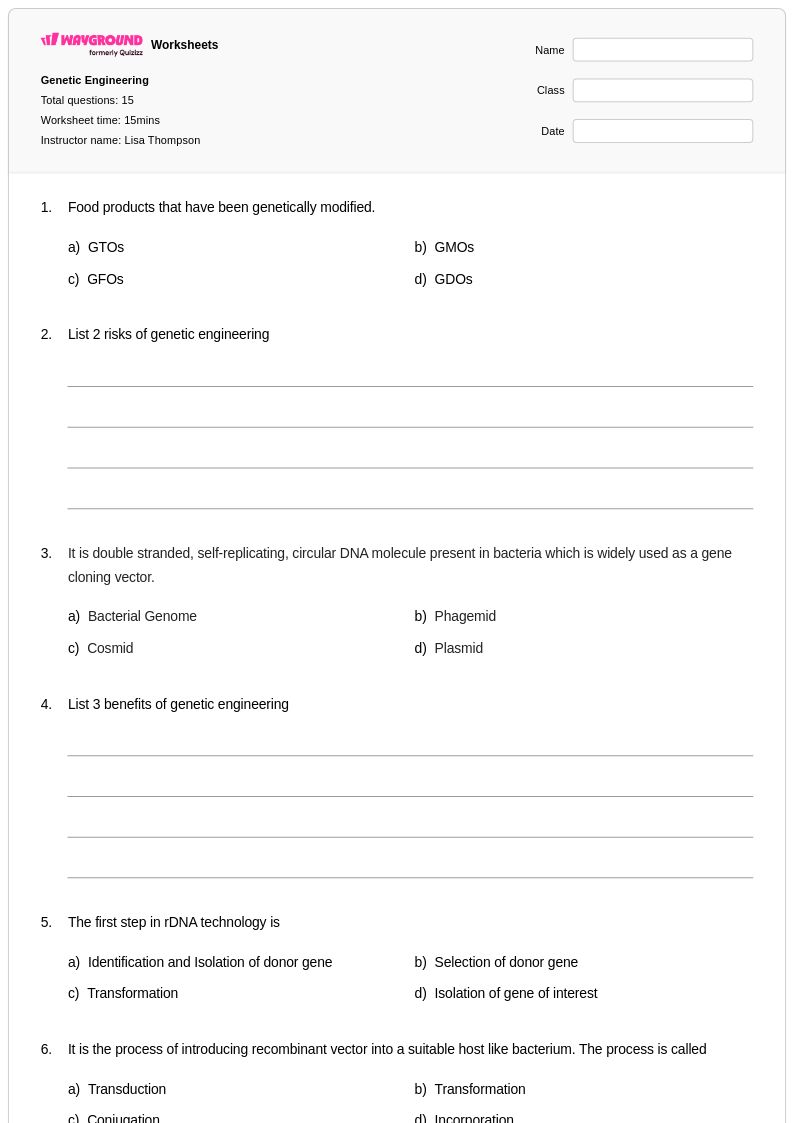
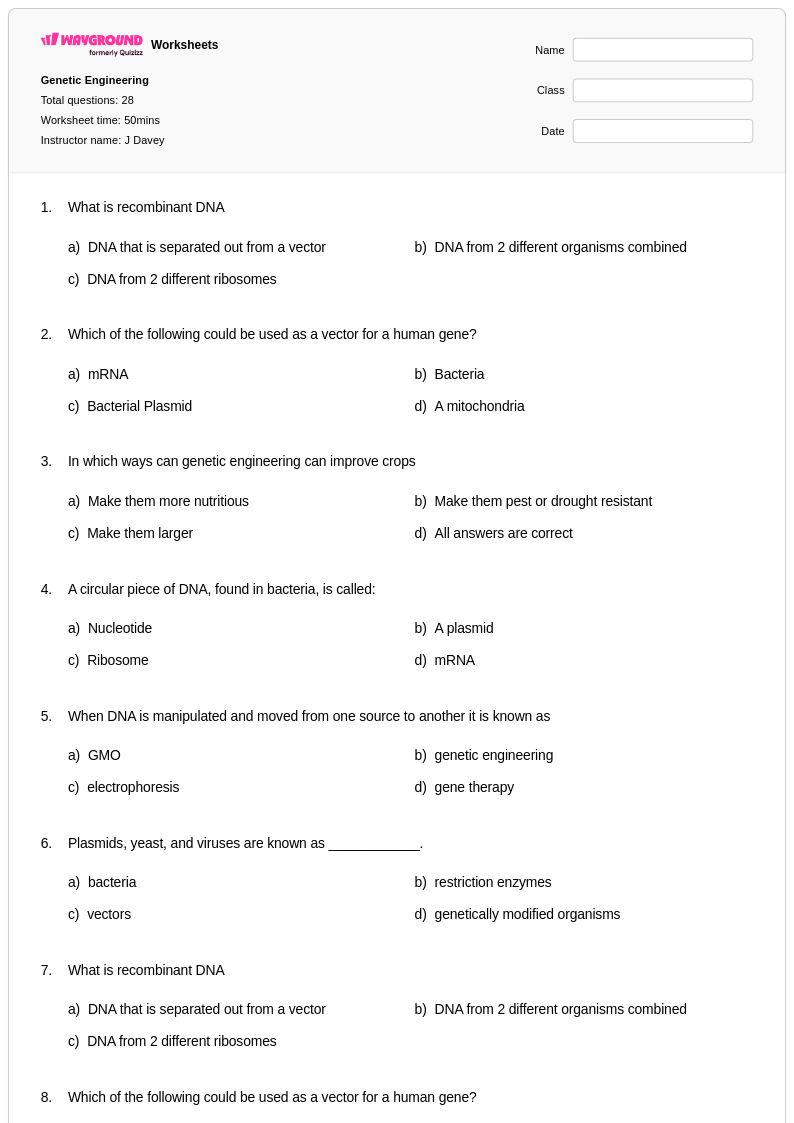
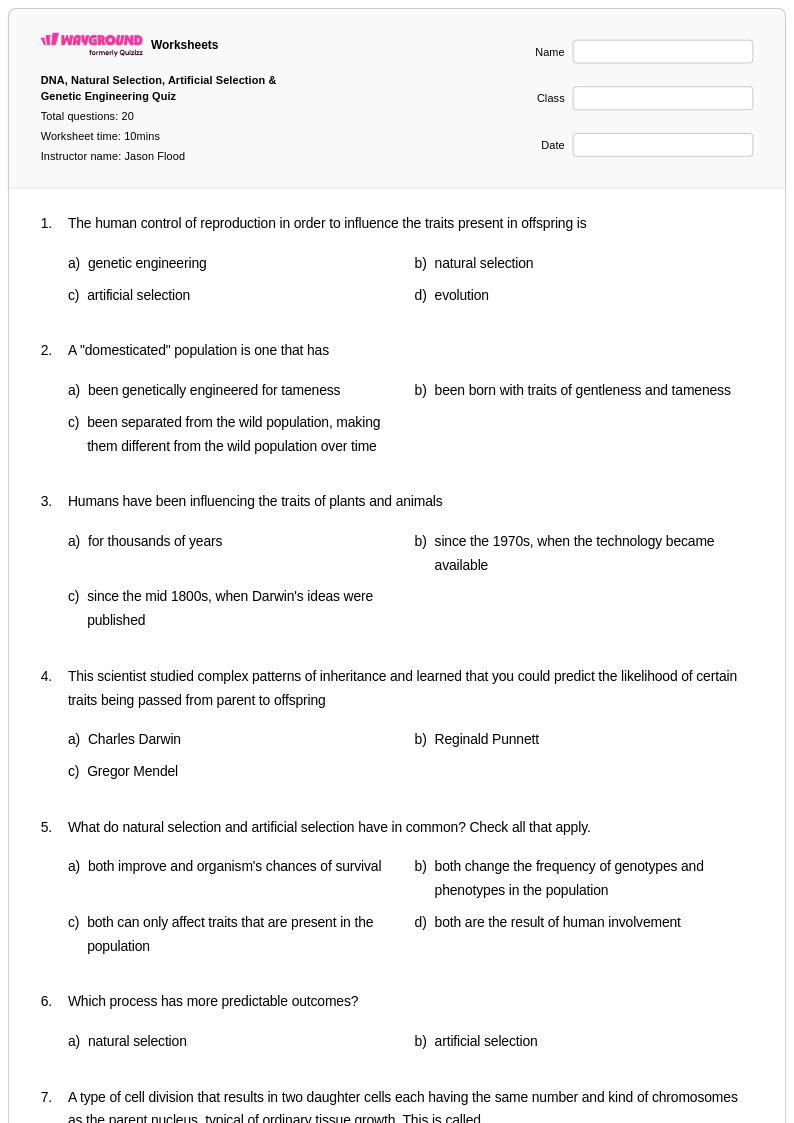
Explore Wayground's comprehensive collection of genetic engineering worksheets featuring printable PDFs with practice problems and answer keys to help students master biotechnology concepts, DNA manipulation techniques, and modern genetic modification processes.
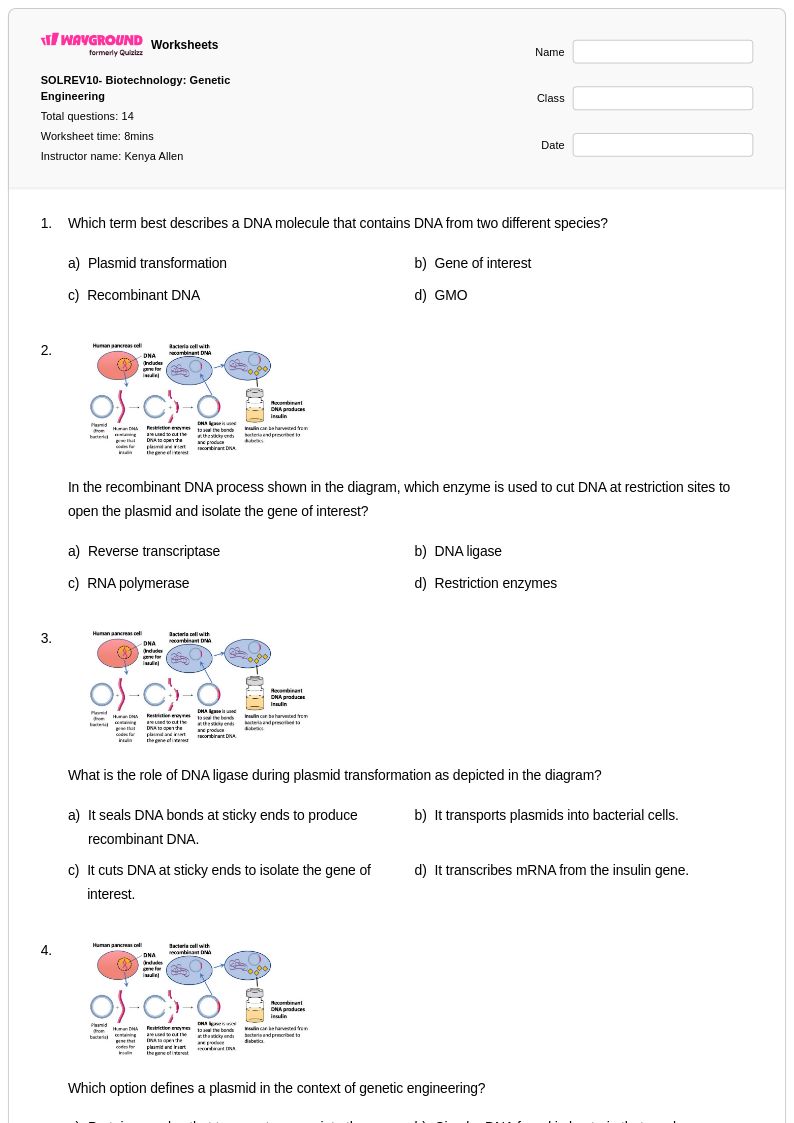
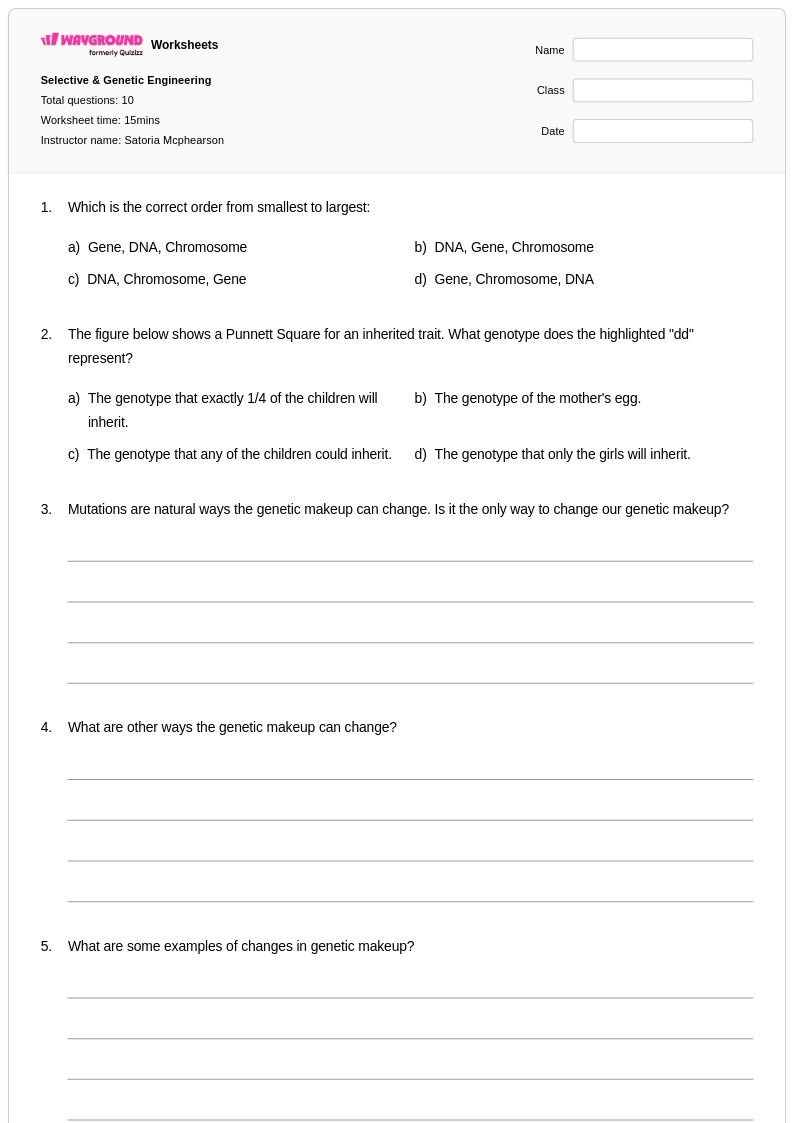
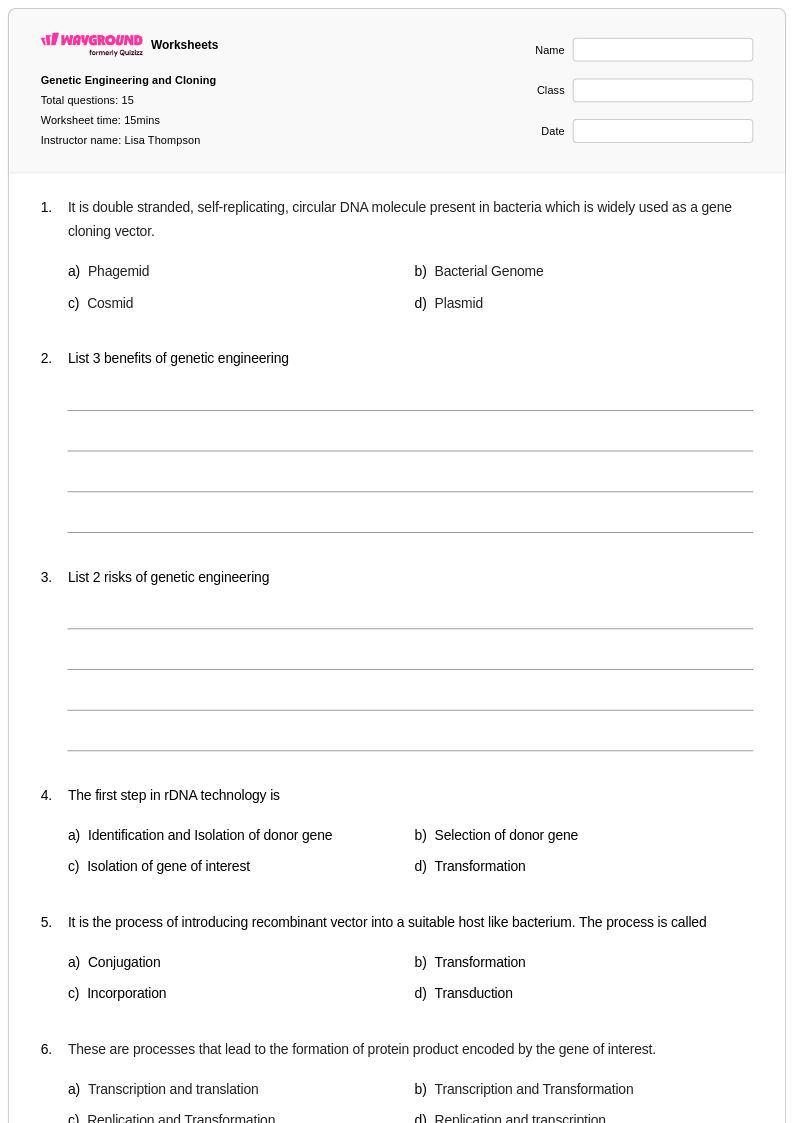
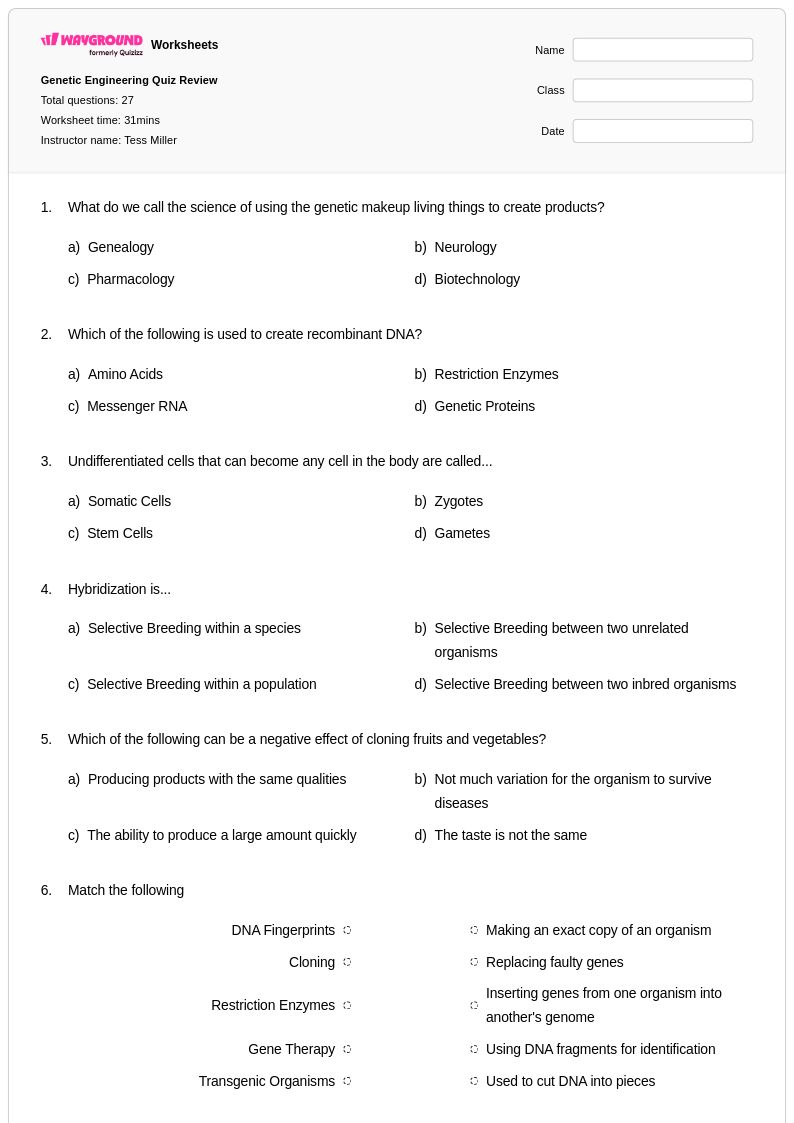
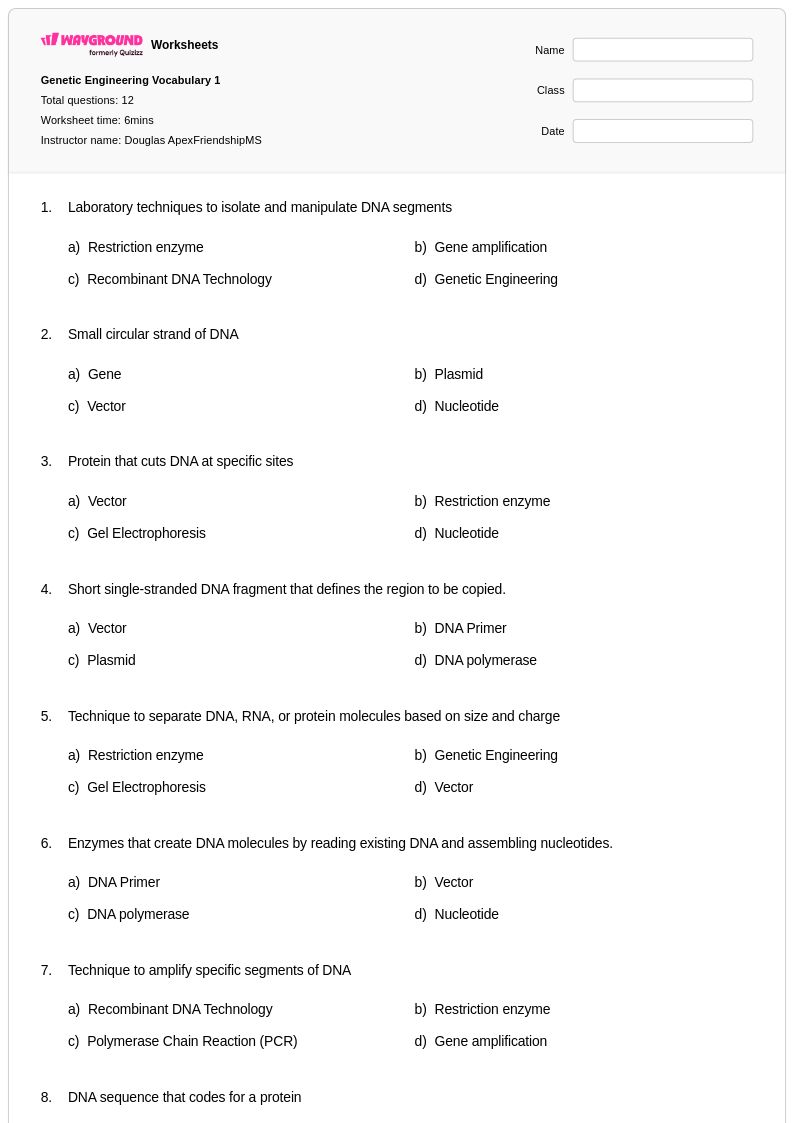
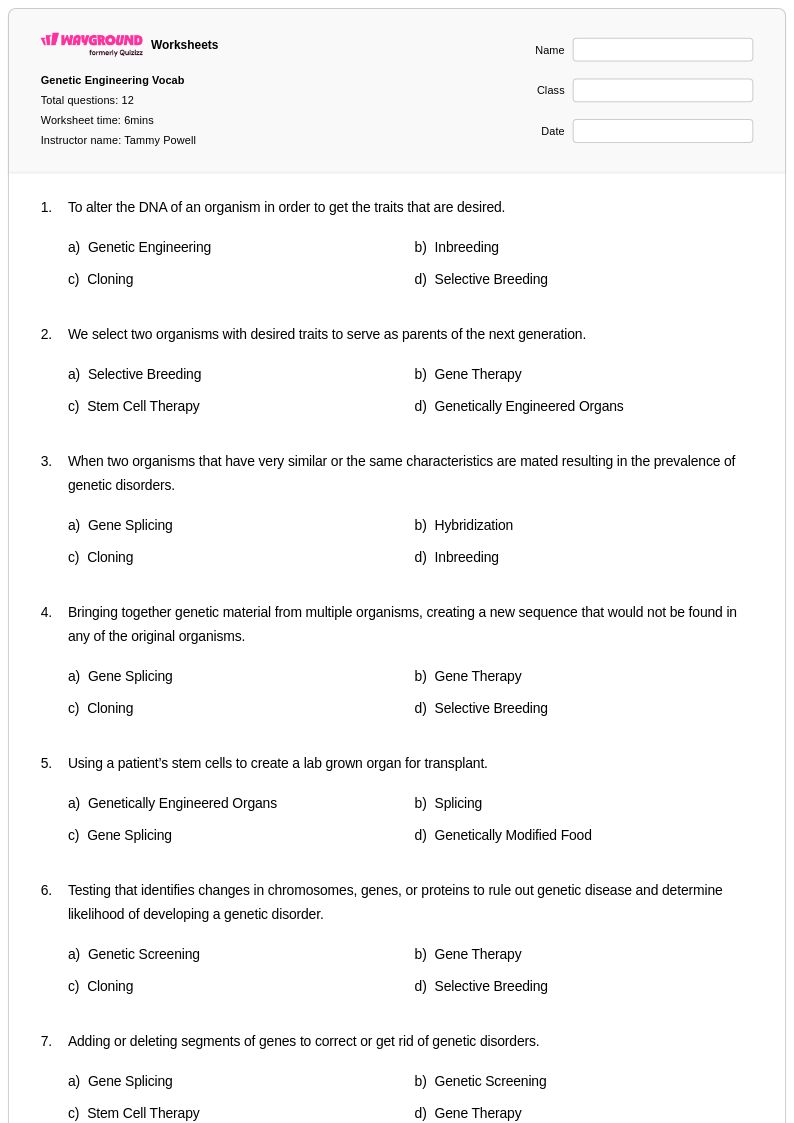
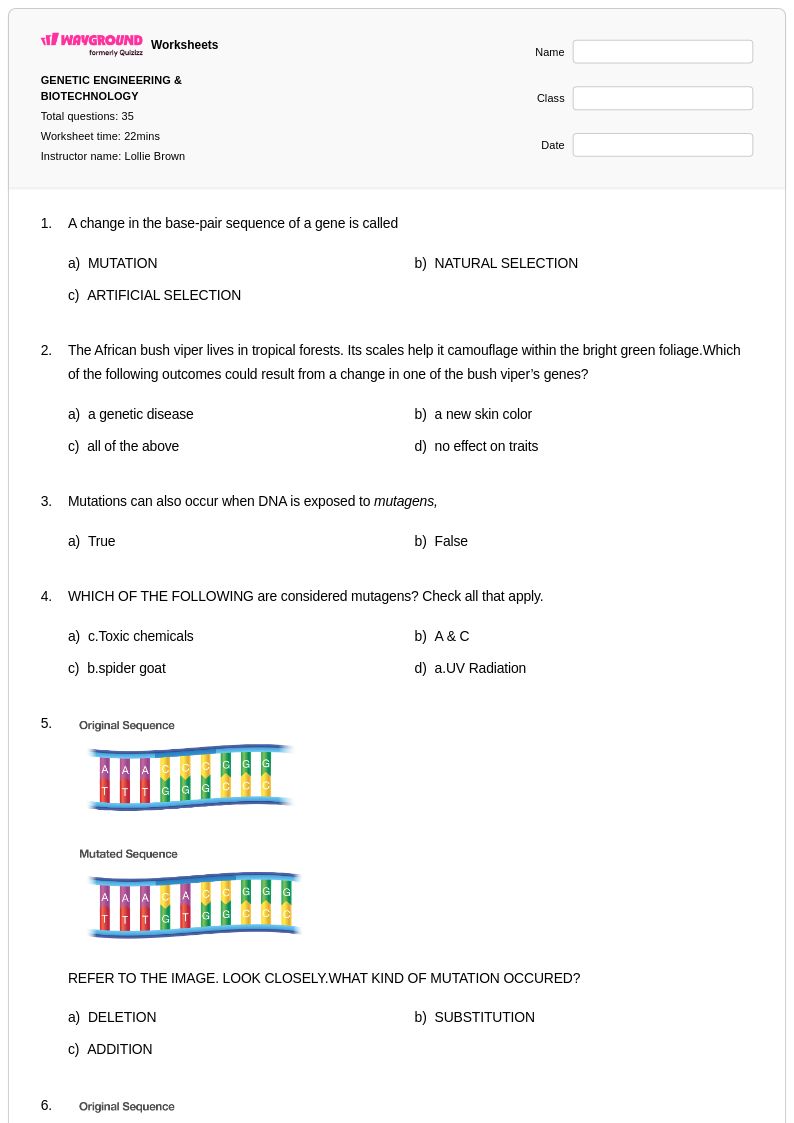
Genetic engineering worksheets available through Wayground (formerly Quizizz) provide comprehensive coverage of biotechnology principles, DNA manipulation techniques, and the ethical considerations surrounding genetic modification. These educational resources strengthen critical thinking skills by guiding students through complex processes such as gene cloning, CRISPR technology, recombinant DNA formation, and genetic transformation procedures. The collection includes detailed practice problems that explore real-world applications including genetically modified organisms, gene therapy, and agricultural biotechnology, while comprehensive answer keys ensure accurate understanding of challenging concepts. These free printables and pdf resources systematically build student comprehension of molecular biology techniques, restriction enzyme function, plasmid vectors, and the regulatory mechanisms that govern genetic expression and modification.
Wayground (formerly Quizizz) empowers educators with millions of teacher-created genetic engineering resources that feature robust search and filtering capabilities, enabling precise alignment with curriculum standards and learning objectives. The platform's differentiation tools allow instructors to customize worksheet complexity and focus areas, accommodating diverse learning needs through both printable and digital formats including downloadable pdf versions. These flexible resources support comprehensive lesson planning by providing materials suitable for introducing fundamental concepts, reinforcing laboratory procedures, and extending learning through advanced biotechnology applications. Teachers can seamlessly integrate these worksheets into remediation sessions for students struggling with molecular processes, enrichment activities for advanced learners exploring cutting-edge research, and regular skill practice that builds mastery of genetic engineering principles and their societal implications.
FAQs
How do I teach genetic engineering to high school students?
Start by grounding students in prerequisite concepts: DNA structure, replication, and protein synthesis. From there, introduce the core tools of genetic engineering in sequence, covering restriction enzymes, plasmid vectors, and recombinant DNA formation before moving to applications like CRISPR and gene therapy. Using real-world examples such as genetically modified crops or insulin production helps students connect molecular mechanisms to tangible outcomes. Pairing direct instruction with structured practice problems reinforces procedural understanding alongside conceptual knowledge.
What topics should a genetic engineering worksheet cover?
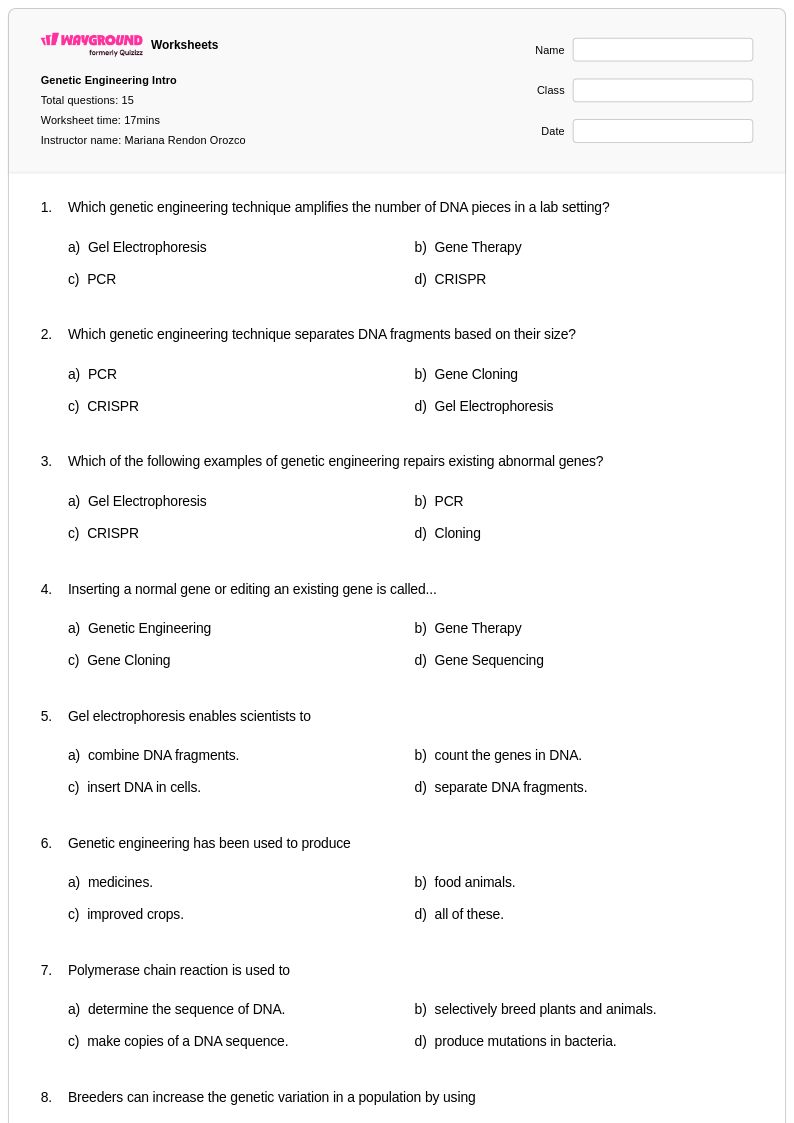
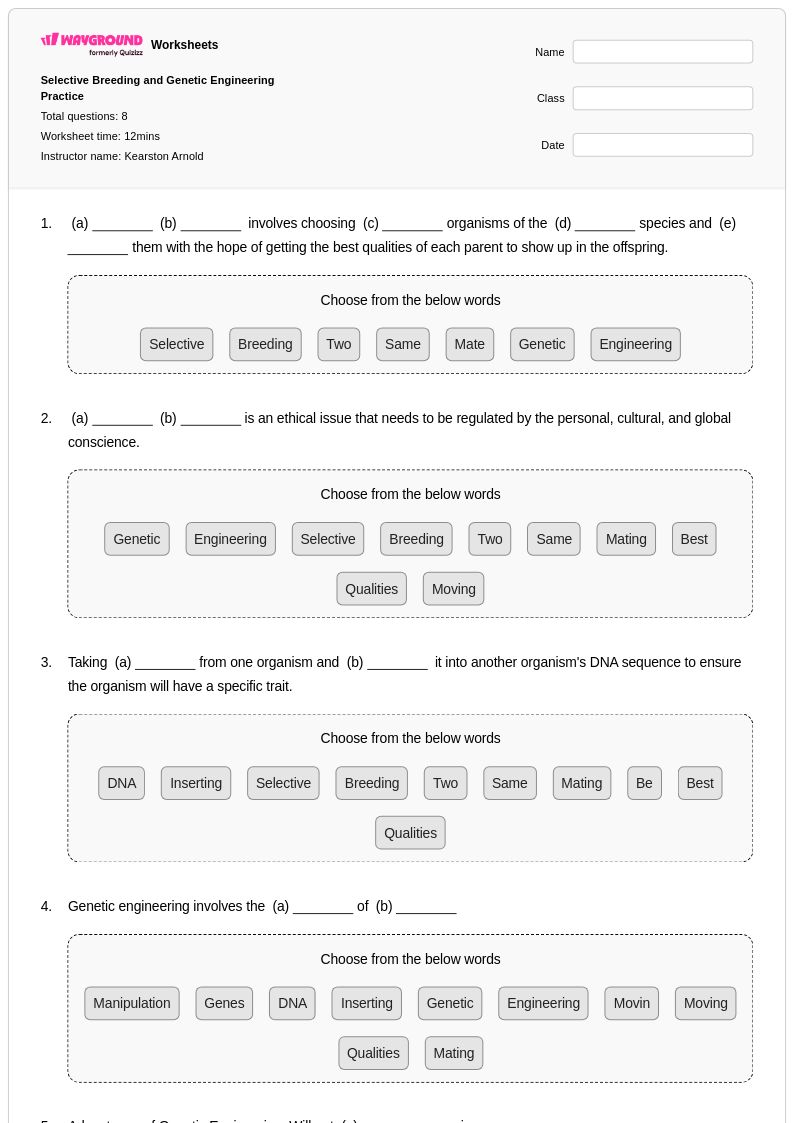
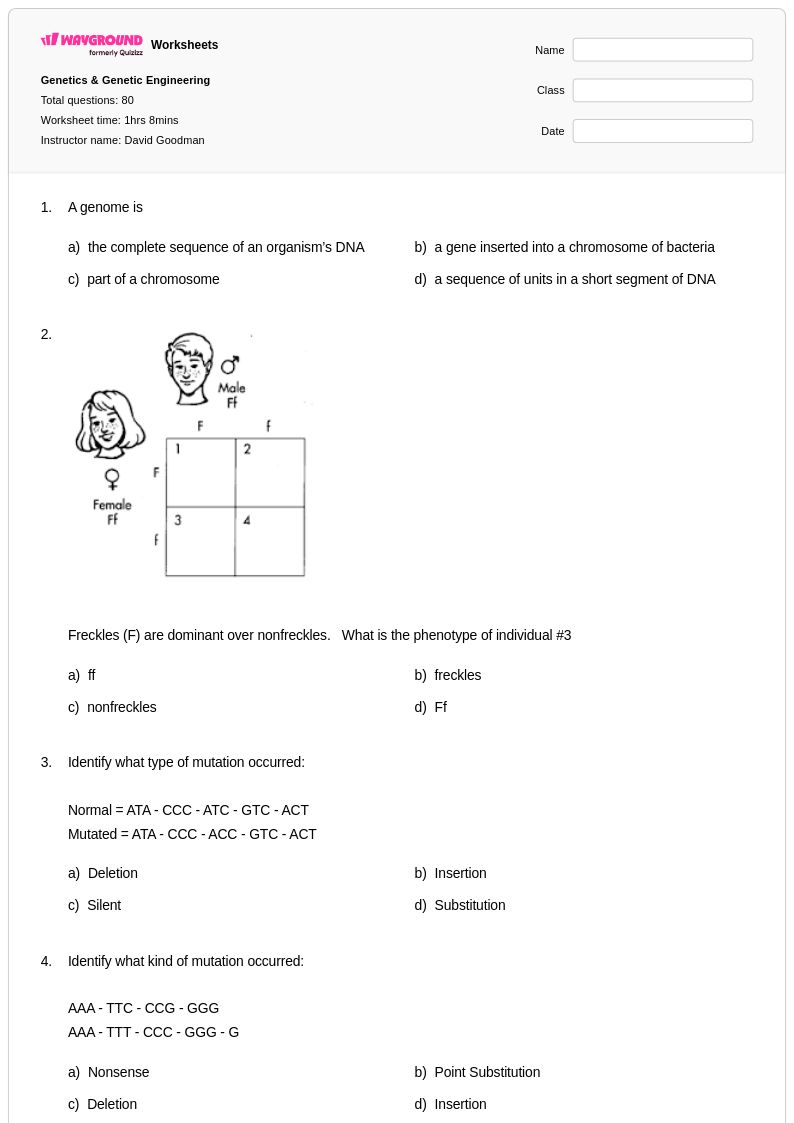
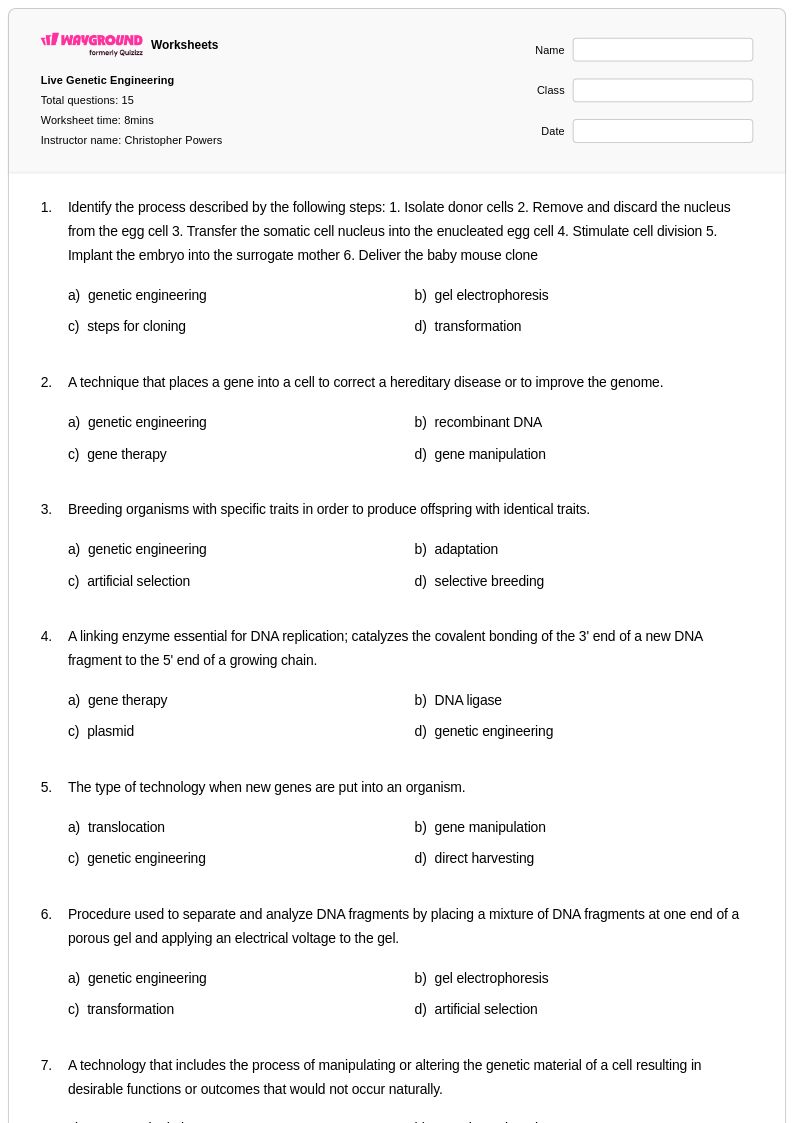
A well-designed genetic engineering worksheet should cover DNA manipulation techniques including restriction enzyme function, recombinant DNA formation, and plasmid vectors, as well as applied processes like gene cloning, CRISPR technology, and genetic transformation. Strong worksheets also address real-world applications such as genetically modified organisms, gene therapy, and agricultural biotechnology. Including ethical considerations alongside the science ensures students develop a complete, critical understanding of the field.
What mistakes do students commonly make when learning genetic engineering concepts?
Students frequently confuse the roles of restriction enzymes and ligases, misunderstanding which enzyme cuts DNA and which joins it. Another common error is conflating plasmids with chromosomal DNA, leading to misconceptions about how foreign genes are introduced into host cells. Students also tend to oversimplify CRISPR, describing it as simply 'editing genes' without grasping the guide RNA mechanism or the role of Cas9. Targeted practice problems that isolate these processes individually can help surface and correct these misunderstandings.
How can I assess whether my students understand genetic engineering processes?
Effective assessment goes beyond recall and asks students to sequence and explain multi-step processes, such as walking through recombinant DNA formation from restriction enzyme cutting through ligation and bacterial transformation. Scenario-based questions, where students must select the correct tool or technique for a given biotechnology problem, reveal whether understanding is genuinely transferable. Including ethical analysis prompts alongside procedural questions also assesses higher-order thinking about the societal implications of genetic modification.
How do I use Wayground's genetic engineering worksheets in my classroom?
Wayground's genetic engineering worksheets are available as printable PDFs for traditional classroom use and in digital formats for technology-integrated environments, giving teachers flexibility in how they deploy the materials. Teachers can assign worksheets as independent practice, use them to guide small-group review of complex processes like gene cloning or CRISPR, or host them as a quiz directly on the Wayground platform. The included answer keys make it straightforward to provide accurate feedback, whether students are working independently or in a facilitated setting.
How do I differentiate genetic engineering instruction for students at different levels?
For students who are still building foundational knowledge, focus first on restriction enzyme function and plasmid vectors before introducing more complex applications. Advanced learners can be extended through analysis of CRISPR mechanisms, regulatory frameworks governing genetic modification, or ethical case studies on gene therapy and GMOs. On the Wayground platform, teachers can apply accommodations such as read aloud support for students who need it, reduced answer choices to lower cognitive load, and extended time settings, each configurable per student without disrupting the experience of the rest of the class.