Free Printable Body Planes and Anatomical Directions worksheets
Enhance your students' understanding of body planes and anatomical directions with Wayground's comprehensive collection of free worksheets, printables, and practice problems that include detailed answer keys for effective biology learning.
Explore printable Body Planes and Anatomical Directions worksheets
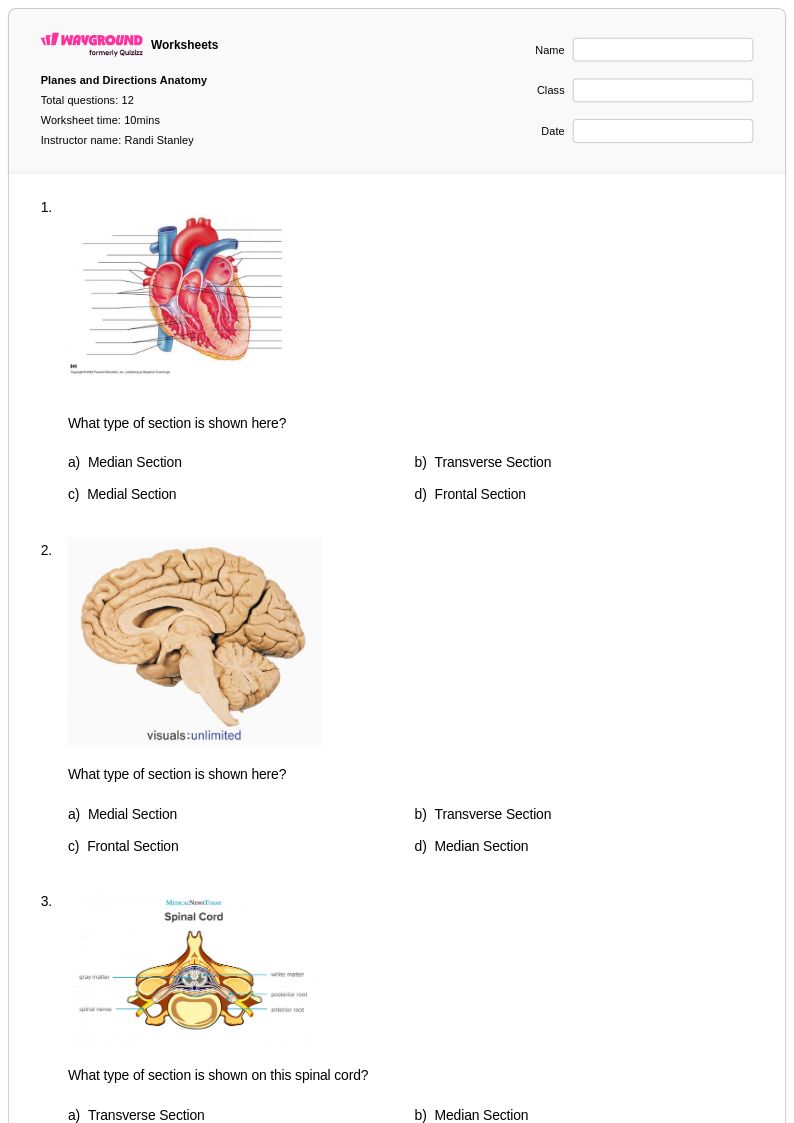
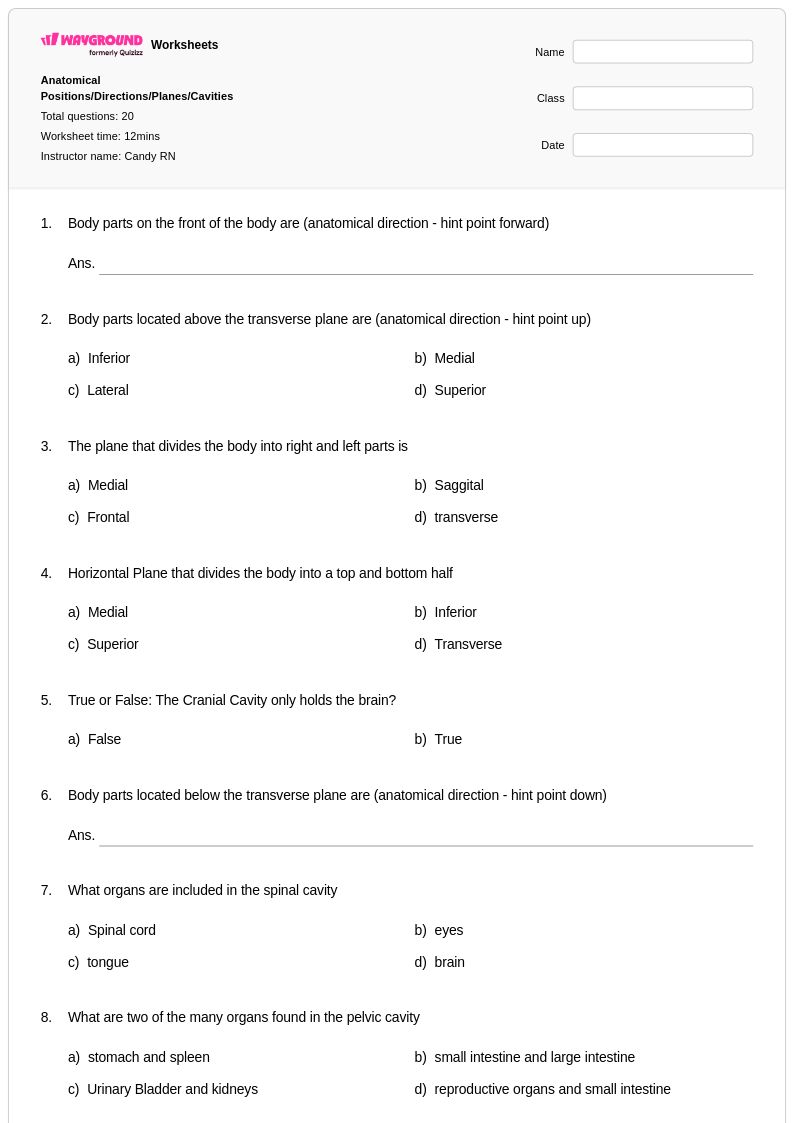
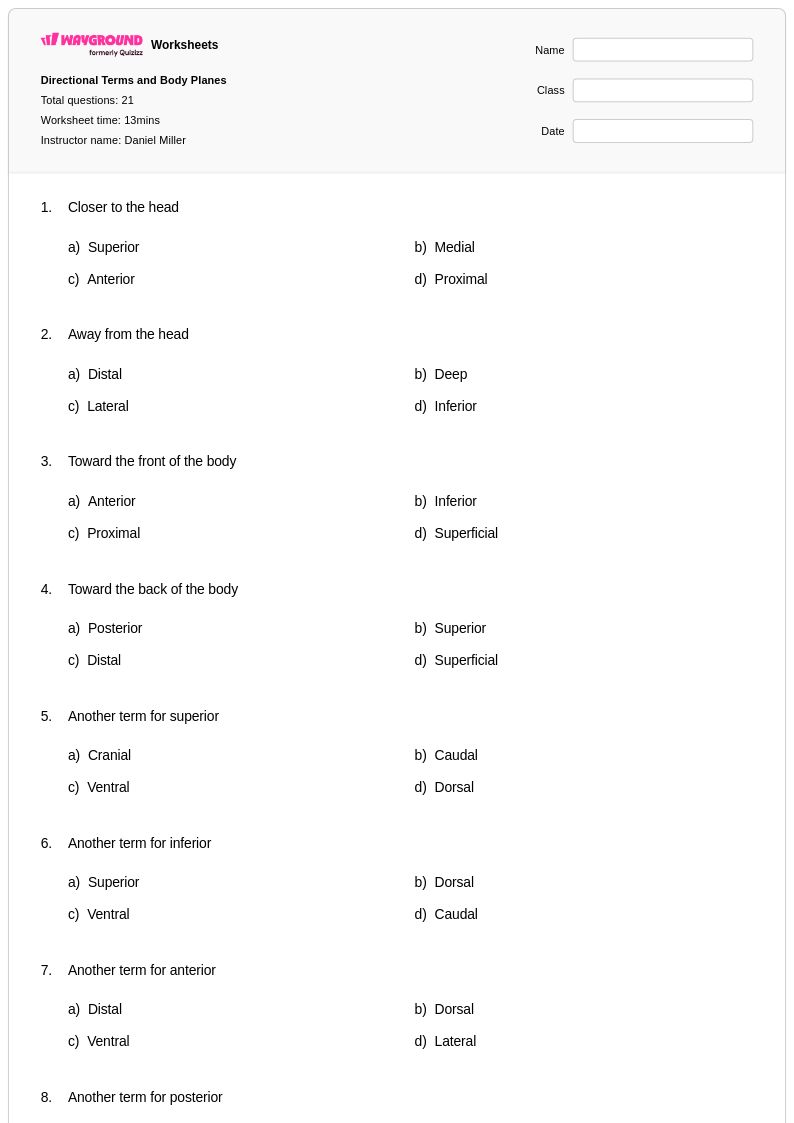
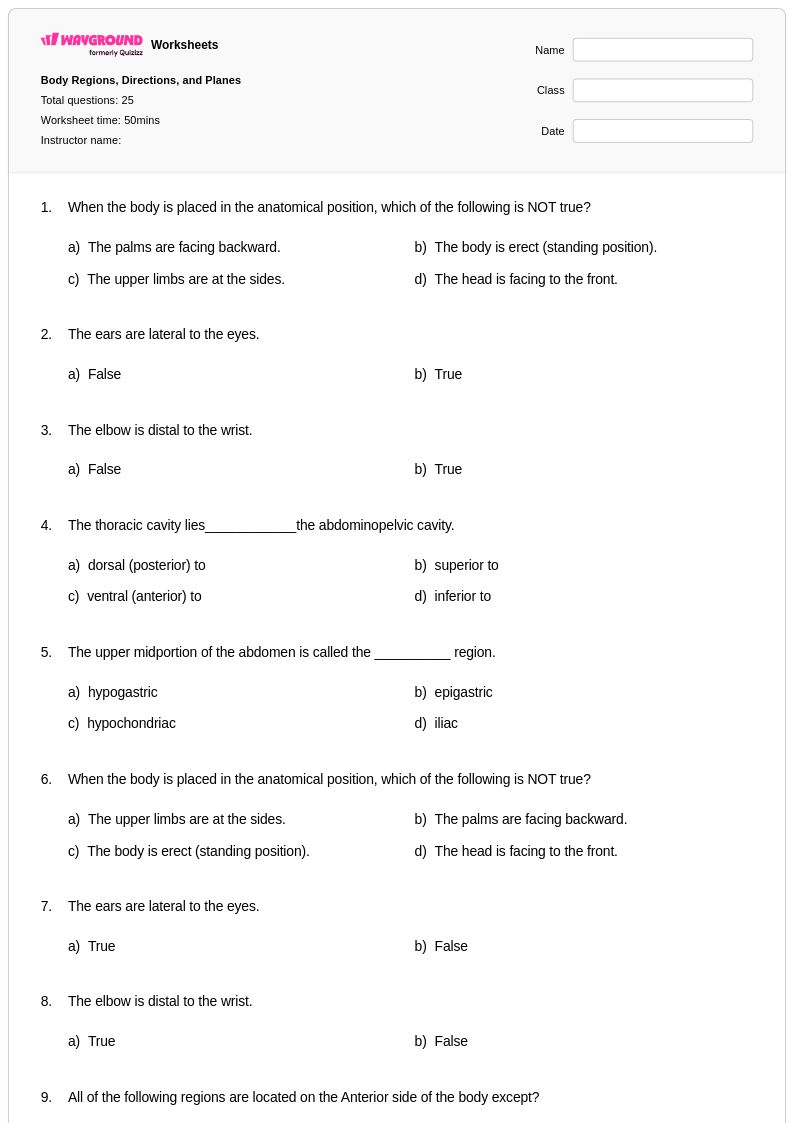
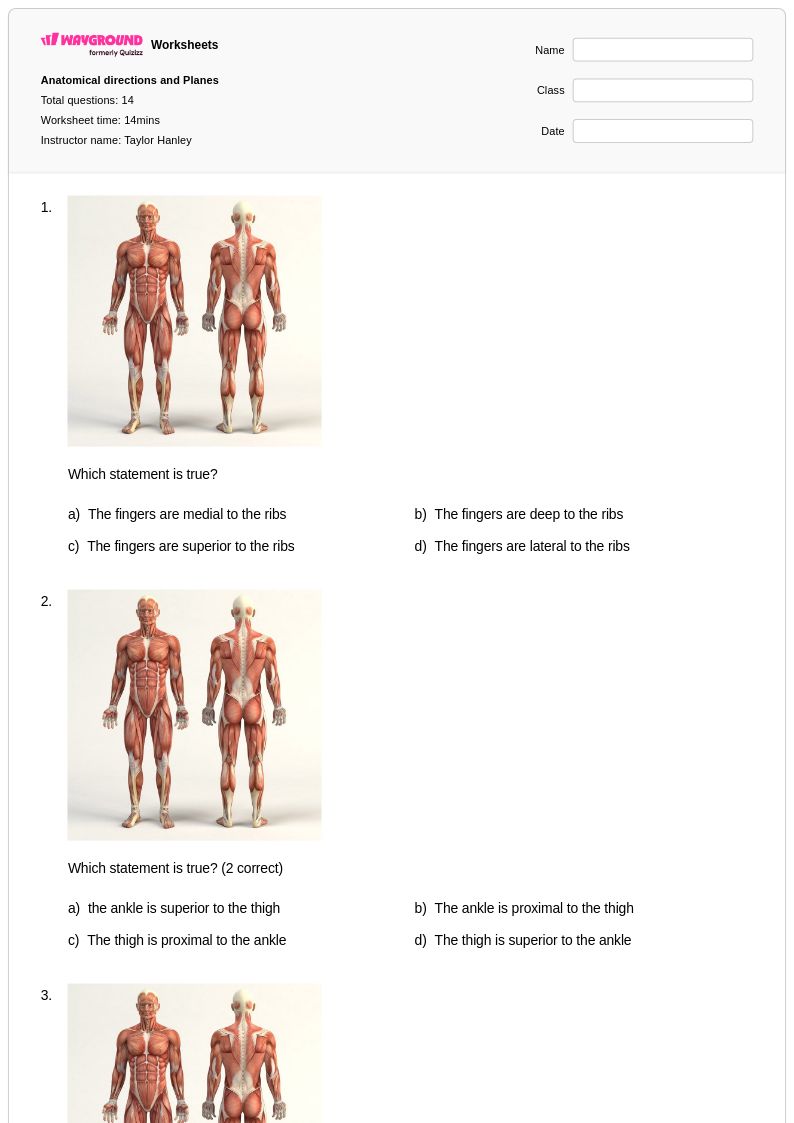
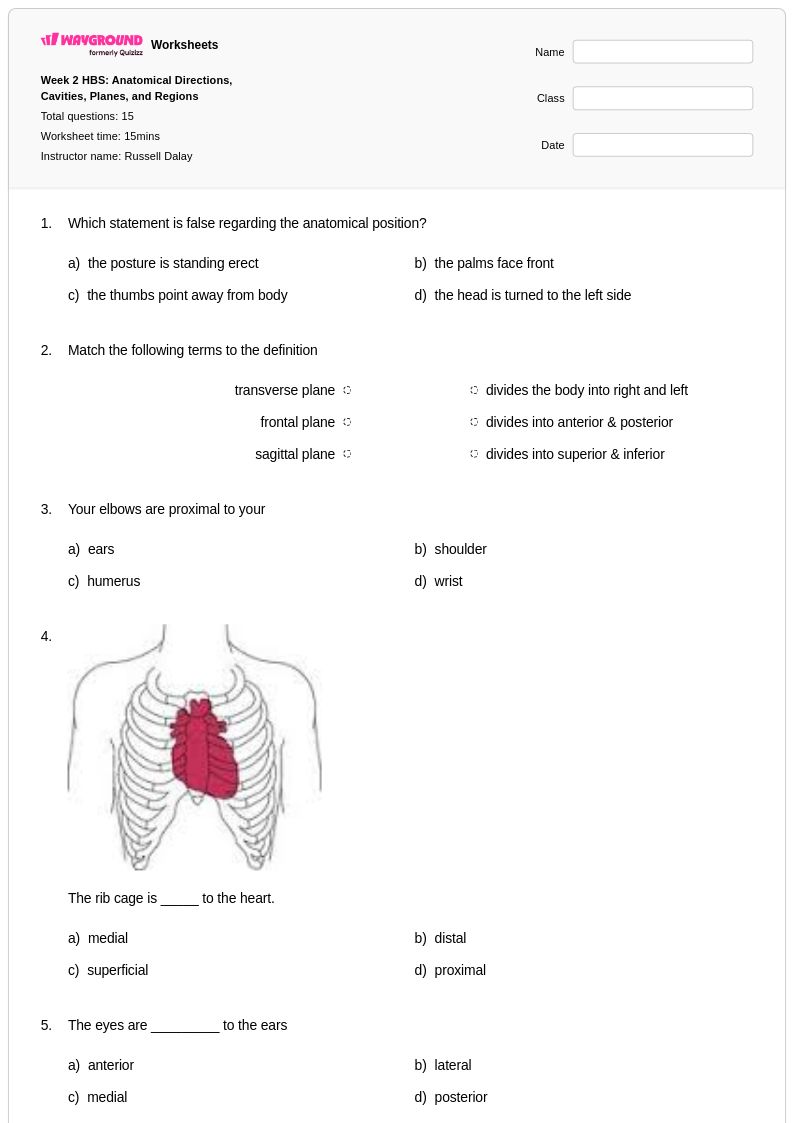
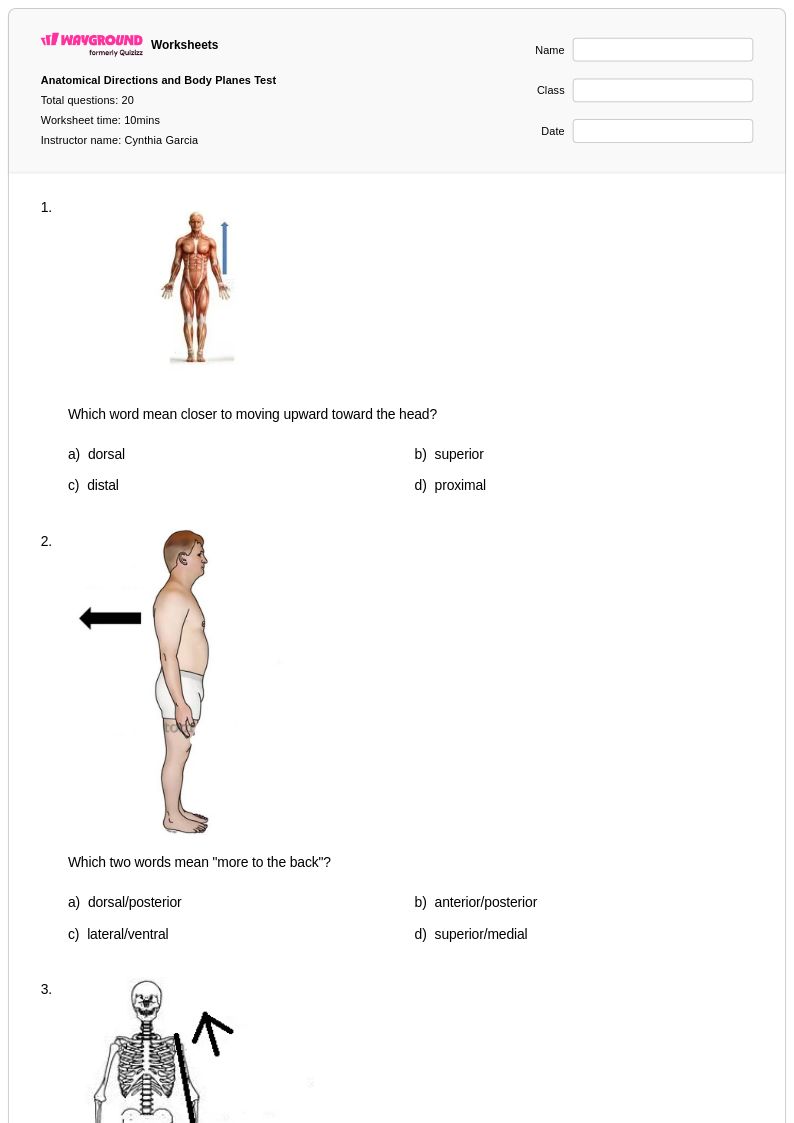
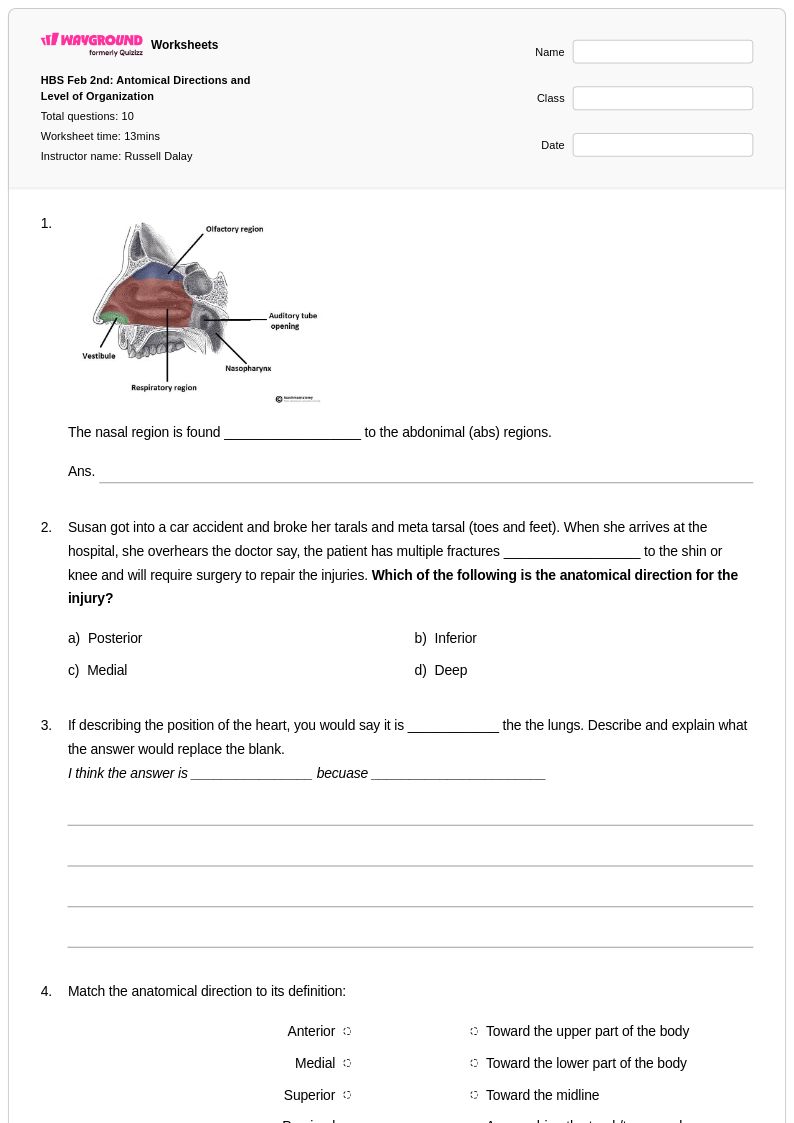
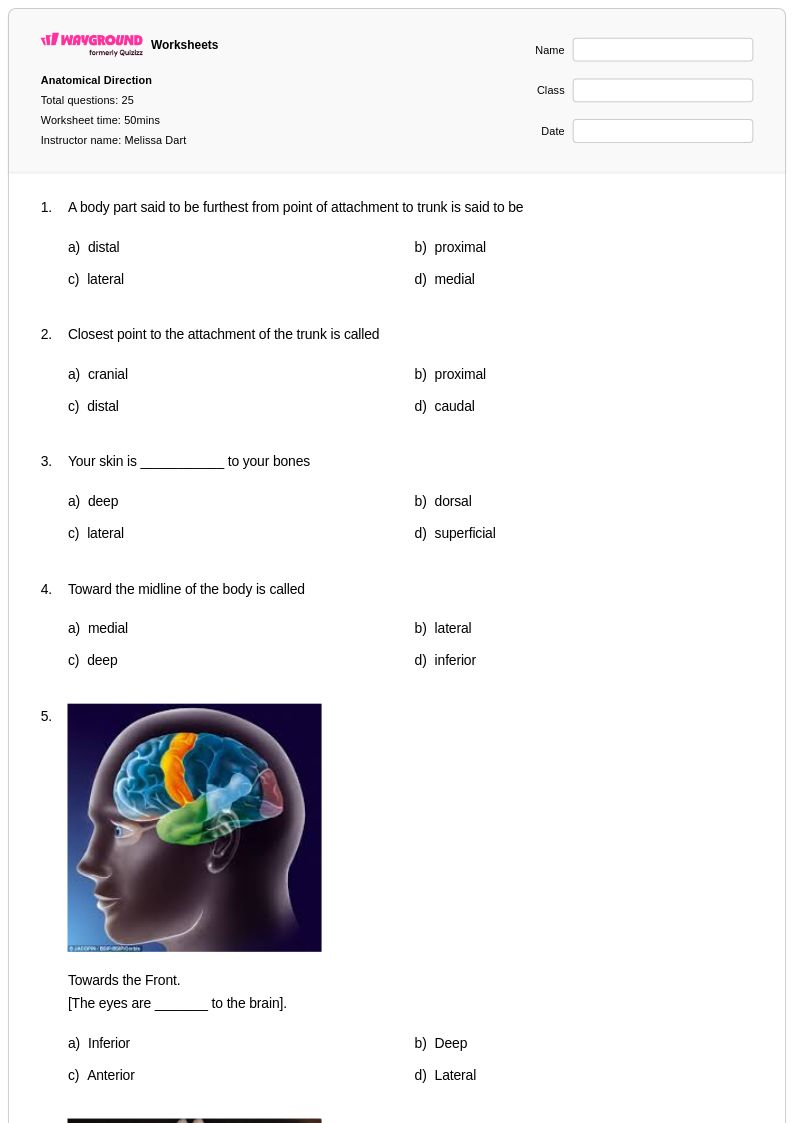
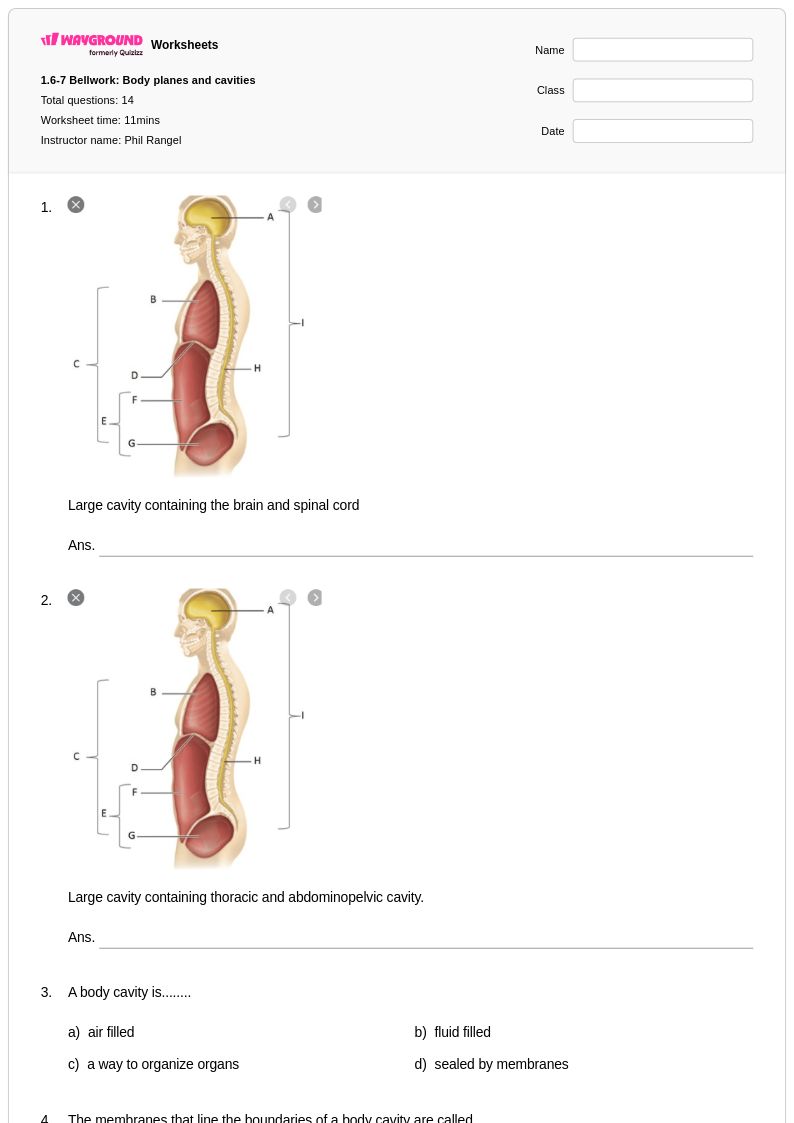
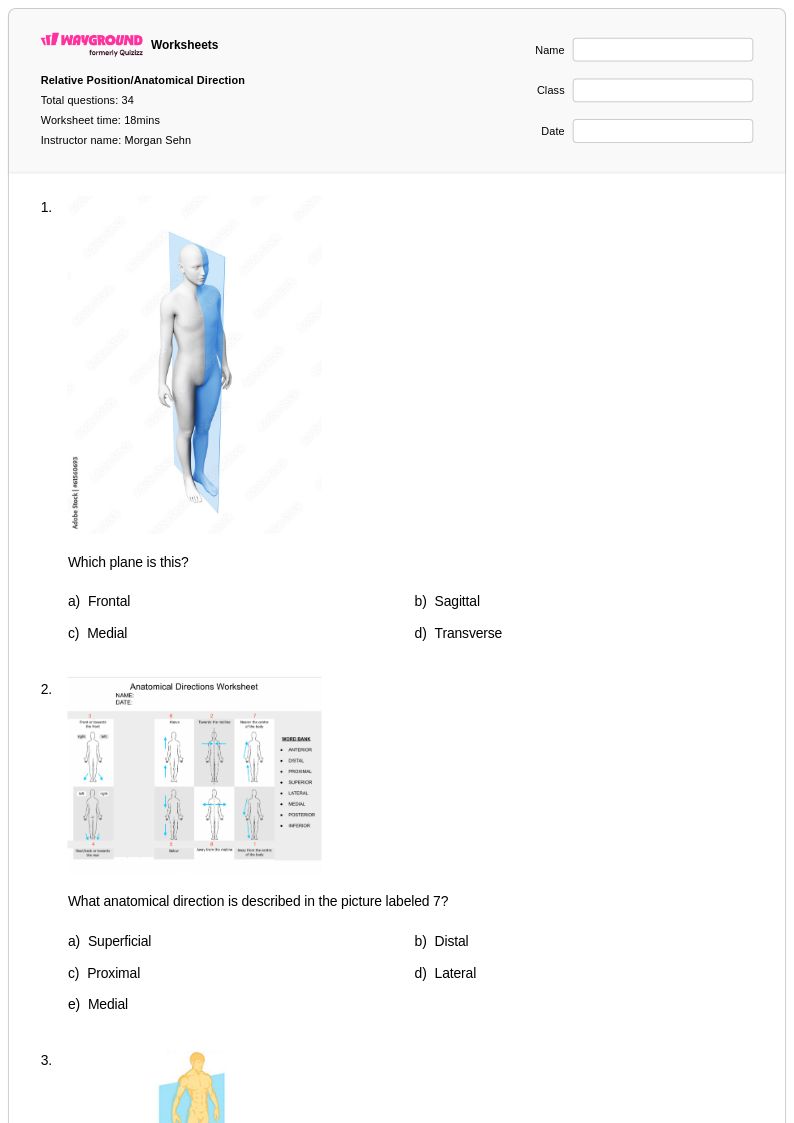
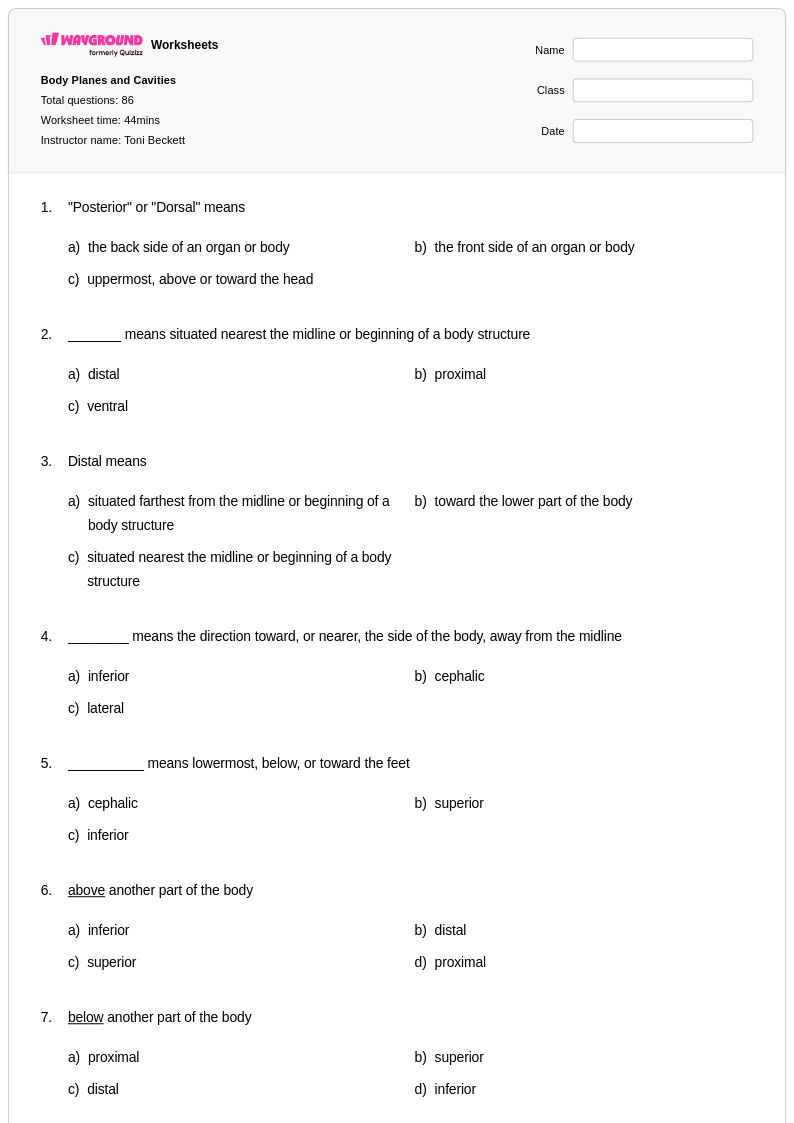
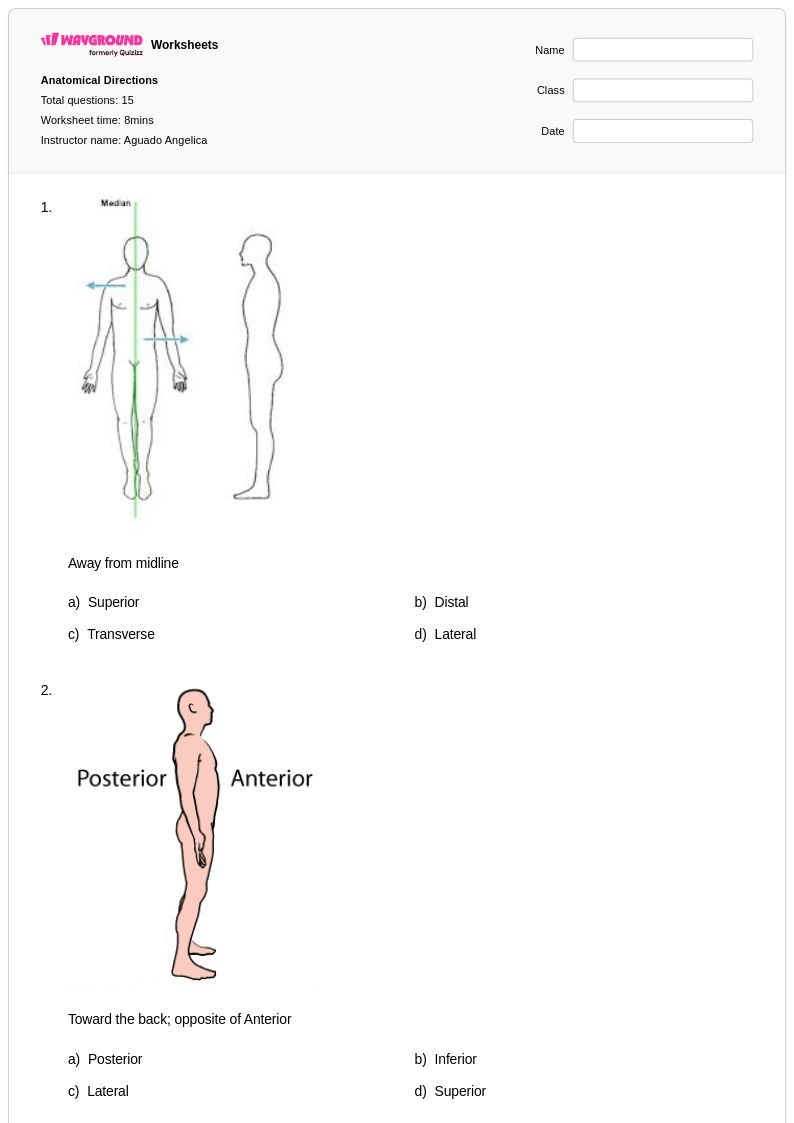
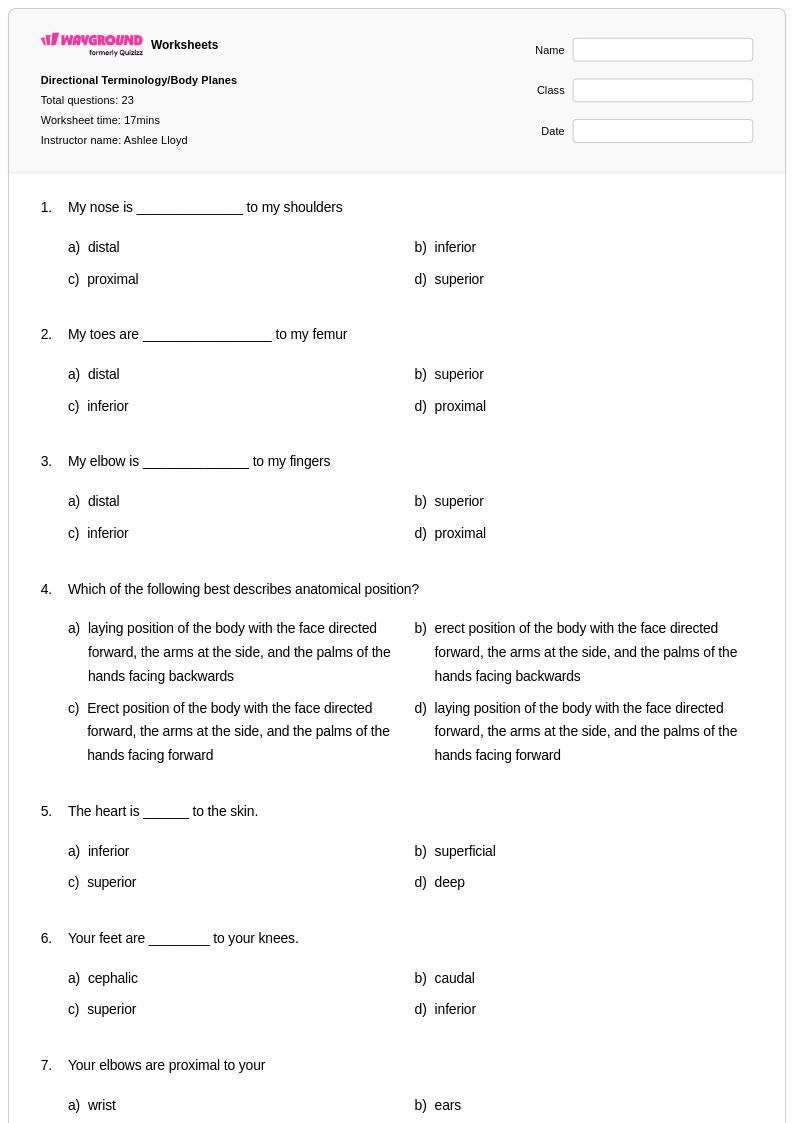
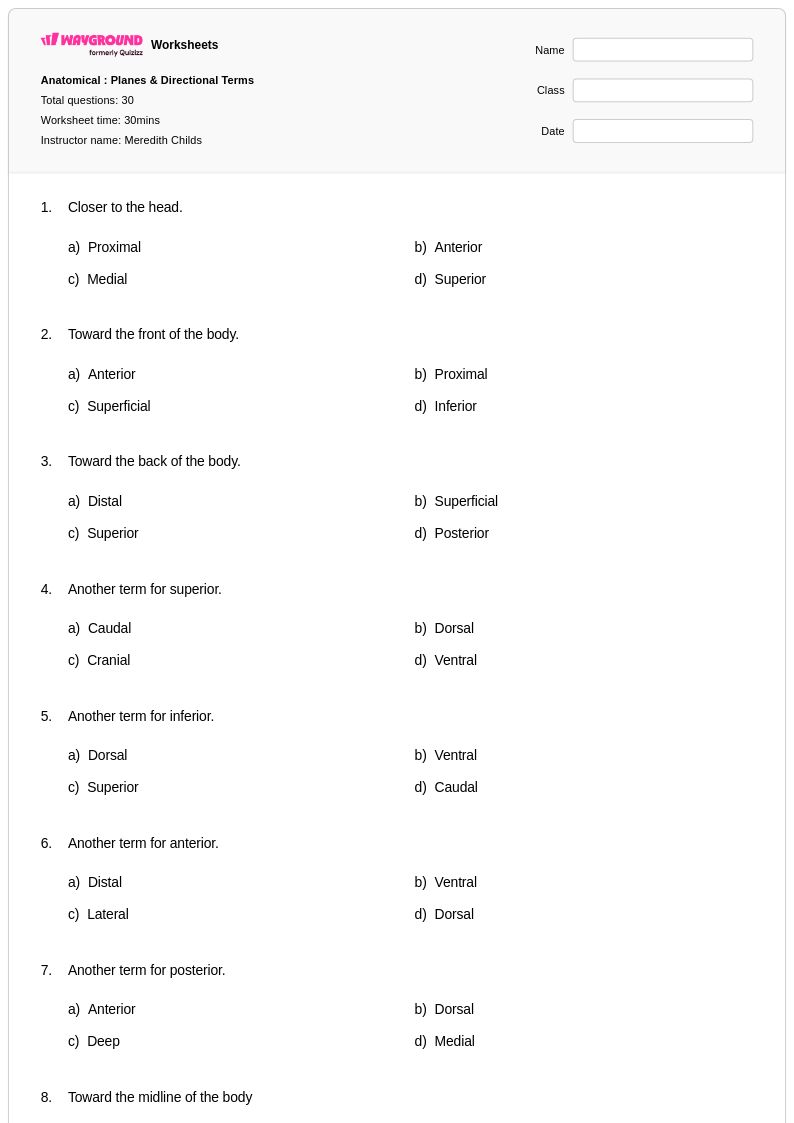
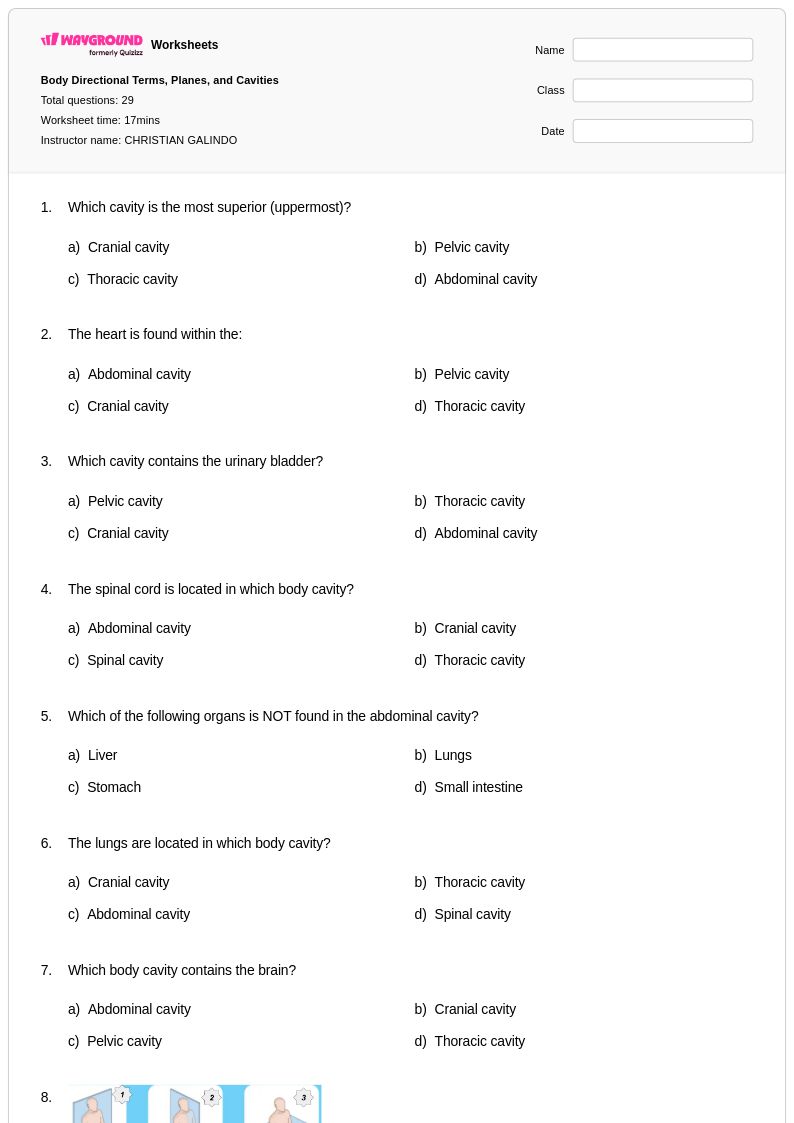
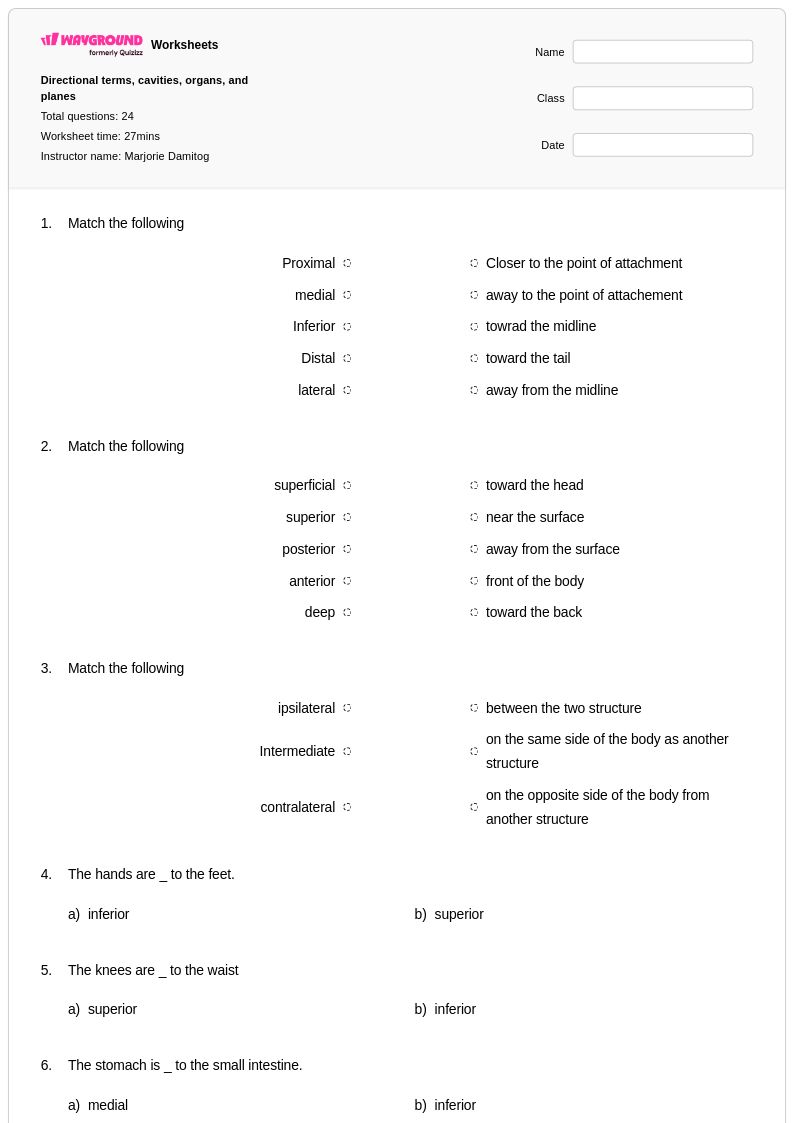
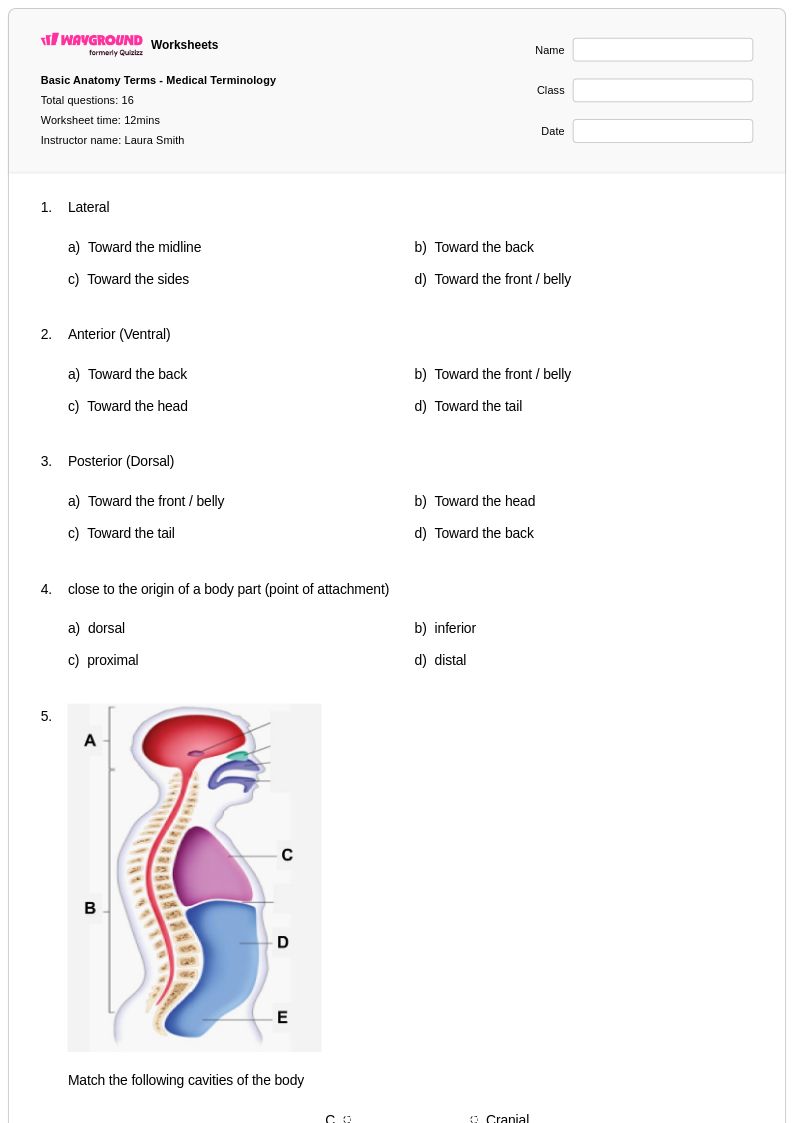
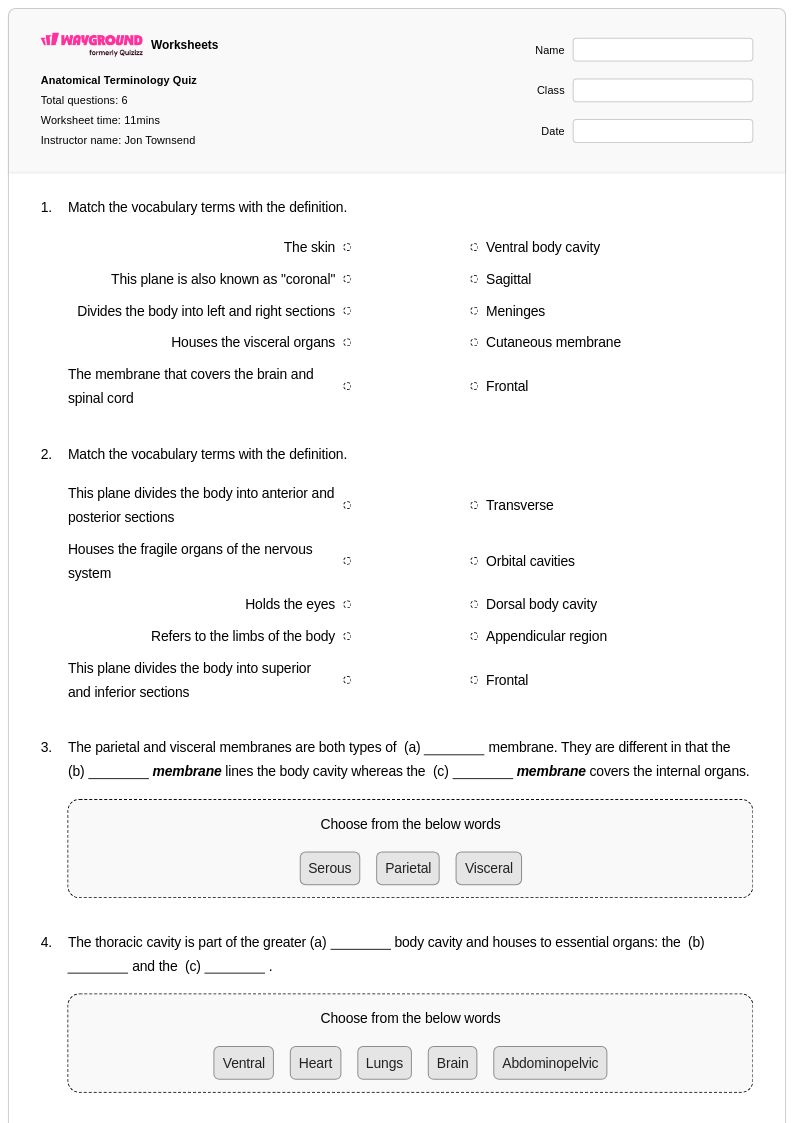
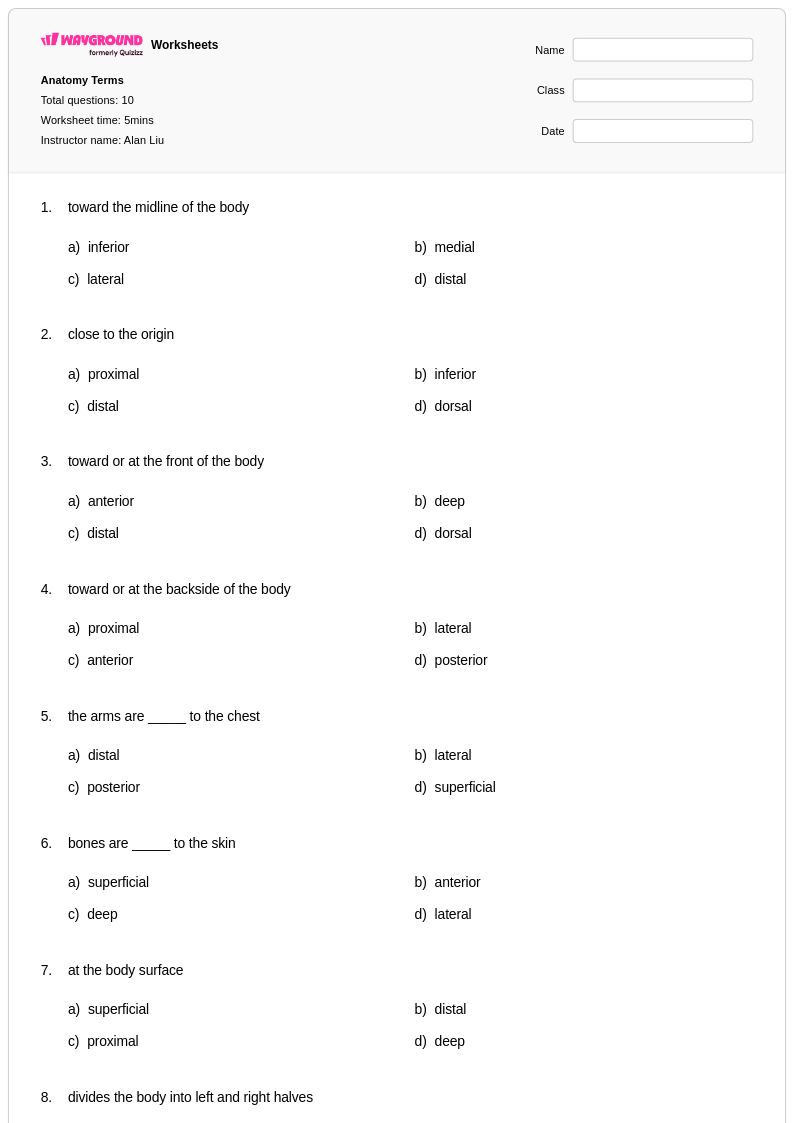
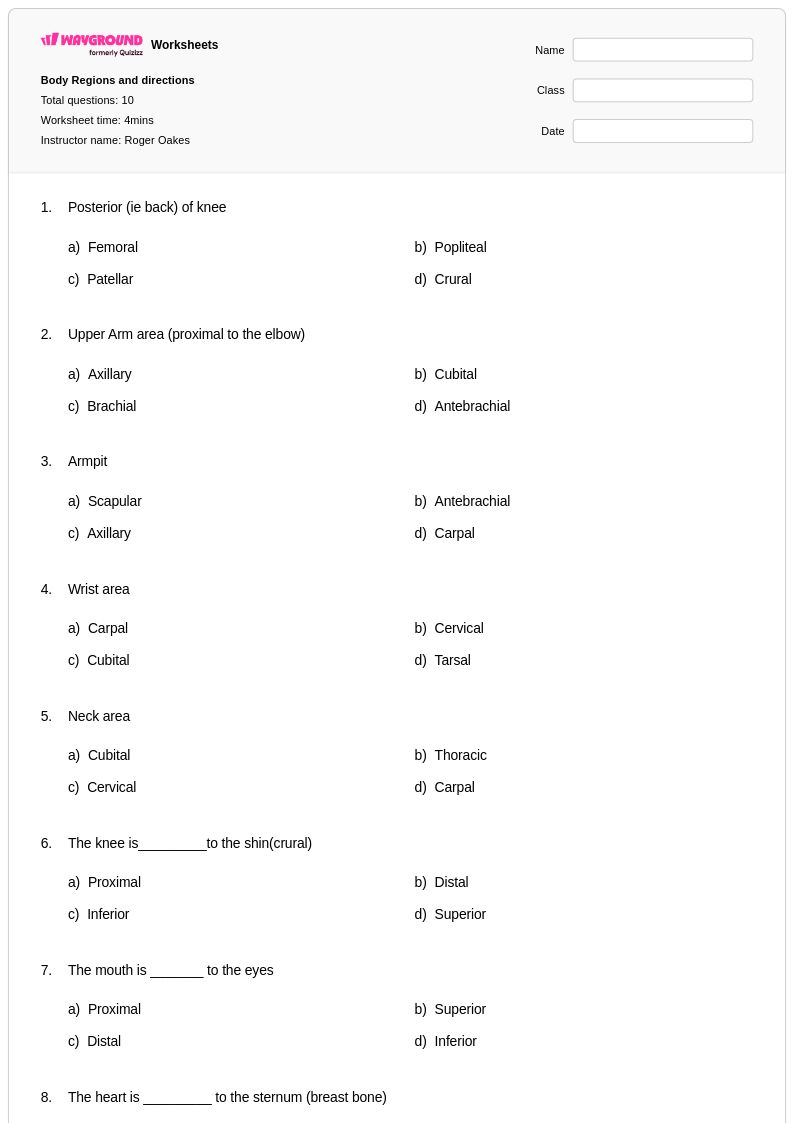
Body planes and anatomical directions worksheets available through Wayground (formerly Quizizz) provide students with essential practice in understanding the spatial organization of the human body, a foundational concept in anatomy and physiology. These comprehensive worksheets strengthen students' ability to identify and apply anatomical terminology including sagittal, frontal, and transverse planes, as well as directional terms such as superior, inferior, anterior, posterior, medial, and lateral. Through structured practice problems and visual exercises, students develop proficiency in describing anatomical locations and relationships with precision and accuracy. These free printable resources include detailed answer keys and are designed as pdf downloads, making them accessible for both classroom instruction and independent study while reinforcing the spatial reasoning skills critical for success in biological sciences.
Wayground (formerly Quizizz) supports educators with an extensive collection of body planes and anatomical directions worksheets drawn from millions of teacher-created resources, ensuring comprehensive coverage of this fundamental anatomical concept. The platform's robust search and filtering capabilities allow teachers to quickly locate materials that align with specific learning standards and match their students' skill levels, while differentiation tools enable customization for diverse learning needs. These versatile resources are available in both printable and digital formats, including downloadable pdf versions, providing flexibility for various instructional approaches and technology environments. Teachers can effectively utilize these worksheets for lesson planning, targeted remediation of spatial concepts, enrichment activities for advanced students, and regular skill practice to build students' anatomical vocabulary and three-dimensional thinking abilities essential for understanding human body organization.
FAQs
How do I teach body planes and anatomical directions to students new to anatomy?
Start by anchoring the three body planes (sagittal, frontal, and transverse) to real objects students can visualize, such as slicing a loaf of bread in different directions. Once planes are established, introduce directional terms in opposing pairs: superior/inferior, anterior/posterior, and medial/lateral. Having students label diagrams of the human body while standing in anatomical position reinforces both the vocabulary and the spatial logic simultaneously. Consistent use of correct terminology during all body-related discussions helps students internalize the language faster.
What are the most effective exercises for practicing anatomical directional terms?
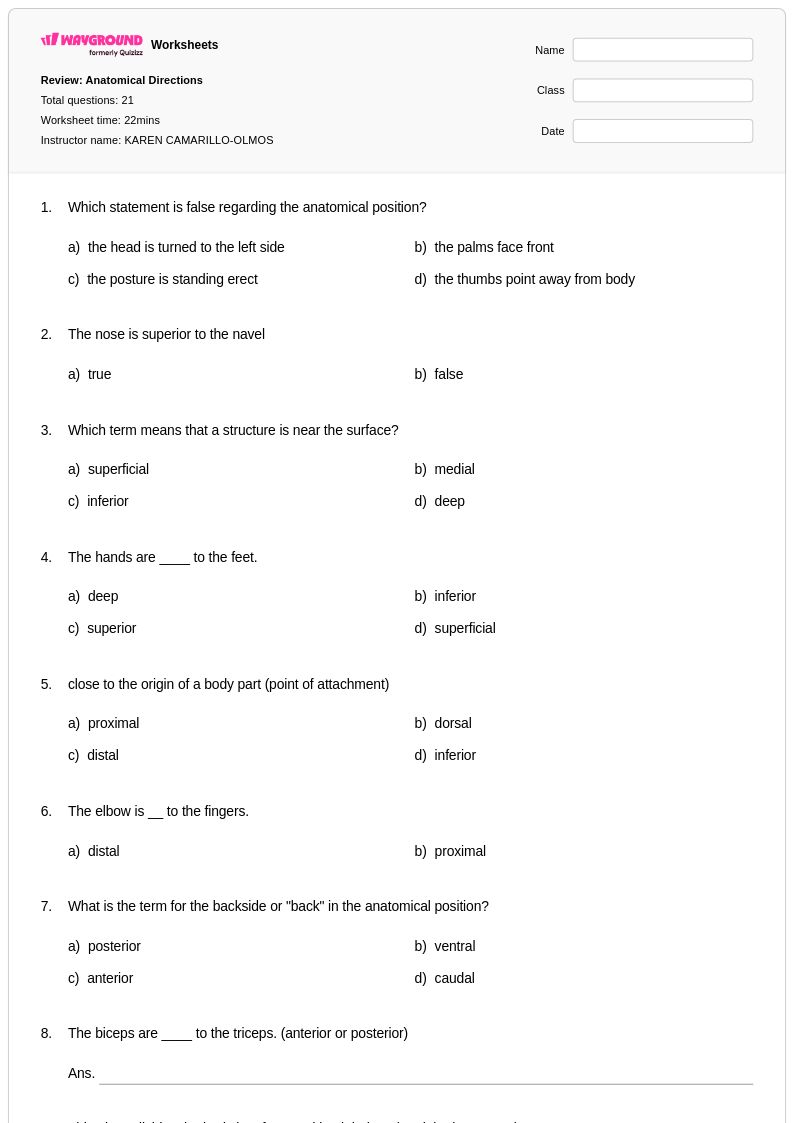
Labeling diagrams of the human body in anatomical position is one of the most effective practice methods, as it requires students to apply directional terms to specific structures rather than recall them in isolation. Sentence-completion exercises that ask students to describe the relationship between two named body structures (e.g., 'The knee is __ to the ankle') build precision in applying terms like proximal, distal, medial, and lateral. Worksheets that combine plane identification with directional relationship questions provide the most comprehensive practice because they require students to integrate both skill sets.
What mistakes do students commonly make when learning anatomical directional terms?
The most frequent error is applying directional terms without referencing anatomical position, which leads to incorrect or inconsistent descriptions. Students also commonly confuse medial and lateral, particularly when describing structures near the midline, and conflate ipsilateral with medial. Another persistent misconception is treating superior/inferior as synonymous with cranial/caudal in all contexts, when these pairs are only interchangeable when describing the trunk. Targeted practice that requires students to justify their answers in writing helps surface and correct these reasoning errors before they become entrenched.
How do I use body planes and anatomical directions worksheets in my classroom?
These worksheets are available as printable PDFs for traditional classroom use and in digital formats for technology-integrated environments, including the option to host them as a quiz on Wayground. Printable versions work well for in-class labeling activities or homework reinforcement, while digital formats allow for immediate feedback during independent or small-group practice. Because answer keys are included, teachers can also use these worksheets for self-paced review stations or as formative checks before moving into organ systems content.
How can I differentiate body planes and anatomical directions instruction for students who are struggling?
For students who struggle with spatial terminology, reducing the number of answer choices on identification questions lowers cognitive load and allows them to focus on the underlying concept rather than vocabulary retrieval. On Wayground, teachers can configure reduced answer choices as an individual accommodation so that struggling students see fewer options while the rest of the class receives standard questions. Pairing this with the Read Aloud feature ensures that students with reading difficulties can still engage fully with the content. Extended time per question can also be assigned individually for students who need more processing time with spatial reasoning tasks.
At what point in an anatomy course should body planes and anatomical directions be taught?
Body planes and anatomical directions should be taught at the very start of any anatomy or physiology unit, before organ systems, tissues, or body cavities are introduced. This terminology forms the descriptive framework that every subsequent topic depends on — students cannot accurately describe the location of the heart relative to the lungs, for example, without fluency in directional terms. Revisiting these terms explicitly as each new body system is introduced reinforces retention and ensures students apply correct vocabulary throughout the course.