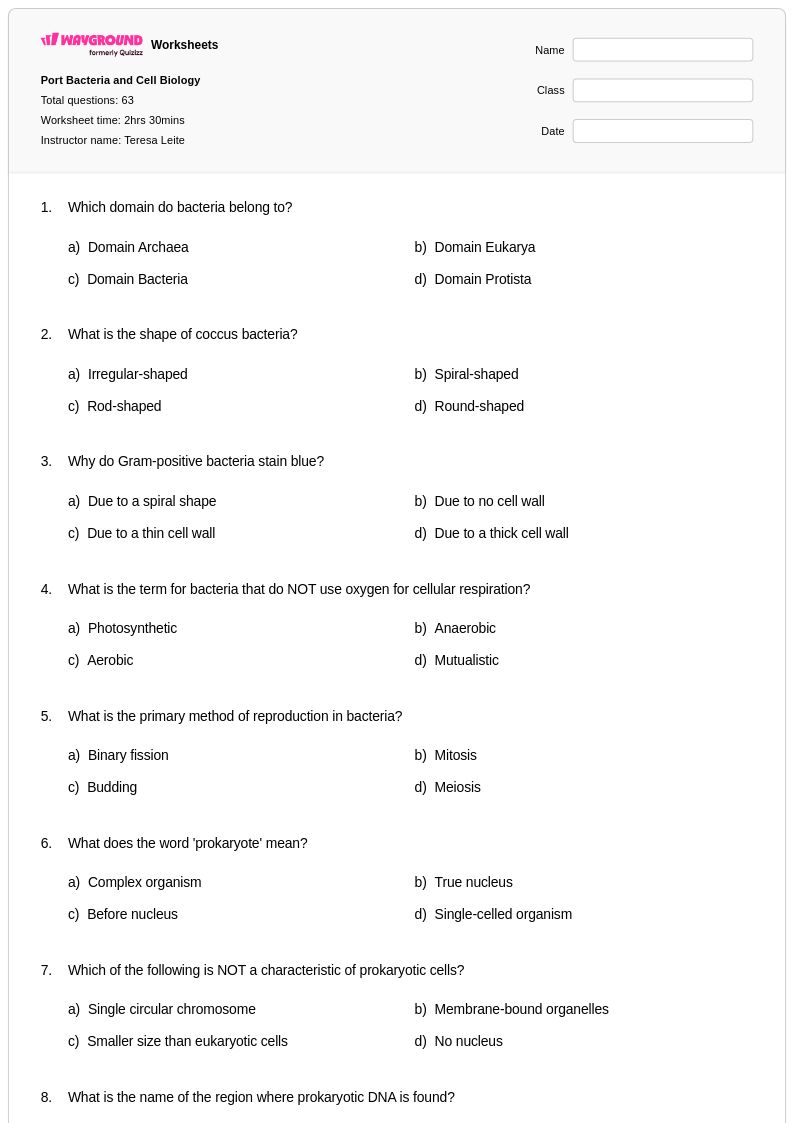
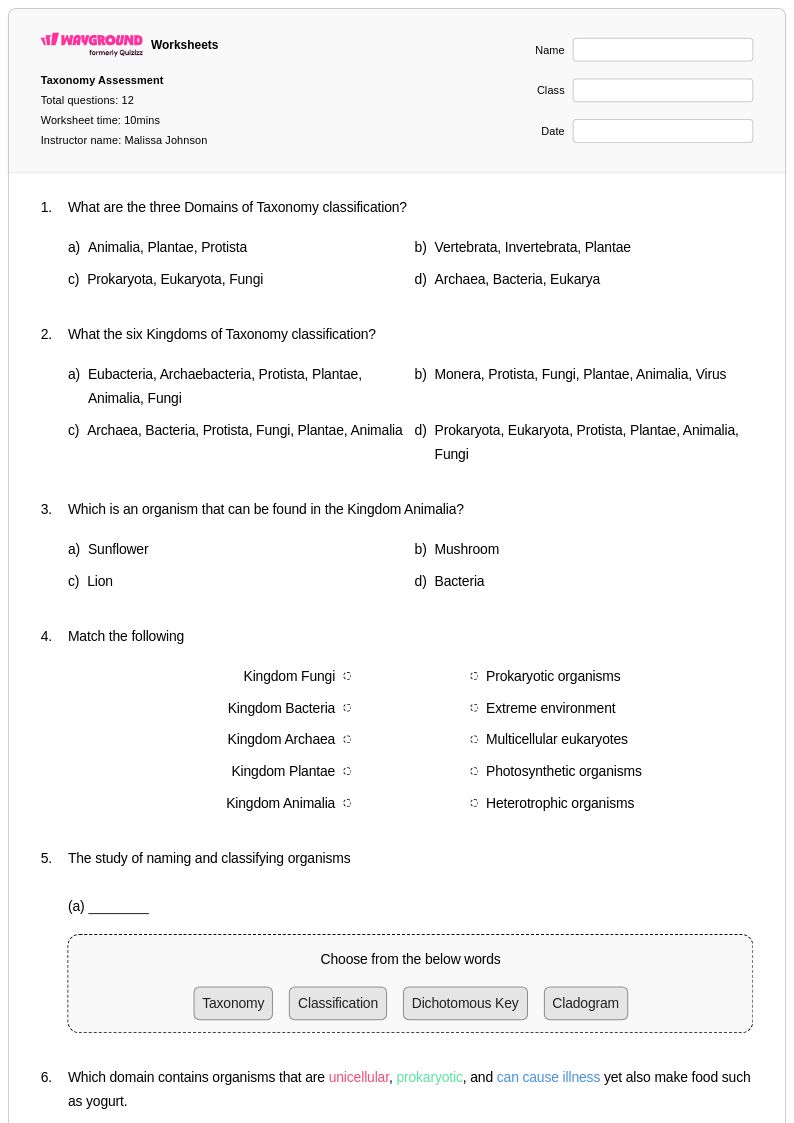
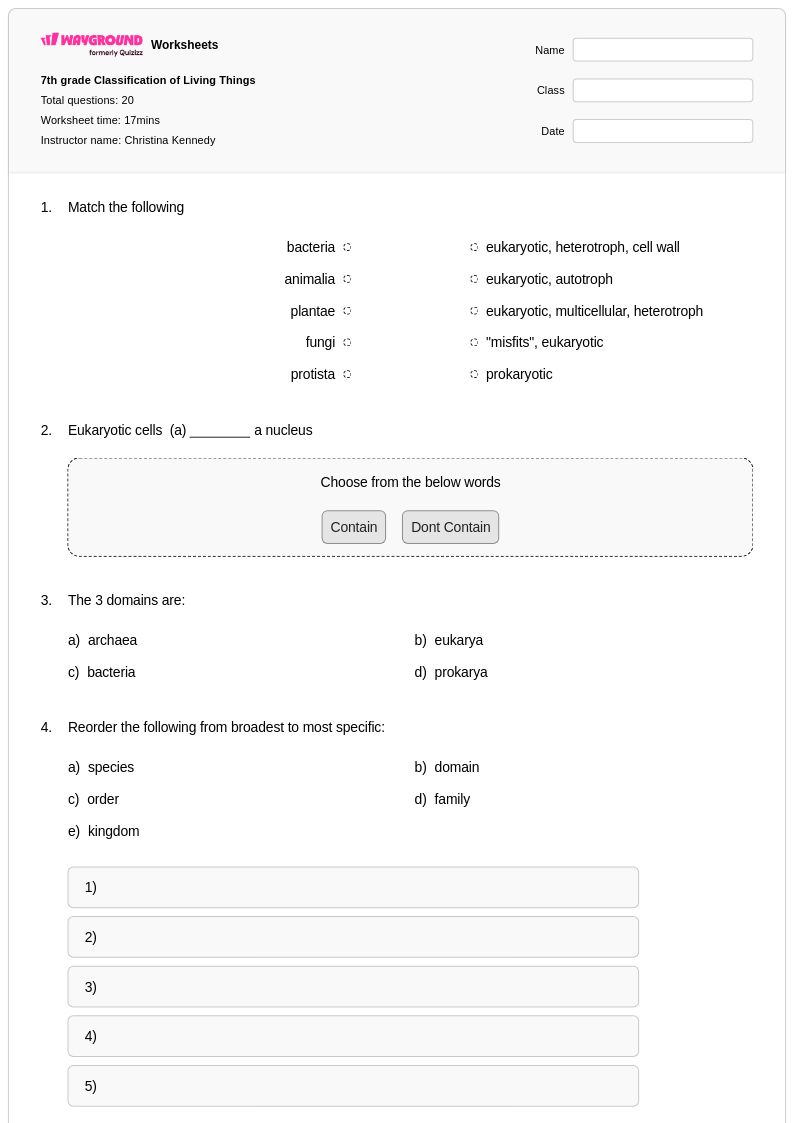
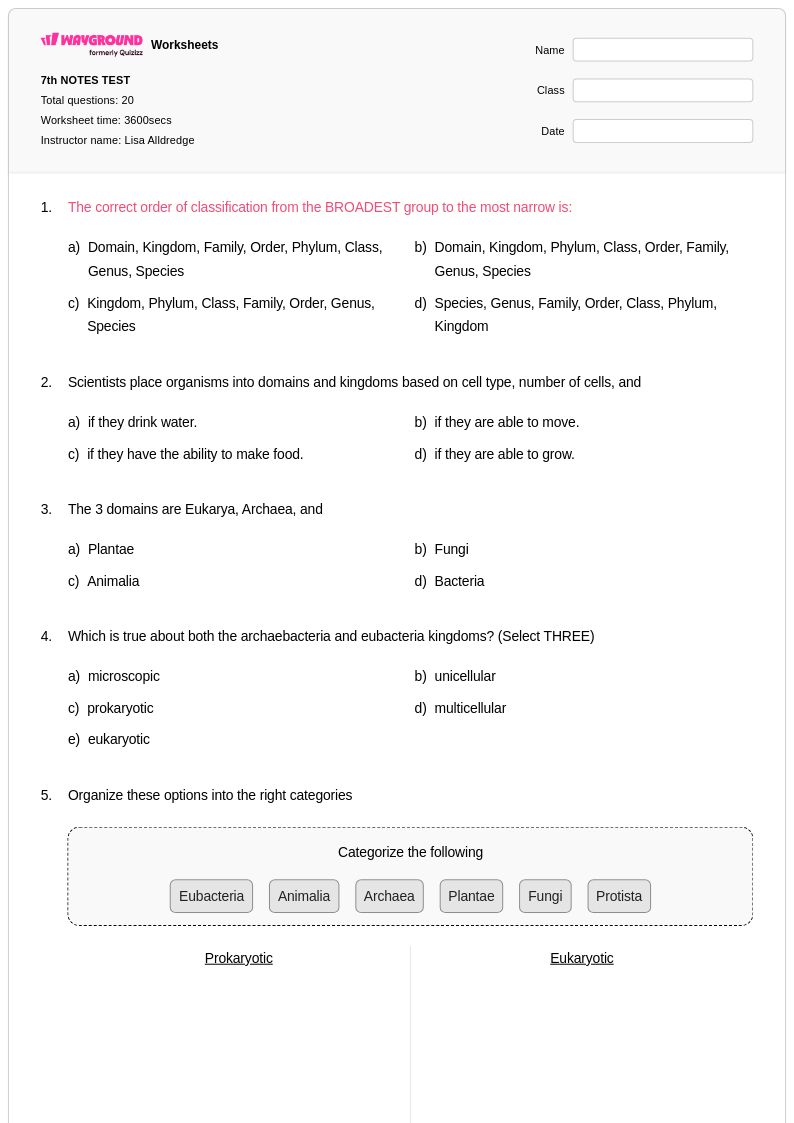
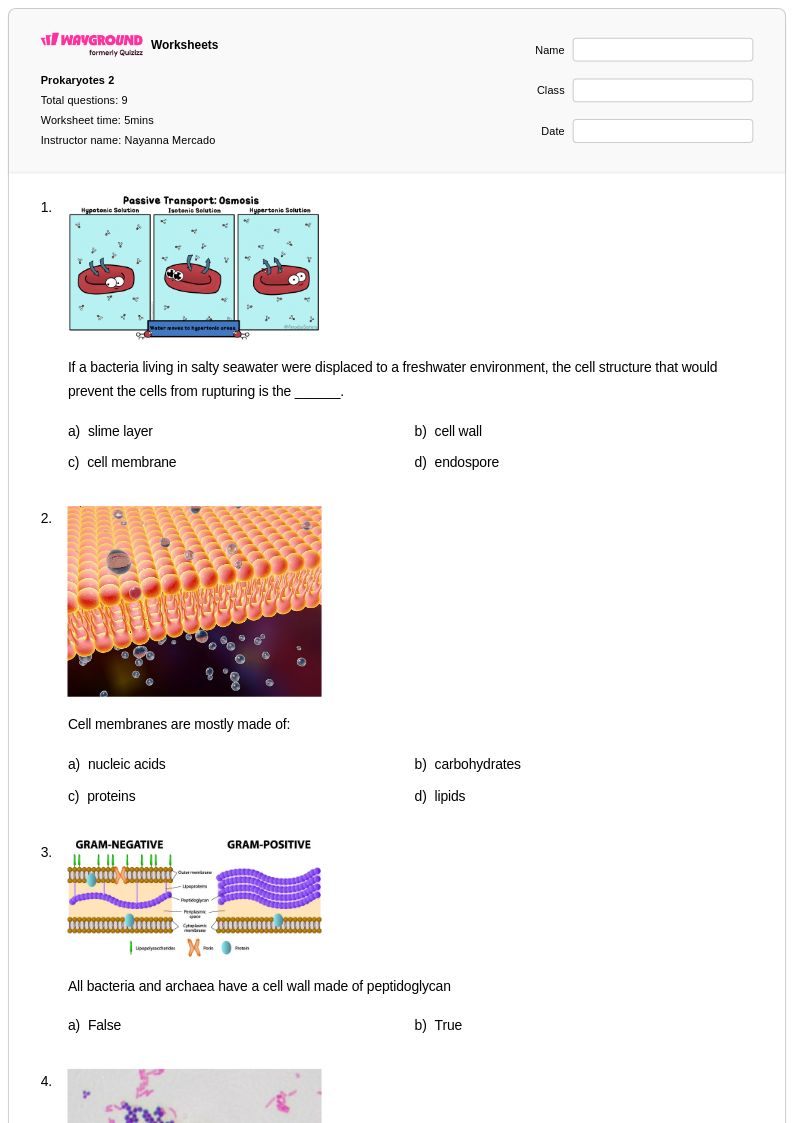
Explore comprehensive bacteria and archaea worksheets with printable PDFs and answer keys to help students master prokaryotic cell structures, classification, and ecological roles through engaging practice problems and free educational materials.
Bacteria and Archaea worksheets available through Wayground (formerly Quizizz) provide comprehensive educational resources designed to deepen students' understanding of these fundamental prokaryotic domains. These expertly crafted materials focus on the distinctive characteristics, metabolic processes, and ecological roles of bacterial and archaeal organisms, helping students master complex concepts such as cell wall composition, reproduction methods, and extremophile adaptations. The worksheets strengthen critical thinking skills through detailed practice problems that explore topics like binary fission, horizontal gene transfer, and the differences between peptidoglycan and pseudopeptidoglycan cell walls. Each resource includes a complete answer key to support effective learning assessment, and materials are available as free printables in convenient pdf format for seamless classroom integration.
Wayground (formerly Quizizz) supports educators with an extensive collection of millions of teacher-created Bacteria and Archaea worksheets that streamline lesson planning and enhance student engagement. The platform's robust search and filtering capabilities enable teachers to quickly locate materials aligned with specific curriculum standards, while built-in differentiation tools allow for customized content that meets diverse learning needs. These flexible resources are available in both printable and digital formats, including downloadable pdf versions that facilitate easy distribution and storage. Teachers can leverage this comprehensive worksheet library for targeted skill practice, remediation activities for struggling students, and enrichment opportunities for advanced learners, ensuring that all students develop a solid foundation in prokaryotic biology concepts essential for understanding microbial diversity and ecological relationships.
FAQs
How do I teach the differences between bacteria and archaea to high school students?
Start by grounding students in what unites bacteria and archaea as prokaryotes before shifting to what separates them. Key distinctions to emphasize include cell wall composition (peptidoglycan in bacteria versus pseudopeptidoglycan in many archaea), membrane lipid structure, and the environments each domain typically inhabits. Using comparison charts and labeled diagrams helps students organize these differences visually before they encounter them in more complex contexts like microbial ecology or genetics.
What exercises help students practice understanding prokaryotic cell structures?
Labeling diagrams of prokaryotic cells, filling in comparison tables between bacteria and archaea, and answering structured practice problems about cell wall composition and reproduction methods are among the most effective exercises. Tasks that ask students to match structural features to their functions, such as linking pili to attachment or plasmids to horizontal gene transfer, reinforce conceptual understanding rather than pure memorization. Worksheets that combine diagram-based questions with short-answer problems give students multiple entry points into the material.
What common mistakes do students make when learning about bacteria and archaea?
One of the most persistent misconceptions is that all bacteria are harmful pathogens, which obscures their critical ecological roles in nutrient cycling, decomposition, and symbiotic relationships. Students also frequently conflate archaea with bacteria because both are prokaryotes, overlooking the fundamental biochemical differences between the two domains. Another common error is confusing binary fission with mitosis — students need explicit instruction that binary fission is a prokaryotic process that does not involve the same chromosome-segregation machinery as eukaryotic cell division.
How can I use bacteria and archaea worksheets in my classroom?
Bacteria and archaea worksheets on Wayground are available as printable PDFs for traditional classroom use and in digital formats for technology-integrated or remote learning environments, giving teachers flexibility in how they assign and collect student work. Teachers can also host worksheets as an interactive quiz on Wayground, allowing students to complete them digitally while teachers track responses in real time. For students who need additional support, Wayground's built-in accommodation tools allow teachers to enable read aloud, extended time, or reduced answer choices on an individual basis without disrupting the experience for the rest of the class.
How do I explain extremophile adaptations in archaea to students?
Frame extremophiles as a window into life's biochemical flexibility — archaea that thrive in hydrothermal vents, hypersaline lakes, or highly acidic environments do so because of unique membrane lipids and enzymes that remain stable under conditions that would denature most proteins. Connecting these adaptations to real-world applications, such as the use of thermostable enzymes like Taq polymerase in PCR, helps students see why understanding archaea matters beyond the textbook. Asking students to hypothesize why a particular structural feature might confer an advantage in a specific extreme environment builds the analytical reasoning they need for higher-level biology work.
How do I differentiate bacteria and archaea instruction for students at different levels?
For students who are still building foundational knowledge, focus on core vocabulary and basic structural comparisons before introducing metabolic diversity or gene transfer mechanisms. Advanced learners can be challenged with problems involving horizontal gene transfer, antibiotic resistance mechanisms, or the evolutionary significance of the three-domain classification system. On Wayground, teachers can apply individual accommodations such as reduced answer choices or read aloud to support students who need them, while the rest of the class works through standard materials without any disruption to their experience.