Free Printable Atomic Structure Worksheets for Grade 9
Explore Wayground's comprehensive Grade 9 atomic structure worksheets featuring free printables and practice problems that help students master electron configuration, atomic models, and elemental properties with detailed answer keys.
Explore printable Atomic Structure worksheets for Grade 9
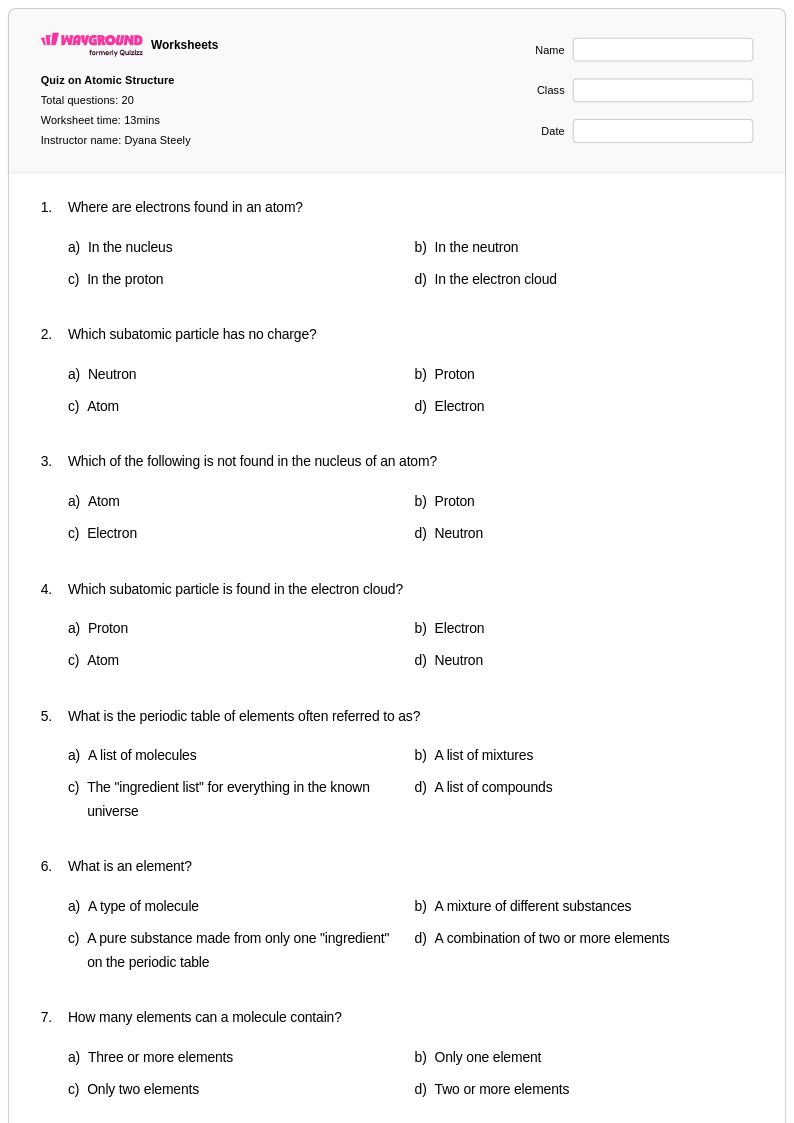
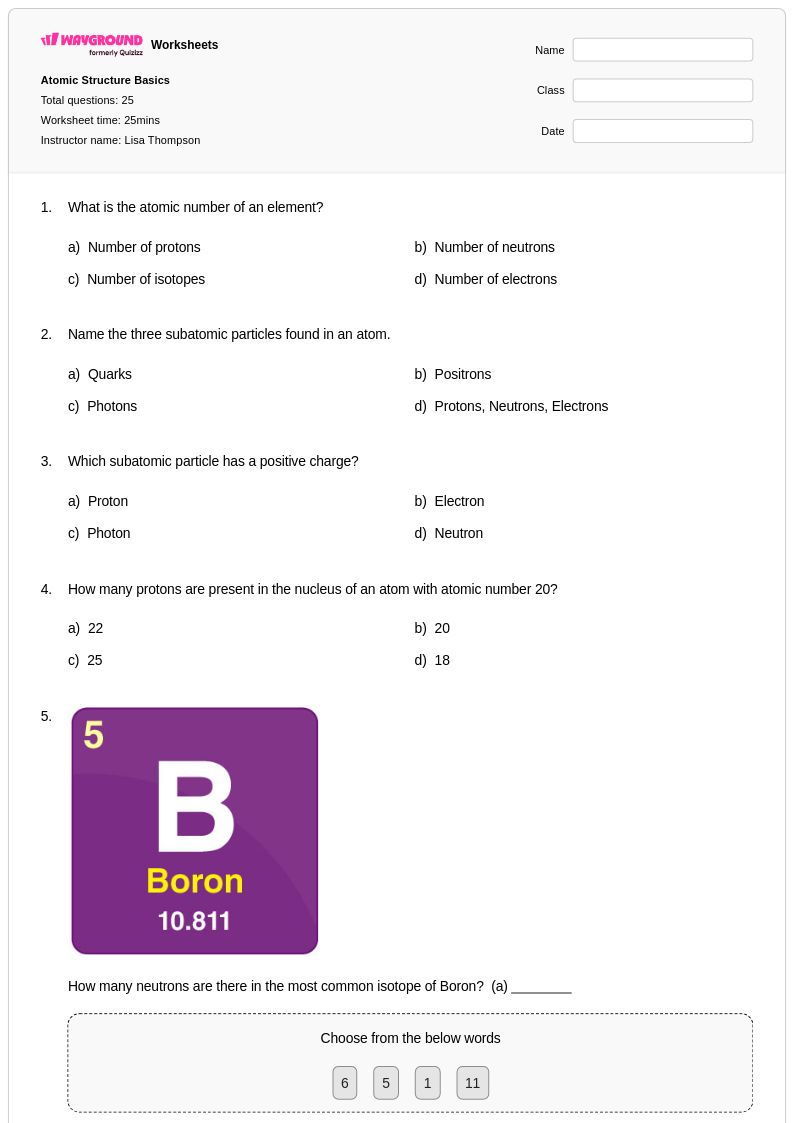
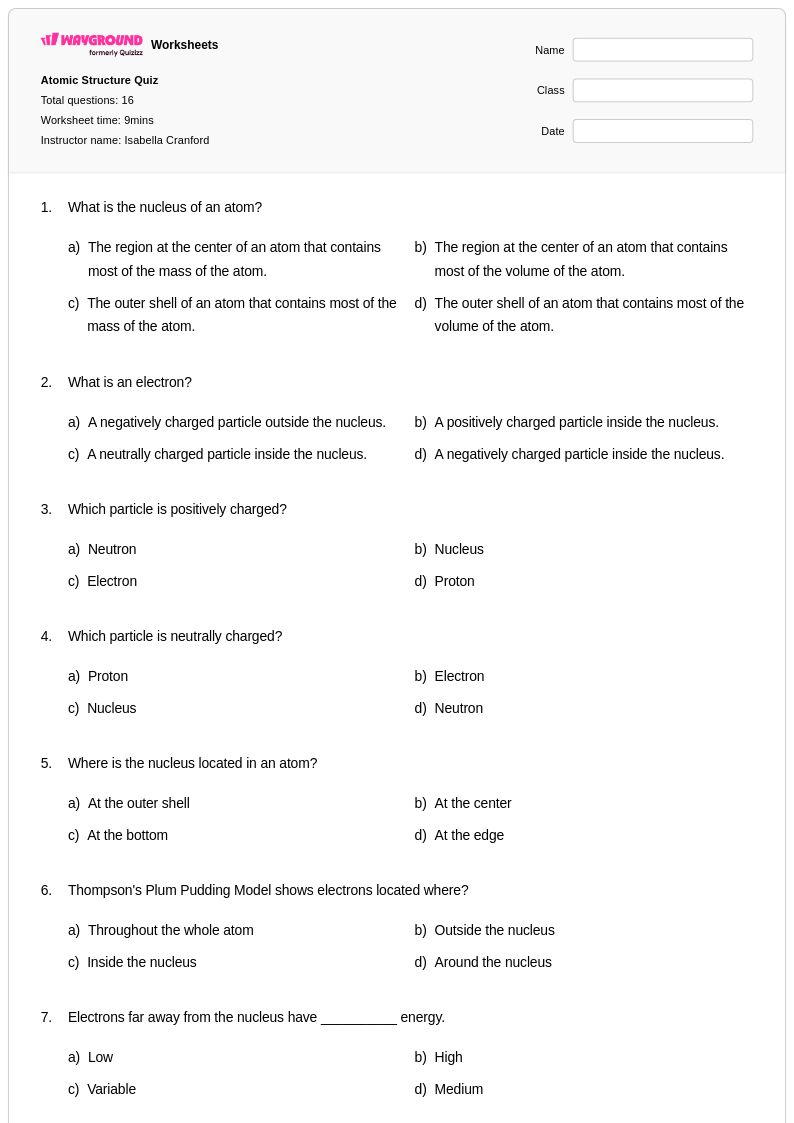
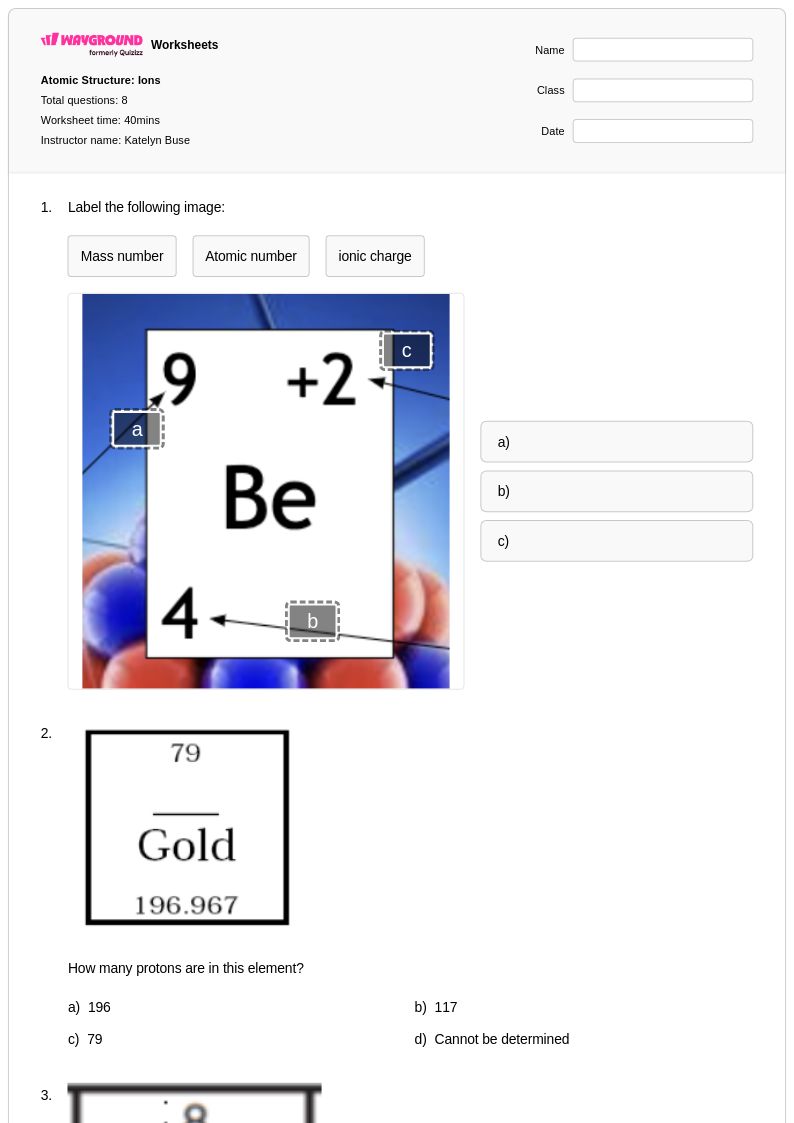
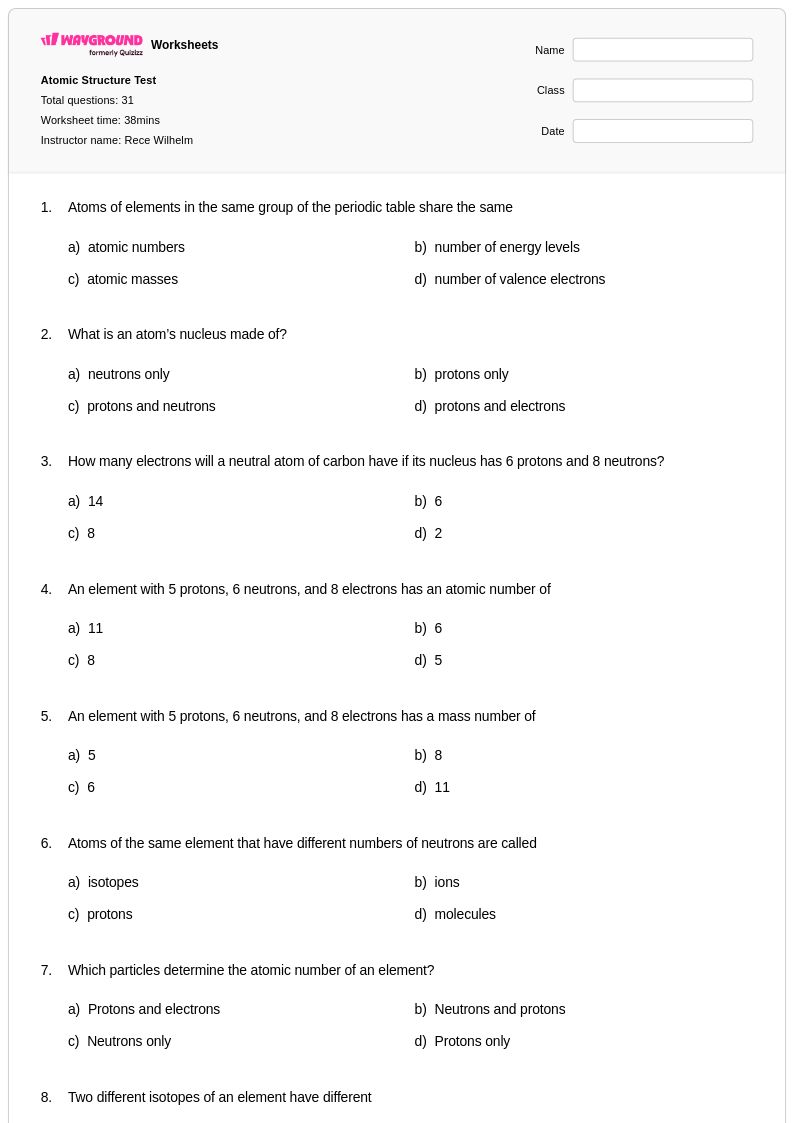
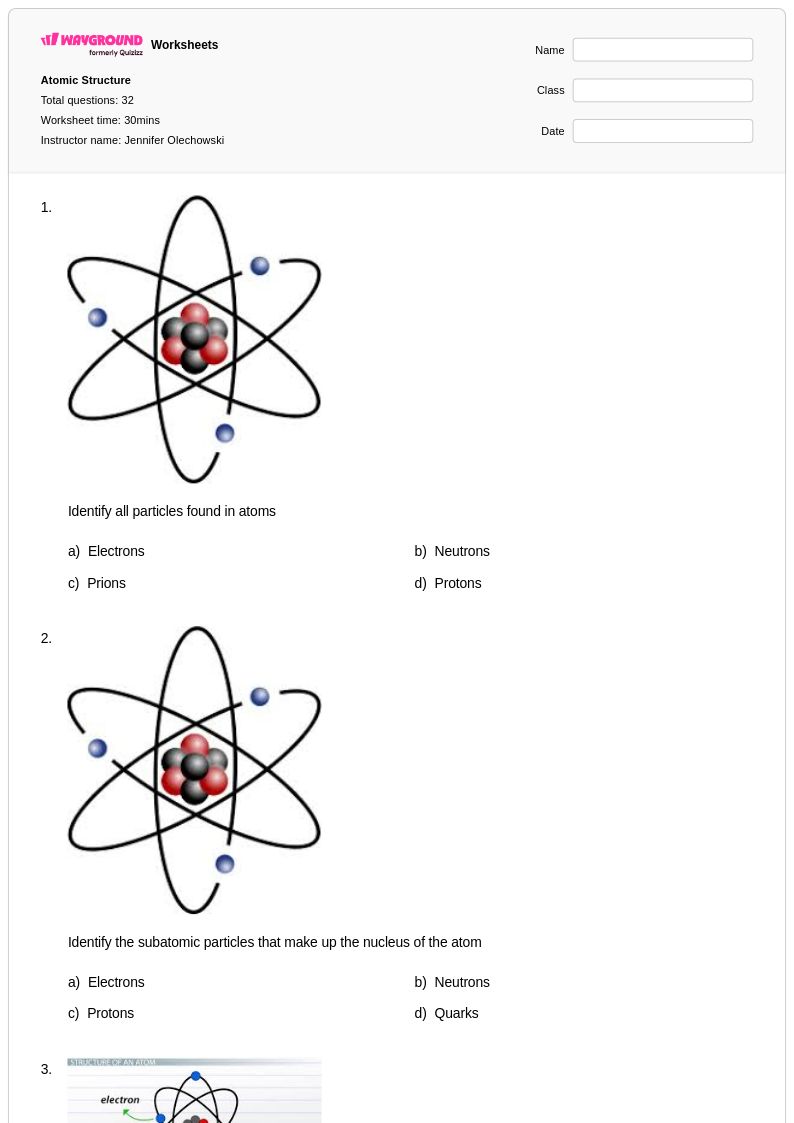
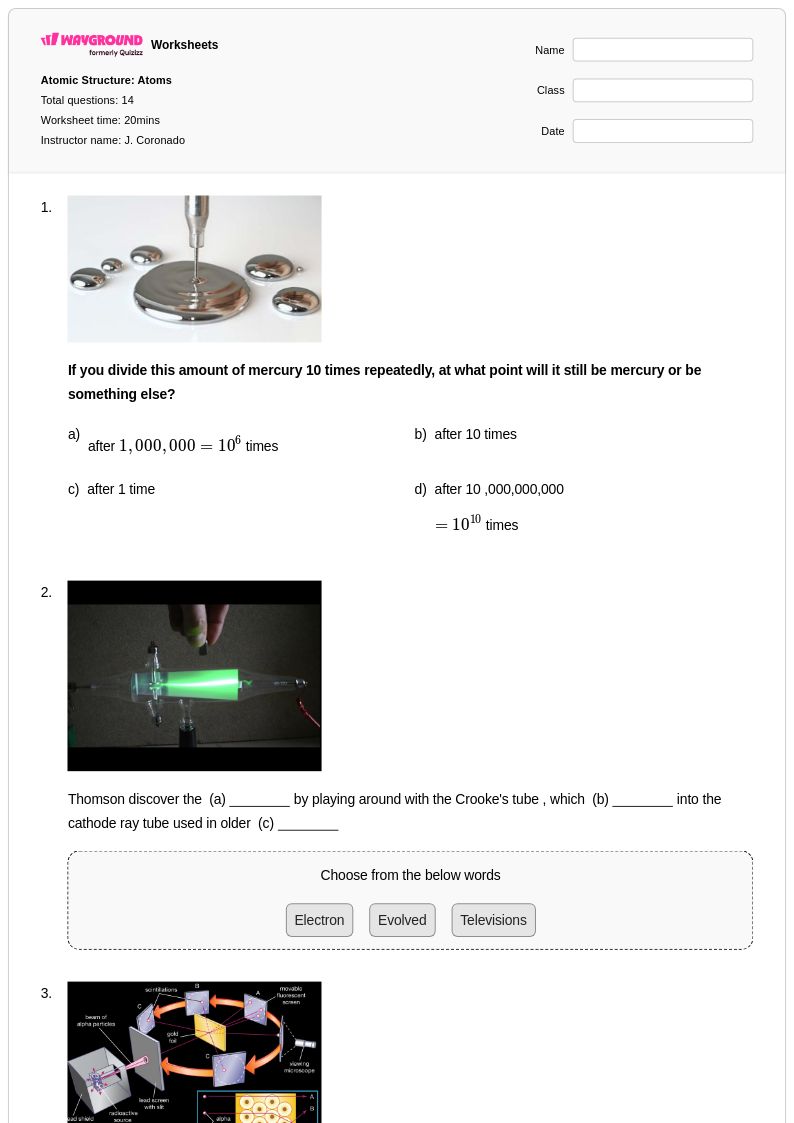
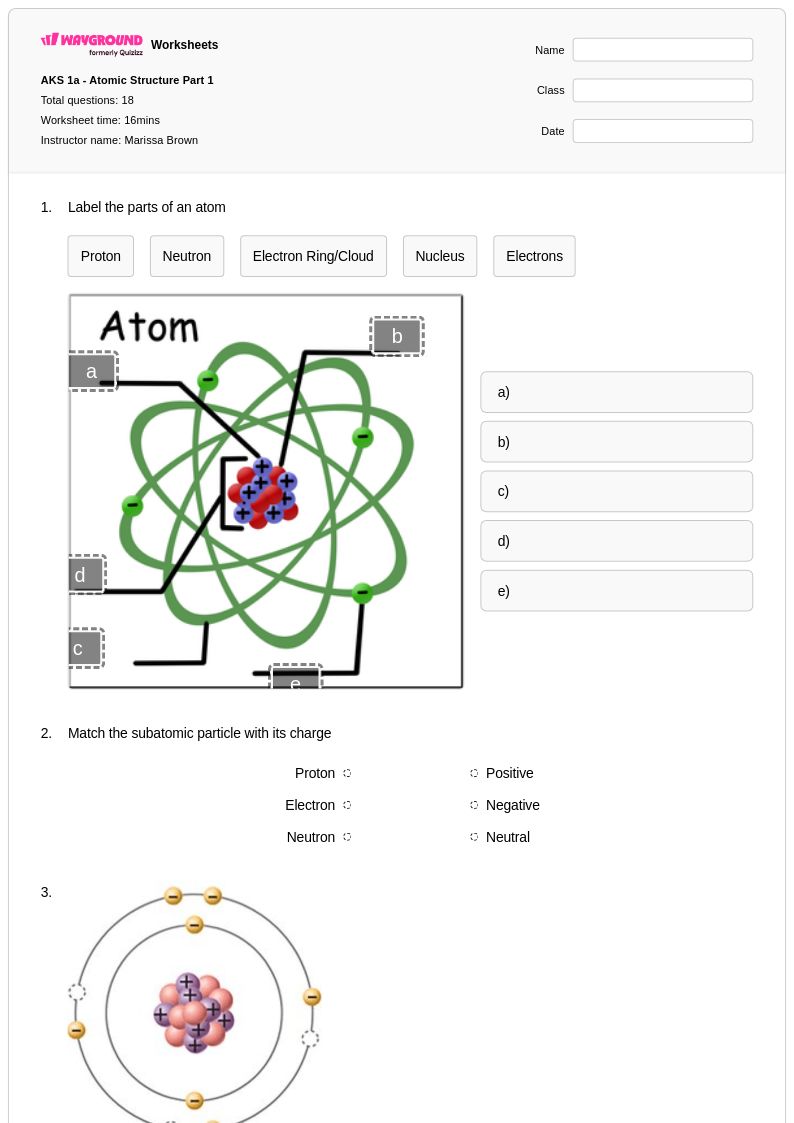
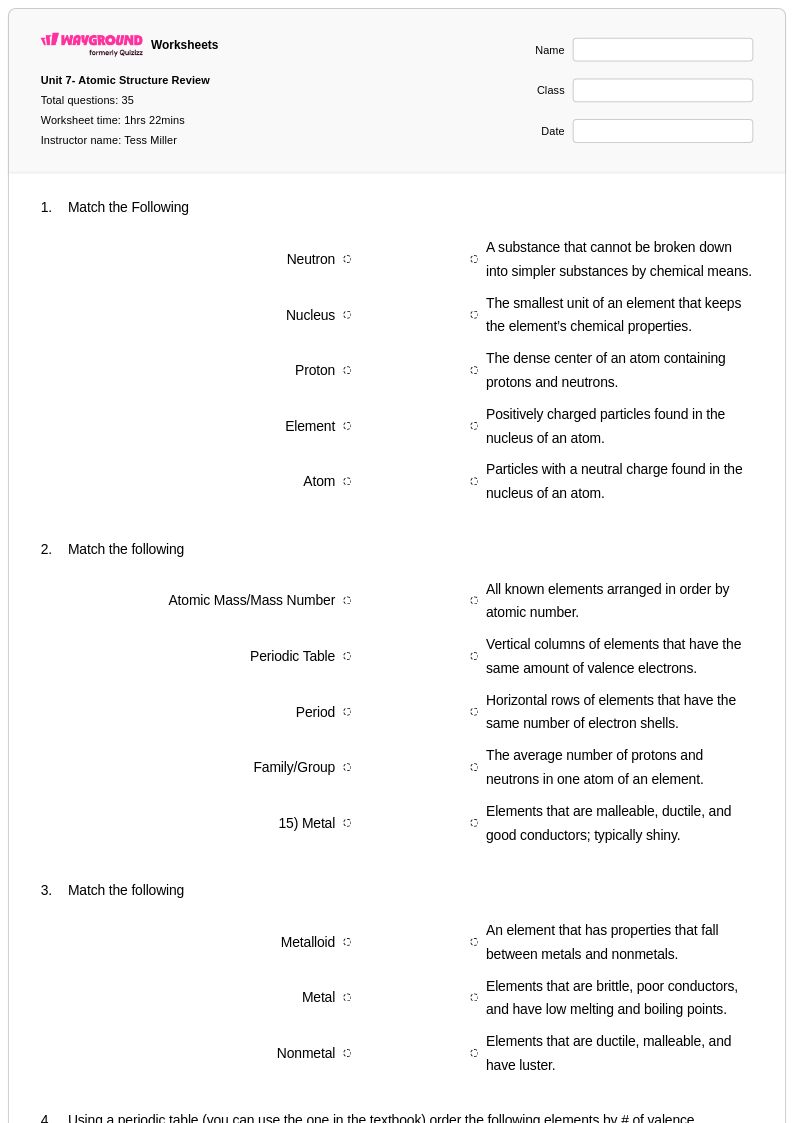
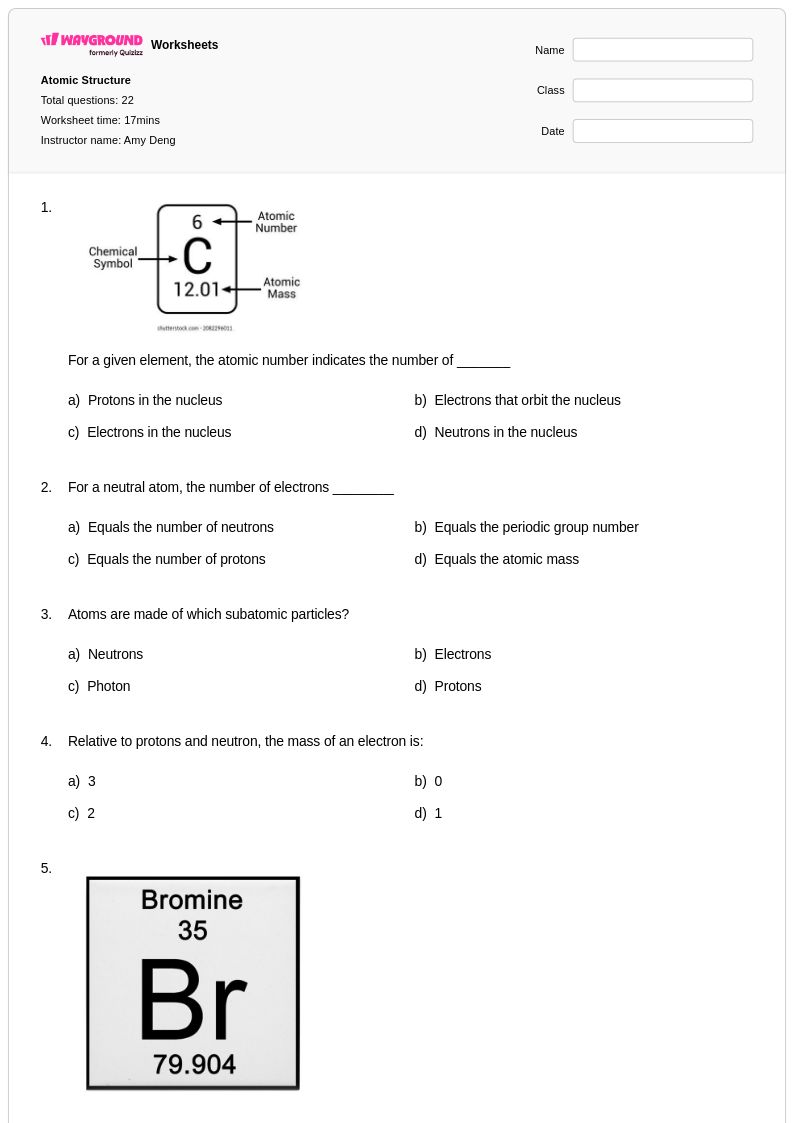
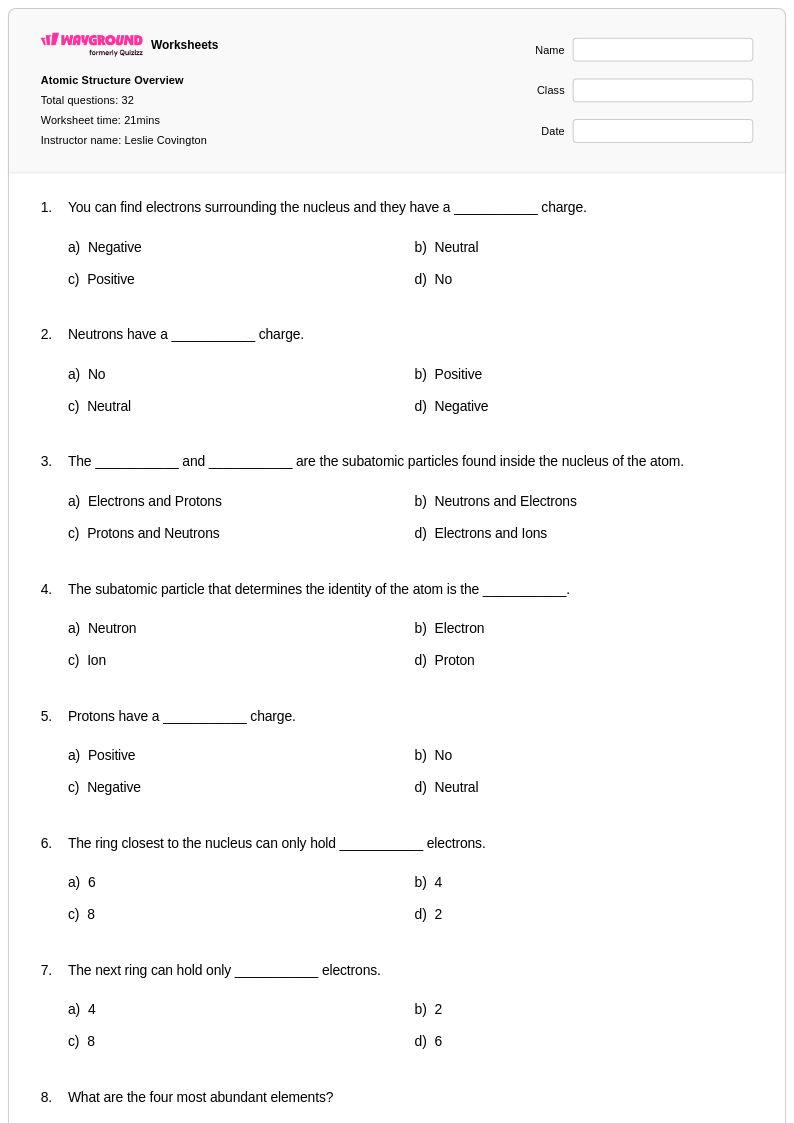
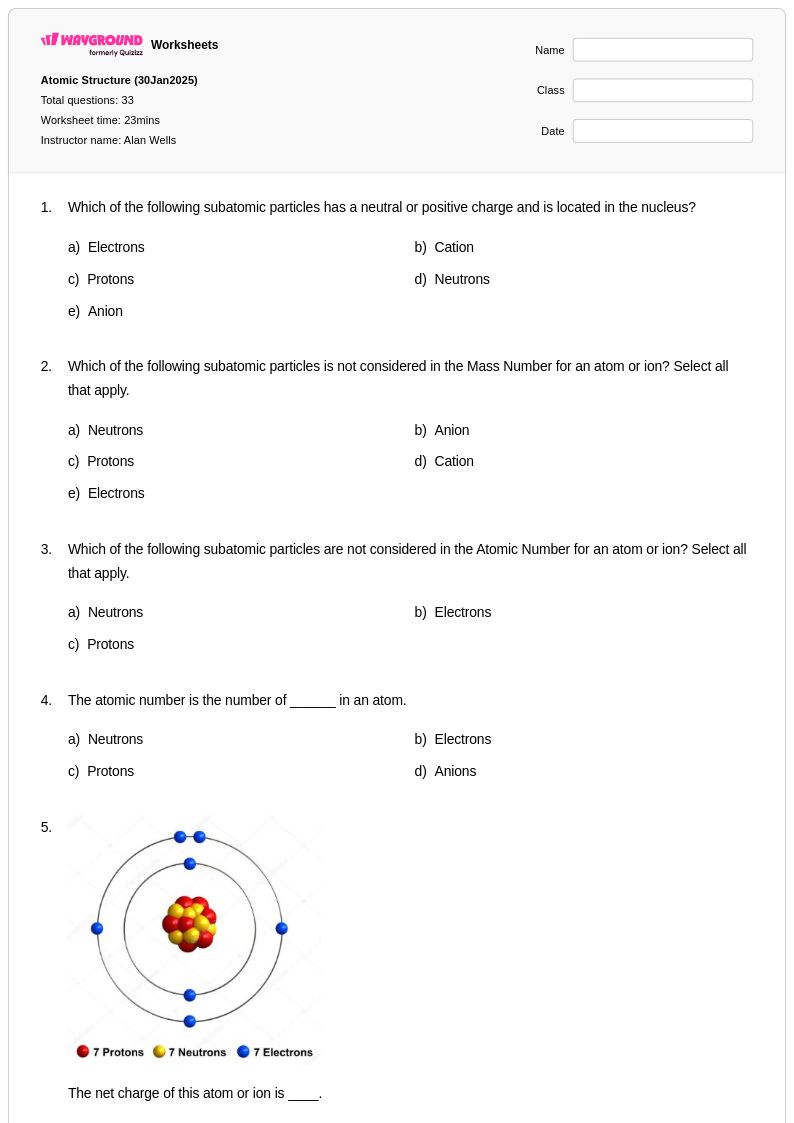
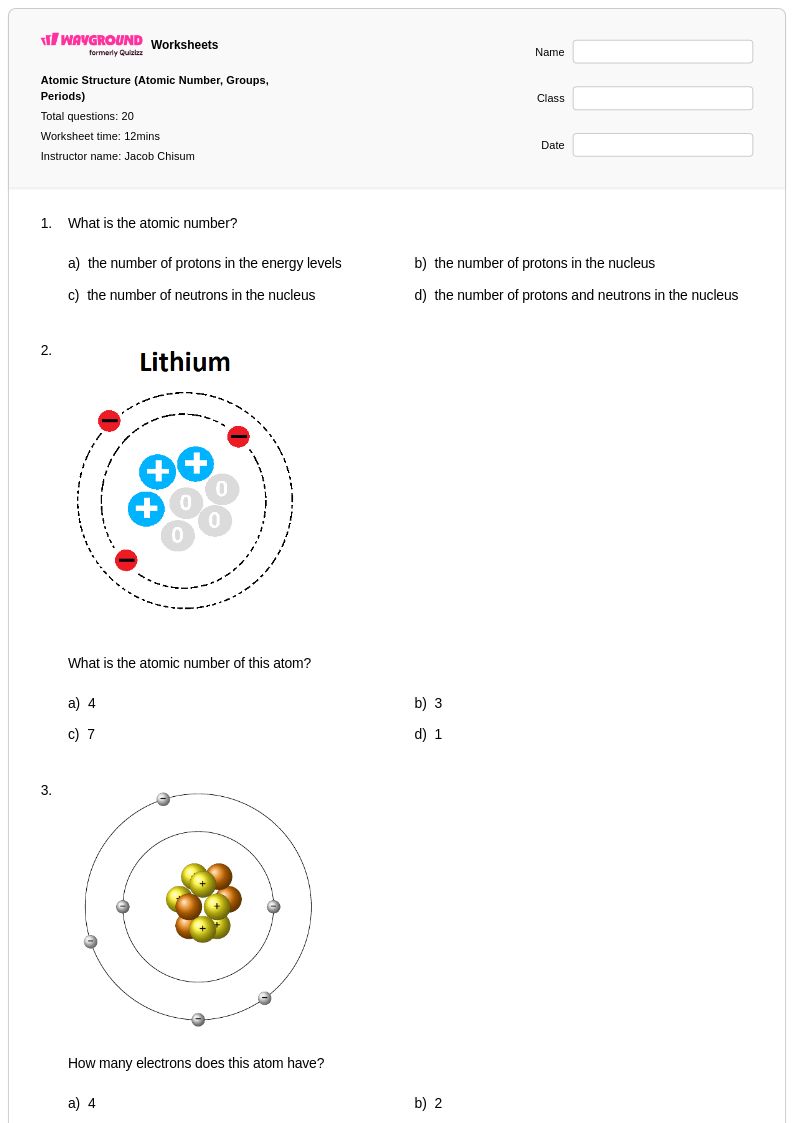
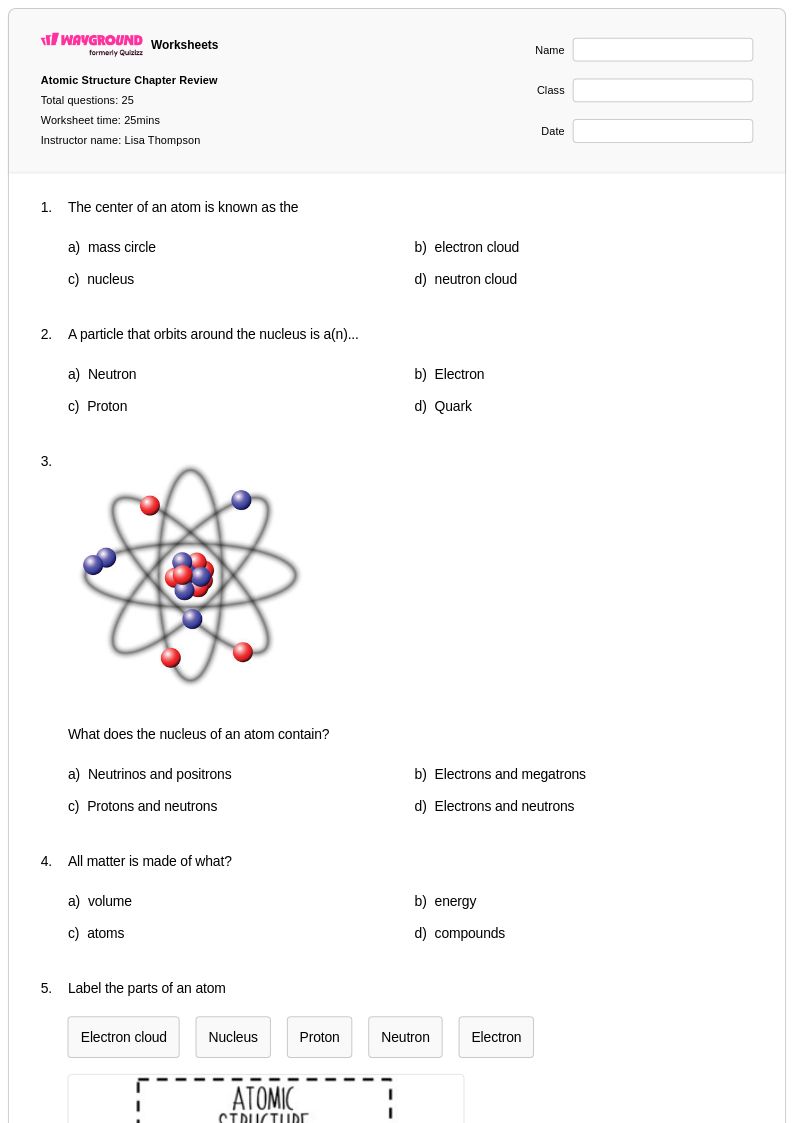
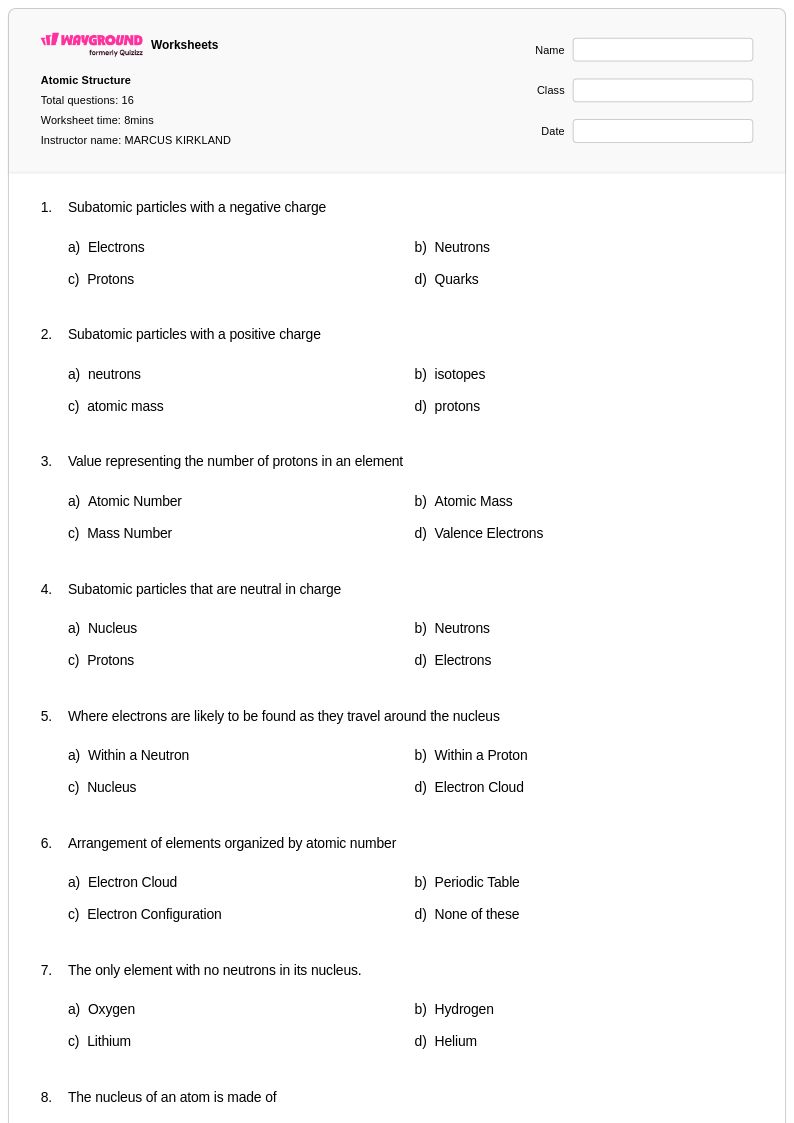
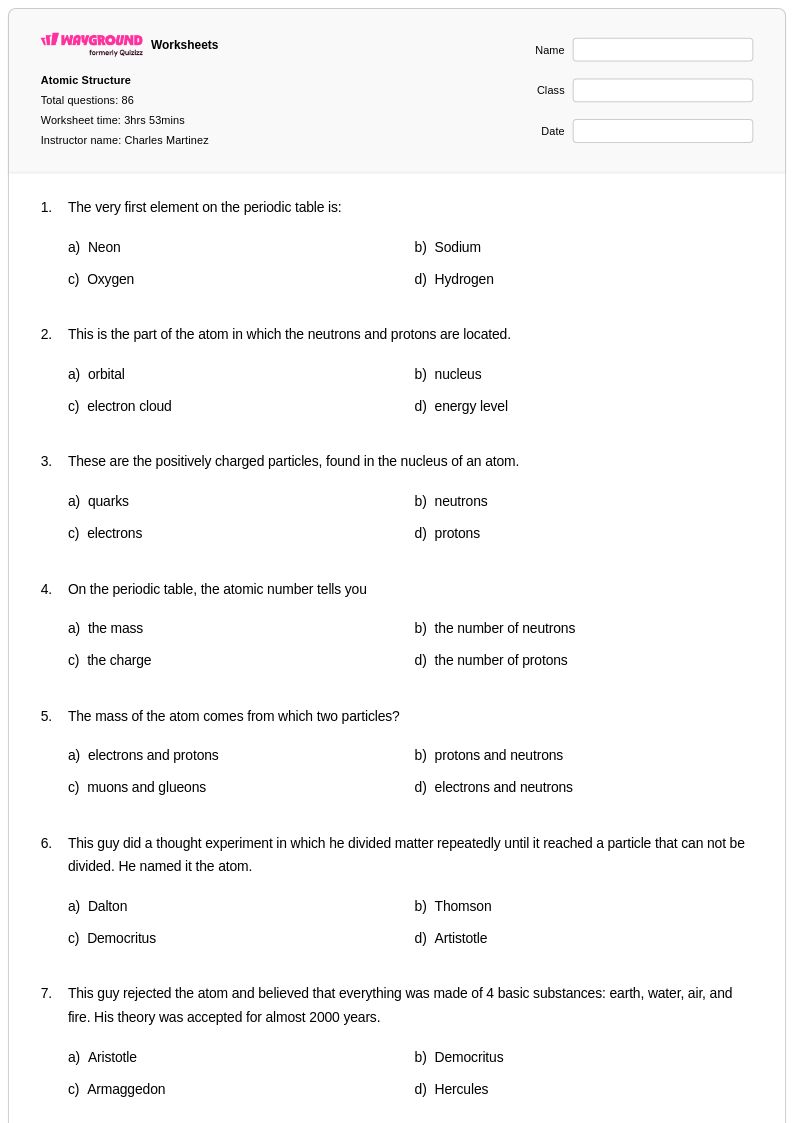
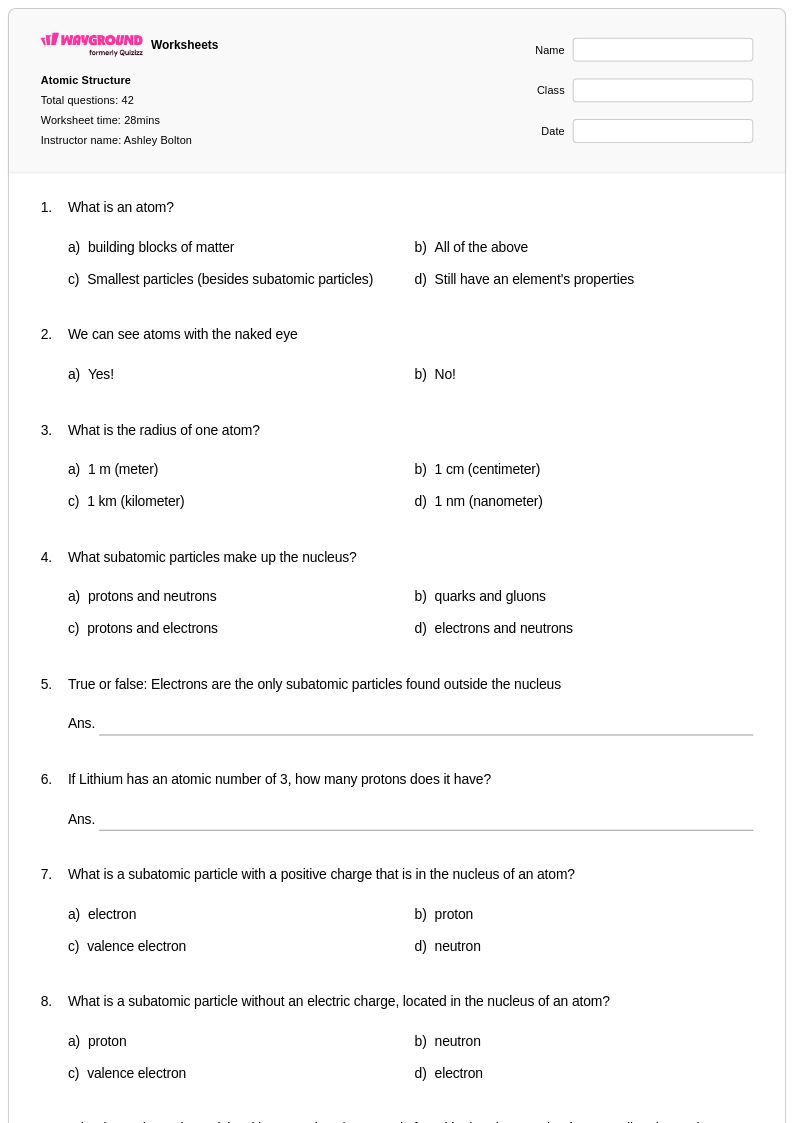
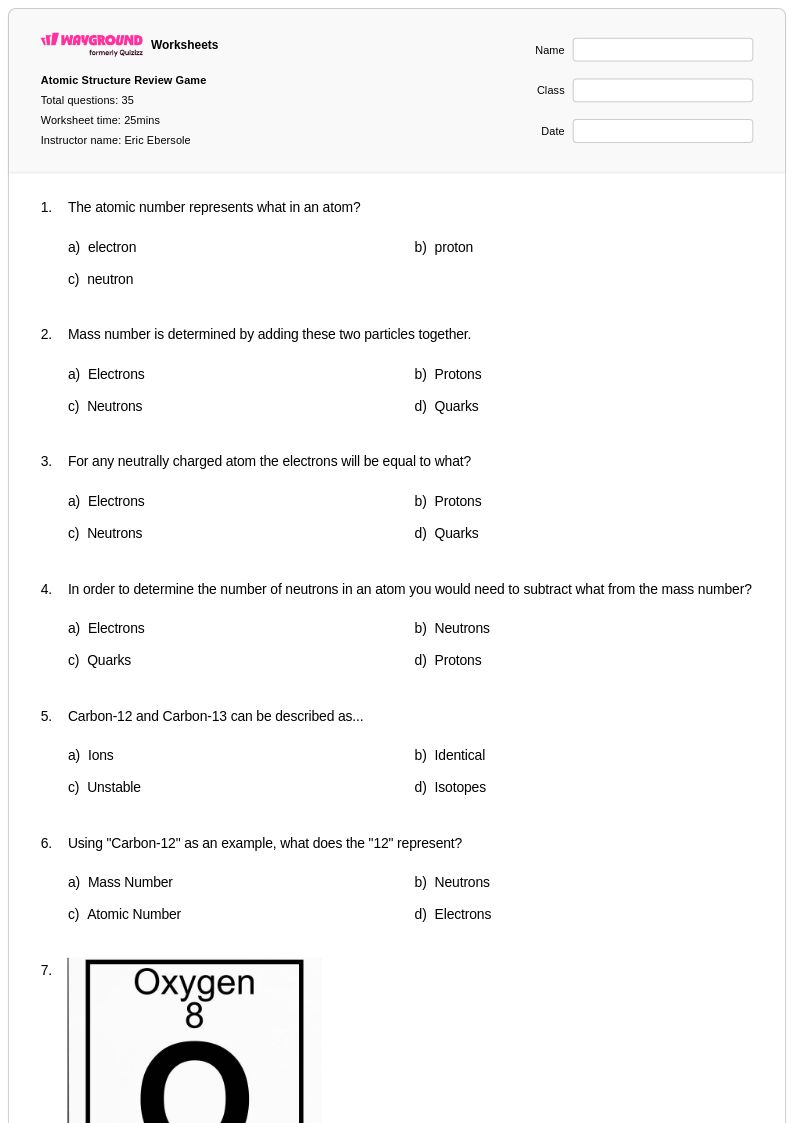
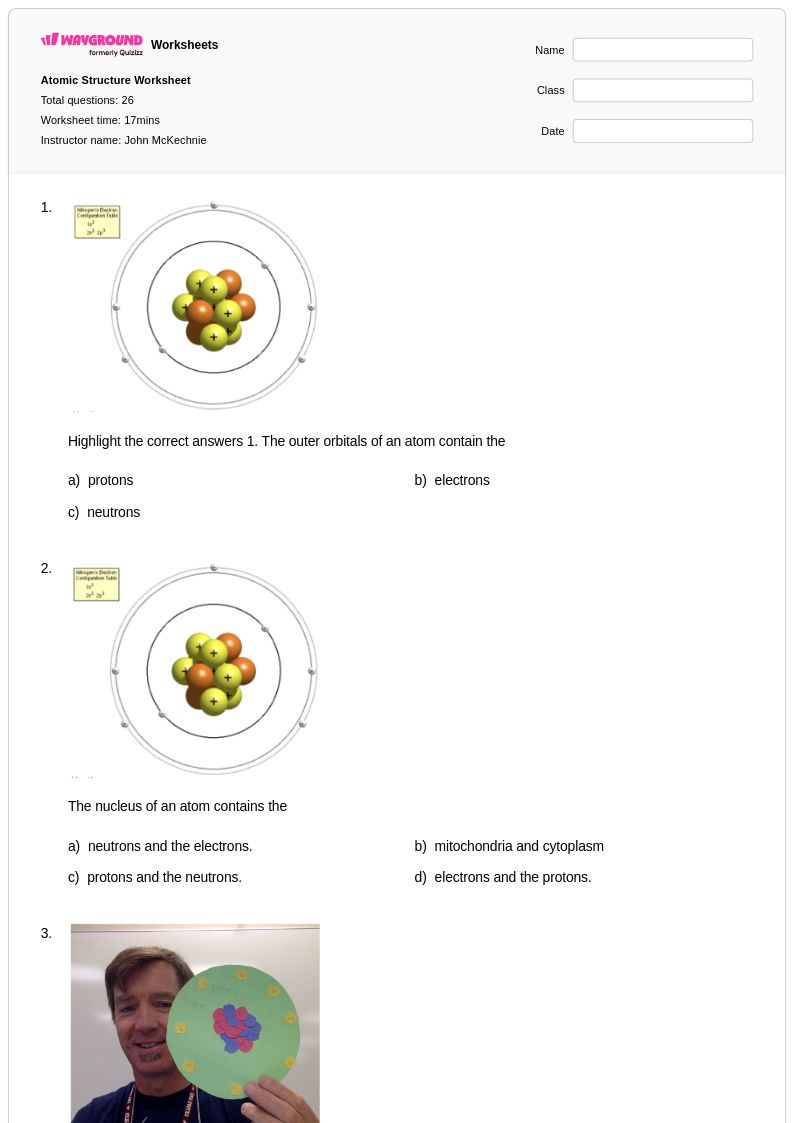
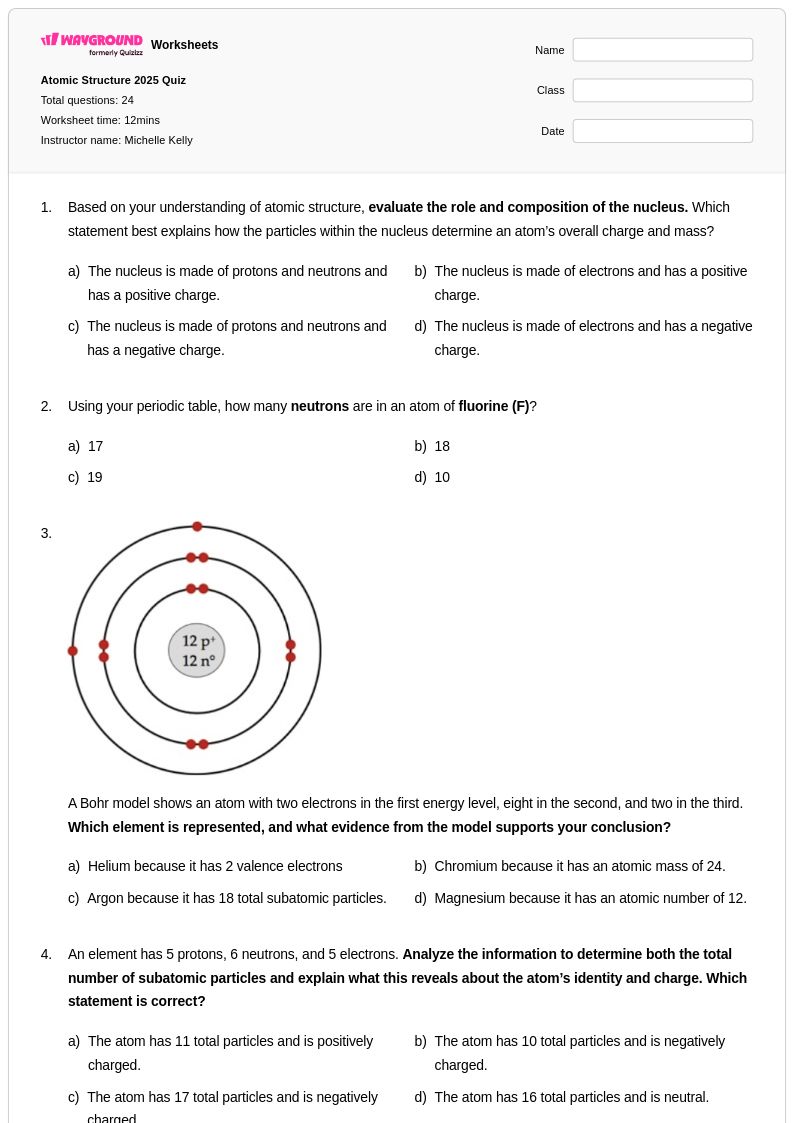
Grade 9 atomic structure worksheets available through Wayground (formerly Quizizz) provide comprehensive coverage of fundamental chemistry concepts that form the foundation of chemical understanding. These expertly designed resources guide students through the intricate details of atomic composition, including protons, neutrons, and electrons, while developing critical skills in electron configuration, isotope identification, and periodic table interpretation. Each worksheet collection includes detailed answer keys and is available as free printables in convenient PDF format, enabling students to master essential practice problems covering atomic number, mass number, and the relationship between atomic structure and chemical properties.
Wayground (formerly Quizizz) empowers educators with millions of teacher-created atomic structure resources that streamline lesson planning and enhance student learning outcomes. The platform's robust search and filtering capabilities allow teachers to quickly locate worksheets aligned with specific chemistry standards, while built-in differentiation tools enable customization for diverse learning needs and skill levels. These comprehensive collections are available in both printable PDF formats and interactive digital versions, providing flexible options for classroom instruction, homework assignments, remediation support, and enrichment activities that help students develop mastery of atomic theory concepts essential for advanced chemistry success.
FAQs
How do I teach atomic structure to my chemistry students?
Effective atomic structure instruction typically begins with foundational models — starting with the Bohr model before introducing quantum mechanical models — so students build conceptual understanding before tackling electron configuration notation. Using atomic diagrams alongside hands-on periodic table activities helps students connect abstract subatomic concepts to observable elemental properties. Reinforcing lessons with targeted practice problems on isotopes, valence electrons, and ion charges ensures students can apply what they've learned rather than simply memorize definitions.
What exercises help students practice electron configuration?
Worksheet exercises that ask students to write full and abbreviated electron configurations, identify valence electrons, and explain periodic trends in terms of electron arrangement are among the most effective for building fluency. Practice problems that connect electron configuration to ion charge determination and chemical reactivity push students to apply the concept rather than reproduce it mechanically. Spaced repetition across multiple practice sets helps students retain the orbital filling rules, particularly for exceptions like chromium and copper.
What mistakes do students commonly make with atomic structure?
One of the most frequent errors is confusing atomic number with atomic mass, which leads to downstream mistakes when calculating neutrons or identifying isotopes. Students also routinely misapply the Aufbau principle, particularly when filling d orbitals, resulting in incorrect electron configurations for transition metals. Another common misconception is treating electron shells and quantum subshells as interchangeable, which undermines students' understanding of valence electrons and periodic trends.
How can I use atomic structure worksheets to differentiate instruction in my classroom?
Atomic structure is a topic where student readiness varies significantly, so differentiation is essential. On Wayground, teachers can apply student-level accommodations individually, including Read Aloud for students who need audio support when interpreting atomic diagrams or terminology, and reduced answer choices for students who need lower cognitive load on multiple-choice electron configuration questions. These settings can be saved and reused across sessions, so teachers set them once and Wayground applies them automatically going forward.
How do I use Wayground's atomic structure worksheets in my class?
Wayground's atomic structure worksheets are available as printable PDFs for traditional classroom use and in digital formats for technology-integrated environments, giving teachers flexibility across in-person, hybrid, and remote settings. Teachers can also host worksheets directly as a quiz on Wayground, allowing students to complete them interactively while the platform collects response data. All worksheets include comprehensive answer keys, which streamlines grading and makes it easier to identify which concepts need re-teaching.
How do I assess whether students understand atomic structure before moving on?
A reliable formative check is asking students to draw and label a complete atomic model for a given element, including protons, neutrons, and electron shells, without a reference — this quickly surfaces gaps in understanding. Questions that require students to determine ion charges from electron configuration or explain why two isotopes of the same element have different atomic masses are strong diagnostic tools. Answer keys aligned to these tasks help teachers quickly categorize errors by misconception type rather than simply marking answers right or wrong.