
20 Q
2nd
21 Q
2nd
15 Q
2nd
13 Q
2nd
9 Q
1st - 2nd
13 Q
2nd
14 Q
2nd
15 Q
2nd
18 Q
2nd - 3rd
16 Q
2nd - 3rd
20 Q
2nd
13 Q
2nd
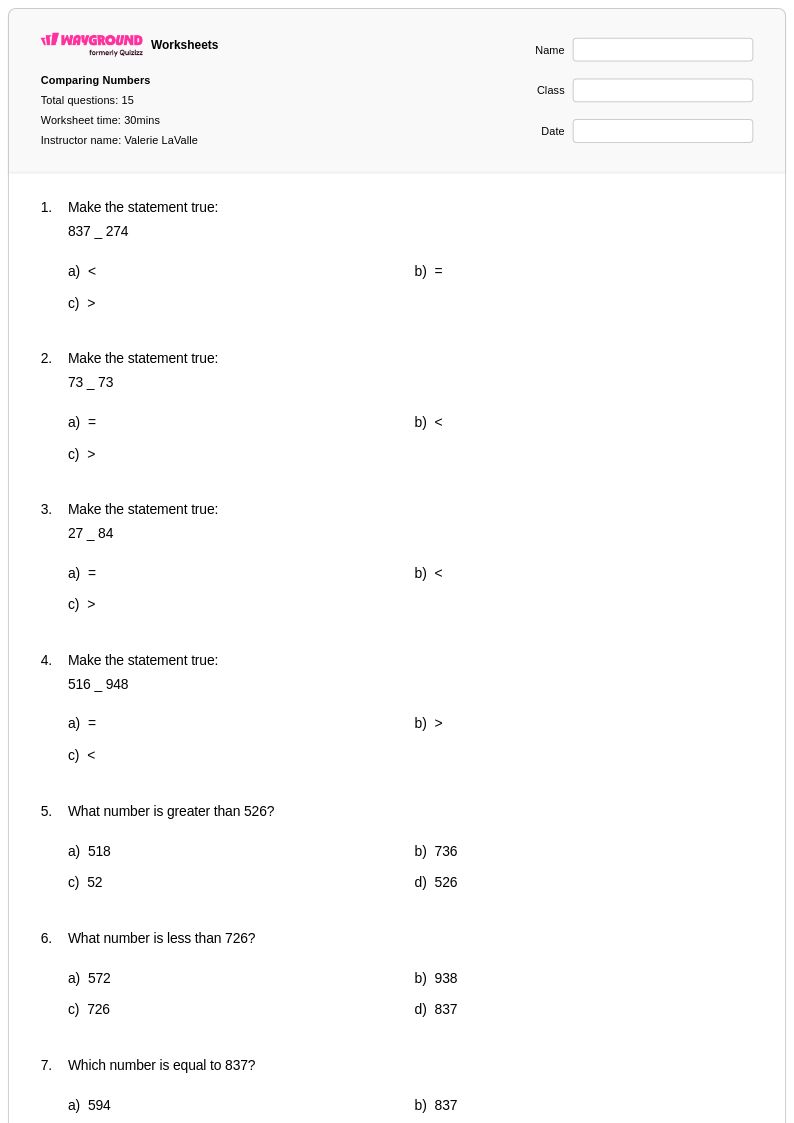
15 Q
2nd
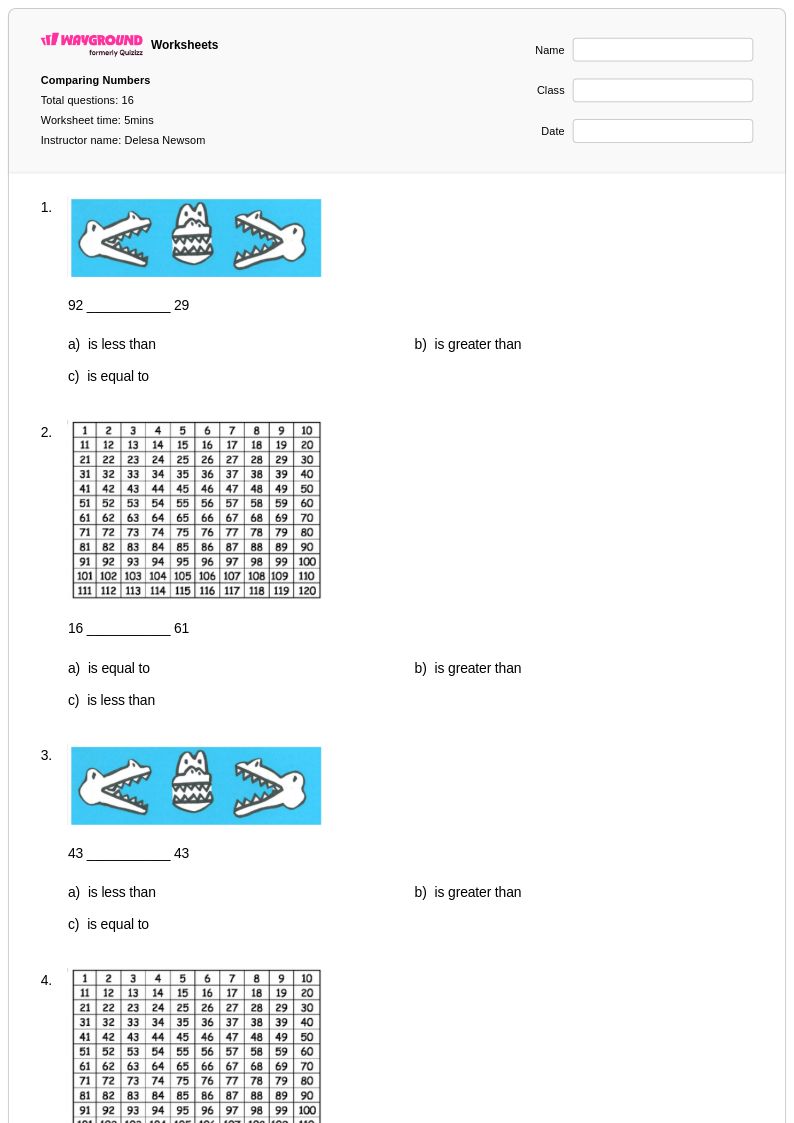
16 Q
1st - 2nd
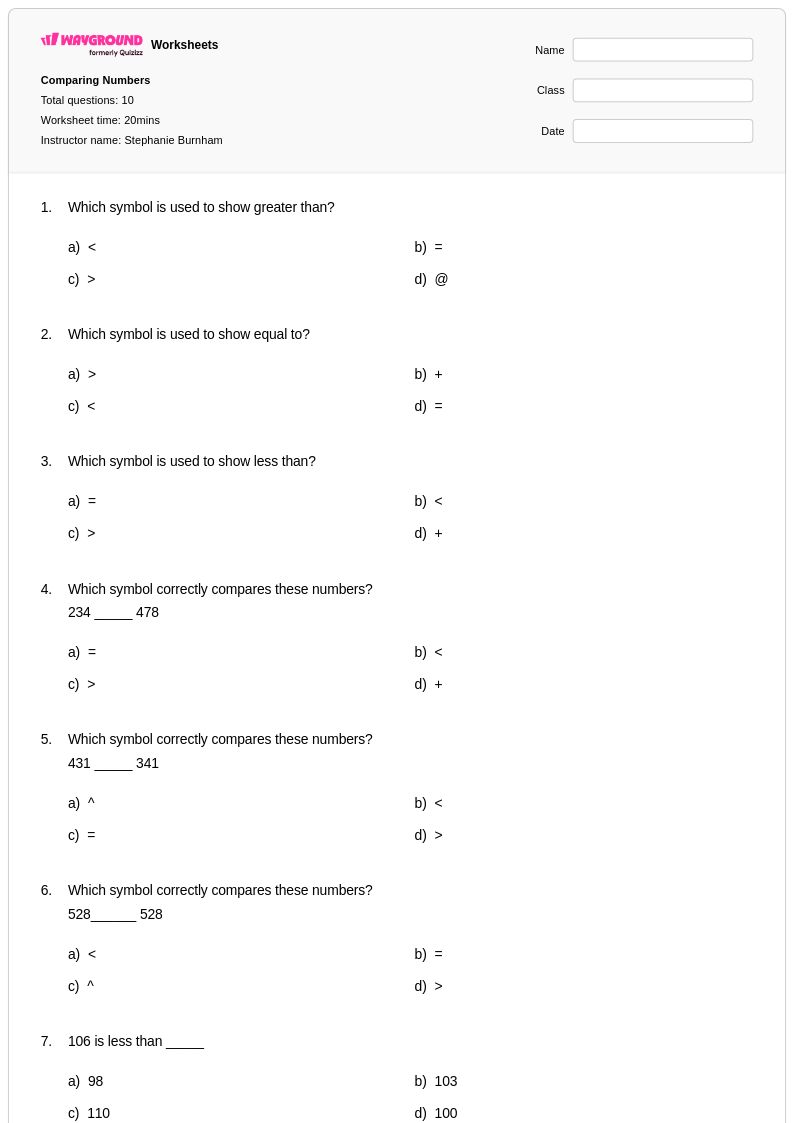
10 Q
2nd
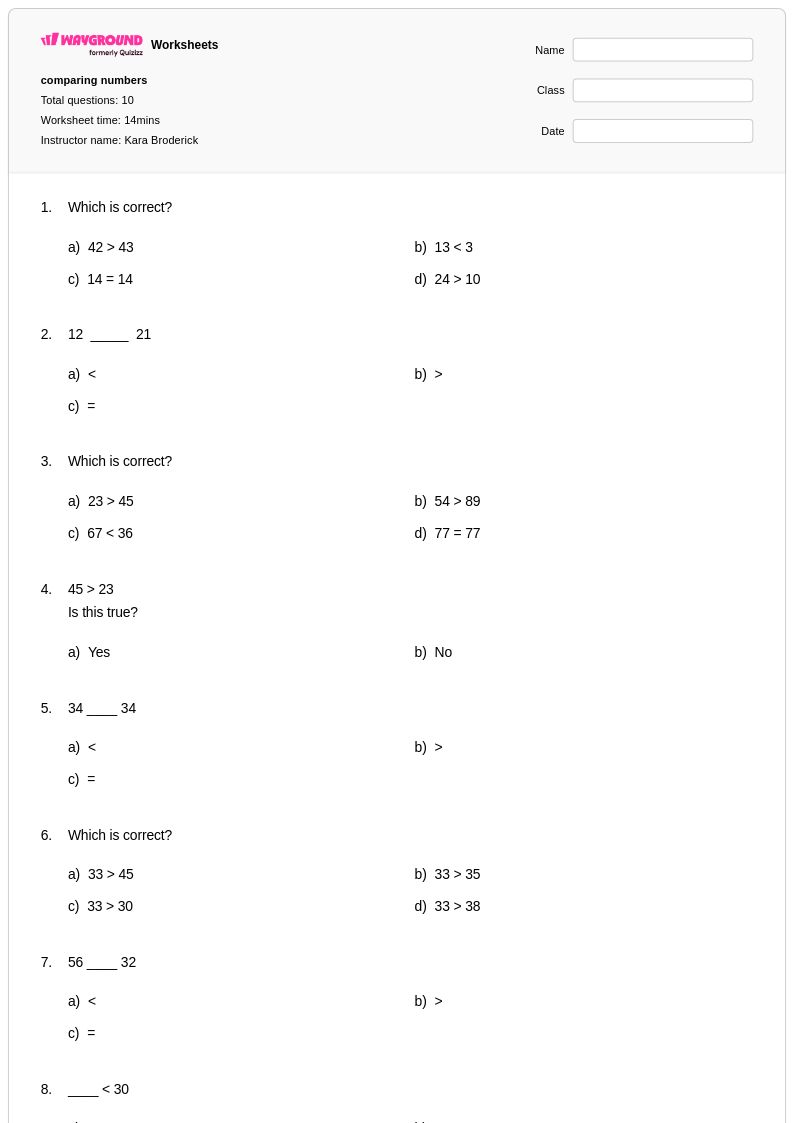
10 Q
2nd
21 Q
2nd
10 Q
1st - 2nd
18 Q
2nd - 3rd
20 Q
1st - 2nd
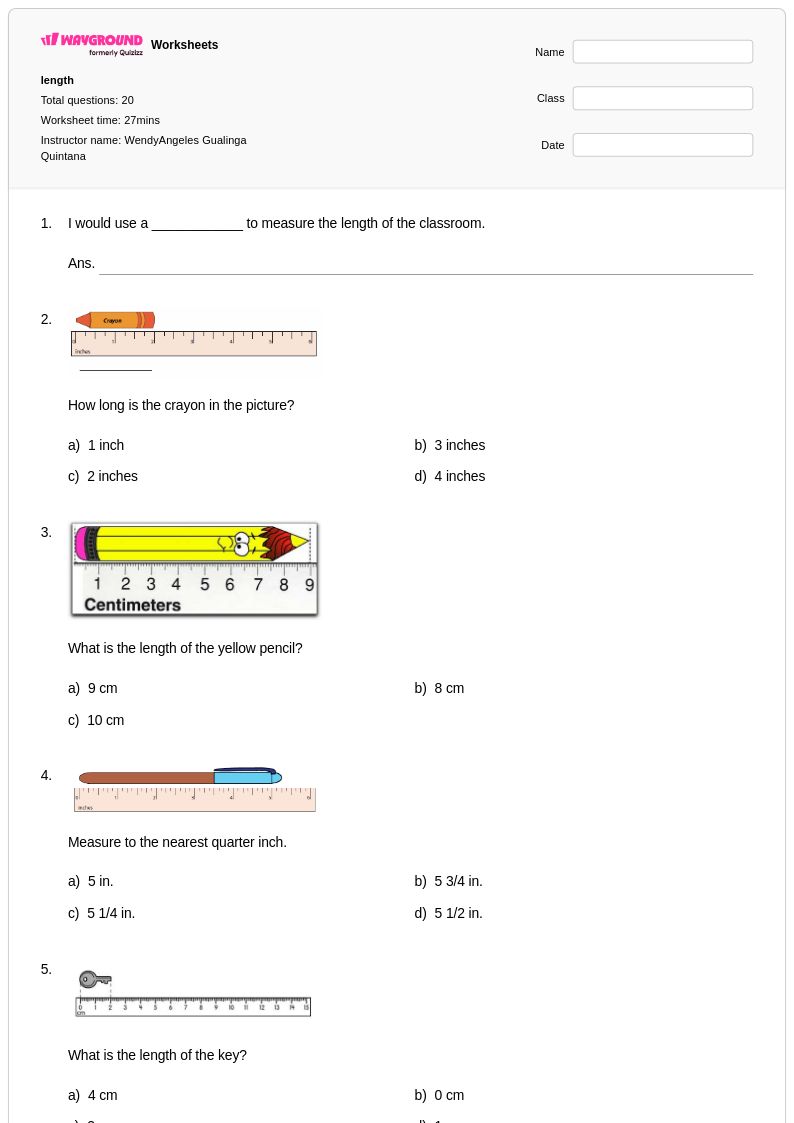
20 Q
2nd
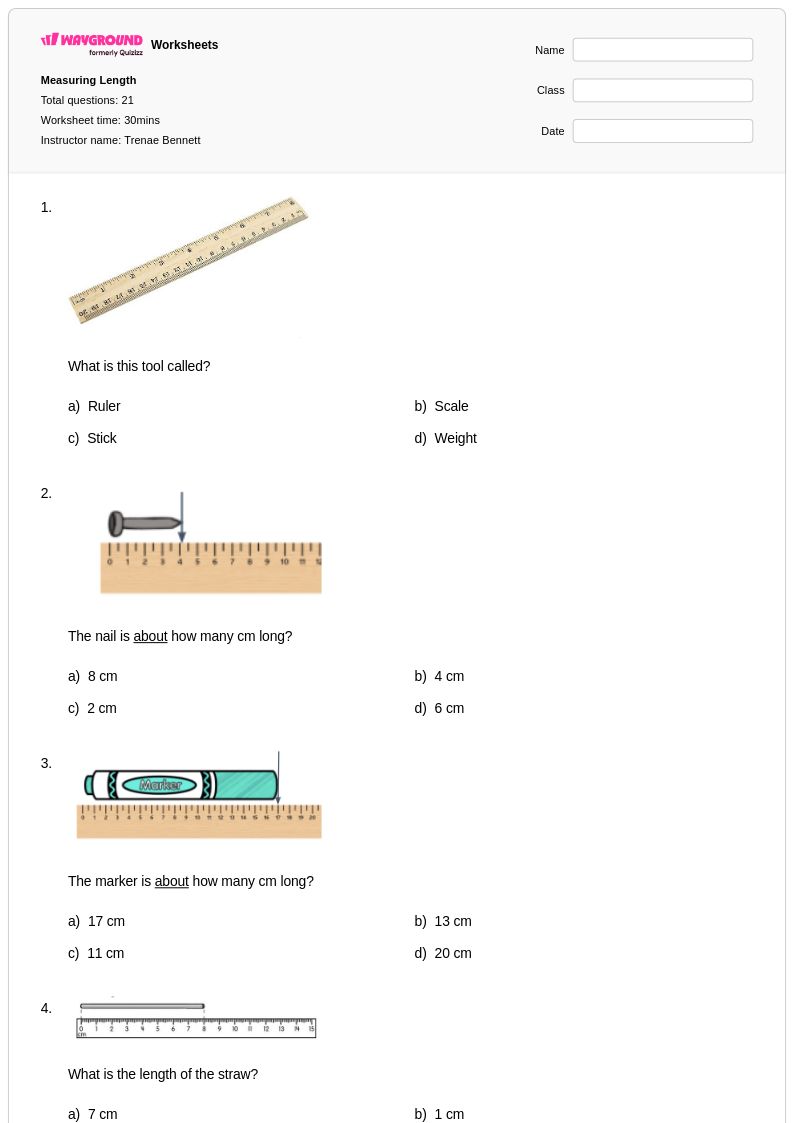
21 Q
2nd - 4th
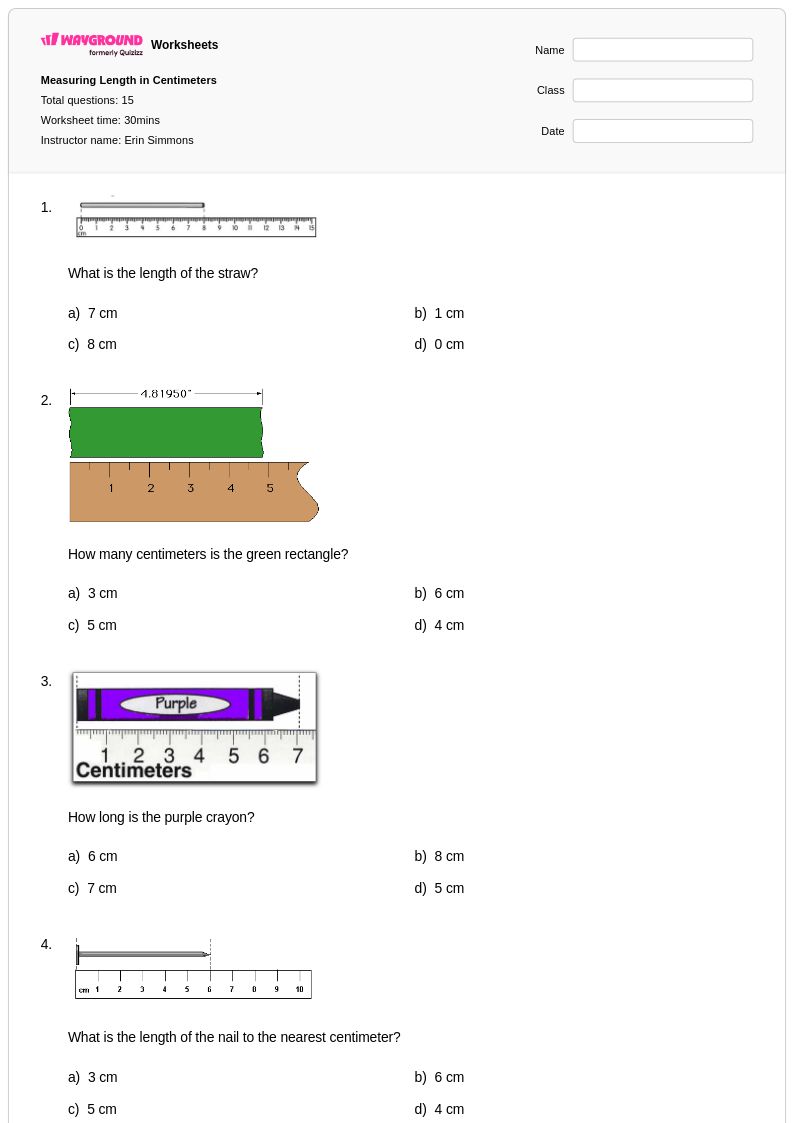
15 Q
2nd
Explore Other Subject Worksheets for grade 2
Explore printable Comparing Length worksheets for Grade 2
Comparing length worksheets for Grade 2 from Wayground (formerly Quizizz) provide essential foundation-building activities that help young mathematicians develop critical measurement comparison skills. These comprehensive printables guide students through systematic practice with concepts such as longer, shorter, tallest, and shortest using both direct and indirect comparison methods. Each worksheet collection includes varied practice problems that progress from concrete manipulative-based comparisons to more abstract visual assessments, strengthening students' ability to analyze and compare objects of different lengths. The accompanying answer key supports both independent learning and teacher assessment, while the free pdf format ensures easy access for classroom and home use.
Wayground (formerly Quizizz) empowers educators with millions of teacher-created comparing length resources that streamline lesson planning and differentiated instruction for Grade 2 mathematics. The platform's robust search and filtering capabilities allow teachers to quickly locate worksheets aligned with specific learning standards and student readiness levels, while built-in customization tools enable seamless modification of practice problems to meet diverse classroom needs. These versatile resources are available in both printable and digital formats, including downloadable pdf versions, making them ideal for in-class activities, homework assignments, remediation sessions, and enrichment opportunities. Teachers can efficiently assess student progress, identify areas requiring additional support, and provide targeted skill practice that builds confident measurement comparison abilities across all learning environments.
FAQs
How do I teach comparing length in second grade?
What exercises help second graders practice comparing length?
What mistakes do second graders make when comparing lengths?
How can I use a Grade 2 comparing length worksheet from Wayground?
How does comparing length fit into the Common Core second-grade math progression?
How can I differentiate comparing length worksheets for second graders?
What grade do students learn direct and indirect length comparison?