Explore Wayground's comprehensive collection of free dilation worksheets and printables that help students master scaling transformations through engaging practice problems with complete answer keys in convenient PDF format.
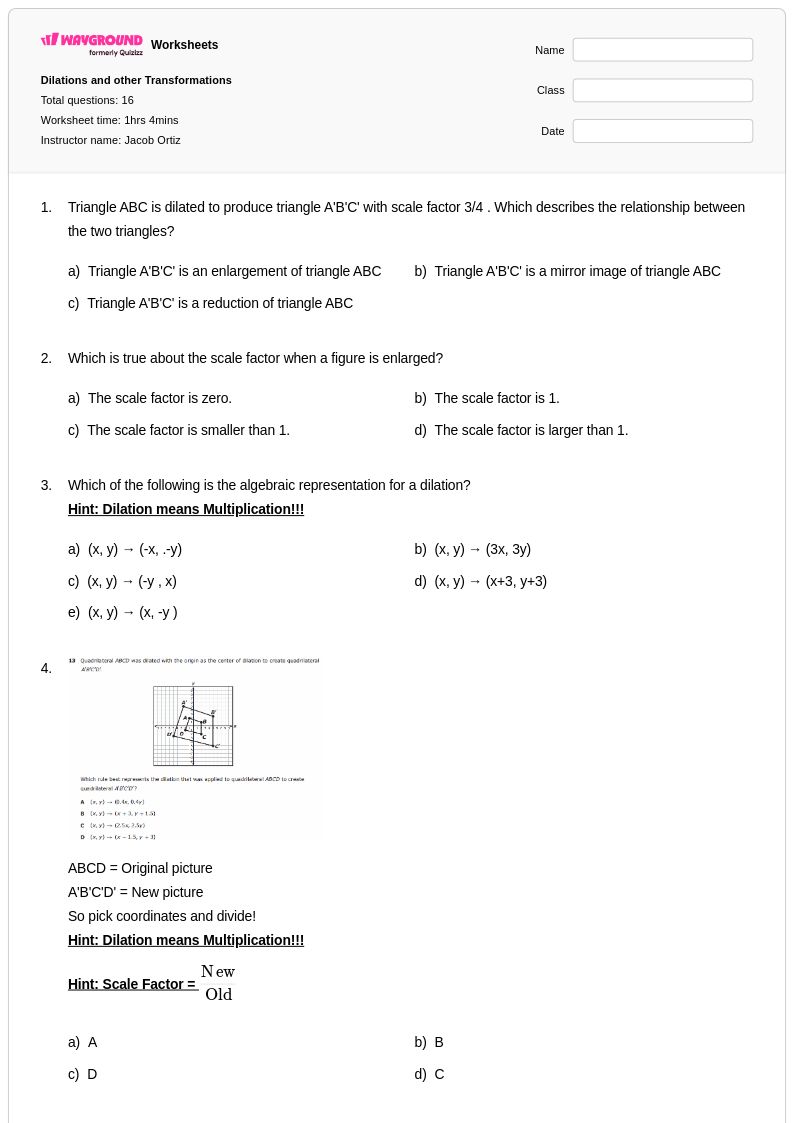
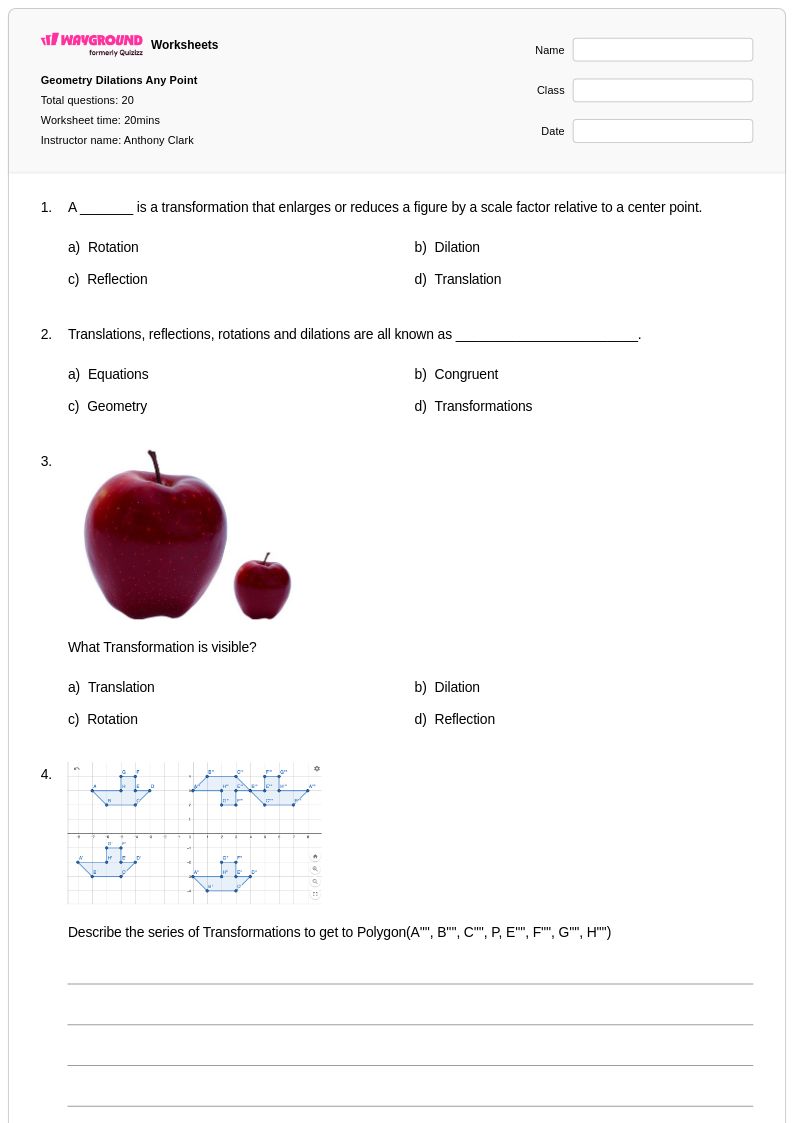
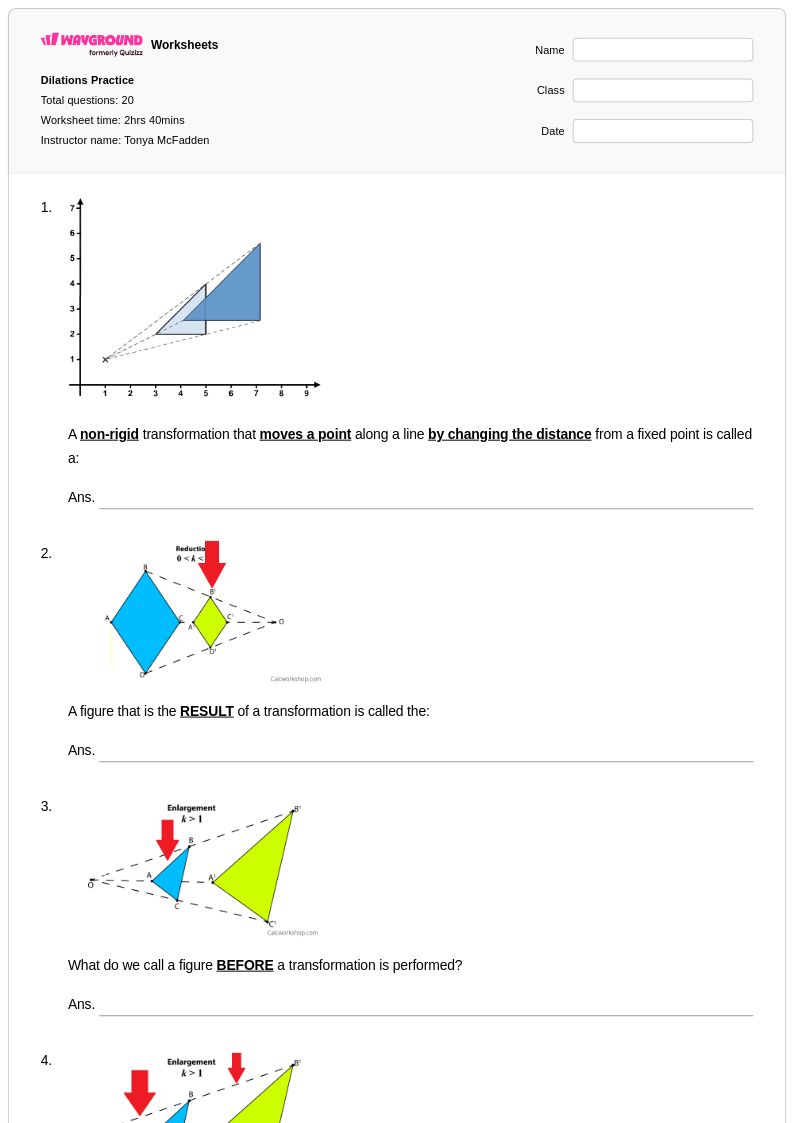
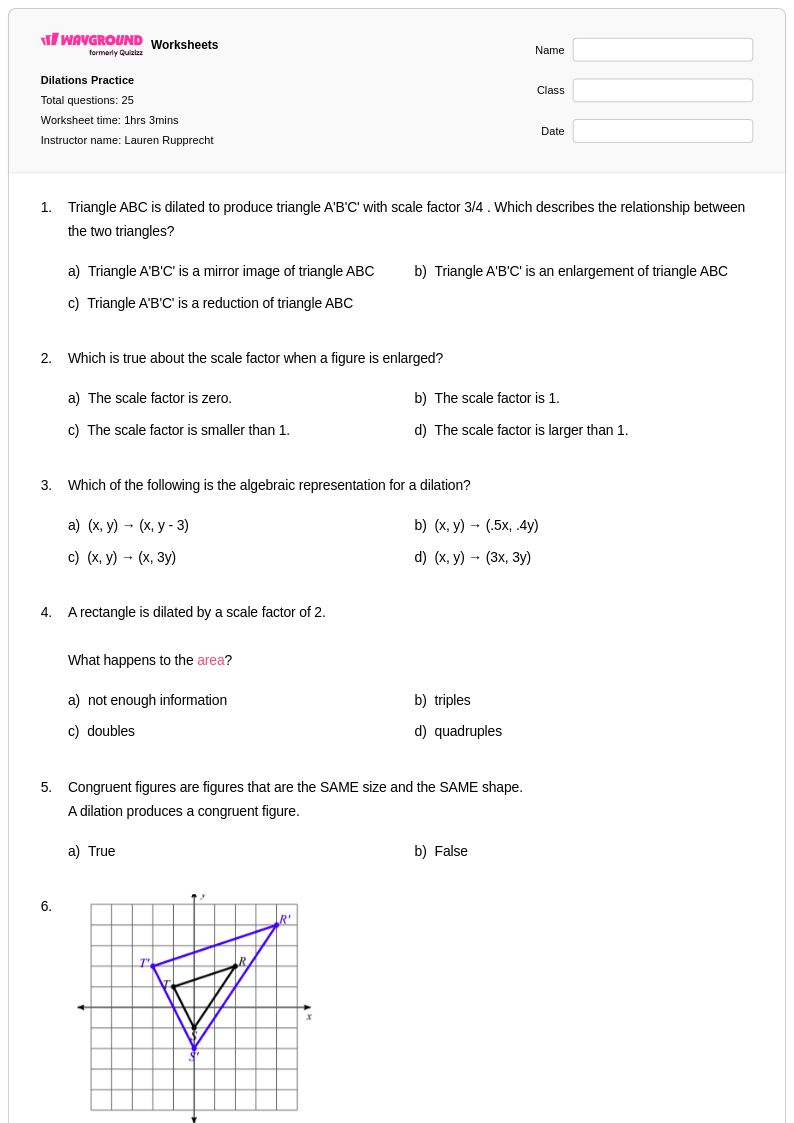
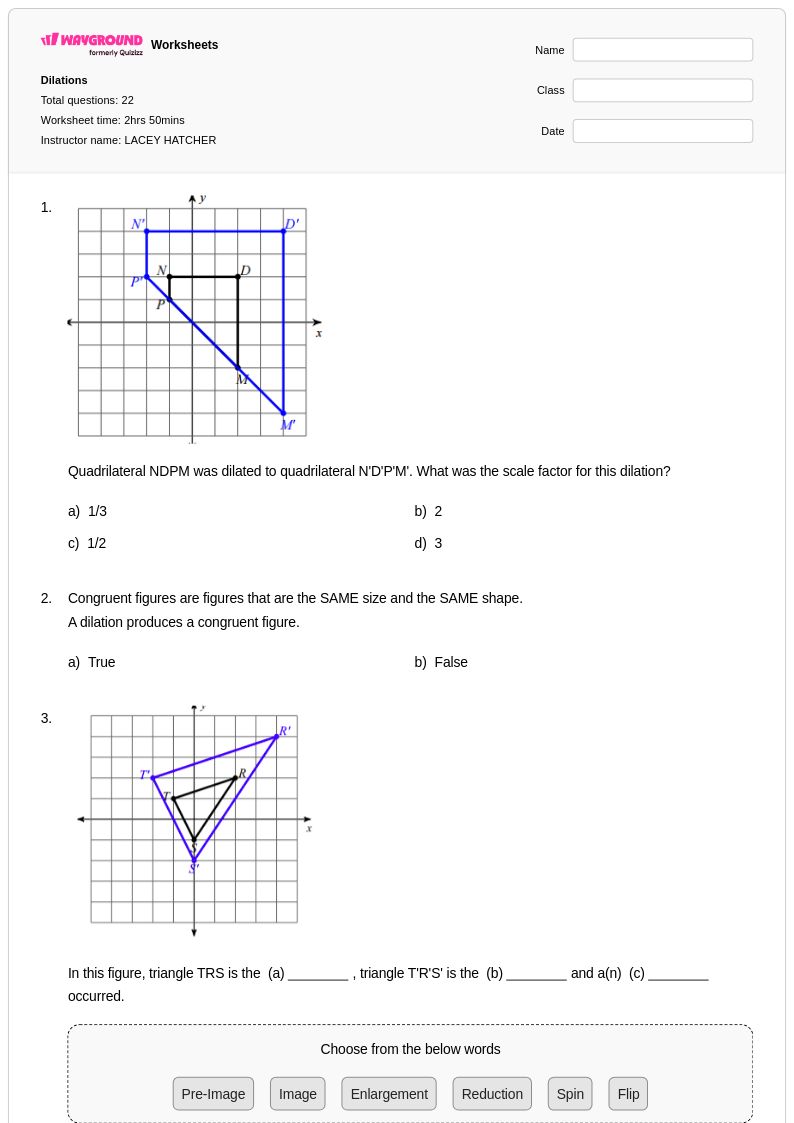
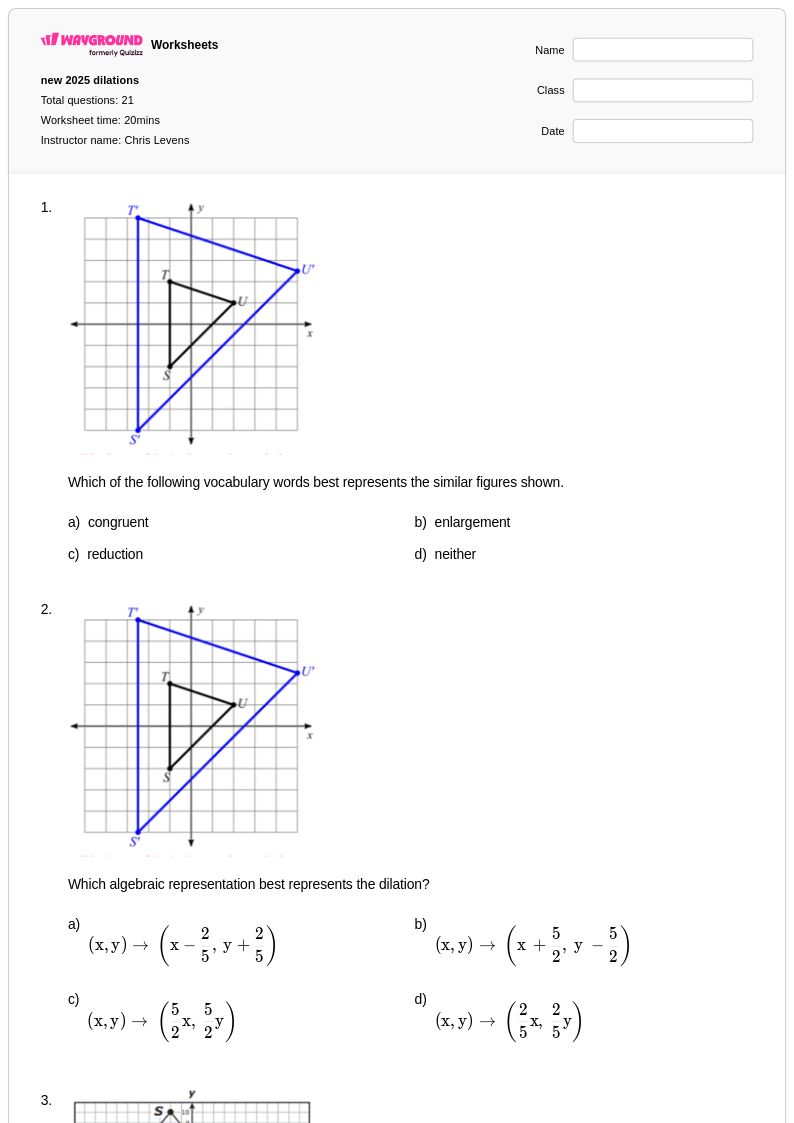
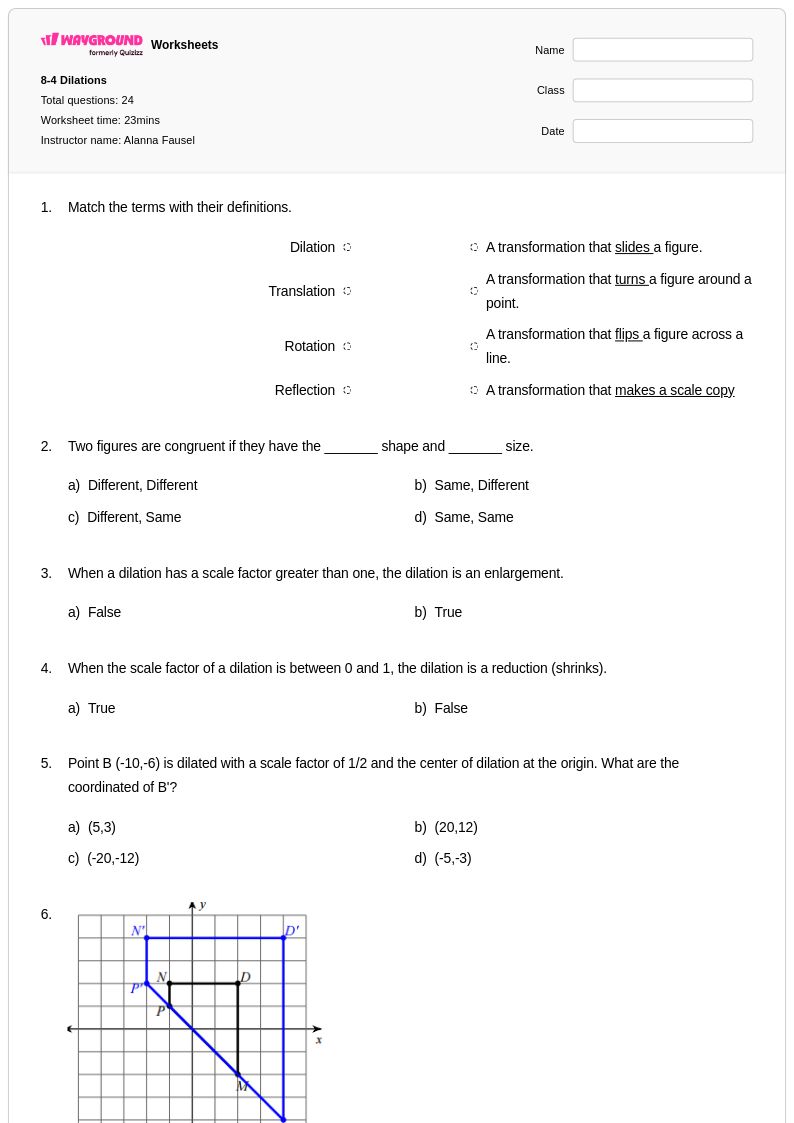
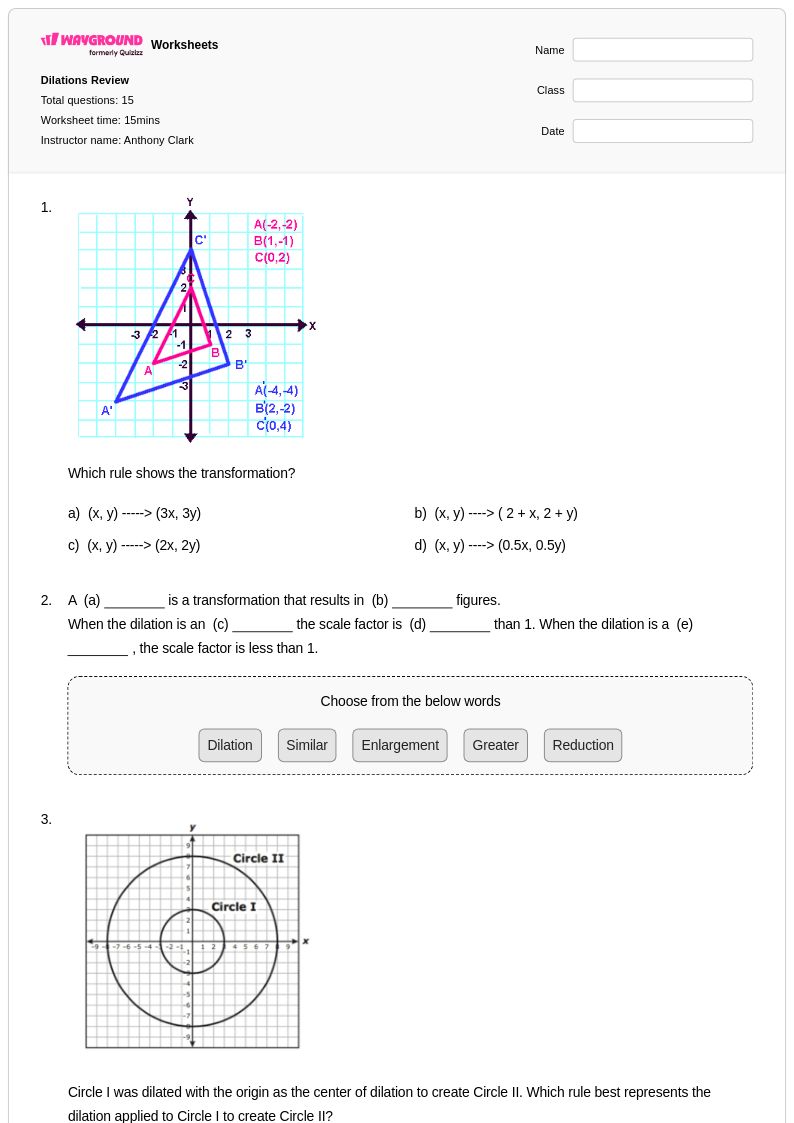
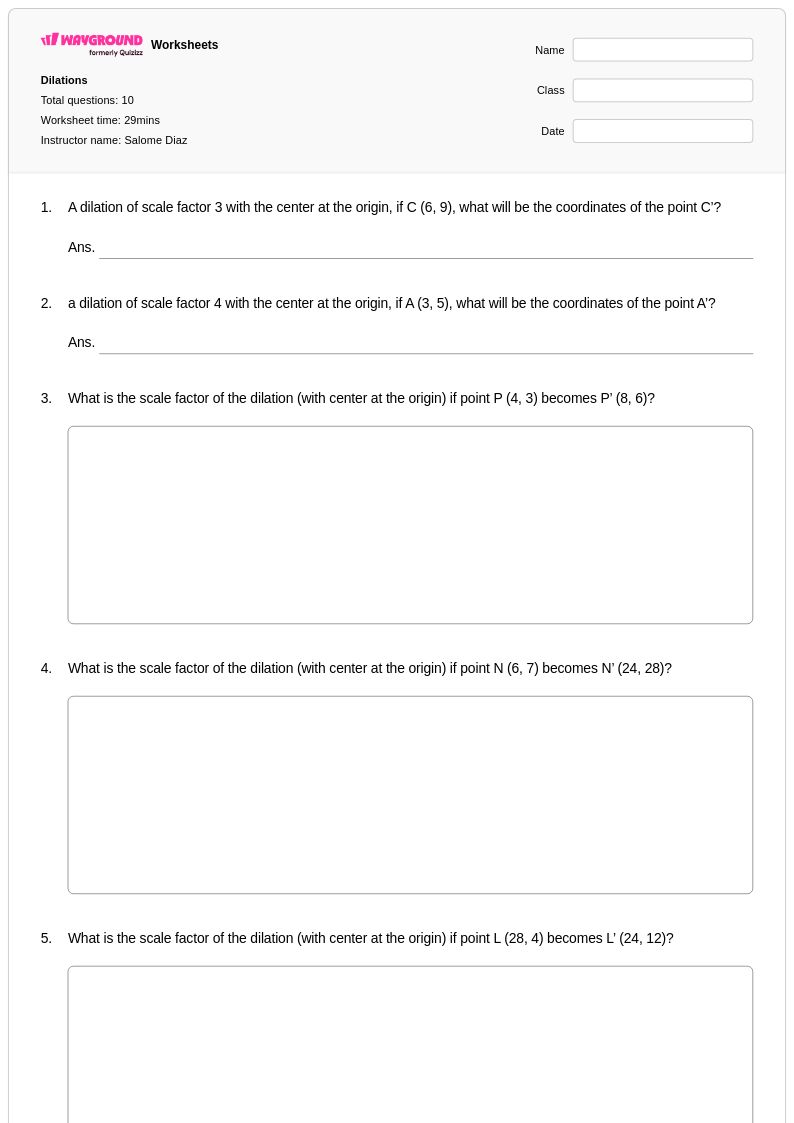
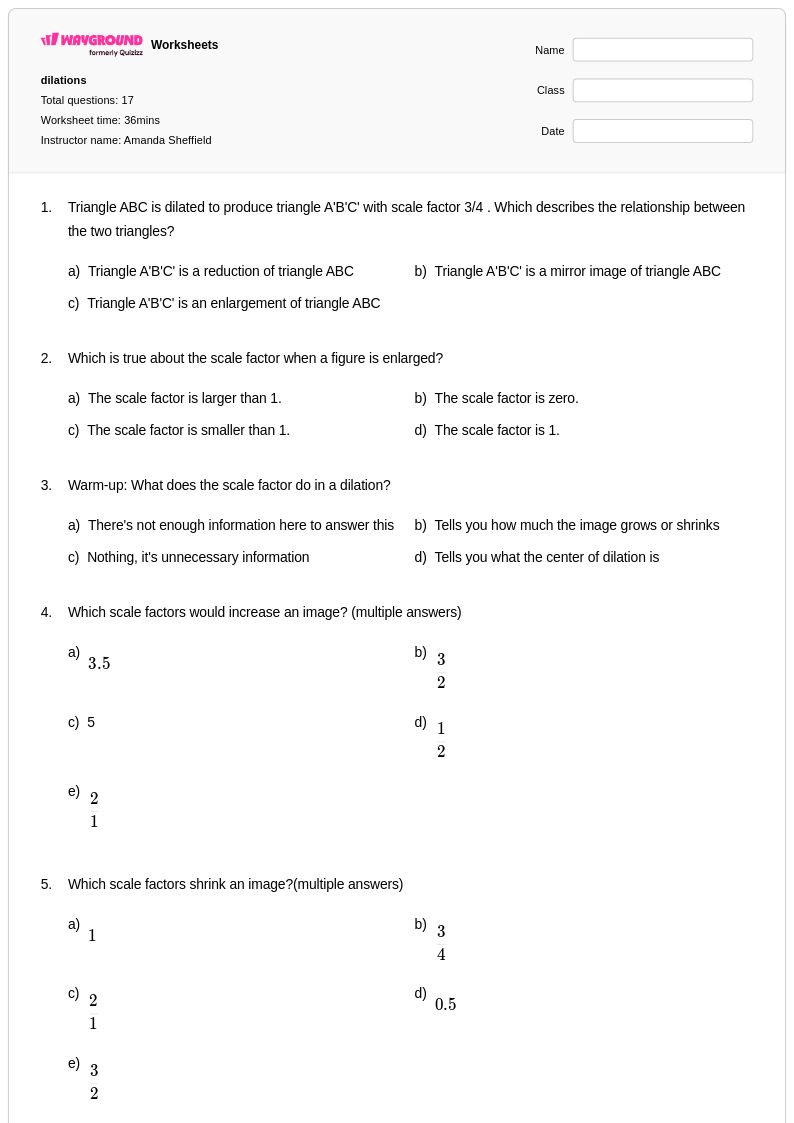
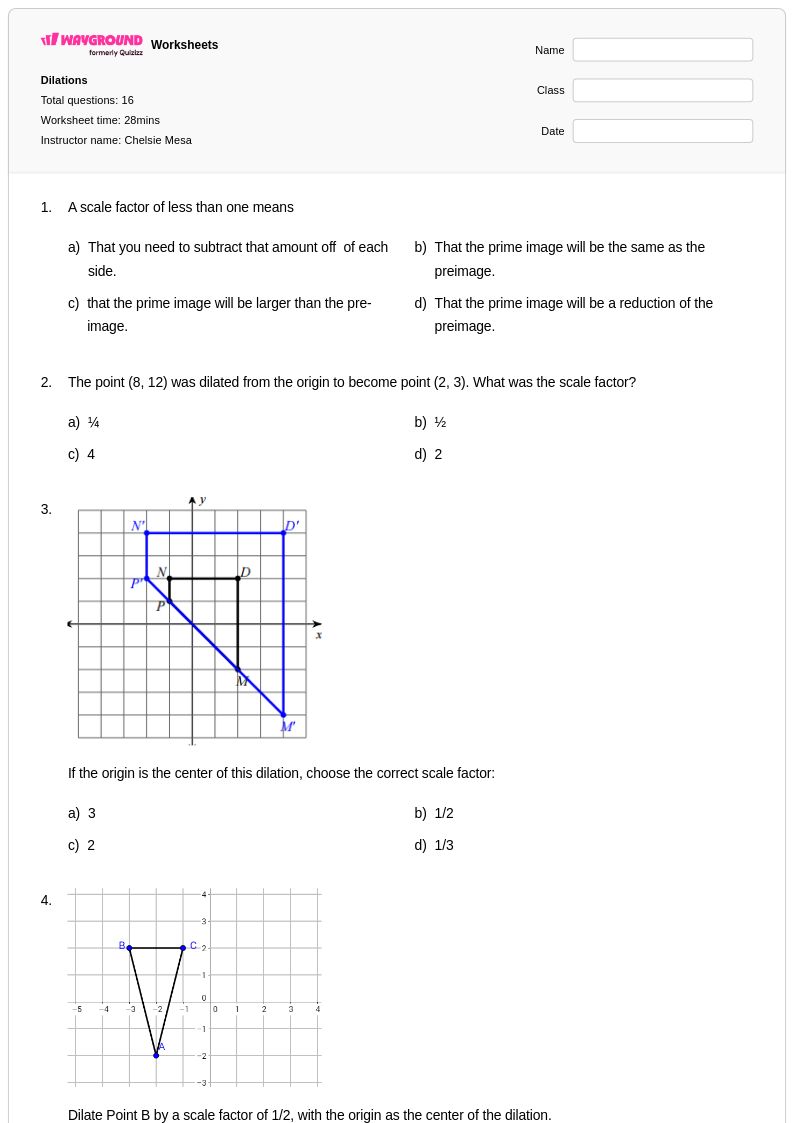
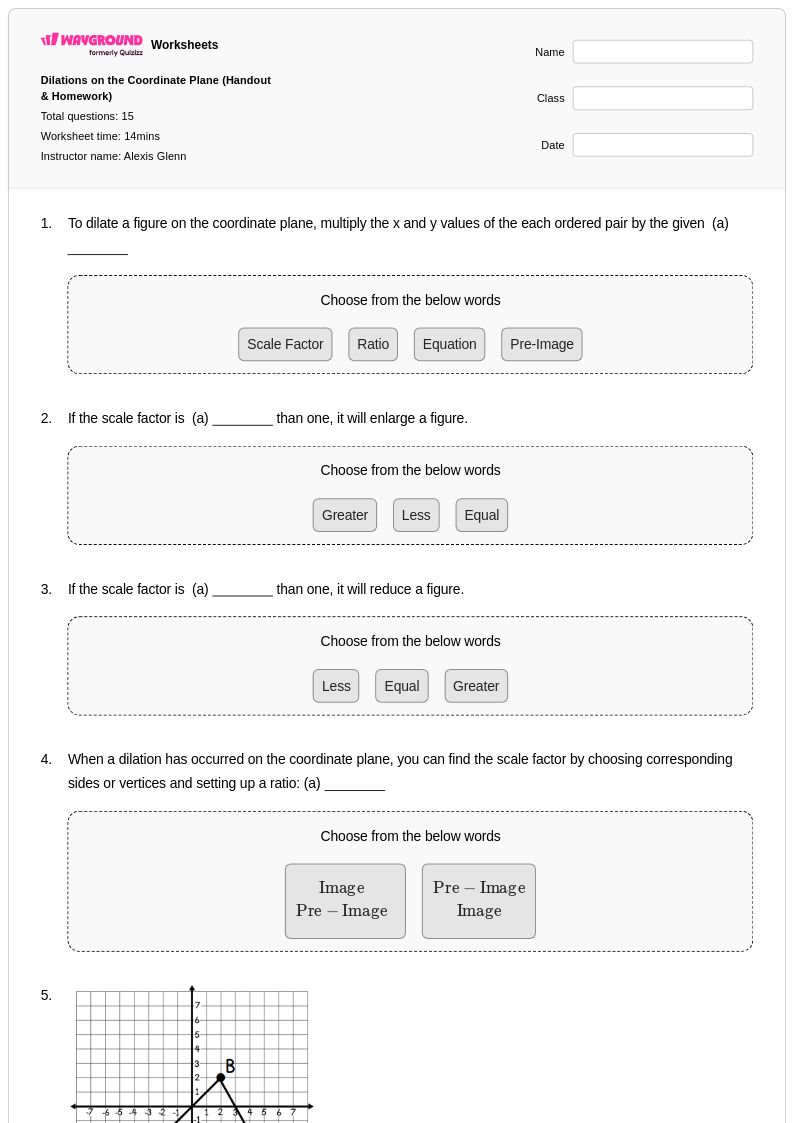
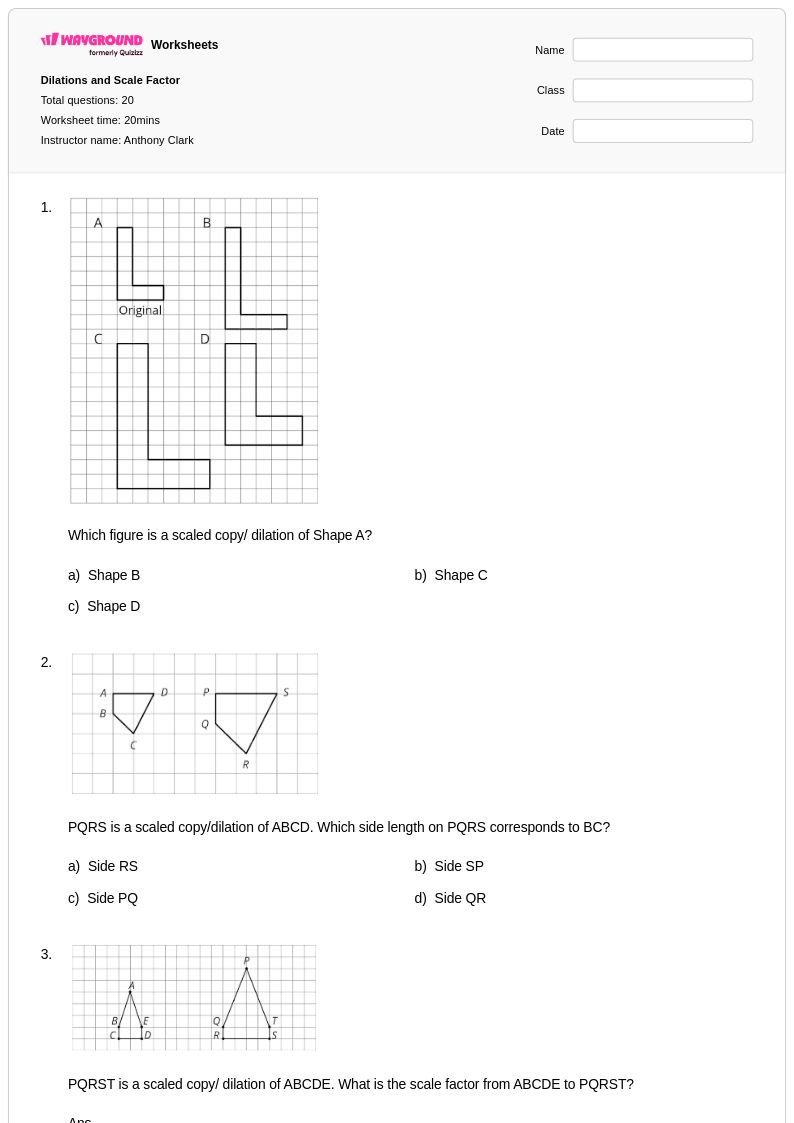
Dilations worksheets available through Wayground (formerly Quizizz) provide comprehensive practice opportunities for students to master this fundamental geometric transformation concept. These carefully designed resources focus on developing critical skills including identifying scale factors, determining centers of dilation, performing dilations on coordinate planes, and understanding how dilations affect the size and position of geometric figures while preserving shape. The worksheet collections feature systematic practice problems that progress from basic dilation exercises to more complex applications involving multiple transformations, ensuring students build confidence with both enlargements and reductions. Each worksheet comes with a complete answer key, and the free printables are available in convenient pdf format for immediate classroom implementation or homework assignments.
Wayground's extensive collection of teacher-created dilation worksheets offers educators powerful tools for differentiated instruction and targeted skill development. With millions of resources created by mathematics educators, the platform's robust search and filtering capabilities enable teachers to quickly locate worksheets aligned with specific curriculum standards and student ability levels. The flexible customization options allow instructors to modify existing worksheets or combine multiple resources to address diverse learning needs, while both printable and digital formats including downloadable pdfs accommodate various classroom environments. These versatile worksheet collections support effective lesson planning by providing ready-to-use materials for initial concept introduction, guided practice sessions, remediation for struggling learners, and enrichment activities for advanced students seeking additional challenges with geometric transformations.
FAQs
How do I teach dilations in geometry?
Start with the two core ideas students need before anything else: scale factor and center of dilation. Use a concrete anchor — place a point on a coordinate grid, pick a center, and walk students through multiplying each coordinate by the scale factor step by step. Once they can do that mechanically, shift to asking why the shape stays the same but the size changes. That conceptual move — similarity without congruence — is what makes dilations click. From there, enlargements and reductions are just scale factors greater than or less than 1.
What exercises help students practice dilations?
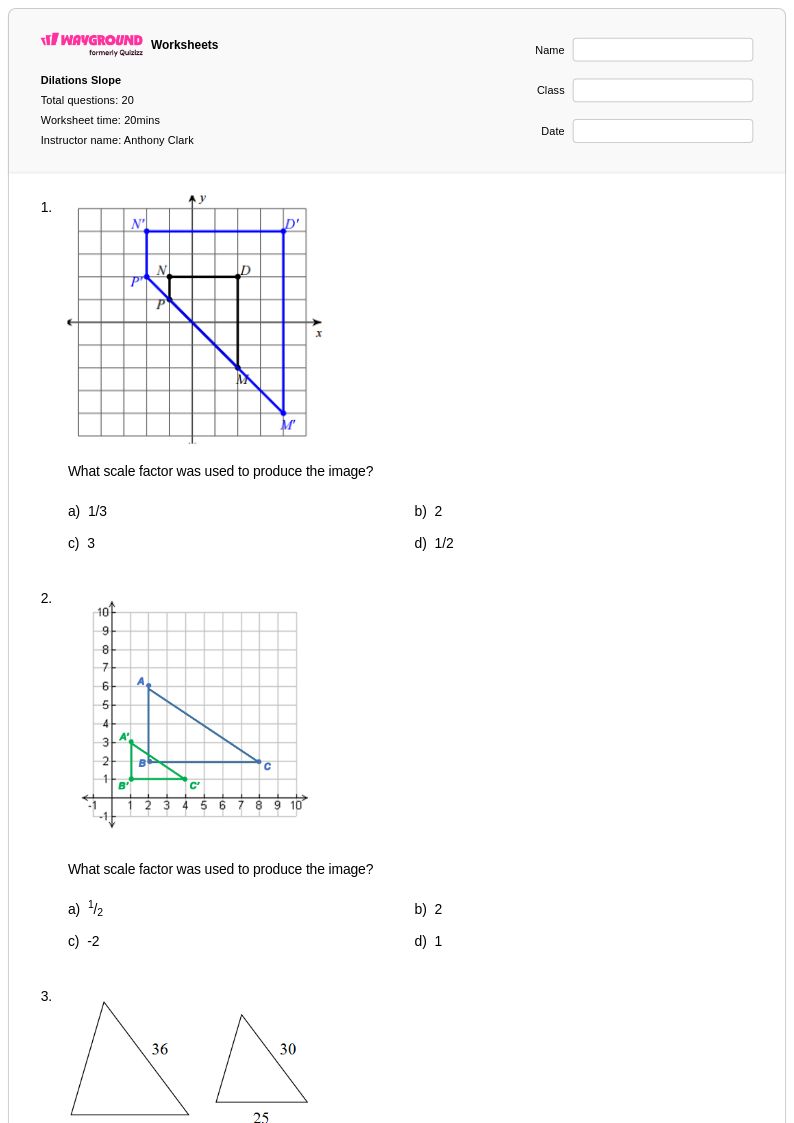
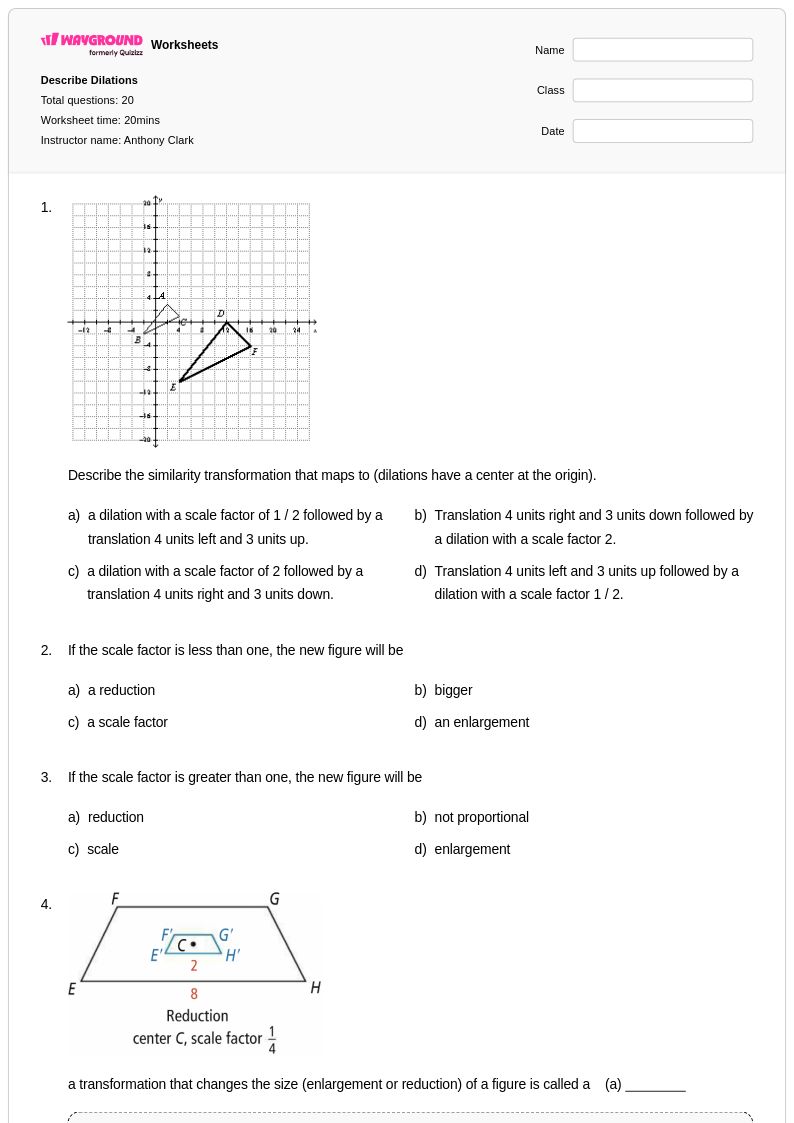
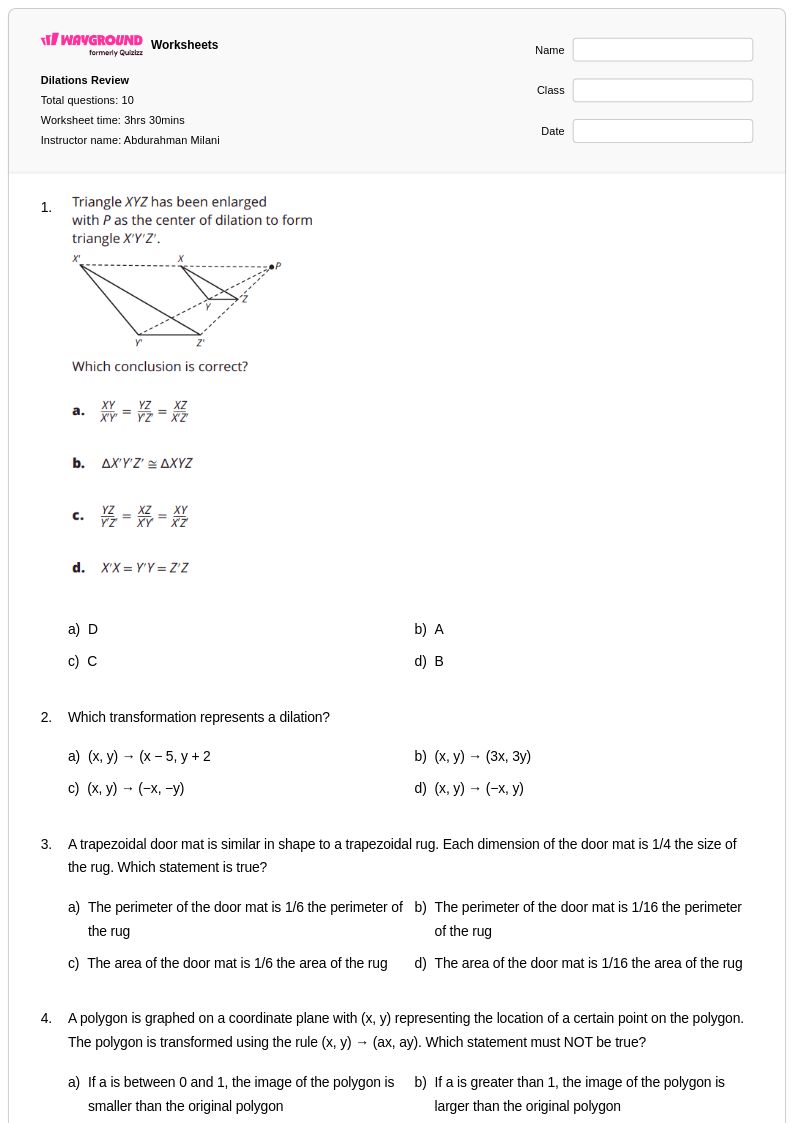
The most effective practice sequence moves from recognition to production. Start with problems where students identify the scale factor from a given figure and its image, then progress to plotting dilated figures on a coordinate plane from scratch. The Wayground dilations worksheets follow this progression, covering scale factor identification, center of dilation problems, and multi-step transformations that combine dilations with other geometric transformations — so students build confidence before hitting the harder applications.
What mistakes do students commonly make with dilations?
Three errors come up repeatedly. First, students dilate from the origin by default even when the center of dilation is a different point — they skip the step of measuring distance from the actual center. Second, they confuse scale factor with the number of units added, so a scale factor of 3 becomes 'add 3' instead of 'multiply by 3.' Third, when the scale factor is a fraction, students often flip it, enlarging when they should reduce. Targeted practice that explicitly varies the center of dilation and uses fractional scale factors catches all three.
How do I use Wayground's dilations worksheets in my class?
You can run these as a digital quiz hosted on Wayground — students work through the problems on-screen and you get results in real time — or download the PDF and print it for paper practice, which works well for classes reducing device time. Either way, every worksheet includes a complete answer key. If you go the print route, the Wayground for Teachers app lets you scan or capture student work to grade submissions without re-entering everything by hand.
Are dilations worksheets aligned to Common Core standards?
Yes. Common Core introduces dilations as part of the geometry progression in middle school, where students first explore scale drawings and proportional reasoning before formally working with dilations on the coordinate plane. By eighth grade, the focus shifts to using dilations to establish the concept of similarity — students show that two figures are similar by describing the sequence of transformations, including dilation, that maps one onto the other. The Wayground worksheets are designed to support that progression, from basic scale factor work through coordinate plane transformations.
How can I differentiate dilation practice for mixed-ability classes?
For students who struggle with the coordinate work, Wayground's Read Aloud accommodation helps those with reading barriers focus on the math itself, and reduced answer choices can lower the cognitive load on multiple-choice problems while they build fluency. For layout-based accessibility, you can generate an alternate version of the same worksheet with a larger font size or a dyslexia-friendly font — same problems, adjusted presentation. Advanced students can be pointed toward the multi-step transformation problems in the collection without any of those scaffolds applied.
What is a dilation in geometry?
A dilation is a transformation that resizes a figure by a scale factor relative to a fixed point called the center of dilation. The shape stays the same — all angles are preserved and sides remain proportional — but the size changes. A scale factor greater than 1 produces an enlargement; a scale factor between 0 and 1 produces a reduction. The original figure and its image are always similar.