Free Printable Element Symbols Worksheets for Grade 9
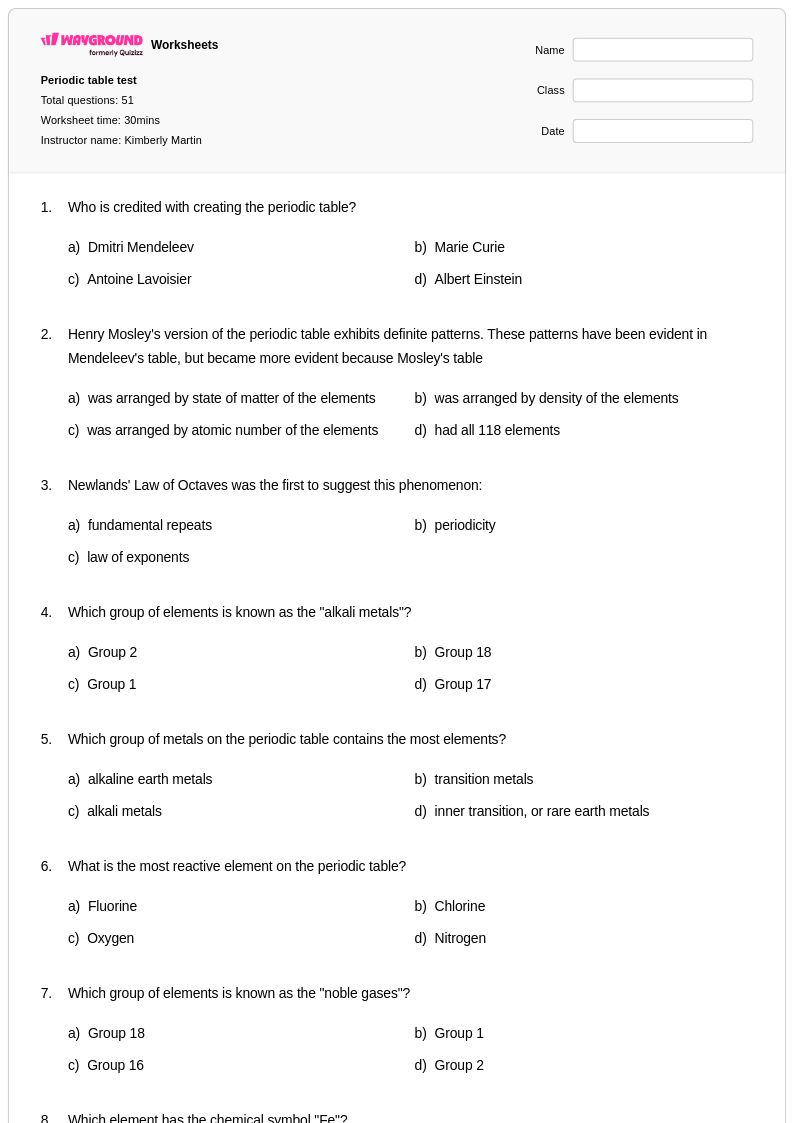
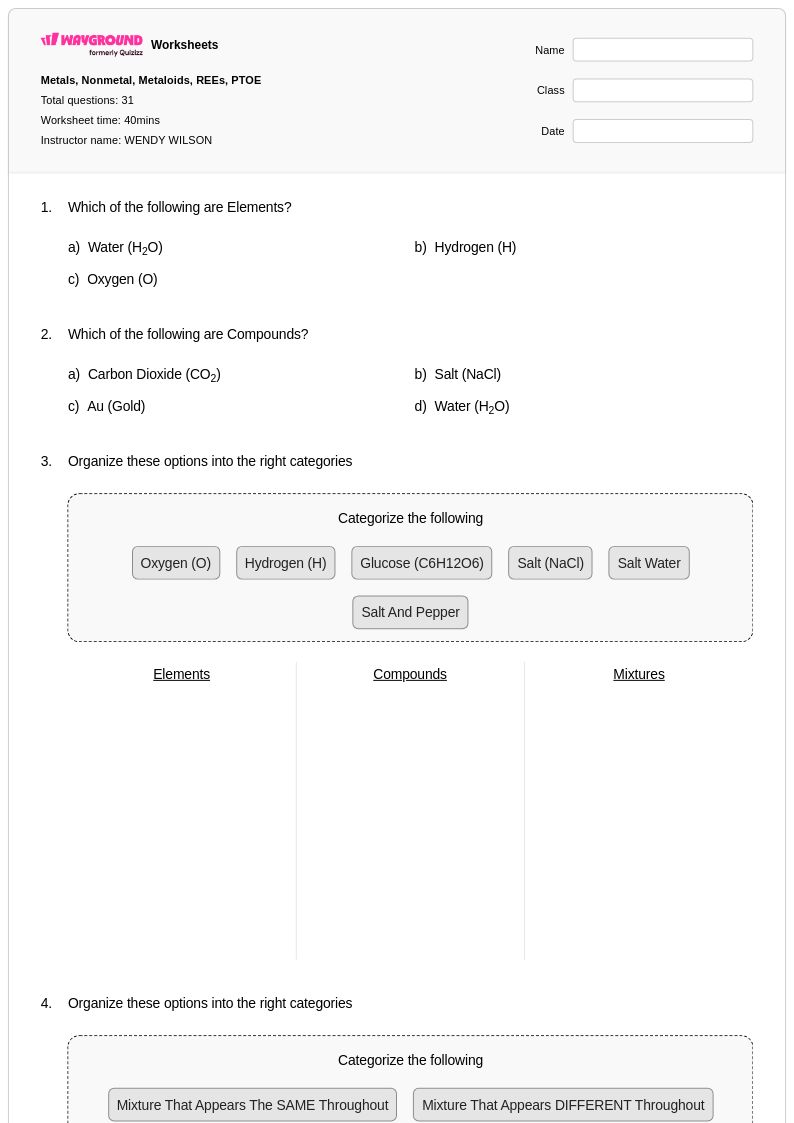
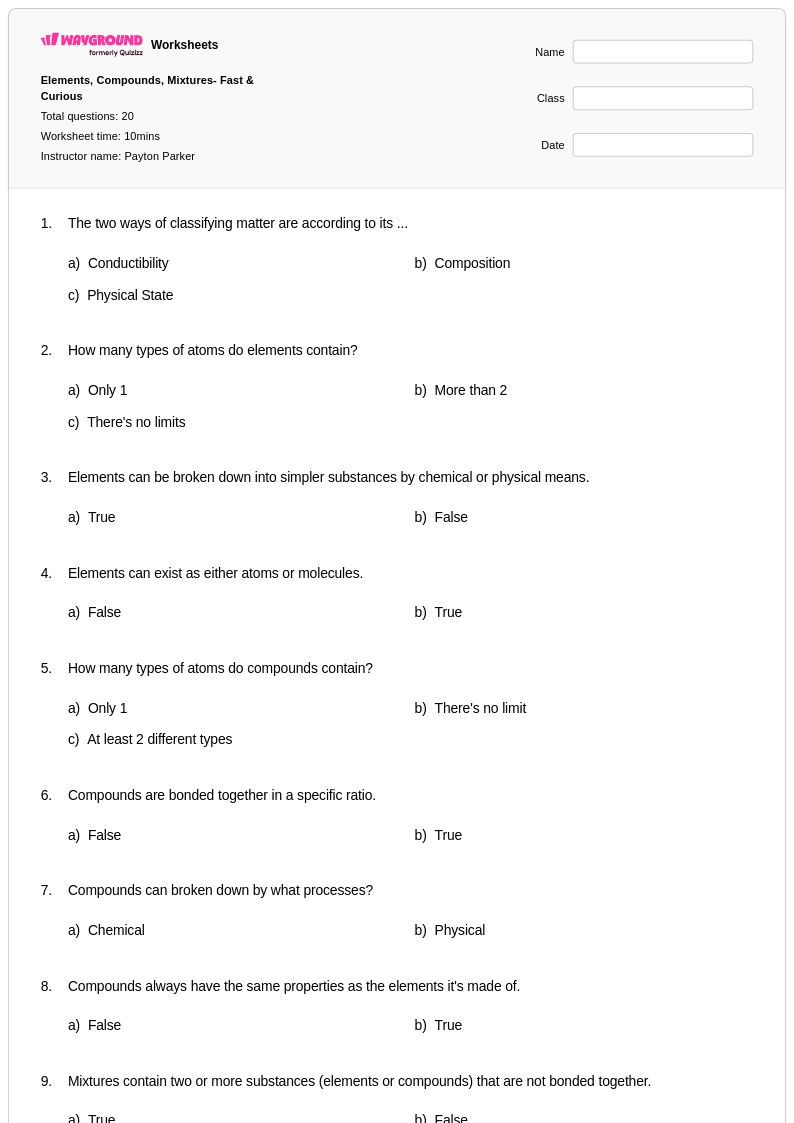
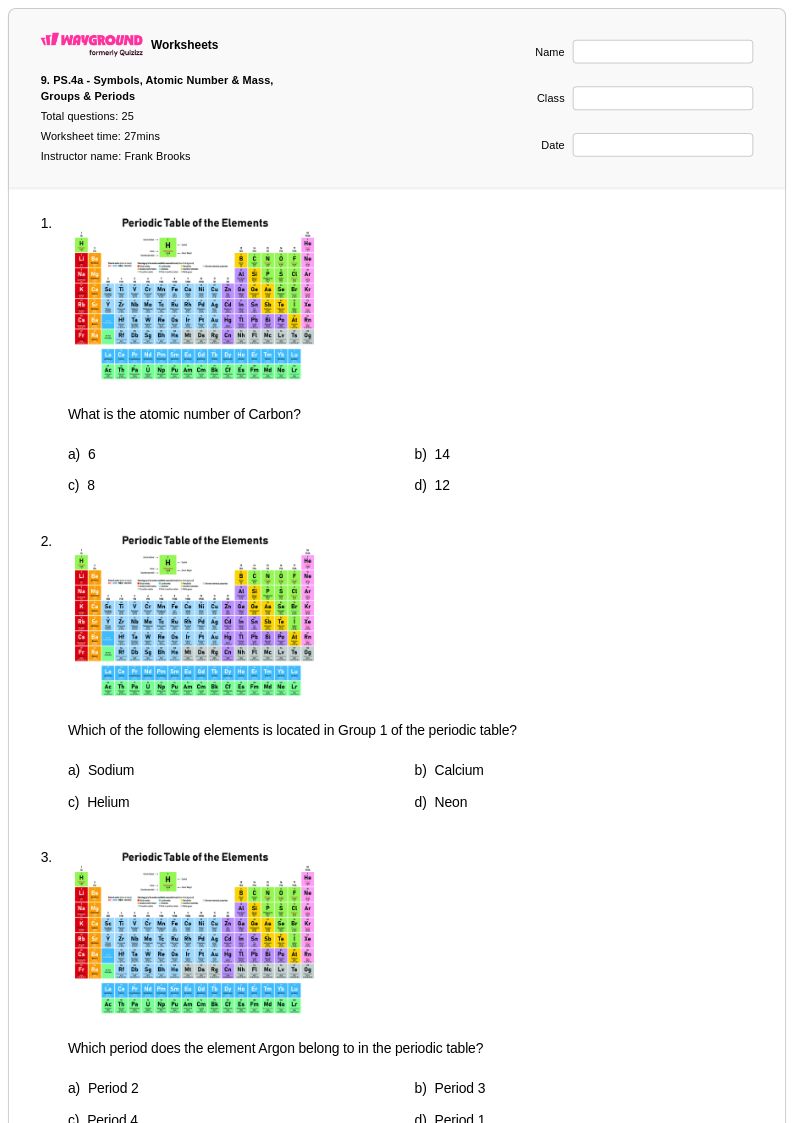
Grade 9 element symbols worksheets from Wayground provide comprehensive printables and practice problems to help students master chemical element symbols, with free PDF downloads and complete answer keys for effective chemistry learning.
Explore printable Element Symbols worksheets for Grade 9
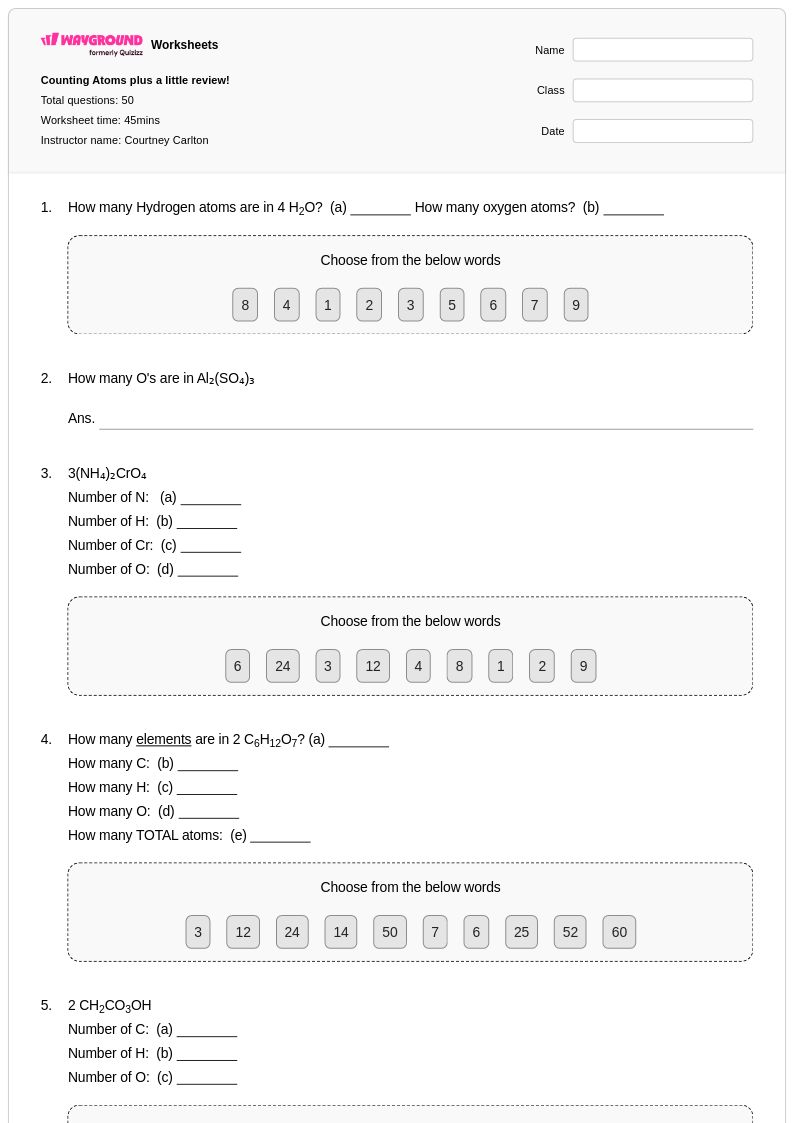
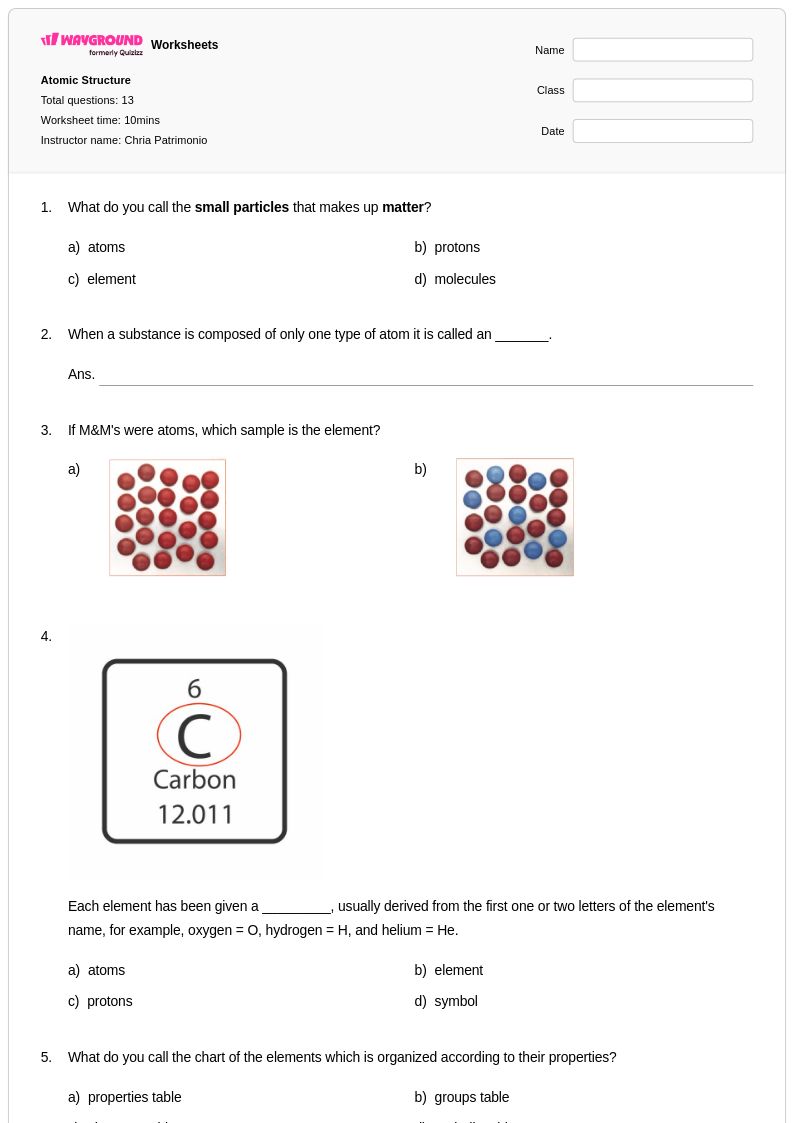
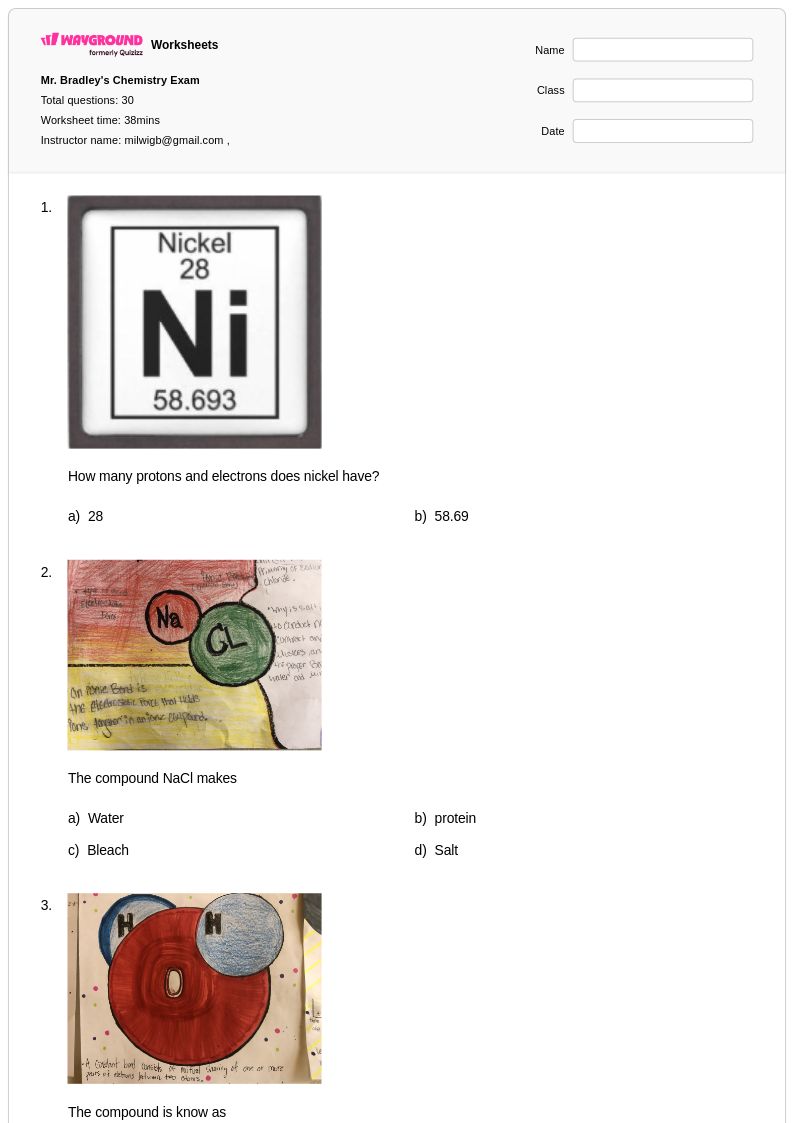
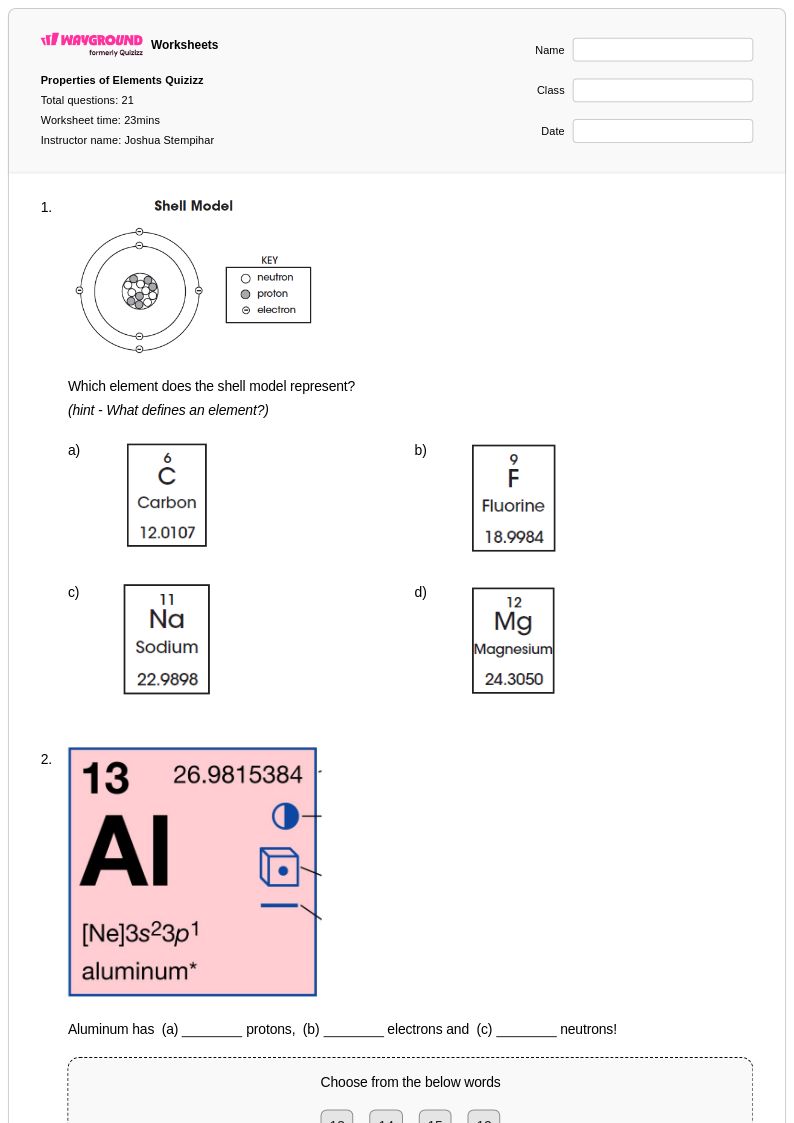
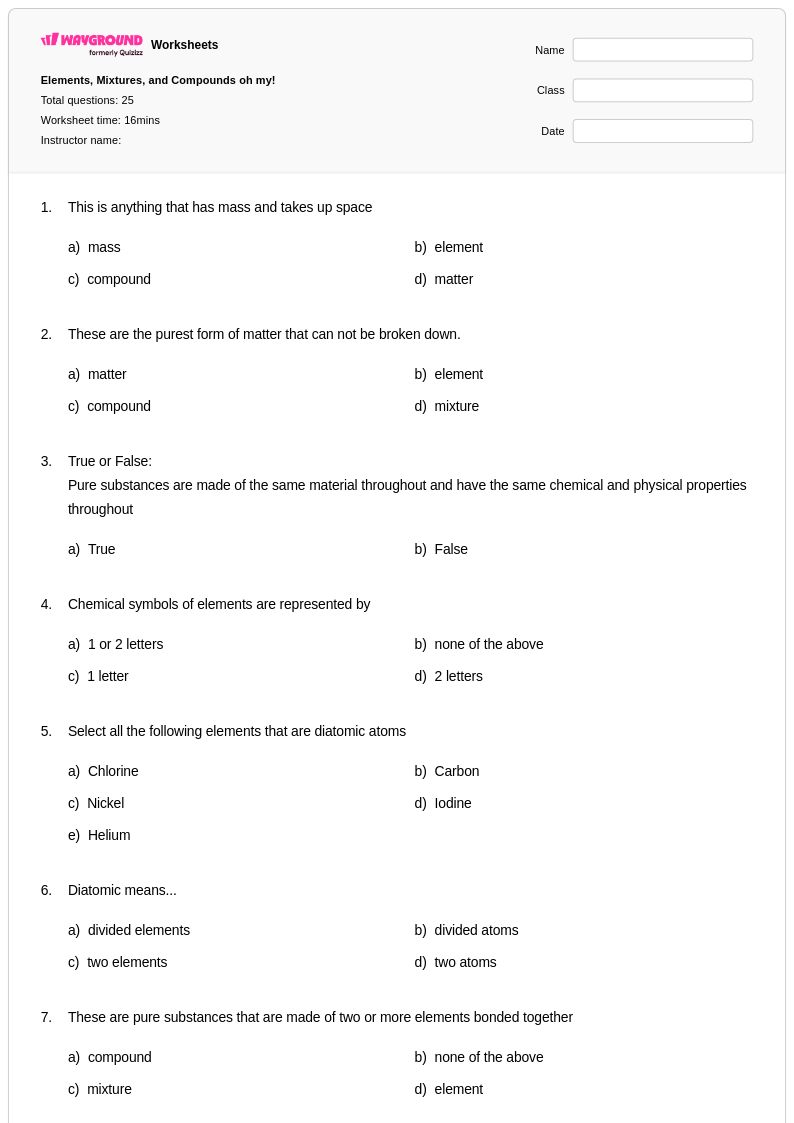
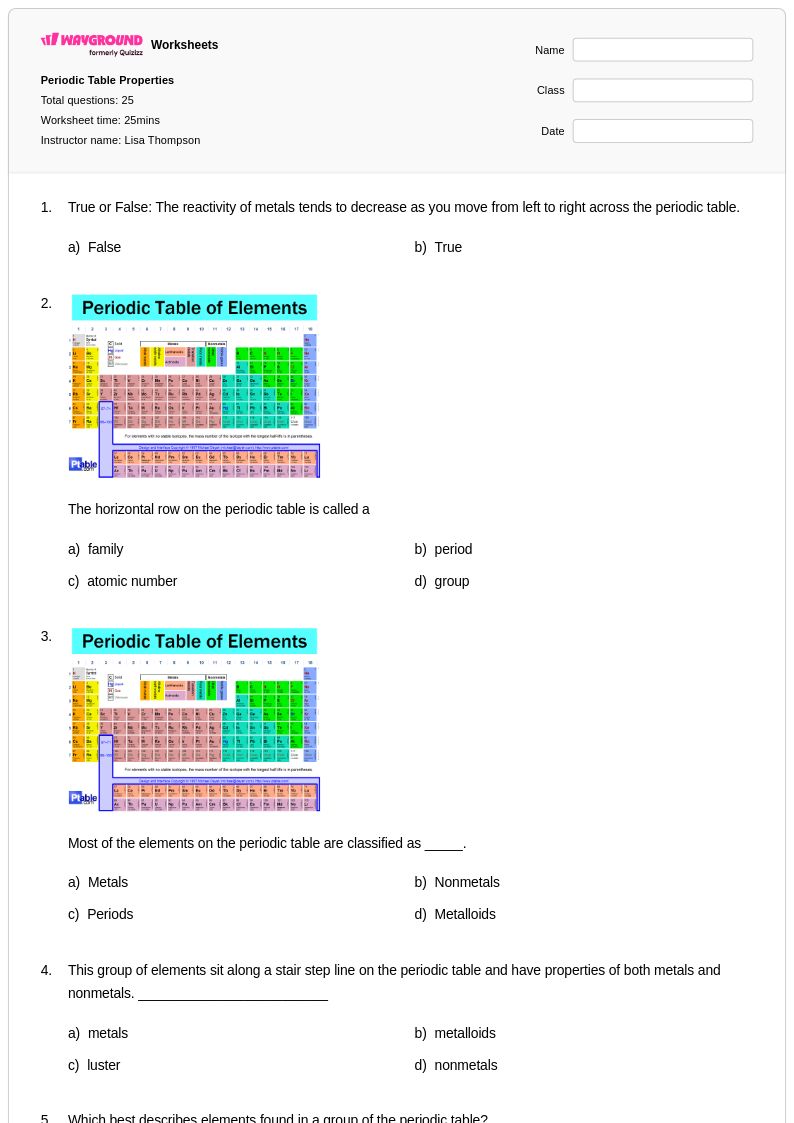
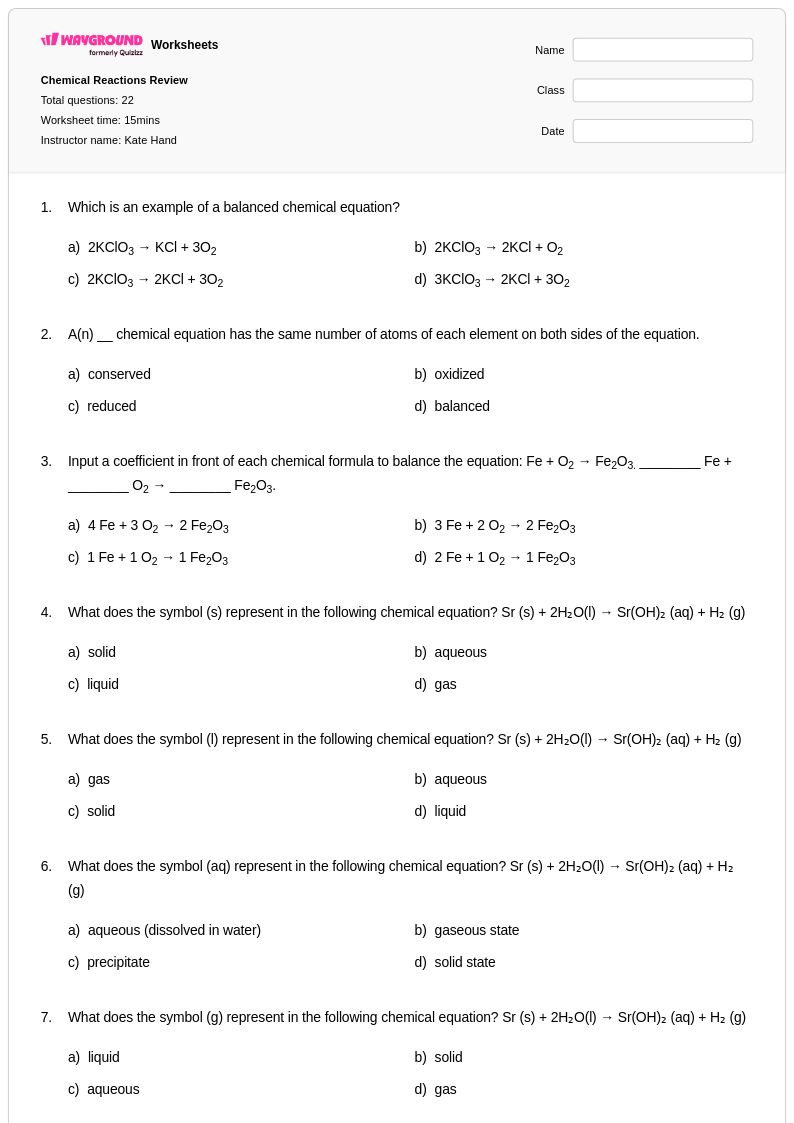
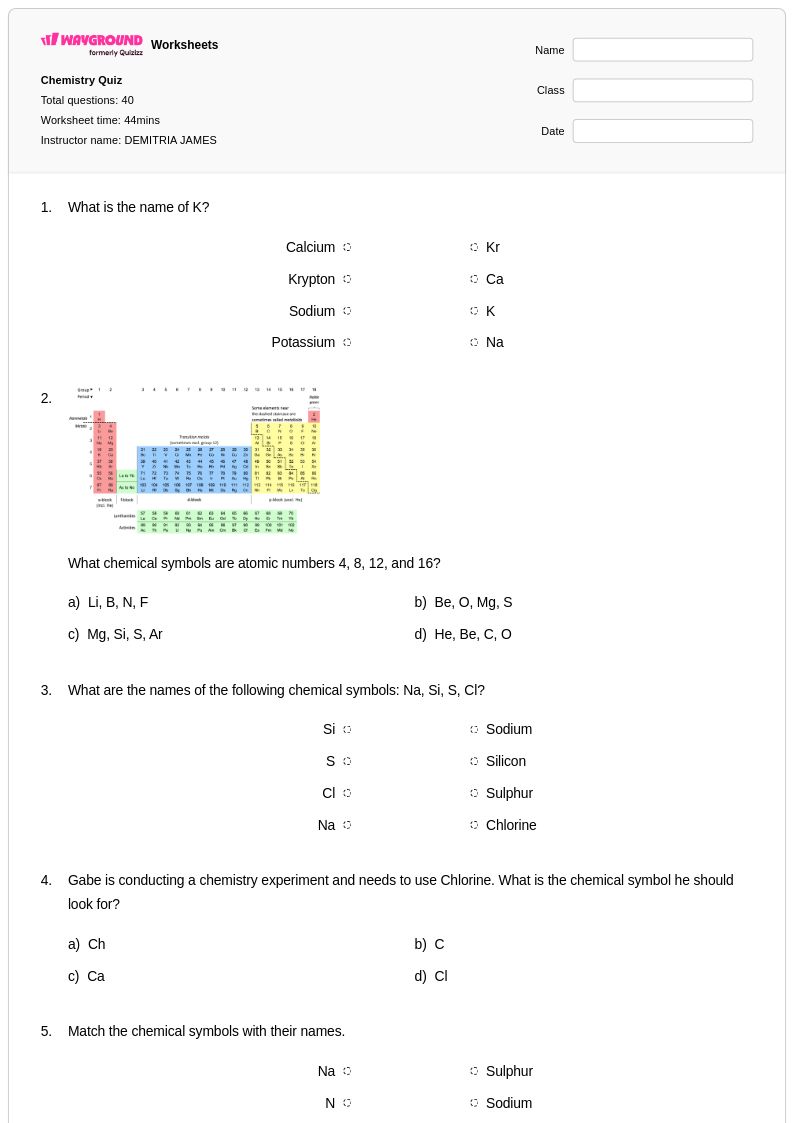
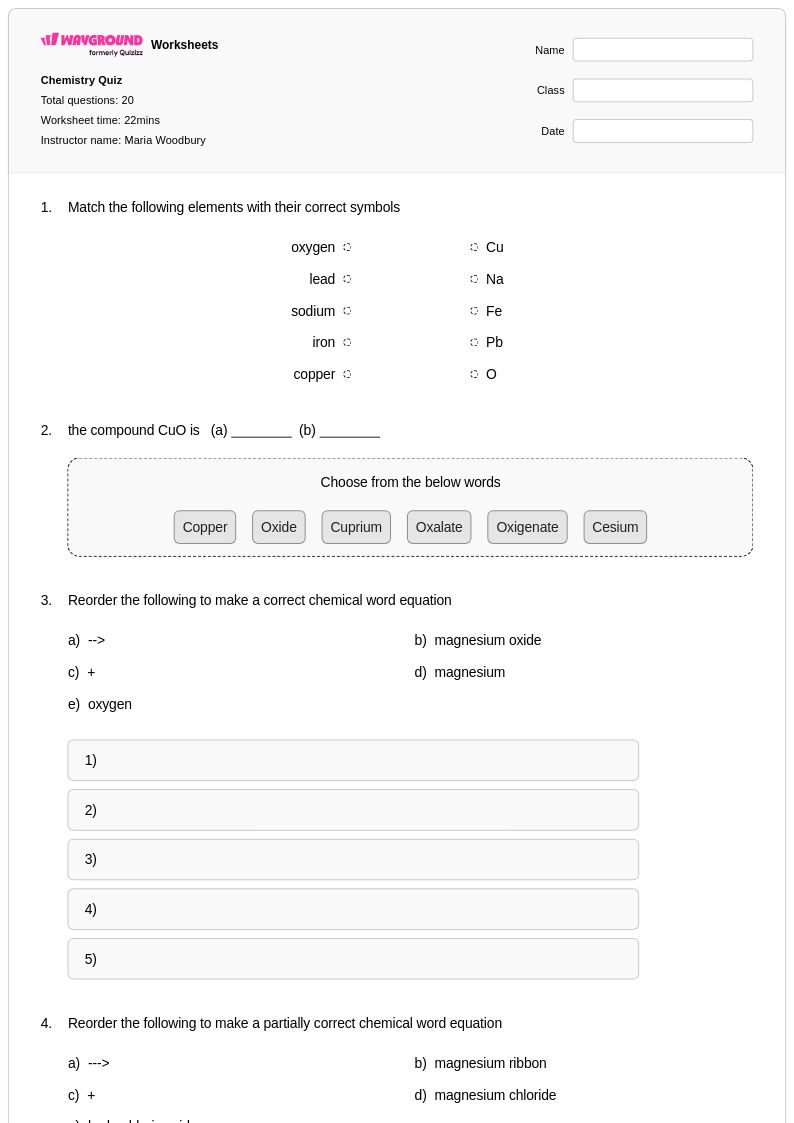
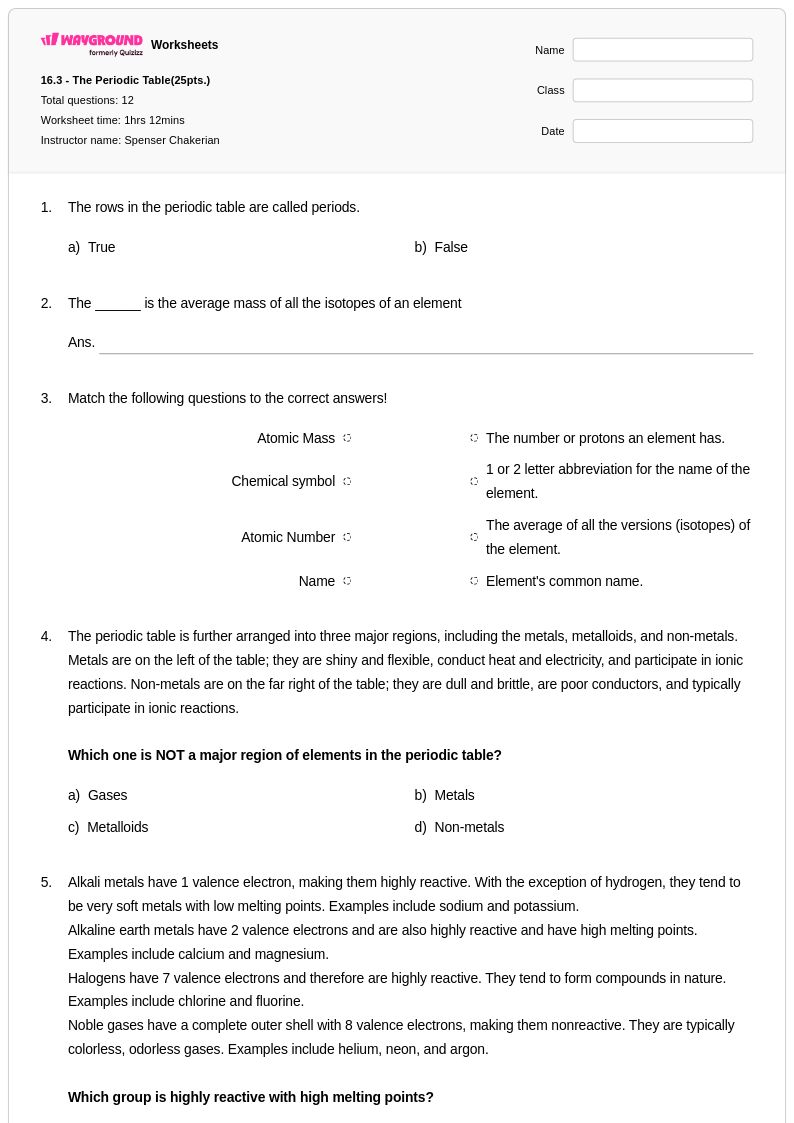
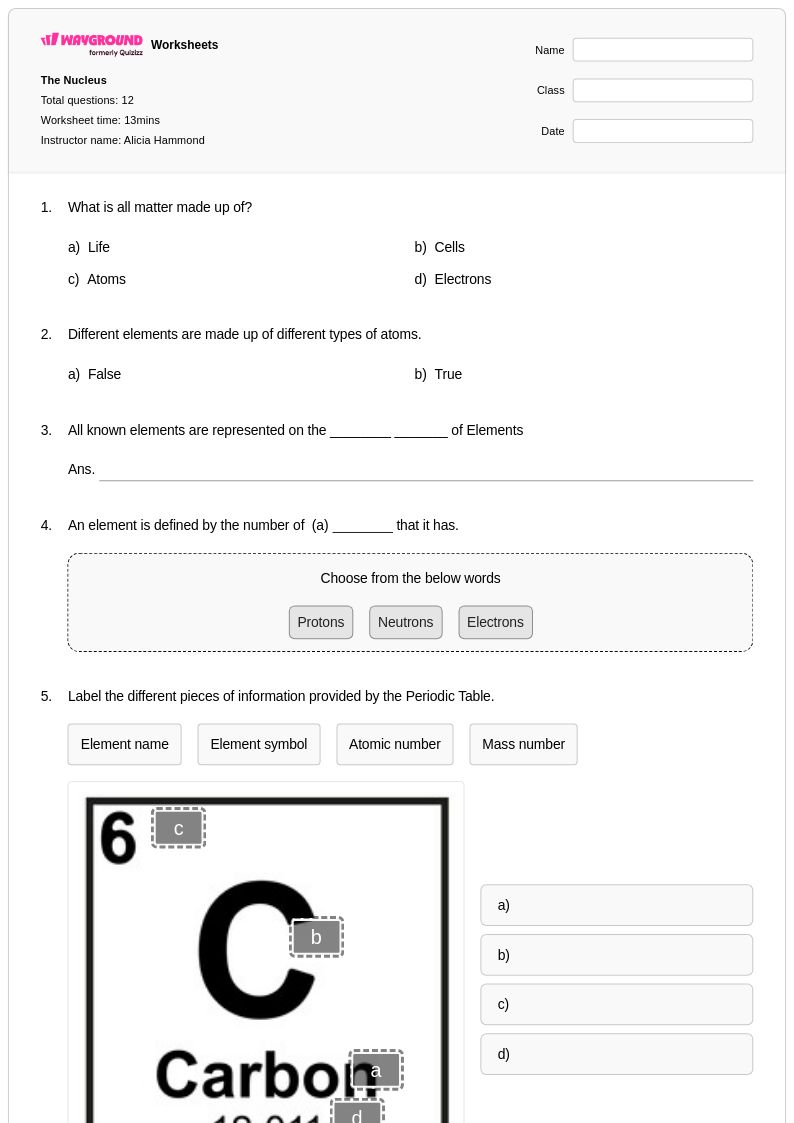
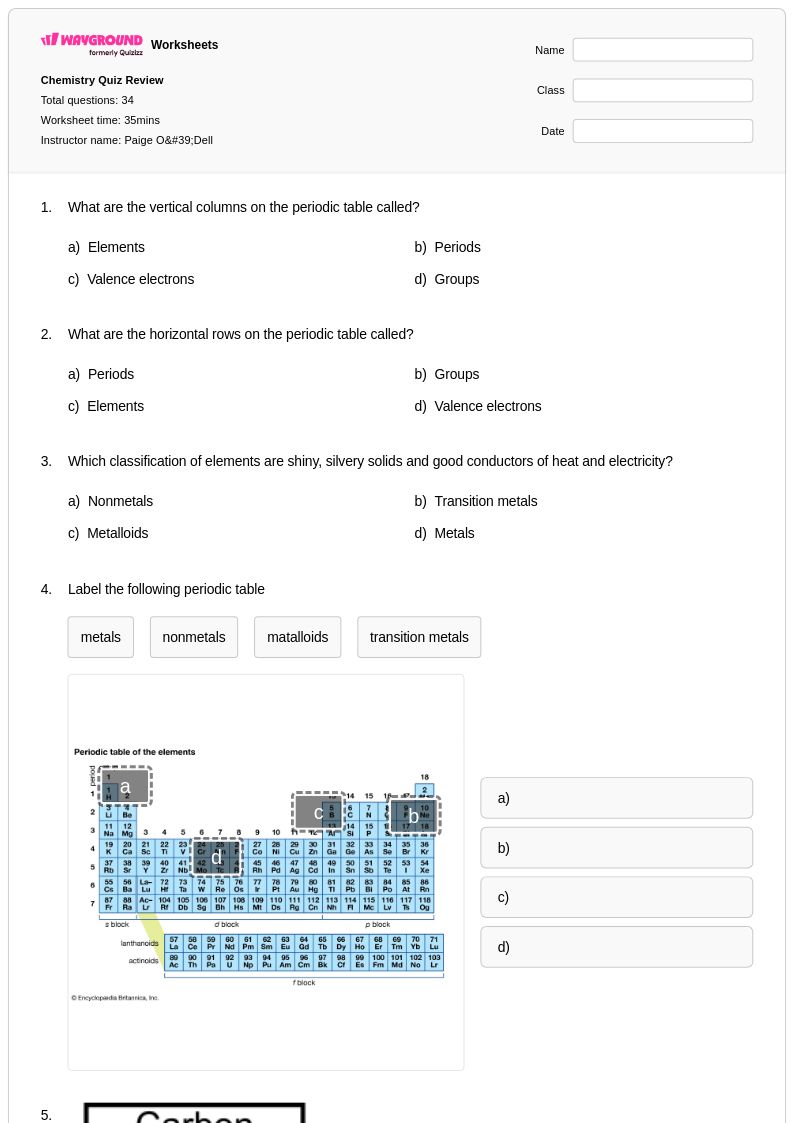
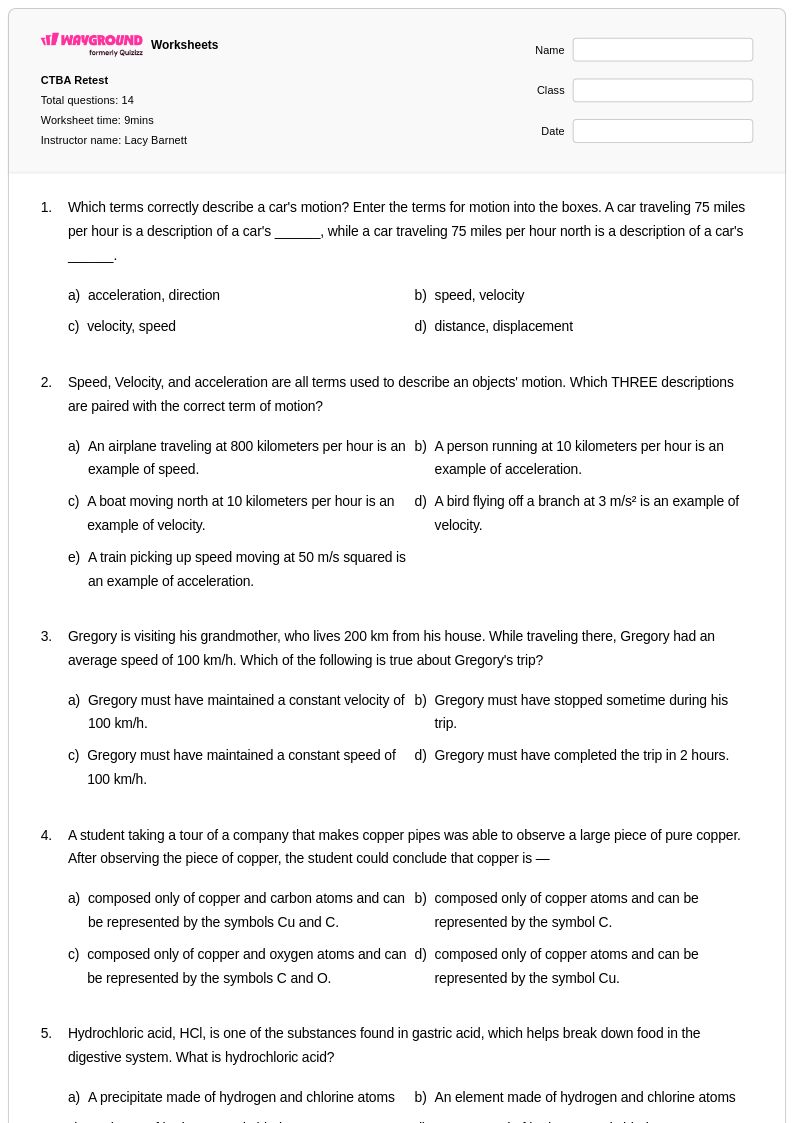
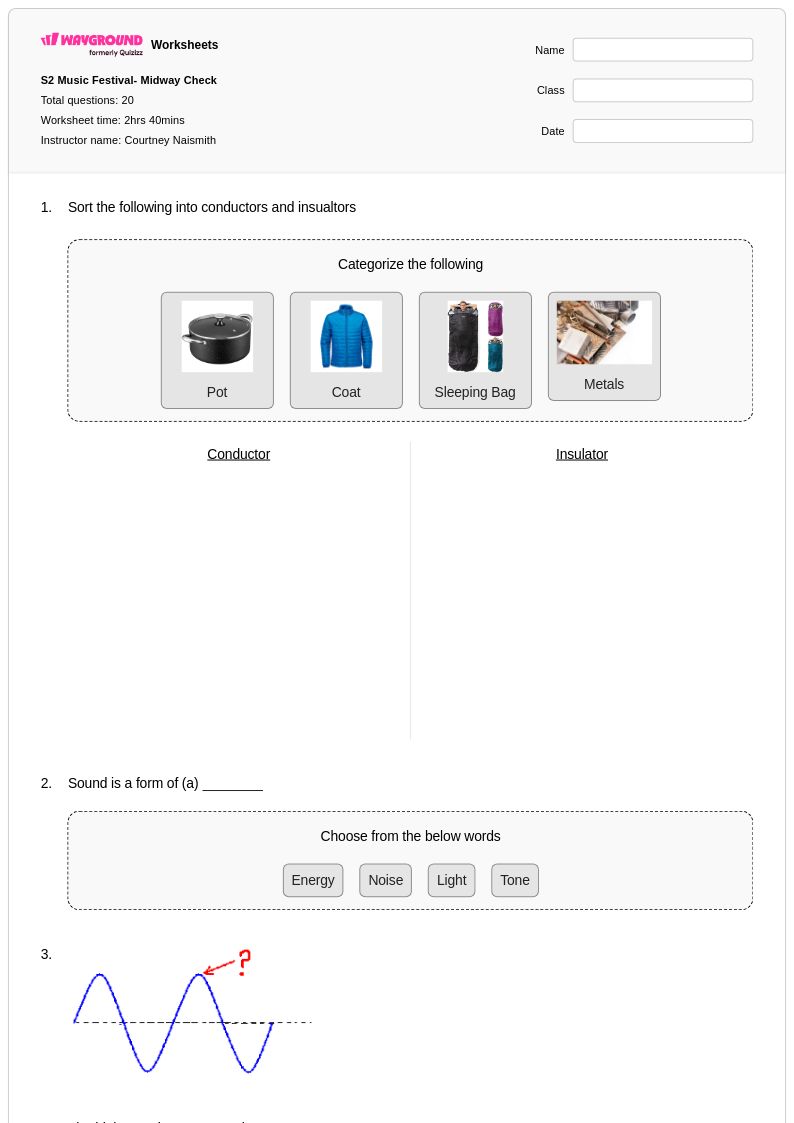
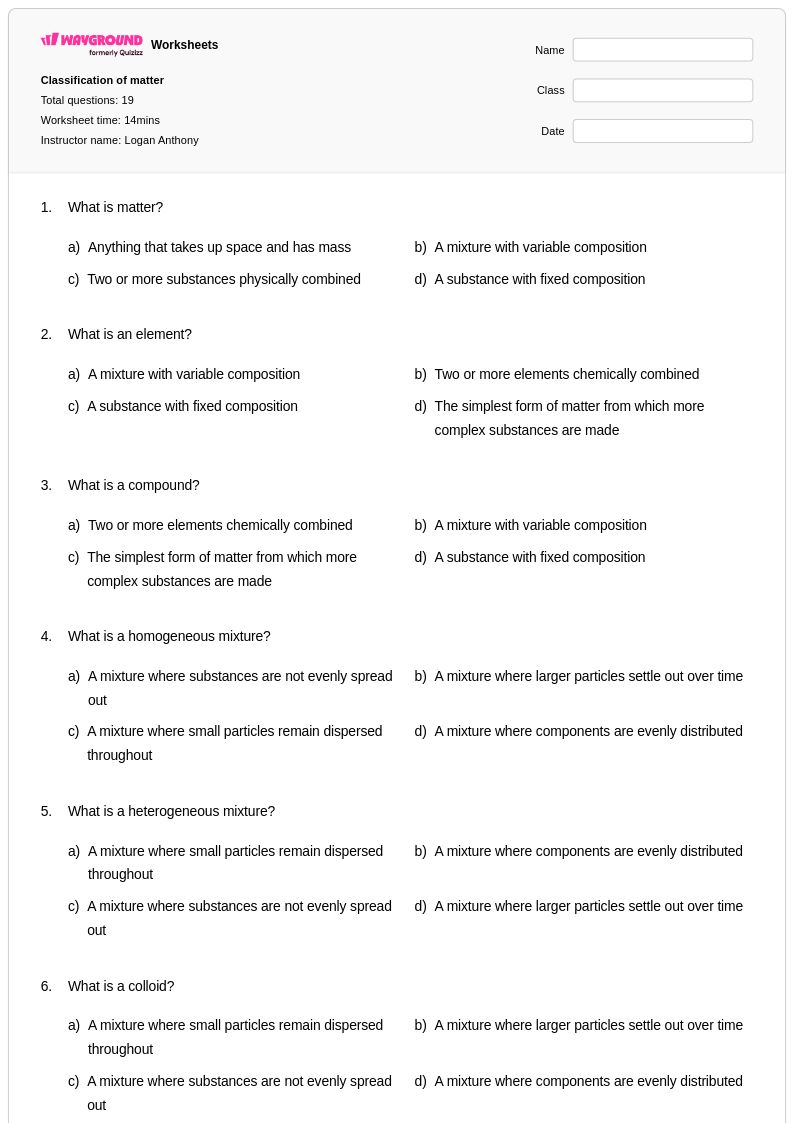
Element symbols worksheets for Grade 9 chemistry students available through Wayground (formerly Quizizz) provide comprehensive practice with the fundamental building blocks of chemical notation and periodic table literacy. These carefully designed educational resources help students master the essential skill of recognizing, memorizing, and correctly applying the standardized abbreviations that represent each chemical element, from common symbols like H for hydrogen and O for oxygen to more complex examples such as Ag for silver and Au for gold. The worksheets strengthen critical foundational knowledge through varied practice problems that challenge students to connect element names with their corresponding symbols, understand the historical and linguistic origins of chemical abbreviations, and develop fluency in reading and writing chemical formulas. Each printable worksheet comes with a comprehensive answer key, allowing students to self-assess their progress and identify areas requiring additional study, while the free pdf format ensures accessibility for both classroom instruction and independent practice at home.
Wayground (formerly Quizizz) empowers chemistry educators with an extensive collection of millions of teacher-created element symbols worksheets specifically curated for Grade 9 learning objectives and curriculum standards alignment. The platform's robust search and filtering capabilities enable teachers to quickly locate resources that match their specific instructional needs, whether focusing on main group elements, transition metals, or comprehensive periodic table symbol recognition. Advanced differentiation tools allow educators to customize worksheets for diverse learning levels within their classrooms, supporting both remediation for struggling students and enrichment activities for advanced learners. The flexible format options, including both printable pdf versions for traditional paper-based assignments and digital formats for interactive online learning, accommodate various teaching styles and classroom technologies. These versatile resources streamline lesson planning while providing targeted skill practice opportunities that reinforce chemical literacy and prepare students for more advanced chemistry concepts involving molecular formulas and chemical equations.
FAQs
How do I teach element symbols to students who are new to chemistry?
Start by introducing element symbols in context rather than as isolated memorization tasks. Connect each symbol to its element's name and real-world examples — for instance, linking Fe (iron) to its Latin root 'ferrum' helps students understand why some symbols don't match the English name. Grouping elements by symbol type (one-letter vs. two-letter) and using periodic table reference sheets during early practice reduces cognitive overload while students build fluency.
What activities help students practice recognizing and writing element symbols?
Symbol-to-name matching exercises and name-to-symbol recall drills are the most direct practice formats for building fluency with element abbreviations. Students also benefit from writing simple chemical formulas using element symbols, since applying symbols in context reinforces retention better than rote list memorization. Worksheets that sequence practice from common elements like H, O, and C toward less familiar ones like Mo or Rf allow students to build confidence progressively.
What mistakes do students commonly make when learning element symbols?
The most frequent error is confusing symbols derived from Latin names with their English counterparts — students often write 'I' for iron instead of 'Fe', or 'S' for sodium instead of 'Na'. Another common mistake is capitalizing both letters in a two-letter symbol (e.g., writing 'CL' instead of 'Cl' for chlorine), which is a significant error in chemistry notation. Targeted practice that explicitly flags these historically derived symbols helps students avoid and correct these patterns.
How can I use element symbol worksheets to assess student understanding?
Element symbol worksheets work well as low-stakes formative assessments at the start or end of a lesson to gauge recall and identify gaps before moving on to chemical formulas or nomenclature. Symbol-to-name and name-to-symbol formats test different retrieval pathways, so using both reveals whether students have bidirectional fluency or only one-directional recall. Answer keys included with these worksheets make self-checking and peer assessment quick and efficient.
How do I use Wayground's element symbols worksheets in my classroom?
Wayground's element symbols worksheets are available as printable PDFs for traditional classroom use and in digital formats for technology-integrated learning environments, making them practical for in-person, hybrid, or remote settings. Teachers can also host the worksheets as a quiz directly on Wayground, enabling real-time student responses and automated scoring. Both formats include answer keys, so the materials support independent practice, guided instruction, and quick formative assessment with minimal preparation time.
How do I support students who struggle to memorize element symbols?
Students who struggle with symbol memorization benefit from spaced repetition and retrieval practice rather than repeated reading of a list. Breaking the periodic table into manageable subsets — starting with the first 20 elements before expanding — prevents overwhelm. For students who need additional support, Wayground's digital format includes accessibility features such as Read Aloud and adjustable font sizes through reading mode, which can help students with learning differences engage with the material more effectively.