Free Printable Formal Charge Worksheets for Grade 9
Grade 9 formal charge chemistry worksheets provide comprehensive printables and practice problems to help students master electron distribution calculations, featuring free PDF downloads with detailed answer keys for effective learning.
Explore printable Formal Charge worksheets for Grade 9
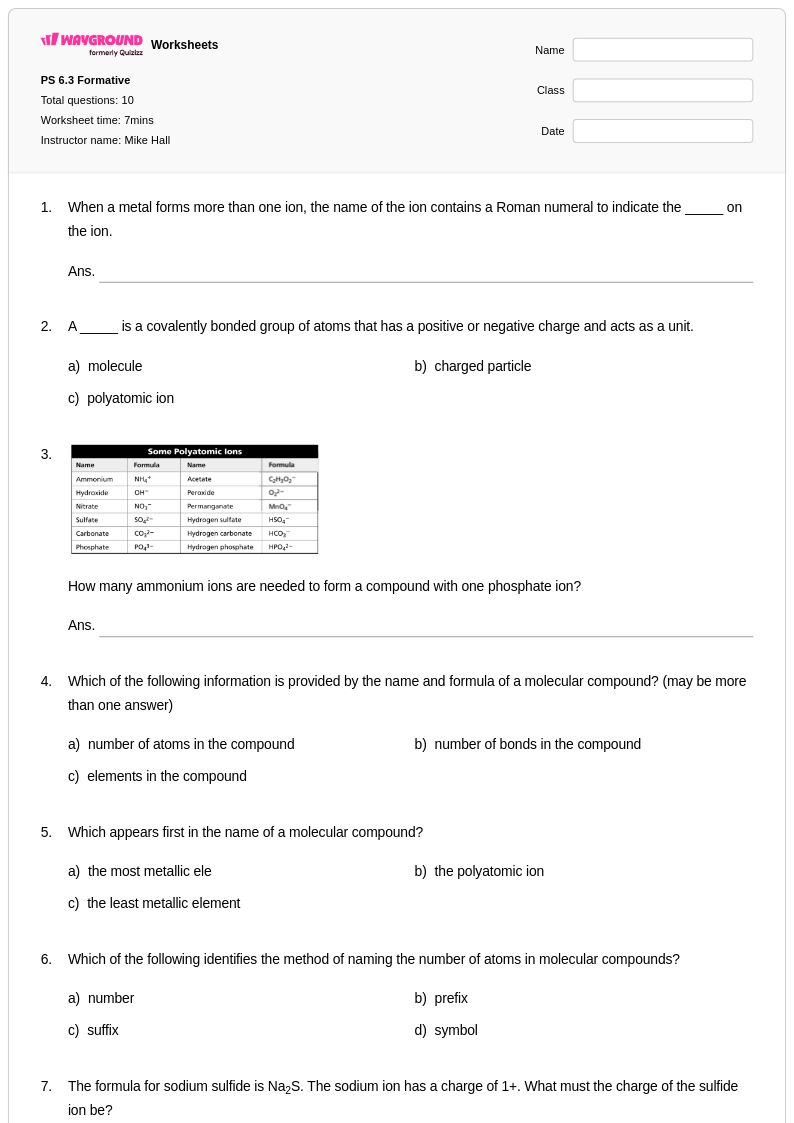
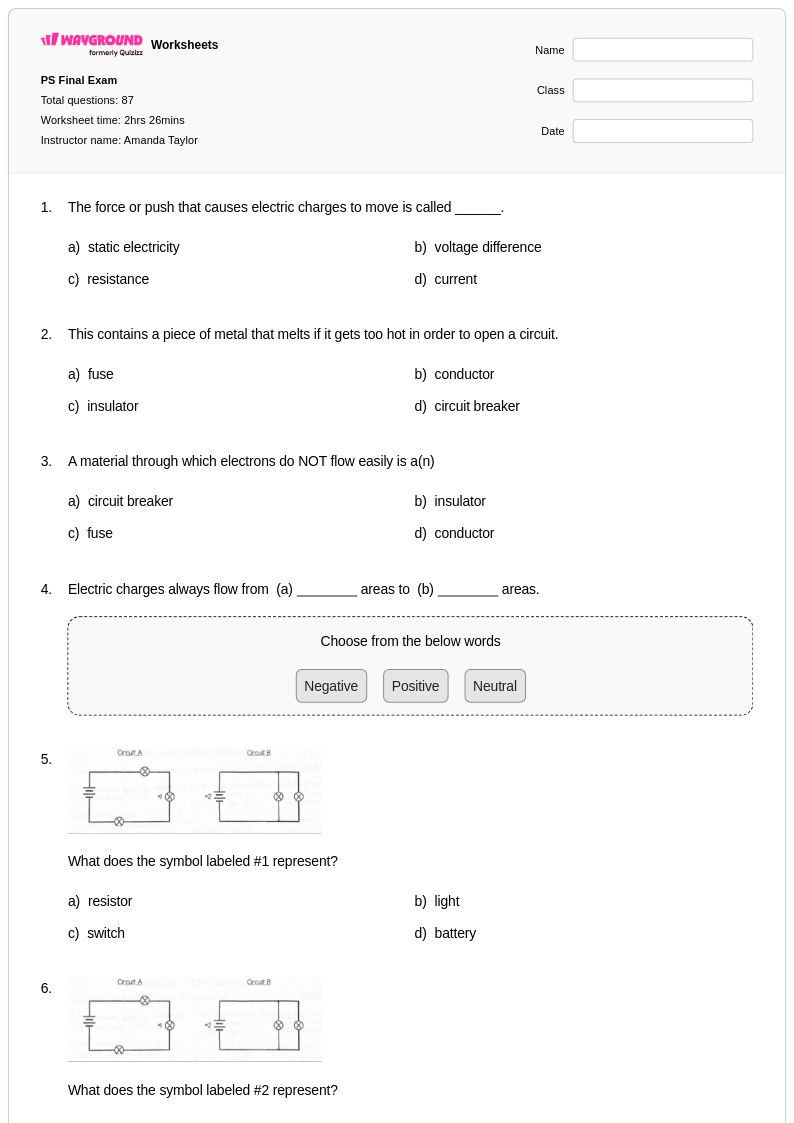
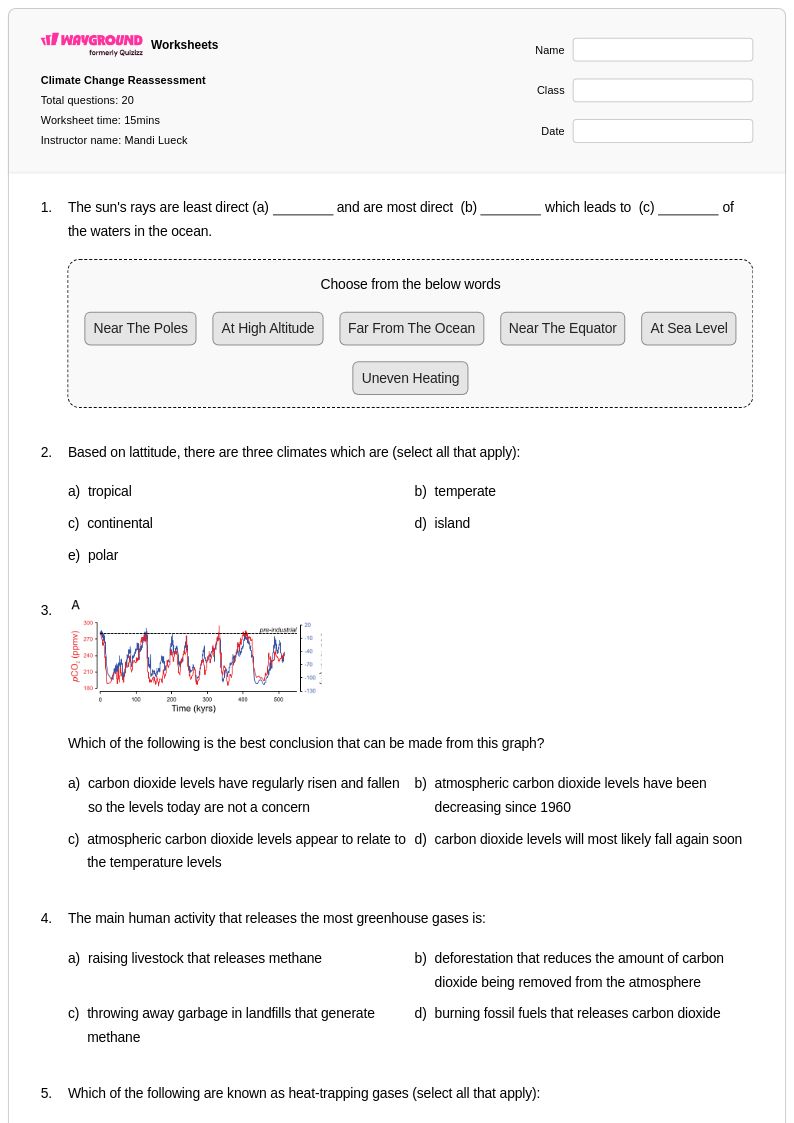
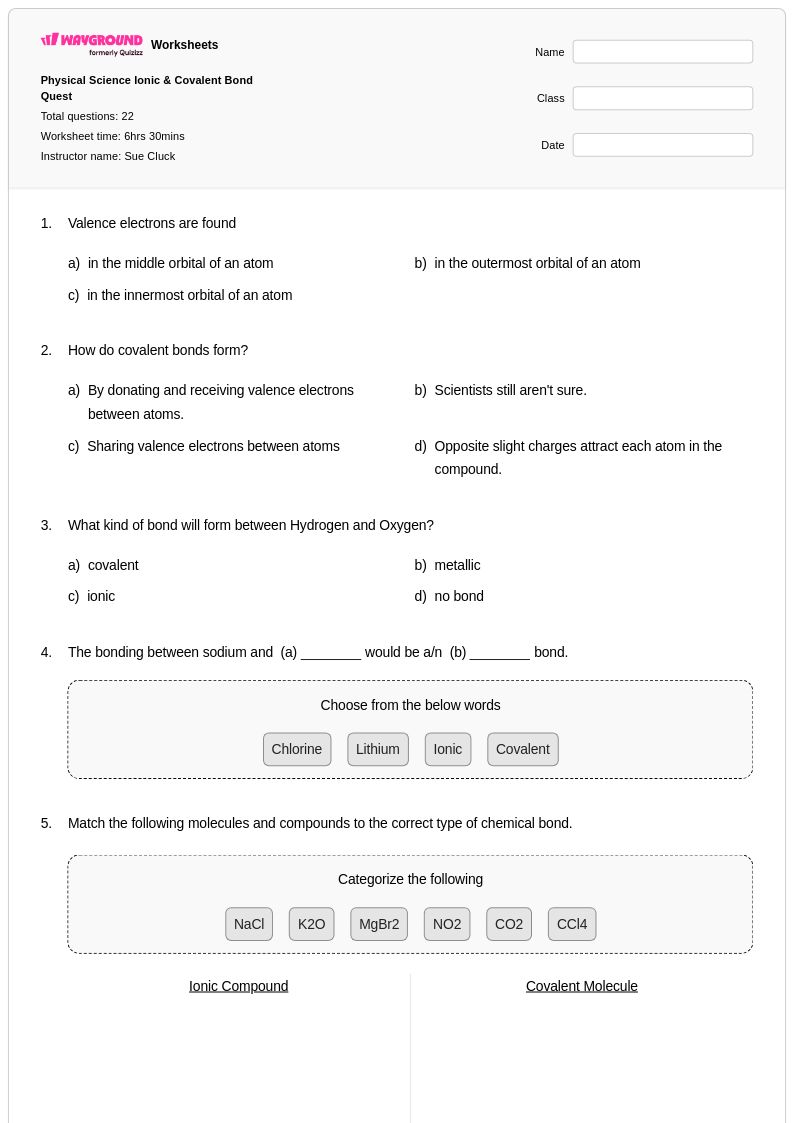
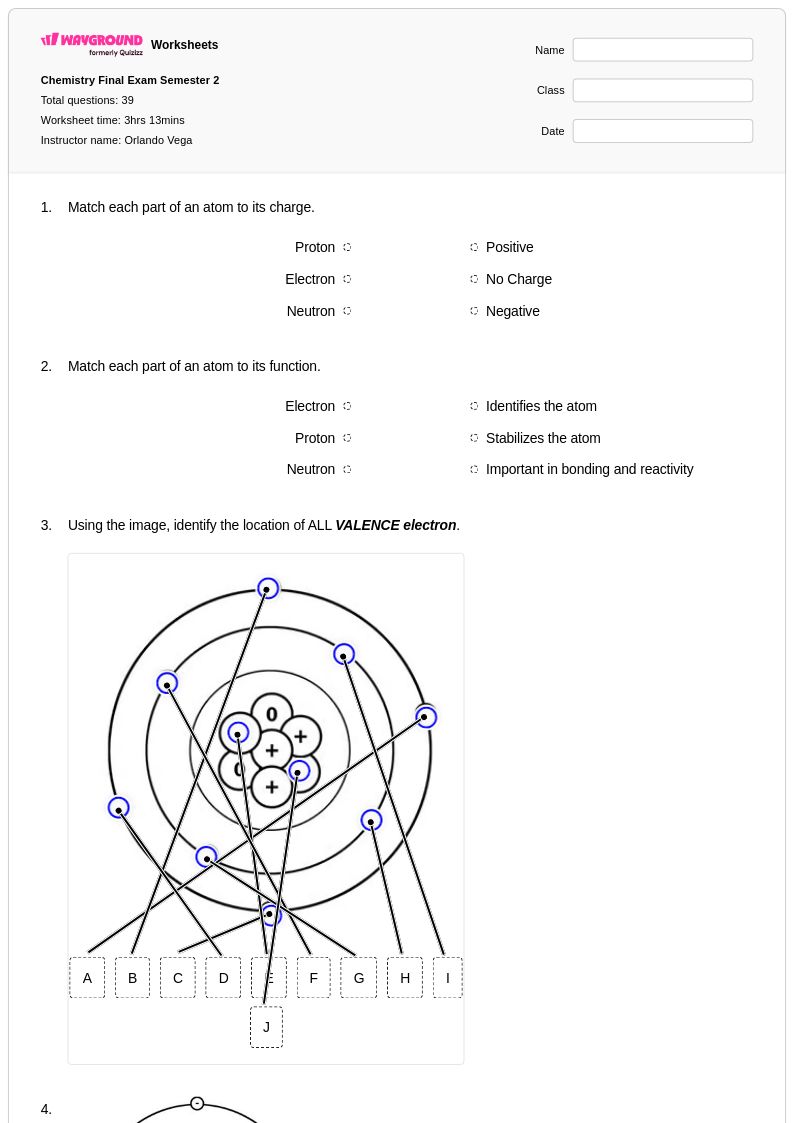
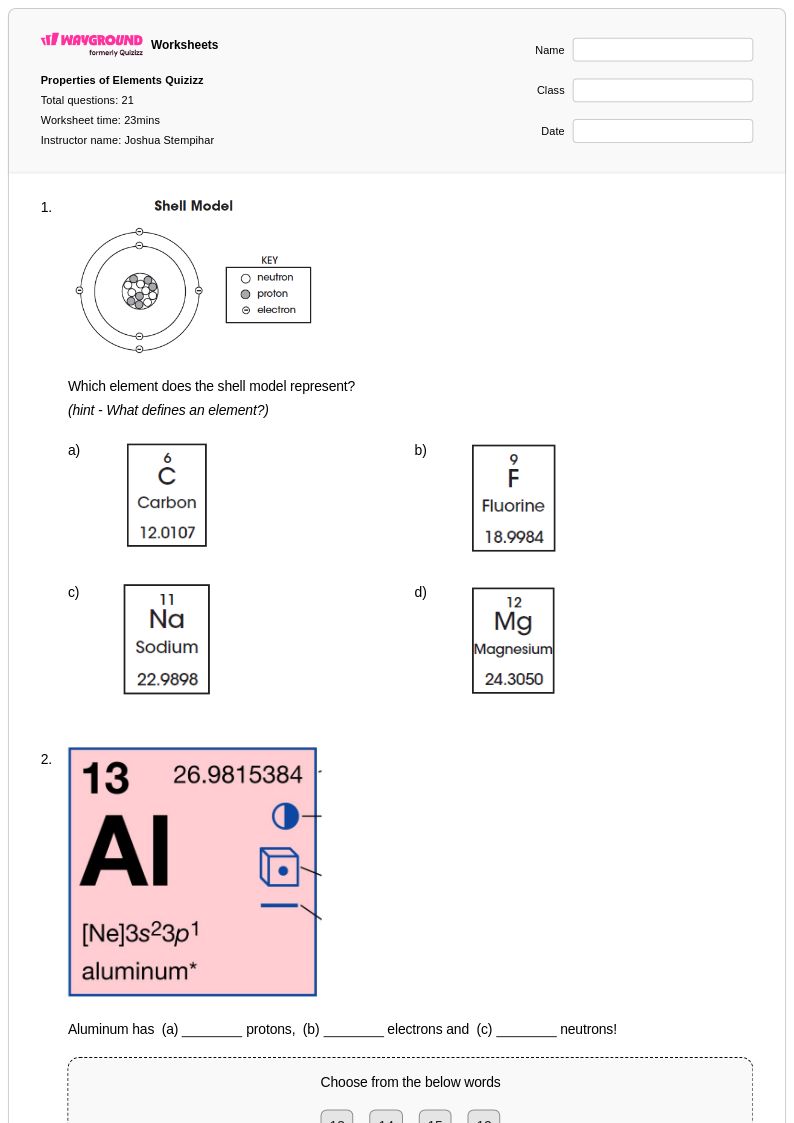
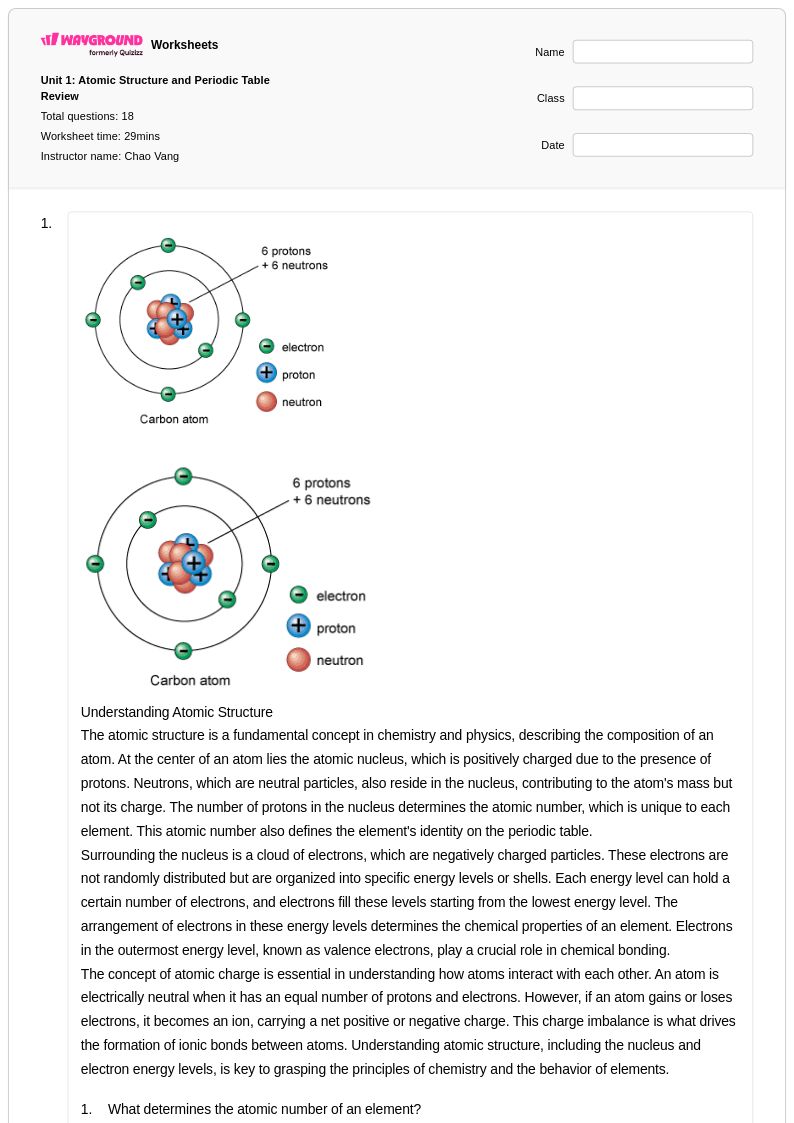
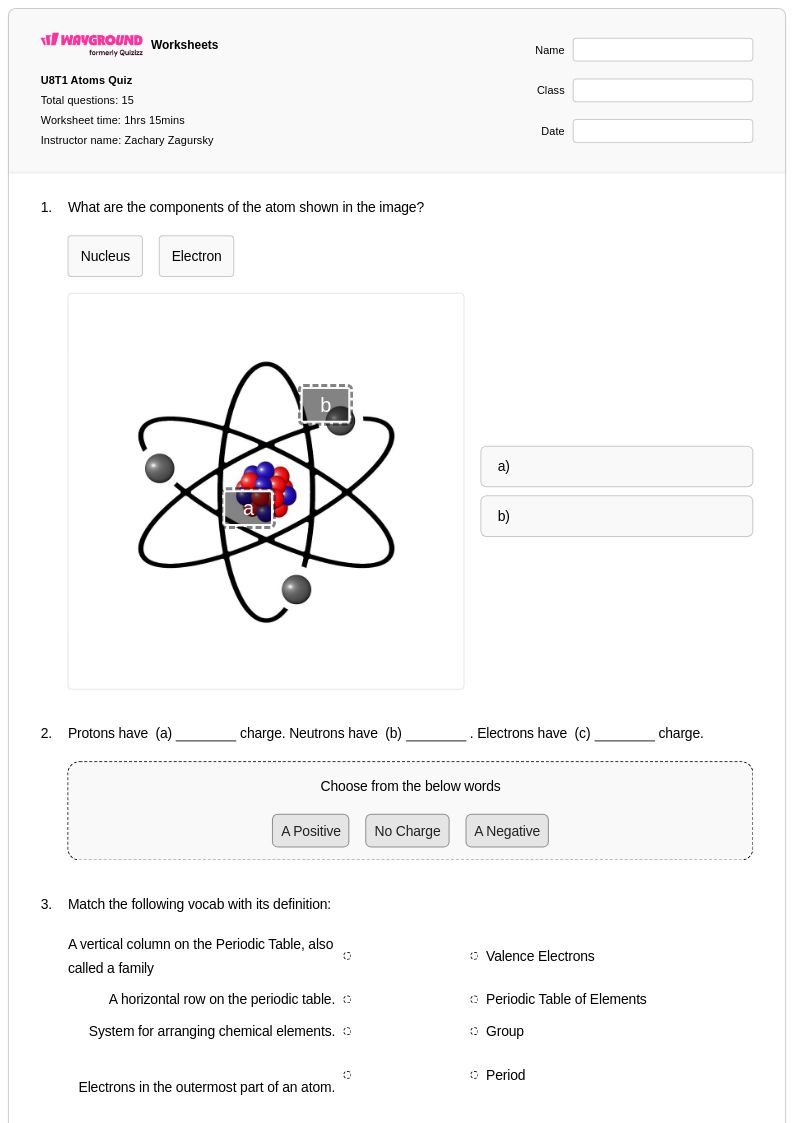
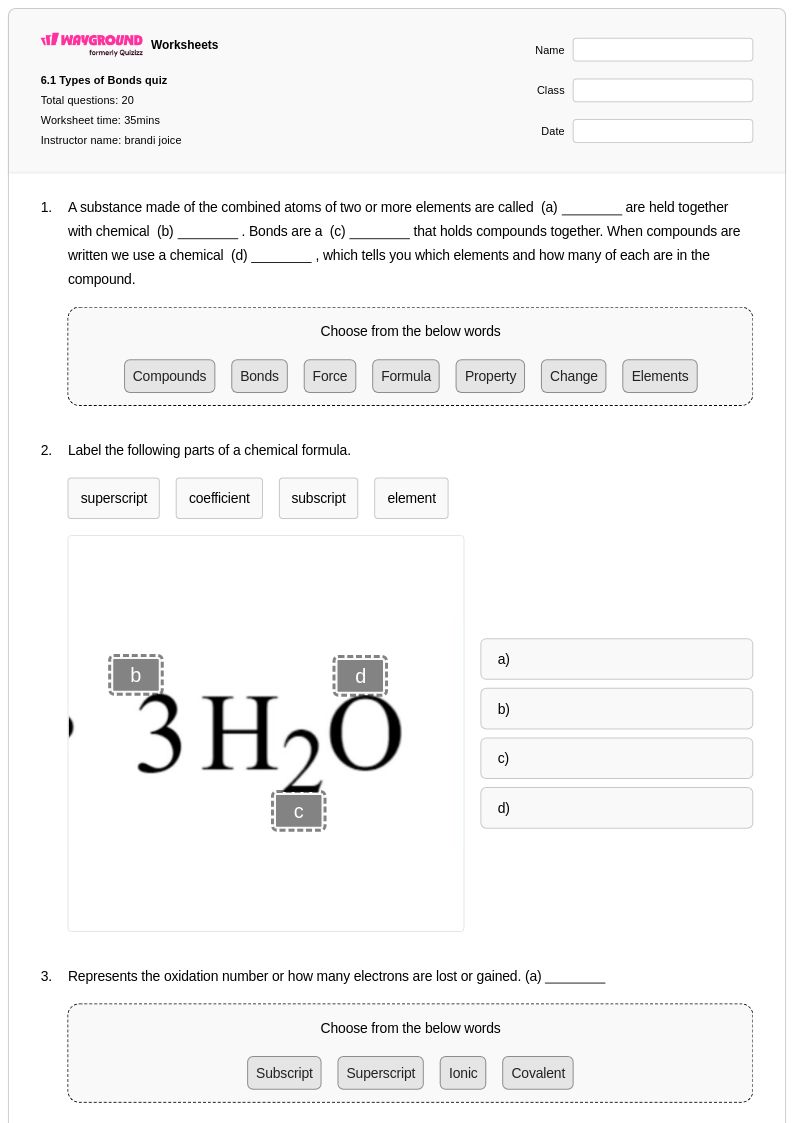
Formal charge worksheets for Grade 9 chemistry students available through Wayground (formerly Quizizz) provide comprehensive practice in calculating and understanding the distribution of electrons in molecular structures. These educational resources strengthen students' abilities to determine formal charges using the systematic formula that considers valence electrons, bonding electrons, and lone pair electrons. The worksheets feature practice problems ranging from simple diatomic molecules to more complex polyatomic ions, helping students master this fundamental concept in molecular geometry and resonance structures. Each worksheet collection includes detailed answer keys and step-by-step solutions, with free printable pdf versions that allow students to work through problems at their own pace while developing critical thinking skills essential for advanced chemistry concepts.
Wayground (formerly Quizizz) supports chemistry educators with millions of teacher-created formal charge worksheet resources that feature robust search and filtering capabilities aligned with chemistry curriculum standards. Teachers can easily differentiate instruction by selecting from worksheets with varying difficulty levels, from introductory formal charge calculations to advanced applications in resonance structure determination and molecular stability prediction. The platform's flexible customization tools enable educators to modify existing worksheets or combine multiple resources to create comprehensive practice sets tailored to their Grade 9 students' specific learning needs. Available in both printable and digital formats including downloadable pdfs, these worksheet collections facilitate effective lesson planning, targeted remediation for struggling students, and enrichment opportunities for advanced learners while providing consistent skill practice in this crucial area of chemical bonding theory.
FAQs
How do I teach formal charge to chemistry students?
Start by ensuring students have a solid grasp of Lewis structures before introducing formal charge, since the calculation depends on correctly identifying bonding and non-bonding electrons. Introduce the formula FC = V - N - B/2 explicitly, walking students through each variable: valence electrons (V), non-bonding electrons (N), and bonding electrons (B). Use simple molecules like CO2 or H2O as worked examples before progressing to polyatomic ions, where formal charge becomes critical for identifying the most stable resonance structure.
What exercises help students practice formal charge calculations?
The most effective practice exercises require students to first draw the Lewis structure of a molecule, then calculate the formal charge on each individual atom, and finally compare alternative structures to determine the most stable configuration. Problems should progress from simple diatomic molecules to complex polyatomic ions such as NO3- or SO4²-, where multiple resonance structures are possible and formal charge determines stability. Including fill-in-the-blank electron-counting tables alongside each molecule helps students build systematic habits rather than guessing.
What mistakes do students commonly make when calculating formal charge?
The most frequent error is misidentifying bonding electrons: students often count the total number of bonding electrons rather than dividing by two as required in the FC formula. A second common mistake is confusing non-bonding (lone pair) electrons with bonding electrons, particularly in molecules with expanded octets like sulfur or phosphorus compounds. Students also frequently forget that formal charge must be calculated atom-by-atom, not for the molecule as a whole, and that the sum of all formal charges must equal the molecule's overall charge.
How does formal charge relate to determining the most stable Lewis structure?
When a molecule can be drawn in multiple valid Lewis structures, formal charge is the primary tool for identifying which structure best represents the actual bonding. The most stable structure is the one where formal charges on all atoms are closest to zero, negative formal charges are assigned to more electronegative atoms, and the magnitude of formal charges is minimized across the molecule. This principle is especially important when teaching resonance structures for ions like CO3²- or NO2-, where incorrect assignments lead to inaccurate predictions about bond lengths and reactivity.
How can I use Wayground's formal charge worksheets in my classroom?
Wayground's formal charge worksheets are available as printable PDFs for traditional classroom use and in digital formats for technology-integrated environments, including the option to host them as a quiz directly on Wayground. Printable versions work well for guided practice and in-class problem sets, while digital versions allow for quicker feedback and can be assigned as homework or review. Wayground also supports accommodations such as read aloud, extended time, and reduced answer choices, which can be applied to individual students without disrupting the rest of the class.
How do I differentiate formal charge instruction for students at different skill levels?
For students new to formal charge, focus practice on molecules with no expanded octets and straightforward Lewis structures, ensuring they can apply FC = V - N - B/2 accurately before introducing resonance. Advanced students benefit from problems involving expanded octets, polyatomic ions with multiple resonance structures, and tasks that connect formal charge outcomes to predictions about molecular geometry and chemical reactivity. On Wayground, teachers can apply individual accommodations such as reduced answer choices or extended time for students who need additional support, while other students receive standard settings.