Free Printable Formula Mass Worksheets for Grade 12
Explore Grade 12 formula mass worksheets and printables that help students master molecular weight calculations through comprehensive practice problems, free PDF resources, and detailed answer keys.
Explore printable Formula Mass worksheets for Grade 12
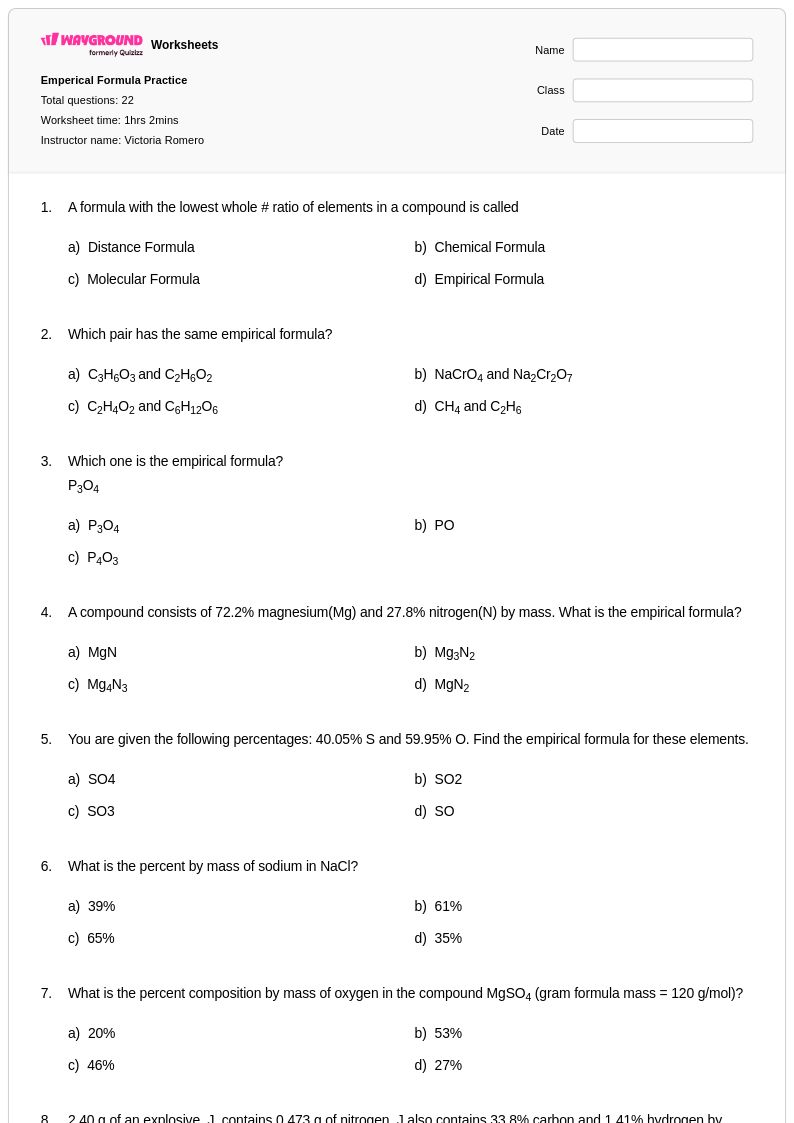
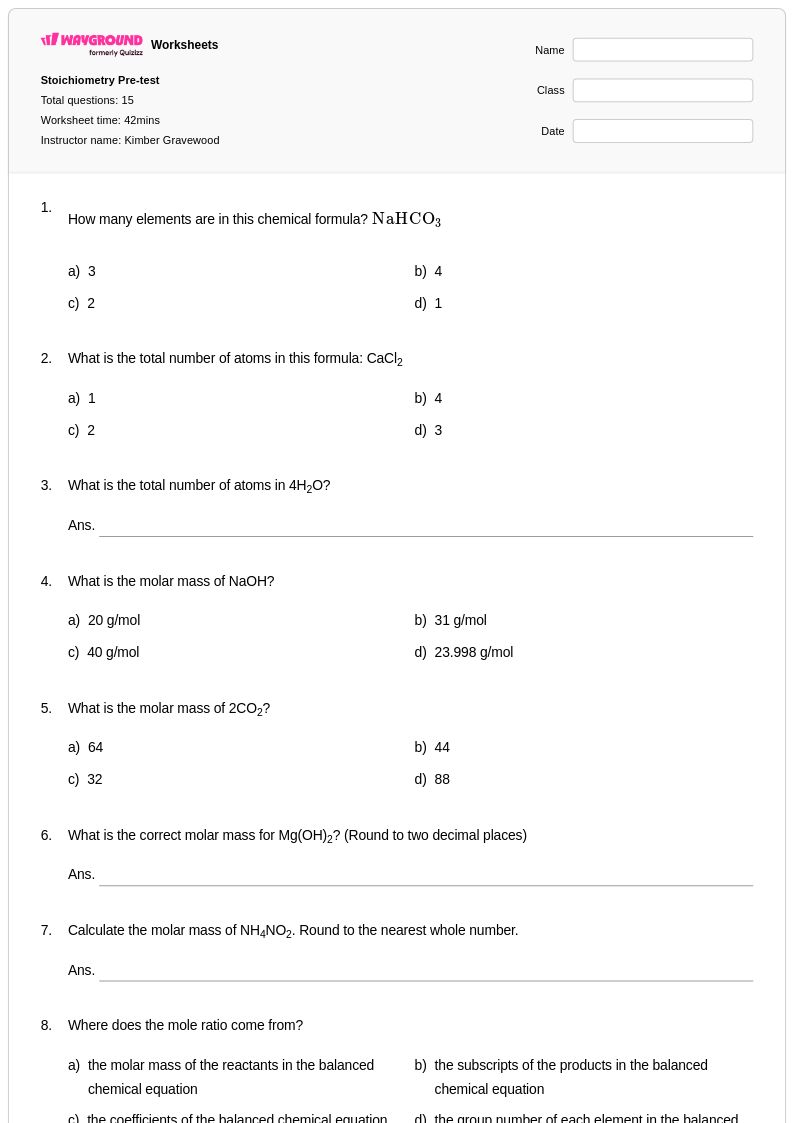
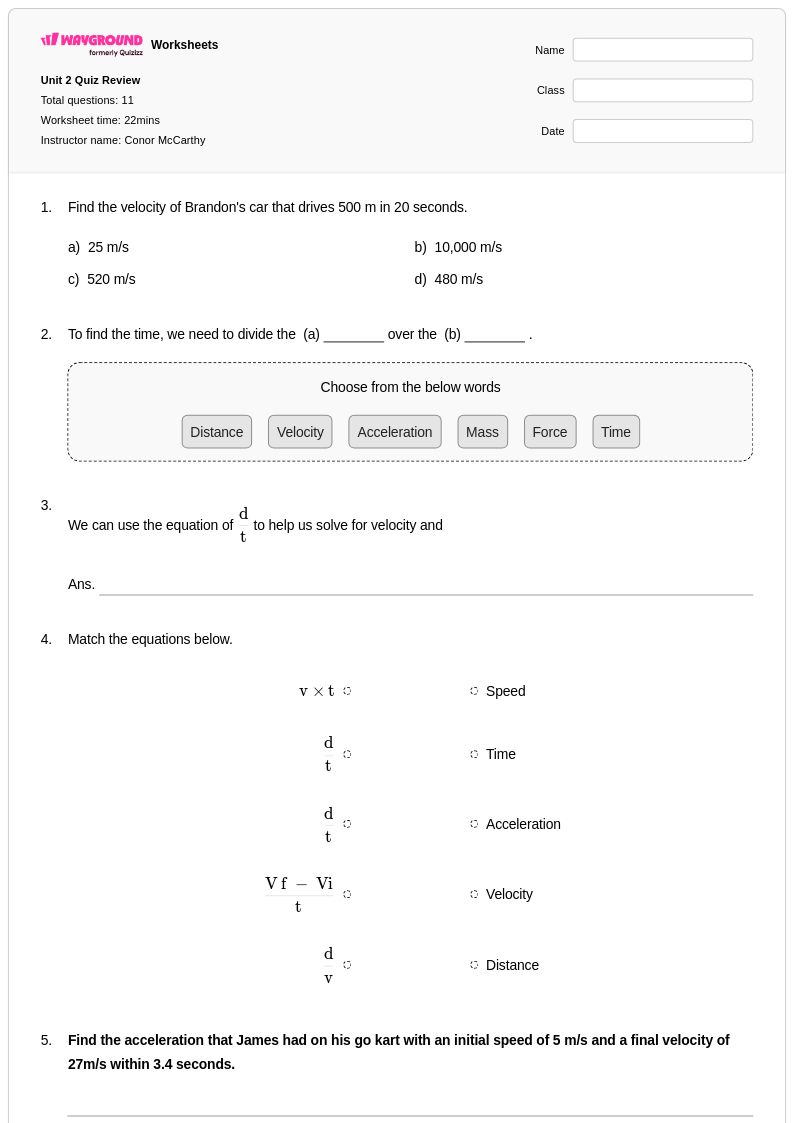
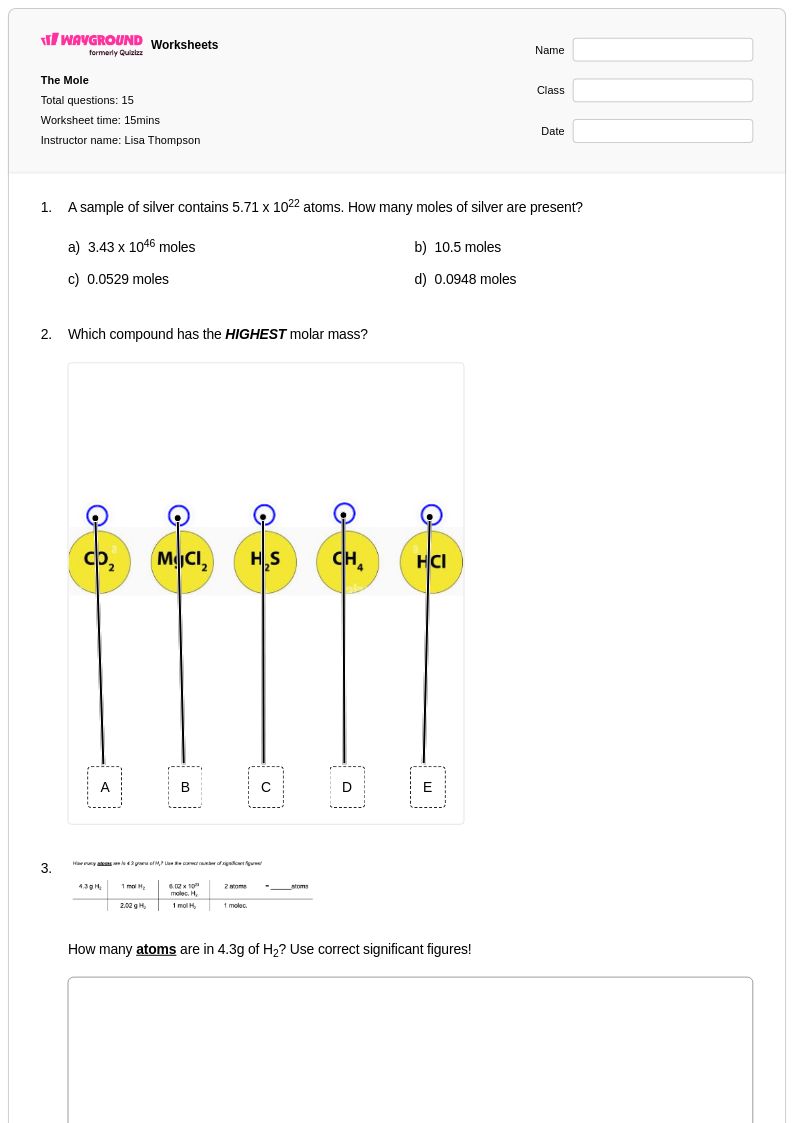
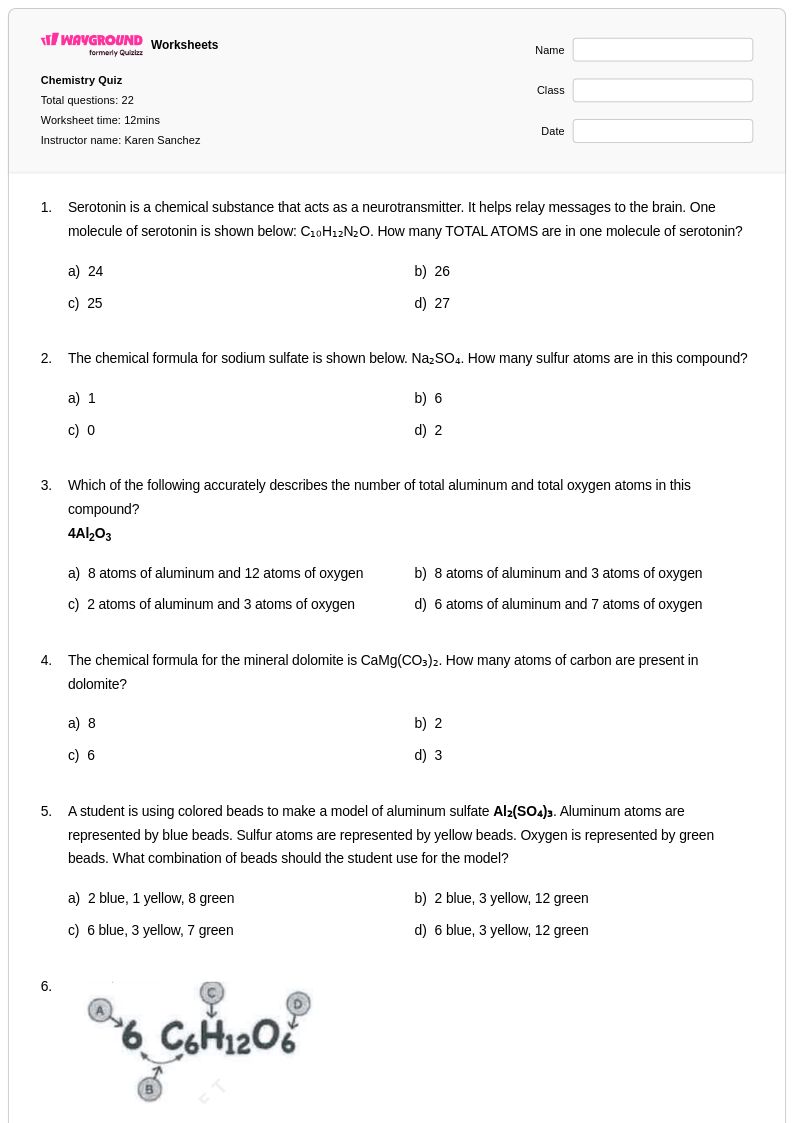
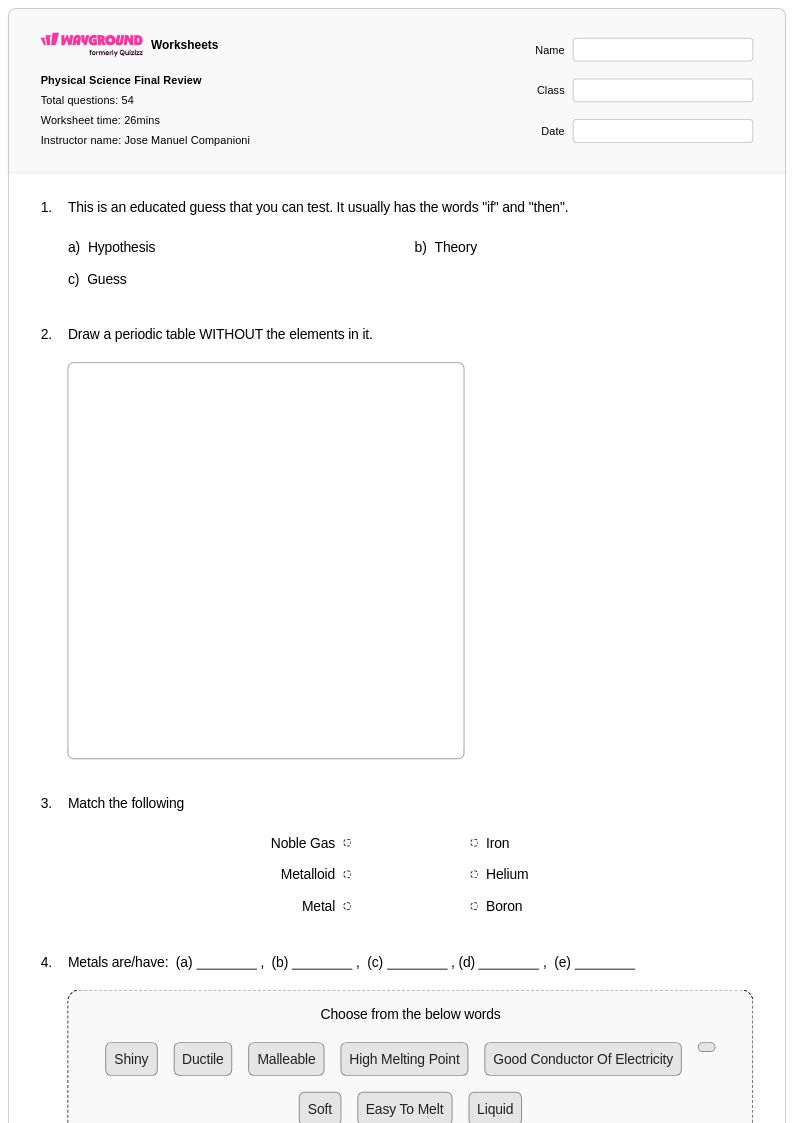
Formula mass worksheets for Grade 12 chemistry students through Wayground (formerly Quizizz) provide comprehensive practice with calculating the molecular weights of chemical compounds using atomic masses from the periodic table. These expertly designed worksheets strengthen essential quantitative chemistry skills by guiding students through systematic approaches to determining formula masses for simple compounds, complex molecules, and ionic substances. Students develop proficiency in locating accurate atomic masses, applying proper significant figures, and performing multi-step calculations that form the foundation for stoichiometry and solution chemistry concepts. Each worksheet includes detailed practice problems with corresponding answer keys, and teachers can access these valuable resources as free printables in convenient pdf format for seamless classroom integration.
Wayground (formerly Quizizz) empowers chemistry educators with millions of teacher-created formula mass worksheets that can be easily discovered through robust search and filtering capabilities aligned with curriculum standards. The platform's differentiation tools allow instructors to customize worksheet difficulty levels and problem types to meet diverse student needs, whether for initial skill development, targeted remediation, or advanced enrichment activities. Teachers can seamlessly switch between printable pdf versions for traditional paper-based practice and digital formats for interactive online learning experiences. This flexibility supports comprehensive lesson planning by providing immediate access to high-quality resources that reinforce formula mass calculations across various molecular complexity levels, ensuring students master this critical chemistry skill through consistent, structured practice.
FAQs
How do I teach formula mass to chemistry students?
Start by ensuring students are comfortable reading the periodic table and identifying atomic masses before introducing formula mass calculations. Model the process using simple binary compounds like NaCl or MgO, then gradually progress to compounds with polyatomic ions and subscripts. Emphasizing a consistent, step-by-step approach — listing each element, multiplying atomic mass by the number of atoms, then summing — helps students avoid calculation errors and builds procedural fluency before tackling stoichiometry.
What practice problems are most effective for learning formula mass calculations?
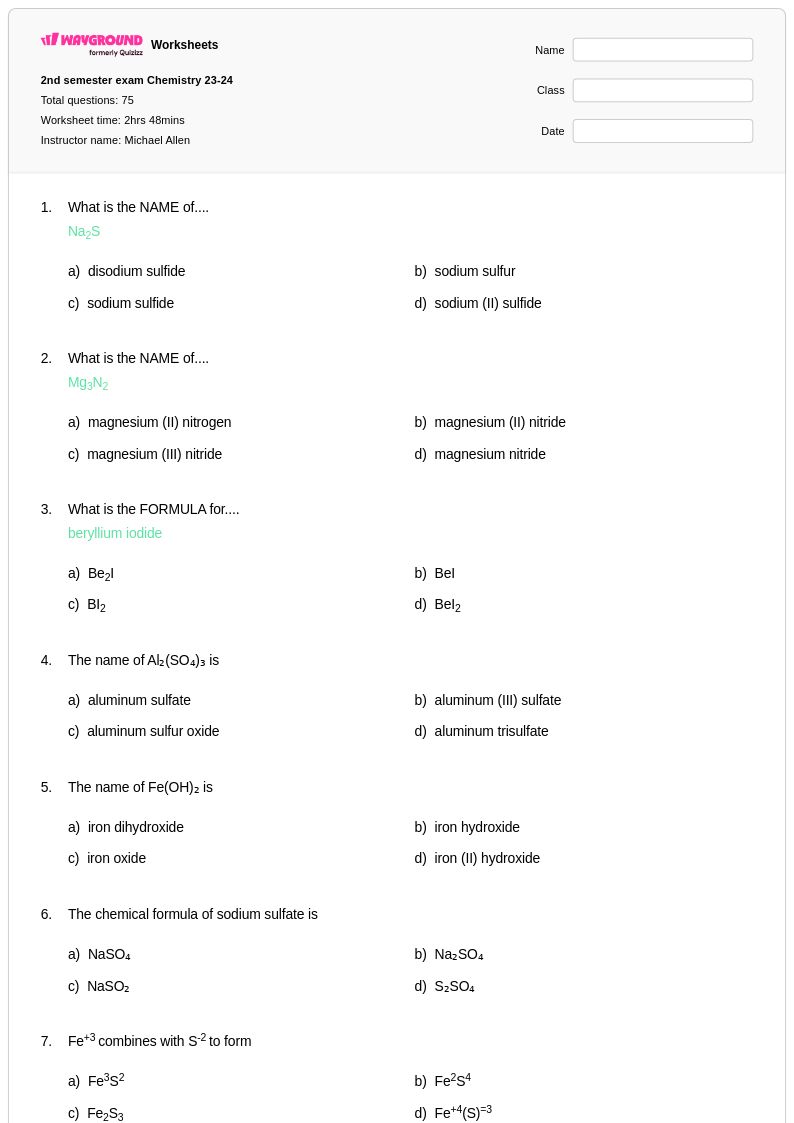
Effective formula mass practice should sequence problems from simple two-element compounds to complex molecules containing polyatomic ions and parentheses, such as Ca(NO3)2 or Al2(SO4)3. Students benefit from problems that require them to first identify the number of each atom present before calculating, reinforcing careful formula parsing. Mixed practice sets that include both straightforward and multi-step compounds help consolidate skills and prepare students for stoichiometry applications.
What mistakes do students commonly make when calculating formula mass?
The most frequent error is misreading subscripts inside and outside parentheses — for example, treating Ca(NO3)2 as having only one nitrogen and two oxygens rather than two nitrogens and six oxygens. Students also commonly round atomic masses too early in the calculation, which introduces cumulative error in multi-element compounds. A third common mistake is confusing formula mass with molar mass conceptually, which can be addressed by explicitly linking the calculation to periodic table values and units of grams per mole.
How can I use formula mass worksheets to support students at different ability levels?
Scaffolded worksheet sets work well for differentiation: provide struggling students with a partially completed table listing elements and atom counts, while advanced students work through complex compounds independently. On Wayground, teachers can apply accommodations at the individual student level, including reduced answer choices to lower cognitive load and read-aloud support for students who need it, without other students being notified of these adjustments. Pairing lower-complexity problems with immediate answer key feedback helps students self-correct before misconceptions become entrenched.
How do I use formula mass worksheets from Wayground in my classroom?
Wayground's formula mass worksheets are available as printable PDFs for traditional classroom use and in digital formats for technology-integrated environments, including the option to host them as a quiz directly on the Wayground platform. Teachers can use printable versions for in-class practice or homework, while digital formats allow for interactive sessions with built-in answer feedback. Each worksheet includes a detailed answer key and step-by-step solutions, making them suitable for independent study, remediation, or guided practice within a lesson.
How does formula mass connect to other chemistry topics students will encounter?
Formula mass is foundational to stoichiometry because it establishes the molar mass of a compound, which is required to convert between grams and moles in chemical equations. Students who are not fluent in formula mass calculations frequently struggle with limiting reagent problems, percent composition, and empirical formula work. Building accuracy and speed in formula mass calculations early in a chemistry course significantly reduces friction when these more complex topics are introduced.