
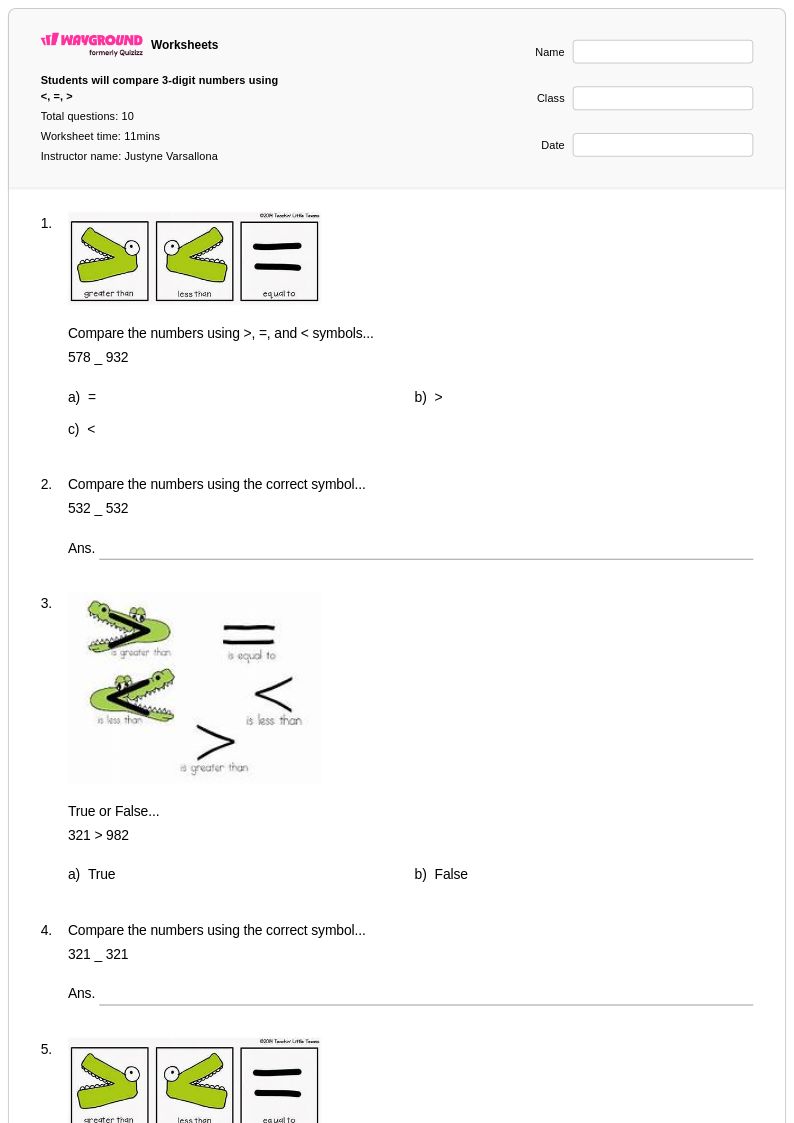
10 Q
2nd
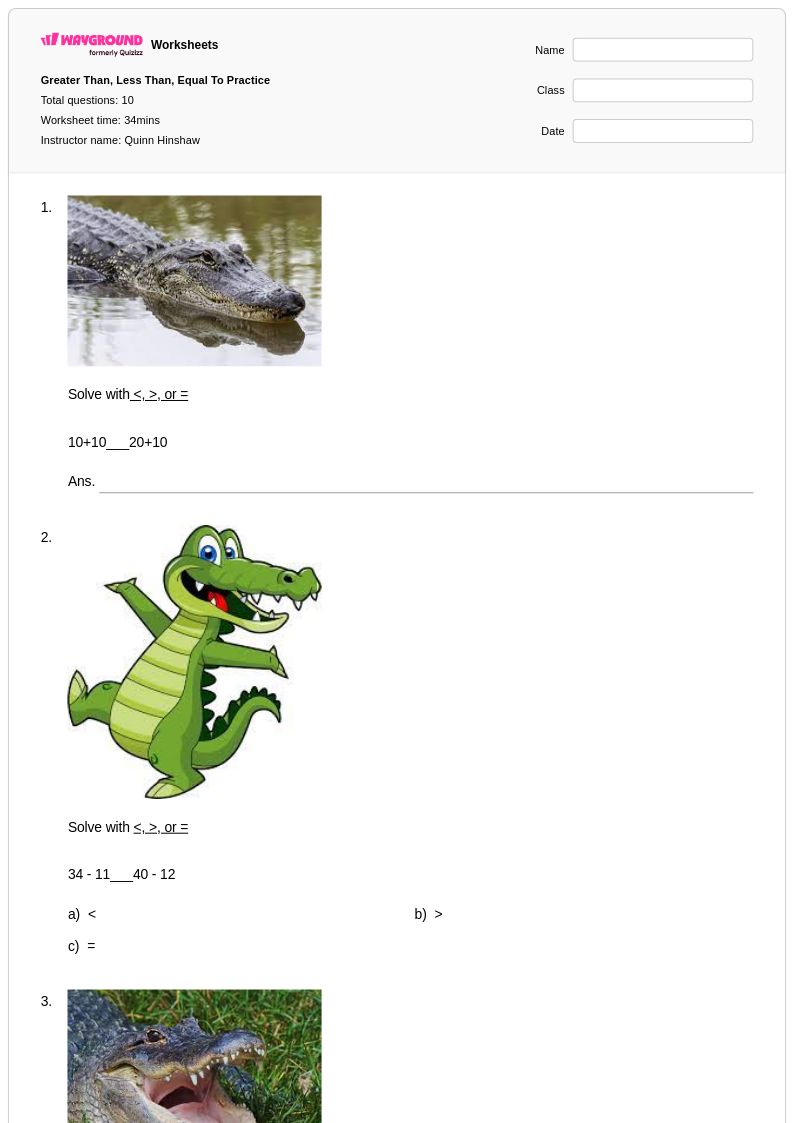
10 Q
1st - 3rd
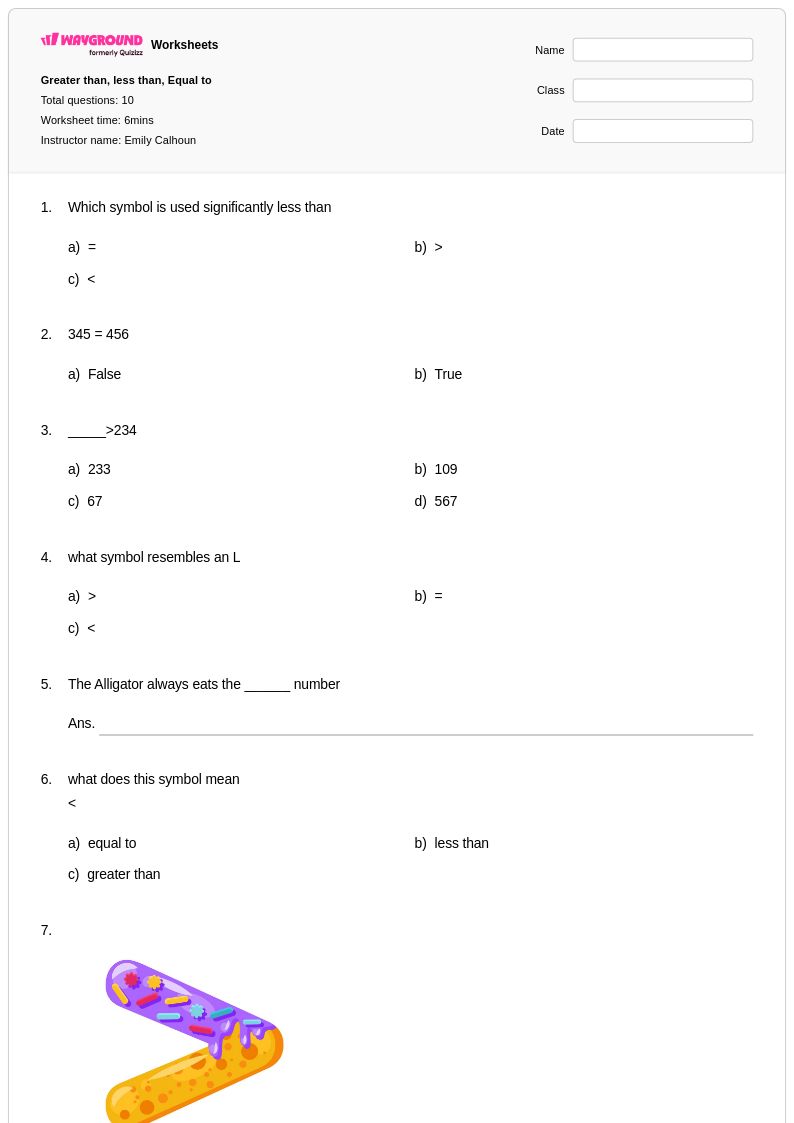
10 Q
1st - 2nd
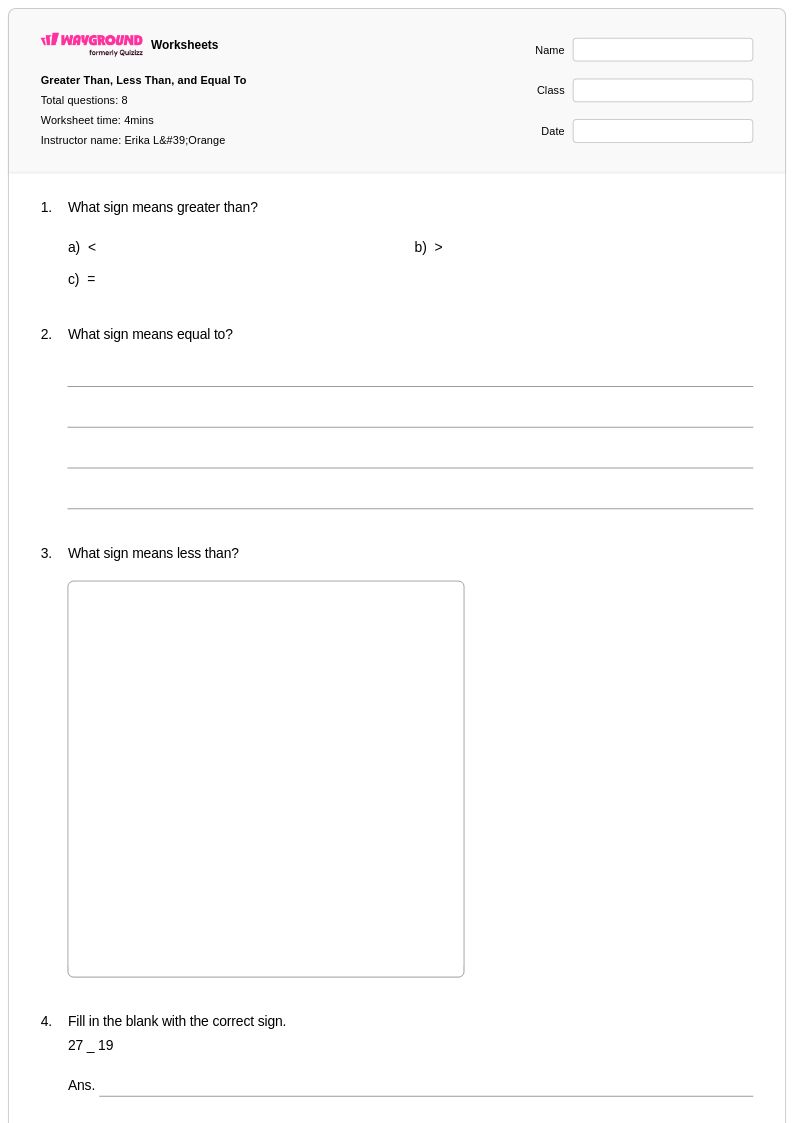
8 Q
1st - 3rd
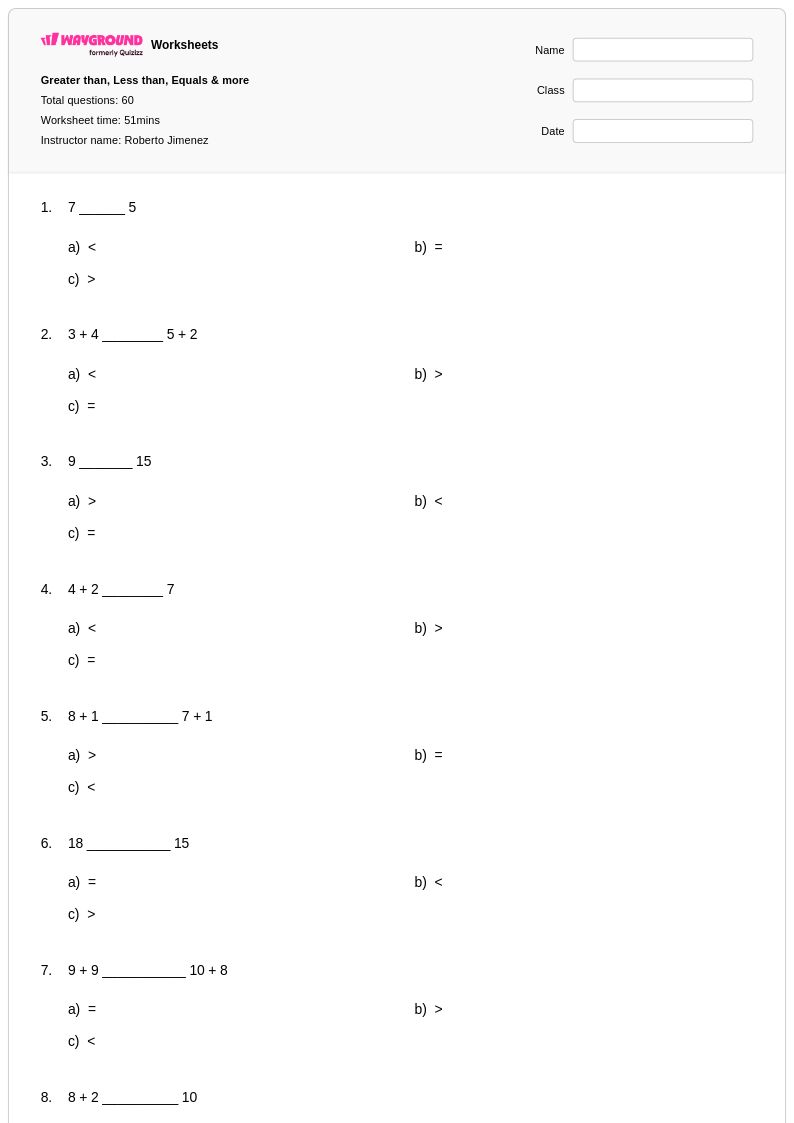
60 Q
2nd
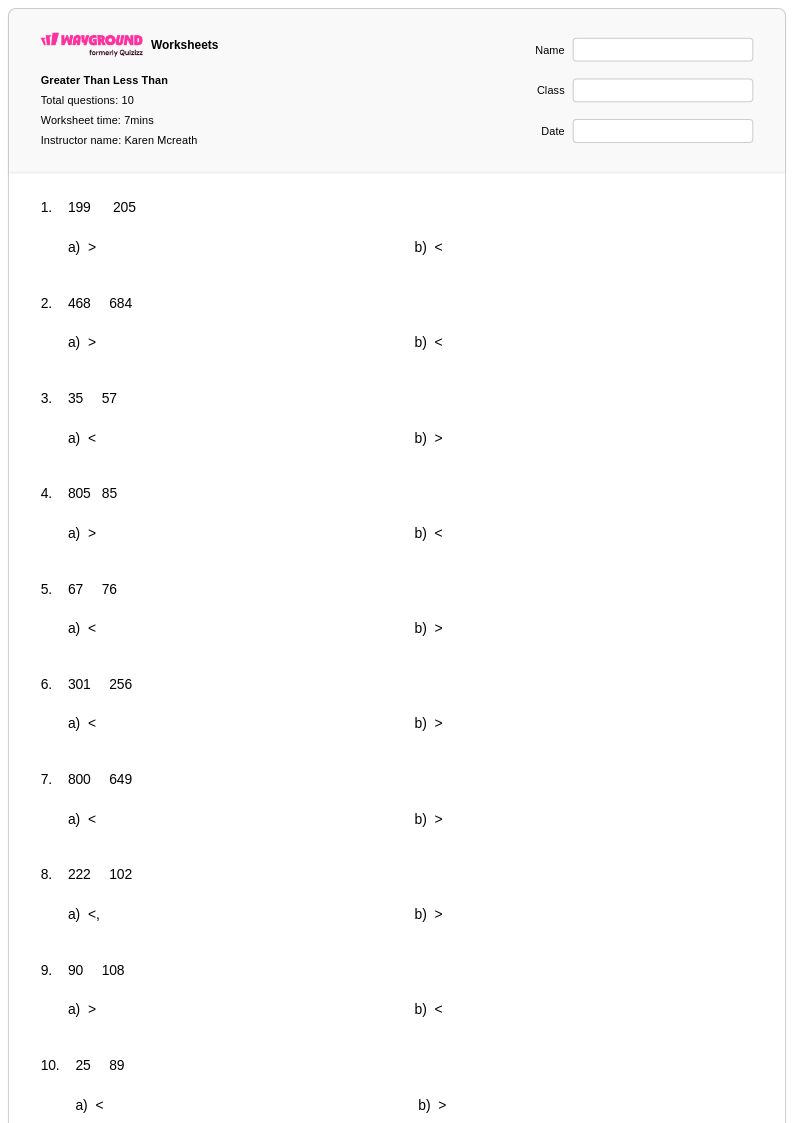
10 Q
2nd
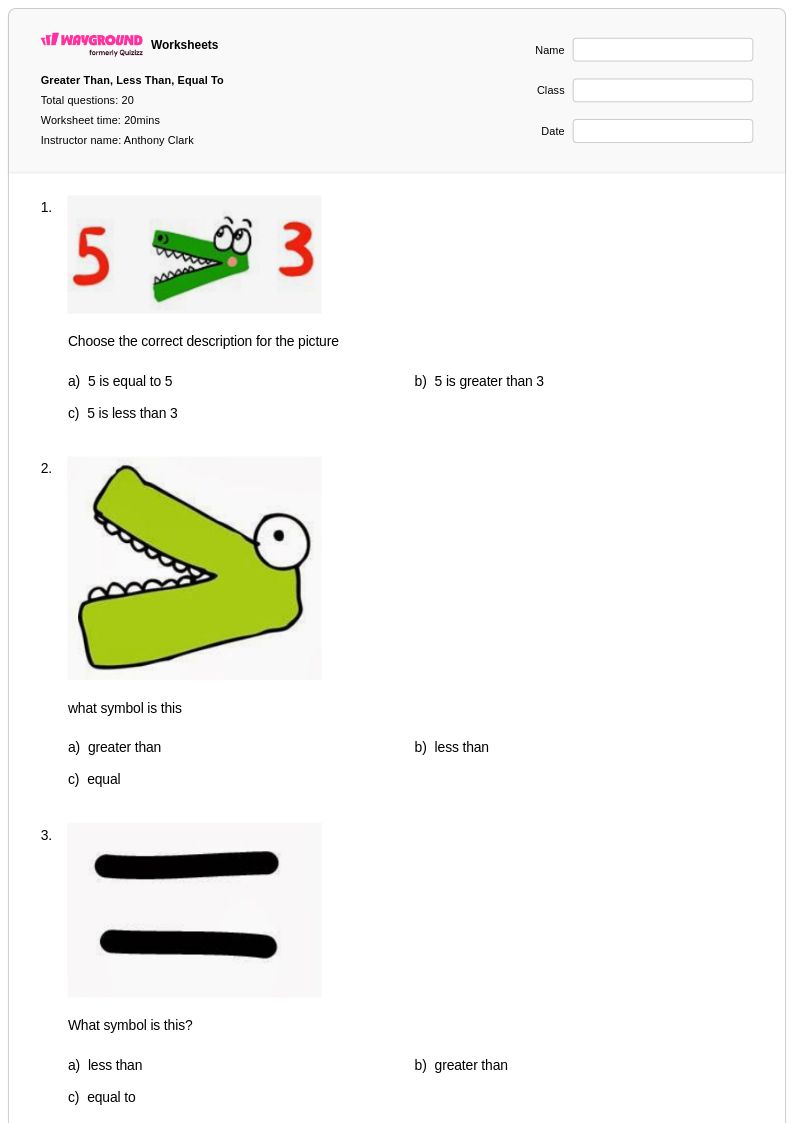
20 Q
2nd - Uni
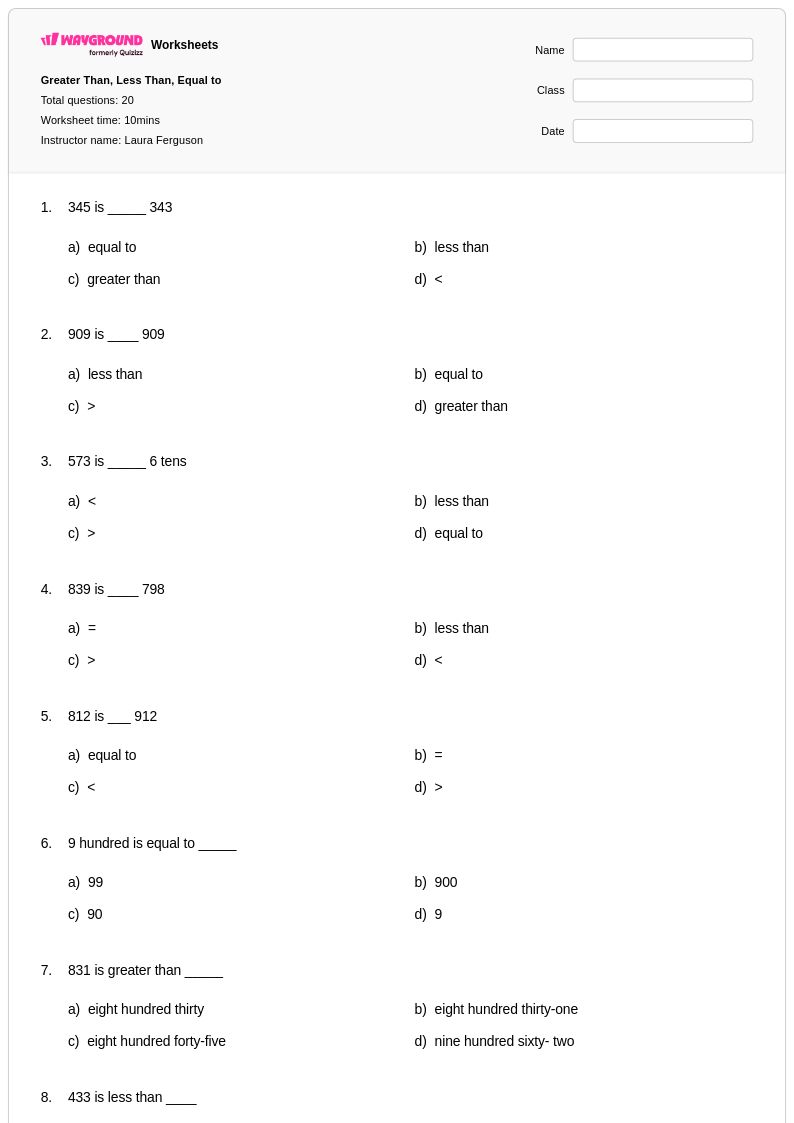
20 Q
1st - 4th
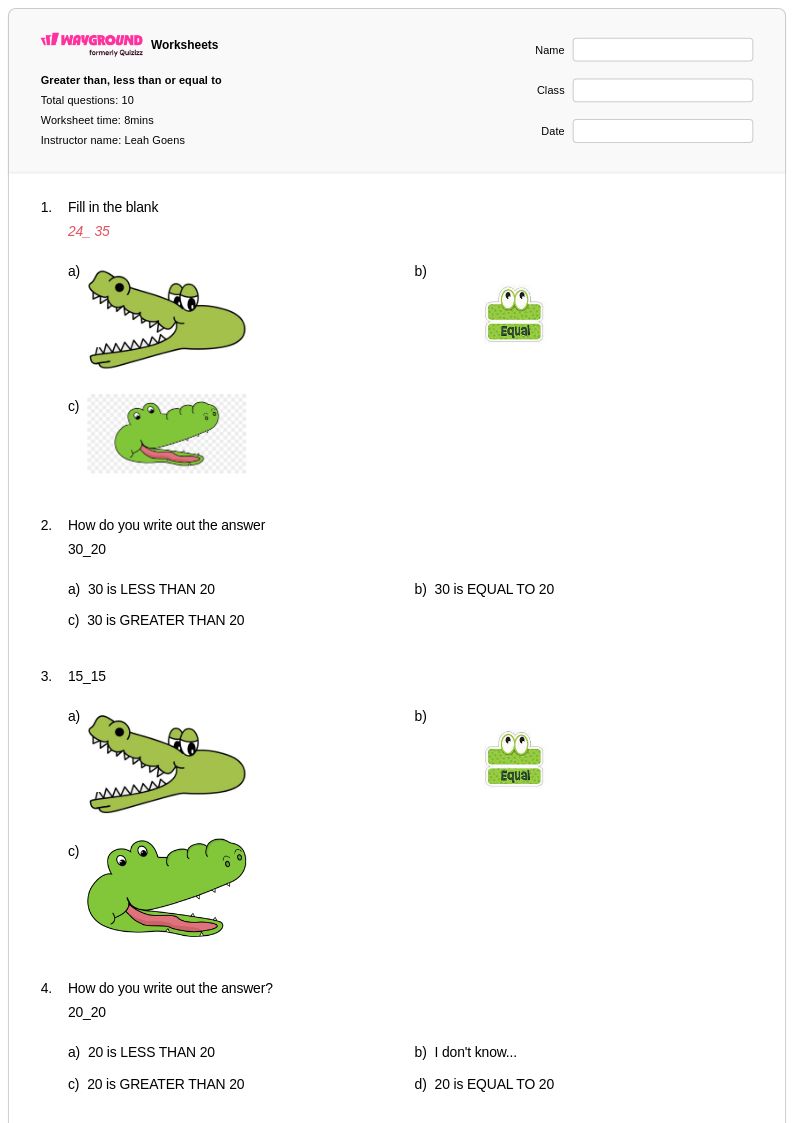
10 Q
1st - 2nd
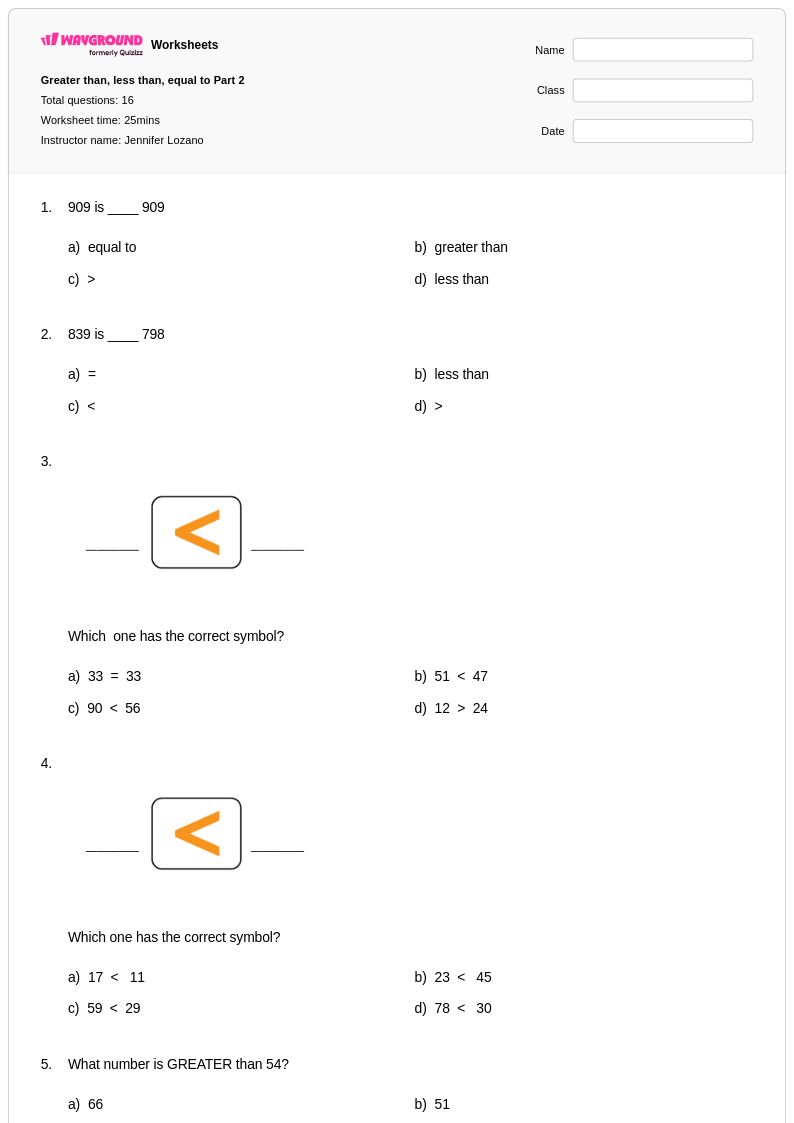
16 Q
1st - 2nd
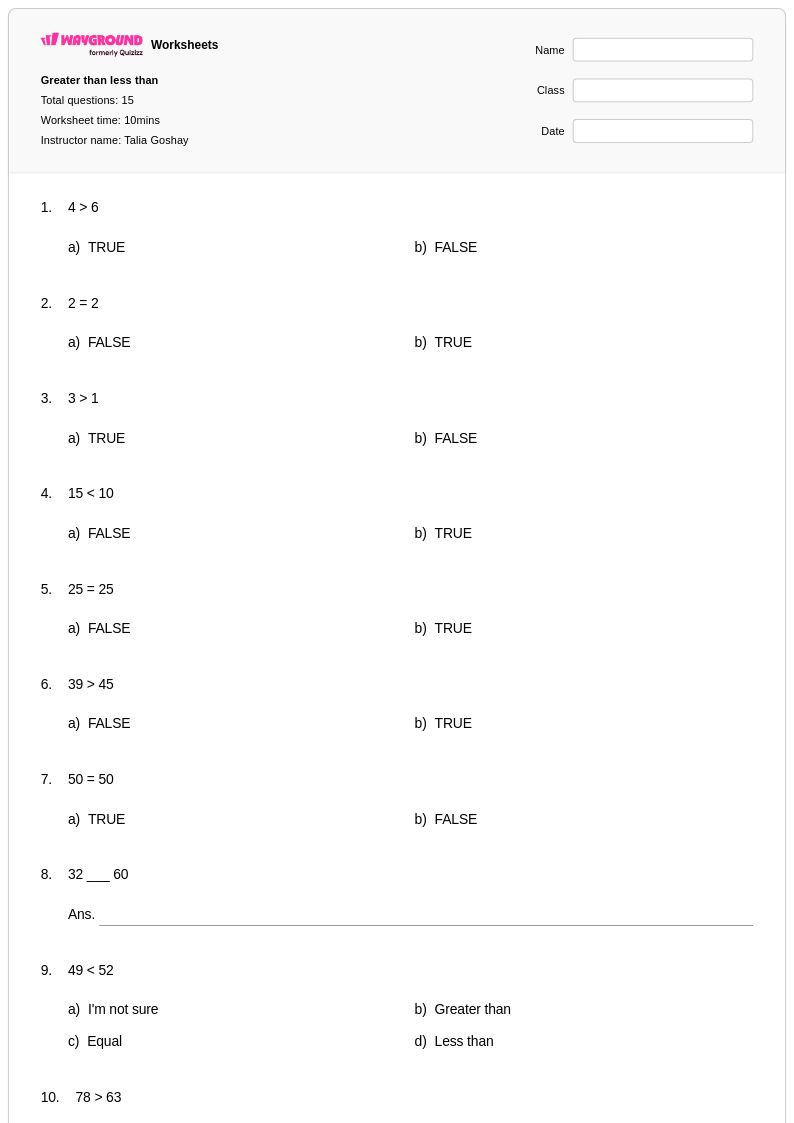
15 Q
1st - 3rd
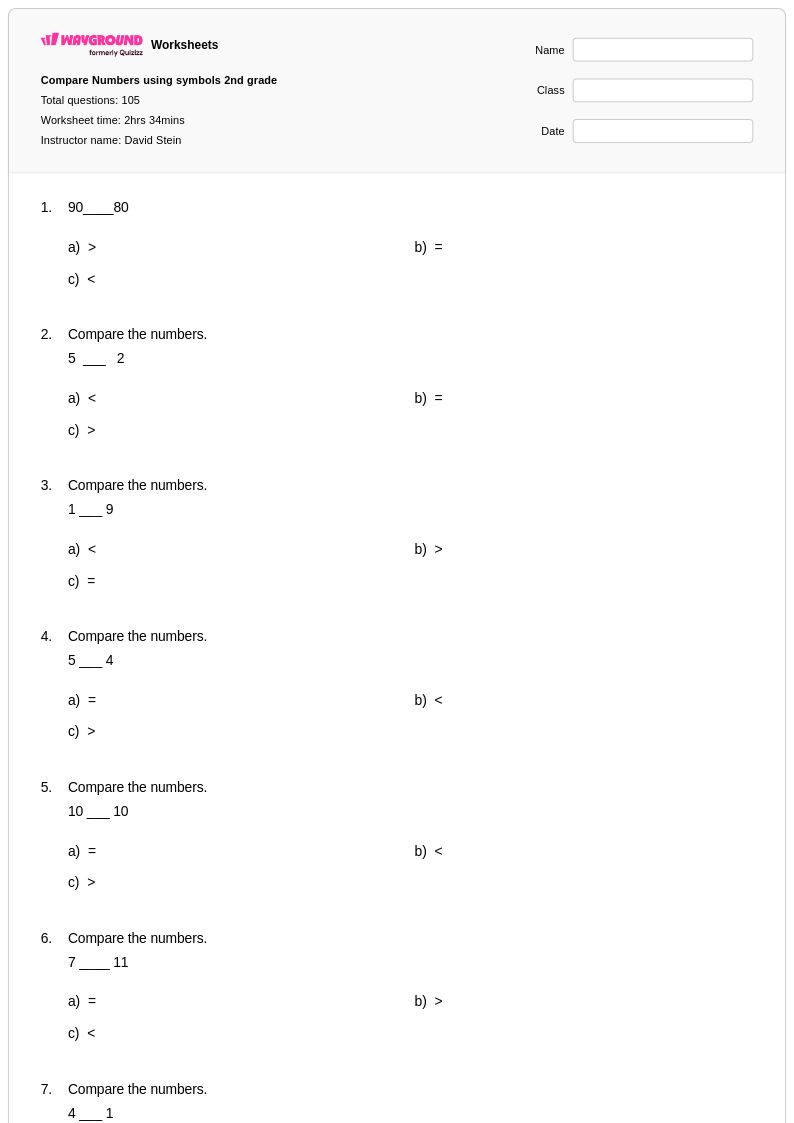
105 Q
2nd
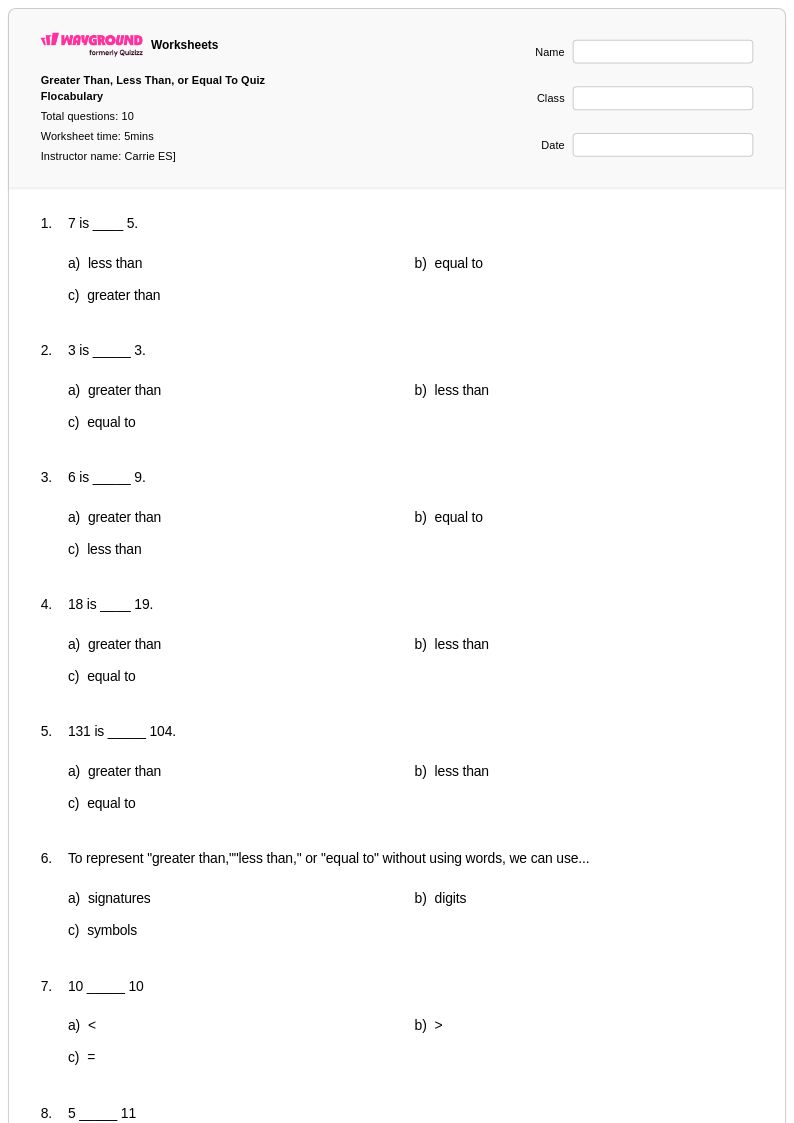
10 Q
2nd
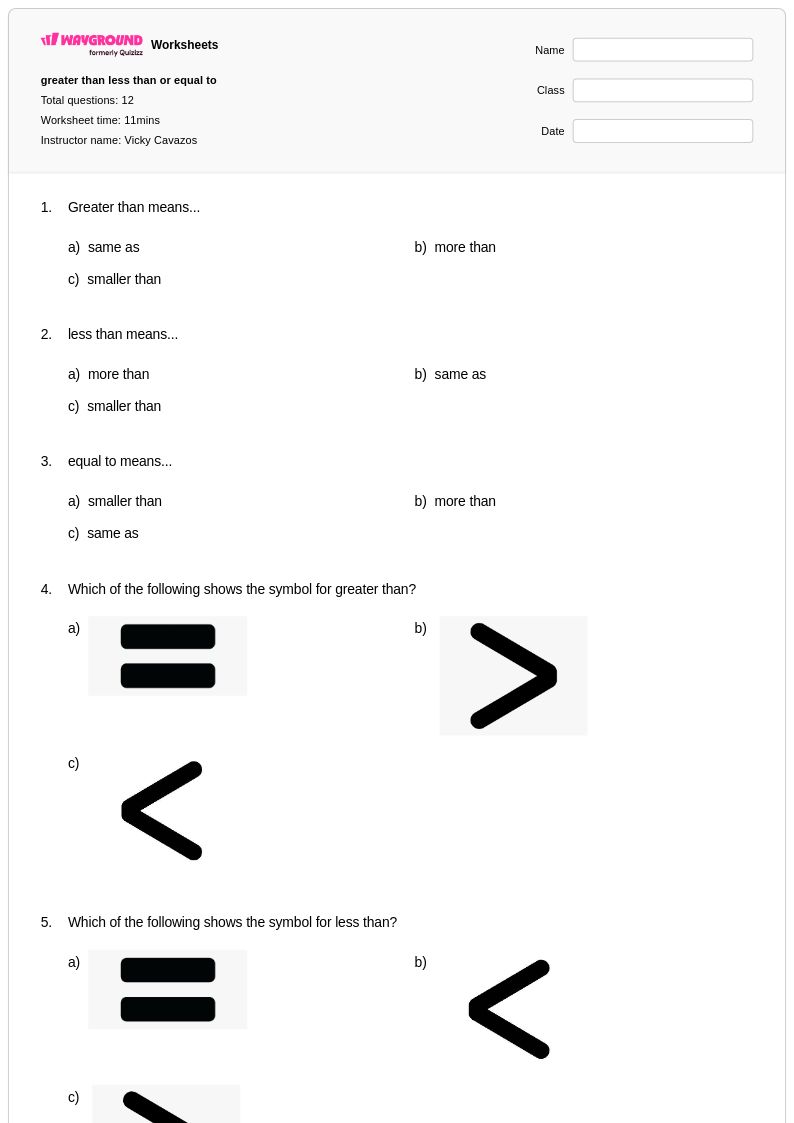
12 Q
KG - 2nd
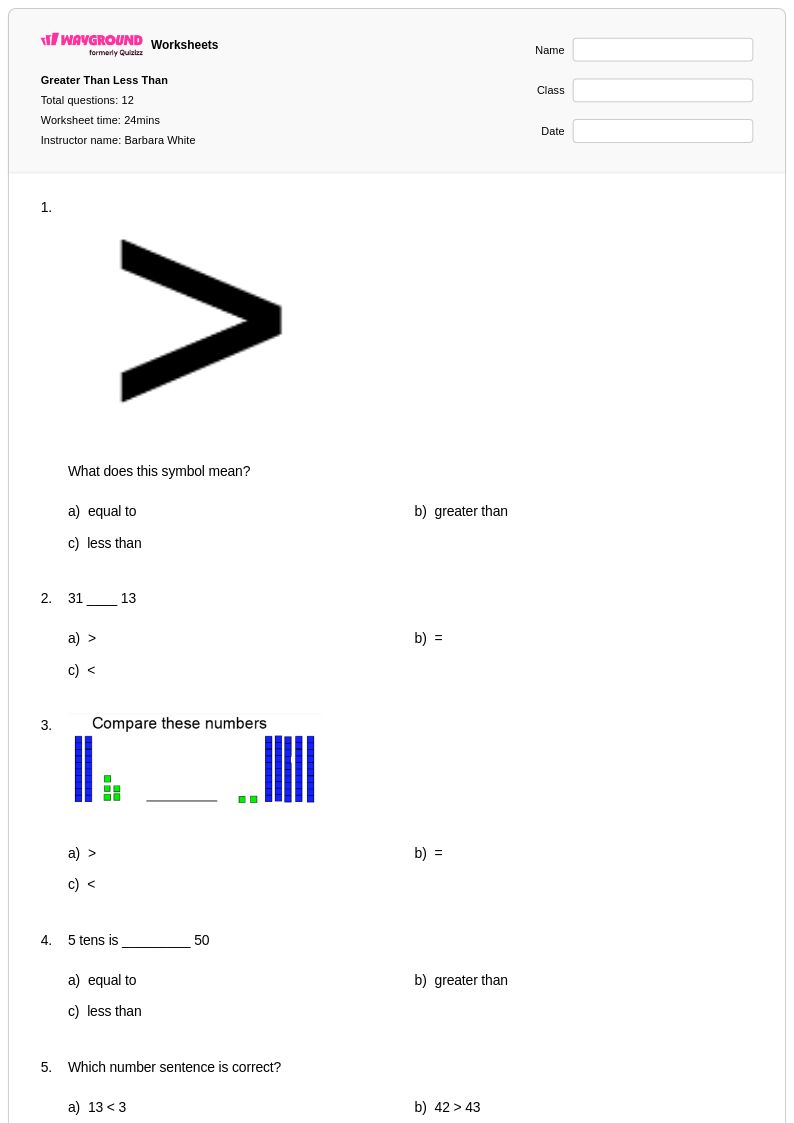
12 Q
1st - 3rd
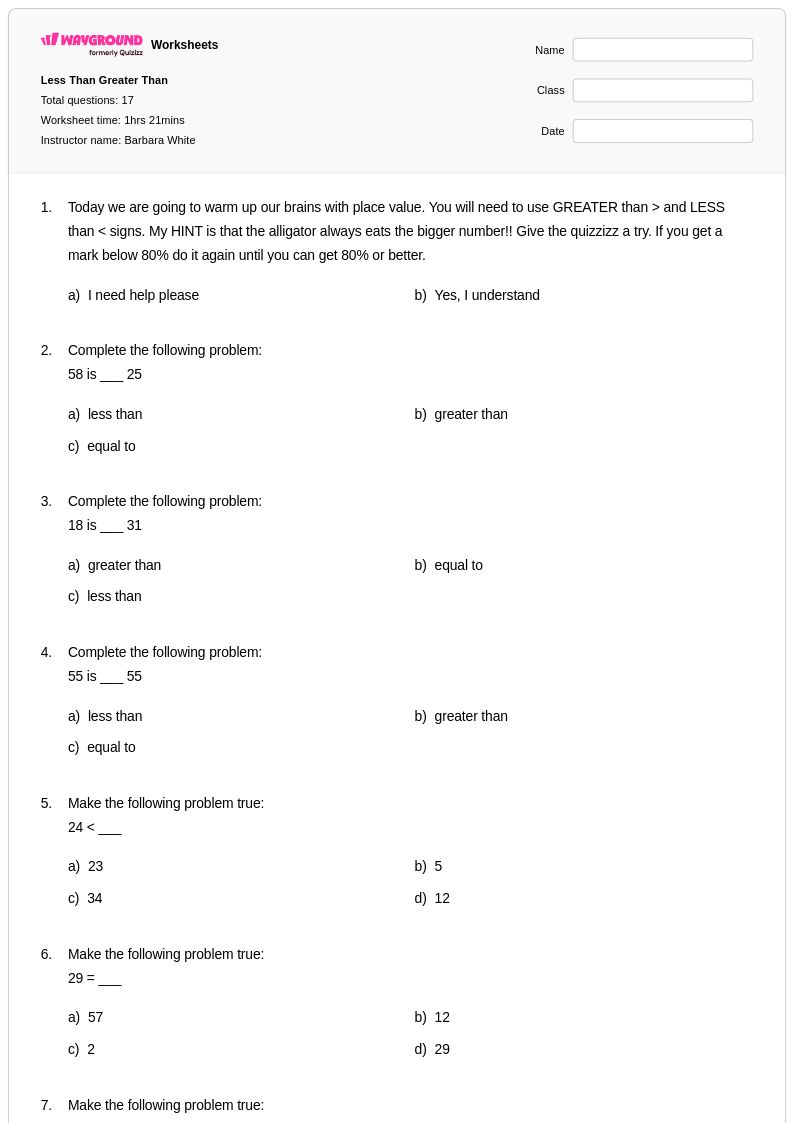
17 Q
1st - 2nd
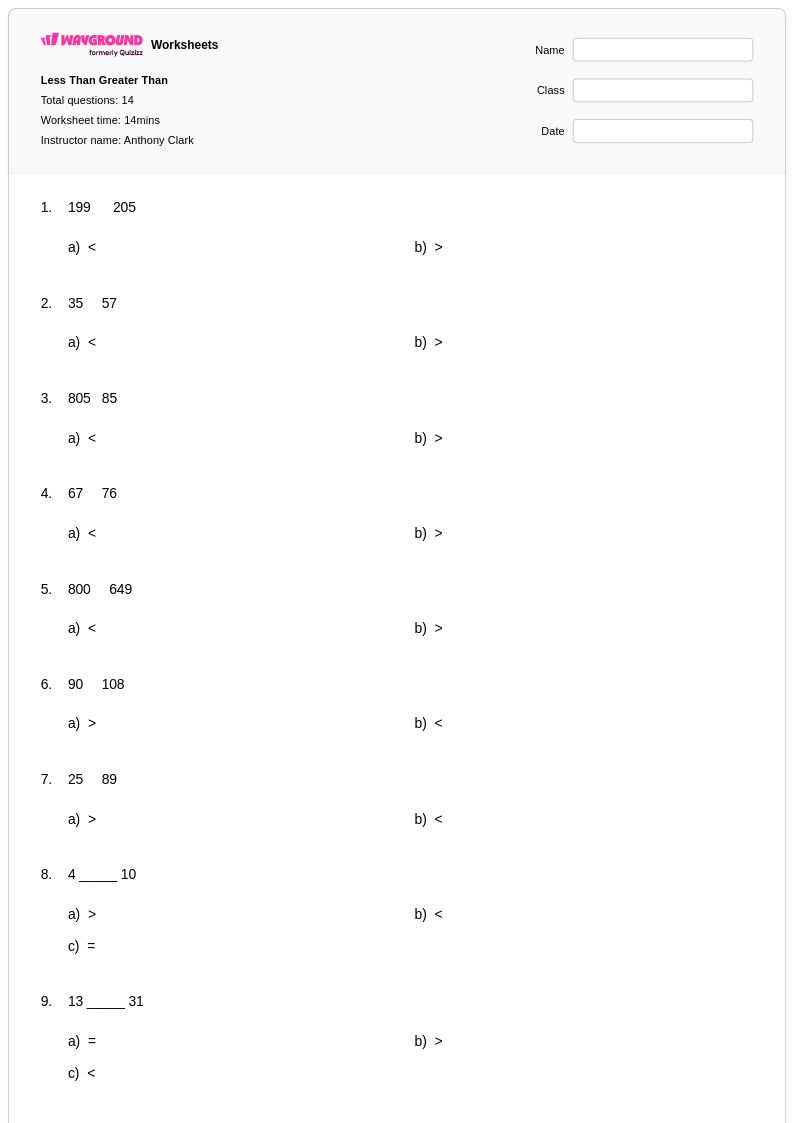
14 Q
2nd - Uni
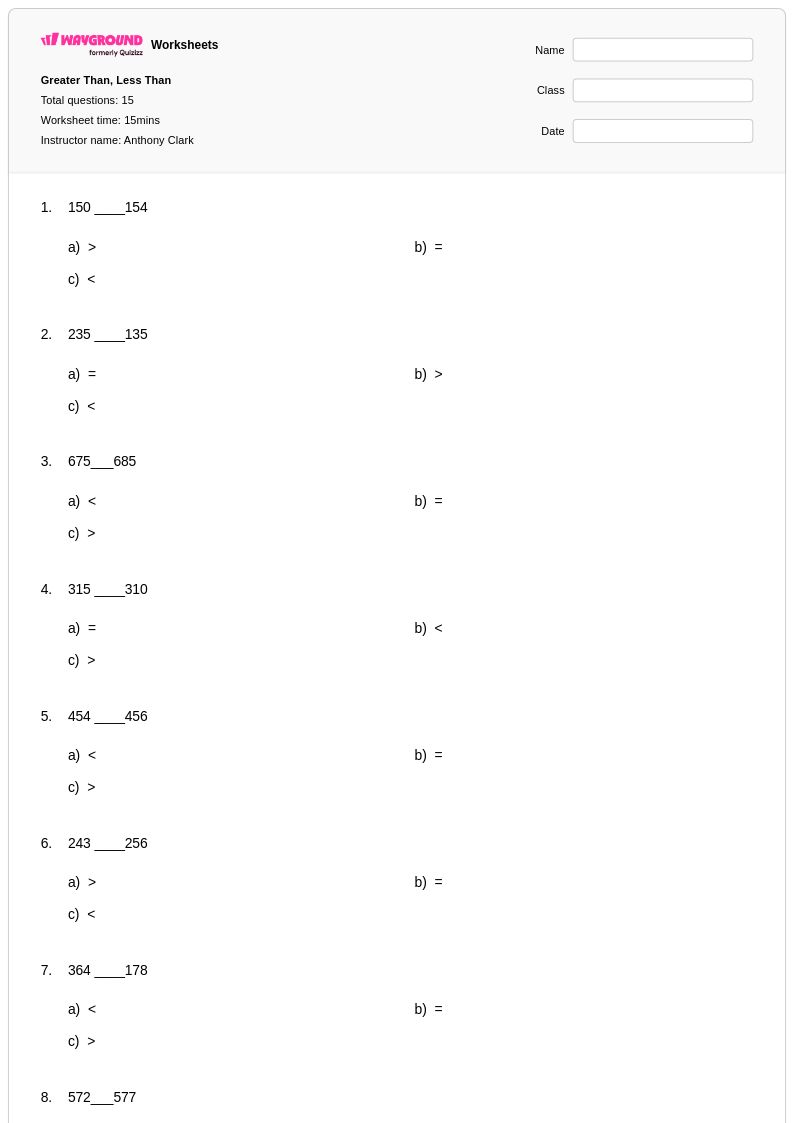
15 Q
1st - Uni
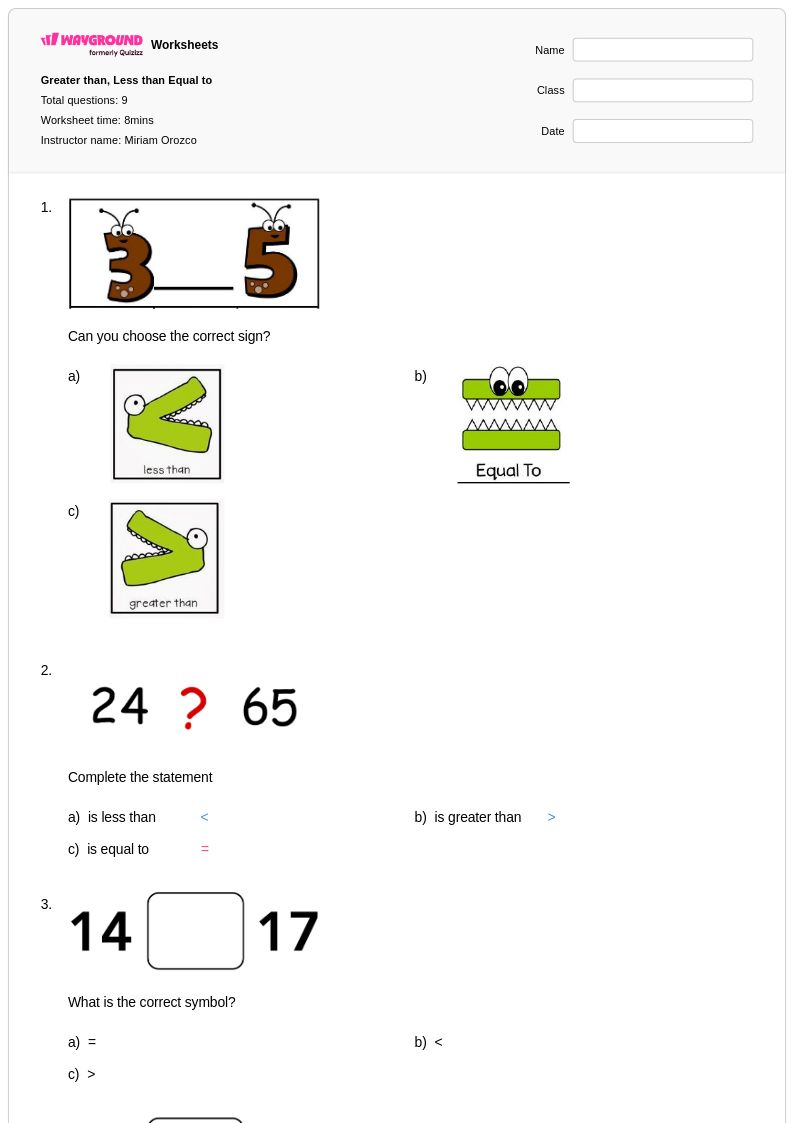
9 Q
1st - 2nd
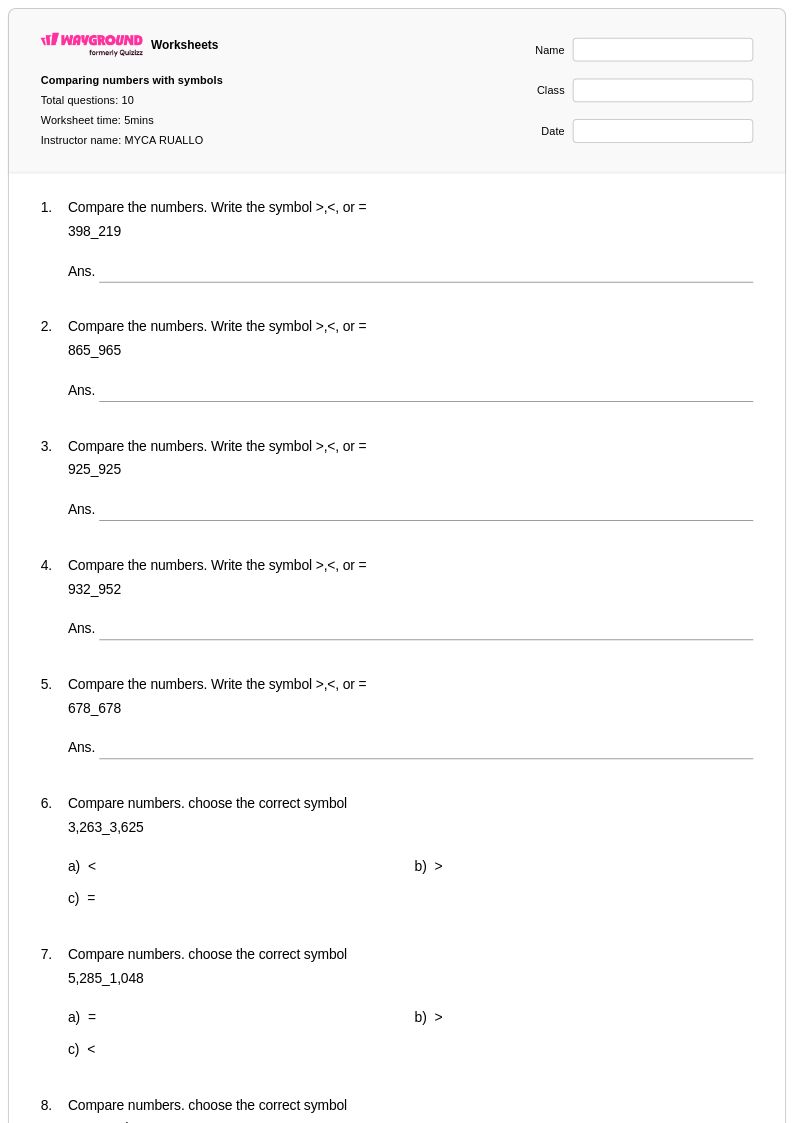
10 Q
2nd
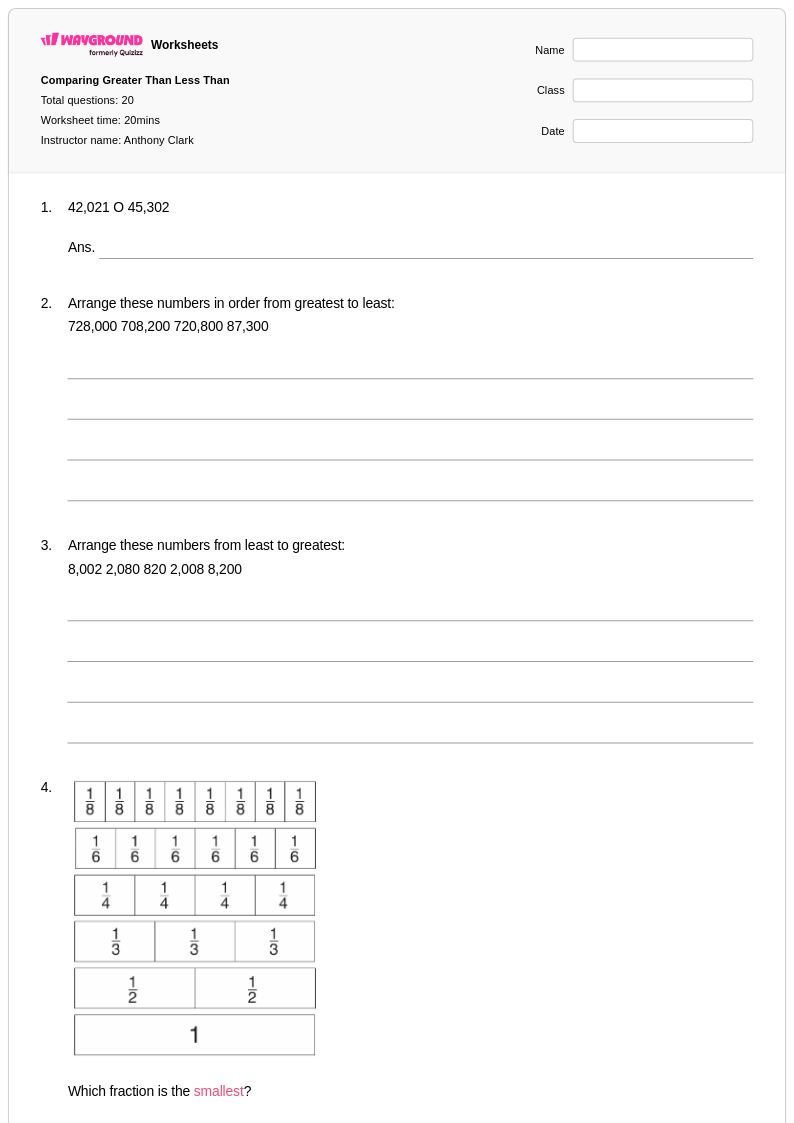
20 Q
1st - Uni
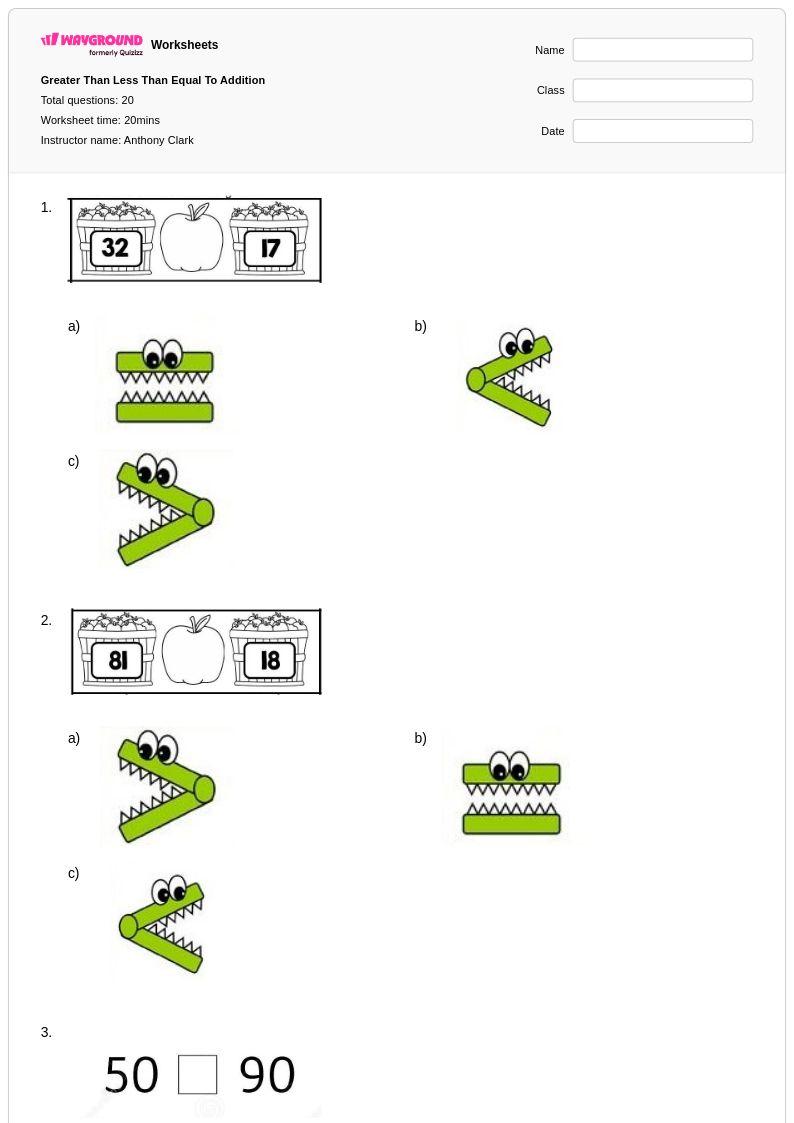
20 Q
2nd - Uni
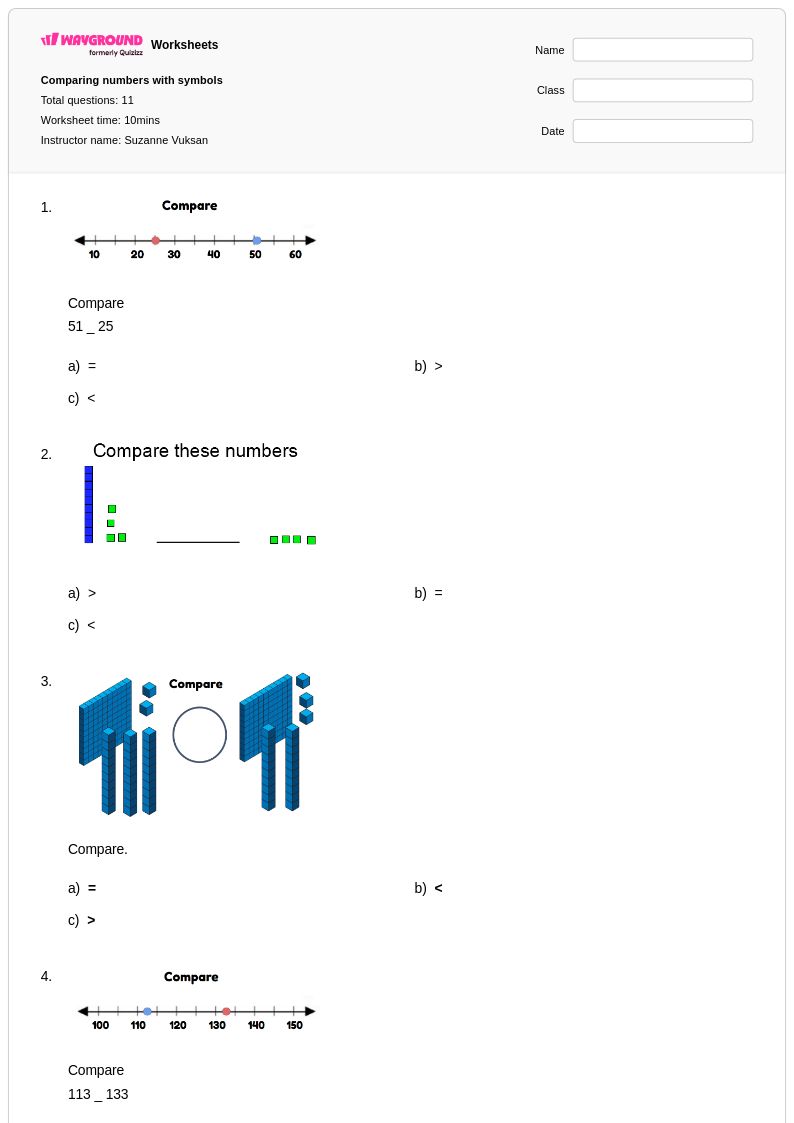
11 Q
2nd
Explore Greater Than Less Than Symbols Worksheets by Grades
Explore Other Subject Worksheets for grade 2
Explore printable Greater Than Less Than Symbols worksheets for Grade 2
Greater than and less than symbols worksheets for Grade 2 students available through Wayground (formerly Quizizz) provide essential foundational practice for developing comparative number sense skills. These carefully designed worksheets help young learners master the critical concept of comparing quantities using the symbols >, <, and =, which forms the backbone of mathematical reasoning and problem-solving abilities. Students engage with practice problems that range from simple single-digit comparisons to more complex two-digit number relationships, building confidence through systematic skill development. Each worksheet collection includes comprehensive answer keys and is available as free printable pdf resources, allowing teachers to seamlessly integrate these materials into daily math instruction and homework assignments.
Wayground (formerly Quizizz) empowers educators with an extensive library of millions of teacher-created greater than less than symbols worksheets, featuring robust search and filtering capabilities that help instructors quickly locate grade-appropriate content aligned with mathematical standards. The platform's differentiation tools enable teachers to customize worksheets for varying skill levels within their Grade 2 classrooms, supporting both remediation for struggling learners and enrichment opportunities for advanced students. Available in both printable pdf format and digital versions, these flexible resources streamline lesson planning while providing targeted skill practice that addresses individual student needs. Teachers can efficiently assess student understanding of comparative number concepts and adjust instruction accordingly, ensuring all learners develop solid foundational skills in mathematical comparison and number relationships.
FAQs
What's the strategy for teaching comparison of three-digit numbers?
What kind of comparison problems are appropriate for second graders?
What error should I watch for when second graders compare numbers like 521 and 519?
How do I get this worksheet for my second-grade class?
What are the Grade 2 expectations for comparing numbers?
How can I differentiate this Grade 2 comparison worksheet?