
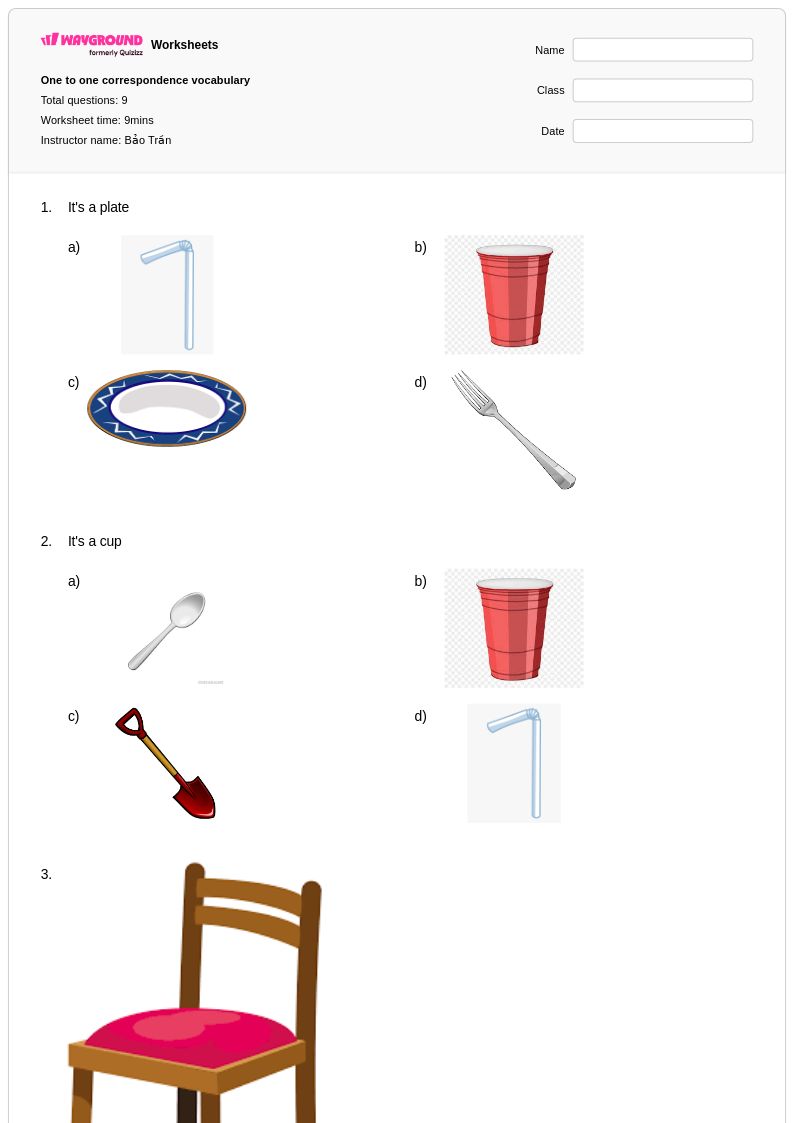
9 T
KG - 3rd
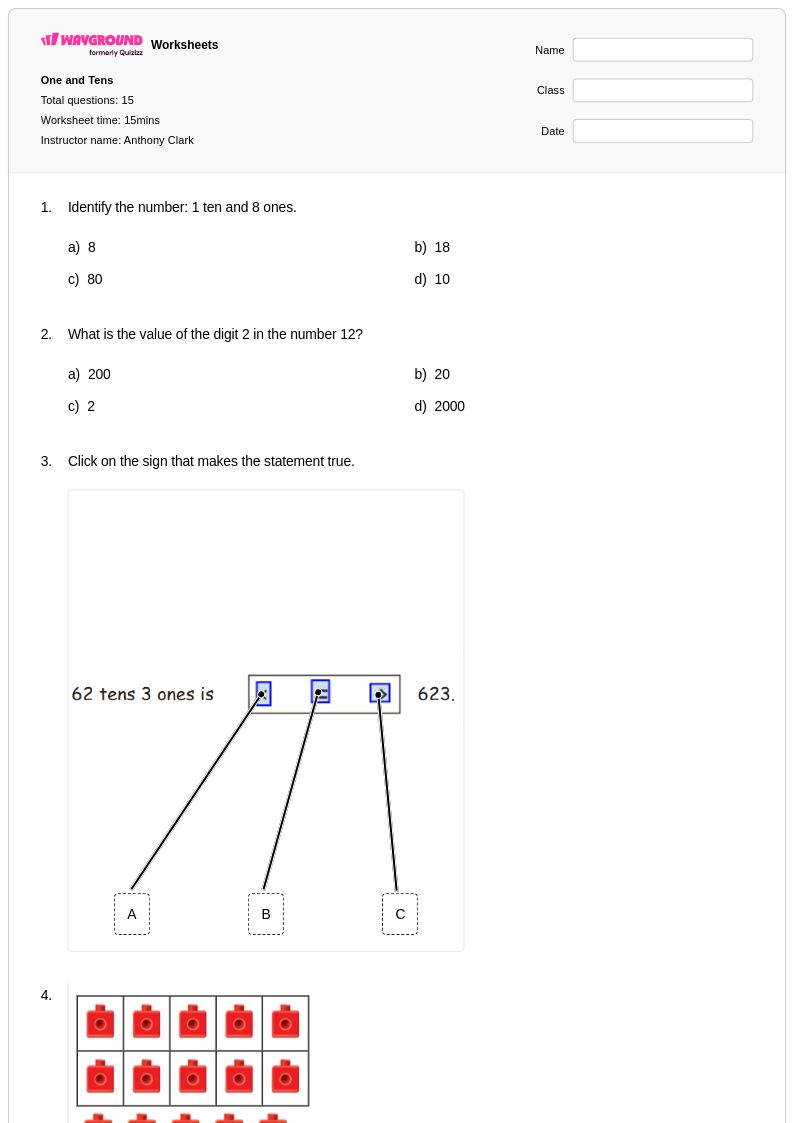
15 T
1st - Uni
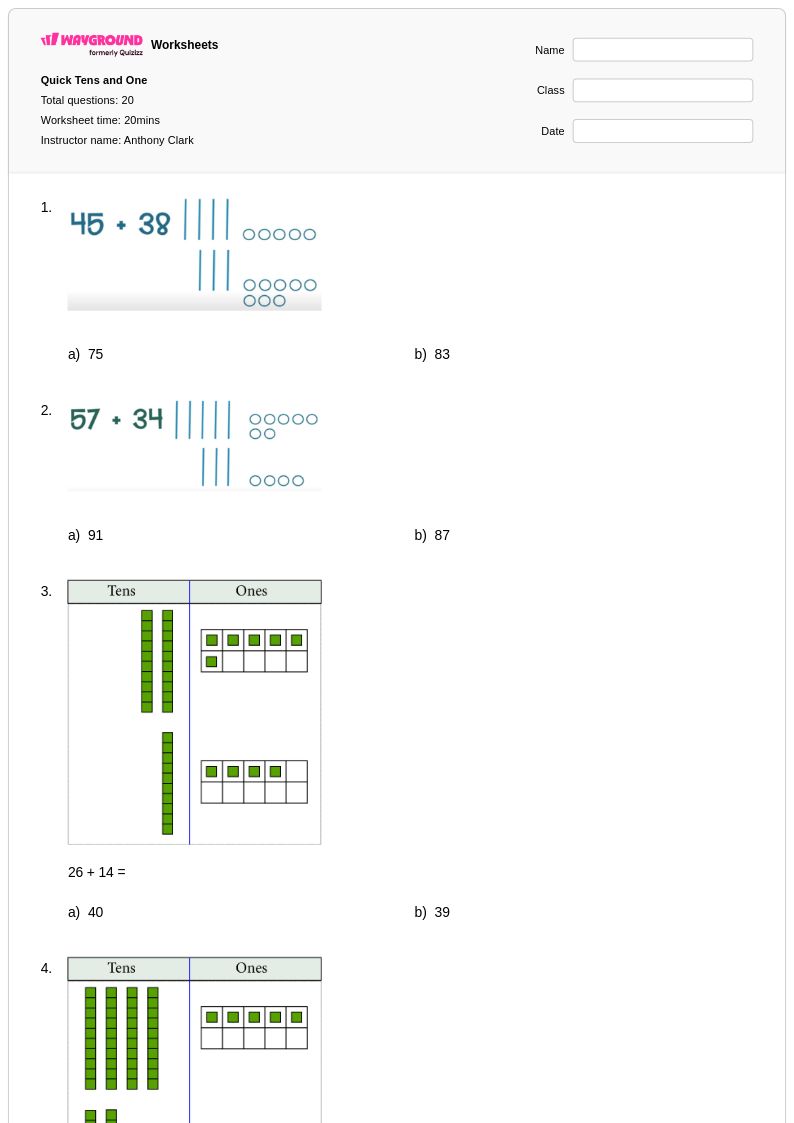
20 T
1st - Uni
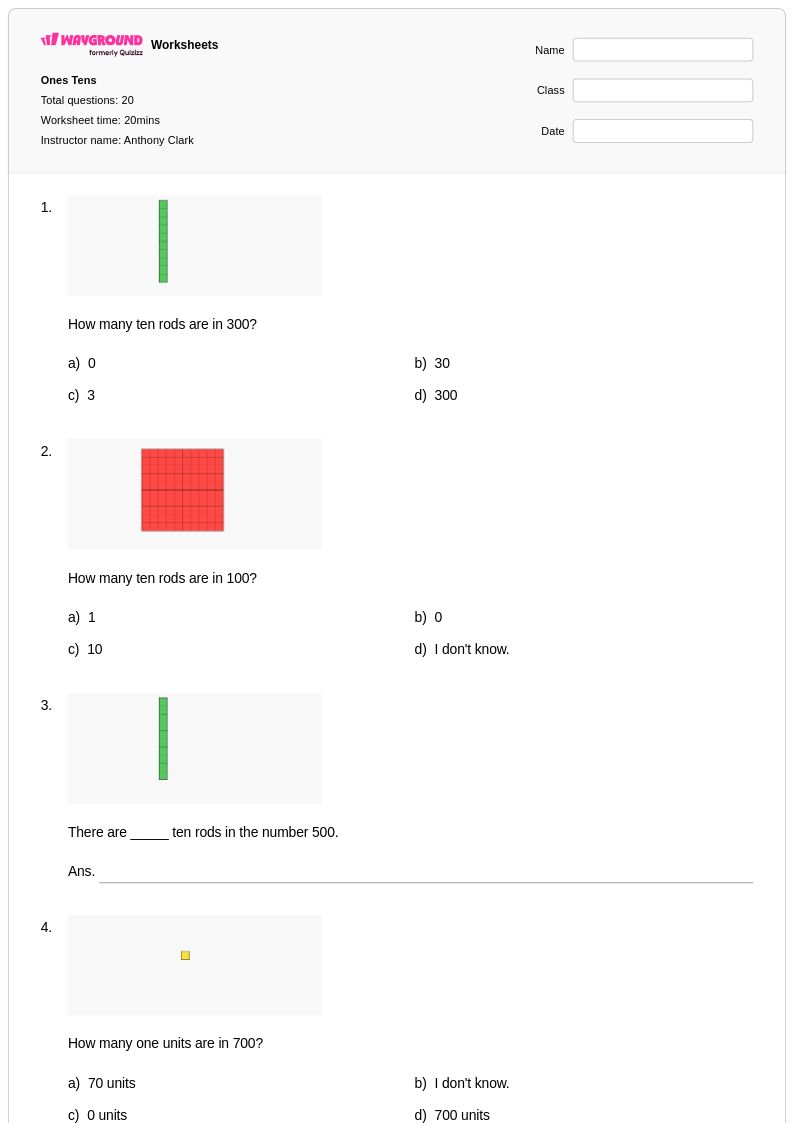
20 T
2nd - Uni
20 T
1st - Uni
20 T
1st - Uni
20 T
1st - Uni
119 T
KG - 2nd
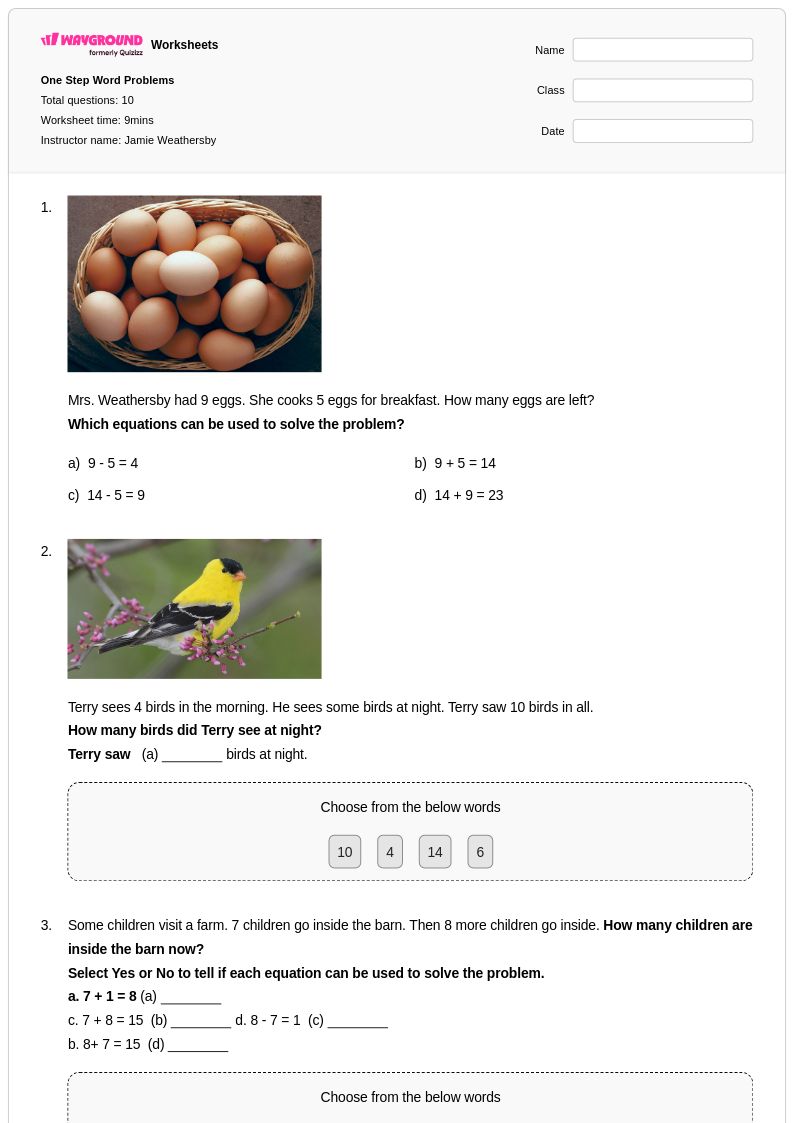
10 T
2nd
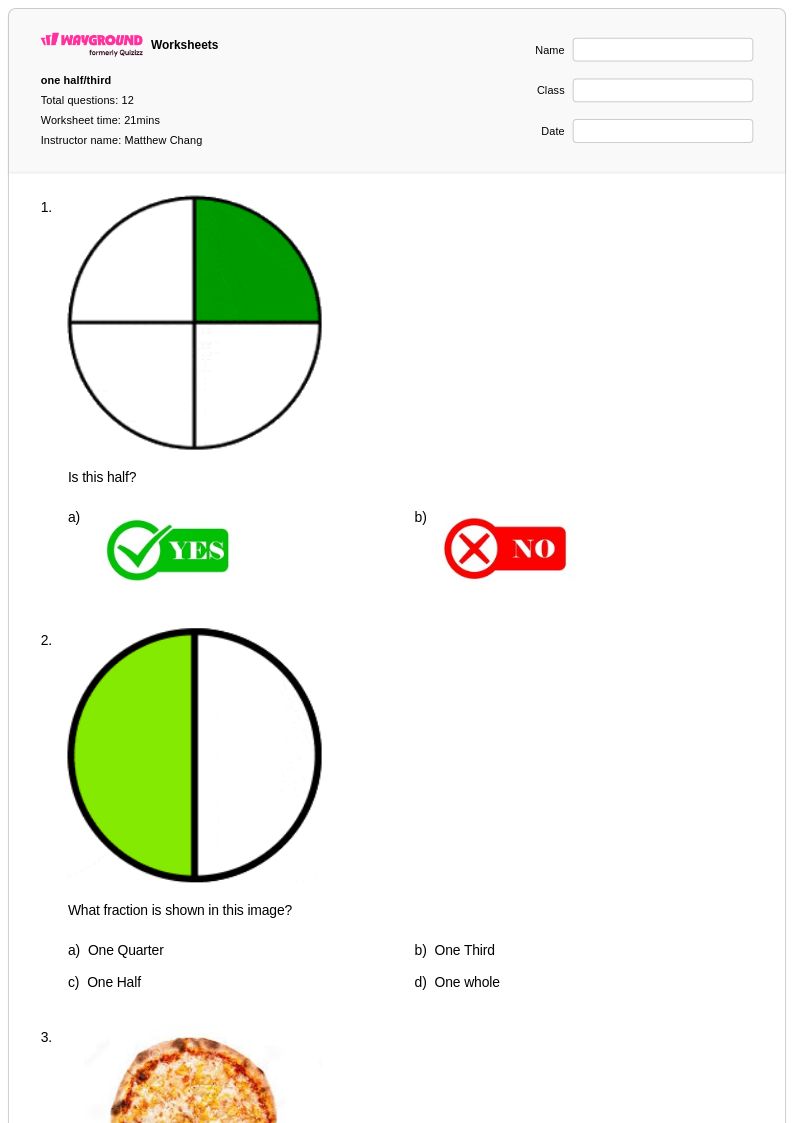
12 T
2nd
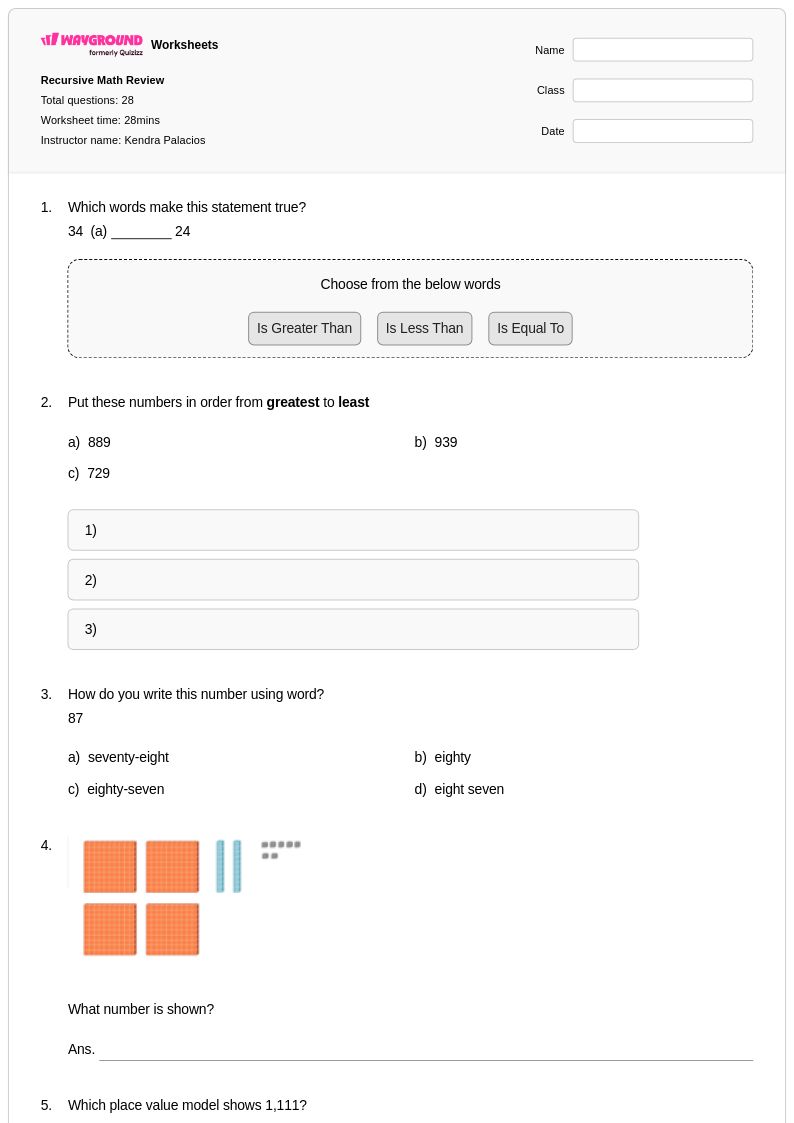
28 T
2nd
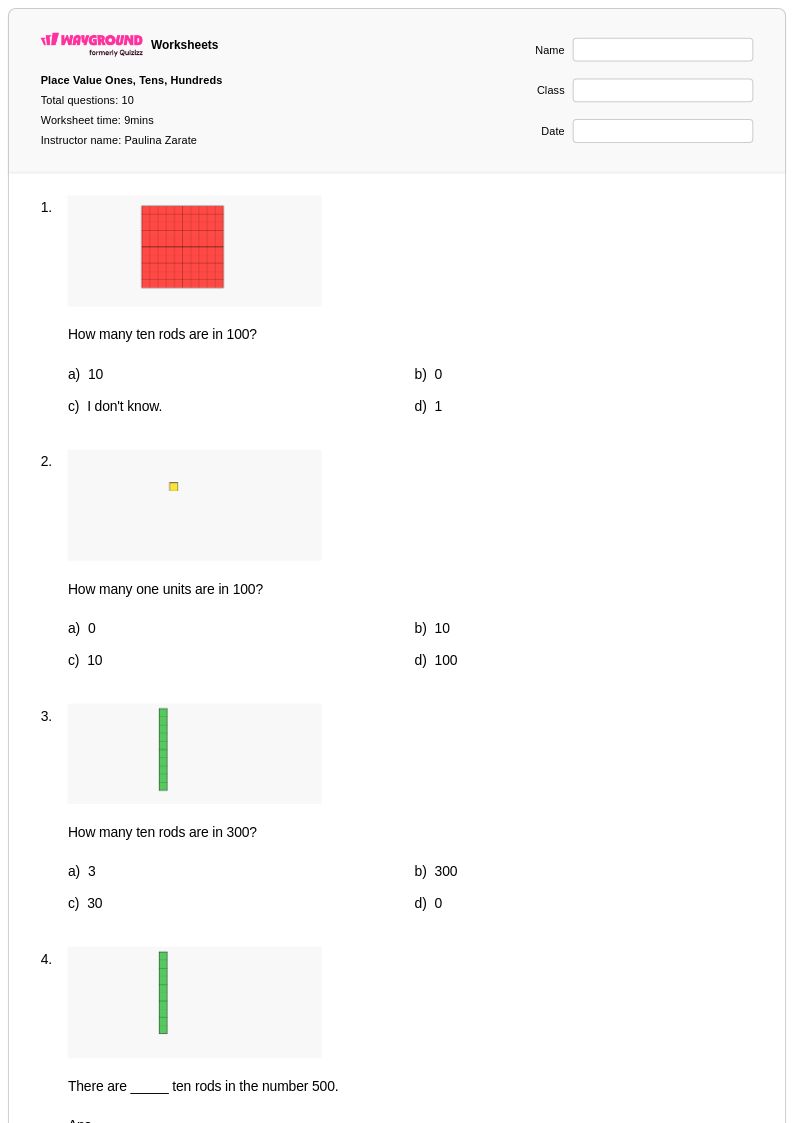
10 T
2nd
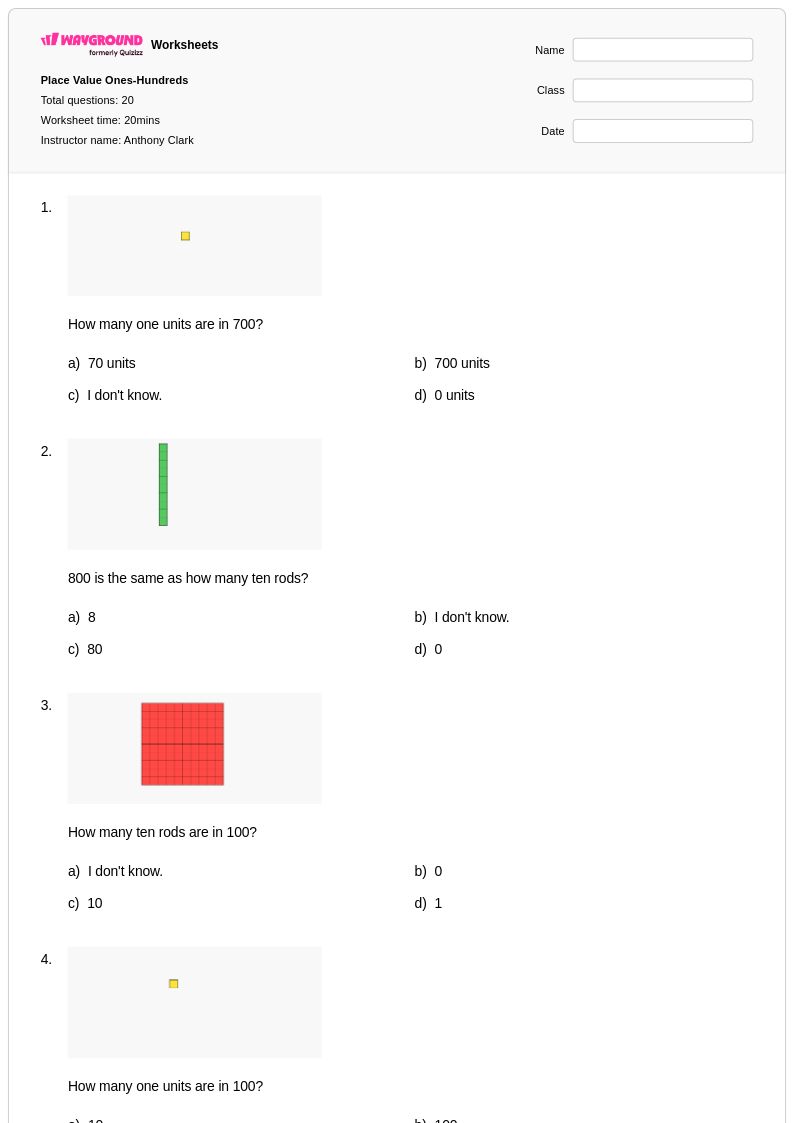
20 T
2nd - Uni
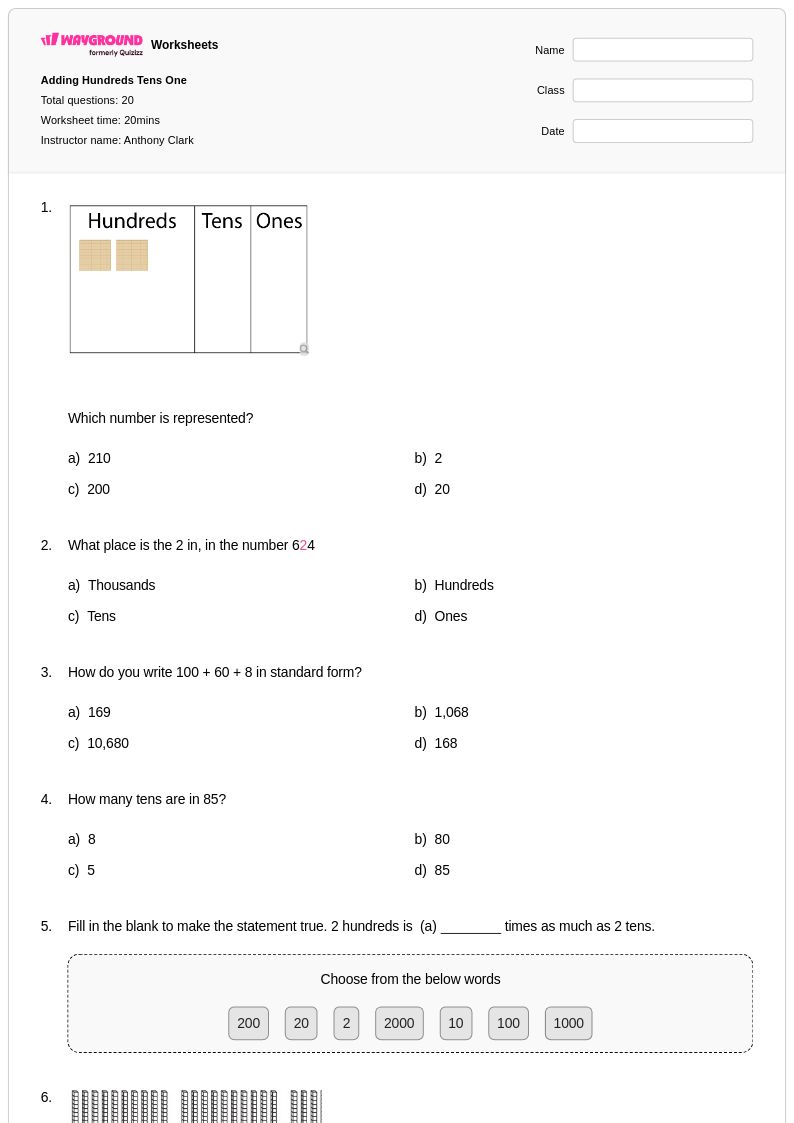
20 T
2nd - Uni
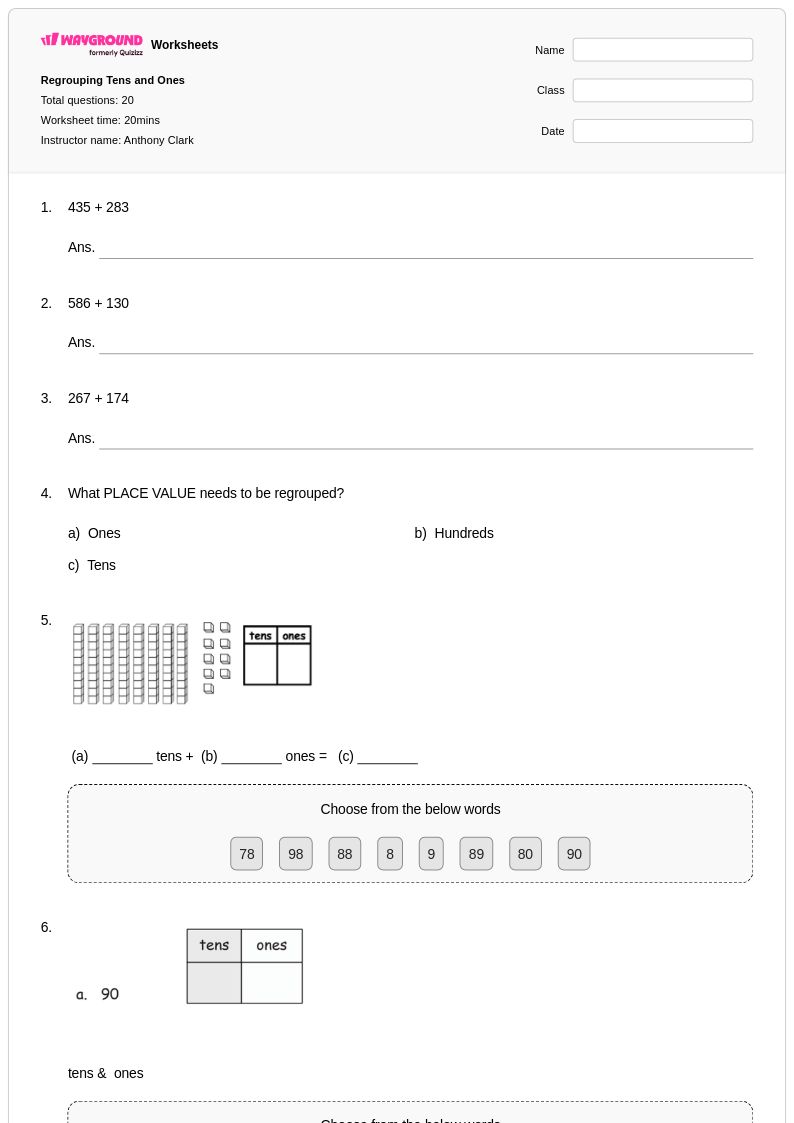
20 T
2nd - Uni
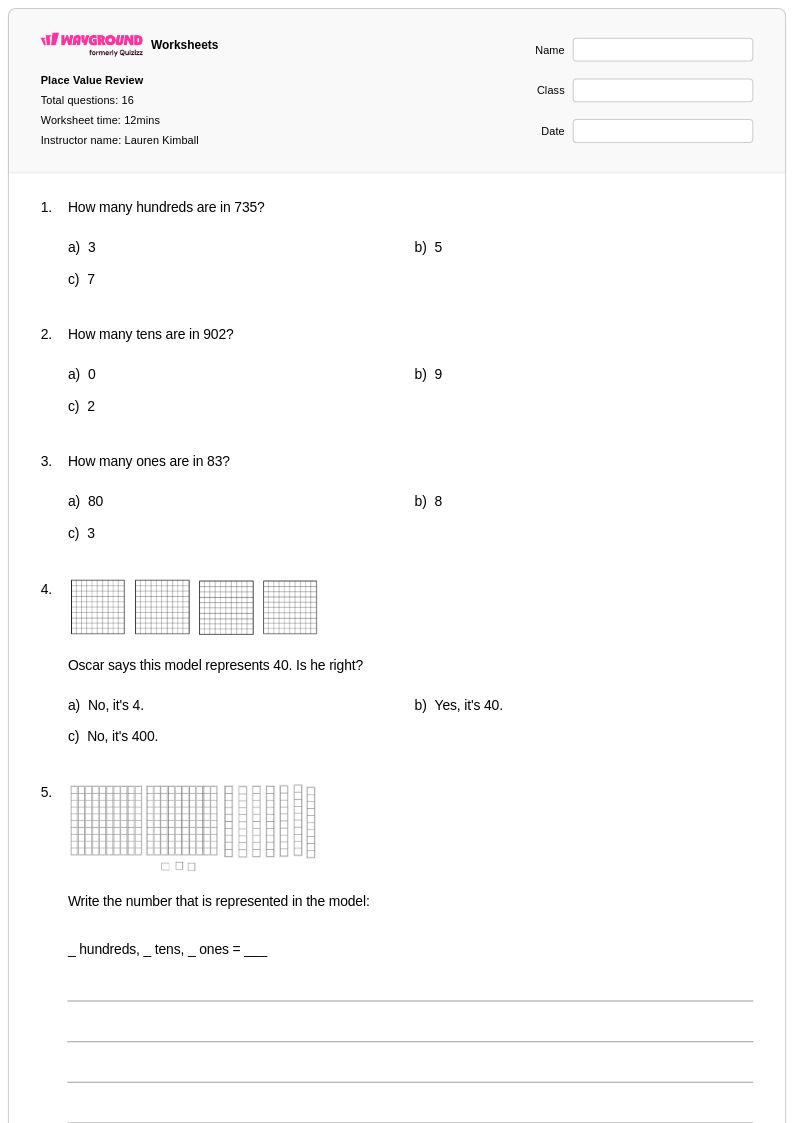
16 T
2nd
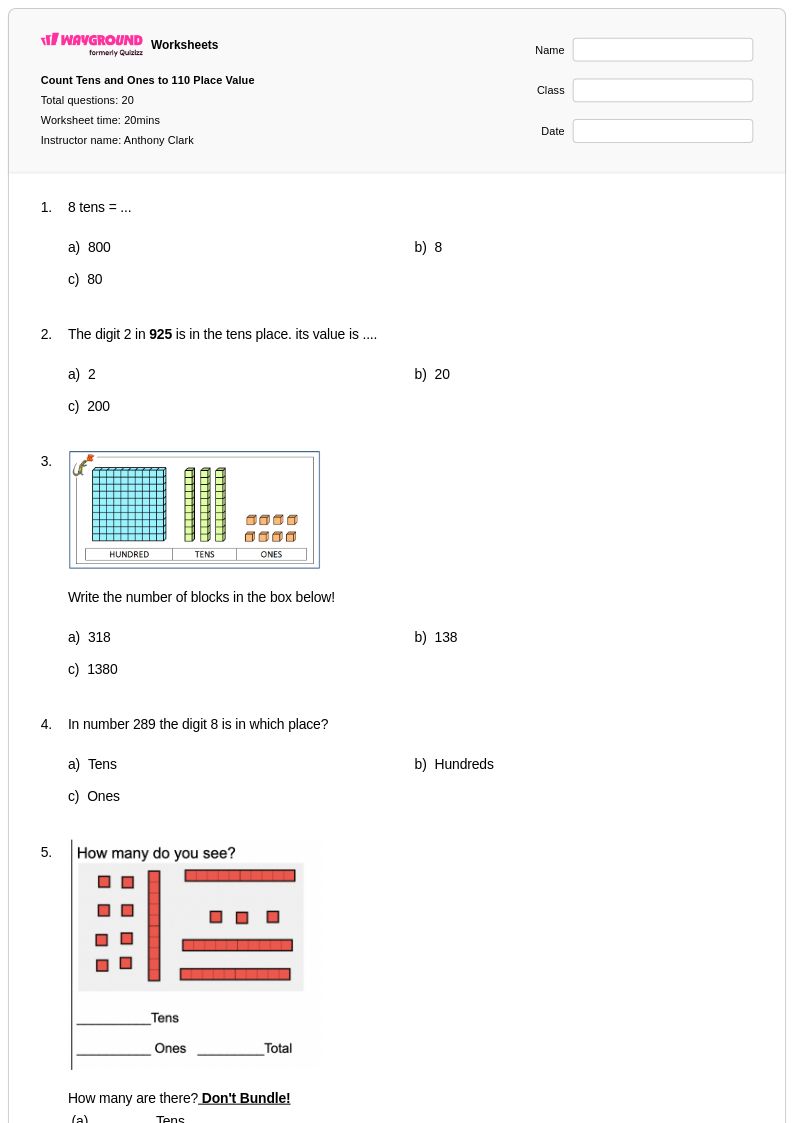
20 T
1st - Uni
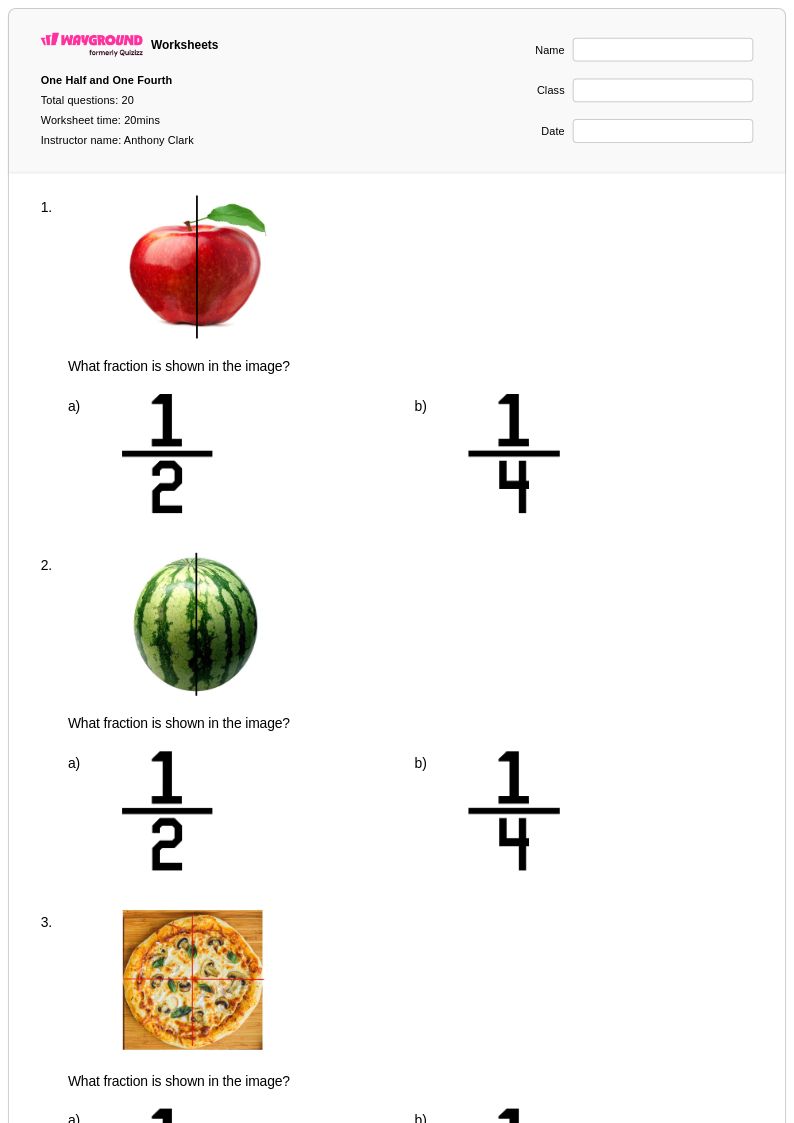
20 T
2nd - Uni
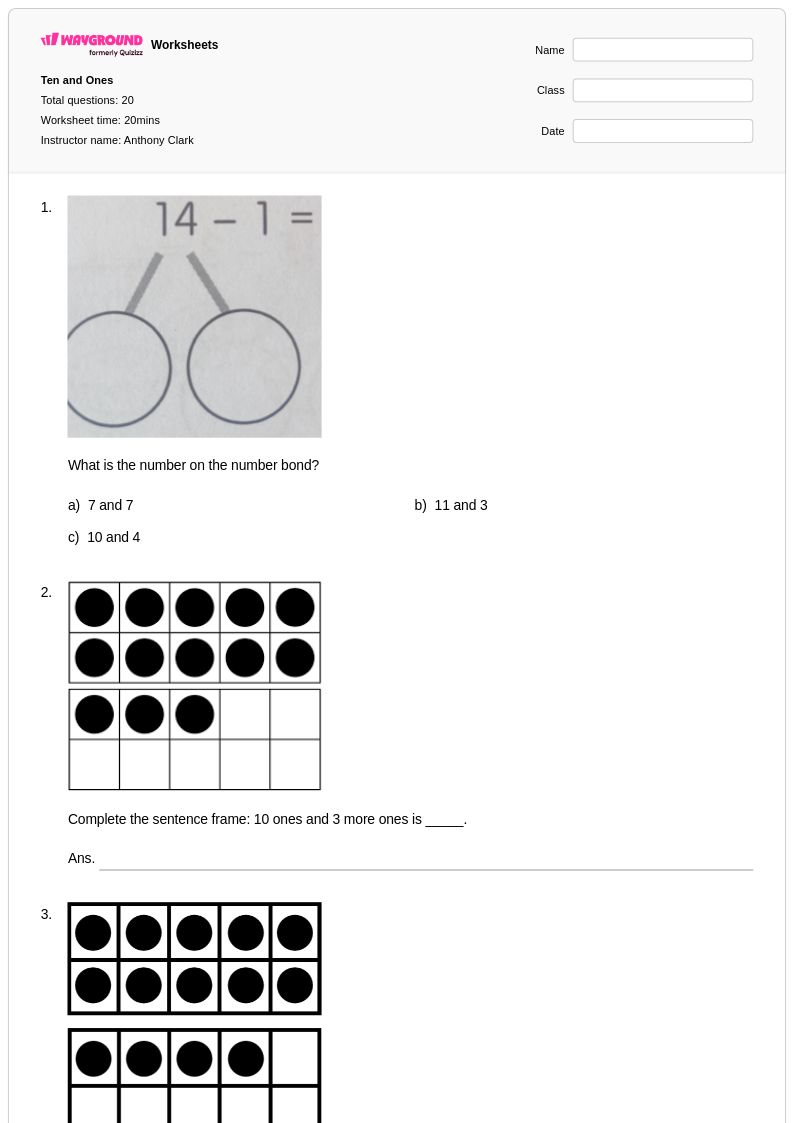
20 T
1st - Uni
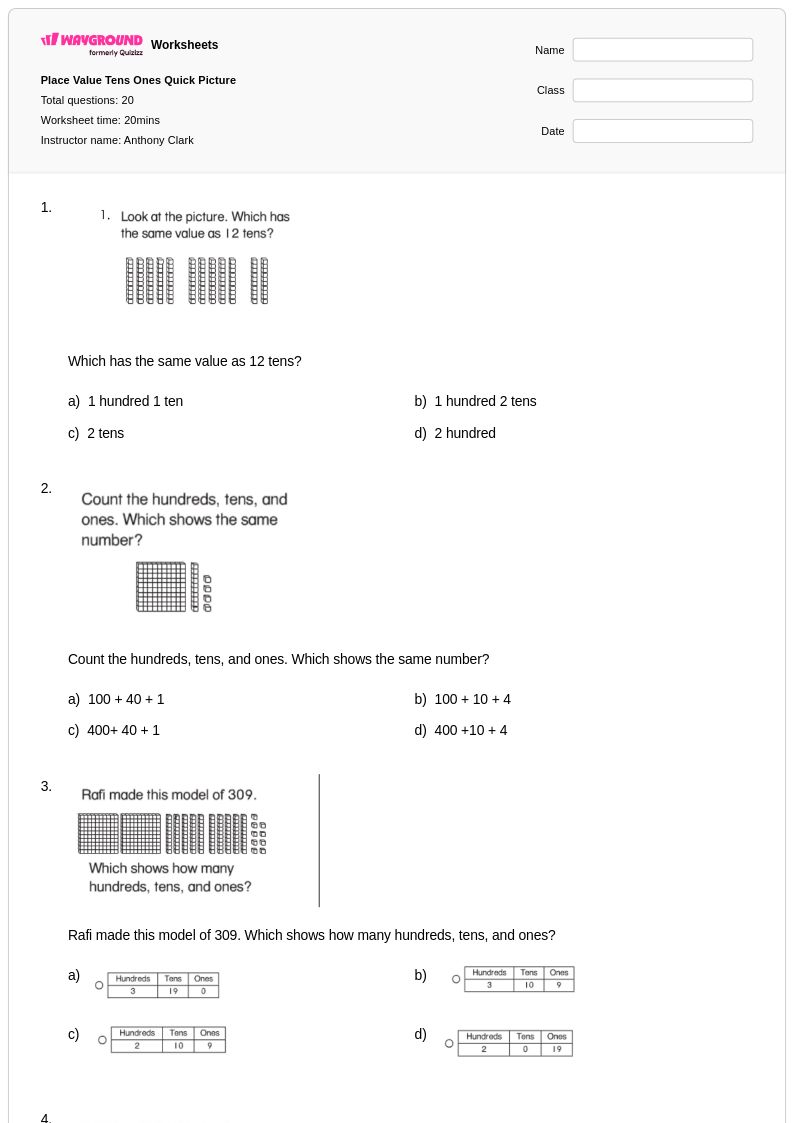
20 T
2nd - Uni
20 T
1st - Uni
9 T
1st - 3rd
10 T
2nd
20 T
2nd - Uni
Jelajahi One-to-one Correspondence Lembar Kerja berdasarkan Nilai
Jelajahi Lembar Kerja Mata Pelajaran Lainnya untuk grade 2
Explore printable One-to-one Correspondence worksheets for Grade 2
One-to-one correspondence worksheets for Grade 2 available through Wayground (formerly Quizizz) provide essential foundational practice for developing mathematical thinking and number sense skills. These carefully designed printables focus on helping young learners establish the critical understanding that each object in a set corresponds to exactly one counting number, forming the basis for all future mathematical concepts. Students engage with practice problems that require them to match objects systematically, count accurately, and recognize equal quantities across different arrangements and representations. Each worksheet collection includes comprehensive answer keys and free pdf formats, making it simple for educators to implement immediate feedback and assessment while students master this fundamental mathematical relationship through structured, engaging activities.
Wayground (formerly Quizizz) supports teachers with an extensive collection of millions of teacher-created one-to-one correspondence resources that streamline lesson planning and differentiated instruction for Grade 2 mathematics. The platform's robust search and filtering capabilities allow educators to quickly locate worksheets aligned with specific standards and learning objectives, while built-in differentiation tools enable seamless customization for diverse learner needs and abilities. Teachers can access these materials in both printable and digital pdf formats, providing flexibility for classroom implementation, homework assignments, remediation sessions, and enrichment activities. This comprehensive approach ensures that educators have the necessary resources to support systematic skill development, target specific learning gaps, and reinforce one-to-one correspondence concepts through varied practice opportunities that meet individual student requirements.
FAQs
Why would a second-grade student need a worksheet on one-to-one correspondence?
How can I identify a second grader who lacks one-to-one correspondence?
What is the best way to reteach one-to-one correspondence in second grade?
How can I use these worksheets for intervention in my second-grade class?
How does a gap in one-to-one correspondence impact second-grade math learning?
What accommodations are helpful for a student needing this level of remediation?