
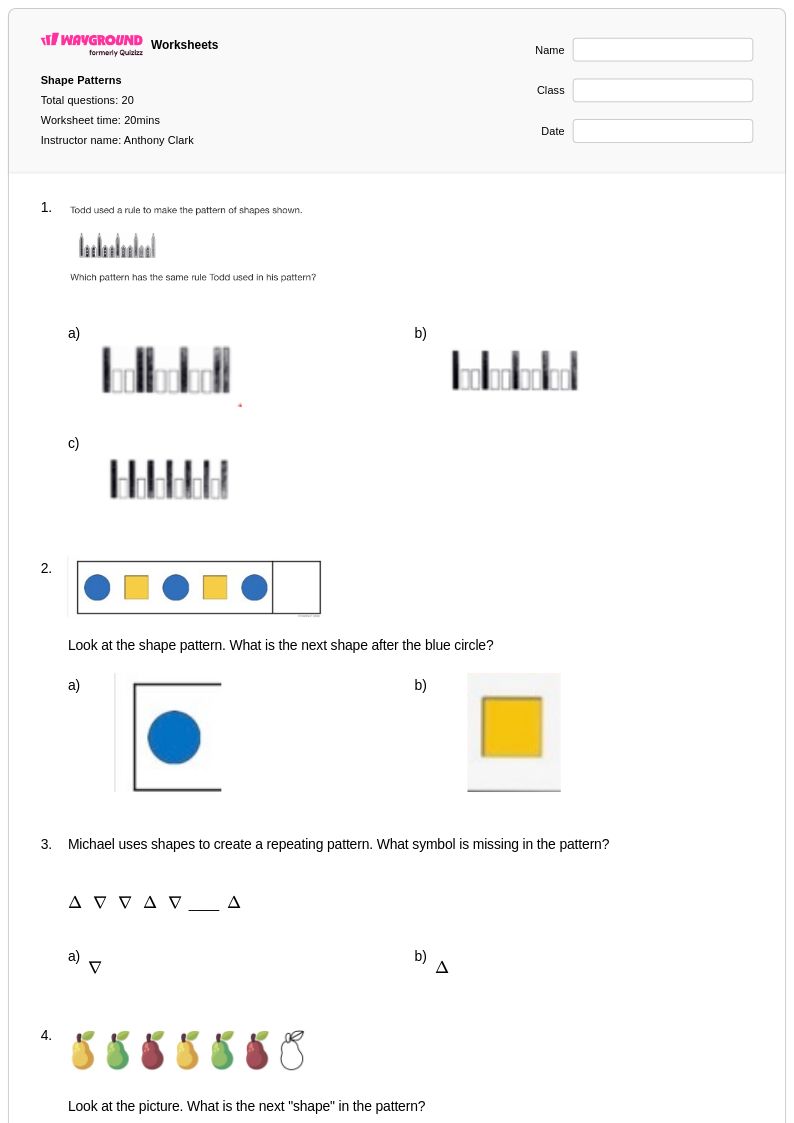
20Q
4th - Uni
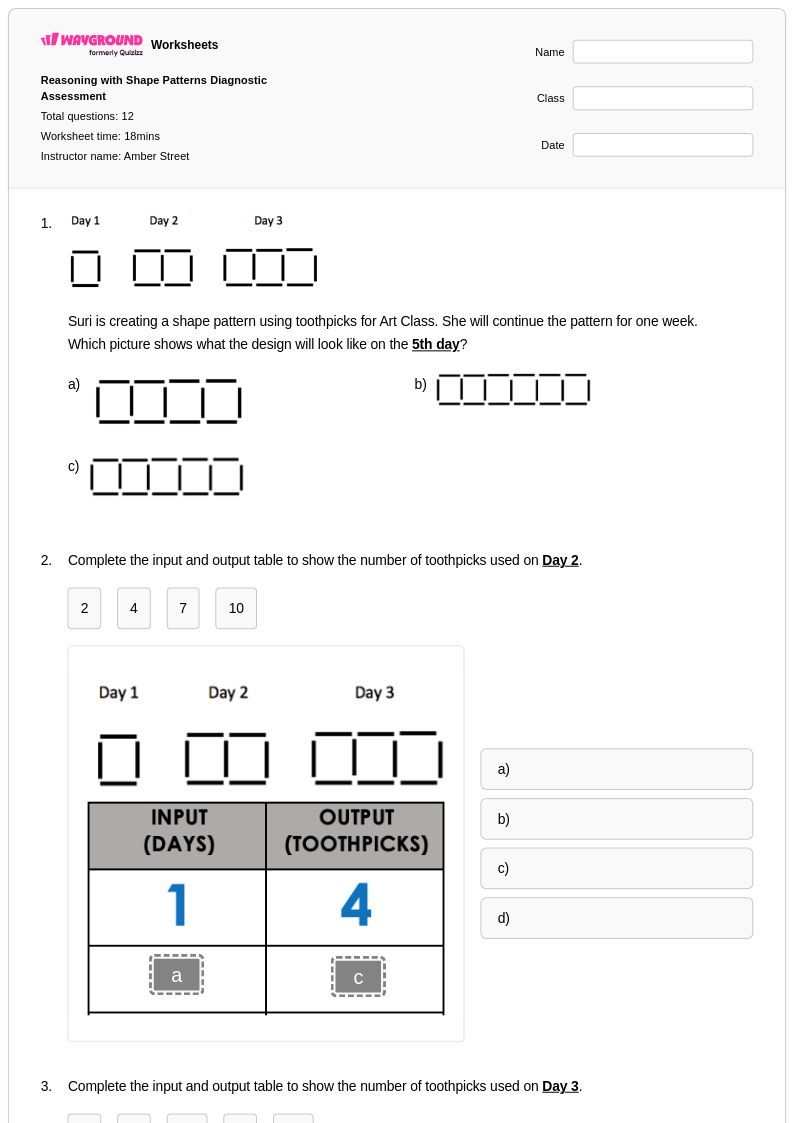
12Q
4th
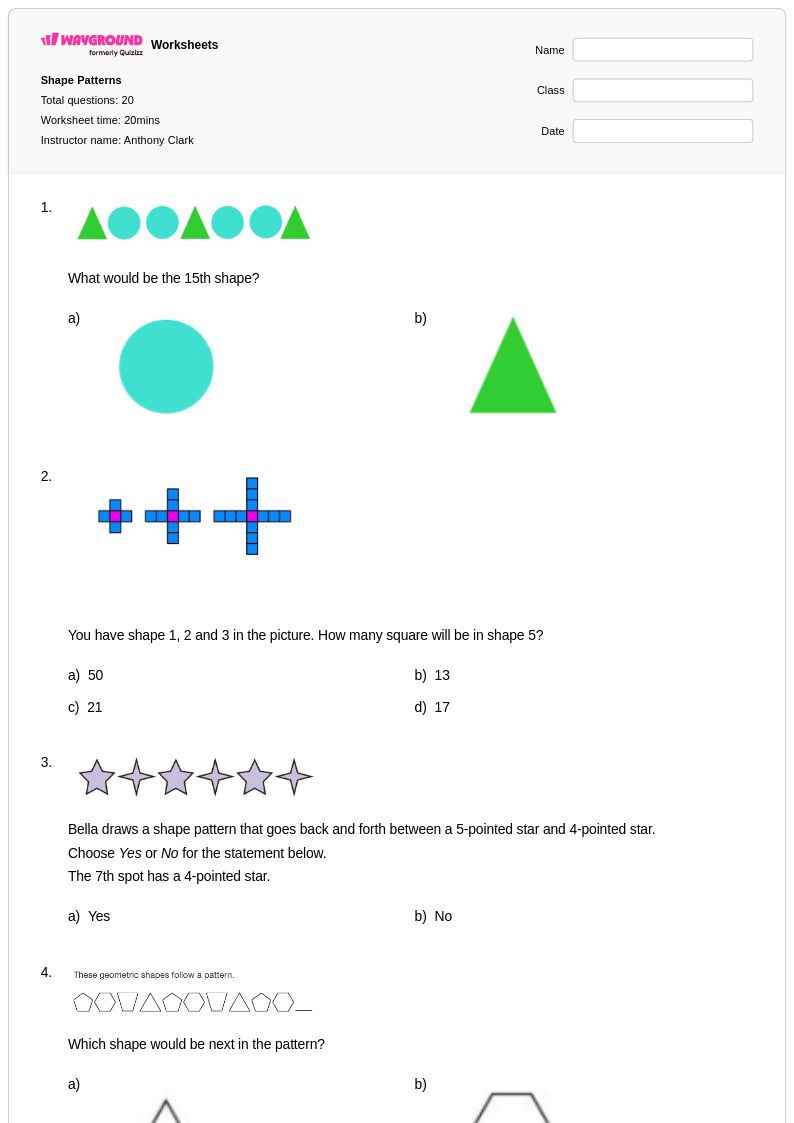
20Q
4th - Uni
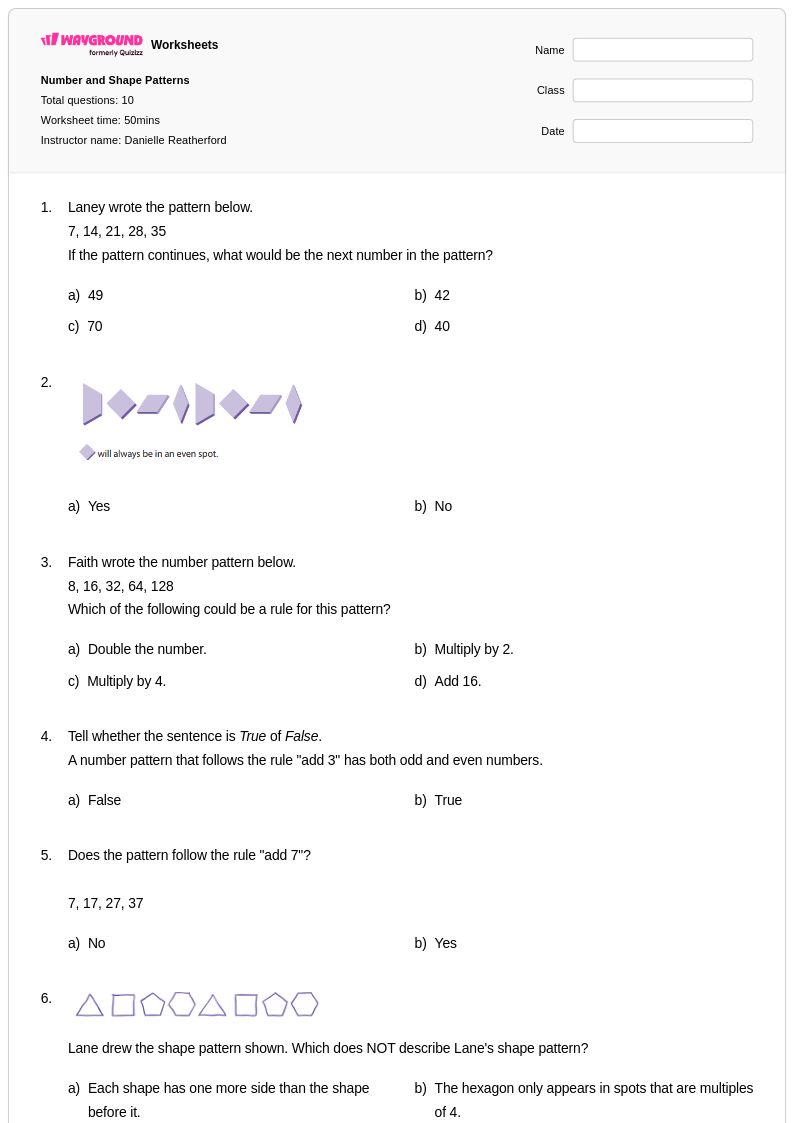
10Q
4th
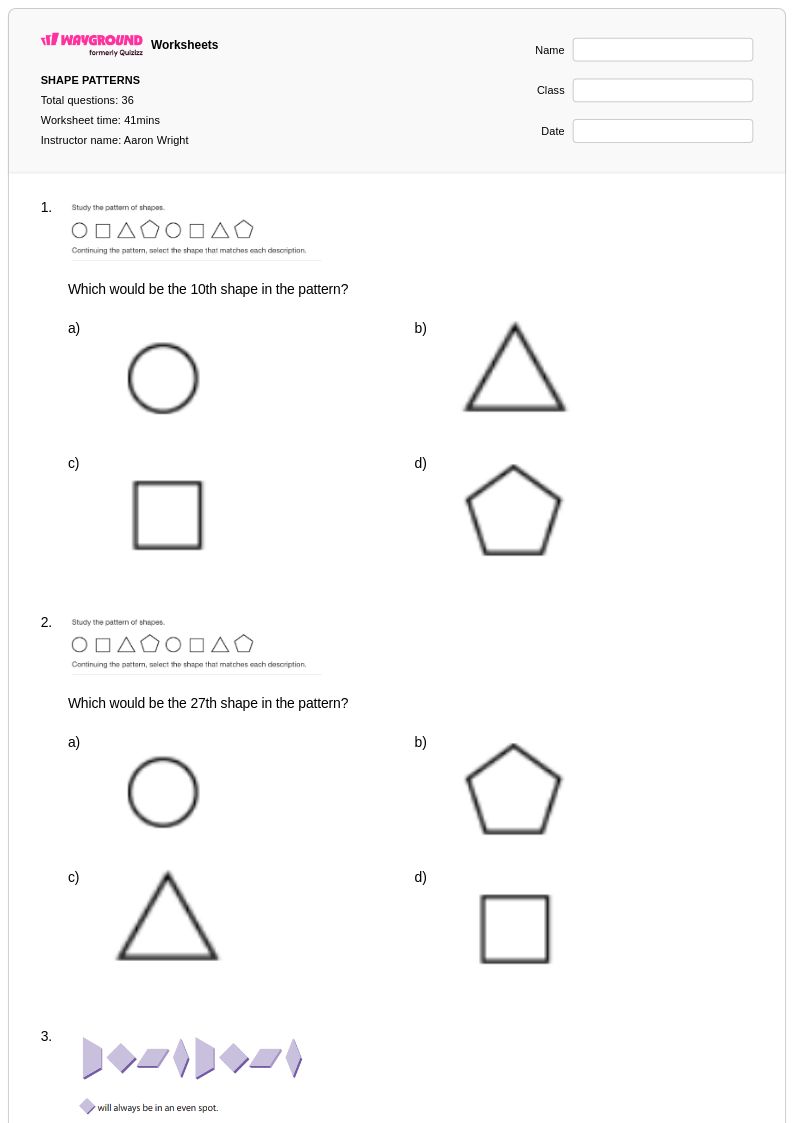
36Q
4th
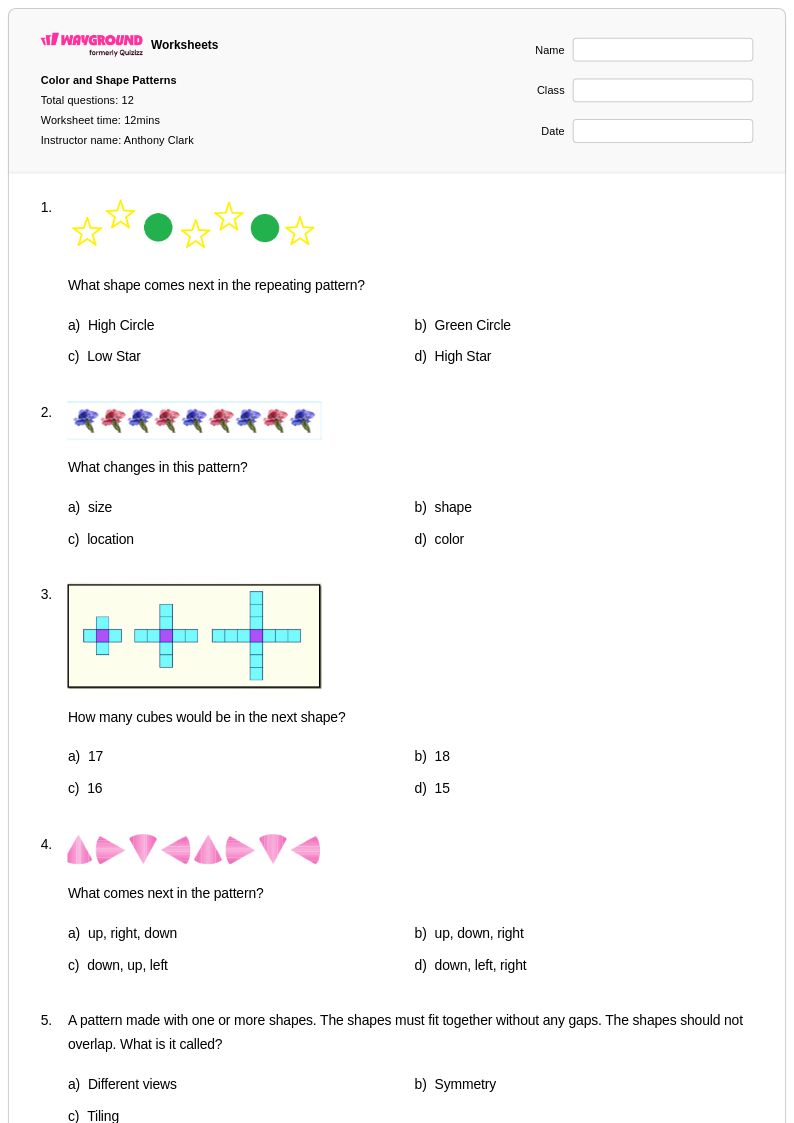
12Q
3rd - Uni
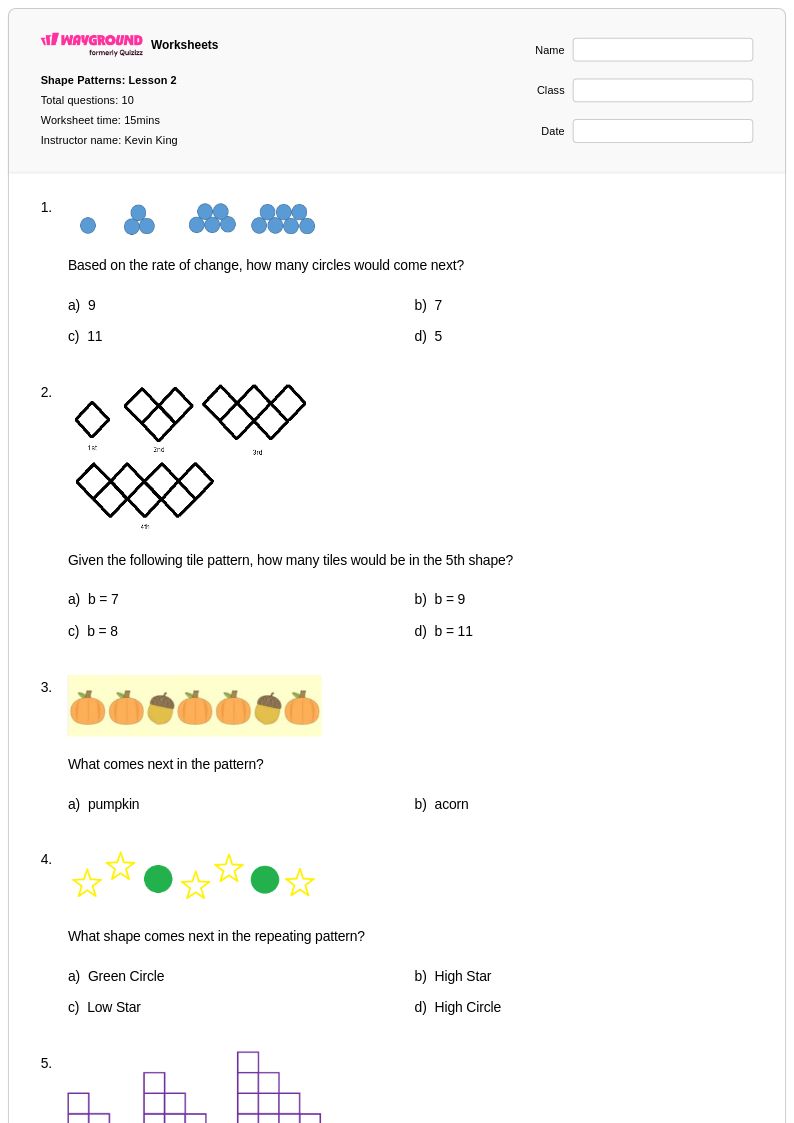
10Q
4th
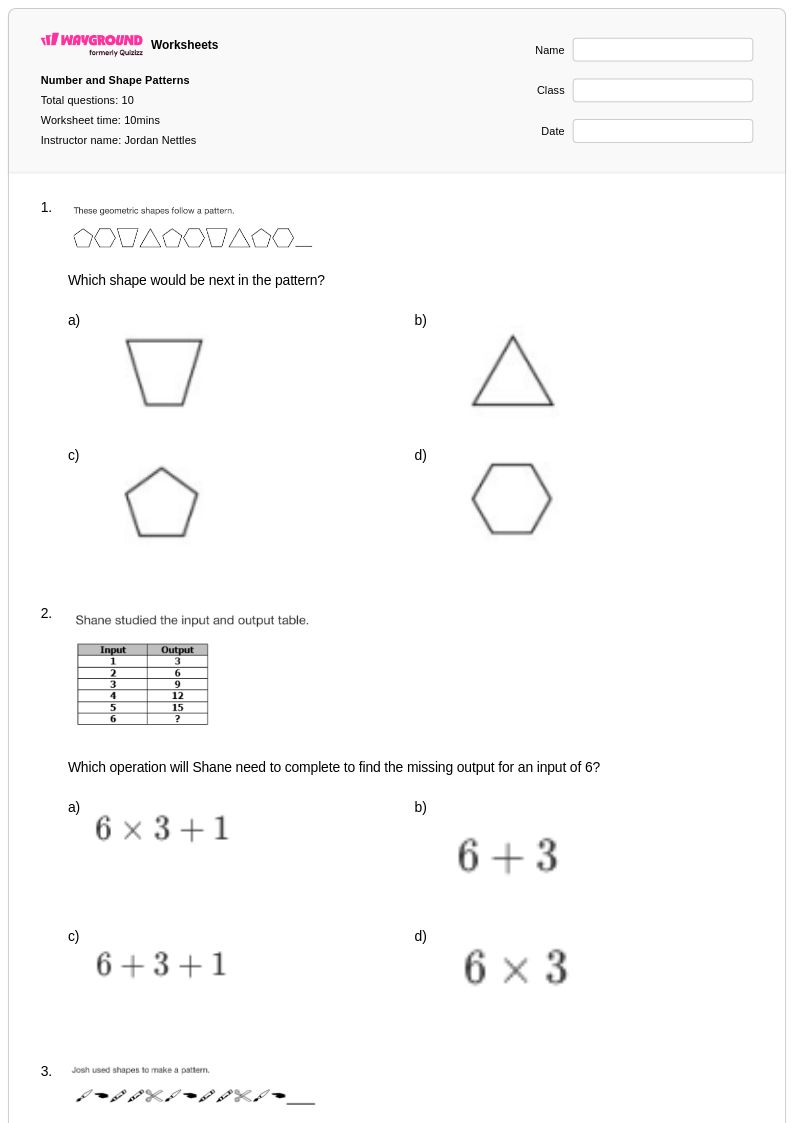
10Q
4th
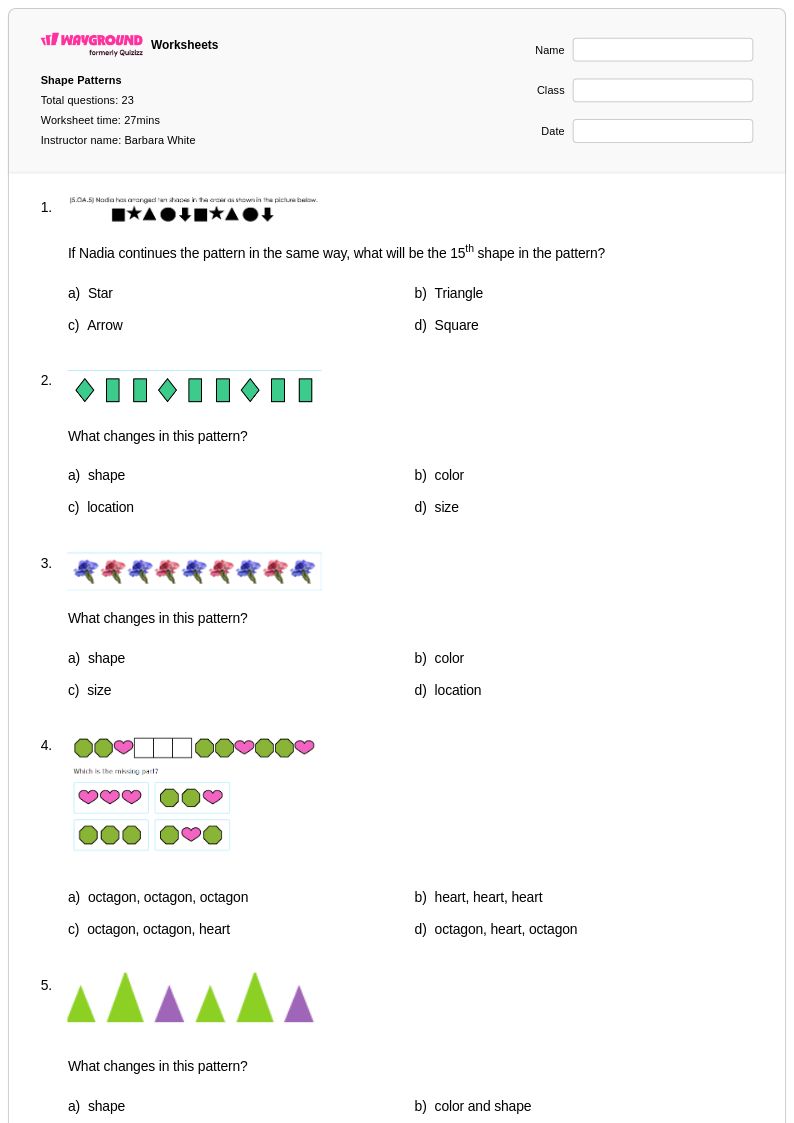
23Q
4th
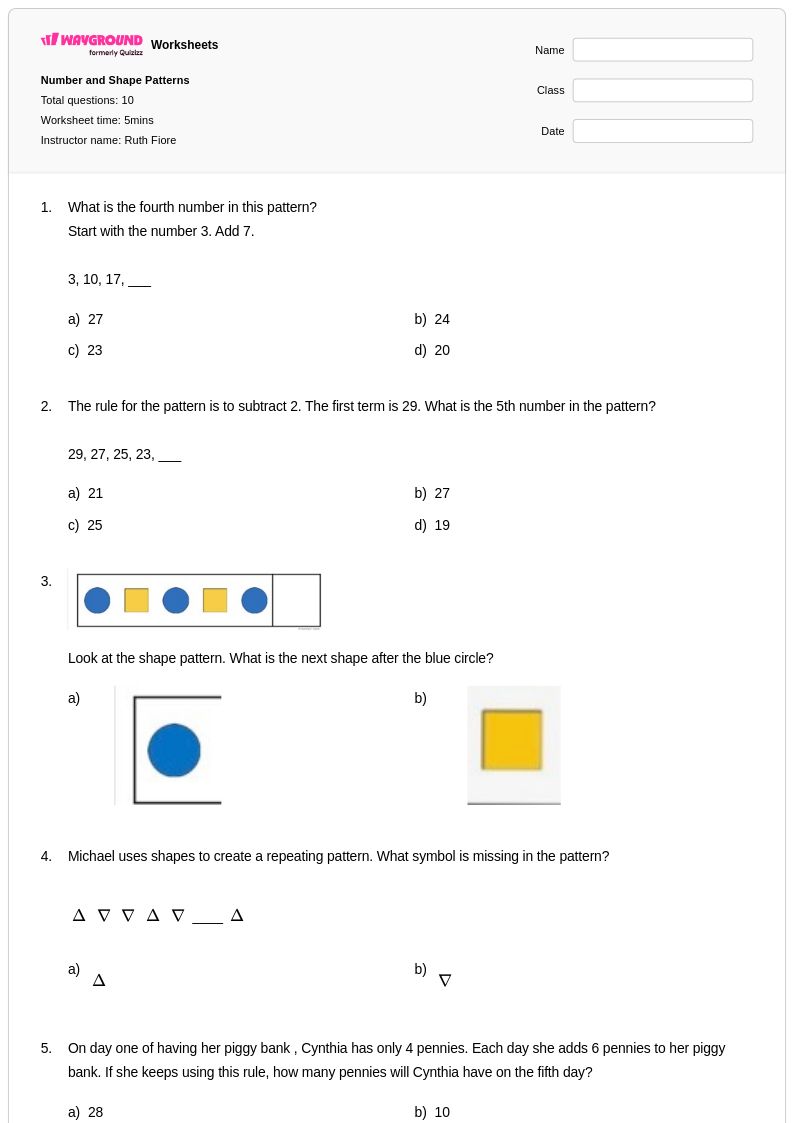
10Q
4th
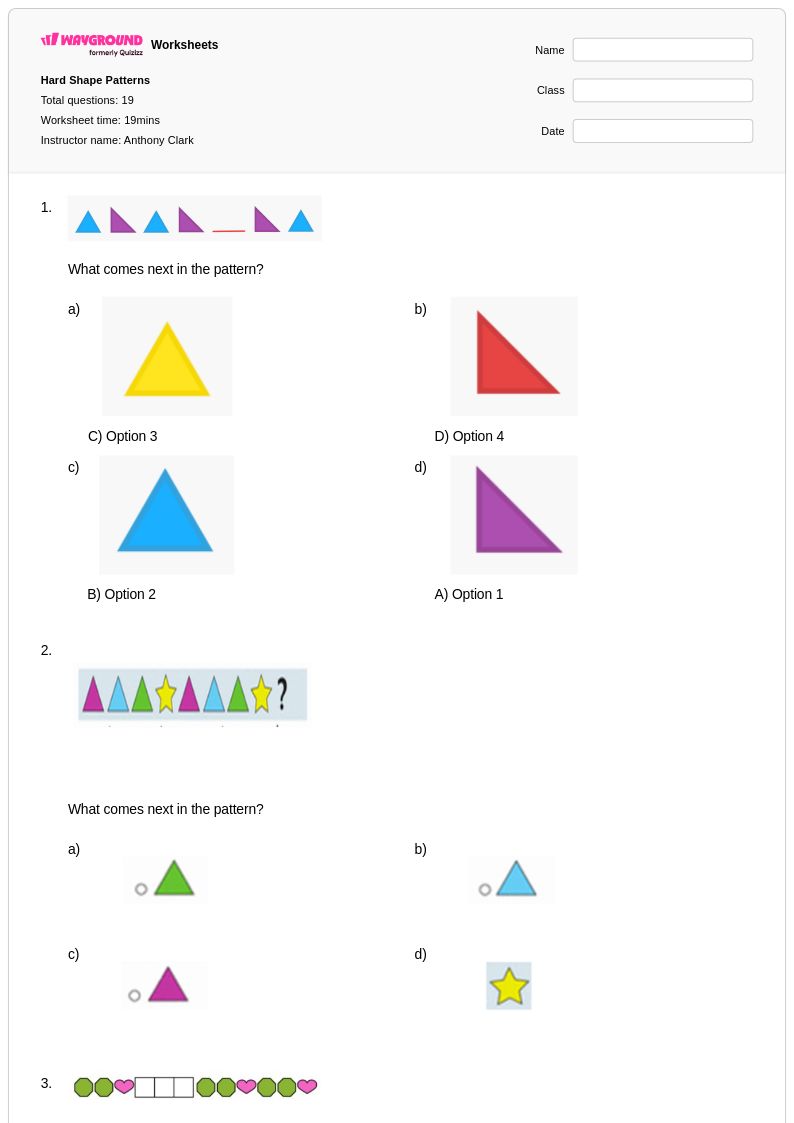
19Q
1st - Uni
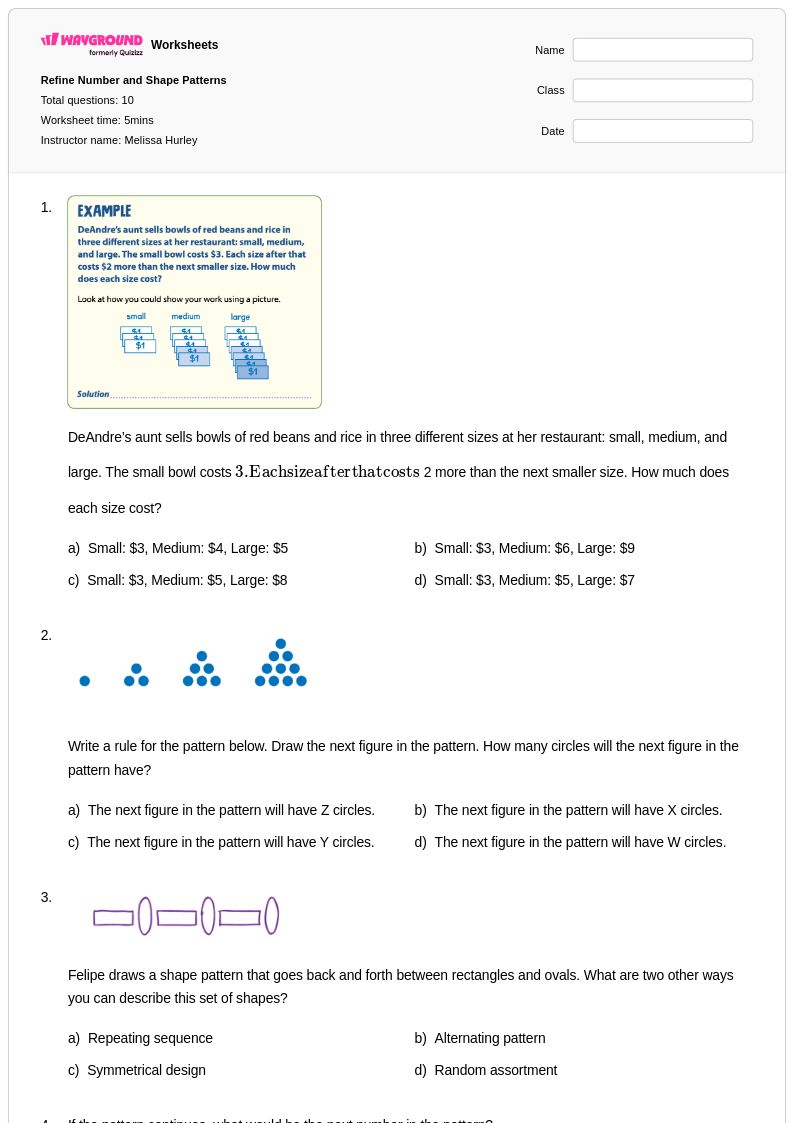
10Q
4th
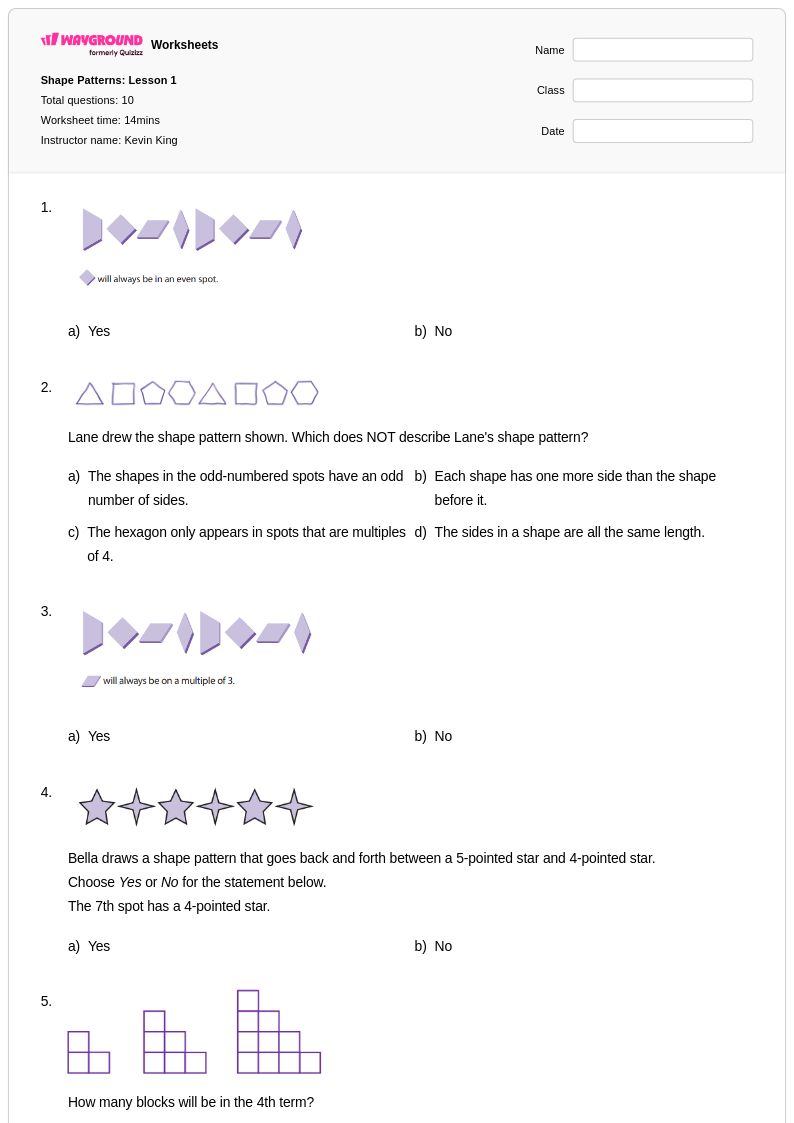
10Q
4th
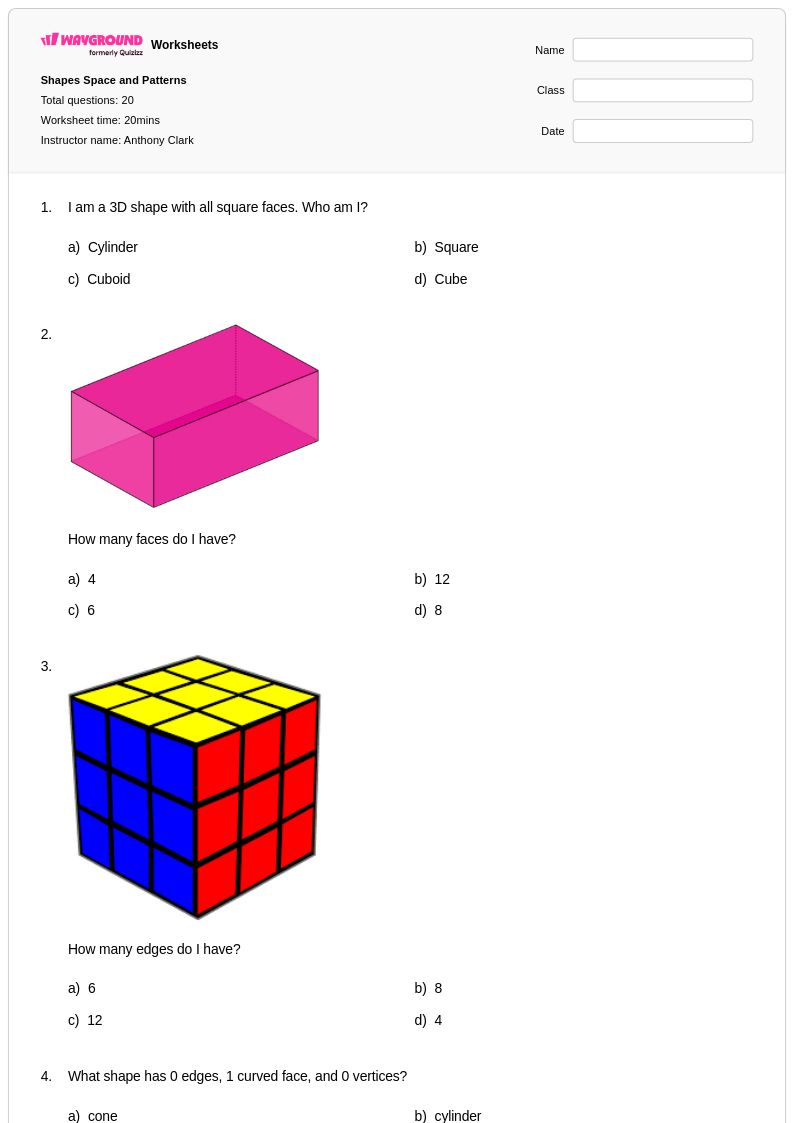
20Q
3rd - Uni
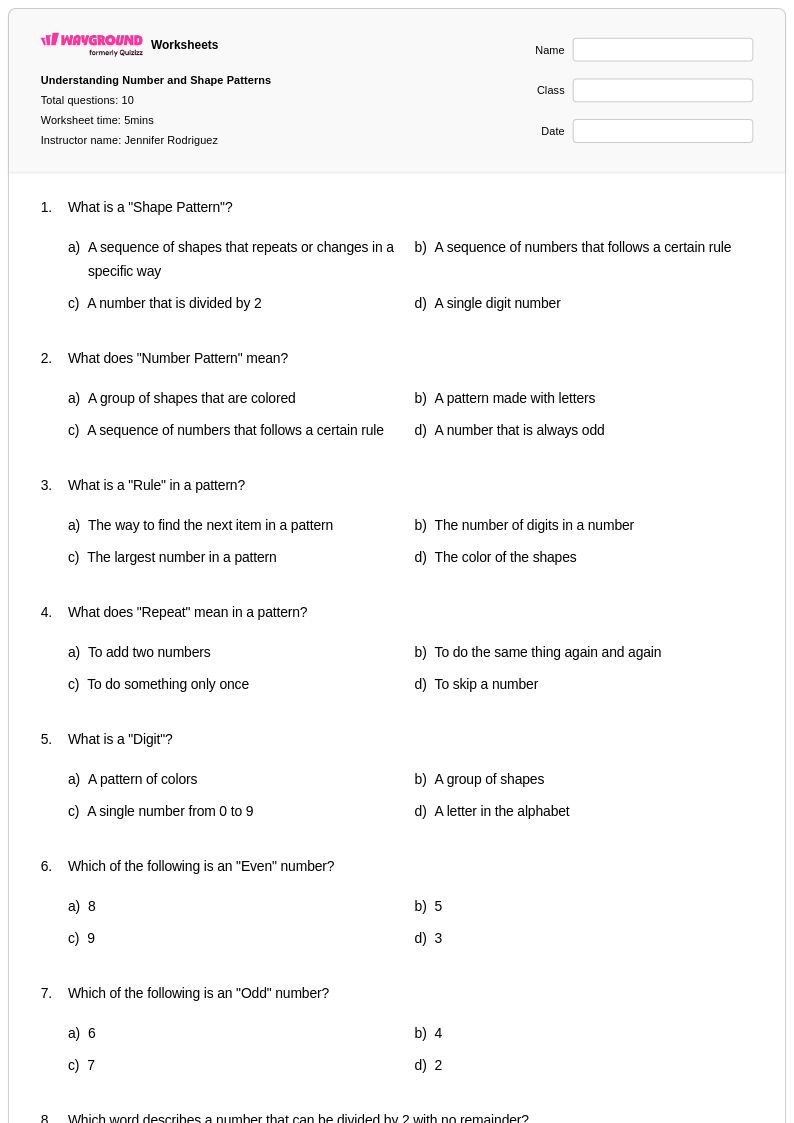
10Q
4th
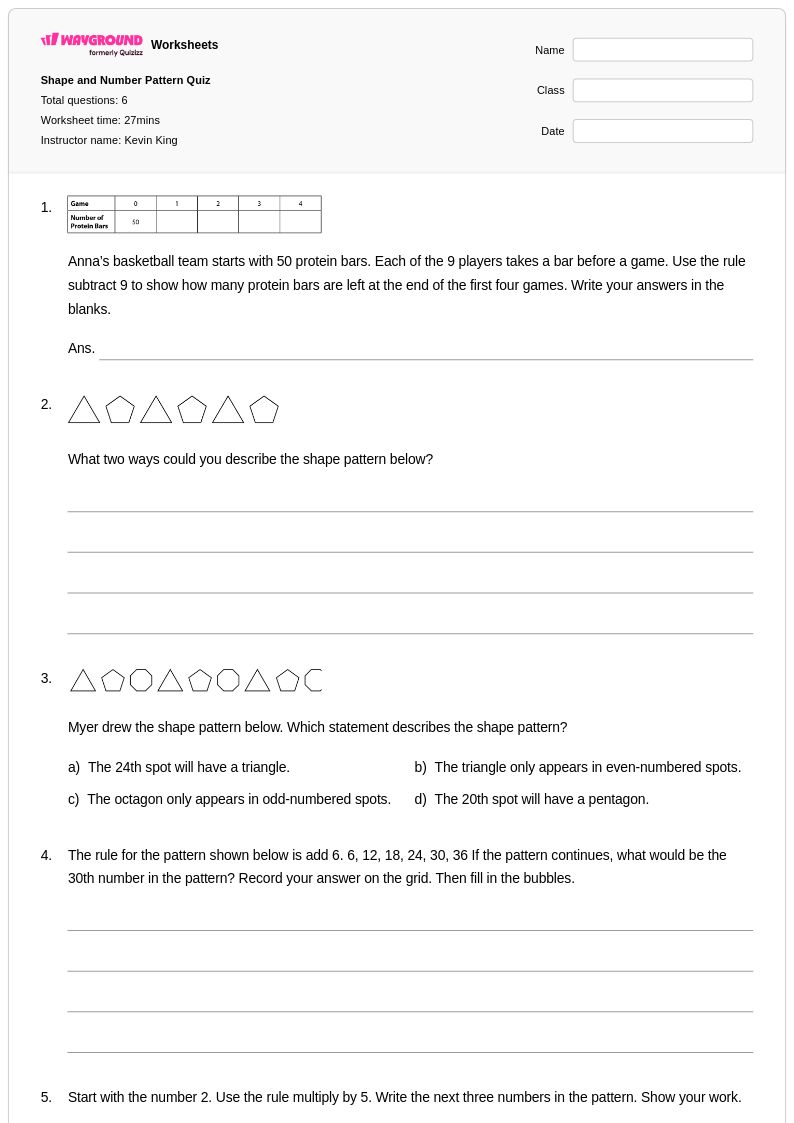
6Q
4th - Uni
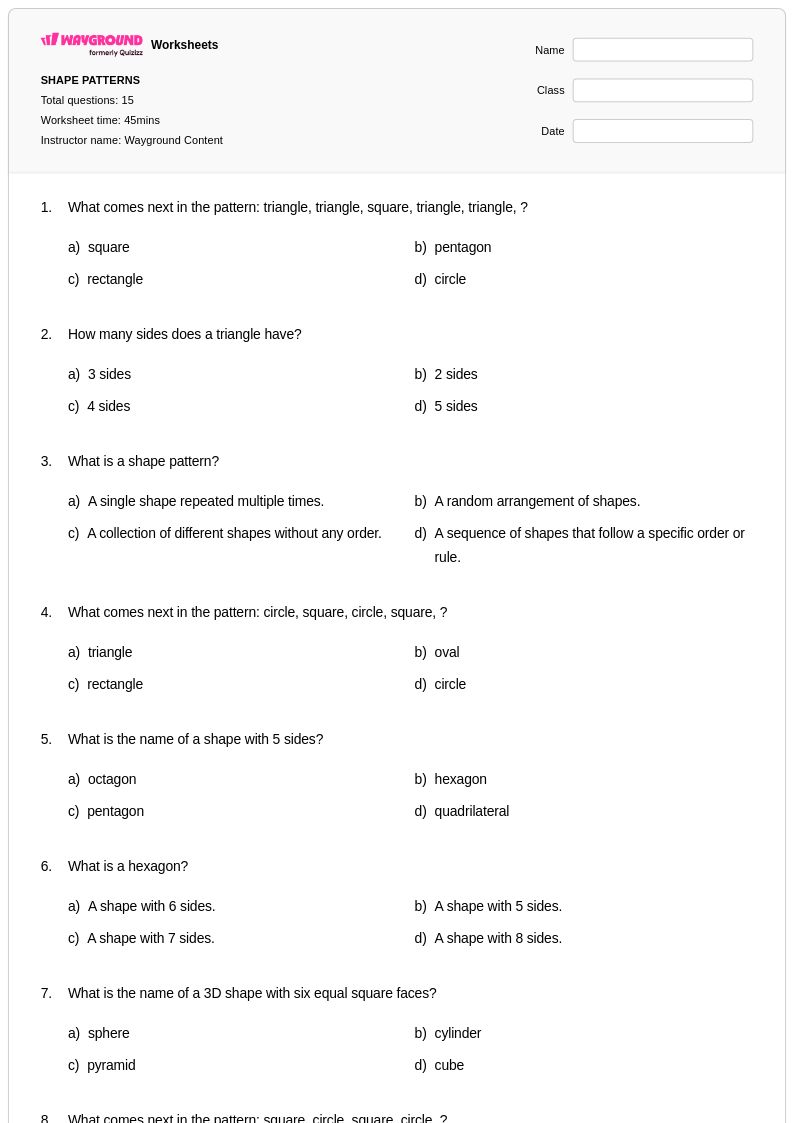
15Q
4th
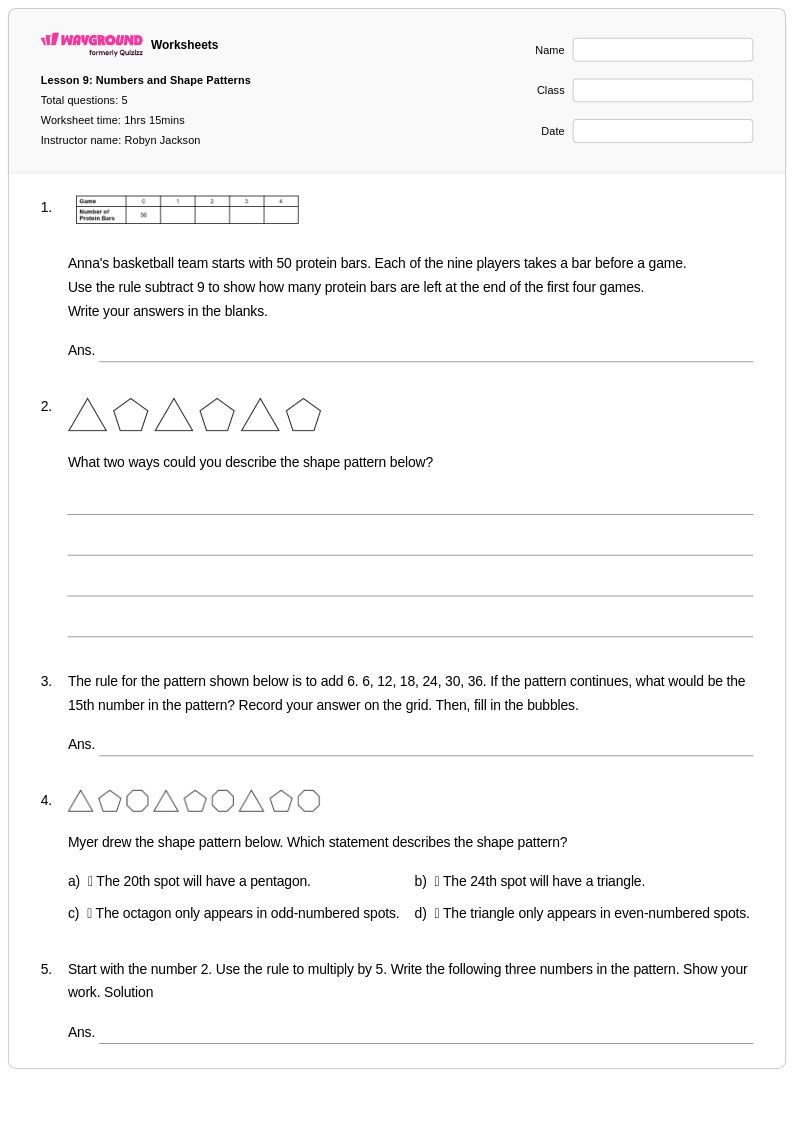
5Q
4th
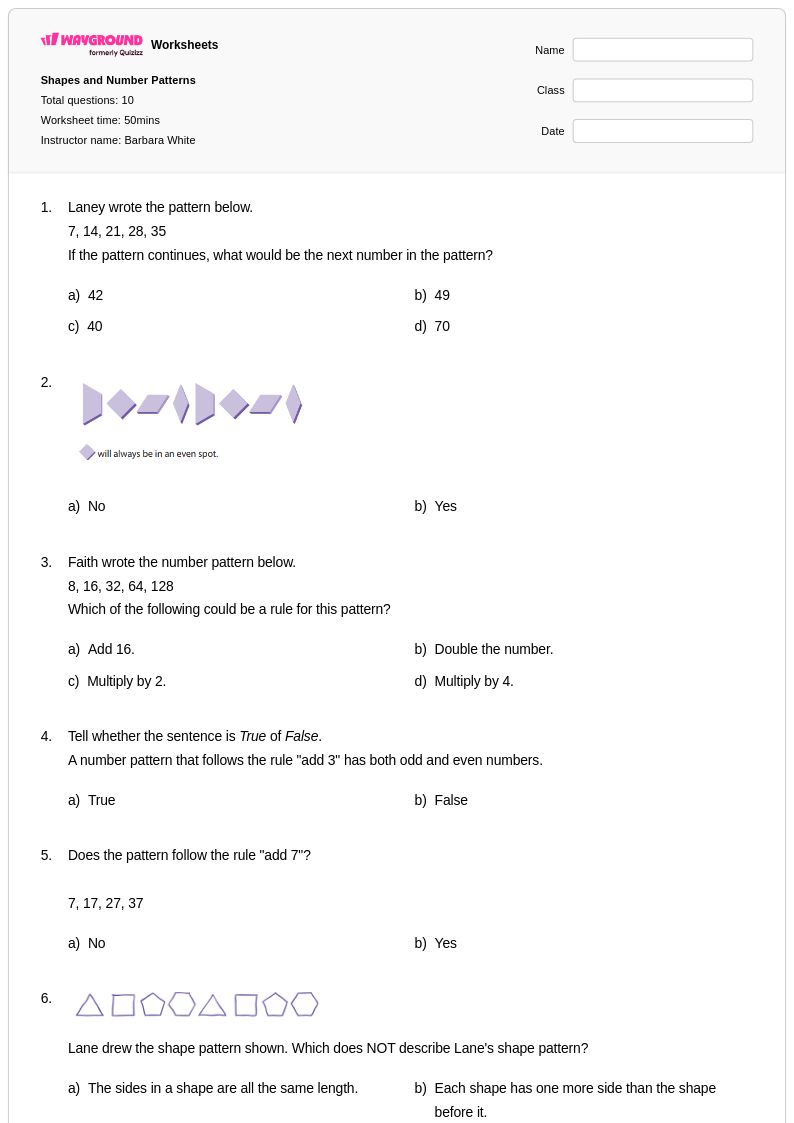
10Q
4th
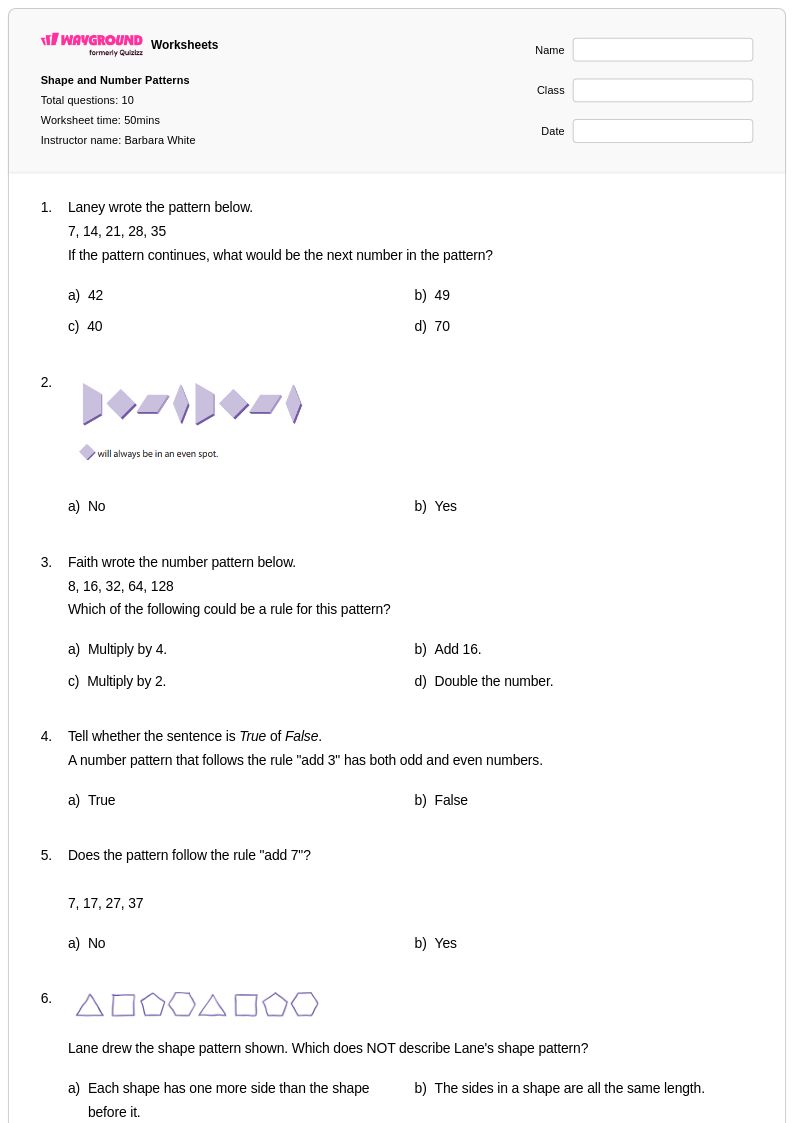
10Q
4th
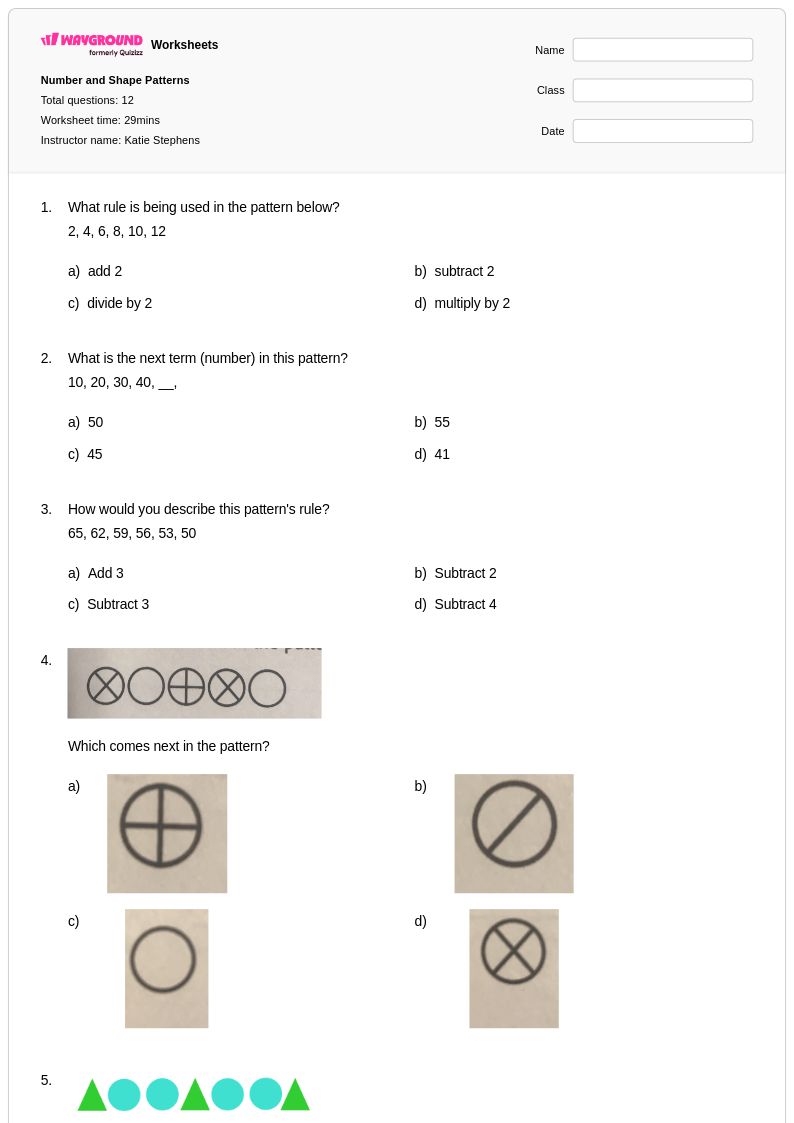
12Q
4th - Uni
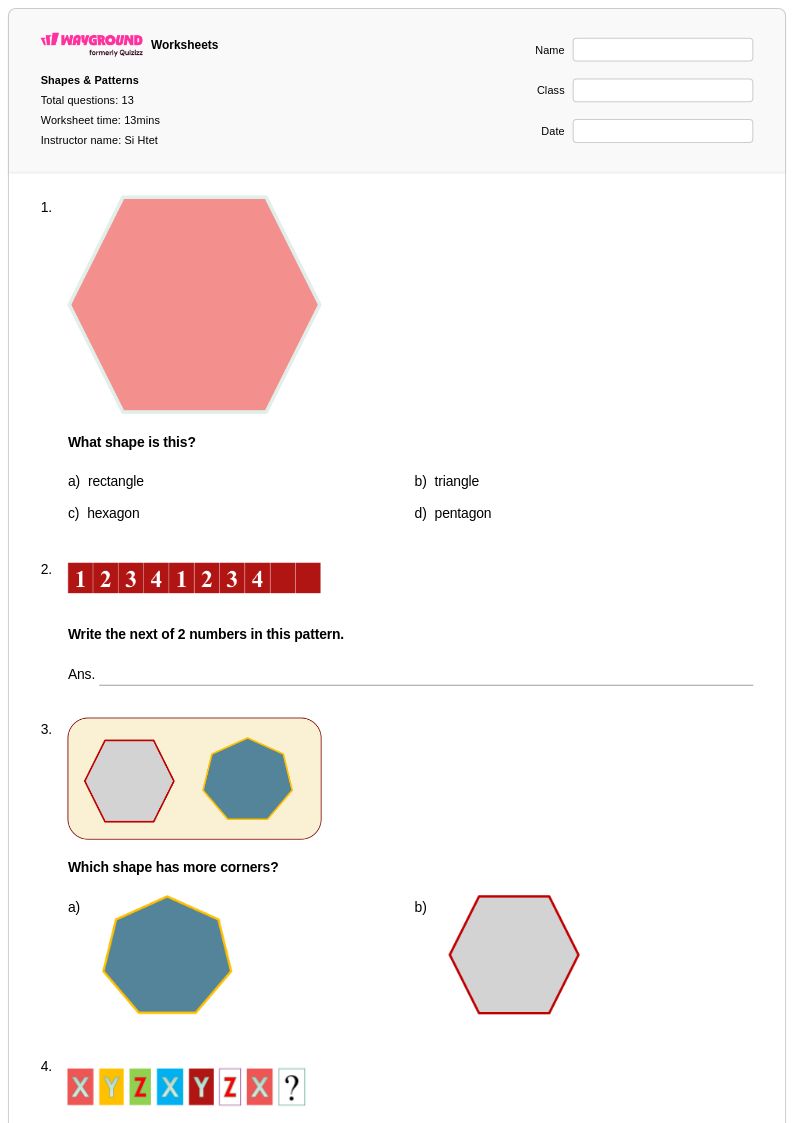
13Q
2nd - 4th
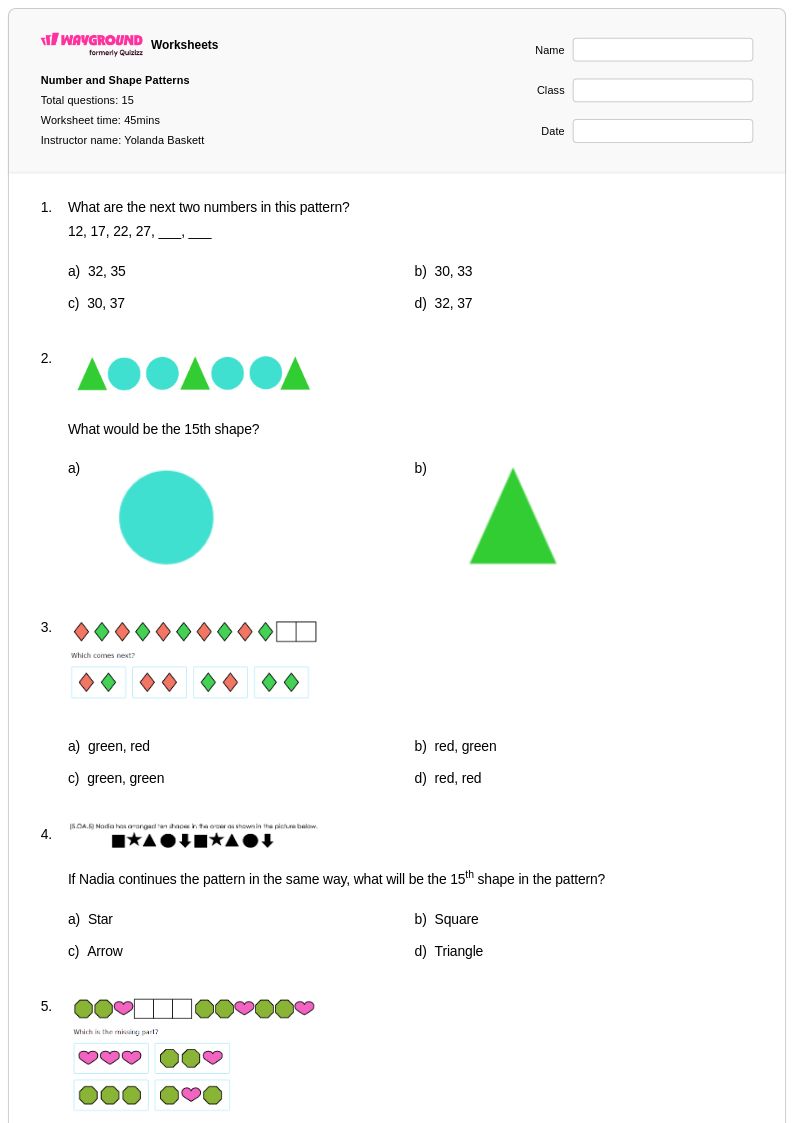
15Q
4th
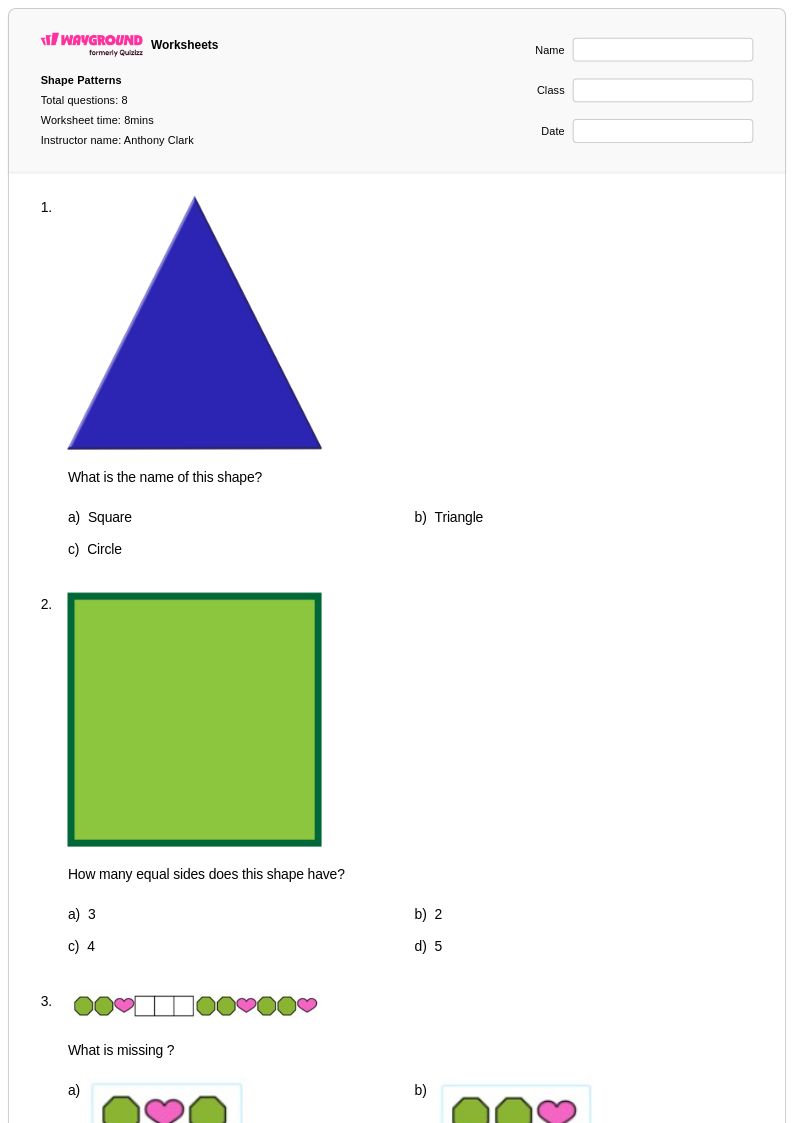
8Q
4th - Uni
Explore otras hojas de trabajo de materias para grade 4
Explore printable Shape Patterns worksheets for Grade 4
Shape patterns worksheets for Grade 4 students available through Wayground (formerly Quizizz) provide comprehensive practice in recognizing, extending, and creating geometric sequences that build foundational pattern recognition skills. These carefully designed printables challenge fourth-grade learners to identify repeating sequences using squares, triangles, circles, and other polygons while developing critical thinking abilities essential for advanced mathematical concepts. Each worksheet collection includes detailed answer keys and structured practice problems that guide students through progressively complex pattern scenarios, from simple ABAB sequences to intricate multi-step geometric progressions. The free pdf resources strengthen visual processing skills, logical reasoning, and spatial awareness while helping students understand how shapes can be organized systematically to create predictable sequences.
Wayground (formerly Quizizz) empowers educators with millions of teacher-created shape pattern resources that feature robust search and filtering capabilities aligned to mathematics standards for efficient lesson planning and skill reinforcement. Teachers can easily differentiate instruction by selecting worksheets that match individual student needs, customize existing materials to target specific learning objectives, and access both printable and digital formats including downloadable pdfs for flexible classroom implementation. The platform's extensive collection supports comprehensive planning by offering varied difficulty levels for remediation and enrichment purposes, enabling educators to provide targeted practice that strengthens pattern recognition abilities while building confidence in geometric reasoning. These versatile tools help teachers create engaging learning experiences that develop students' analytical thinking skills through systematic exploration of shape relationships and sequences.