
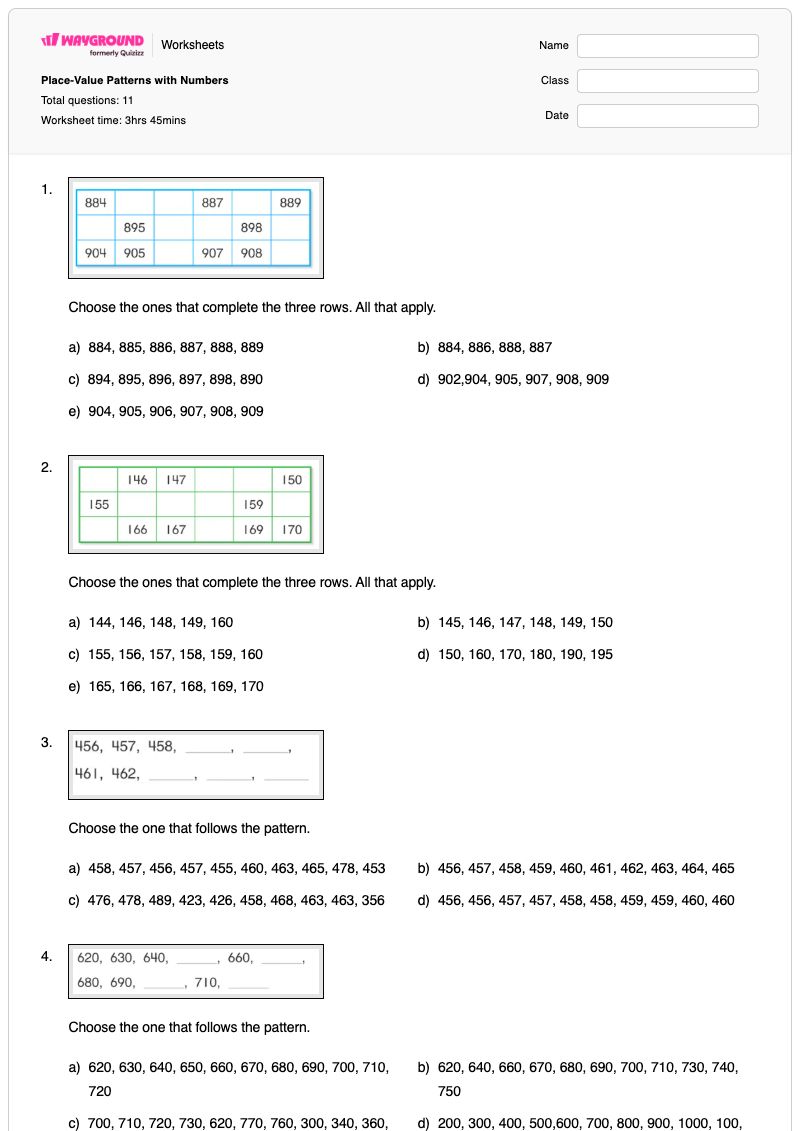
11 Q
2nd
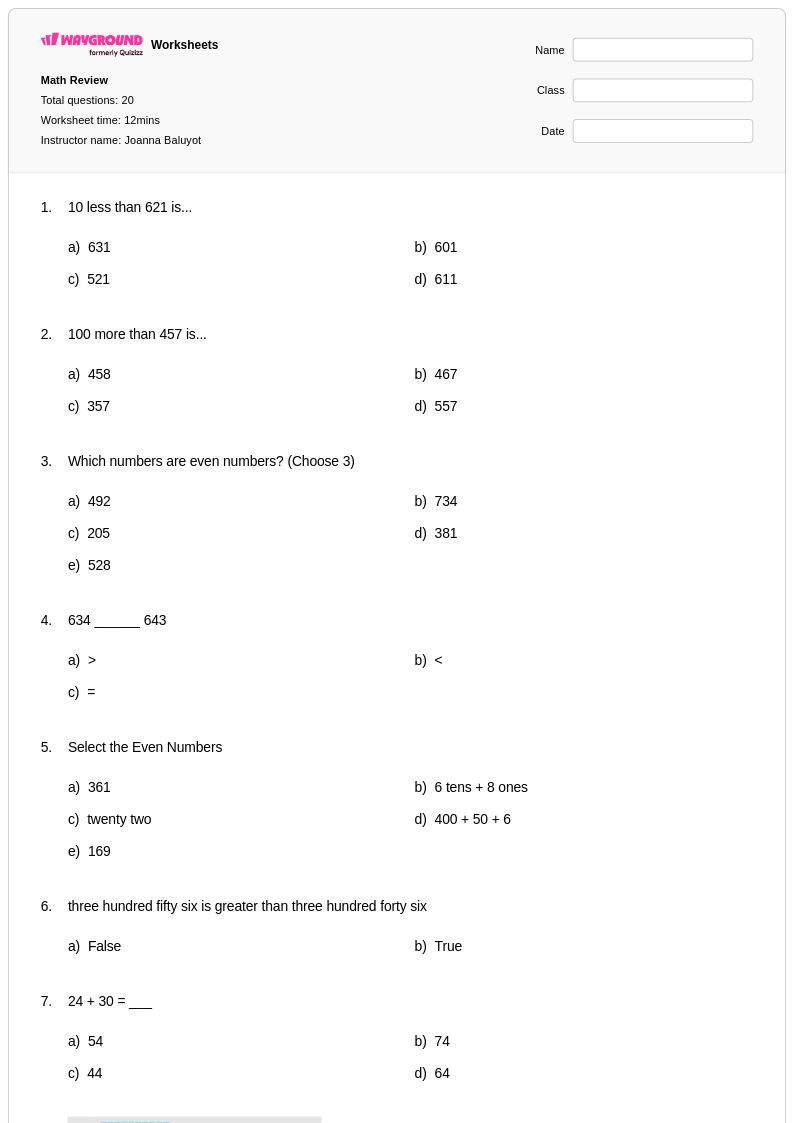
20 Q
2nd
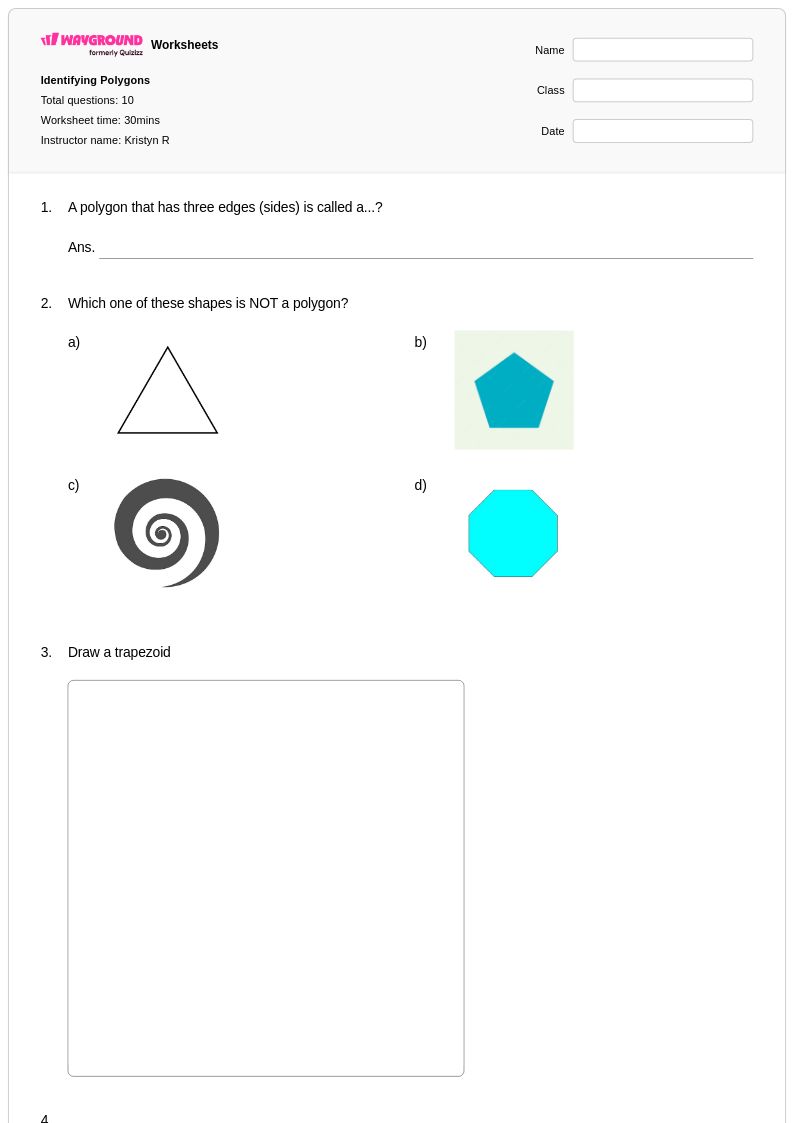
10 Q
2nd
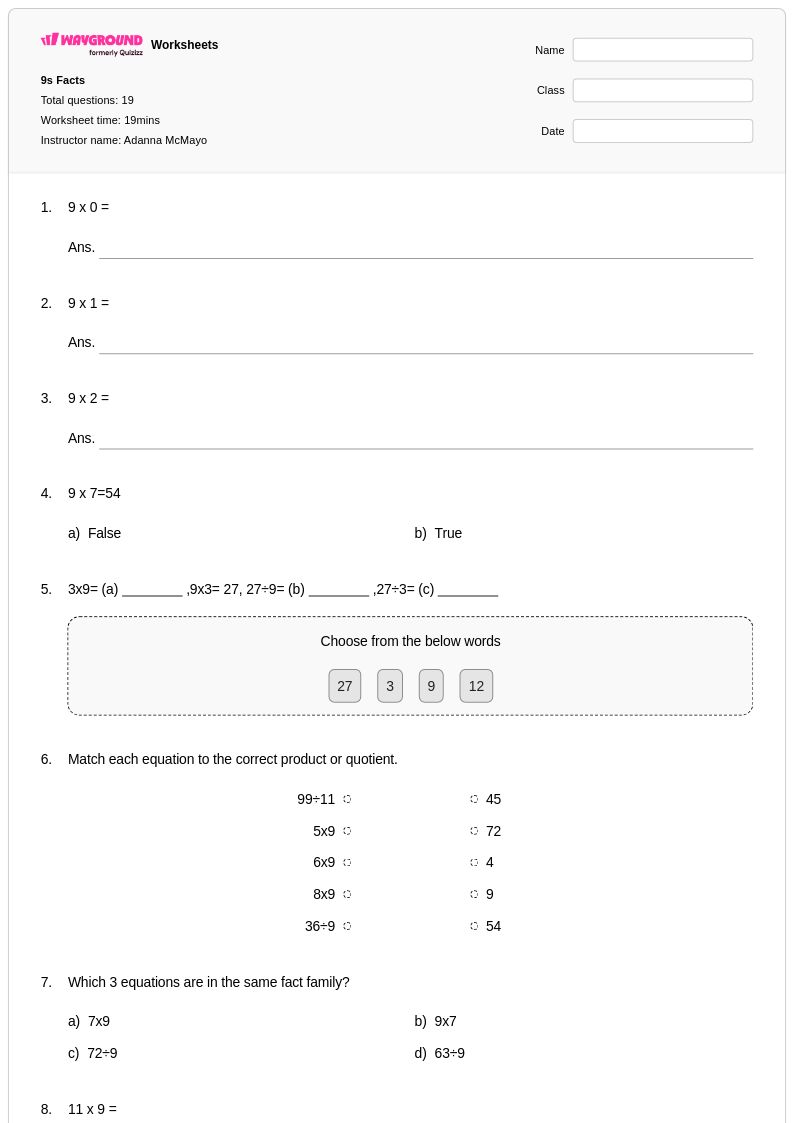
19 Q
1st - Uni
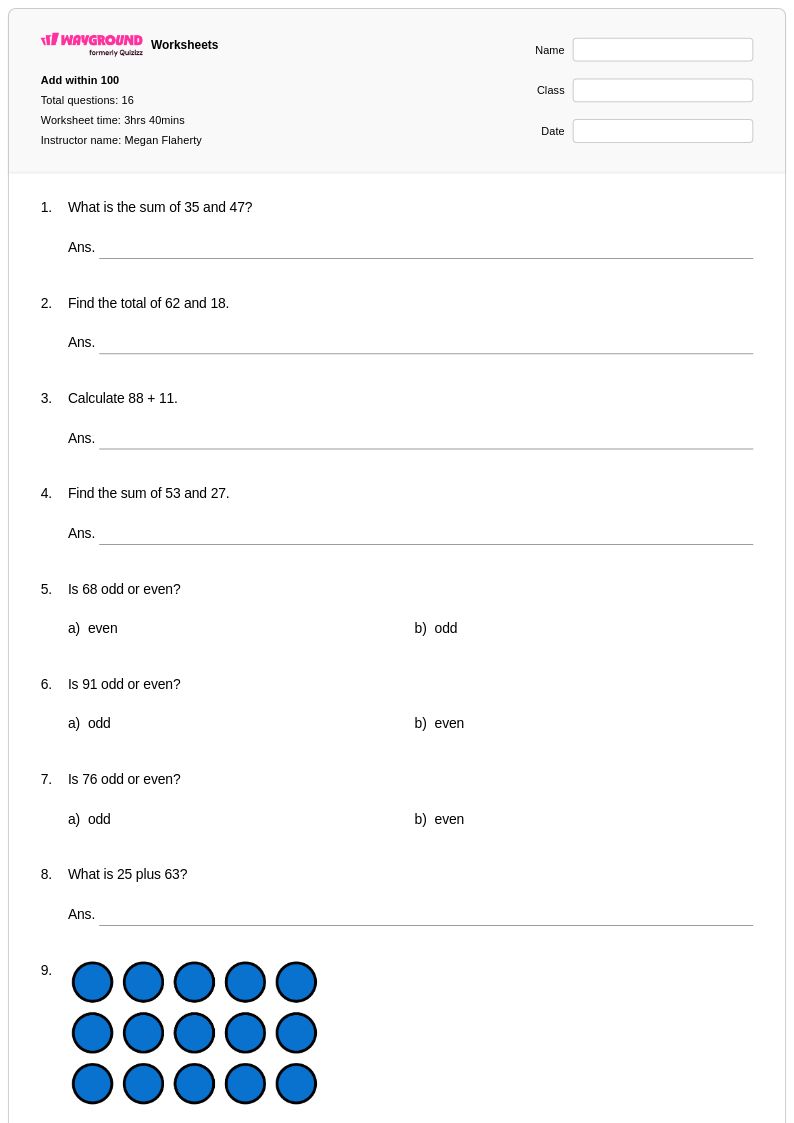
16 Q
2nd
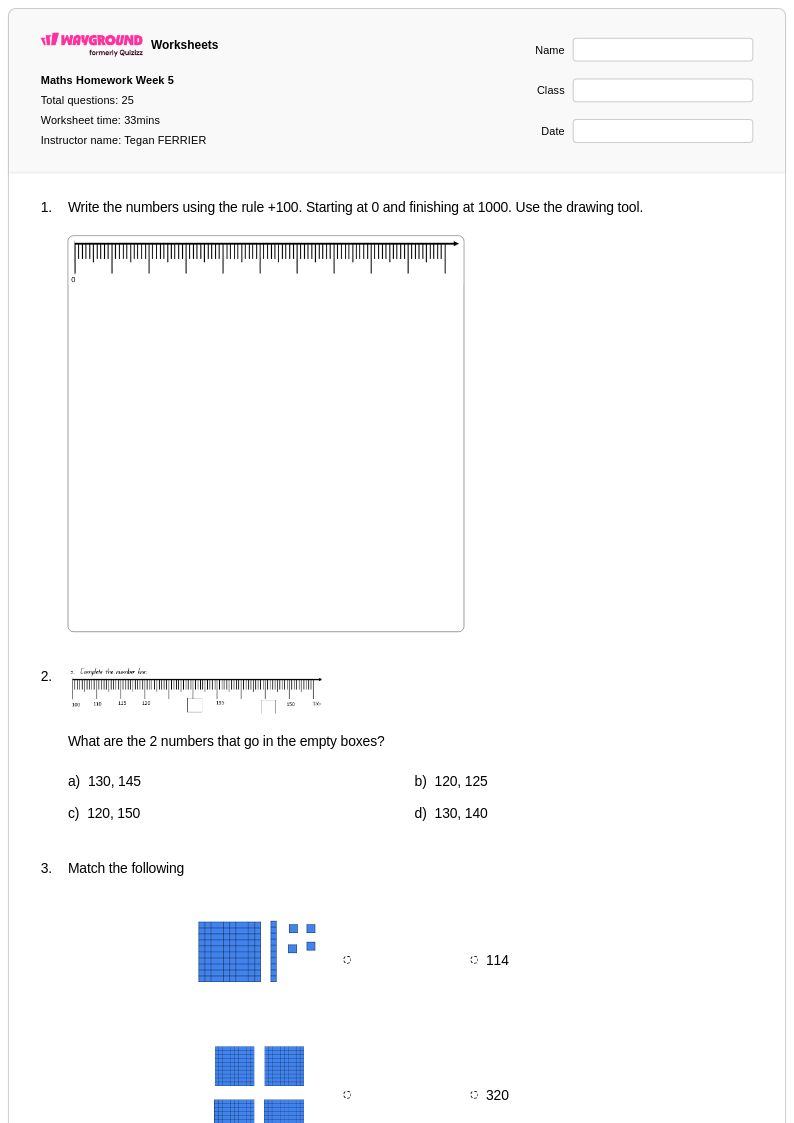
25 Q
2nd
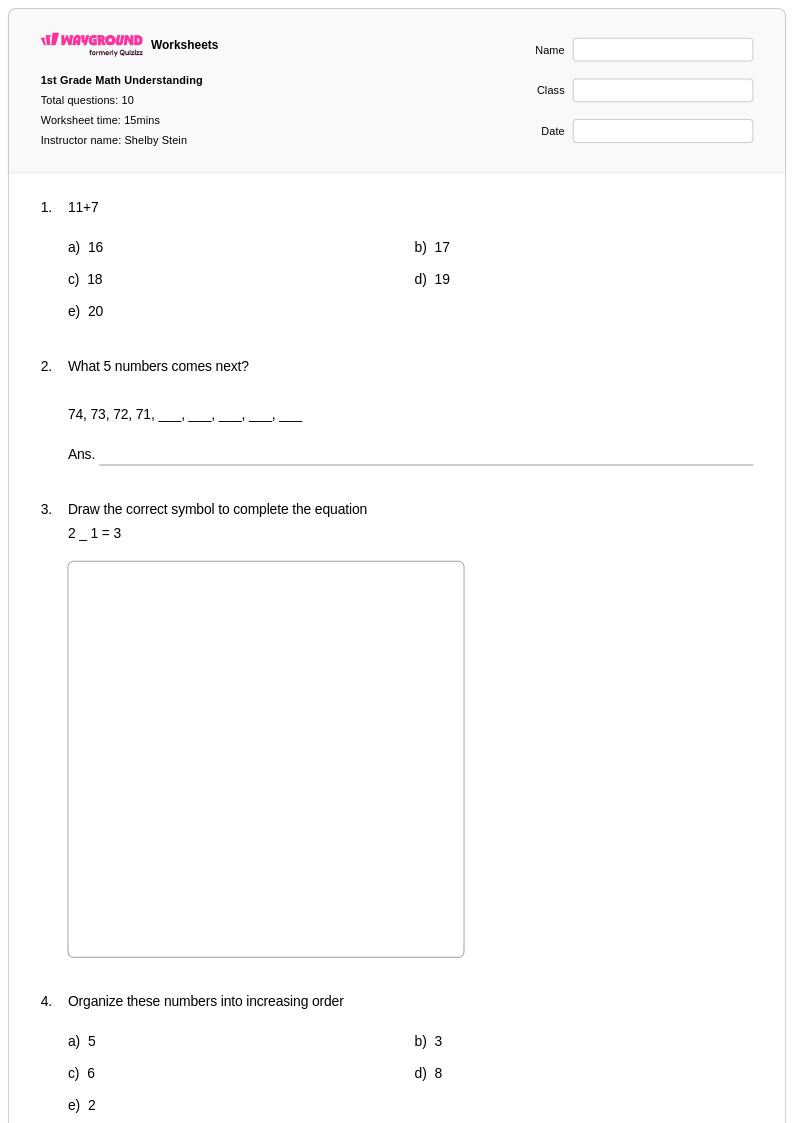
10 Q
1st - Uni
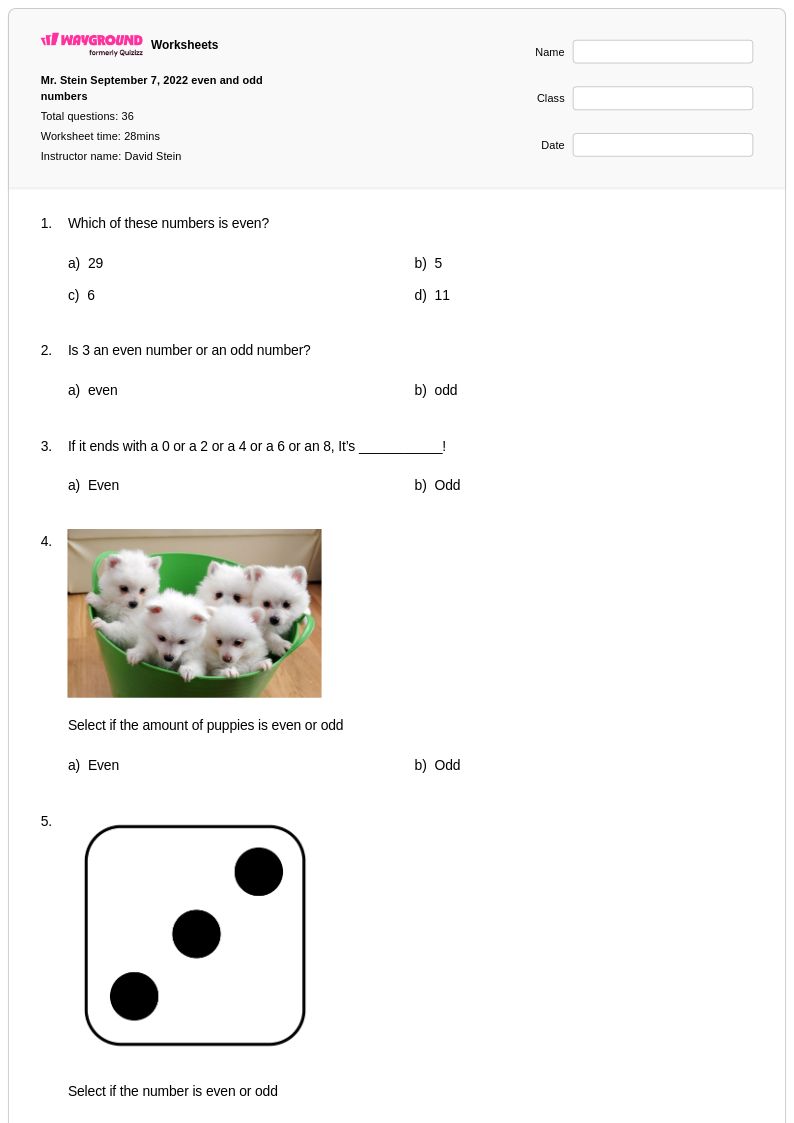
36 Q
2nd
10 Q
2nd
14 Q
2nd
10 Q
2nd
14 Q
2nd
13 Q
2nd
20 Q
1st - 3rd
11 Q
2nd
11 Q
2nd
10 Q
2nd
10 Q
1st - 5th
13 Q
2nd
20 Q
1st - Uni
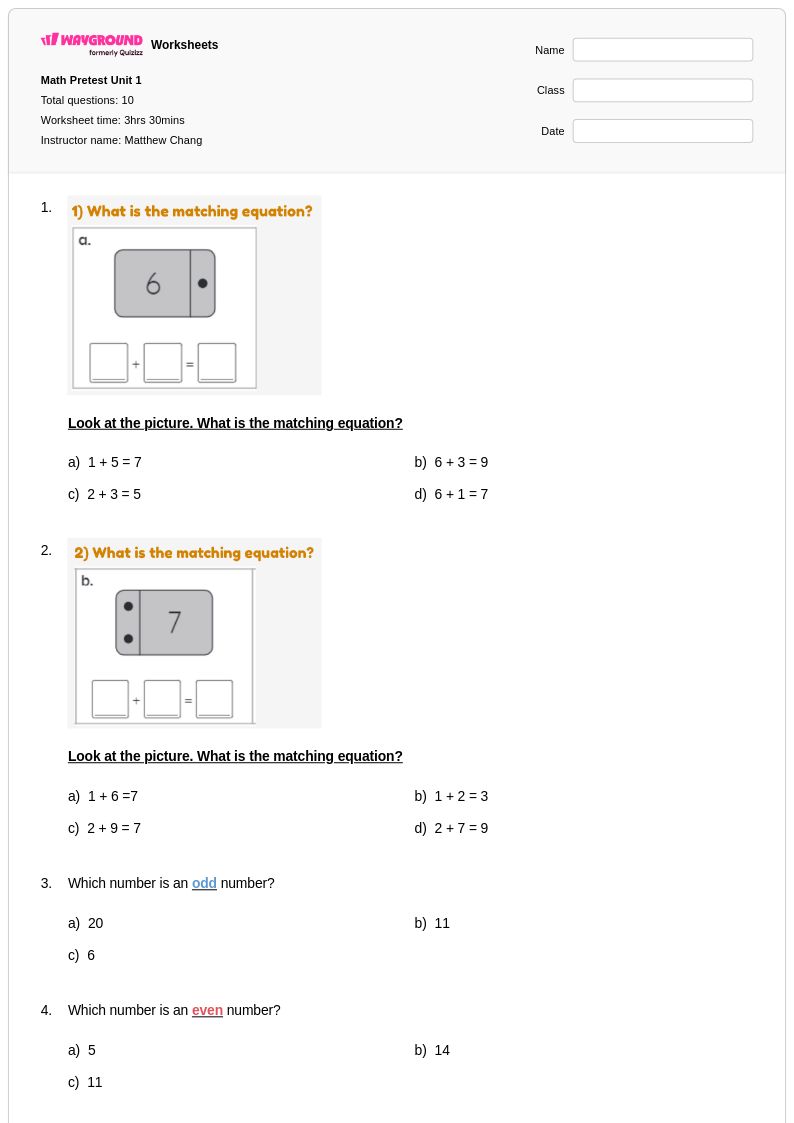
10 Q
2nd
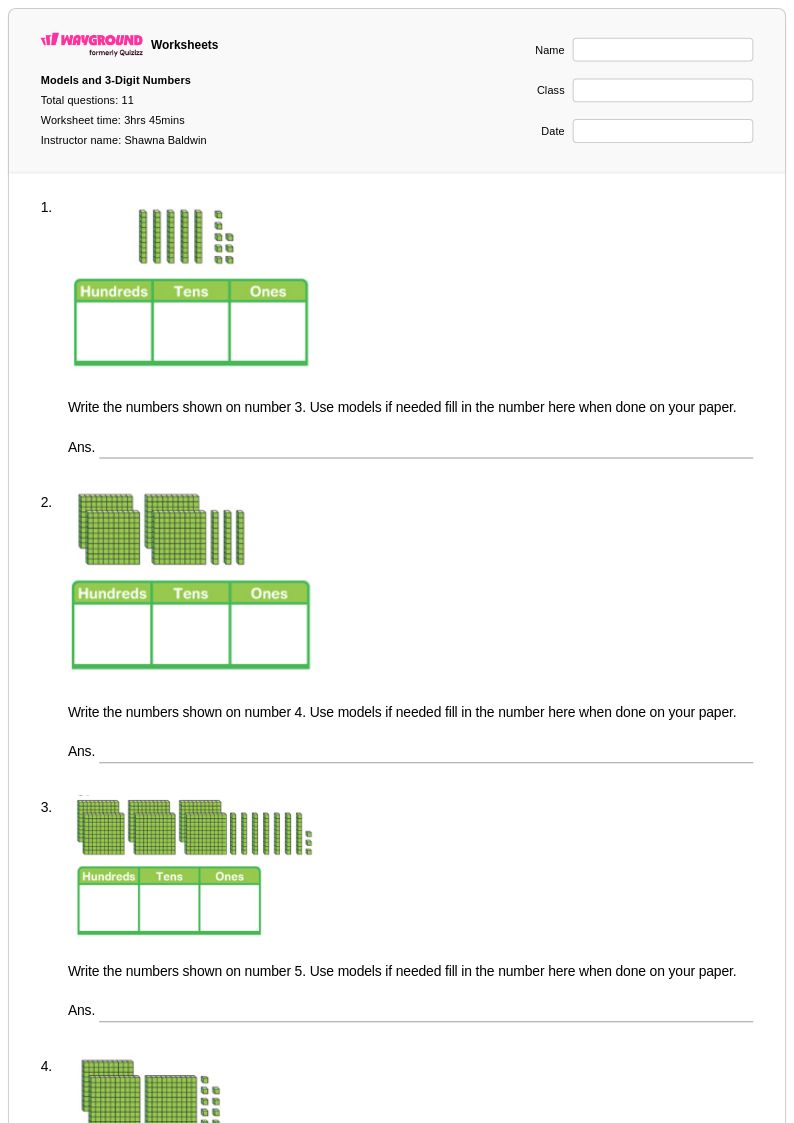
11 Q
2nd
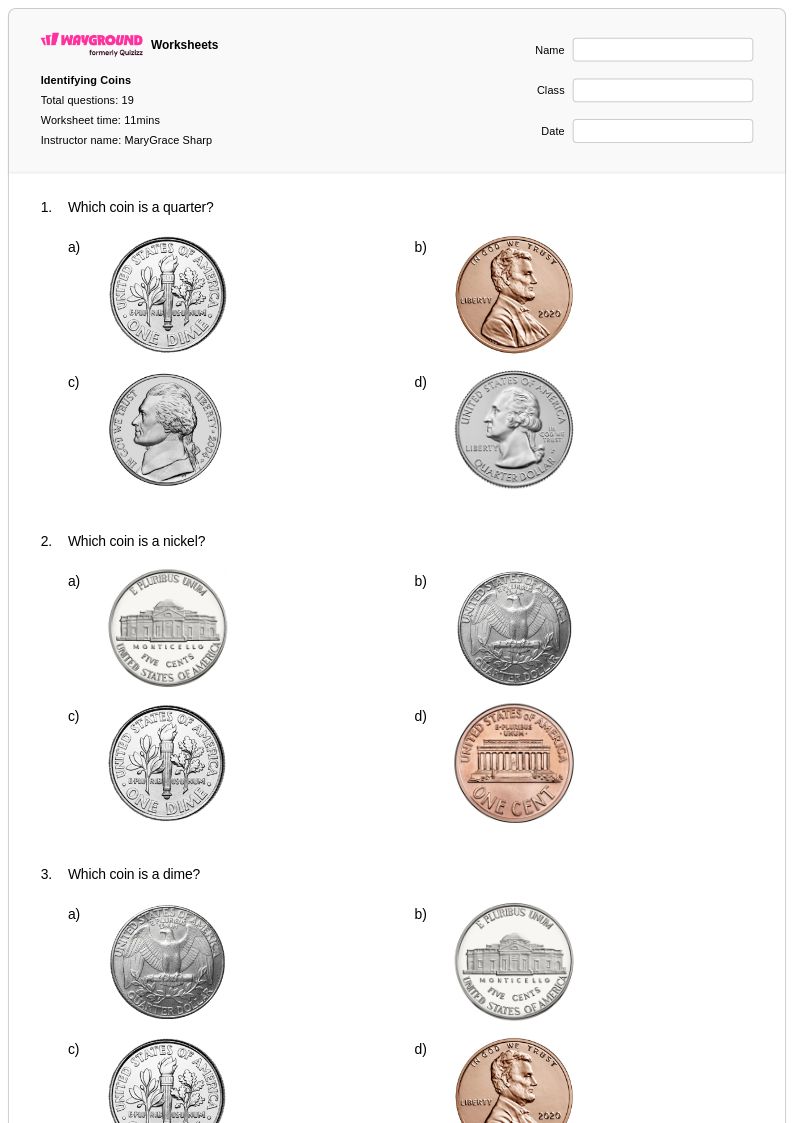
19 Q
KG - 2nd
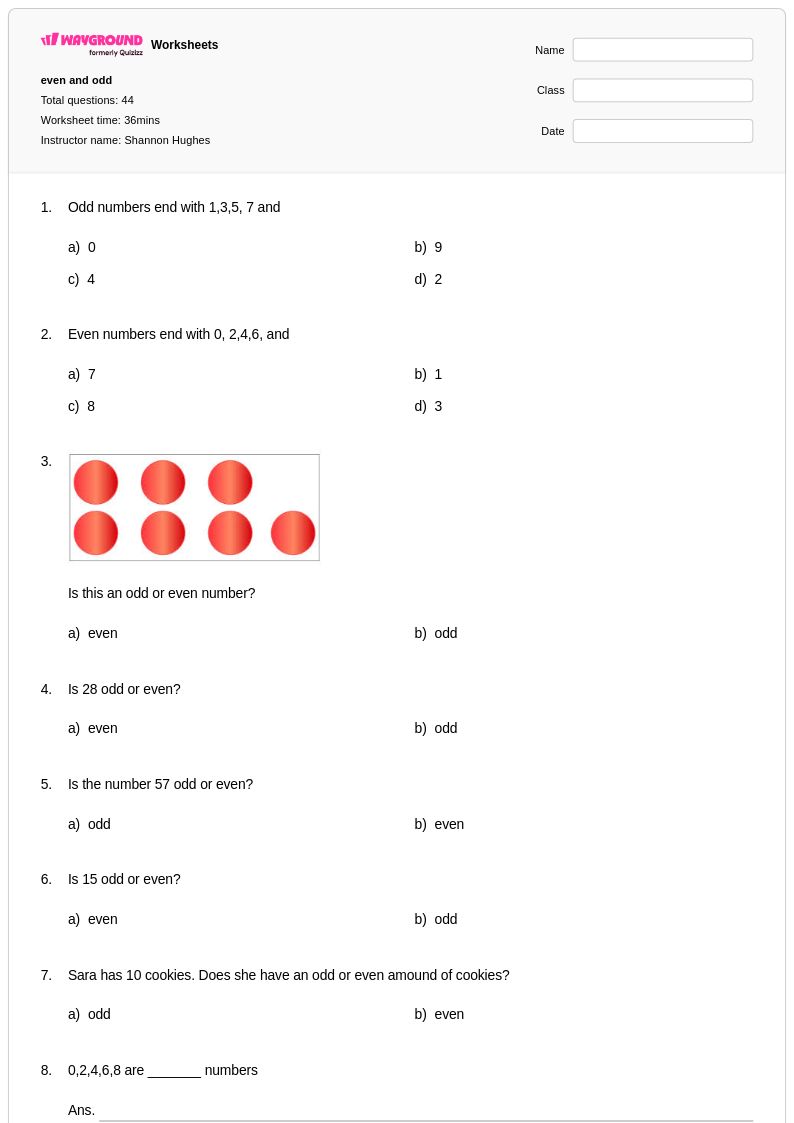
44 Q
2nd
Explore Identifying Numbers 11-20 Worksheets by Grades
Explore Other Subject Worksheets for grade 2
Explore printable Identifying Numbers 11-20 worksheets for Grade 2
Identifying Numbers 11-20 worksheets for Grade 2 through Wayground (formerly Quizizz) provide essential practice for young learners developing foundational number recognition skills. These comprehensive printables focus specifically on helping second-grade students master the visual identification and written recognition of numbers between eleven and twenty, a critical stepping stone in early mathematical development. The worksheets strengthen number sense, visual discrimination abilities, and numerical fluency through carefully designed practice problems that progress from basic recognition to more complex identification tasks. Each resource includes a complete answer key, making assessment and self-correction straightforward, while the free pdf format ensures easy classroom distribution and home practice opportunities.
Wayground (formerly Quizizz) supports educators with millions of teacher-created resources specifically designed for Grade 2 identifying numbers 11-20 instruction, featuring robust search and filtering capabilities that allow teachers to quickly locate materials matching their exact curricular needs. The platform's standards alignment ensures worksheets meet educational requirements, while differentiation tools enable teachers to modify content for diverse learners, from struggling students requiring additional support to advanced learners ready for enrichment activities. These flexible, customizable resources are available in both printable and digital formats, including downloadable pdfs, making them invaluable for lesson planning, targeted remediation, skill-building practice, and enrichment opportunities that can be seamlessly integrated into whole-group instruction, small-group interventions, or independent learning centers.
FAQs
Why would a second-grade student still need practice with numbers 11-20?
How can these worksheets help my struggling second graders?
How can I use these worksheets for math intervention?
Is identifying numbers 11-20 part of the second-grade curriculum?
What accommodations are available for students using these worksheets?