
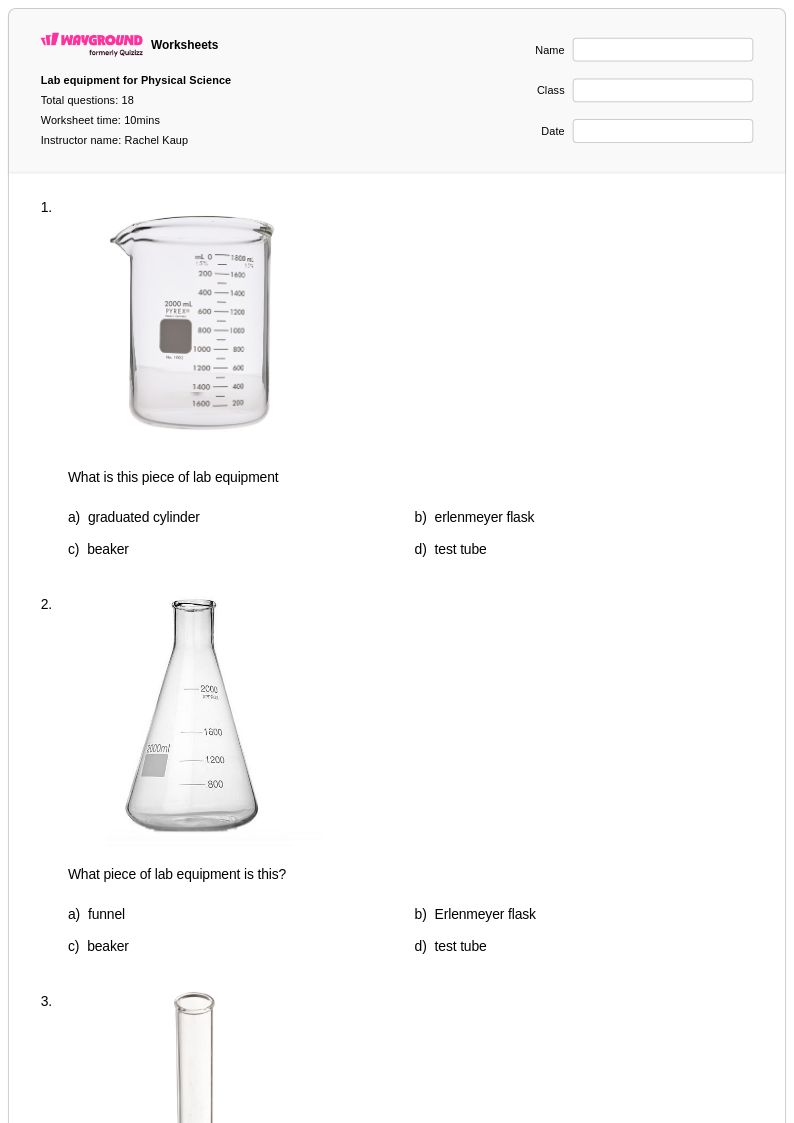
18 คิว
9th
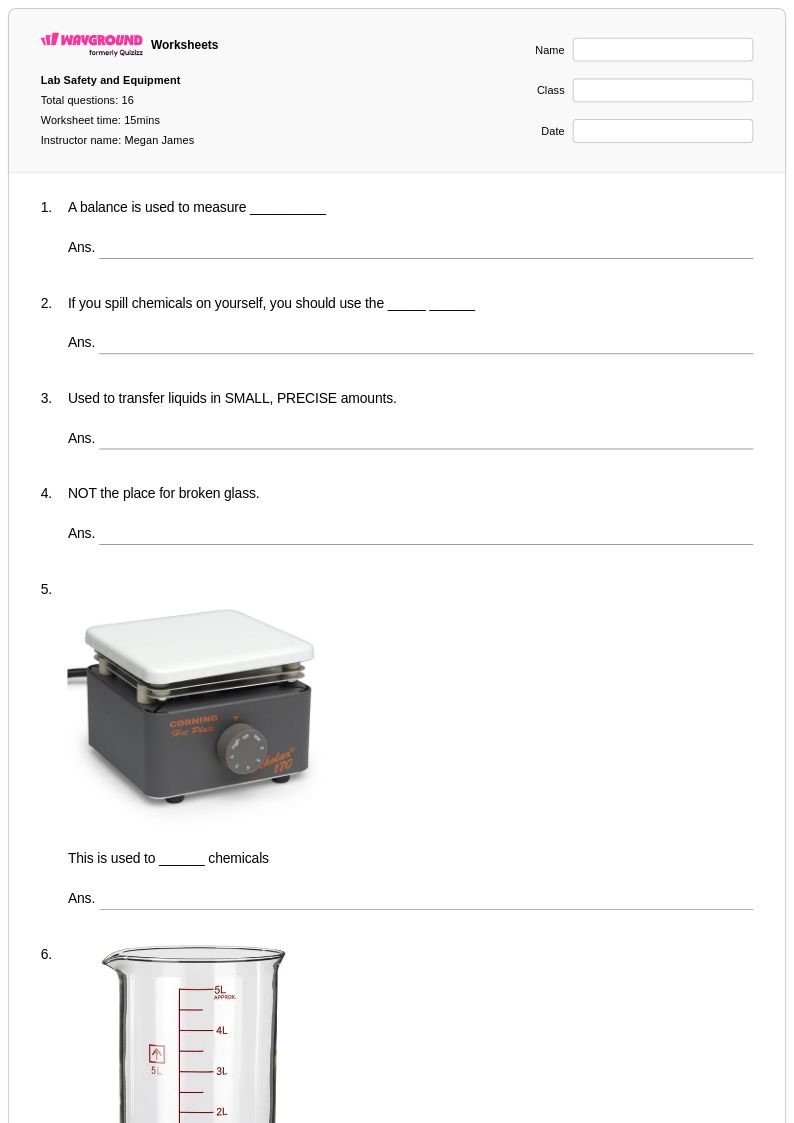
16 คิว
9th
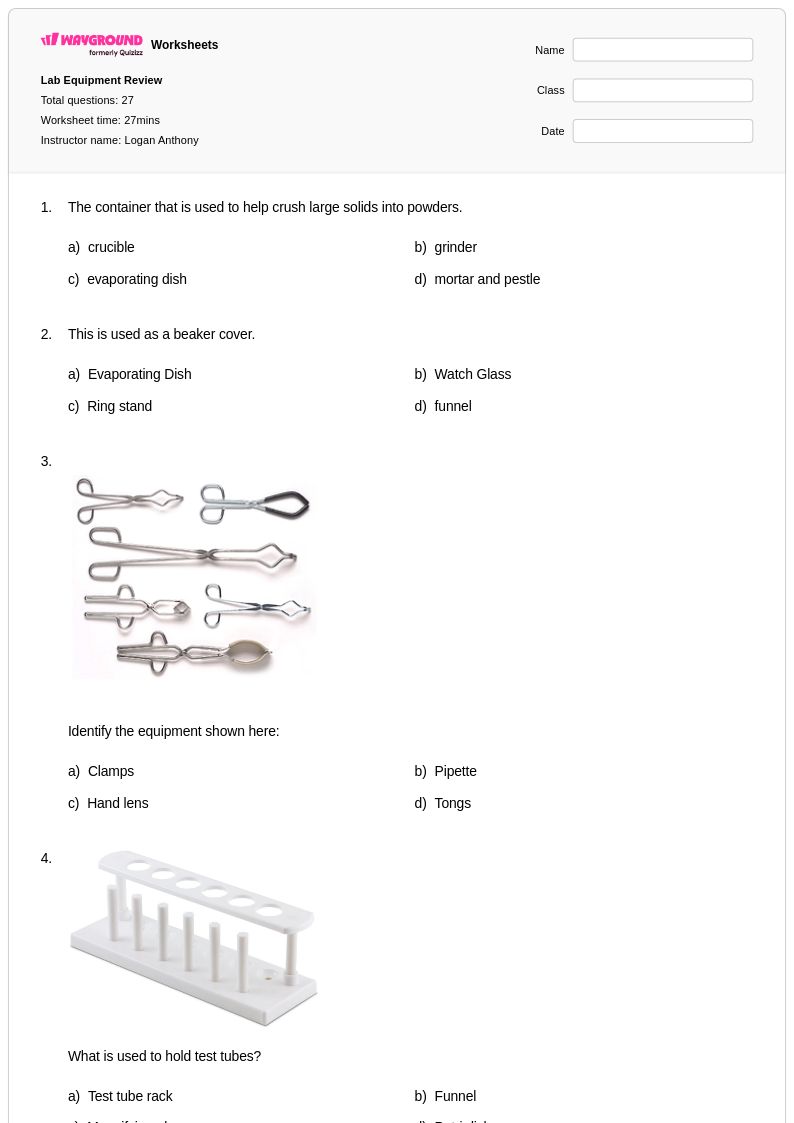
27 คิว
9th
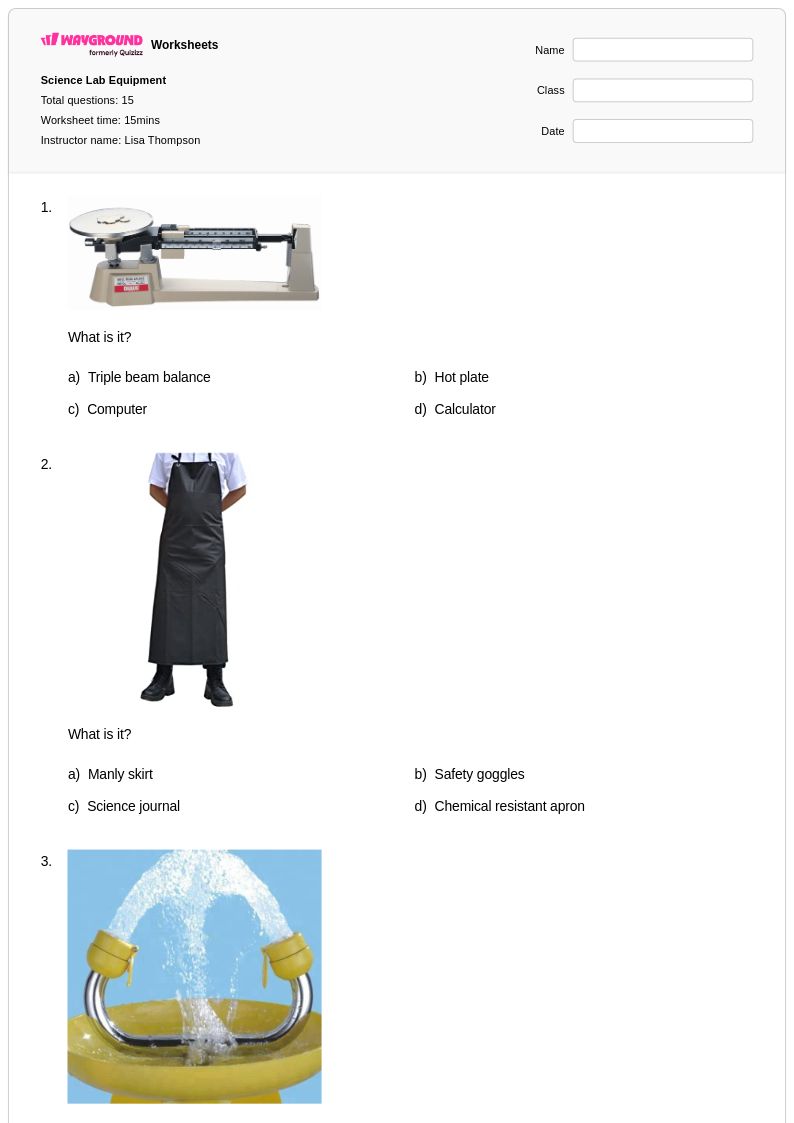
15 คิว
8th - Uni
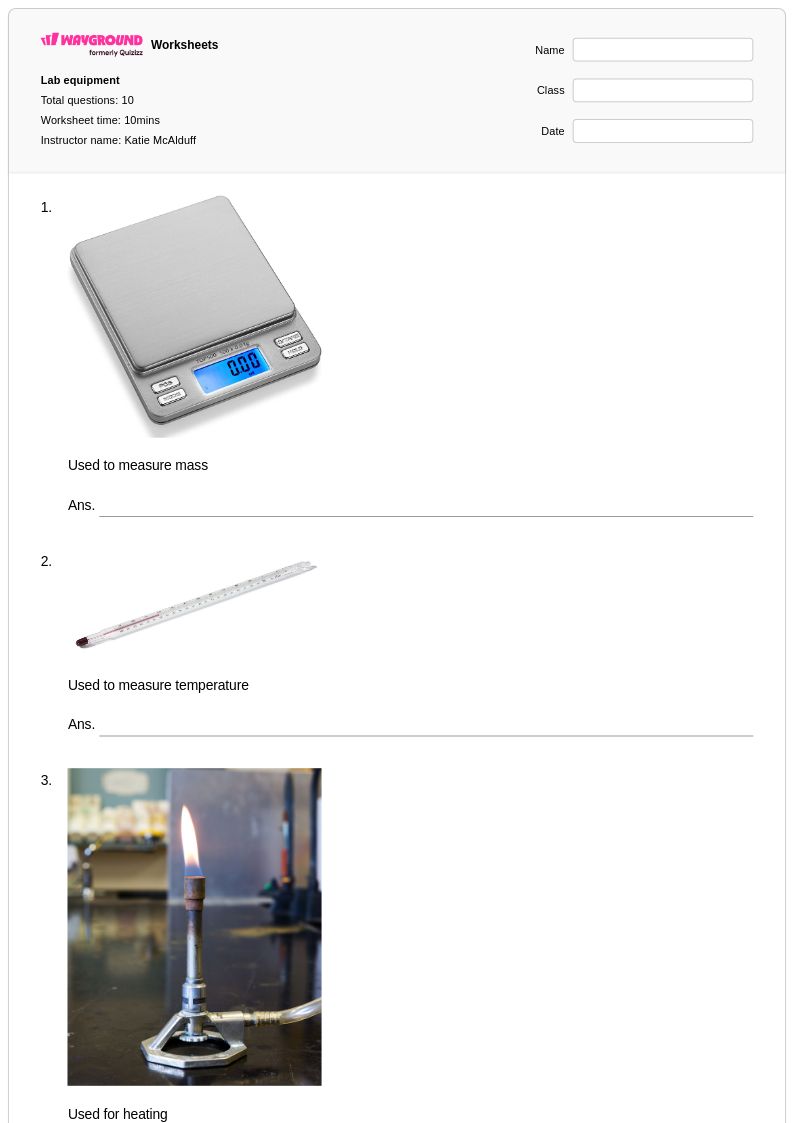
10 คิว
9th
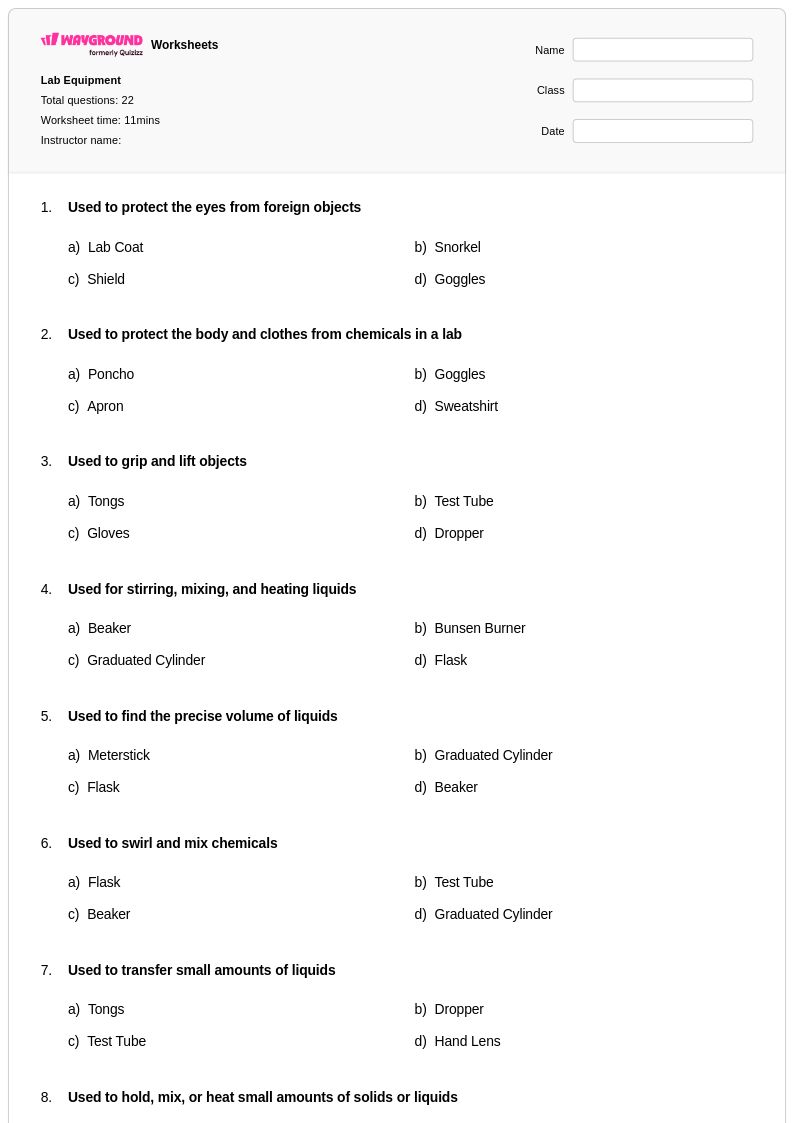
22 คิว
7th - 10th
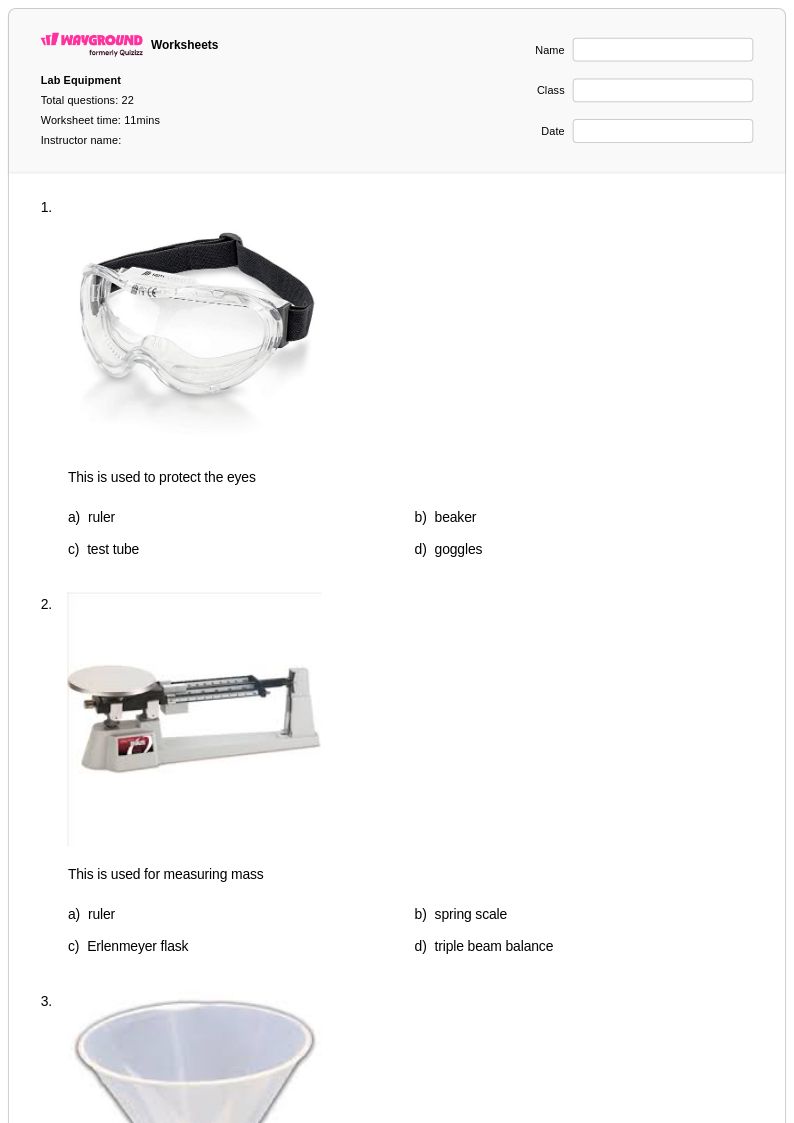
22 คิว
8th - 12th
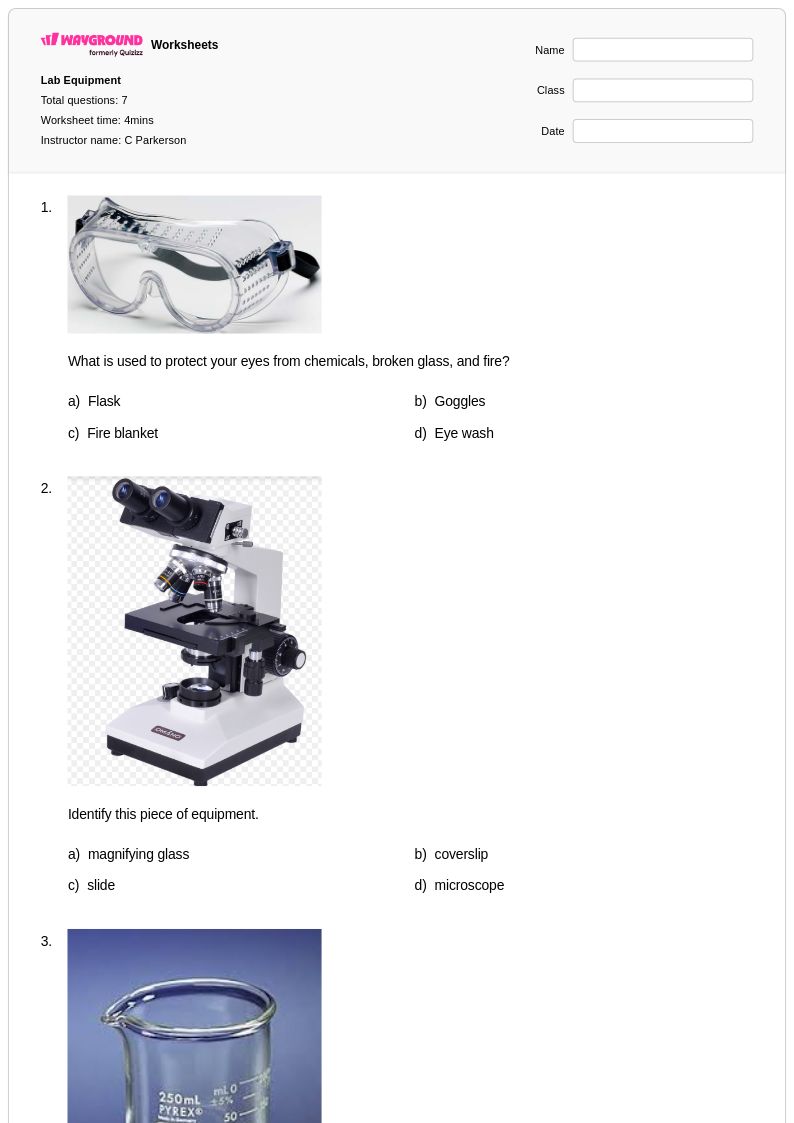
7 คิว
9th - 12th
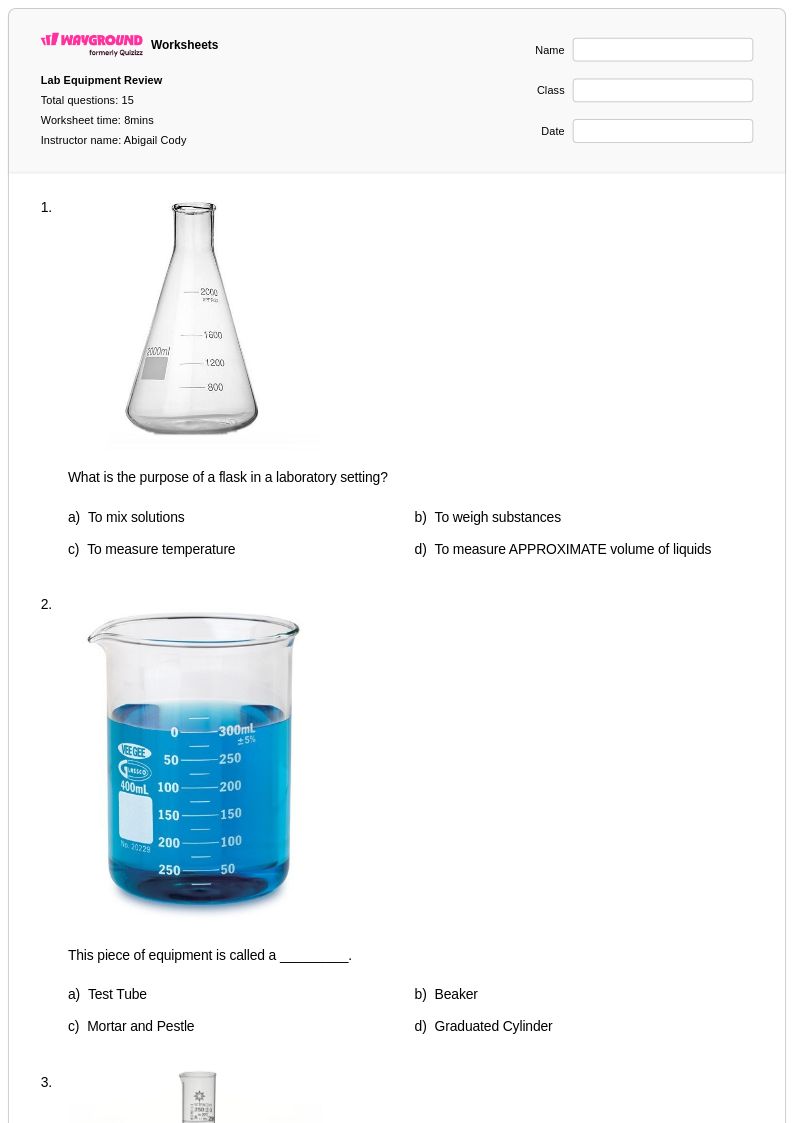
15 คิว
6th - Uni
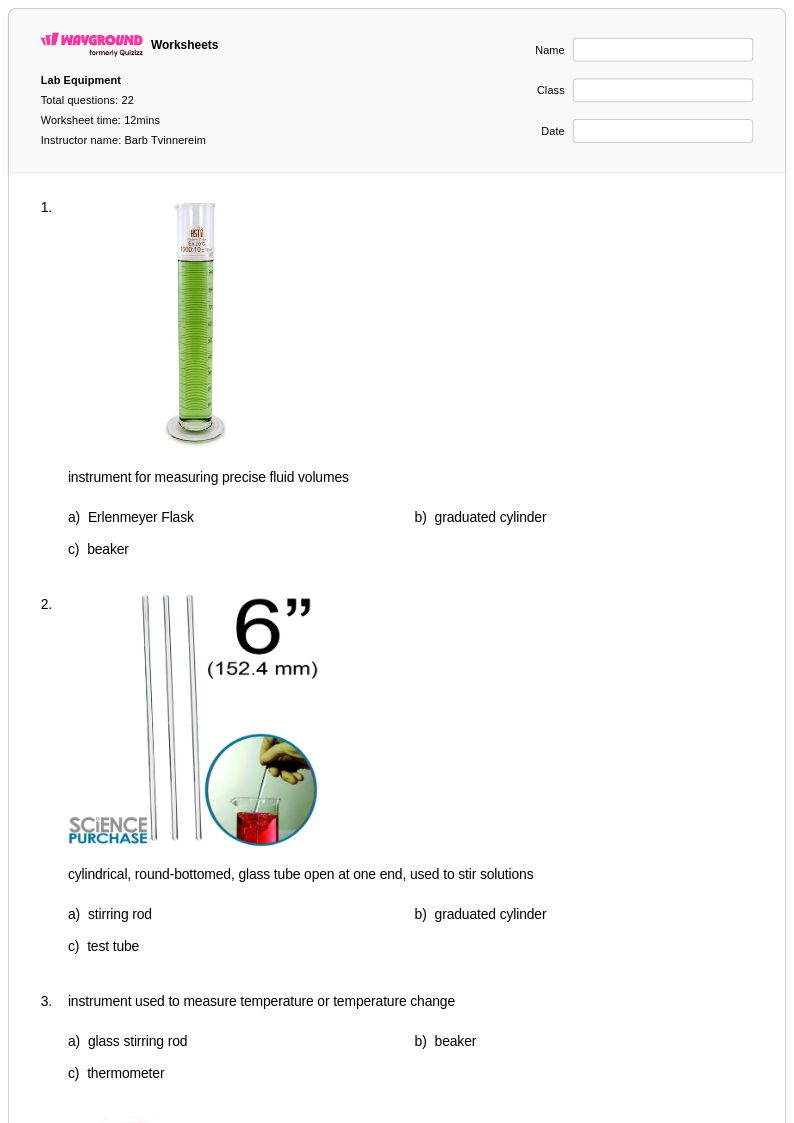
22 คิว
9th - 12th
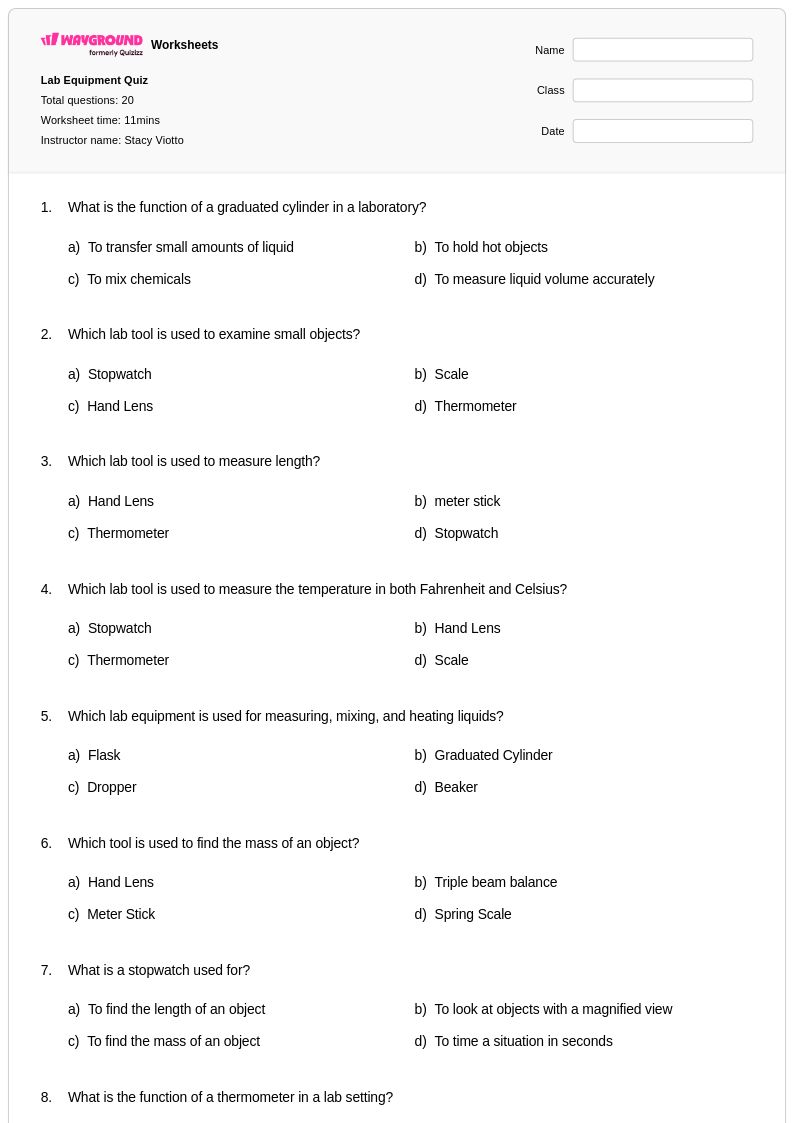
20 คิว
8th - Uni
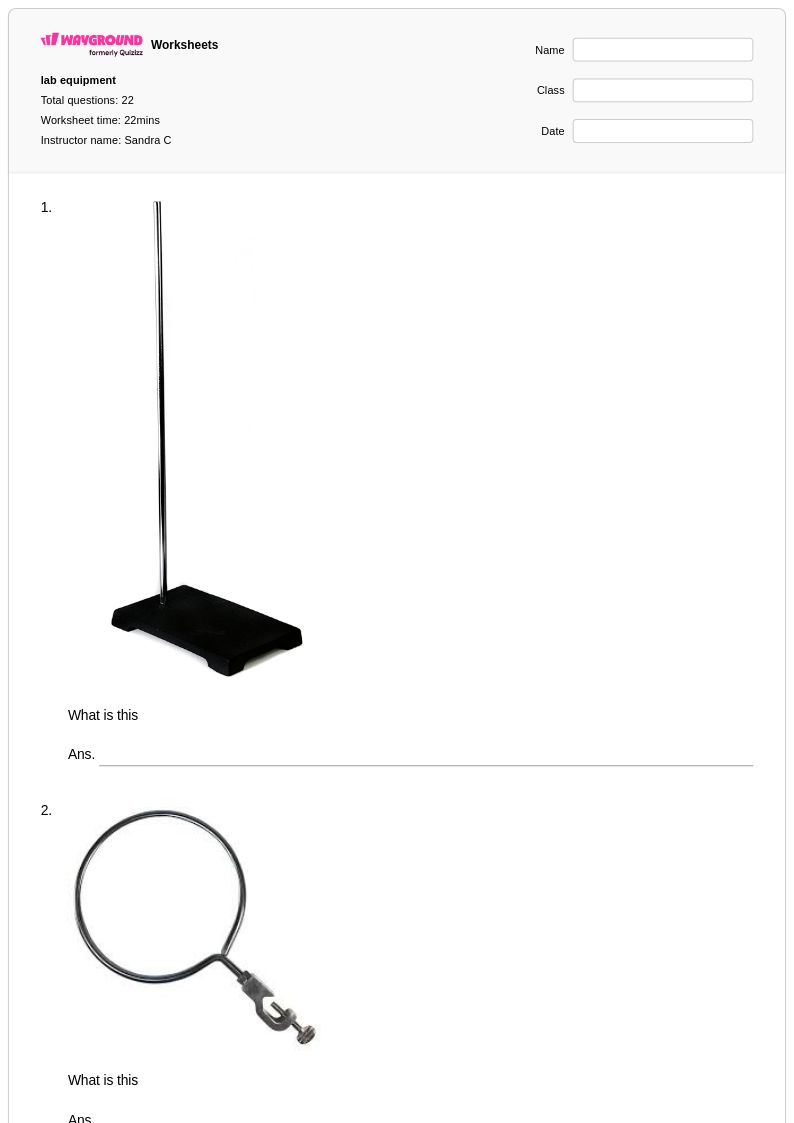
22 คิว
3rd - 9th
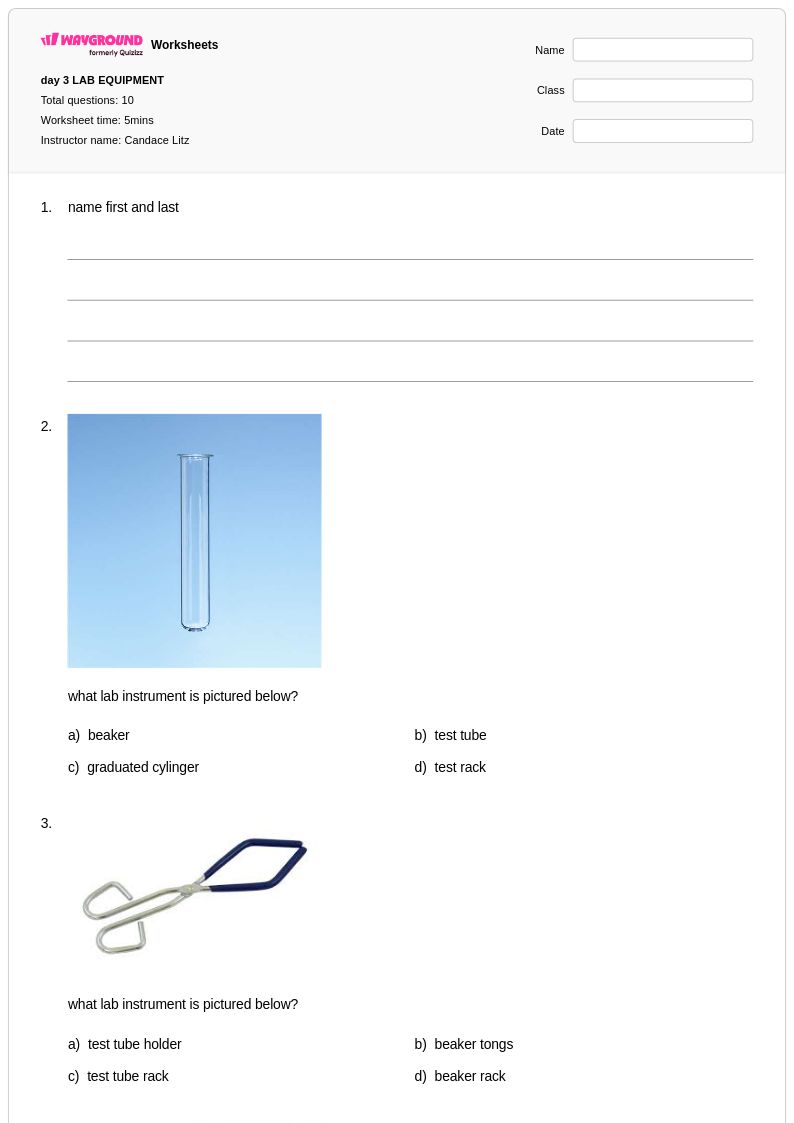
10 คิว
9th - 12th
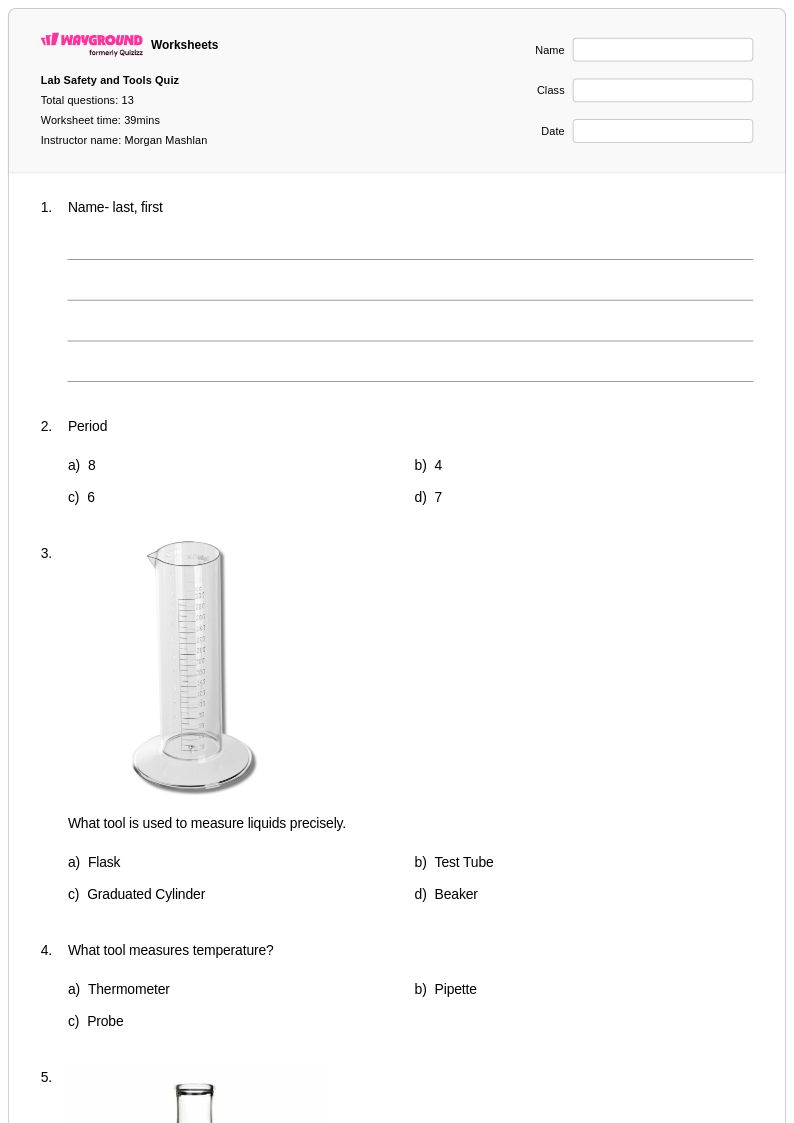
13 คิว
9th - 12th
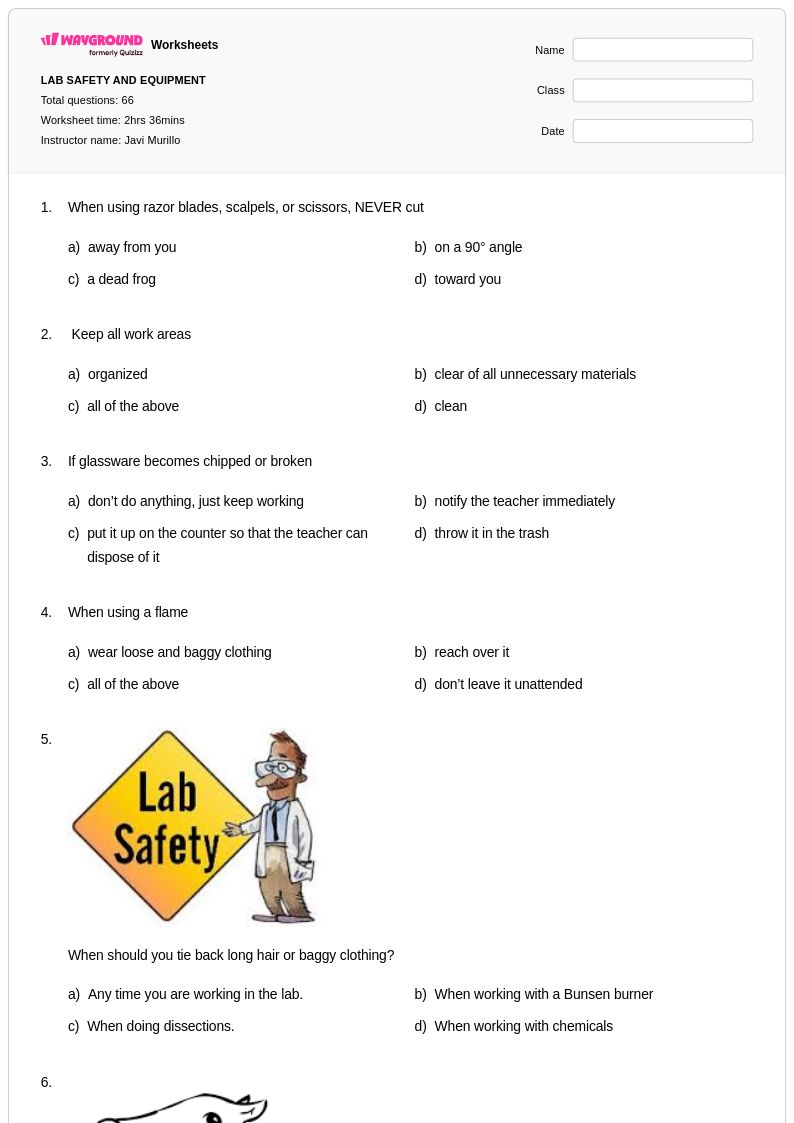
66 คิว
9th - 12th
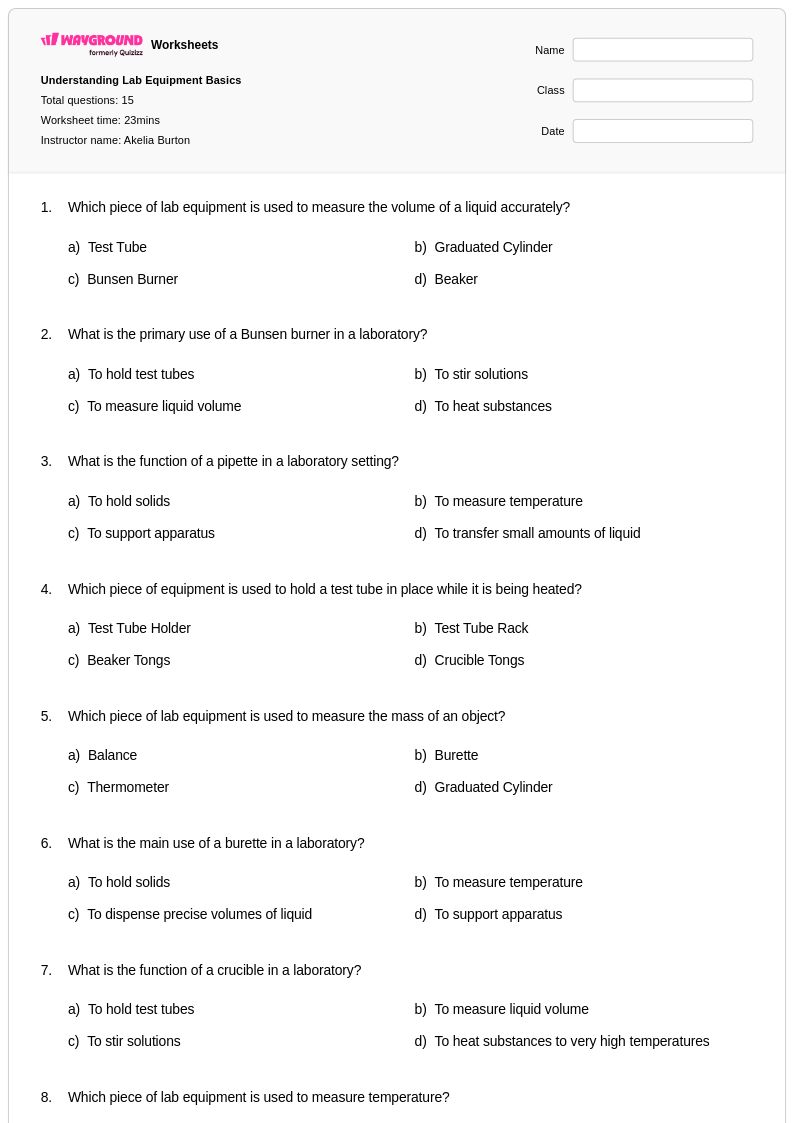
15 คิว
9th
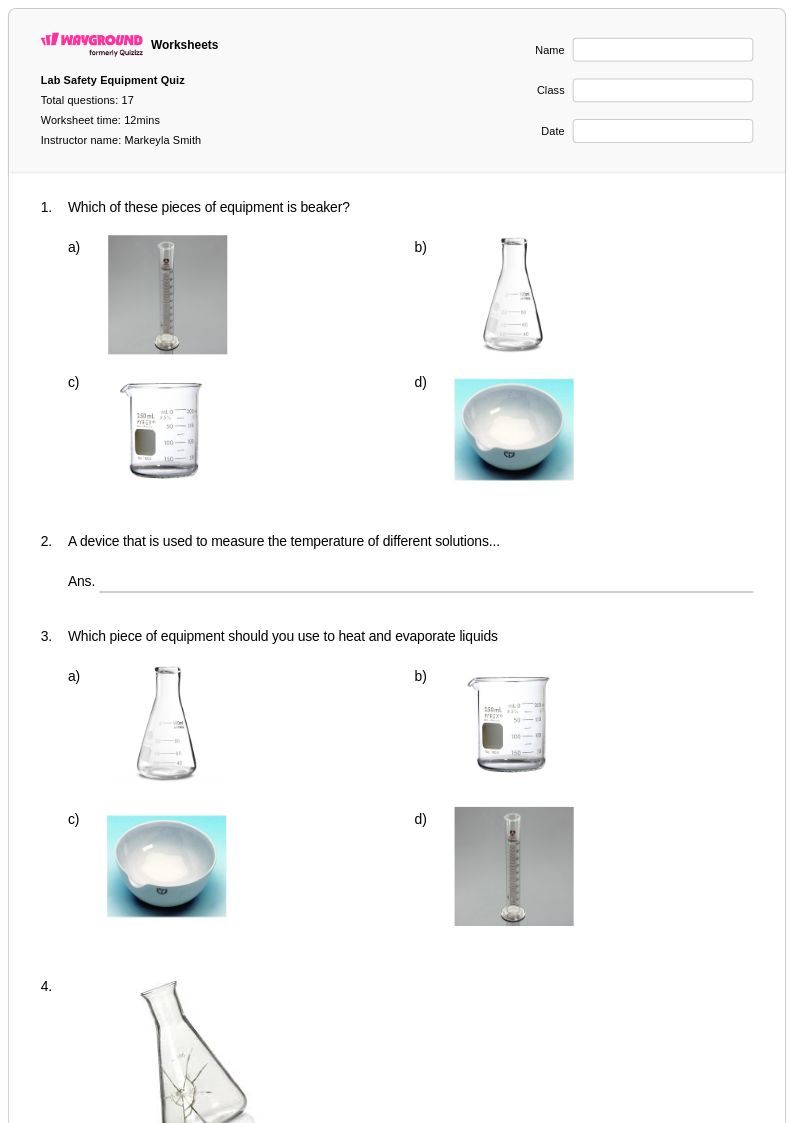
17 คิว
9th
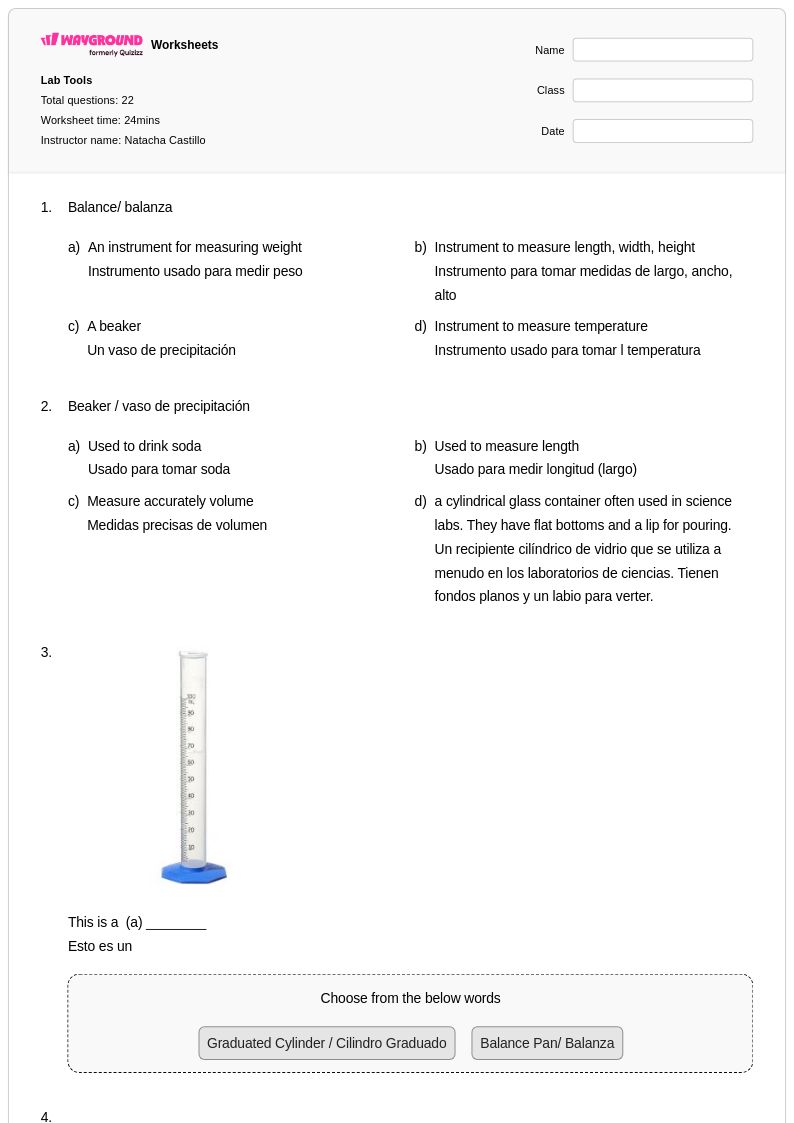
22 คิว
9th - 12th
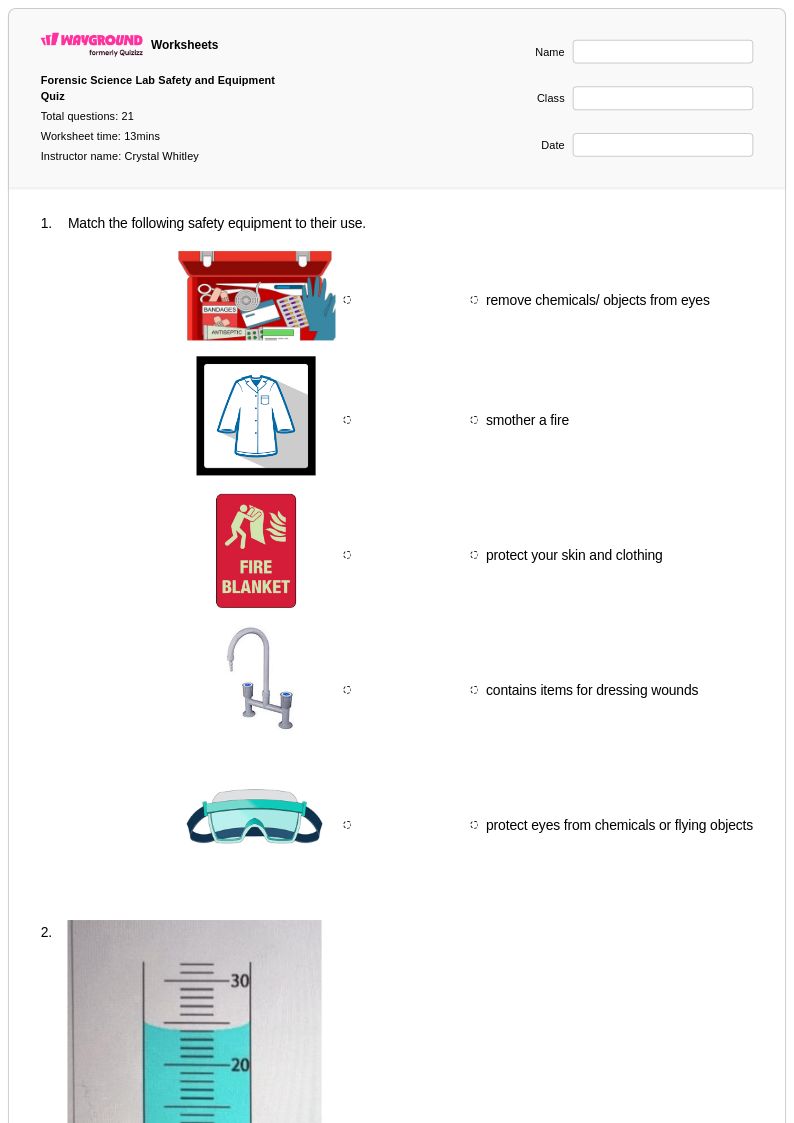
21 คิว
9th - 12th
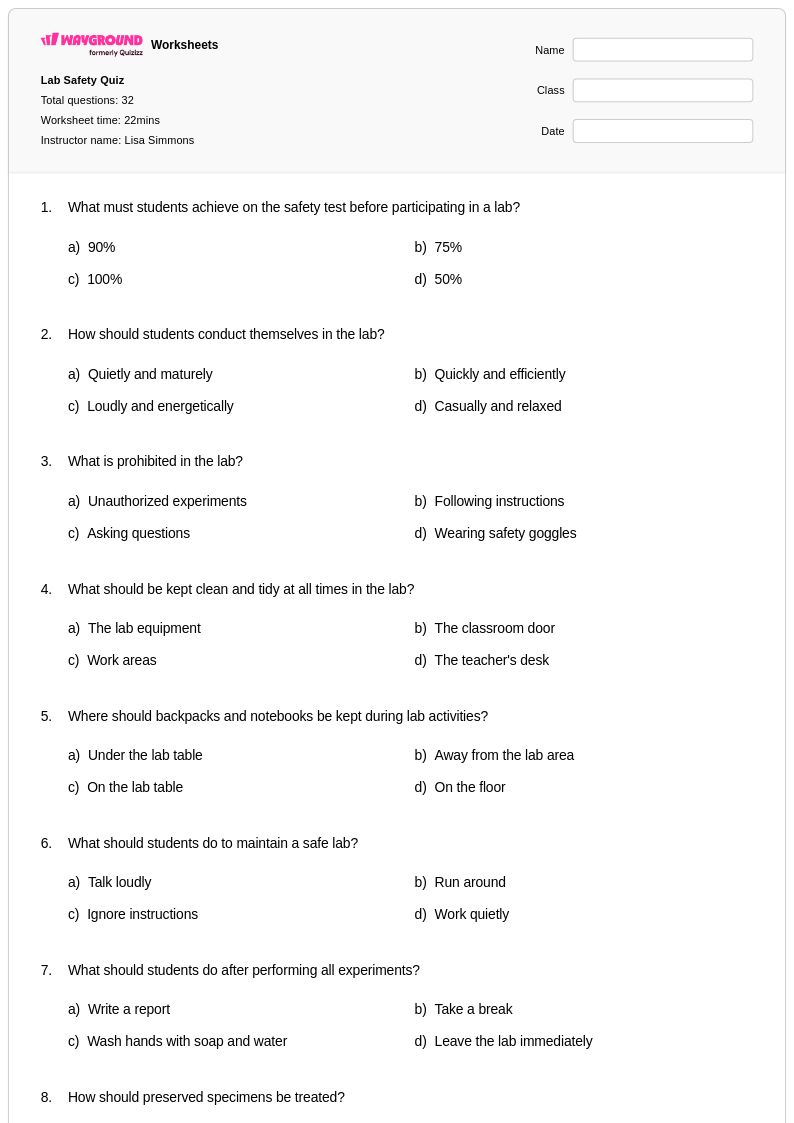
32 คิว
7th - Uni
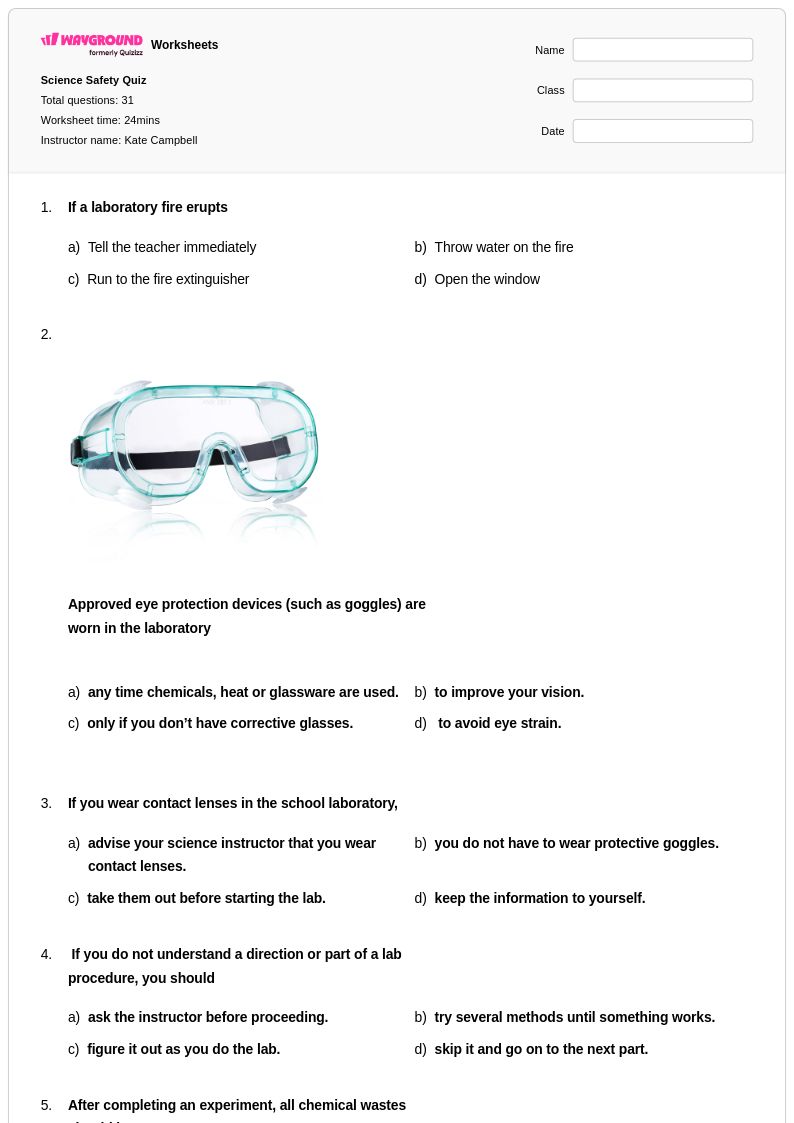
31 คิว
9th - 12th
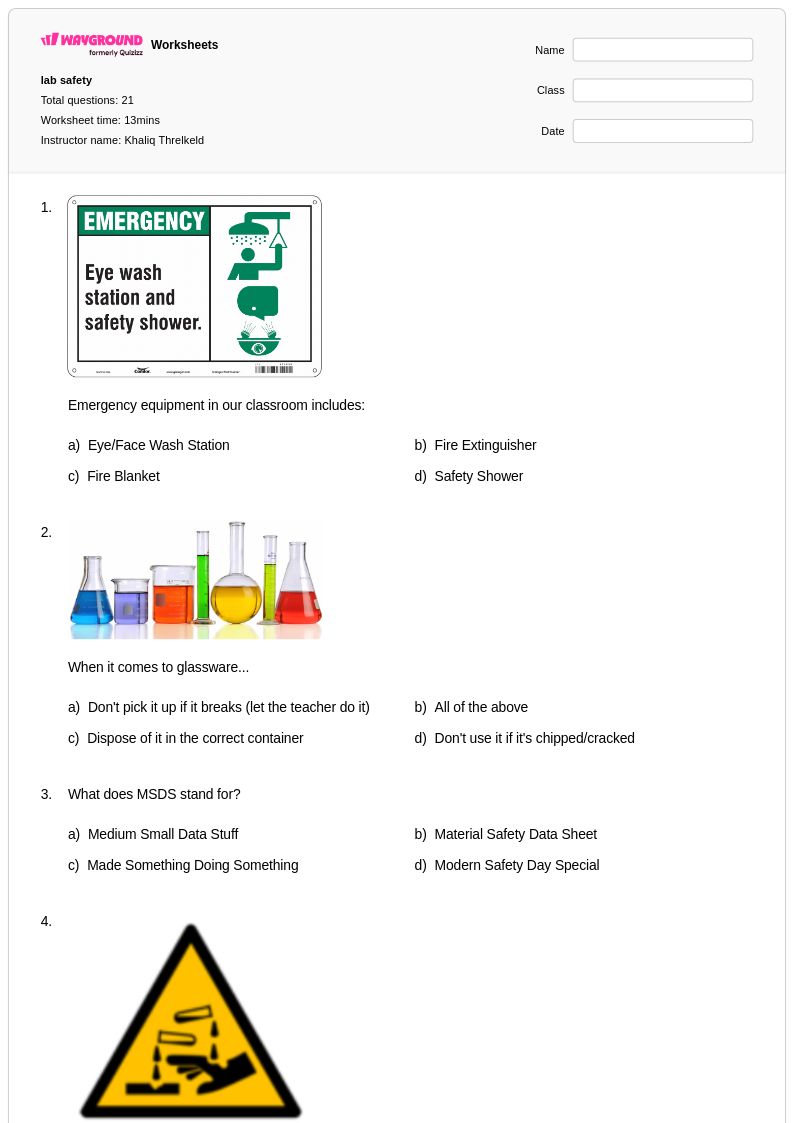
21 คิว
9th - 12th
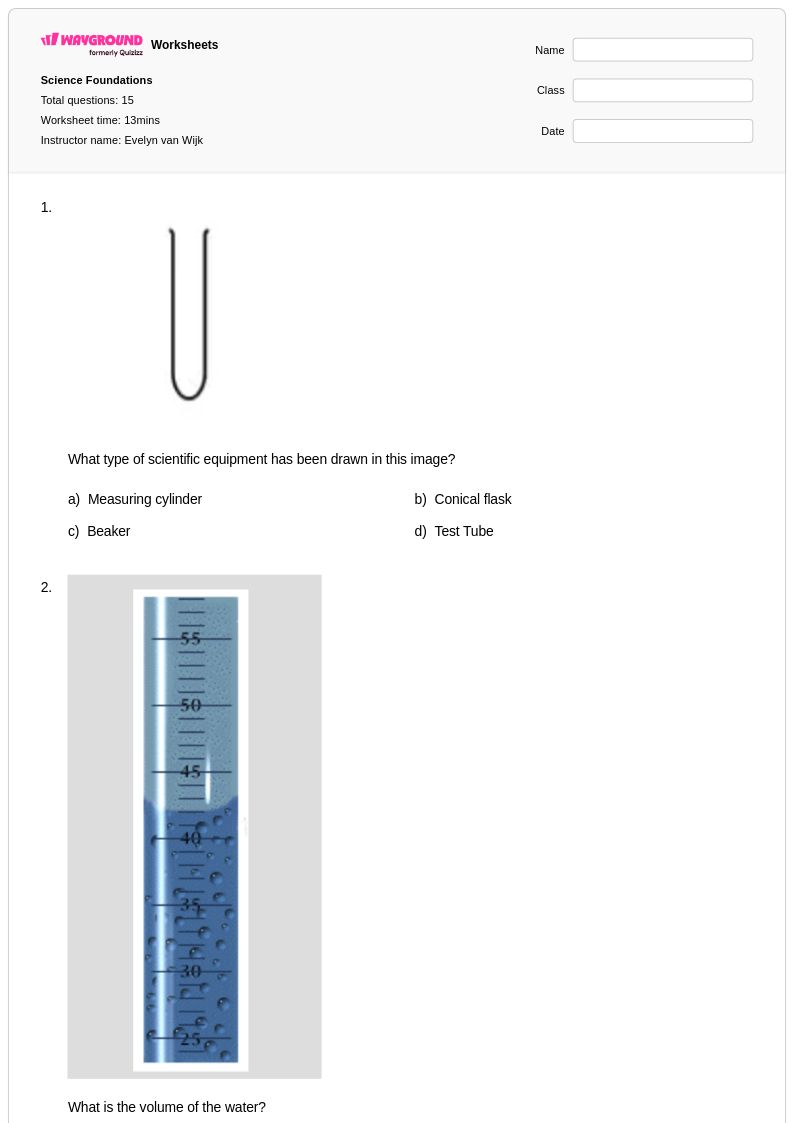
15 คิว
7th - 12th
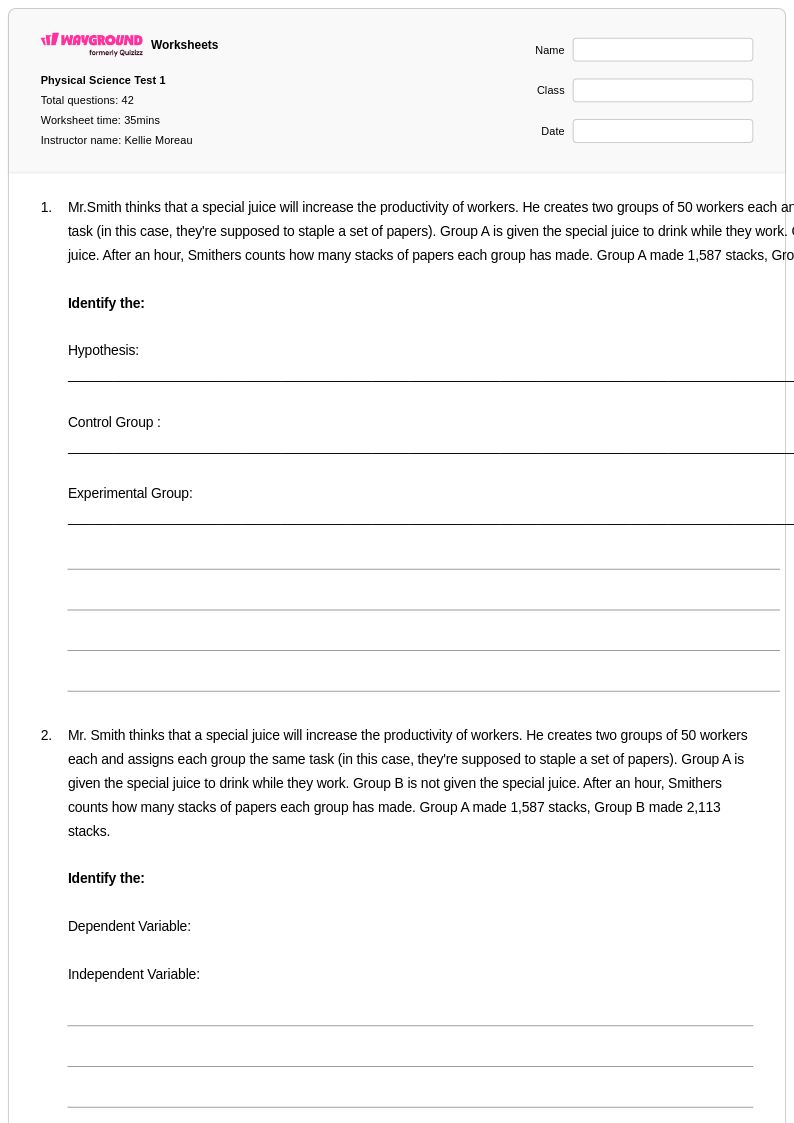
42 คิว
9th
สำรวจแผ่นงาน Lab Equipment ตามเกรด
สำรวจใบงานวิชาอื่นๆ สำหรับ grade 9
Explore printable Lab Equipment worksheets for Grade 9
Grade 9 lab equipment worksheets available through Wayground (formerly Quizizz) provide comprehensive coverage of essential laboratory instruments and safety procedures that form the foundation of high school chemistry education. These expertly designed resources strengthen students' ability to identify, properly use, and maintain critical lab apparatus including beakers, graduated cylinders, burettes, pipettes, balances, and heating equipment. The worksheets feature detailed practice problems that challenge students to match equipment names with their functions, calculate measurements using various instruments, and apply safety protocols in laboratory scenarios. Each printable resource includes a complete answer key, enabling teachers to efficiently assess student understanding while students can engage in self-directed practice. These free educational materials emphasize hands-on learning concepts through visual identification exercises, measurement calculations, and procedural knowledge that directly correlates with laboratory work students will encounter throughout their chemistry studies.
Wayground (formerly Quizizz) empowers educators with millions of teacher-created lab equipment resources specifically designed for Grade 9 chemistry instruction, featuring robust search and filtering capabilities that allow teachers to locate materials aligned with specific curriculum standards and learning objectives. The platform's differentiation tools enable educators to customize worksheets based on individual student needs, while flexible formatting options provide both digital and printable pdf versions to accommodate diverse classroom environments and teaching preferences. Teachers can seamlessly integrate these comprehensive worksheet collections into lesson planning for initial concept introduction, targeted remediation for students struggling with lab procedures, or enrichment activities for advanced learners seeking additional challenges. The extensive library supports systematic skill practice through varied question types and difficulty levels, helping educators create structured learning pathways that build student confidence with laboratory equipment identification, proper usage techniques, and safety awareness essential for successful chemistry lab experiences.
FAQs
How do I teach students to identify and use lab equipment correctly?
What exercises help students practice recognizing and selecting the right lab equipment?
What mistakes do students commonly make when identifying or using lab equipment?
How do lab equipment worksheets connect to laboratory safety instruction?
How do I use Wayground's lab equipment worksheets in my classroom?
How can I differentiate lab equipment instruction for students with different learning needs?