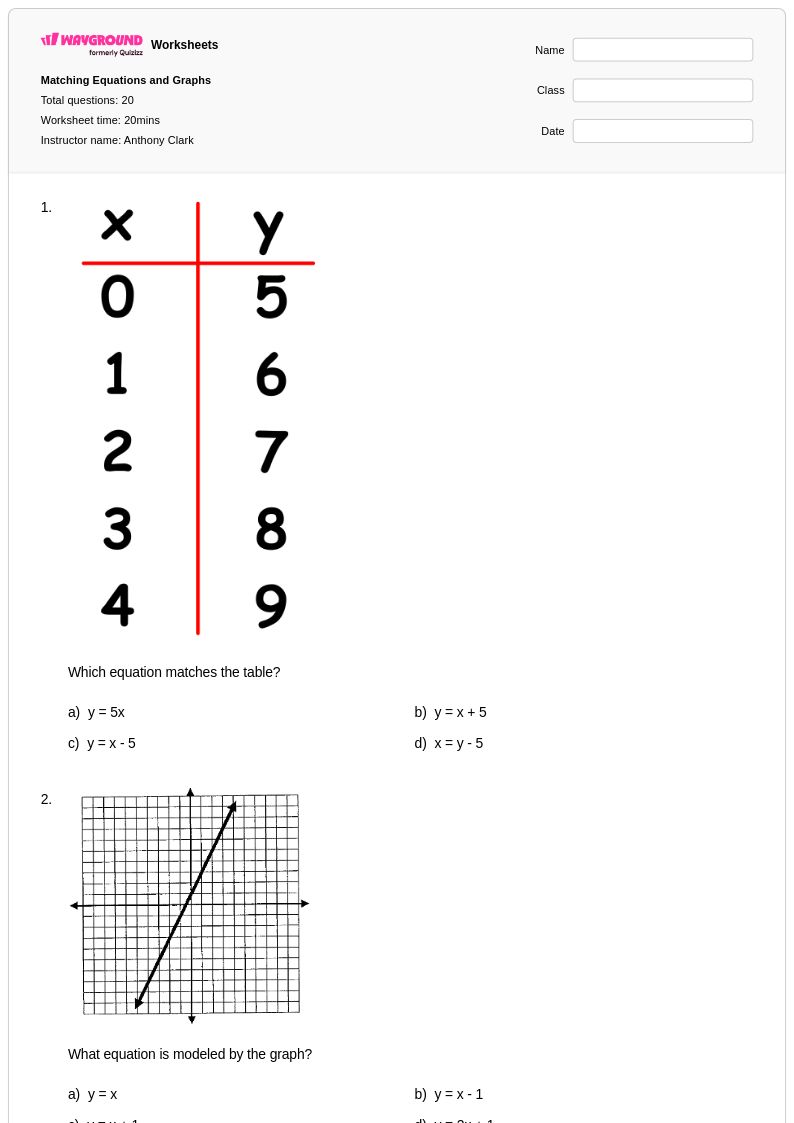
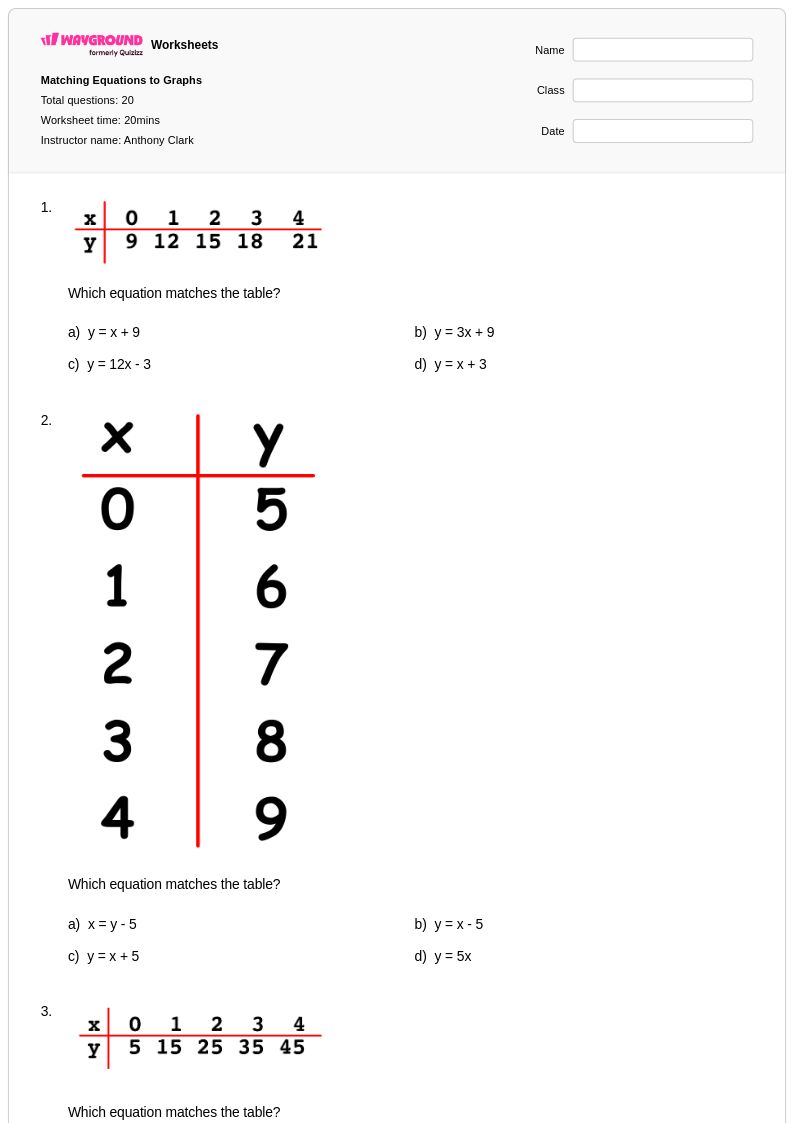
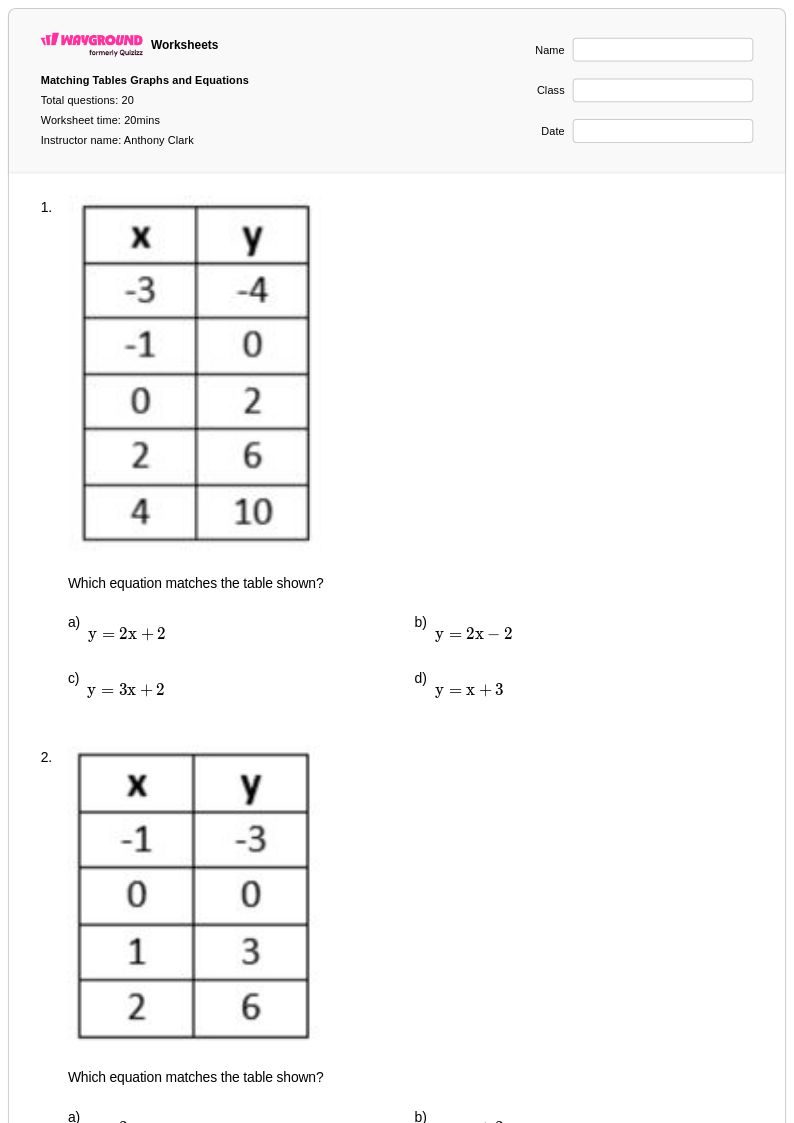
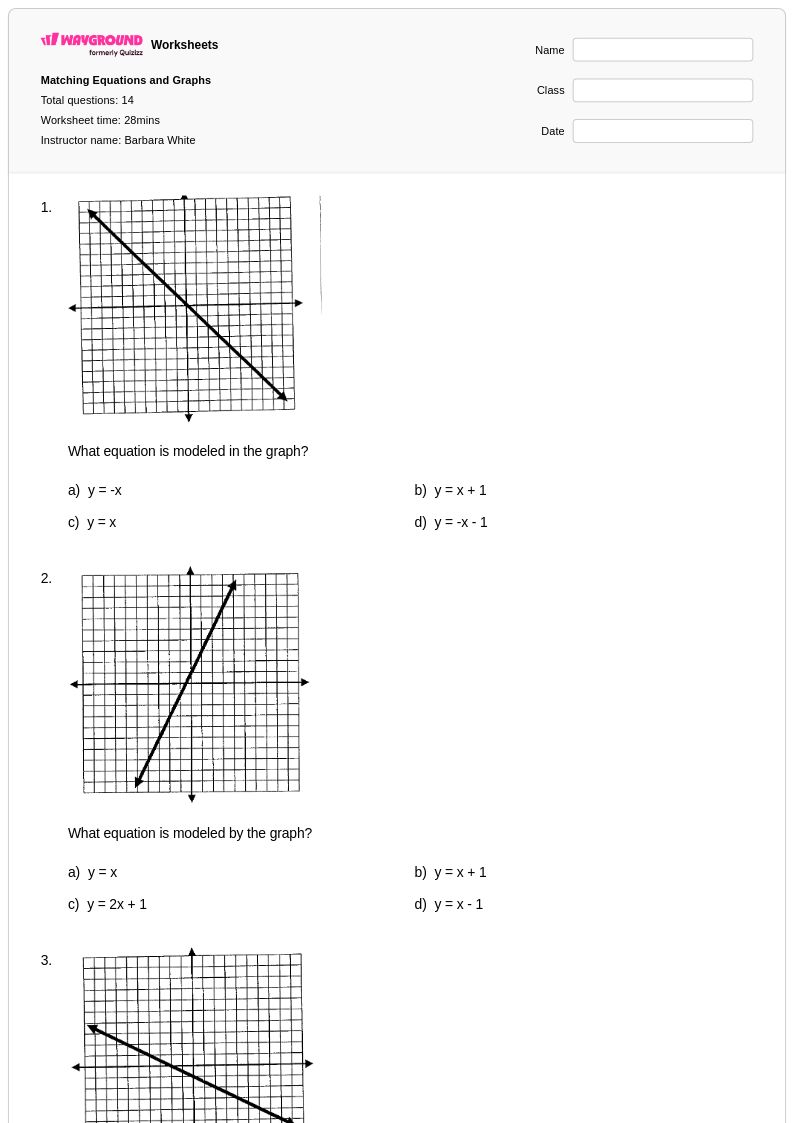
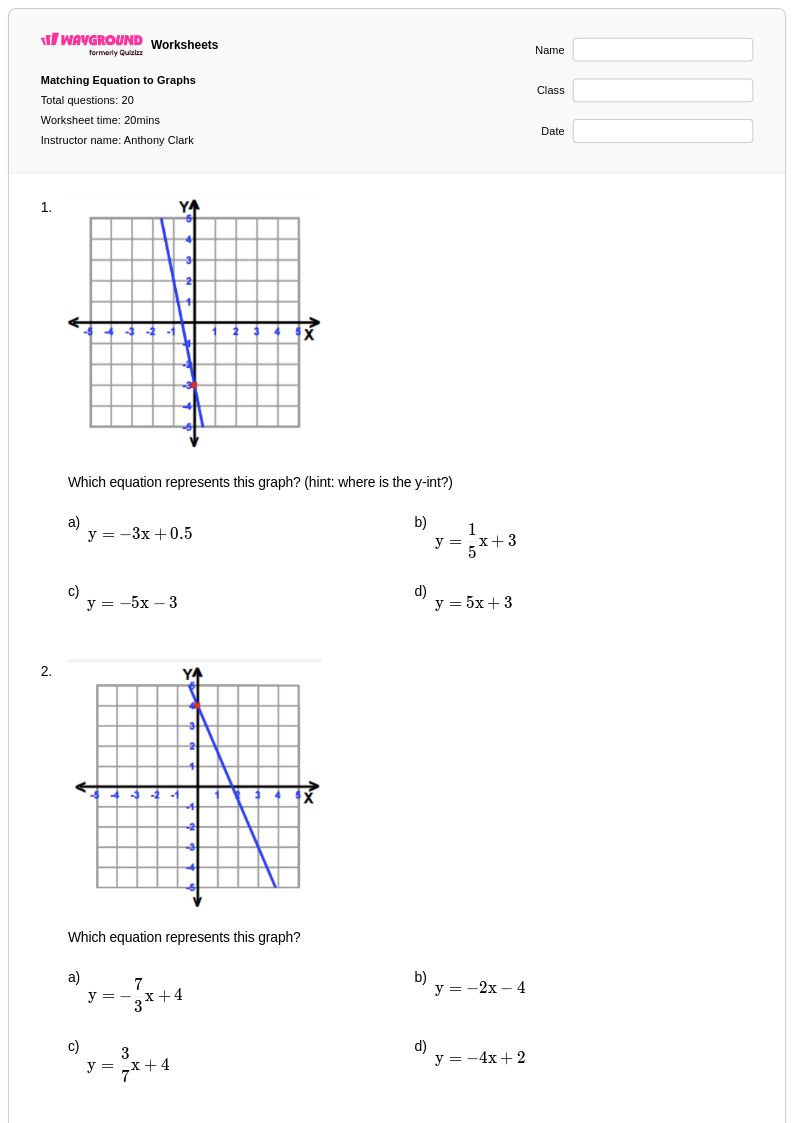
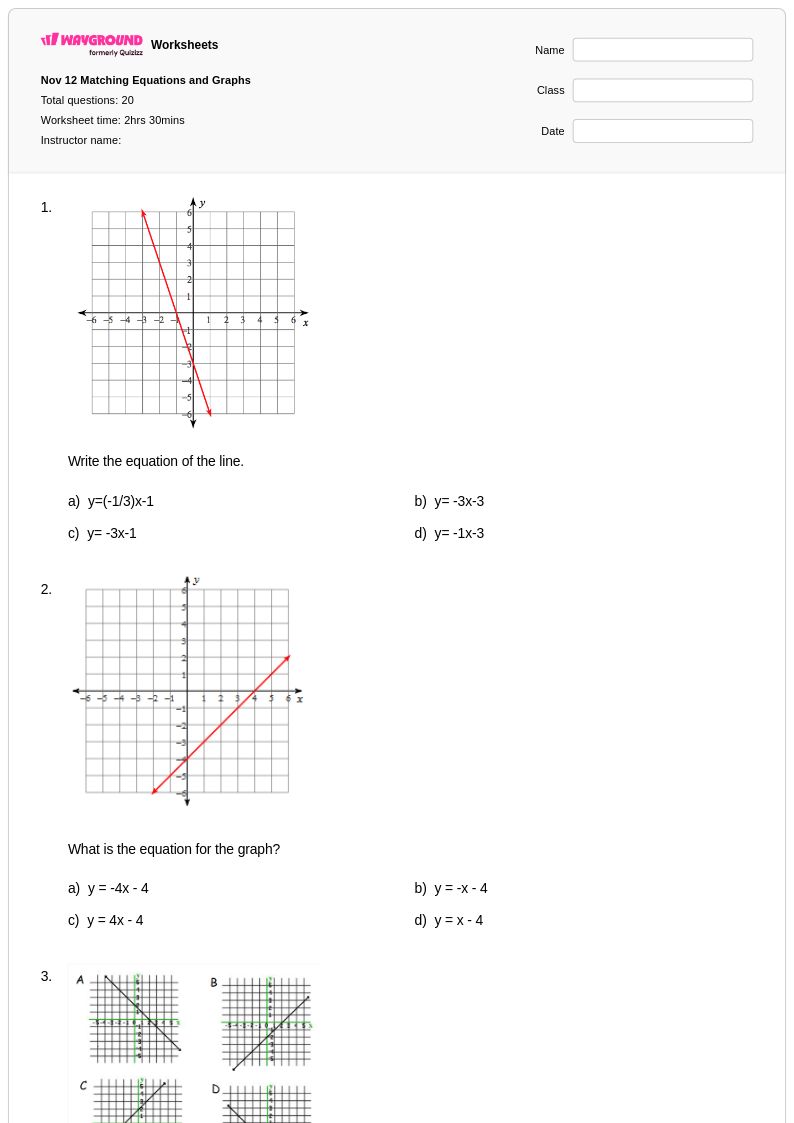
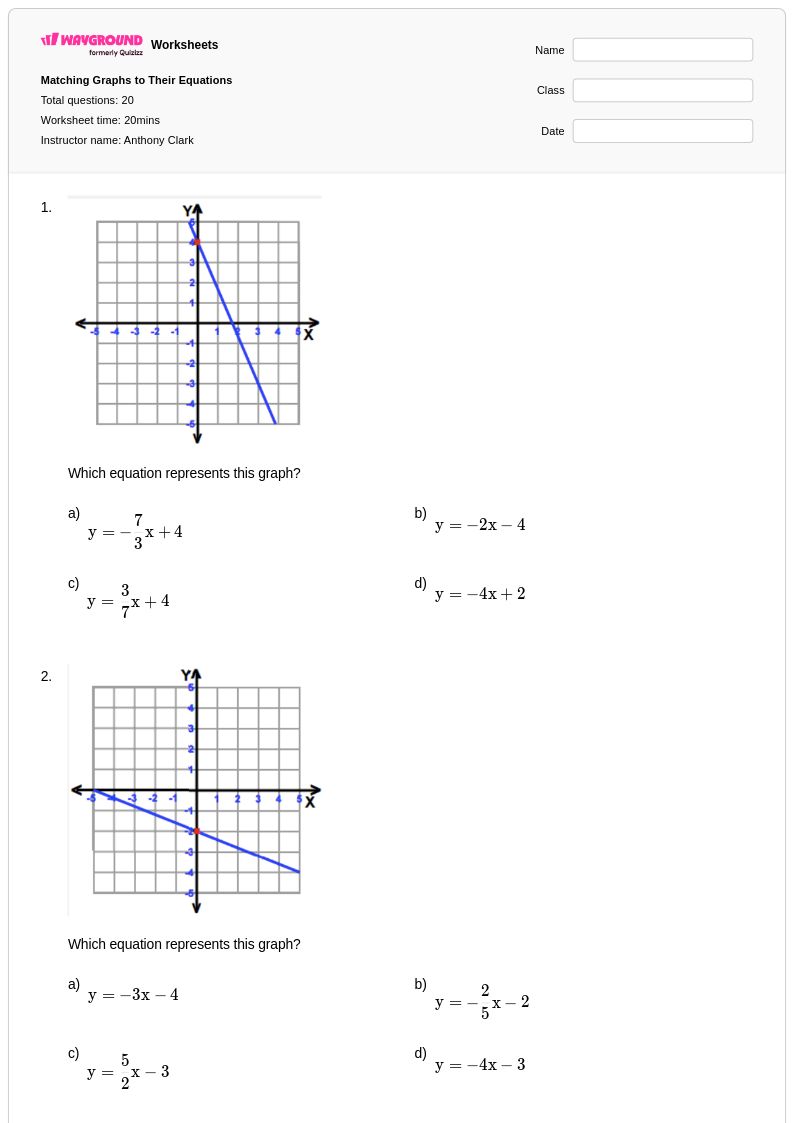
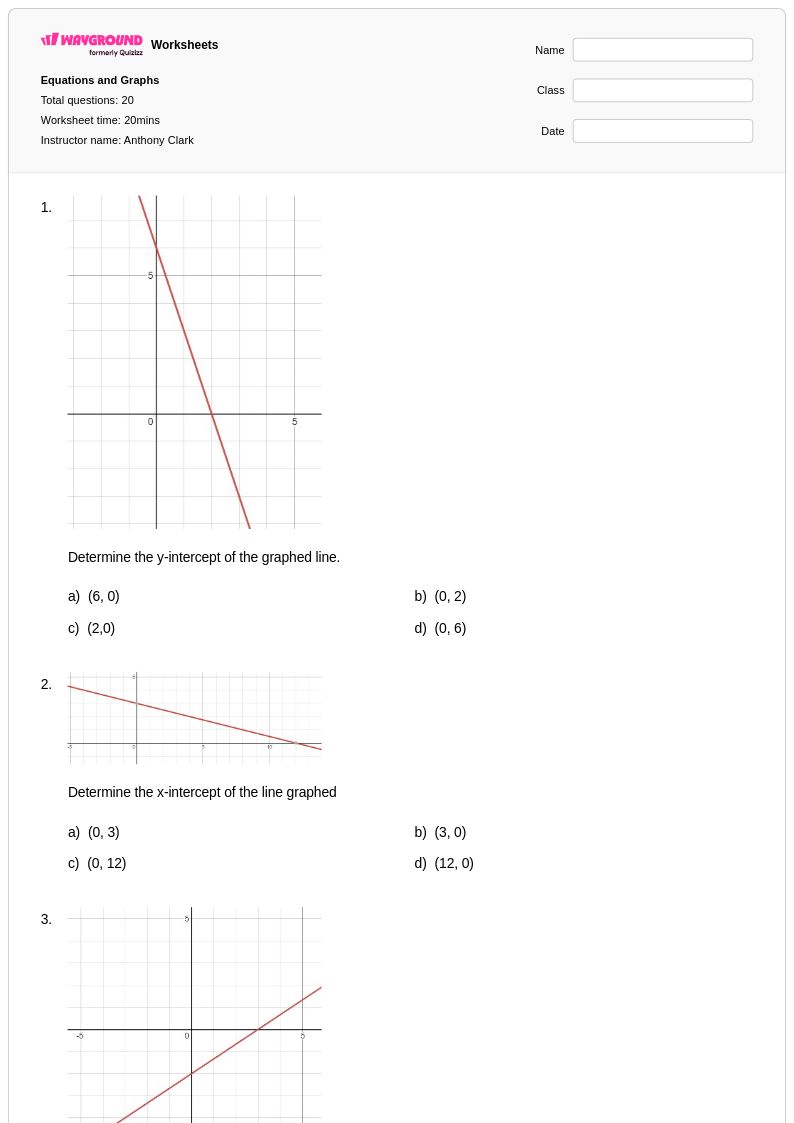
Free Printable Matching Equations and Graphs worksheets
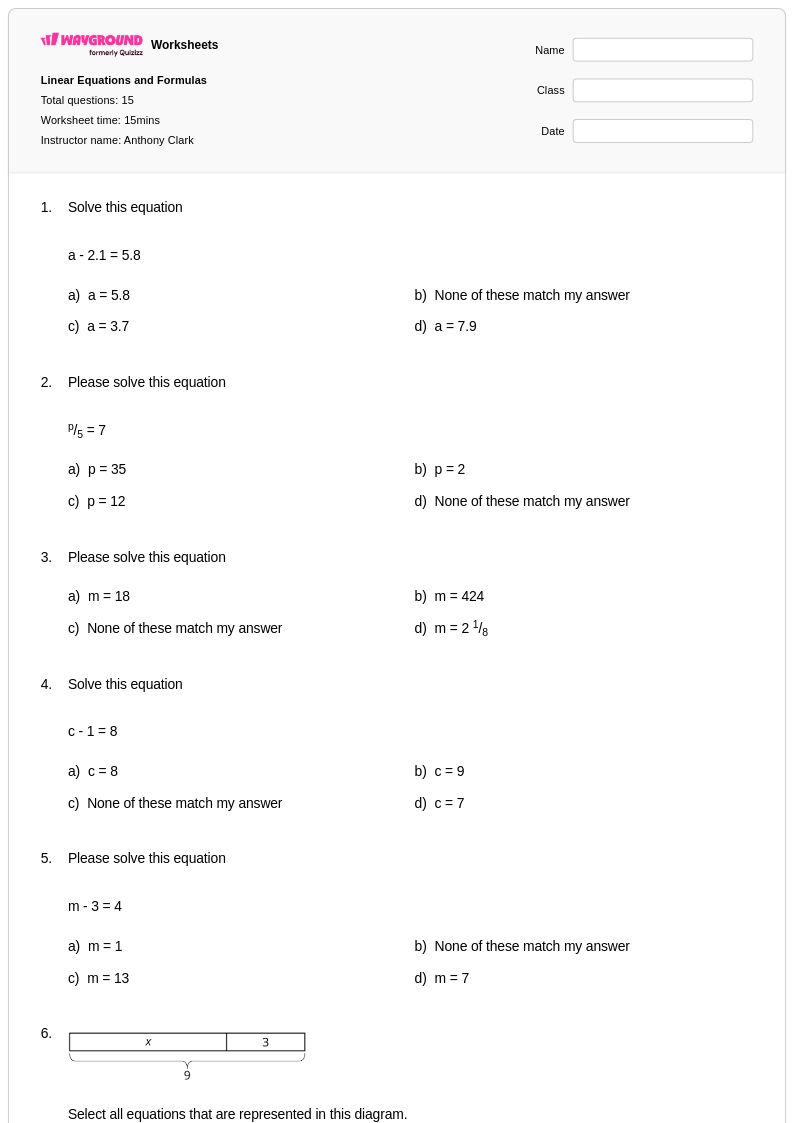
Enhance students' understanding of matching equations and graphs with Wayground's free printable worksheets featuring practice problems and comprehensive answer keys to master coordinate relationships.
Explore printable Matching Equations and Graphs worksheets
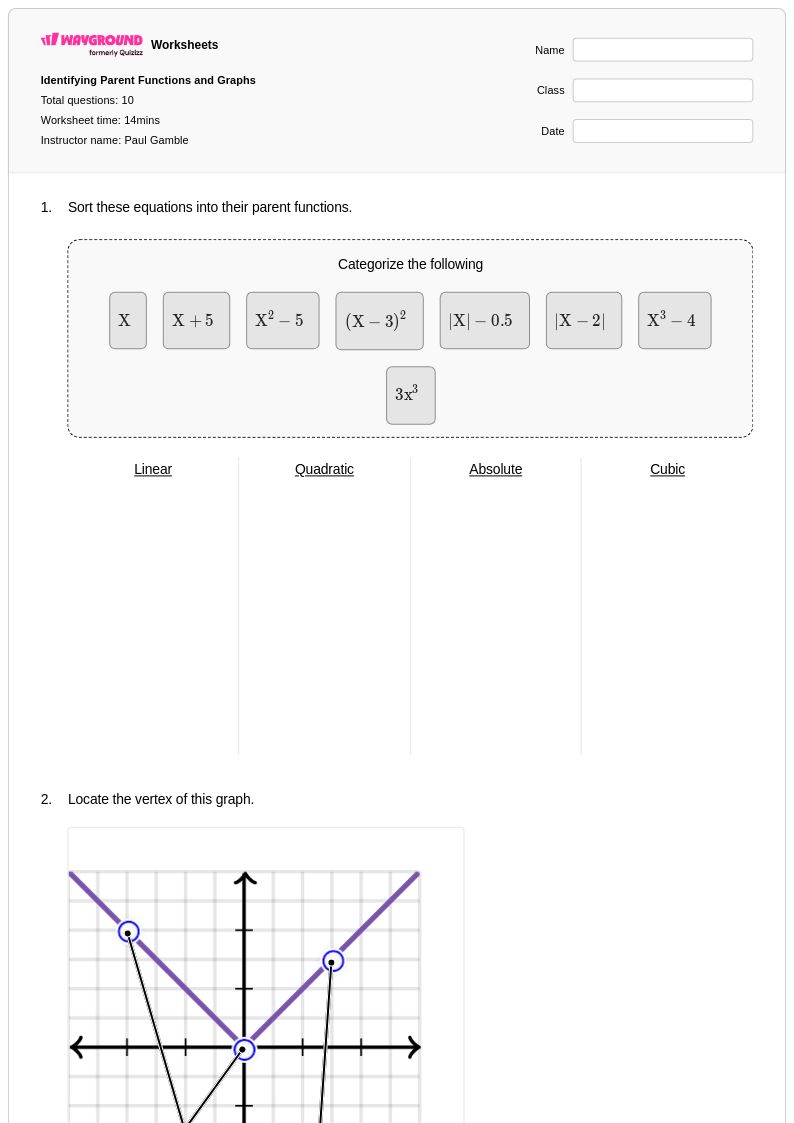
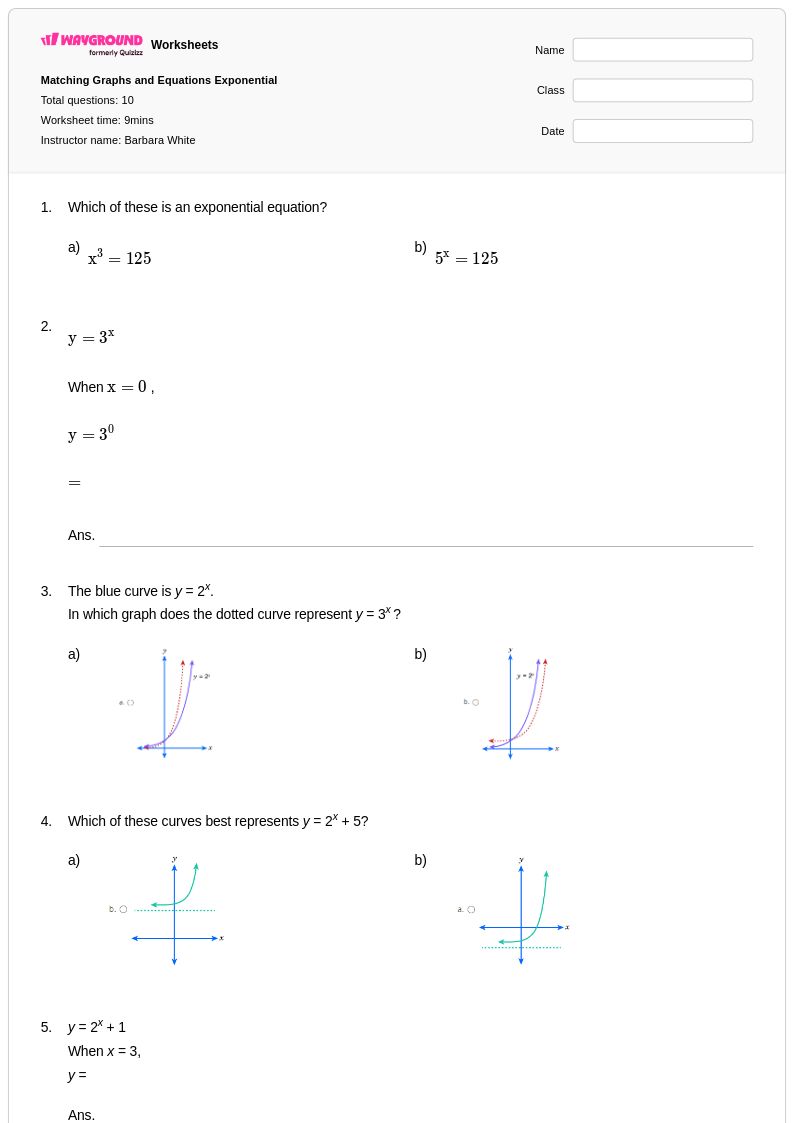
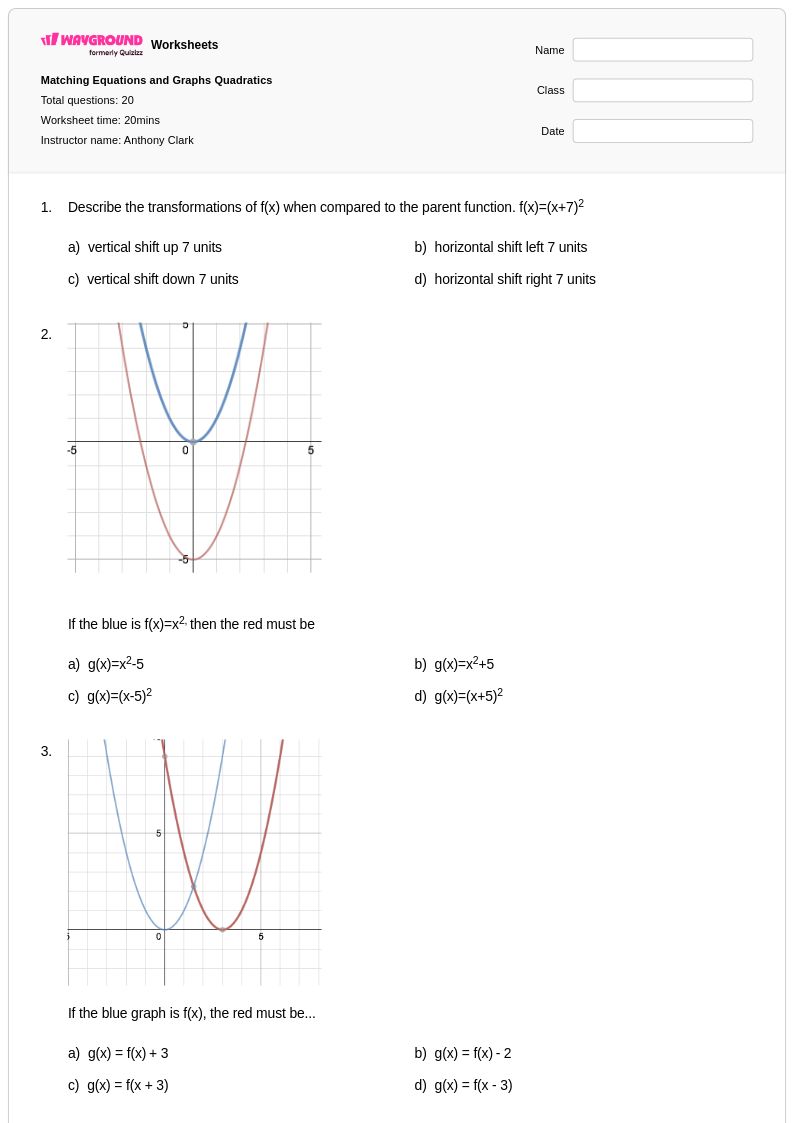
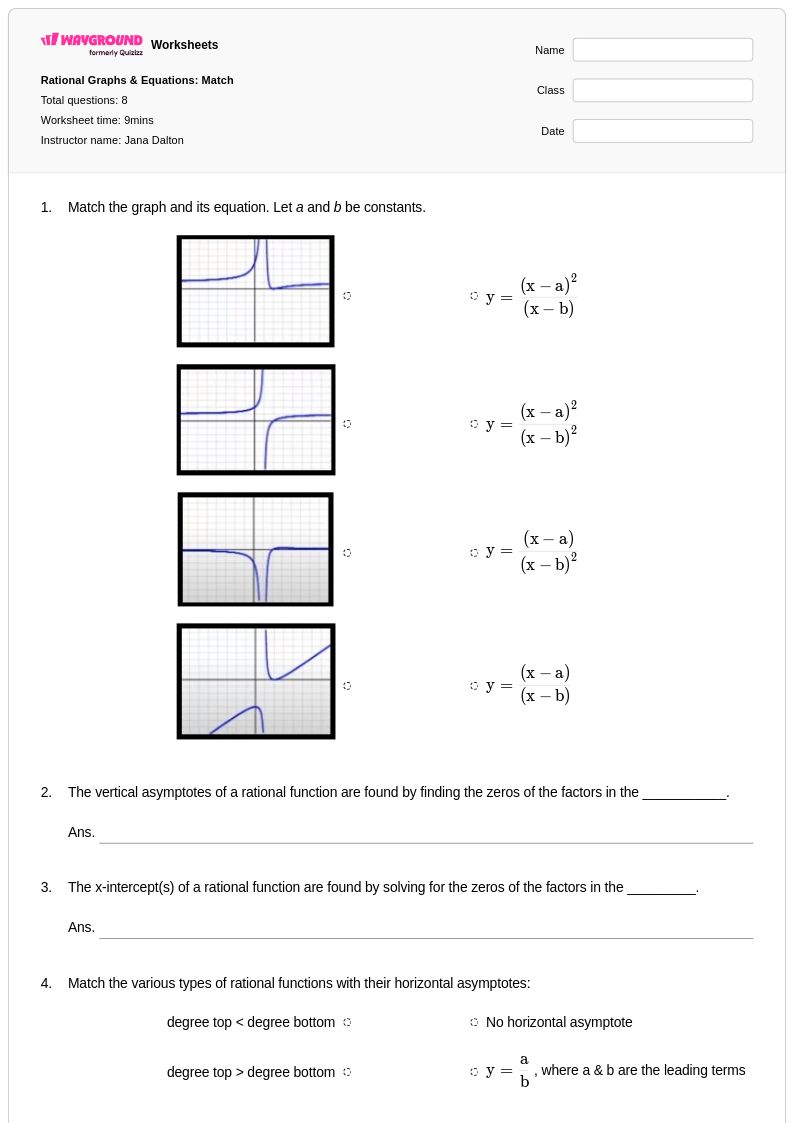
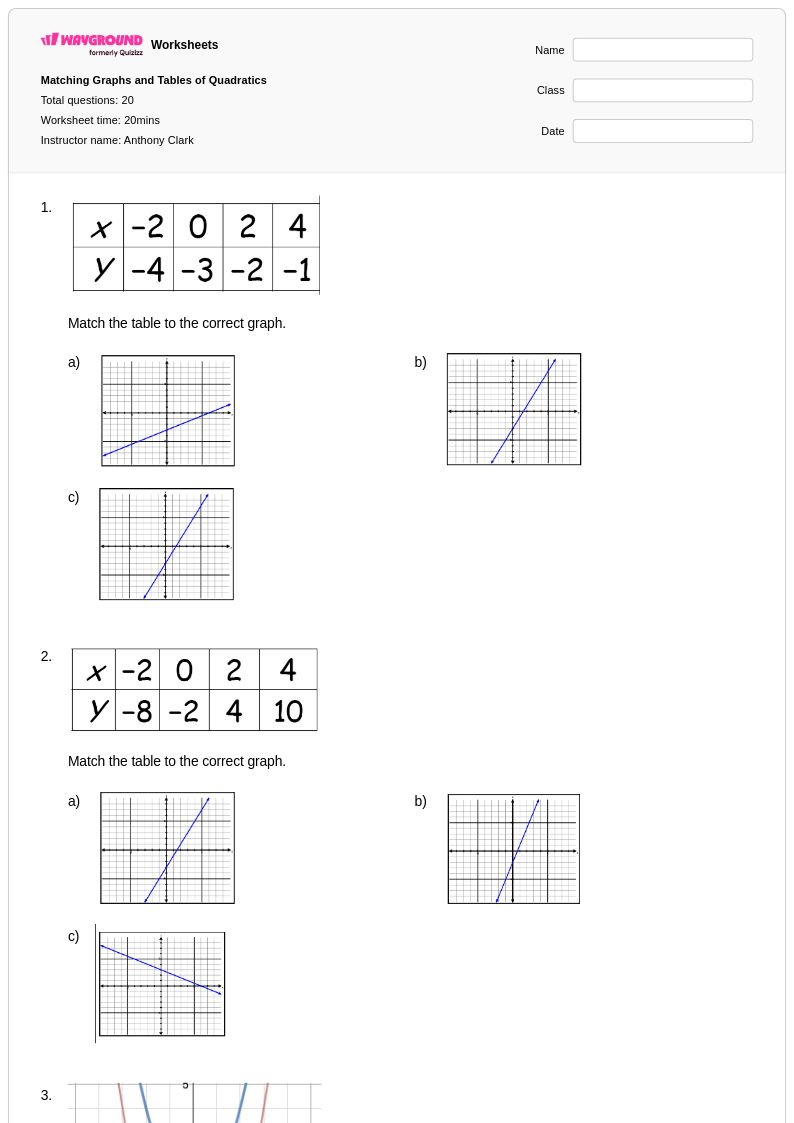
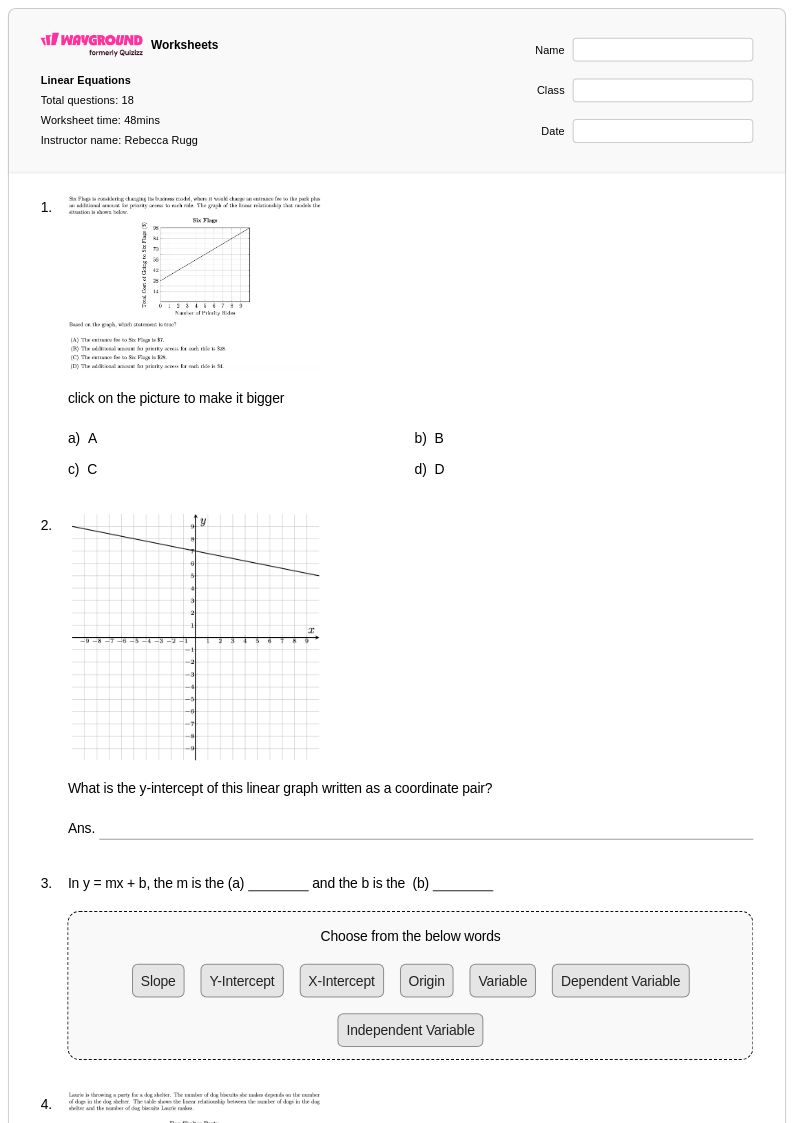
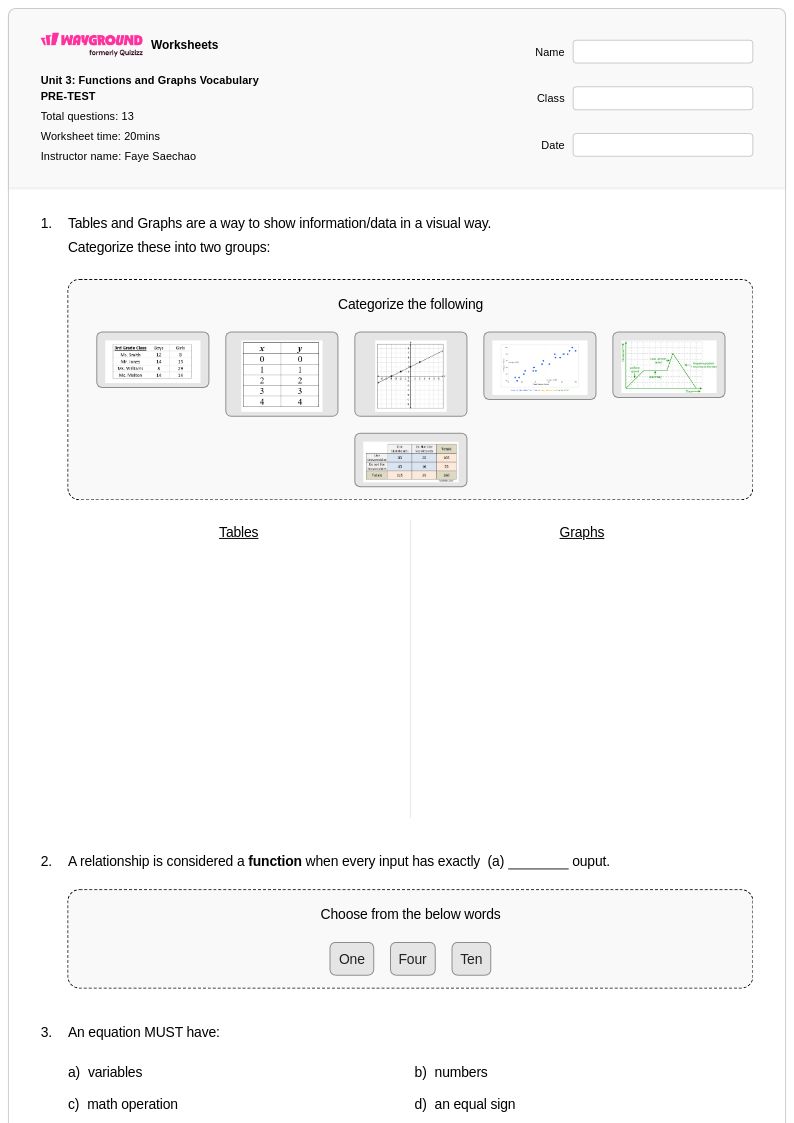
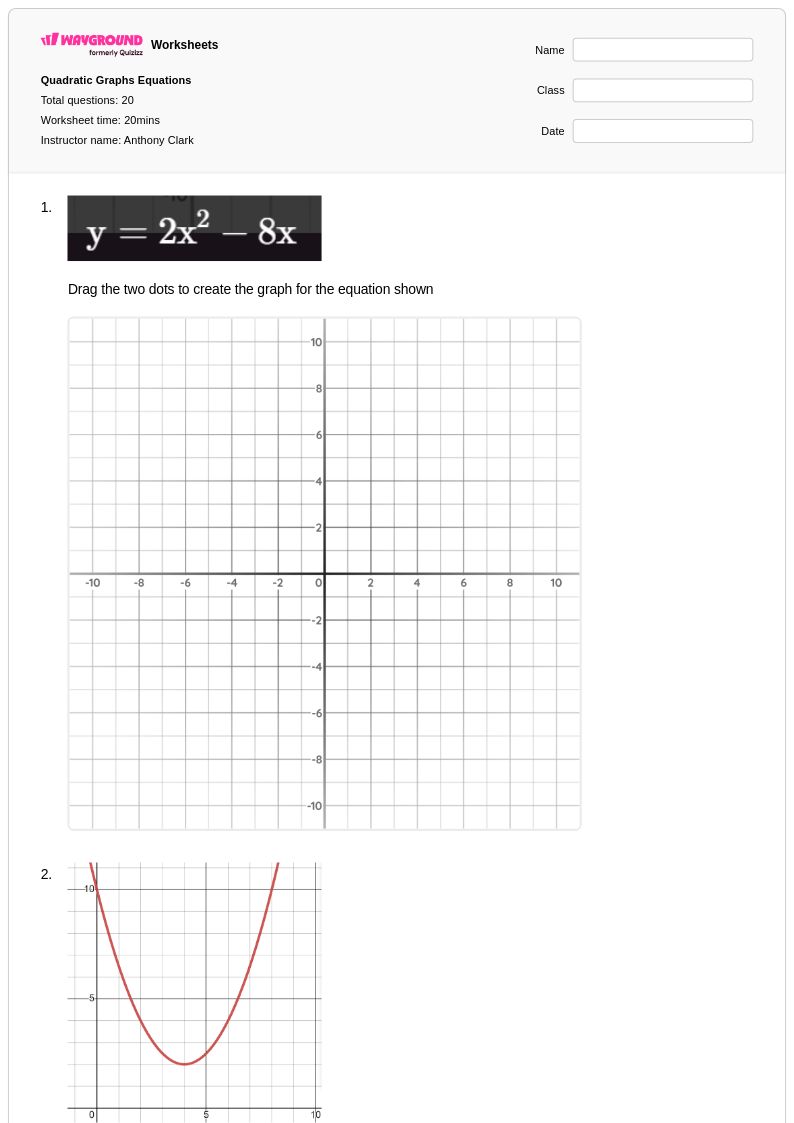
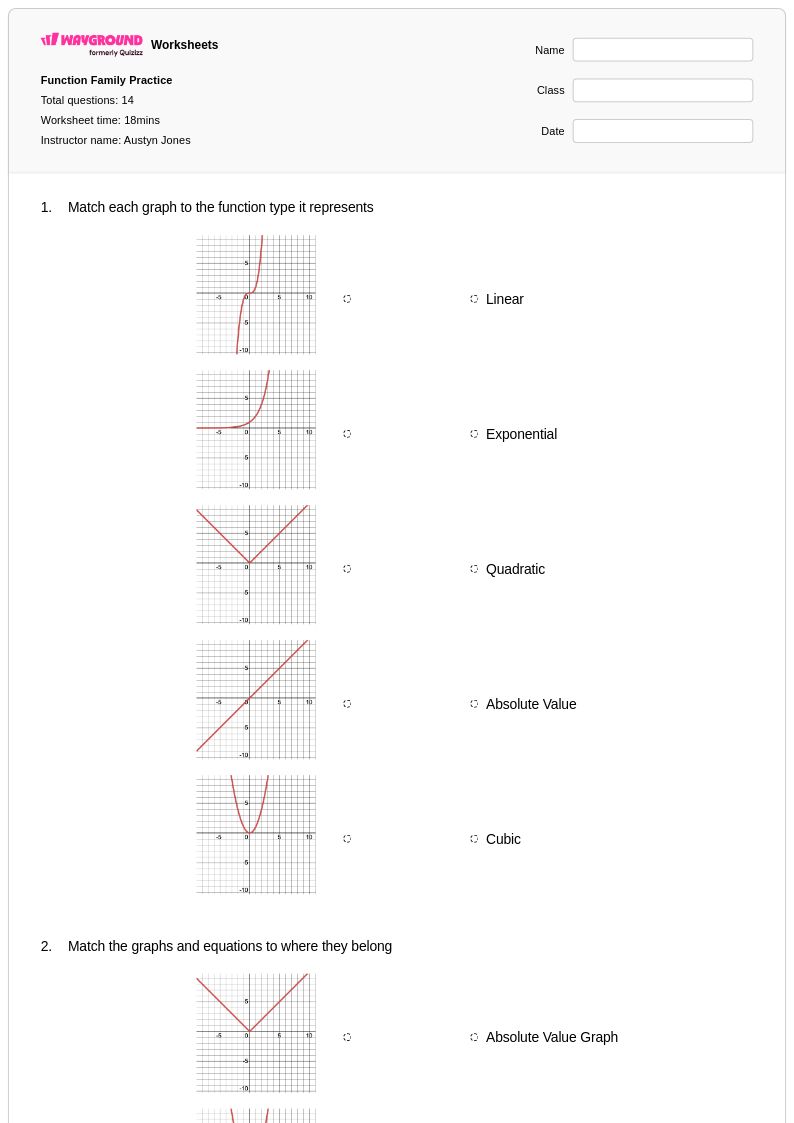
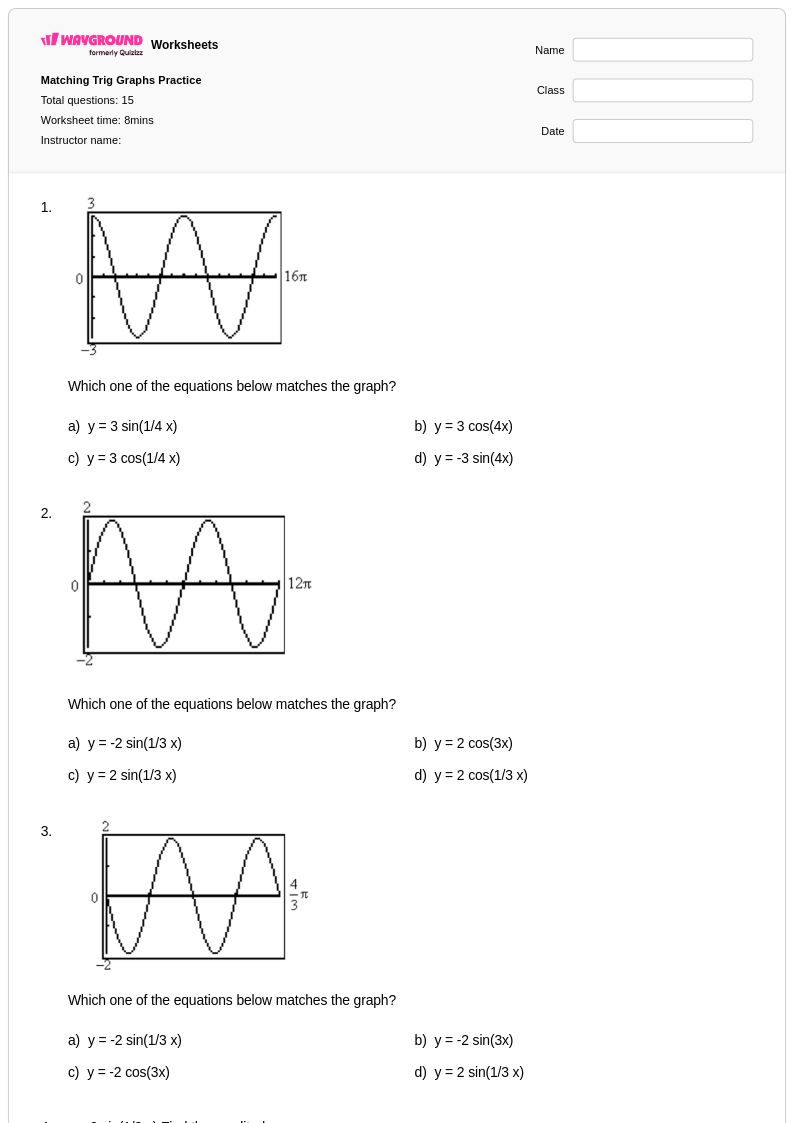
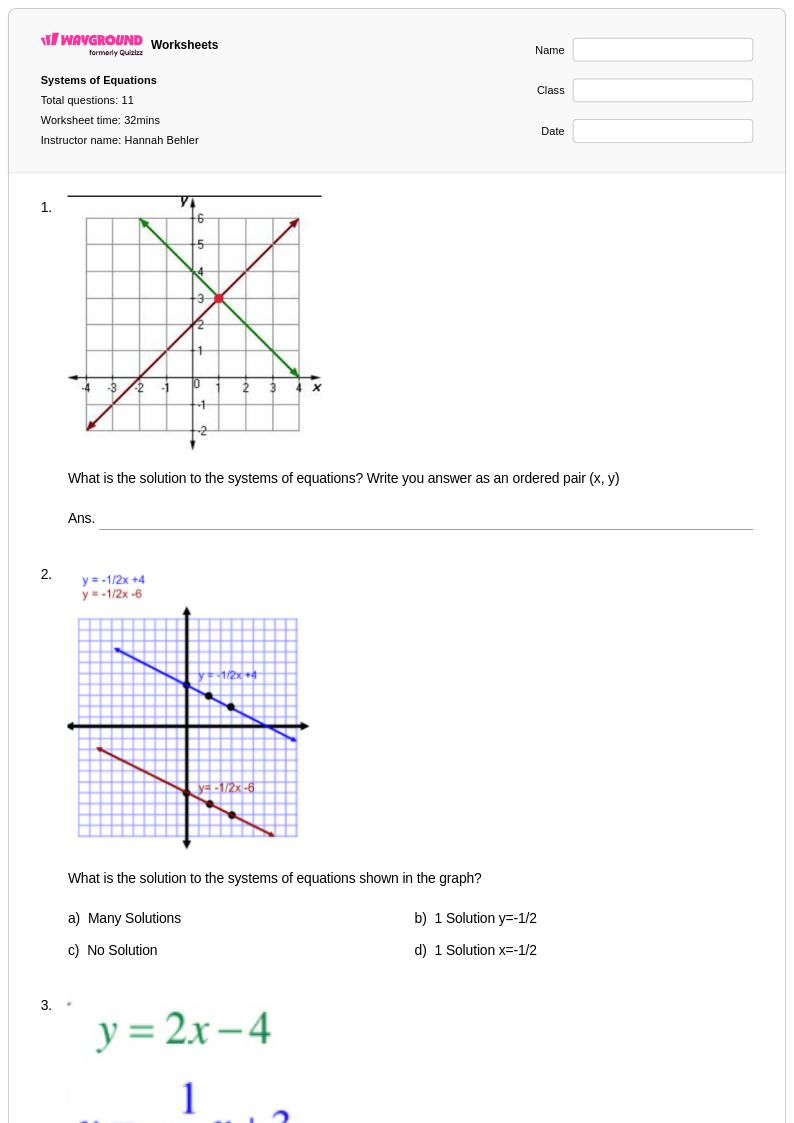
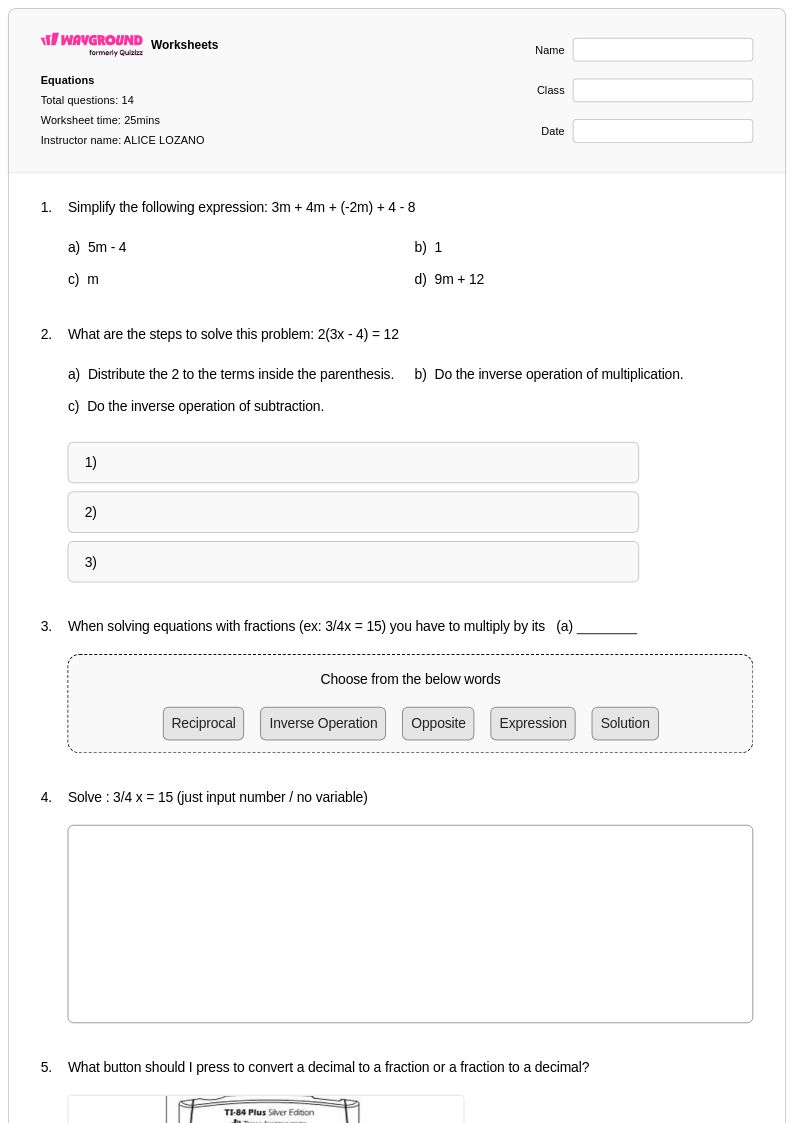
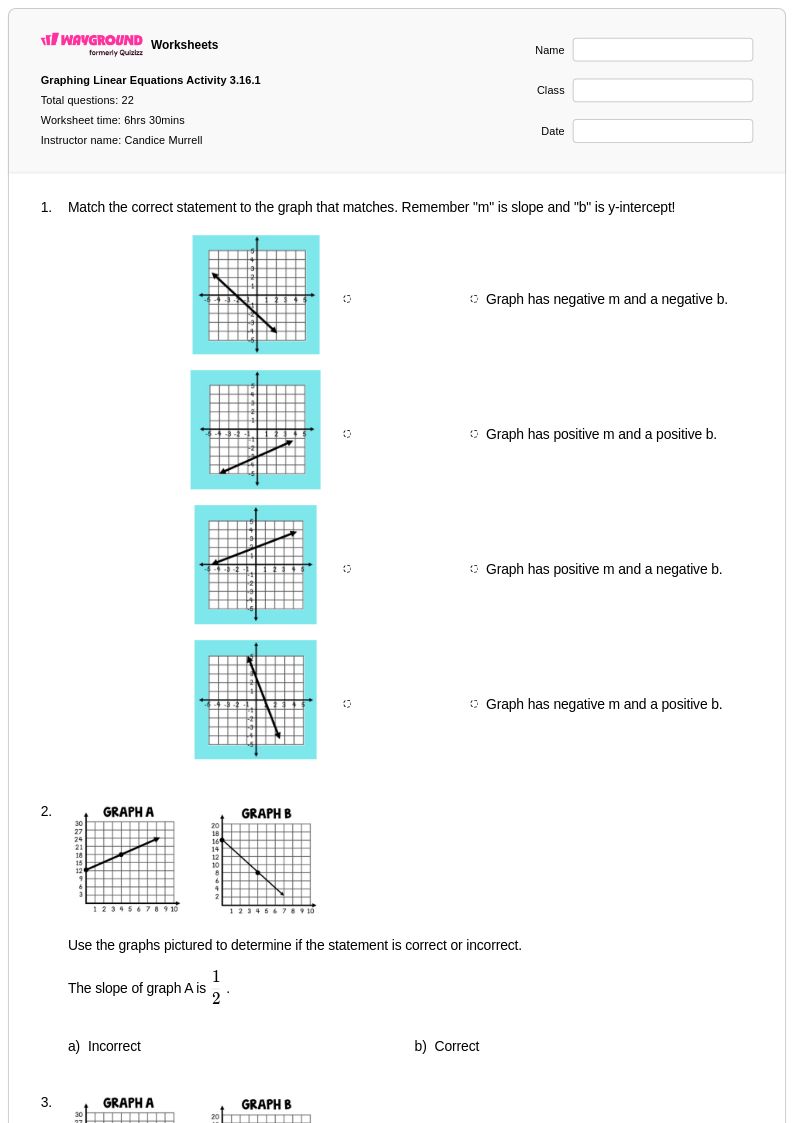
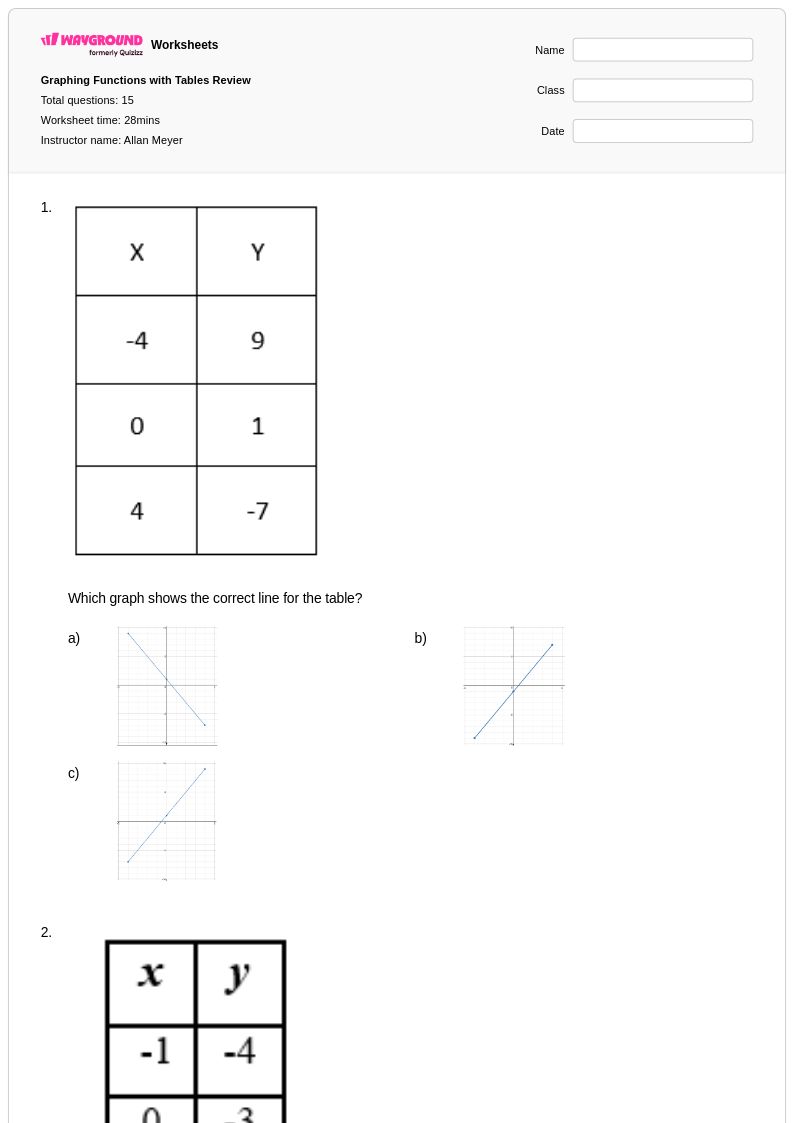
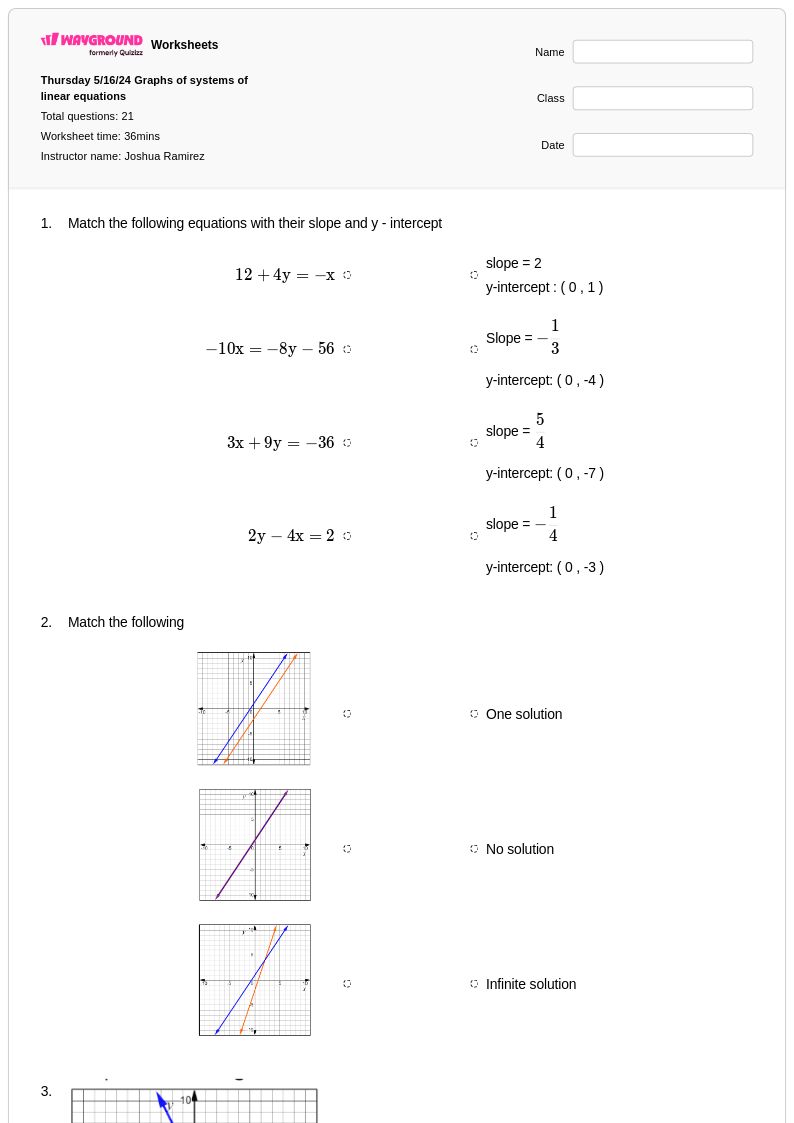
Matching equations and graphs worksheets available through Wayground (formerly Quizizz) provide students with essential practice in connecting algebraic representations with their visual counterparts. These comprehensive resources strengthen critical mathematical reasoning skills by challenging learners to identify relationships between linear, quadratic, exponential, and other function types and their corresponding coordinate plane representations. Each worksheet collection includes varied practice problems that progress from basic linear equations to more complex polynomial and trigonometric functions, complete with answer keys for immediate feedback and assessment. Teachers can access these free printables in convenient pdf format, making it simple to distribute targeted practice that builds students' ability to translate between symbolic and graphical mathematical language.
Wayground (formerly Quizizz) empowers educators with millions of teacher-created matching equations and graphs resources that can be easily searched, filtered, and customized to meet diverse classroom needs. The platform's robust collection aligns with mathematical standards and offers differentiation tools that allow teachers to modify difficulty levels, adjust problem quantities, and select specific equation types based on individual student requirements. These flexible worksheets are available in both printable pdf format for traditional classroom use and interactive digital versions for technology-enhanced learning environments. Whether used for initial skill introduction, targeted remediation, advanced enrichment, or regular practice sessions, these resources streamline lesson planning while providing educators with reliable, professionally-developed materials that support effective mathematics instruction and help students master the crucial skill of connecting algebraic equations with their graphical representations.
FAQs
How do I teach matching equations and graphs?
Start with a "gallery walk." Post graphs around the room and give students equation cards to match. This encourages discussion and peer learning. Focus on one function type at a time, like linear equations, and have students identify key features like slope and y-intercept to justify their matches before moving to more complex functions.
What exercises help students practice matching equations and graphs?
Effective practice involves more than just simple matching. Use worksheets that ask students to identify the correct equation from a few options for a given graph, or vice-versa. Also include exercises where students must find the error in an incorrect match and explain their reasoning. This builds deeper analytical skills.
What are common mistakes when matching equations and graphs?
Students often mix up positive and negative slopes, especially when reading a graph from right to left. For parabolas, a common error is misidentifying the vertex or confusing equations for upward-opening versus downward-opening graphs. Many also struggle to distinguish between steep and shallow slopes, matching y = 4x to a graph that better represents y = (1/4)x.
How can I use this matching equations and graphs worksheet?
Wayground worksheets are flexible for any classroom setup. You can assign them as an interactive digital quiz on the Wayground platform or download a printable PDF for offline practice. Every worksheet includes a complete answer key for quick grading. For paper assignments, you can use the Wayground for Teachers app to scan and grade student work.
How does matching equations and graphs fit into the math curriculum?
This skill develops progressively under the Common Core State Standards. Students begin in middle school by plotting points and graphing simple linear equations. In Grade 8, they formalize the concept of a function and connect linear equations to their graphs via slope-intercept form. In high school algebra, this extends to quadratic, exponential, and other function types, where students analyze more complex features like vertices, asymptotes, and end behavior.
How can I differentiate this topic for struggling students?
For students who find this challenging, use Wayground's features to provide support. You can create a scaffolded version of the worksheet by reducing the number of answer choices for matching problems. For digital assignments, enable the Read Aloud feature to support students with reading difficulties. Focusing on one function type at a time, like only linear equations, can also help build confidence before introducing more complexity.