Free Printable Mole Concept Worksheets for Grade 11
Master the mole concept in Grade 11 chemistry with Wayground's comprehensive collection of free worksheets, printables, and practice problems featuring detailed answer keys to strengthen your understanding of molecular calculations.
Explore printable Mole Concept worksheets for Grade 11
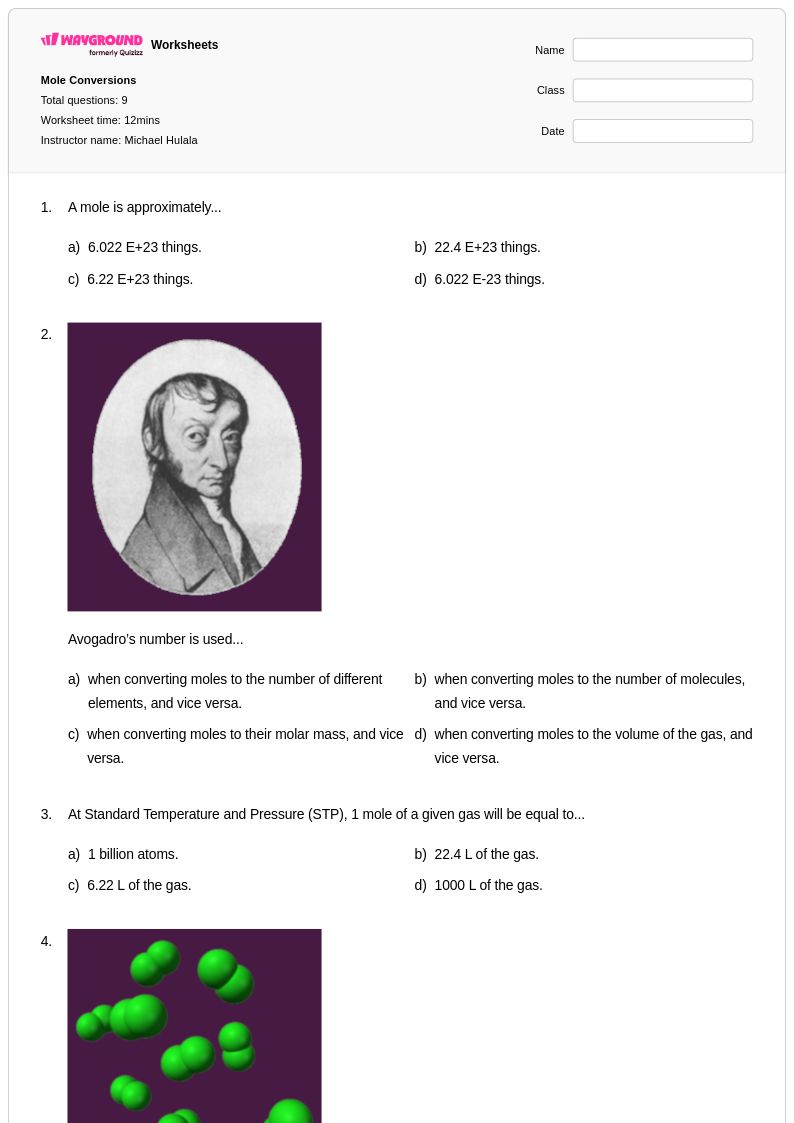
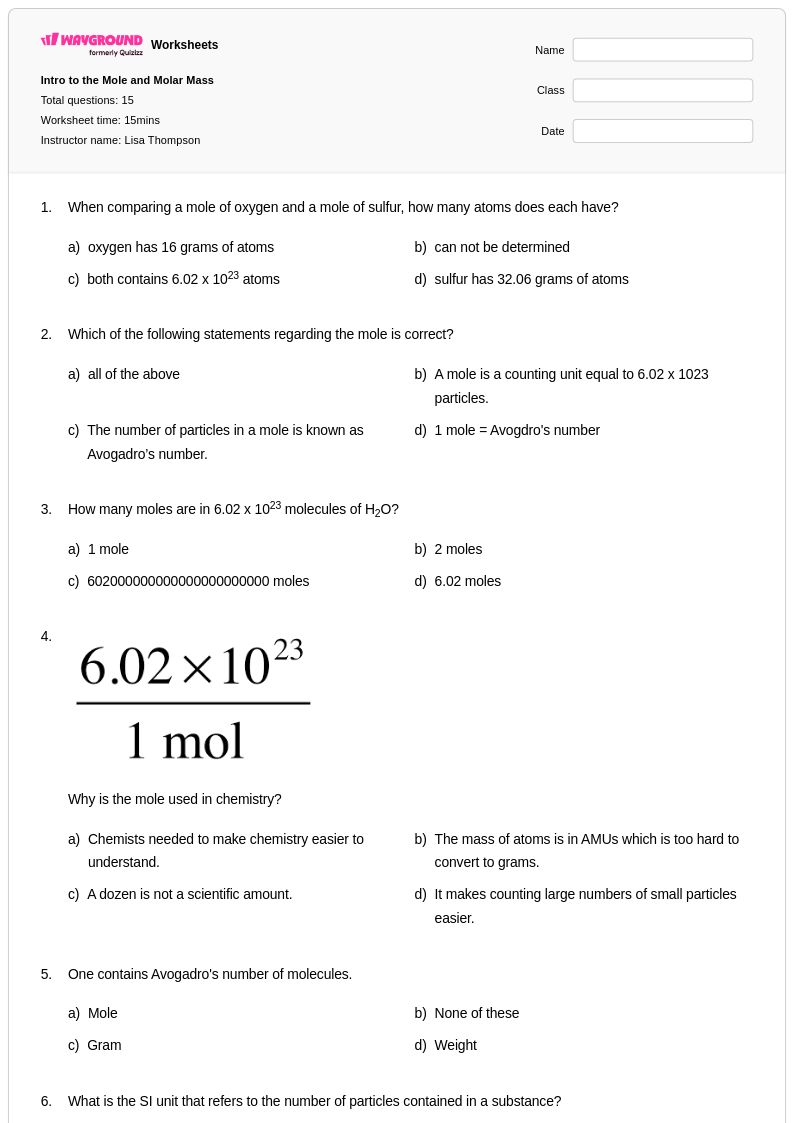
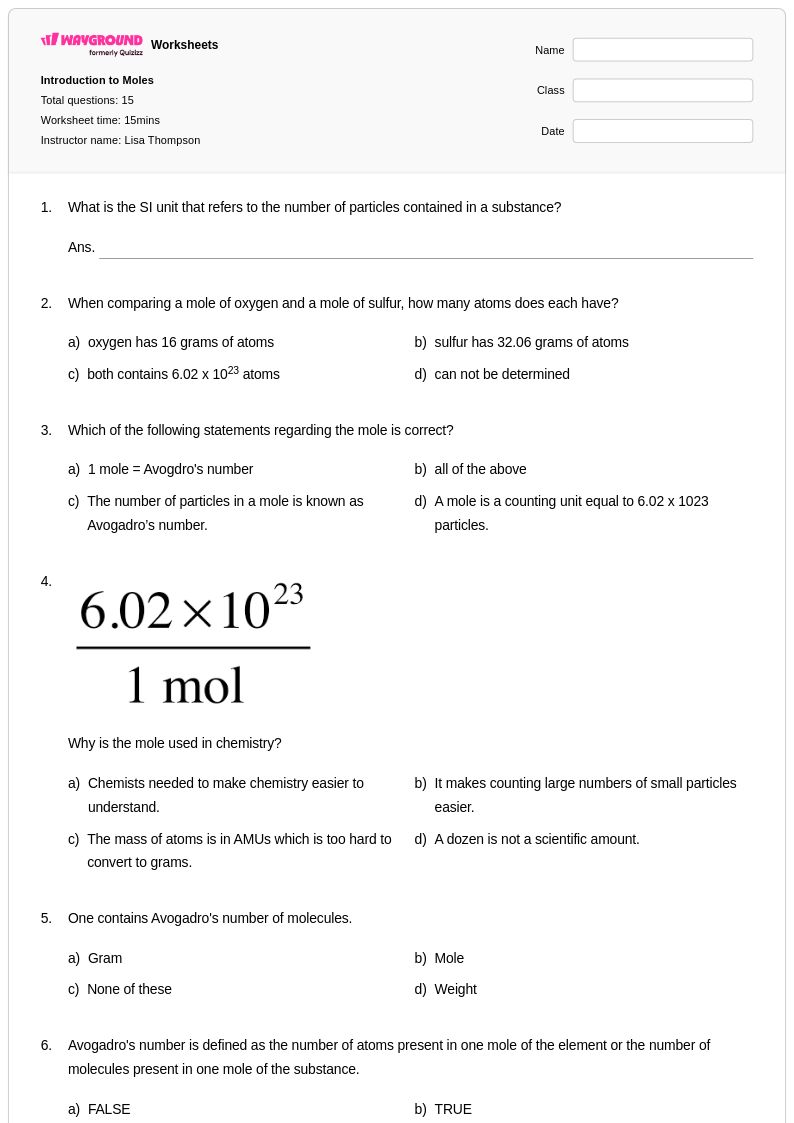
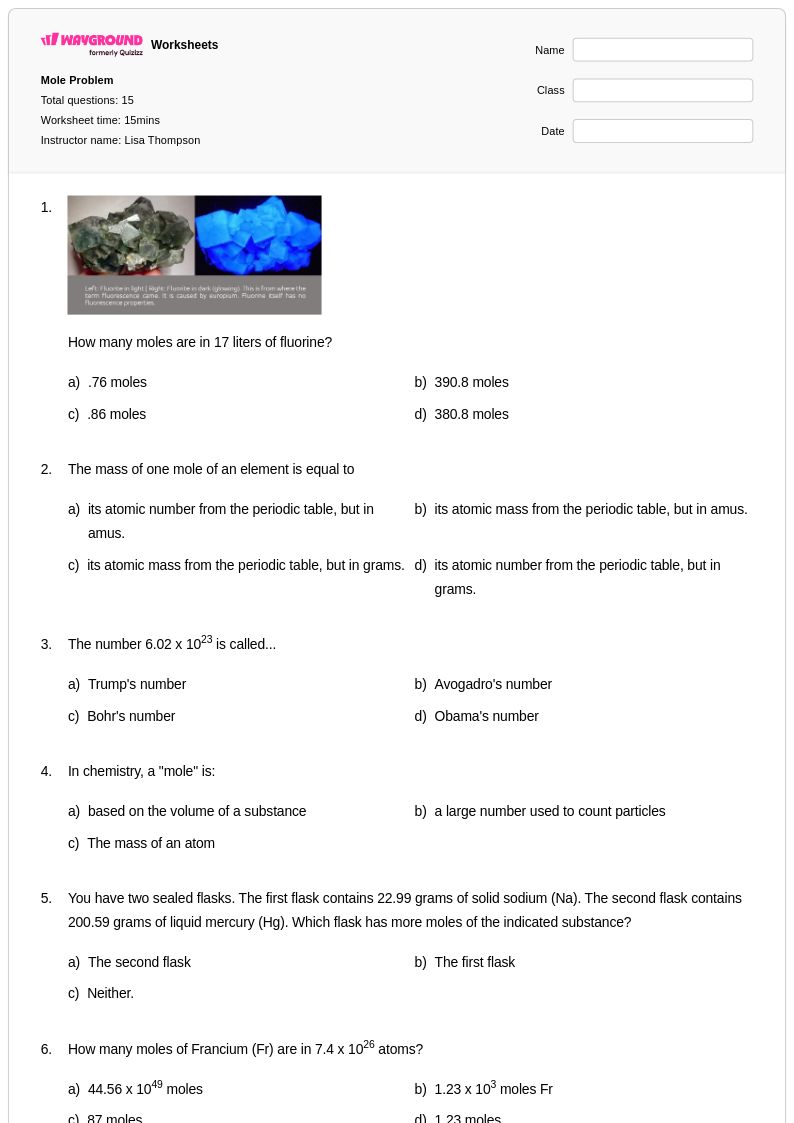
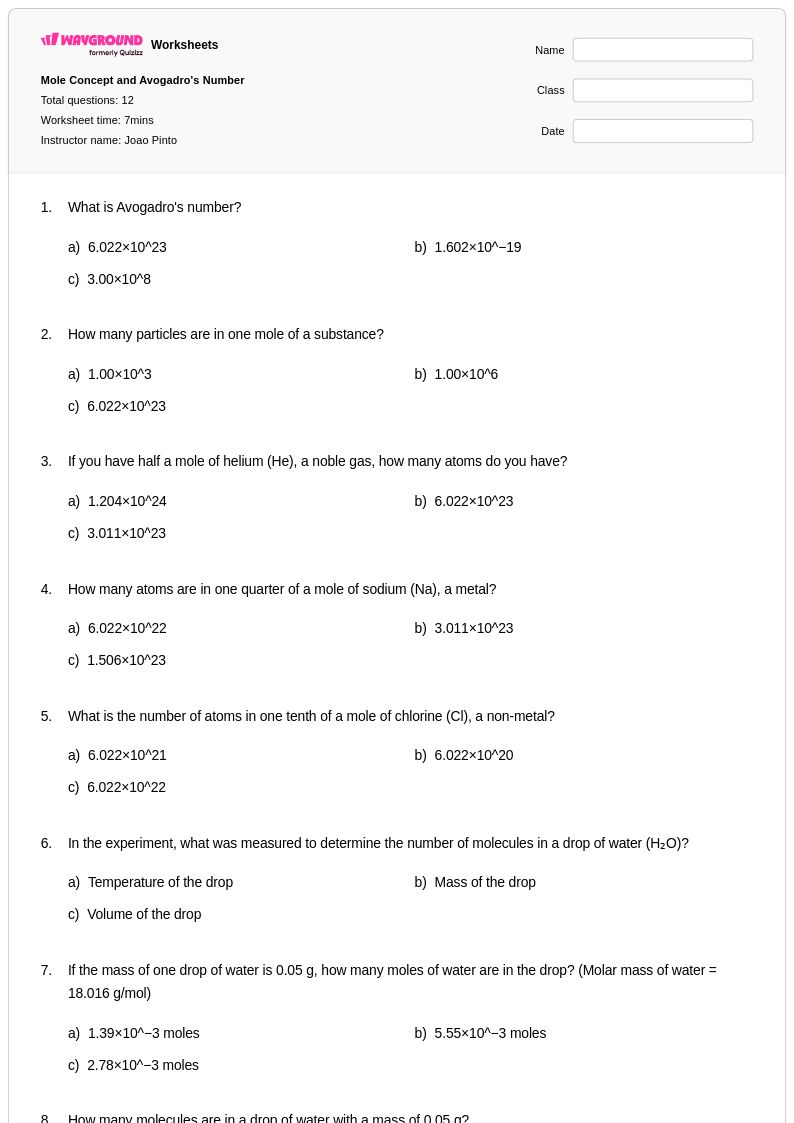
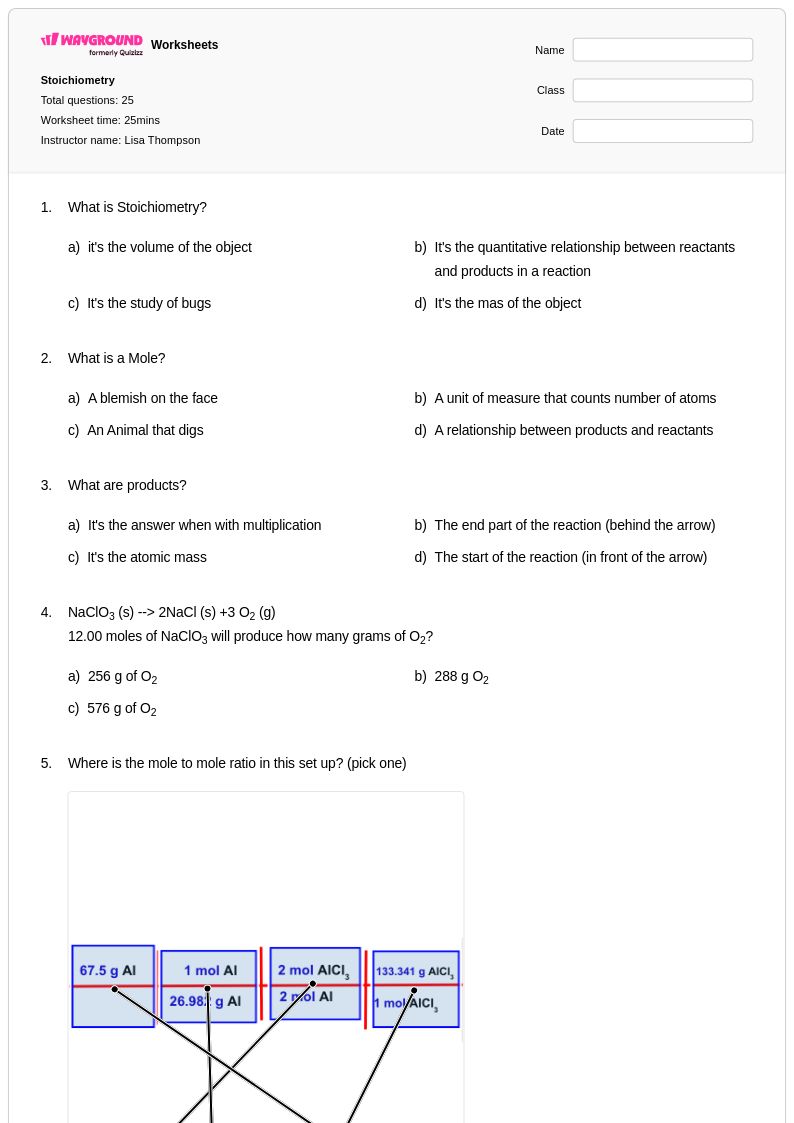
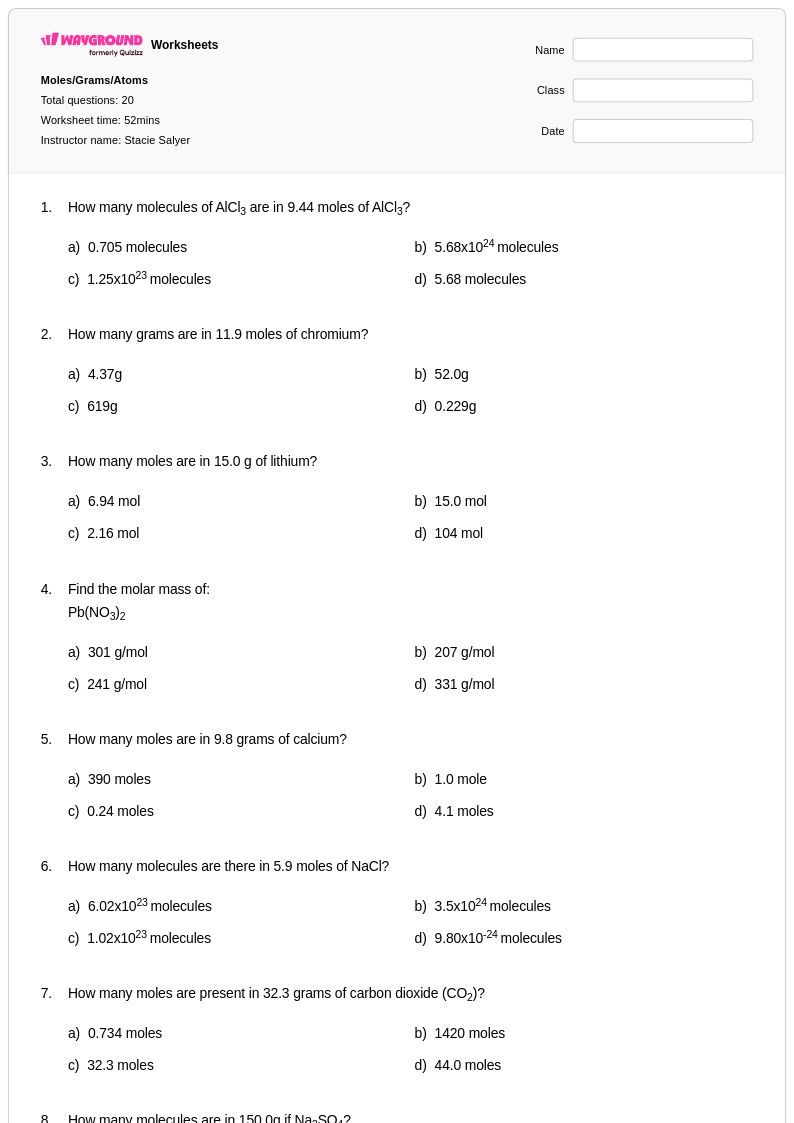
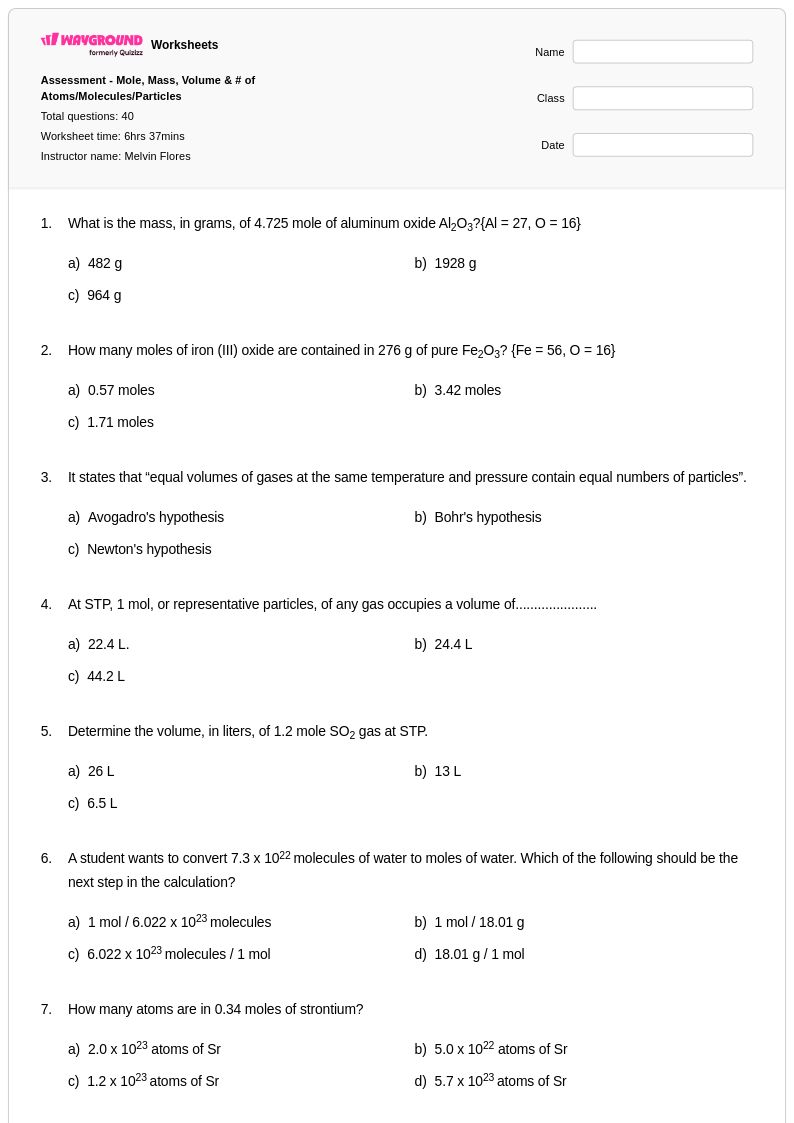
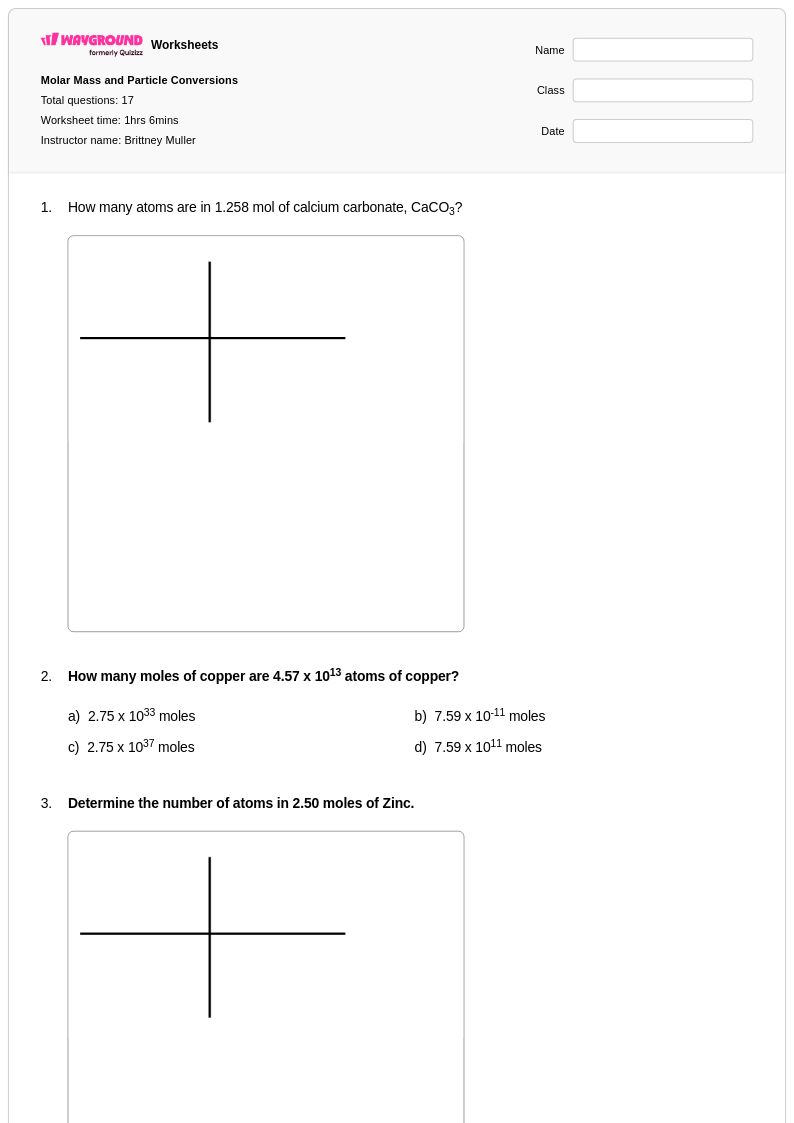
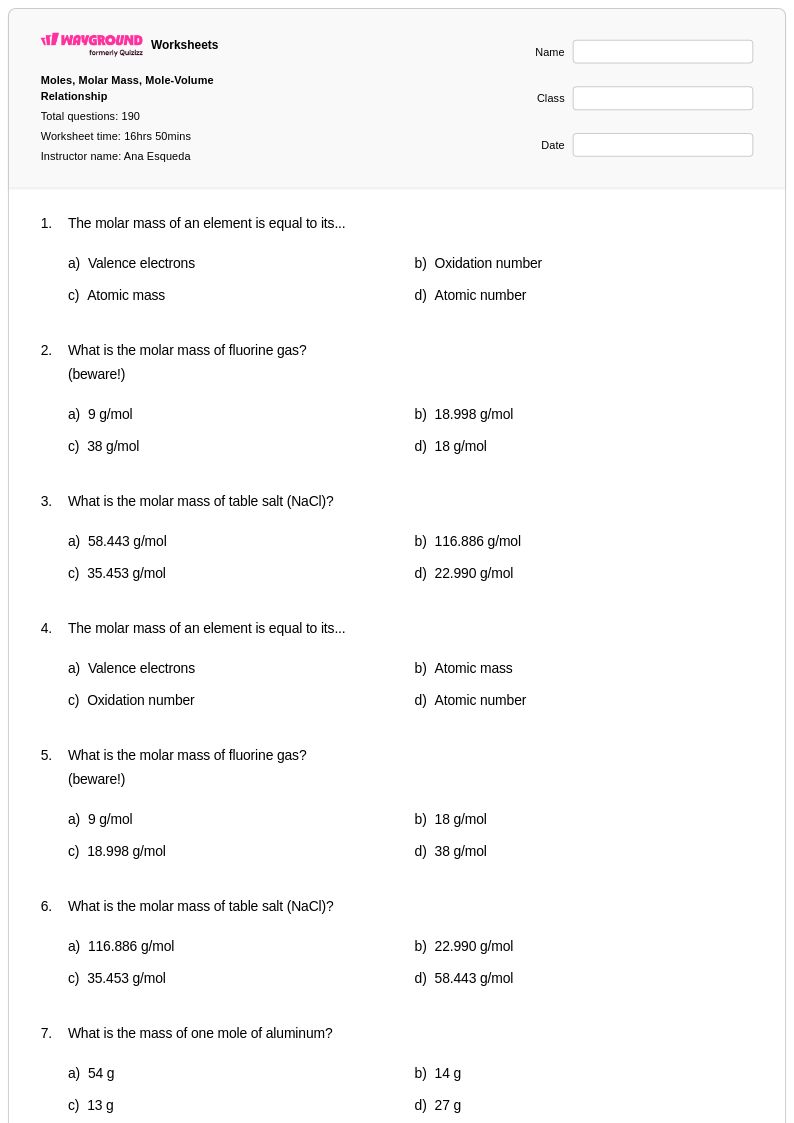
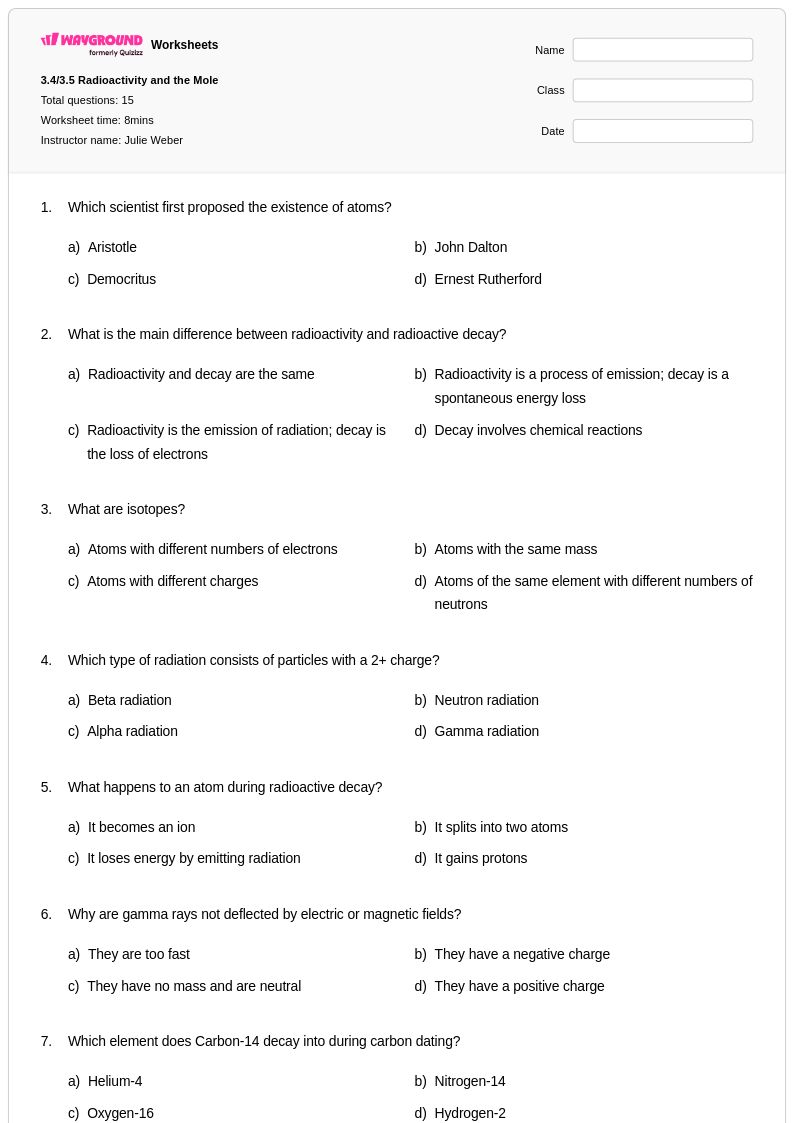
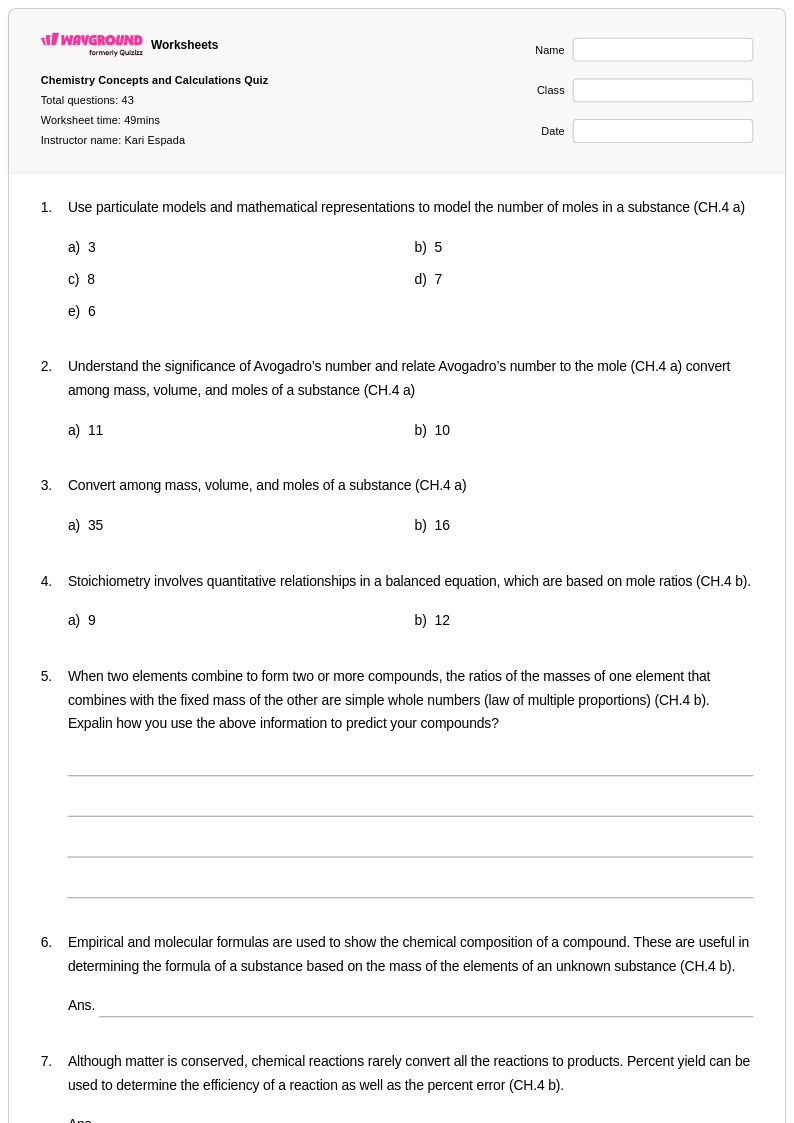
The mole concept represents one of the most fundamental and challenging topics in Grade 11 chemistry, serving as the bridge between the microscopic atomic world and macroscopic laboratory measurements. Wayground's comprehensive collection of mole concept worksheets provides students with targeted practice problems that develop essential skills in converting between moles, mass, particles, and volume using Avogadro's number and molar mass calculations. These expertly crafted worksheets strengthen students' understanding of stoichiometric relationships, molarity calculations, and percent composition problems while building the quantitative reasoning skills necessary for advanced chemistry coursework. Each worksheet includes a detailed answer key and is available as a free printable pdf, allowing students to work through complex mole conversion problems at their own pace and verify their understanding of this critical chemical concept.
Wayground, formerly Quizizz, empowers chemistry teachers with an extensive library of millions of teacher-created mole concept resources that can be easily located through advanced search and filtering capabilities. The platform's standards-aligned worksheets support comprehensive lesson planning while offering robust differentiation tools that allow educators to customize content complexity and problem types to meet diverse student needs. Teachers can seamlessly integrate these materials into their curriculum for initial instruction, targeted remediation of common misconceptions, or enrichment activities for advanced learners, with all resources available in both printable and digital formats including downloadable pdfs. This flexibility enables educators to provide consistent skill practice across multiple learning environments while maintaining alignment with state chemistry standards and preparing students for success in higher-level science courses.
FAQs
How do I teach the mole concept to chemistry students?
Start by grounding the mole as a counting unit, analogous to a dozen, before introducing Avogadro's number (6.022 × 10²³) as the specific quantity it represents. From there, build sequentially: molar mass conversions first, then mole-to-mole stoichiometric ratios, and finally multi-step calculations involving empirical and molecular formulas. Students need repeated exposure to dimensional analysis as the procedural backbone before they can handle complex problems independently.
What practice exercises help students get better at mole calculations?
Dimensional analysis drills are the most effective foundation — students should practice converting between grams, moles, and particles until the unit-factor method is automatic. Graduated problem sets that progress from single-step mole-to-mass conversions to multi-step stoichiometry problems reinforce both procedural fluency and conceptual understanding. Mole concept worksheets with complete solution pathways are especially useful because students can identify exactly where their reasoning breaks down.
What mistakes do students commonly make when learning the mole concept?
The most common error is confusing molar mass (grams per mole) with molecular mass (atomic mass units), leading to incorrect unit conversions. Students also frequently invert conversion factors in dimensional analysis, or forget to apply Avogadro's number when the problem requires converting between moles and individual particles rather than moles and grams. A subtler misconception is treating the mole as a physical measurement rather than a counting quantity, which causes confusion in mole-to-mole stoichiometric ratios.
How do I differentiate mole concept instruction for students at different skill levels?
For struggling learners, reduce problem complexity to single-step conversions and provide formula reference sheets before introducing multi-step problems. Advanced students benefit from empirical and molecular formula problems that require them to work backwards from percent composition data. On Wayground, teachers can apply accommodations at the individual student level, including reduced answer choices to lower cognitive load for students who need it, and extended time settings for those who require additional processing time, all without disrupting the experience for the rest of the class.
How can I use Wayground's mole concept worksheets in my chemistry class?
Wayground's mole concept worksheets are available as printable PDFs for traditional classroom distribution and homework assignments, as well as in digital formats for technology-integrated environments. Teachers can also host them directly as a quiz on Wayground, enabling real-time tracking of student responses. Each worksheet includes detailed answer keys with complete solution pathways, making them effective for both in-class instruction and independent student review.
How do I align mole concept worksheets to specific chemistry standards?
Wayground's search and filtering tools allow chemistry teachers to locate worksheets aligned to specific standards, whether the focus is introductory mole conversions or advanced stoichiometry applications. Filtering by skill or difficulty level helps teachers select resources that match exactly where students are in the curriculum, reducing preparation time when building targeted practice sessions or review activities.