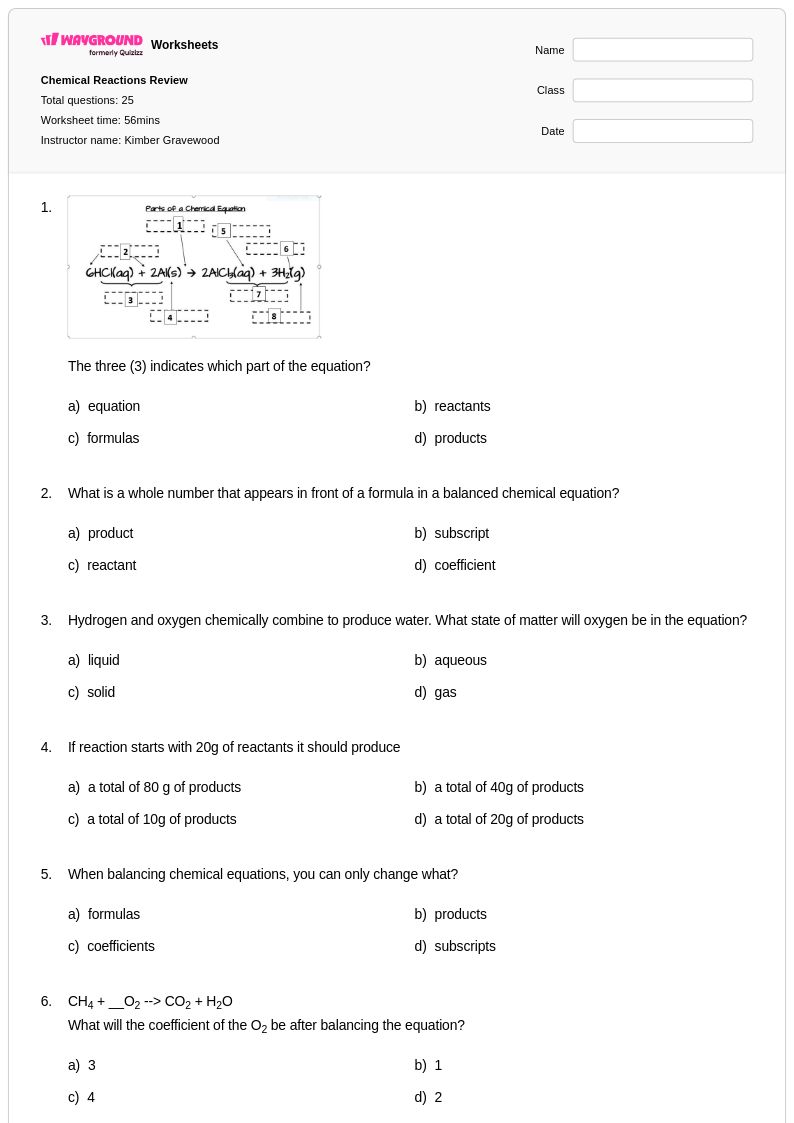
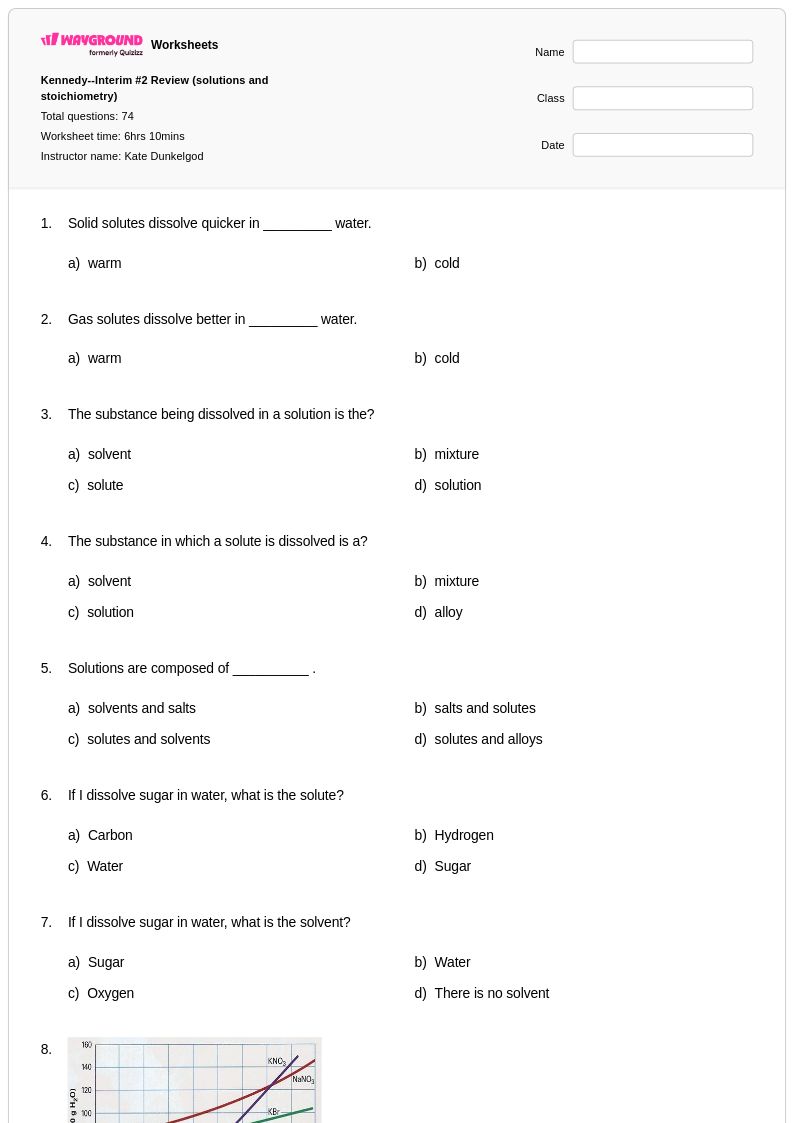
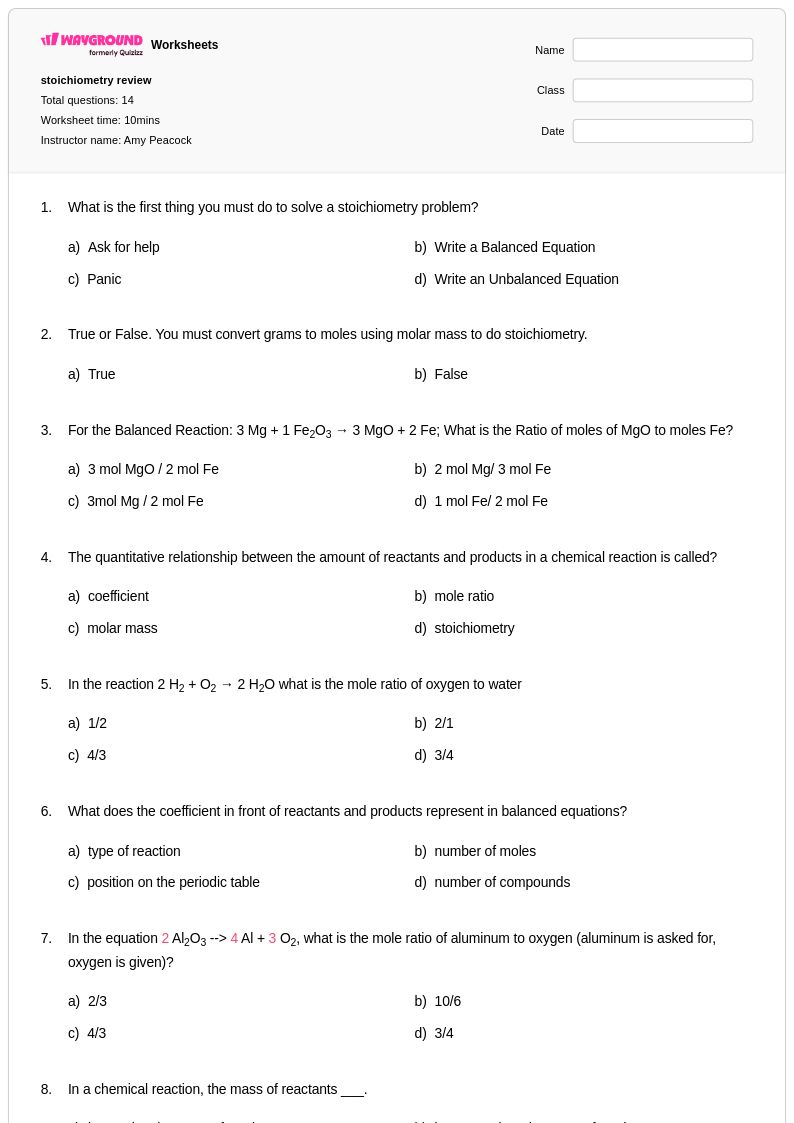
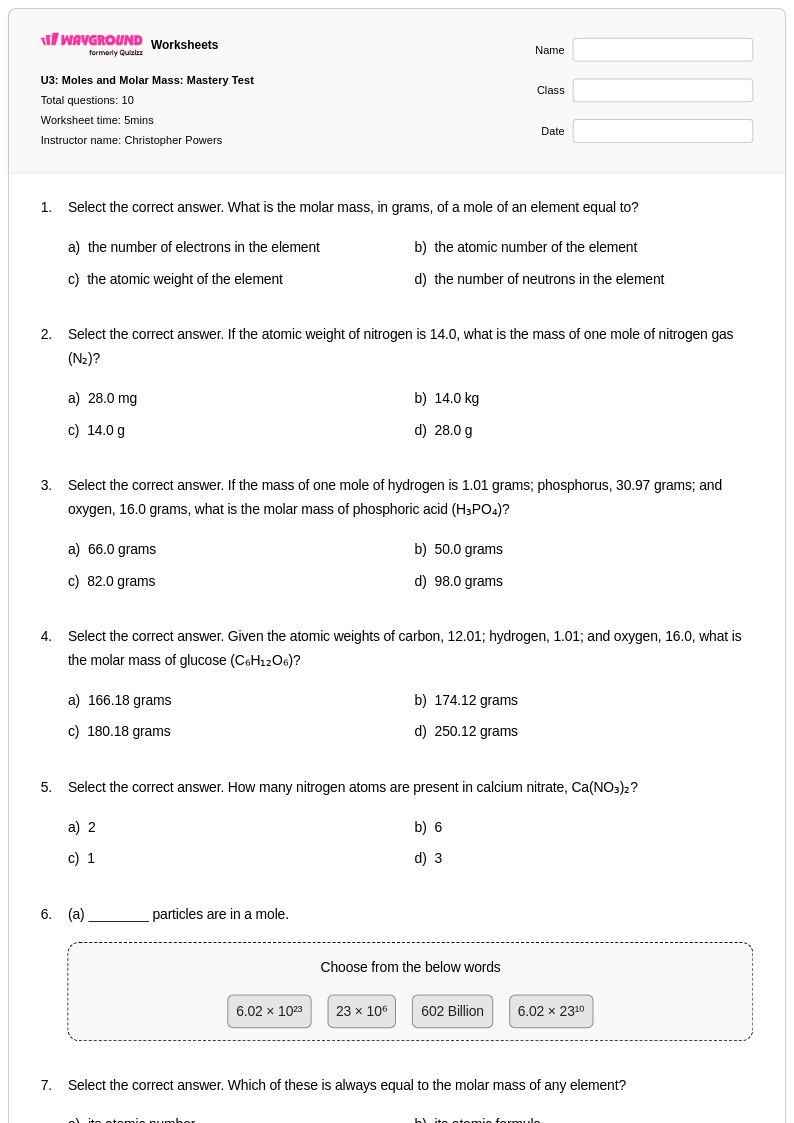
Discover Grade 9 mole ratios worksheets and printables from Wayground that help students master stoichiometric calculations through engaging practice problems, complete with answer keys and free PDF downloads.
Explore printable Mole Ratios worksheets for Grade 9
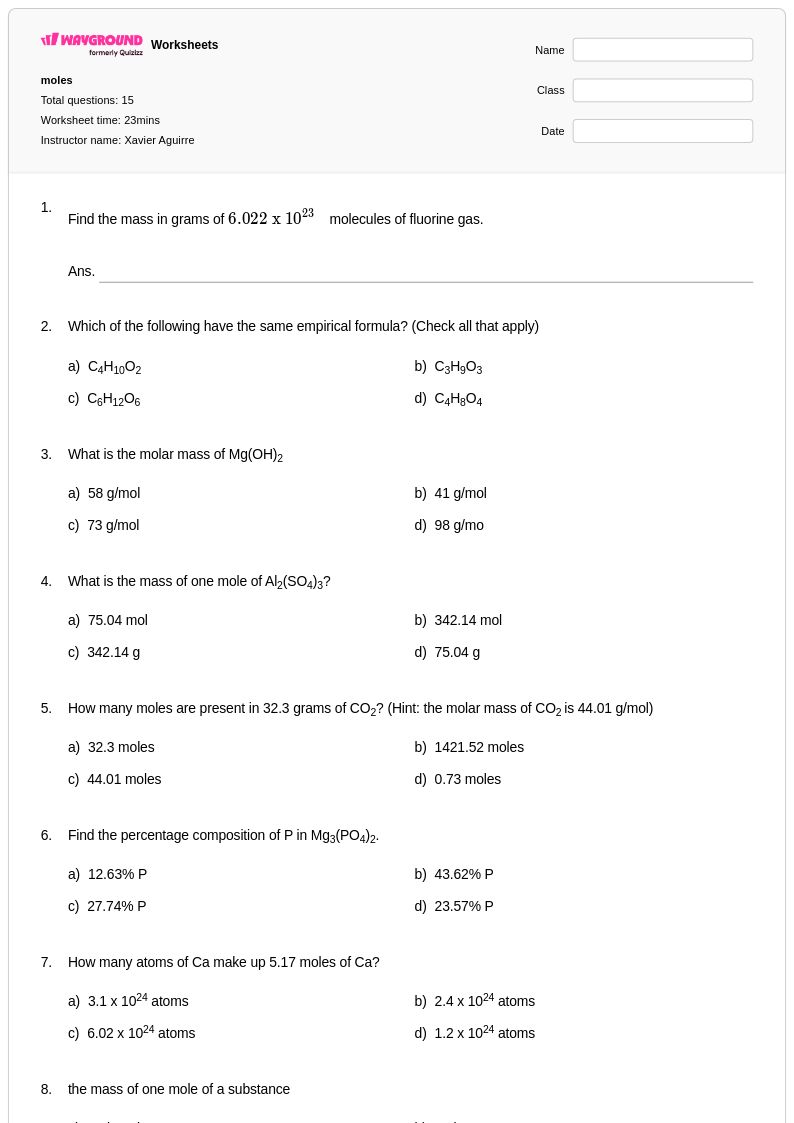
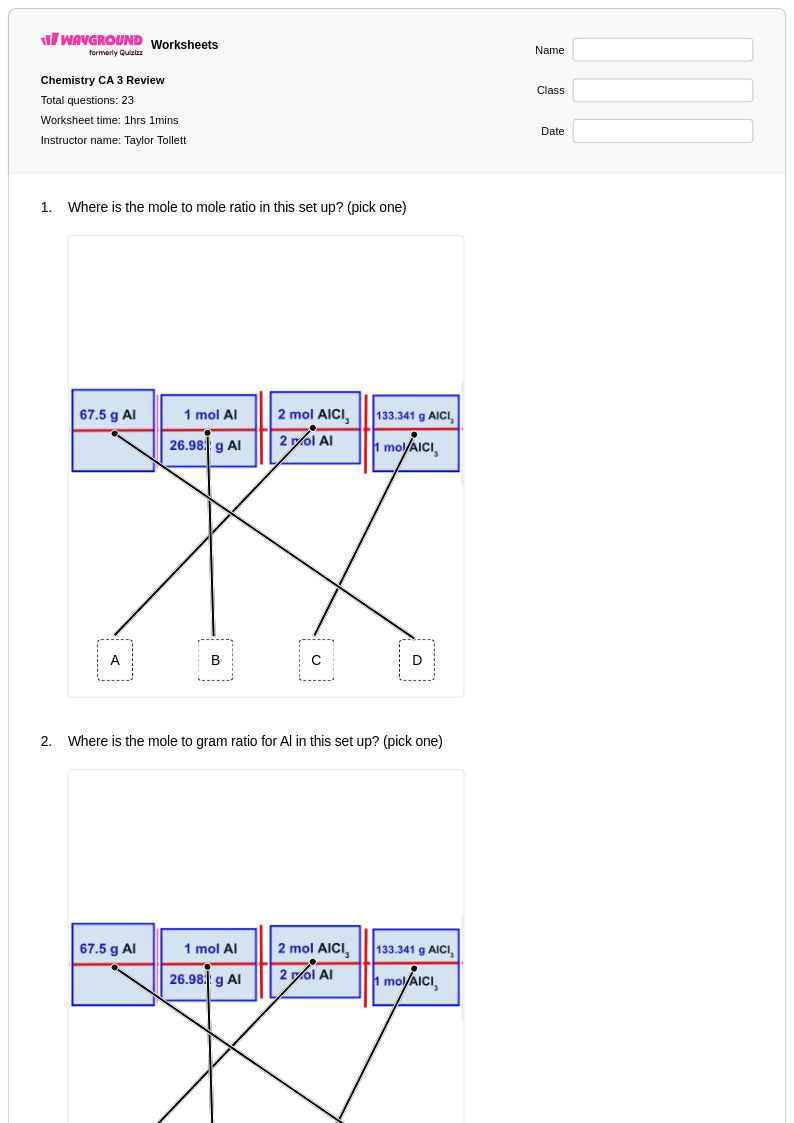
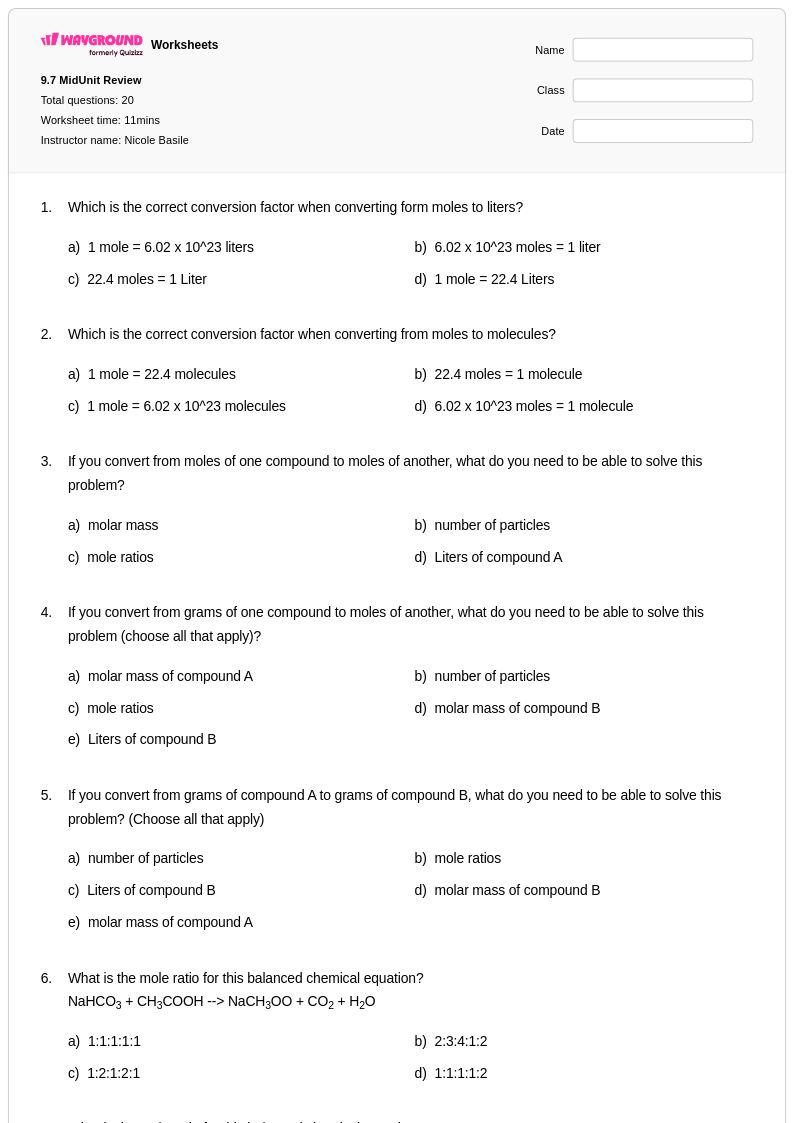
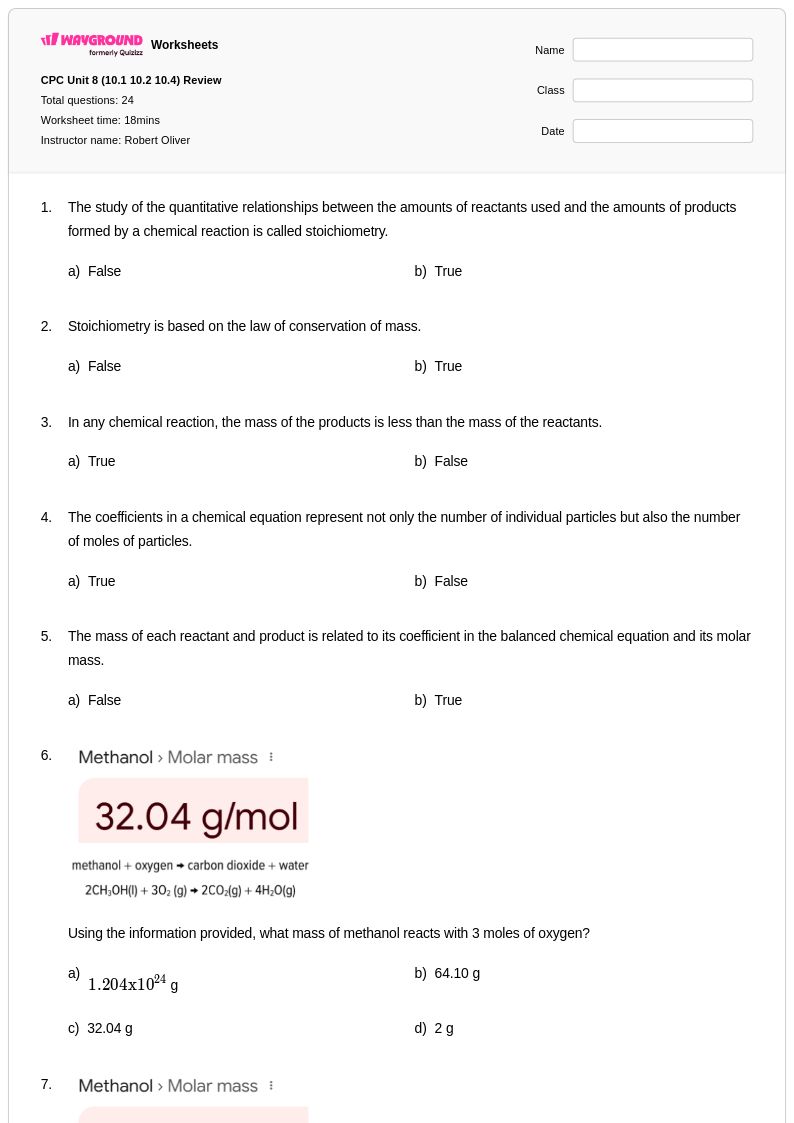
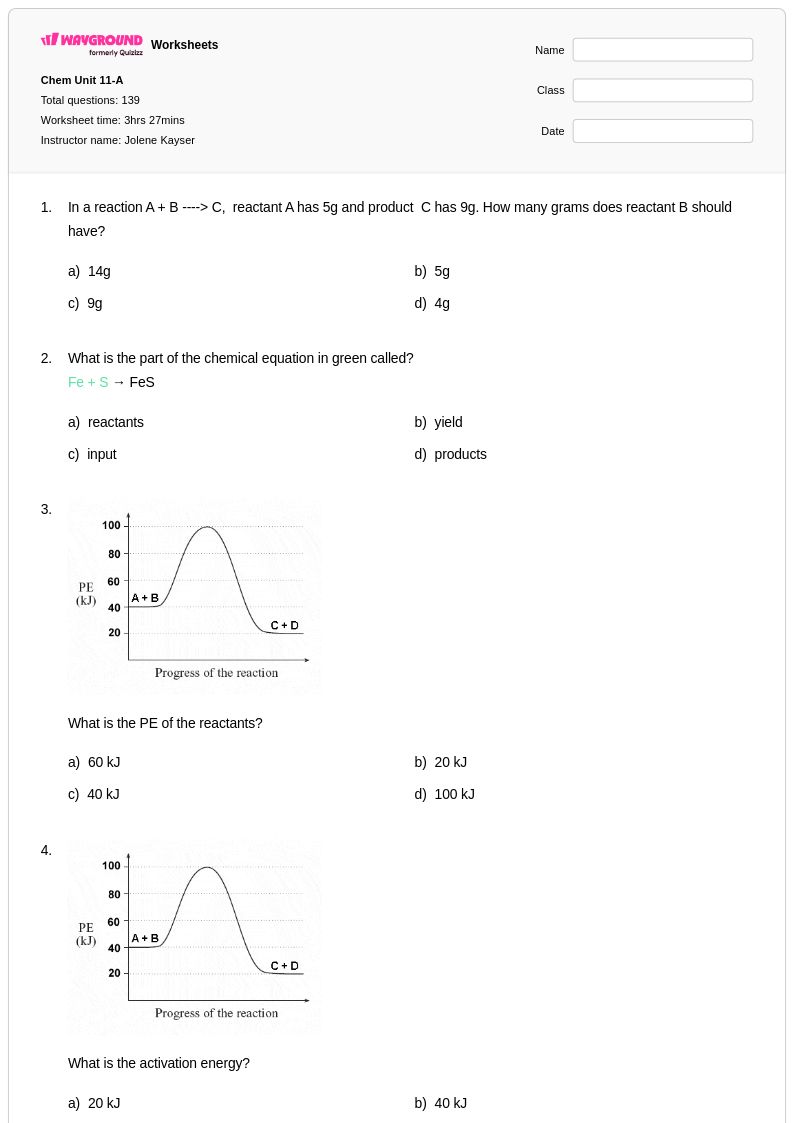
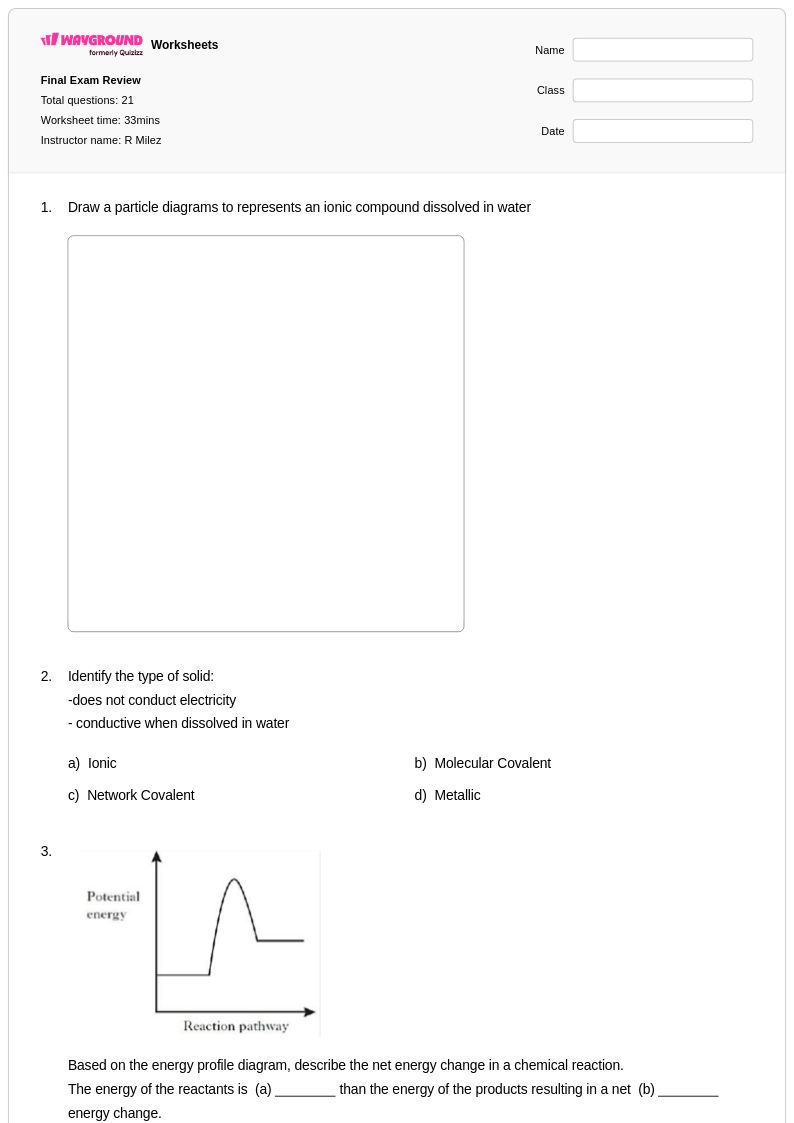
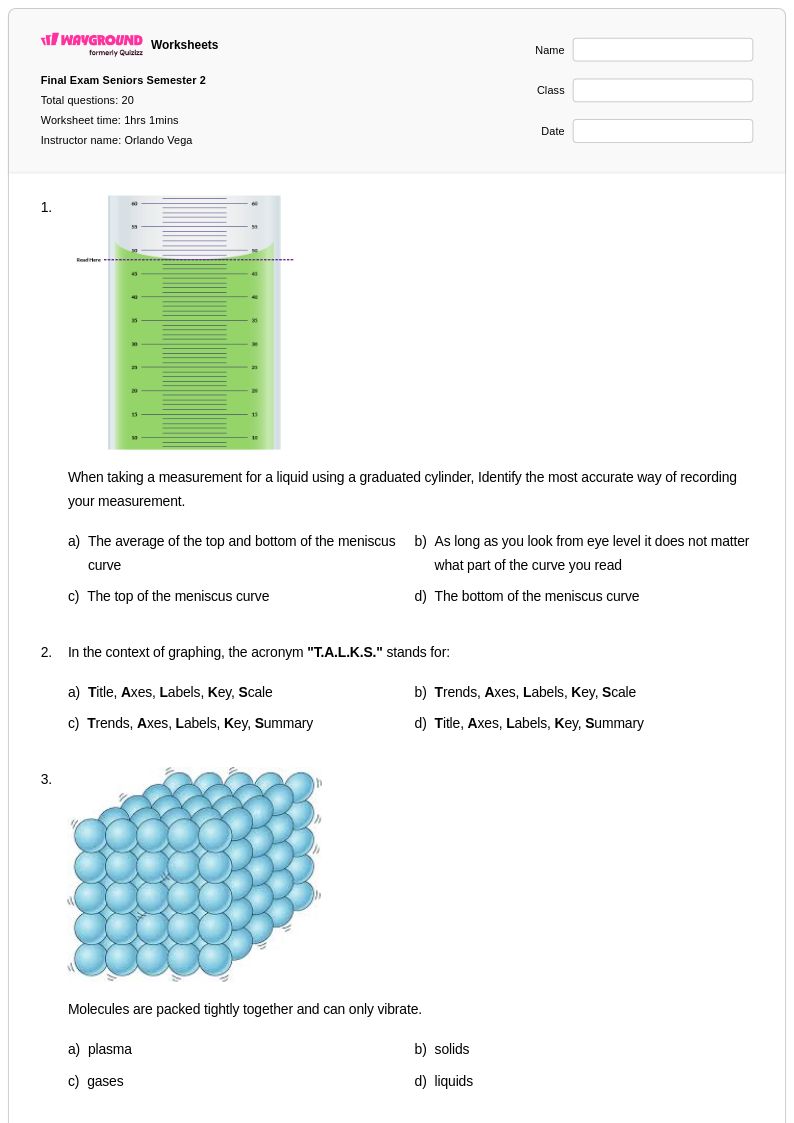
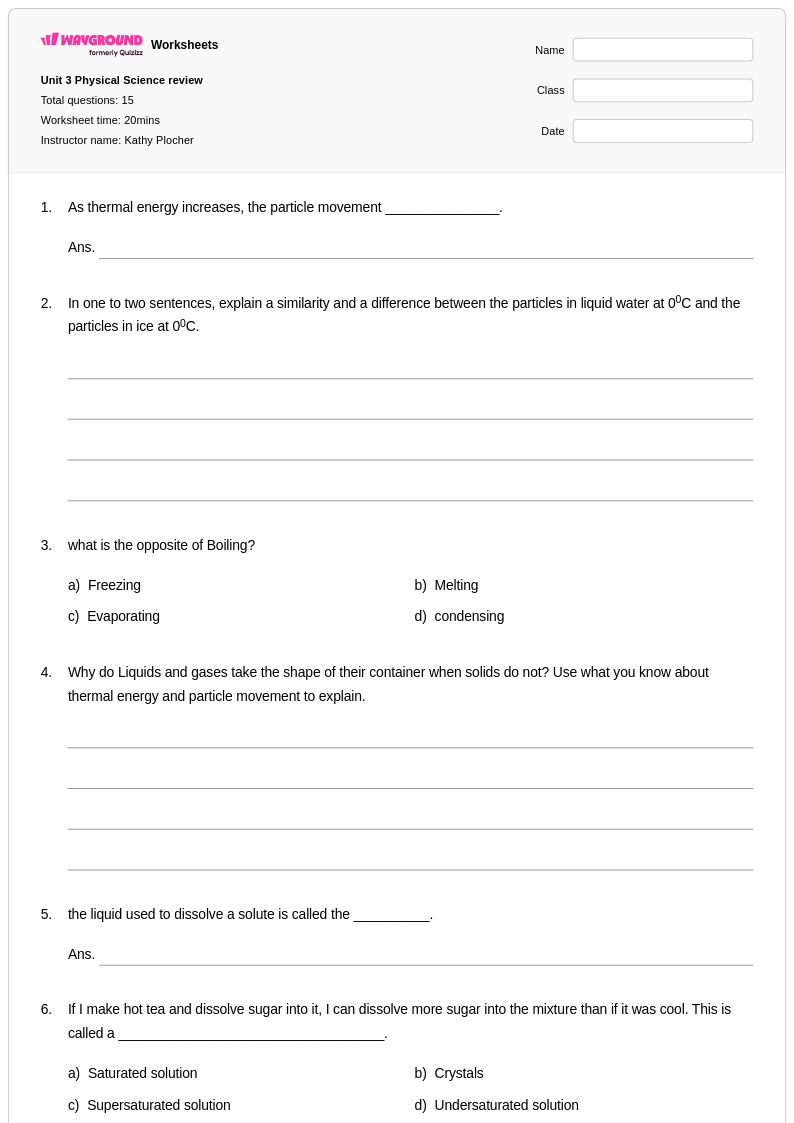
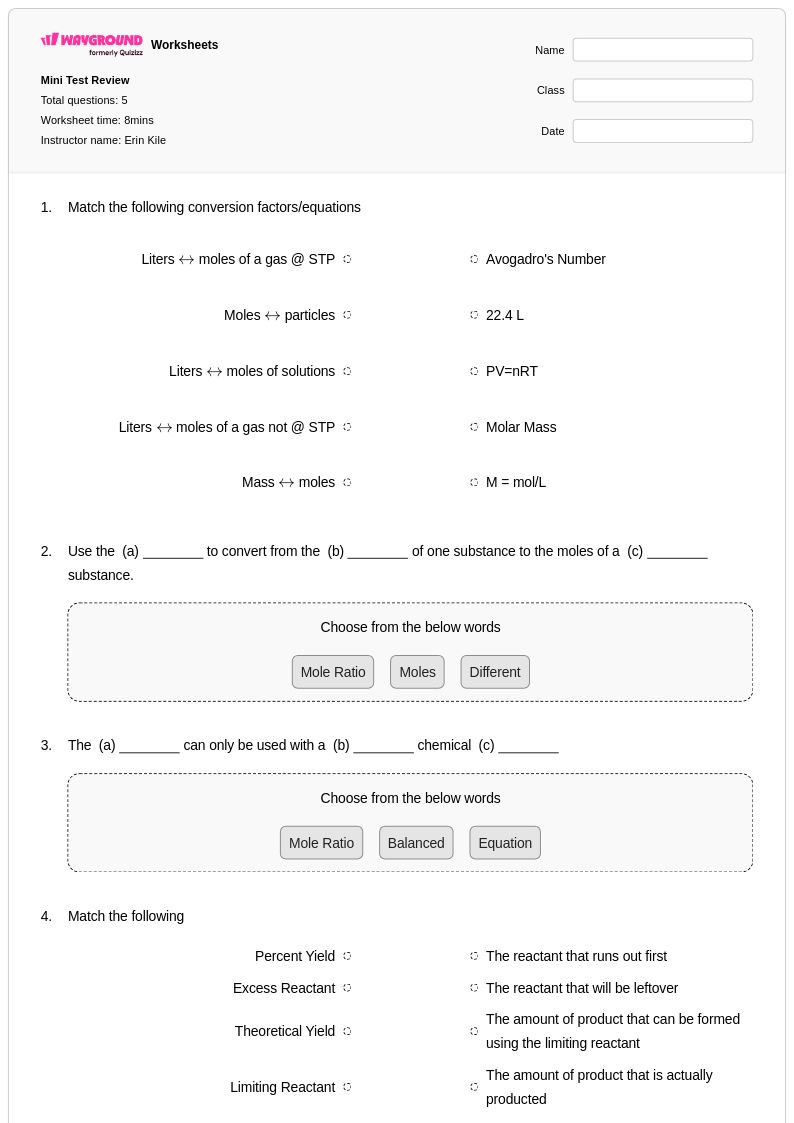
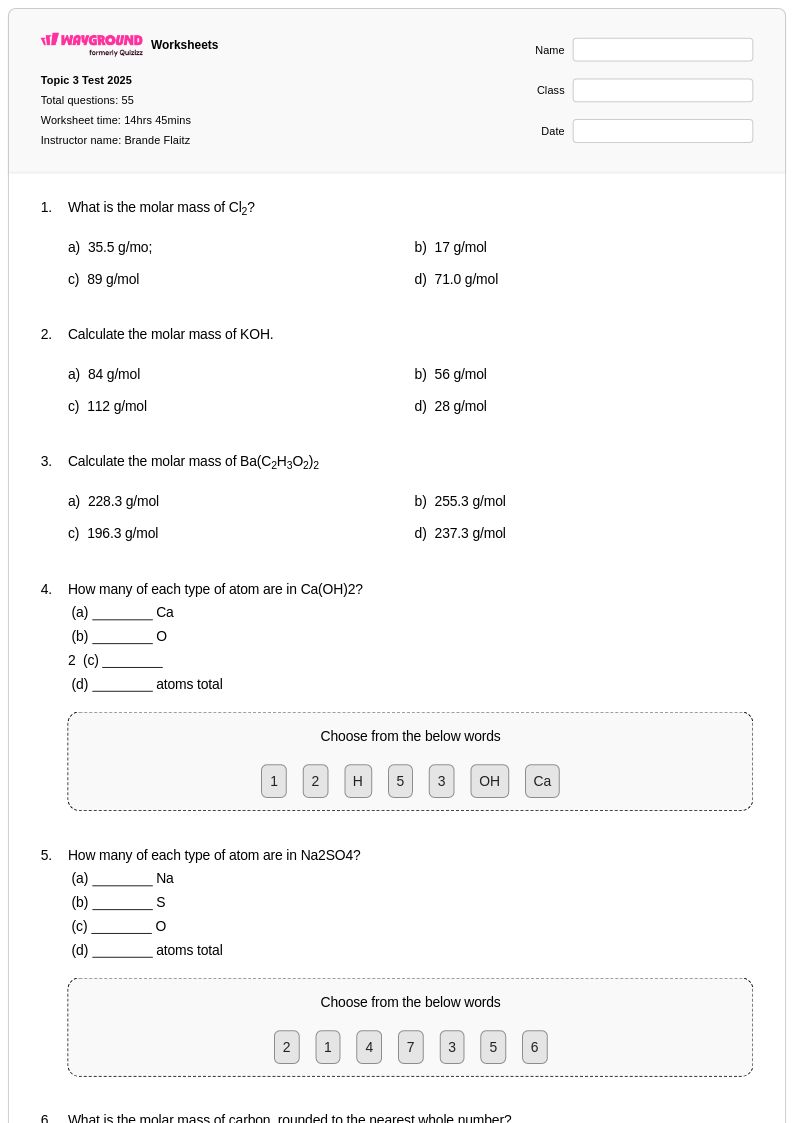
Mole ratios form a cornerstone of Grade 9 chemistry education, representing the quantitative relationships between reactants and products in chemical equations. Wayground's extensive collection of mole ratio worksheets provides students with systematic practice in interpreting balanced equations, calculating stoichiometric relationships, and solving complex problems involving mass-to-mole and mole-to-mole conversions. These carefully designed practice problems strengthen critical analytical skills including dimensional analysis, proportion setup, and chemical equation balancing. Each worksheet comes with a comprehensive answer key, allowing students to verify their work and identify areas needing improvement. Available as free printables in convenient pdf format, these resources enable both classroom instruction and independent study, helping students master the mathematical foundations essential for advanced chemistry concepts.
Wayground's robust platform, formerly known as Quizizz, empowers educators with millions of teacher-created resources specifically tailored for Grade 9 mole ratio instruction. The platform's advanced search and filtering capabilities allow teachers to quickly locate worksheets that align with specific curriculum standards and learning objectives. Built-in differentiation tools enable instructors to modify content complexity, ensuring appropriate challenge levels for diverse learners while supporting both remediation for struggling students and enrichment for advanced learners. These customizable worksheets are available in both printable and digital formats, including downloadable pdf versions, providing maximum flexibility for lesson planning and homework assignments. The comprehensive collection supports systematic skill development through scaffolded practice problems, enabling teachers to track student progress and address conceptual gaps in stoichiometric reasoning.
FAQs
How do I teach mole ratios to chemistry students?
Start by ensuring students can reliably balance chemical equations before introducing mole ratios, since the coefficients in a balanced equation are the foundation of every mole ratio relationship. Use a consistent visual strategy — such as writing ratios explicitly as fractions derived from coefficients — so students internalize the proportional logic before applying it computationally. Progress from single-step conversions between two substances to multi-step problems involving limiting reagents and theoretical yield as students gain fluency.
What exercises help students practice mole ratios?
Effective practice starts with identification exercises where students extract and write all possible mole ratios from a given balanced equation before any calculation is required. From there, single-conversion problems that ask students to find moles of one substance given moles of another reinforce the ratio-as-conversion-factor technique. Once that foundation is solid, multi-step stoichiometry problems — including theoretical yield and limiting reagent calculations — give students the cumulative practice needed to handle exam-level complexity.
What mistakes do students commonly make with mole ratios?
The most frequent error is inverting the mole ratio — placing the given substance's coefficient in the numerator instead of the denominator — which produces a wrong answer that appears mathematically clean and is easy to miss. Students also commonly pull coefficients from an unbalanced equation, meaning the ratio itself is incorrect before any calculation begins. A third recurring mistake is applying mole ratios directly to grams rather than first converting to moles, which reflects a misunderstanding of what the ratio actually represents.
How do I use Wayground's mole ratio worksheets in my classroom?
Wayground's mole ratio worksheets are available as printable PDFs for traditional classroom use and in digital formats for technology-integrated learning environments, so they work whether students are at desks or on devices. Teachers can also host the worksheets as a quiz directly on Wayground, which streamlines assignment and collection. Each worksheet includes detailed answer keys, allowing teachers to use them for guided practice, independent work, or self-paced review without additional preparation.
How do mole ratios connect to the broader stoichiometry curriculum?
Mole ratios are the central linking concept in stoichiometry — they are the mechanism by which a balanced chemical equation translates into quantitative predictions about reactants and products. Without a secure understanding of mole ratios, students cannot accurately calculate theoretical yield, identify limiting reagents, or work with percent yield, since all of these depend on correctly applying coefficient-based proportions. Teaching mole ratios well early in the stoichiometry unit prevents compounding errors across every subsequent topic.
How can I differentiate mole ratio instruction for students at different levels?
For students still building fluency, begin with problems that provide the balanced equation and ask only for the mole ratio itself, removing the conversion calculation as a variable. On-level students benefit from structured one- and two-step stoichiometry problems that require both ratio identification and unit conversion. Advanced learners can be challenged with multi-step problems that layer in limiting reagents, percent yield, or solution and gas-law contexts. On Wayground, teachers can further support individual students by enabling accommodations such as read aloud, reduced answer choices, or extended time, which can be configured per student without disrupting the rest of the class.