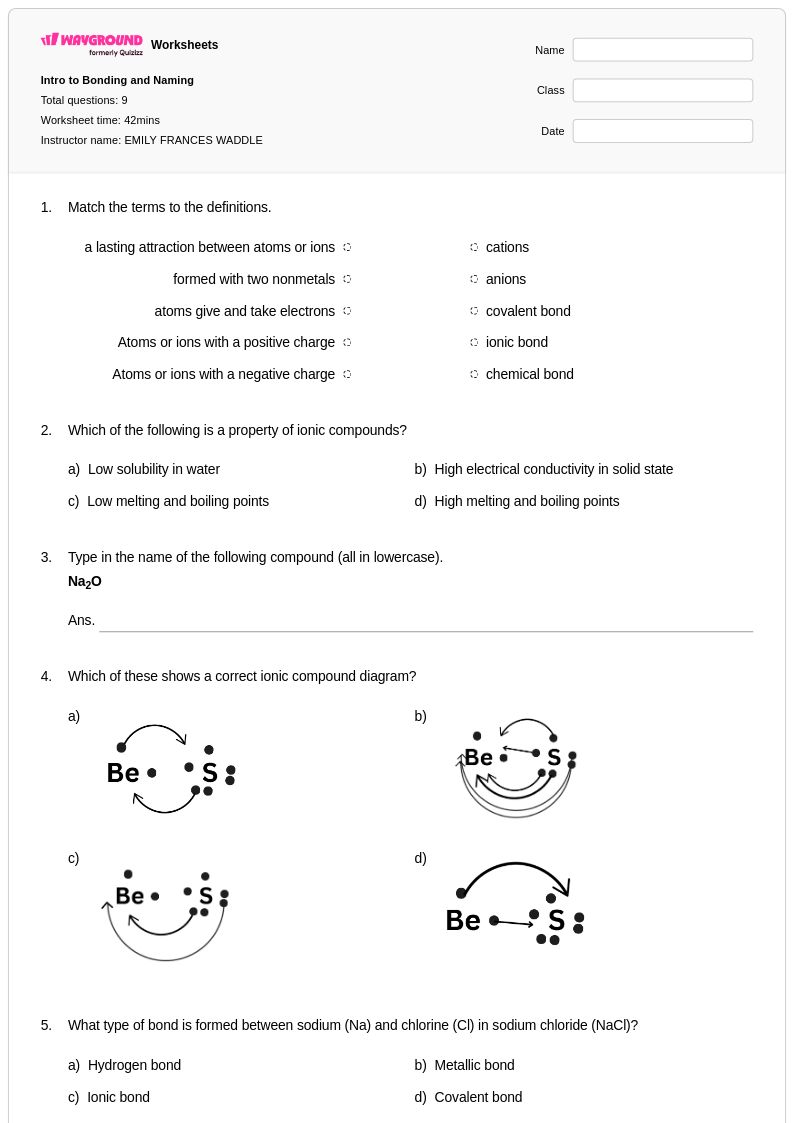
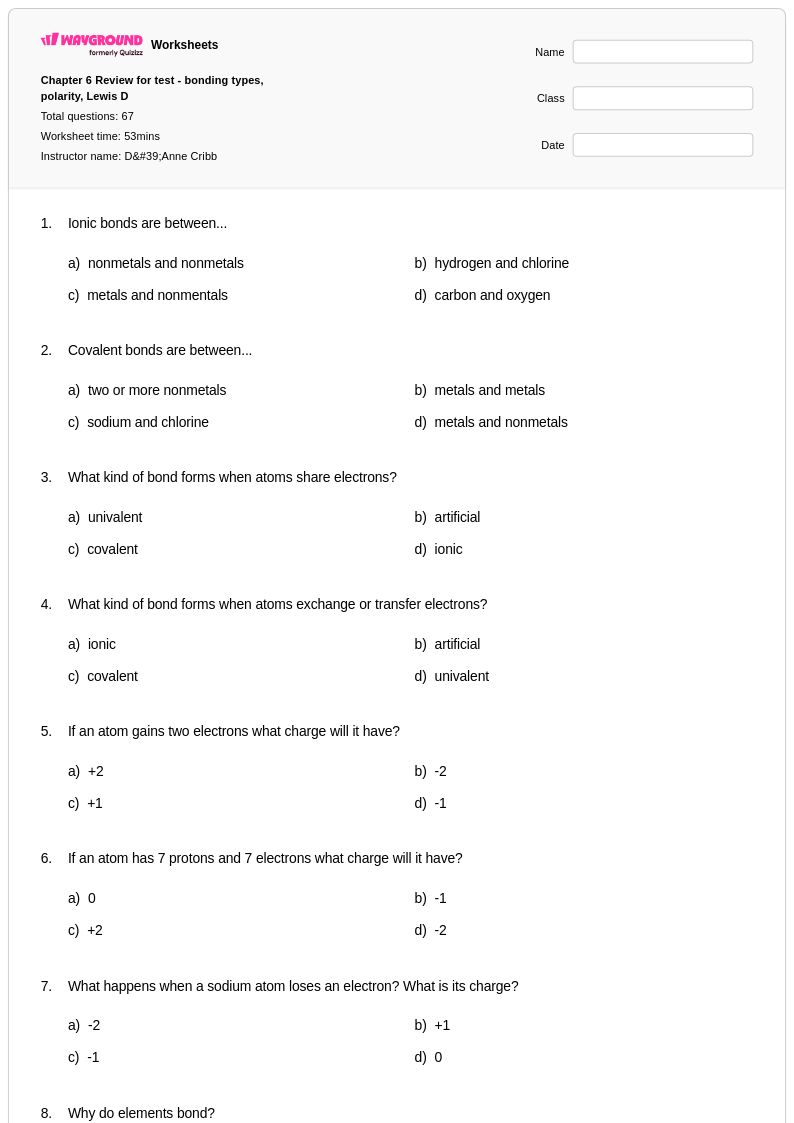
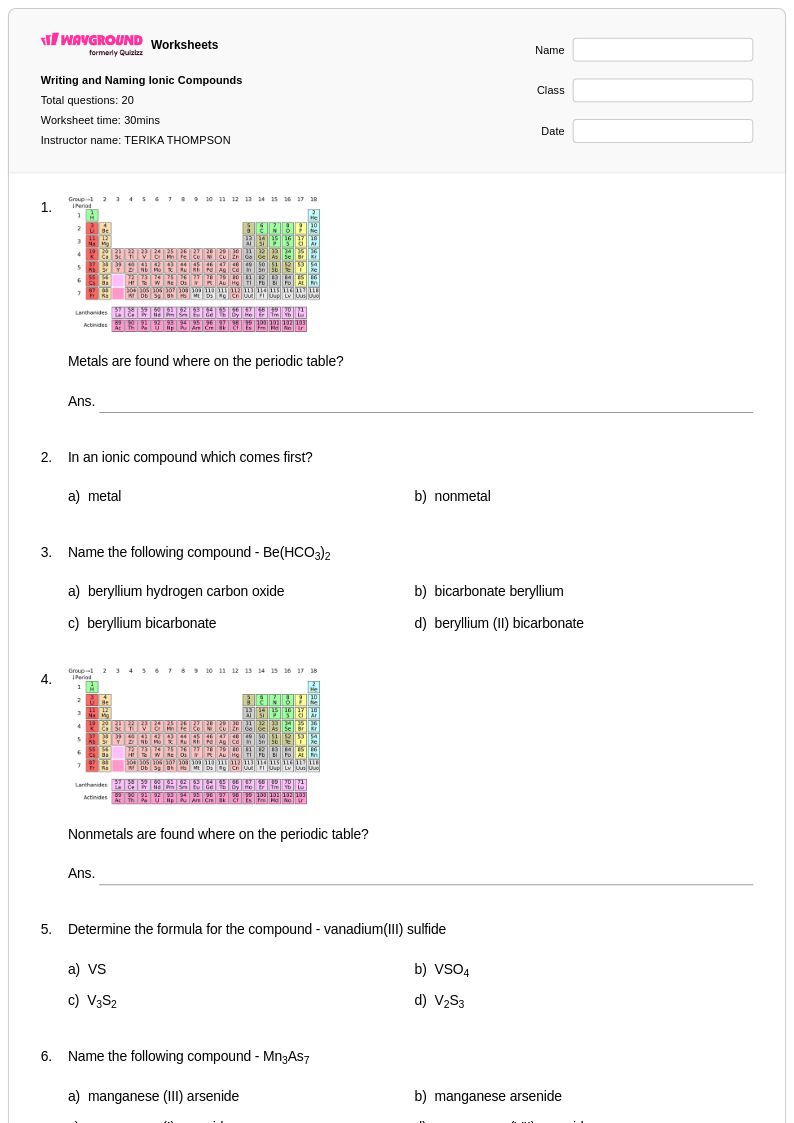
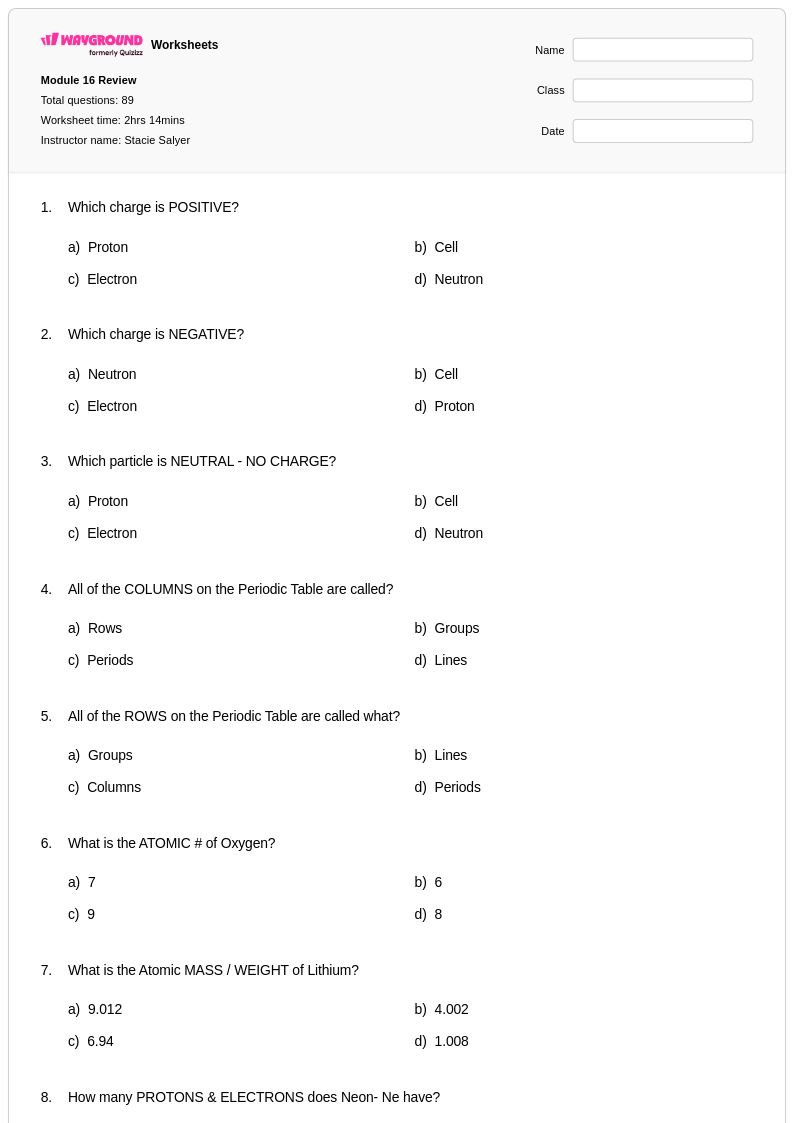
Grade 11 nonmetals chemistry worksheets from Wayground help students master properties, reactions, and characteristics of nonmetallic elements through comprehensive practice problems, free printable PDFs, and detailed answer keys.
Explore printable Nonmetals worksheets for Grade 11
Nonmetals worksheets for Grade 11 chemistry students available through Wayground (formerly Quizizz) provide comprehensive coverage of the unique properties, behaviors, and applications of nonmetallic elements. These expertly designed resources strengthen students' understanding of electron configurations, bonding patterns, and chemical reactivity specific to elements like carbon, nitrogen, oxygen, sulfur, and the halogens. The worksheets feature practice problems that challenge students to predict molecular geometries, analyze periodic trends in electronegativity and ionization energy, and explain the formation of covalent compounds. Each worksheet includes a detailed answer key to support independent learning, and the materials are available as free printables in convenient pdf format, making them accessible for both classroom instruction and homework assignments.
Wayground (formerly Quizizz) empowers chemistry educators with an extensive collection of millions of teacher-created nonmetals worksheets specifically aligned with Grade 11 curriculum standards. The platform's advanced search and filtering capabilities allow instructors to quickly locate materials that match their specific teaching objectives, whether focusing on molecular structure, acid-base properties of nonmetal oxides, or industrial applications of nonmetallic elements. Teachers can customize worksheets to accommodate different learning levels through built-in differentiation tools, creating targeted practice for remediation or enrichment activities. The flexible format options include both printable pdf versions for traditional paper-based learning and digital formats for interactive classroom experiences, streamlining lesson planning while ensuring students receive consistent, standards-aligned practice with nonmetal chemistry concepts.
FAQs
How do I teach nonmetals in a chemistry class?
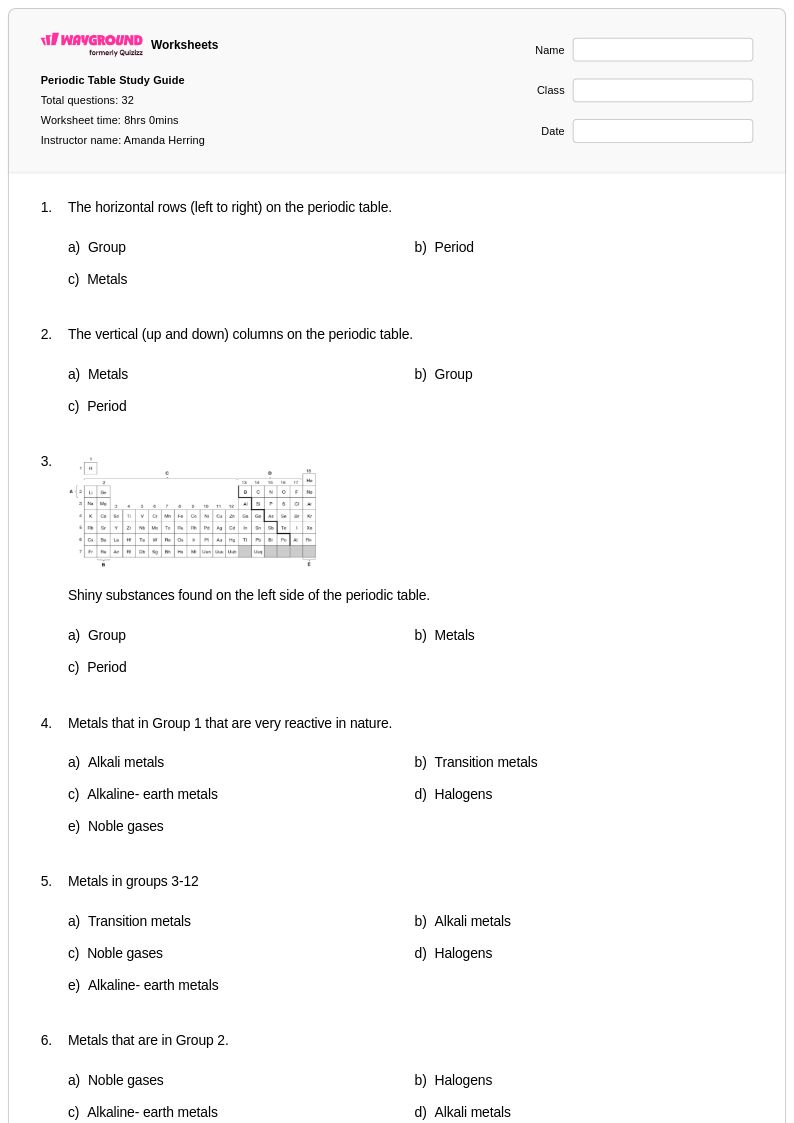
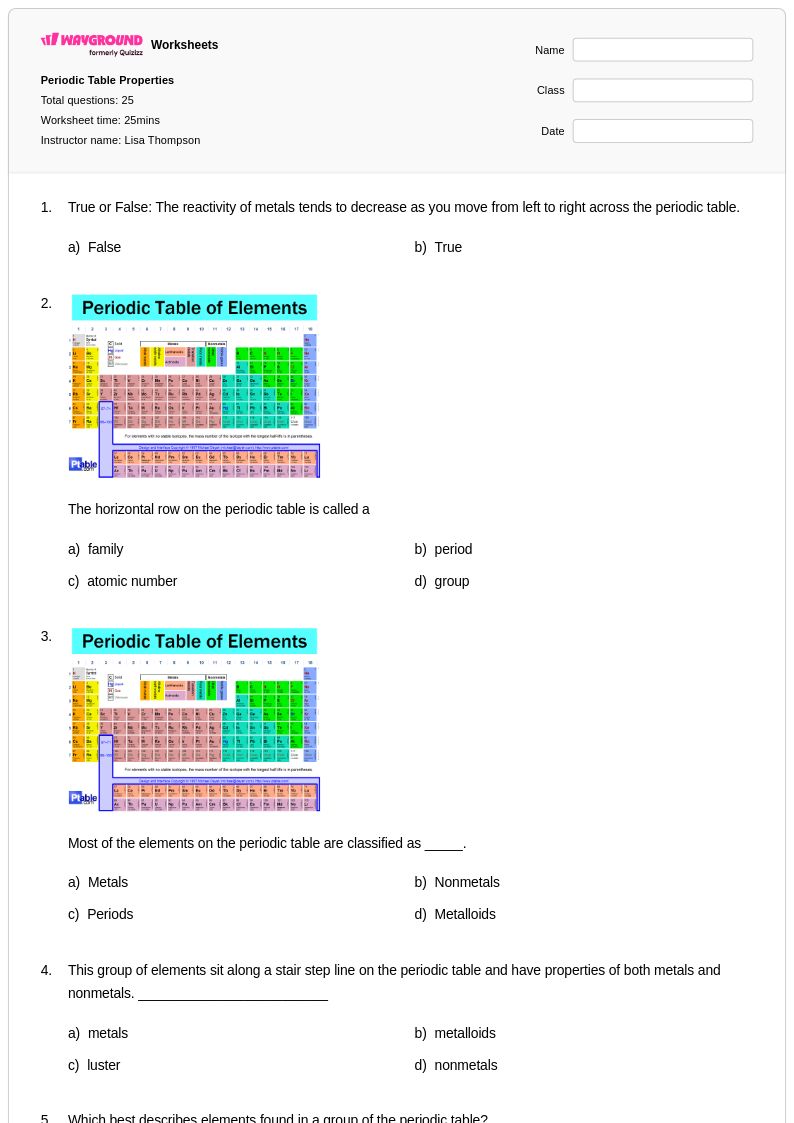
Start by contrasting nonmetals with metals using the periodic table, drawing attention to their position (primarily on the right side) and their physical and chemical properties. Focus on key characteristics: poor electrical conductivity, brittleness in solid form, low melting points for most, and the tendency to gain electrons in reactions. Using visual periodic table activities and guided property-comparison charts helps students build a concrete mental model before moving into bonding behavior.
What exercises help students practice identifying and understanding nonmetals?
Effective practice exercises include periodic table identification tasks where students locate and classify nonmetals, property-matching activities that pair elements with their physical and chemical characteristics, and problems requiring students to predict whether a nonmetal will gain or lose electrons in a reaction. Practice problems focused on covalent bonding and molecular compounds are particularly useful because nonmetals are the primary participants in these bond types.
What common mistakes do students make when learning about nonmetals?
A frequent misconception is that all nonmetals are gases — students often overlook solid nonmetals like carbon, sulfur, and iodine. Students also commonly confuse the electron behavior of nonmetals (gaining electrons to form anions) with that of metals (losing electrons to form cations). Another common error is misidentifying metalloids such as silicon or arsenic as nonmetals because of their position near the nonmetal region of the periodic table.
How do nonmetals behave differently from metals in chemical reactions?
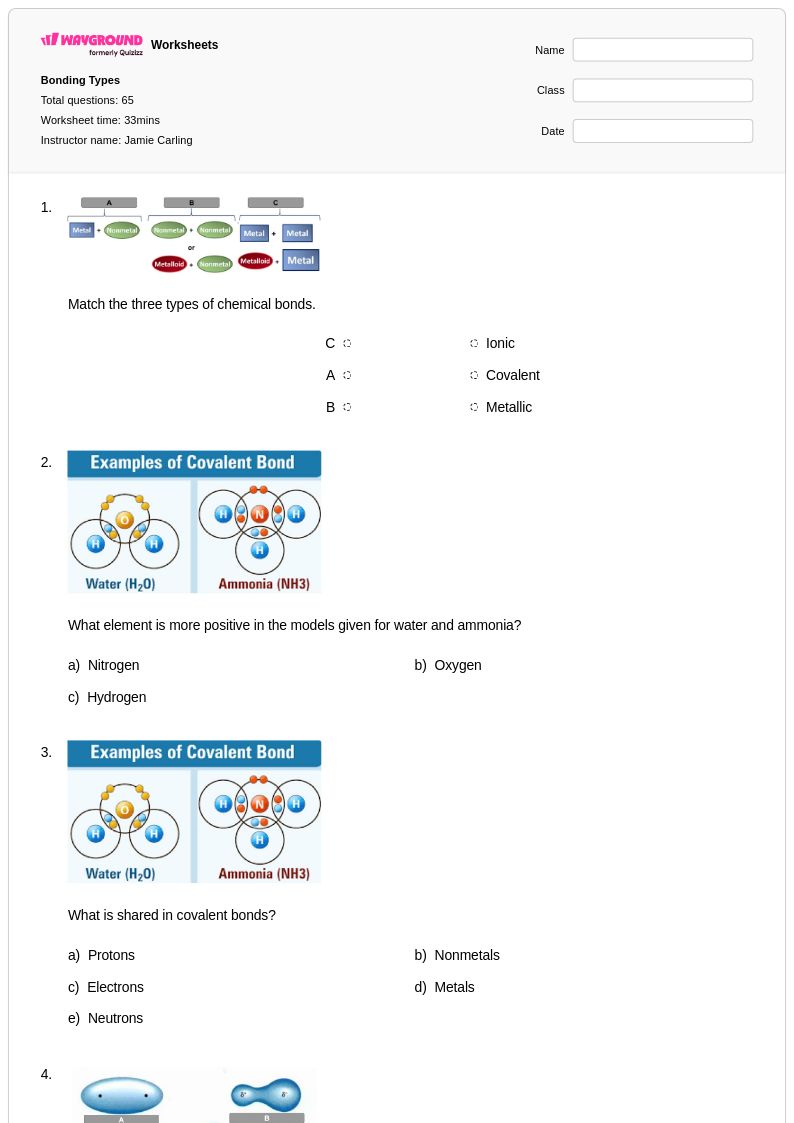
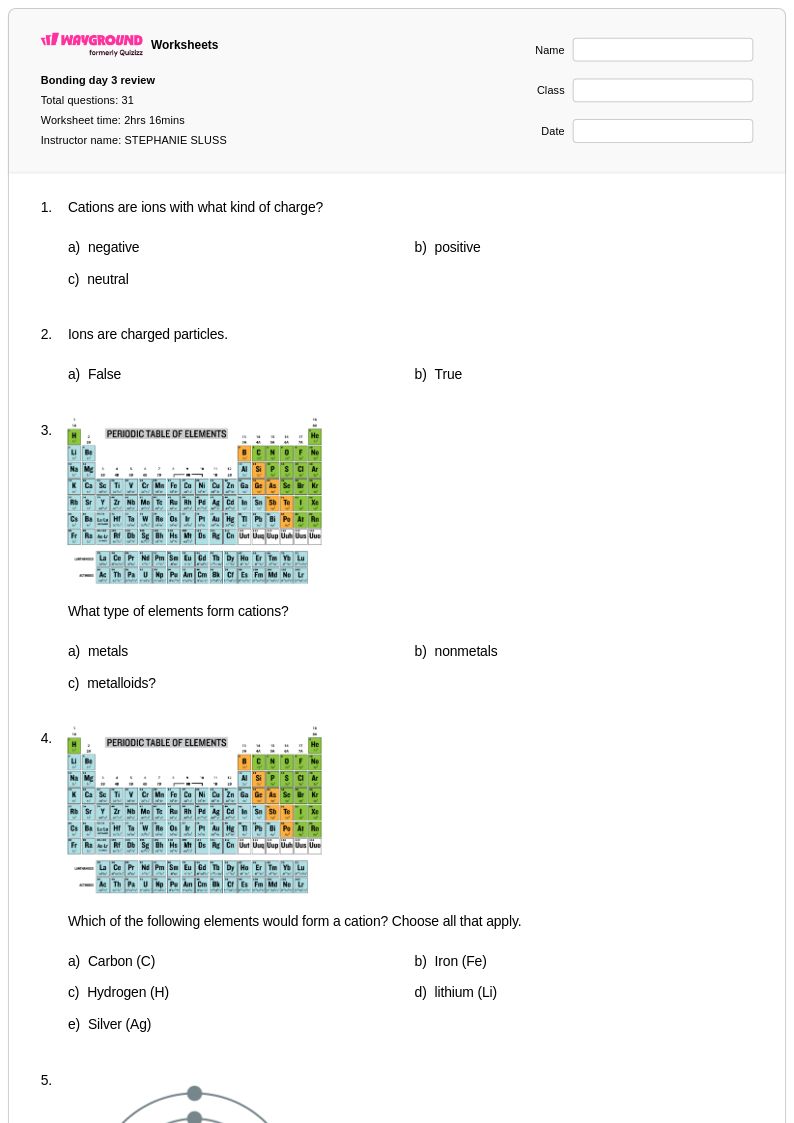
Unlike metals, which tend to lose electrons and form positive ions, nonmetals typically gain electrons during reactions, forming negative ions or sharing electrons in covalent bonds. This electronegativity is central to understanding how nonmetals participate in both ionic and covalent bonding. Nonmetals also generally have higher ionization energies and electronegativities than metals, which directly governs how they interact with other elements.
How can I use nonmetals worksheets to support students at different skill levels?
Nonmetals worksheets can be tiered by task complexity: foundational learners benefit from identification and labeling activities on the periodic table, while more advanced students can work through predicting chemical behavior, writing electron configurations, and analyzing bonding in molecular compounds. On Wayground, teachers can apply accommodations such as reduced answer choices or read-aloud support to individual students, allowing the same worksheet session to serve diverse learners without singling anyone out.
How do I use Wayground's nonmetals worksheets in my classroom?
Wayground's nonmetals worksheets are available as printable PDFs for traditional classroom use and in digital formats for technology-integrated or remote learning environments. Teachers can also host them as a quiz directly on Wayground, enabling real-time student responses and immediate feedback. Each worksheet includes a complete answer key, making them practical for independent practice, homework, or formative assessment without requiring additional teacher preparation.