
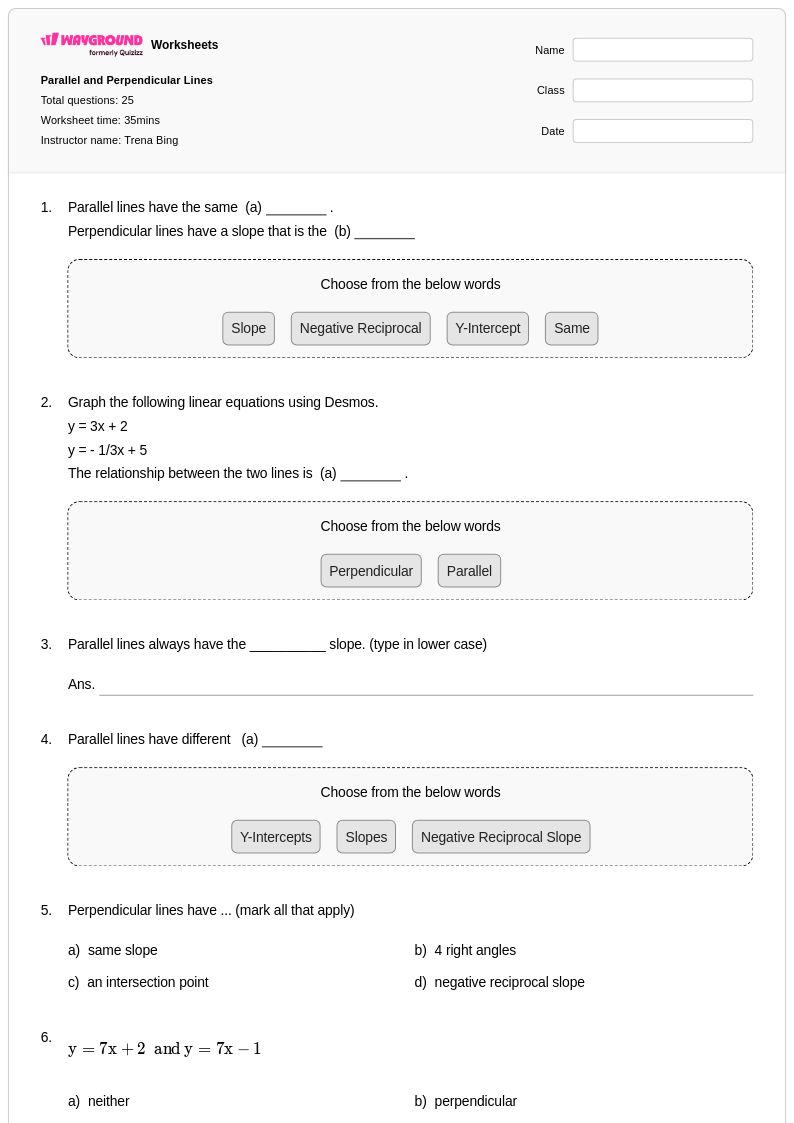
25Q
9th
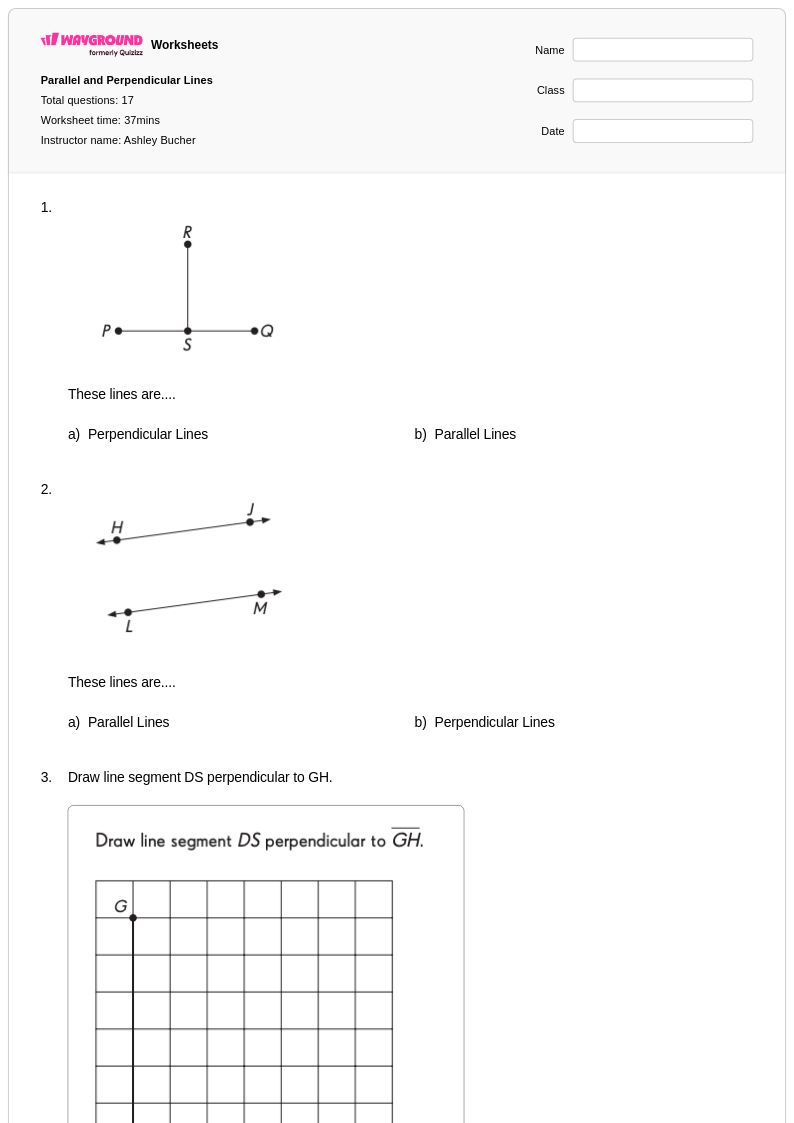
17Q
4th
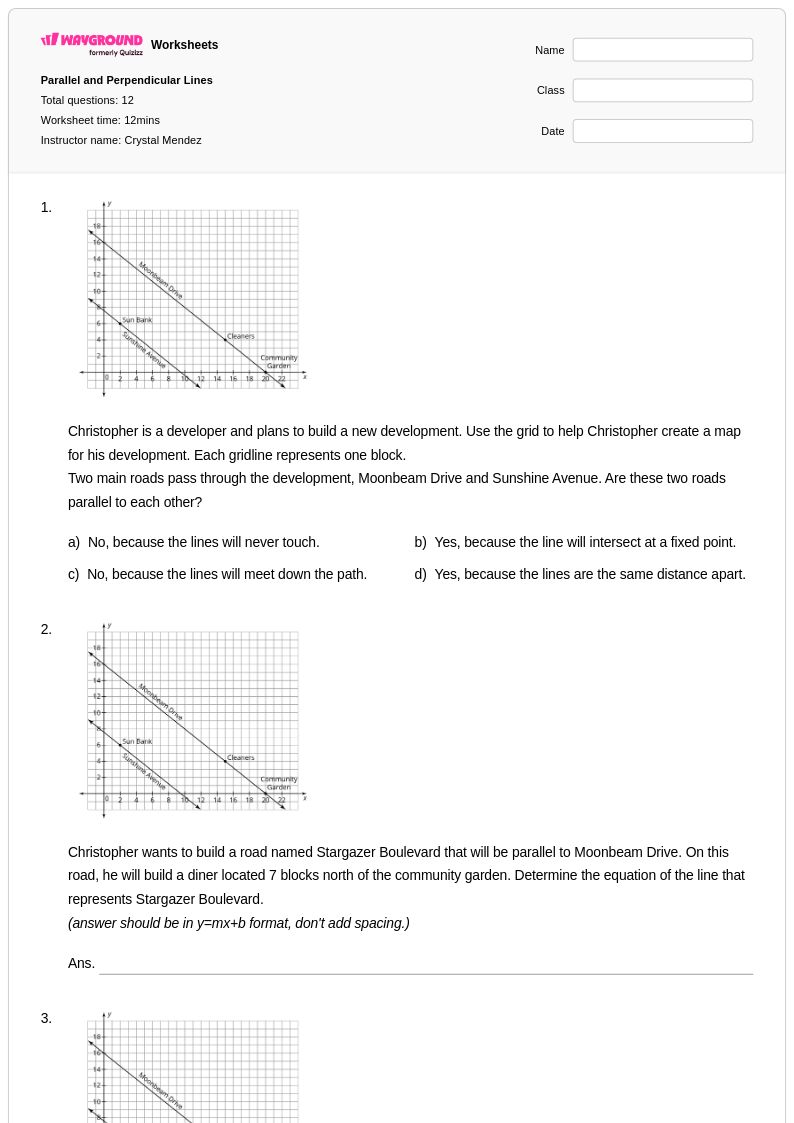
12Q
10th
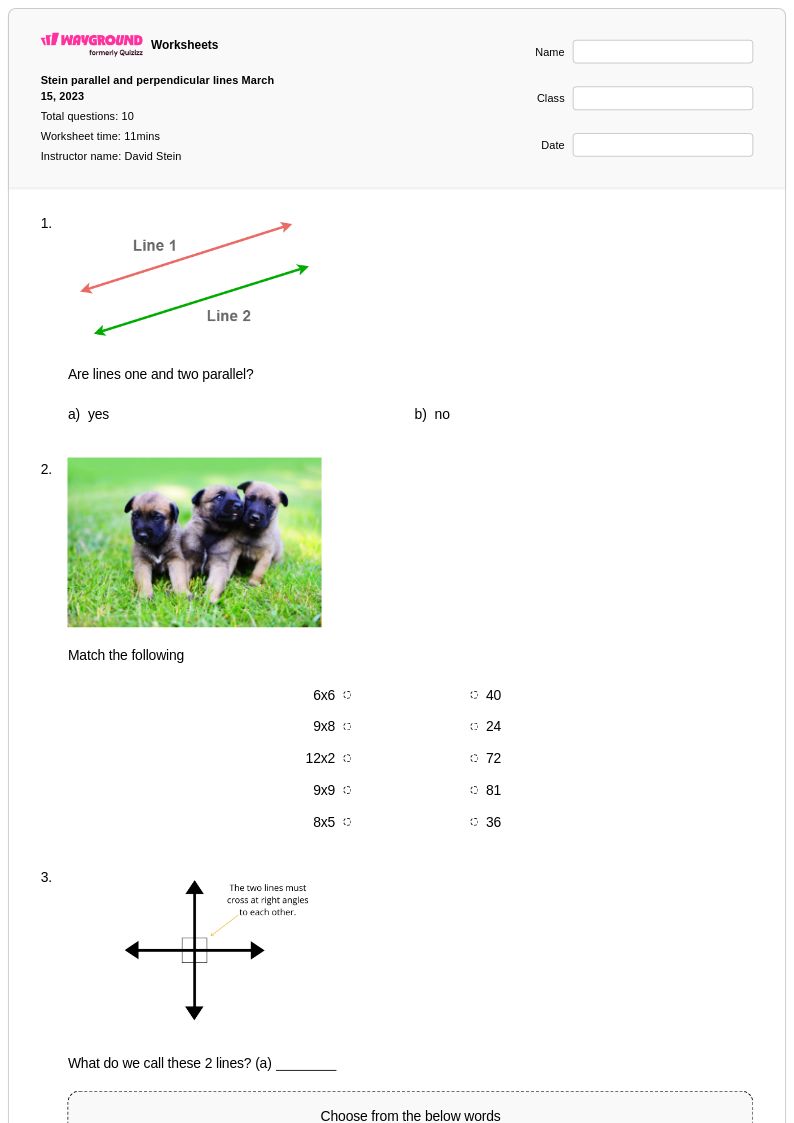
10Q
2nd
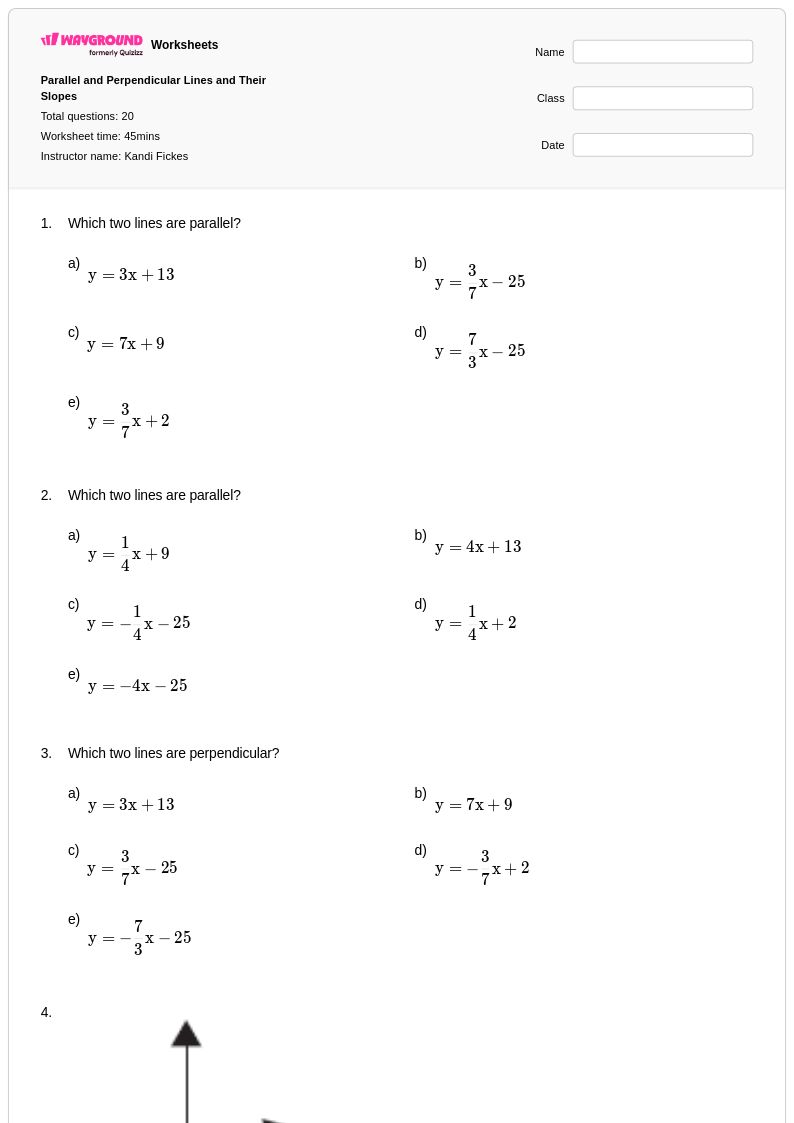
20Q
8th
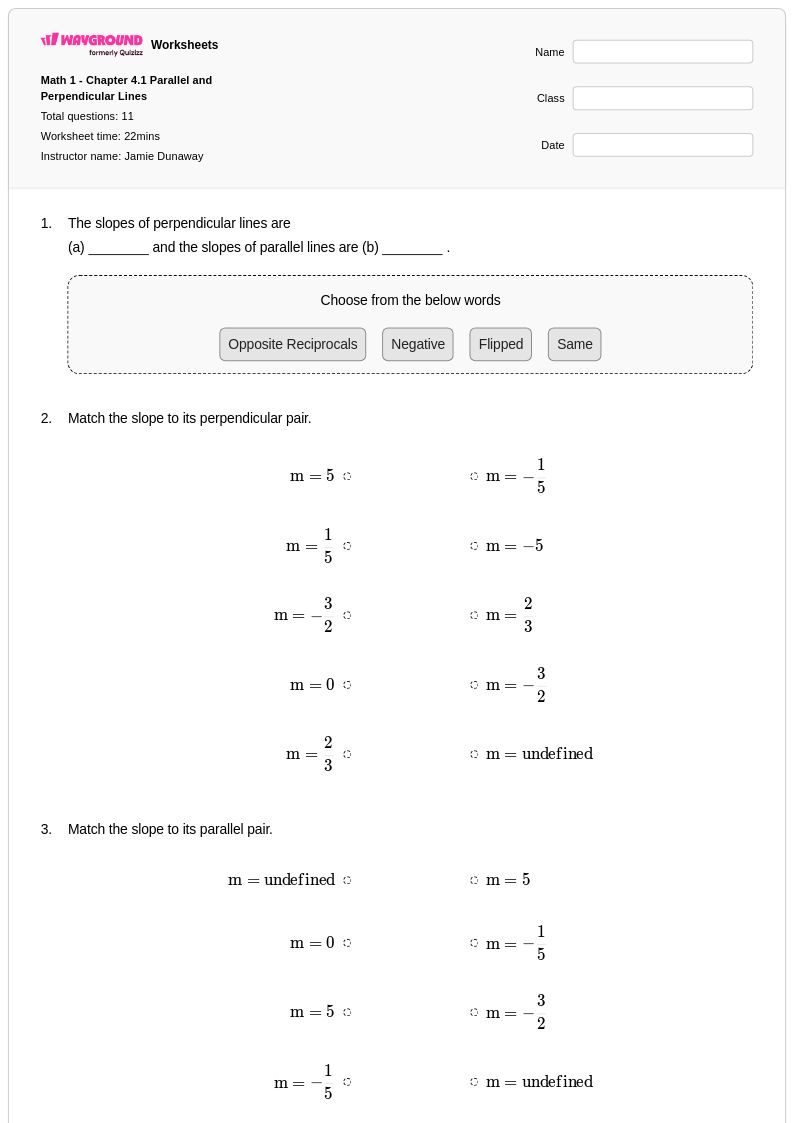
11Q
9th - 12th
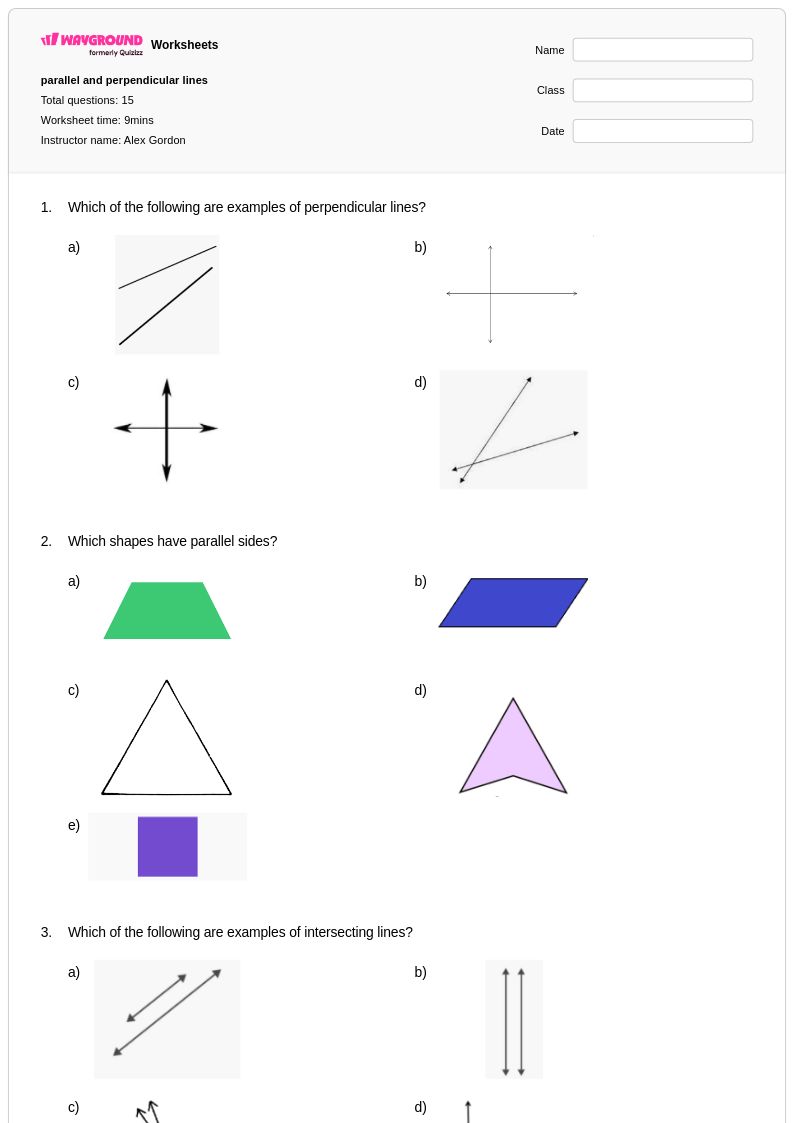
15Q
5th
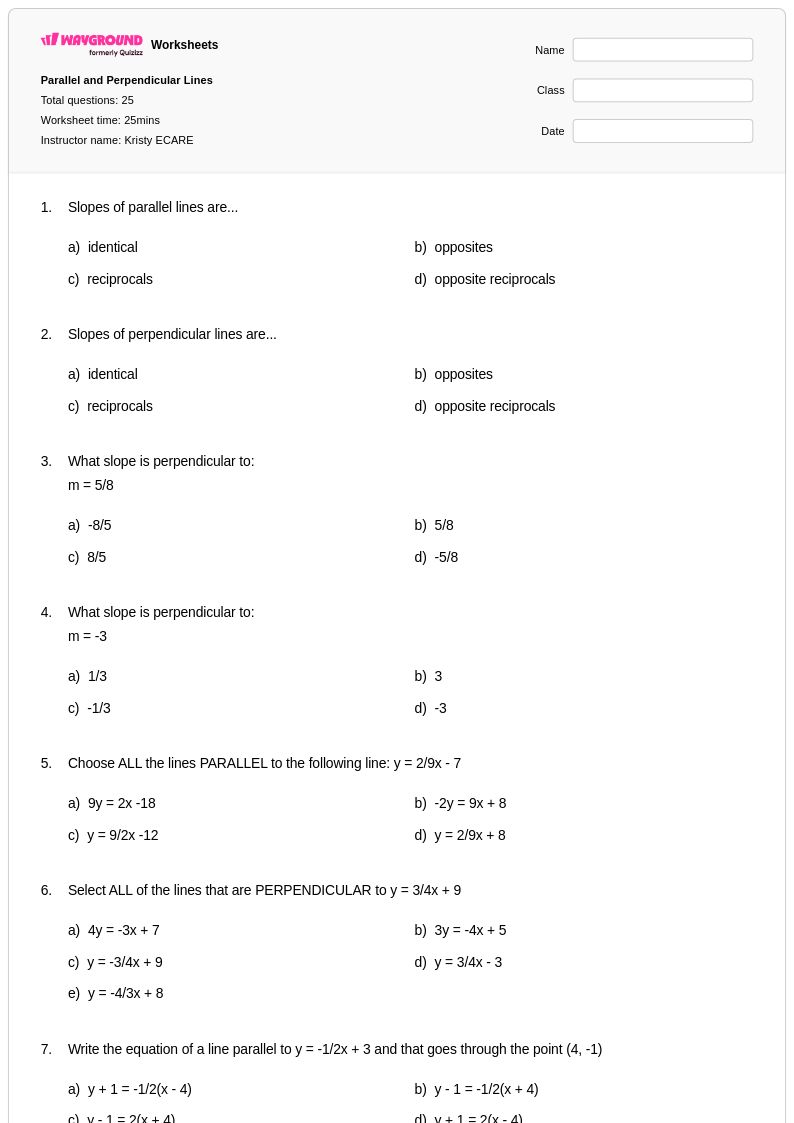
25Q
9th
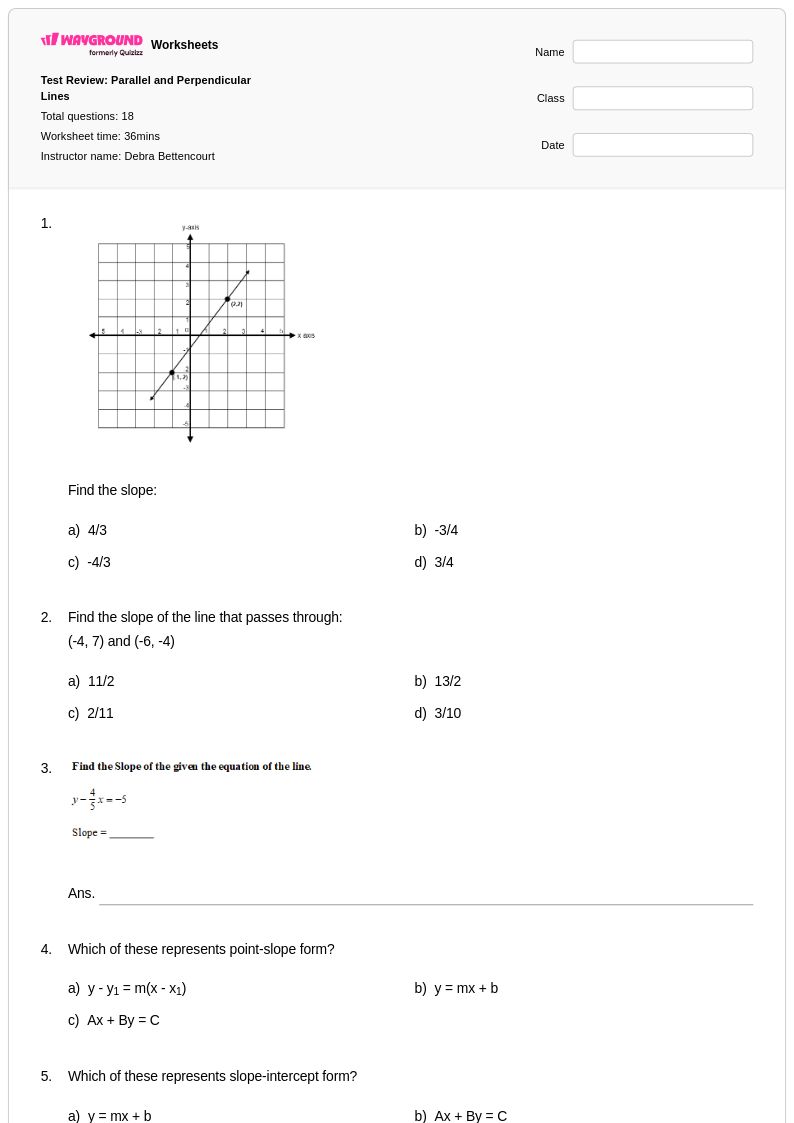
18Q
9th
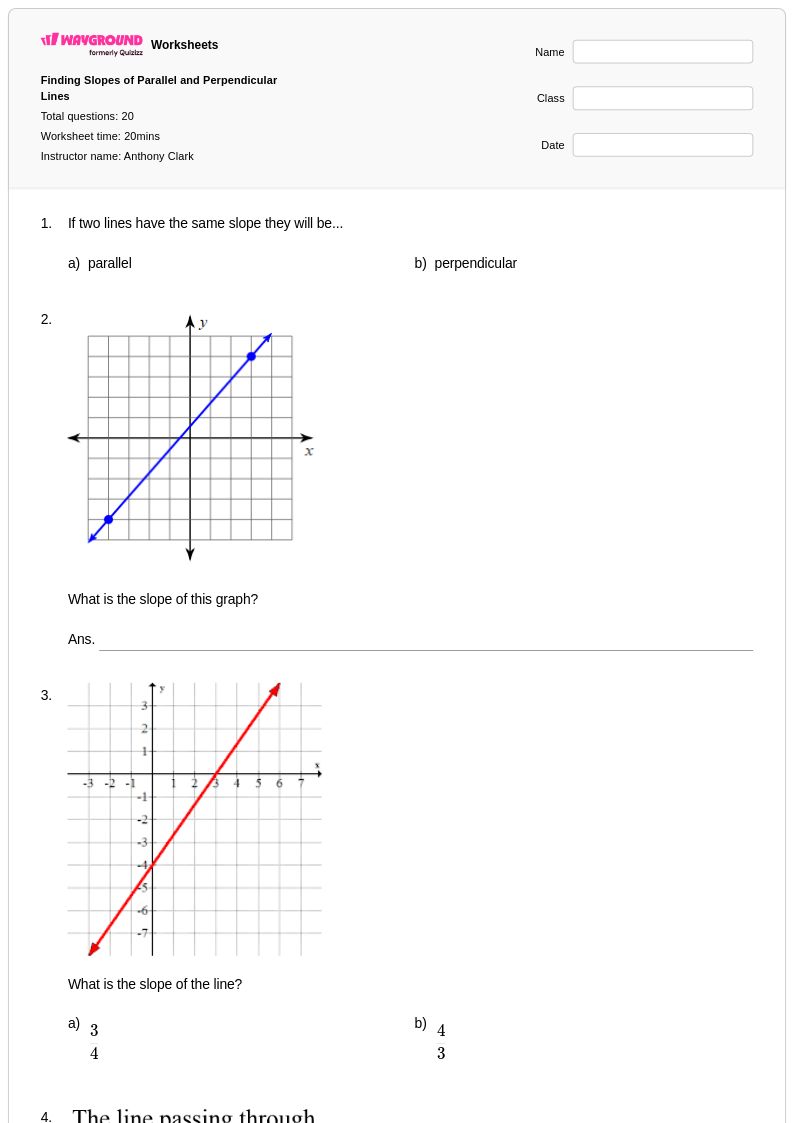
20Q
10th - Uni
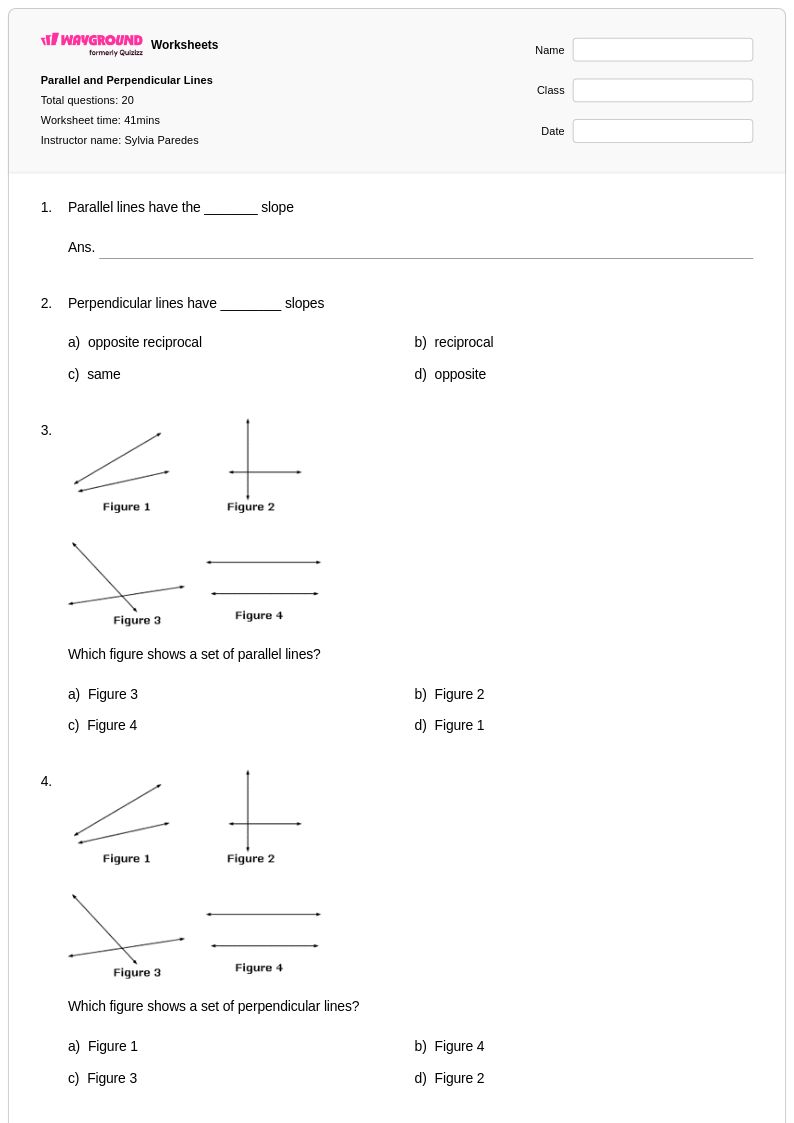
20Q
7th - 10th
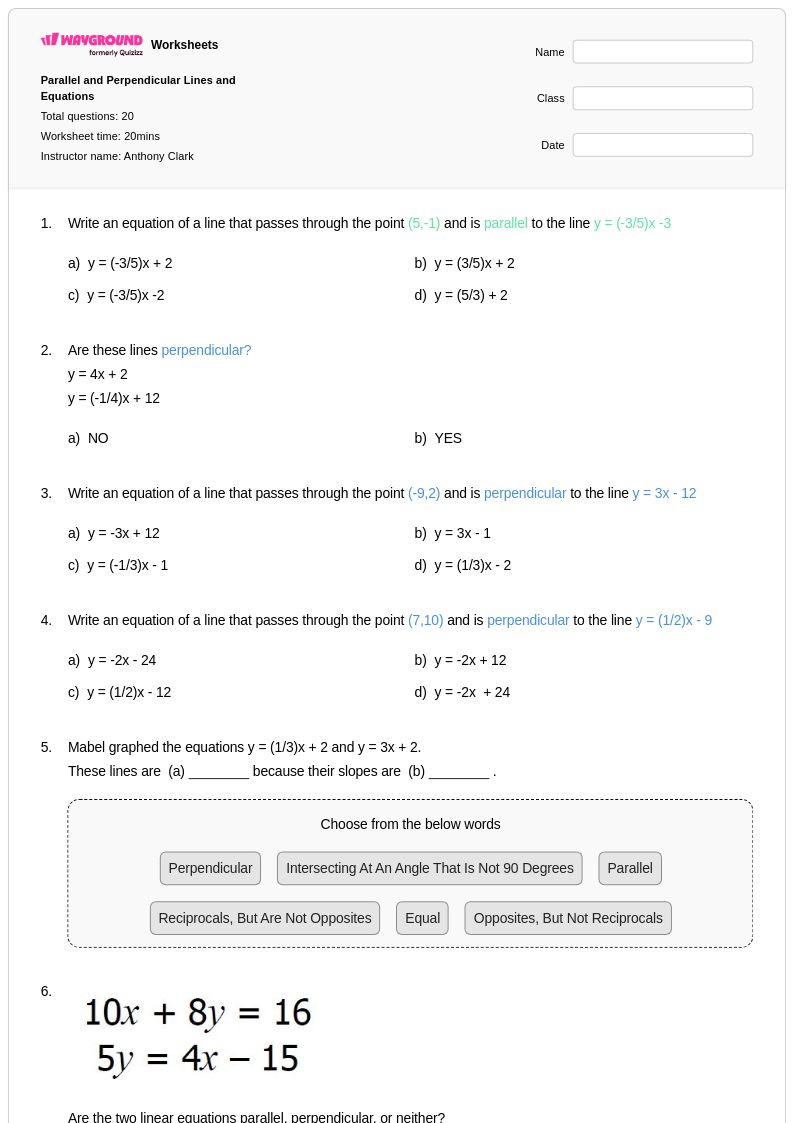
20Q
9th - Uni
20Q
9th
20Q
9th - Uni
15Q
9th - Uni
10Q
9th - 12th
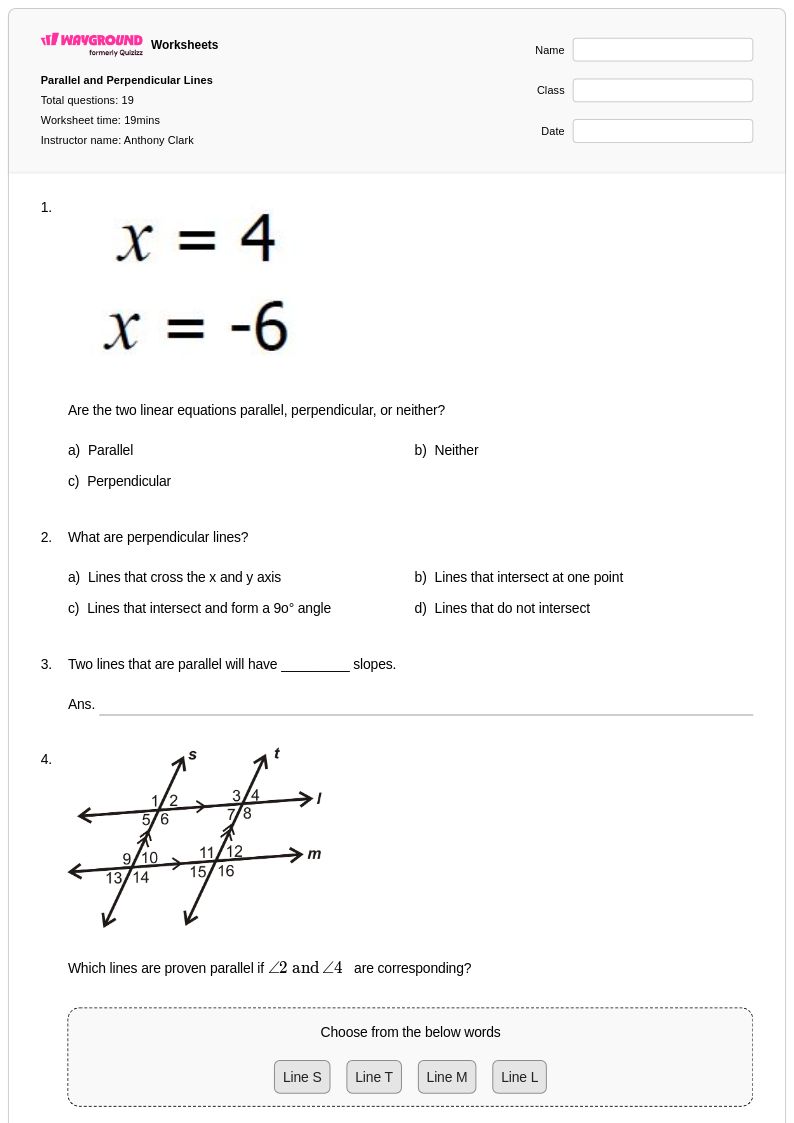
19Q
9th - Uni
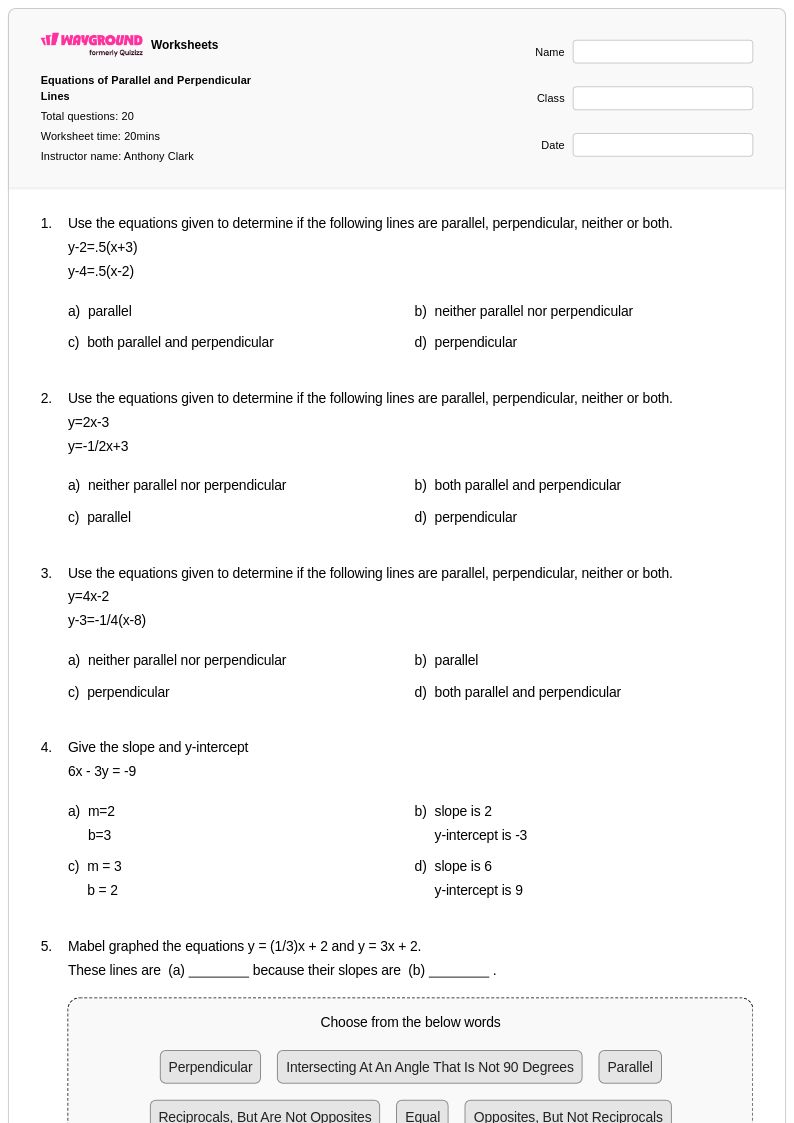
20Q
10th - Uni
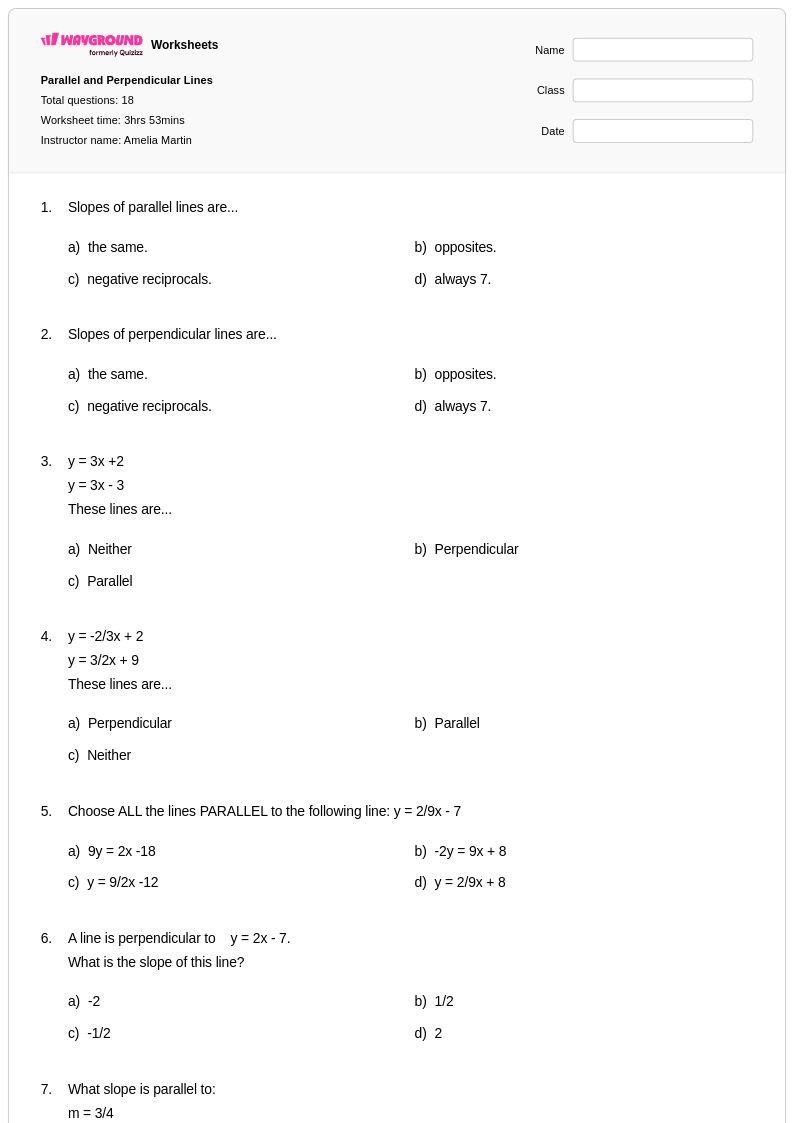
18Q
9th - 12th
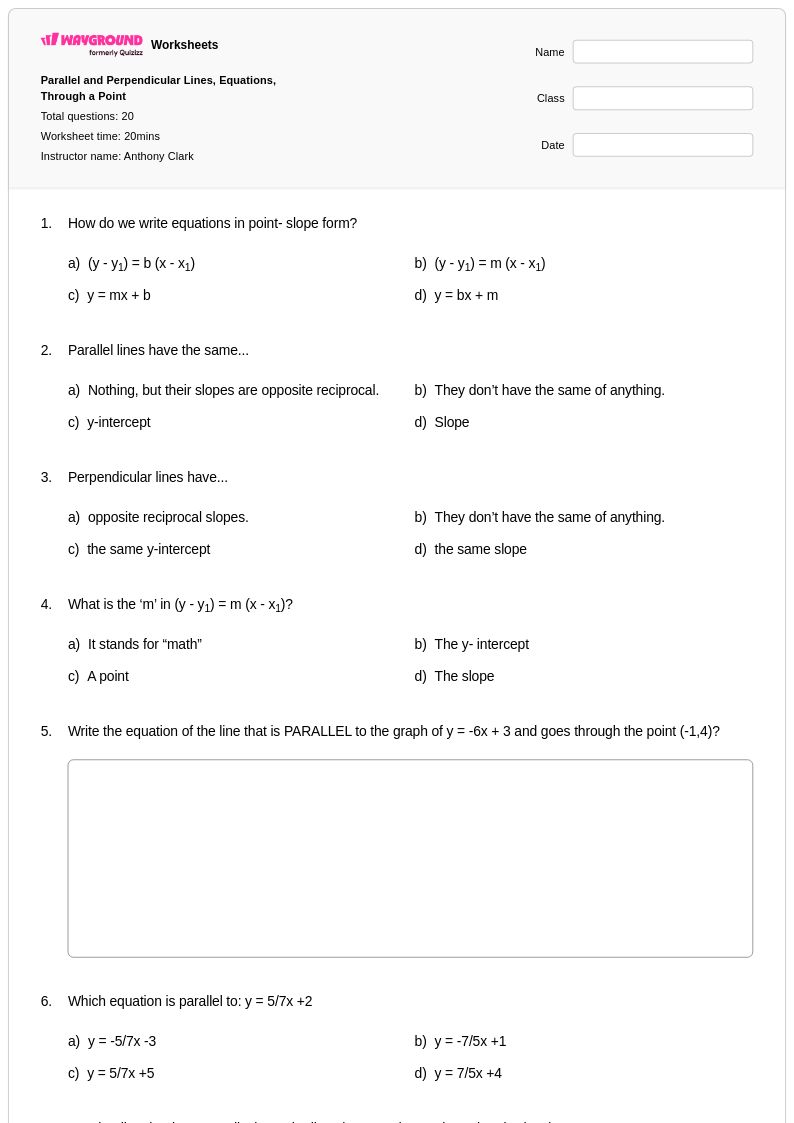
20Q
11th - Uni
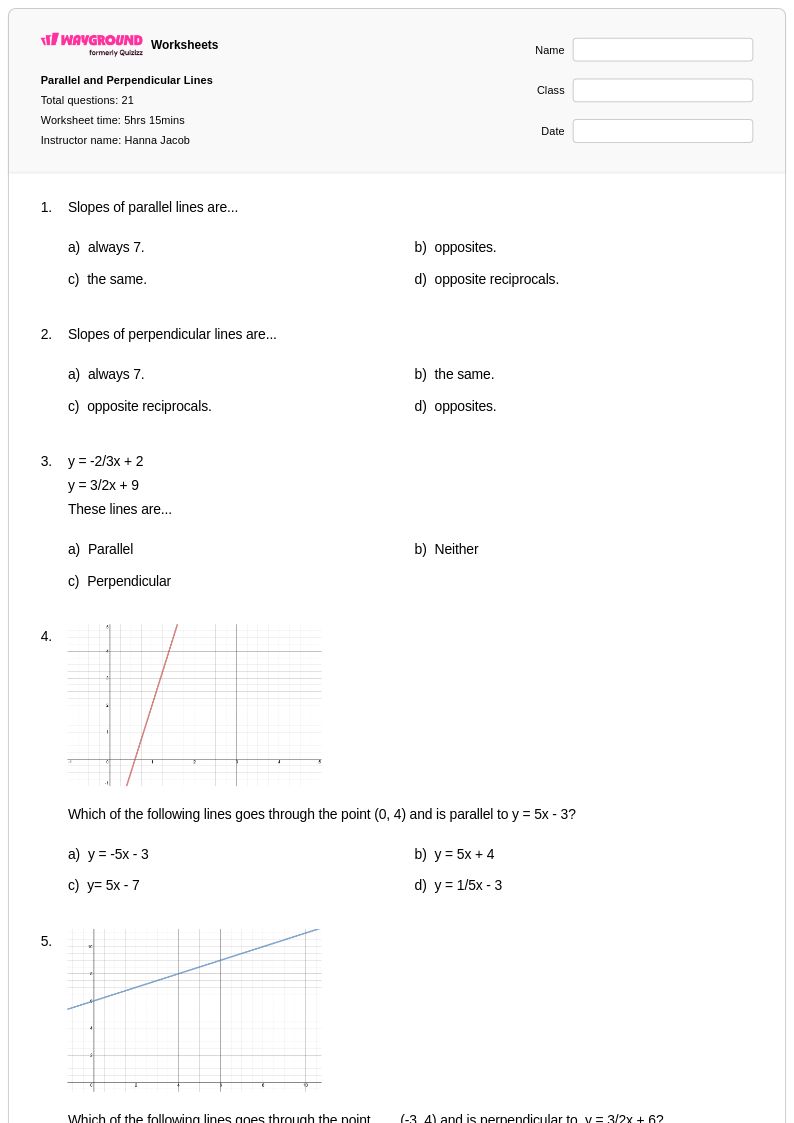
21Q
7th - 9th
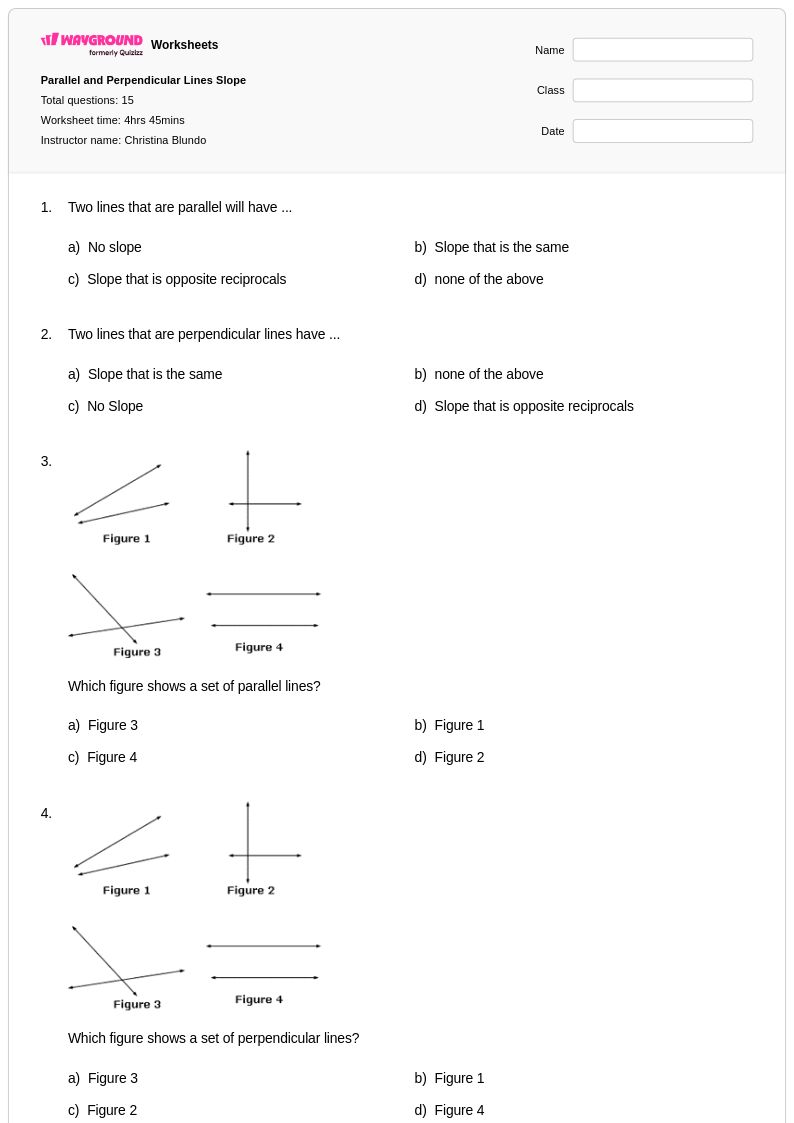
15Q
8th
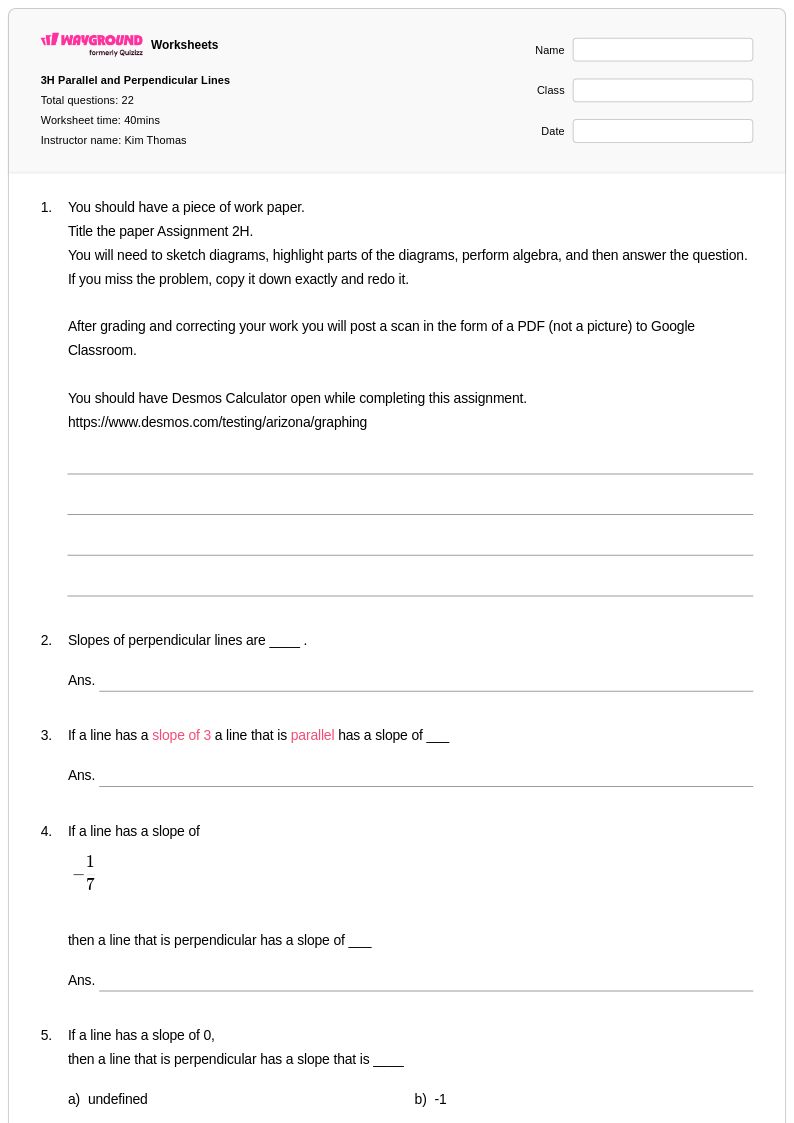
22Q
9th - 10th
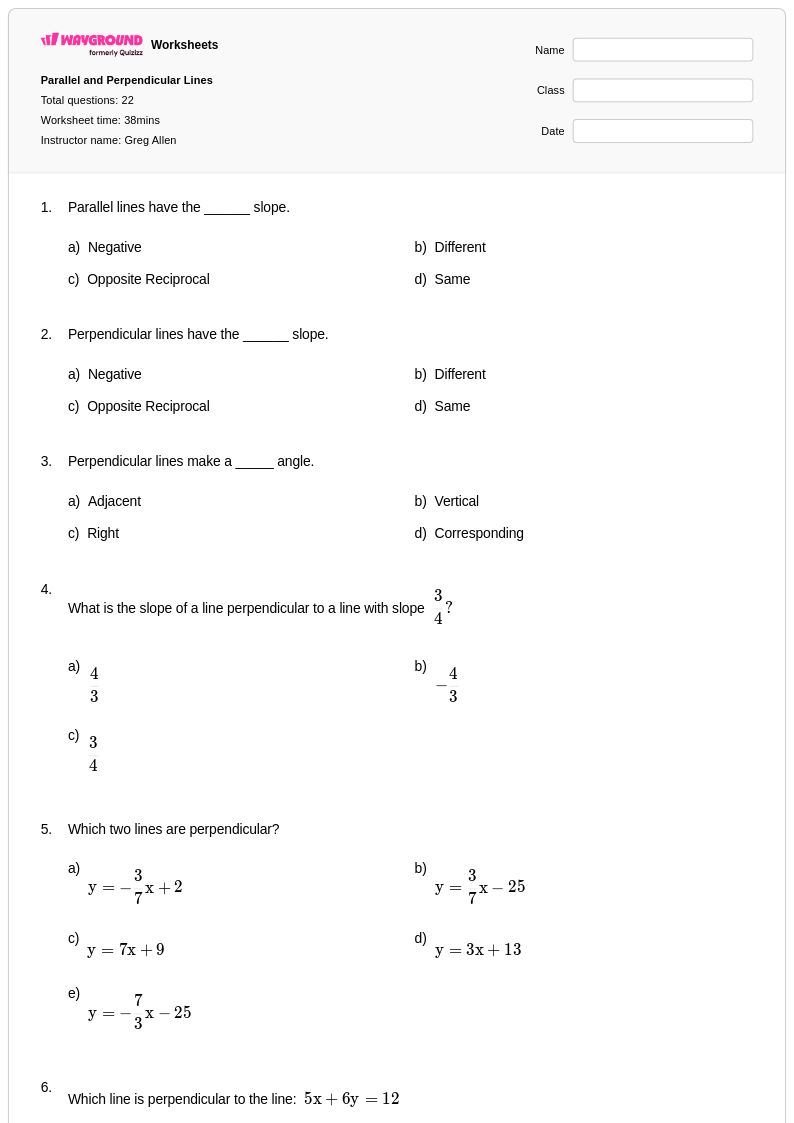
22Q
9th
Explore planilhas por assuntos
Explore printable Parallel and Perpendicular Lines worksheets
Parallel and perpendicular lines worksheets available through Wayground (formerly Quizizz) provide comprehensive practice opportunities for students to master these fundamental geometric relationships. These educational resources focus on developing critical skills including identifying parallel and perpendicular lines in various contexts, understanding the properties of slopes in coordinate geometry, and applying angle relationships formed when parallel lines are intersected by transversals. Students work through carefully structured practice problems that progress from basic line identification to complex applications involving algebraic expressions and coordinate plane analysis. Each worksheet collection includes detailed answer keys and is available as free printables in convenient PDF format, allowing educators to seamlessly integrate these materials into their mathematics instruction while providing students with immediate feedback on their understanding.
Wayground (formerly Quizizz) empowers teachers with an extensive library of millions of teacher-created resources specifically designed for parallel and perpendicular lines instruction. The platform's robust search and filtering capabilities enable educators to quickly locate worksheets that align with specific academic standards and match their students' current skill levels. Advanced differentiation tools allow teachers to customize existing materials or create targeted practice sets for remediation and enrichment purposes, ensuring that all learners receive appropriate challenges. These versatile worksheet collections are available in both printable and digital formats, including downloadable PDFs, making them ideal for classroom instruction, homework assignments, and independent study sessions. Teachers can efficiently plan comprehensive lesson sequences while having access to varied problem types that reinforce conceptual understanding and build procedural fluency in identifying and working with parallel and perpendicular line relationships.
FAQs
How do I teach the relationship between slopes and parallel or perpendicular lines?
What exercises help students practice parallel and perpendicular lines?
What are common mistakes students make with parallel and perpendicular lines?
How can I use this worksheet with my students?
How does this topic fit into the Common Core math standards?
How can I differentiate practice for students struggling with the algebra of this topic?