Free Printable Polyatomic Ions Worksheets for Grade 11
Grade 11 polyatomic ions worksheets and printables help students master chemical formulas and naming conventions through comprehensive practice problems, free PDF downloads, and detailed answer keys.
Explore printable Polyatomic Ions worksheets for Grade 11
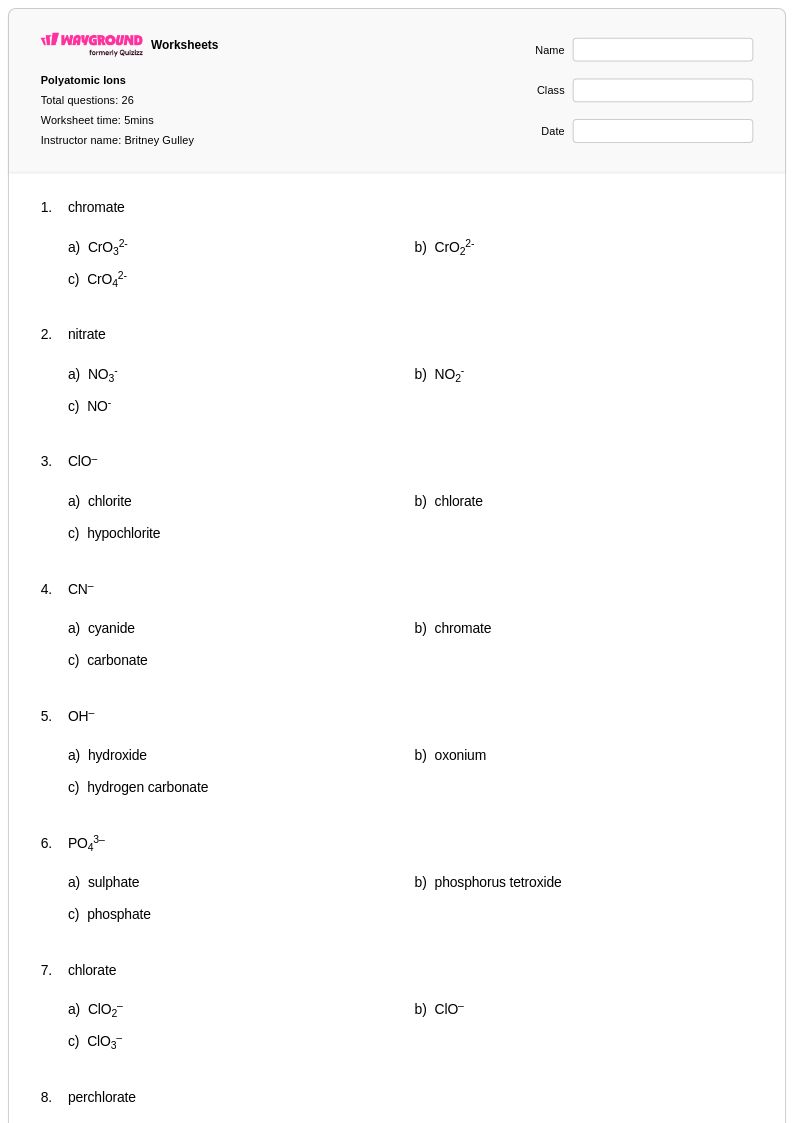
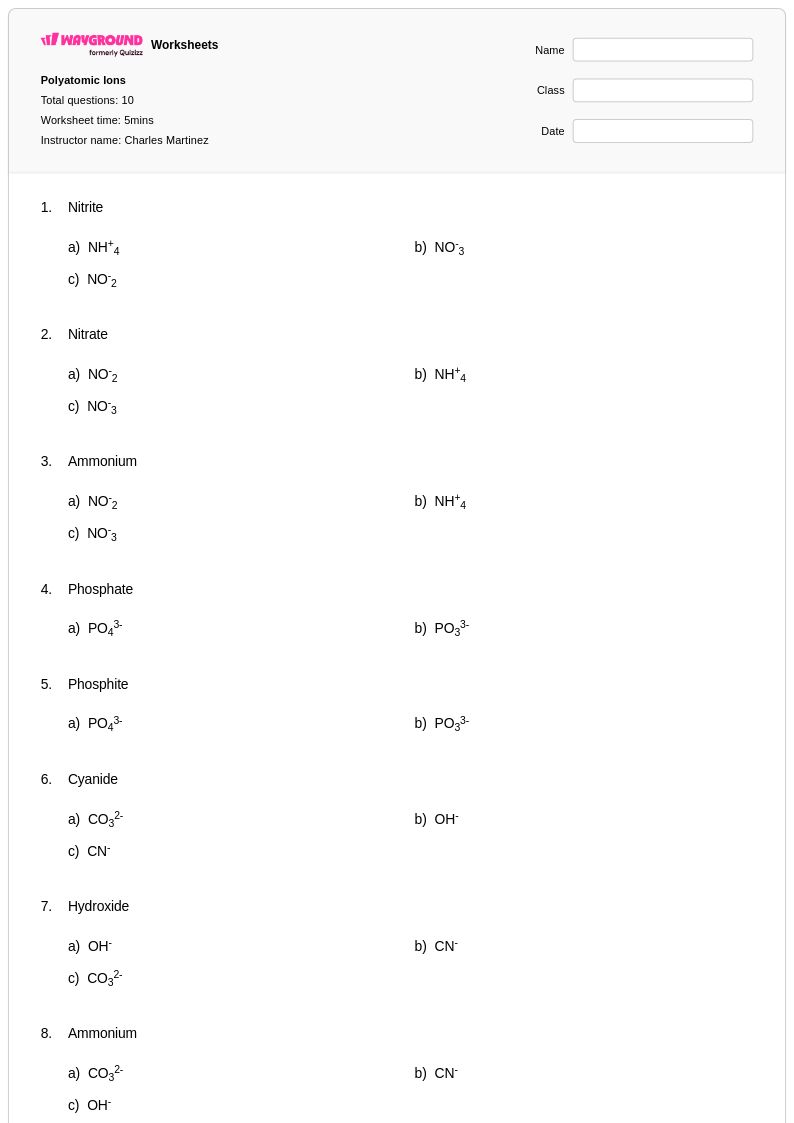
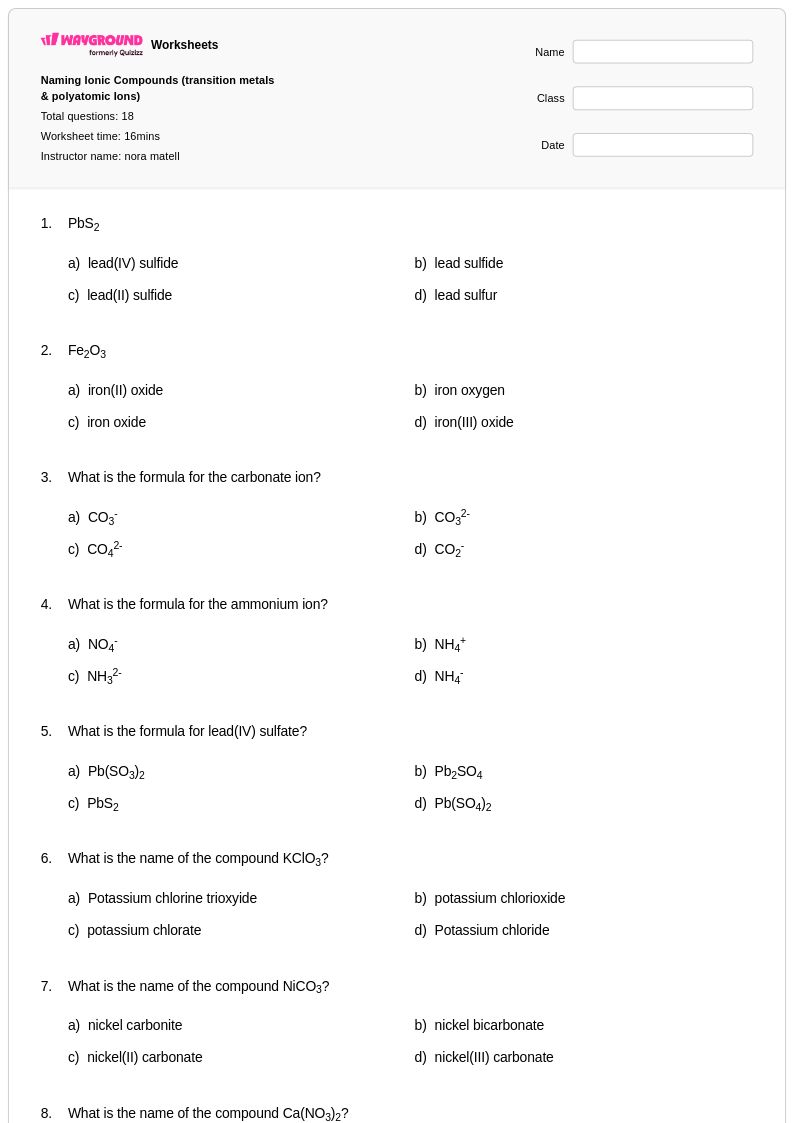
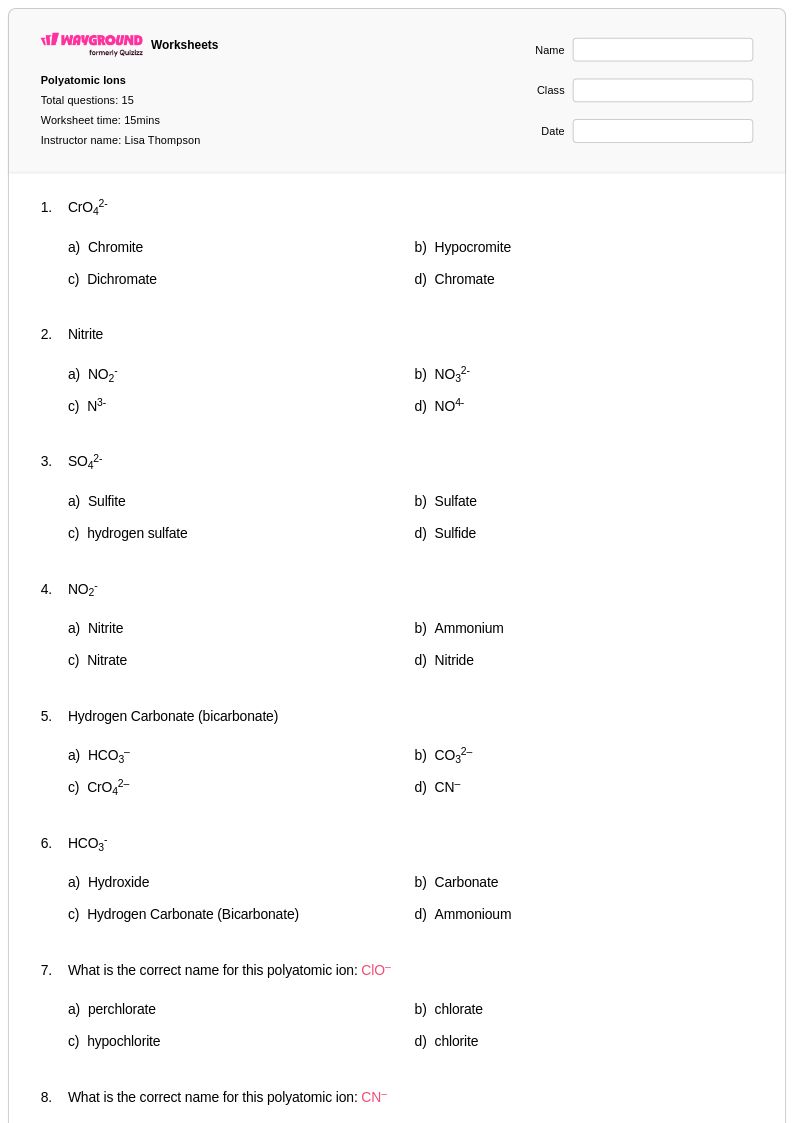
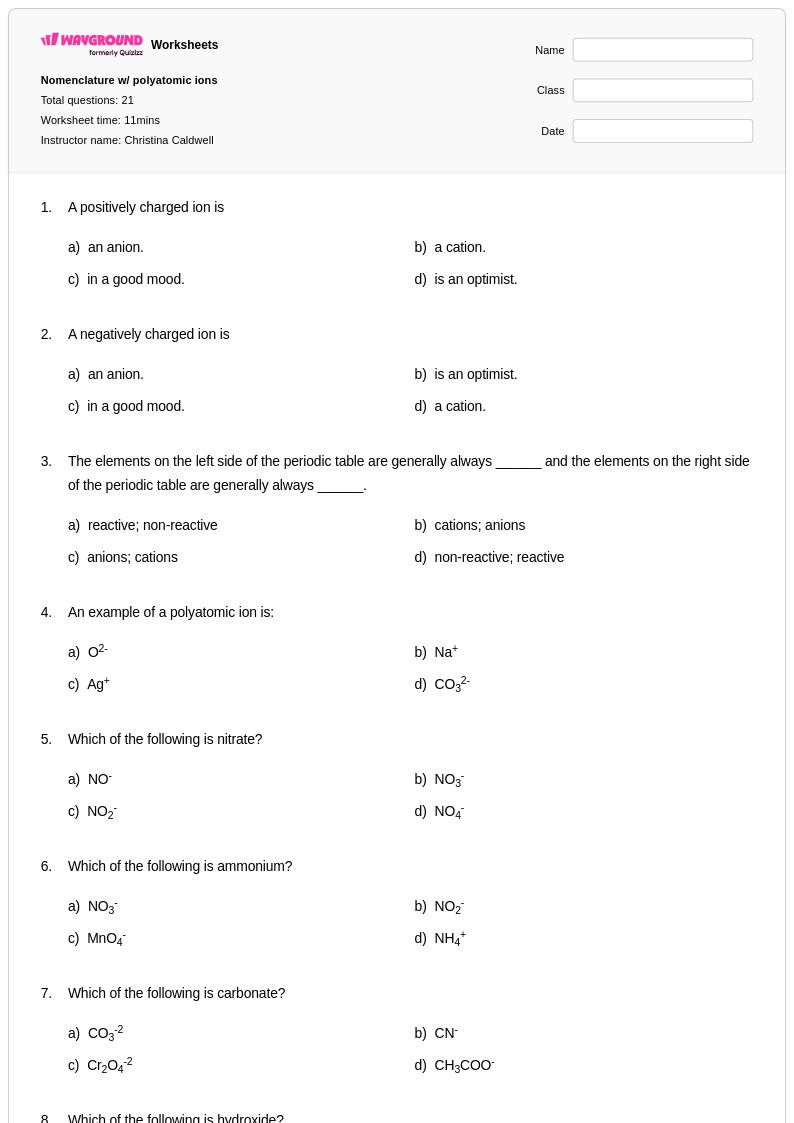
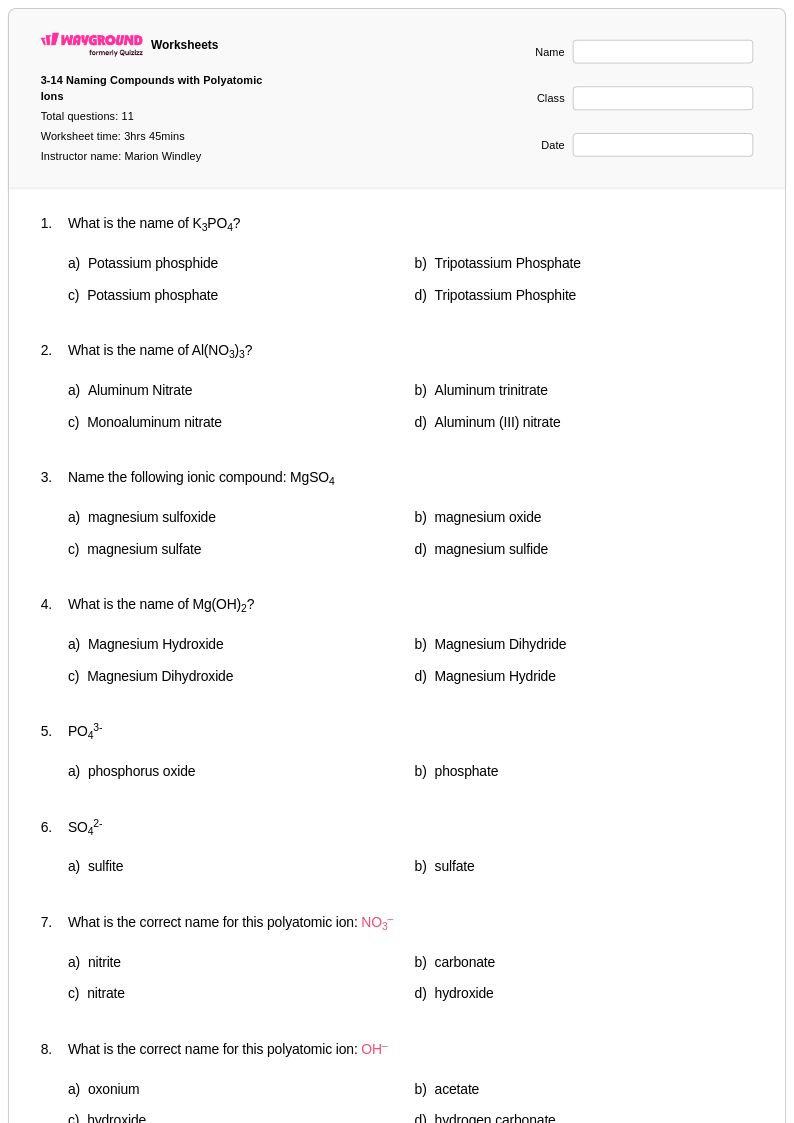
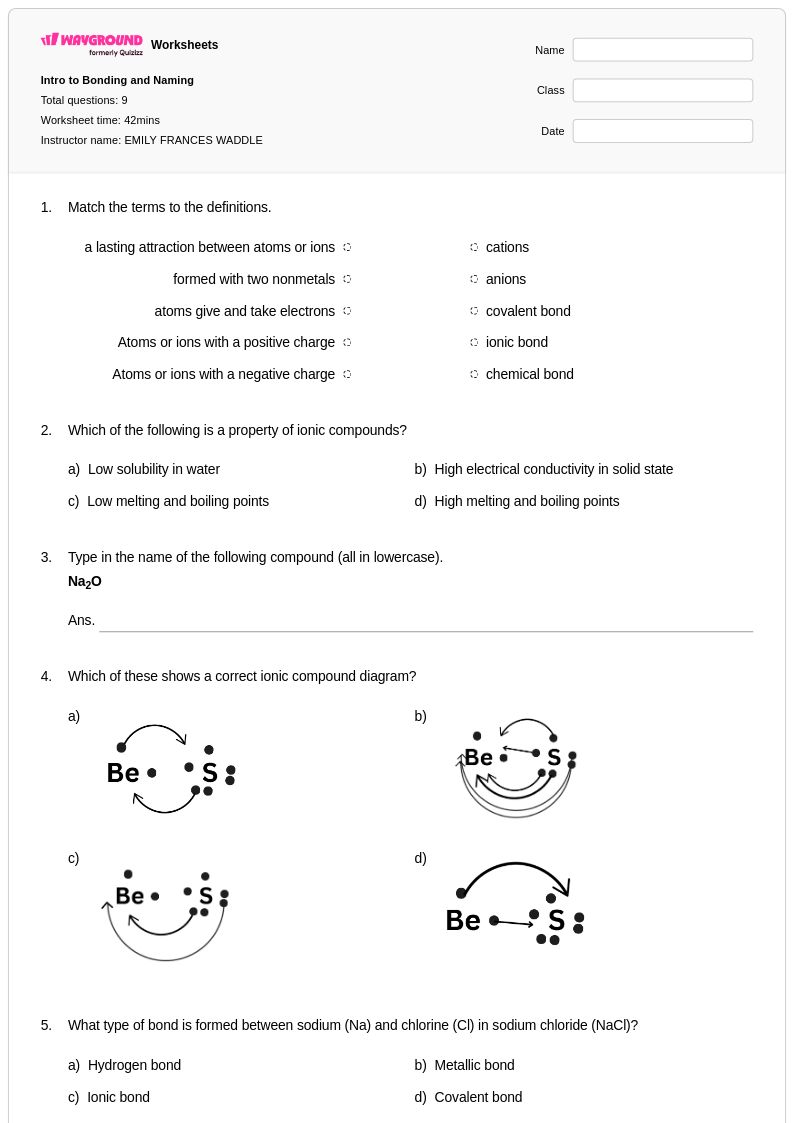
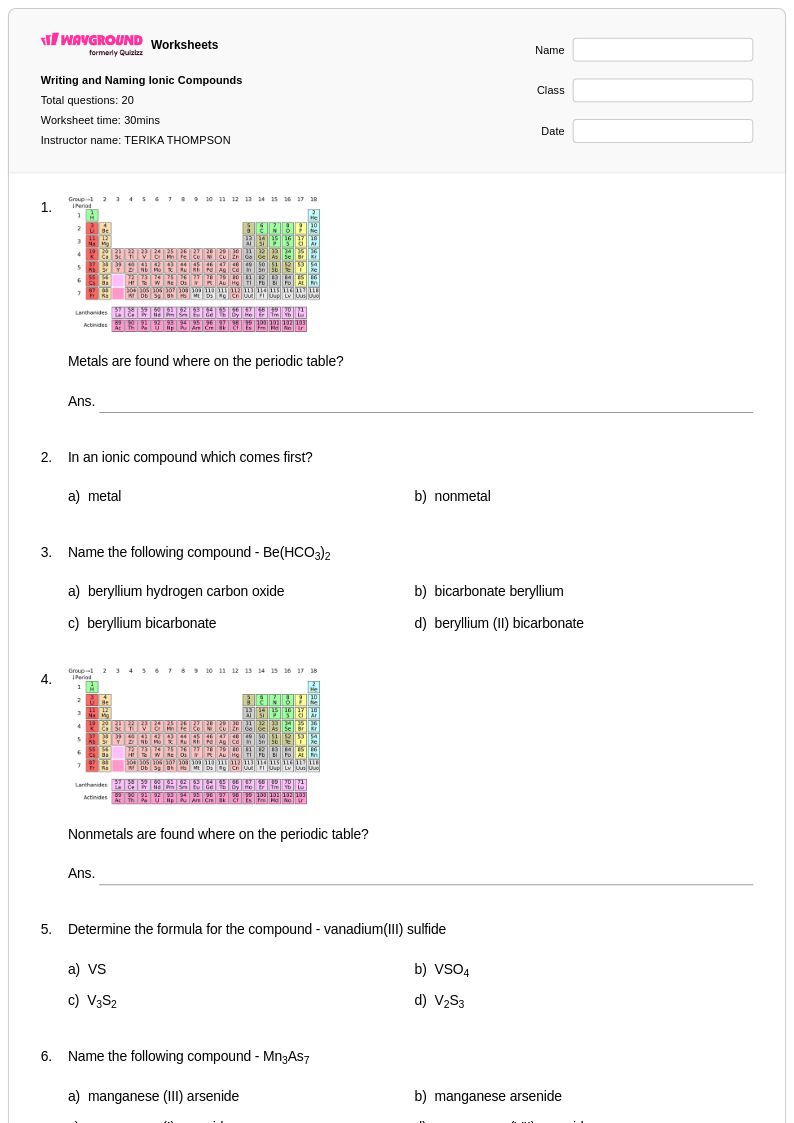
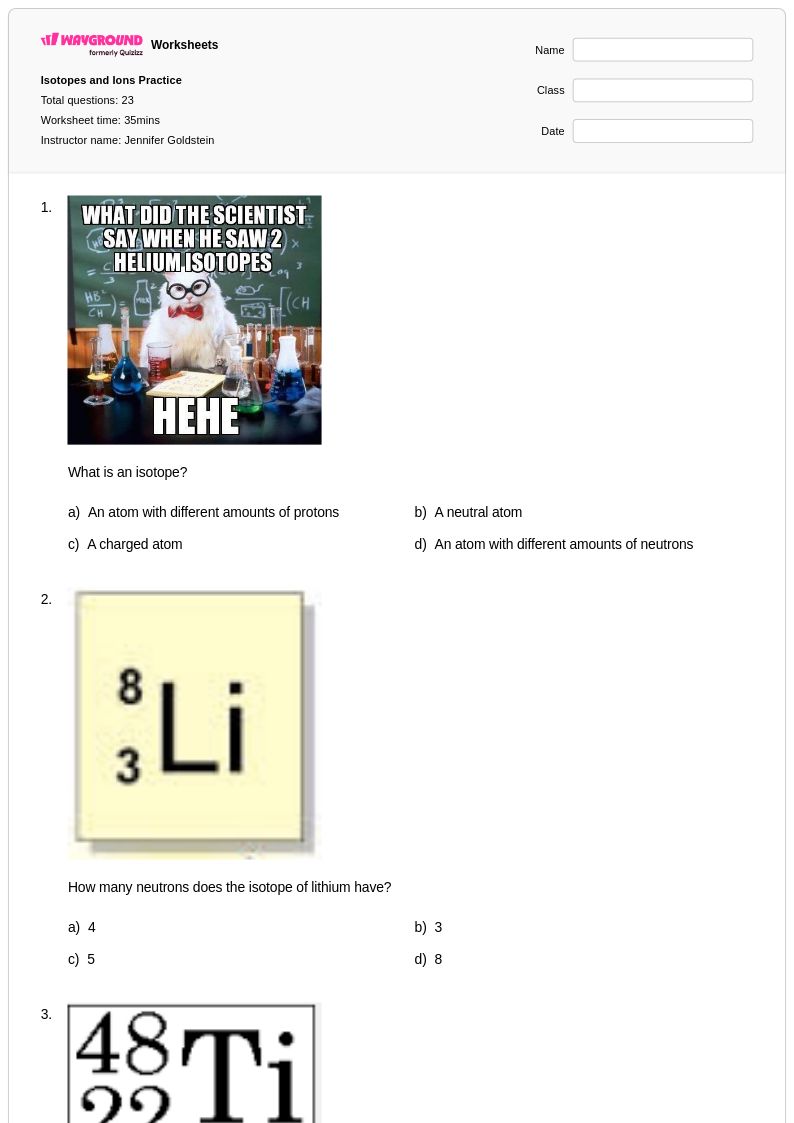
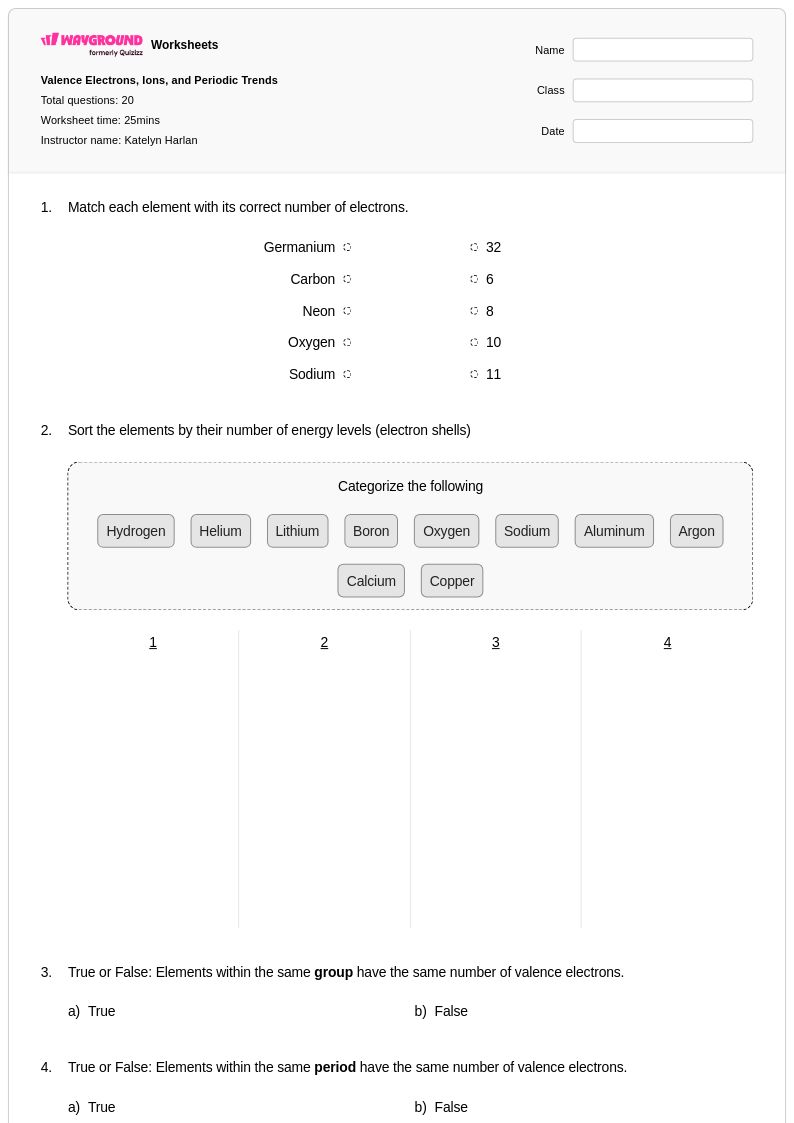
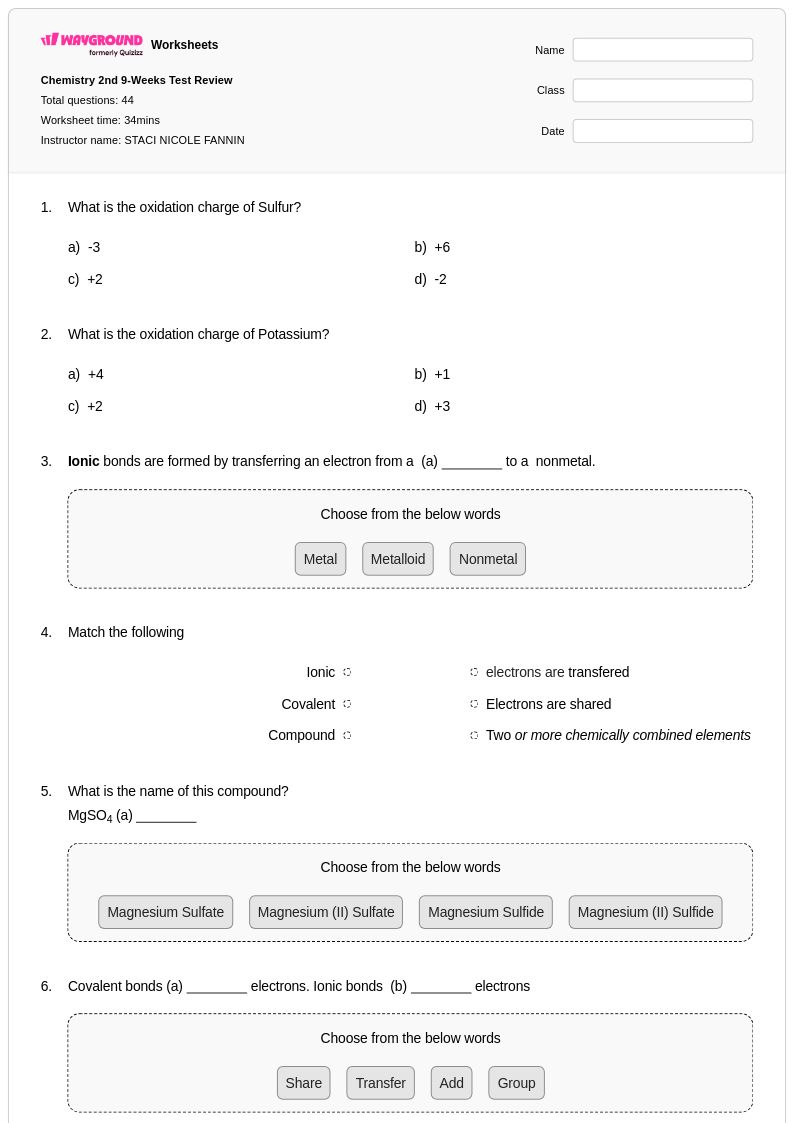
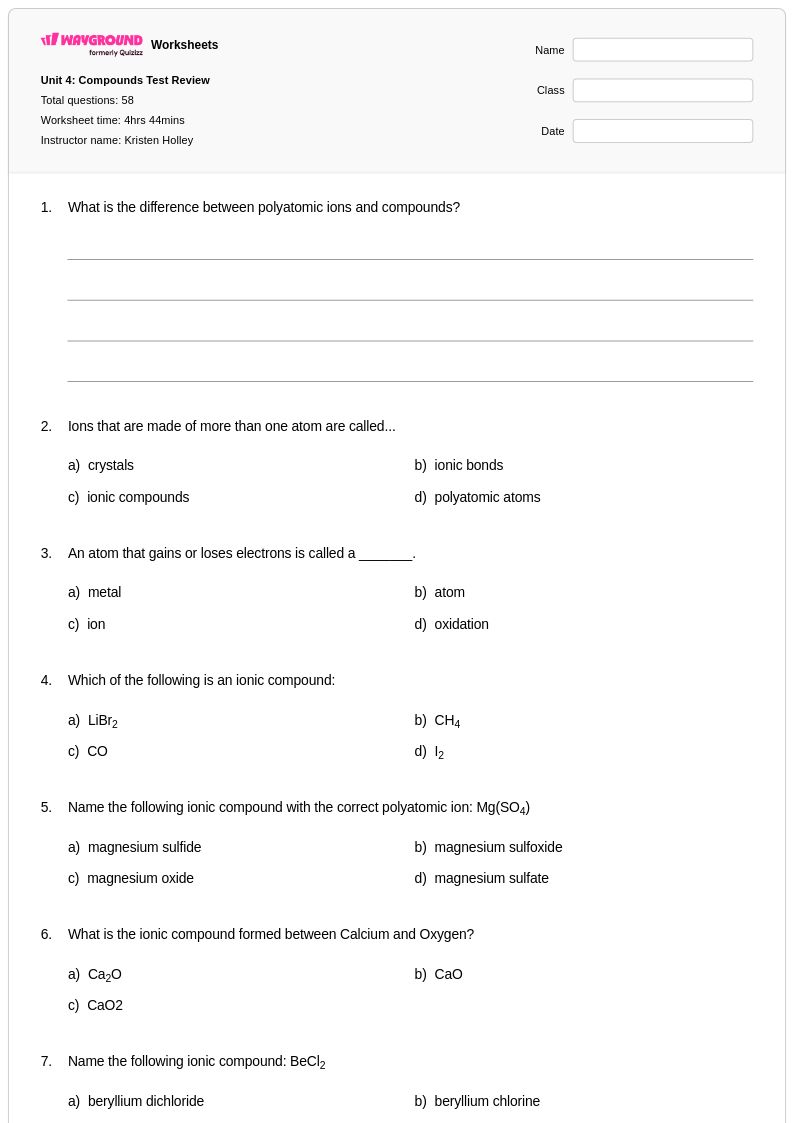
Polyatomic ions represent one of the most challenging yet essential concepts for Grade 11 chemistry students to master, requiring a solid understanding of molecular structures, charges, and chemical naming conventions. Wayground's comprehensive collection of polyatomic ions worksheets provides students with targeted practice problems that build proficiency in identifying common polyatomic ions, understanding their charges, and applying proper nomenclature rules in chemical compounds. These carefully designed printables cover everything from basic recognition exercises to complex compound formation scenarios, with each worksheet including a detailed answer key that allows students to check their work and identify areas needing improvement. The free pdf resources systematically guide students through the intricacies of sulfate, nitrate, phosphate, carbonate, and dozens of other polyatomic ions that form the foundation of advanced chemical understanding.
Wayground's platform empowers chemistry educators with access to millions of teacher-created polyatomic ions resources, featuring robust search and filtering capabilities that make finding grade-appropriate materials effortless. Teachers can easily locate worksheets aligned with specific chemistry standards, customize existing materials to match their curriculum pacing, and differentiate instruction for students with varying skill levels. The platform's flexible format options, including both digital and printable pdf versions, support diverse classroom environments and learning preferences while enabling seamless integration into lesson plans, homework assignments, and assessment strategies. These comprehensive tools facilitate effective remediation for struggling students, provide enrichment opportunities for advanced learners, and ensure consistent skill practice that builds the chemical literacy essential for success in upper-level chemistry courses.
FAQs
How do I teach polyatomic ions to chemistry students?
Start by introducing the most common polyatomic ions in small clusters, grouping them by charge or by the central element (e.g., nitrogen-based ions like nitrate and nitrite). Have students build a reference chart they can use during initial practice before gradually working toward memorization. Connecting ion names to patterns, such as the '-ate' and '-ite' suffixes indicating different oxygen counts, helps students internalize the naming system rather than rote memorize isolated facts.
What exercises help students practice polyatomic ions?
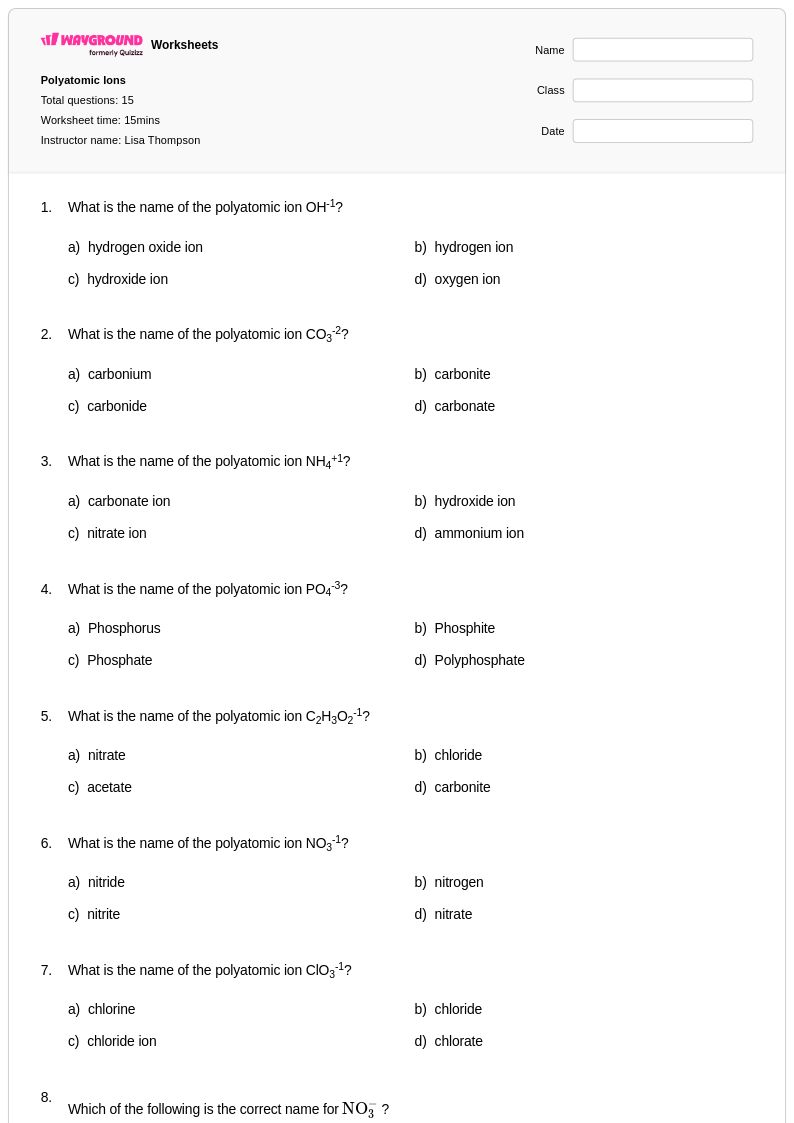
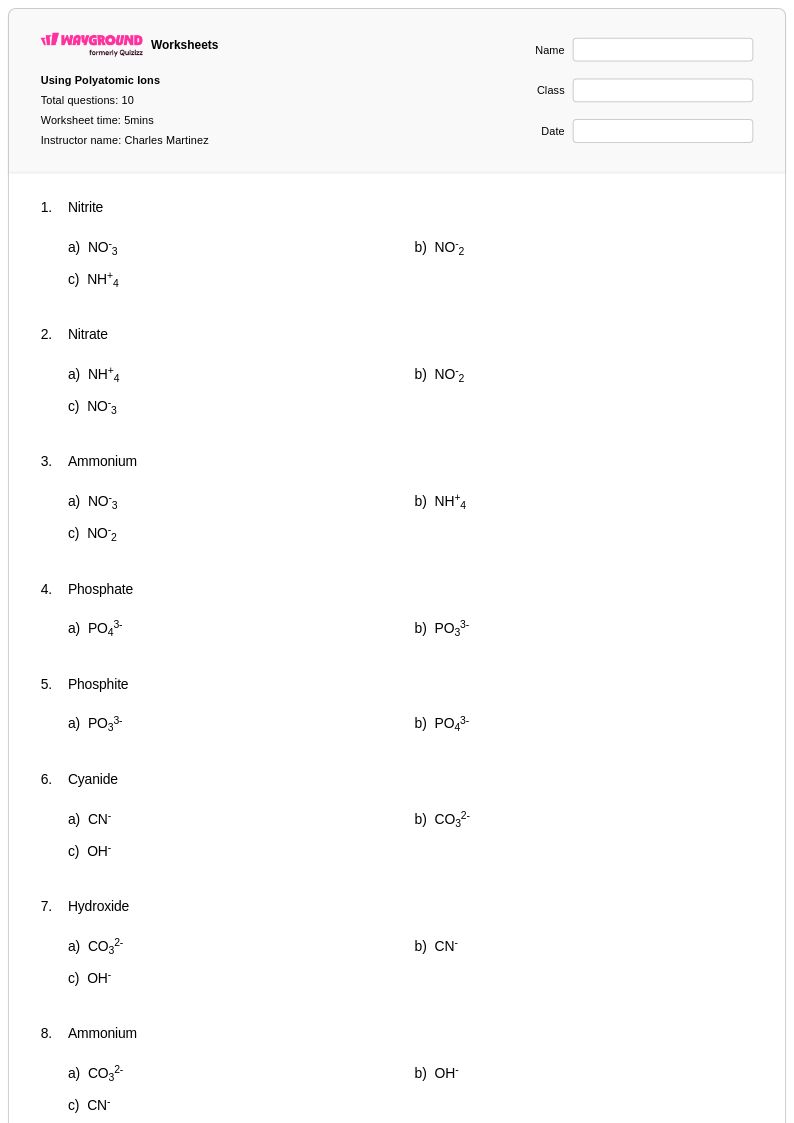
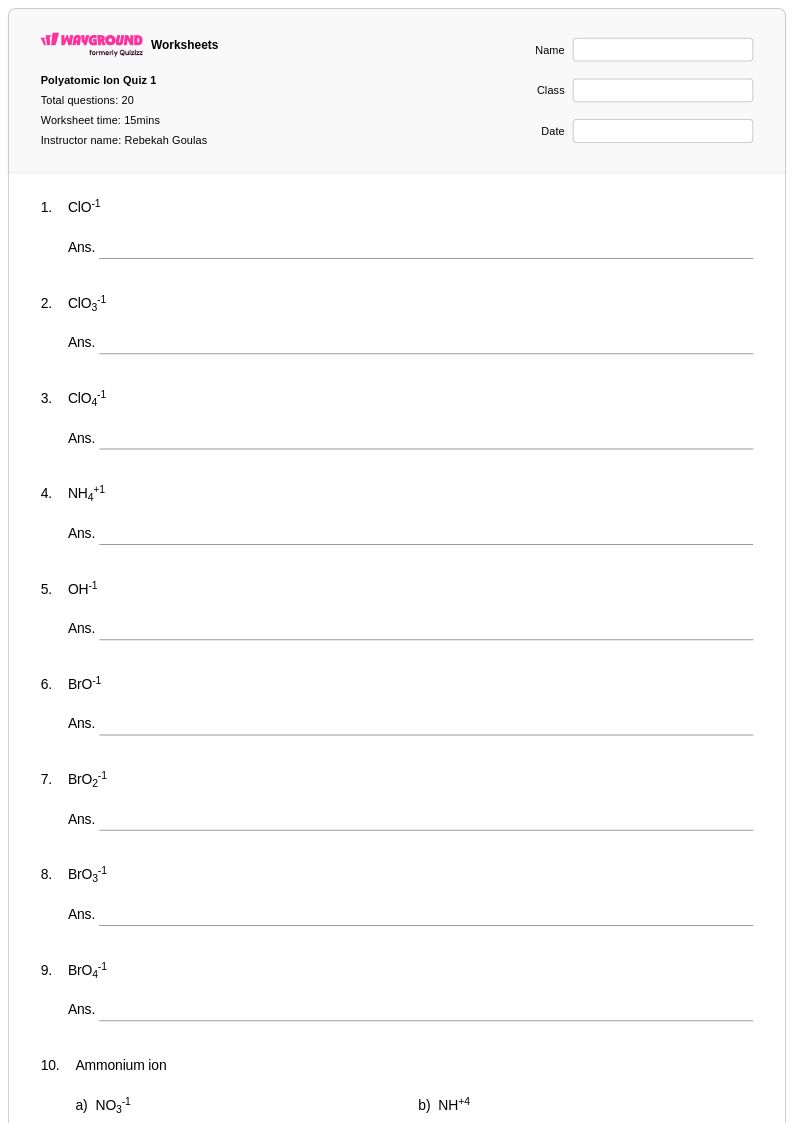
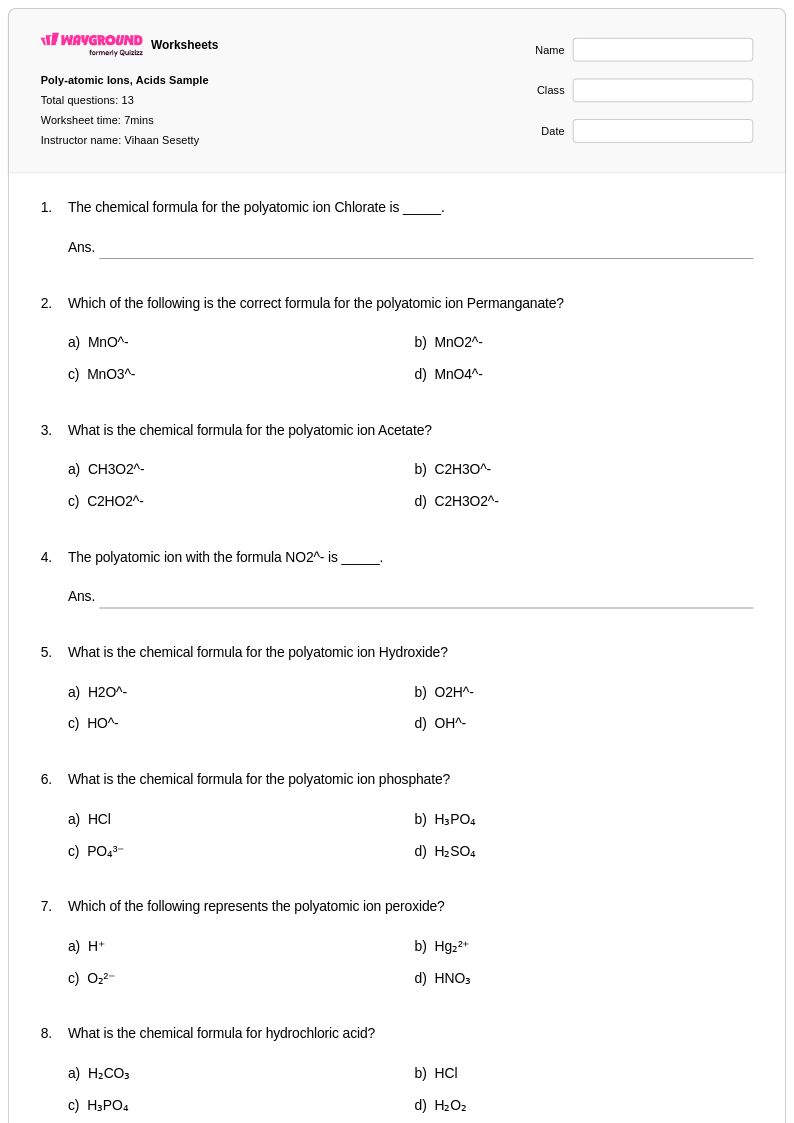
Effective practice exercises include naming ionic compounds from formulas, writing formulas from compound names, and identifying the charge of a polyatomic ion within a given compound. Progressively structured worksheets work well here: begin with recognition tasks for ions like sulfate, nitrate, and phosphate, then advance to formula writing for compounds with multiple polyatomic ions or transition metals. Repeated low-stakes practice with immediate feedback through answer keys reinforces retention without creating test anxiety.
What mistakes do students commonly make when learning polyatomic ions?
One of the most frequent errors is confusing ions with similar names, such as mixing up sulfate (SO₄²⁻) and sulfite (SO₃²⁻), or nitrate (NO₃⁻) and nitrite (NO₂²⁻). Students also commonly forget to use parentheses when more than one polyatomic ion is needed in a formula, writing MgSO4 correctly but writing Mg(NO3)2 as MgNO32. Explicitly addressing these patterns during instruction and using targeted error-correction exercises helps students catch and fix these habits early.
How do I use polyatomic ions worksheets in my chemistry class?
Polyatomic ions worksheets on Wayground are available as printable PDFs for traditional classroom use and in digital formats for technology-integrated environments, including the option to host them as a quiz directly on Wayground. Printable versions work well as bellringers, guided notes companions, or homework assignments, while digital formats allow for self-paced practice with built-in answer checking. Both formats include complete answer keys, supporting independent student review as well as teacher-led correction.
How can I differentiate polyatomic ions instruction for students at different levels?
For struggling students, reduce the initial ion list to the ten most common ions and provide a reference table during early practice before removing the scaffold. For advanced learners, extend practice to include transition metal compounds, hydrates, or multi-step formula writing. On Wayground, teachers can also apply individual accommodations such as reduced answer choices or read-aloud support for students who need additional accessibility adjustments without disrupting the experience for the rest of the class.
How do I help students remember polyatomic ion names and charges?
Mnemonic devices and visual pattern recognition are among the most effective retention strategies. Teaching the 'Nick the Camel' or similar mnemonics for the most common ions gives students a mental anchor, while pointing out charge patterns, such as most oxyanions of nonmetals carrying a 2- charge, reduces the raw memorization load. Regular low-stakes quizzing using a consistent ion list, rather than testing a new set each time, builds long-term retention more effectively than one-time exposure.