
10 T
8th
10 T
8th
15 T
7th - 9th
10 T
8th
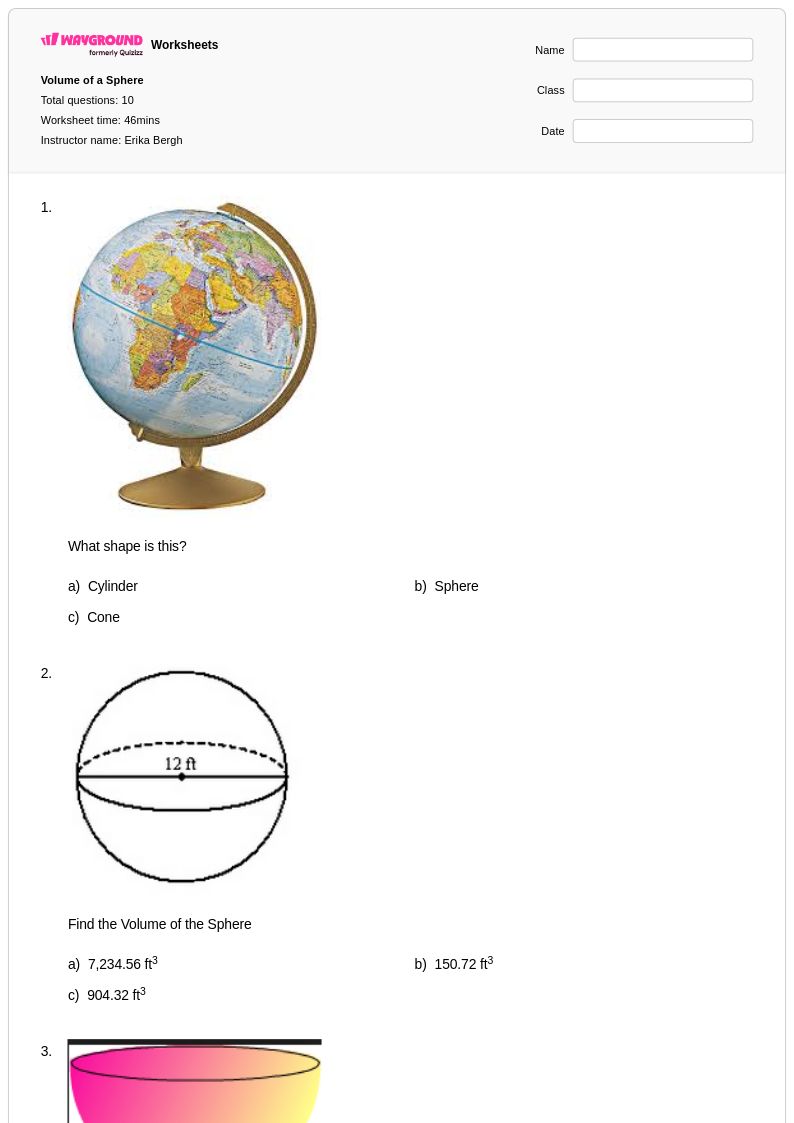
10 T
8th
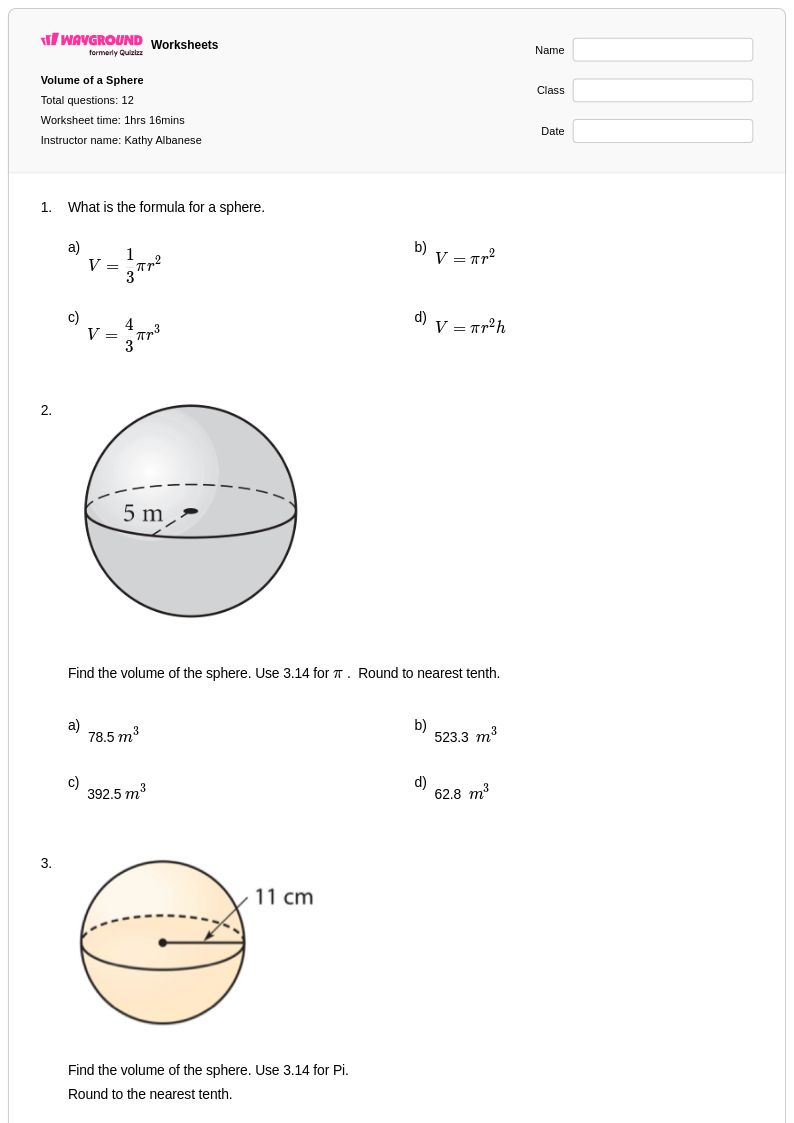
12 T
8th
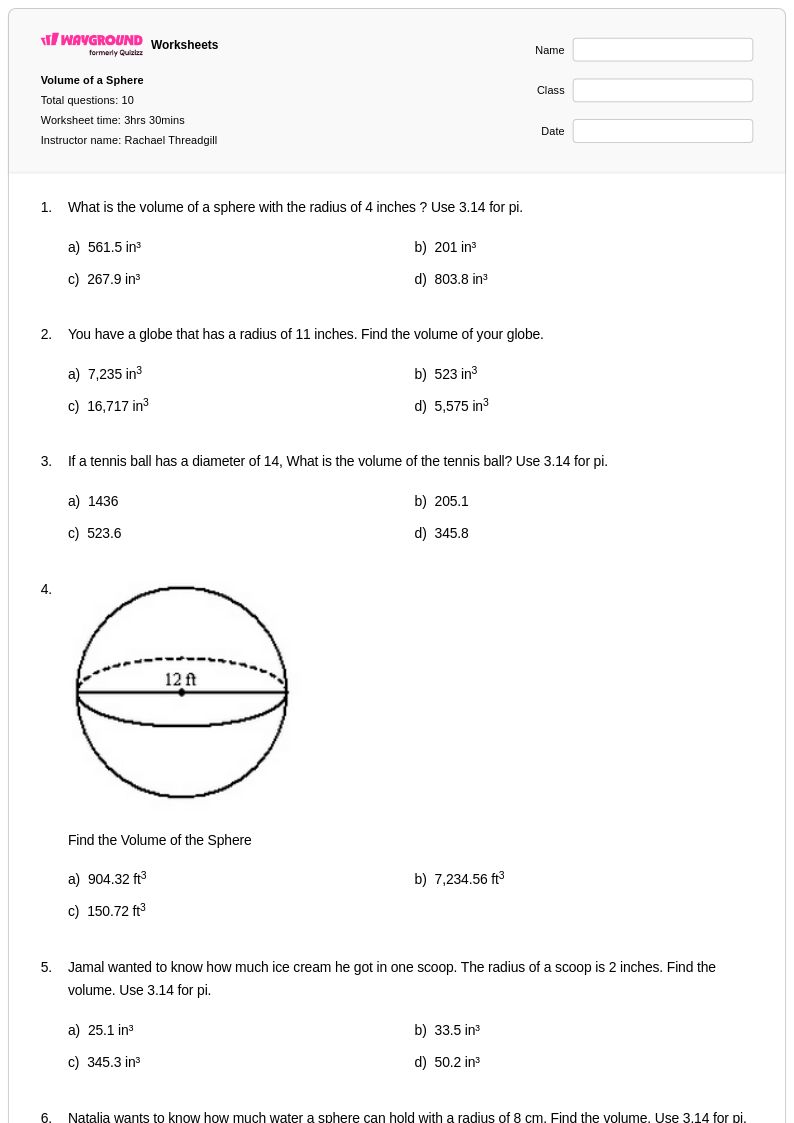
10 T
8th
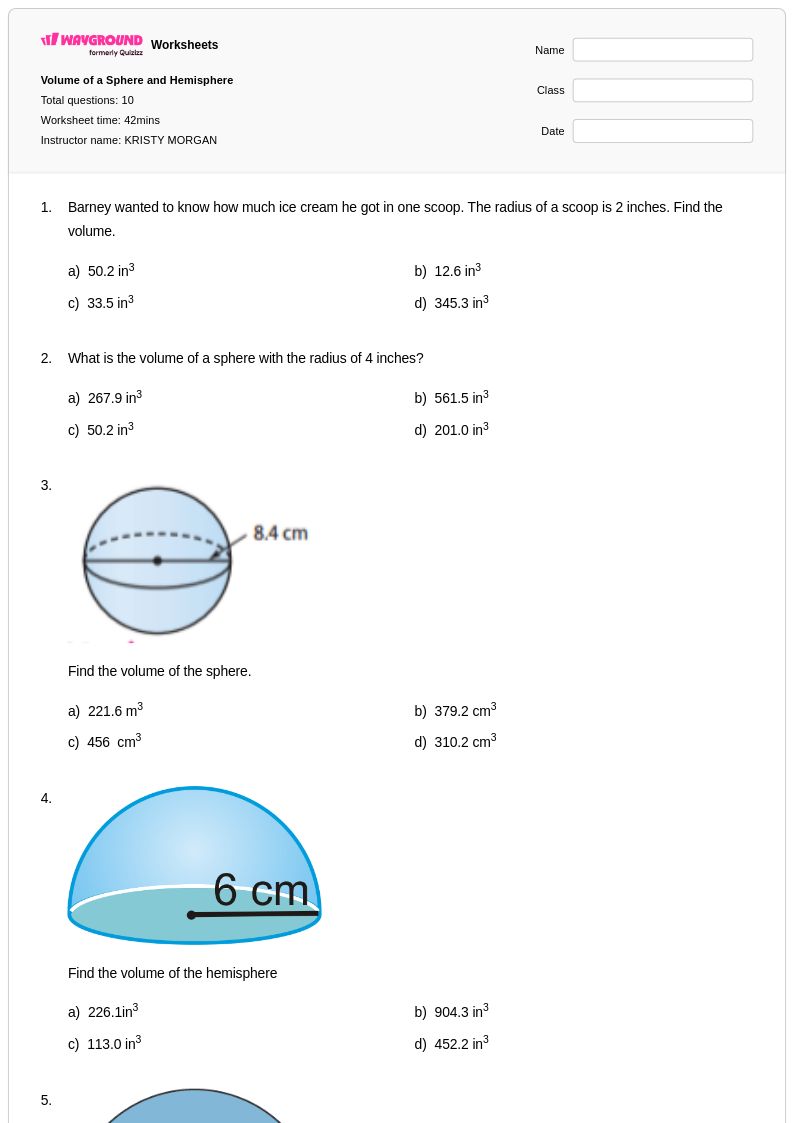
10 T
7th - 10th
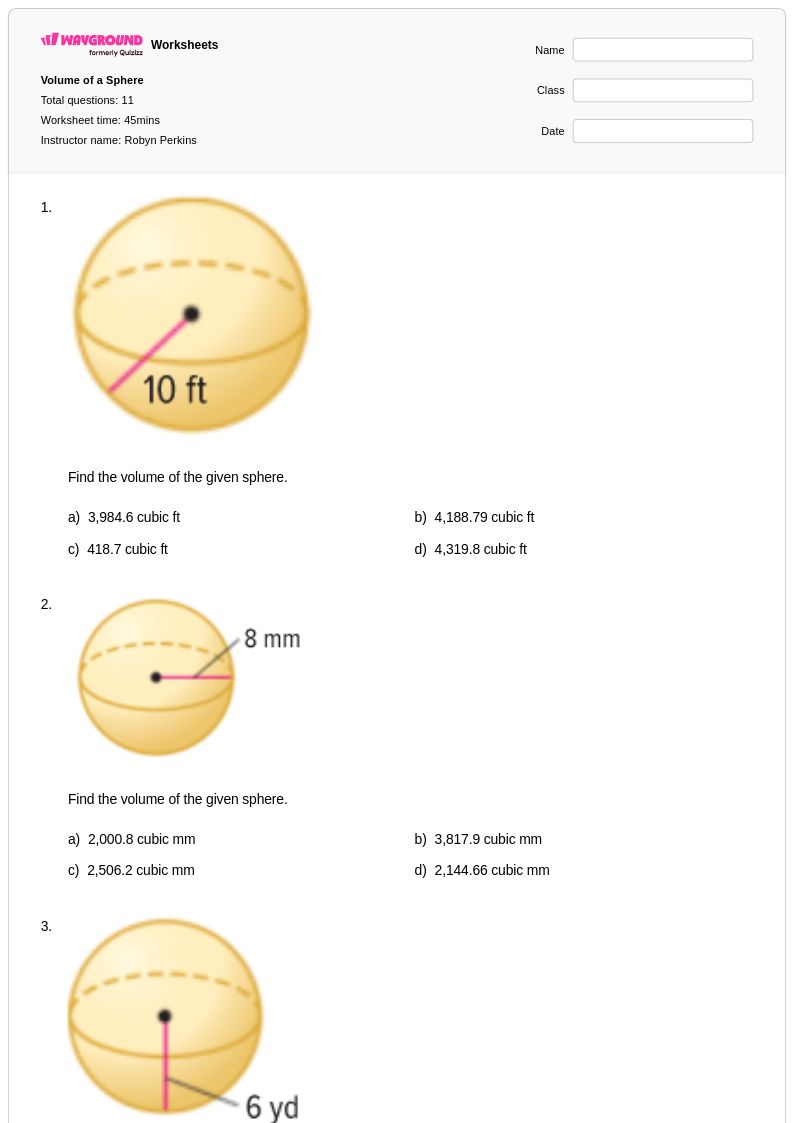
11 T
7th
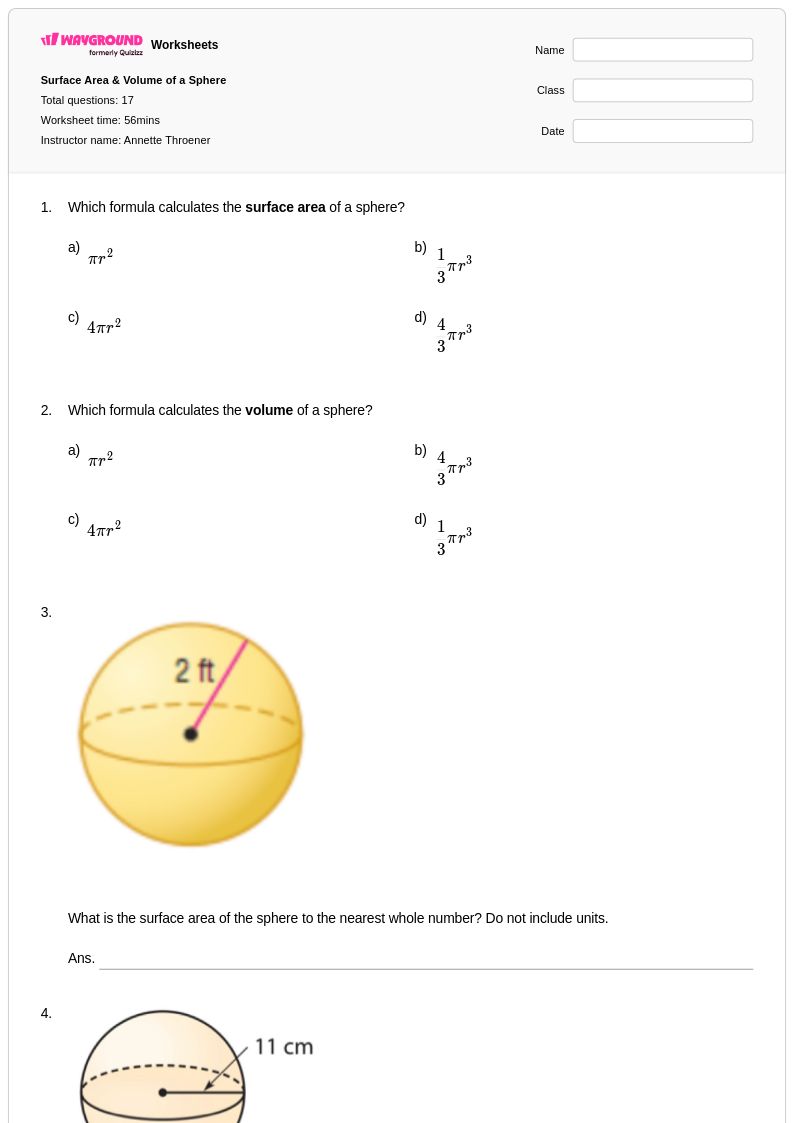
17 T
7th - 10th
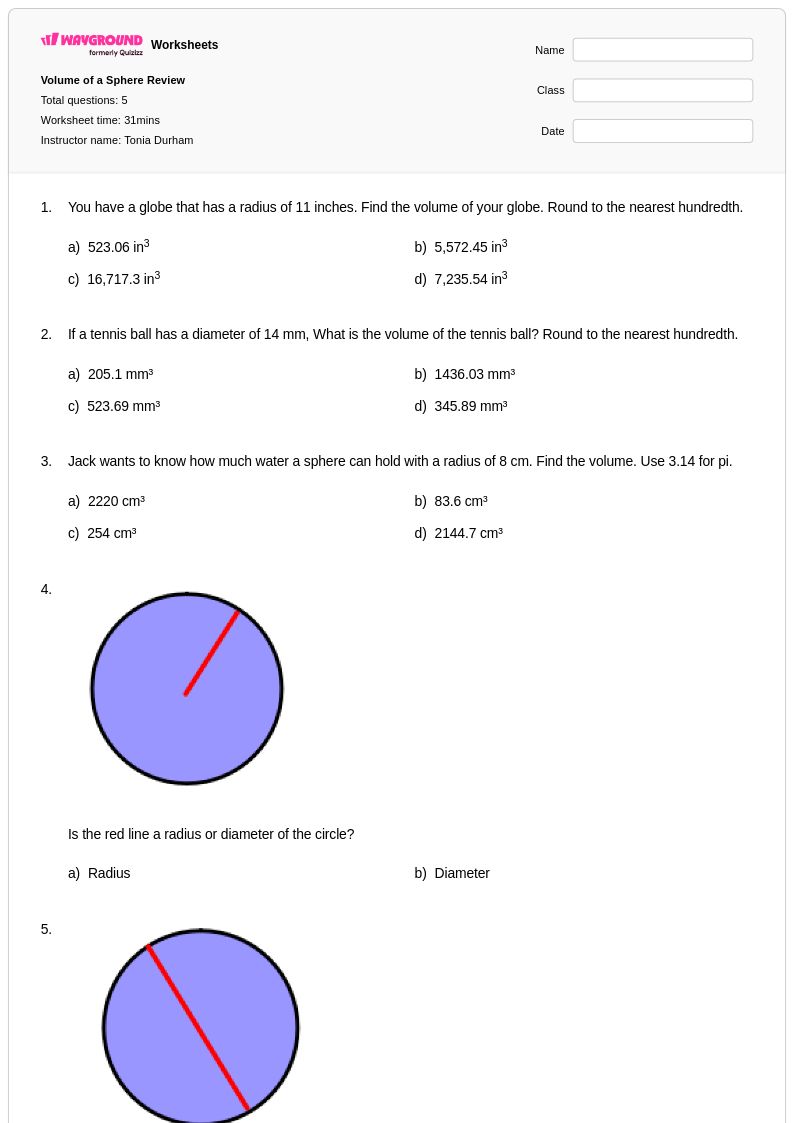
5 T
7th - 8th
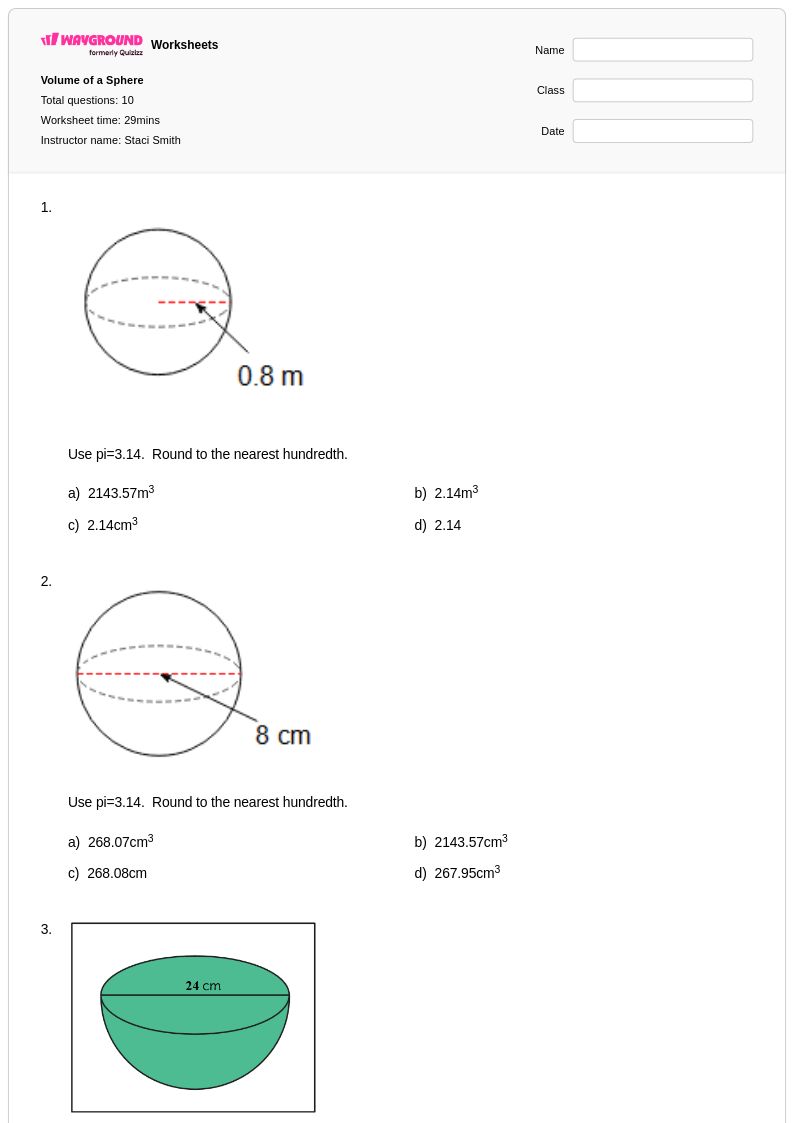
10 T
6th - 9th
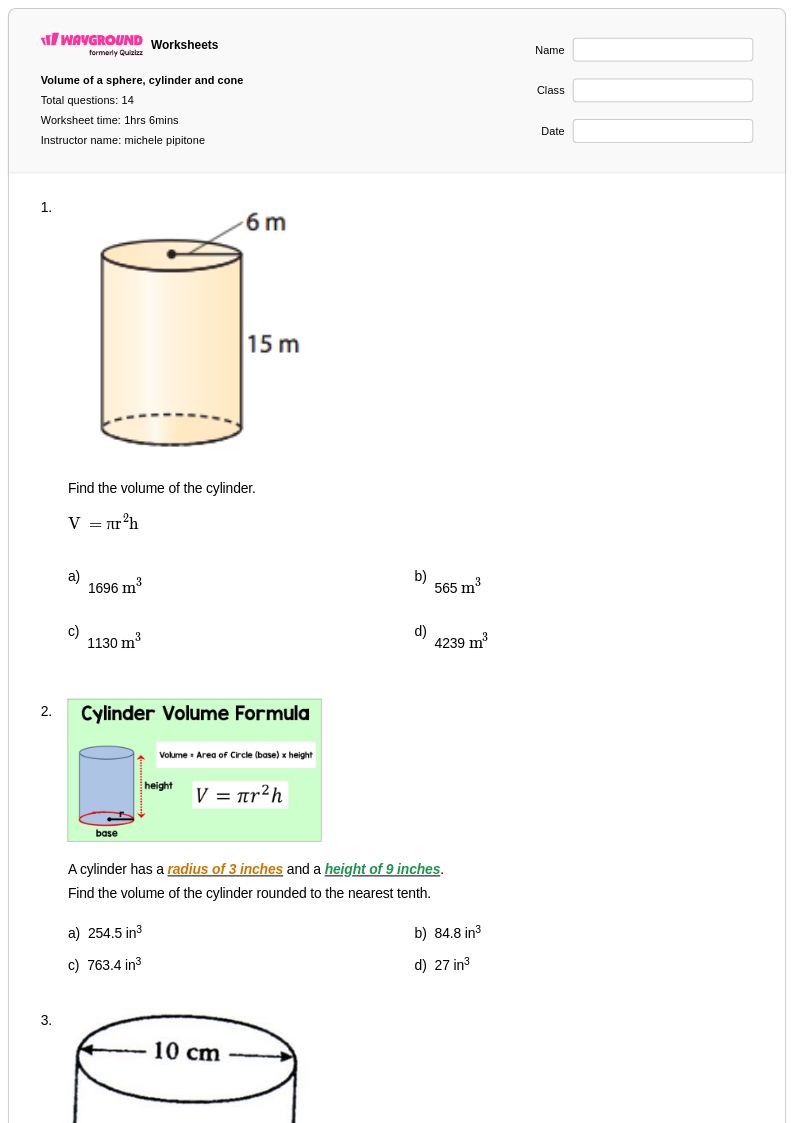
14 T
7th
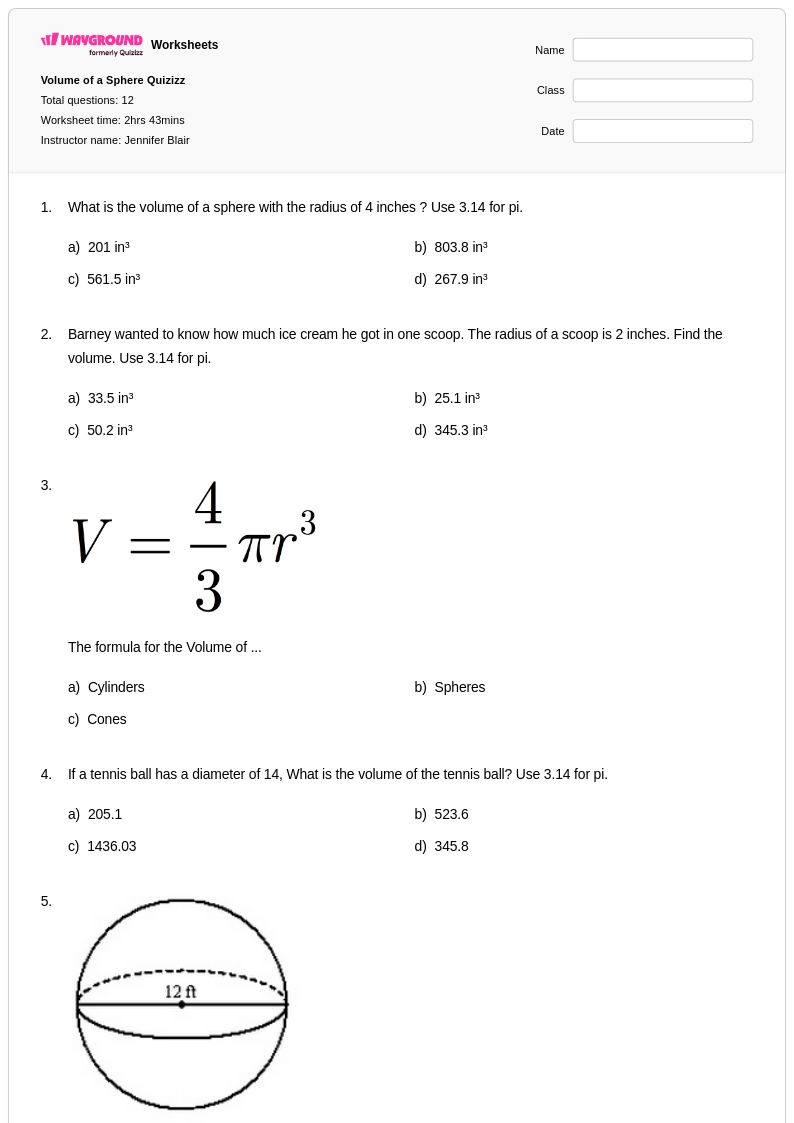
12 T
6th
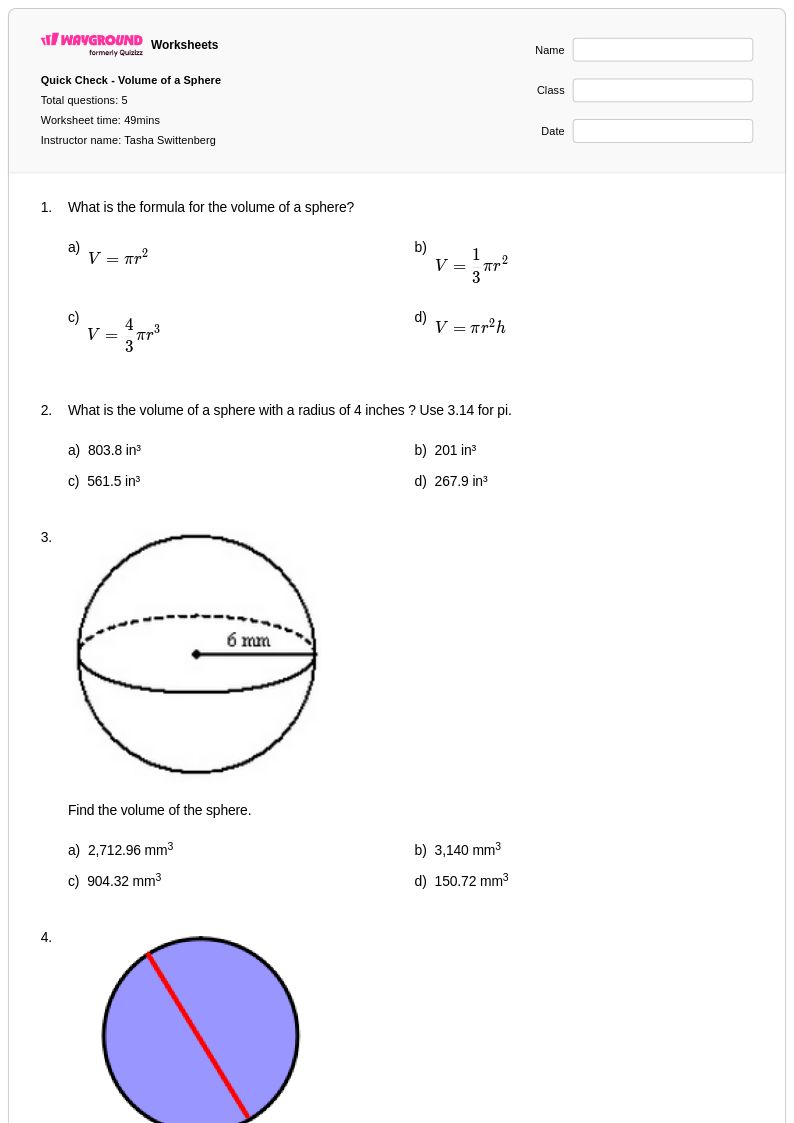
5 T
6th - 8th
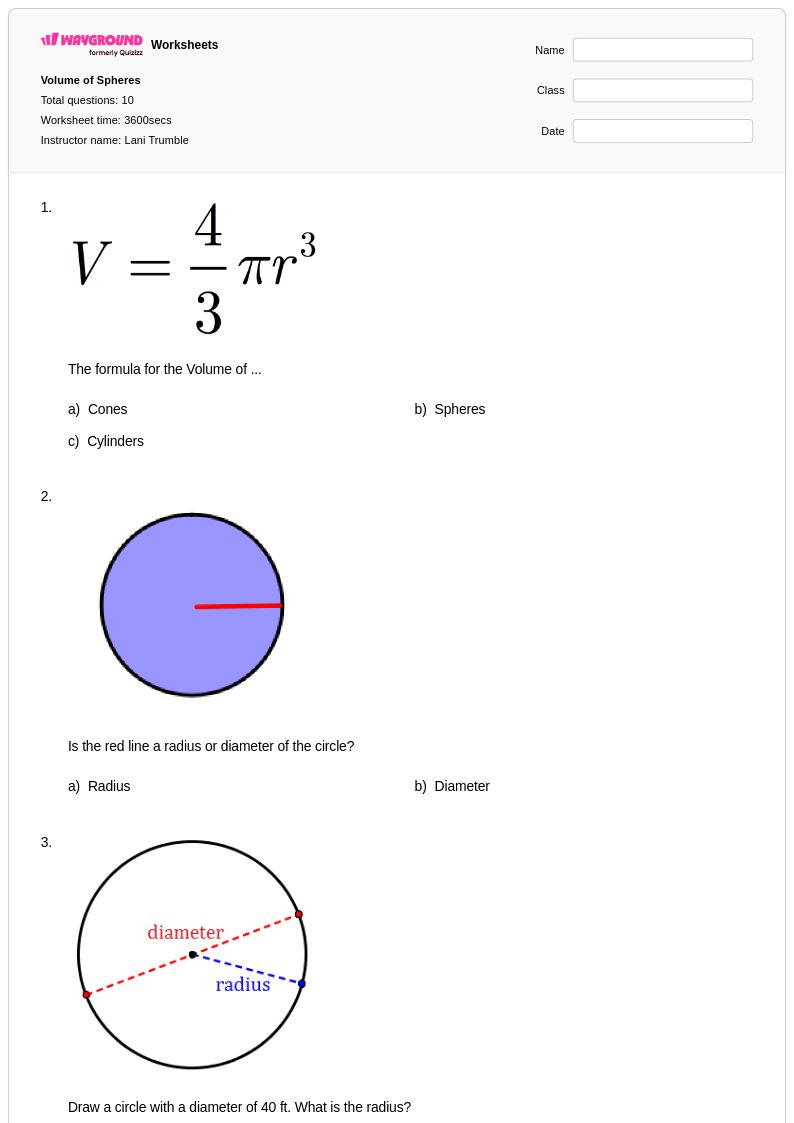
10 T
6th - 8th
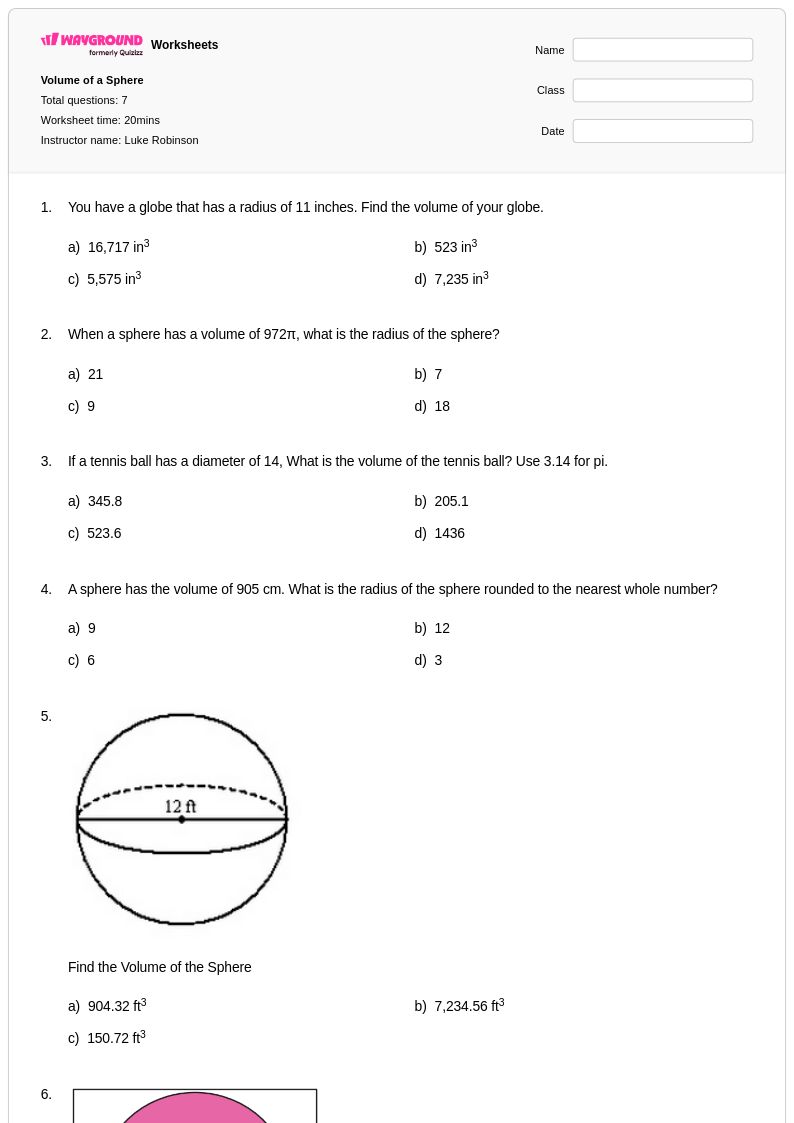
7 T
1st
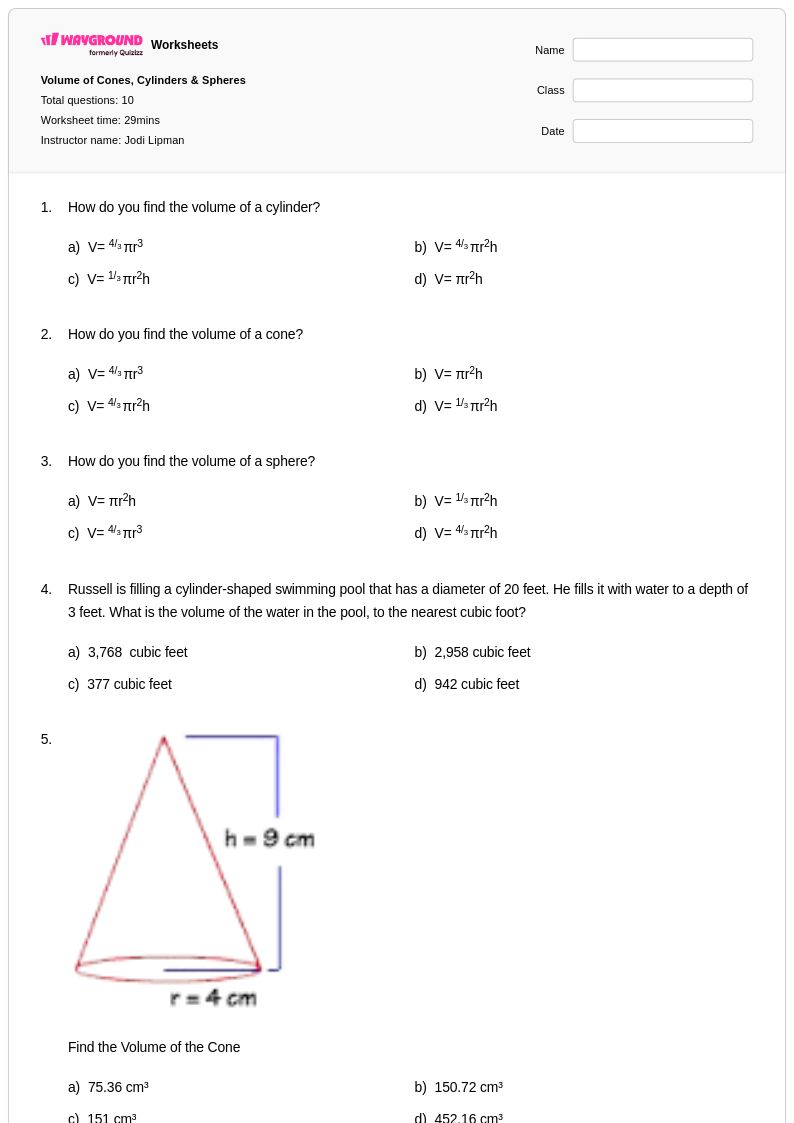
10 T
6th - 8th
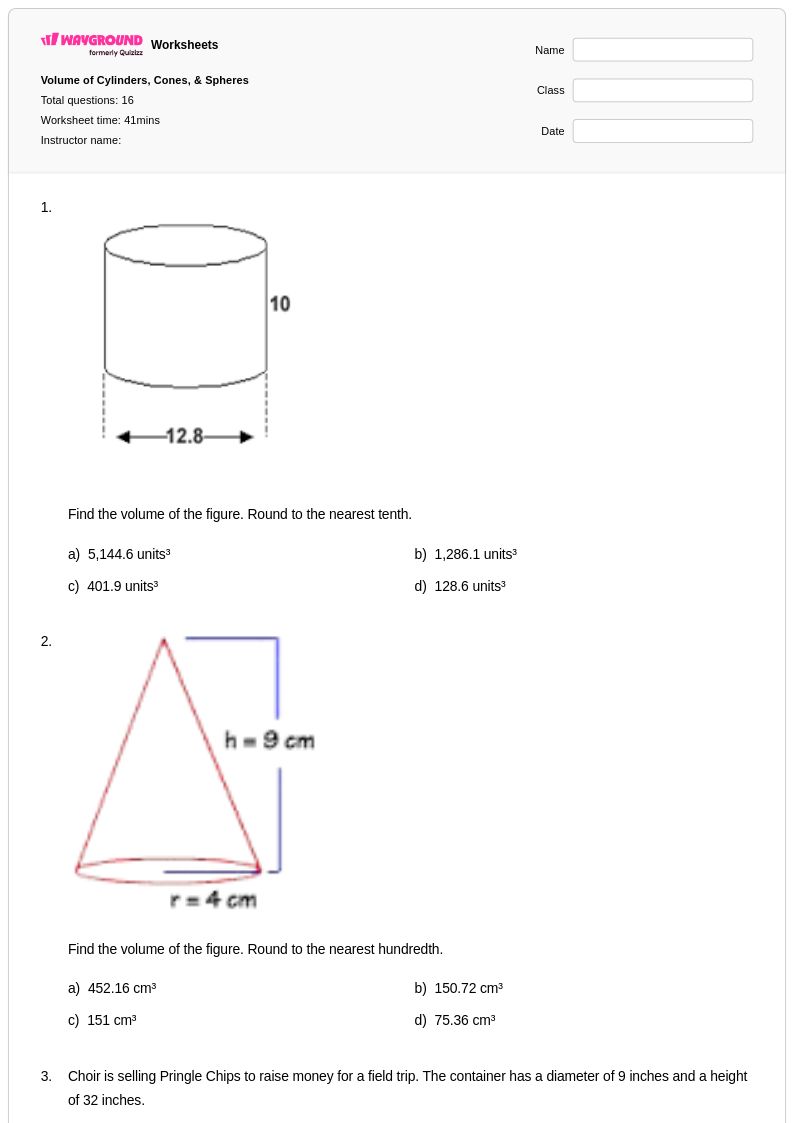
16 T
KG - Uni
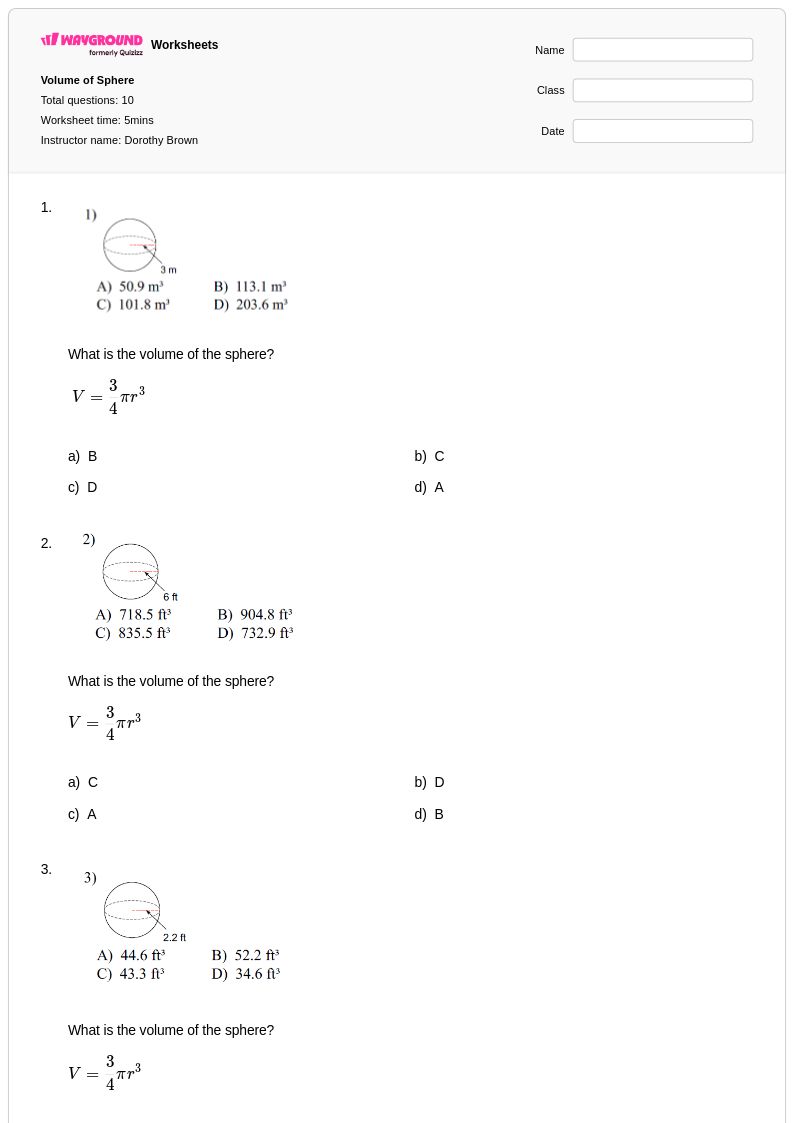
10 T
4th - 8th
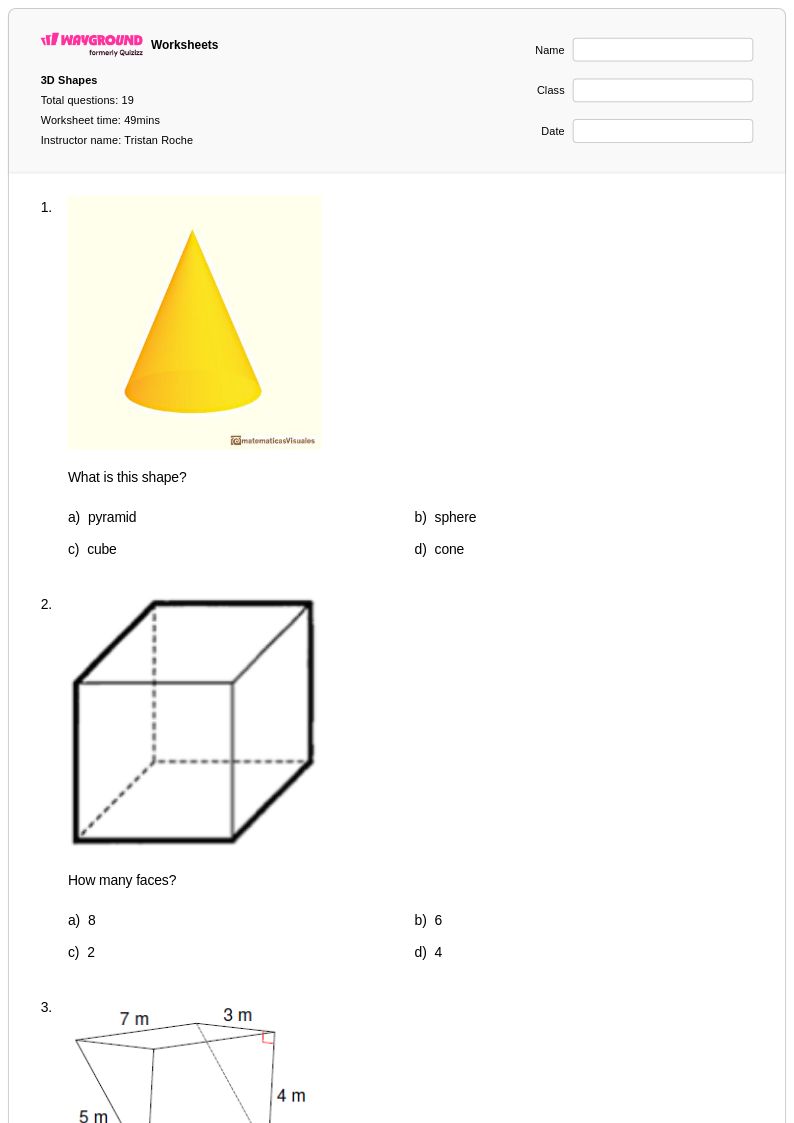
19 T
6th - 8th
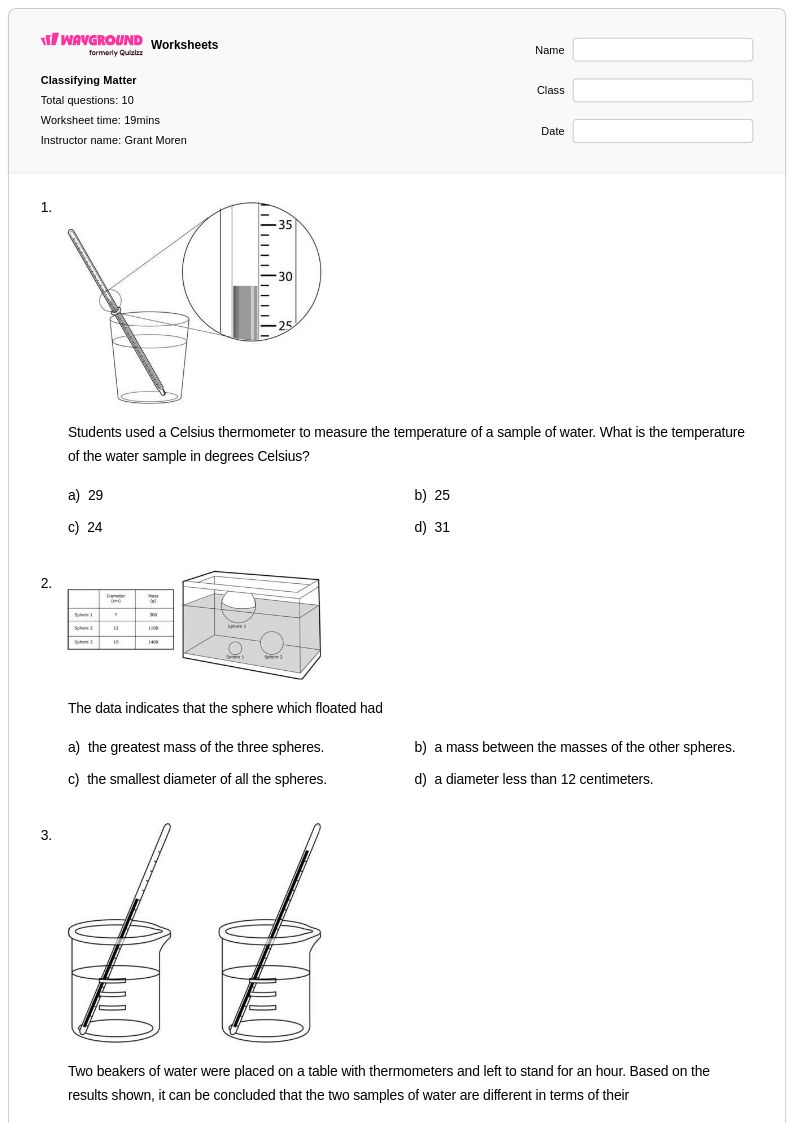
10 T
4th - 5th
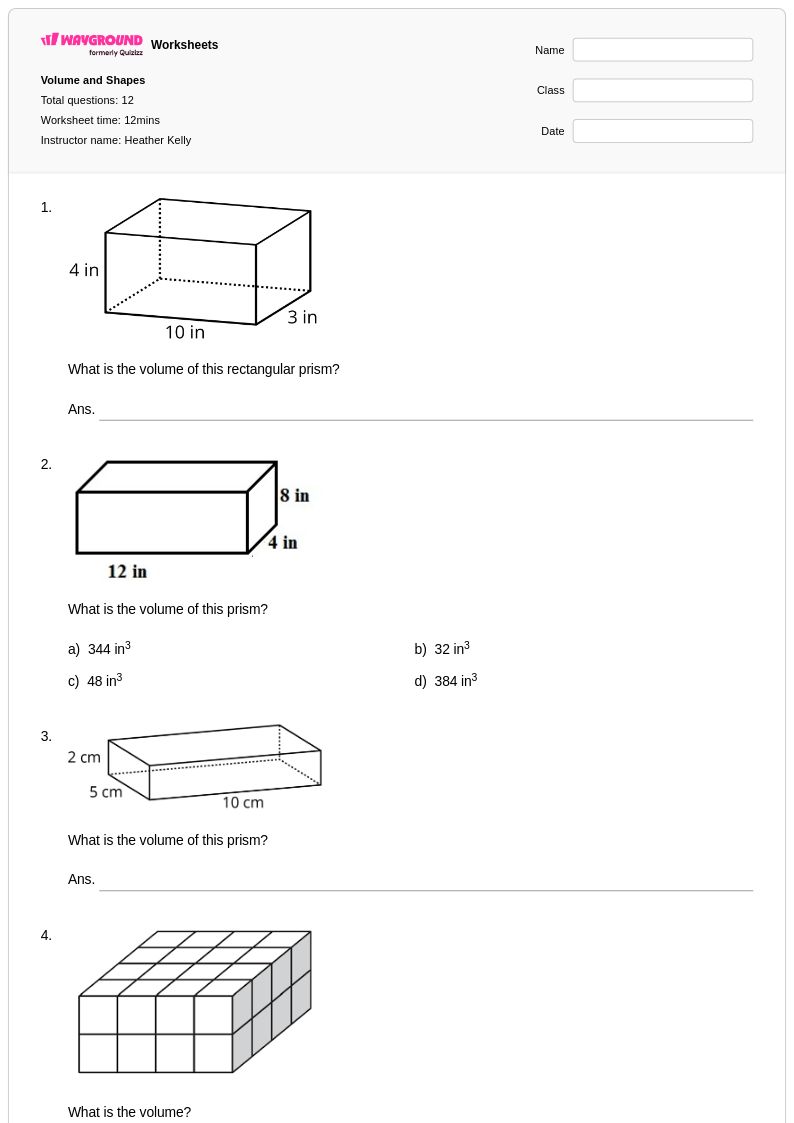
12 T
5th
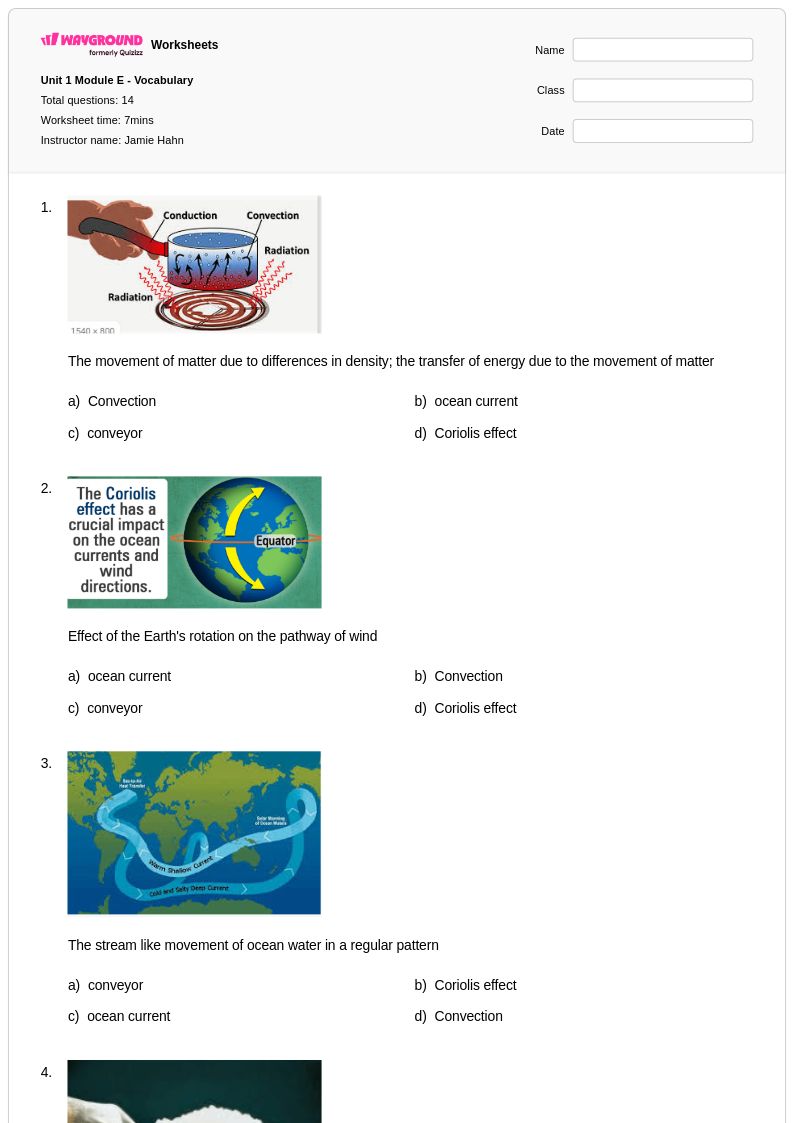
14 T
5th - 9th
Jelajahi Lembar Kerja berdasarkan Subjek
Explore printable Volume of a Sphere worksheets
Volume of a sphere worksheets through Wayground (formerly Quizizz) provide students with comprehensive practice in calculating the volume of three-dimensional spherical objects using the formula V = (4/3)πr³. These carefully designed worksheets strengthen essential mathematical skills including understanding radius measurements, working with the mathematical constant pi, performing multi-step calculations with fractions and exponents, and applying geometric formulas to real-world scenarios. Students develop proficiency in manipulating algebraic expressions while building spatial reasoning abilities through varied practice problems that range from basic formula application to complex word problems involving spherical objects like balls, bubbles, and planetary bodies. Each worksheet includes a complete answer key and is available as a free printable pdf, making it easy for educators to provide immediate feedback and support student learning through structured practice.
Wayground (formerly Quizizz) empowers teachers with access to millions of educator-created volume of a sphere worksheet resources that feature robust search and filtering capabilities to locate materials perfectly suited to their instructional needs. The platform's standards alignment ensures worksheets connect directly to curriculum requirements while differentiation tools allow teachers to customize content complexity for diverse learning levels within their classrooms. These flexible resources are available in both printable and digital formats, including downloadable pdf versions, enabling seamless integration into any teaching environment whether in-person, remote, or hybrid. Teachers can efficiently plan lessons, provide targeted remediation for struggling students, offer enrichment opportunities for advanced learners, and deliver consistent skill practice that builds mathematical confidence and competency in three-dimensional geometric concepts.