Explore Wayground's collection of free worksheets and printables focused on 1763 territorial boundaries, helping students understand post-French and Indian War geography through engaging practice problems with comprehensive answer keys.
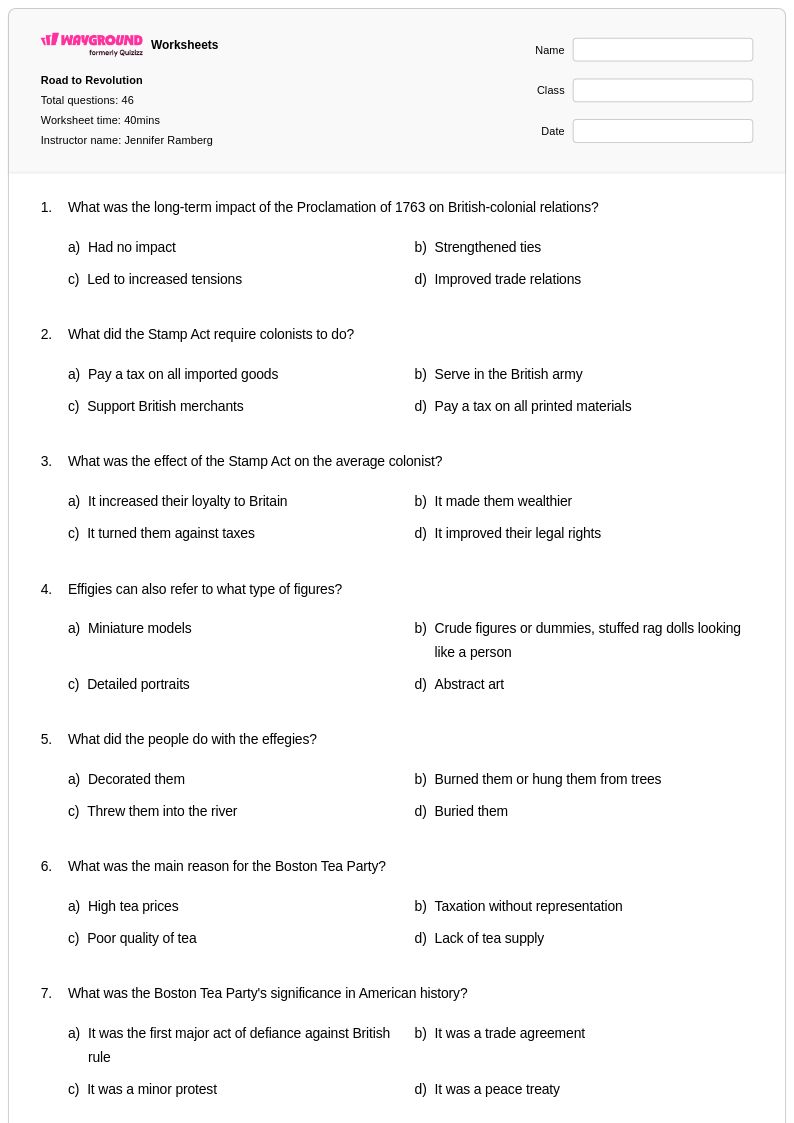
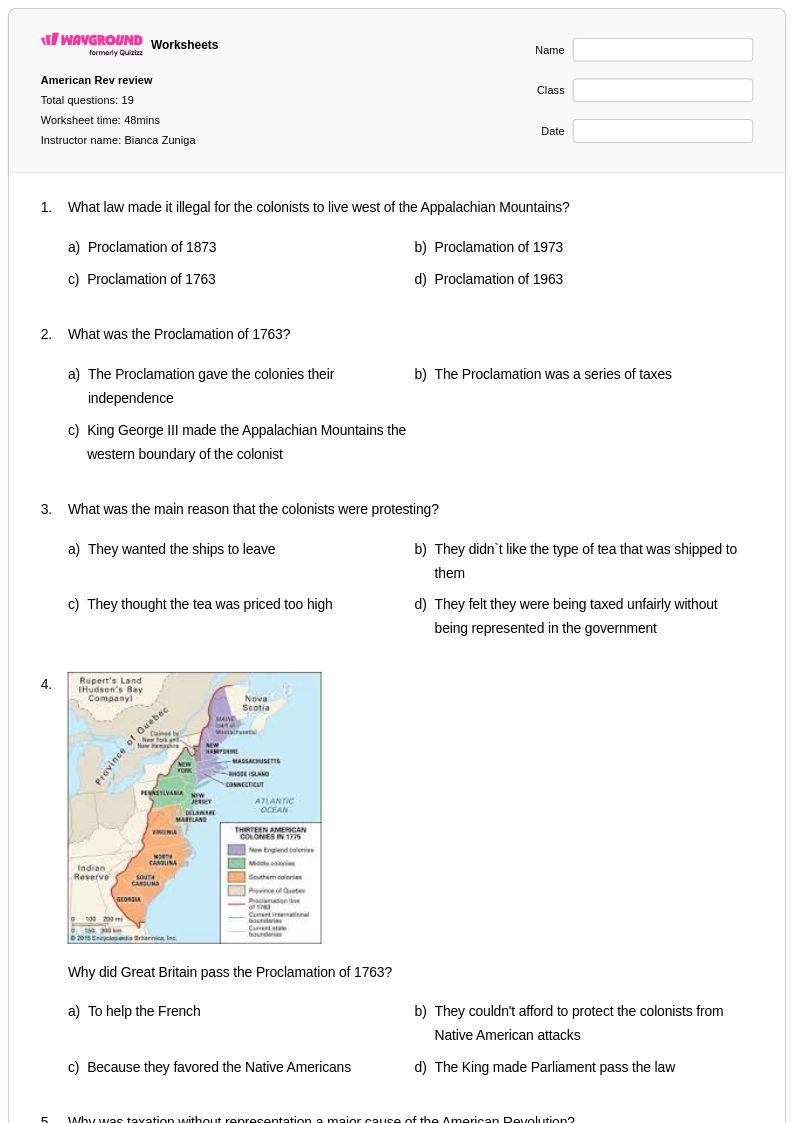
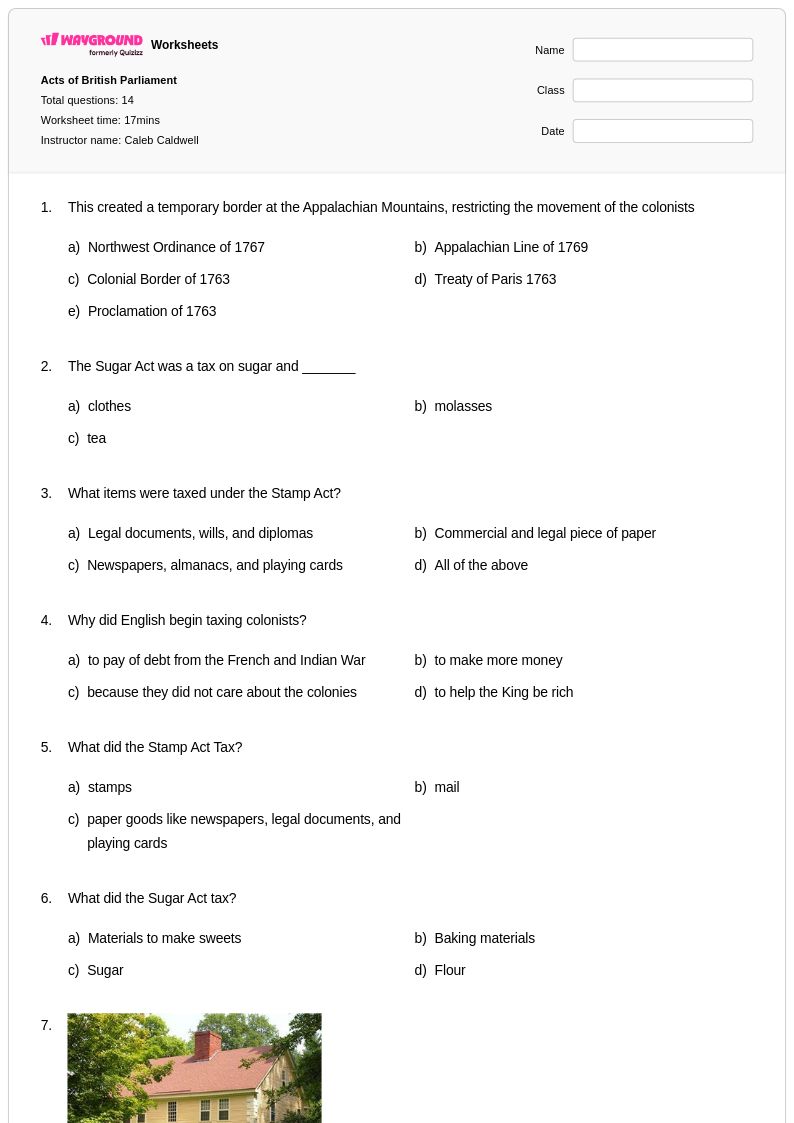
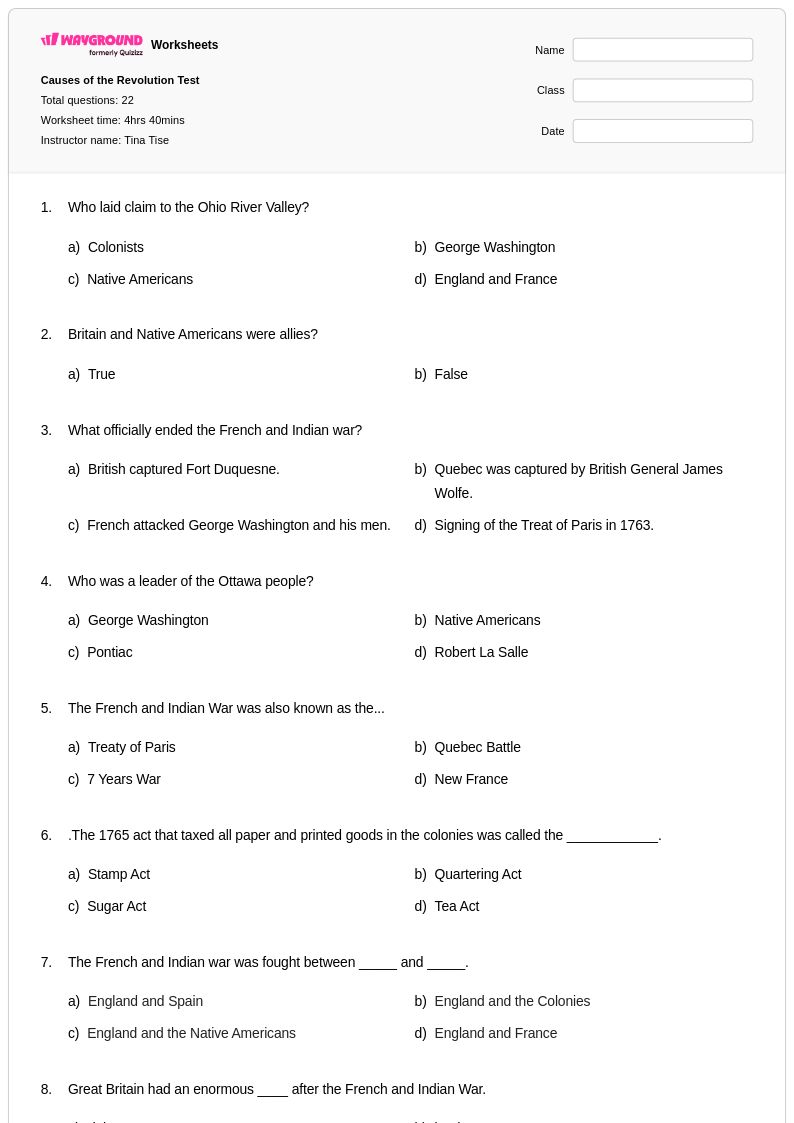
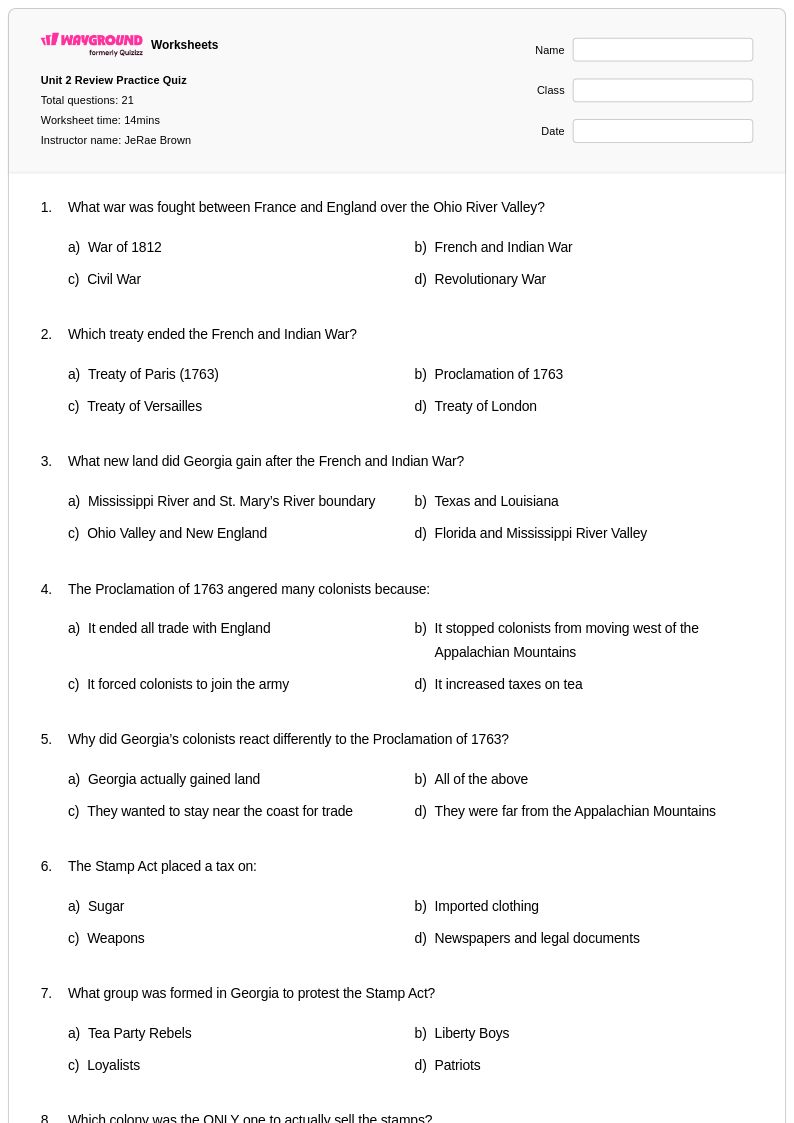
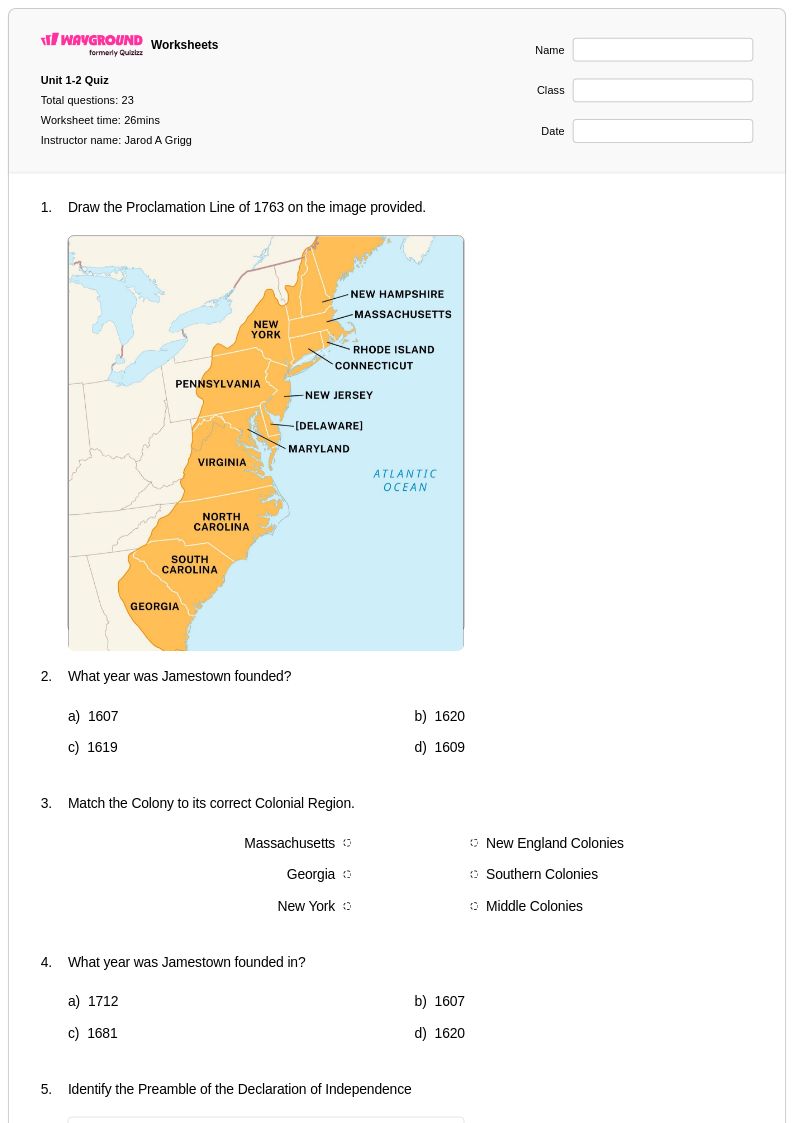
1763 Territorial Boundaries worksheets available through Wayground (formerly Quizizz) provide comprehensive educational resources that help students understand the complex geopolitical changes that occurred following the French and Indian War. These carefully designed materials focus on the territorial redistributions outlined in the Treaty of Paris, including Britain's acquisition of French territories east of the Mississippi River, Spain's control of Louisiana Territory, and the establishment of the Proclamation Line of 1763. Students engage with detailed maps, primary source excerpts, and analytical questions that strengthen critical thinking skills while building foundational knowledge about colonial expansion and Native American relations. Each worksheet collection includes answer keys for efficient grading, and materials are available as free printables in convenient PDF format, making them accessible for both classroom instruction and independent practice problems that reinforce understanding of this pivotal moment in American territorial development.
Wayground (formerly Quizizz) supports educators with an extensive collection of millions of teacher-created resources specifically designed for 1763 Territorial Boundaries instruction, featuring robust search and filtering capabilities that allow teachers to quickly locate materials aligned with state and national social studies standards. The platform's differentiation tools enable instructors to customize worksheets for diverse learning needs, whether providing remediation for students struggling with map interpretation skills or offering enrichment activities for advanced learners ready to explore the long-term consequences of territorial changes. Teachers benefit from flexible formatting options, including both printable and digital versions in PDF format, which streamline lesson planning and accommodate various classroom technologies. These comprehensive resources support effective skill practice through scaffolded activities that guide students from basic territorial identification to sophisticated analysis of how the 1763 boundary changes influenced subsequent colonial tensions and westward expansion patterns.
FAQs
How do I teach the 1763 territorial boundaries to my history students?
Start by grounding students in the outcome of the French and Indian War before introducing the Treaty of Paris (1763) and its redistribution of North American territories. Use annotated maps to show Britain's acquisition of French lands east of the Mississippi, Spain's control of Louisiana Territory, and the Proclamation Line of 1763. Connecting these boundary changes to colonial tensions — particularly settler frustration with the Proclamation Line — helps students see geography as a driver of political conflict rather than a static fact to memorize.
What exercises help students practice interpreting the 1763 territorial changes?
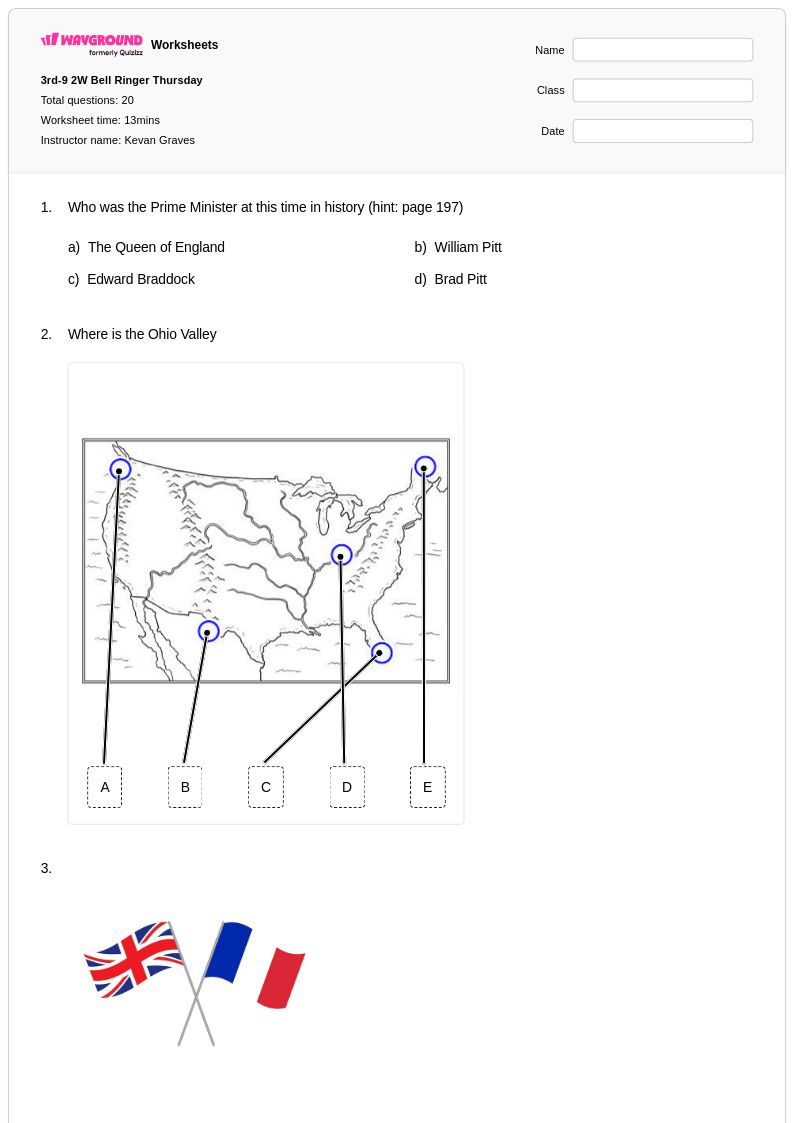
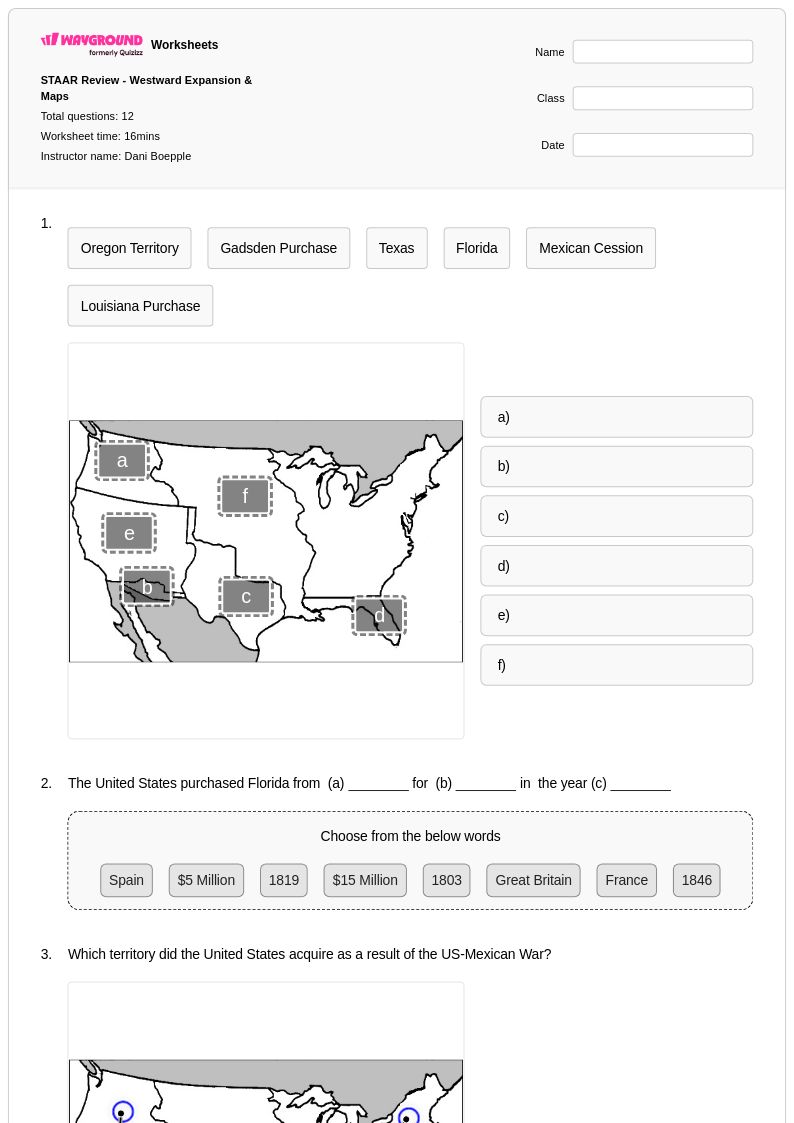
Map-labeling activities are especially effective for building fluency with the 1763 boundaries, requiring students to identify and distinguish British, Spanish, and French-ceded territories. Pairing map work with primary source excerpts from the Treaty of Paris or the Proclamation of 1763 pushes students to connect visual geography with documentary evidence. Analytical questions that ask students to evaluate why specific boundary decisions were made add a layer of critical thinking beyond simple identification.
What mistakes do students commonly make when learning about the 1763 territorial boundaries?
A frequent misconception is conflating the Treaty of Paris (1763) with the Treaty of Paris (1783), which ended the American Revolution — students often confuse which war each treaty resolved and which boundaries each established. Students also tend to overlook Spain's role entirely, focusing only on British gains and missing that France ceded Louisiana Territory to Spain rather than Britain. Another common error is treating the Proclamation Line as a permanent border rather than a temporary measure that immediately generated colonial resistance.
How does the 1763 Proclamation Line connect to later events like the American Revolution?
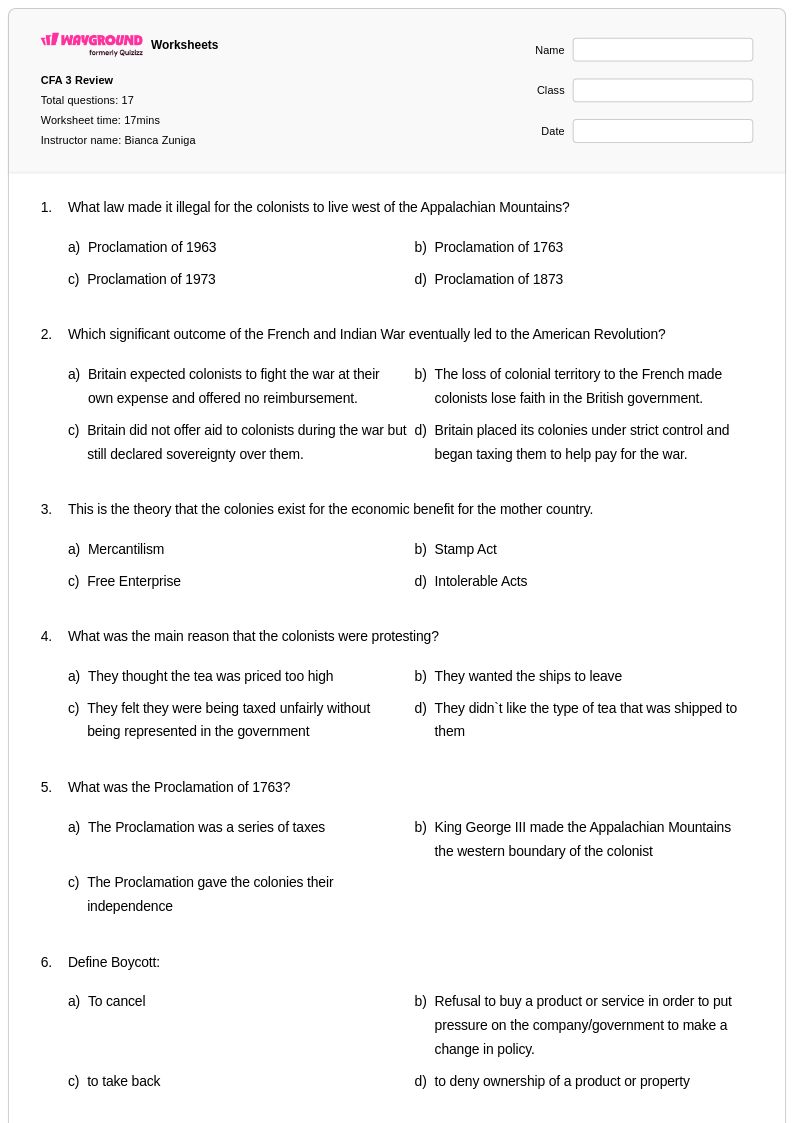
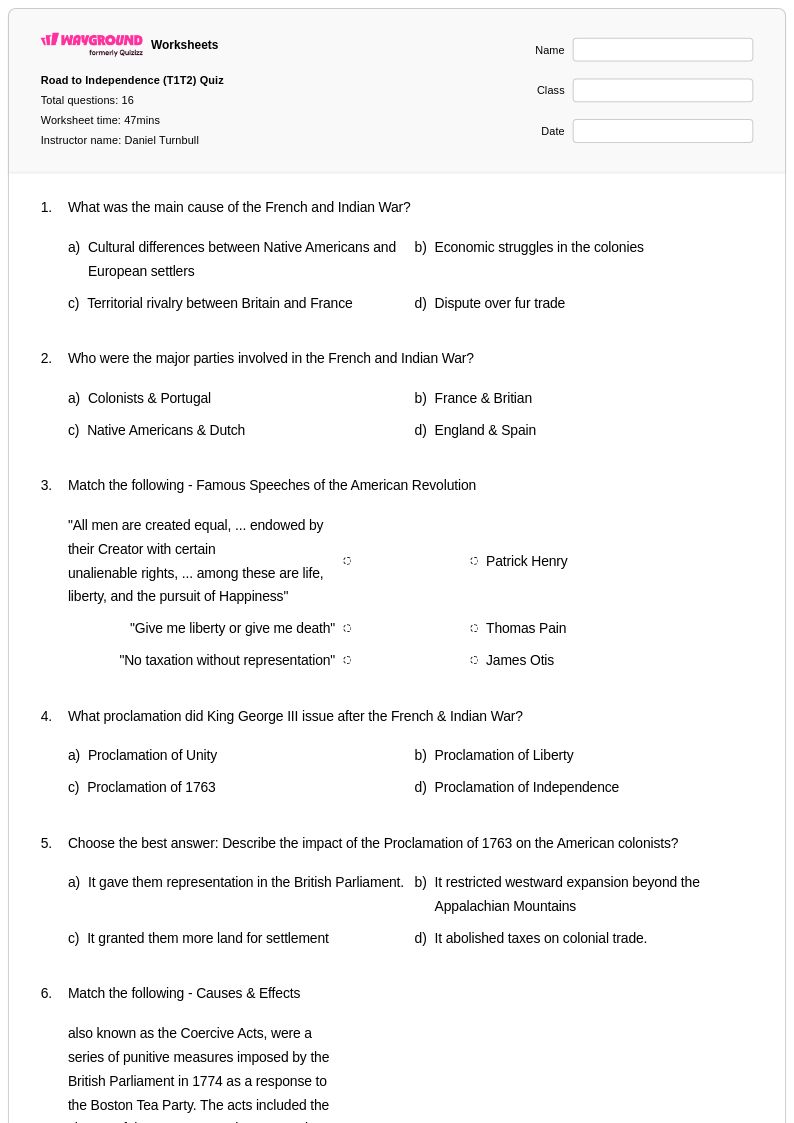
The Proclamation Line of 1763 prohibited British colonists from settling west of the Appalachian Mountains, which generated significant resentment among land-hungry settlers and speculators who had expected territorial rewards after the war. This restriction became one of several grievances colonists cited against British authority in the years leading up to the Revolution. Teaching this connection helps students understand that the Revolution was not a sudden rupture but the result of accumulated tensions, with the 1763 boundaries serving as an early flashpoint.
How can I use 1763 Territorial Boundaries worksheets in my classroom?
These worksheets are available as printable PDFs for traditional classroom use and in digital formats for technology-integrated environments, including the option to host them as a quiz on Wayground. Printable versions work well for structured map activities or document analysis during direct instruction, while digital formats support independent practice, homework assignments, or flipped classroom models. For students who need additional support with map interpretation, Wayground's Read Aloud and reduced answer choices accommodations can be applied individually without disrupting the rest of the class.
How do I differentiate 1763 territorial boundary instruction for different skill levels?
For students still building foundational map skills, begin with simplified territorial outlines and focus on identifying only the major boundary shifts before introducing nuanced analysis. Advanced learners benefit from tasks that ask them to evaluate the long-term consequences of the 1763 boundaries on westward expansion, Native American displacement, and colonial political identity. On Wayground, teachers can assign extended time or reduced answer choices to individual students, allowing differentiation to happen quietly in the background while all students work from the same core materials.