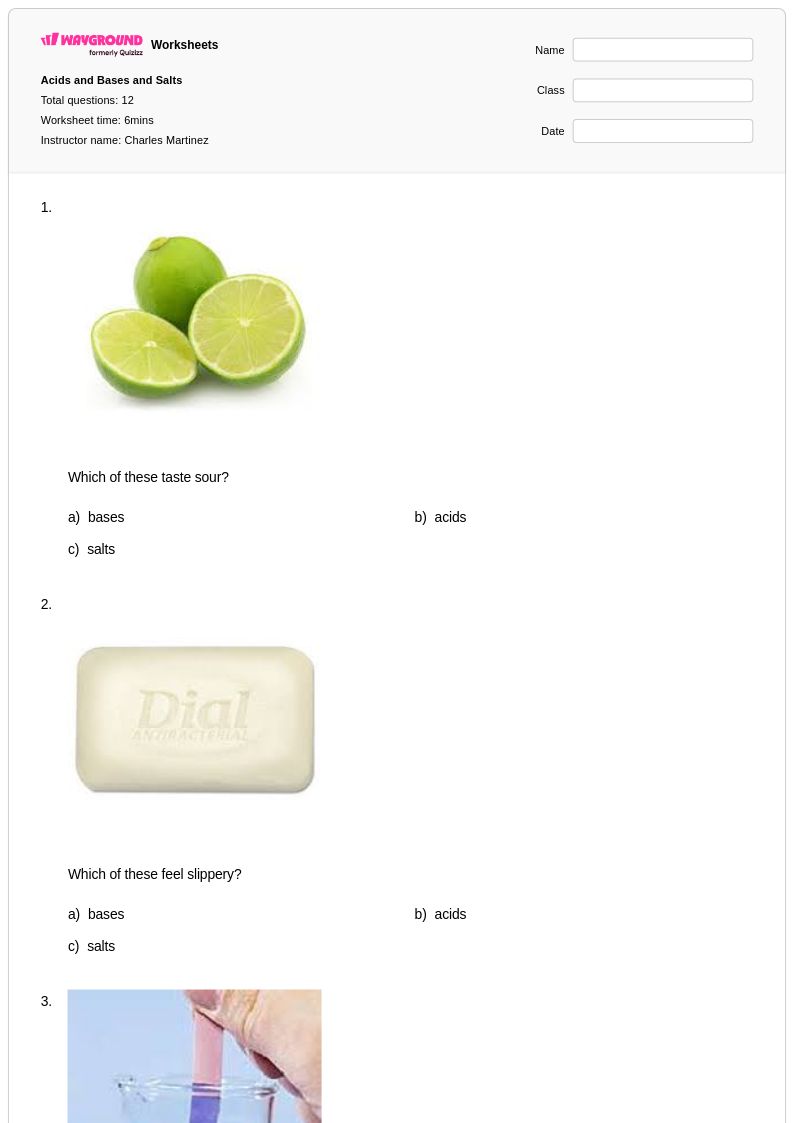
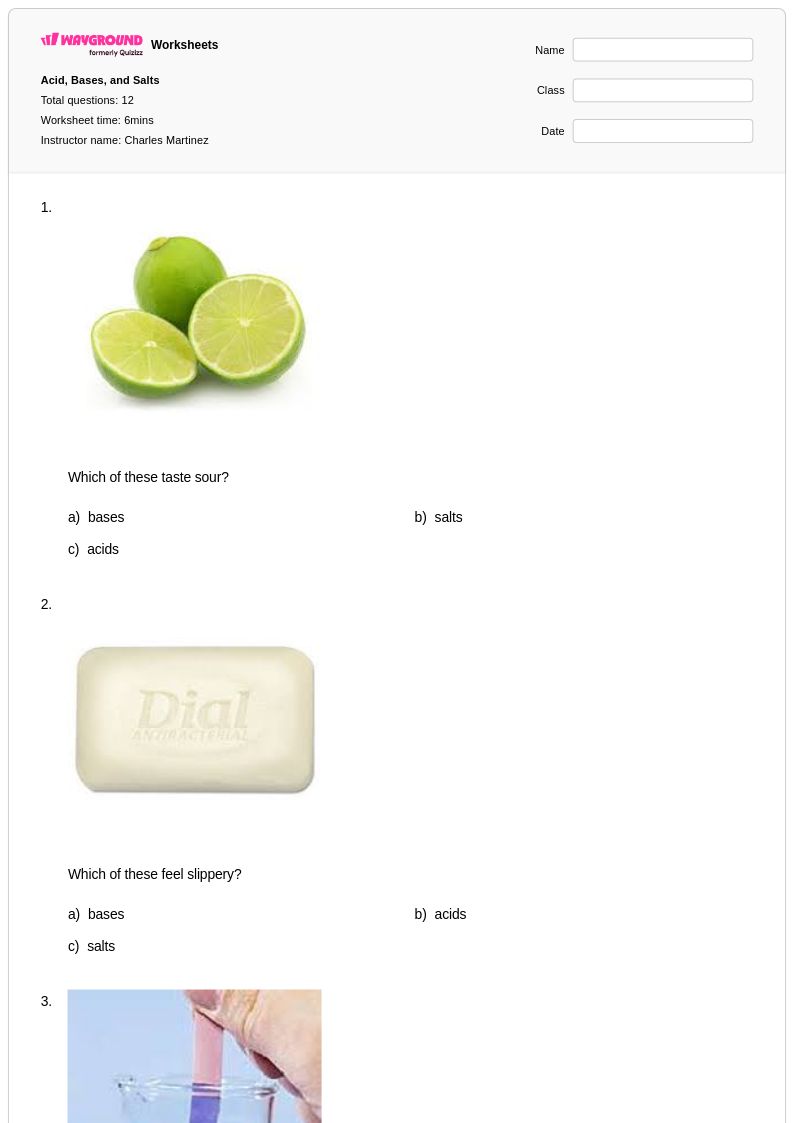
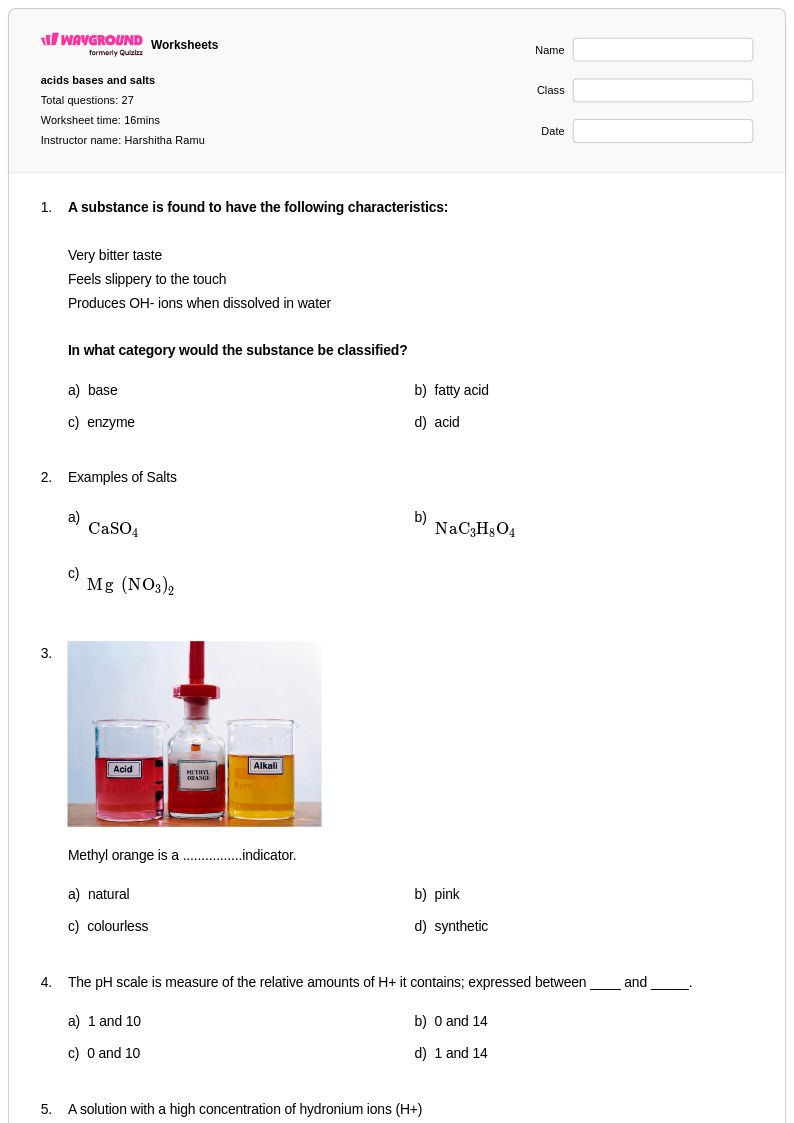
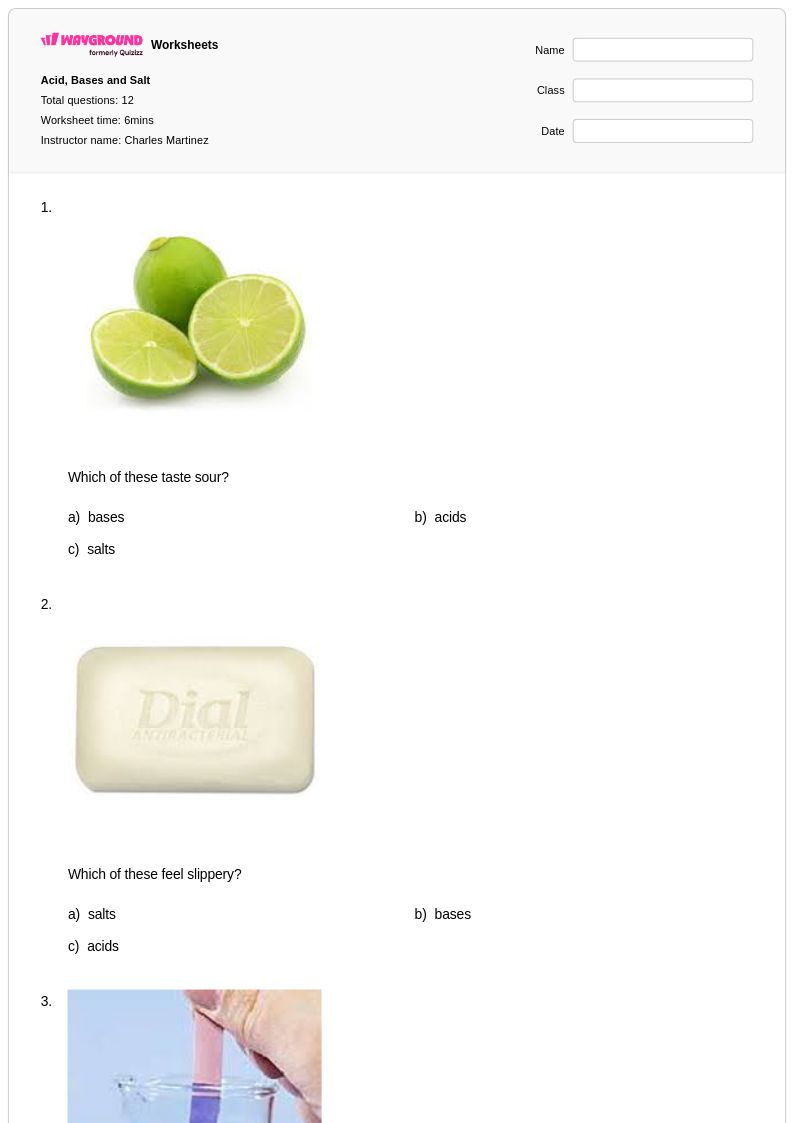
Free Printable Acids, Bases, and Salts Worksheets for Class 6
Discover free Class 6 acids, bases, and salts worksheets and printables from Wayground that help students master chemical properties, pH levels, and reactions through engaging practice problems with complete answer keys.
Explore printable Acids, Bases, and Salts worksheets for Class 6
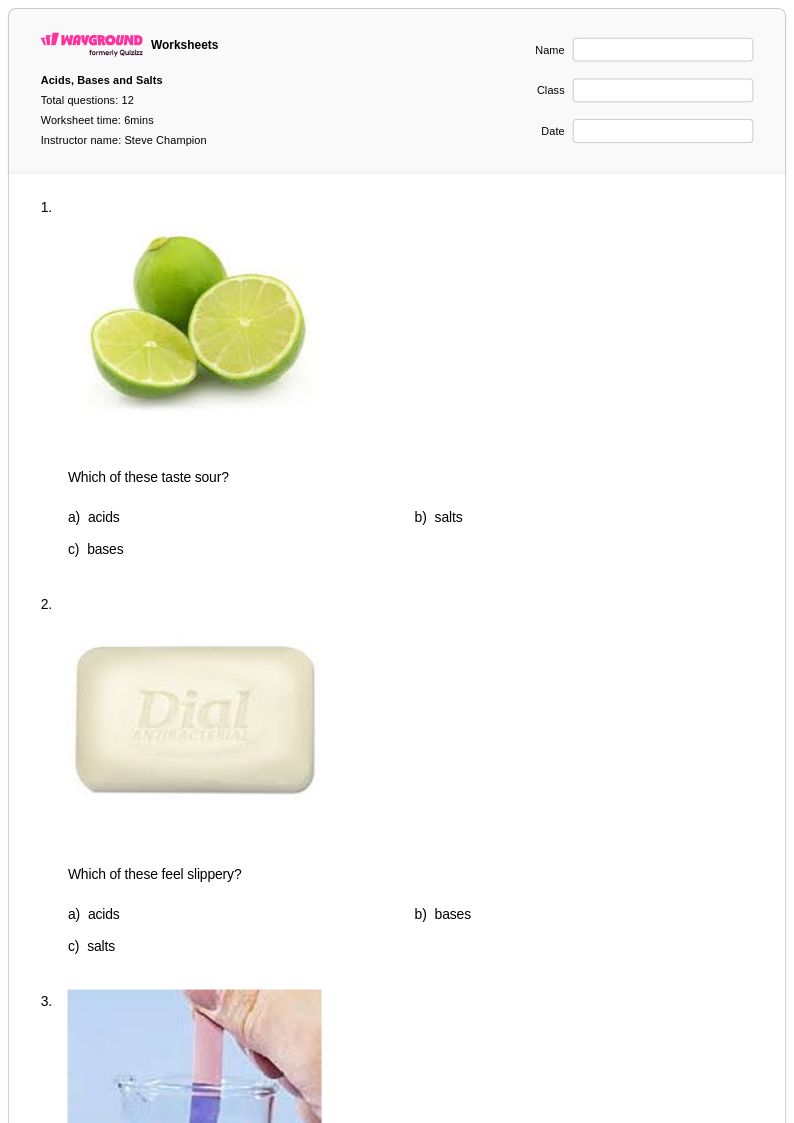
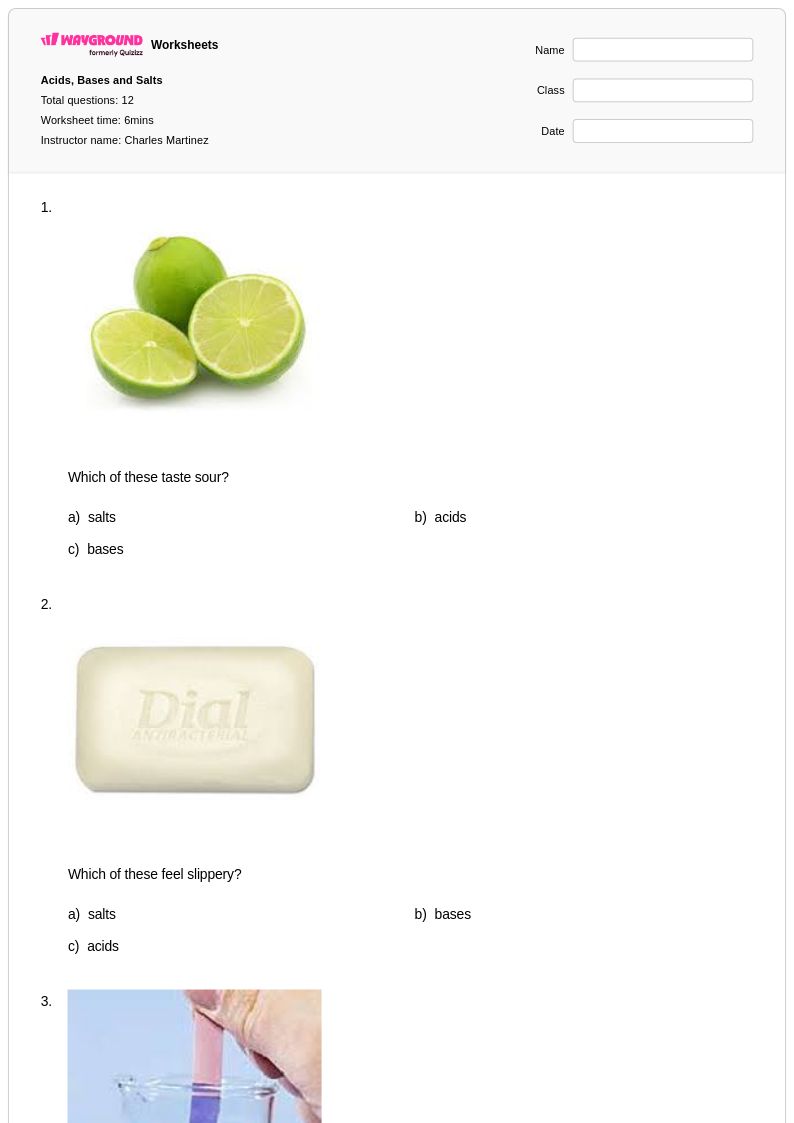
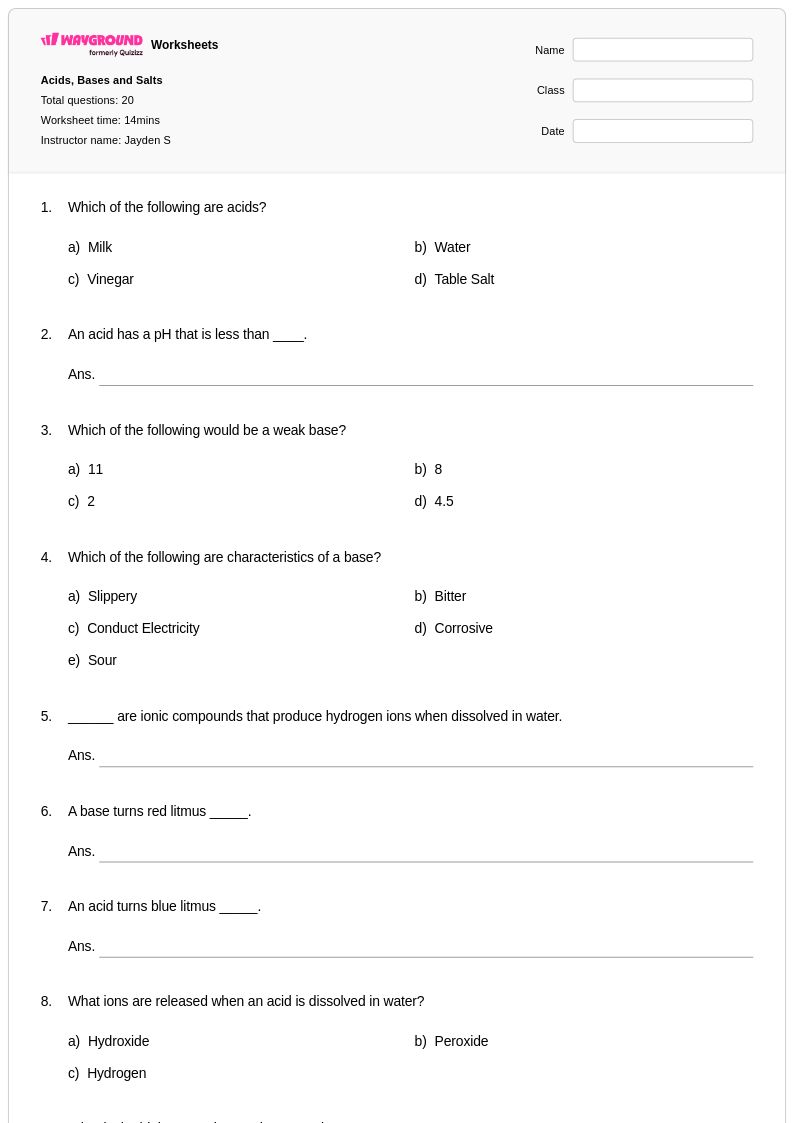
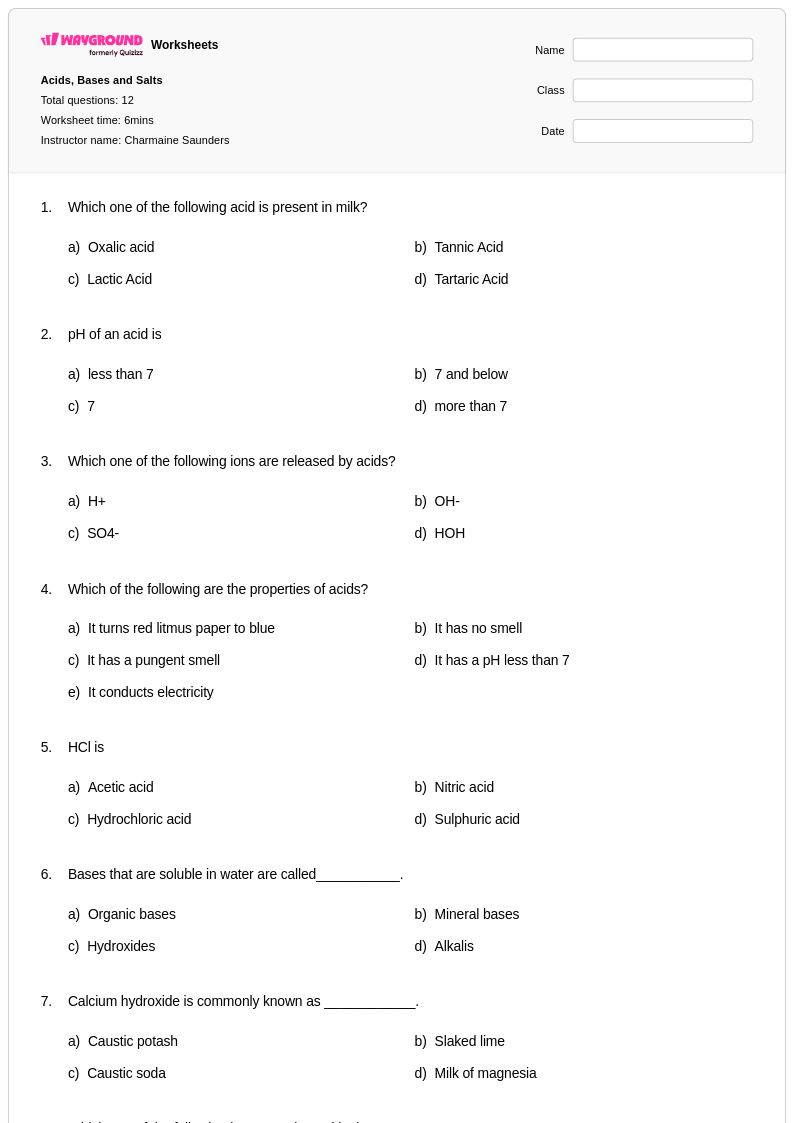
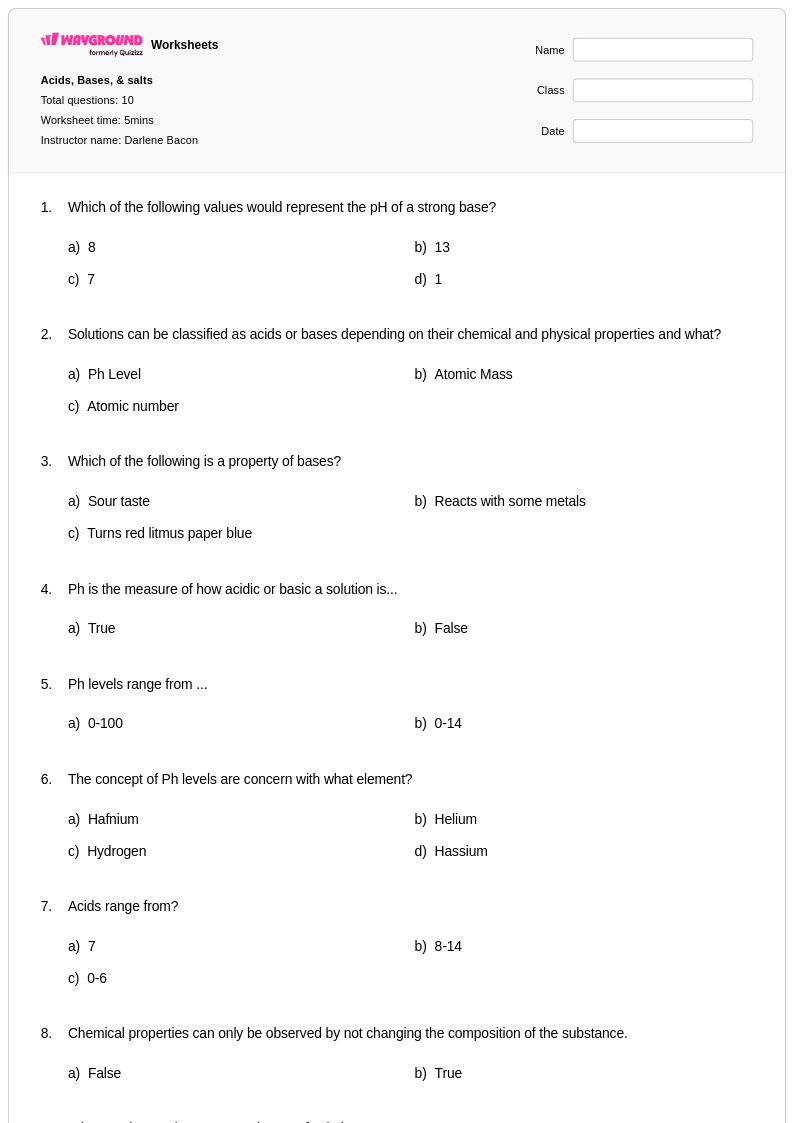
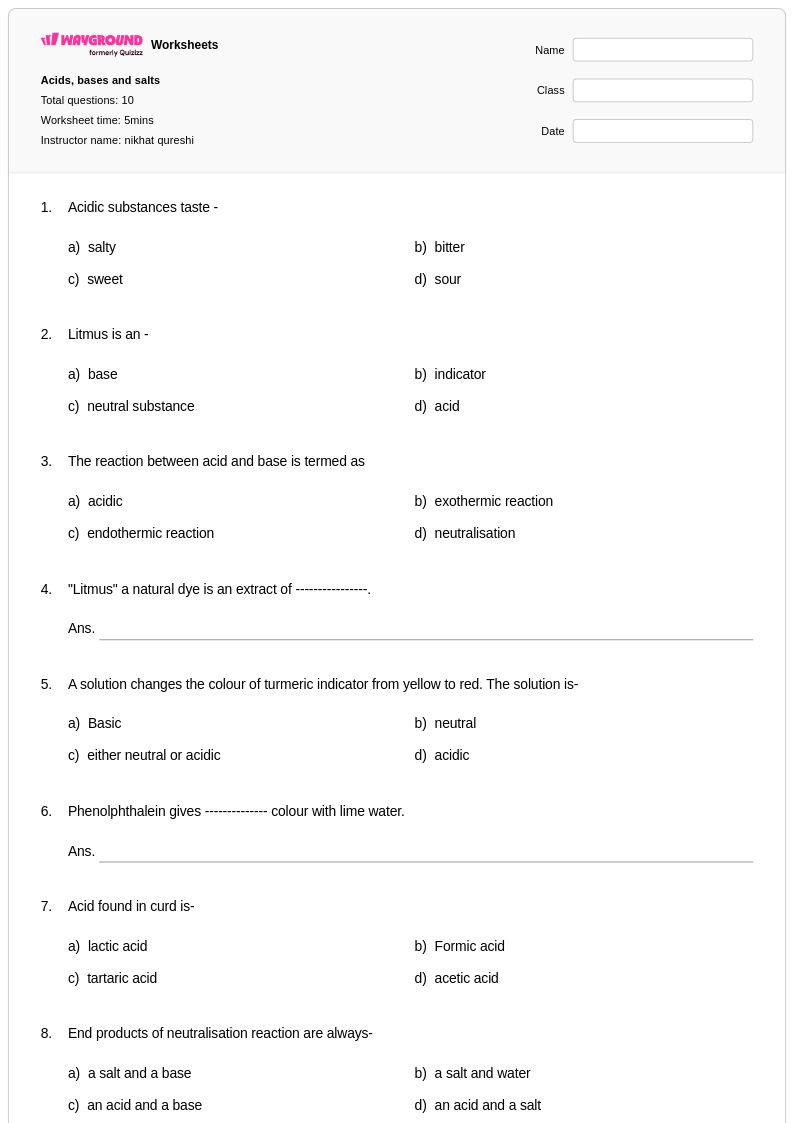
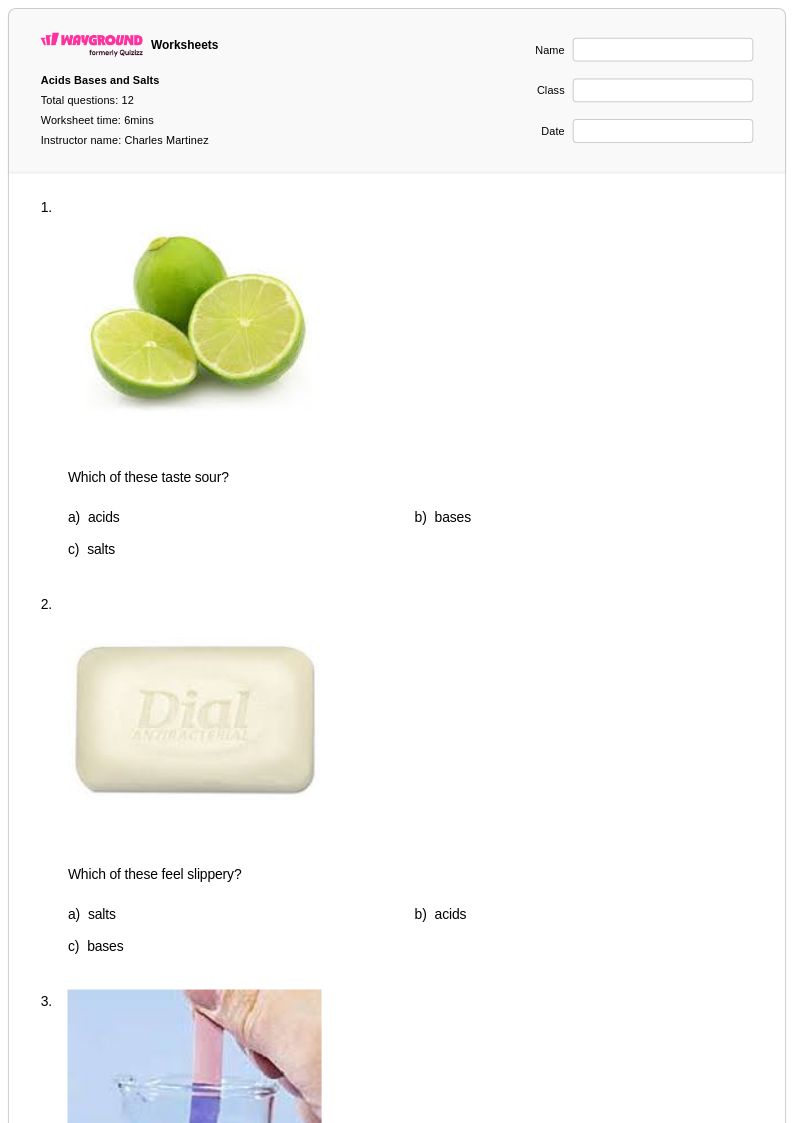
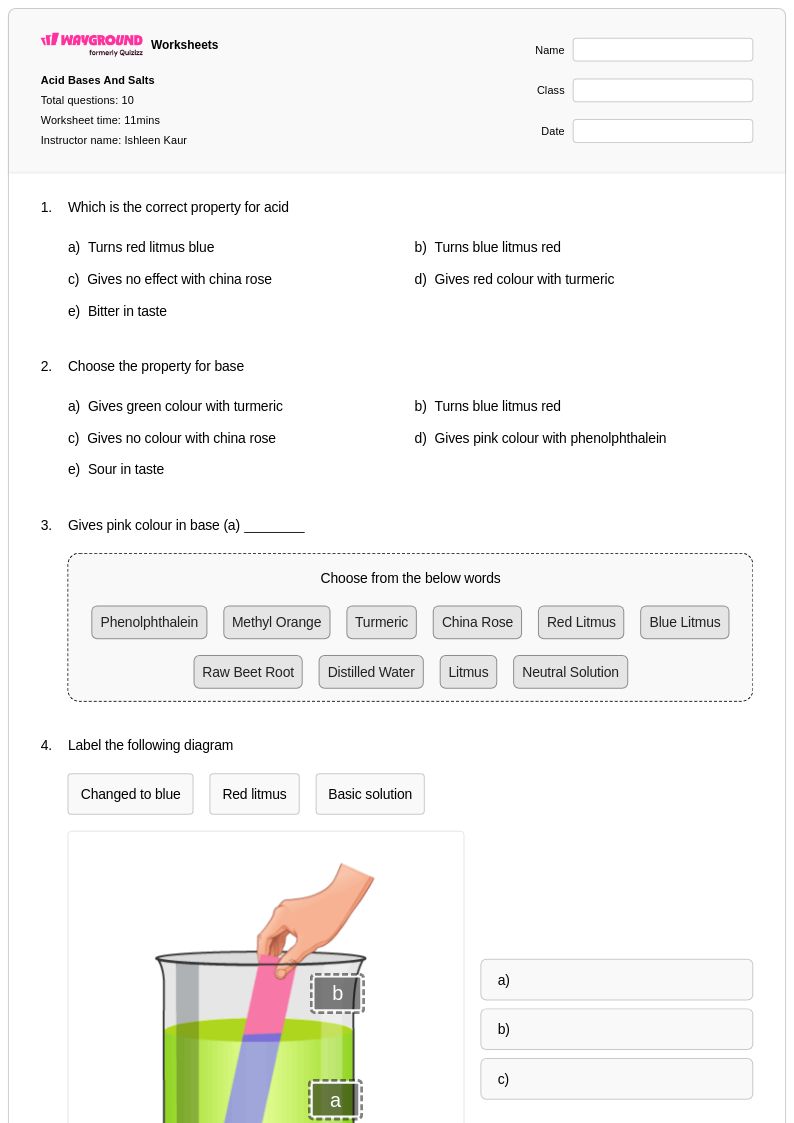
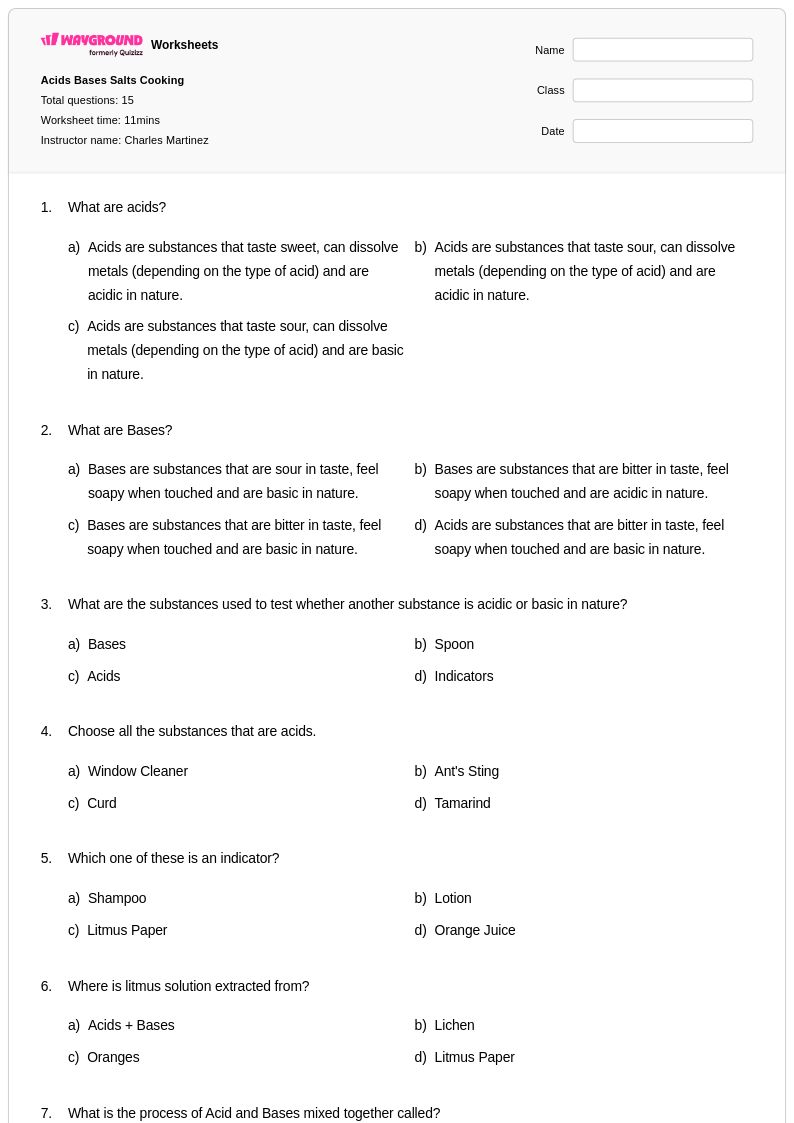
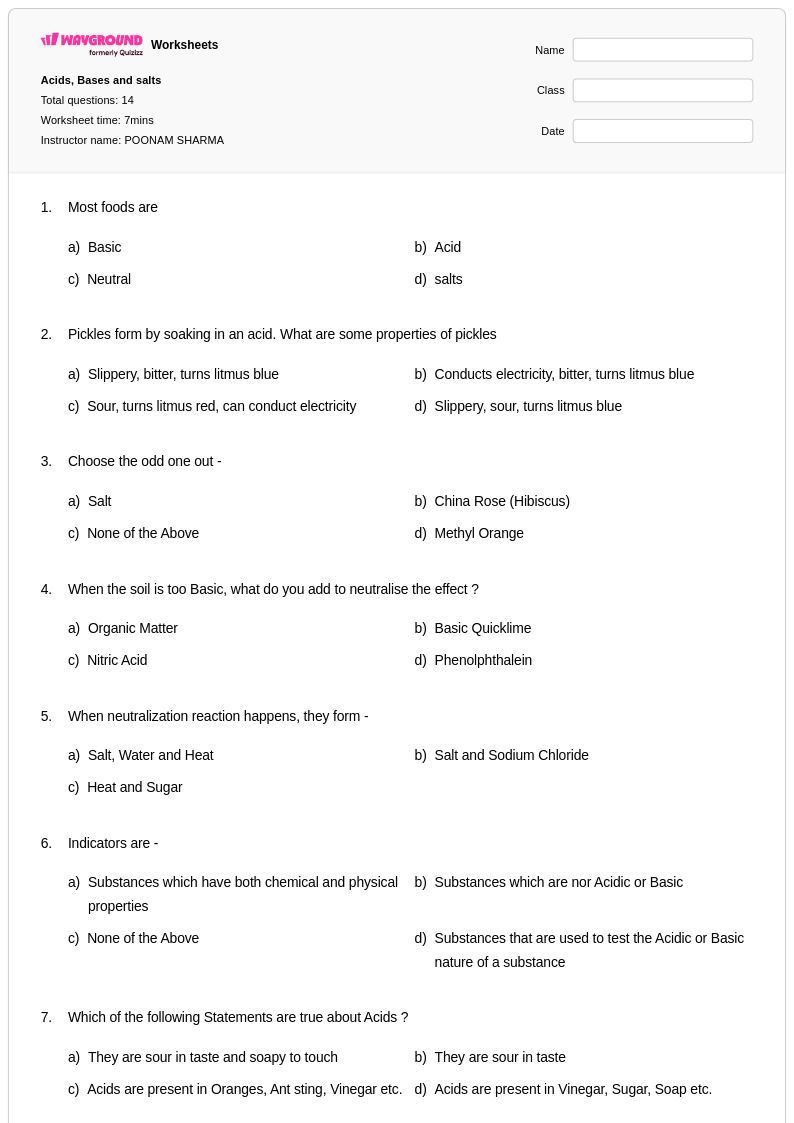
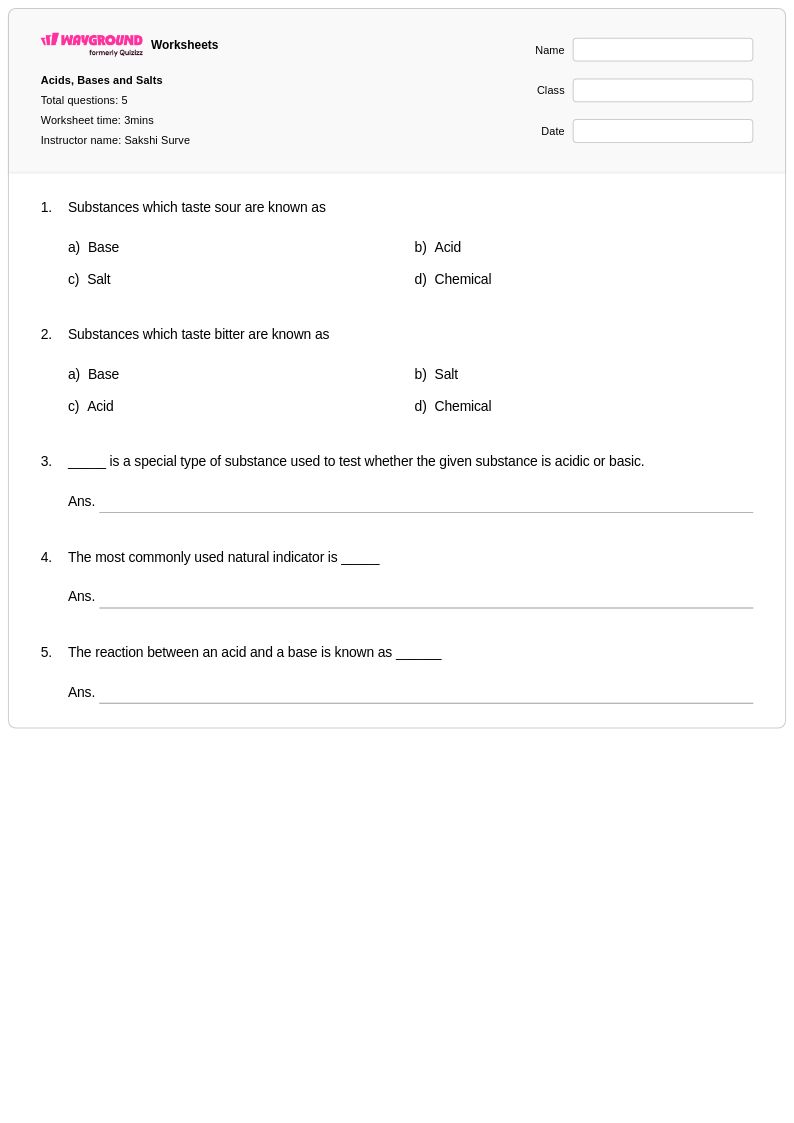
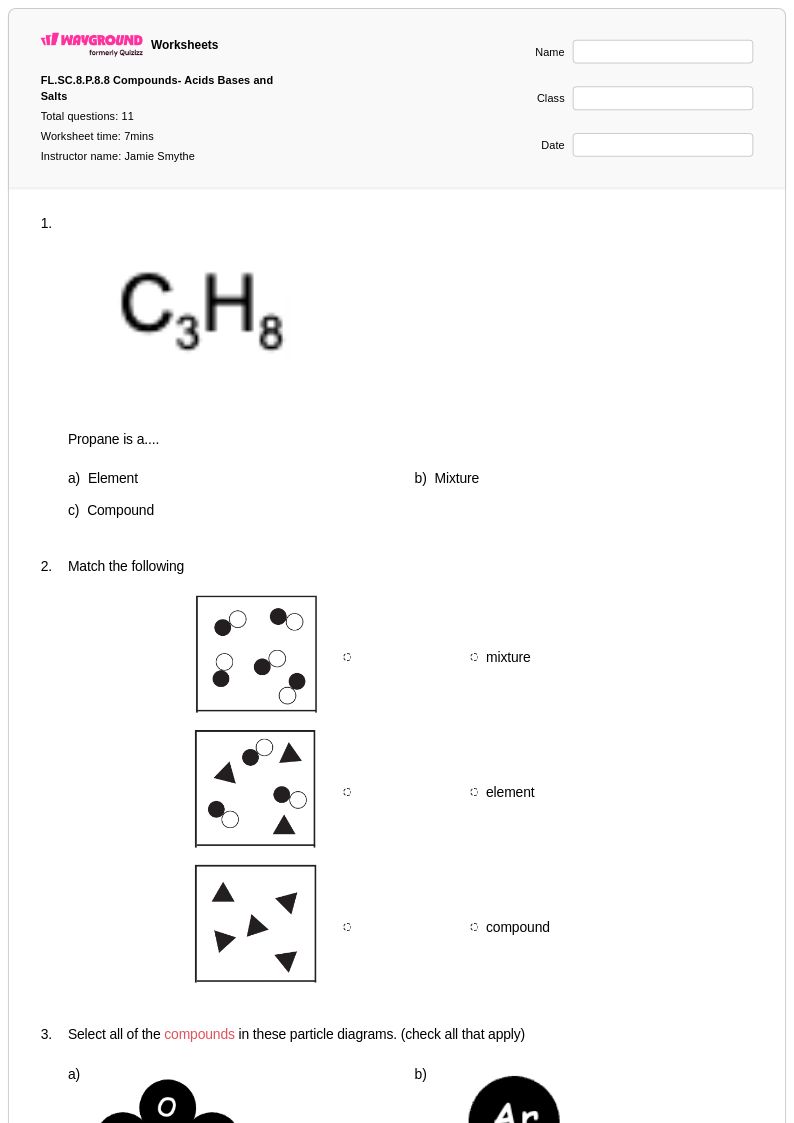
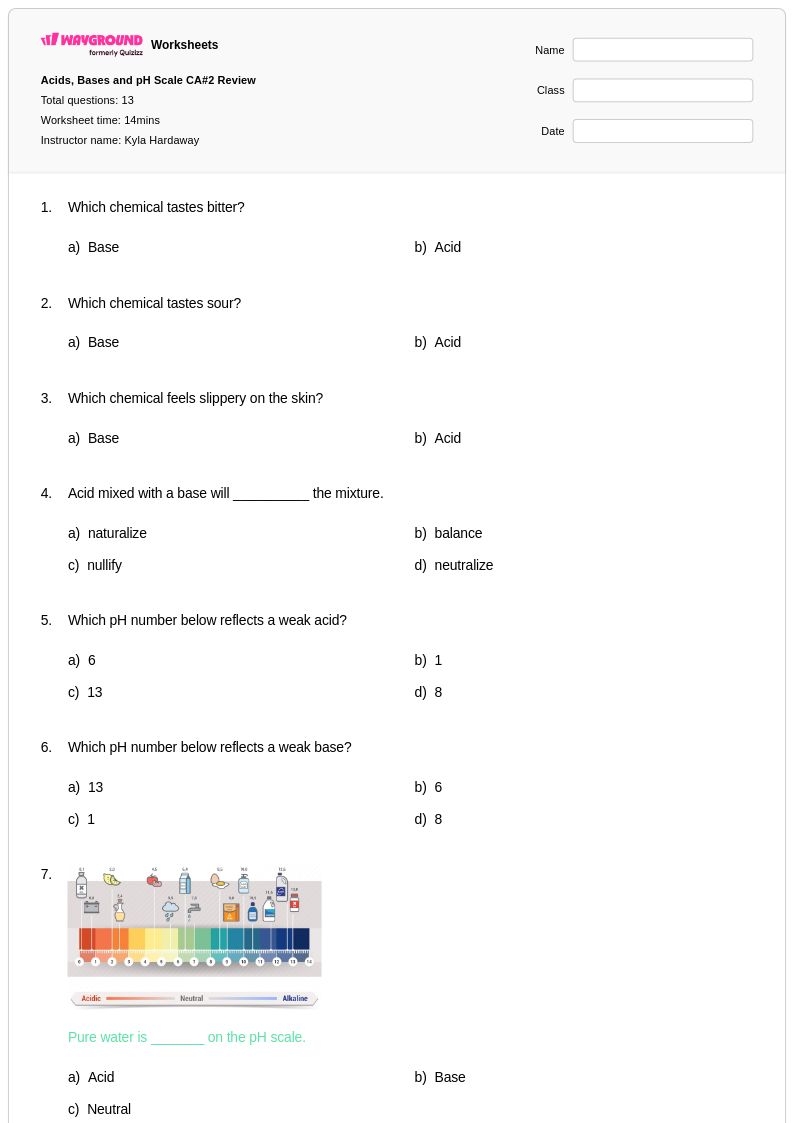
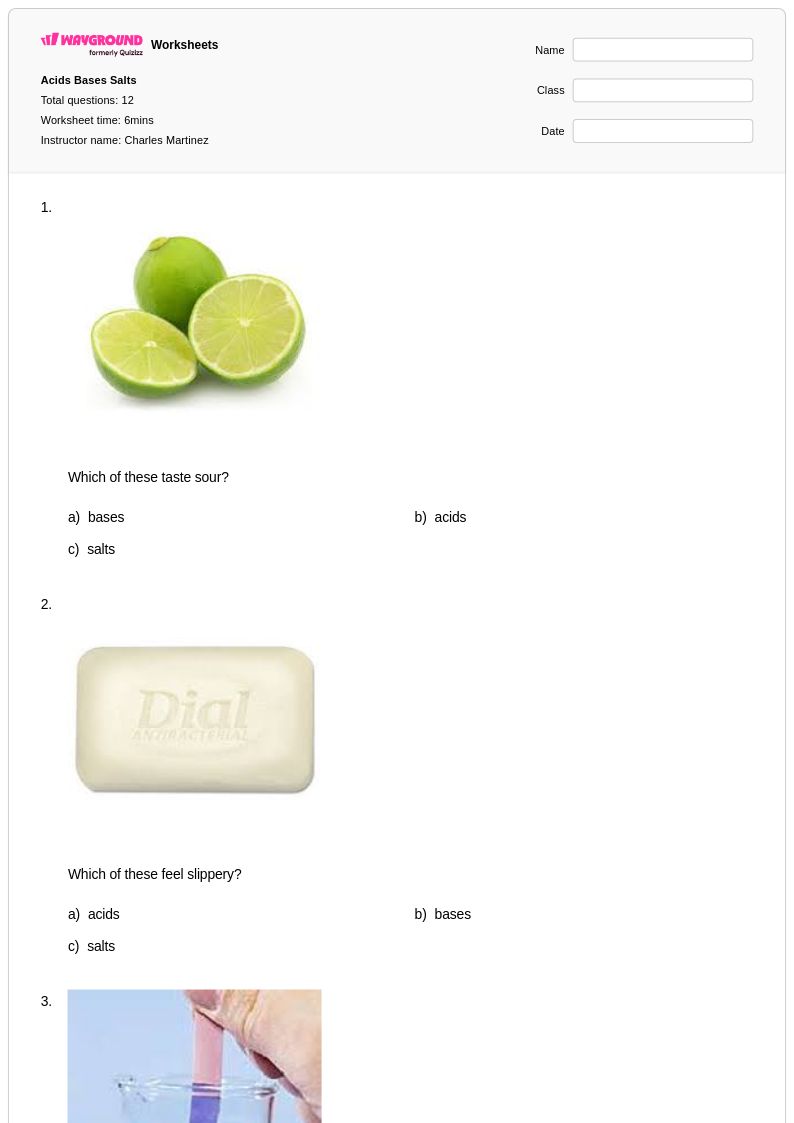
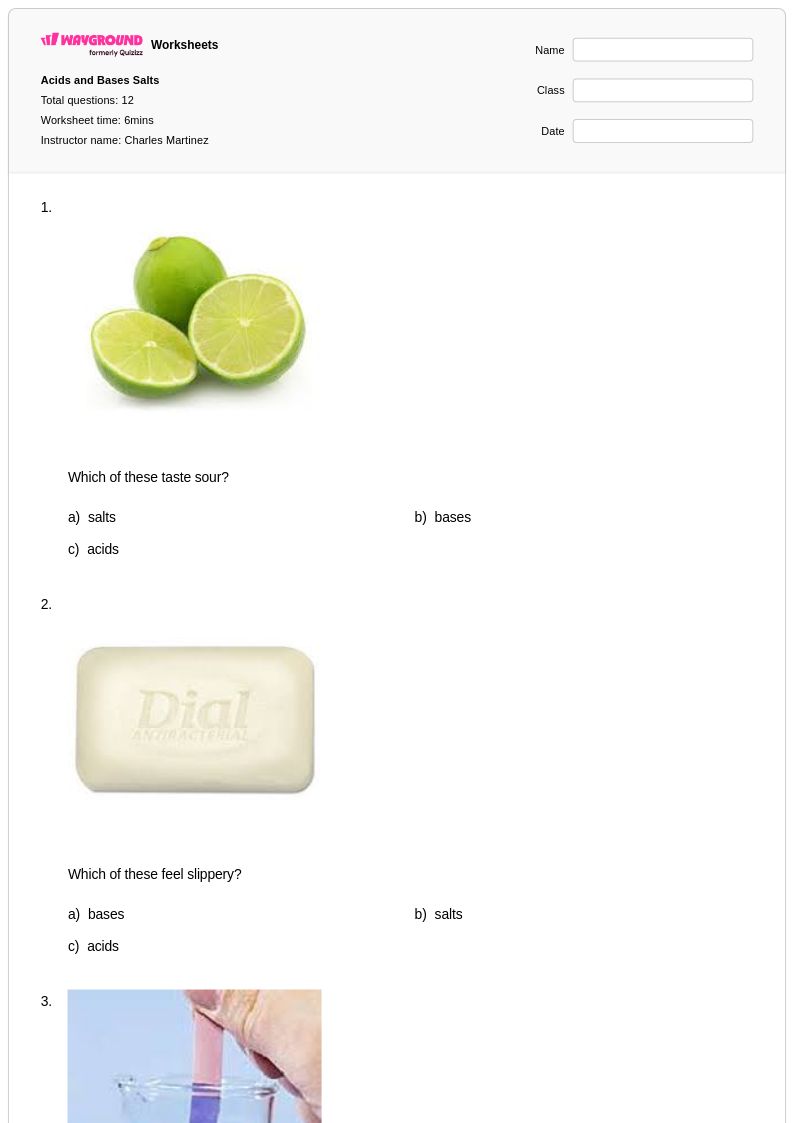
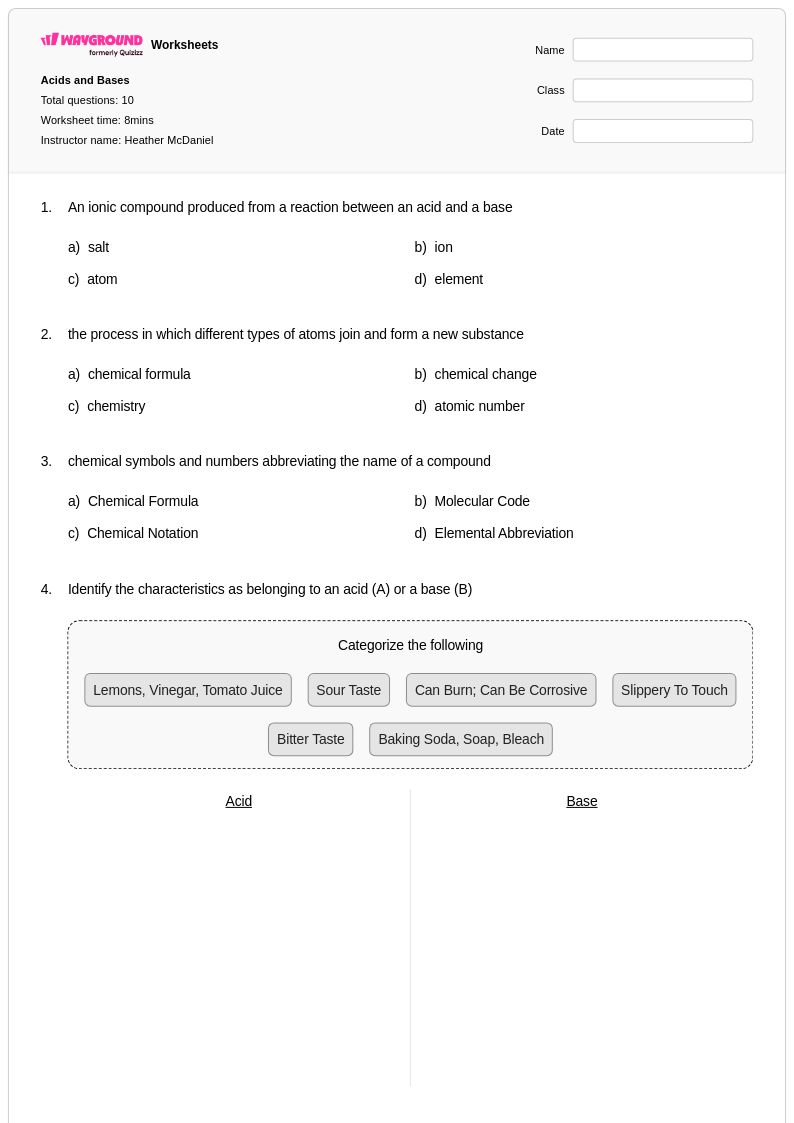
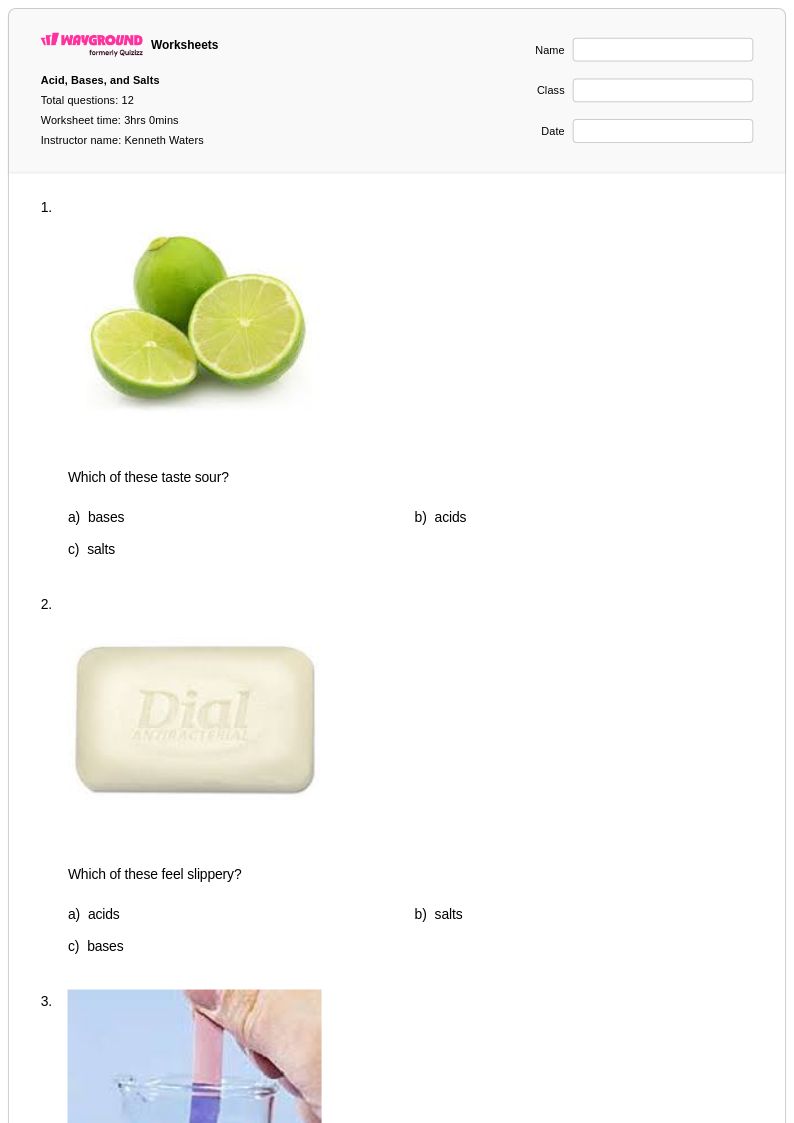
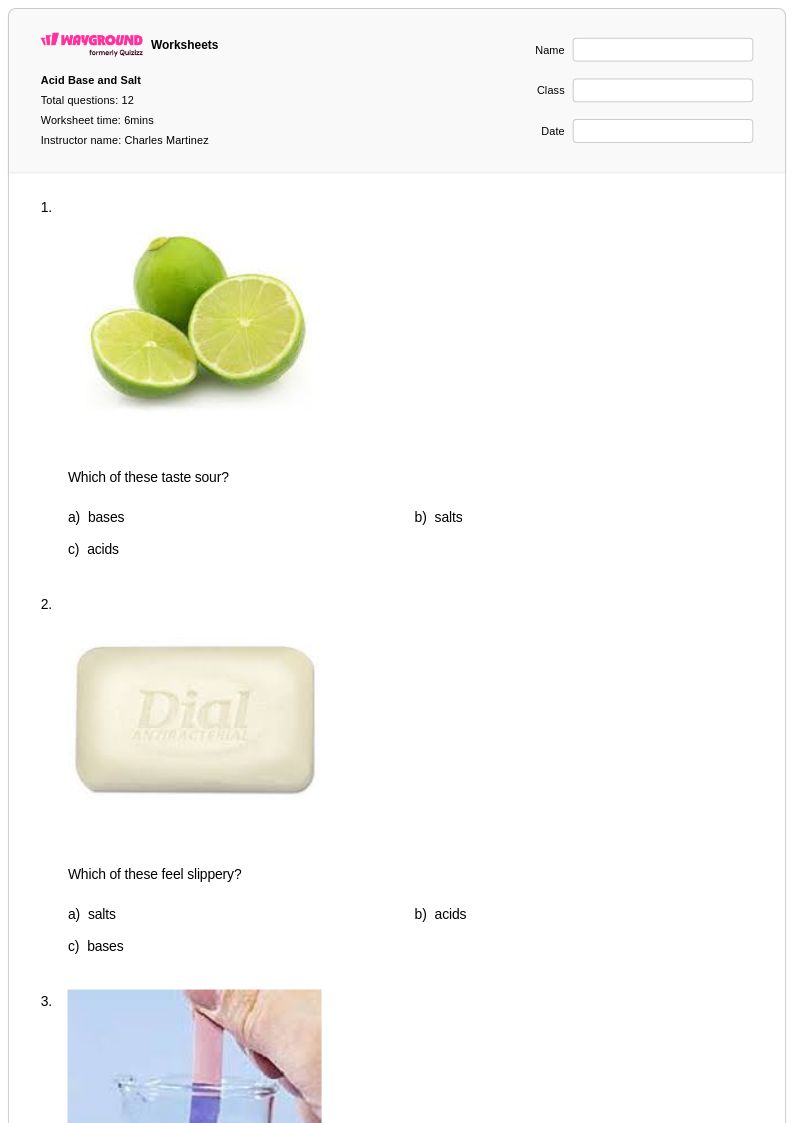
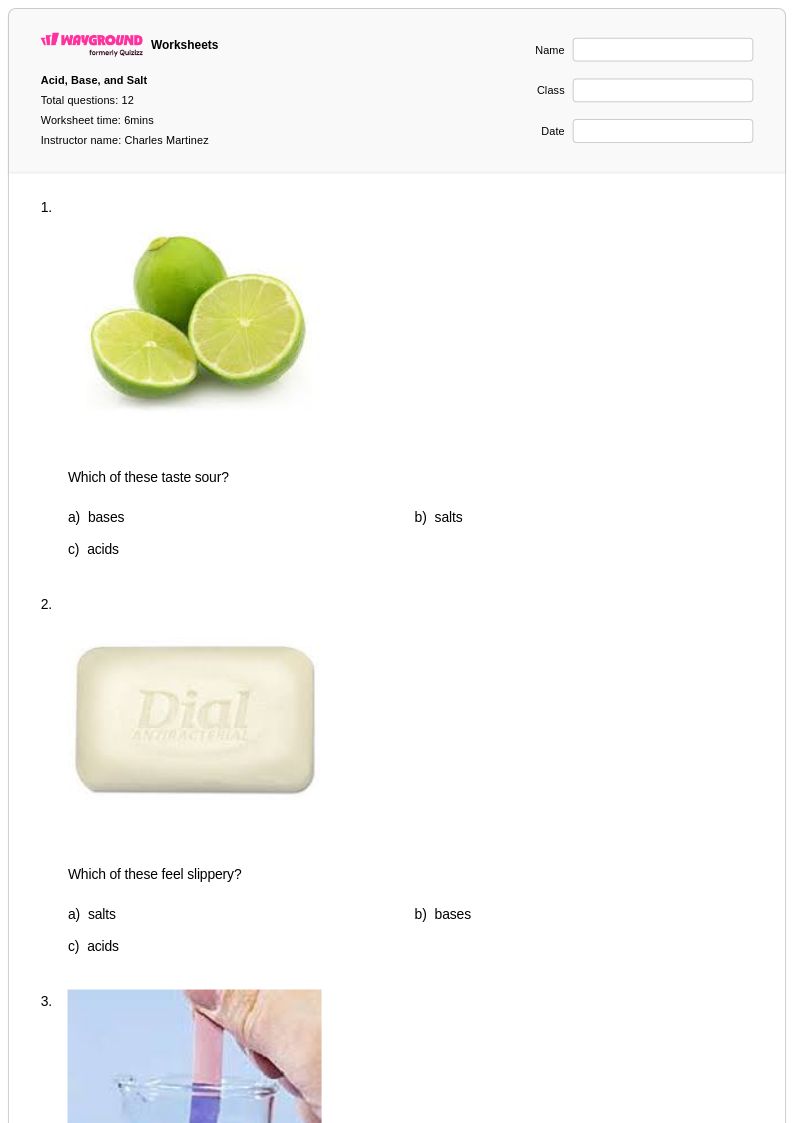
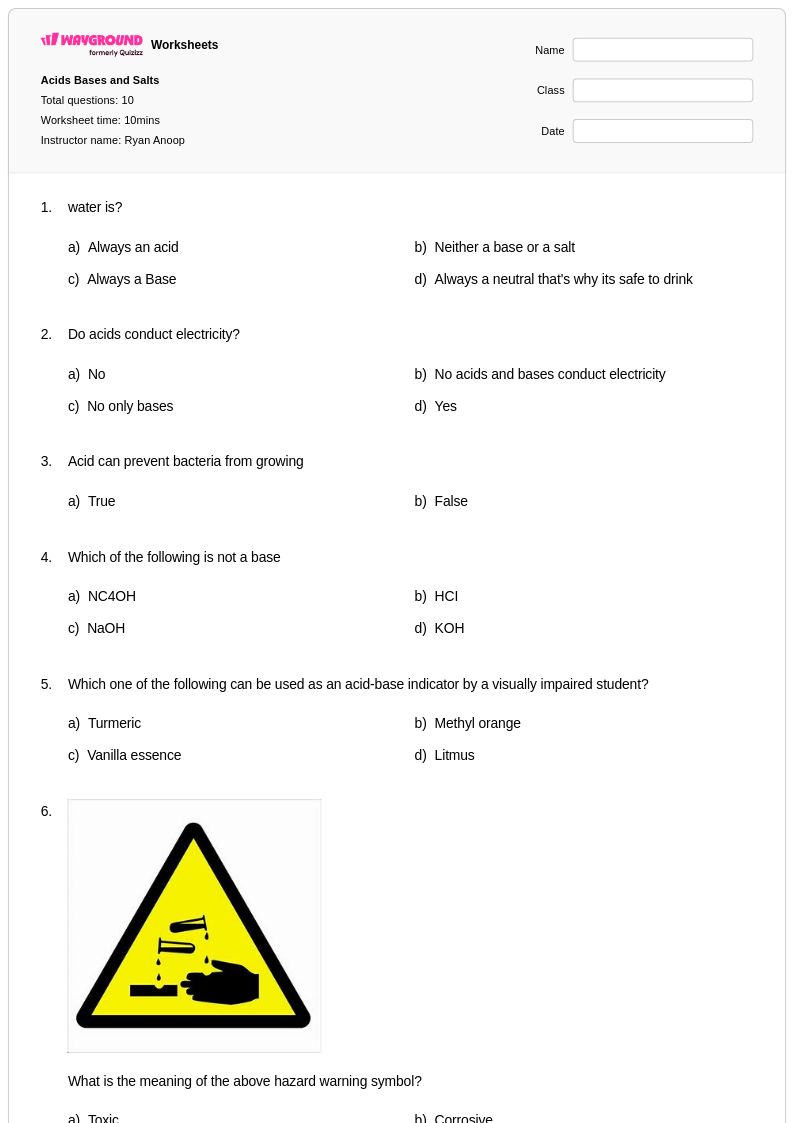
Acids, bases, and salts worksheets for Class 6 students available through Wayground provide comprehensive practice with fundamental chemistry concepts that form the building blocks of chemical understanding. These carefully designed worksheets strengthen students' ability to identify acidic and basic substances in everyday life, understand pH concepts, recognize common indicators, and explore the chemical reactions that produce salts. Each worksheet collection includes detailed answer keys to support independent learning and self-assessment, while the free printable format ensures accessibility for all classrooms. The practice problems progress systematically from basic identification tasks to more complex scenarios involving neutralization reactions and real-world applications, helping students develop both conceptual understanding and practical problem-solving skills in chemistry.
Wayground's extensive collection of teacher-created acids, bases, and salts resources draws from millions of educator-contributed materials, providing unparalleled variety and quality for Class 6 chemistry instruction. The platform's robust search and filtering capabilities allow teachers to quickly locate worksheets aligned with specific learning standards and differentiate instruction based on individual student needs. These flexible tools support comprehensive lesson planning by offering both printable pdf formats for traditional classroom use and digital versions for interactive learning environments. Teachers can seamlessly customize worksheet collections to target remediation for struggling learners, provide enrichment challenges for advanced students, or deliver focused skill practice sessions that reinforce key chemistry concepts through varied question types and difficulty levels.
FAQs
How do I teach acids, bases, and salts to my chemistry students?
Start by grounding students in the Arrhenius and Brønsted-Lowry definitions of acids and bases before introducing the pH scale as a practical measurement tool. Use everyday examples — lemon juice, baking soda, bleach — to build intuition for acidity and basicity before moving into neutralization reactions and salt formation. Structured practice problems that progress from identification tasks to equation balancing and pH calculation help students build conceptual depth step by step.
What exercises help students practice acid-base chemistry?
Effective practice for acids, bases, and salts includes identifying substances as acidic, basic, or neutral using pH values, balancing neutralization equations, and predicting the salt produced when a specific acid and base react. Calculating pH from hydrogen ion concentration and working through real-world acid-base scenarios reinforces both procedural fluency and conceptual understanding. Varied question formats — multiple choice, fill-in, and short answer — ensure students engage with the material at different cognitive levels.
What mistakes do students commonly make when learning about acids, bases, and salts?
A frequent misconception is that a neutral pH of 7 means a substance is harmless or inactive, when in fact neutrality simply describes the balance of hydrogen and hydroxide ions. Students also commonly confuse strong acids with concentrated acids, treating strength (degree of dissociation) and concentration (amount of solute) as interchangeable. When predicting salt formation, many students incorrectly assume all salts produce a neutral solution, not accounting for hydrolysis and the resulting acidic or basic salt solutions.
How can I differentiate acids and bases instruction for students at different readiness levels?
For students who are struggling, focus first on conceptual identification tasks — classifying substances as acid or base and locating values on a pH scale — before introducing calculation-based problems. Advanced students can be challenged with multi-step problems involving buffer solutions, polyprotic acids, or titration calculations. On Wayground, teachers can apply differentiation settings at the individual student level, including reduced answer choices to lower cognitive load for students who need it and extended time for those requiring additional processing support.
How do I use Wayground's acids, bases, and salts worksheets in my classroom?
Wayground's acids, bases, and salts worksheets are available as printable PDFs for traditional classroom use and in digital formats for technology-integrated or remote learning environments, giving teachers flexibility in how they assign and collect work. Teachers can also host worksheets directly as a quiz on Wayground, enabling real-time student response tracking. Each worksheet includes a complete answer key, making them practical for independent student practice, homework assignments, laboratory preparation, or formal assessment.
How do neutralization reactions lead to salt formation?
A neutralization reaction occurs when an acid and a base react to produce water and an ionic compound called a salt. The cation of the salt comes from the base and the anion comes from the acid — for example, hydrochloric acid reacting with sodium hydroxide produces sodium chloride and water. Understanding this pattern allows students to predict salt products systematically, which is a core skill in acid-base chemistry and a foundation for titration work.