Free Printable Chemical Bonds Worksheets for Class 6
Explore Wayground's comprehensive collection of Class 6 chemical bonds worksheets featuring free printables, practice problems, and answer keys to help students master ionic and covalent bonding concepts.
Explore printable Chemical Bonds worksheets for Class 6
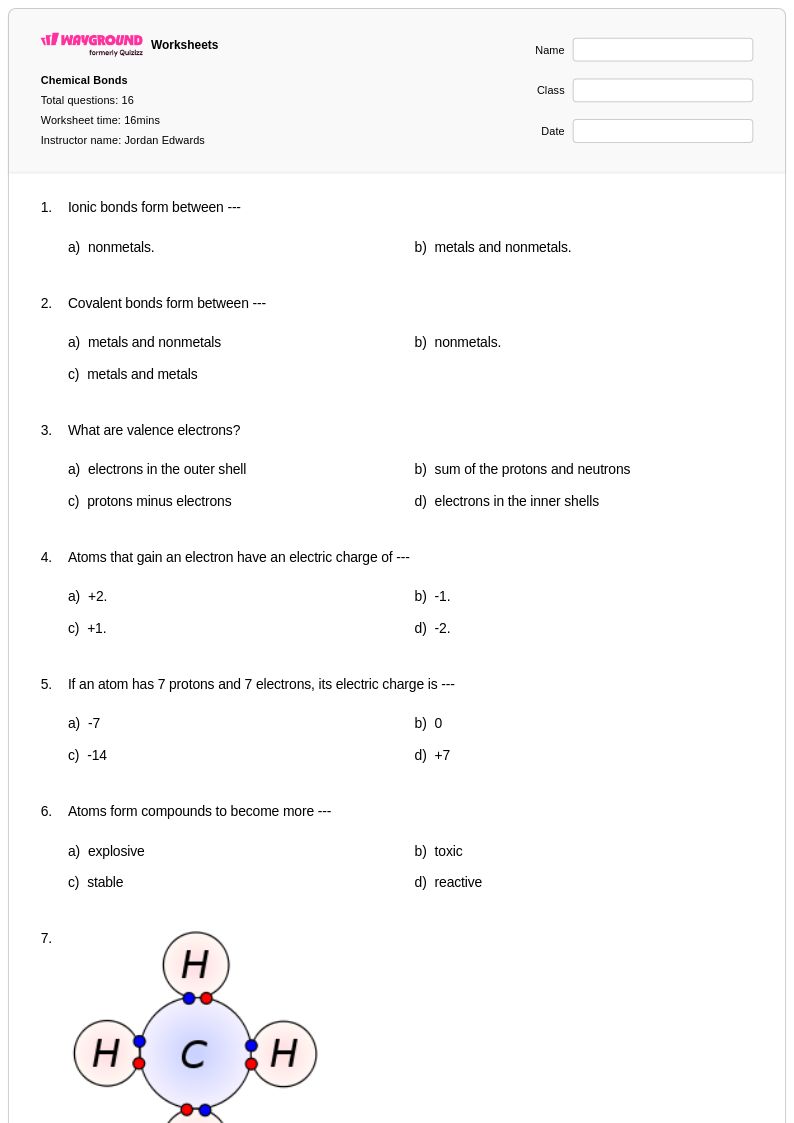
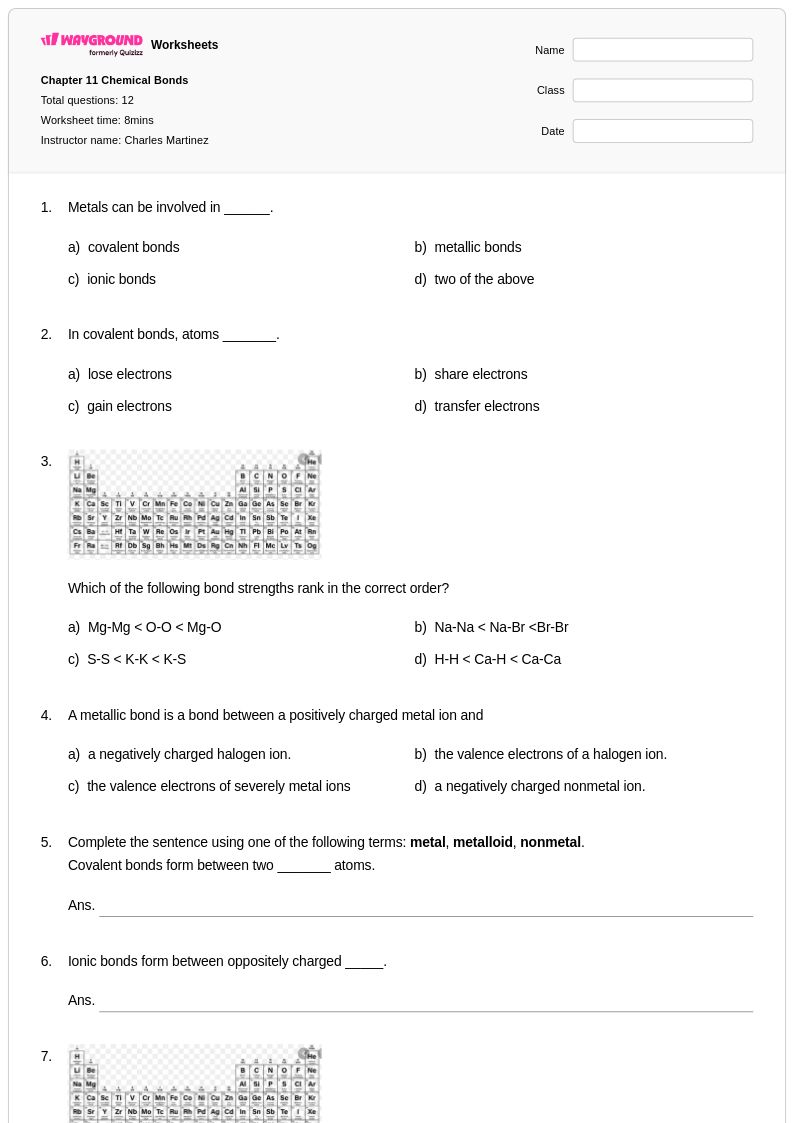
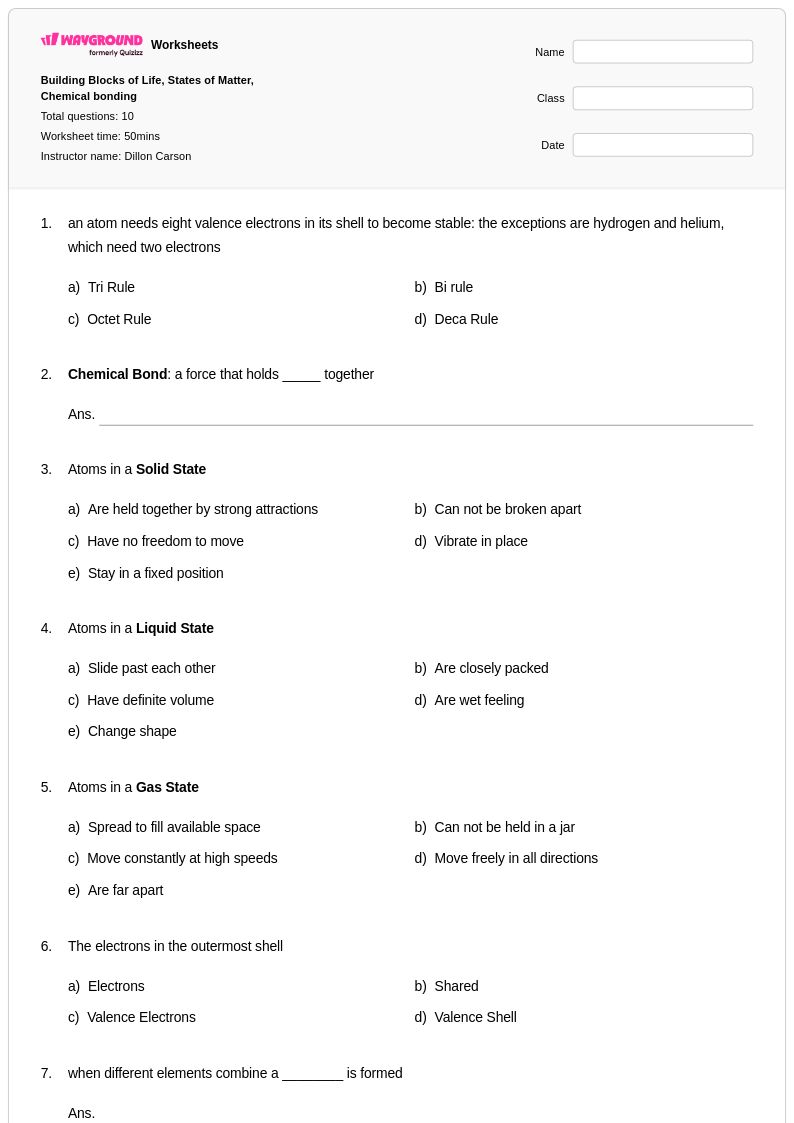
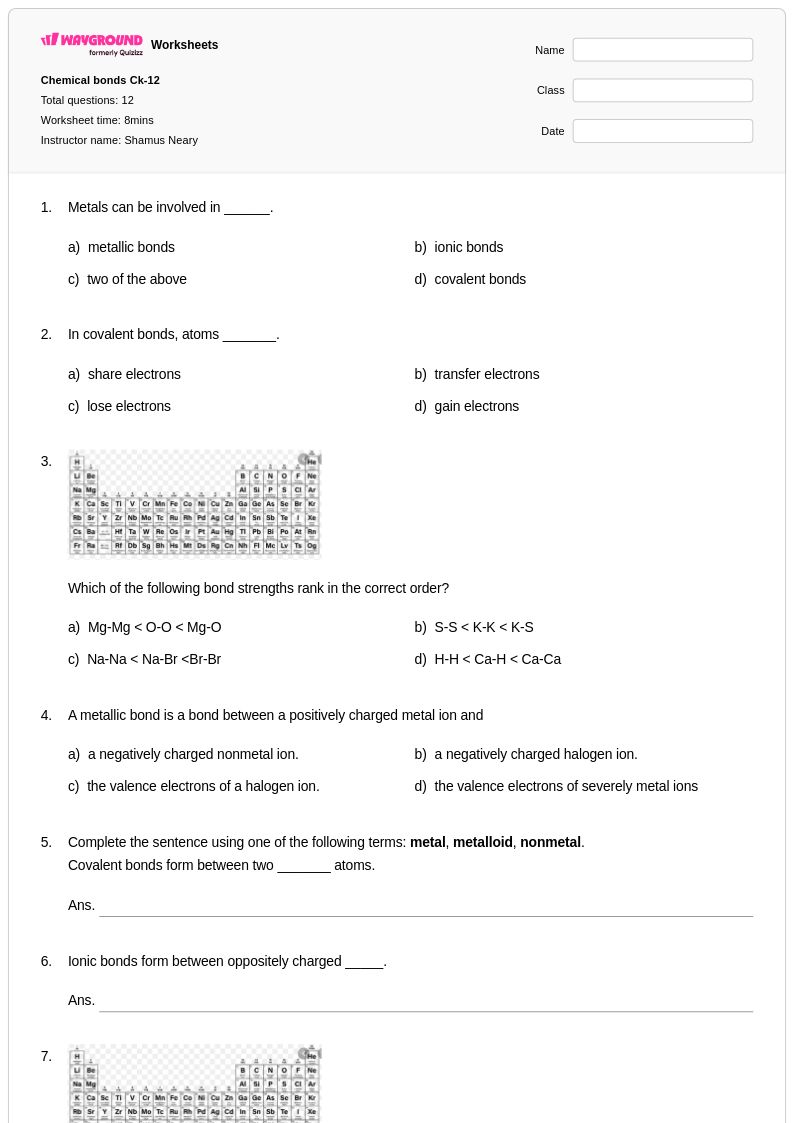
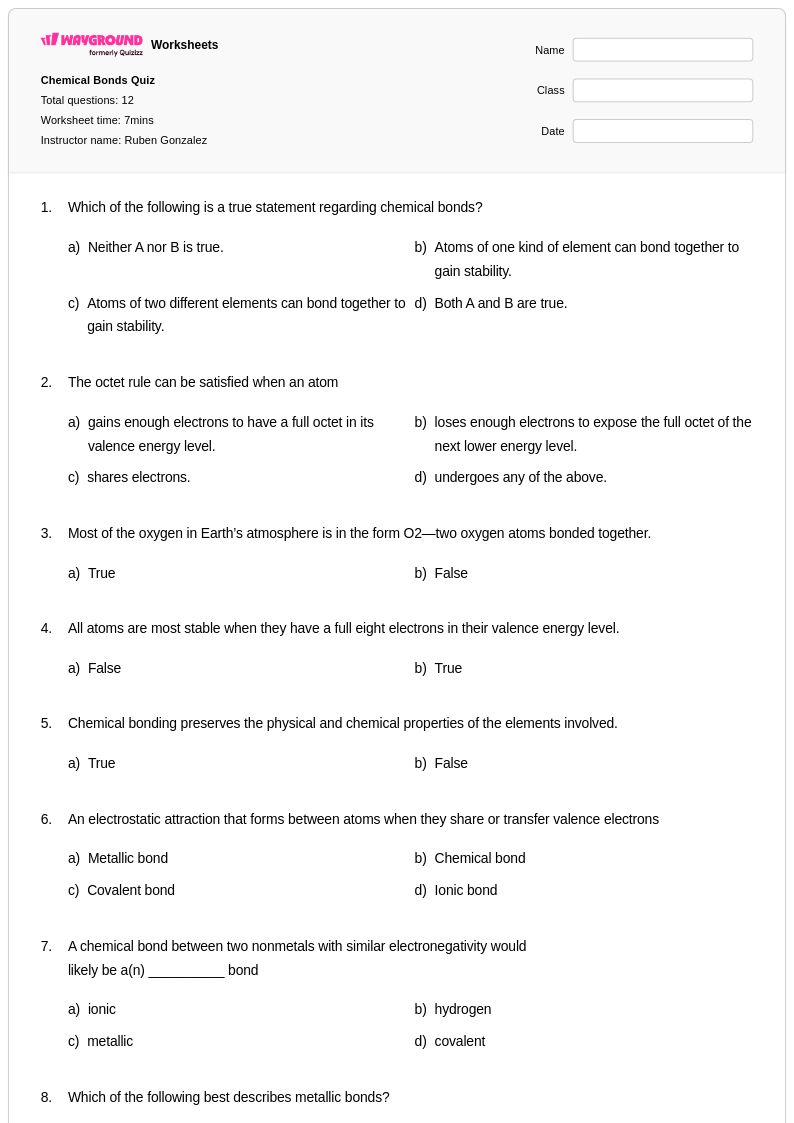
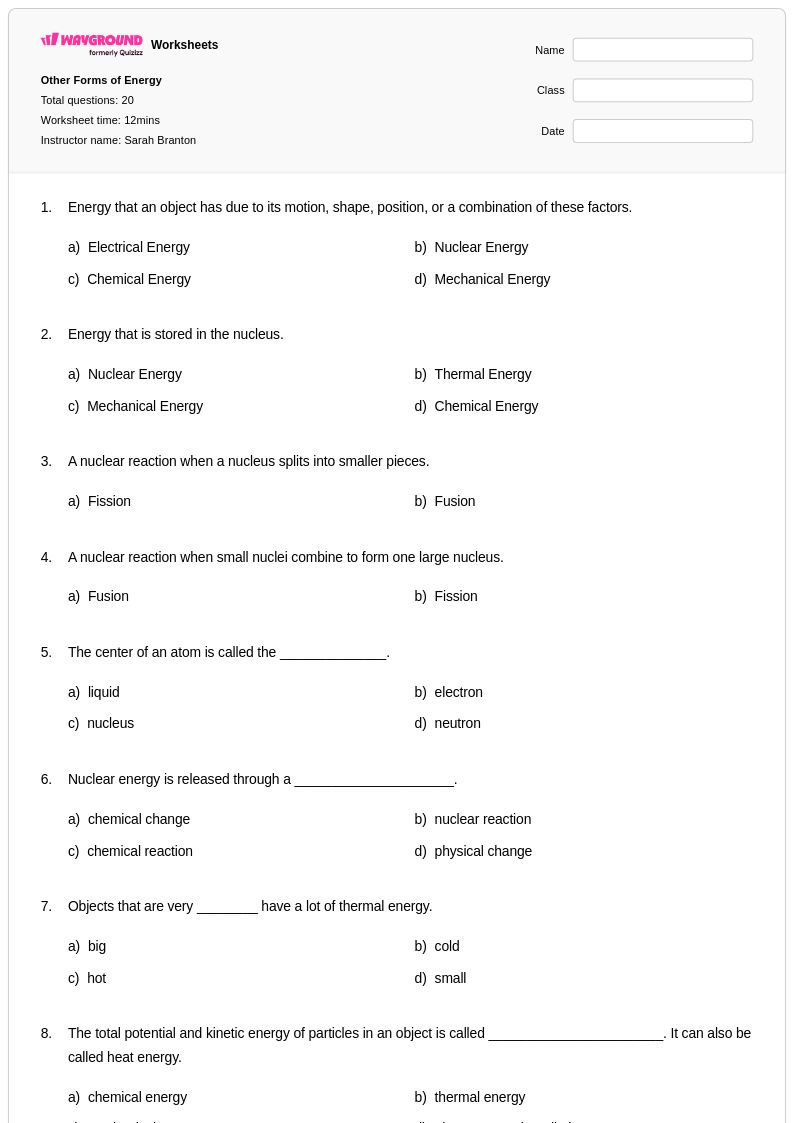
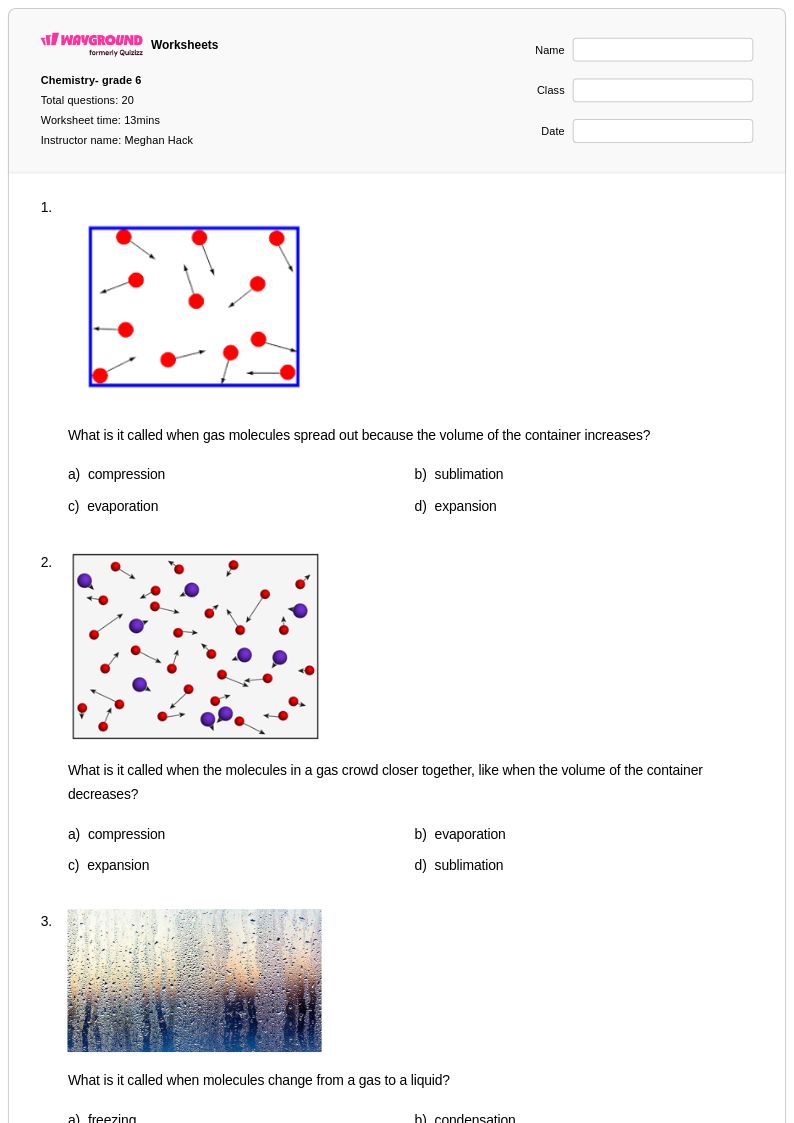
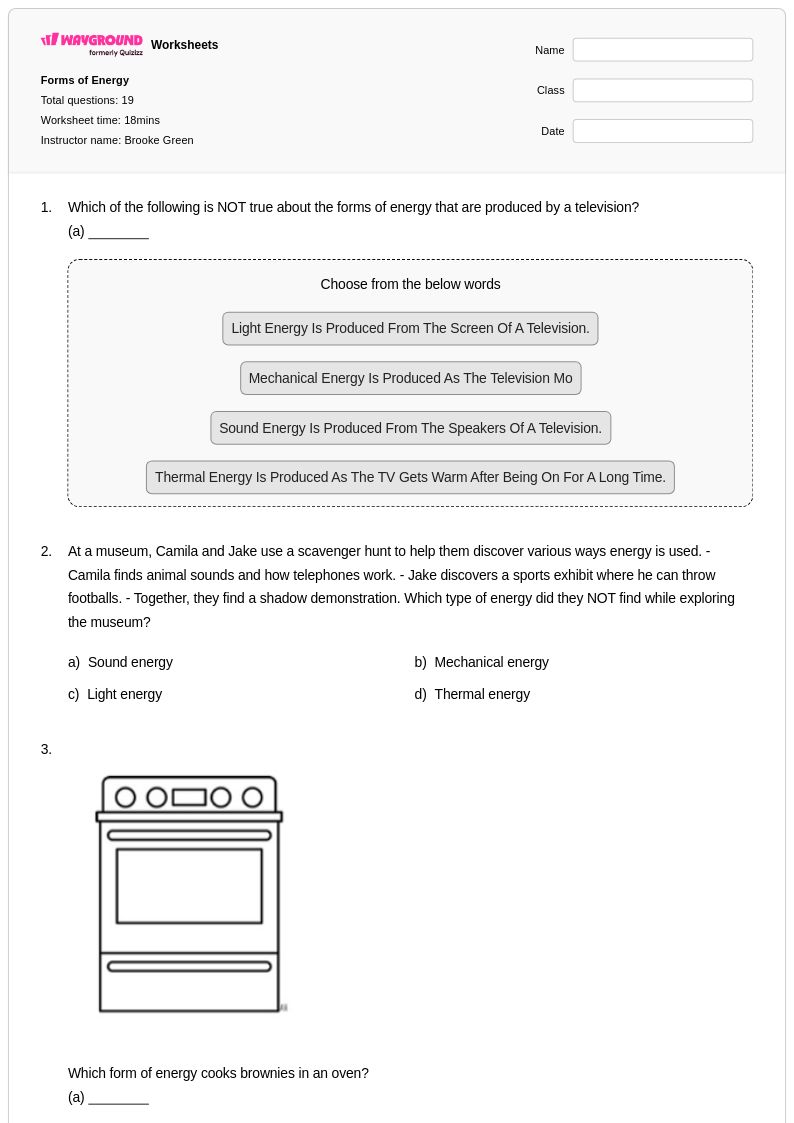
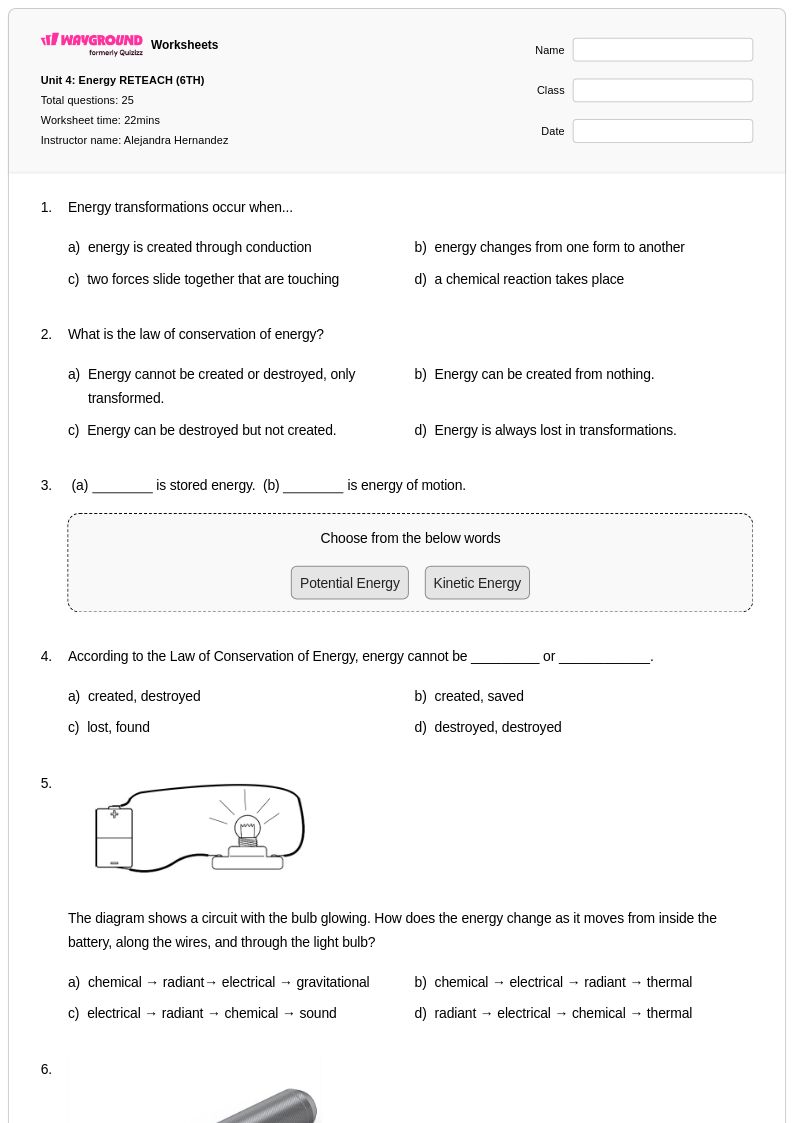
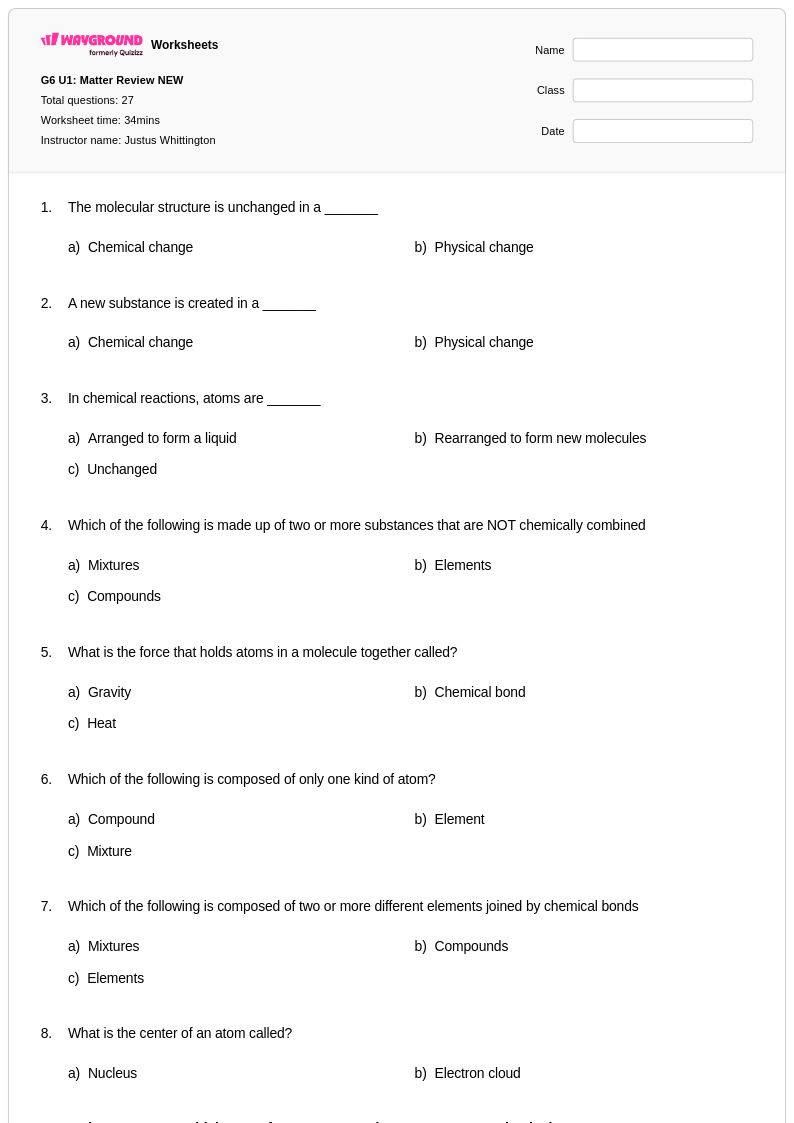
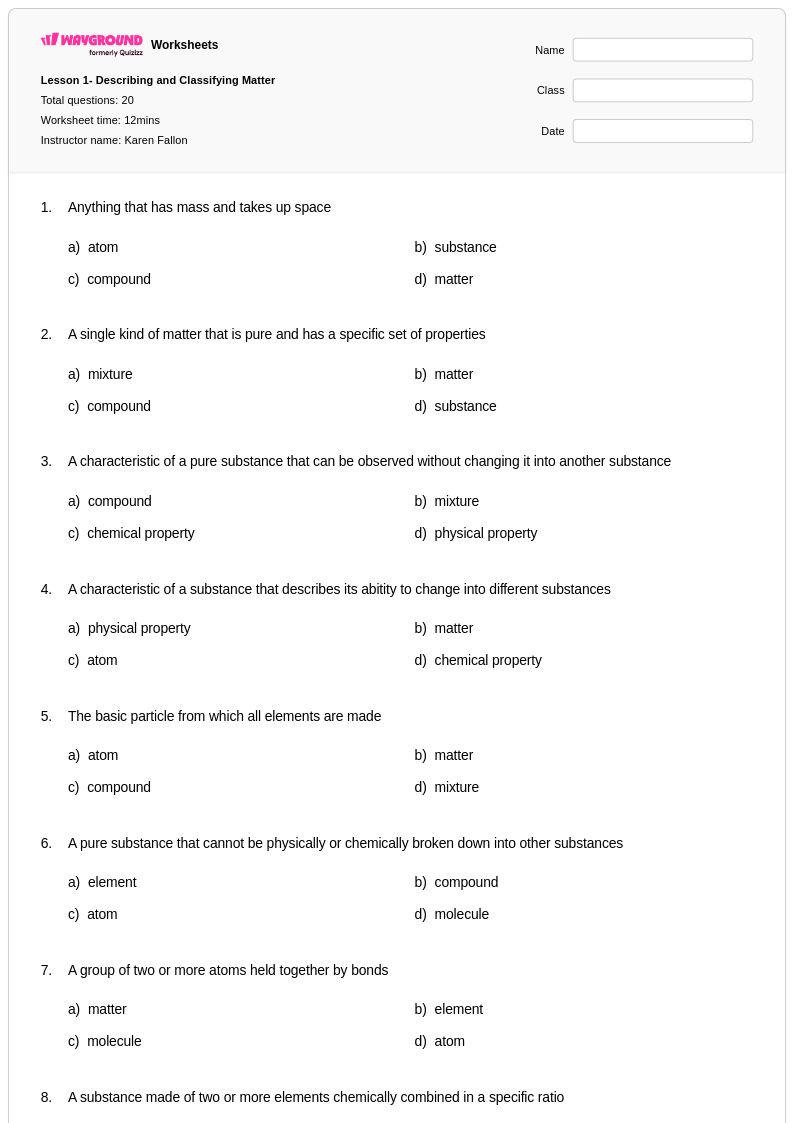
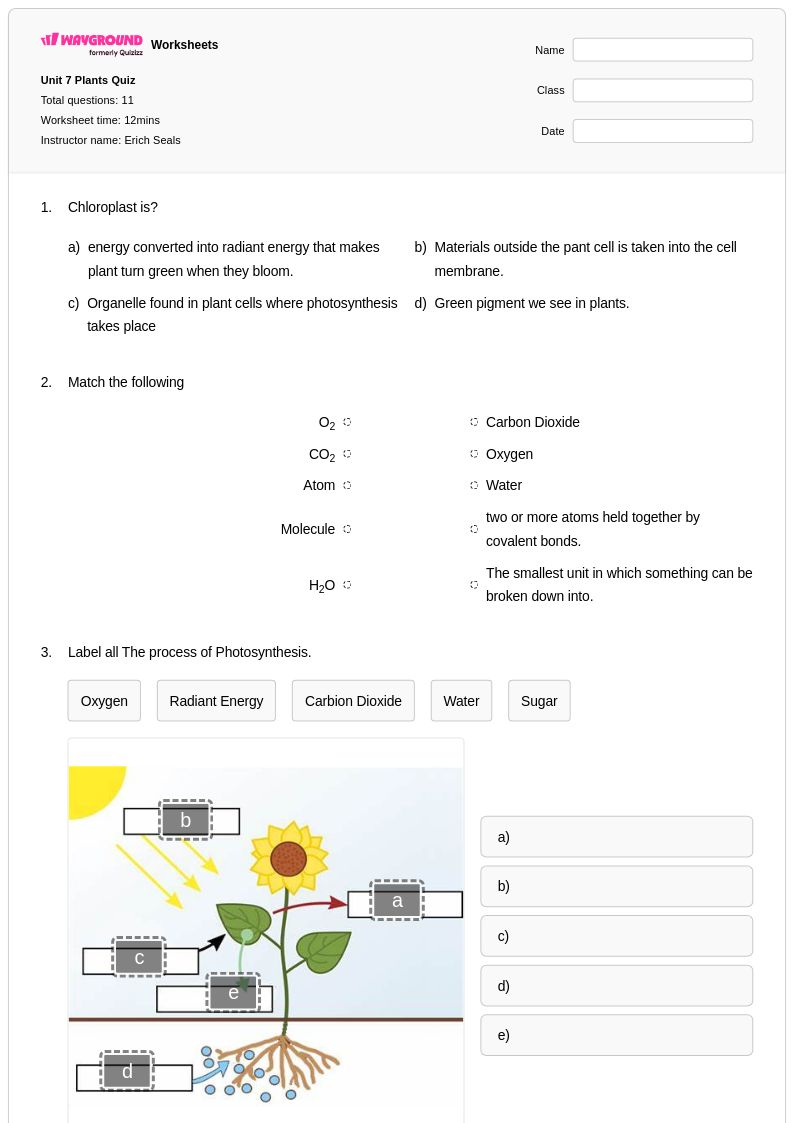
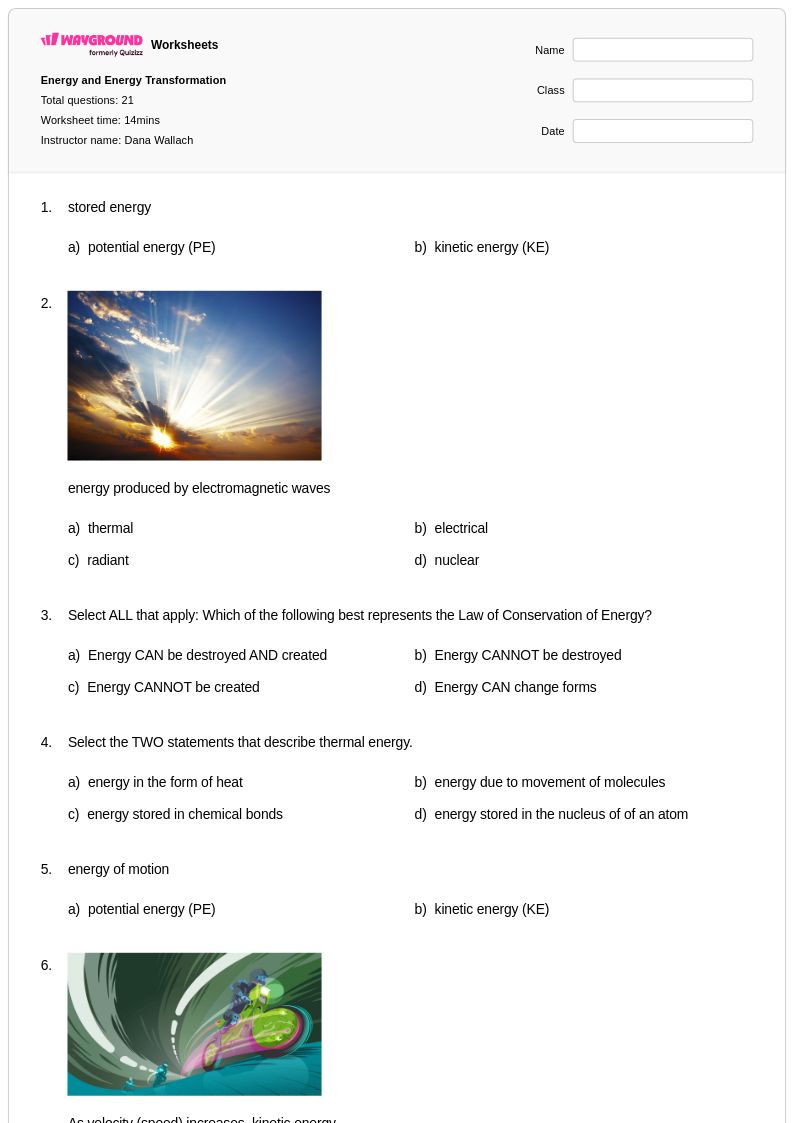
Chemical bonds worksheets for Class 6 students available through Wayground (formerly Quizizz) provide comprehensive practice materials that introduce young learners to the fundamental forces that hold atoms together in compounds. These expertly designed worksheets focus on developing students' understanding of ionic and covalent bonds, helping them visualize how electrons are shared or transferred between atoms to create stable molecular structures. The practice problems systematically build knowledge through hands-on activities that explore bond formation, molecular diagrams, and the relationship between chemical bonding and compound properties. Each worksheet includes detailed answer keys that support both independent study and classroom instruction, while the free printable format ensures accessibility for all learning environments.
Wayground's extensive collection of chemical bonds worksheets draws from millions of teacher-created resources, offering educators powerful search and filtering capabilities to locate materials perfectly aligned with Class 6 science standards and curriculum requirements. The platform's differentiation tools enable teachers to customize worksheets for varying ability levels, supporting both remediation for struggling students and enrichment opportunities for advanced learners. Available in both printable pdf format and interactive digital versions, these resources seamlessly integrate into lesson planning while providing flexible options for homework assignments, laboratory preparation, and assessment practice. The comprehensive nature of the worksheet library allows educators to scaffold learning progressively, ensuring students develop a solid foundation in chemical bonding concepts that will support their continued success in chemistry education.
FAQs
How do I teach chemical bonds to high school students?
Start by grounding students in atomic structure and electronegativity before introducing bond types, since students need to understand why atoms bond before they can distinguish how. Use a progression from ionic bonds (electron transfer between metals and nonmetals) to covalent bonds (electron sharing between nonmetals) to metallic bonds, building each concept on the last. Lewis dot diagrams and electronegativity difference charts are especially effective scaffolds for helping students predict and classify bond types with confidence.
What are common mistakes students make when learning about ionic and covalent bonds?
One of the most frequent errors is treating bond type as binary — students often struggle to recognize that electronegativity differences exist on a continuum, with polar covalent bonds sitting between purely nonpolar covalent and fully ionic. Students also commonly confuse ionic compound naming conventions with covalent ones, particularly when transitioning between binary ionic compounds and molecular compounds that use prefixes. Explicitly contrasting the two naming systems side by side, with targeted practice problems, helps correct this confusion before it solidifies.
What exercises help students practice naming ionic and covalent compounds?
Compound naming practice is most effective when students work through structured sets that isolate one rule at a time before mixing compound types. Exercises should include identifying the compound type first, then applying the correct naming convention, which mirrors the actual decision-making process students need in assessments. Practice problems that include transition metal ions with variable charges and polyatomic ions are particularly valuable, as these are the areas where students most often lose points on tests.
How can I help students who are struggling with drawing Lewis structures?
Students who struggle with Lewis structures typically have gaps in their understanding of valence electrons, so revisiting the periodic table connection to valence electron count is an important first step. A consistent step-by-step algorithm — count total valence electrons, place the least electronegative atom at the center, distribute electrons to complete octets, then check for formal charges — gives struggling students a repeatable process to fall back on. Scaffolded worksheets that walk through each step explicitly before requiring independent application are especially useful for remediation.
How do I use chemical bonds worksheets effectively in my classroom?
Chemical bonds worksheets on Wayground are available as printable PDFs for traditional classroom use and in digital formats for technology-integrated or hybrid environments, so they can be deployed flexibly depending on your setup. The digital format also allows teachers to host worksheets as a quiz directly on Wayground, which is useful for formative assessment or structured independent practice. Pairing the worksheets with answer keys lets students self-check during practice, which research supports as an effective strategy for reinforcing procedural accuracy in chemistry.
How do I differentiate chemical bonds instruction for students at different skill levels?
For students who are still building foundational skills, reducing the complexity of practice problems — such as focusing only on binary ionic compounds before introducing polyatomic ions — helps prevent cognitive overload. On Wayground, teachers can apply individual accommodations such as reduced answer choices or read-aloud support to specific students, while the rest of the class receives standard settings without any notification, preserving classroom normalcy. For advanced learners, enrichment can include molecular geometry, VSEPR theory, or bond polarity tasks that extend beyond basic classification.