Free Printable Law of Conservation of Mass Worksheets for Class 6
Explore Class 6 Law of Conservation of Mass worksheets and printables that help students master chemical reactions through engaging practice problems, complete with answer keys and free PDF downloads.
Explore printable Law of Conservation of Mass worksheets for Class 6
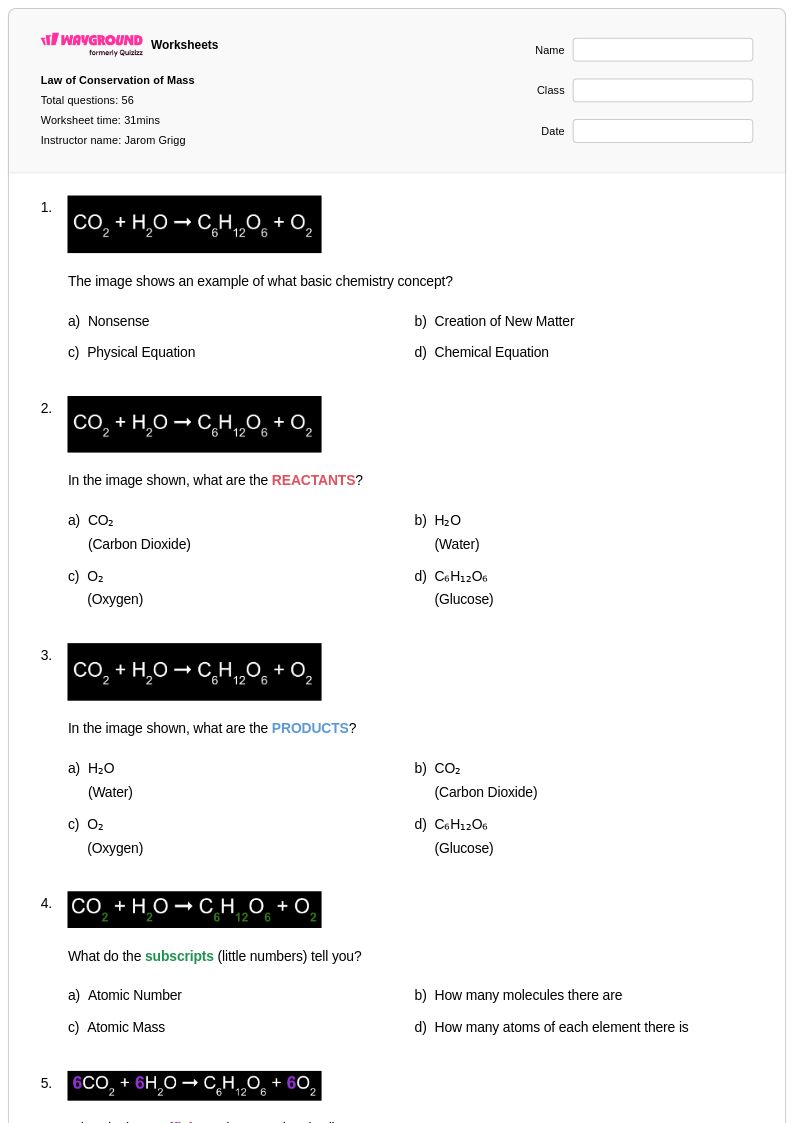
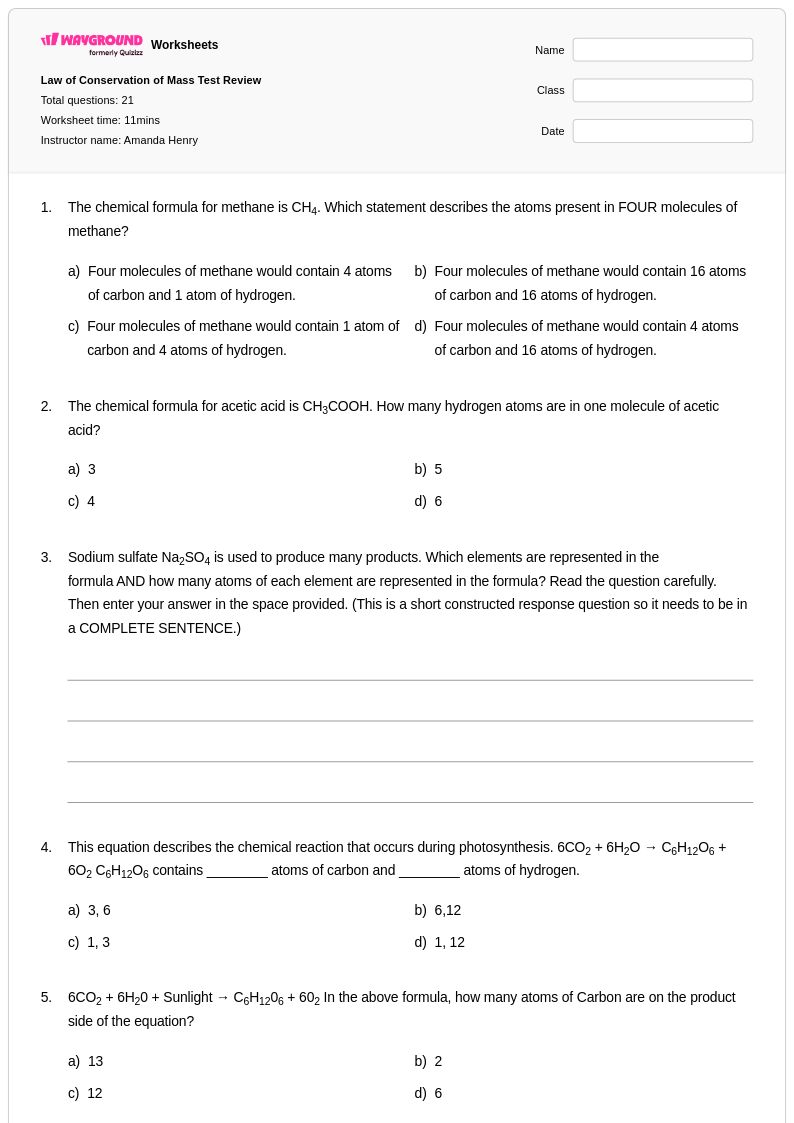
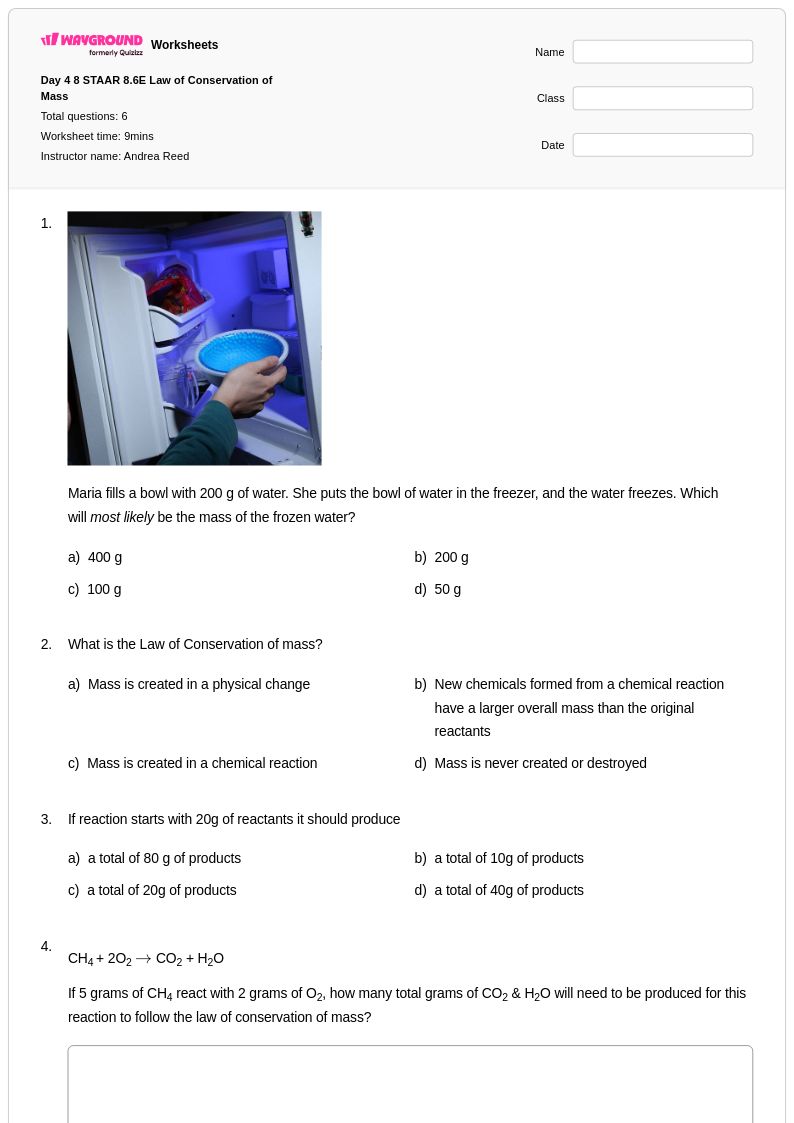
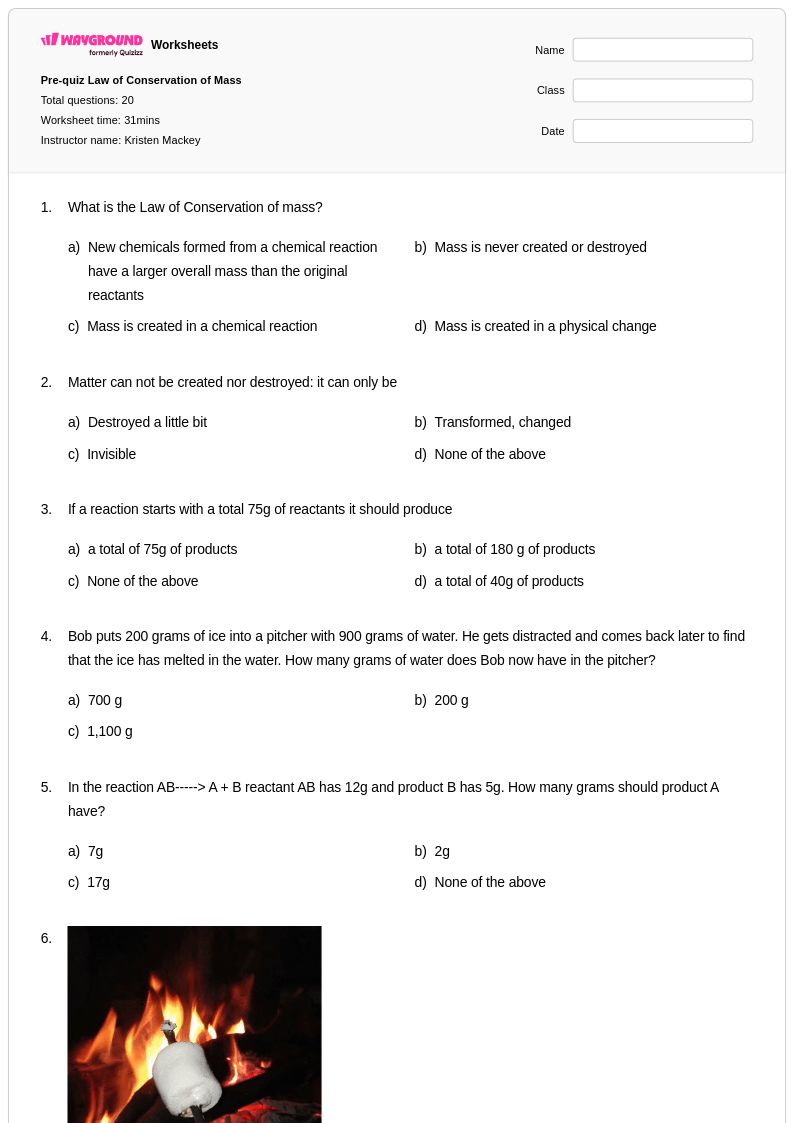
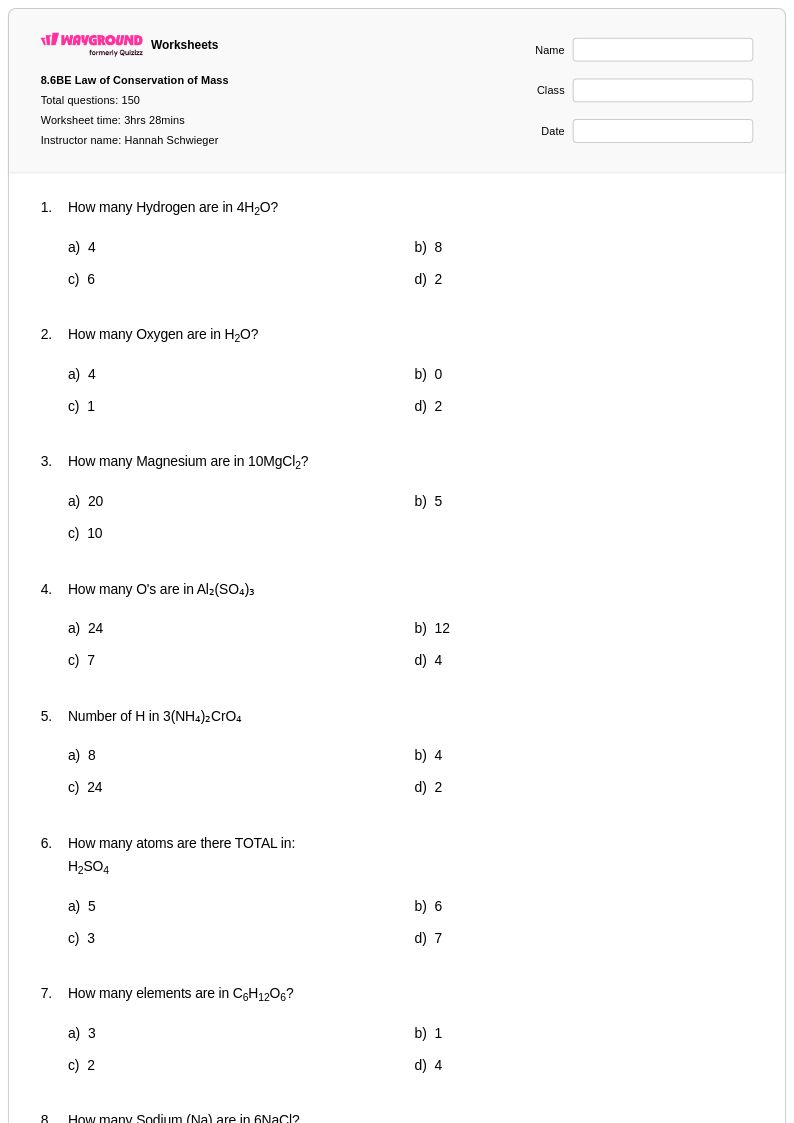
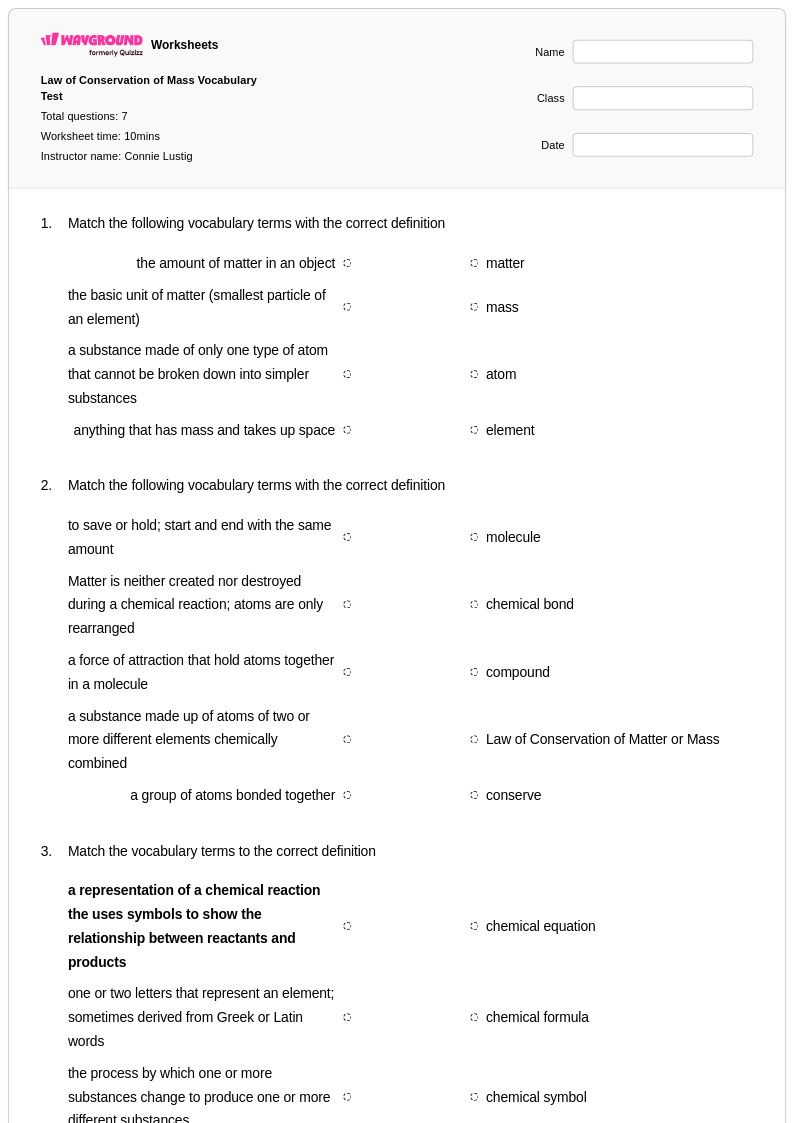
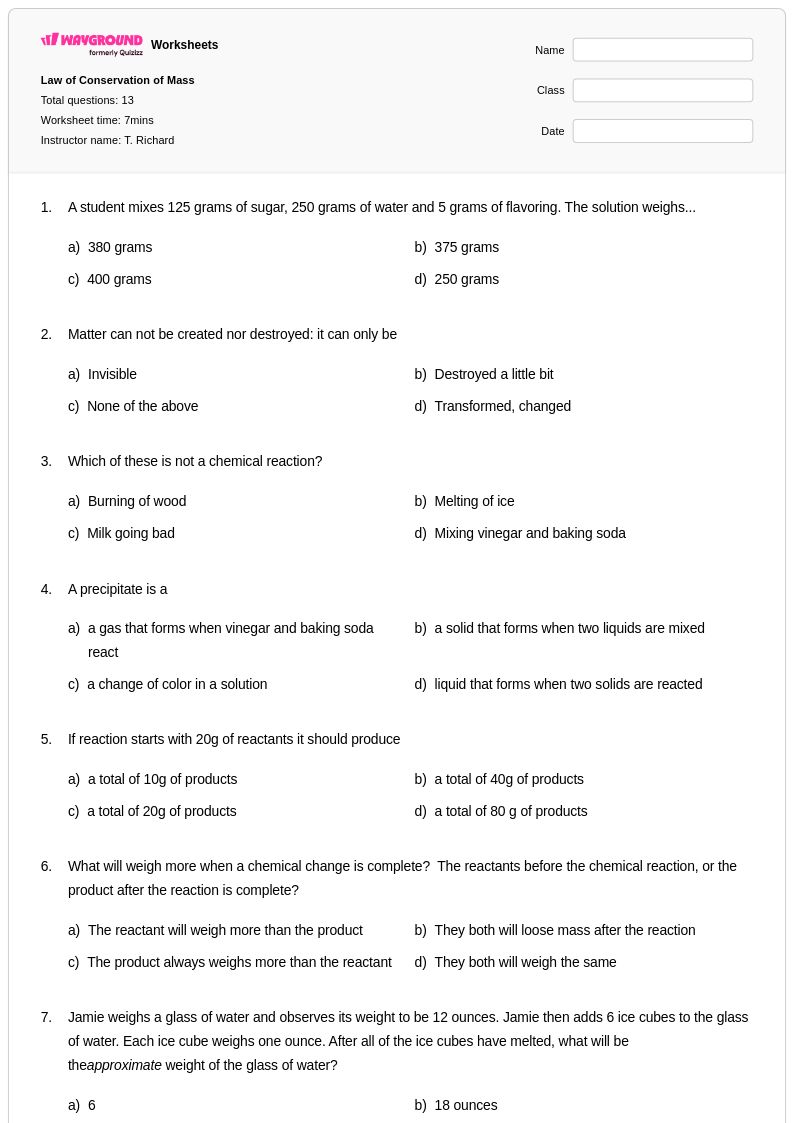
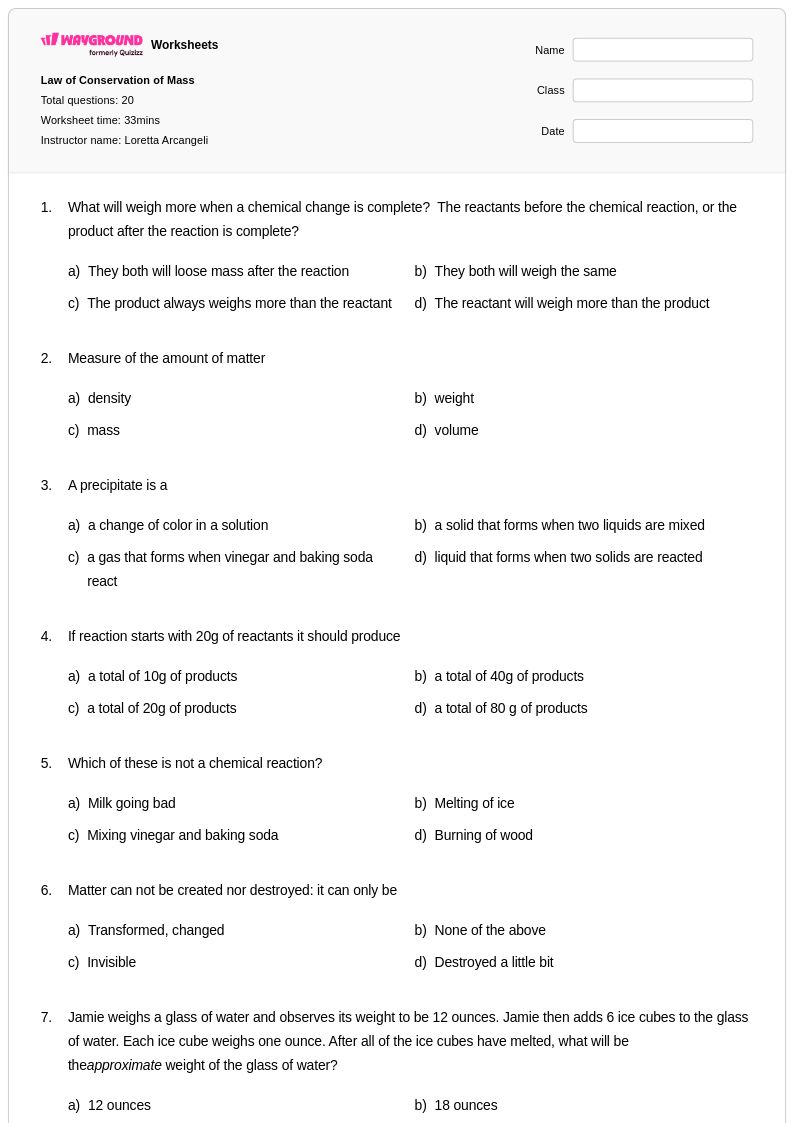
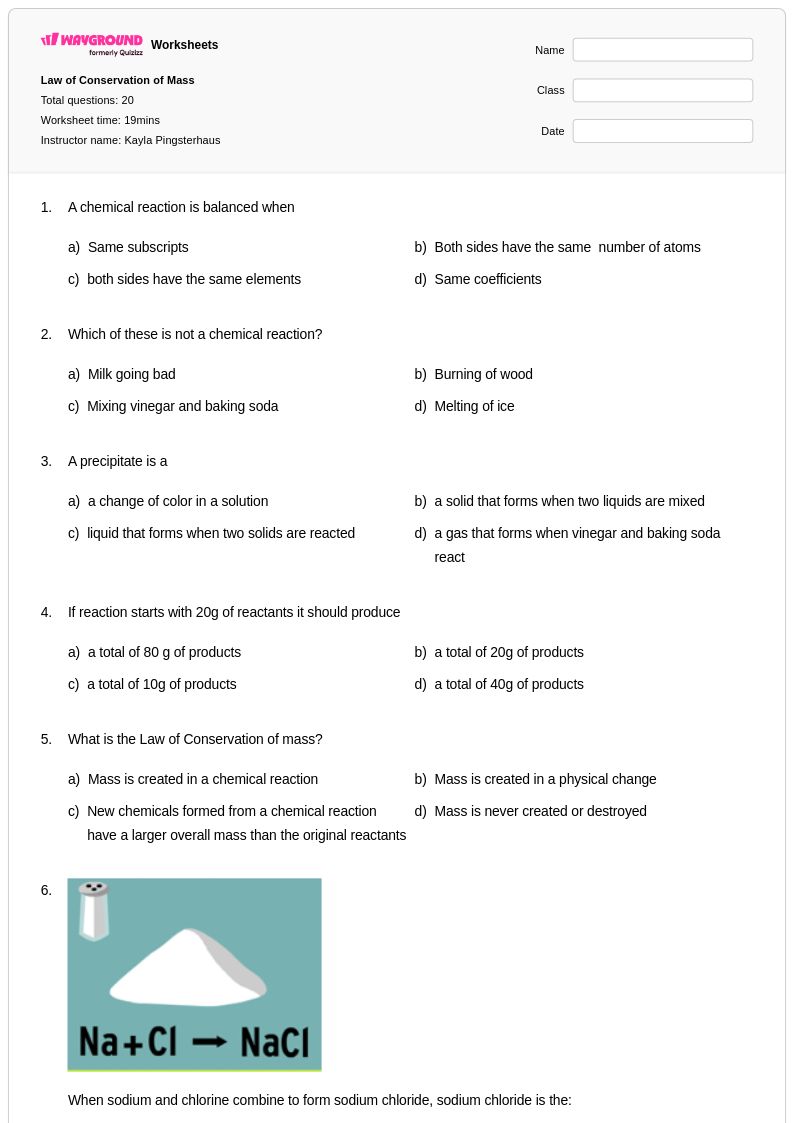
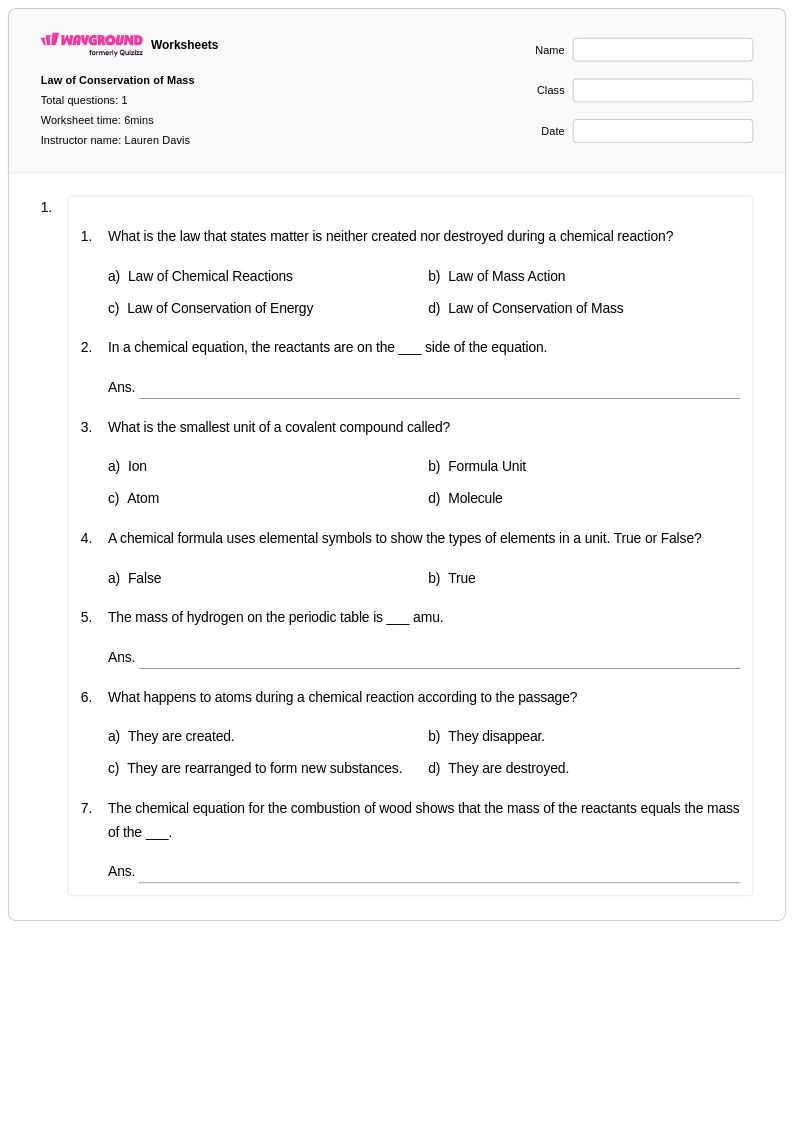
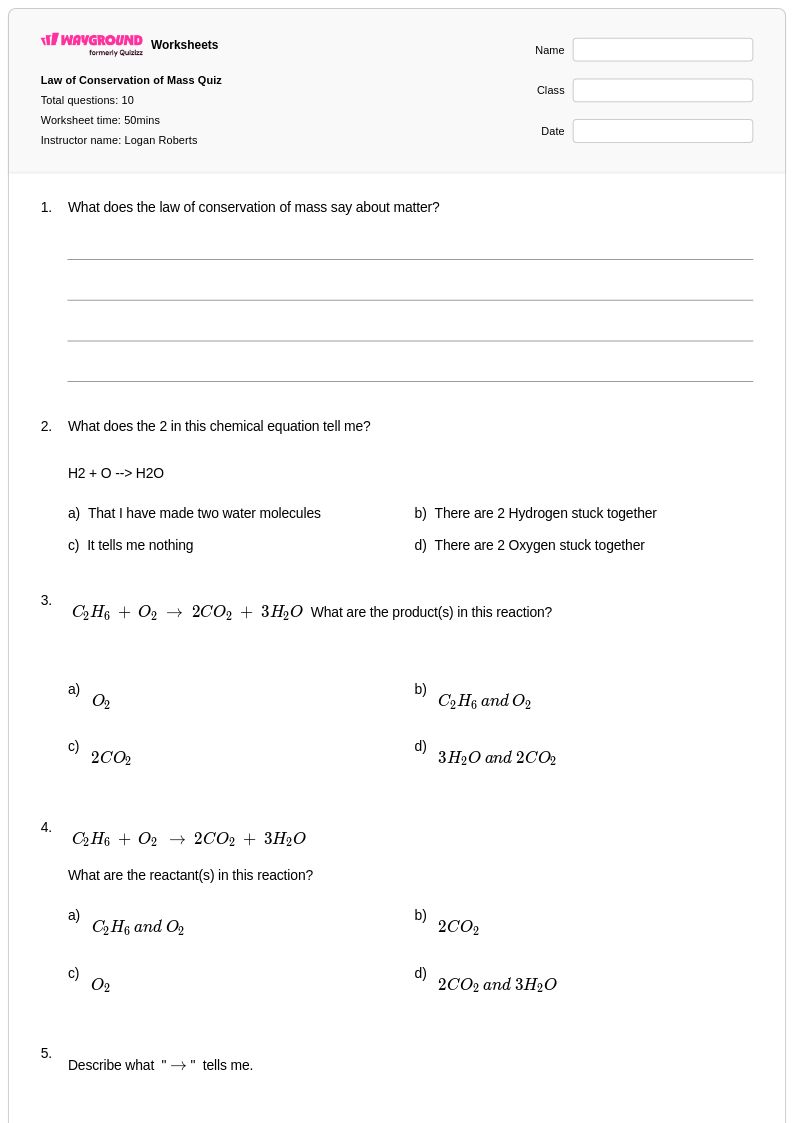
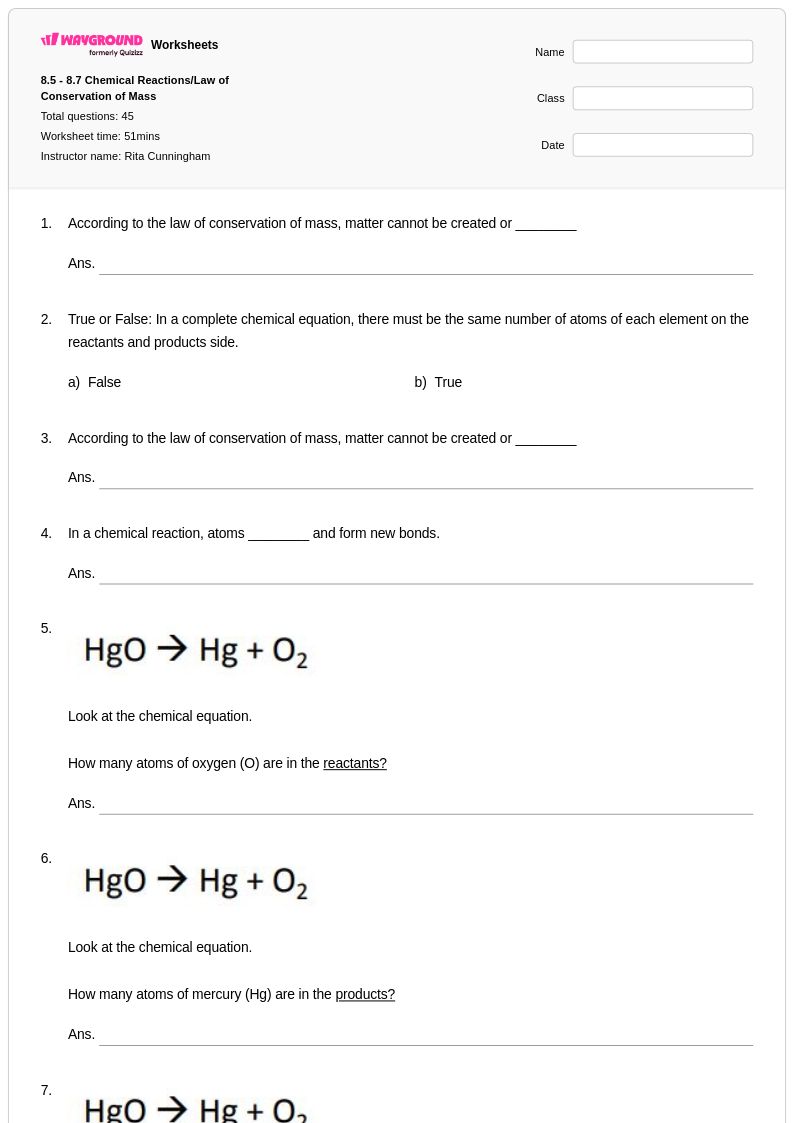
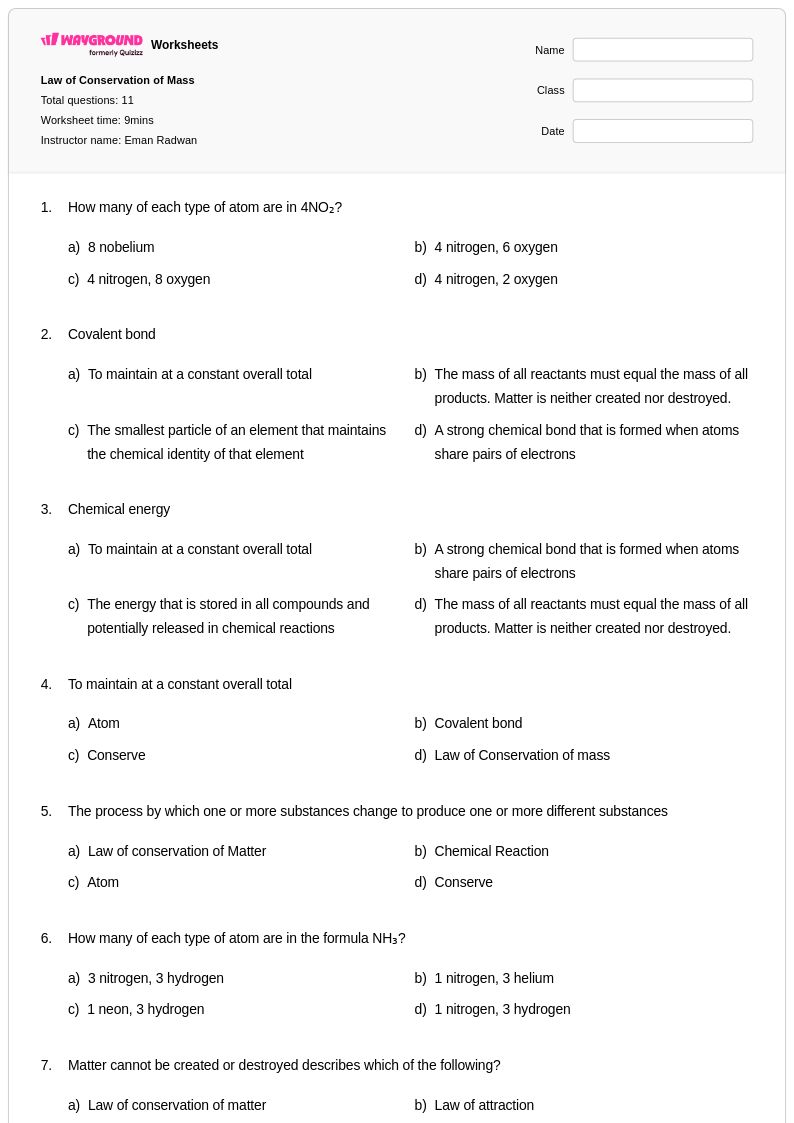
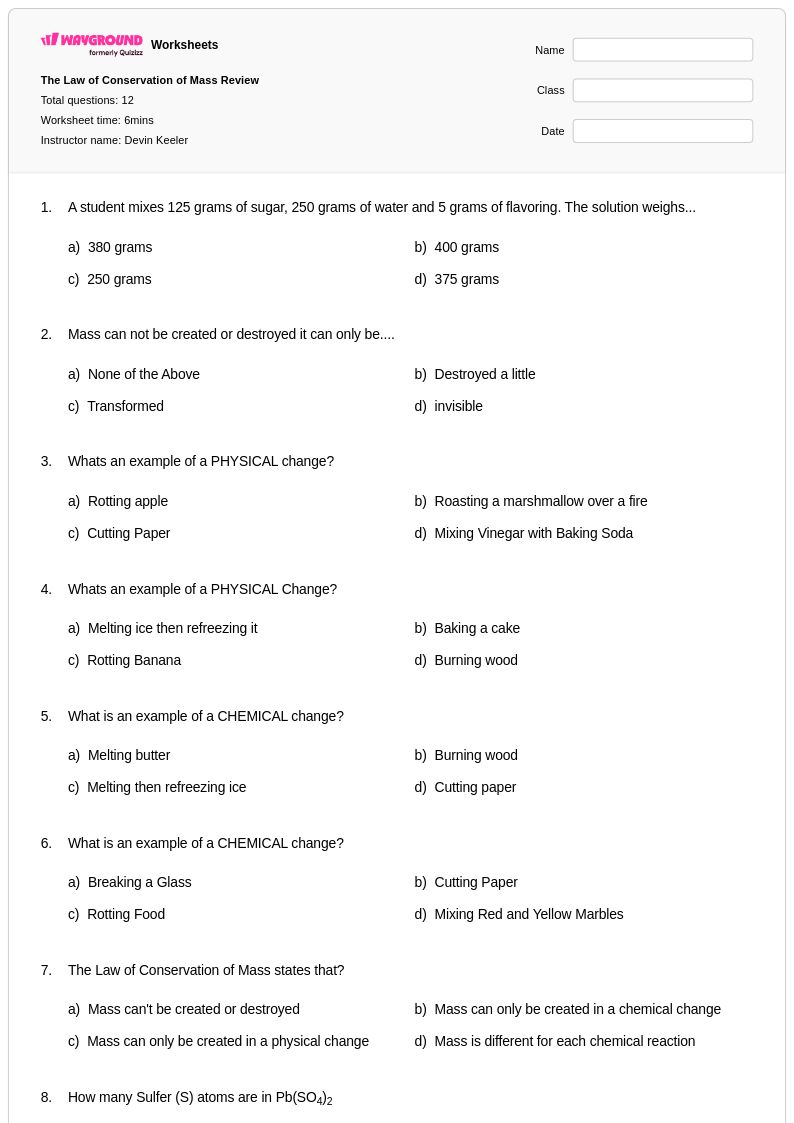
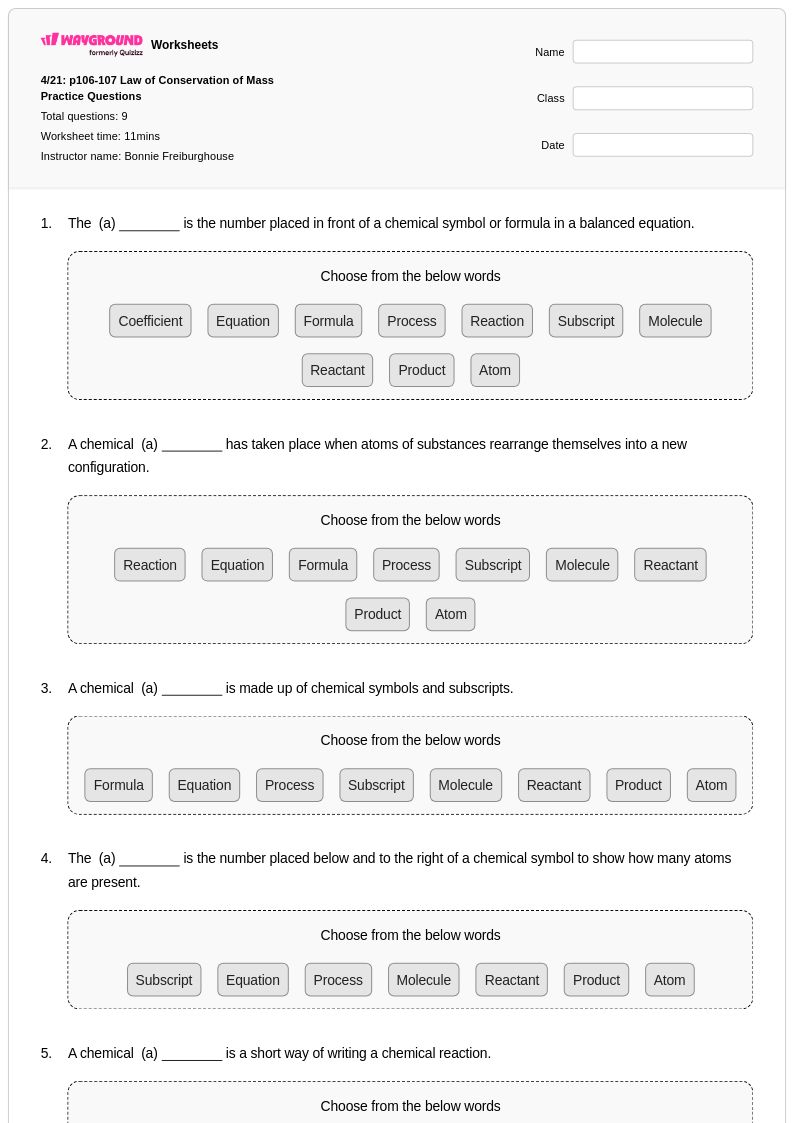
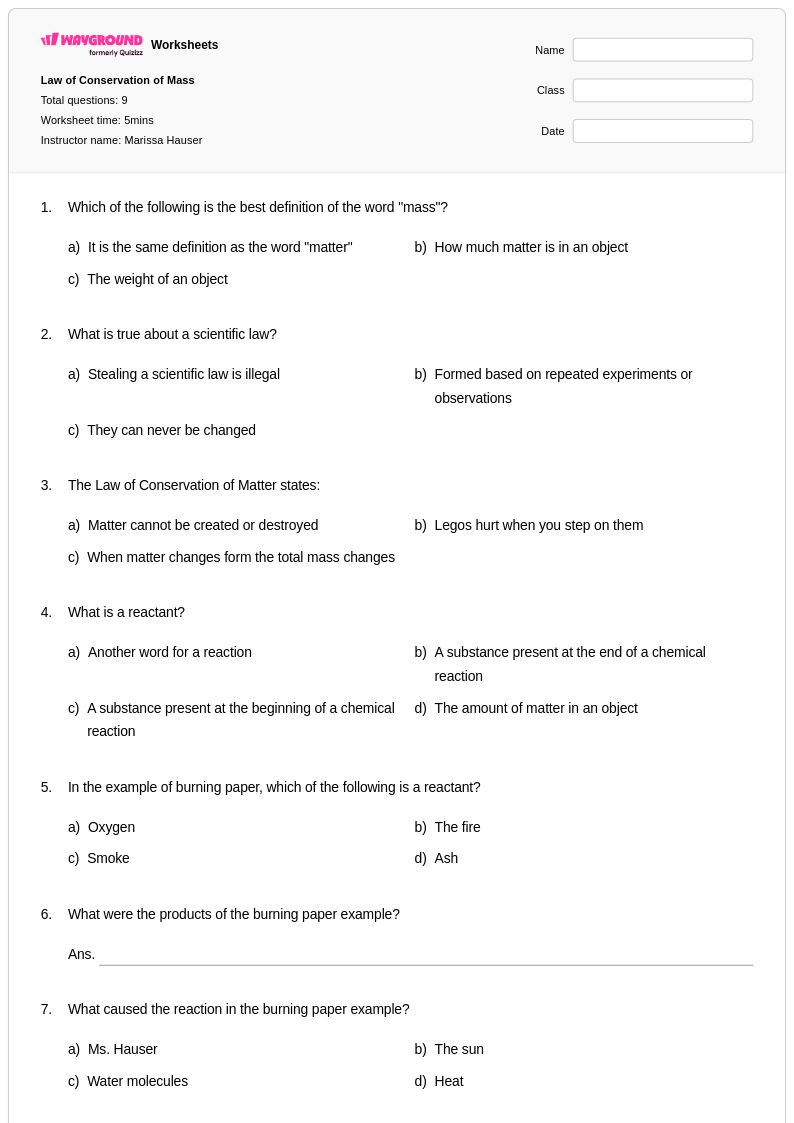
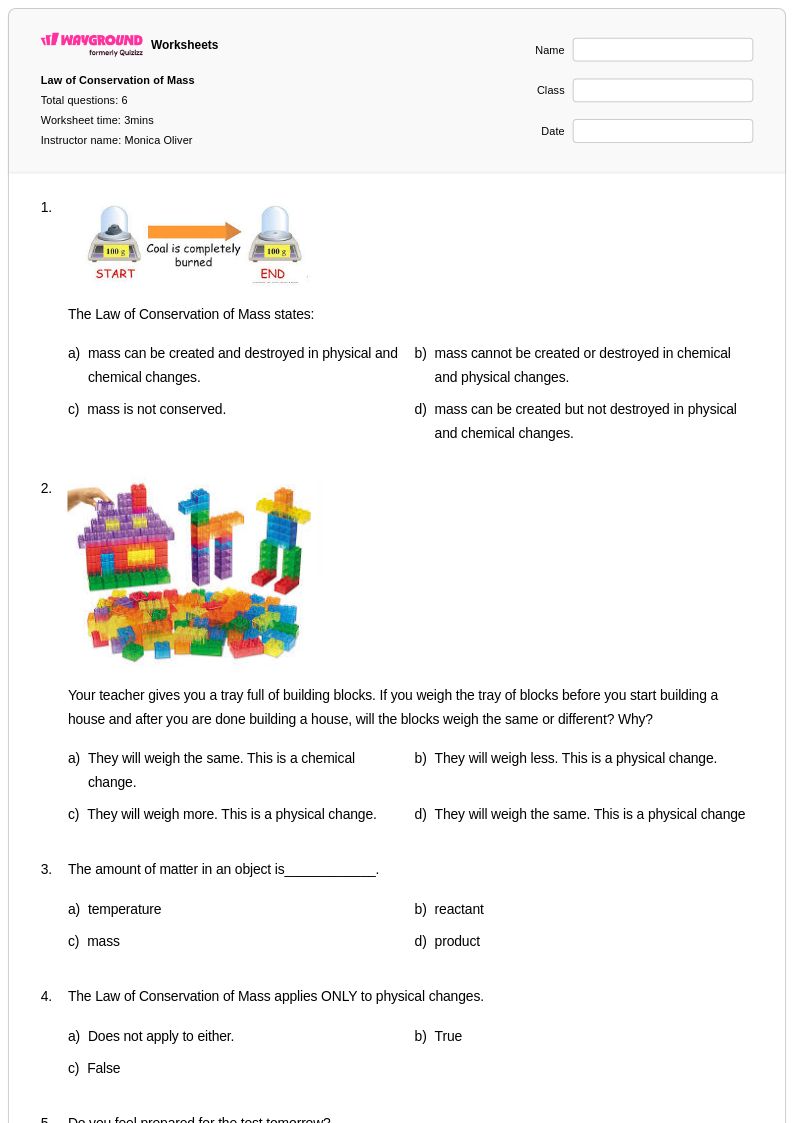
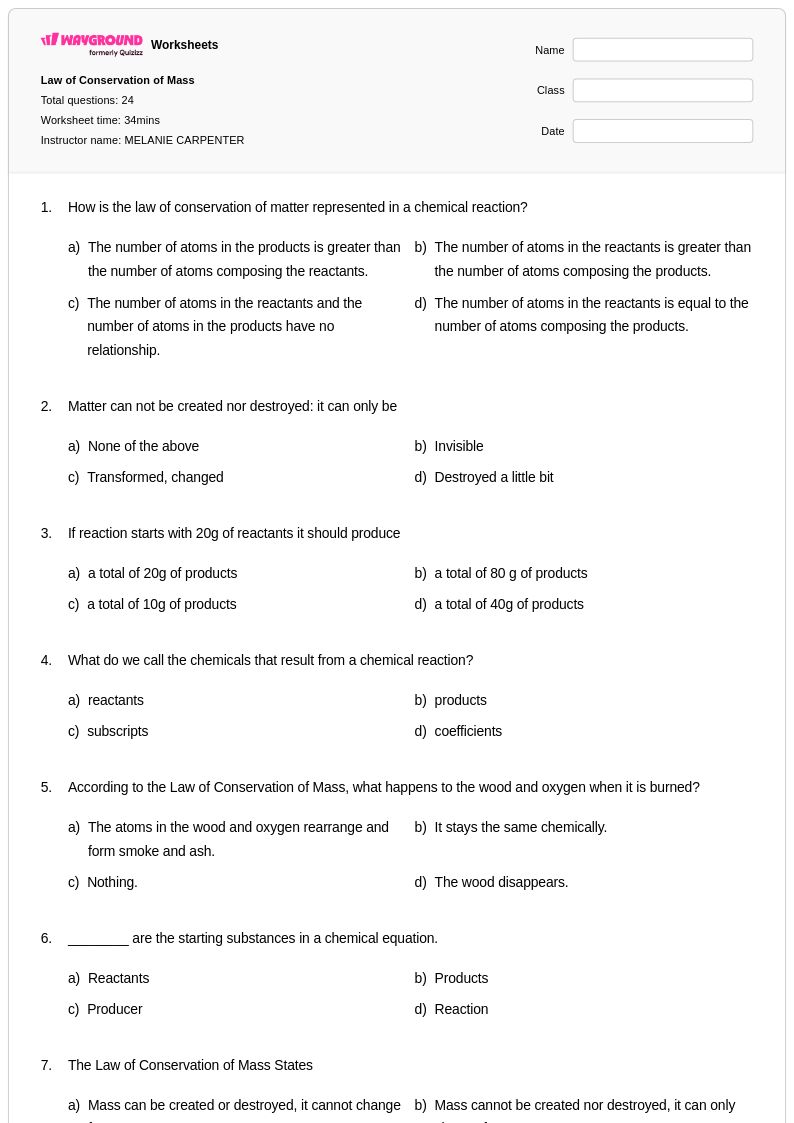
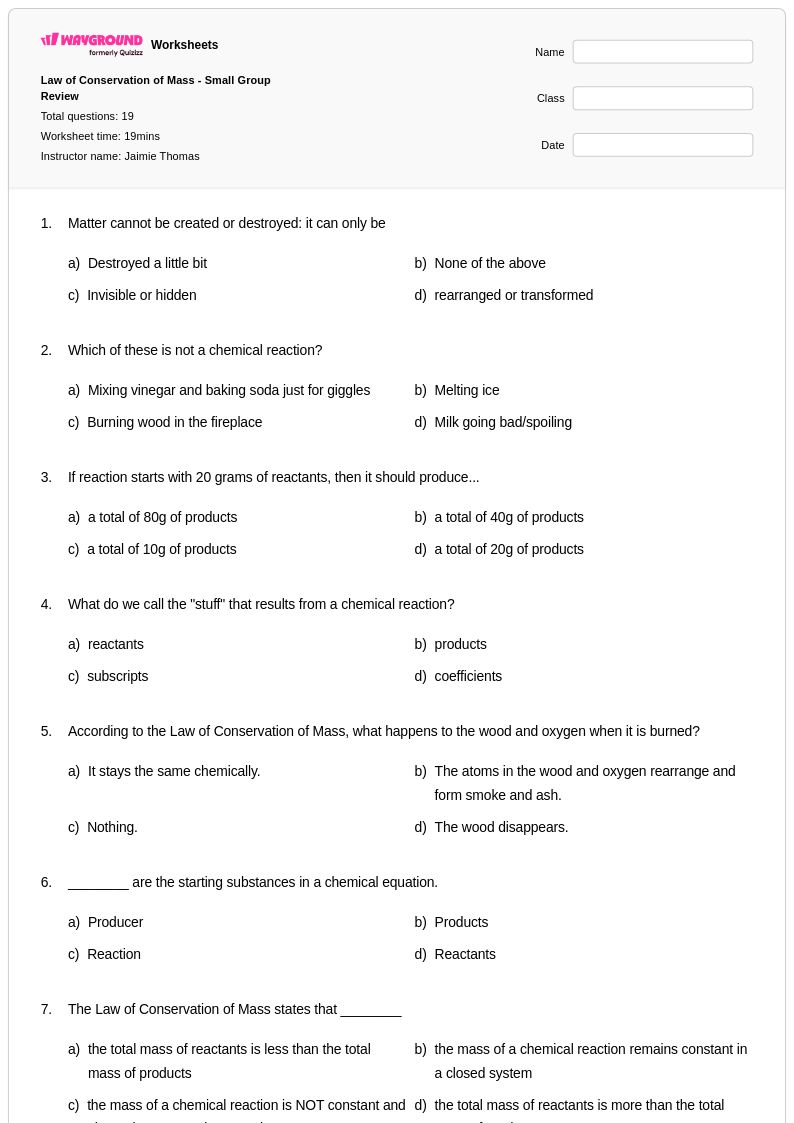
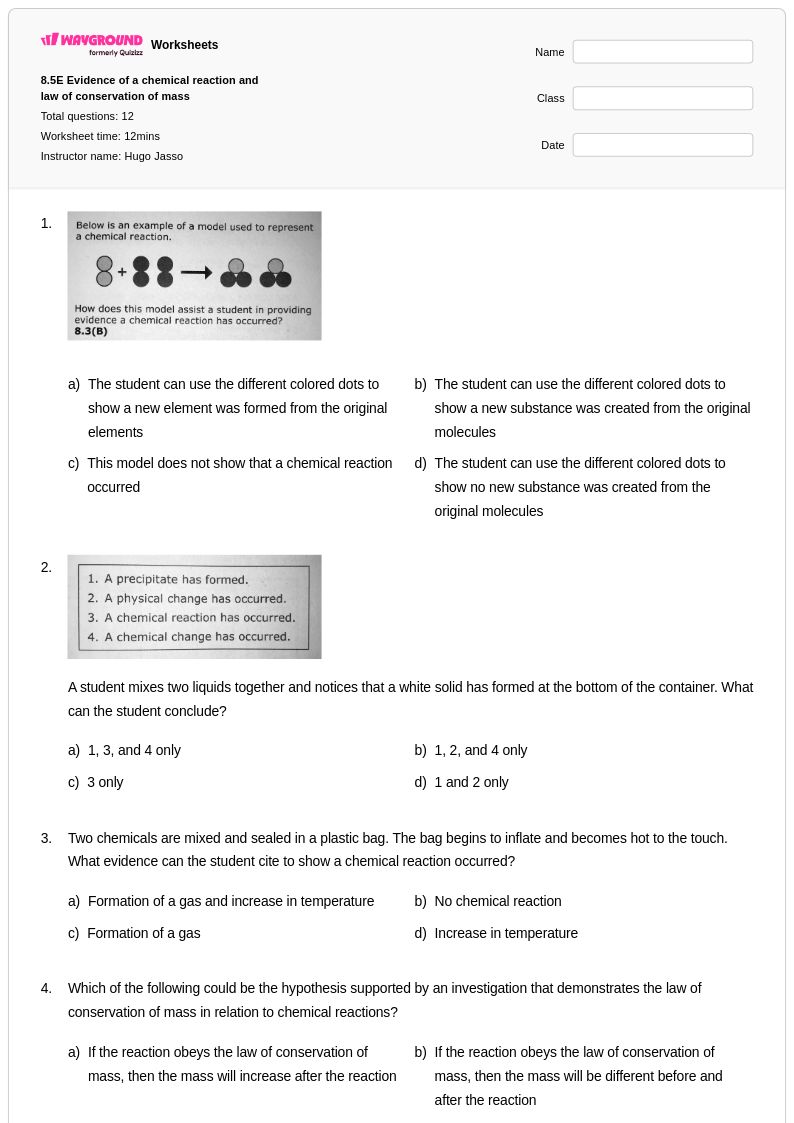
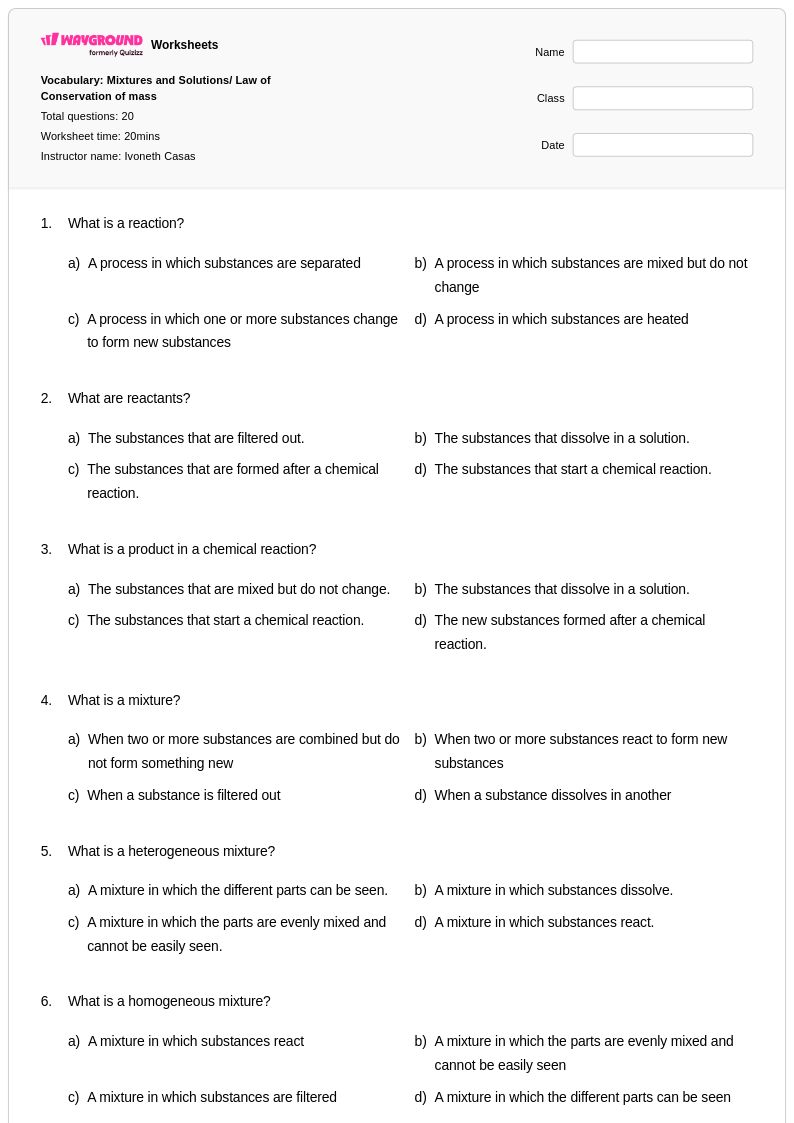
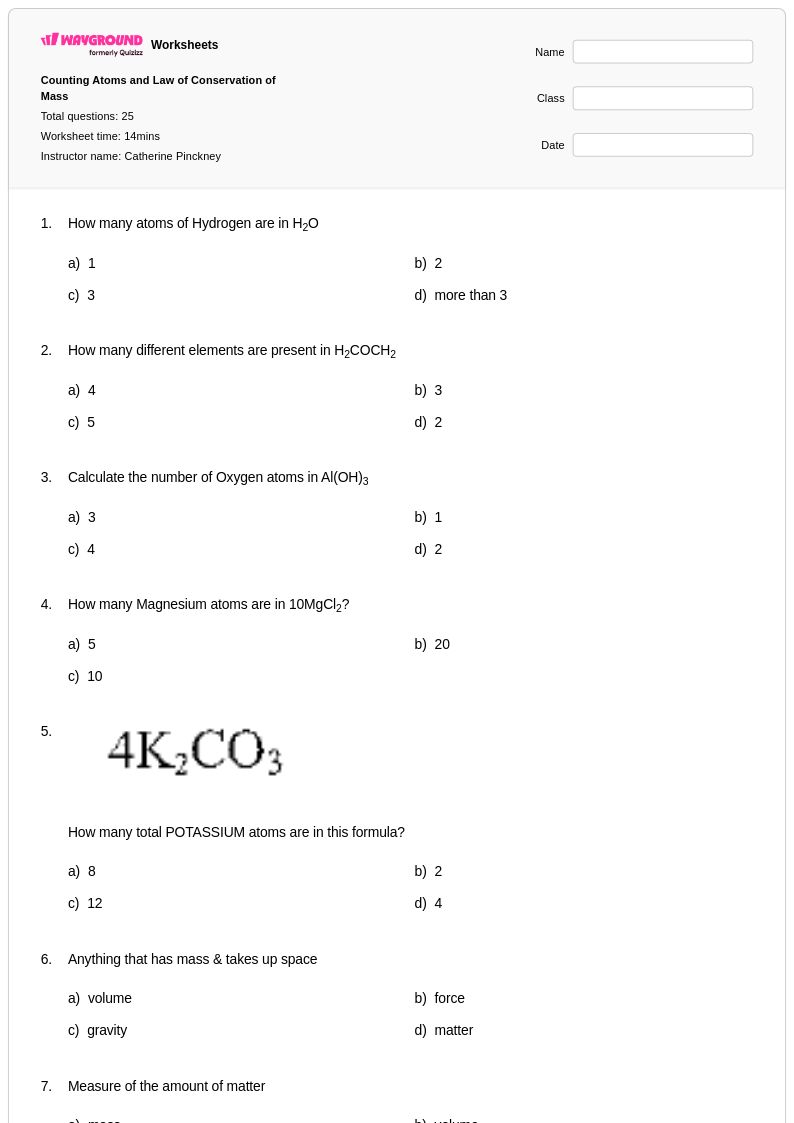
Law of Conservation of Mass worksheets for Class 6 students available through Wayground (formerly Quizizz) provide essential practice in understanding one of chemistry's fundamental principles. These comprehensive worksheets guide students through the concept that matter cannot be created or destroyed in chemical reactions, only rearranged into different forms. Students engage with practice problems that demonstrate how the total mass of reactants equals the total mass of products, reinforcing this critical scientific law through hands-on calculations and real-world examples. Each worksheet includes detailed answer keys to support independent learning and comes in convenient pdf format as free printables, making them accessible for both classroom instruction and homework assignments that strengthen analytical thinking and mathematical skills in chemistry.
Wayground (formerly Quizizz) empowers educators with millions of teacher-created Law of Conservation of Mass resources that streamline lesson planning and enhance student understanding of this foundational chemistry concept. The platform's robust search and filtering capabilities allow teachers to quickly locate worksheets aligned with specific standards and grade-level expectations, while differentiation tools enable customization for diverse learning needs and skill levels. These versatile materials are available in both printable and digital formats, including downloadable pdfs, providing flexibility for various classroom environments and teaching approaches. Teachers can effectively use these resources for targeted remediation with struggling students, enrichment activities for advanced learners, and systematic skill practice that builds confidence in chemical reasoning and problem-solving abilities essential for future science coursework.
FAQs
How do I teach the law of conservation of mass to chemistry students?
The most effective approach is to anchor instruction in observable, hands-on demonstrations before moving to symbolic representations. Start with a simple reaction like burning a candle or dissolving salt in water, then have students measure mass before and after to confirm it is conserved. From there, connect the physical observation to the abstract principle that atoms are rearranged, not created or destroyed, in any chemical reaction. Balancing chemical equations then becomes a logical extension of what students have already seen empirically.
What practice problems help students master conservation of mass in chemical reactions?
The most effective practice problems require students to calculate missing reactant or product masses using the principle that total mass before a reaction equals total mass after. Problems that combine mass conservation with balancing chemical equations are especially valuable because they reinforce both the conceptual and quantitative dimensions of the law. Analyzing experimental data tables where students must identify whether mass was conserved in a given scenario also builds critical thinking alongside procedural fluency.
What common mistakes do students make when applying the law of conservation of mass?
The most frequent misconception is that mass appears to change when a gas is produced or consumed, because students cannot see it leaving or entering the system. Students often incorrectly conclude that mass was lost in combustion reactions or gained when a solid forms from solution. Another common error is conflating conservation of mass with conservation of matter in a non-closed system, leading to confusion about open versus closed system experiments. Targeted practice with gas-producing reactions and explicit discussion of open systems helps address these specific misconceptions.
How can I use Law of Conservation of Mass worksheets in my classroom?
Law of Conservation of Mass worksheets on Wayground are available as both printable PDFs and digital formats, making them adaptable for traditional lab follow-up assignments, homework, or technology-integrated lessons. Teachers can also host worksheets as a quiz directly on Wayground, enabling real-time tracking of student responses and immediate feedback. Using them after a demonstration or lab activity reinforces the conceptual principle through quantitative problem-solving, which deepens retention.
How do I differentiate conservation of mass instruction for students at different readiness levels?
For students who are still building foundational understanding, start with problems that provide all masses except one, so students apply the principle directly without additional complexity. More advanced students can work with multi-step stoichiometry problems or experimental data analysis tasks that require them to evaluate whether conservation was upheld and explain sources of error. On Wayground, teachers can apply accommodations such as reduced answer choices or read-aloud settings to individual students, allowing the same worksheet to serve a range of learners without creating separate materials.
How does the law of conservation of mass connect to balancing chemical equations?
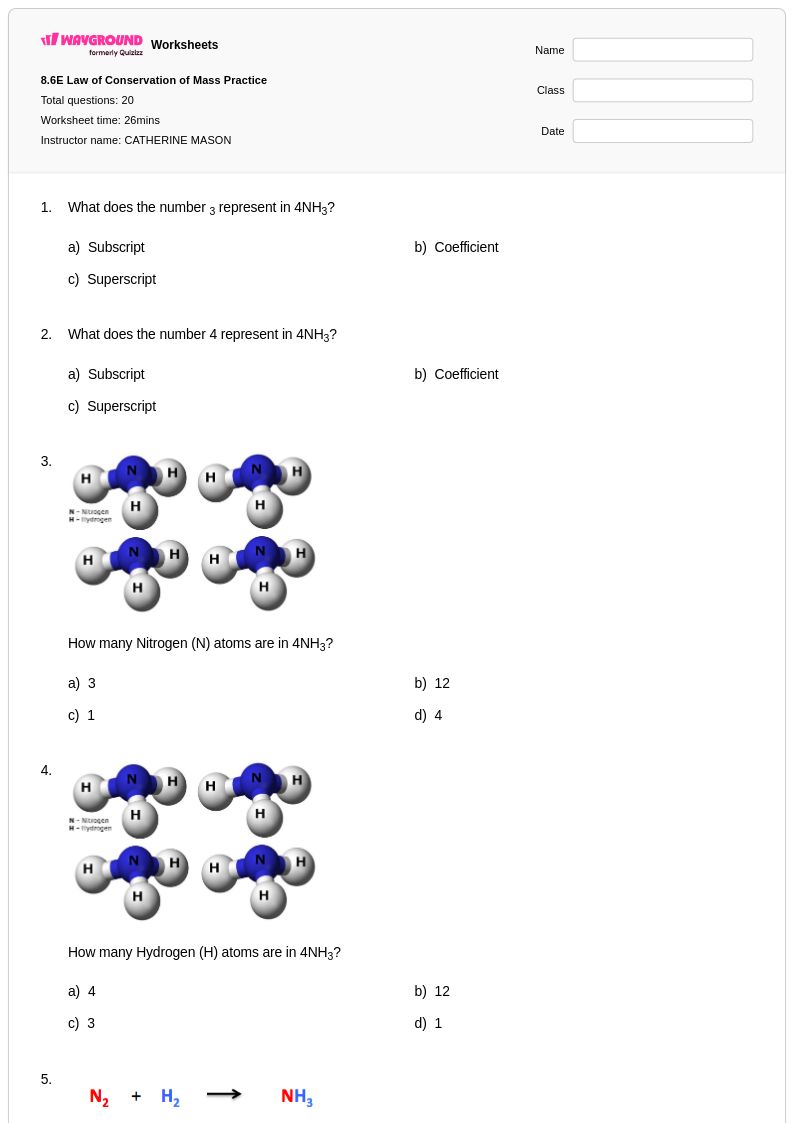
Balancing chemical equations is a direct application of conservation of mass: coefficients are adjusted so that the number of atoms of each element is equal on both sides, which ensures total mass is conserved. Students who understand this connection treat balancing as a logical necessity rather than an arbitrary procedural rule. Pairing equation-balancing practice with mass calculation problems helps students see both the qualitative and quantitative dimensions of the same underlying principle.