Free Printable Gas Properties Worksheets for Class 6
Explore Wayground's comprehensive collection of Class 6 gas properties worksheets featuring free printables, practice problems, and answer keys to help students master fundamental concepts about gas behavior and characteristics.
Explore printable Gas Properties worksheets for Class 6
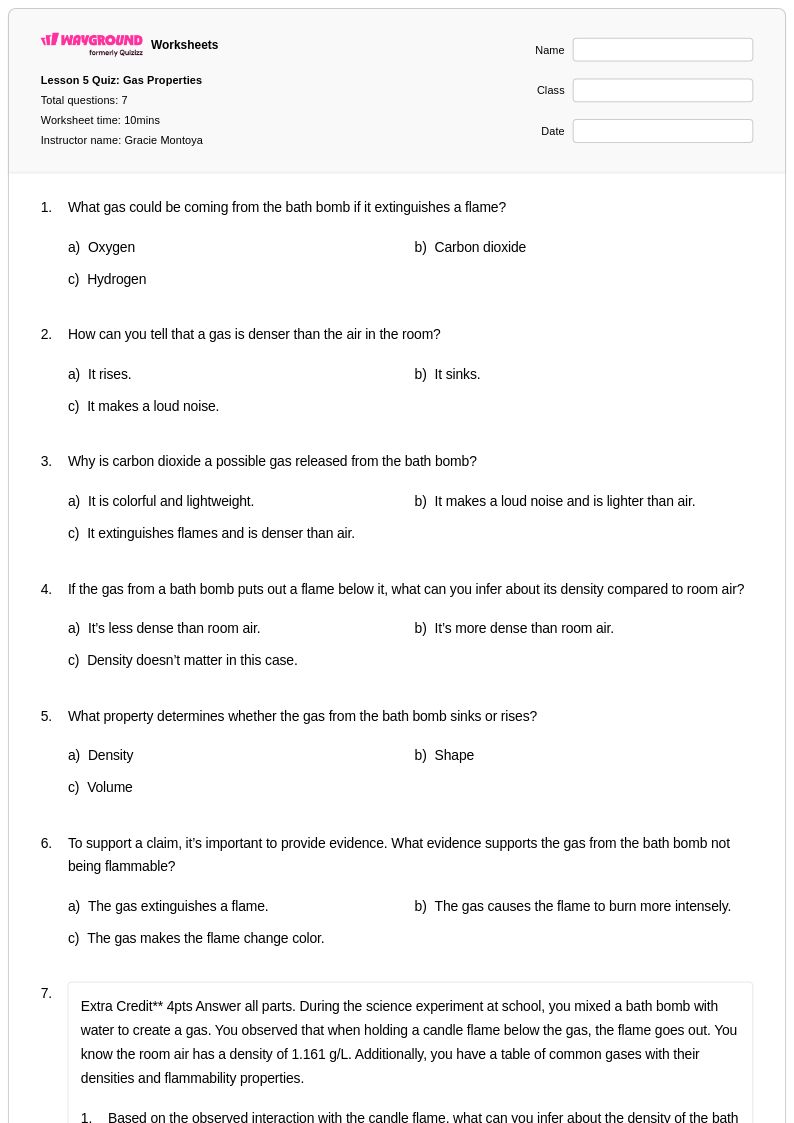
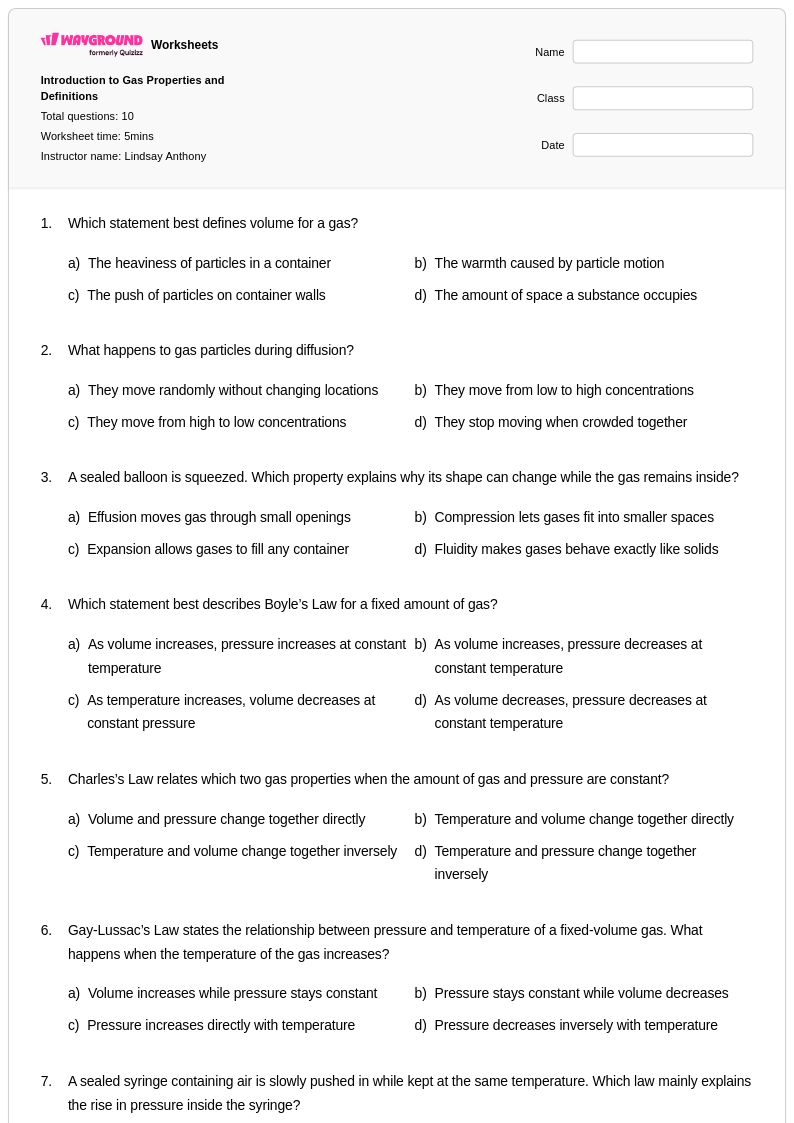
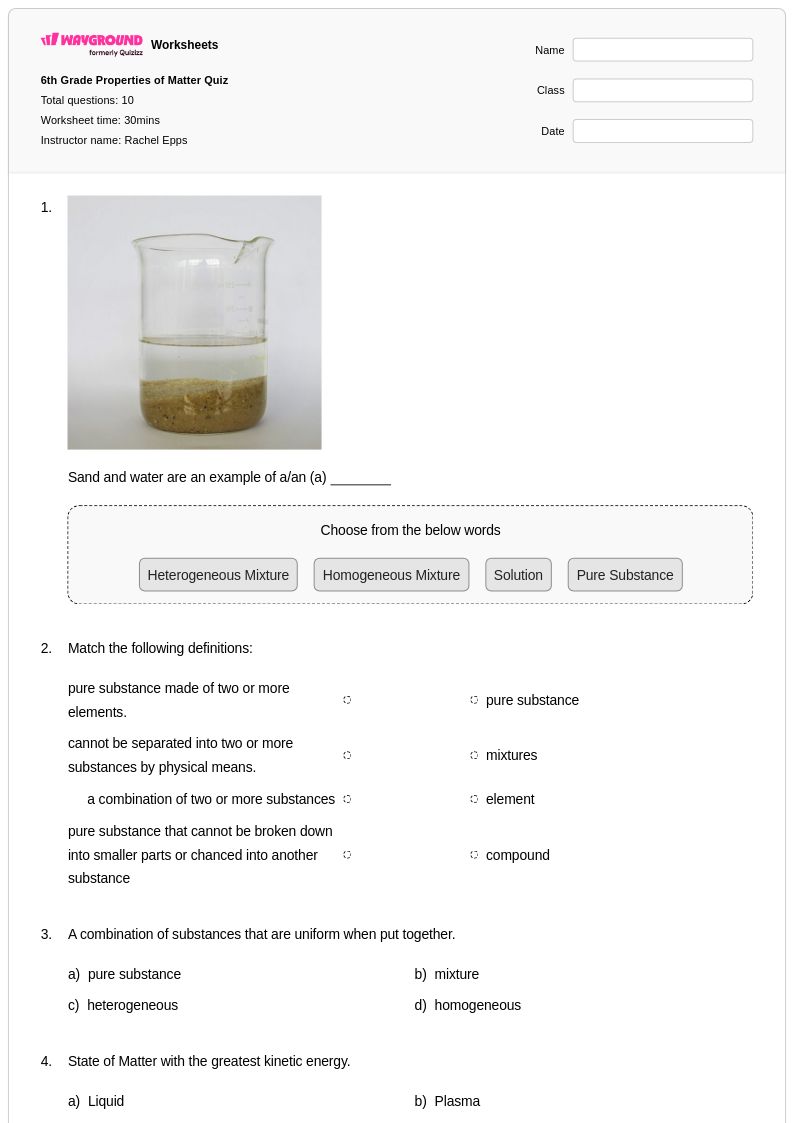
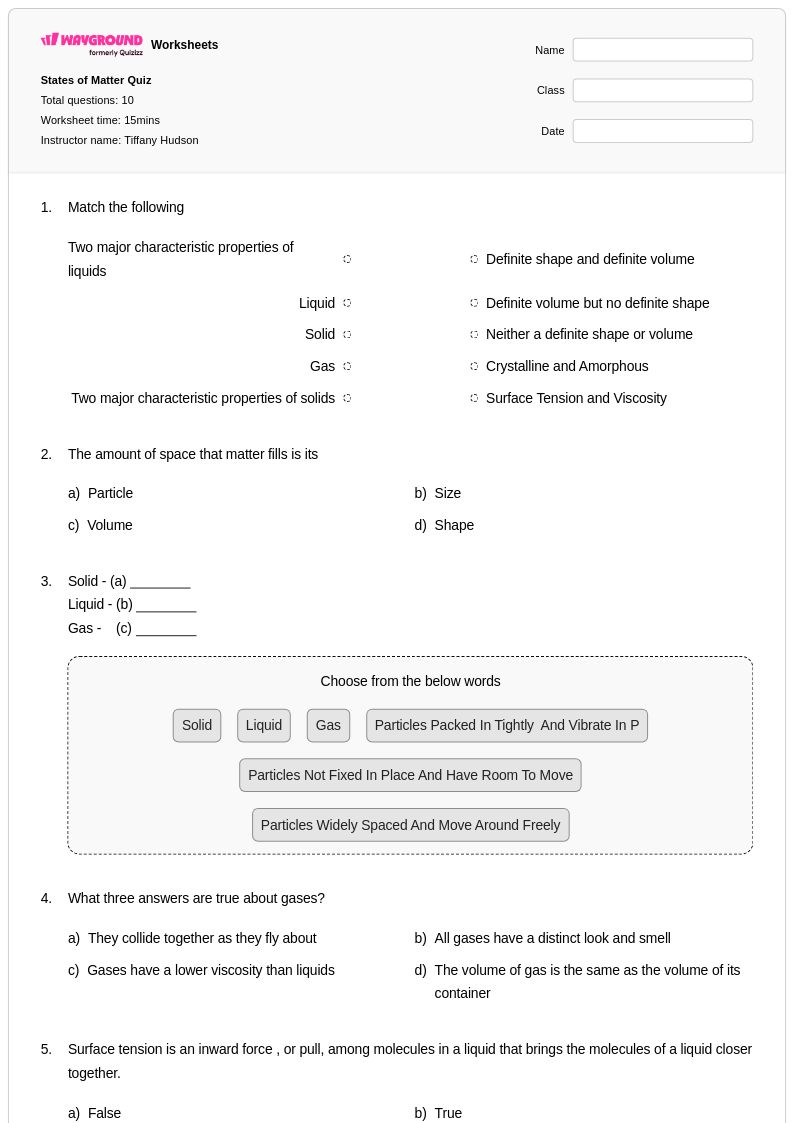
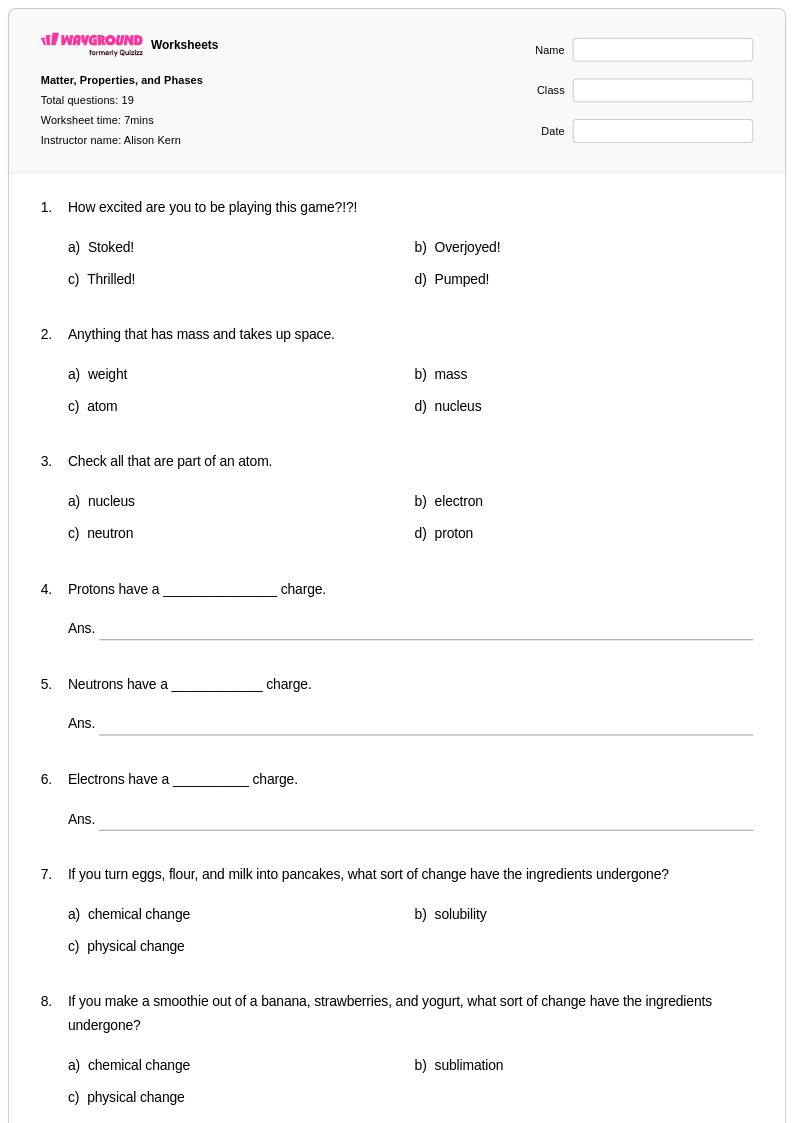
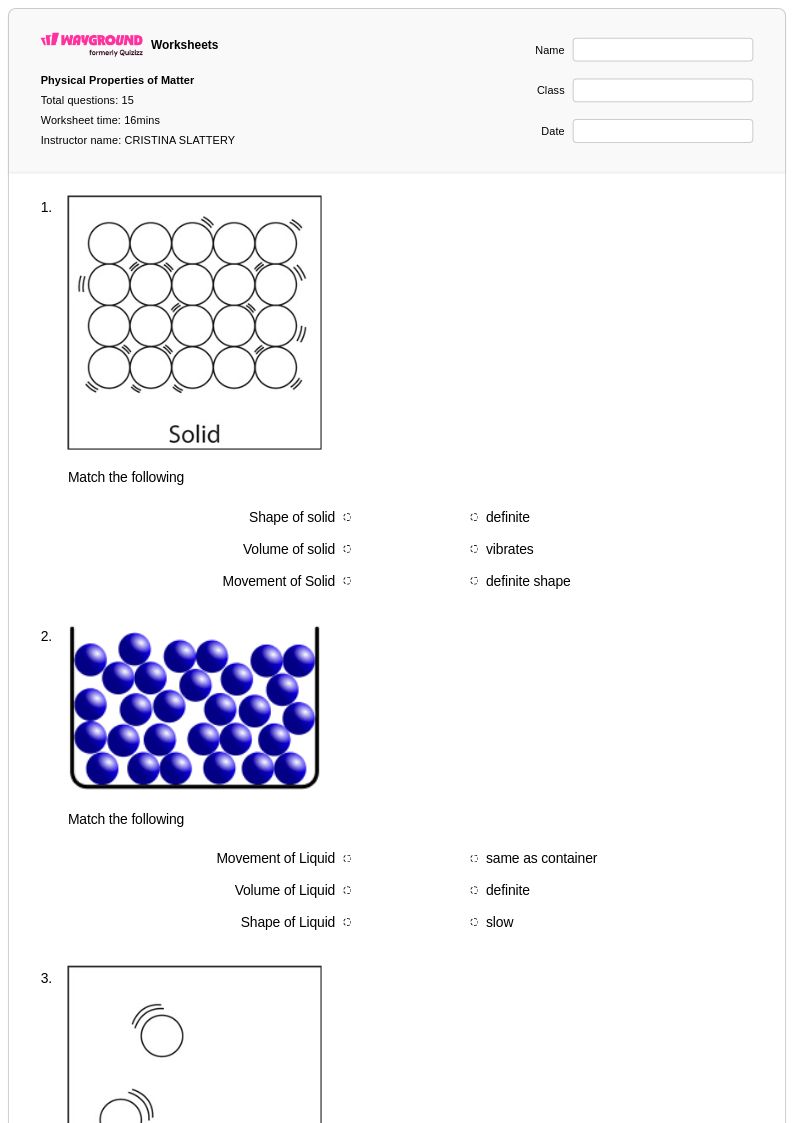
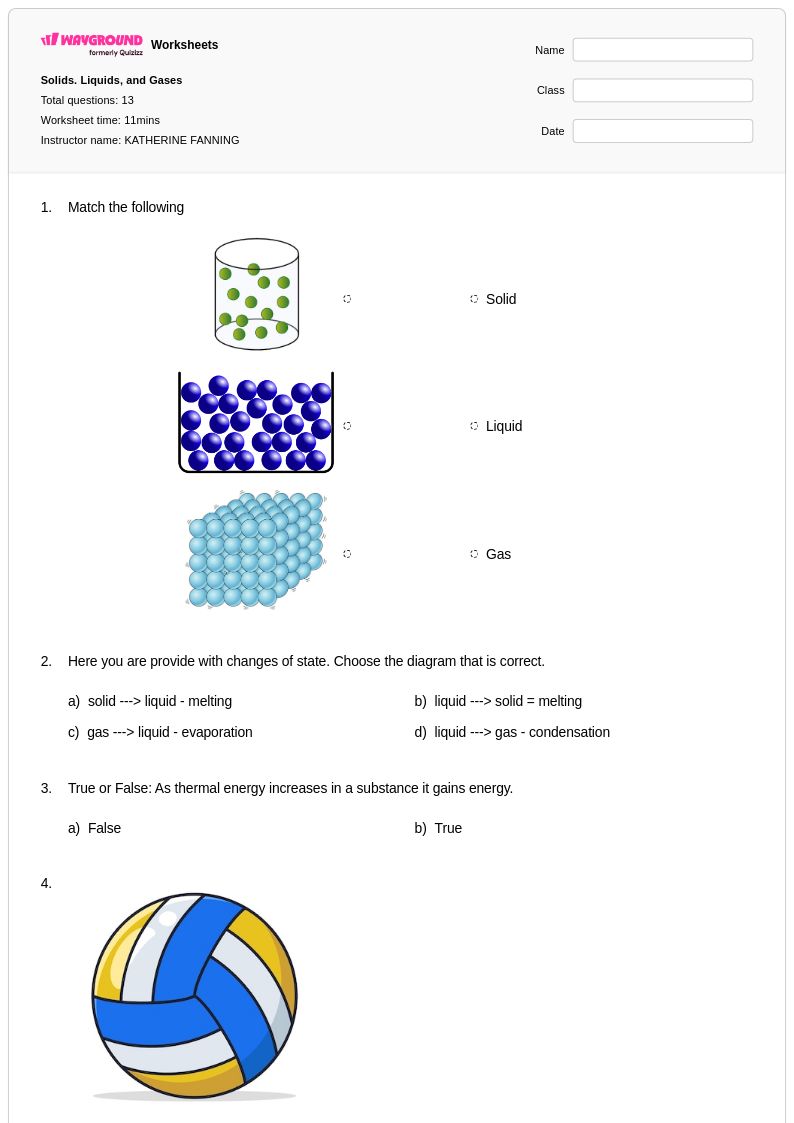
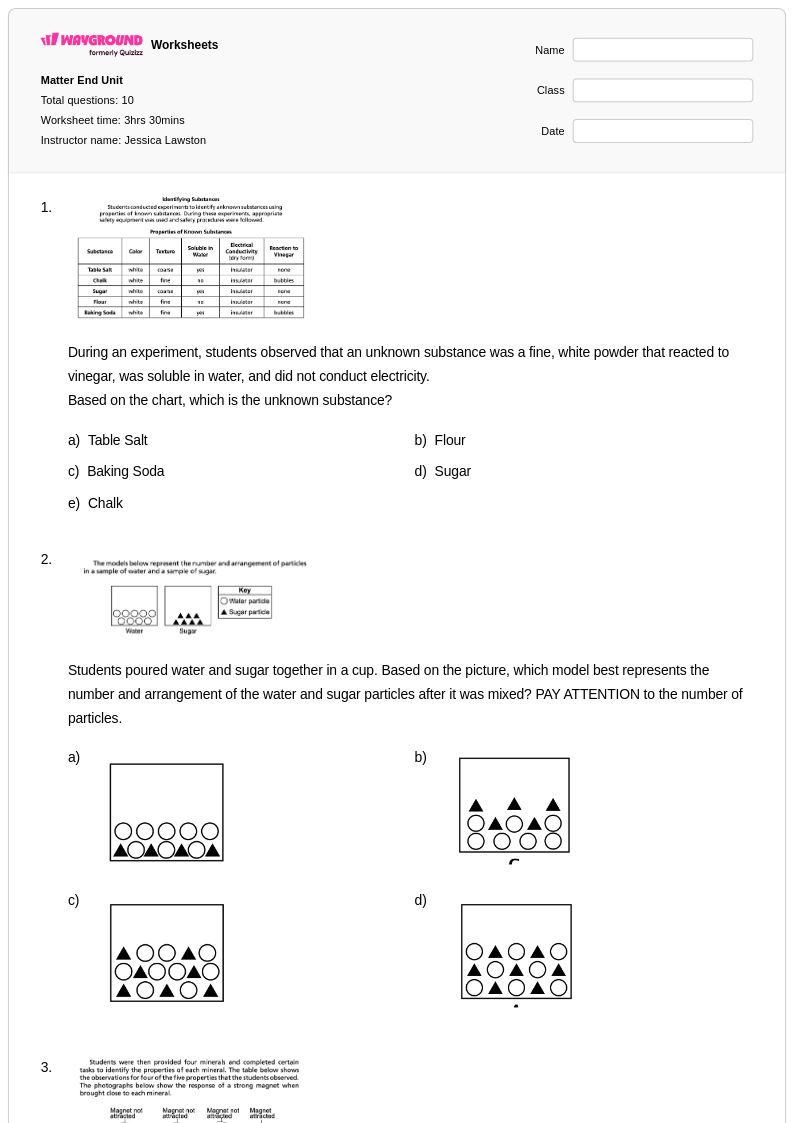
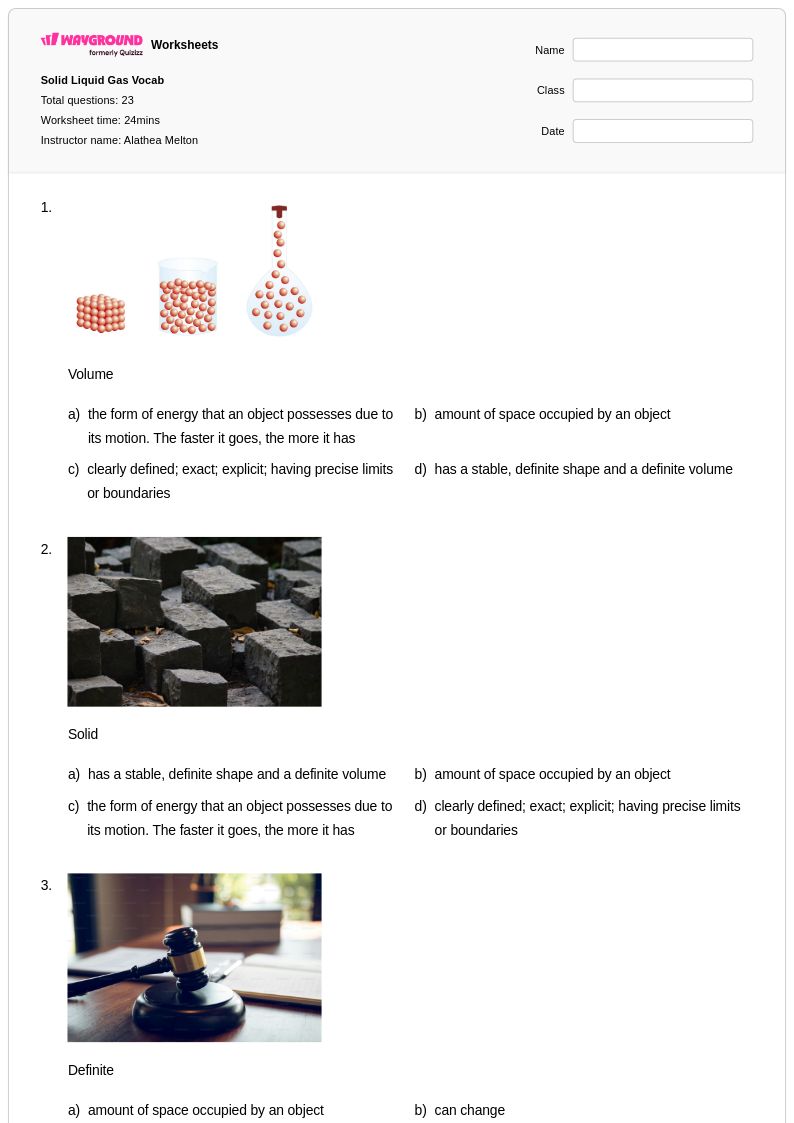
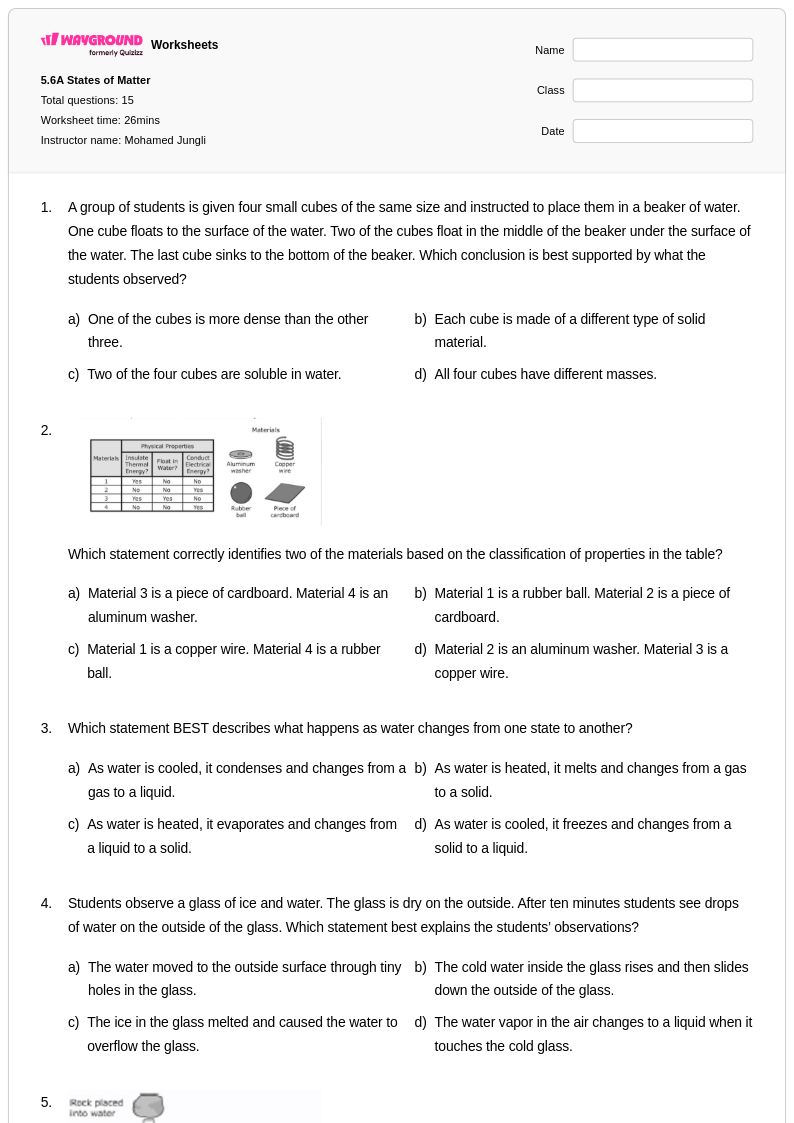
Gas properties worksheets for Class 6 students available through Wayground (formerly Quizizz) provide comprehensive practice materials that help young scientists understand the fundamental characteristics and behaviors of gases. These carefully designed resources strengthen essential skills including identifying gas properties such as compressibility, expandability, and the ability to fill containers completely, while also introducing students to basic concepts about particle movement and kinetic theory at an age-appropriate level. Each worksheet collection includes detailed answer keys that support both independent study and classroom instruction, with free printables offering practice problems that range from observing everyday gas behaviors to conducting simple experiments that demonstrate how gases respond to changes in temperature and pressure.
Wayground (formerly Quizizz) empowers educators with millions of teacher-created resources specifically focused on gas properties and broader chemistry concepts, featuring robust search and filtering capabilities that allow instructors to locate materials perfectly aligned with Class 6 science standards and learning objectives. The platform's differentiation tools enable teachers to customize worksheets for varying skill levels within their classrooms, while the availability of both printable pdf formats and interactive digital versions provides maximum flexibility for lesson planning and student engagement. These comprehensive features streamline the process of creating effective remediation activities for struggling learners, enrichment opportunities for advanced students, and targeted skill practice sessions that reinforce critical understanding of how gases behave differently from solids and liquids in various scientific scenarios.
FAQs
How do I teach gas laws like Boyle's Law and Charles's Law in a chemistry class?
Start by building conceptual understanding before introducing equations. Use visual demonstrations, such as compressing a syringe to show pressure-volume relationships, before students work with mathematical relationships. Once students can describe what happens qualitatively, introduce Boyle's Law (P₁V₁ = P₂V₂) and Charles's Law (V₁/T₁ = V₂/T₂) with structured problem sets that isolate each variable. Connecting each law to a real-world scenario, such as a bicycle pump for Boyle's Law or a balloon in cold air for Charles's Law, helps students retain the distinctions.
What practice problems help students master gas law calculations?
Effective gas law practice should progress from single-variable problems to multi-step scenarios involving the combined gas law and ideal gas law (PV = nRT). Students benefit from problems that require unit conversion, such as converting Celsius to Kelvin or atm to kPa, embedded within the calculation itself. Gas stoichiometry problems that connect molar volume to reaction yields add another layer of rigor. Worksheets that include real-world contexts, such as scuba diving pressure changes or industrial gas compression, help students apply formulas rather than just memorize them.
What mistakes do students commonly make when solving gas law problems?
The most frequent error is failing to convert Celsius temperatures to Kelvin before substituting into gas law equations, which produces completely incorrect results. Students also frequently misidentify which law applies when pressure, volume, and temperature all change simultaneously, defaulting to a single-variable law instead of the combined gas law. Mixing up units, such as using liters in one step and milliliters in another, is another common source of error. Structured practice that requires students to write out known and unknown variables before solving helps break these habits.
How do I differentiate gas properties instruction for students at different ability levels?
For students who are struggling, begin with conceptual-only problems that describe gas behavior without requiring calculation, then introduce simple two-variable problems before layering in unit conversions. Advanced students can be challenged with gas stoichiometry, real gas deviations from ideal behavior, and multi-step problems involving the ideal gas law. On Wayground, teachers can apply accommodations such as reduced answer choices and read-aloud support to individual students, so struggling learners receive targeted scaffolding without disrupting the workflow of the rest of the class.
How can I use Wayground's gas properties worksheets in my classroom?
Wayground's gas properties worksheets are available as printable PDFs for traditional classroom use and in digital formats for technology-integrated learning environments, giving teachers flexibility based on their setup. Digital versions can also be hosted as a quiz directly on Wayground, making them suitable for formative assessment or independent practice with automatic grading. All worksheets include answer keys, supporting both teacher-led correction and student self-assessment. Teachers can filter resources by concept, such as Boyle's Law or the ideal gas law, to quickly locate materials aligned with their current unit.
How do I help students who are struggling with the ideal gas law (PV = nRT)?
Students most often struggle with the ideal gas law because it introduces a new variable, moles, and requires consistent unit management across pressure, volume, and temperature simultaneously. Begin by reviewing the individual gas laws so students understand why each variable matters, then present PV = nRT as a unifying equation. Provide a reference table of R values in different unit systems and require students to select the correct one based on the units given in each problem. Scaffolded worksheets that separate unit conversion from the calculation itself are especially effective for building fluency.