
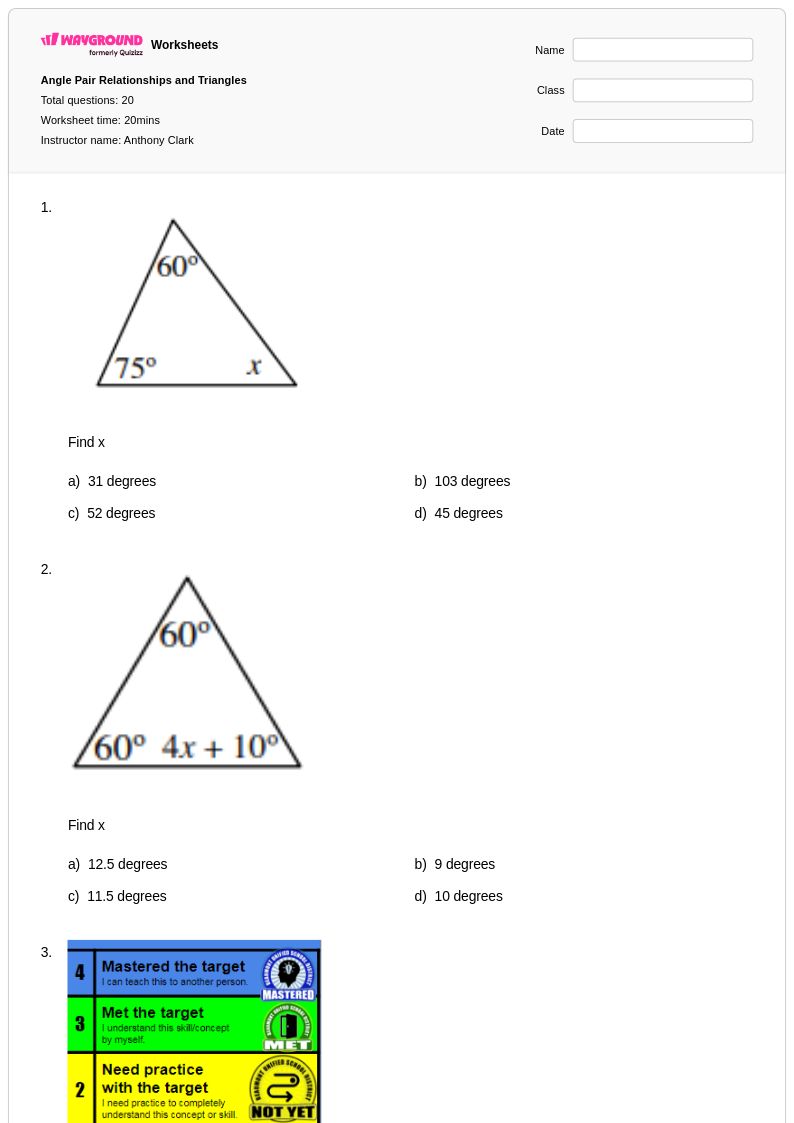
20 Q
8th - Uni
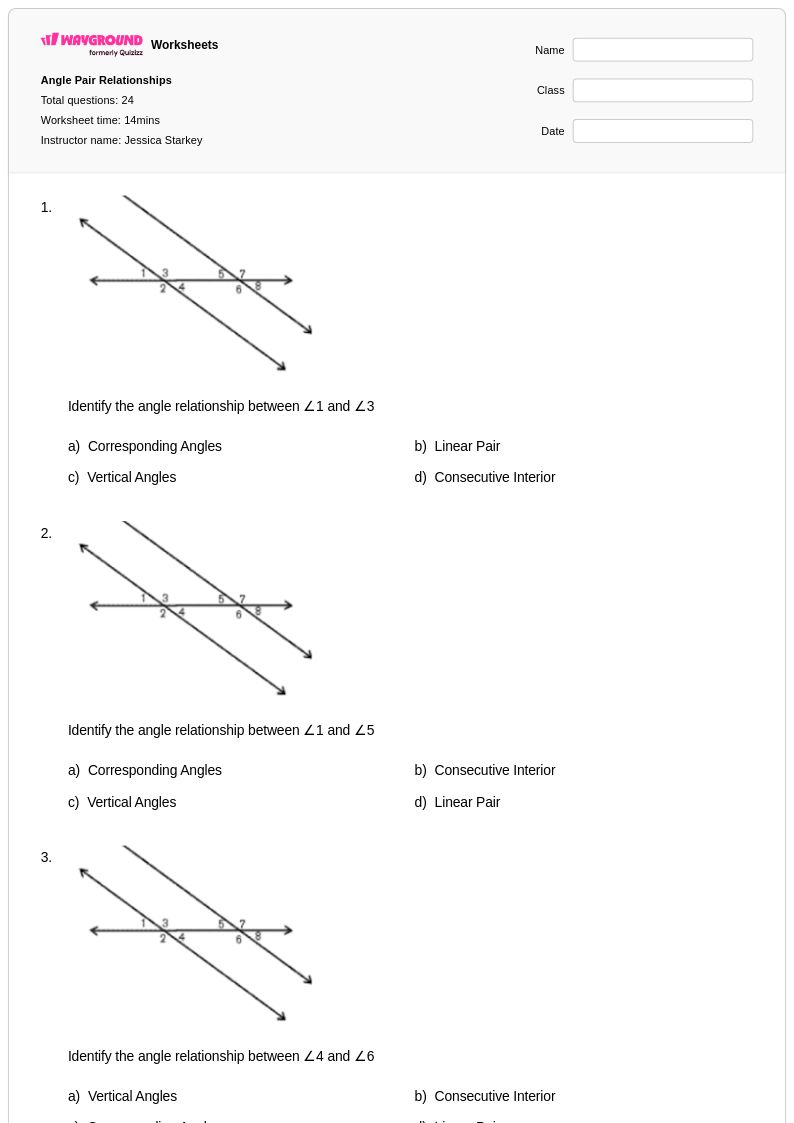
24 Q
8th
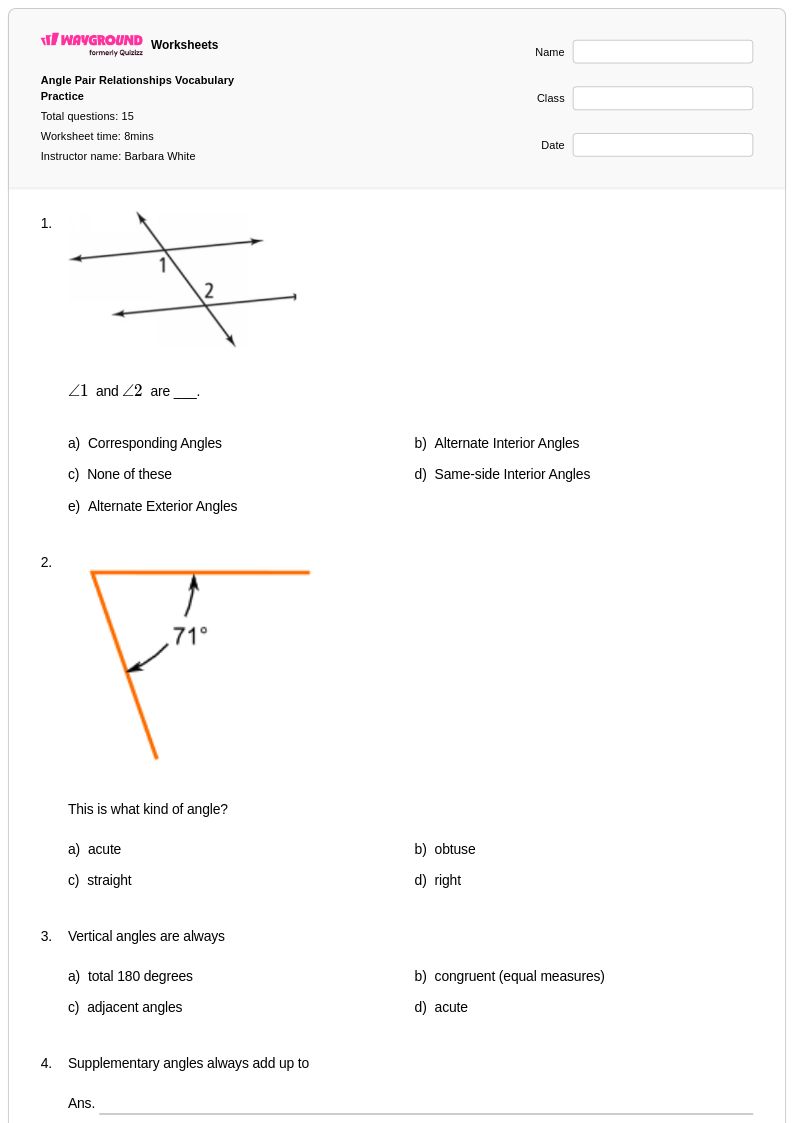
15 Q
8th
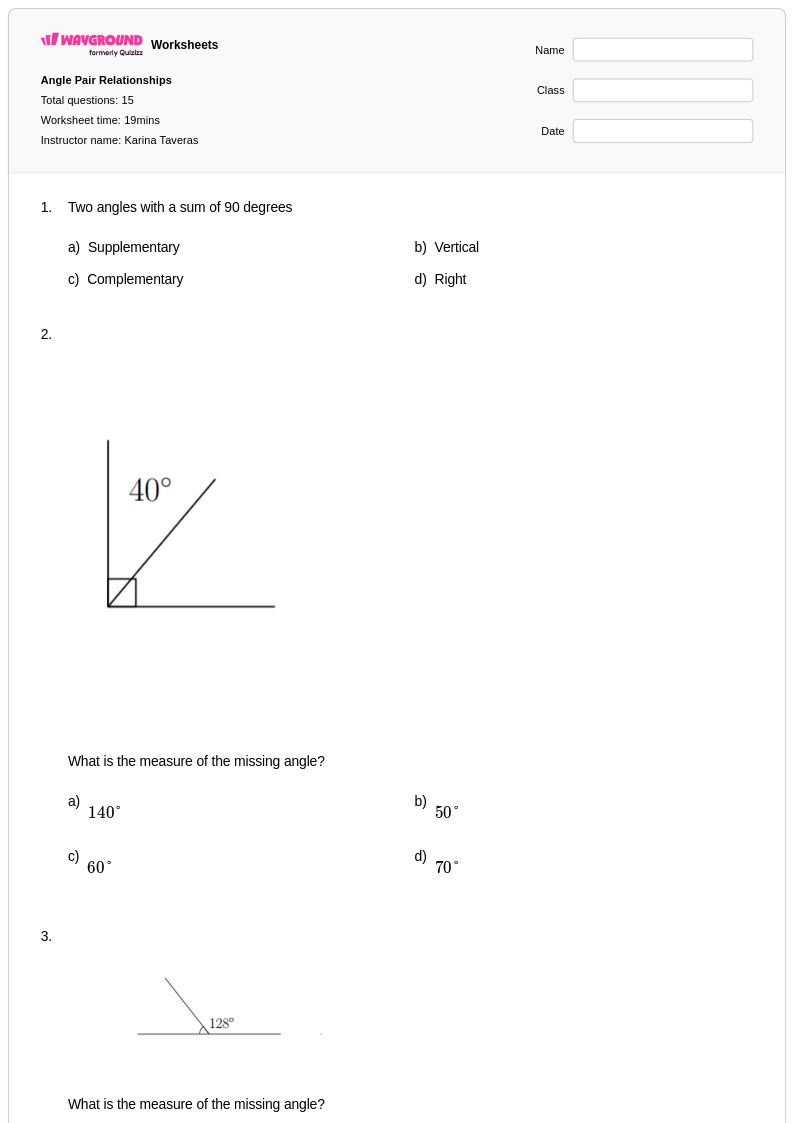
15 Q
7th - 8th
15 Q
8th - Uni
14 Q
8th
15 Q
8th - Uni
12 Q
8th - 12th
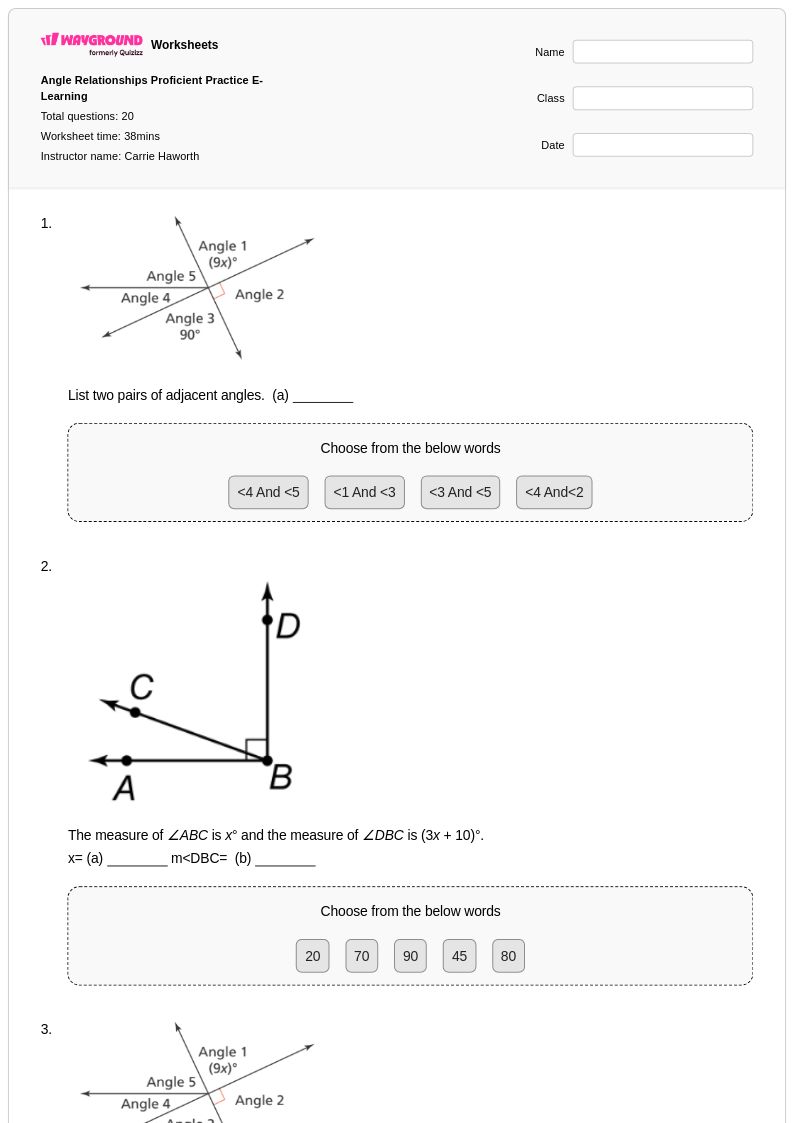
20 Q
8th
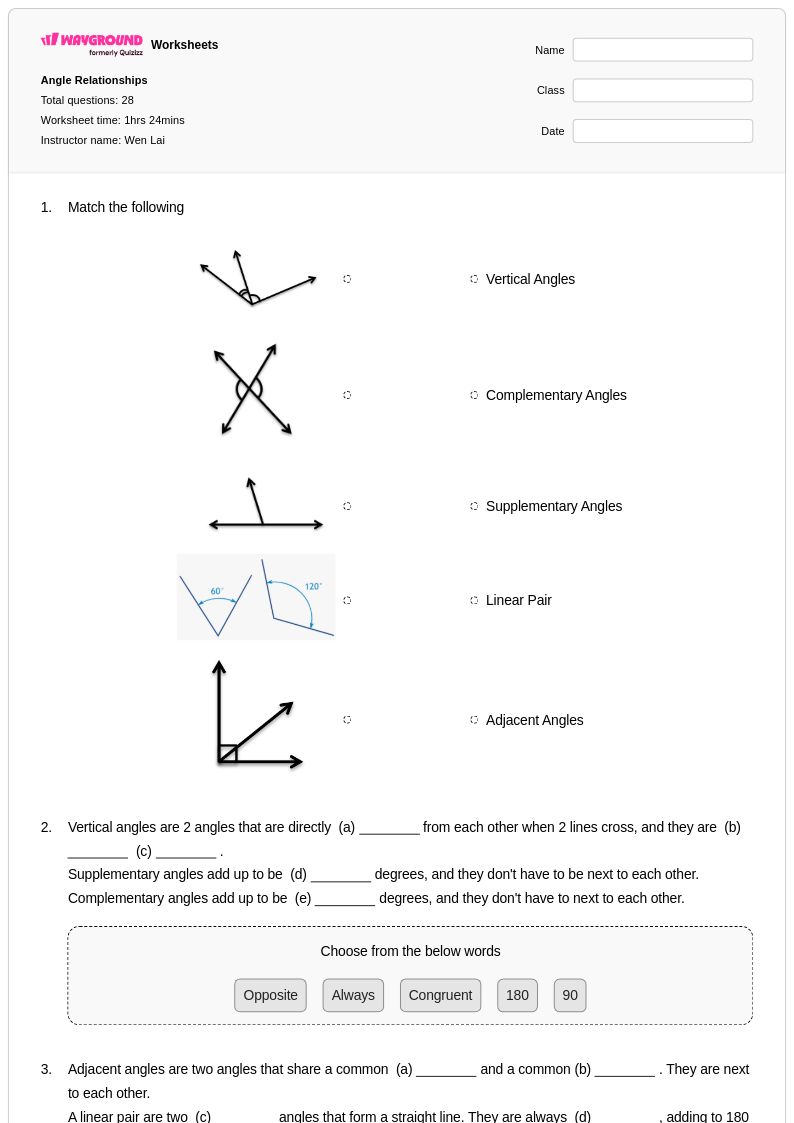
28 Q
8th
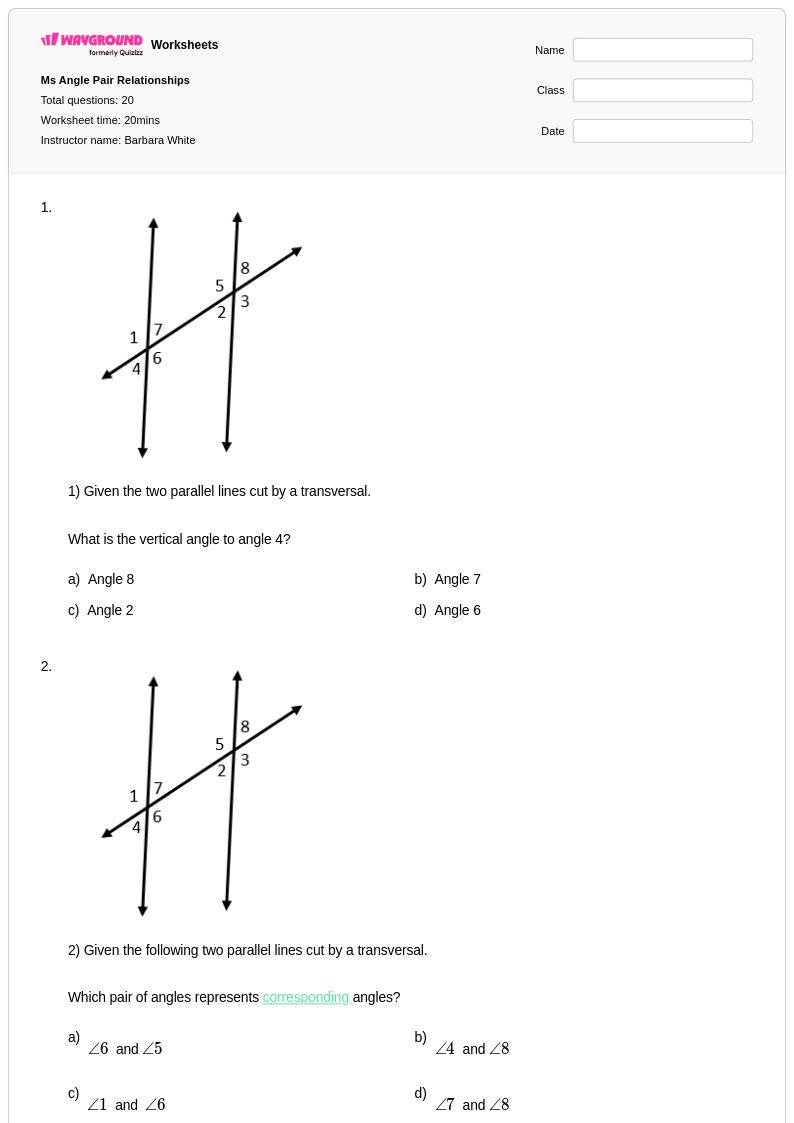
20 Q
8th - 11th
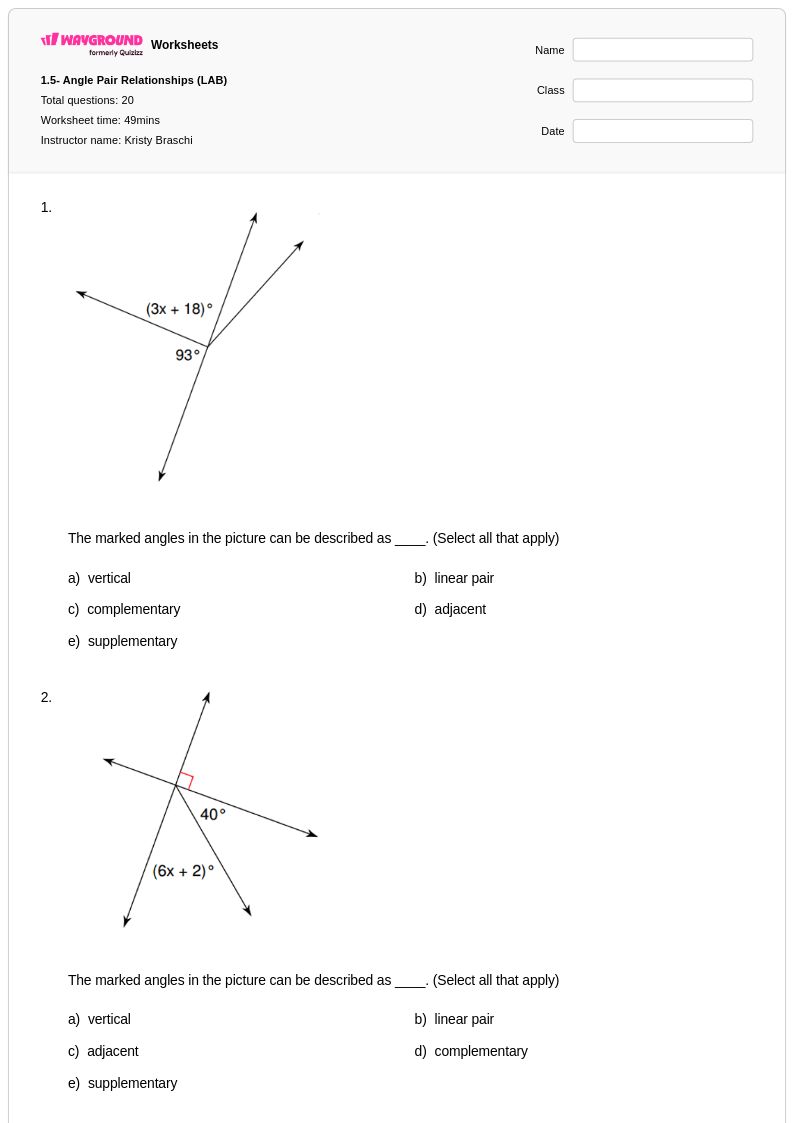
20 Q
7th - 10th
26 Q
6th - 8th
20 Q
6th - 8th
11 Q
7th - 8th
20 Q
8th - Uni
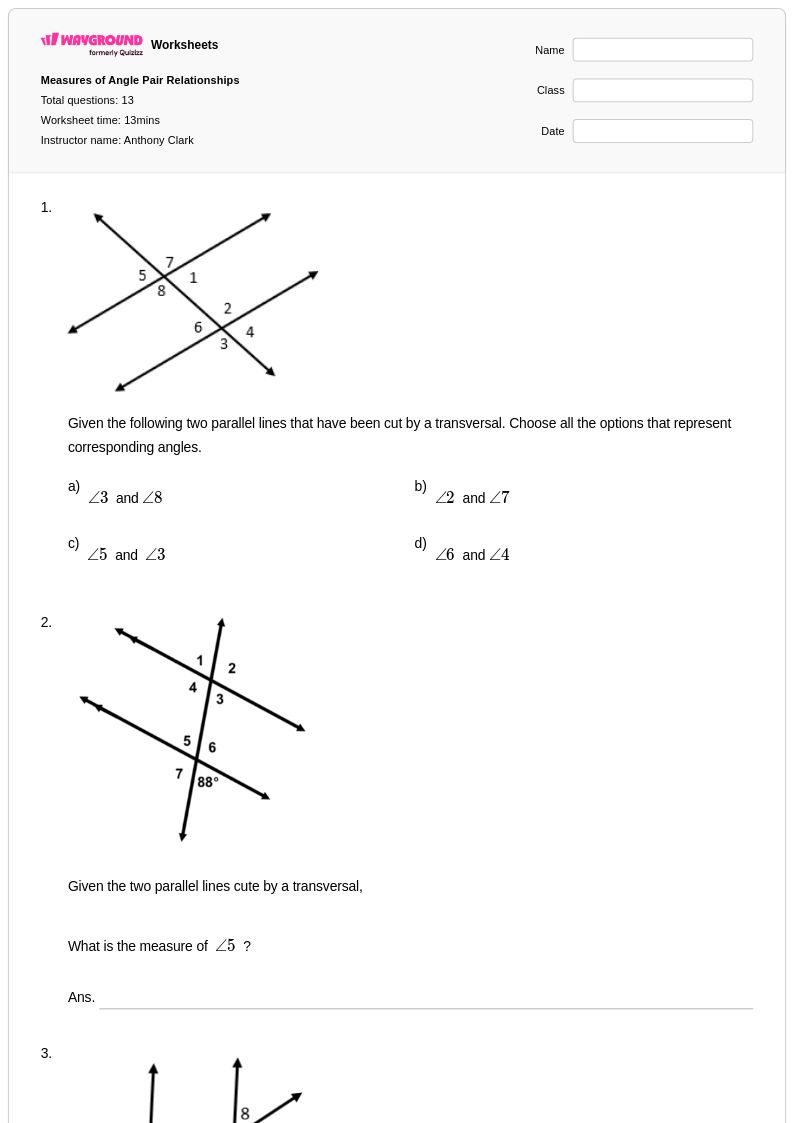
13 Q
8th - Uni
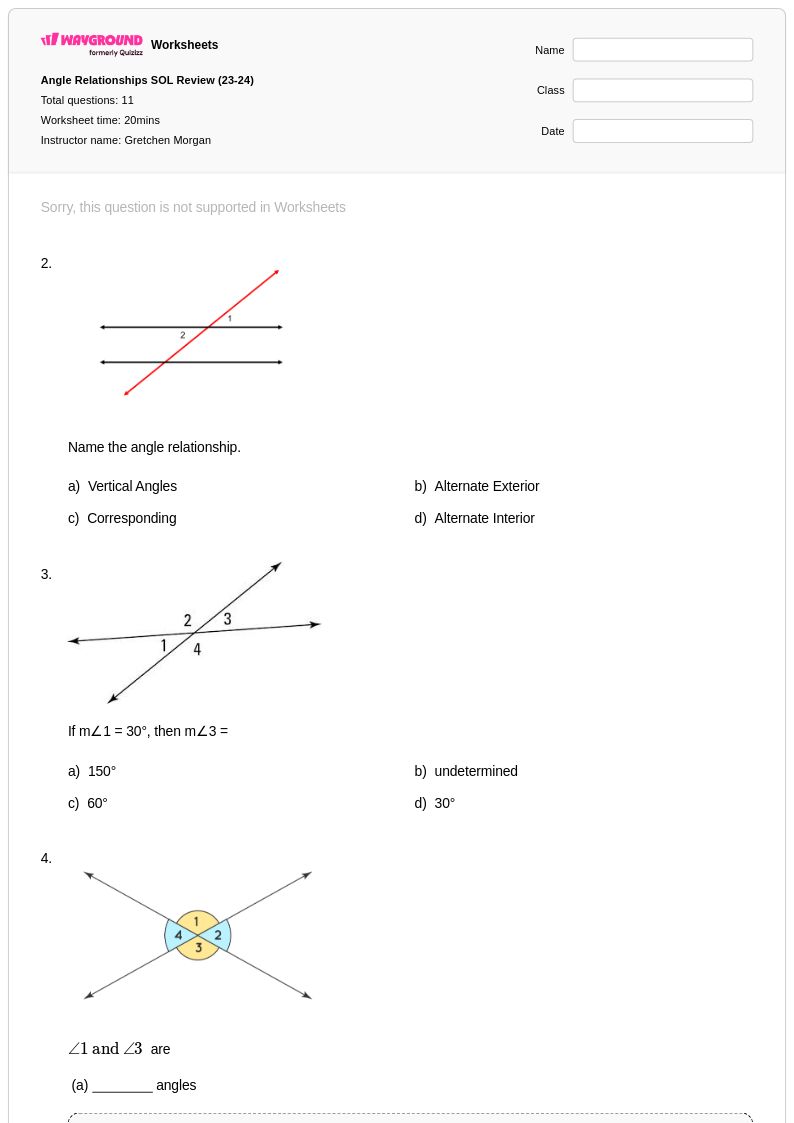
21 Q
6th - 8th
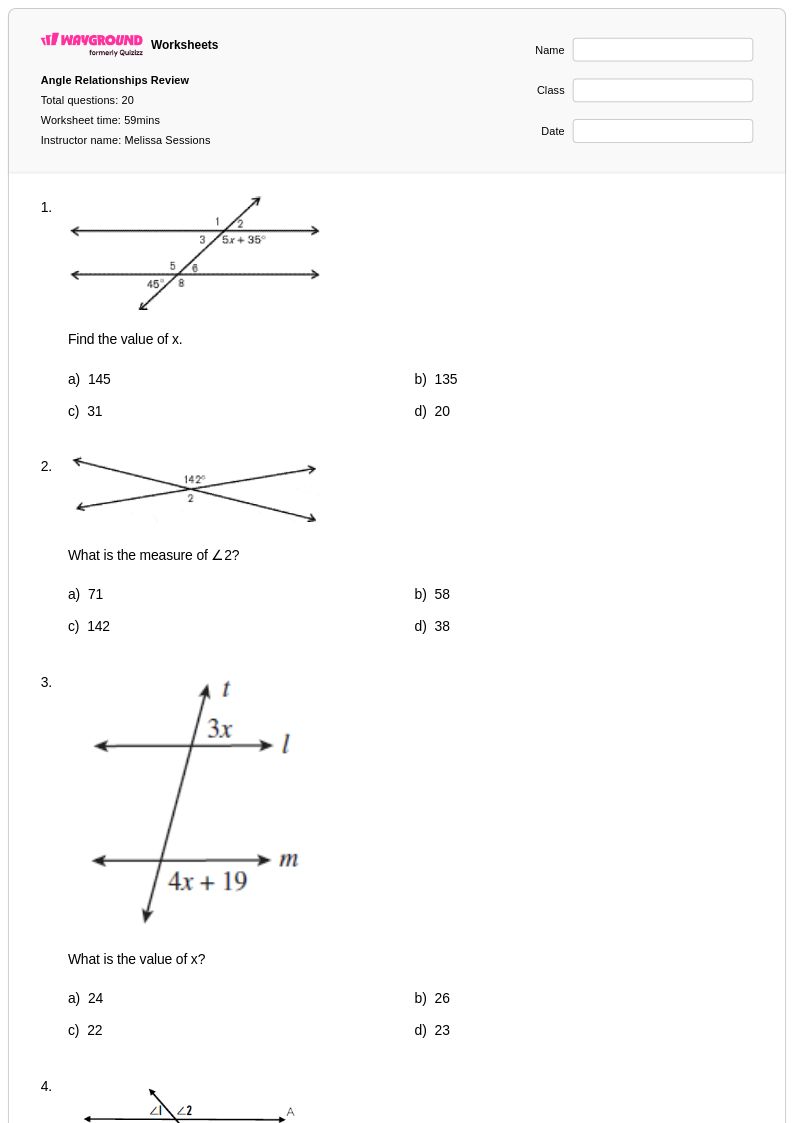
20 Q
6th - 8th
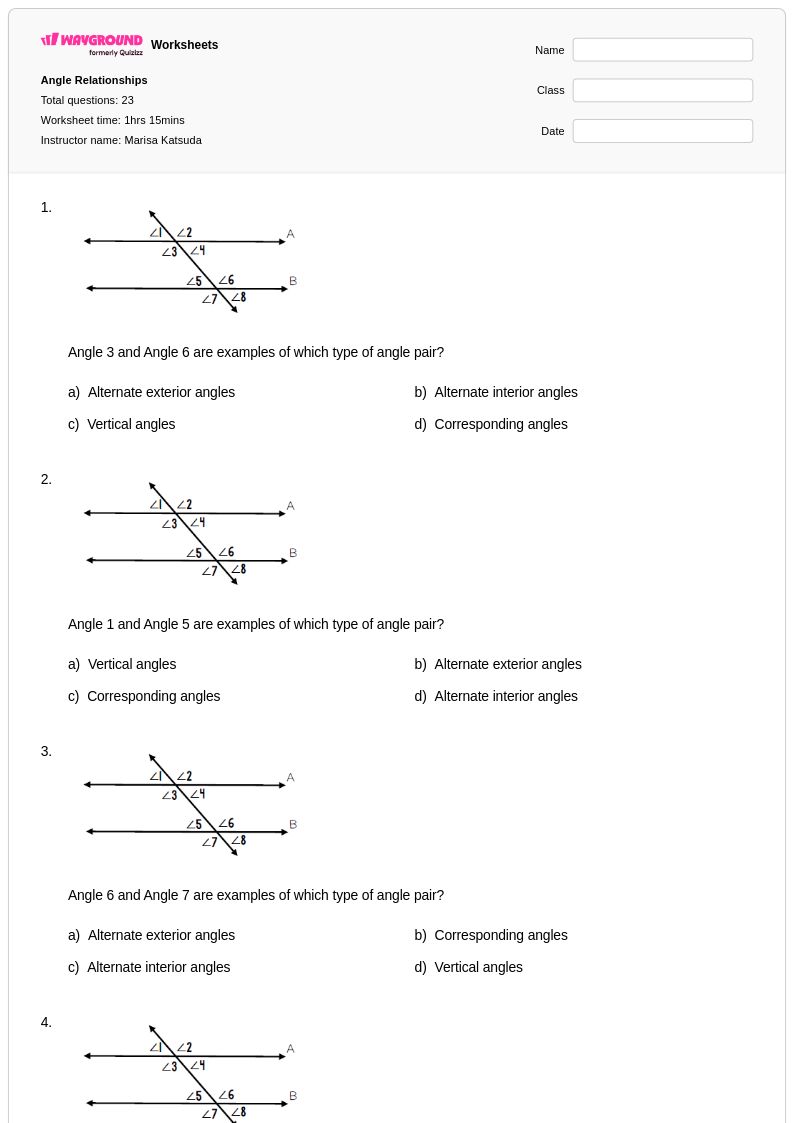
23 Q
8th
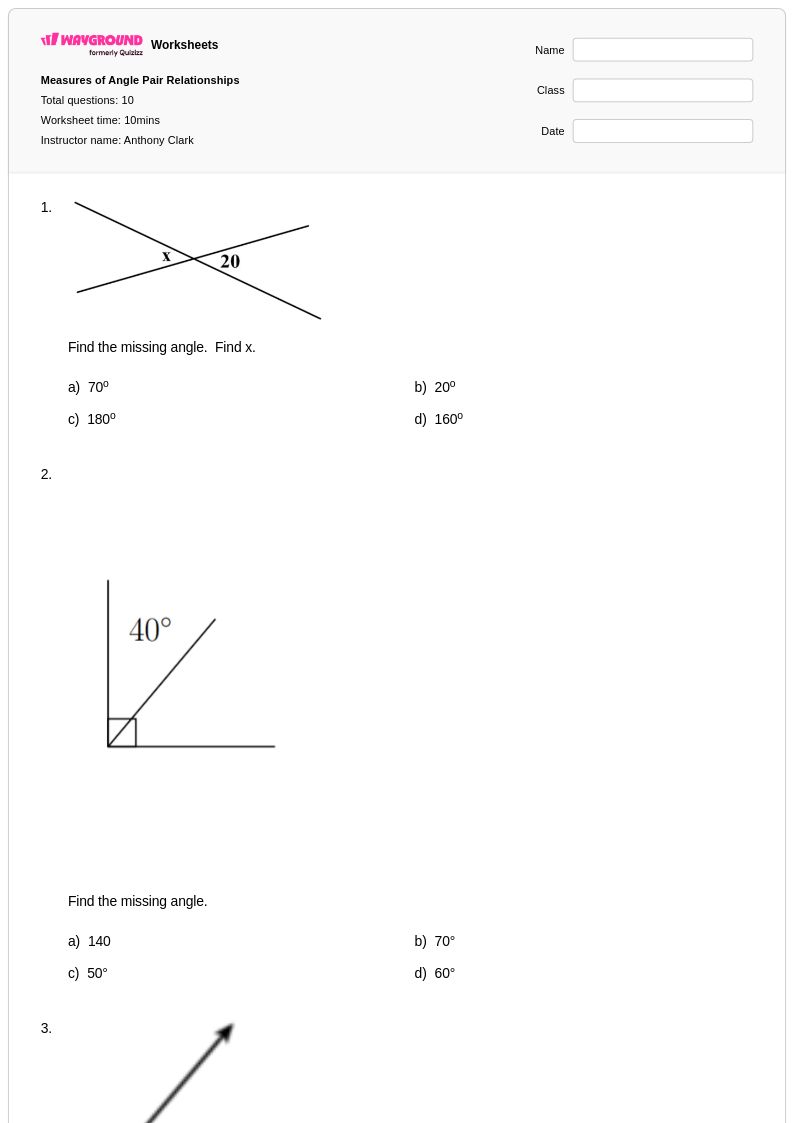
10 Q
8th - Uni
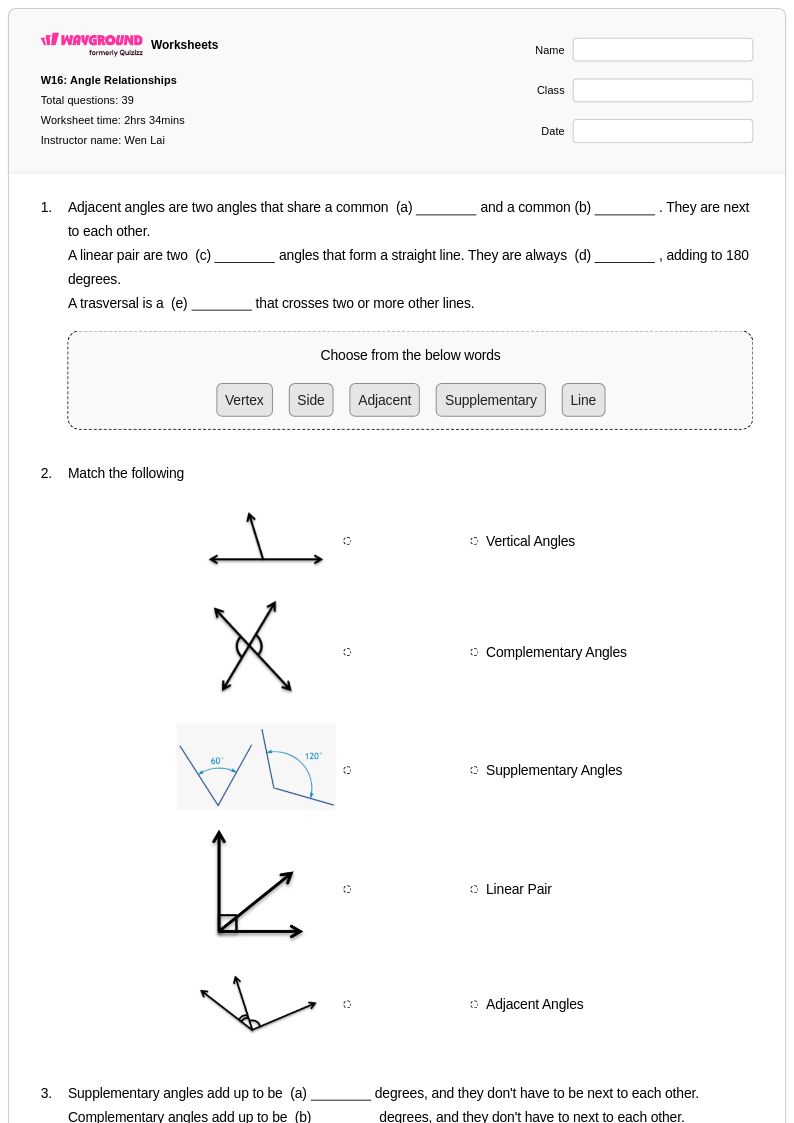
39 Q
8th
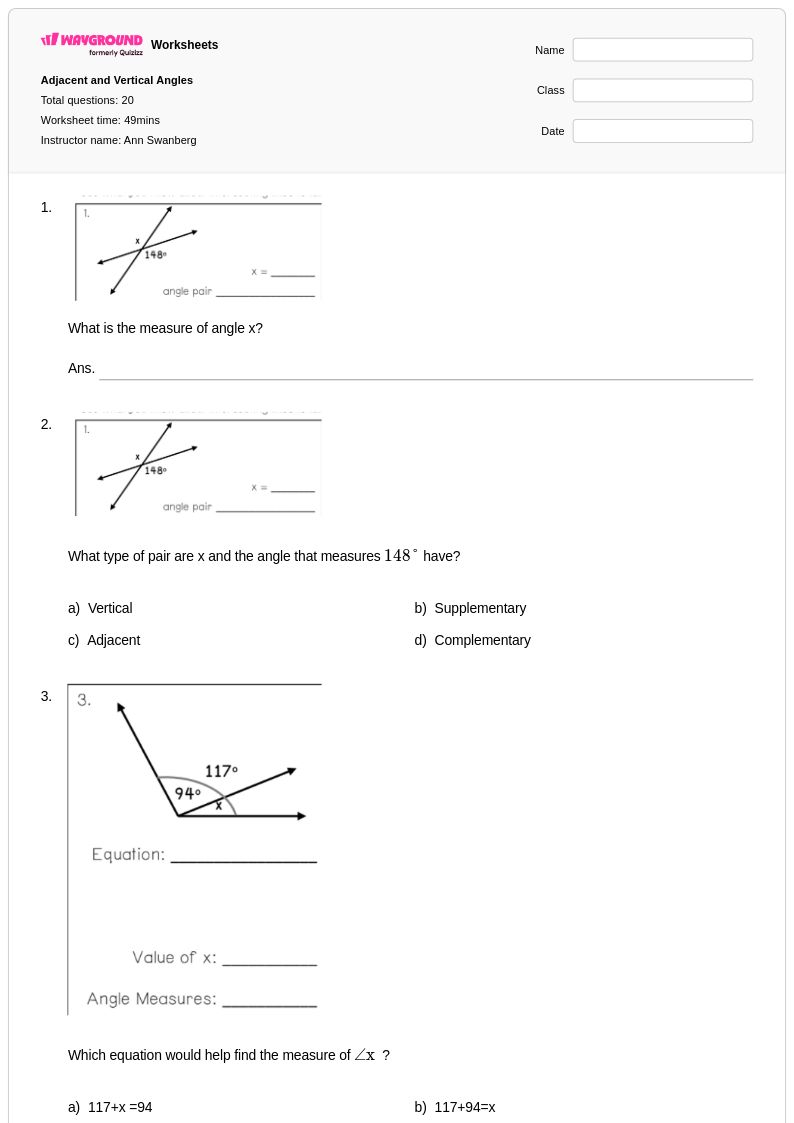
20 Q
8th
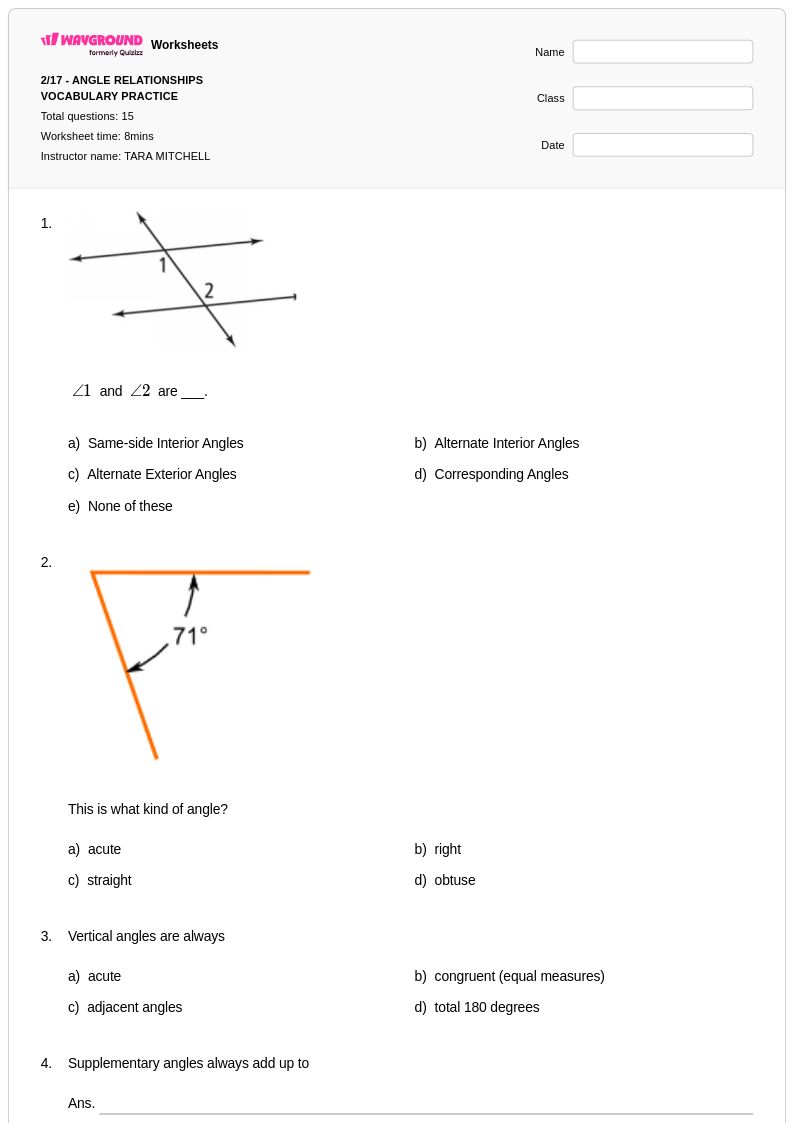
15 Q
8th
Explore Angle Pair Relationships Worksheets by Grades
Explore Other Subject Worksheets for class 8
Explore printable Angle Pair Relationships worksheets for Class 8
Angle pair relationships form a fundamental component of Class 8 geometry curricula, and Wayground's comprehensive worksheet collection provides educators with expertly designed practice problems that systematically develop students' understanding of complementary, supplementary, vertical, and linear pair angles. These free printable resources guide students through progressive skill-building exercises that strengthen their ability to identify angle relationships, calculate missing angle measures, and apply geometric reasoning in complex multi-step problems. Each worksheet includes detailed answer keys that support both independent practice and guided instruction, while the pdf format ensures easy distribution and consistent formatting across different classroom environments. The practice problems range from foundational identification tasks to challenging real-world applications, helping students master the critical thinking skills necessary for advanced geometric concepts.
Wayground's extensive library contains millions of teacher-created angle pair relationship worksheets that have been carefully curated to support diverse instructional needs and learning objectives. The platform's robust search and filtering capabilities allow educators to quickly locate resources aligned with specific standards and differentiate instruction based on individual student readiness levels. Teachers can seamlessly customize existing worksheets or combine multiple resources to create targeted practice sets for remediation or enrichment activities. The flexible digital and printable formats accommodate various classroom configurations, from traditional paper-and-pencil assignments to interactive digital lessons, while comprehensive organizational tools streamline lesson planning and enable efficient tracking of student progress across different geometric concepts.
FAQs
How do I teach angle pair relationships to eighth graders?
What worksheet problems build mastery of angle pair relationships in Grade 8?
What misconceptions do eighth graders have about angle relationships?
How can I use Wayground’s Grade 8 angle pair worksheets in class?
How do angle pair relationships fit into the Grade 8 Common Core progression?
How can I differentiate multi-step angle problems?
At what grade are angle pair relationships taught?