
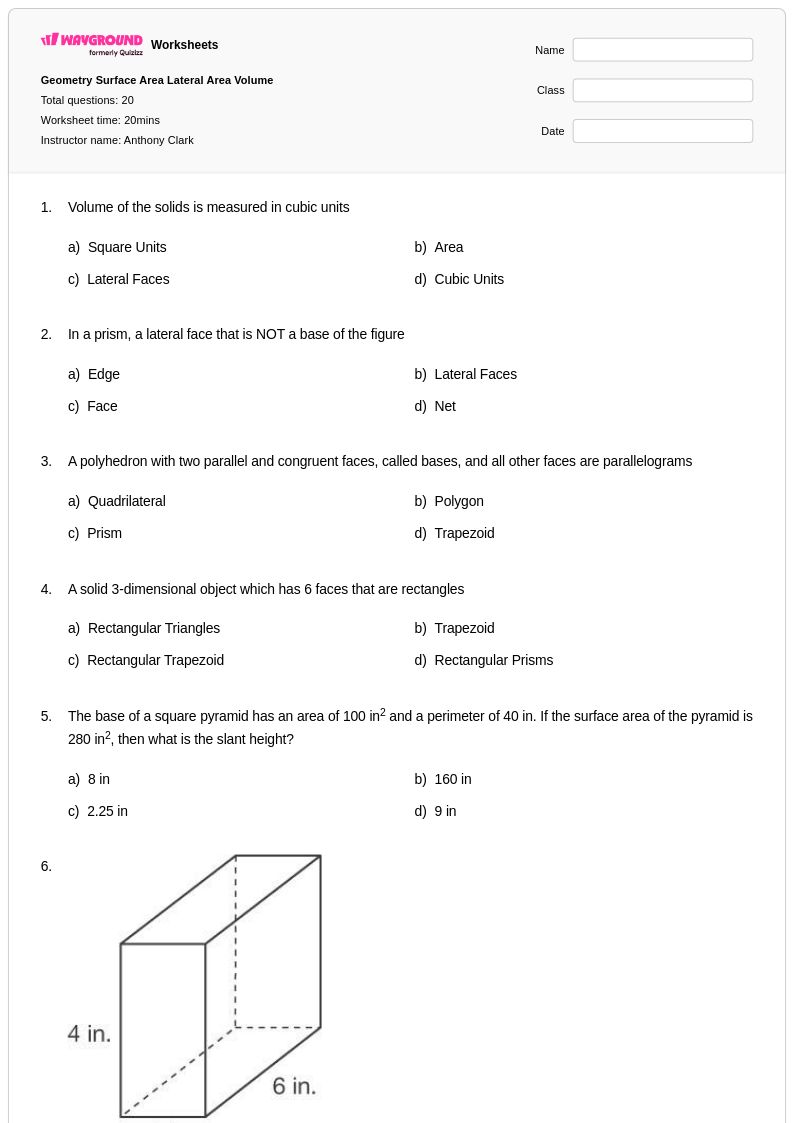
20 Q
8th - Uni
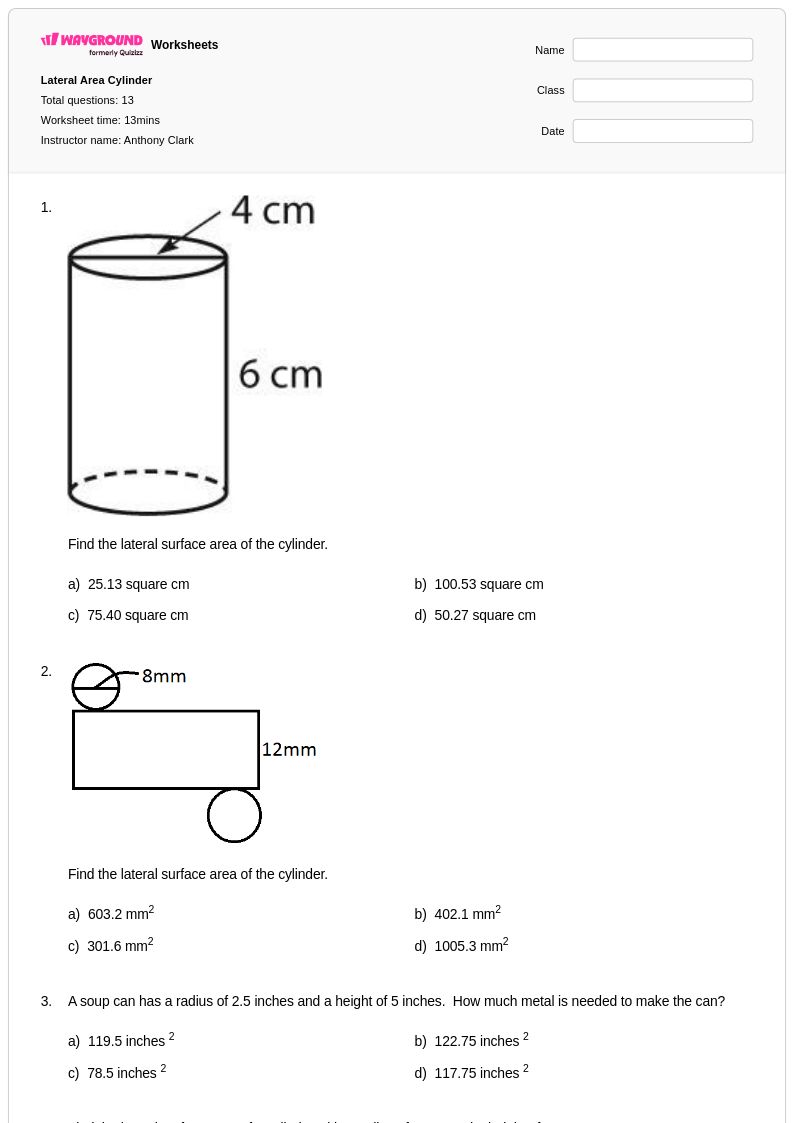
13 Q
8th - Uni
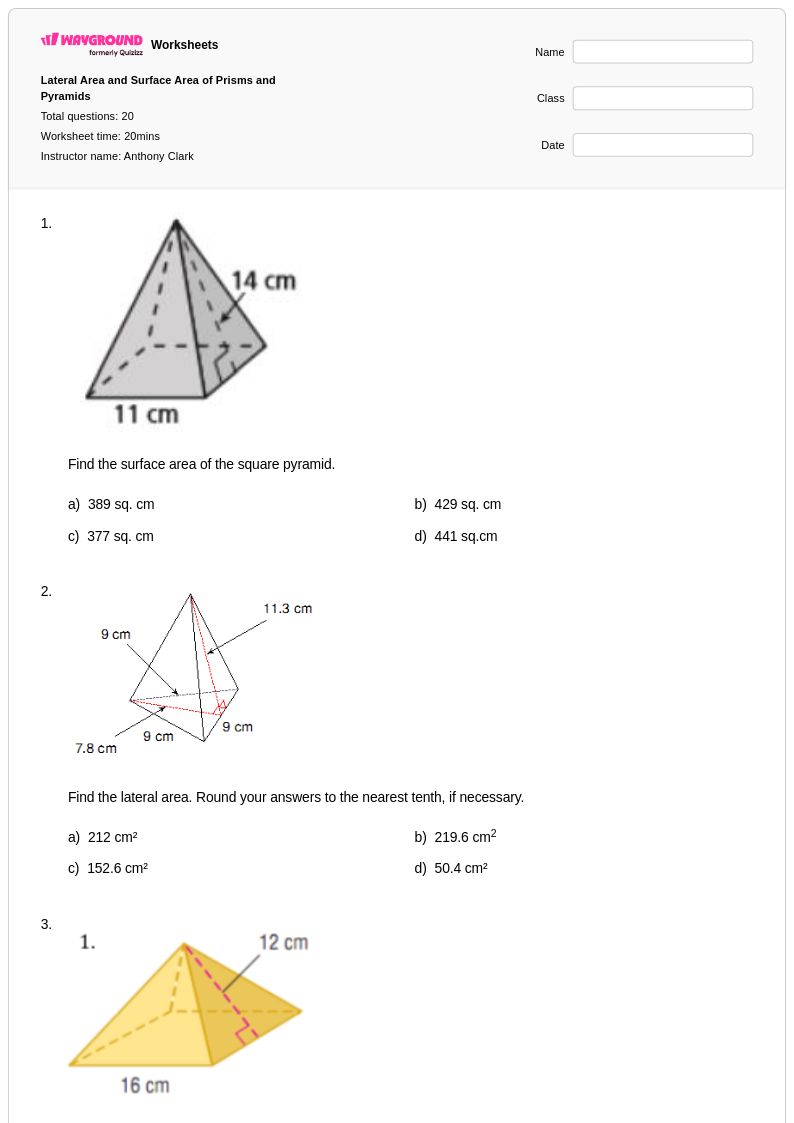
20 Q
7th - Uni
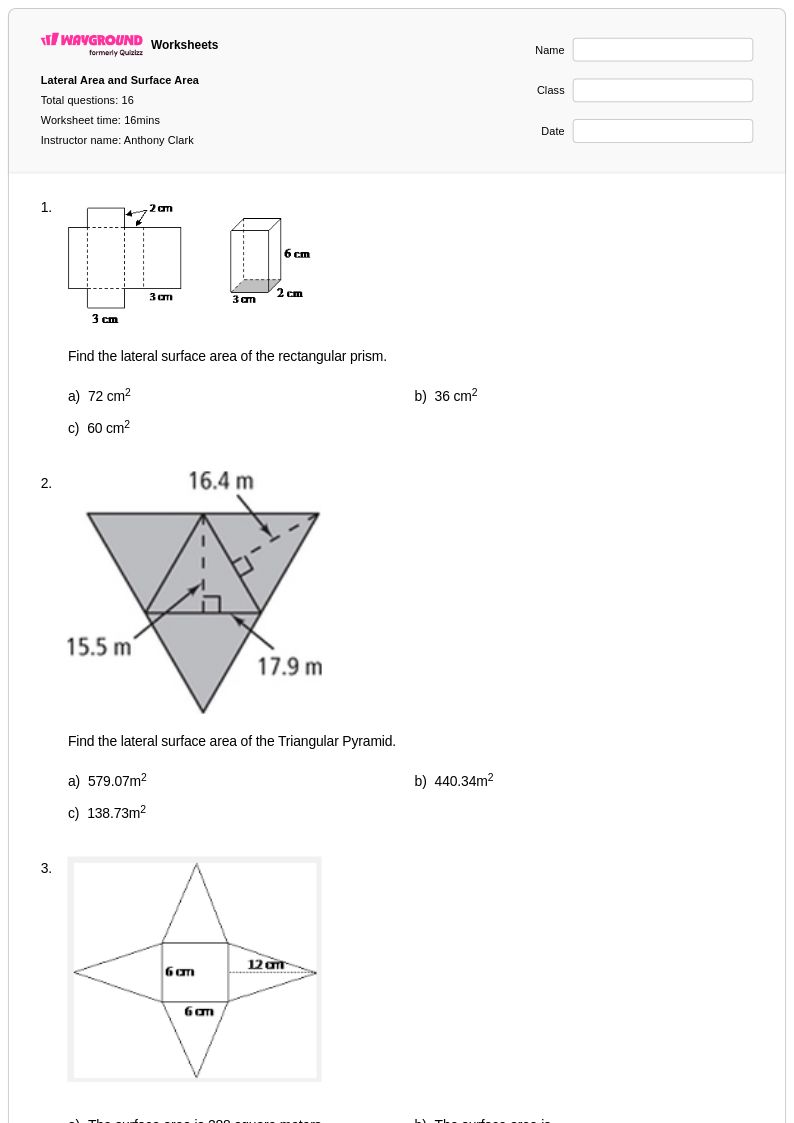
16 Q
7th - Uni
20 Q
7th - Uni
20 Q
8th - Uni
14 Q
8th - Uni
12 Q
7th - Uni
13 Q
7th - 12th
133 Q
7th - 9th
133 Q
7th - 9th
20 Q
8th - Uni
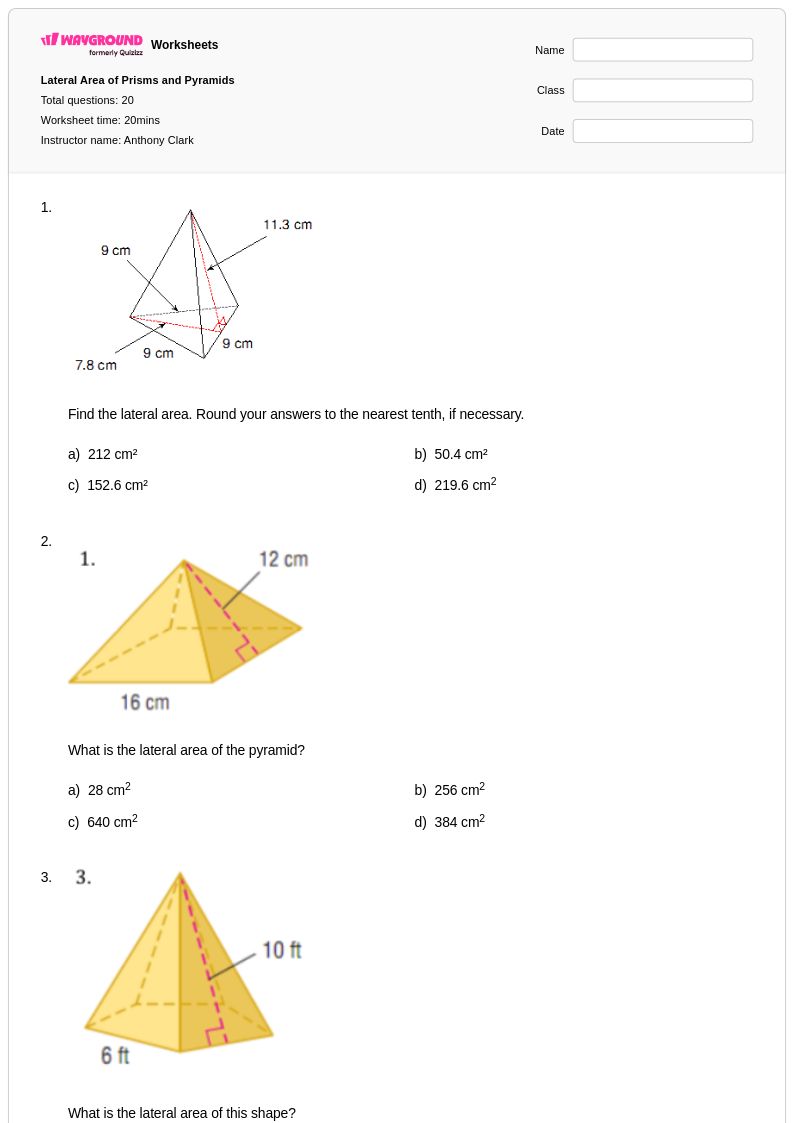
20 Q
7th - Uni
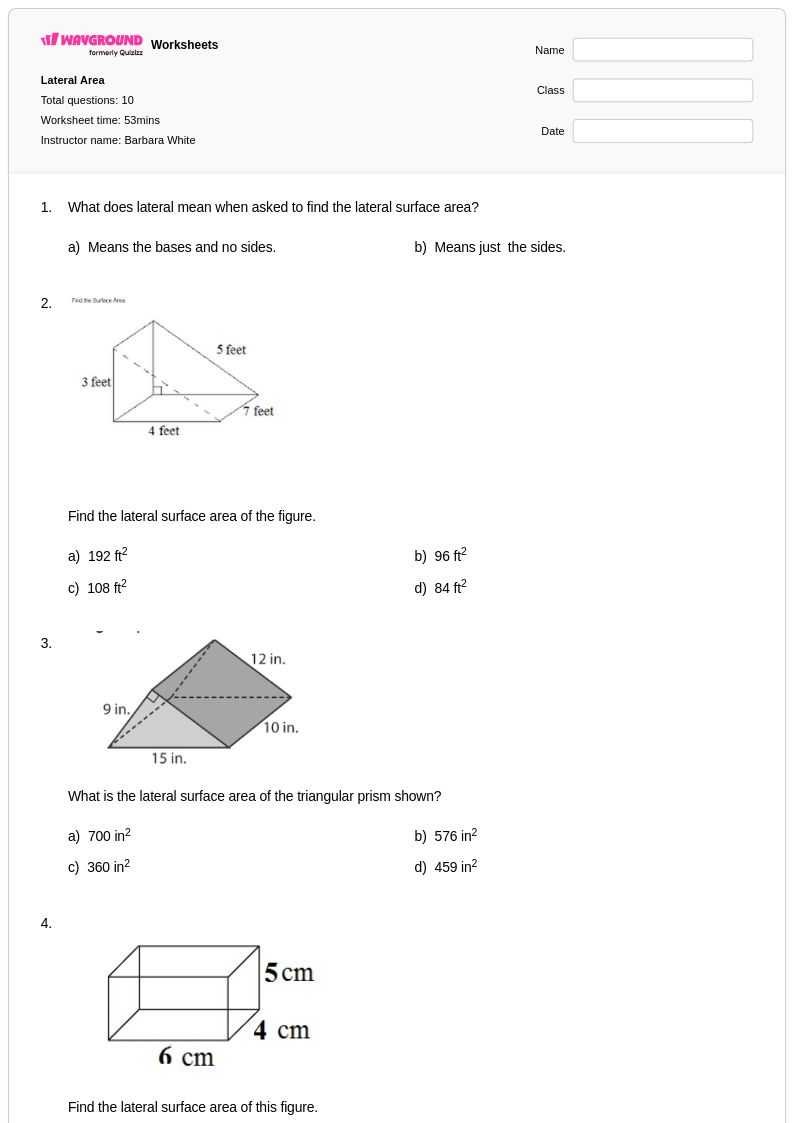
10 Q
8th
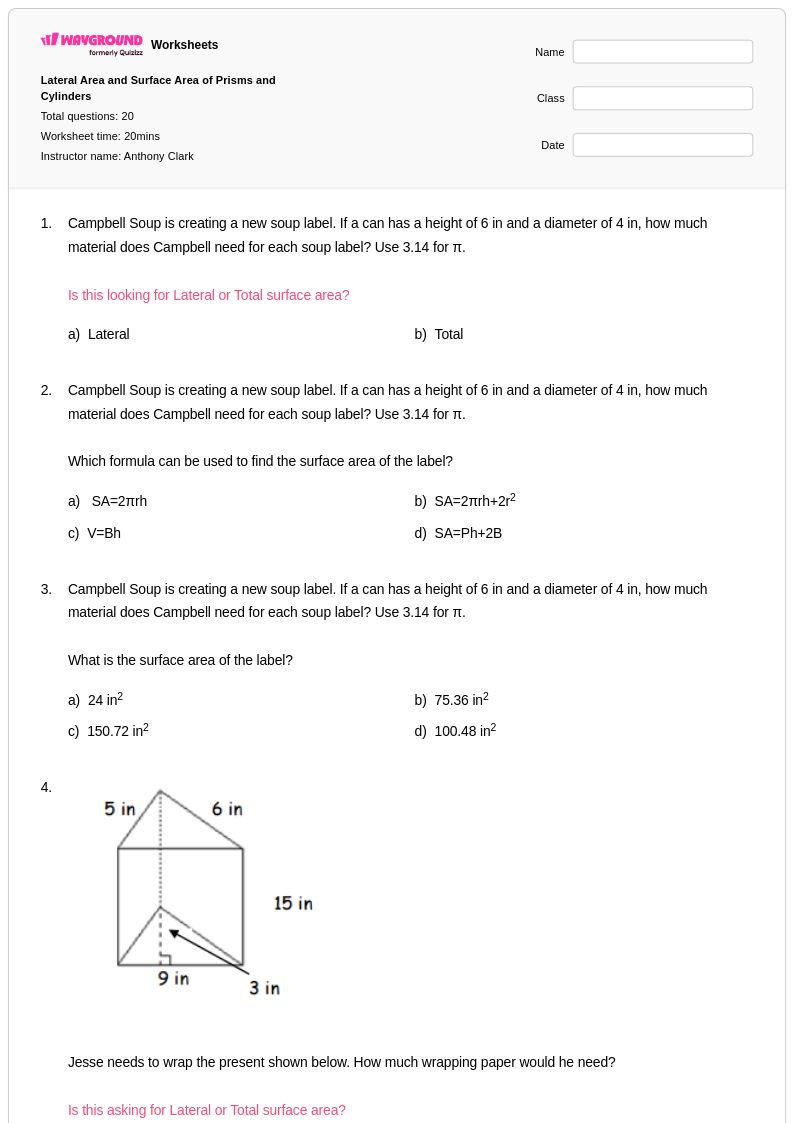
20 Q
8th - Uni
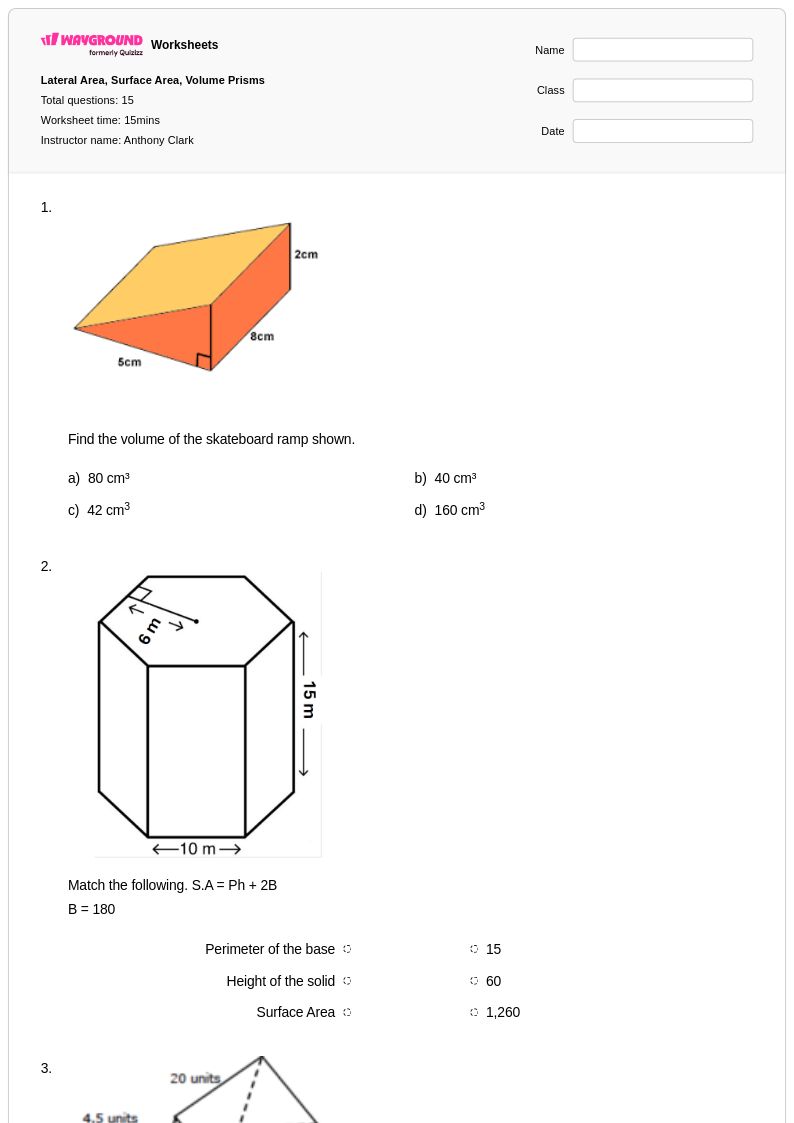
15 Q
8th - Uni
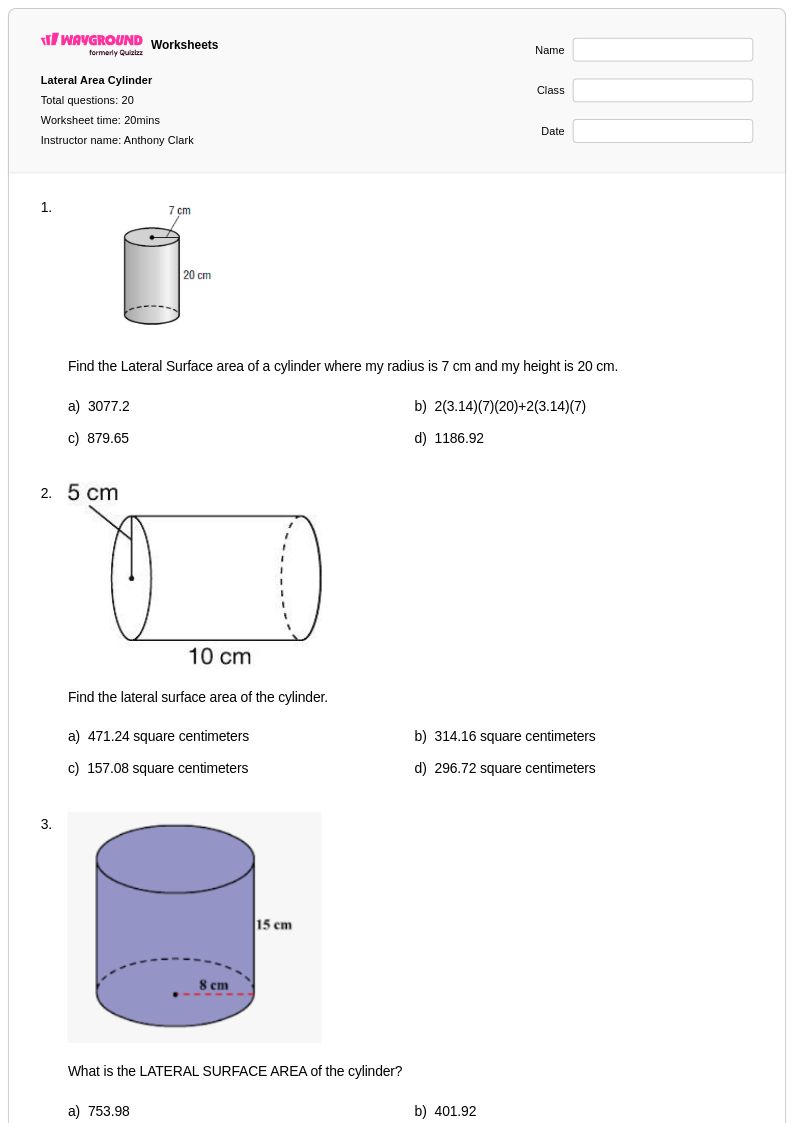
20 Q
8th - Uni
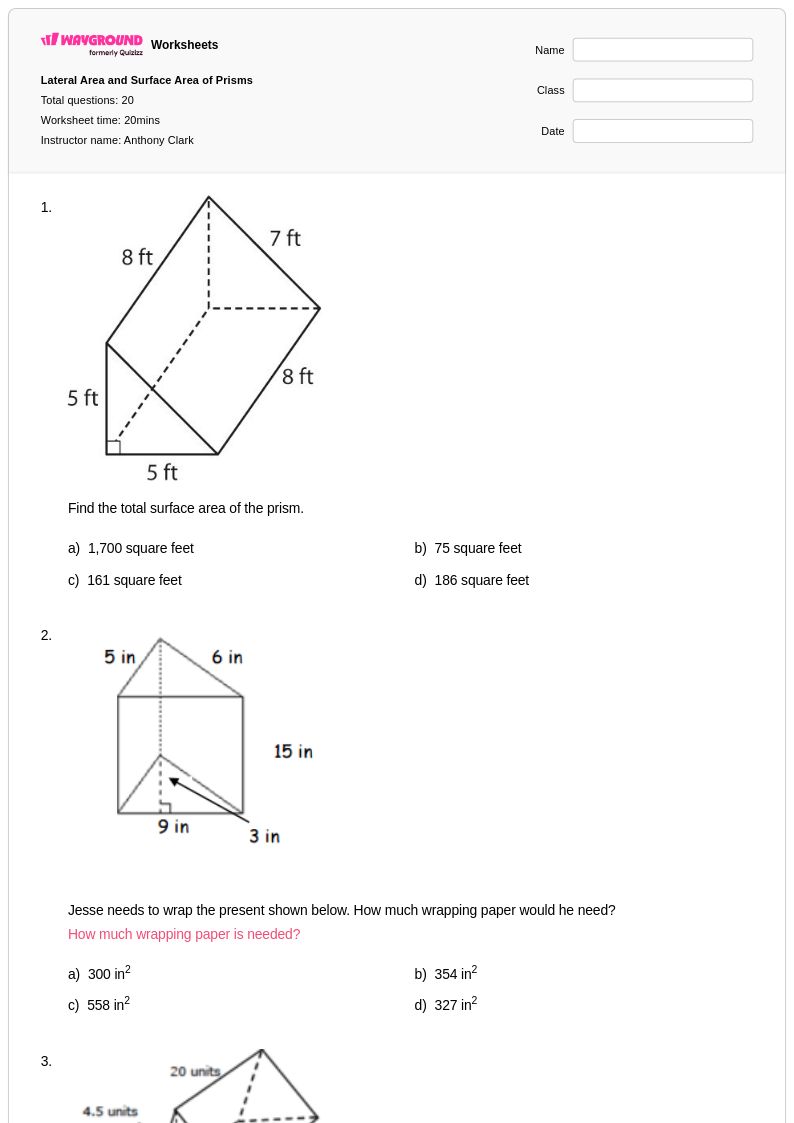
20 Q
8th - Uni
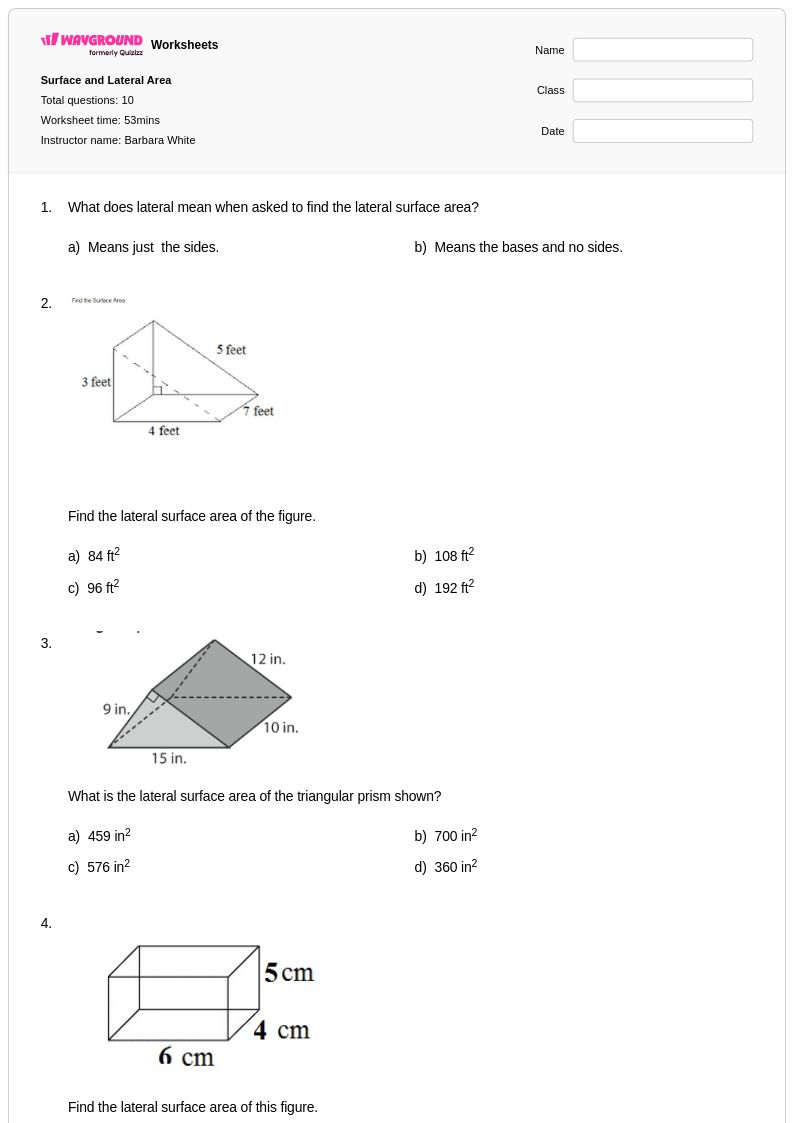
10 Q
8th
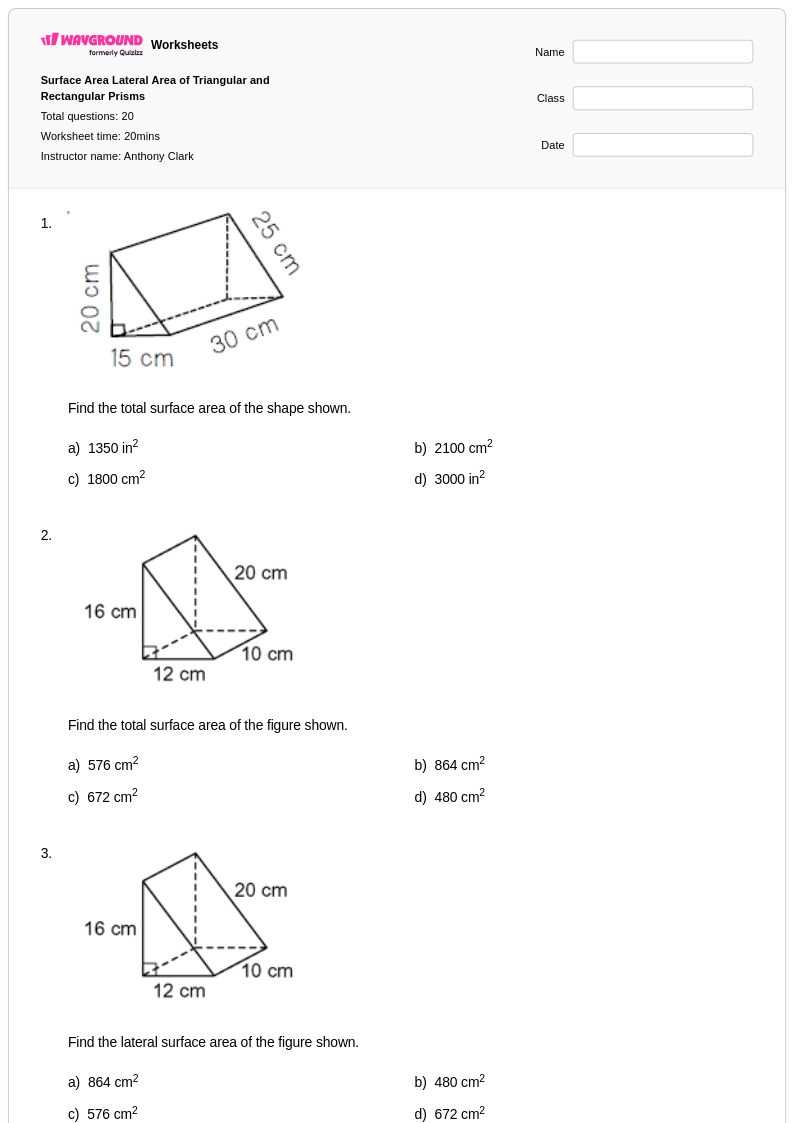
20 Q
7th - Uni
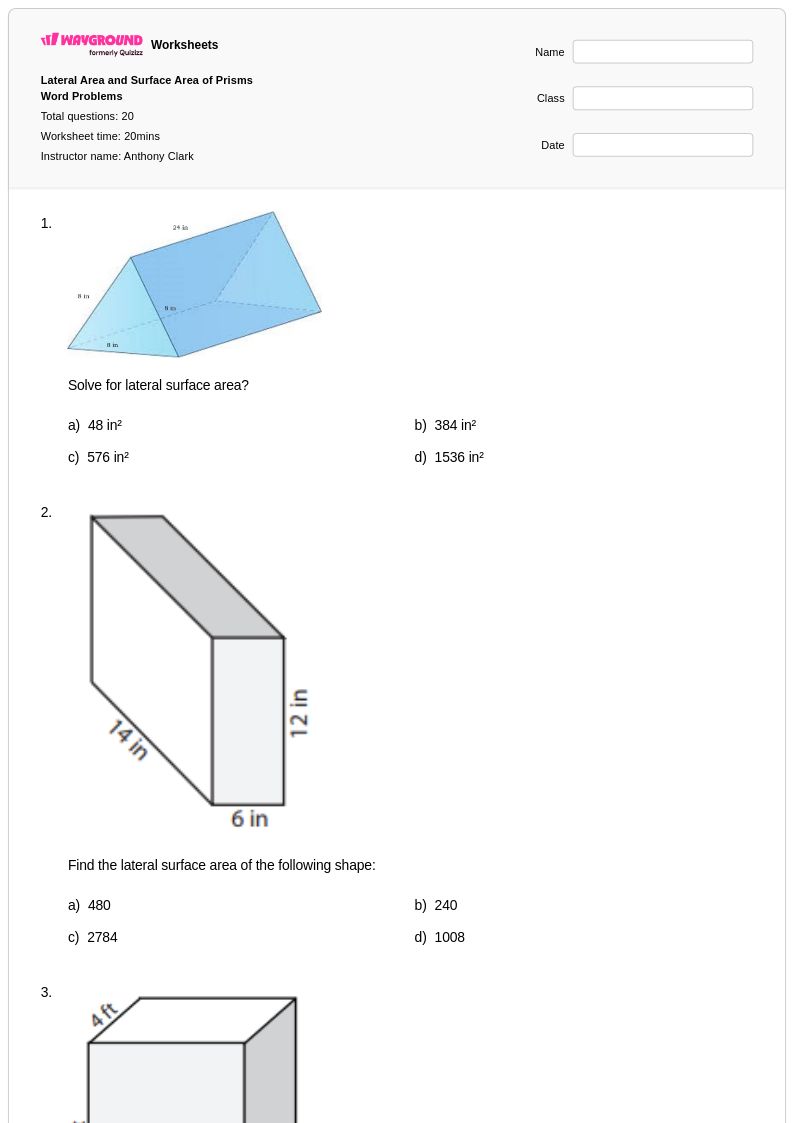
20 Q
8th - Uni
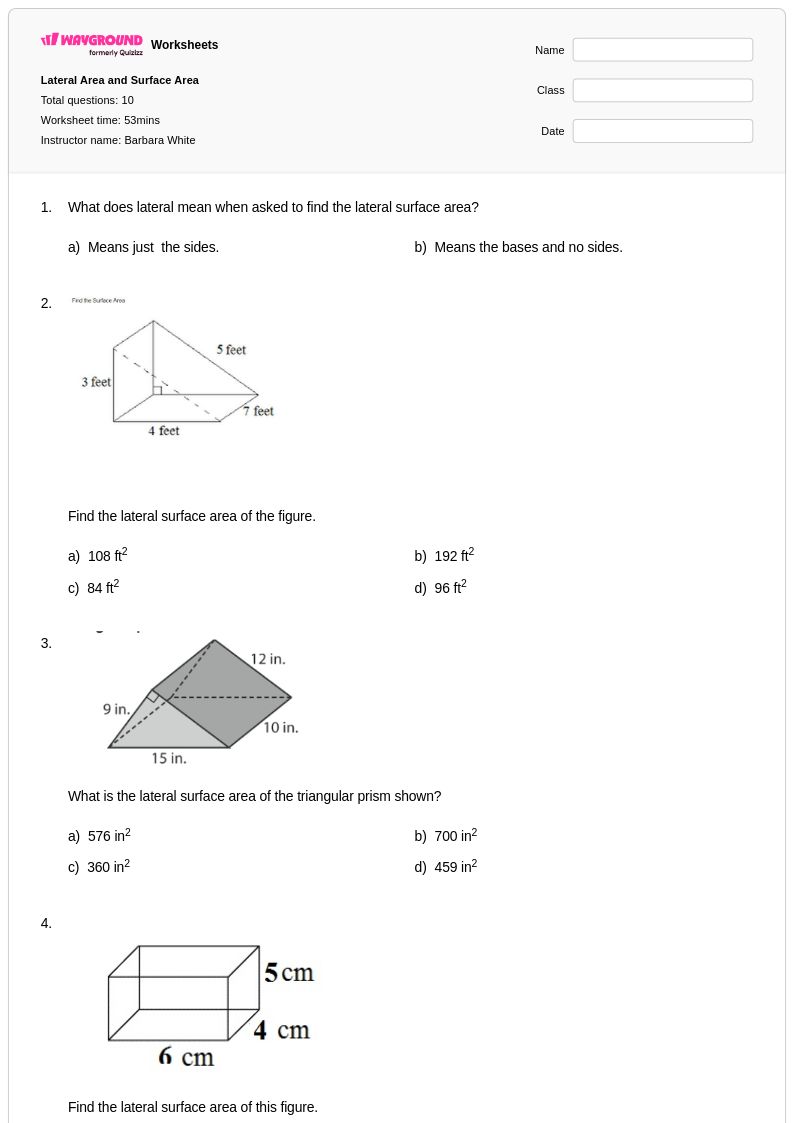
10 Q
8th
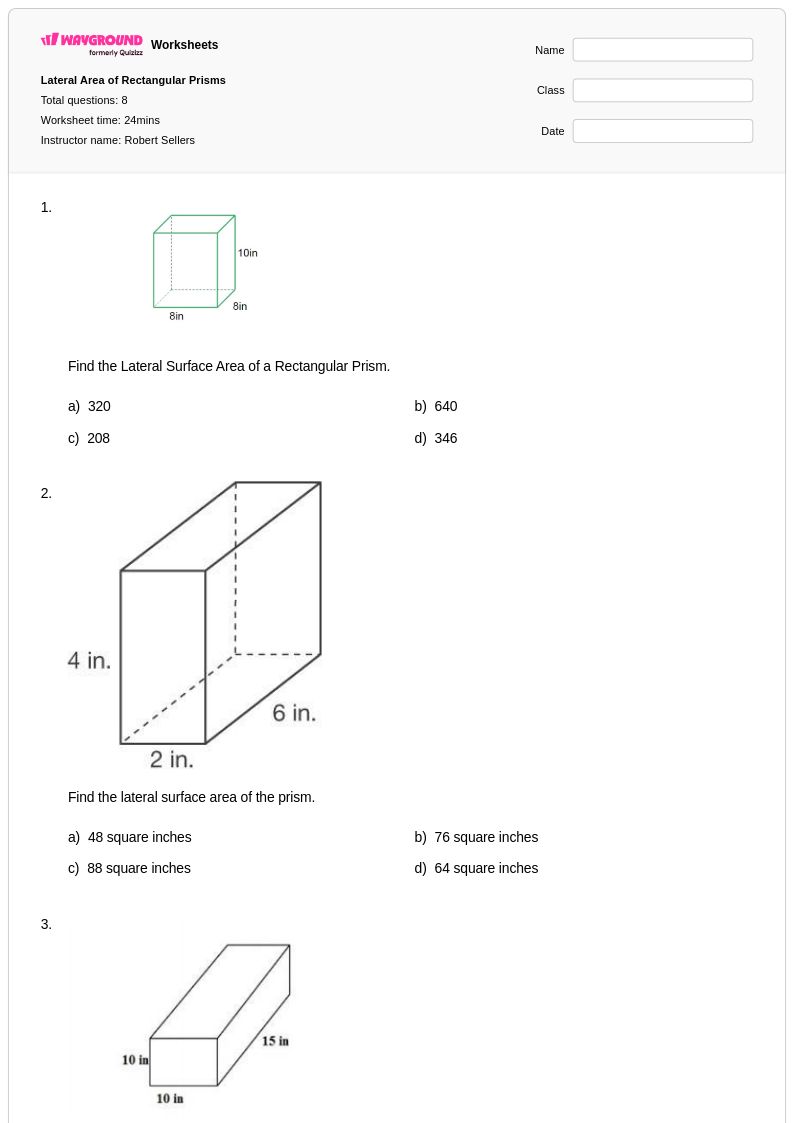
8 Q
7th - 10th
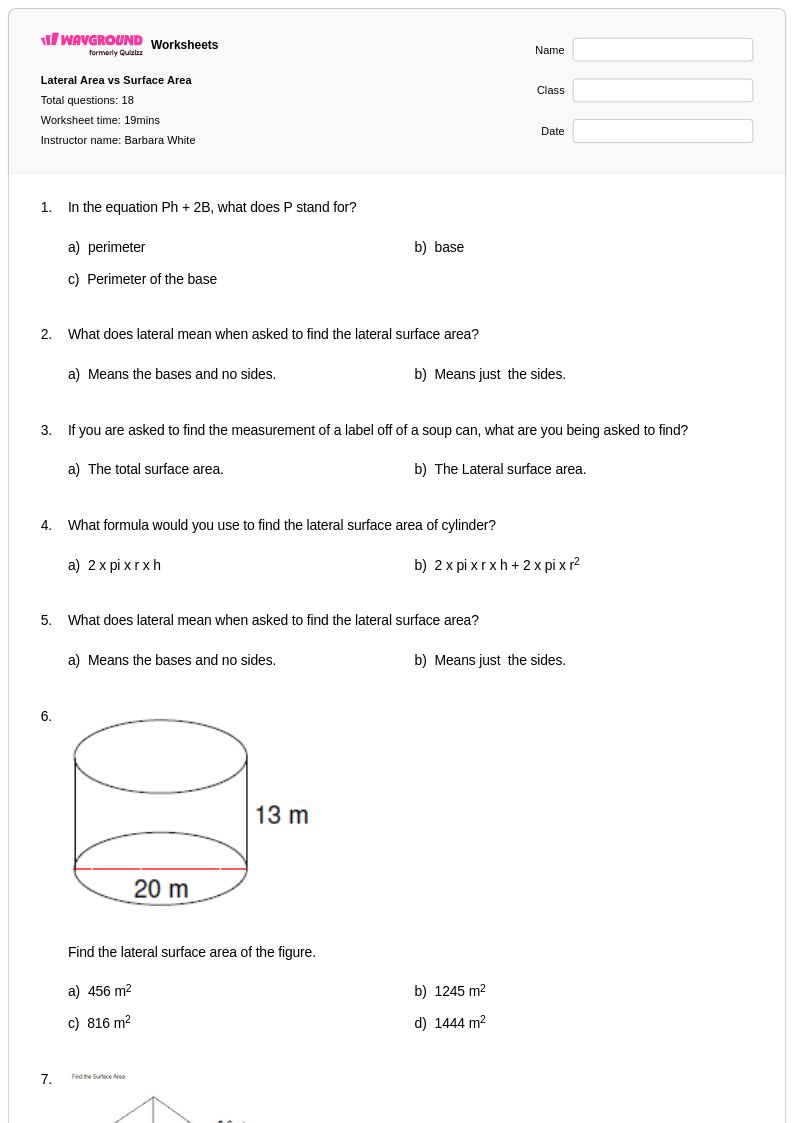
18 Q
7th - 8th
Explore Other Subject Worksheets for class 8
Explore printable Lateral Area worksheets for Class 8
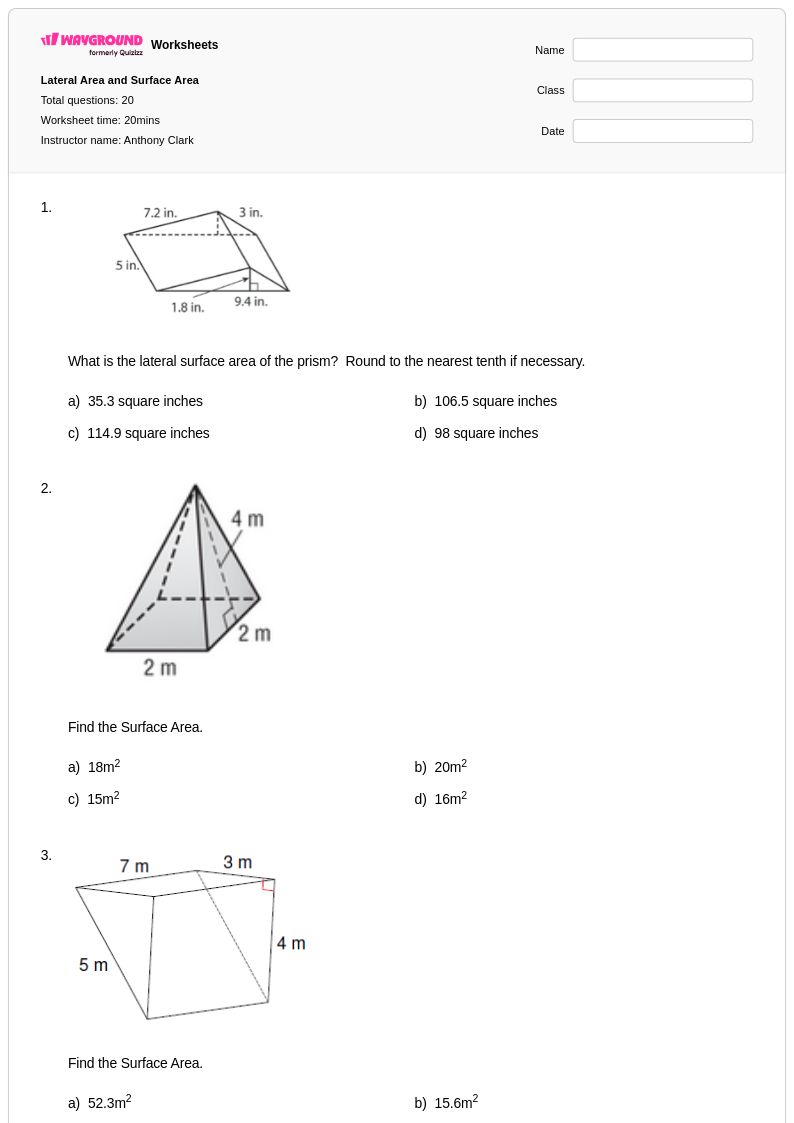
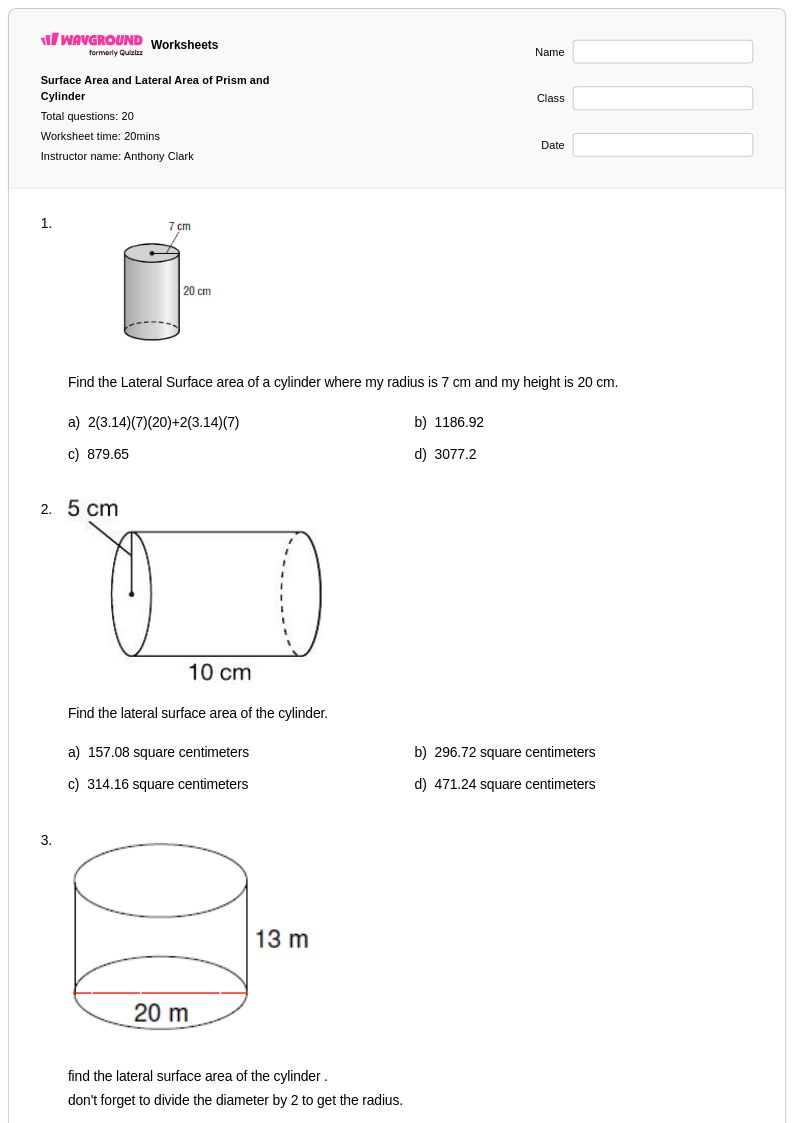
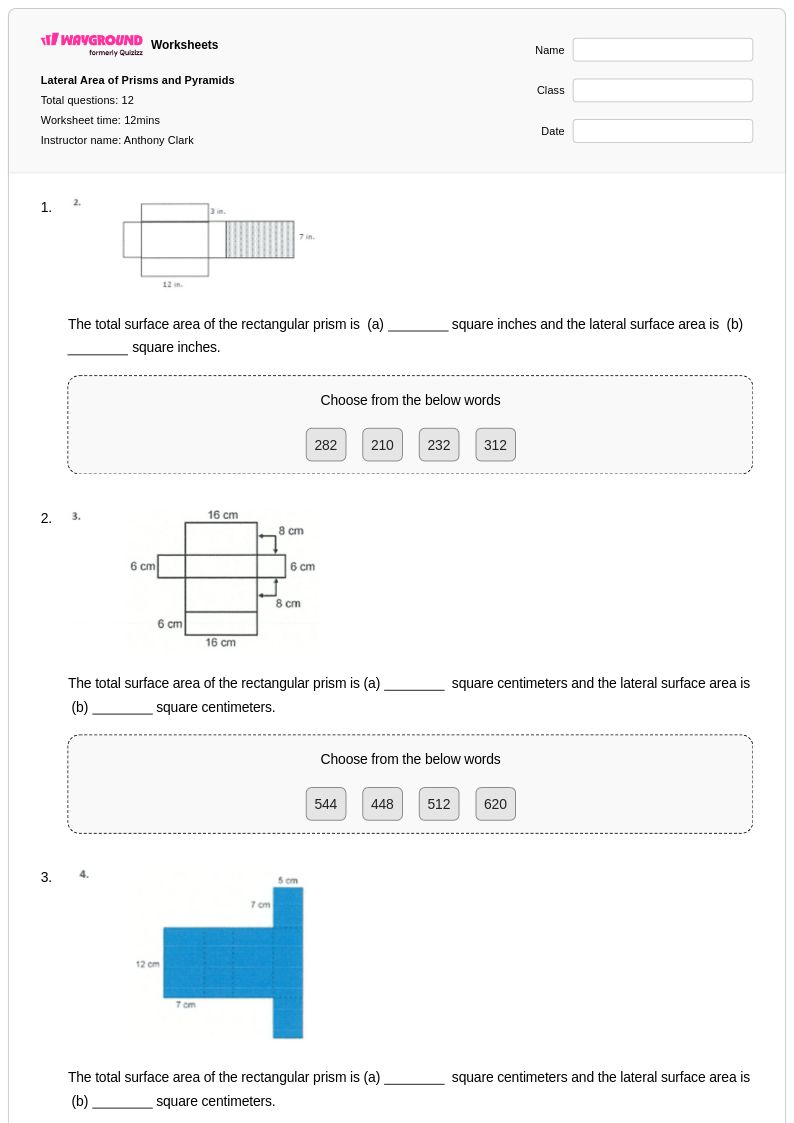
Lateral area worksheets for Class 8 students available through Wayground (formerly Quizizz) provide comprehensive practice with calculating the surface area of three-dimensional shapes, excluding their bases. These expertly designed resources strengthen students' understanding of geometric formulas and spatial reasoning skills essential for advanced mathematics. The worksheets feature carefully scaffolded practice problems that guide eighth graders through finding lateral areas of prisms, cylinders, pyramids, and cones using appropriate formulas and measurements. Each printable worksheet includes detailed answer keys that support both independent study and classroom instruction, while the free pdf format ensures easy distribution and accessibility for all learning environments.
Wayground (formerly Quizizz) empowers educators with millions of teacher-created lateral area resources that streamline lesson planning and differentiate instruction for diverse Class 8 mathematics classrooms. The platform's robust search and filtering capabilities allow teachers to quickly locate worksheets aligned with specific curriculum standards and learning objectives, while built-in customization tools enable educators to modify content difficulty and focus areas to meet individual student needs. These versatile materials are available in both printable and digital formats, supporting flexible implementation whether for whole-class instruction, small group remediation, or independent enrichment activities. The comprehensive collection facilitates targeted skill practice and assessment, helping teachers identify knowledge gaps and provide focused support for students developing proficiency in three-dimensional geometry concepts.
FAQs
What new concepts of lateral area are introduced in 8th grade?
How can I teach the lateral area of a cone or pyramid?
What are the most common errors students make with cones and pyramids?
What types of problems are on an 8th-grade lateral area worksheet?
How does this topic fit with 8th-grade math standards?
How can I use this worksheet for practice or assessment?