
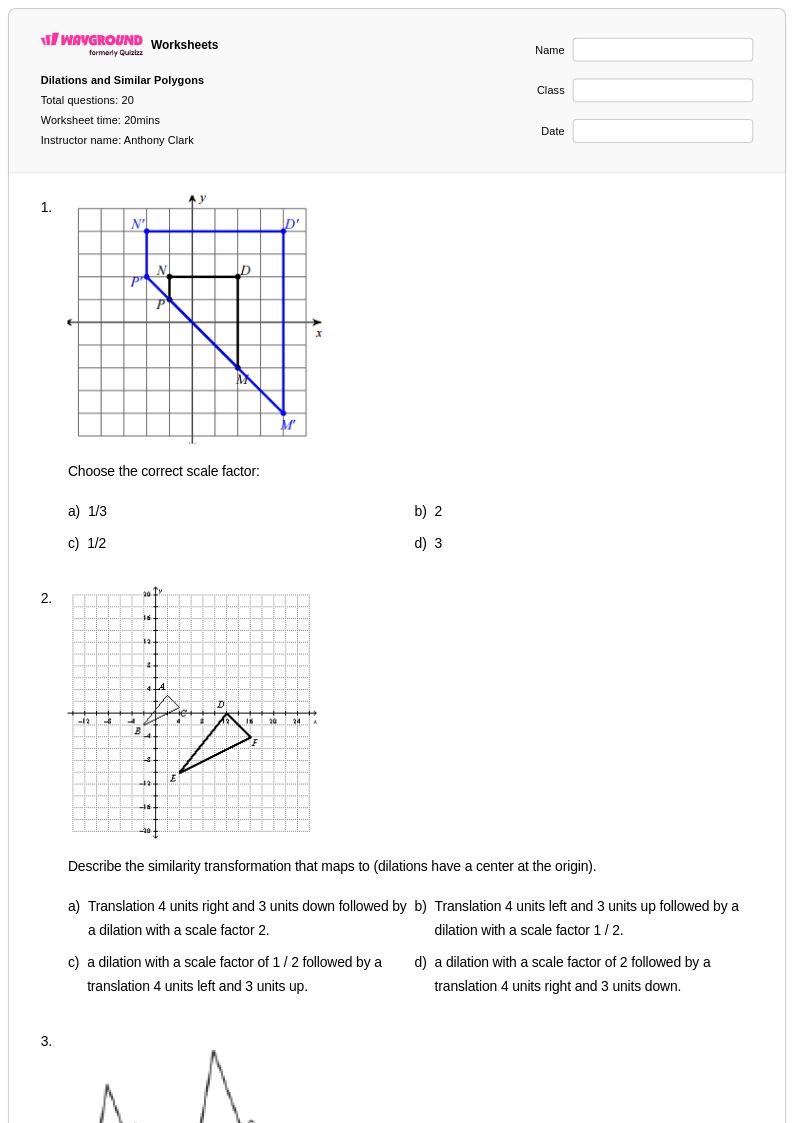
20 Q
6th - Uni
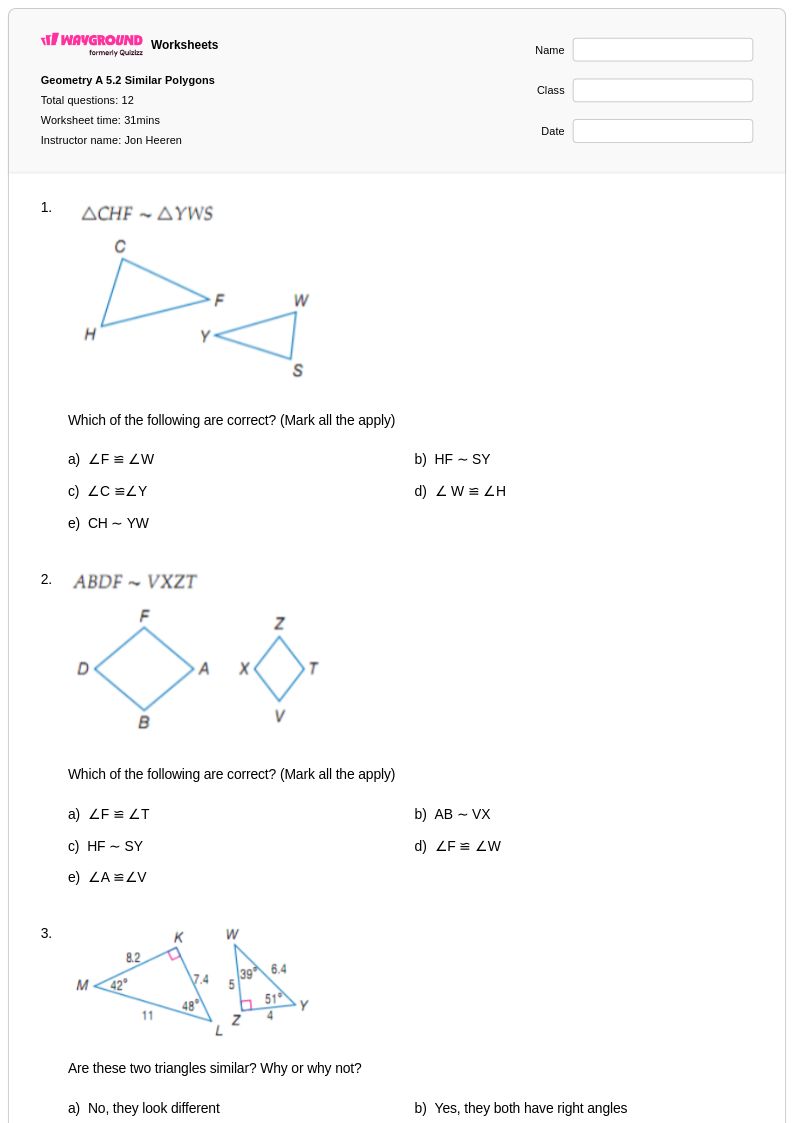
12 Q
8th - 11th
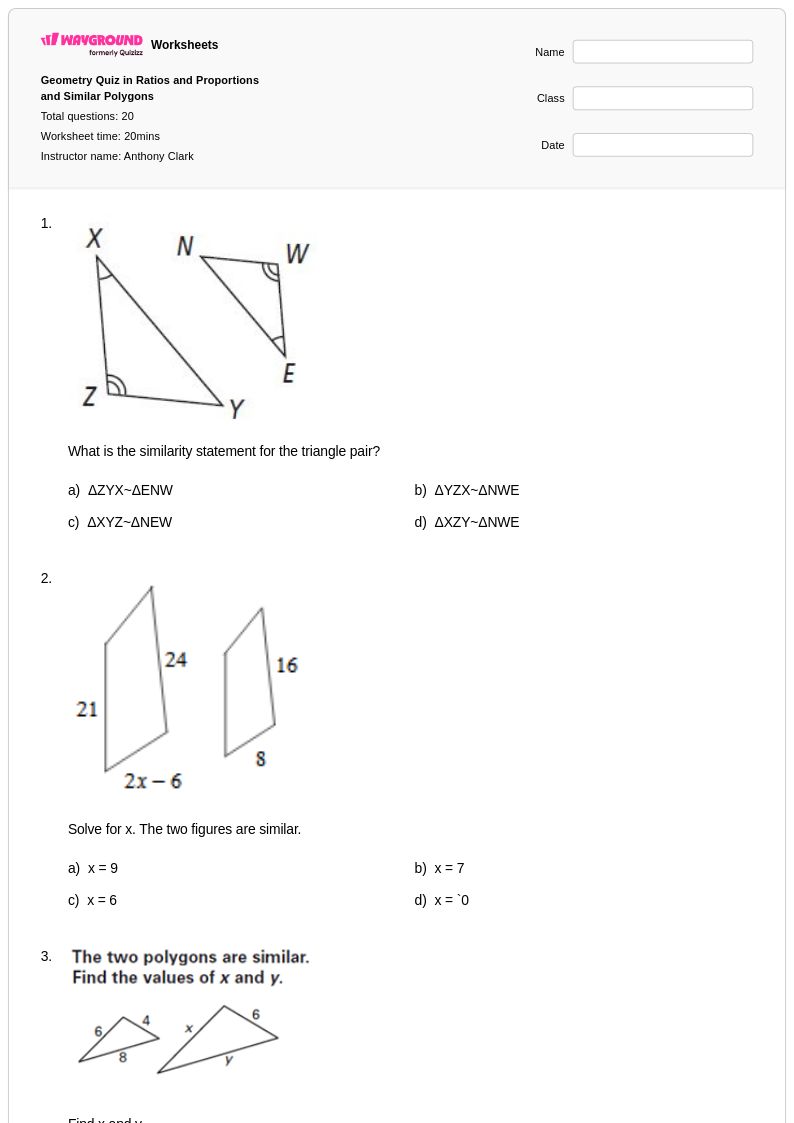
20 Q
7th - Uni
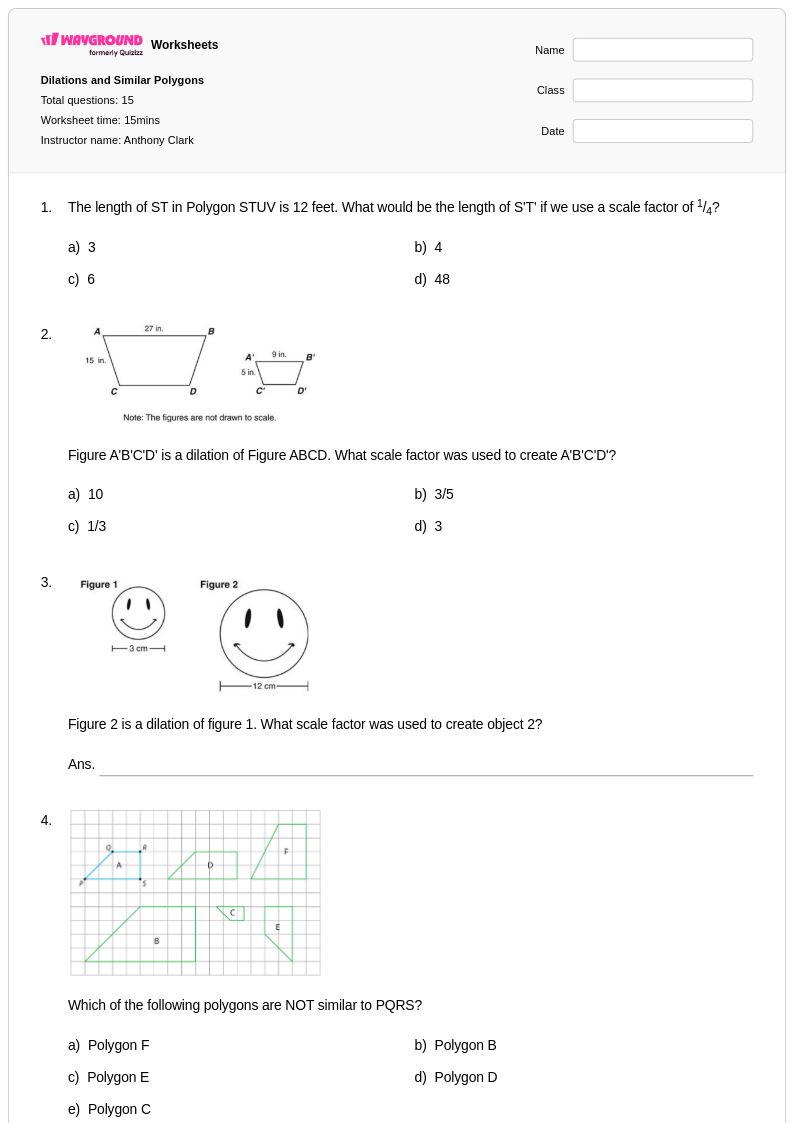
15 Q
6th - Uni
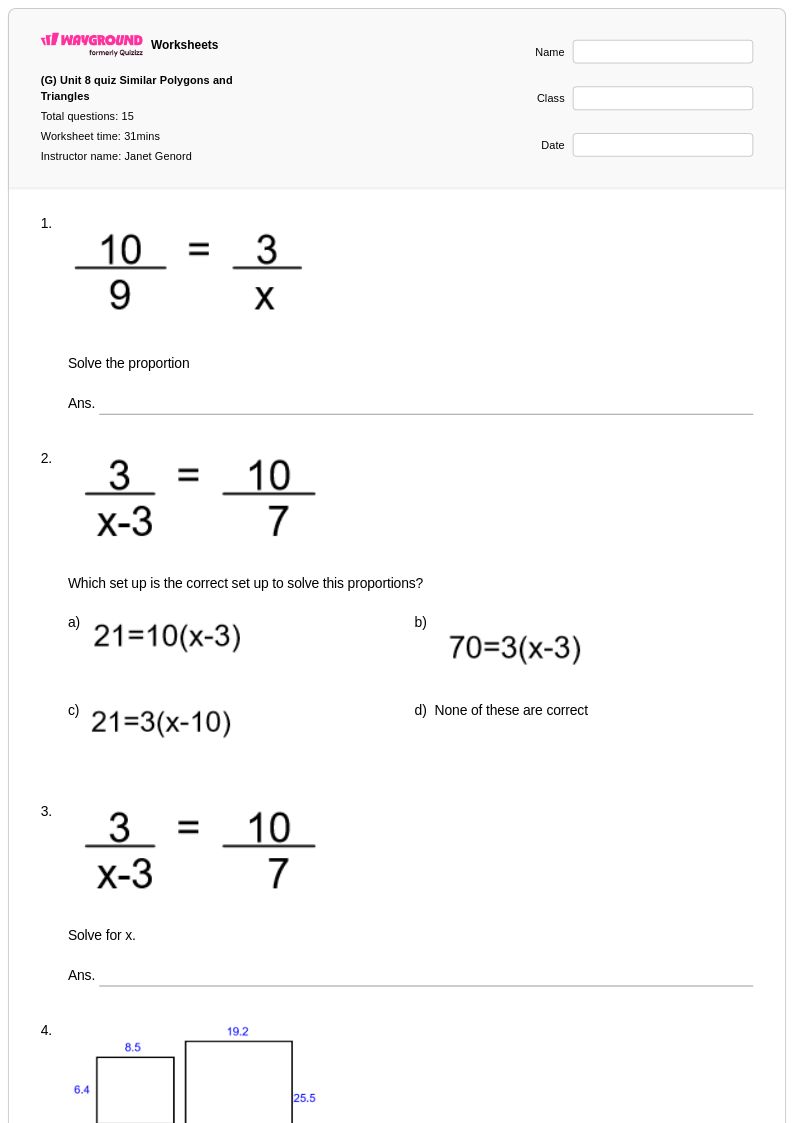
15 Q
8th - 10th
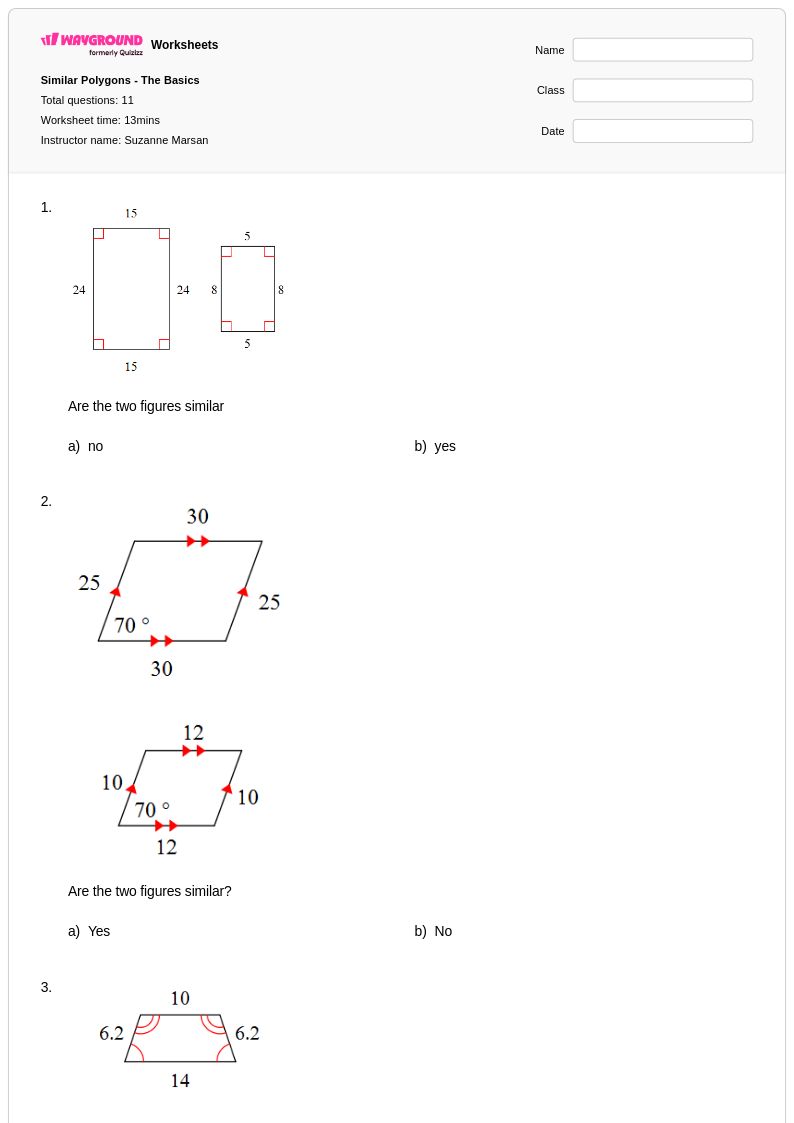
11 Q
8th - 11th
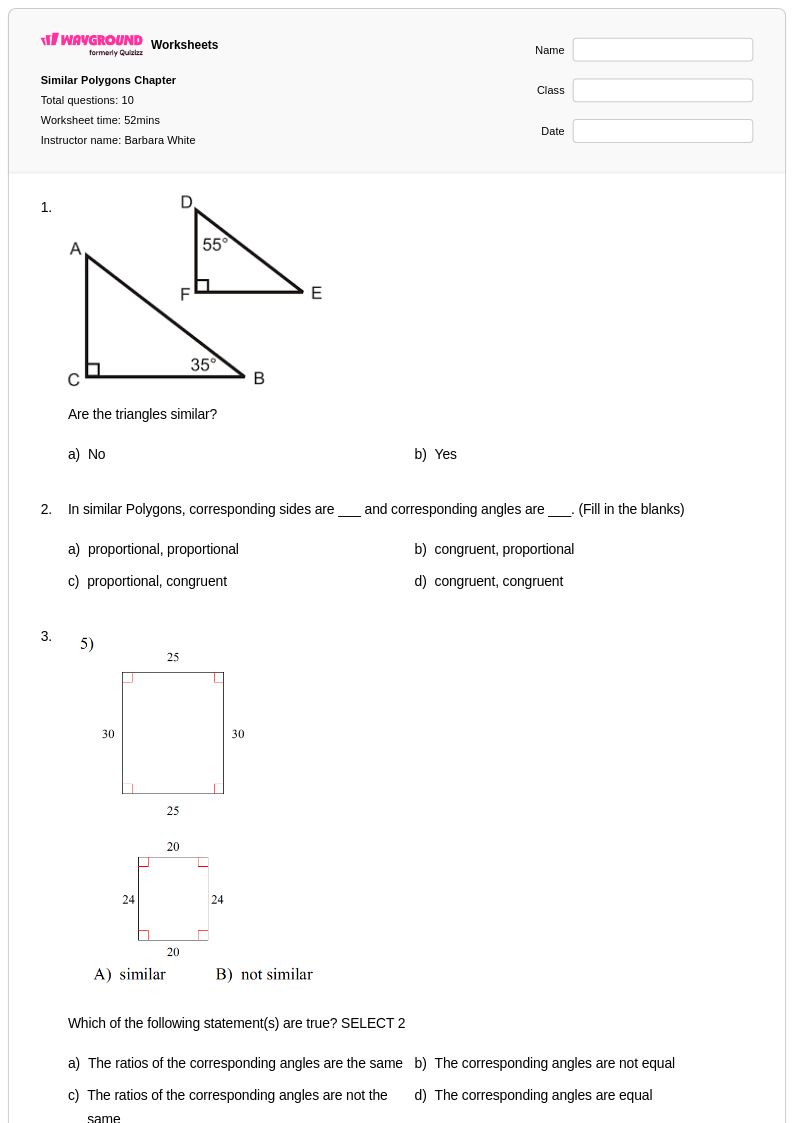
10 Q
7th - 8th
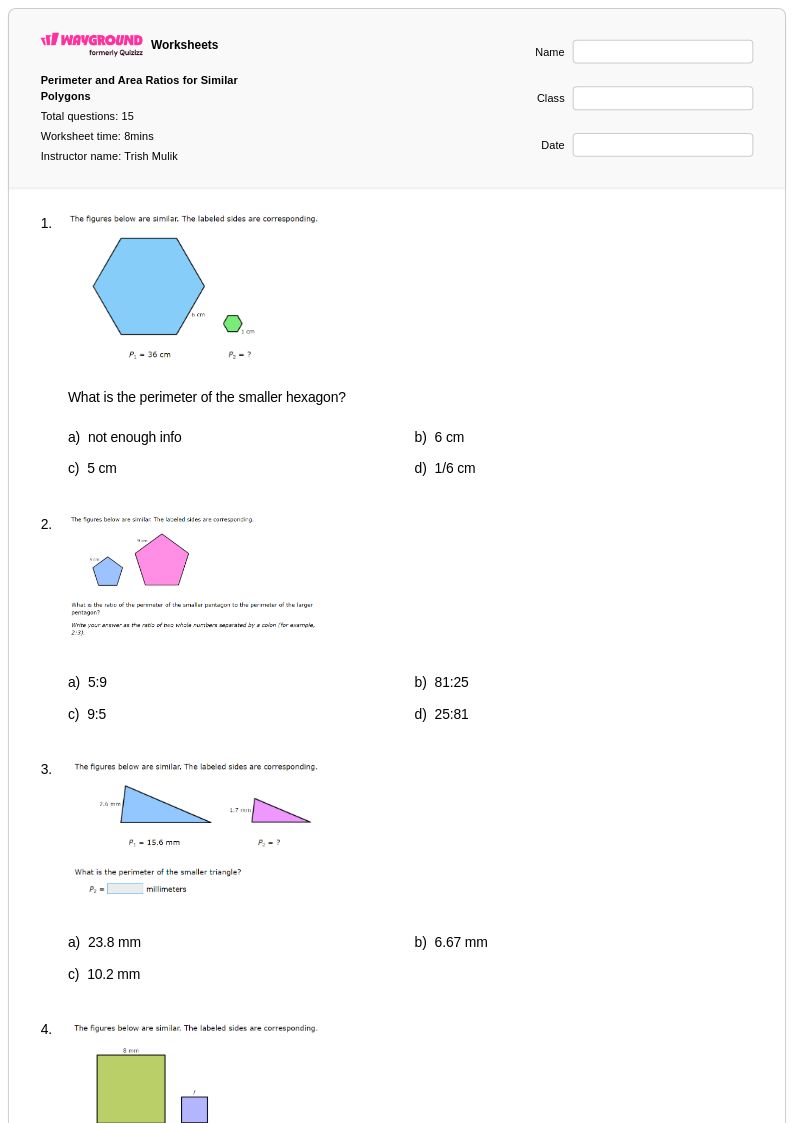
15 Q
8th - 9th
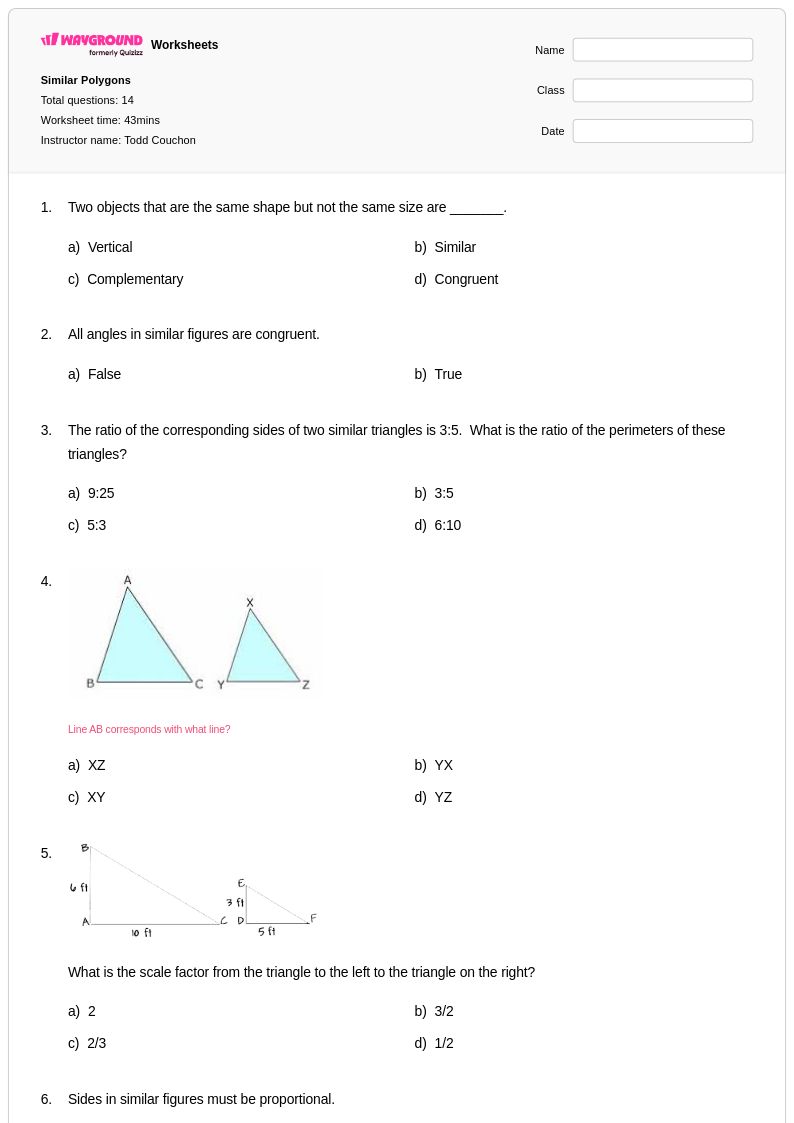
14 Q
6th - 8th
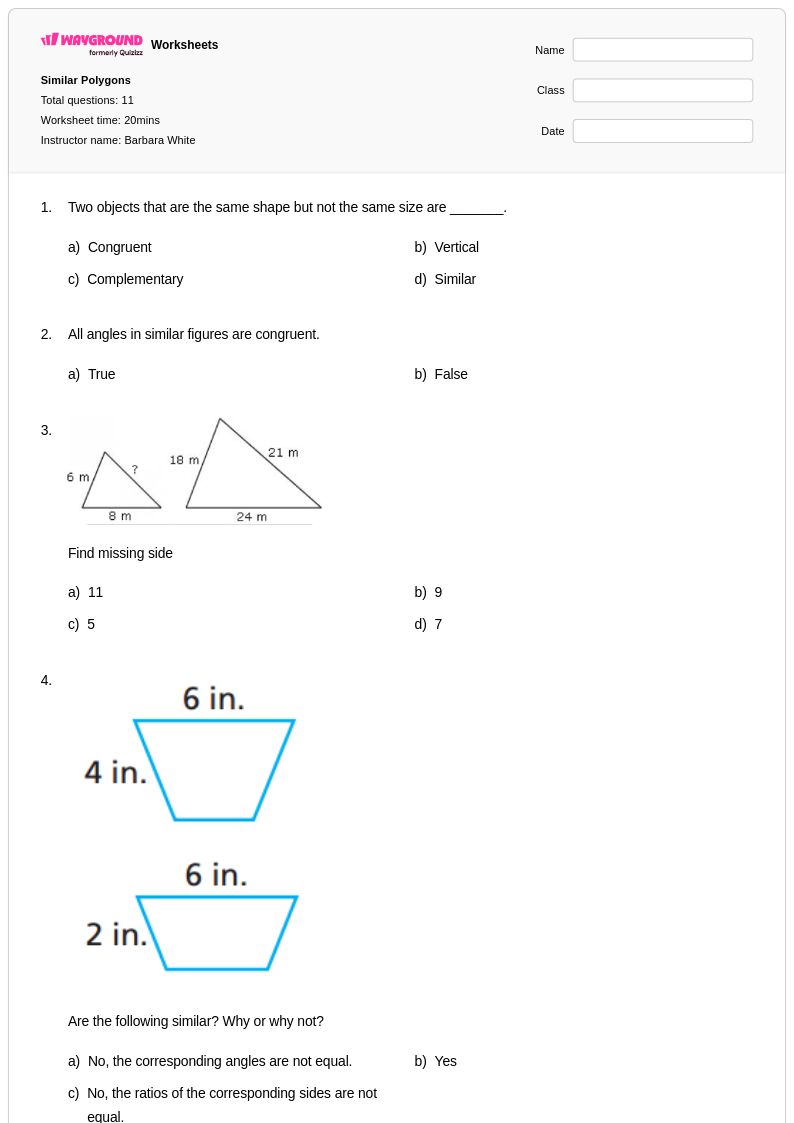
11 Q
7th - 10th
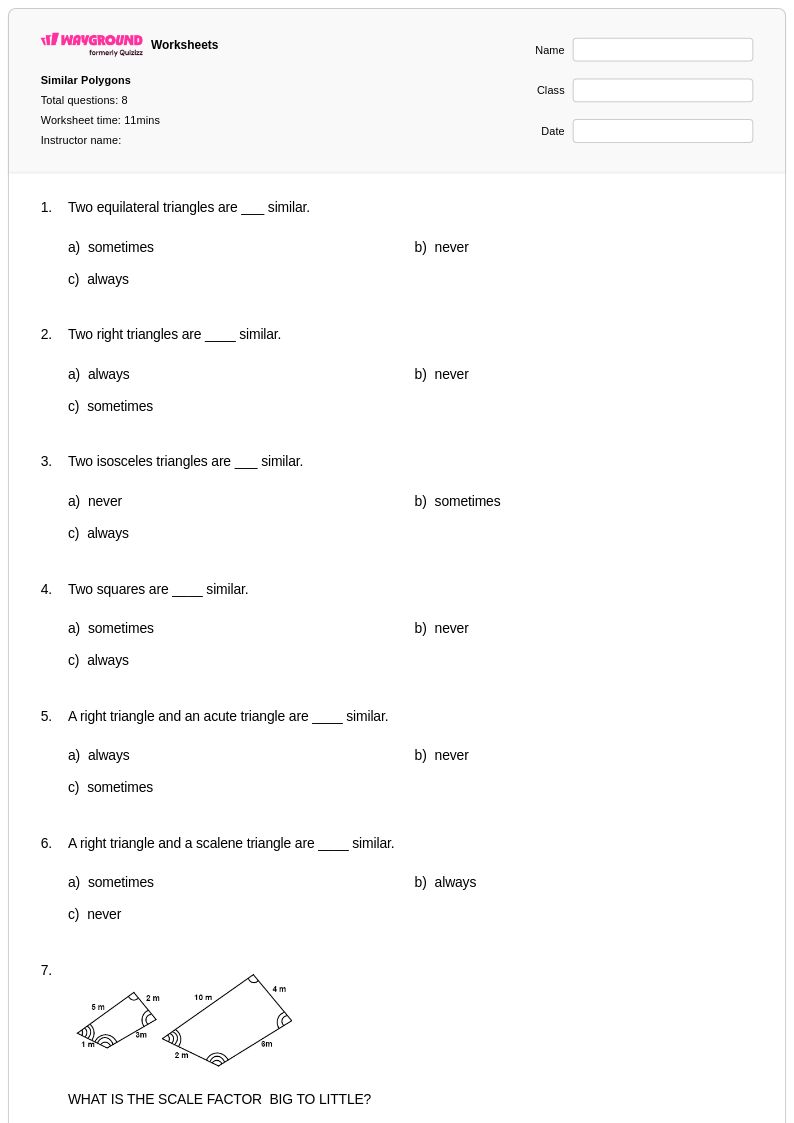
8 Q
8th - 10th
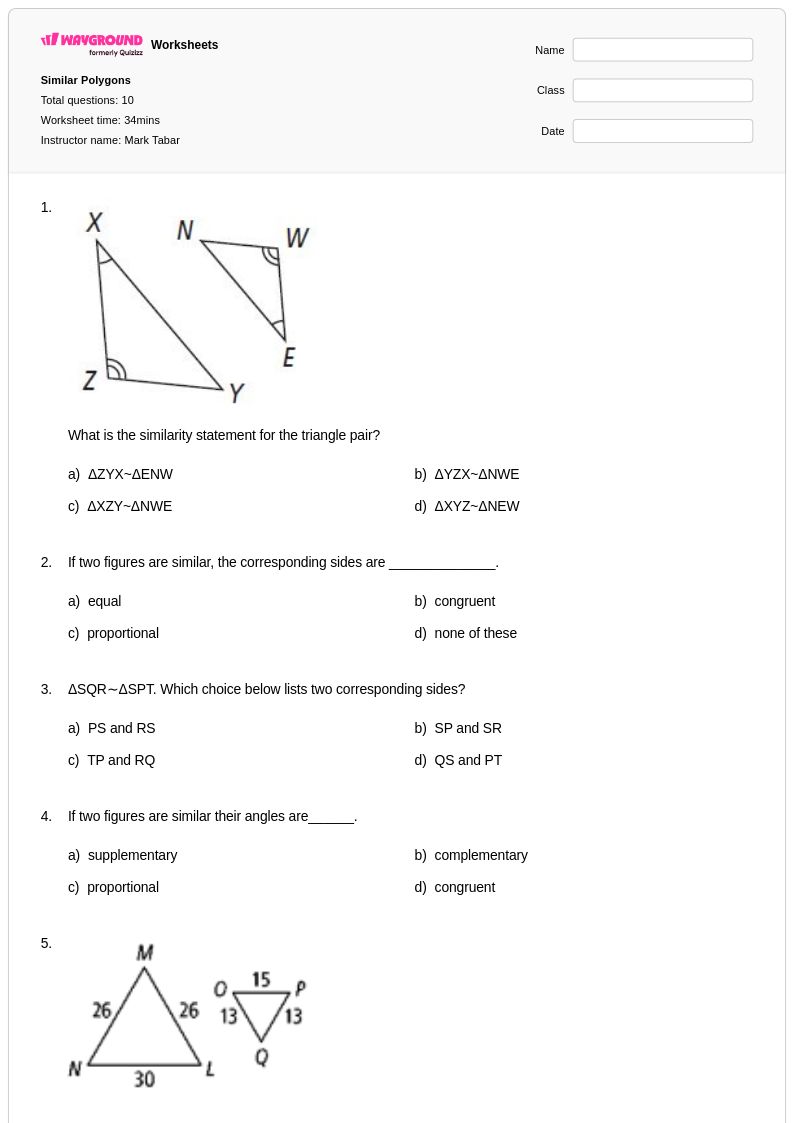
10 Q
8th - 12th
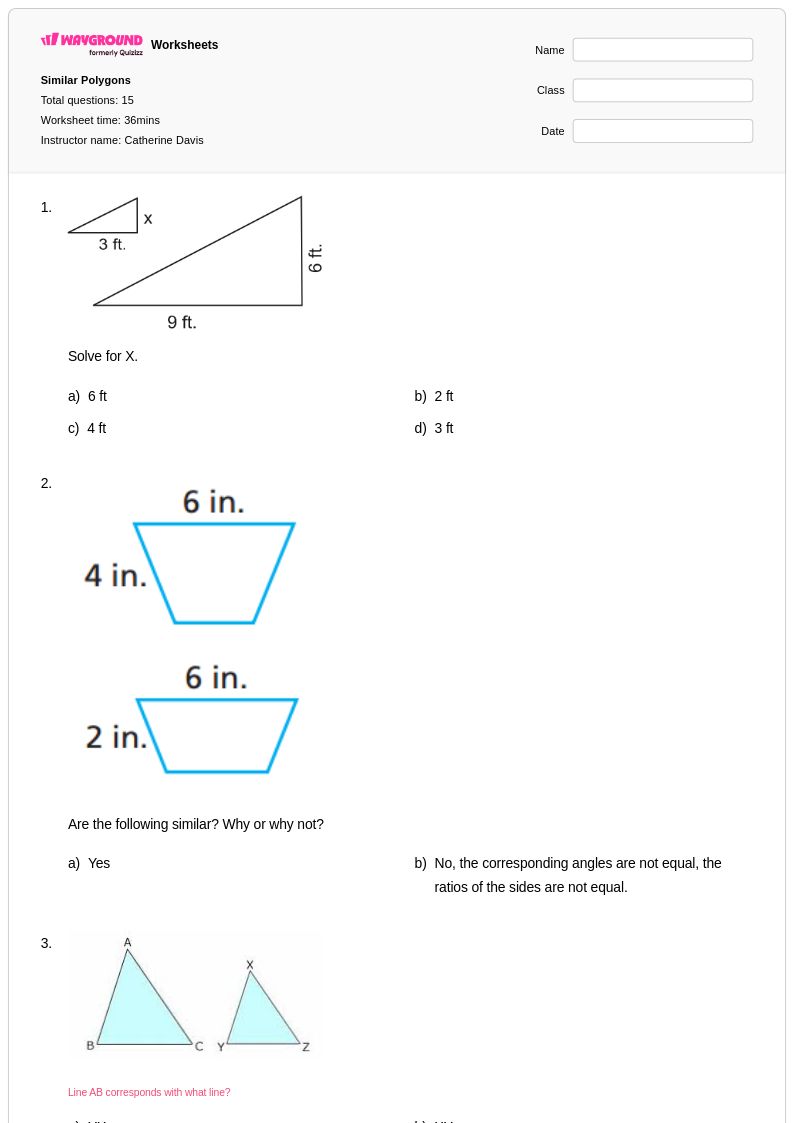
15 Q
8th - 10th
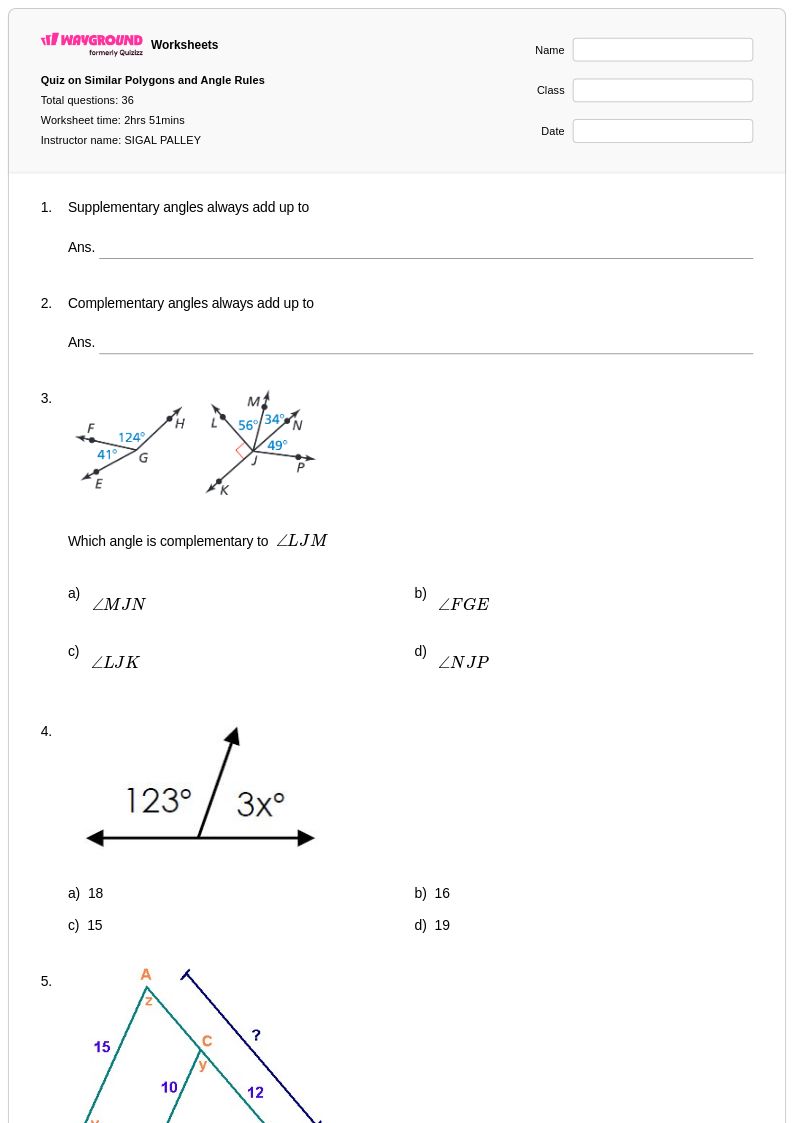
36 Q
8th
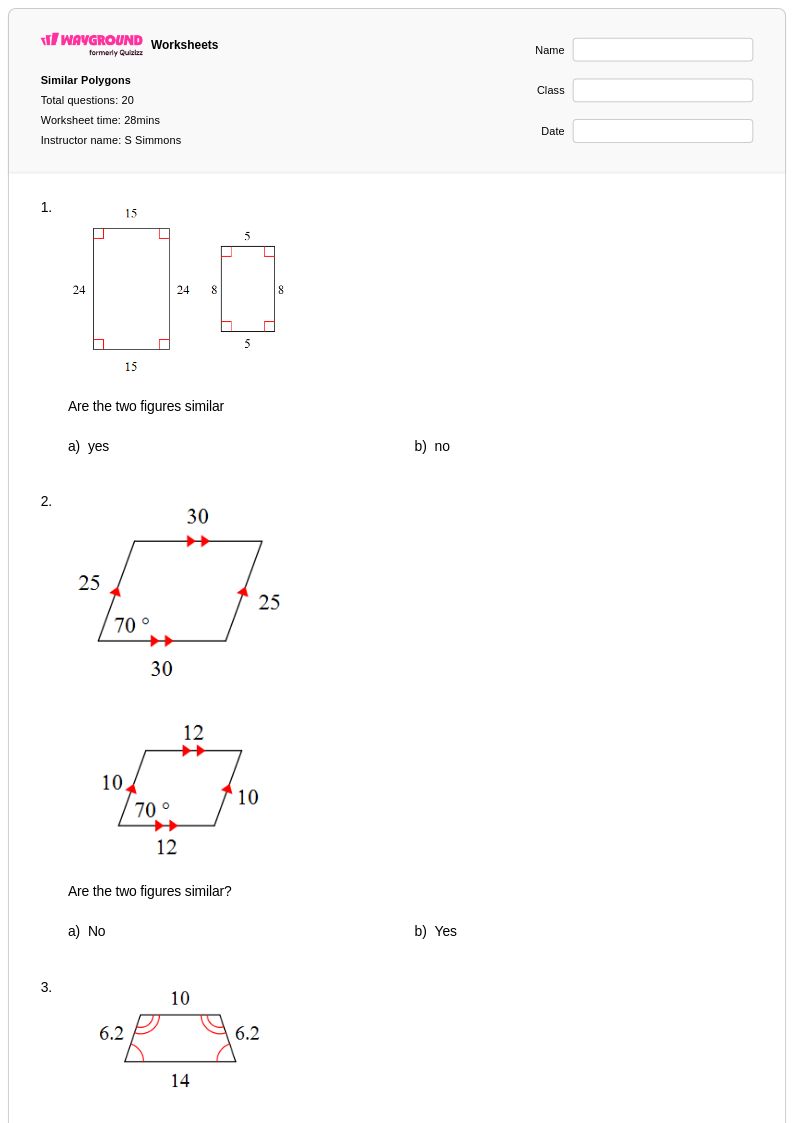
20 Q
8th
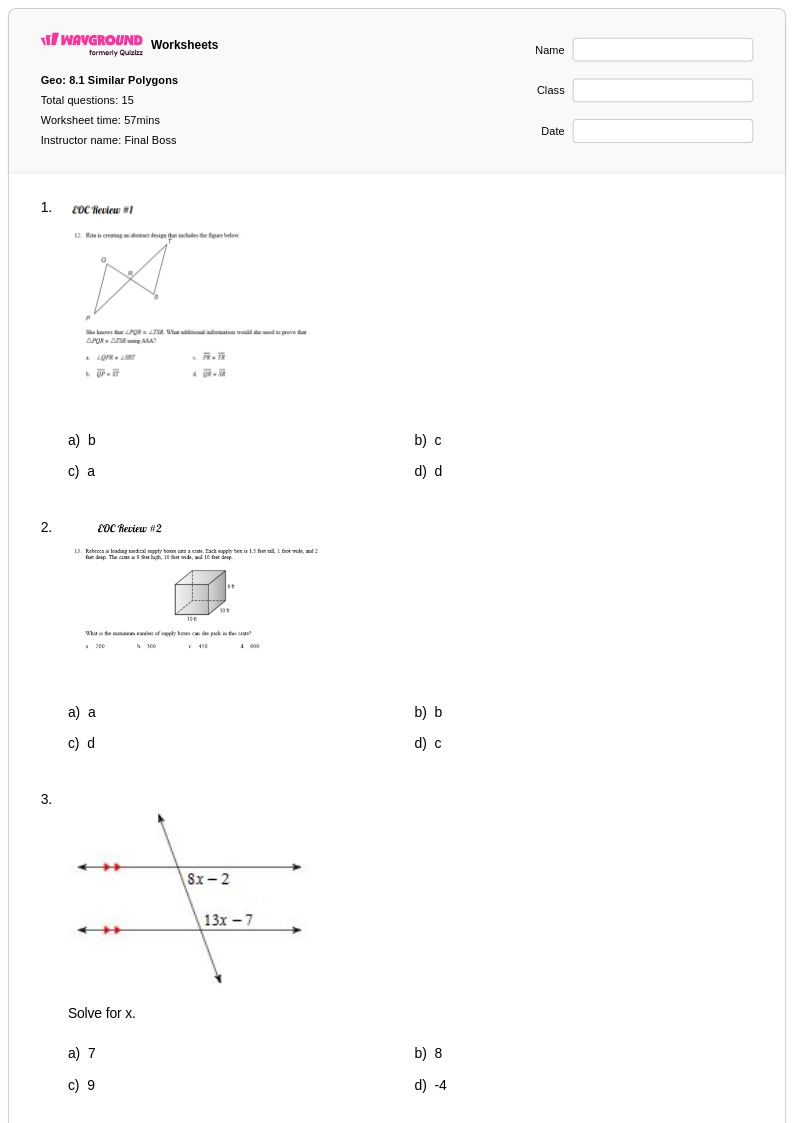
15 Q
8th - 10th
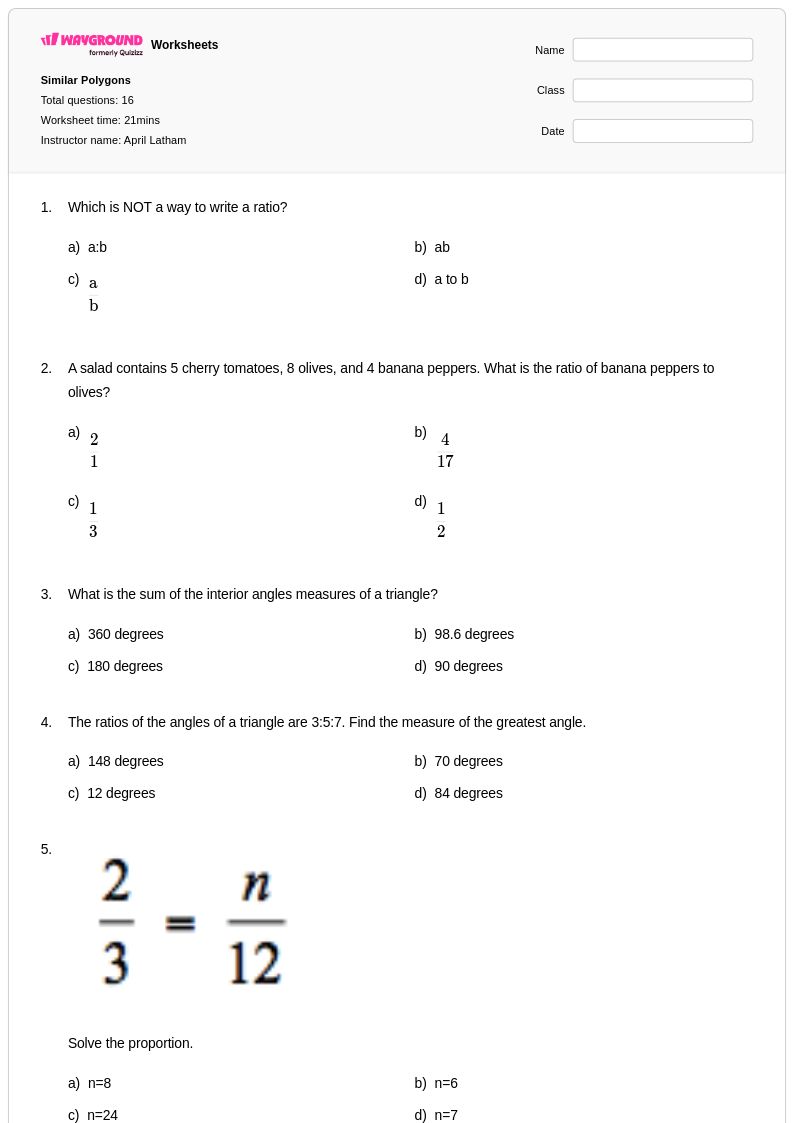
16 Q
7th - 10th
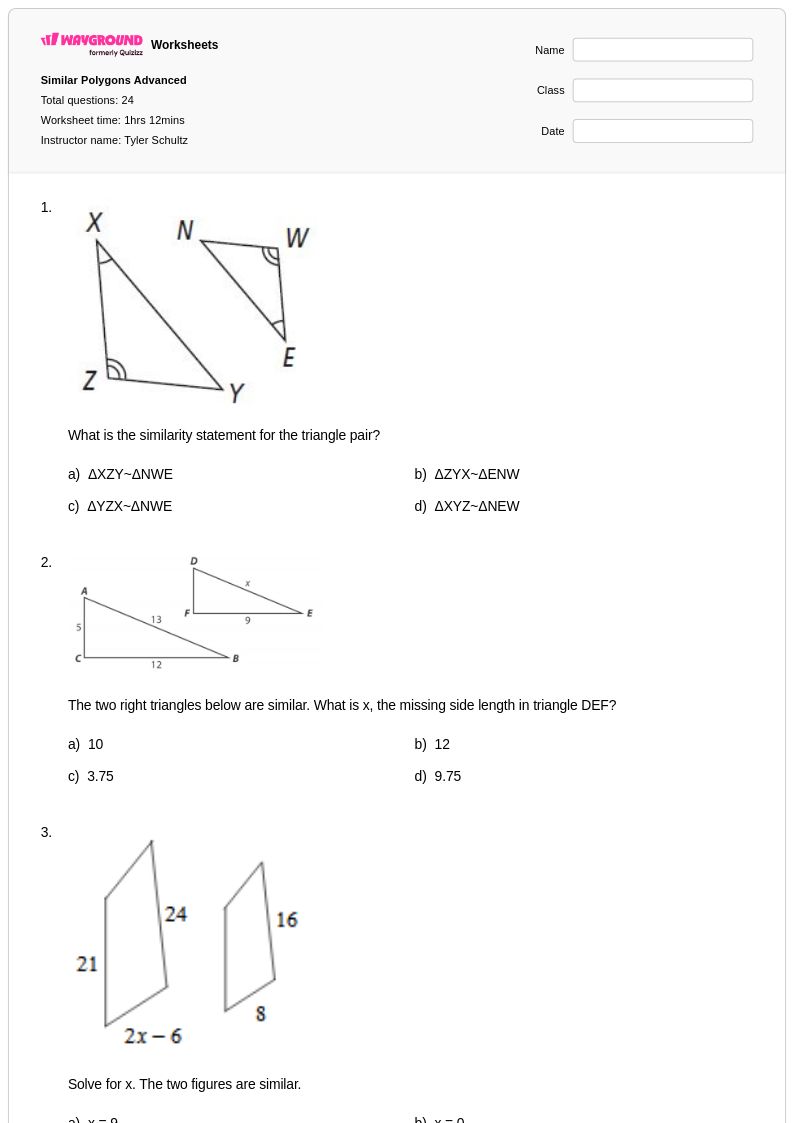
24 Q
8th - 10th
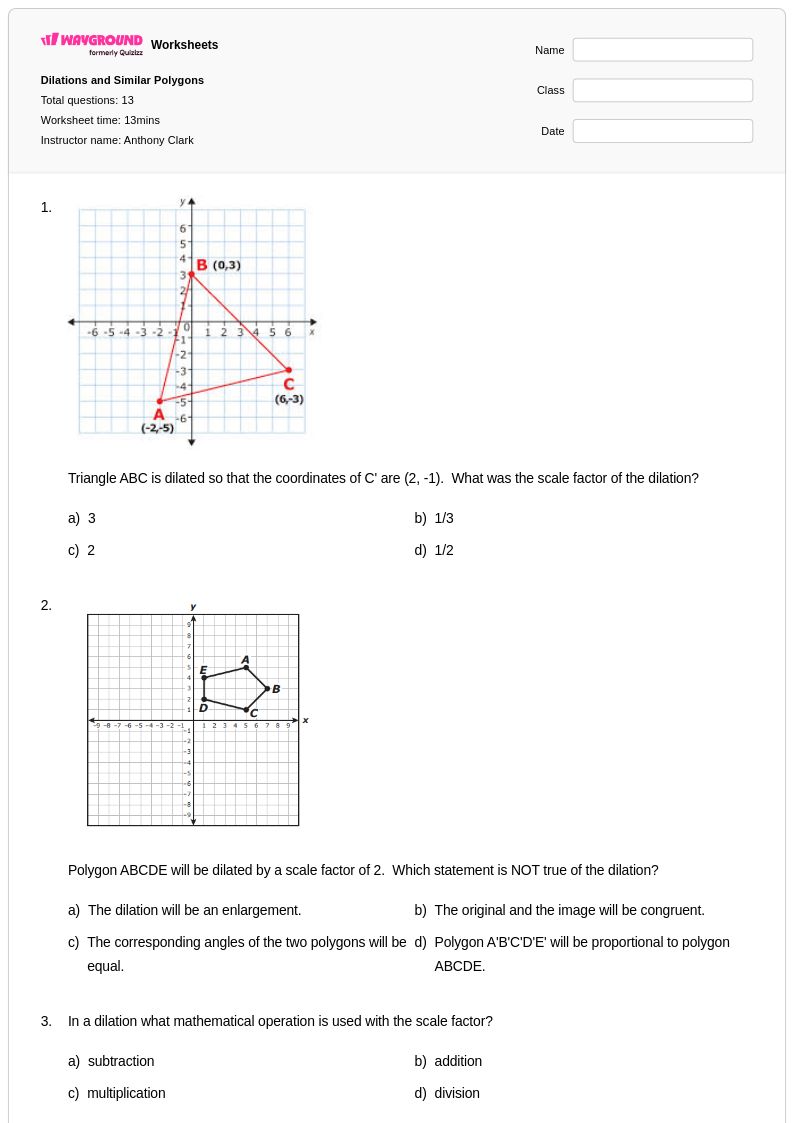
13 Q
6th - Uni
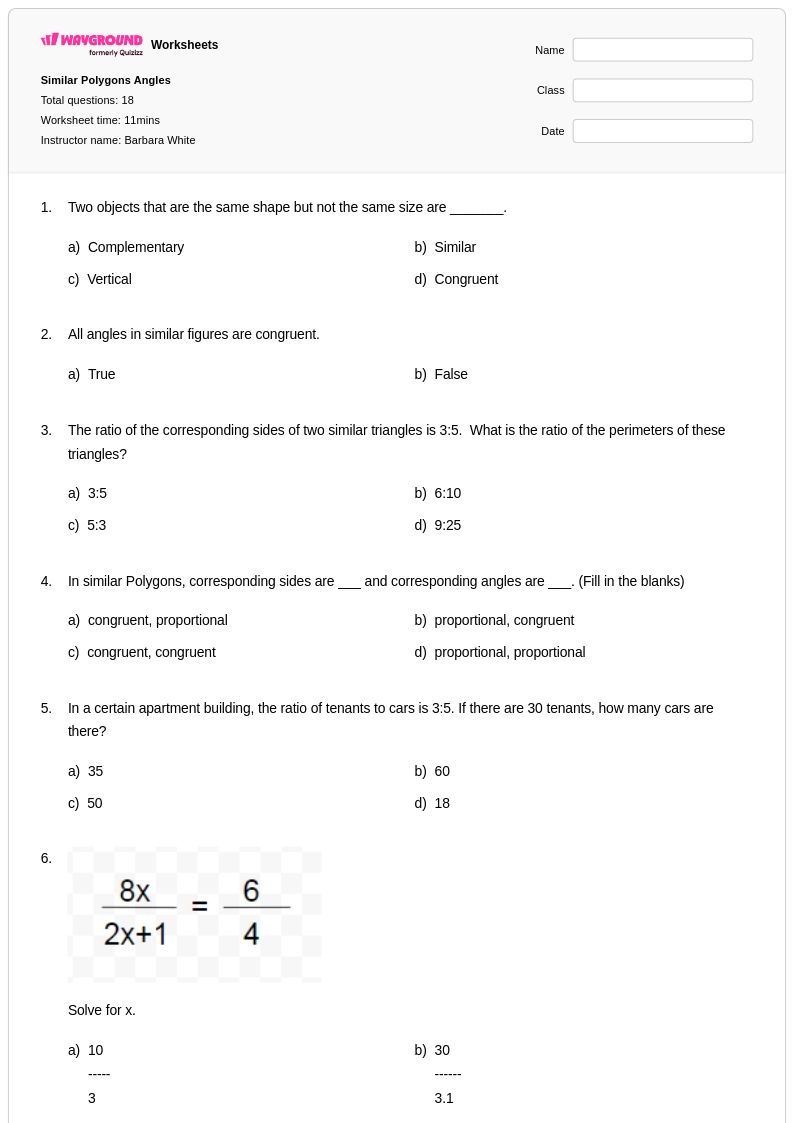
18 Q
8th - 12th
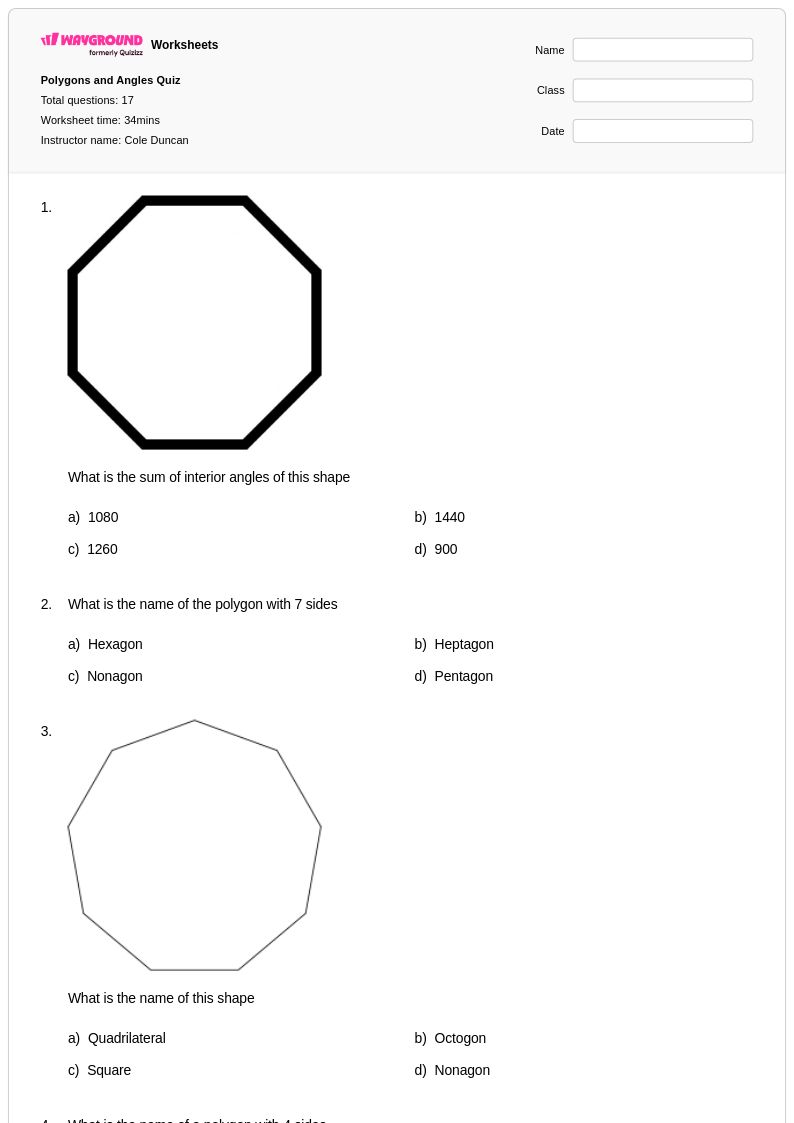
17 Q
8th
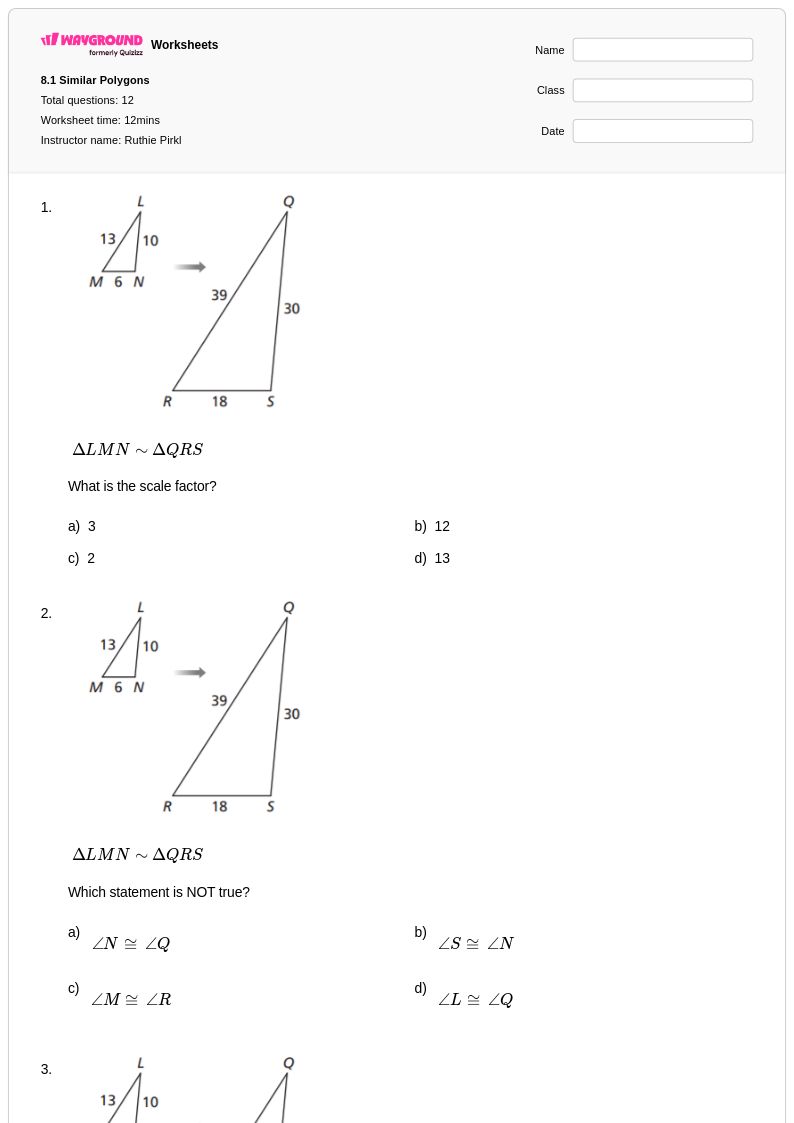
12 Q
8th - 11th
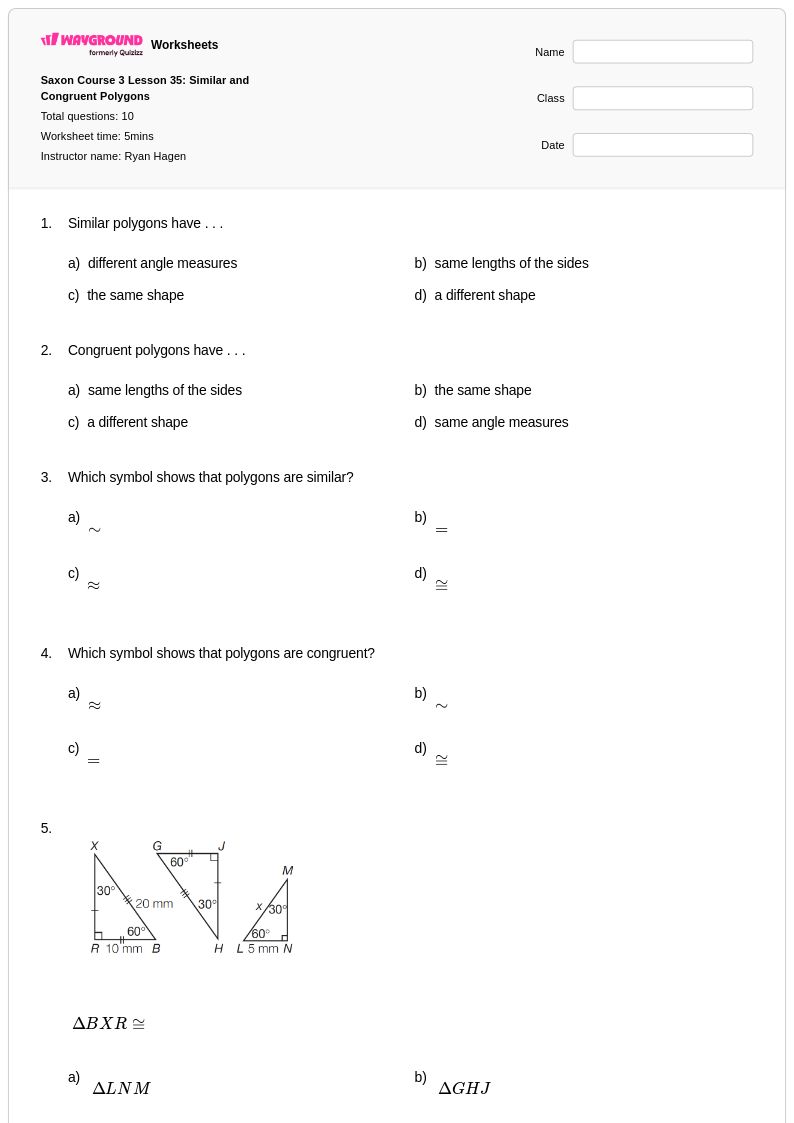
10 Q
6th - 8th
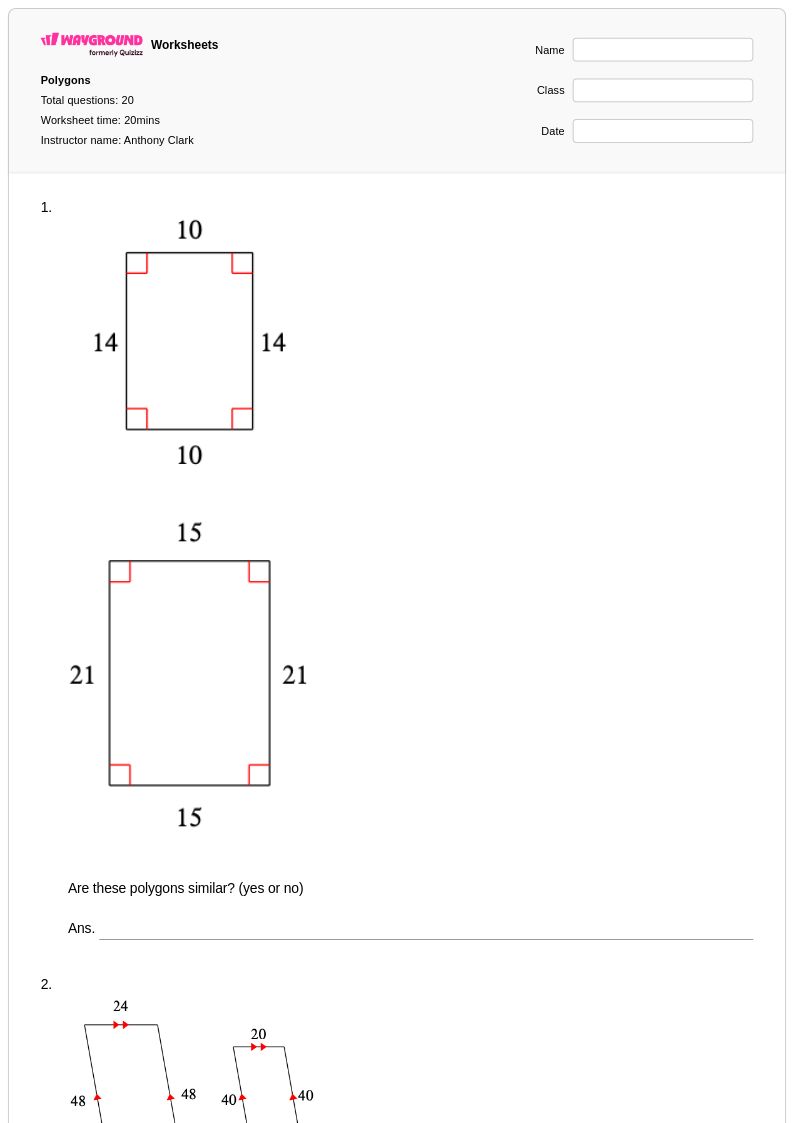
20 Q
6th - Uni
Explore Other Subject Worksheets for class 8
Explore printable Similar Polygons worksheets for Class 8
Similar polygons represent a fundamental concept in Class 8 geometry that bridges basic shape recognition with advanced proportional reasoning and scale factor applications. Wayground's comprehensive collection of similar polygons worksheets provides students with structured practice in identifying corresponding sides and angles, calculating scale factors, and determining missing measurements in proportional figures. These carefully designed practice problems strengthen critical mathematical skills including ratio and proportion analysis, algebraic problem-solving, and spatial reasoning abilities that form the foundation for advanced geometric concepts. Teachers can access complete worksheet sets with detailed answer keys, offering both printable pdf formats and digital alternatives that accommodate diverse classroom needs while providing free resources for reinforcing these essential geometric principles.
Wayground's extensive library, featuring millions of teacher-created resources, empowers educators with sophisticated search and filtering capabilities specifically designed for similar polygons instruction across Class 8 mathematics curricula. The platform's standards-aligned worksheet collections support differentiated instruction through customizable difficulty levels, enabling teachers to provide targeted remediation for struggling students while offering enrichment opportunities for advanced learners. These flexible digital and printable formats facilitate seamless lesson planning, allowing educators to efficiently select appropriate practice materials that align with specific learning objectives and assessment requirements. The comprehensive resource organization streamlines the process of identifying worksheets that address individual student needs, supporting systematic skill development in proportional reasoning and geometric similarity concepts essential for mathematical progression.
FAQs
What are the expectations for 8th graders studying similar polygons?
How can I connect similar polygons to algebra for my 8th graders?
What types of problems are included in this 8th-grade worksheet?
What algebraic errors do 8th graders make with similar polygon problems?
How can I use this worksheet to check for understanding?
How does this topic prepare 8th graders for high school math?