
20 Q
8th - 12th
6 Q
KG - PD
15 Q
6th - 12th
12 Q
8th - Uni
5 Q
4th - 12th
36 Q
8th
10 Q
2nd - 10th
20 Q
7th - Uni
209 Q
8th - 12th
11 Q
8th - 10th
46 Q
8th
10 Q
8th
18 Q
6th - 12th
20 Q
7th - Uni
46 Q
6th - 8th
20 Q
6th - 12th
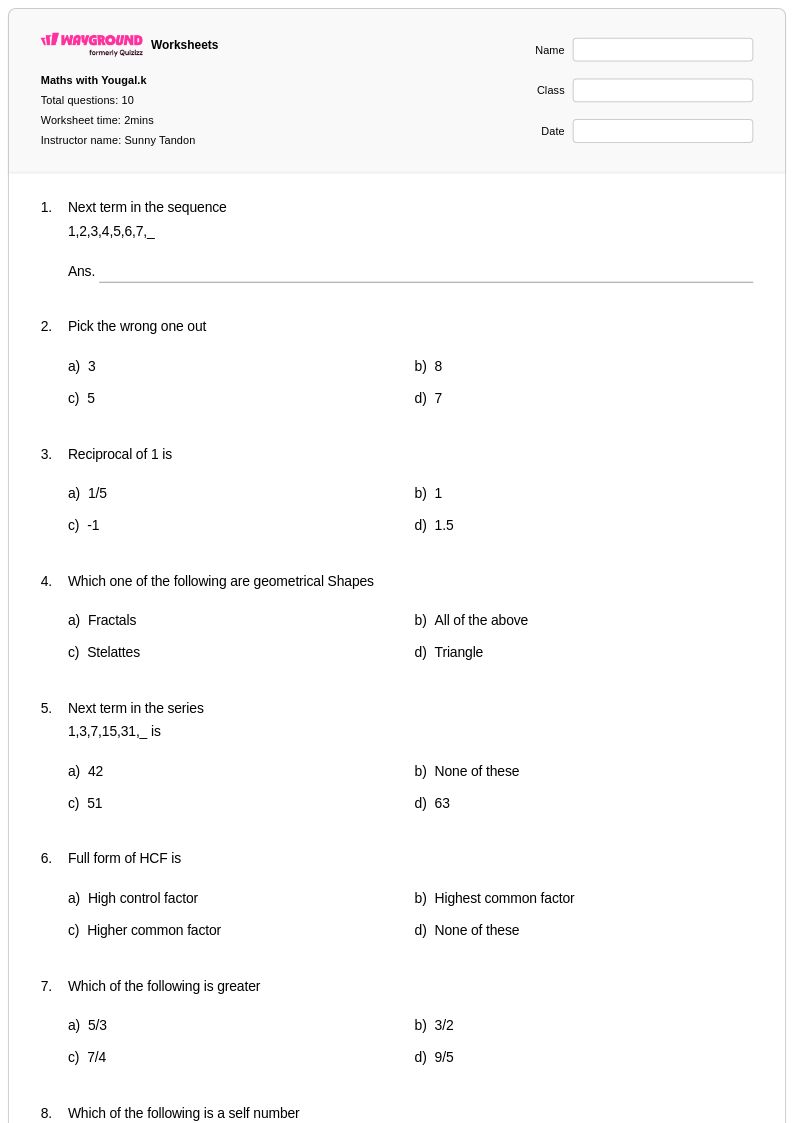
10 Q
3rd - 8th
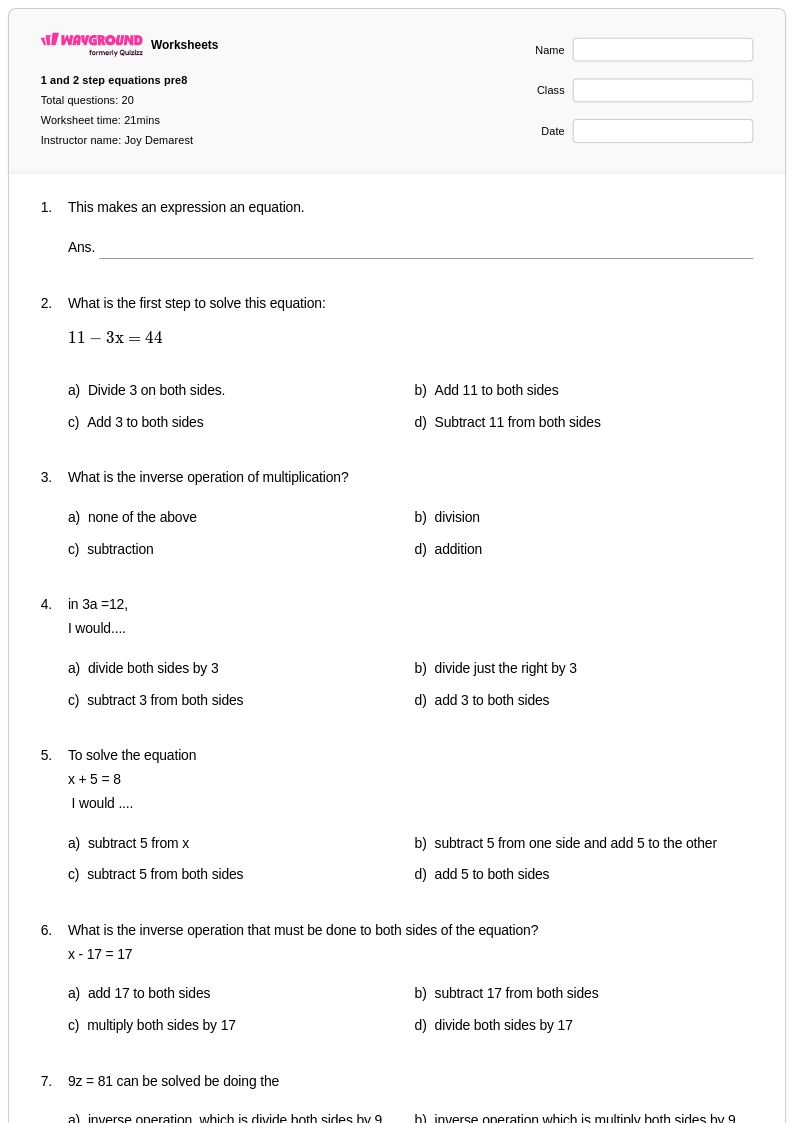
20 Q
8th
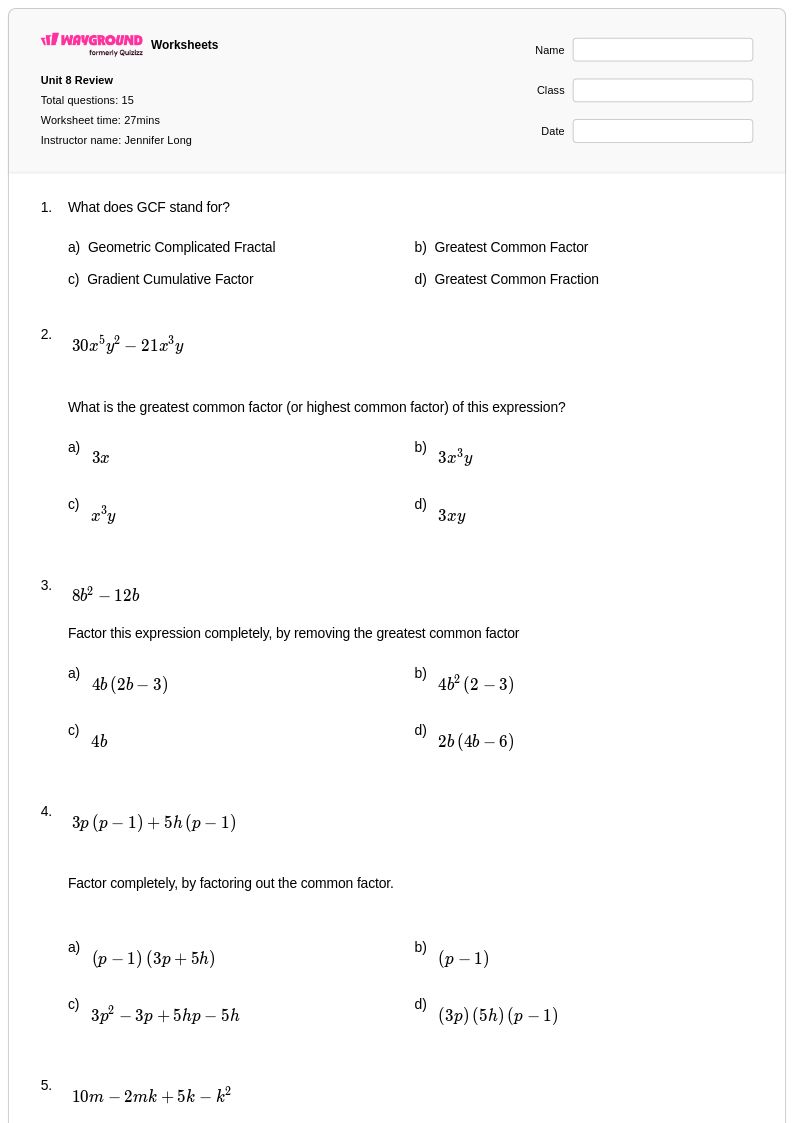
15 Q
8th - 10th
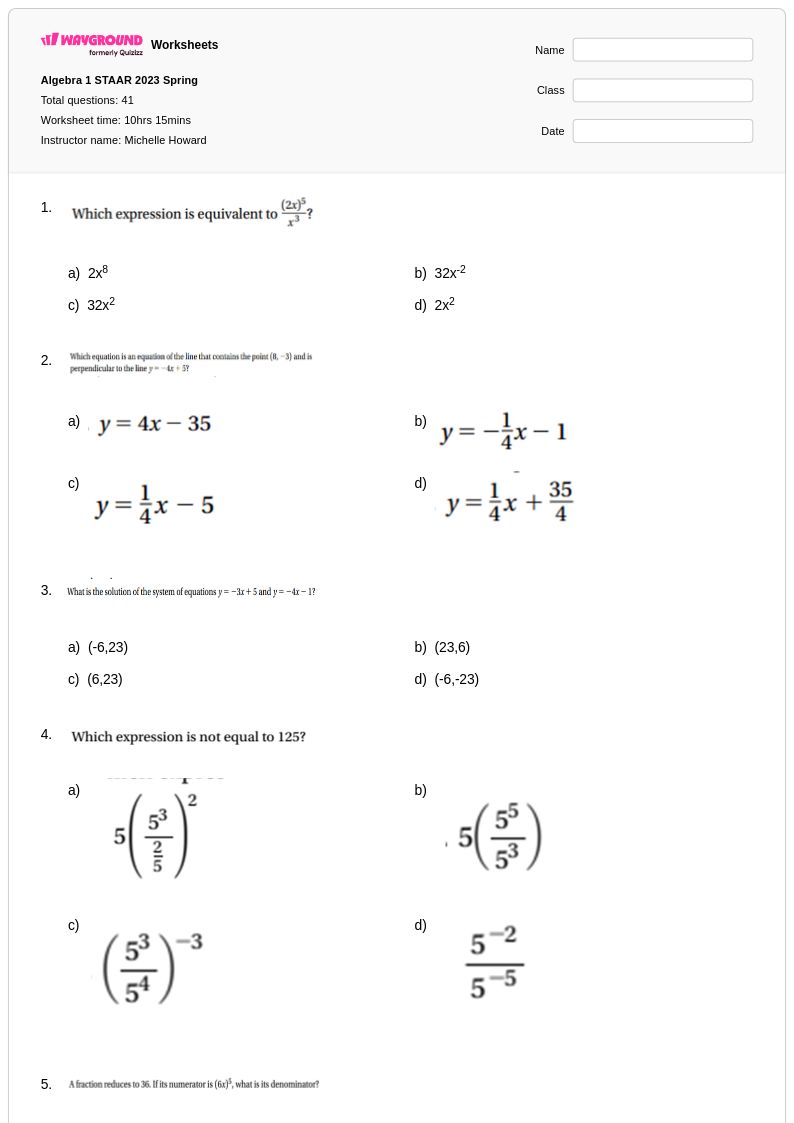
41 Q
8th
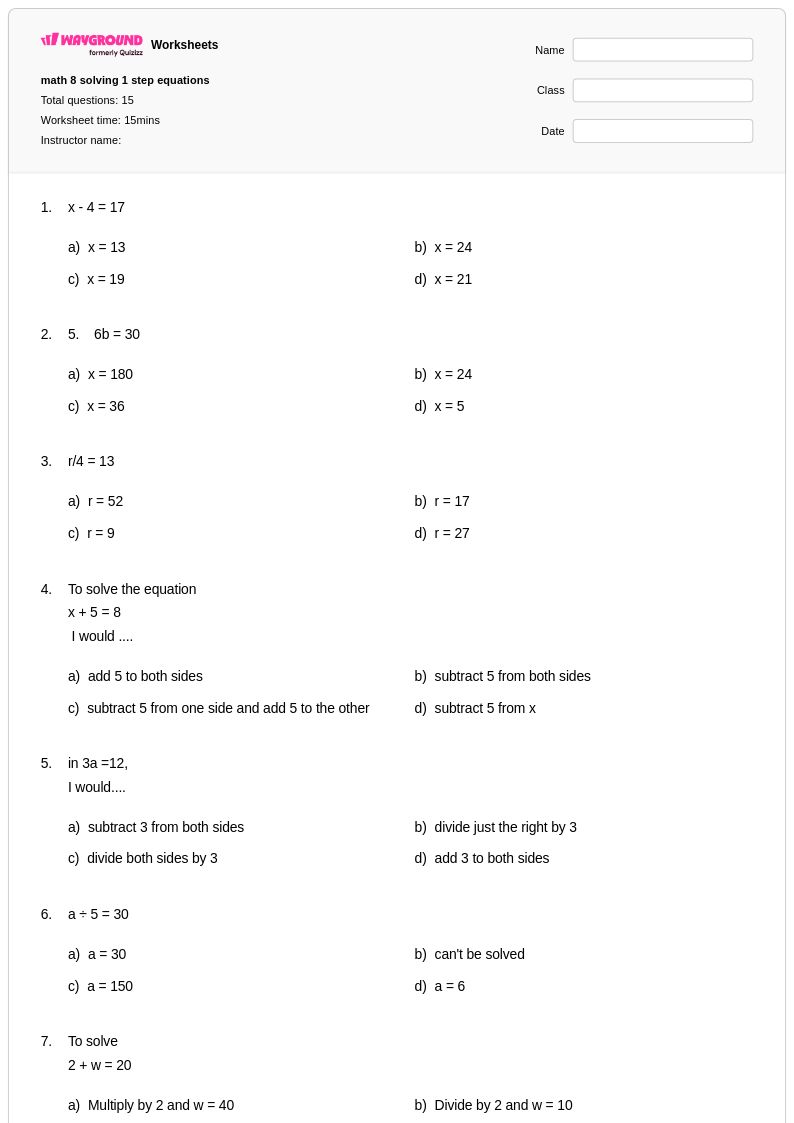
15 Q
8th
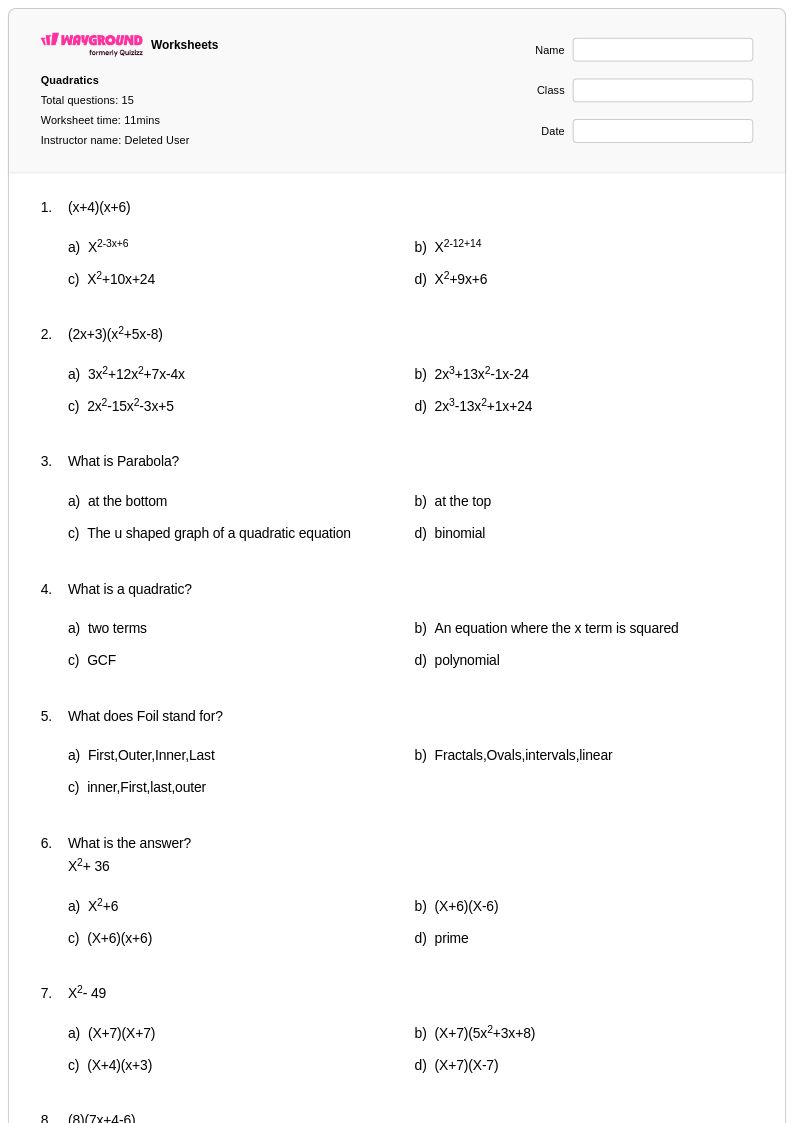
15 Q
8th
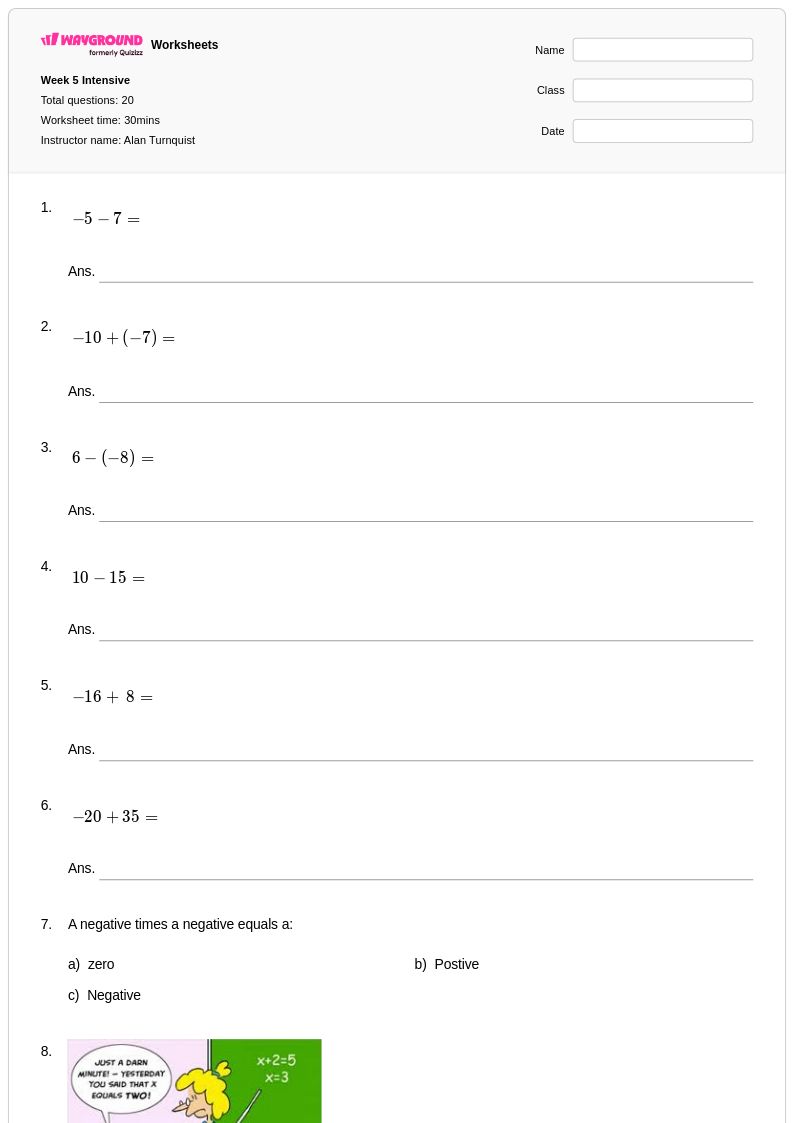
20 Q
6th - 8th
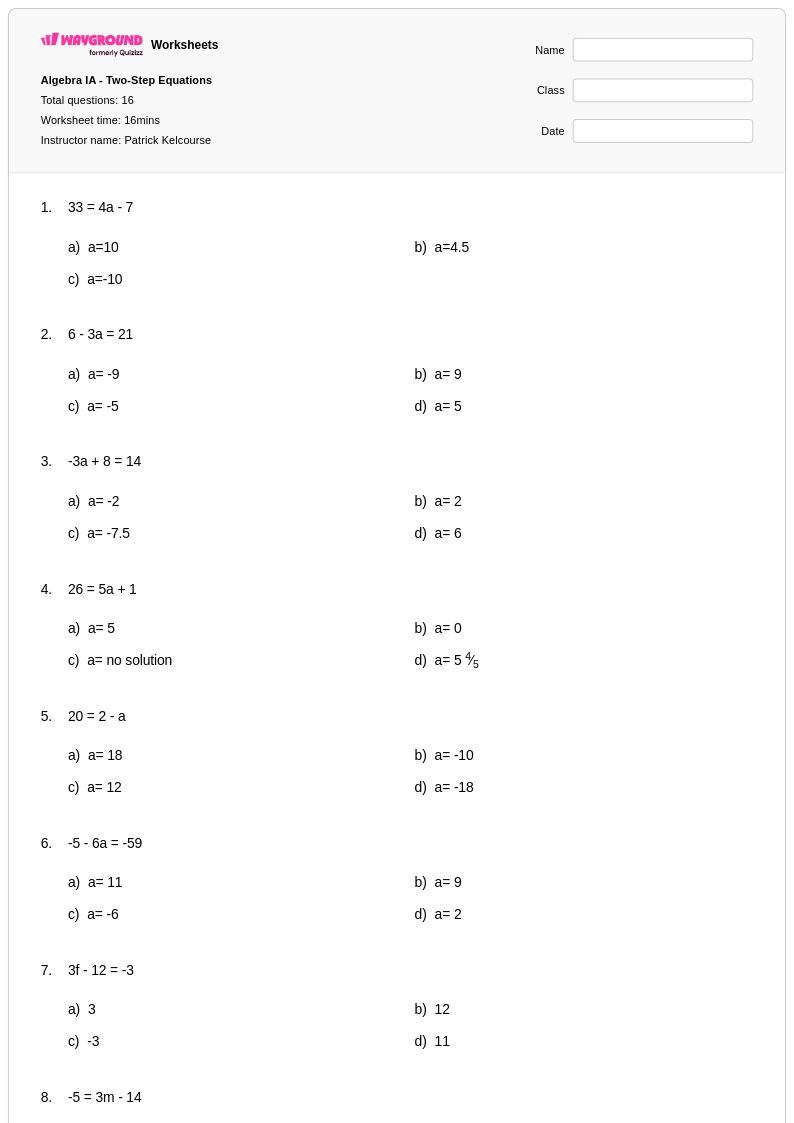
16 Q
7th - 8th
Explore Other Subject Worksheets for class 8
Explore printable Fractals worksheets for Class 8
Fractals worksheets for Class 8 students available through Wayground (formerly Quizizz) introduce young mathematicians to the fascinating world of self-similar geometric patterns and infinite complexity. These comprehensive practice problems guide eighth graders through the fundamental concepts of fractal geometry, including identifying recursive patterns, calculating dimensions of fractal objects, and exploring famous fractals like the Sierpinski triangle and Koch snowflake. Students develop critical thinking skills as they analyze how simple rules generate complex structures, strengthening their understanding of geometric transformations, scaling, and mathematical iteration. Each worksheet collection includes detailed answer keys and is available as free printables in pdf format, allowing students to work through problems involving fractal construction, pattern recognition, and the mathematical properties that make these geometric forms unique in nature and mathematics.
Wayground (formerly Quizizz) empowers educators with millions of teacher-created fractal geometry resources specifically designed for Class 8 mathematics instruction, featuring robust search and filtering capabilities that allow teachers to quickly locate materials aligned with their curriculum standards and learning objectives. The platform's differentiation tools enable instructors to customize worksheets for varying skill levels within their classrooms, while flexible formatting options provide both printable pdf versions and interactive digital materials that accommodate diverse teaching environments. These comprehensive worksheet collections support effective lesson planning by offering structured practice opportunities, targeted remediation for students struggling with geometric concepts, and enrichment activities for advanced learners ready to explore the deeper mathematical principles underlying fractal geometry. Teachers can seamlessly integrate these resources into their instruction to reinforce key skills in pattern recognition, geometric reasoning, and mathematical modeling while fostering student appreciation for the beauty and complexity found in mathematical structures.
FAQs
What fractal concepts are appropriate for 8th graders?
How can I connect fractals to the 8th-grade geometry curriculum?
What exercises build 8th graders' understanding of fractals?
Where do 8th graders get stuck when studying fractals?
How can I use this Wayground worksheet with my 8th graders?
How do fractals support 8th-grade Common Core standards?