
15 Q
8th
16 Q
8th
25 Q
6th - 8th
18 Q
8th
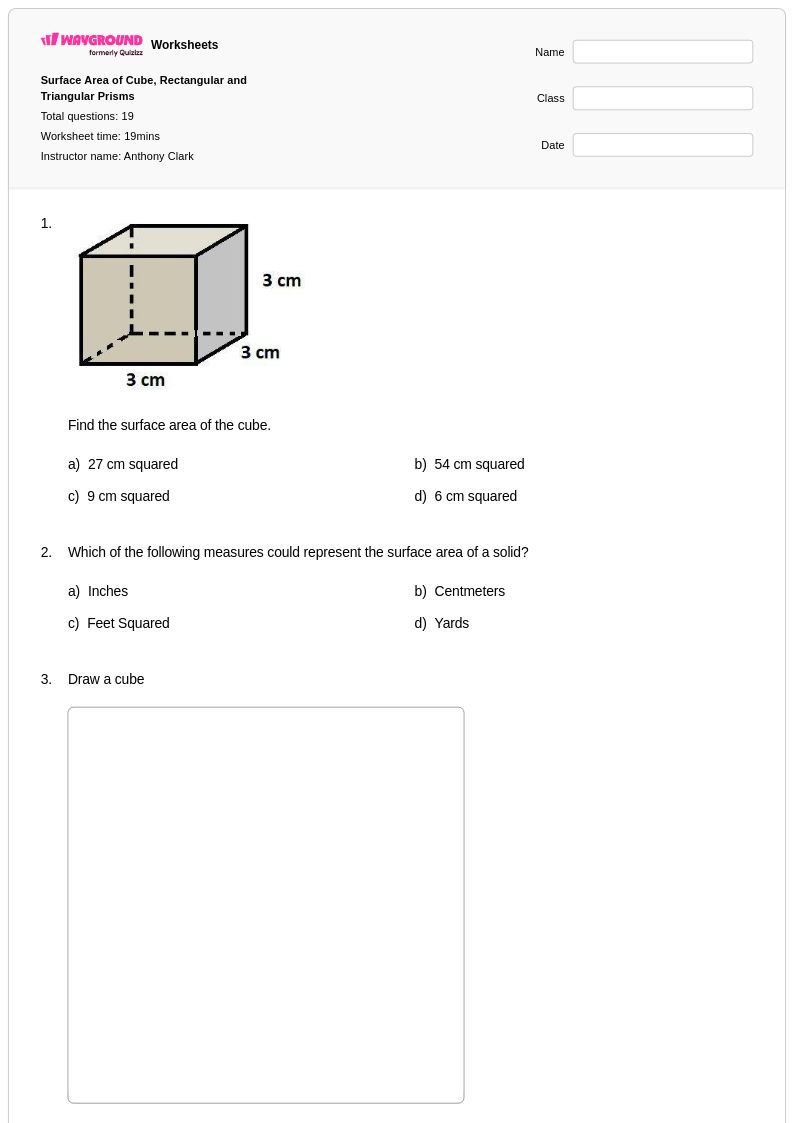
19 Q
6th - Uni
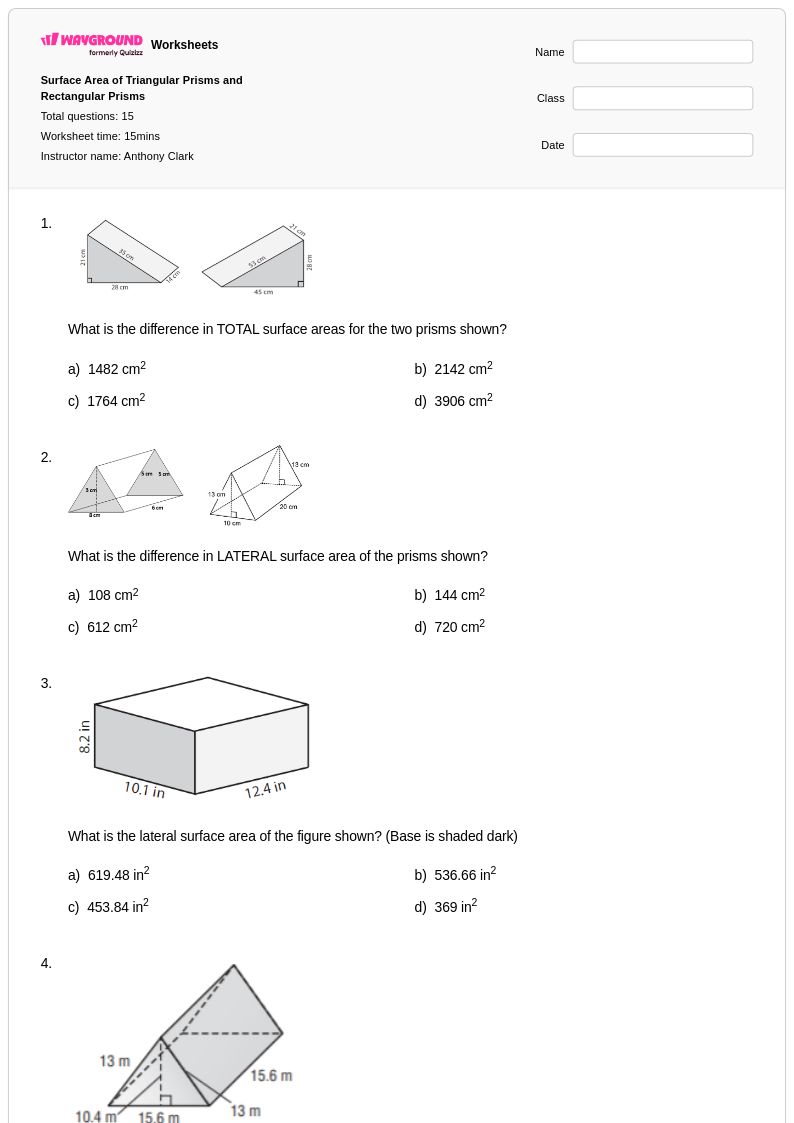
15 Q
7th - Uni
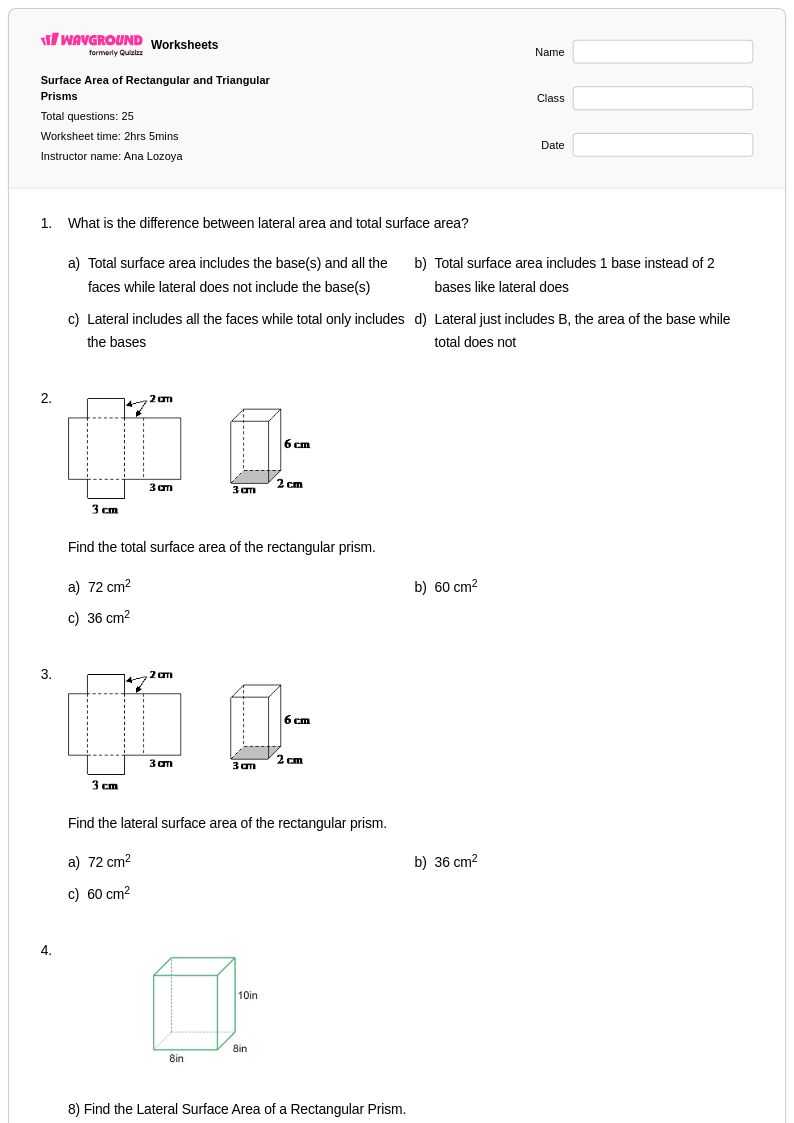
25 Q
8th
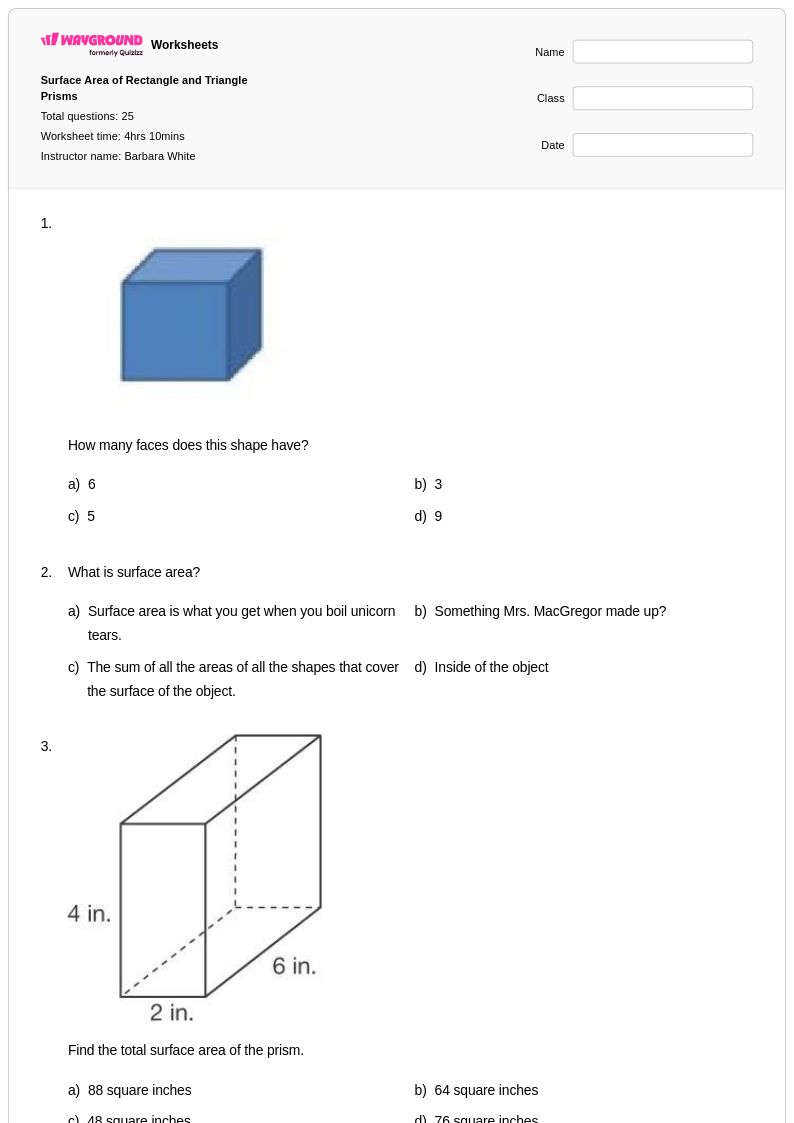
25 Q
6th - 8th
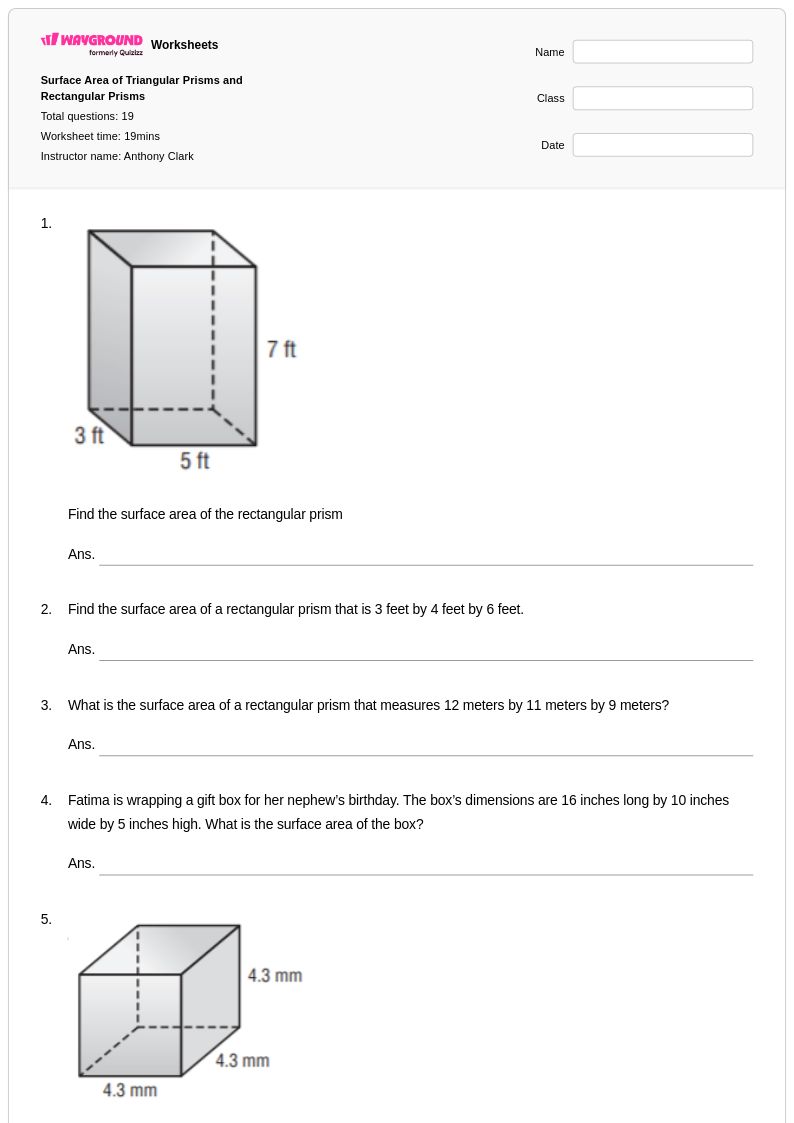
19 Q
7th - Uni
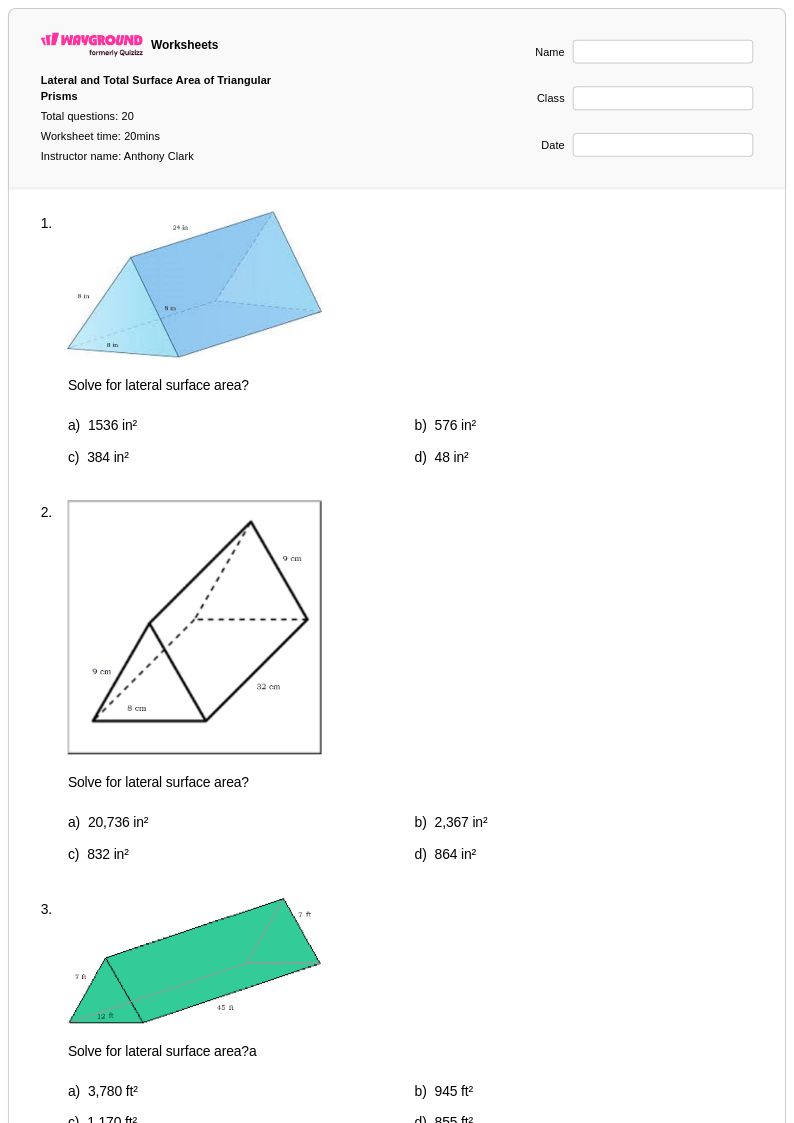
20 Q
8th - Uni
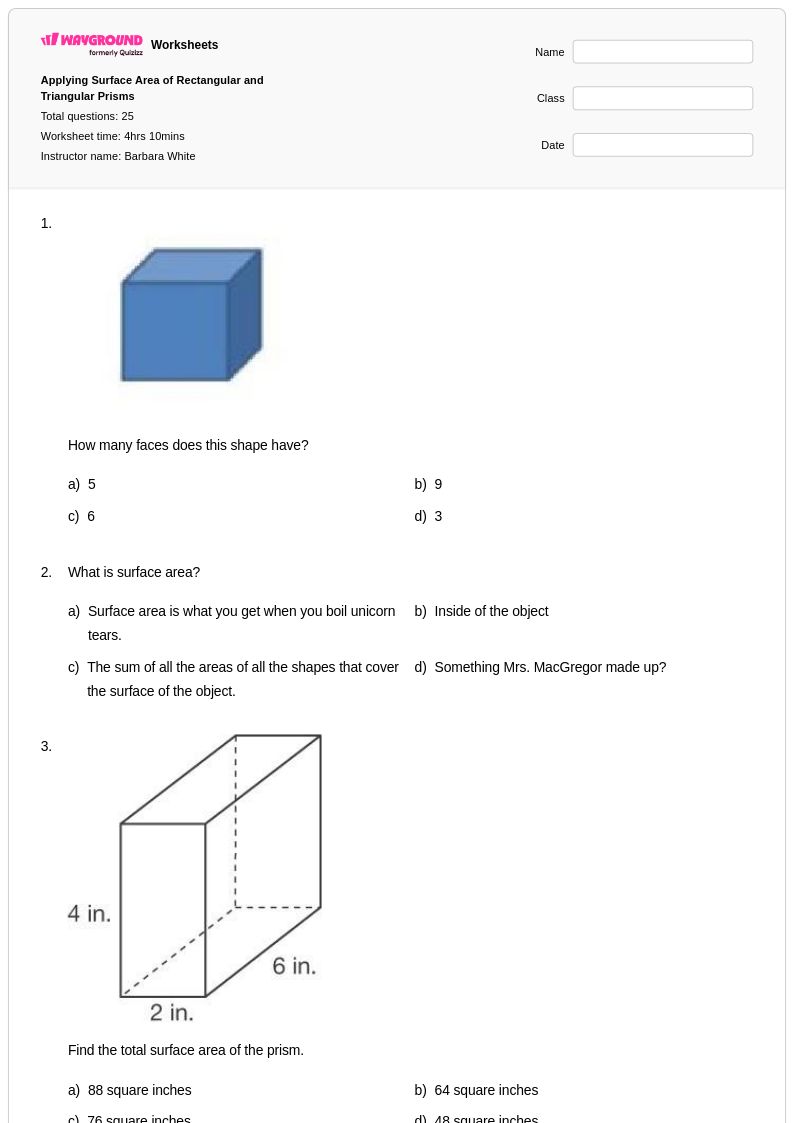
25 Q
6th - 8th
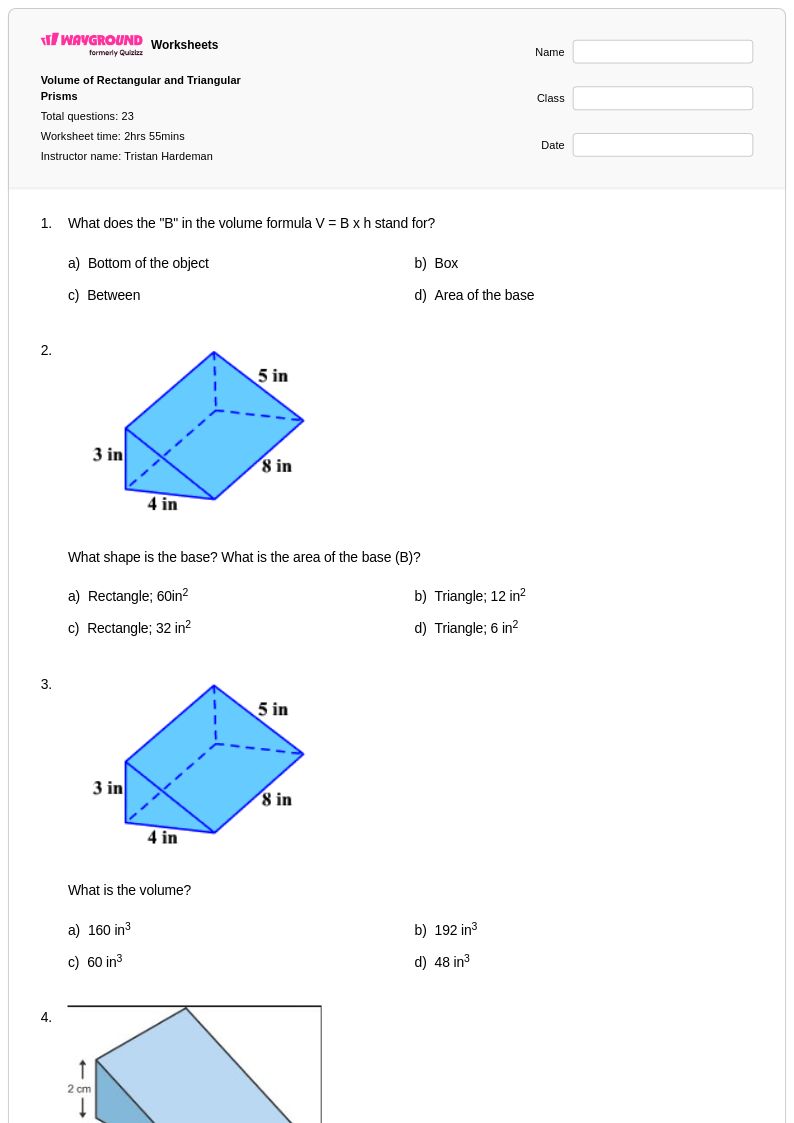
23 Q
8th
20 Q
8th - Uni
25 Q
6th - 8th
25 Q
6th - 8th
15 Q
7th - Uni
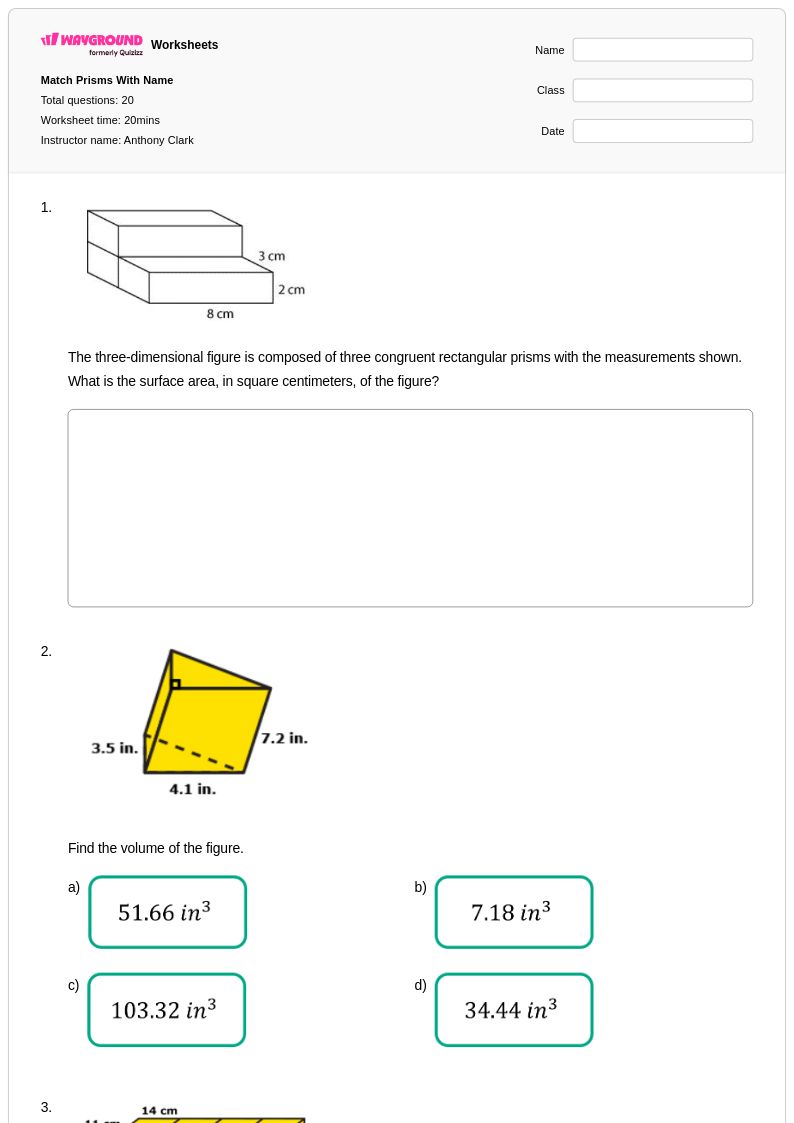
20 Q
7th - Uni
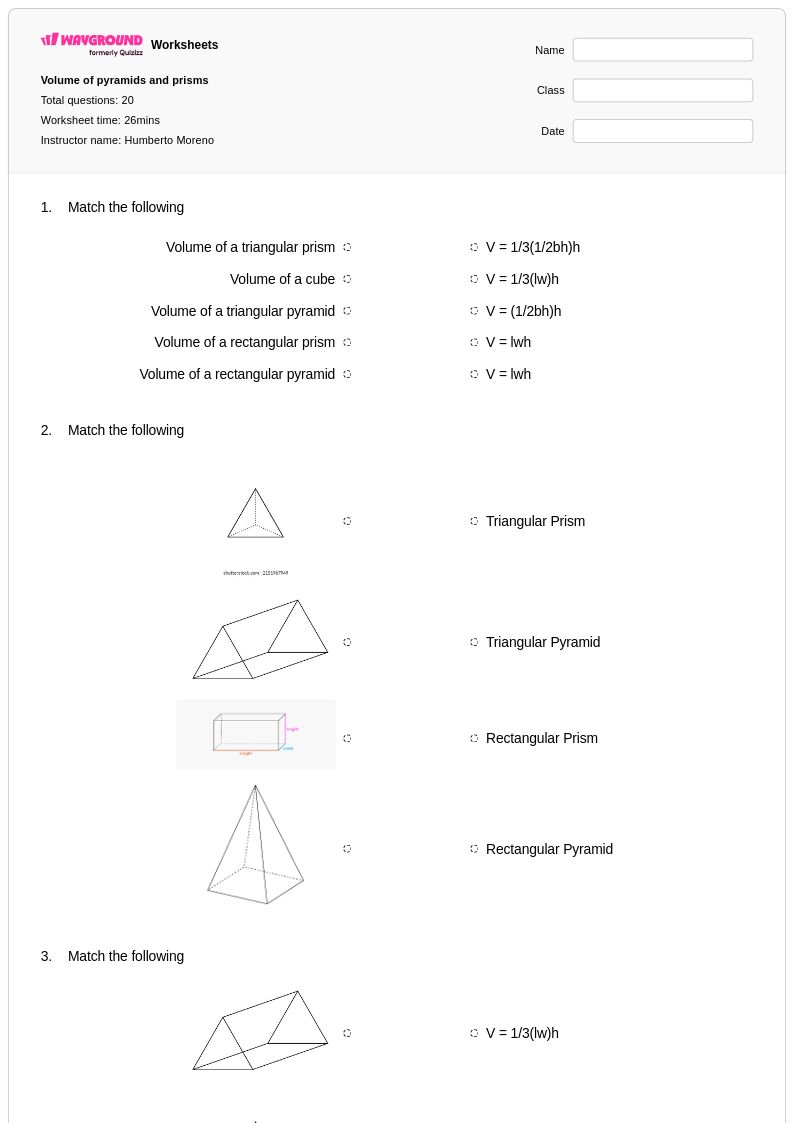
20 Q
7th - Uni
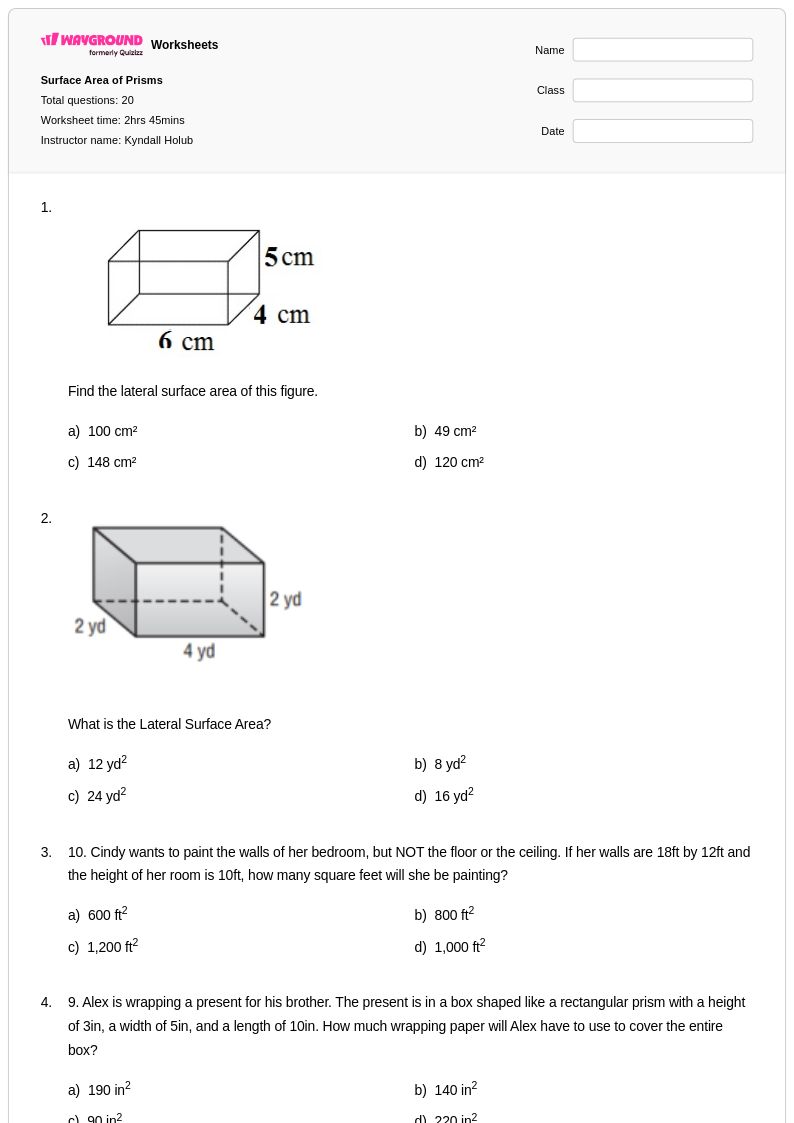
20 Q
8th
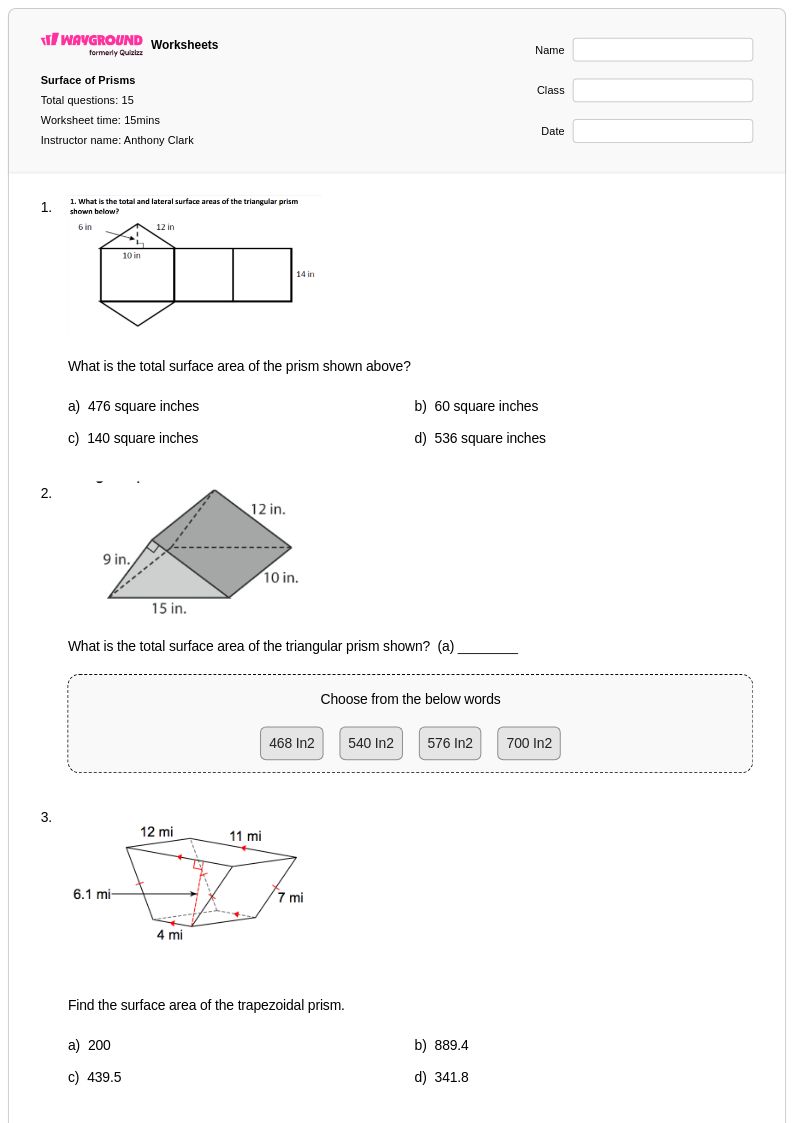
15 Q
8th - Uni
15 Q
7th - Uni
19 Q
6th - Uni
13 Q
6th - Uni
19 Q
8th - Uni
Explore Other Subject Worksheets for class 8
Explore printable Triangular Prisms worksheets for Class 8
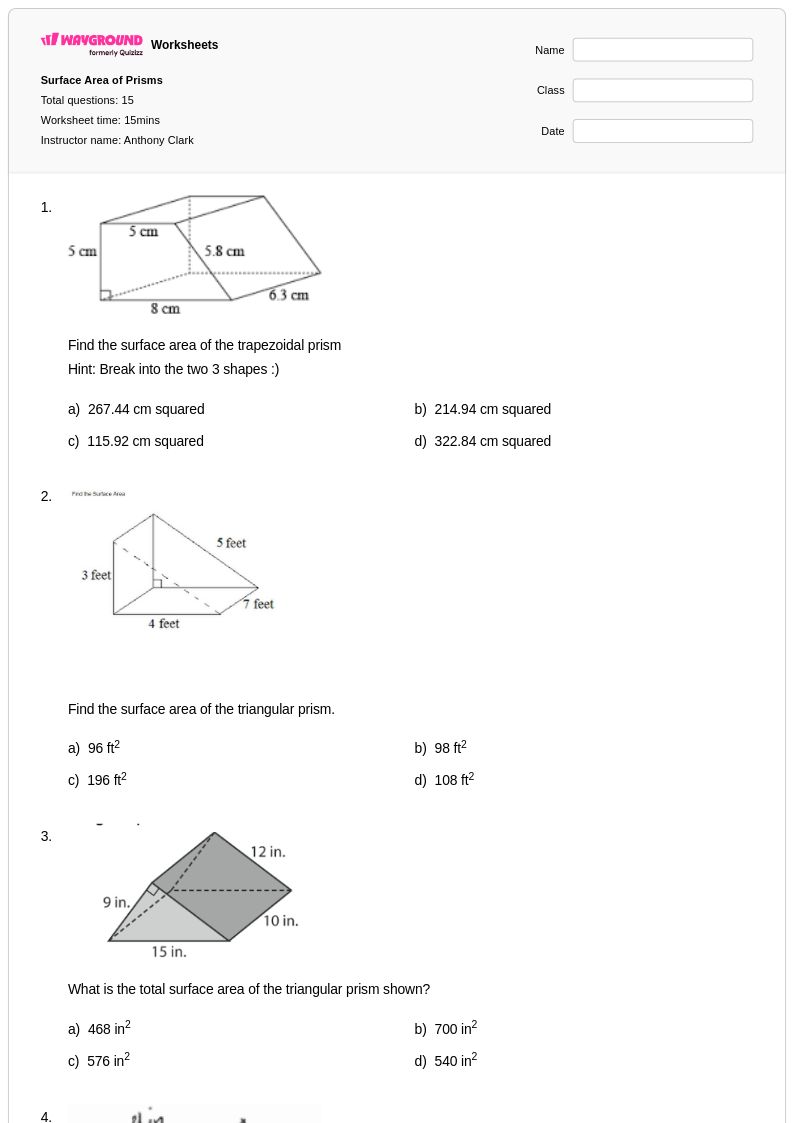
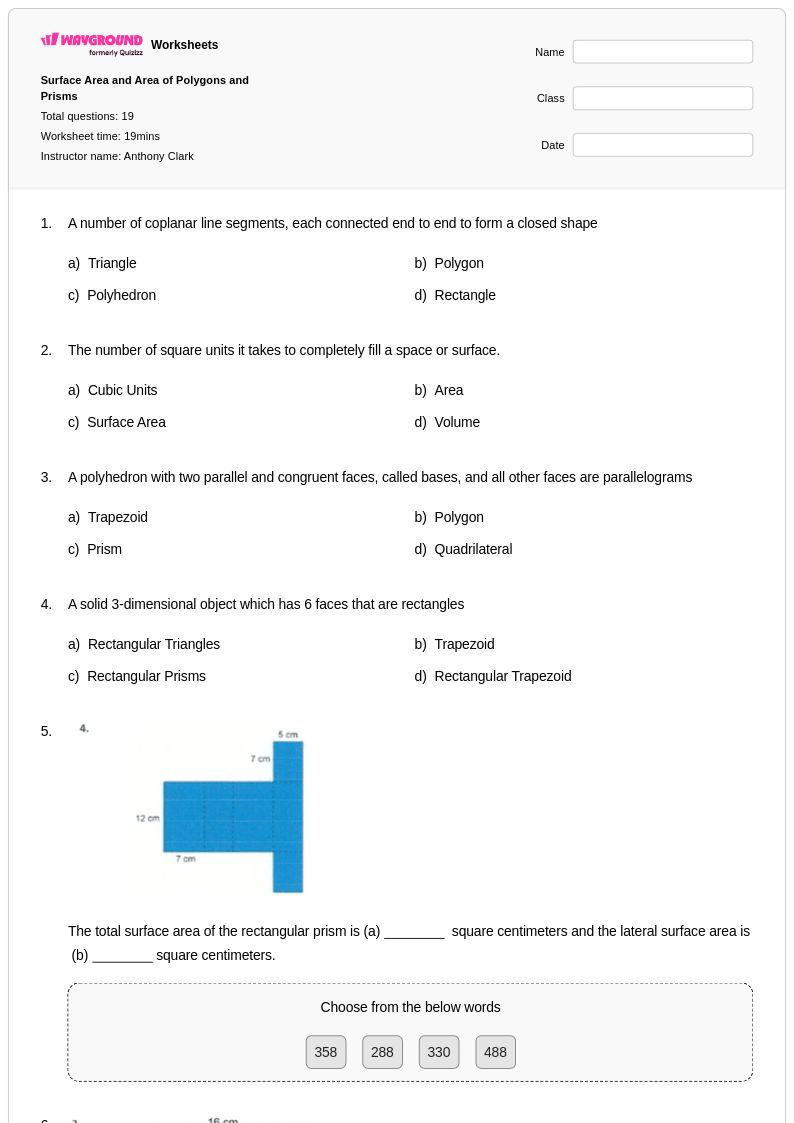
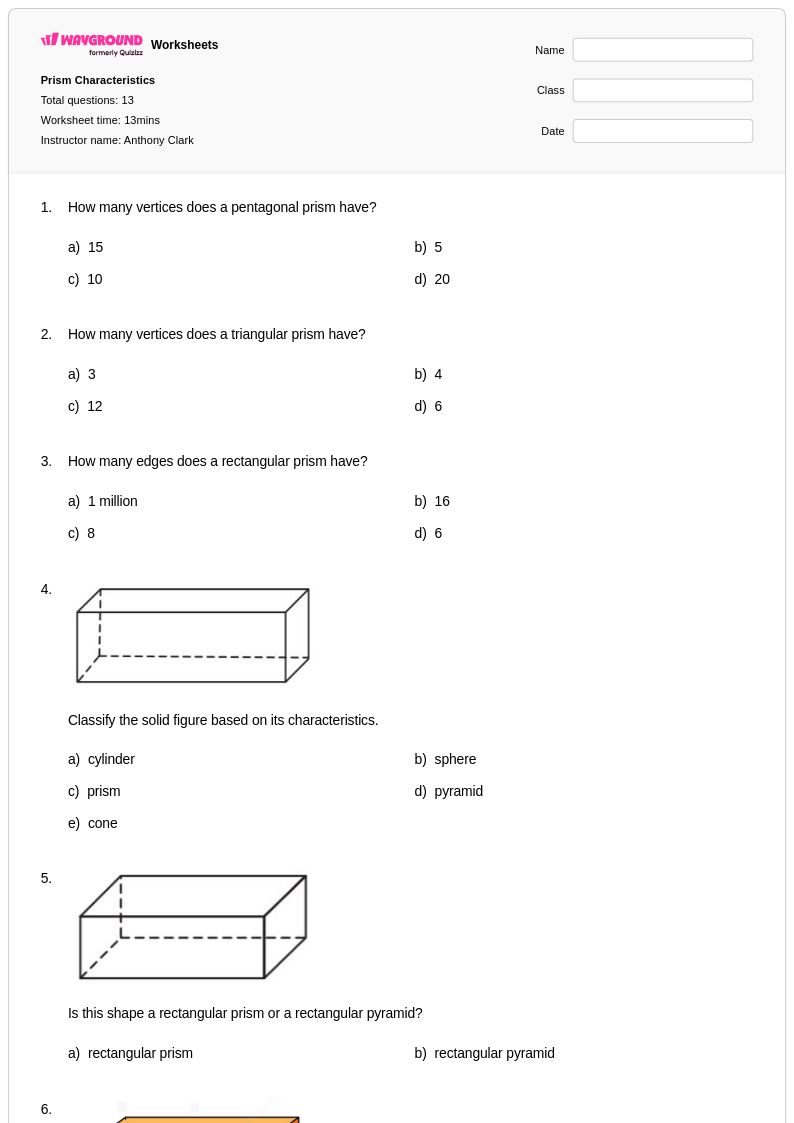
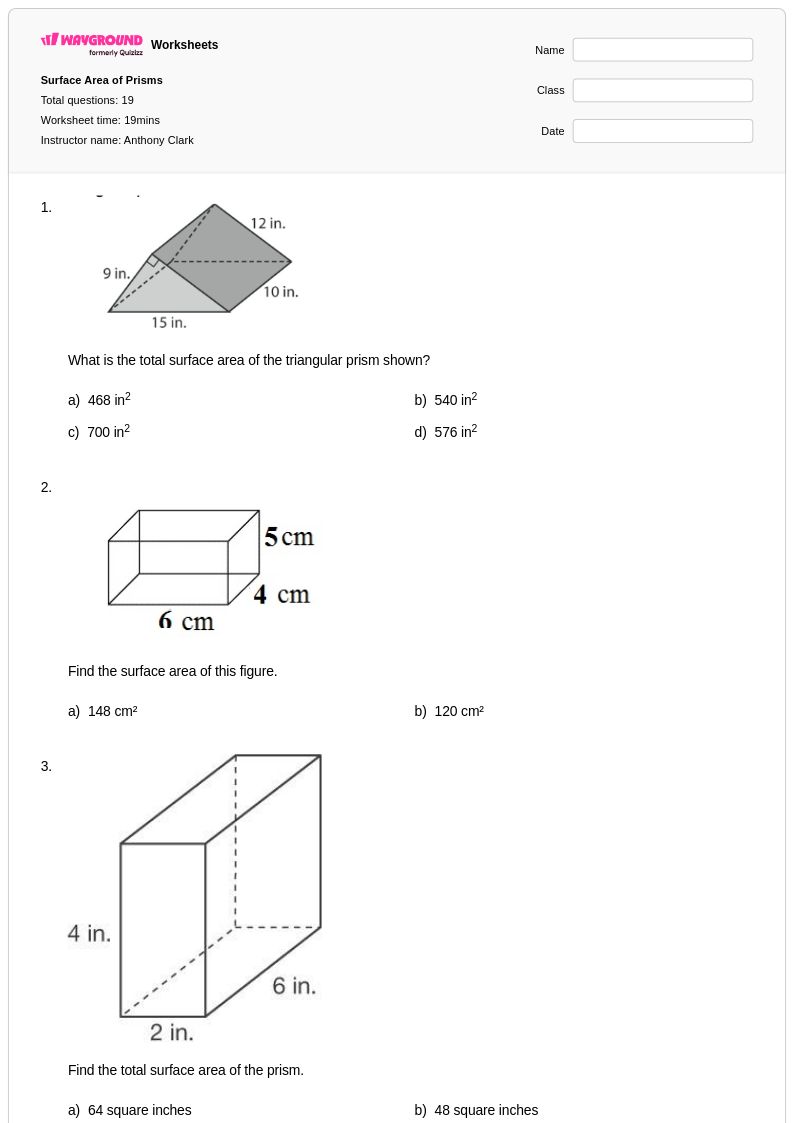
Triangular prisms represent a fundamental three-dimensional geometric concept that Class 8 students must master as they advance in their mathematical understanding. Wayground's comprehensive collection of triangular prism worksheets provides educators with expertly crafted resources that systematically develop students' spatial reasoning abilities and geometric calculation skills. These practice problems guide learners through essential concepts including surface area calculations, volume determinations, net constructions, and cross-sectional analysis of triangular prisms. Each worksheet comes complete with a detailed answer key, enabling both independent student practice and efficient teacher assessment, while the free printable format ensures accessibility for all classroom environments and learning situations.
Wayground's robust platform, formerly known as Quizizz, empowers teachers with access to millions of educator-created triangular prism resources that can be seamlessly integrated into any Class 8 geometry curriculum. The platform's advanced search and filtering capabilities allow instructors to quickly locate materials that align with specific learning standards and accommodate diverse student needs through built-in differentiation tools. Teachers can customize existing worksheets or create entirely new assessments, with flexible options for both digital delivery and traditional pdf printables that support various classroom configurations. These comprehensive features streamline lesson planning while providing targeted resources for remediation, enrichment, and ongoing skill practice, ensuring that every student develops confidence in working with three-dimensional geometric figures.