
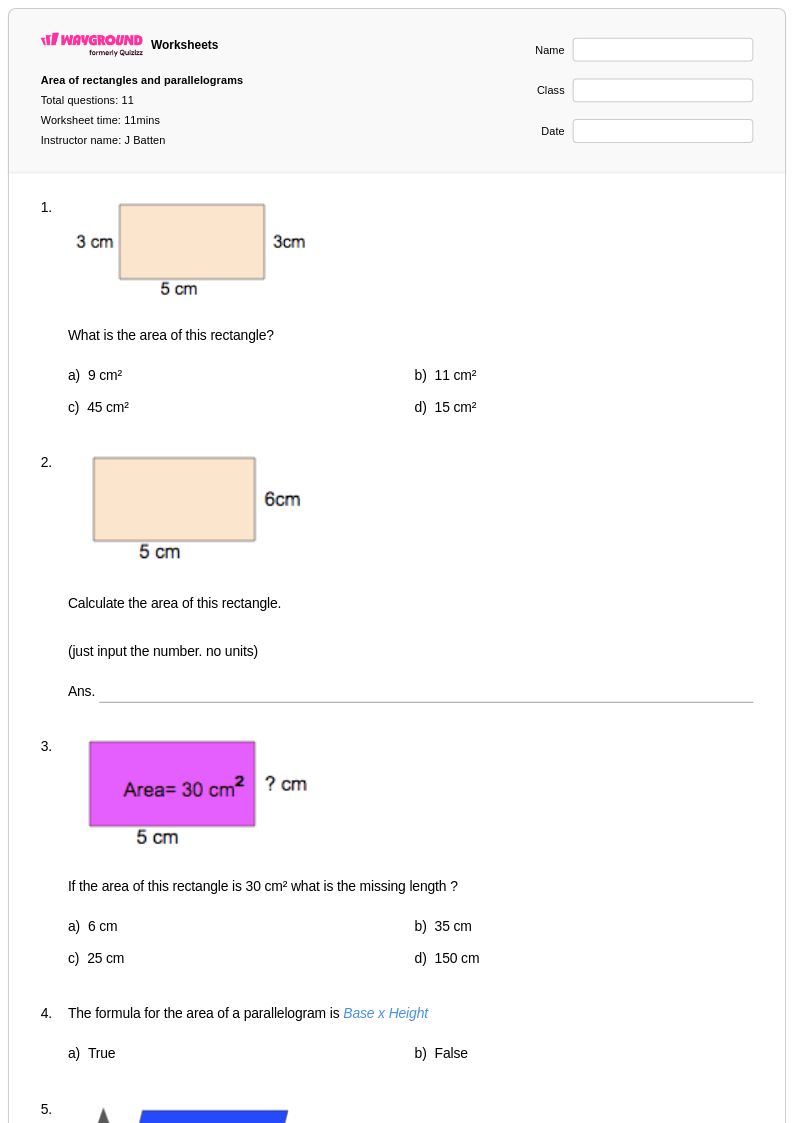
11Q
8th
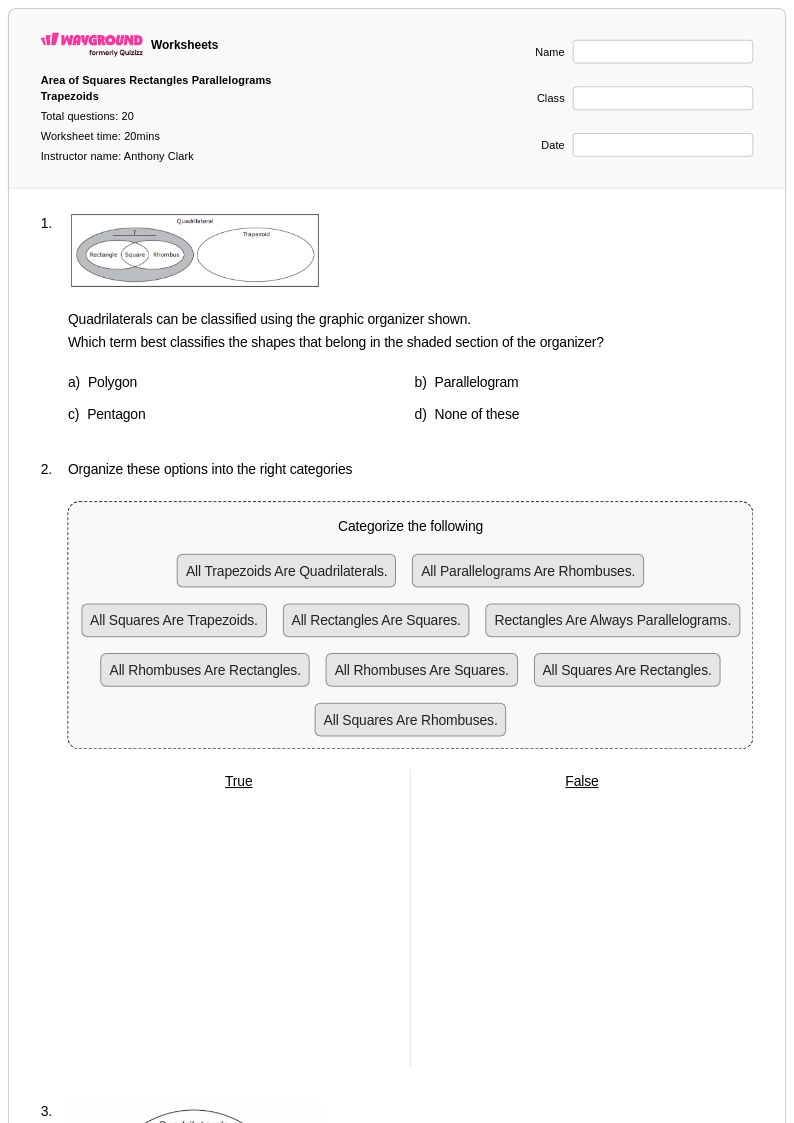
20Q
5th - Uni
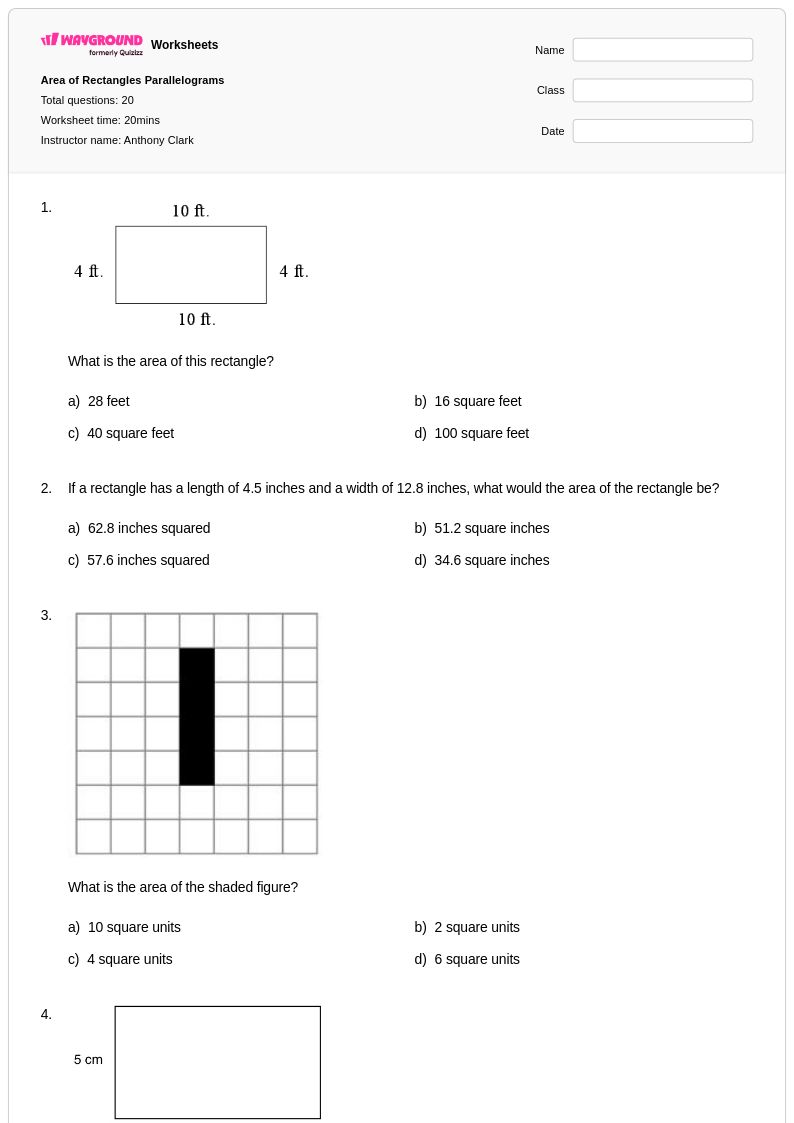
20Q
6th - Uni
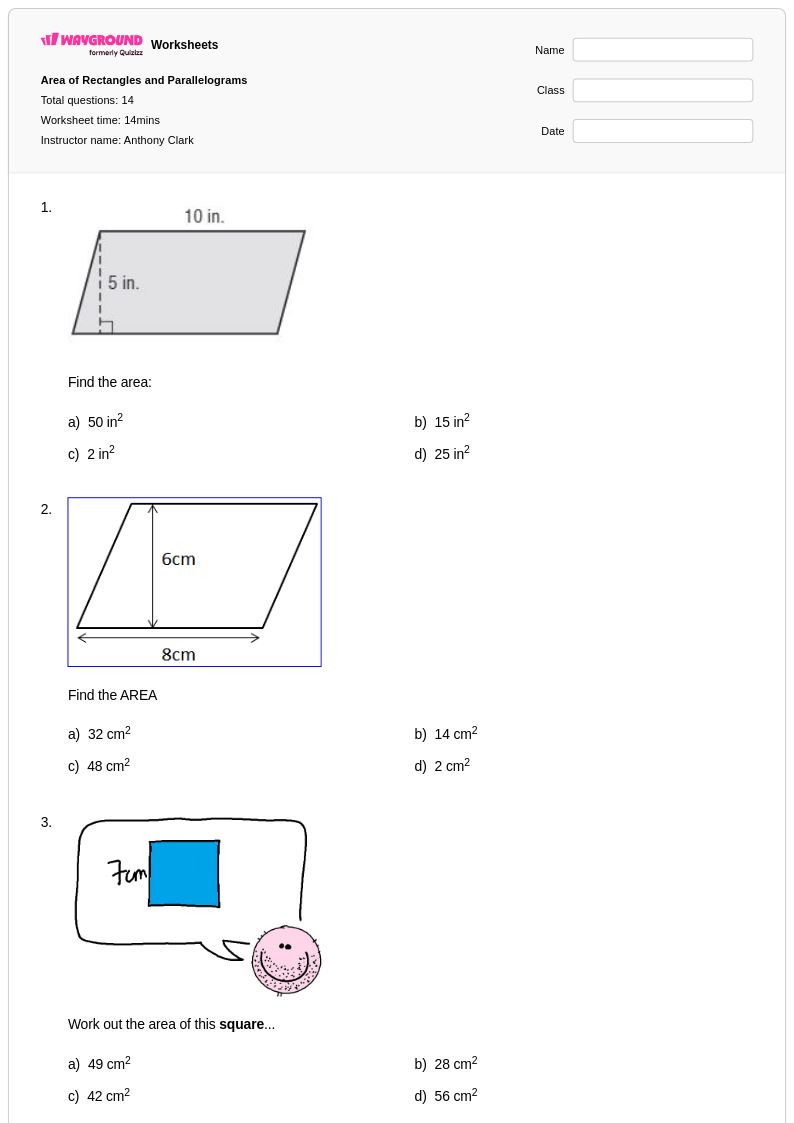
14Q
5th - Uni
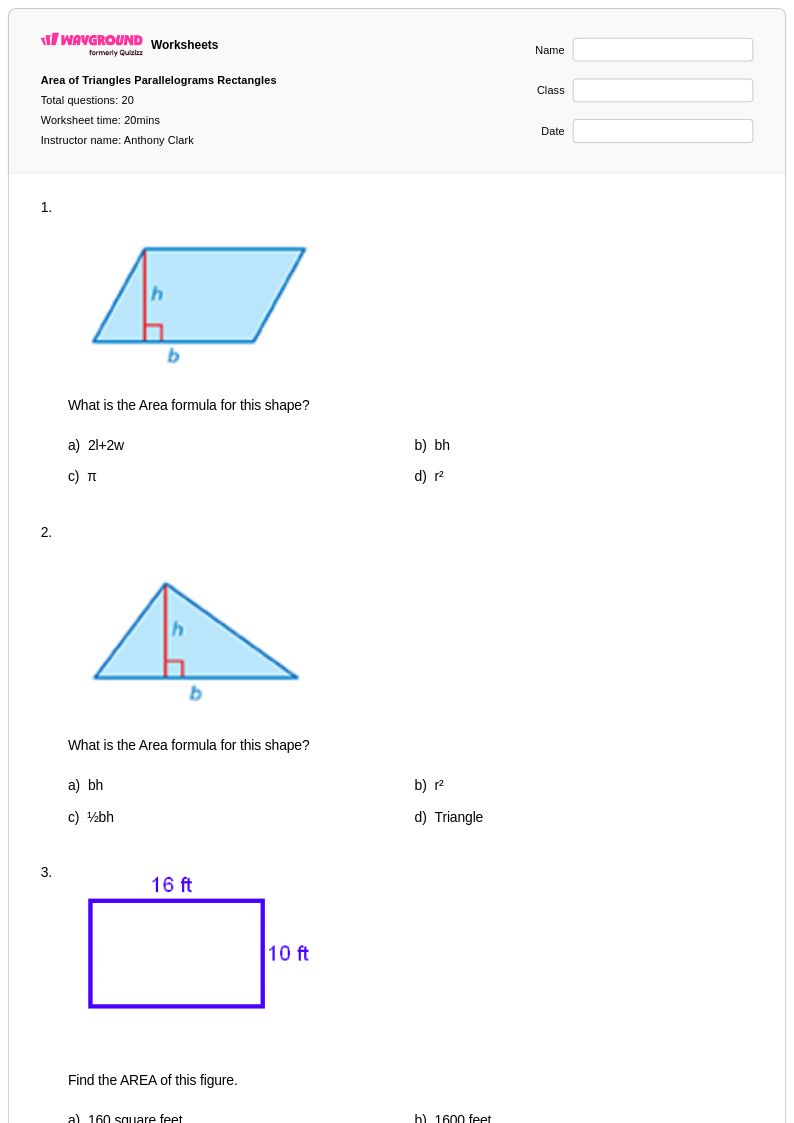
20Q
6th - Uni
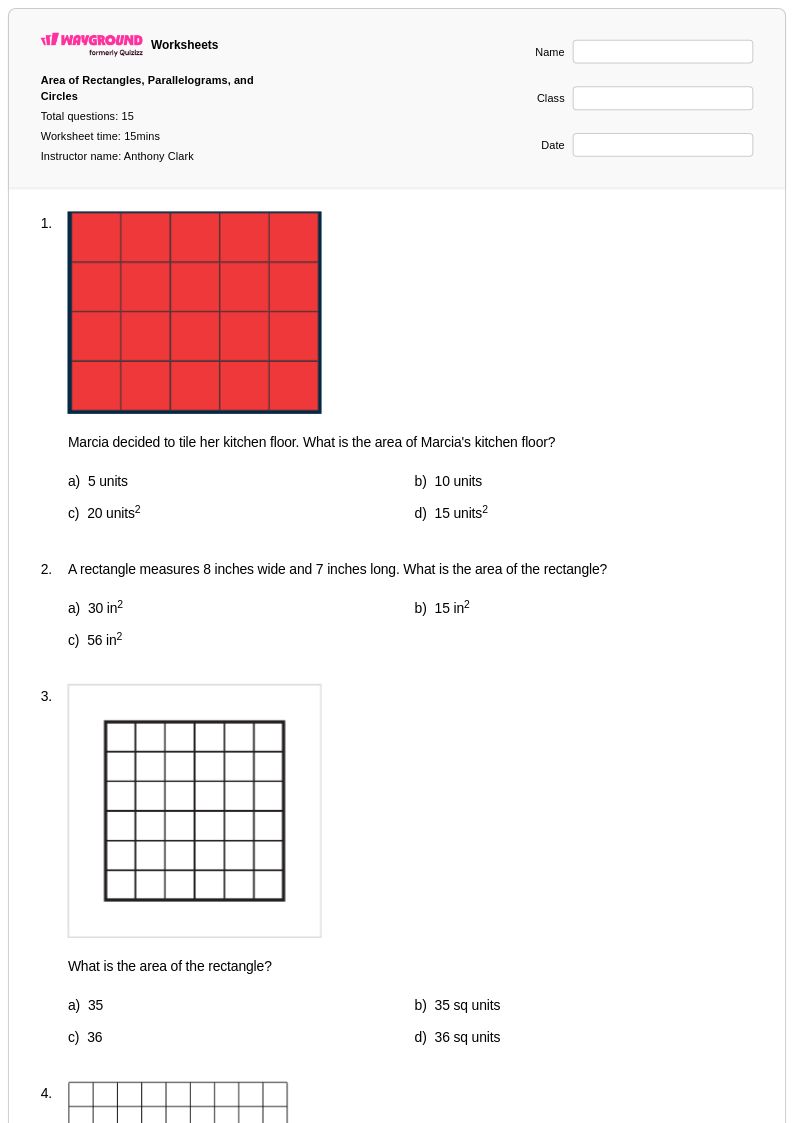
15Q
3rd - Uni
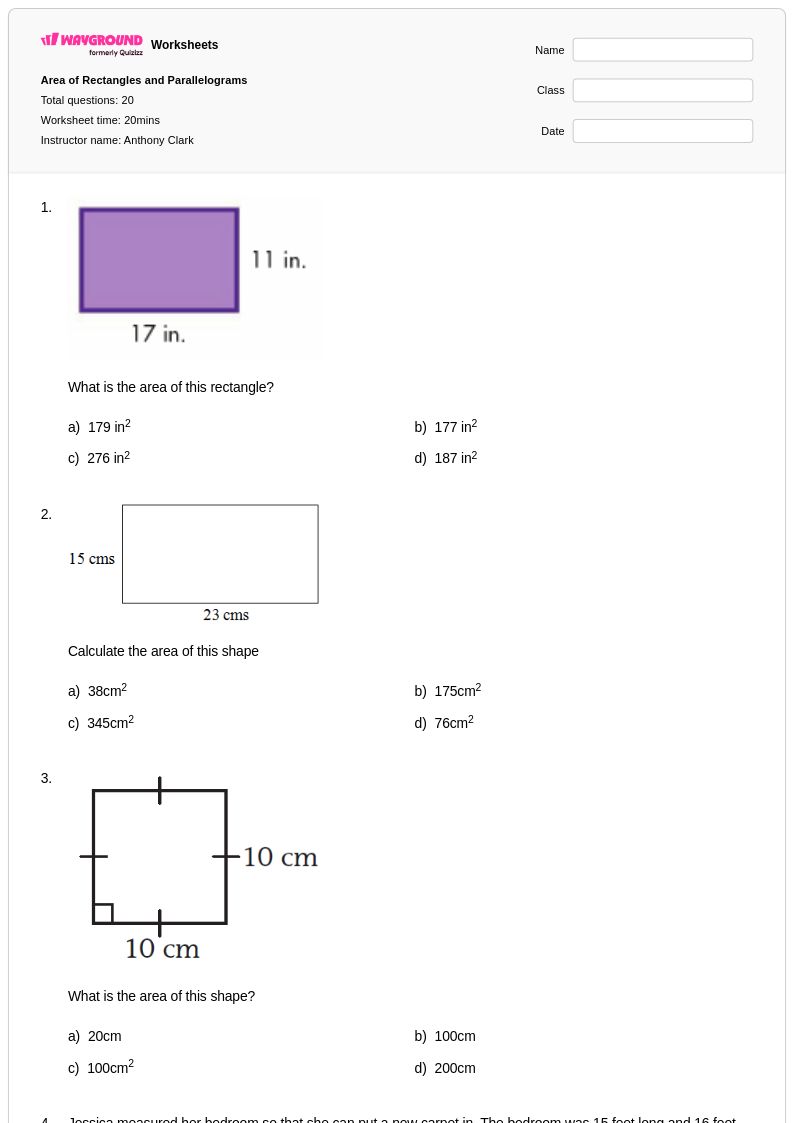
20Q
5th - Uni
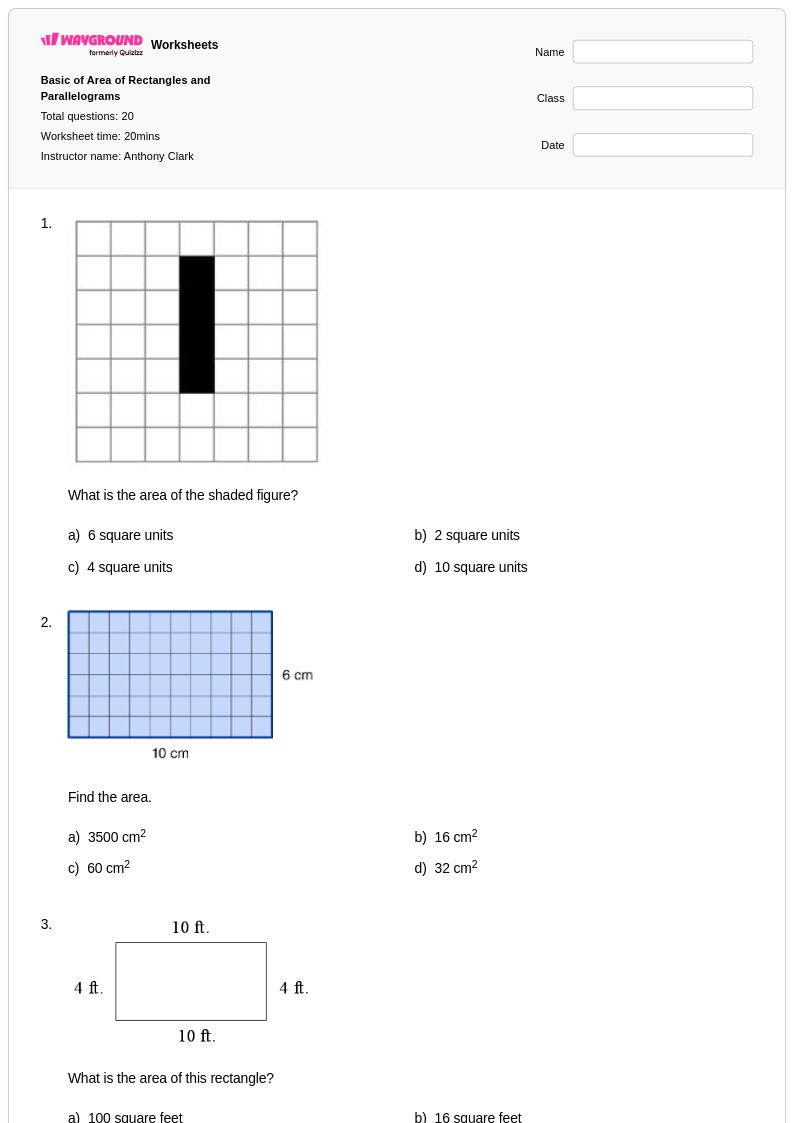
20Q
6th - Uni
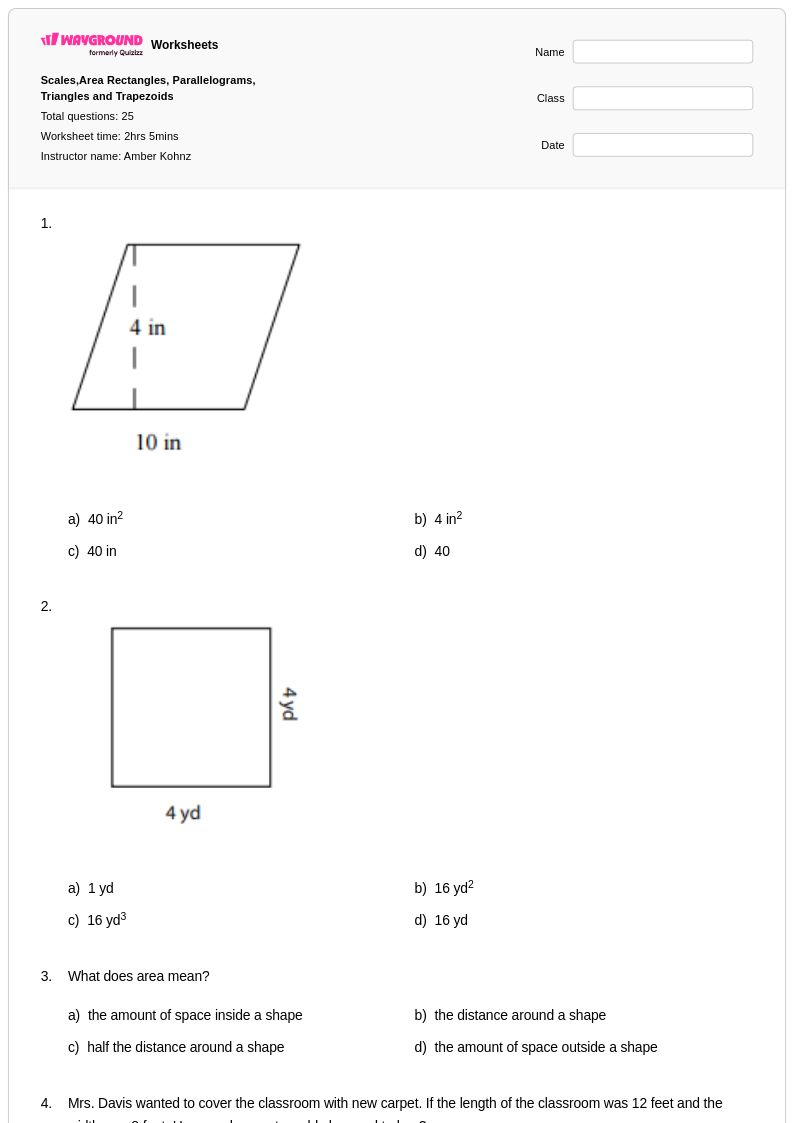
25Q
6th - 8th
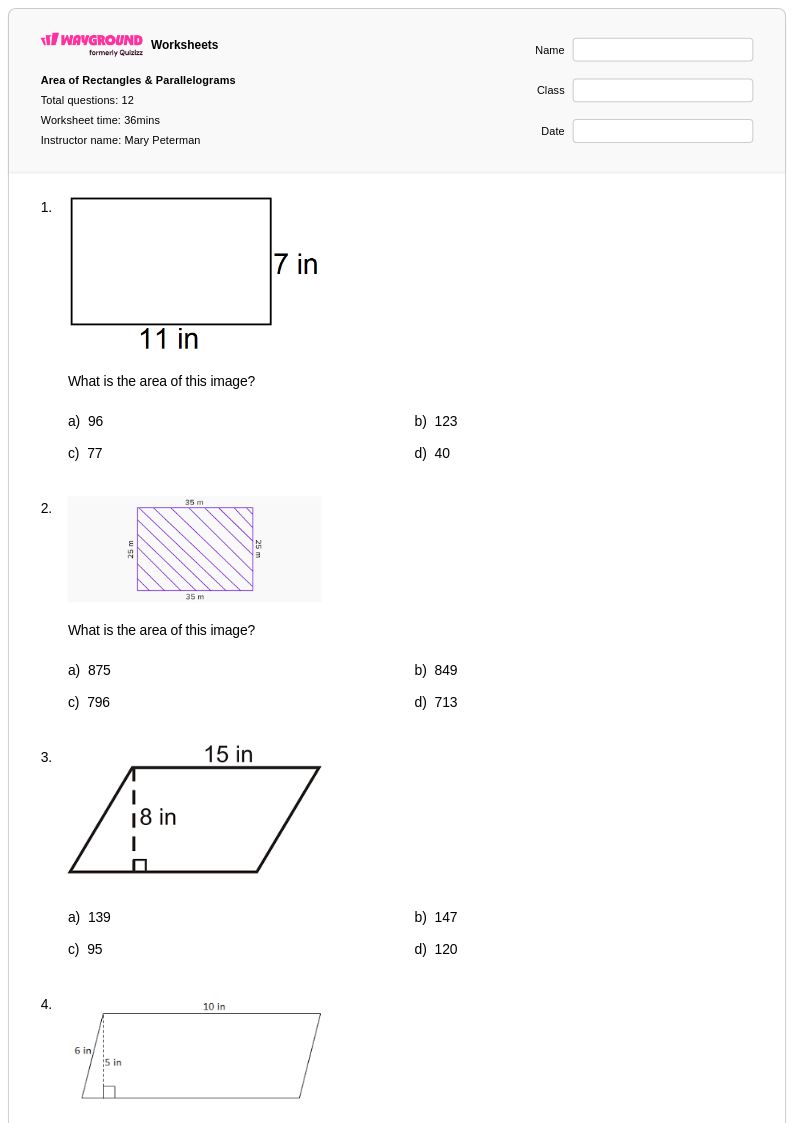
12Q
6th - 8th
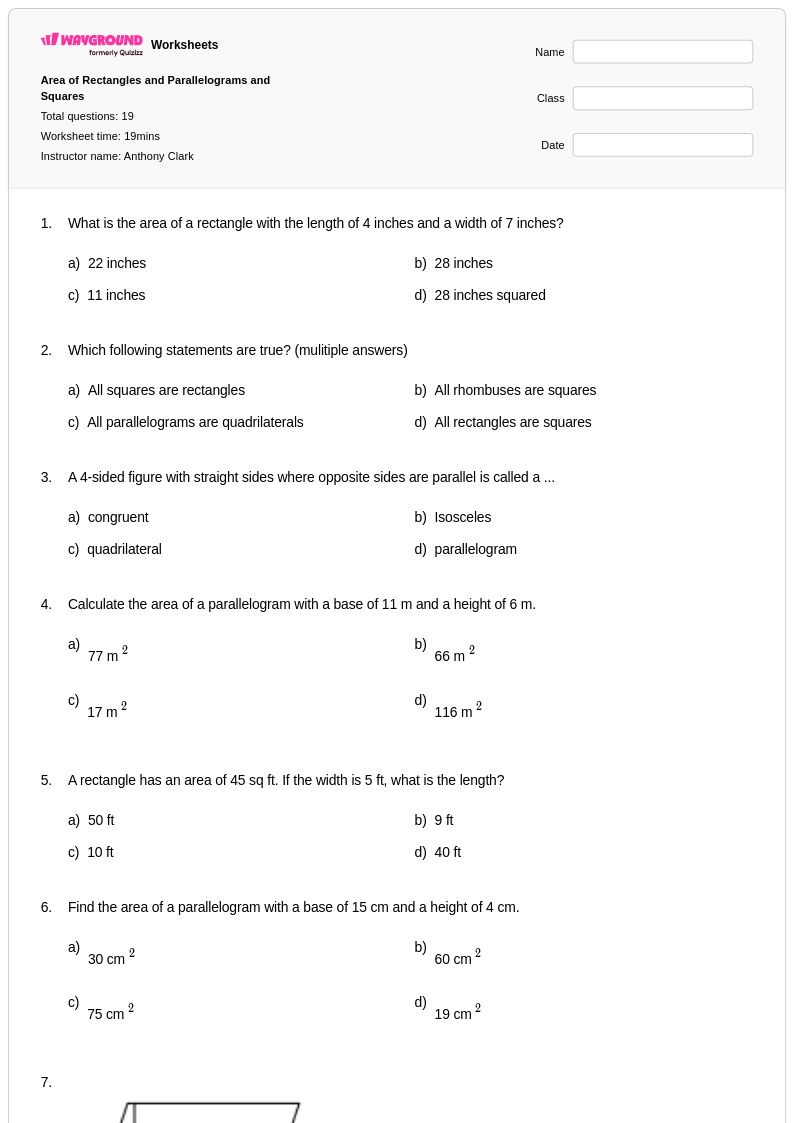
19Q
5th - Uni
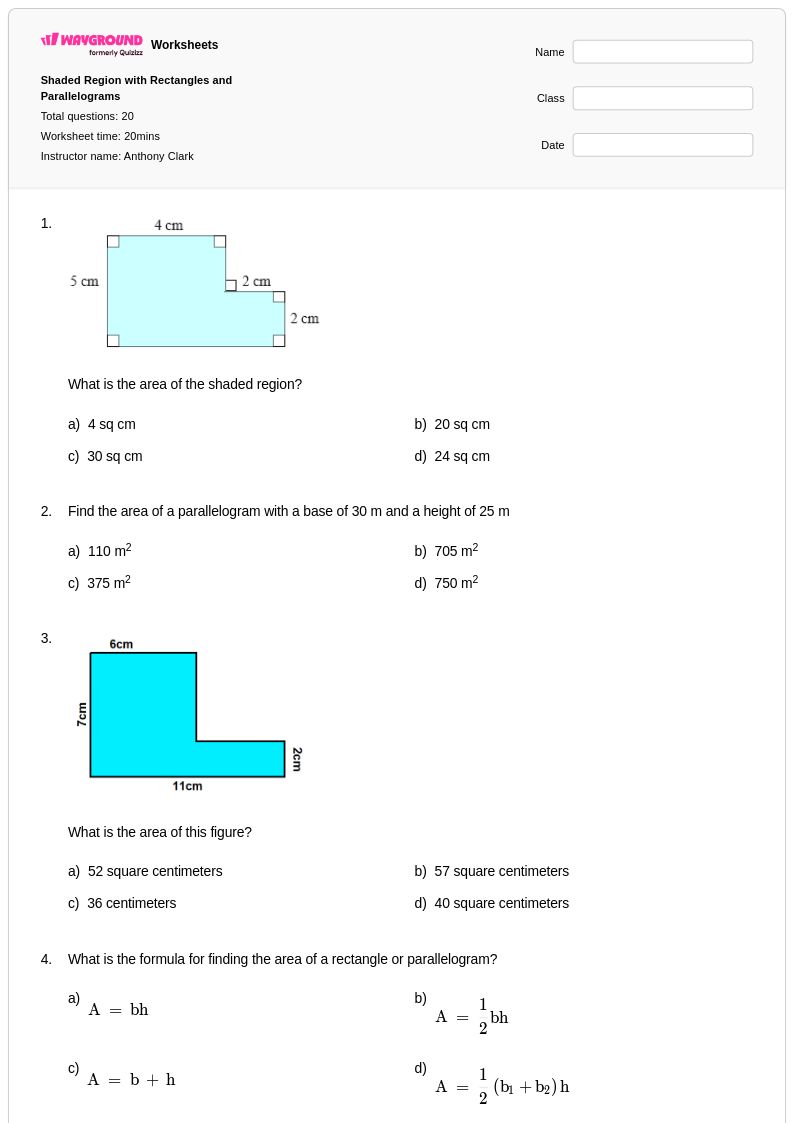
20Q
6th - Uni
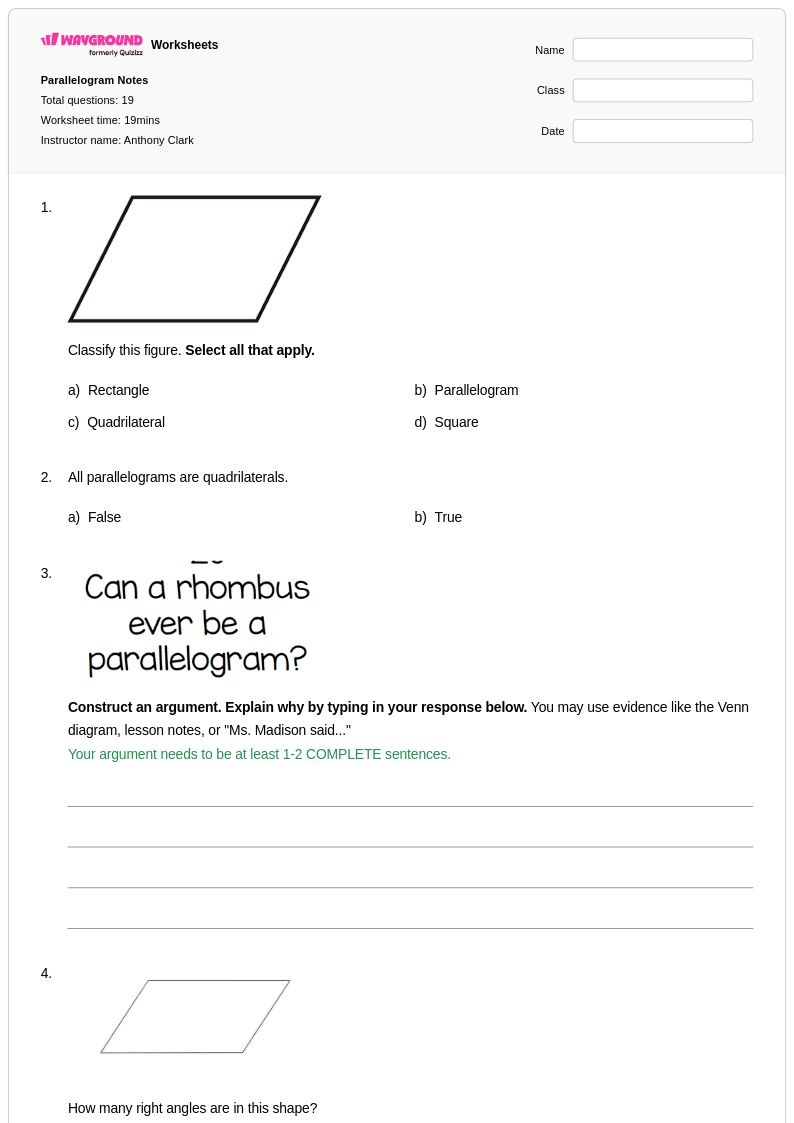
19Q
5th - Uni
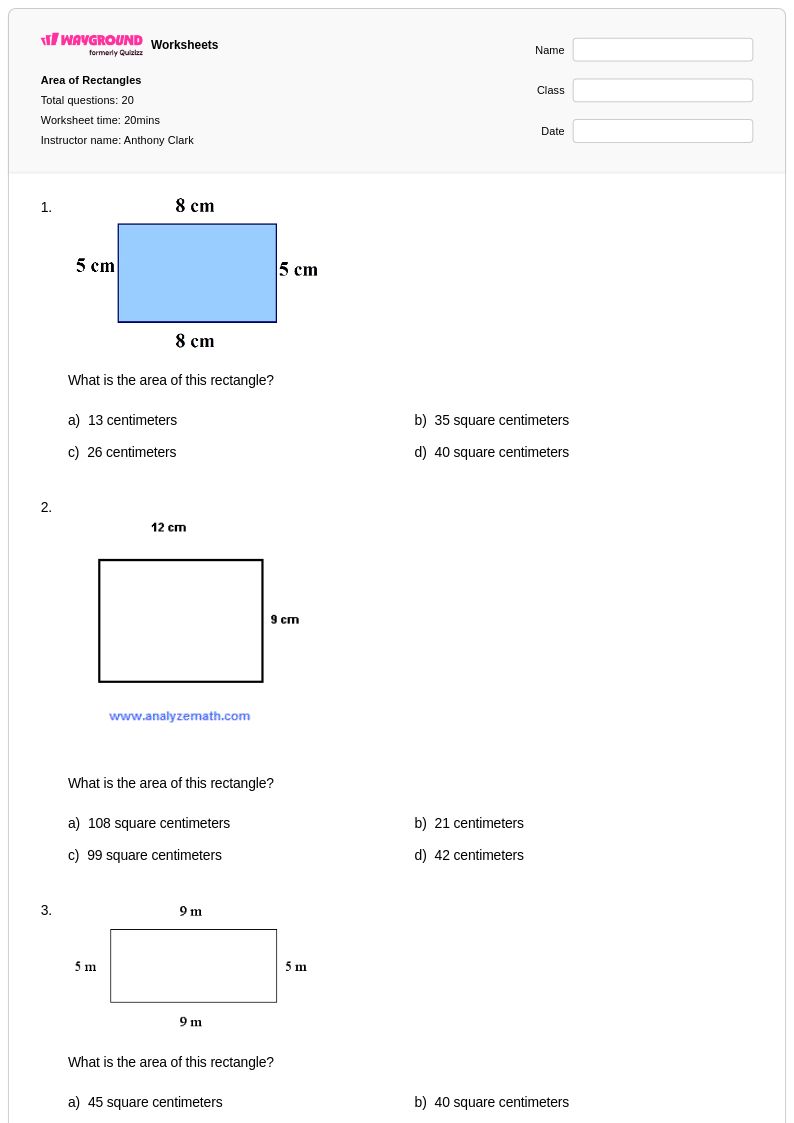
20Q
3rd - Uni
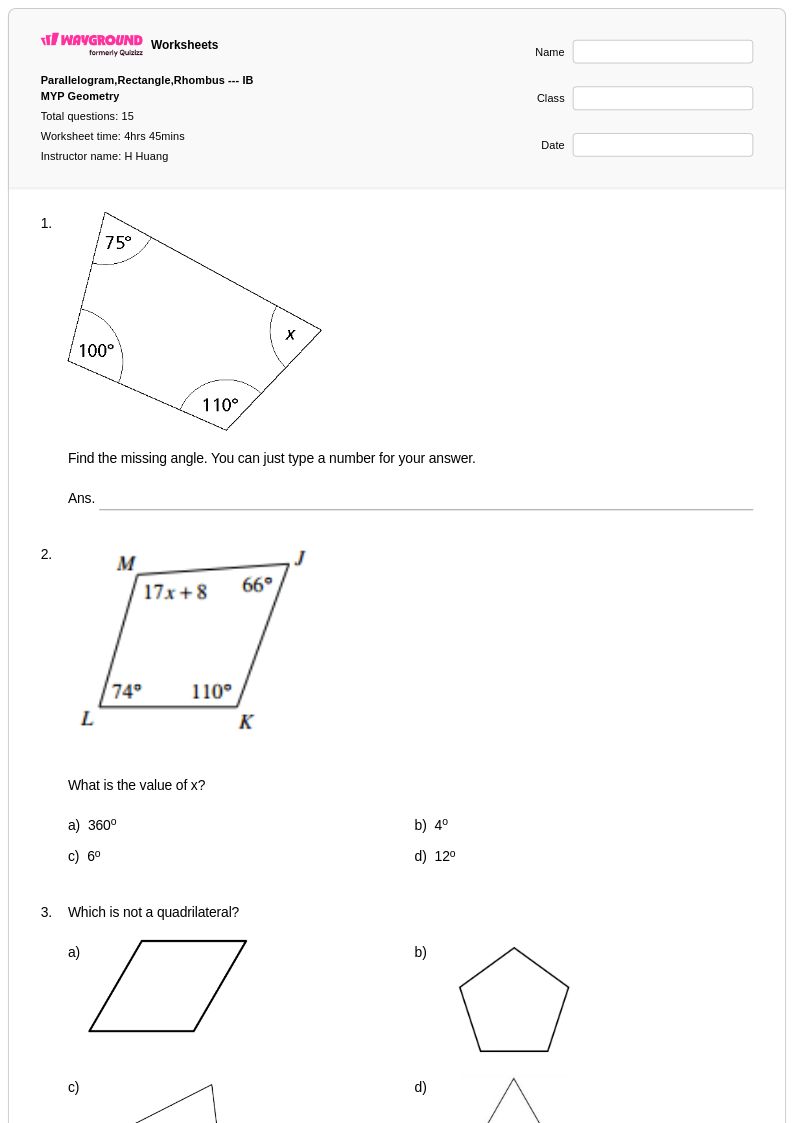
15Q
8th - 10th
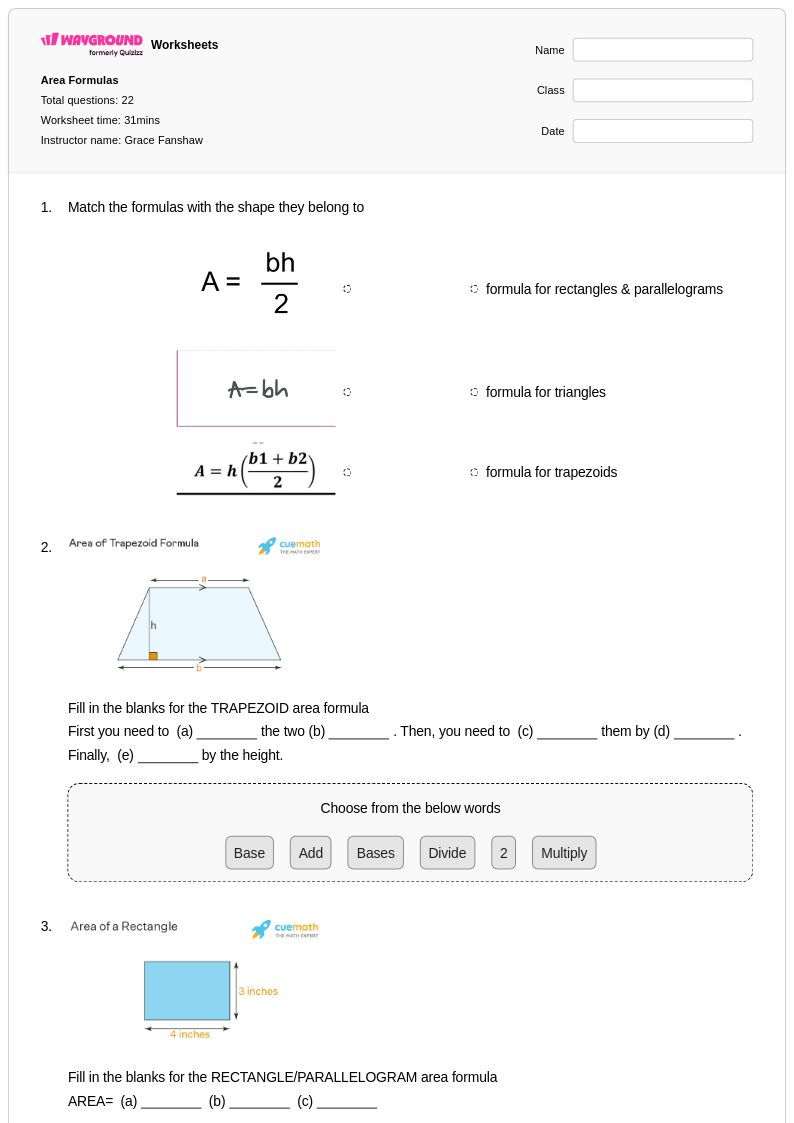
24Q
6th - 8th
20Q
7th - Uni
20Q
6th - Uni
20Q
6th - Uni
20Q
5th - Uni
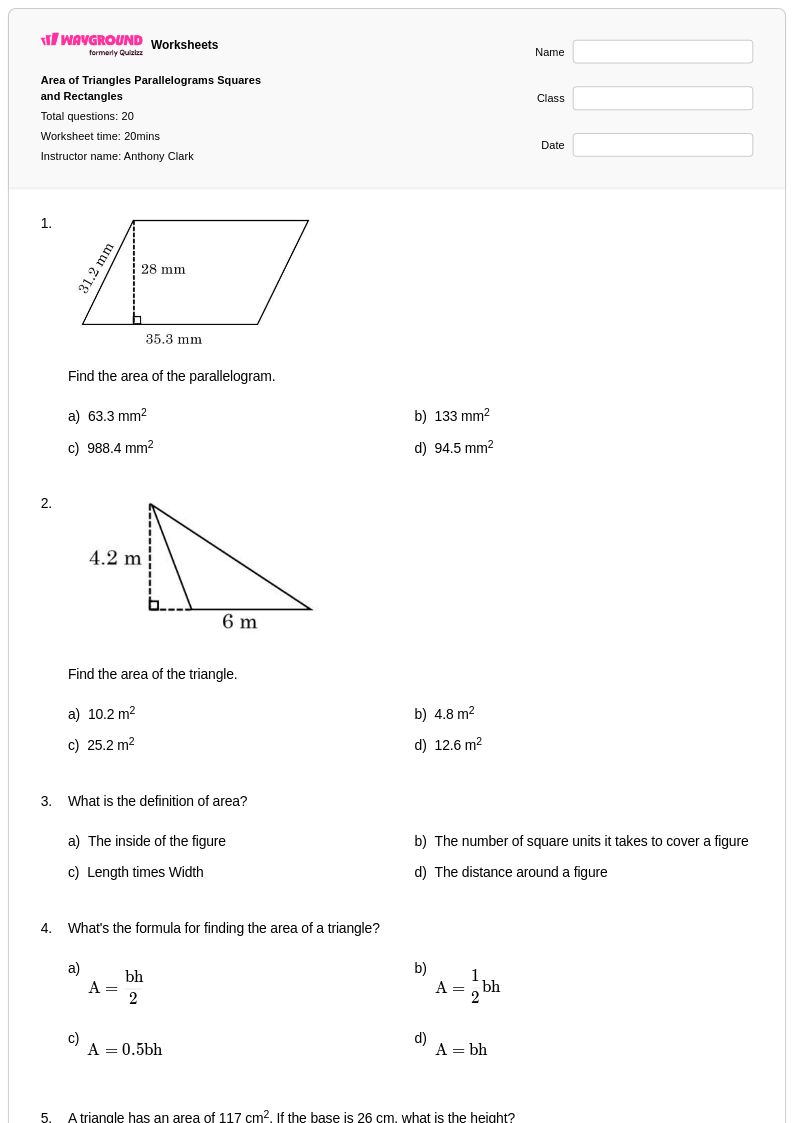
20Q
6th - Uni
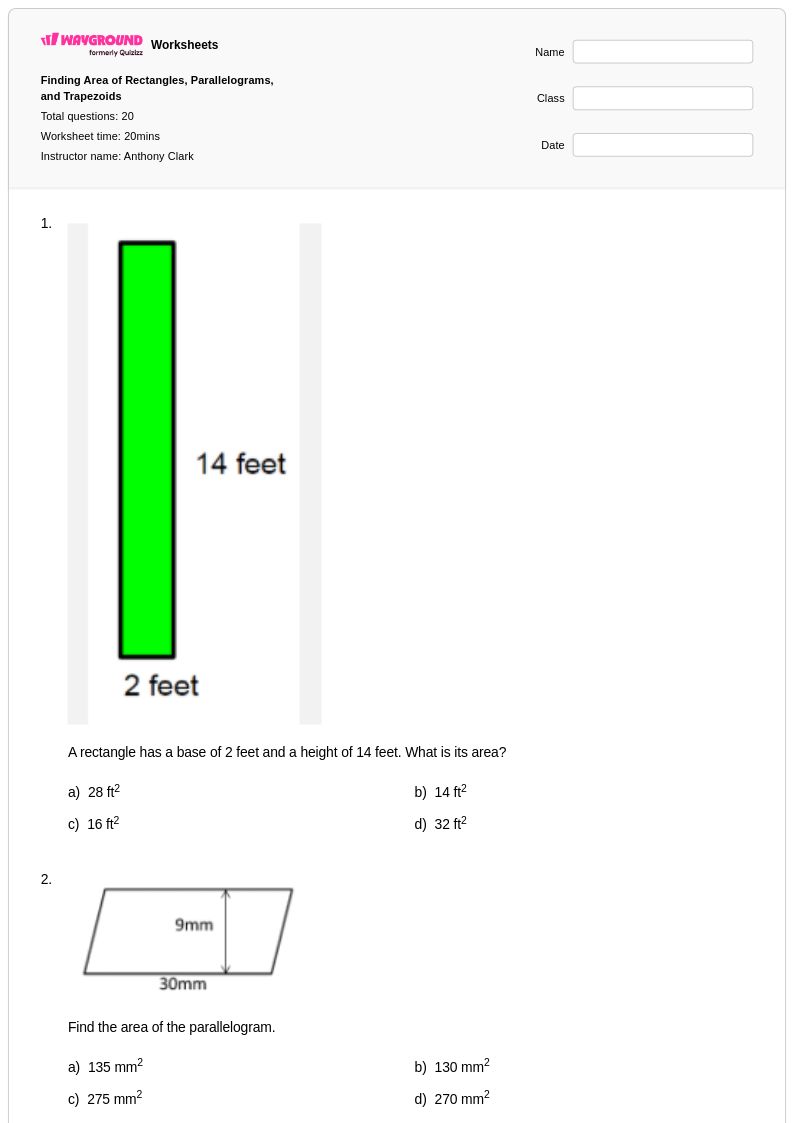
20Q
6th - Uni
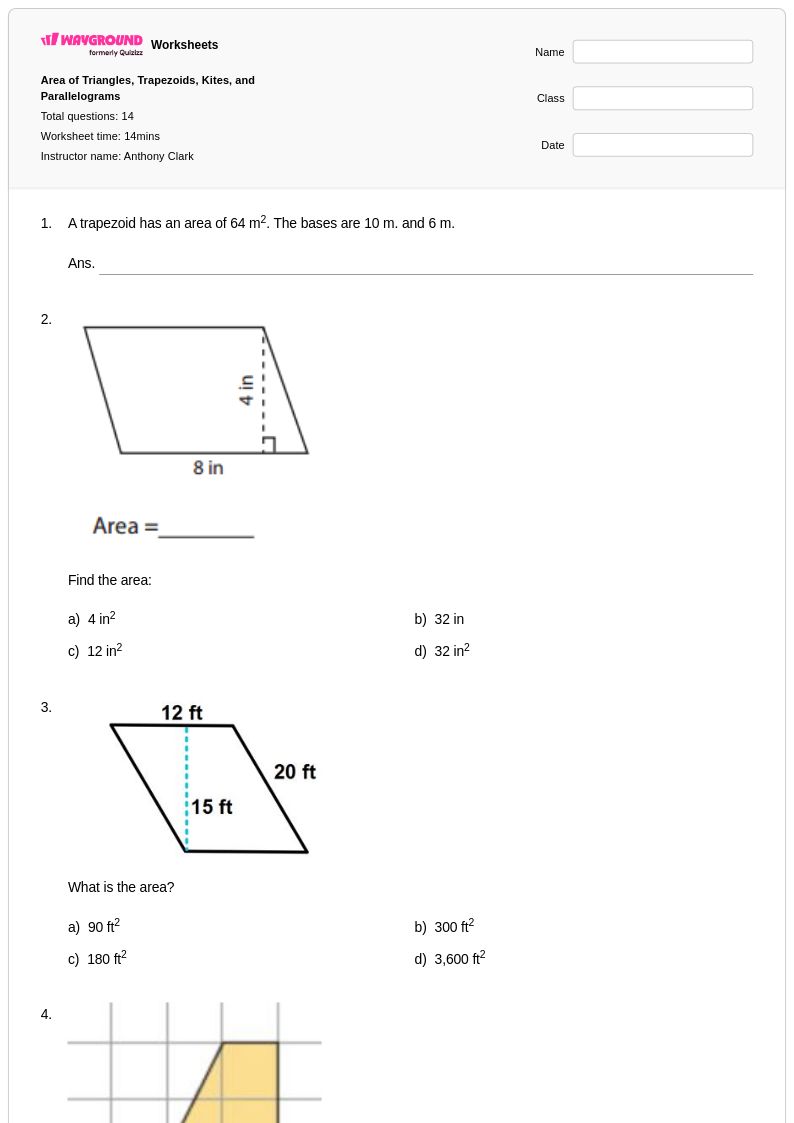
14Q
6th - Uni
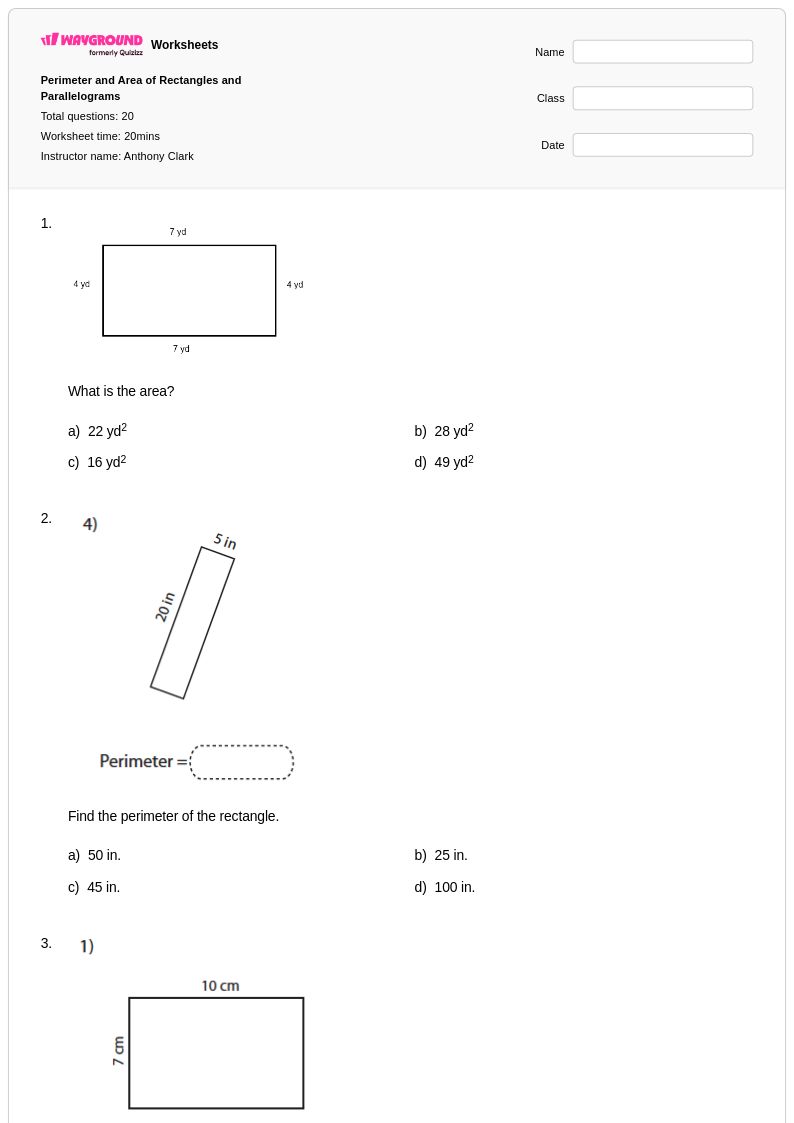
20Q
6th - Uni
Explorar Area of Rectangles and Parallelograms hojas de trabajo por grados
Explore otras hojas de trabajo de materias para class 8
Explore printable Area of Rectangles and Parallelograms worksheets for Class 8
Area of rectangles and parallelograms worksheets for Class 8 through Wayground provide comprehensive practice opportunities for students to master essential geometric measurement concepts. These carefully designed worksheets focus on developing computational skills for finding area using base and height measurements, understanding the relationship between perpendicular height and slanted sides in parallelograms, and applying area formulas in real-world problem-solving contexts. Students work through systematic practice problems that progress from basic rectangular area calculations to more complex parallelogram scenarios, with each worksheet including detailed answer keys and step-by-step solutions. The free printable resources are available in convenient PDF format, making them accessible for both classroom instruction and independent study sessions.
Wayground's extensive collection of area worksheets empowers Class 8 mathematics teachers with millions of educator-created resources that can be easily searched and filtered to match specific curriculum standards and learning objectives. The platform's robust differentiation tools allow teachers to customize worksheets based on individual student needs, whether for remediation of foundational rectangle concepts or enrichment through challenging parallelogram applications. These versatile resources are available in both printable PDF format for traditional paper-based practice and digital formats for interactive learning experiences. Teachers can efficiently plan targeted skill practice sessions, create differentiated assignments for diverse learners, and provide focused remediation support using worksheets that align with state mathematics standards and complement existing geometry curriculum sequences.
FAQs
How do I teach the area of rectangles and parallelograms to Grade 8 students?
What exercises help students practice finding the area of rectangles and parallelograms?
What mistakes do students make when finding the area of a parallelogram?
How can I use these area worksheets in my classroom?
How does finding the area of parallelograms fit into the Common Core math progression?
How can I differentiate area practice for mixed-ability students?
What grade do students learn the area of rectangles and parallelograms?