
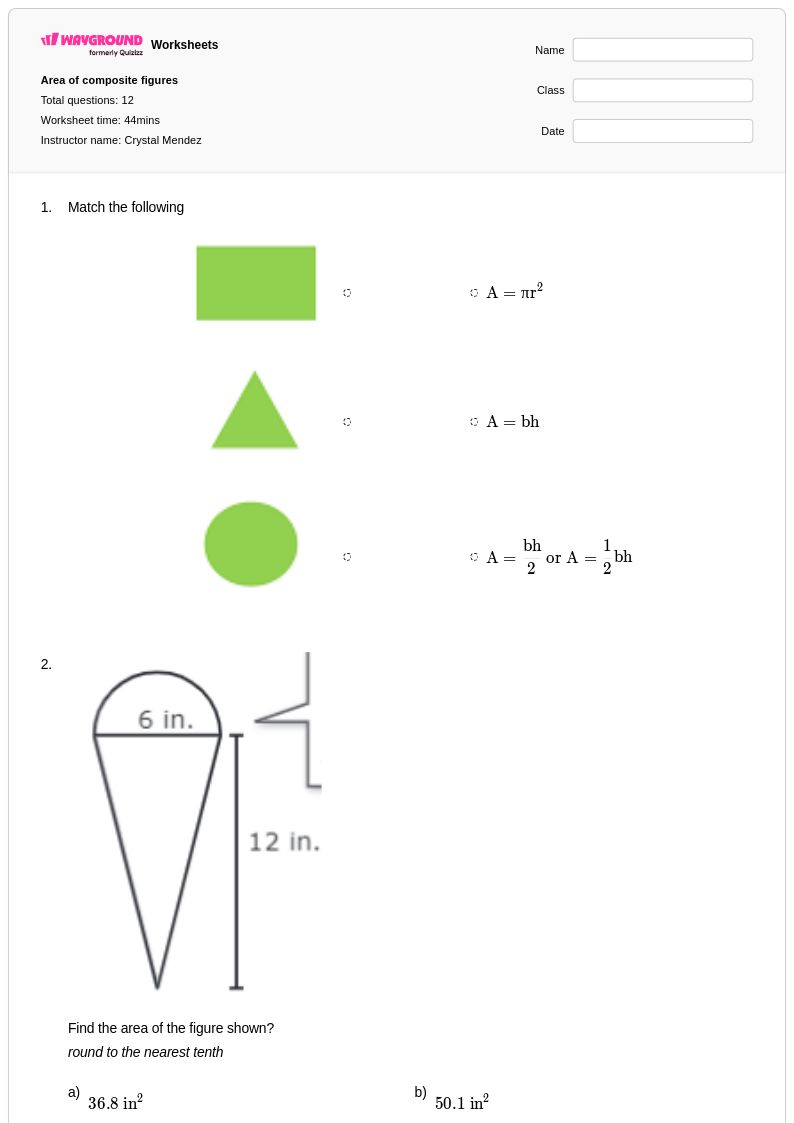
12 P
10th
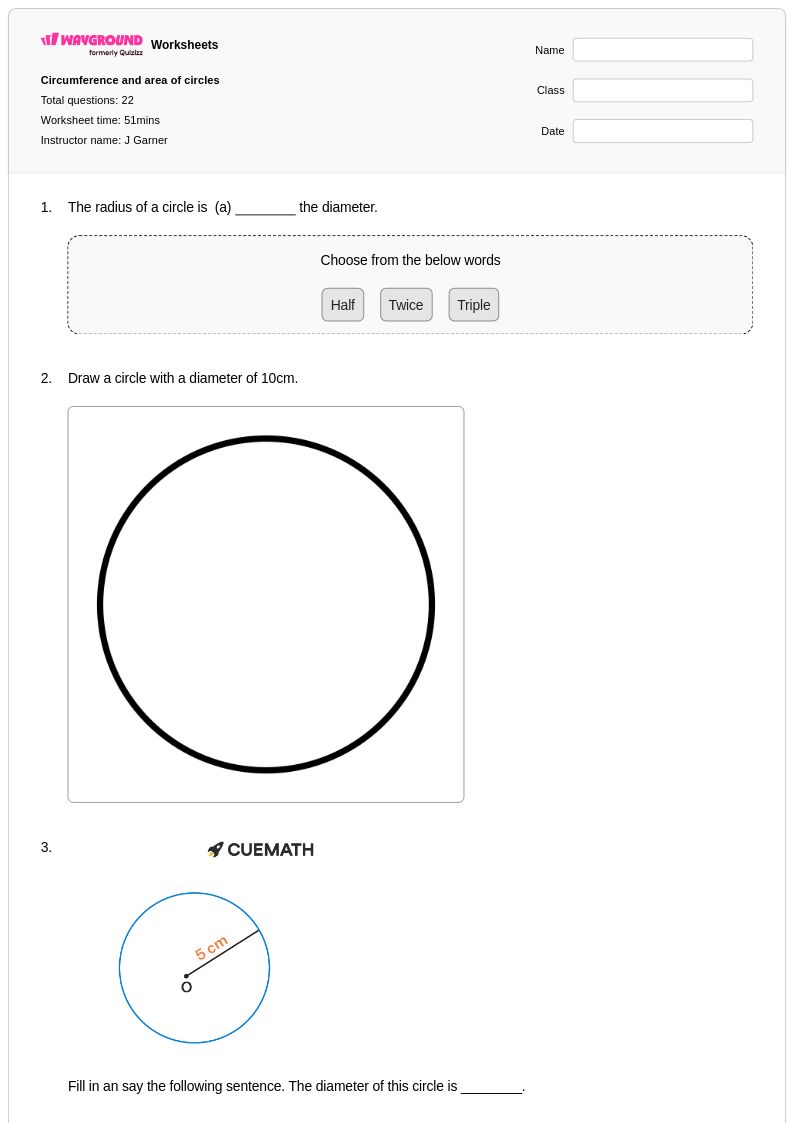
22 P
7th
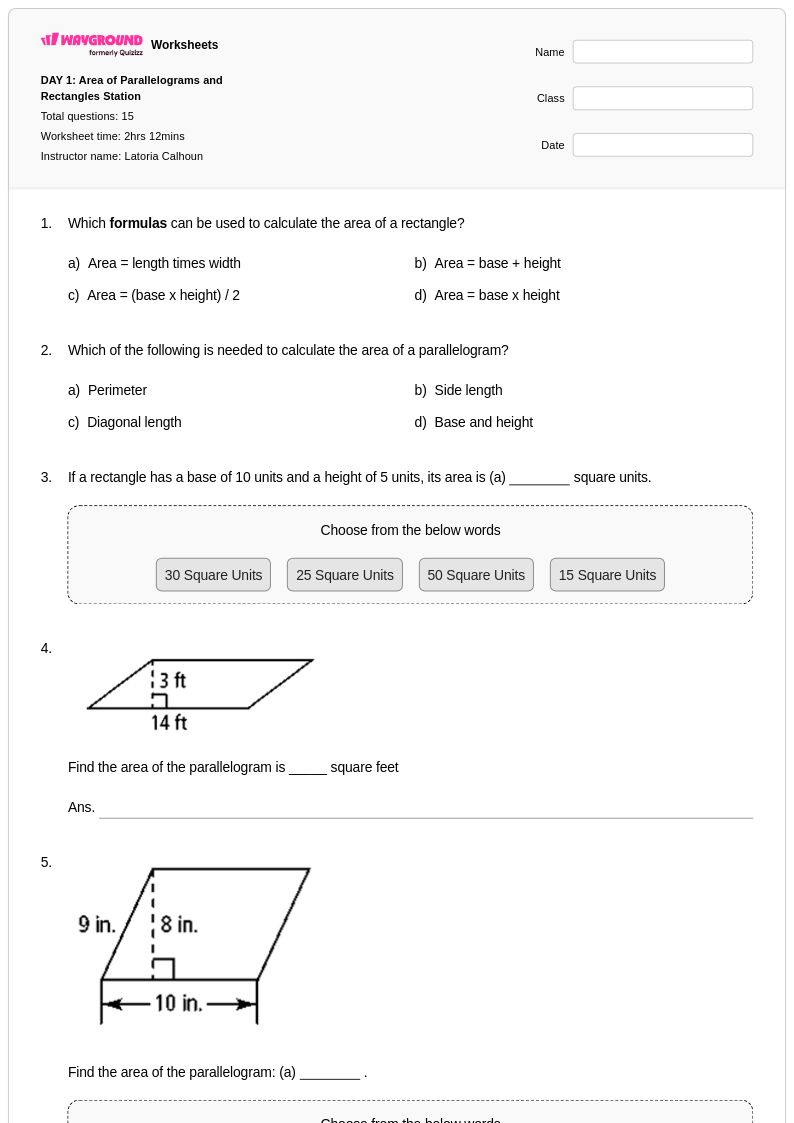
15 P
6th
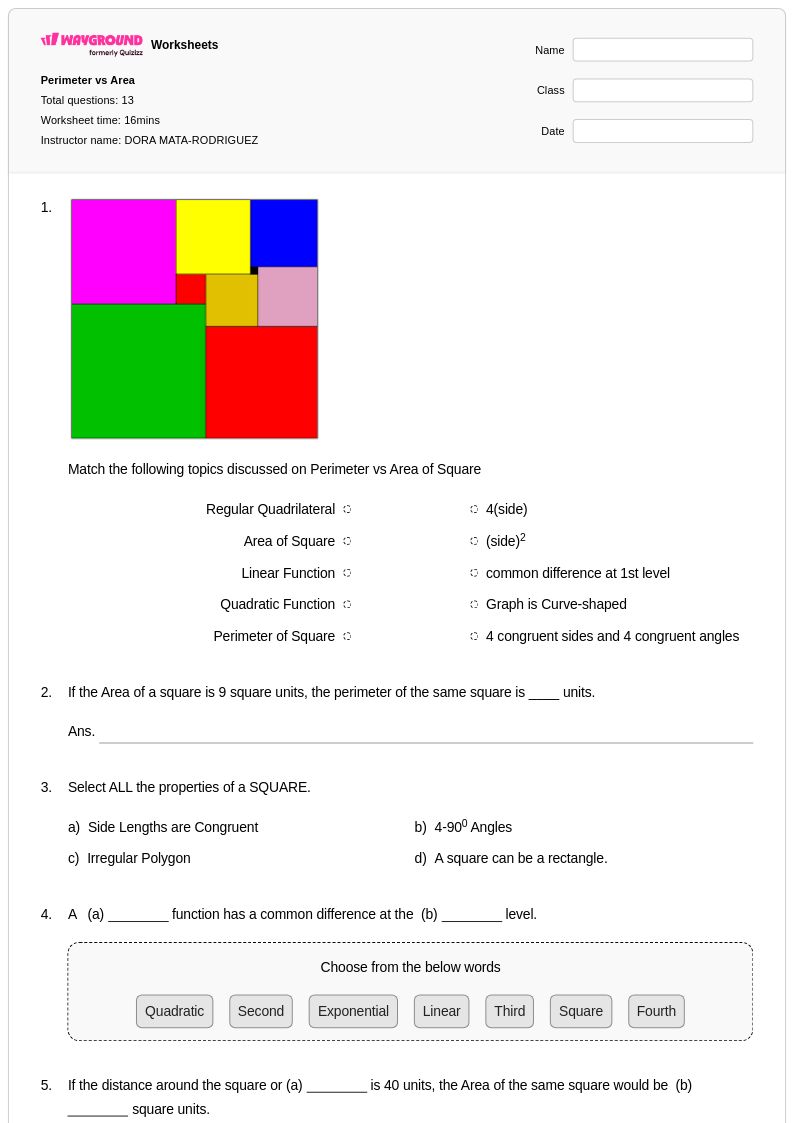
13 P
8th
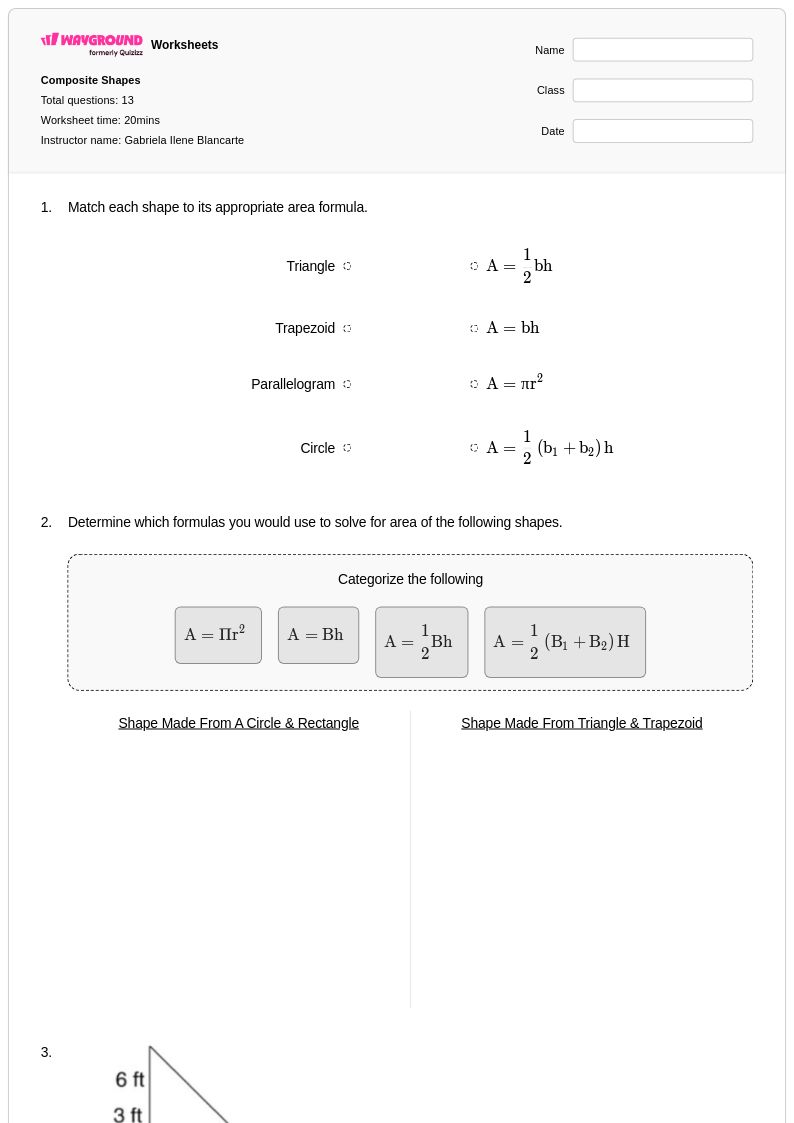
13 P
7th
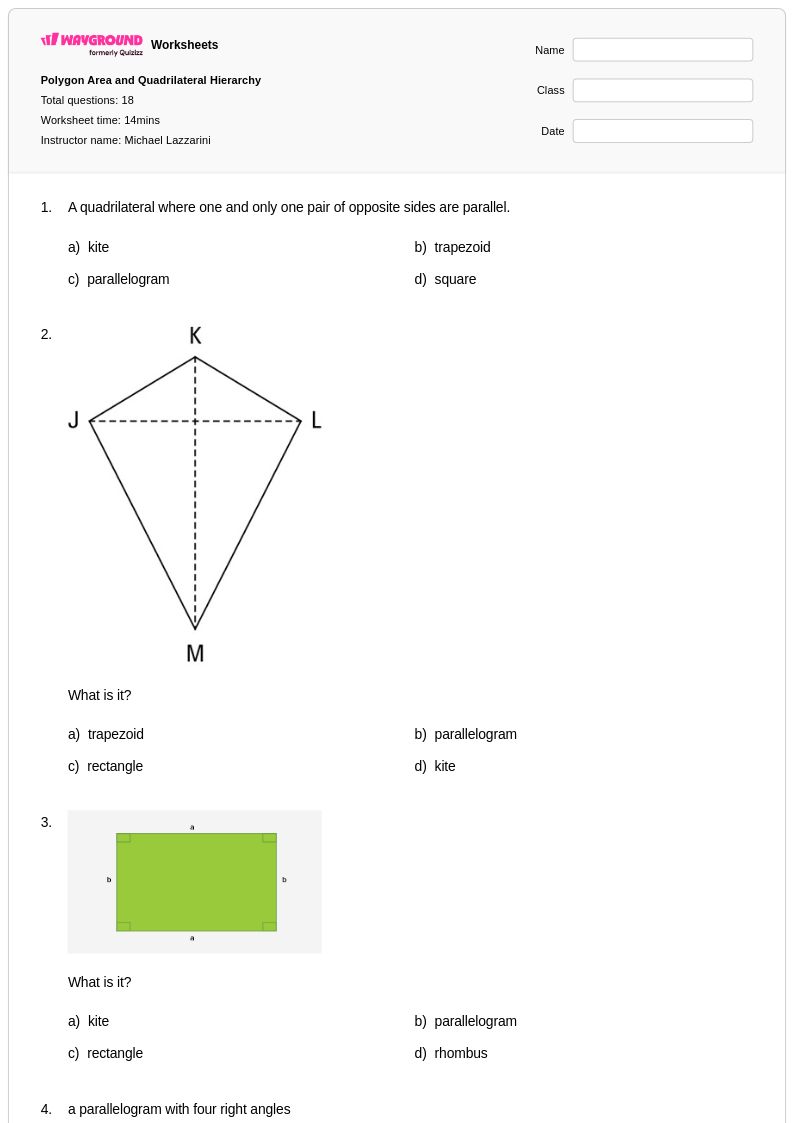
18 P
6th
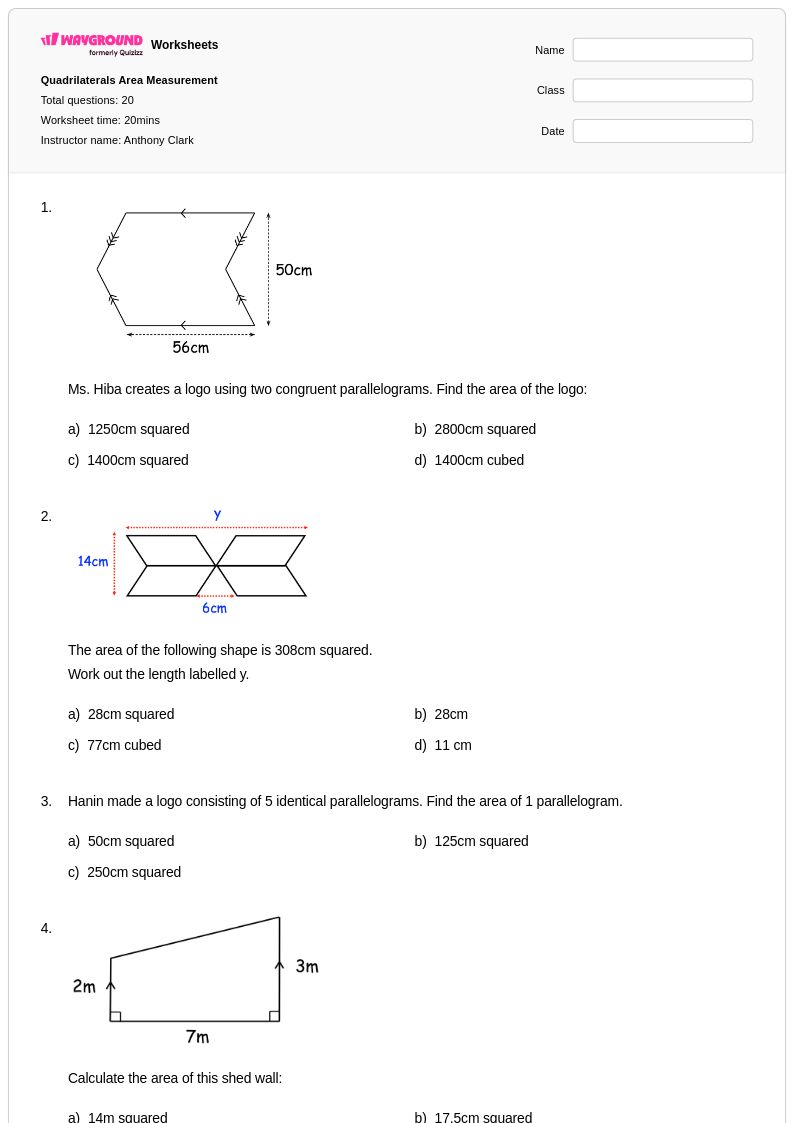
20 P
7th - Uni
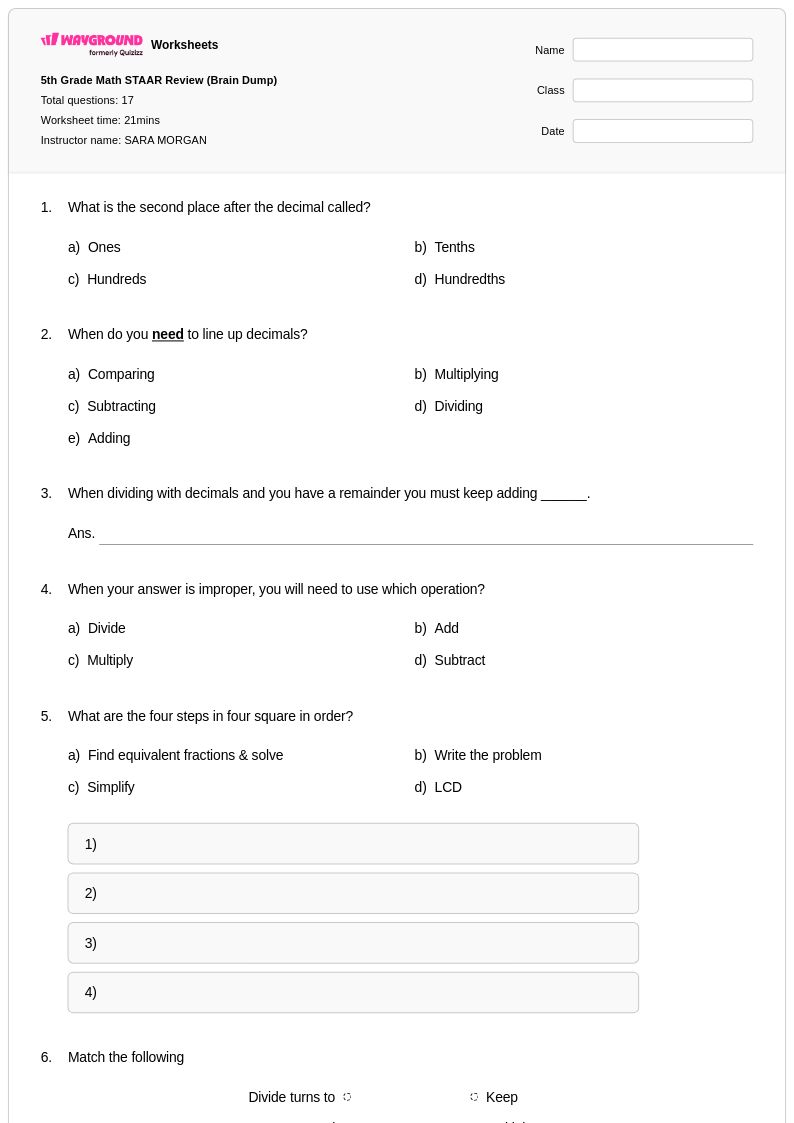
17 P
5th
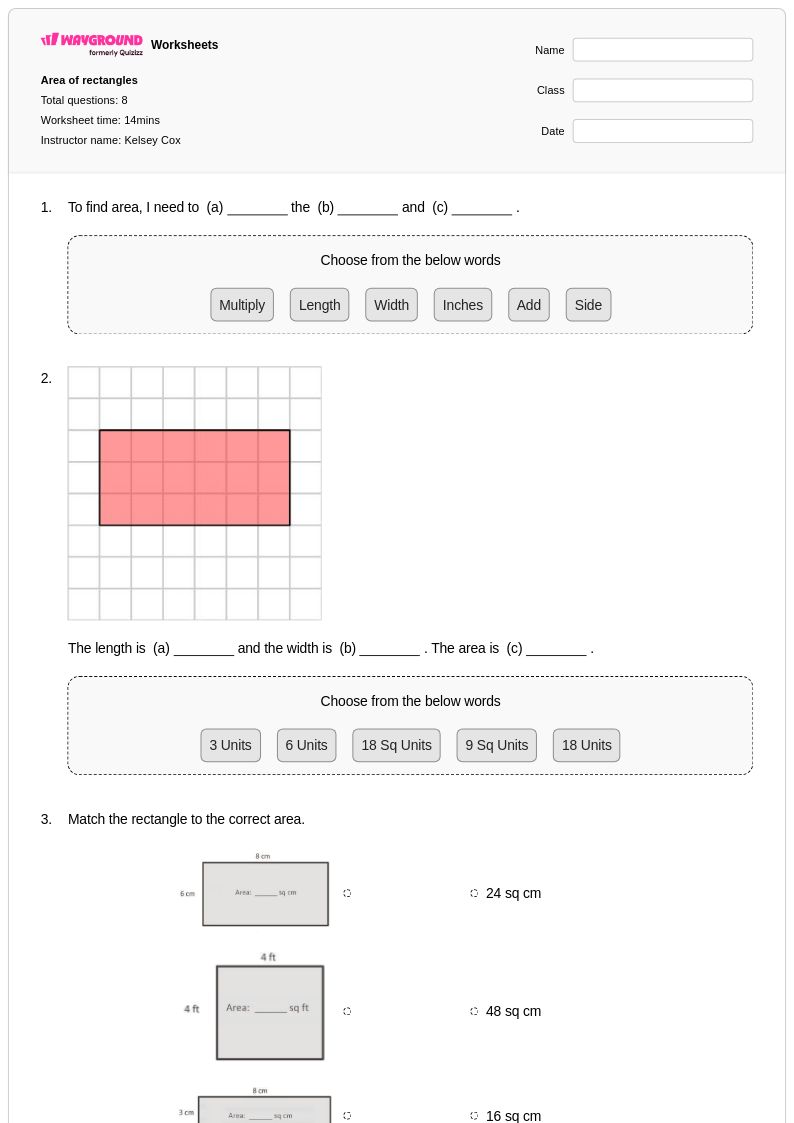
8 P
3rd
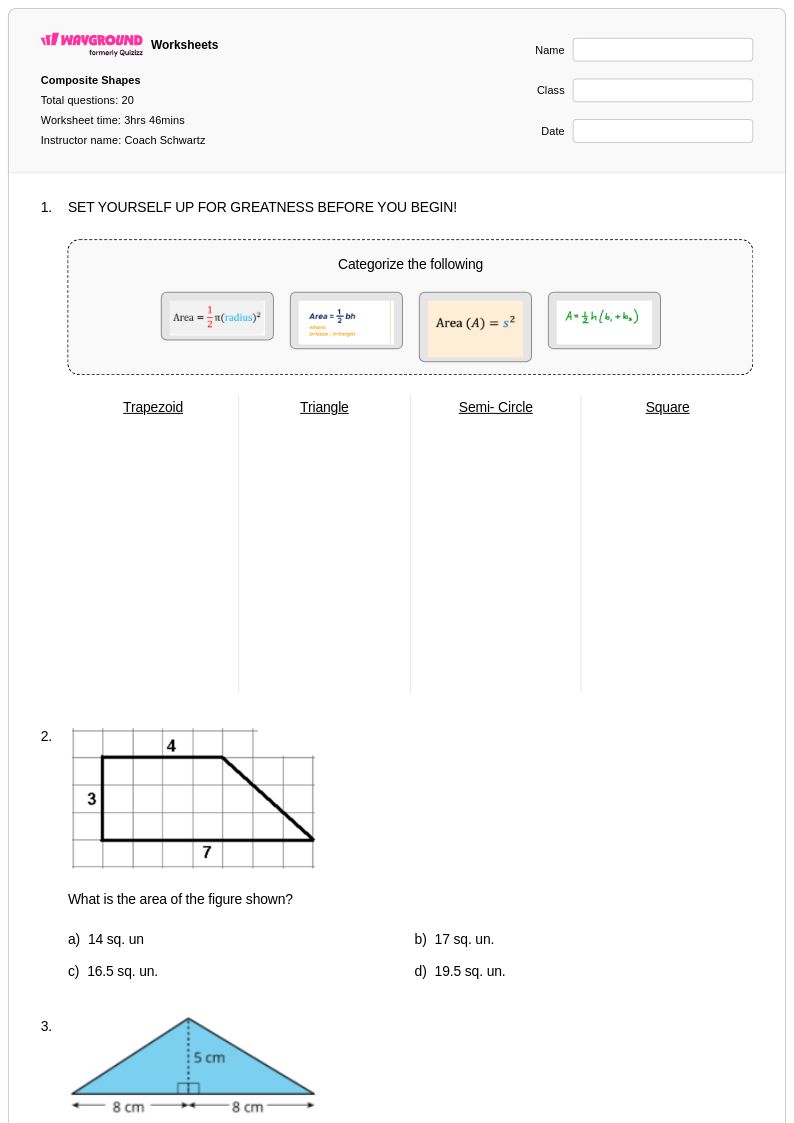
20 P
7th
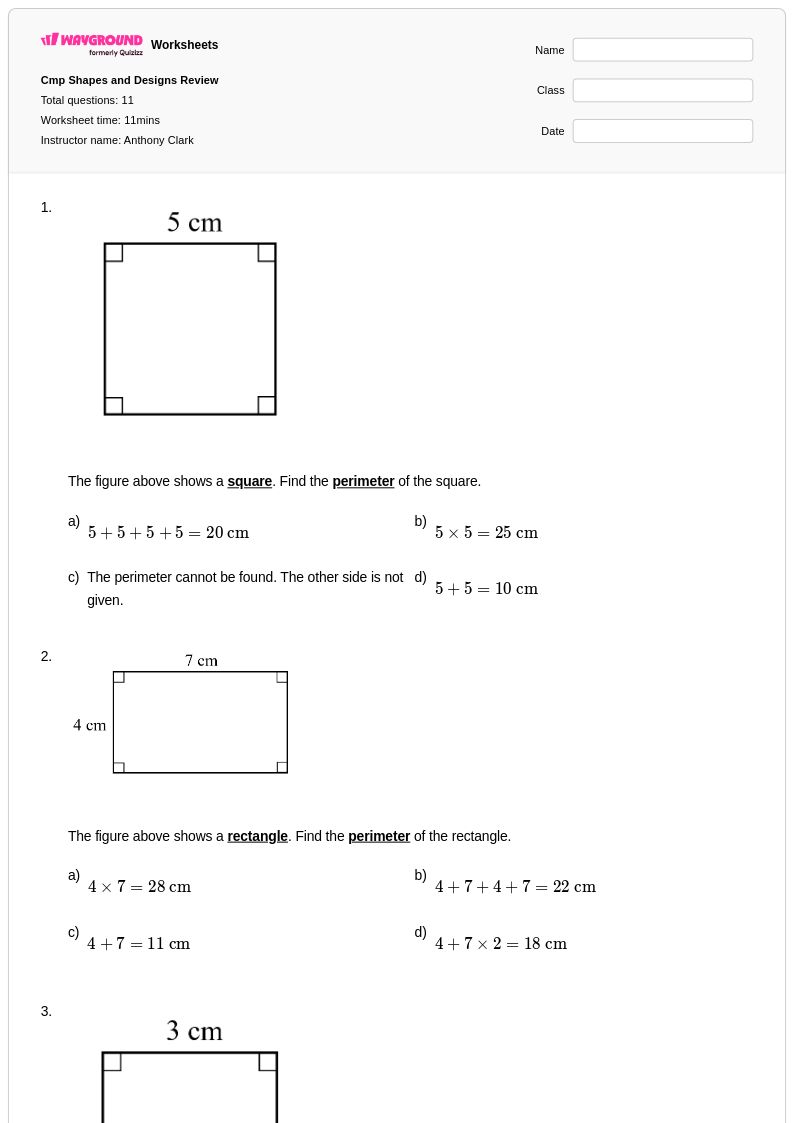
11 P
7th - Uni
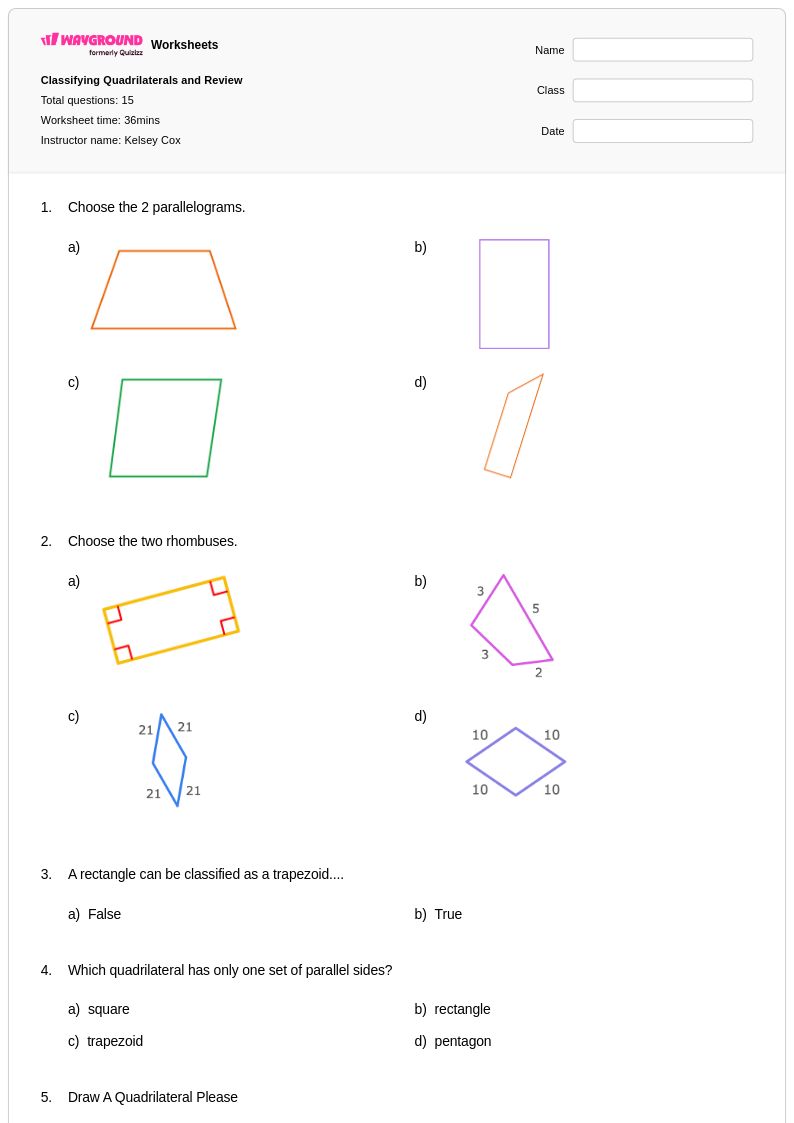
15 P
3rd

13 P
7th
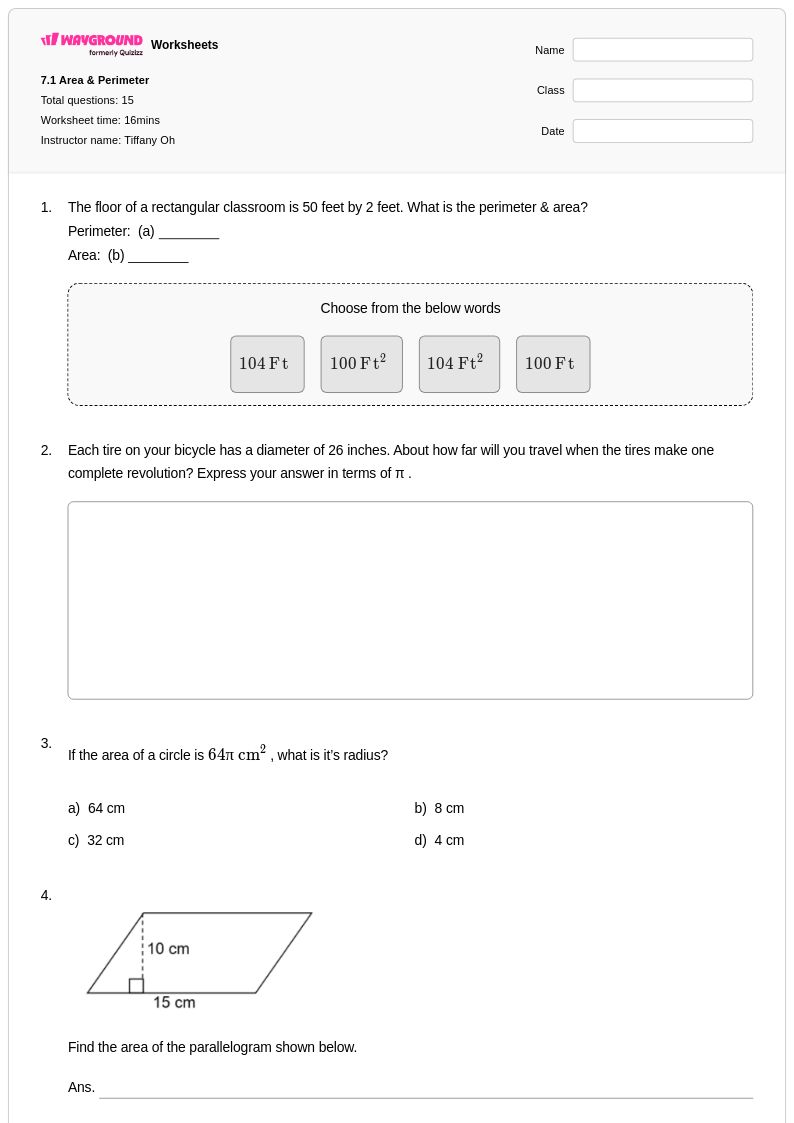
15 P
11th
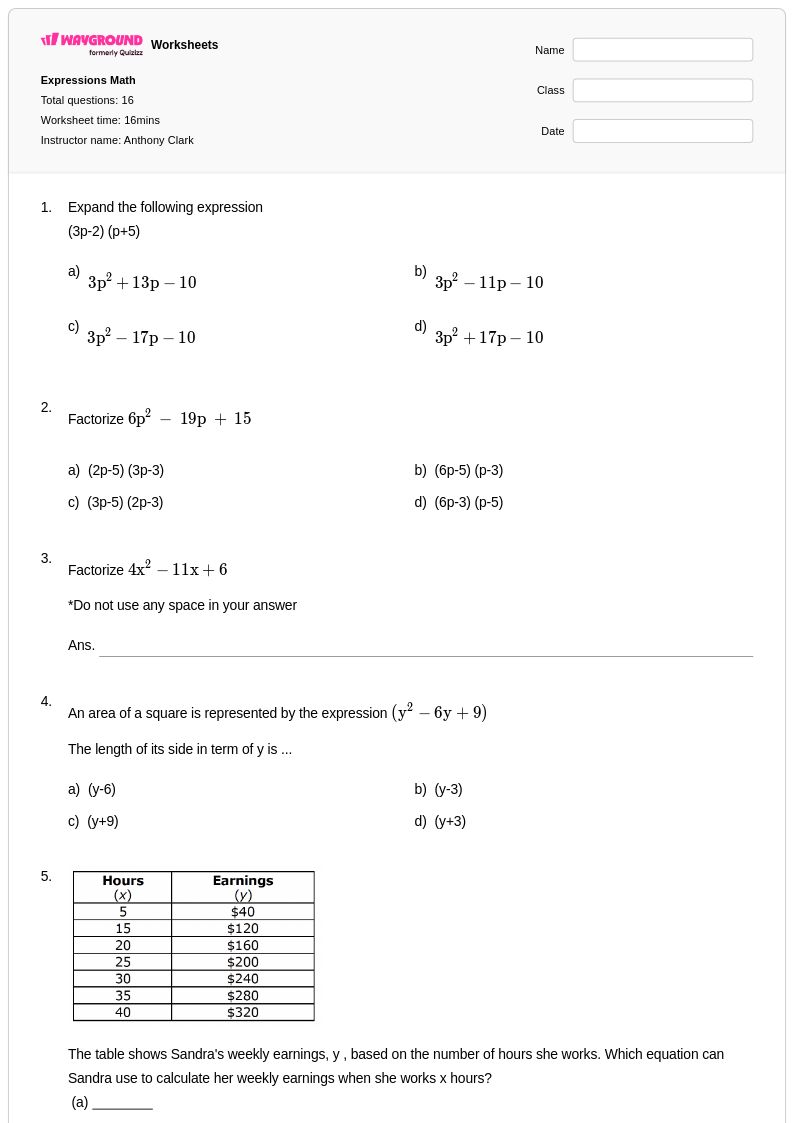
16 P
8th - Uni
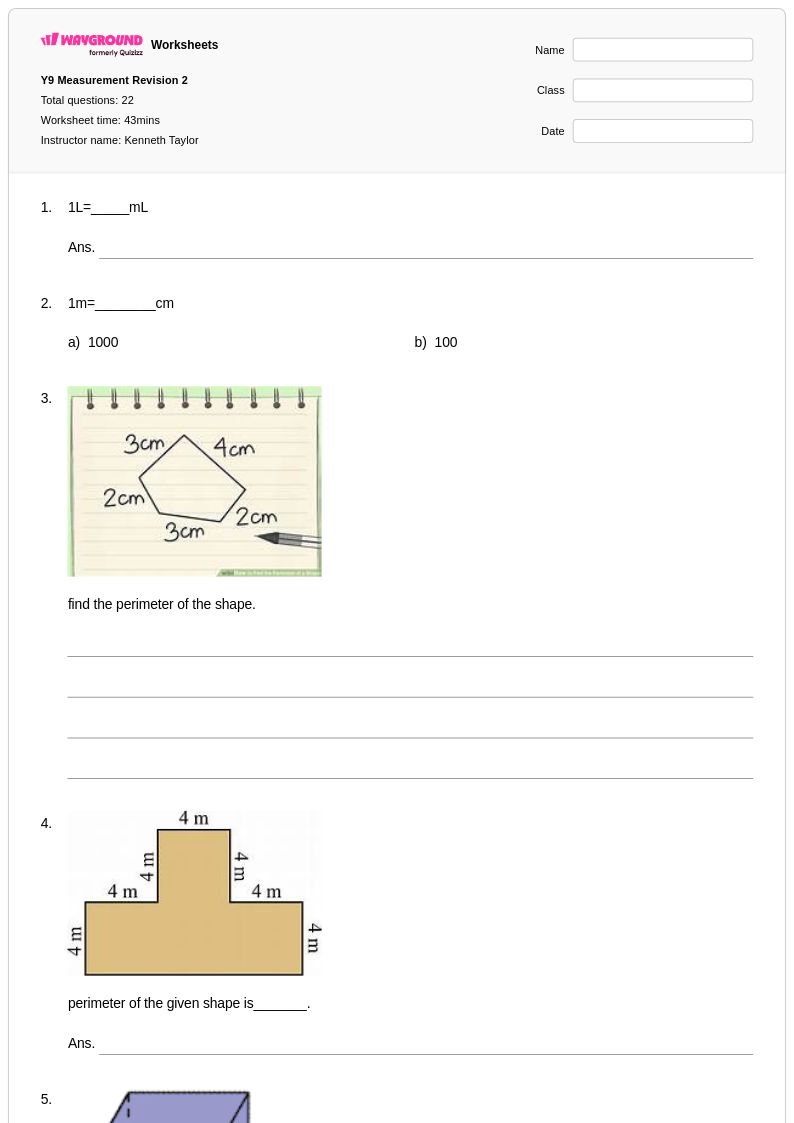
22 P
8th
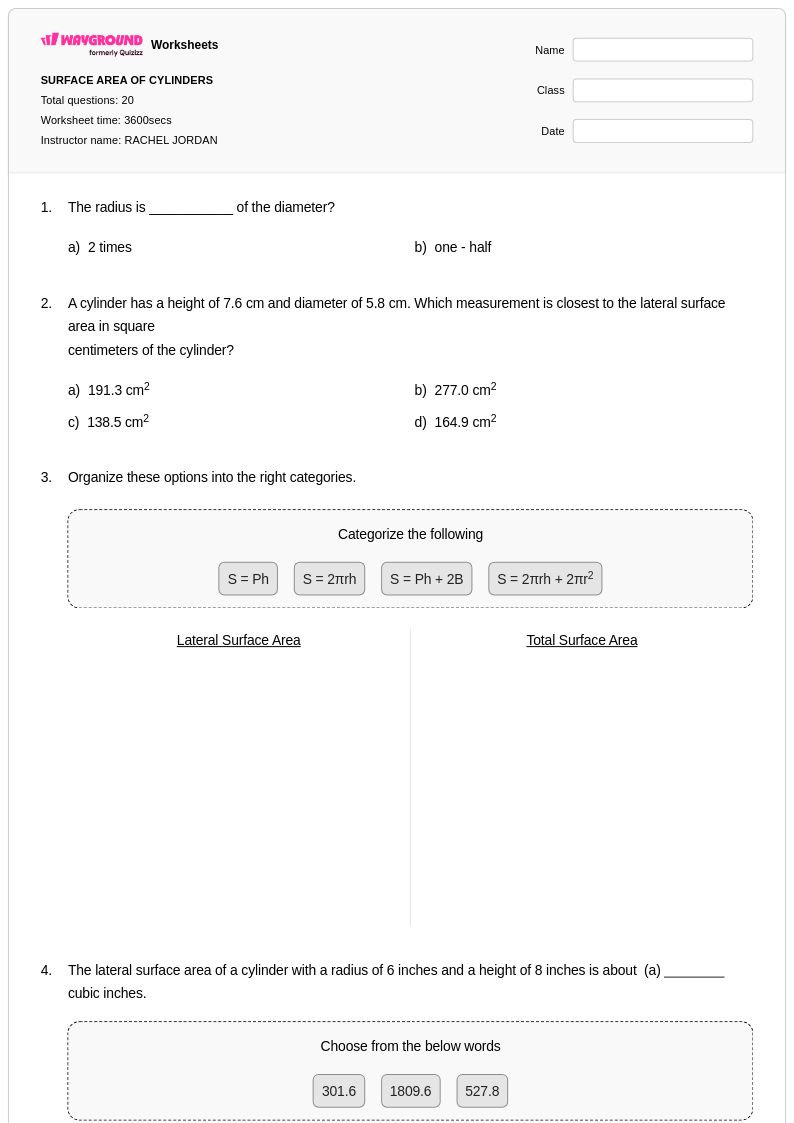
20 P
8th
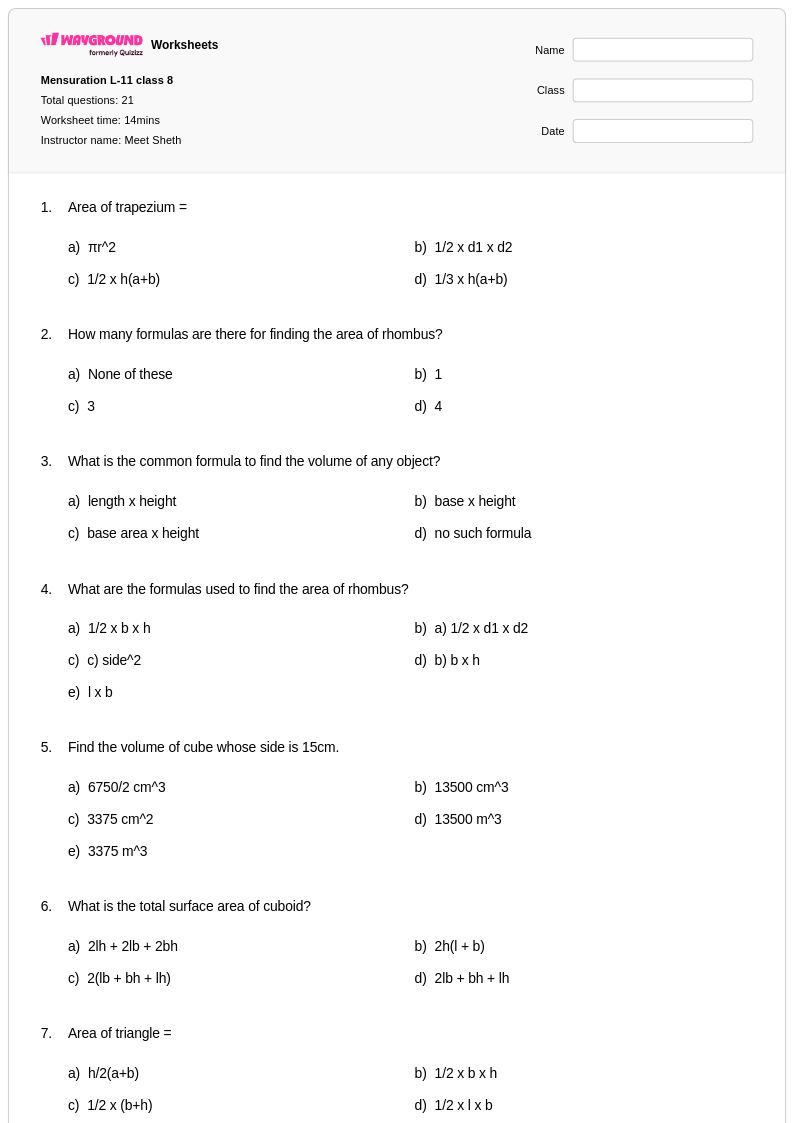
21 P
8th
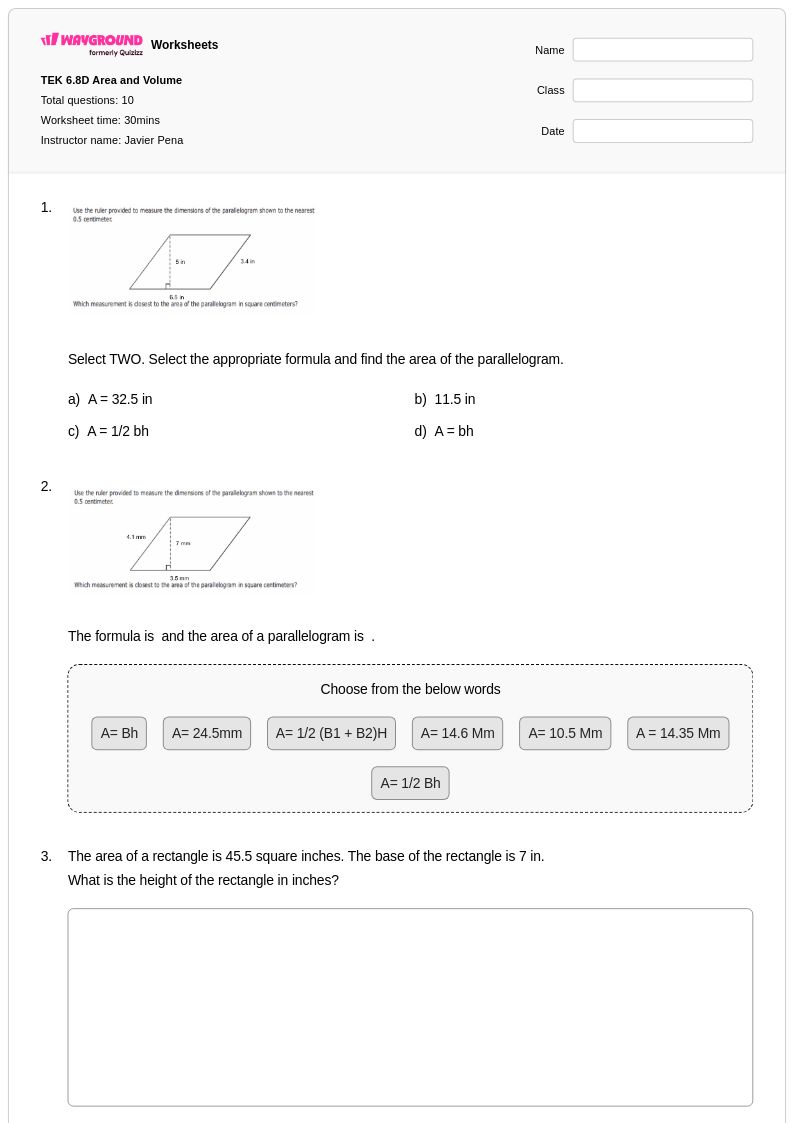
10 P
6th
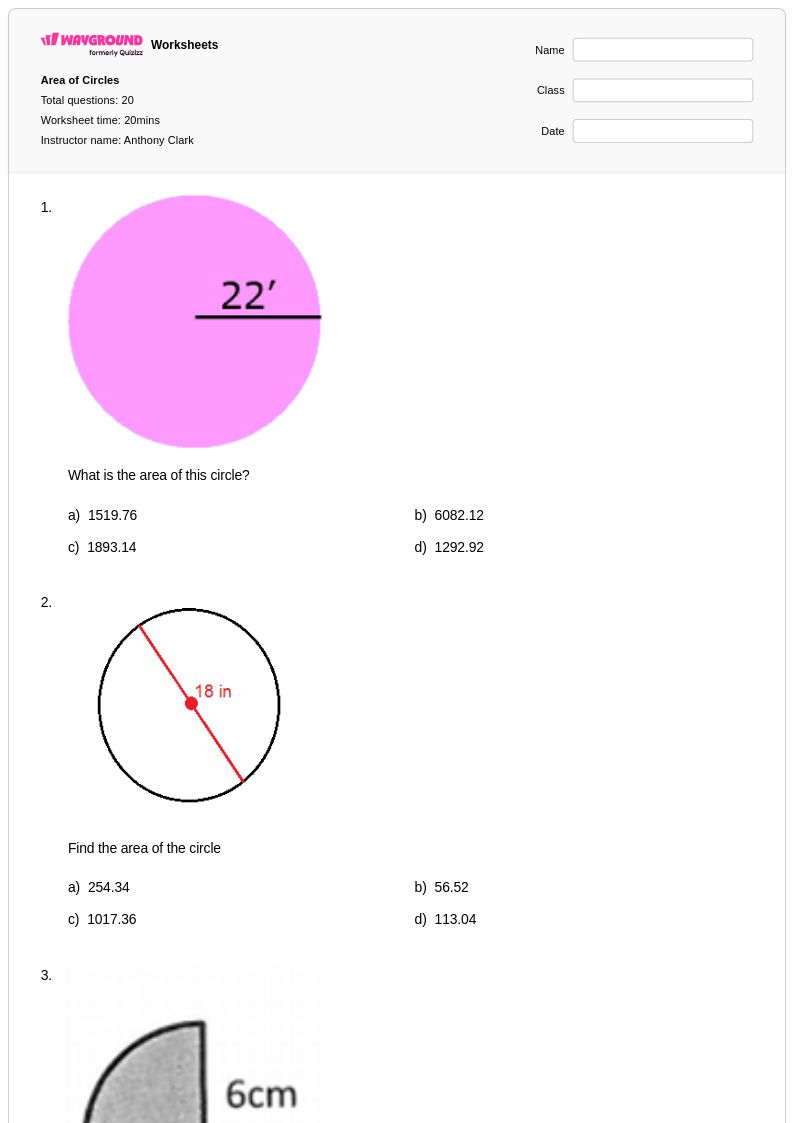
20 P
7th - Uni
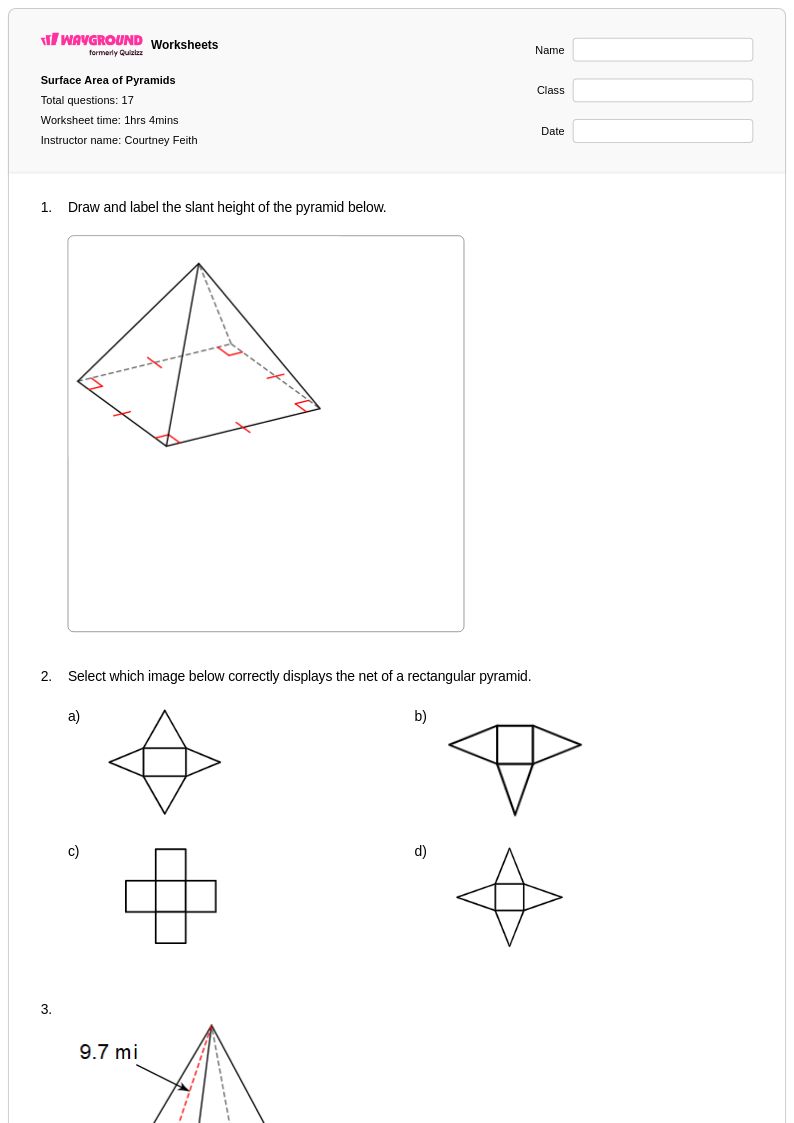
17 P
8th
16 P
3rd
12 P
6th
9 P
6th
Przeglądaj arkusze według tematów
Explore printable Area of Trapezium worksheets
Area of trapezium worksheets available through Wayground (formerly Quizizz) provide comprehensive practice opportunities for students to master this essential geometric calculation. These expertly designed resources focus on developing proficiency in applying the trapezium area formula, which requires students to identify parallel sides, measure heights, and perform accurate calculations using A = ½(a + b)h. The worksheet collections strengthen critical mathematical skills including formula application, measurement interpretation, and algebraic manipulation while building conceptual understanding of how trapezium properties relate to area calculations. Each resource includes detailed answer keys and step-by-step solutions, with many available as free printable pdf downloads that teachers can seamlessly integrate into their geometry curriculum for targeted practice problems and skill reinforcement.
Wayground (formerly Quizizz) empowers educators with an extensive library of millions of teacher-created area of trapezium worksheets that streamline geometry instruction and assessment. The platform's robust search and filtering capabilities allow teachers to quickly locate resources aligned with specific mathematical standards and learning objectives, while built-in differentiation tools enable customization for diverse student needs and ability levels. These flexible worksheet collections are available in both printable and digital formats, including downloadable pdf versions, making them ideal for classroom instruction, homework assignments, remediation sessions, and enrichment activities. Teachers can efficiently modify problems, adjust difficulty levels, and create targeted practice sets that support individual student progress, whether reinforcing foundational trapezium concepts or challenging advanced learners with complex multi-step area calculations.
FAQs
How do I teach students to find the area of a trapezium?
What exercises help students practice the area of a trapezium?
What mistakes do students commonly make when calculating the area of a trapezium?
How can I use an area of trapezium worksheet from Wayground?
How does the area of a trapezium fit into the Common Core geometry progression?
How can I differentiate area of trapezium practice for mixed-ability students?