
10 Q
10th
10 Q
8th
18 Q
7th
10 Q
10th
10 Q
7th - 9th
12 Q
10th
5 Q
8th
20 Q
8th
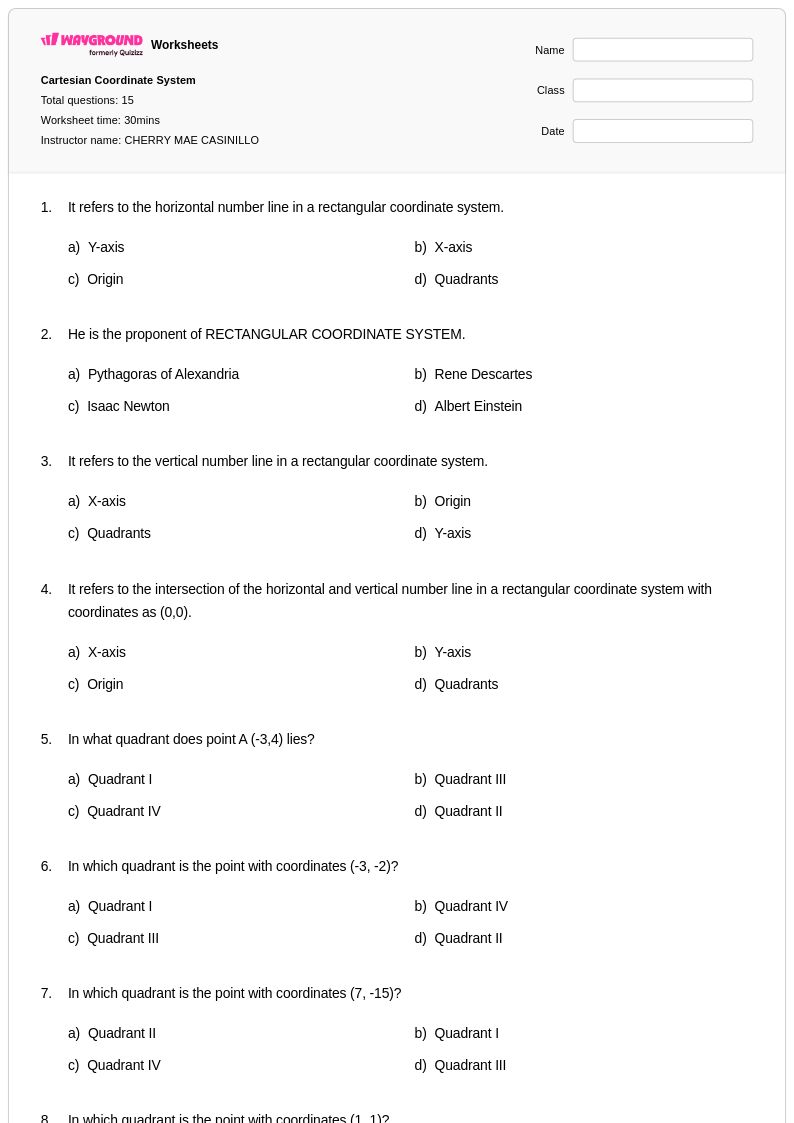
15 Q
7th
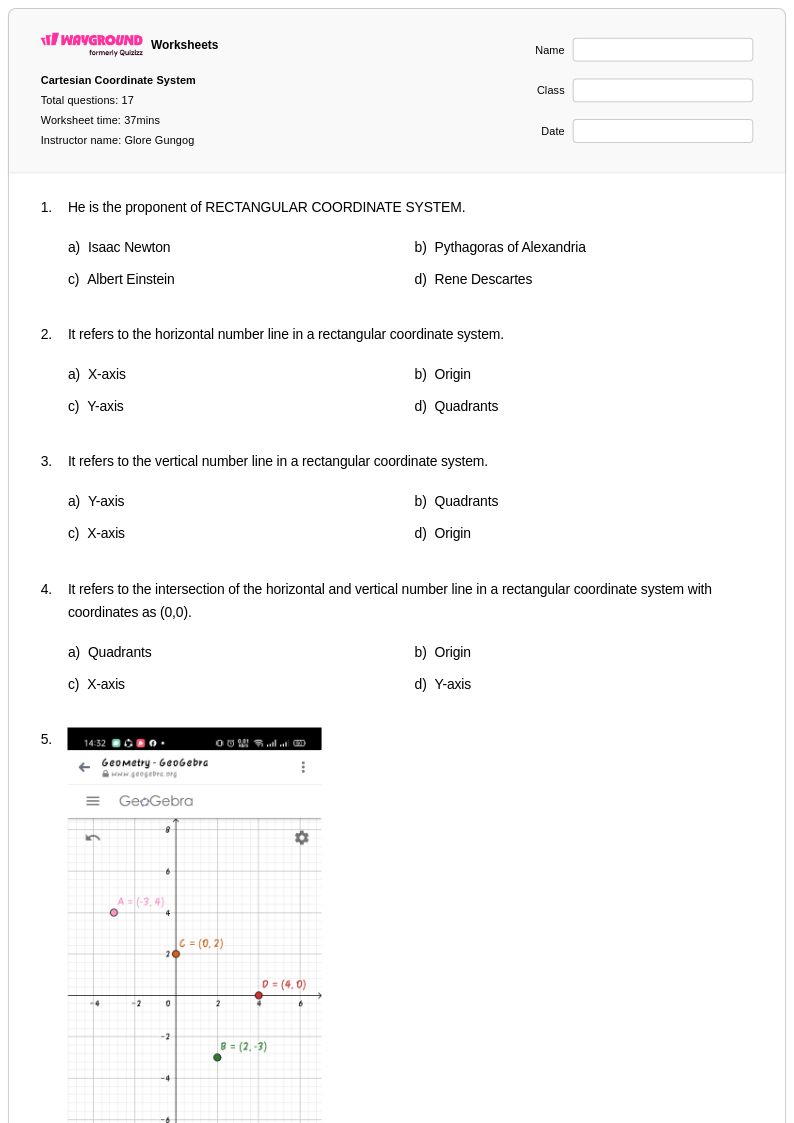
17 Q
8th
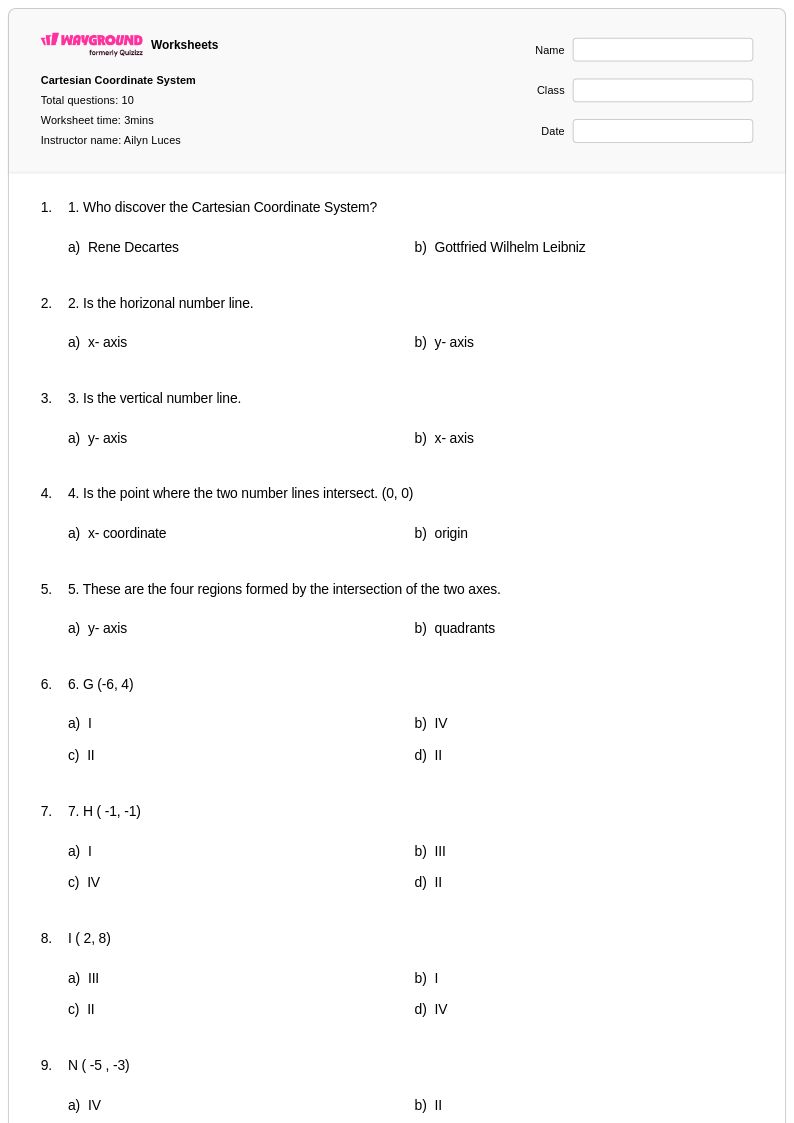
10 Q
8th
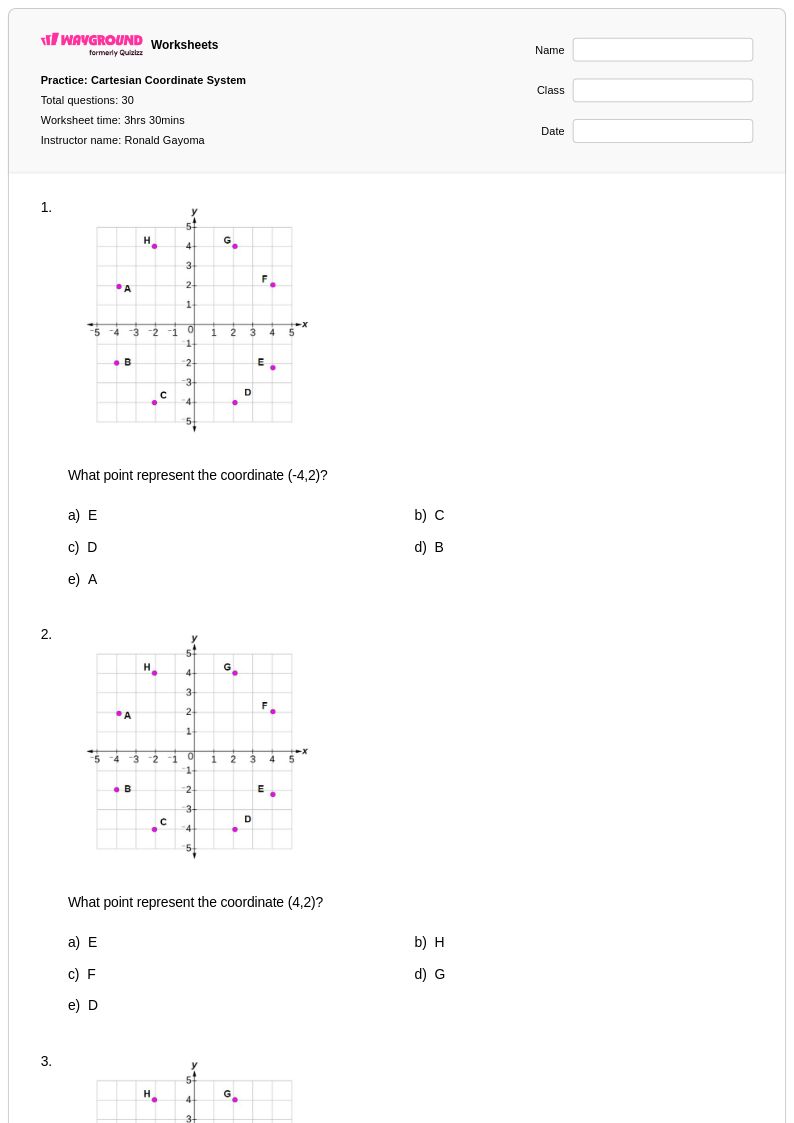
30 Q
8th
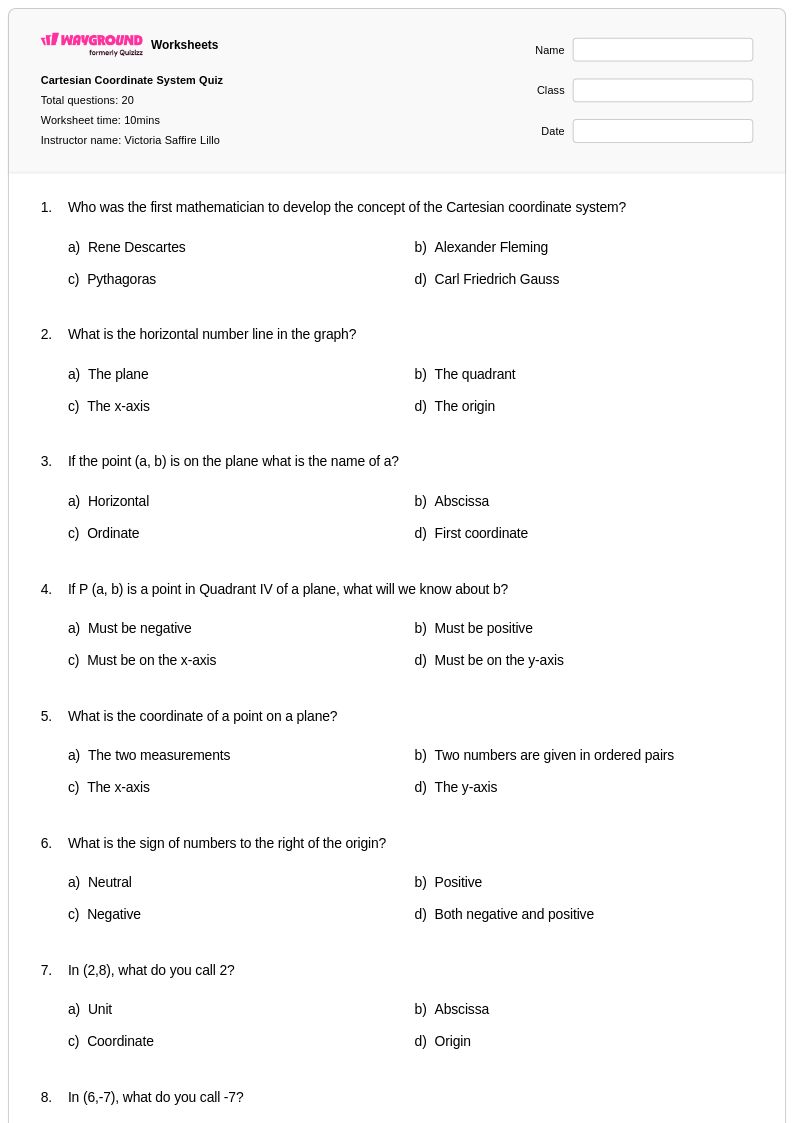
20 Q
7th
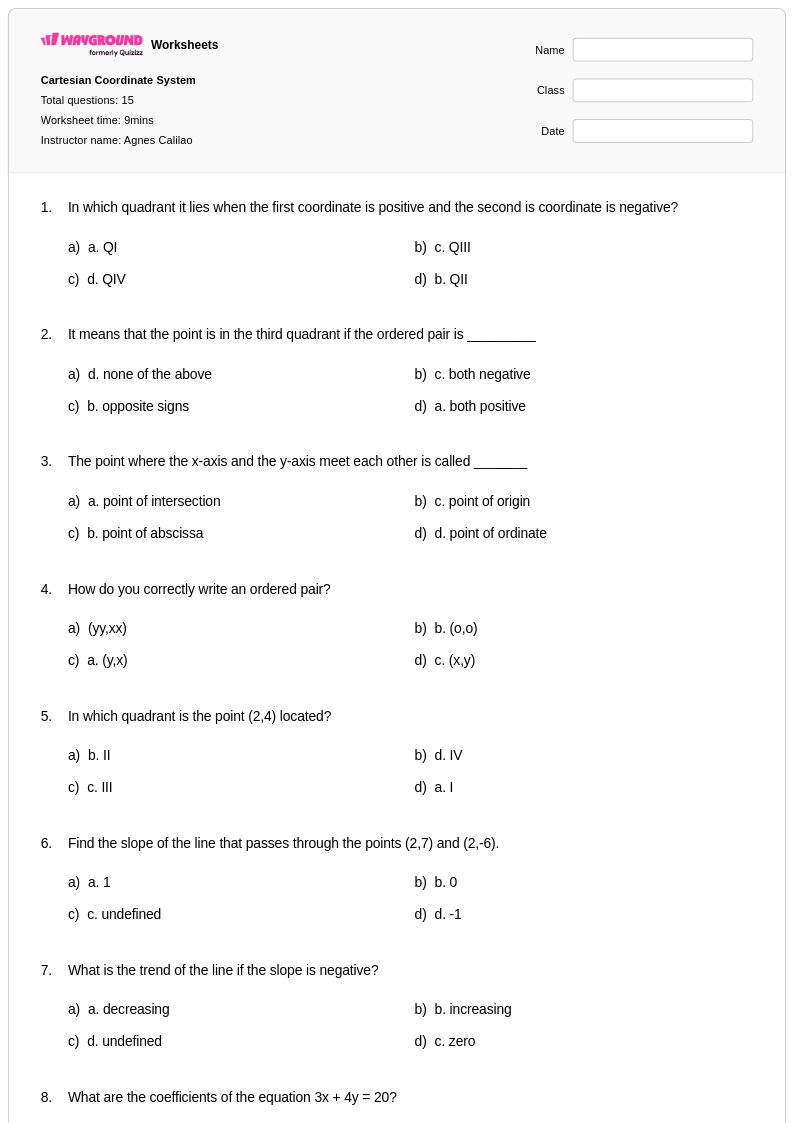
15 Q
1st - 5th
6 Q
8th
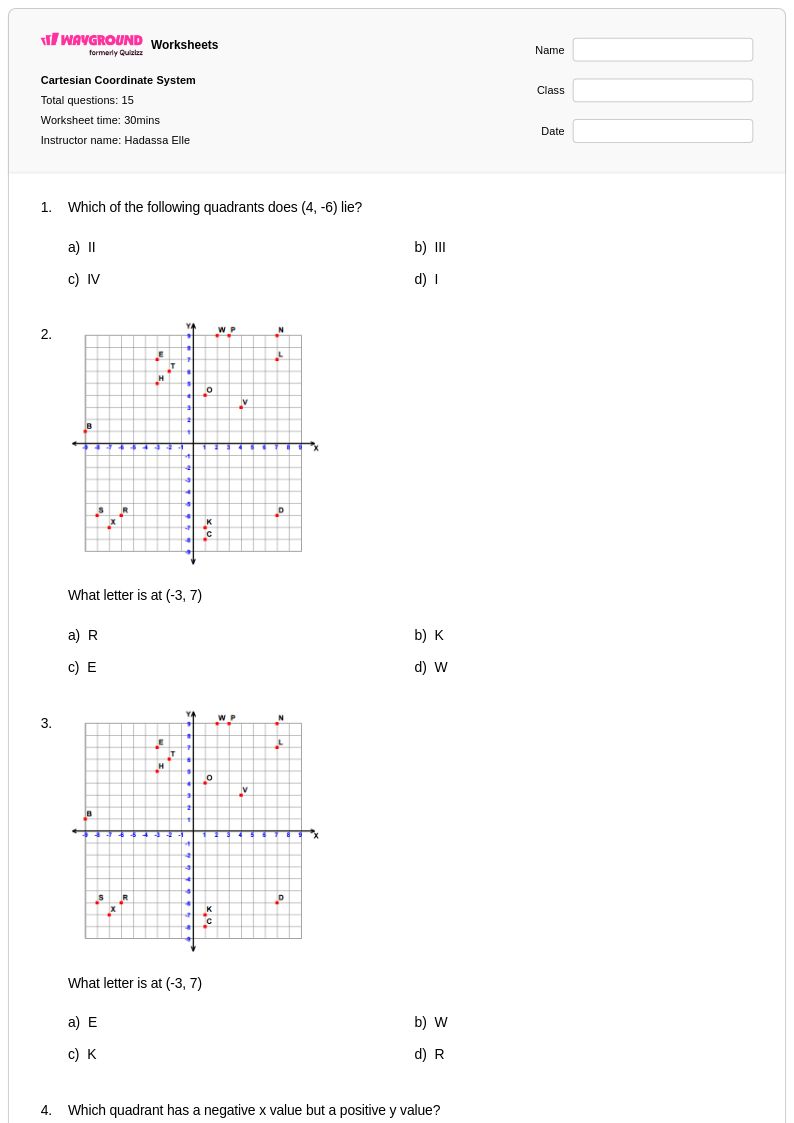
15 Q
6th - 8th
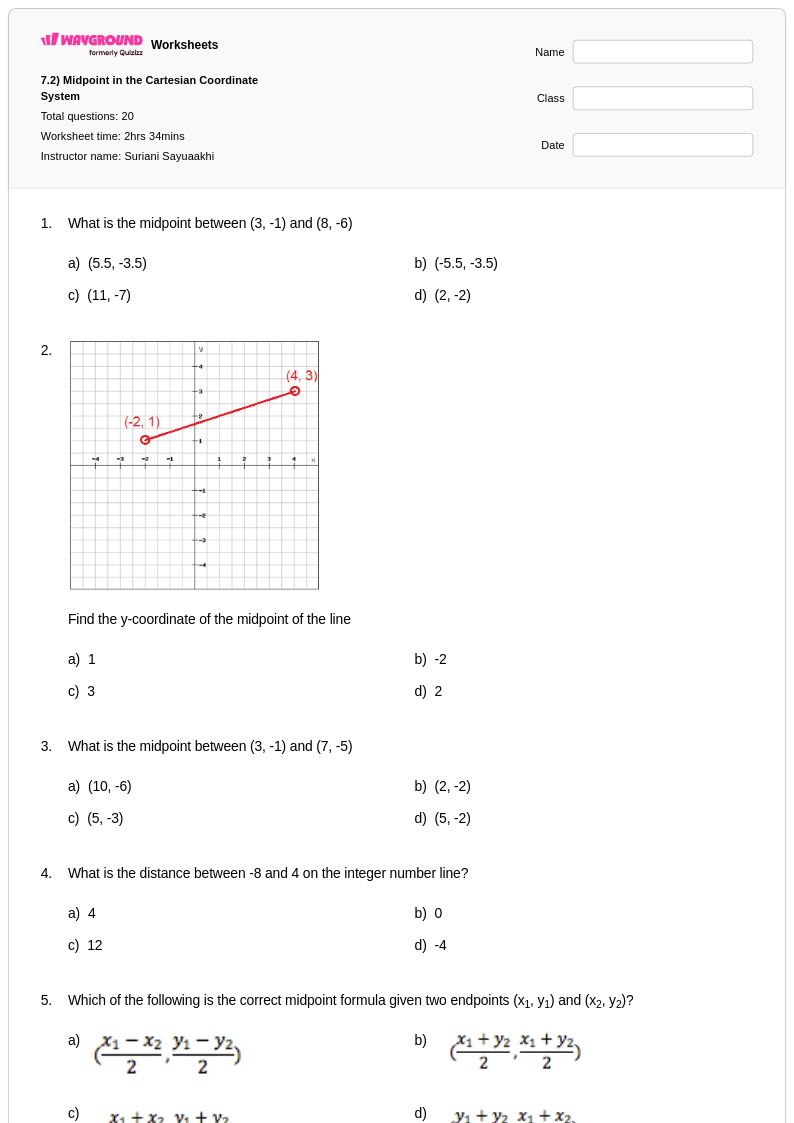
20 Q
8th
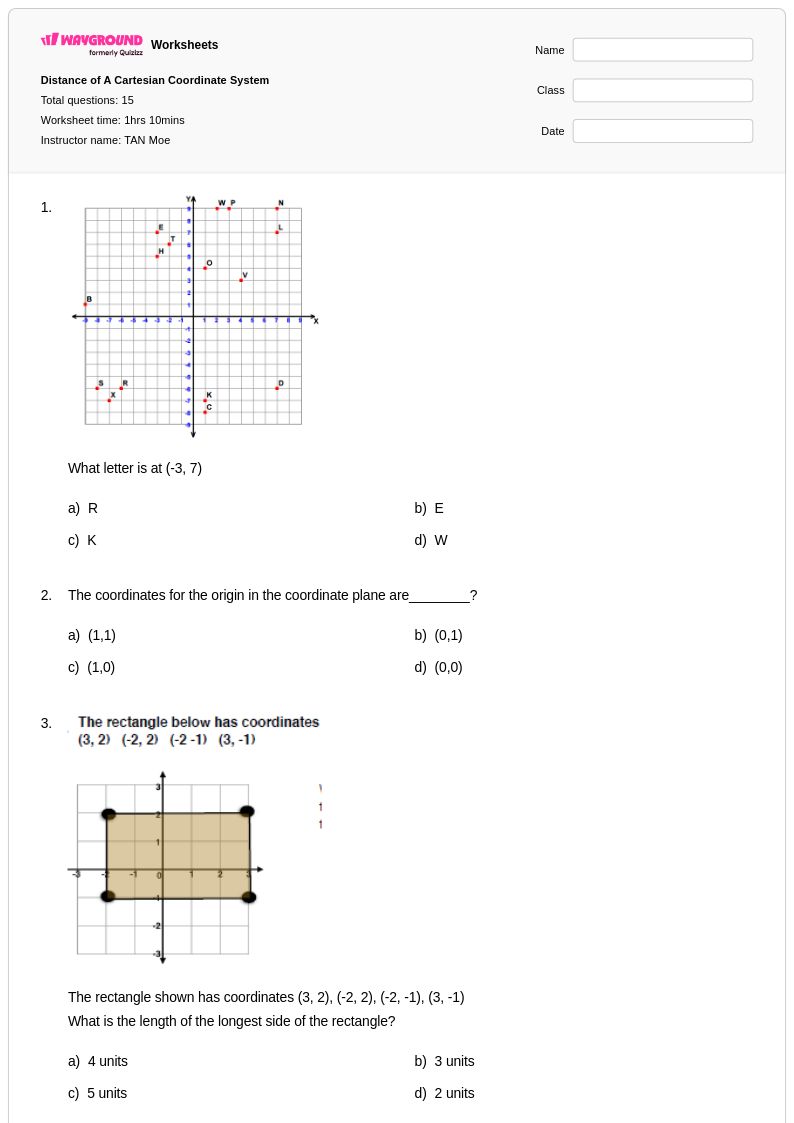
15 Q
12th
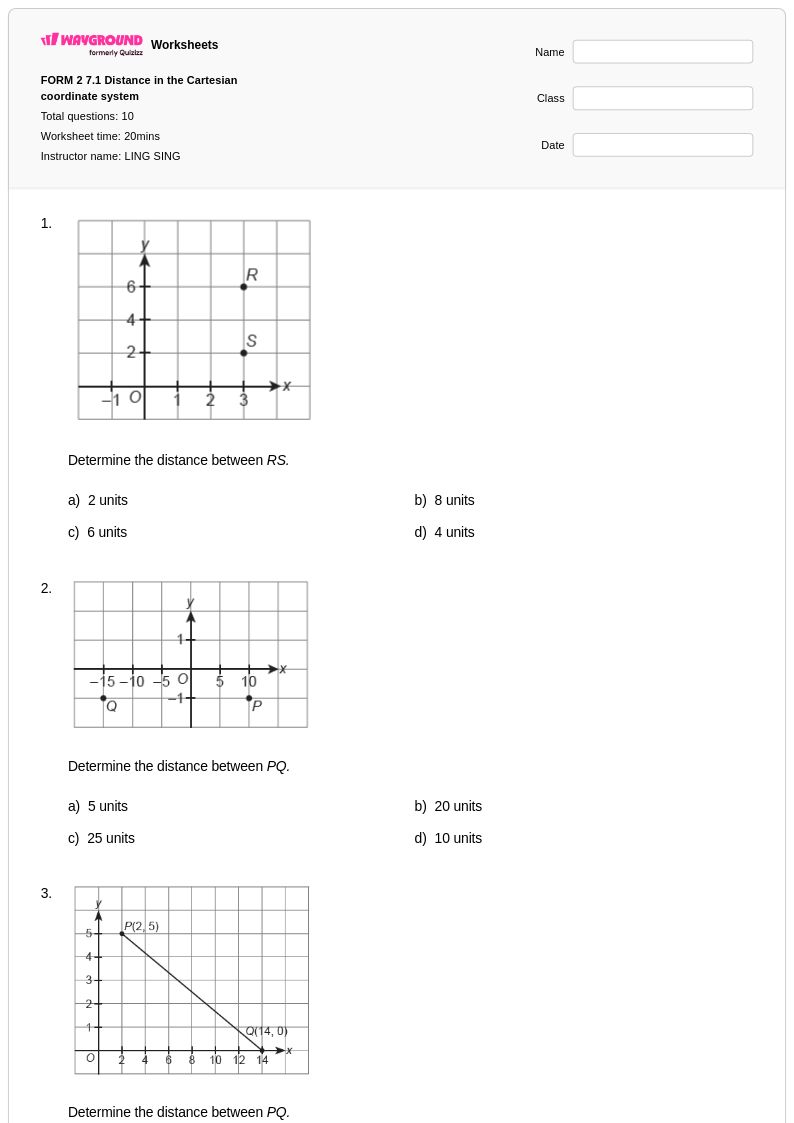
10 Q
8th
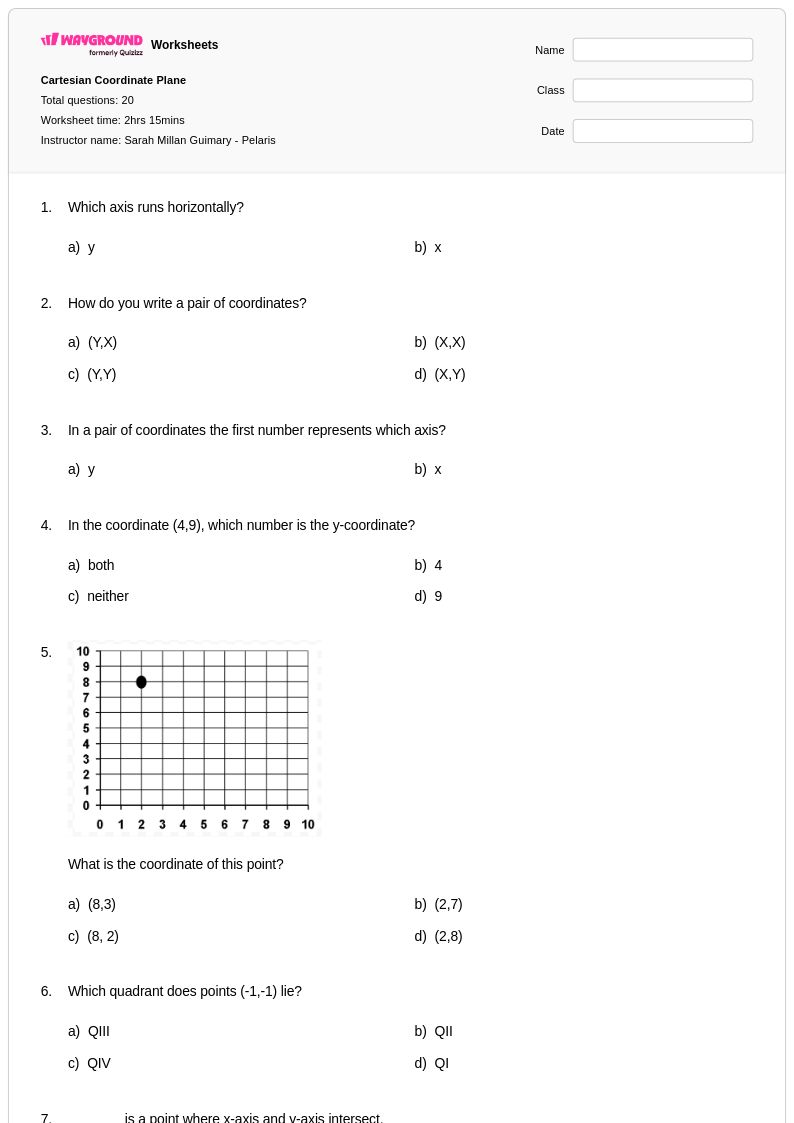
20 Q
8th
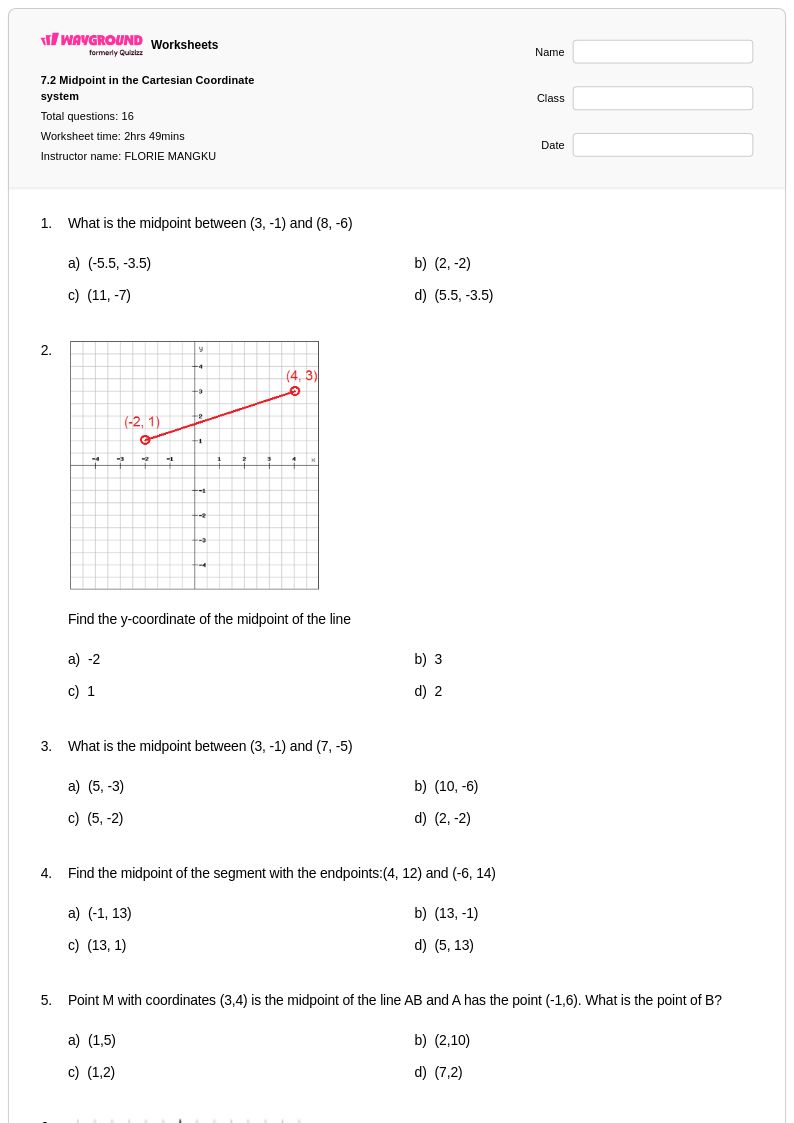
16 Q
1st - PD
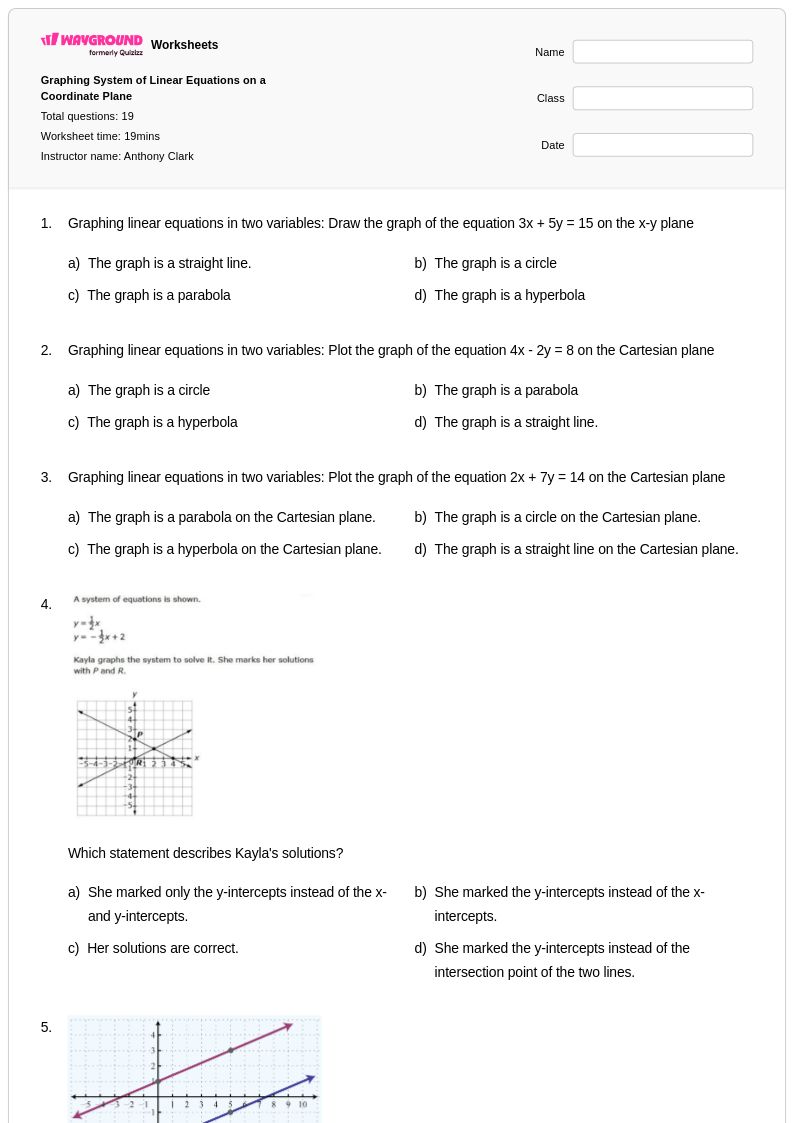
19 Q
8th - Uni
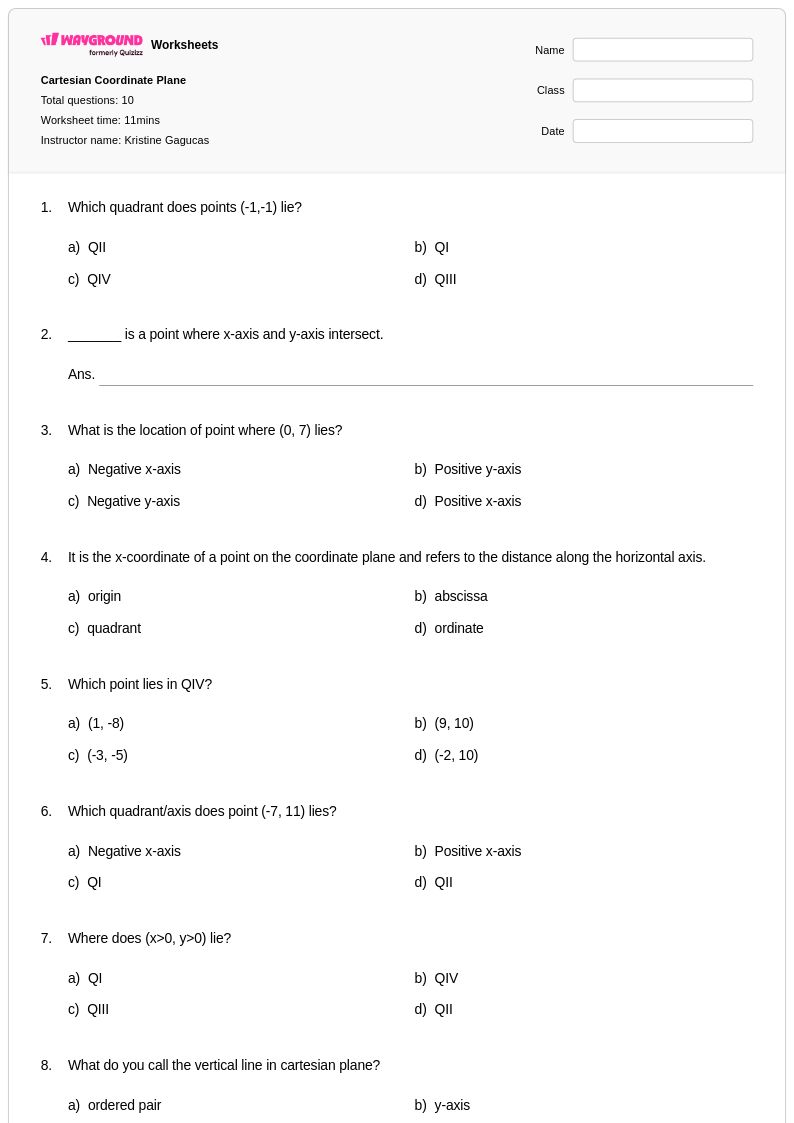
10 Q
8th
Explore Worksheets by Subjects
Explore printable Cartesian Coordinate System worksheets
Cartesian Coordinate System worksheets available through Wayground (formerly Quizizz) provide comprehensive practice for students learning to navigate and work within the coordinate plane. These expertly designed worksheets strengthen essential skills including plotting points using ordered pairs, identifying quadrants, calculating distances between points, finding midpoints, and determining slopes of lines. Students develop spatial reasoning and algebraic thinking as they work through practice problems that range from basic point plotting to more complex applications involving geometric transformations and linear relationships. Each worksheet collection includes detailed answer keys and is available as free printables in convenient pdf format, allowing educators to seamlessly integrate coordinate geometry practice into their mathematics instruction.
Wayground (formerly Quizizz) supports mathematics teachers with an extensive library of millions of teacher-created Cartesian Coordinate System resources that can be easily located through robust search and filtering capabilities. The platform's standards alignment ensures that worksheets match curriculum requirements, while built-in differentiation tools allow educators to customize content difficulty and scope to meet diverse student needs. Teachers can access materials in both printable pdf formats for traditional classroom use and digital formats for interactive learning experiences. These flexible resources prove invaluable for lesson planning, targeted remediation for students struggling with coordinate concepts, enrichment activities for advanced learners, and ongoing skill practice that reinforces mastery of coordinate plane fundamentals throughout the academic year.
FAQs
How do I teach the Cartesian coordinate system?
What exercises help students practice the Cartesian coordinate system?
What mistakes do students commonly make on Cartesian coordinate system problems?
How can I use Cartesian coordinate system worksheets from Wayground?
How does the Cartesian coordinate system fit into the Common Core math progression?
How can I differentiate Cartesian coordinate system practice?