
28 Q
3rd - 5th
20 Q
3rd - 5th
15 Q
3rd - 5th
15 Q
3rd - 5th
20 Q
3rd - Uni
12 Q
3rd - 4th
15 Q
3rd - 6th
21 Q
3rd - 5th
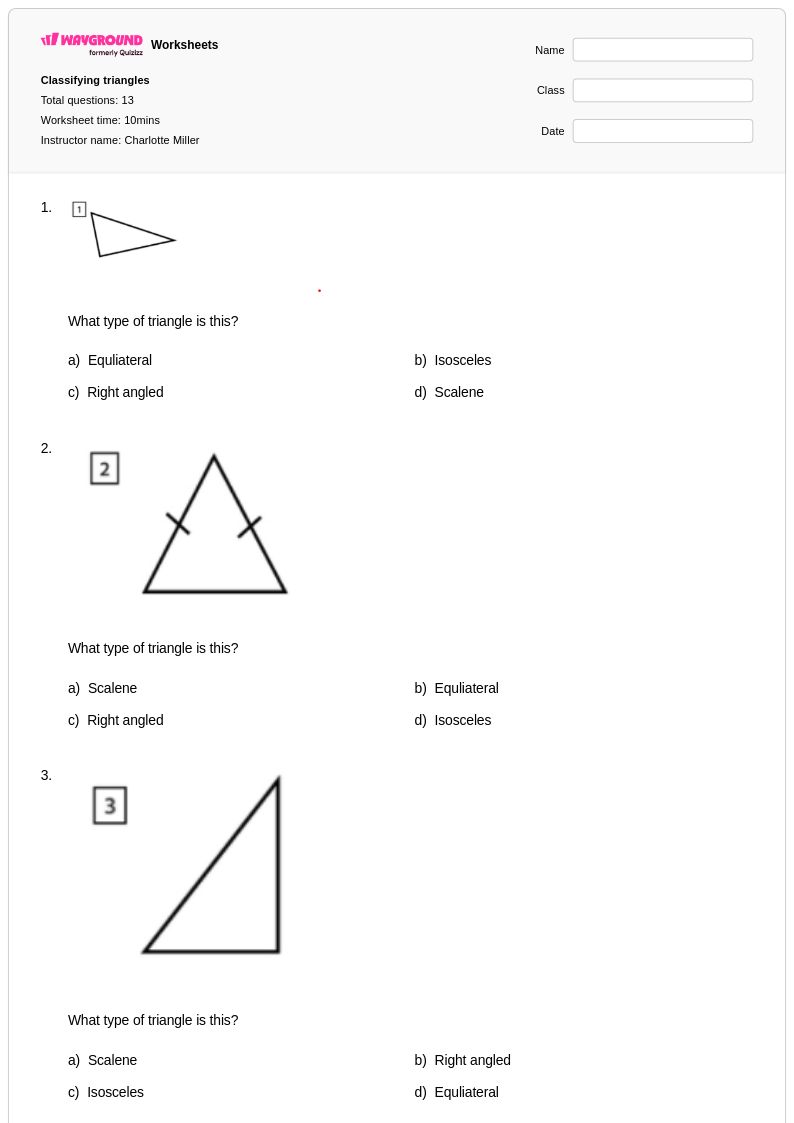
13 Q
3rd - 10th
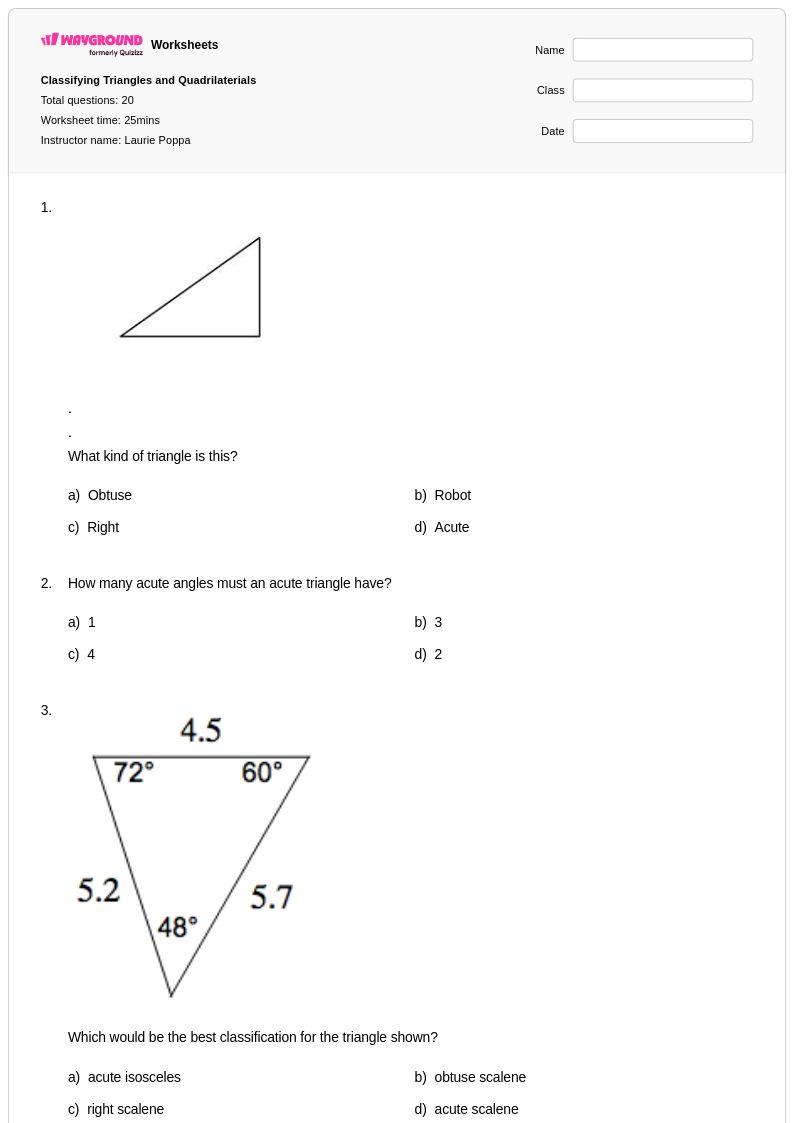
20 Q
3rd - 6th
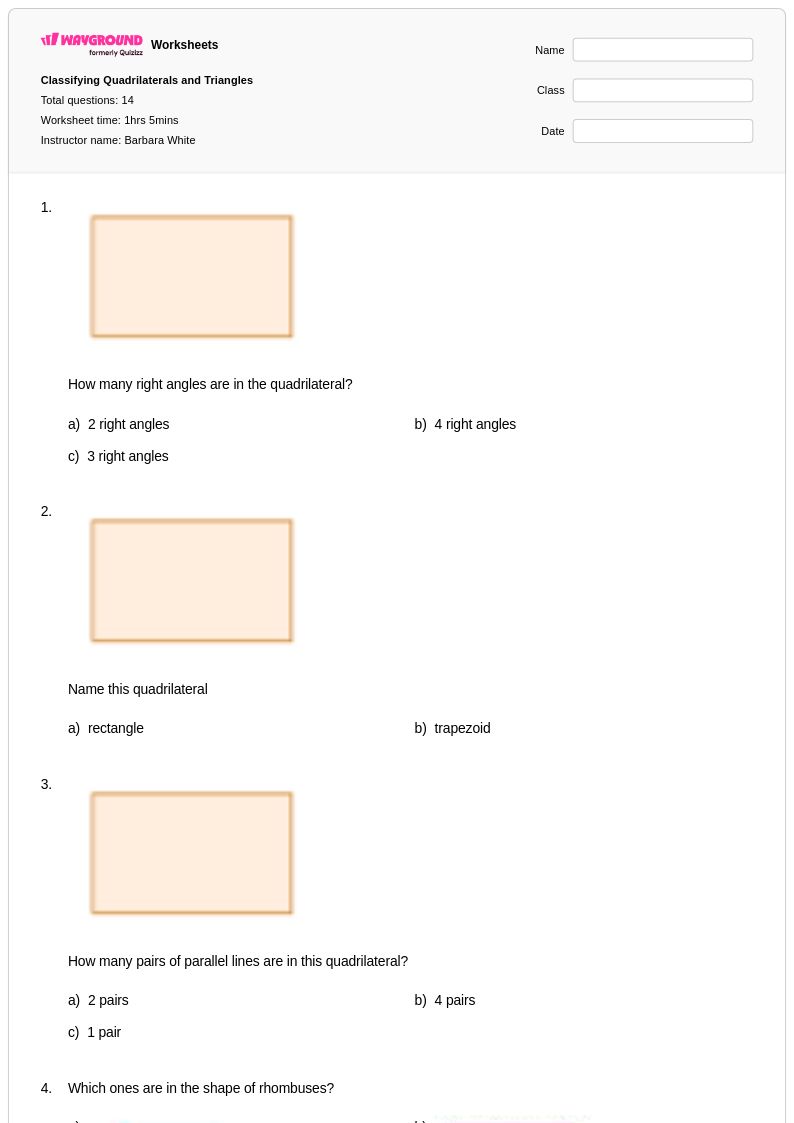
14 Q
3rd
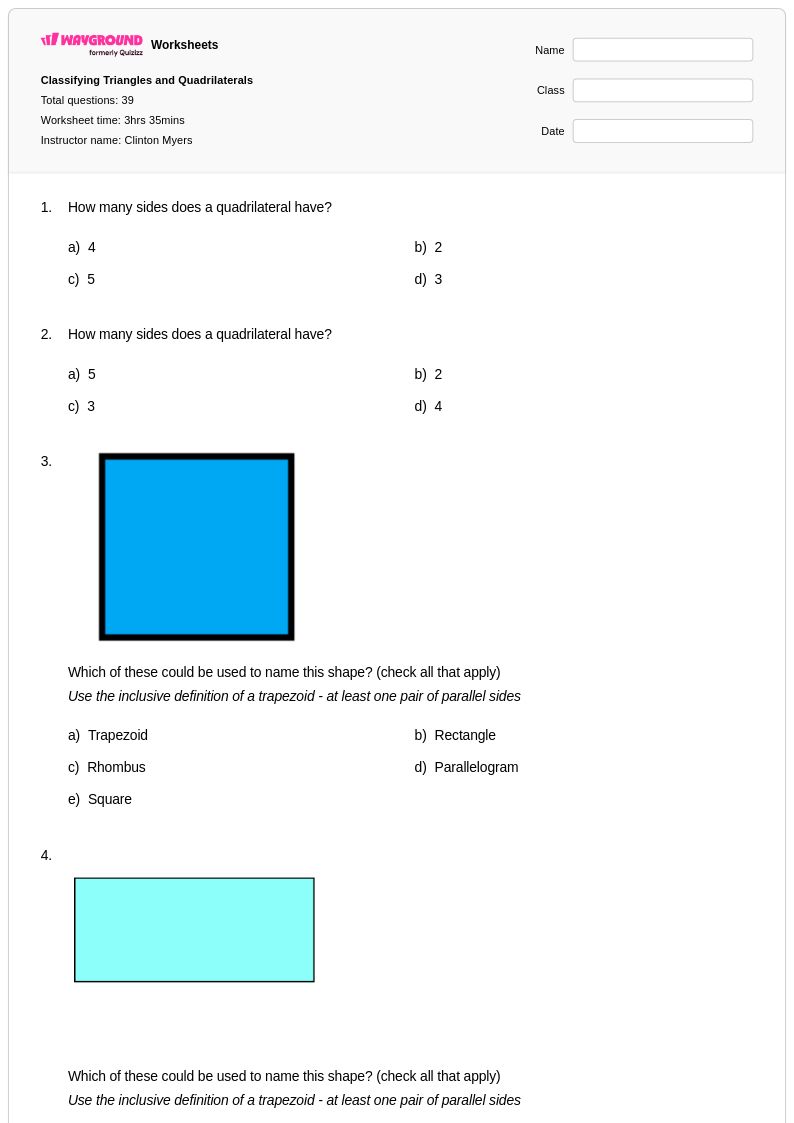
39 Q
3rd - 4th
20 Q
3rd
13 Q
3rd - 12th
15 Q
3rd
10 Q
3rd
12 Q
3rd
14 Q
3rd - 5th
20 Q
2nd - Uni
12 Q
3rd - 4th
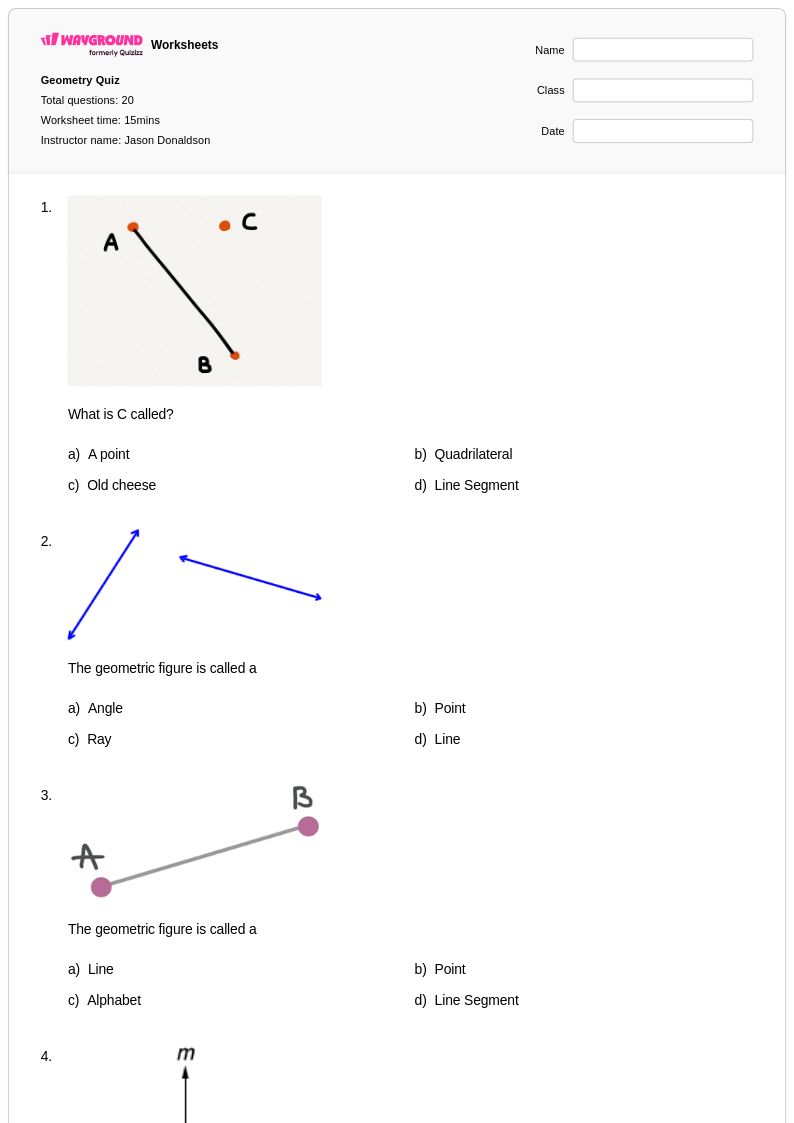
20 Q
3rd - 4th
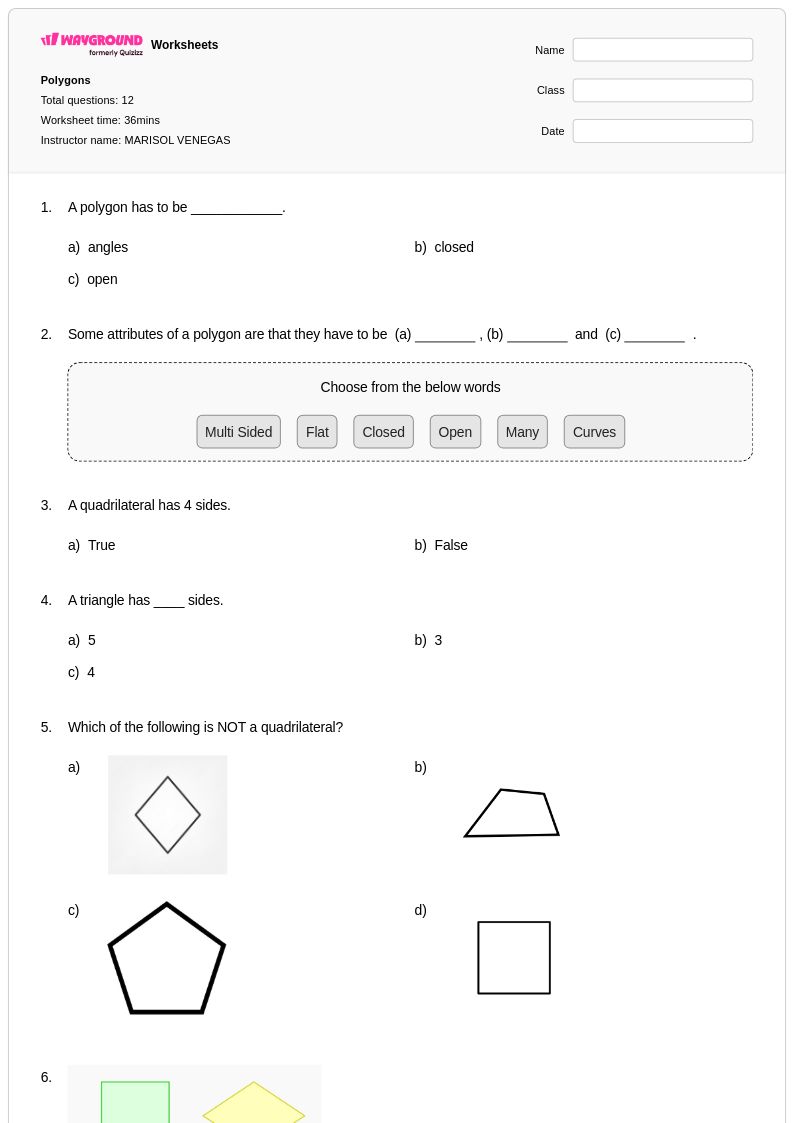
12 Q
3rd
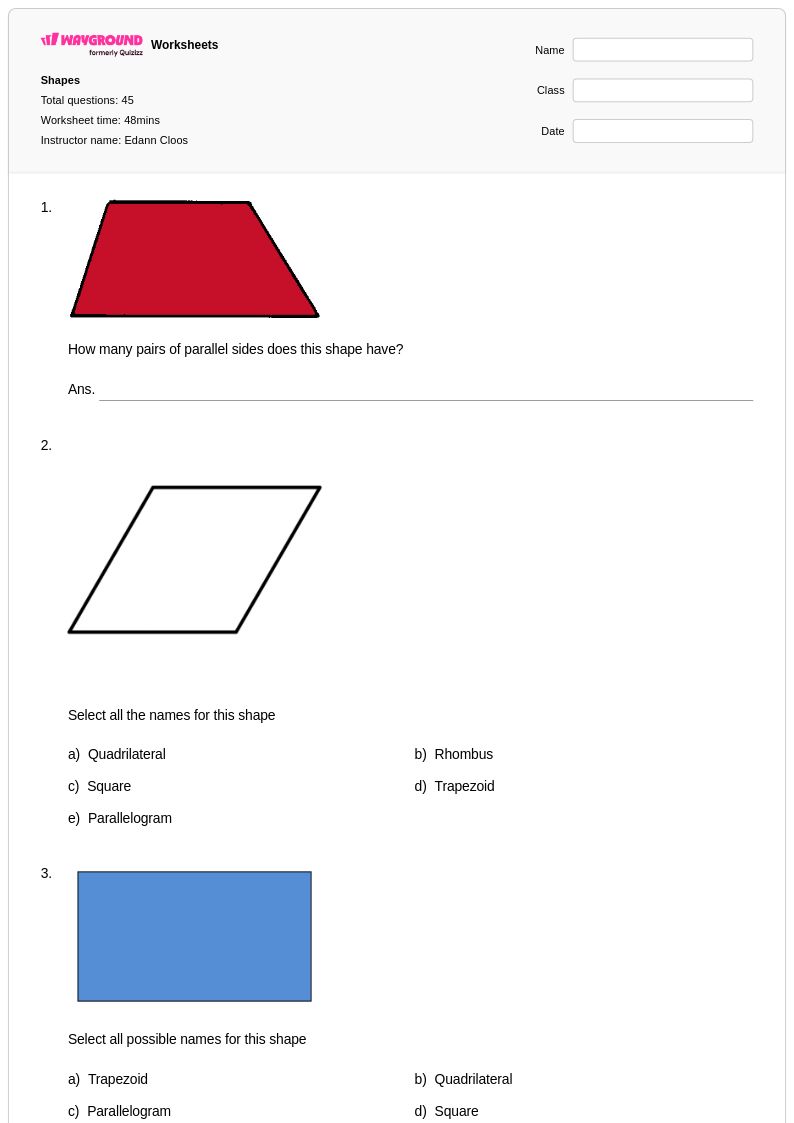
45 Q
3rd - 5th
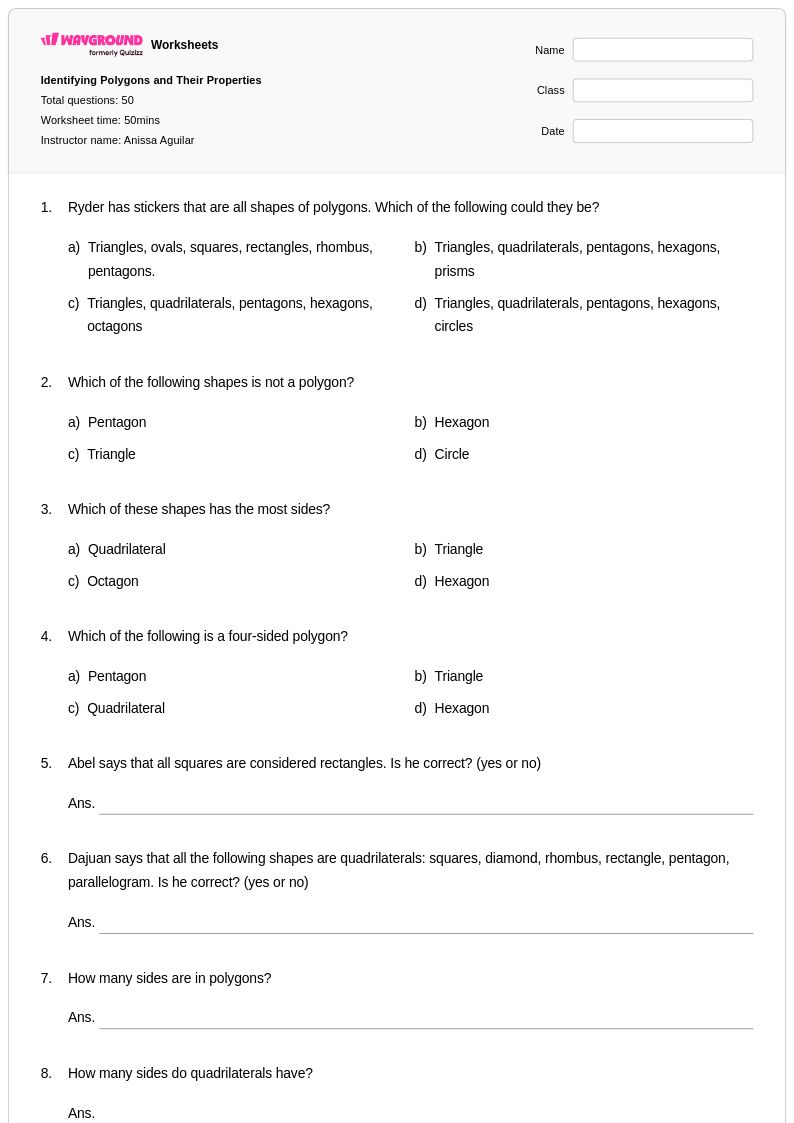
50 Q
3rd
Explore Other Subject Worksheets for class 3
Explore printable Classifying Triangles worksheets for Class 3
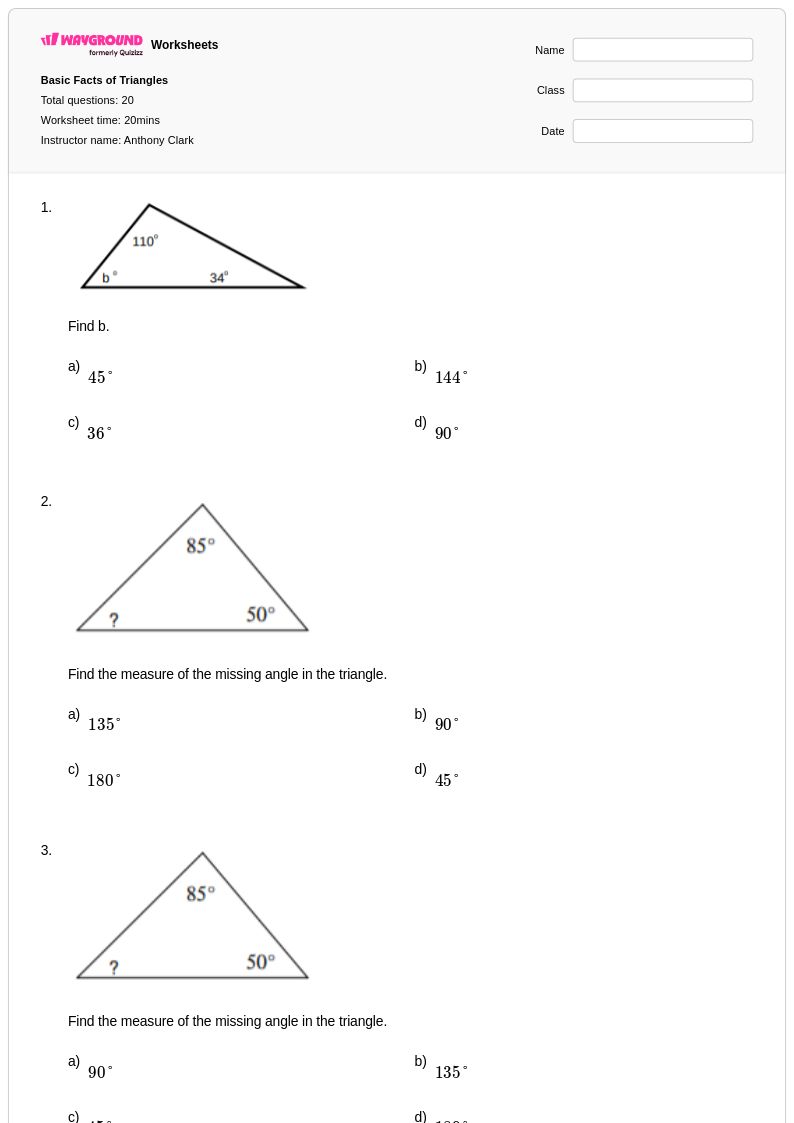
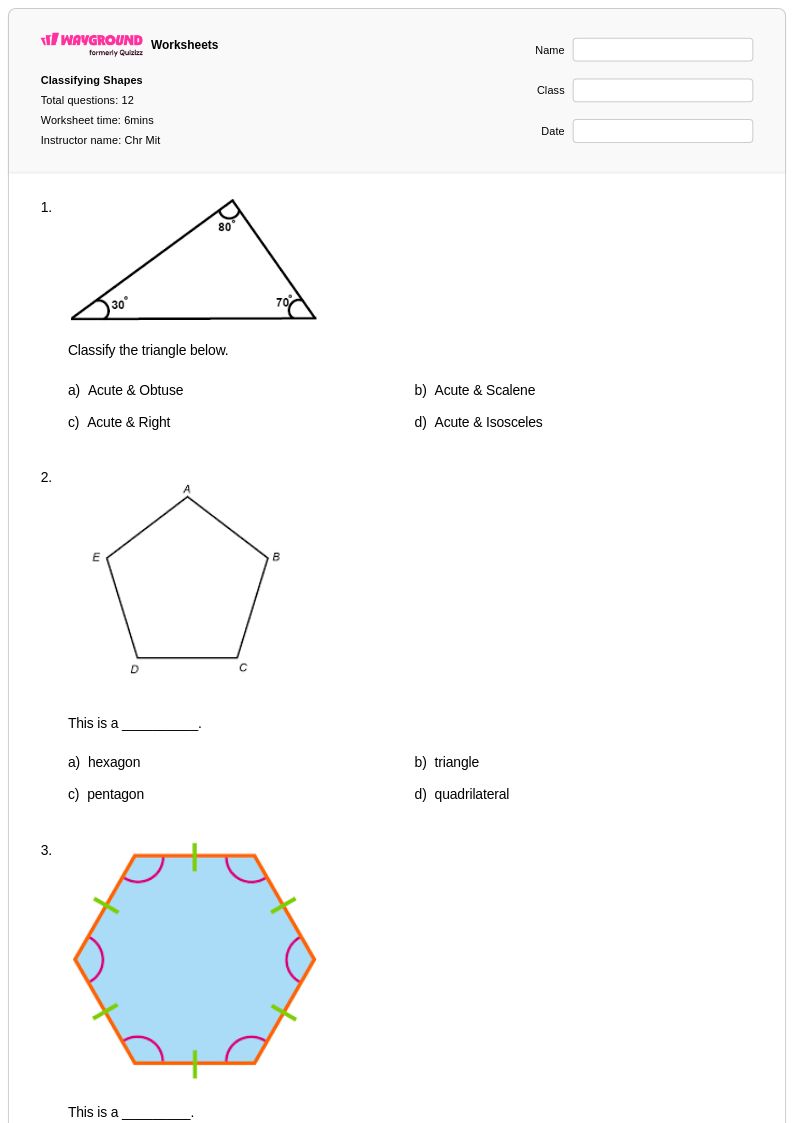
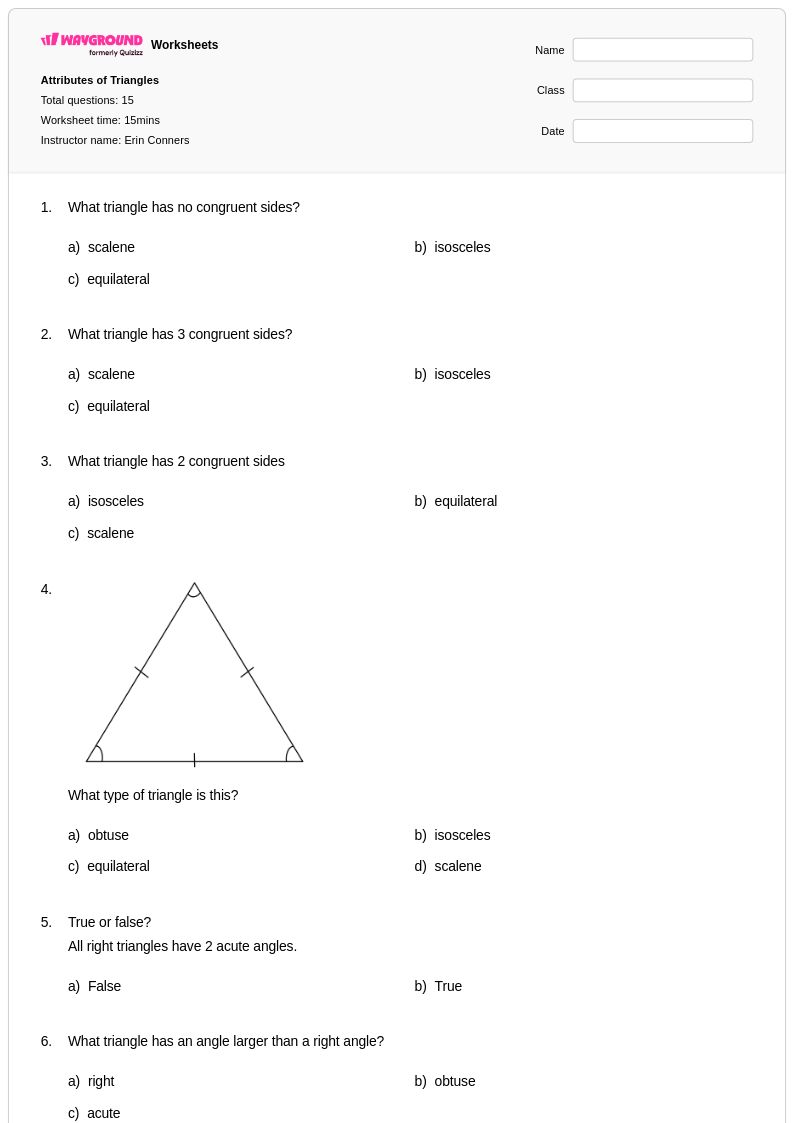
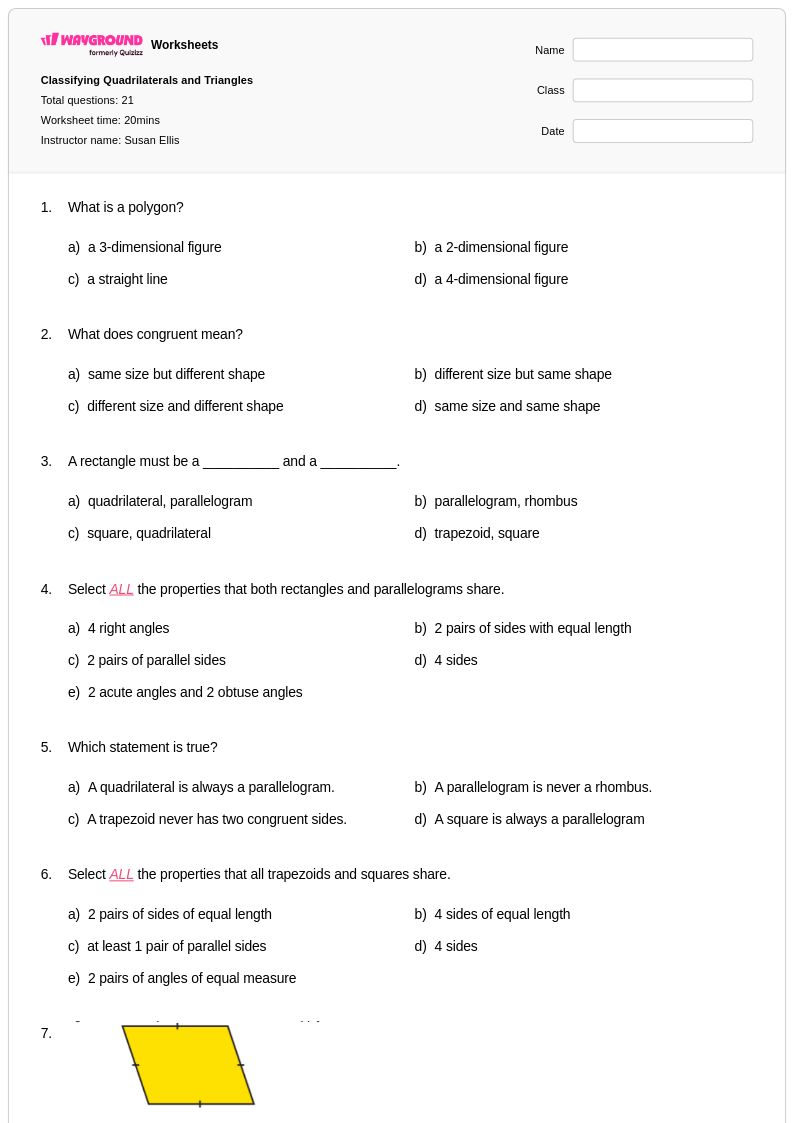
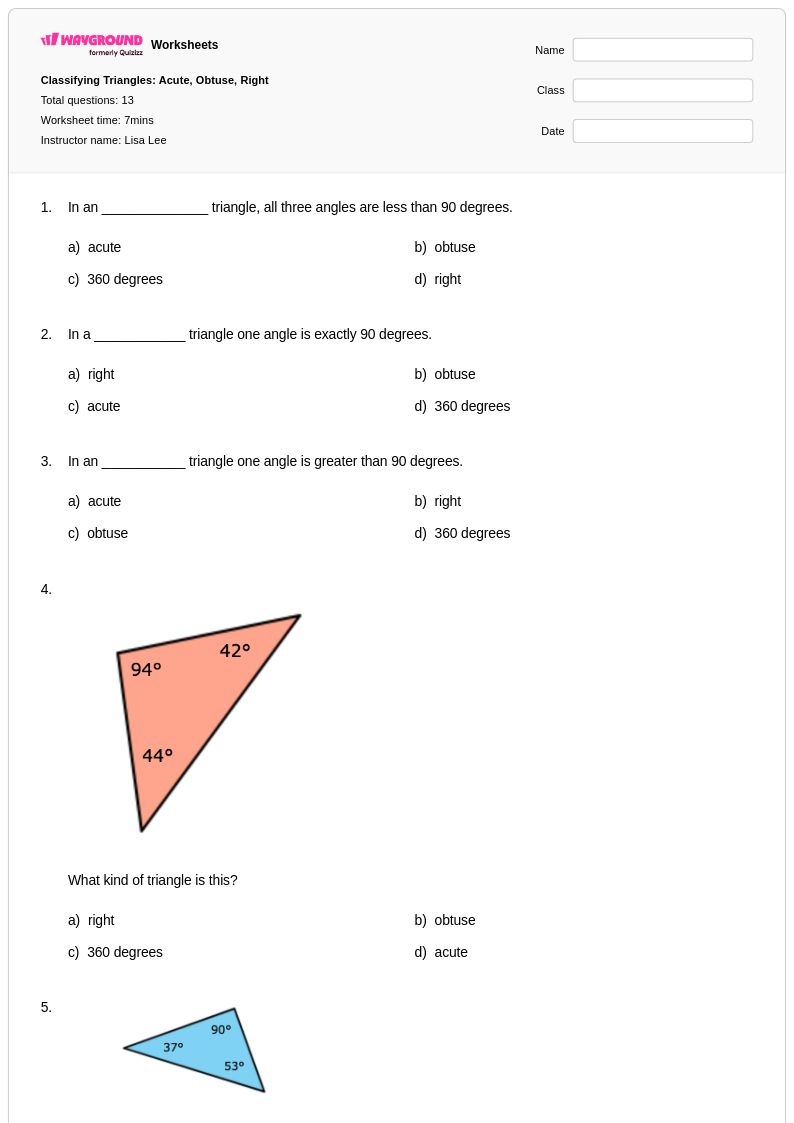
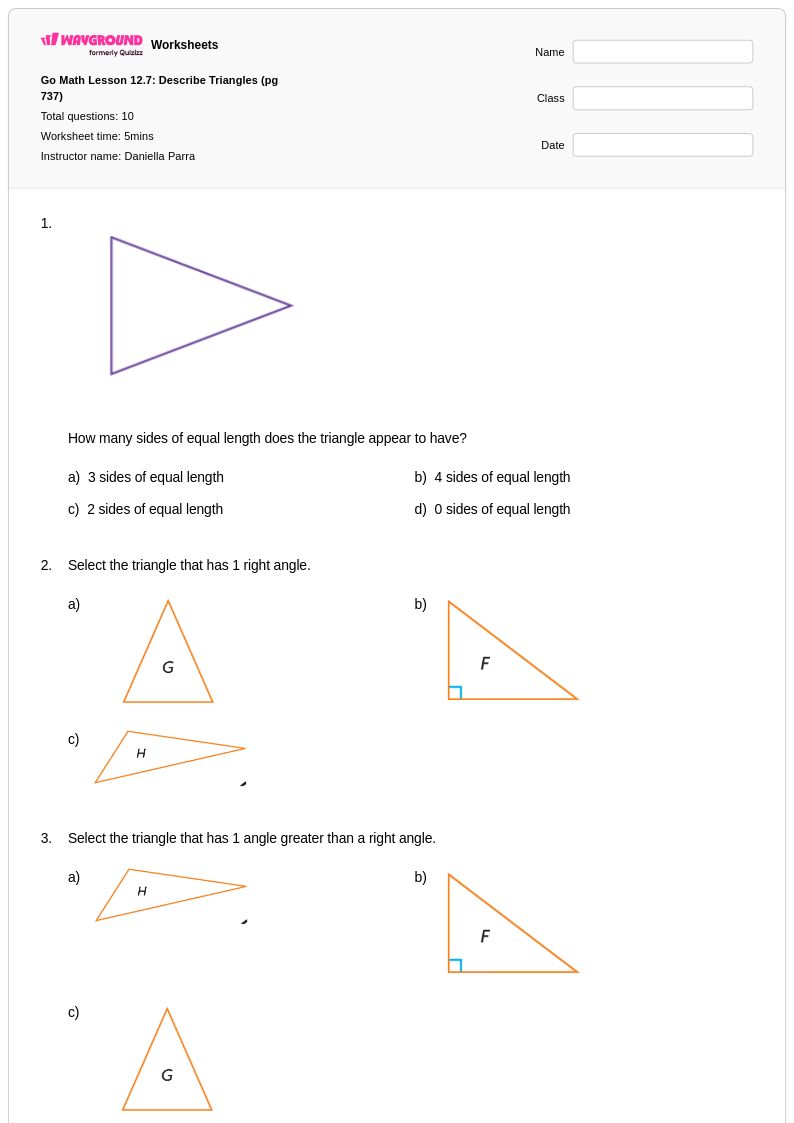
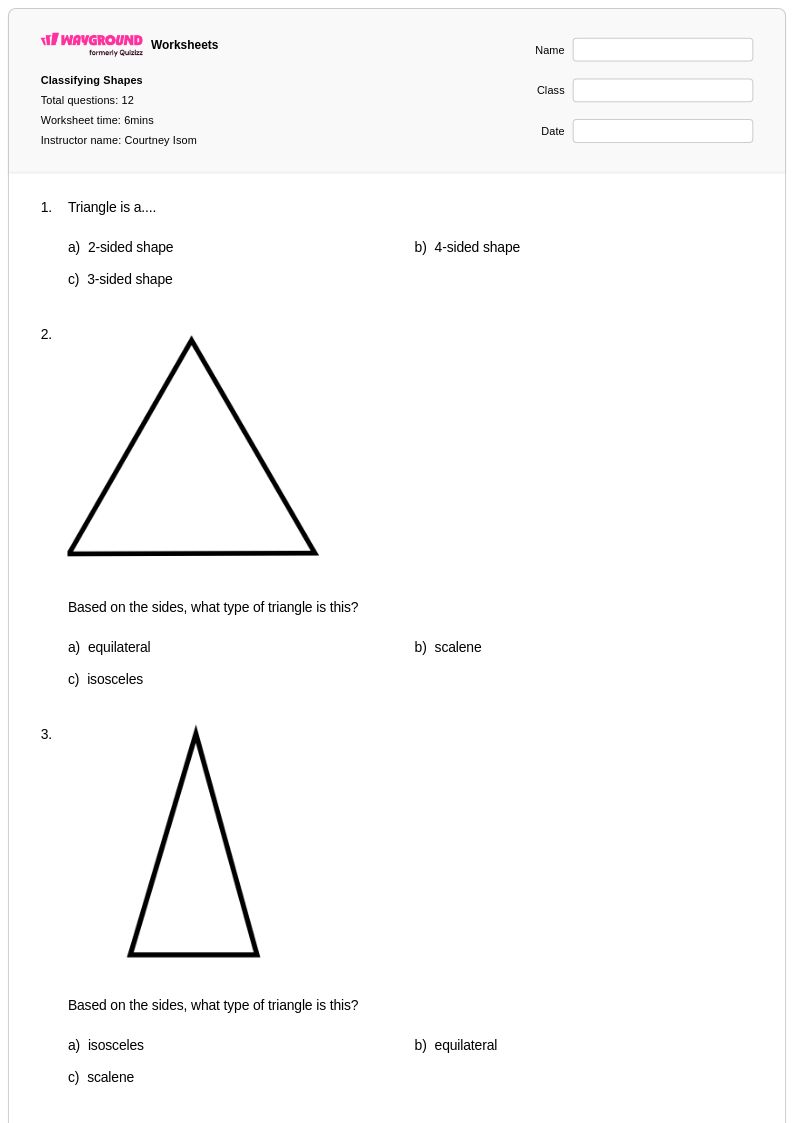
Classifying triangles worksheets for Class 3 available through Wayground (formerly Quizizz) provide essential practice for young learners developing their geometric reasoning skills. These comprehensive worksheets guide students through the systematic identification and categorization of triangles based on their fundamental properties, including side lengths and angle measurements. Students engage with practice problems that strengthen their ability to distinguish between equilateral, isosceles, and scalene triangles, while also learning to identify right, acute, and obtuse triangles. Each worksheet collection includes detailed answer keys and is available as free printables in convenient pdf format, making it simple for educators to implement immediate assessment and provide targeted feedback on student understanding of triangle classification concepts.
Wayground (formerly Quizizz) empowers teachers with millions of teacher-created resources specifically designed to support triangle classification instruction at the Class 3 level. The platform's robust search and filtering capabilities allow educators to quickly locate worksheets that align with specific curriculum standards and match their students' diverse learning needs. Teachers can customize these digital and printable materials to create differentiated learning experiences, whether for remediation with struggling students or enrichment activities for advanced learners. The flexibility of both printable pdf formats and interactive digital versions enables seamless integration into various instructional settings, supporting comprehensive lesson planning and providing multiple opportunities for skill practice that builds students' confidence in geometric classification tasks.
FAQs
How do I teach Grade 3 students to classify triangles?
What exercises help third graders practice classifying triangles?
What mistakes do Grade 3 students make when classifying triangles?
How can I use a Grade 3 classifying triangles worksheet on Wayground?
How does classifying triangles in Grade 3 fit the Common Core geometry progression?
What grade do students learn to classify triangles by sides and angles?
How can I differentiate Grade 3 triangle classification practice?