
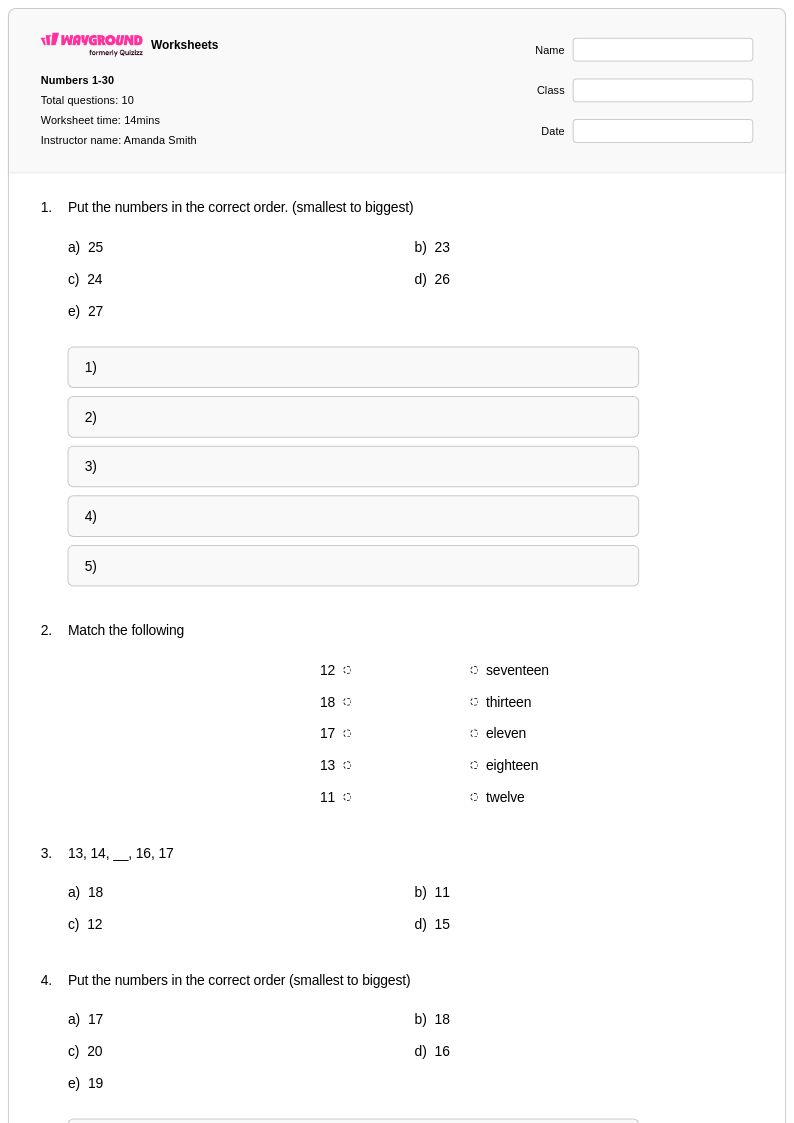
10 Q
1st
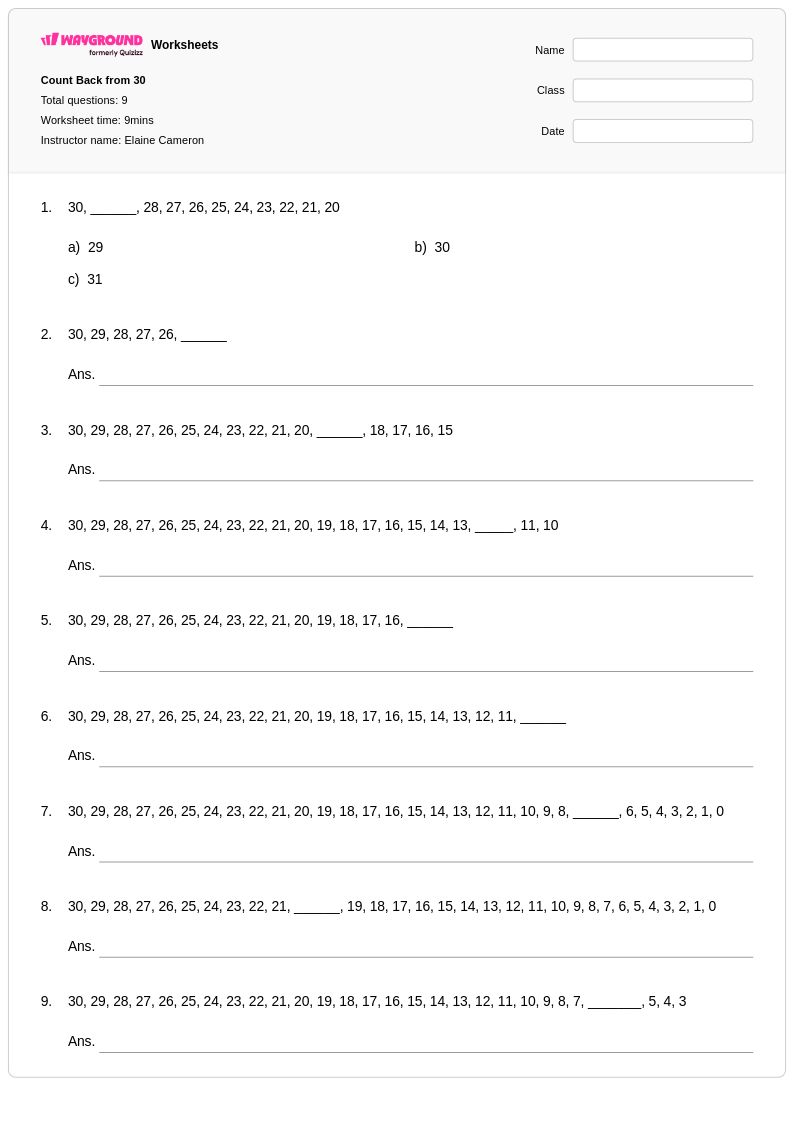
9 Q
1st
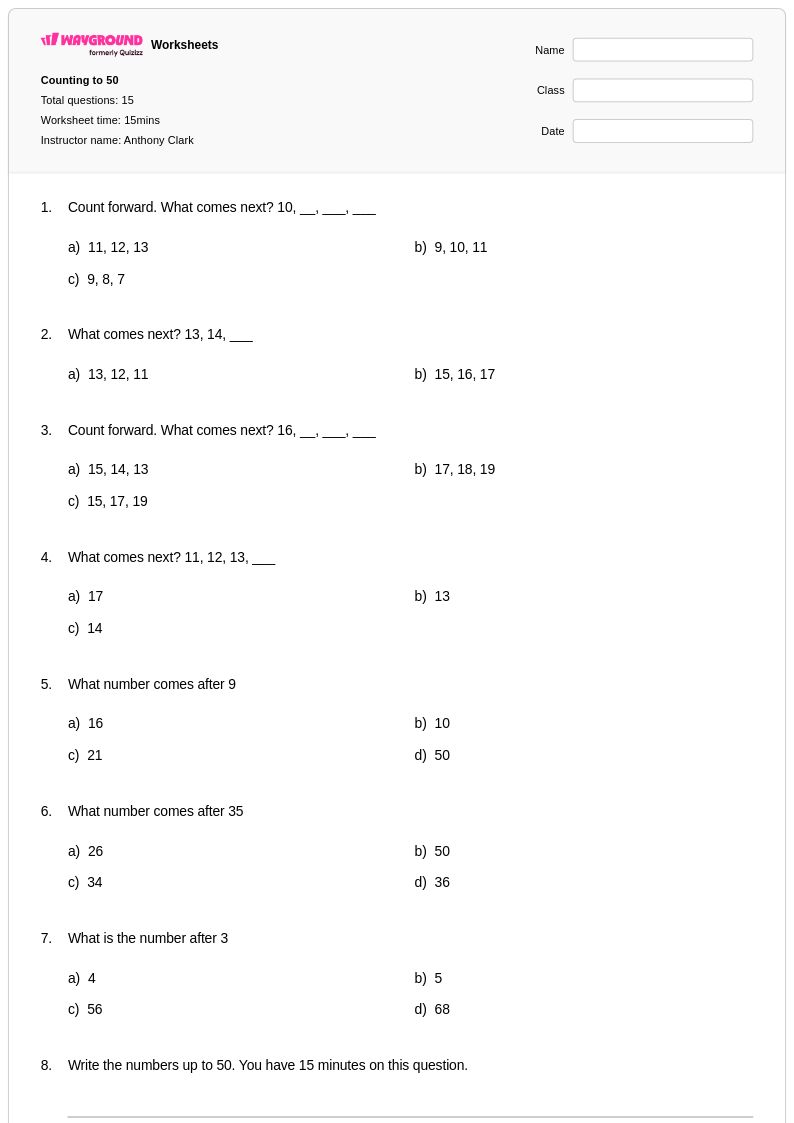
15 Q
1st - Uni
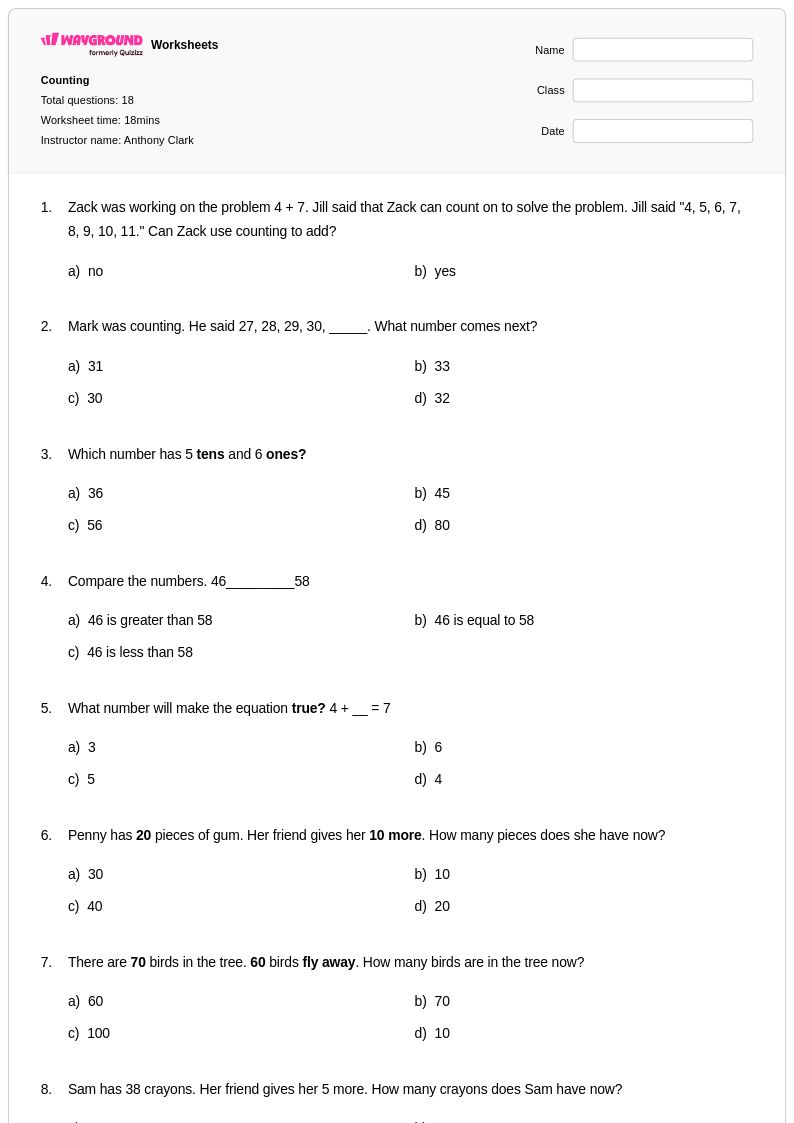
18 Q
1st - Uni
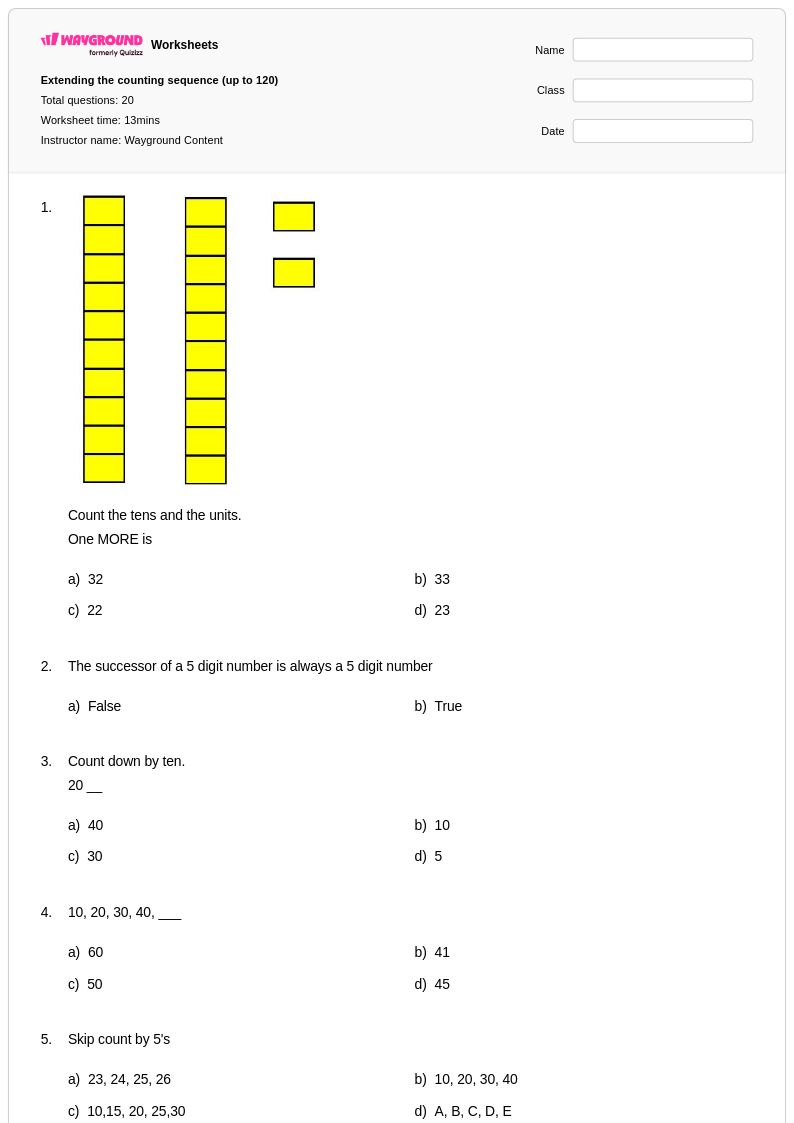
20 Q
1st
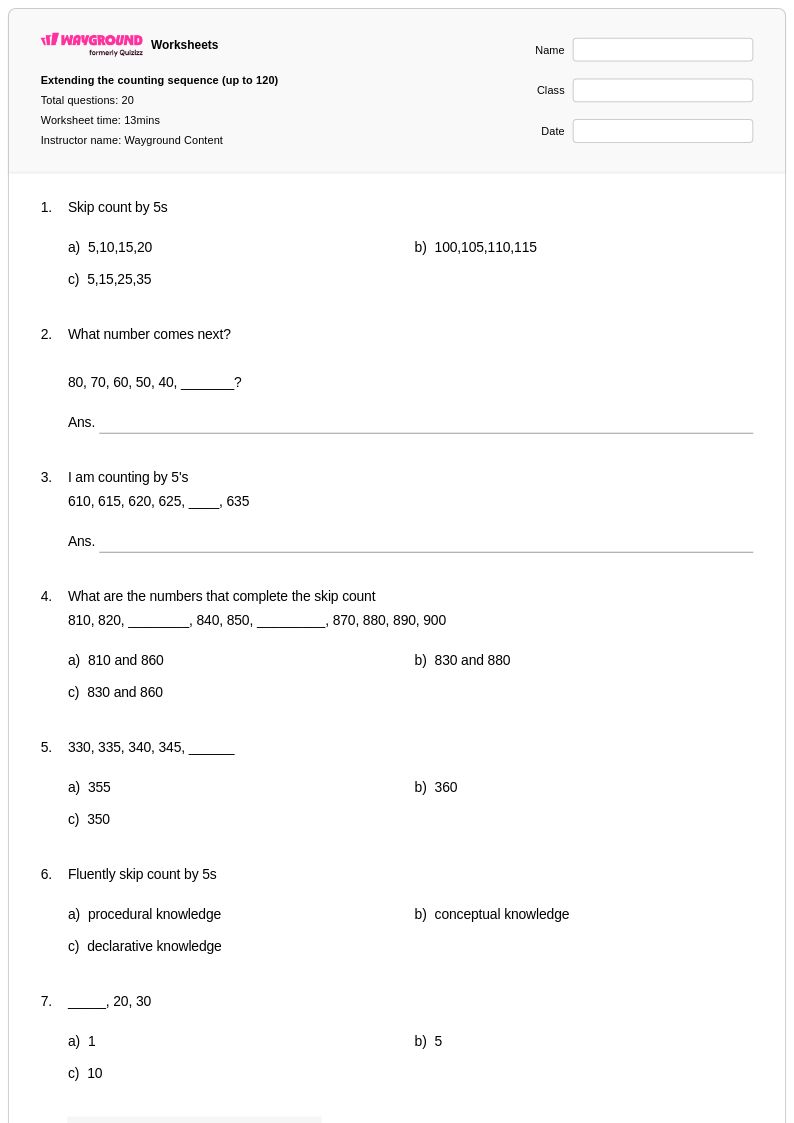
20 Q
1st
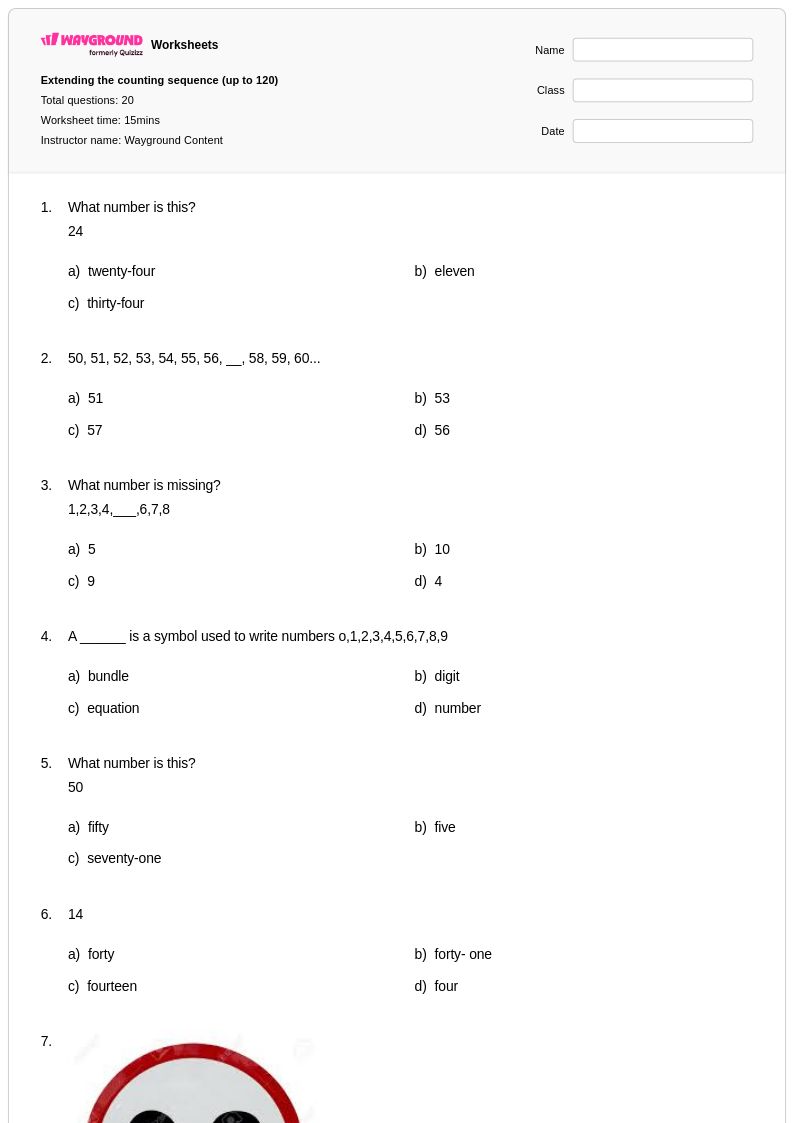
20 Q
1st
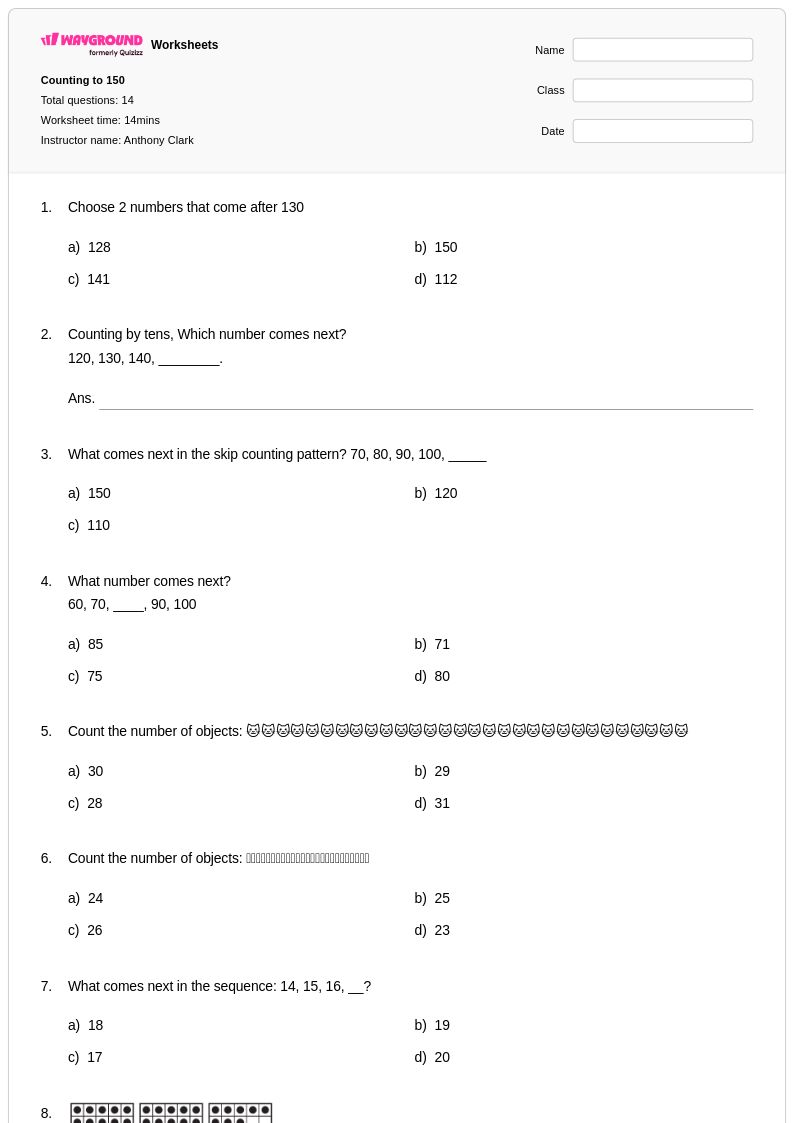
14 Q
1st - Uni
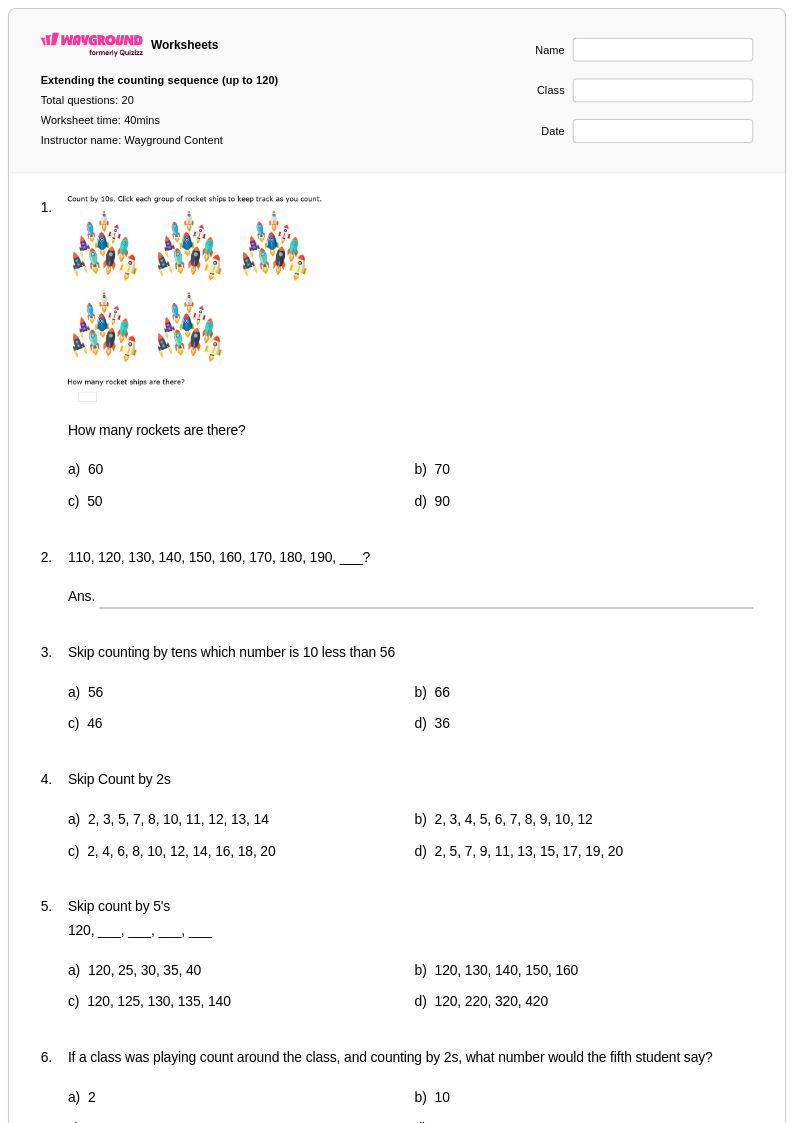
20 Q
1st
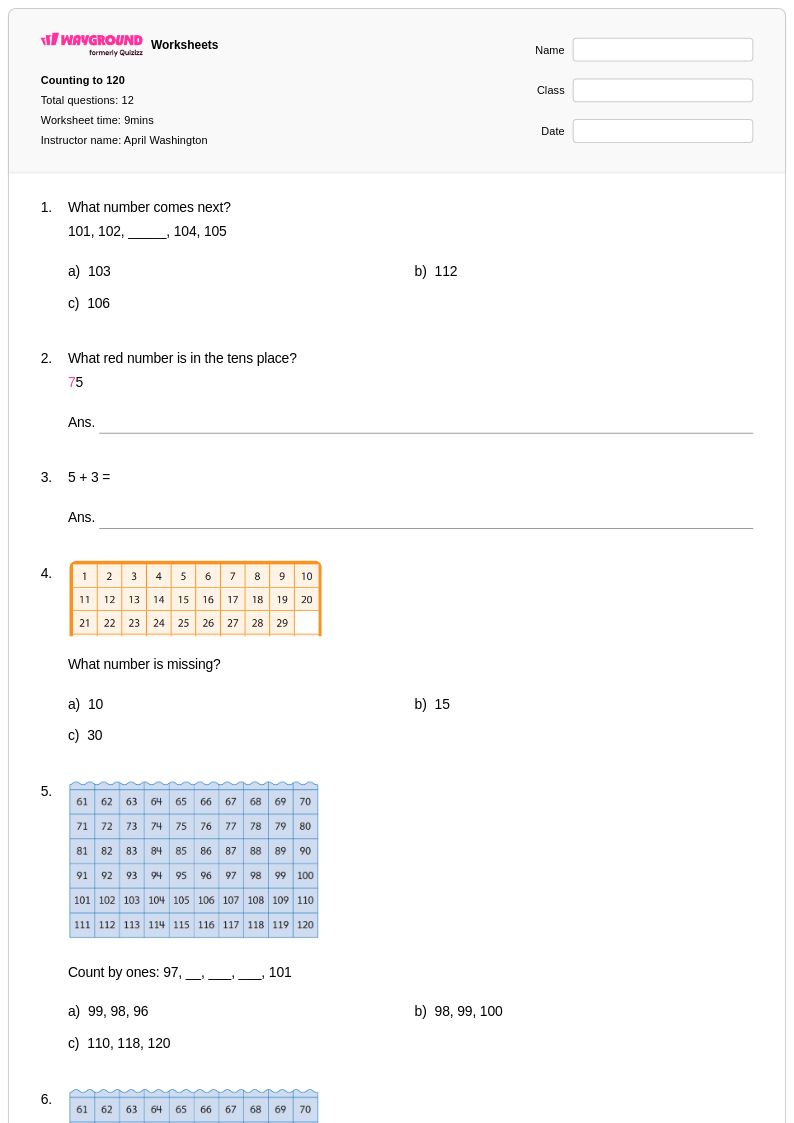
12 Q
1st
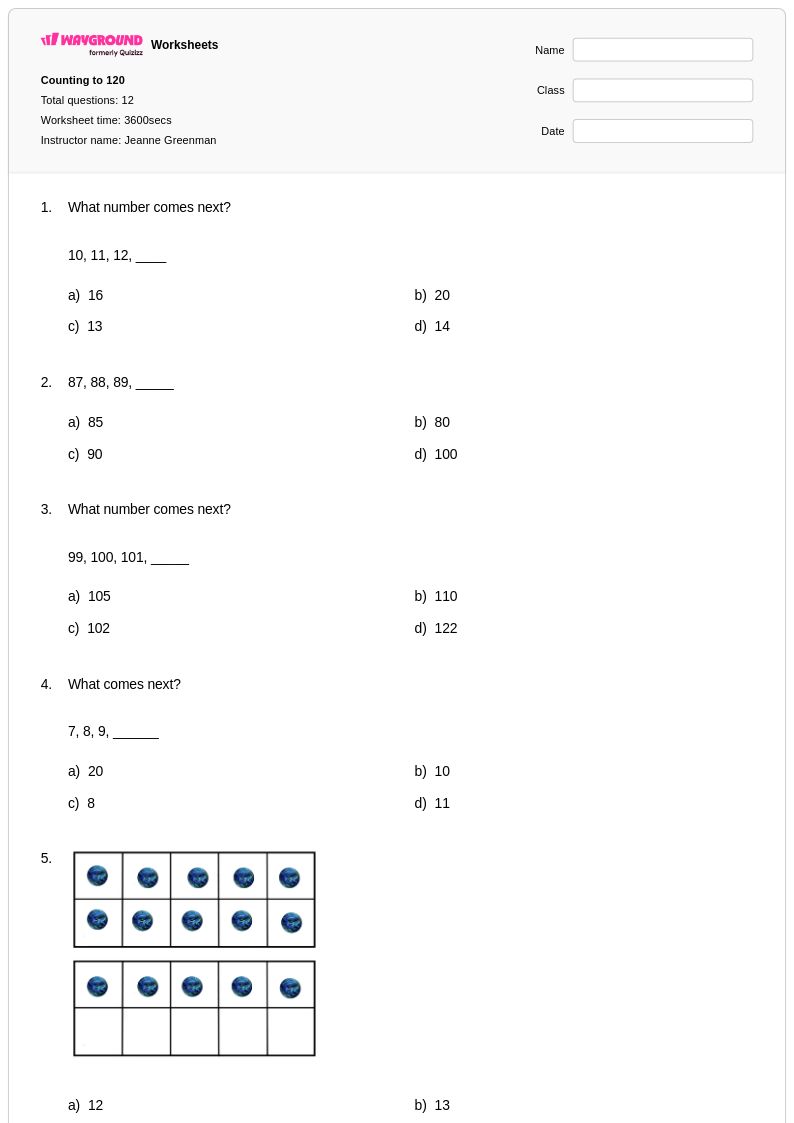
12 Q
1st
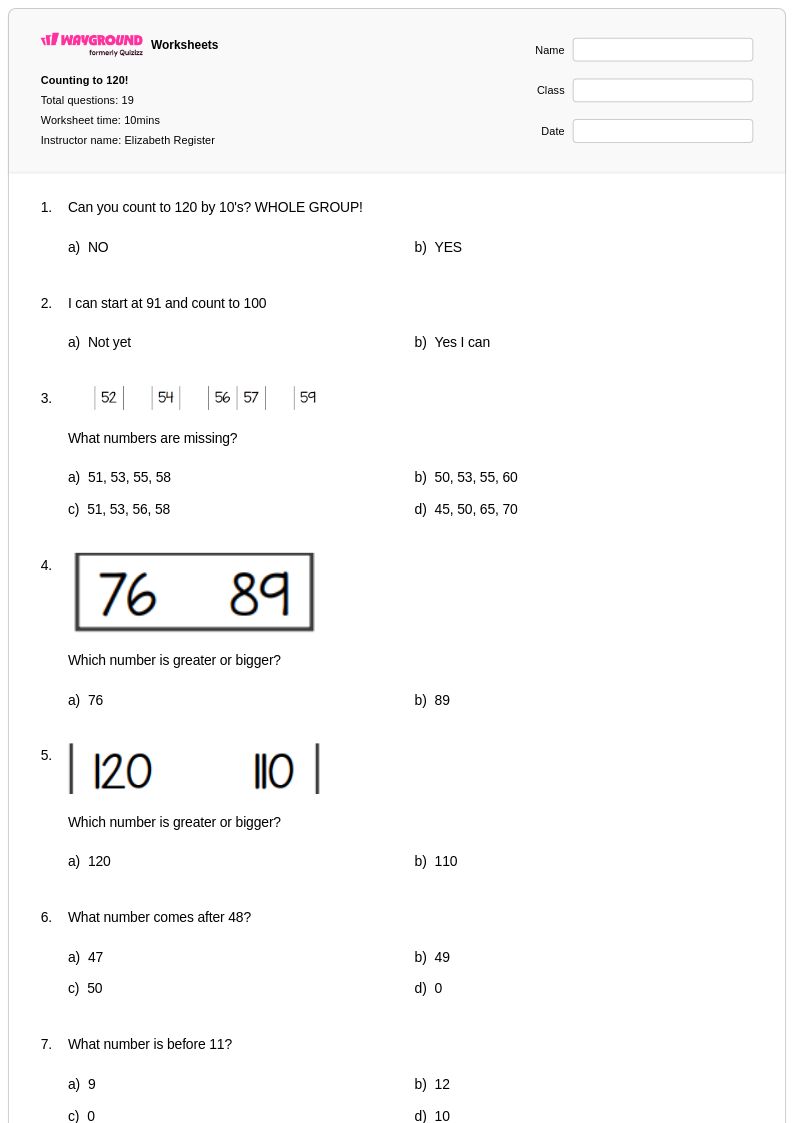
19 Q
1st
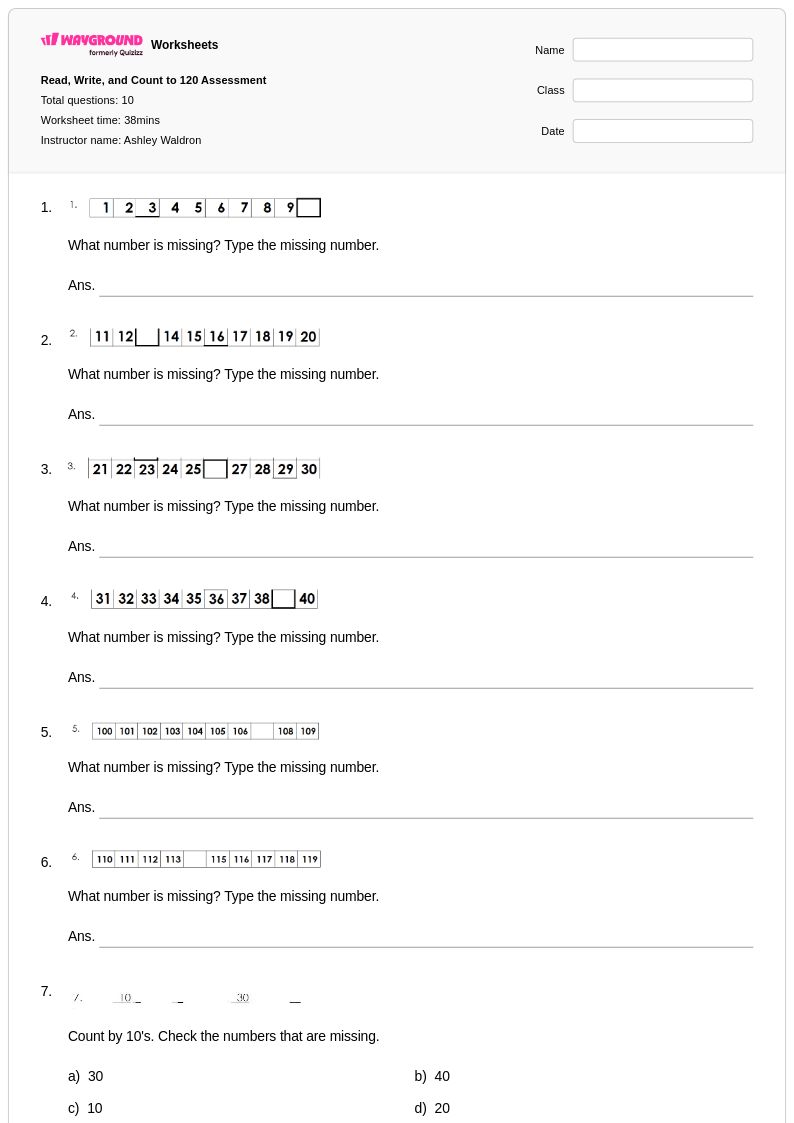
10 Q
1st
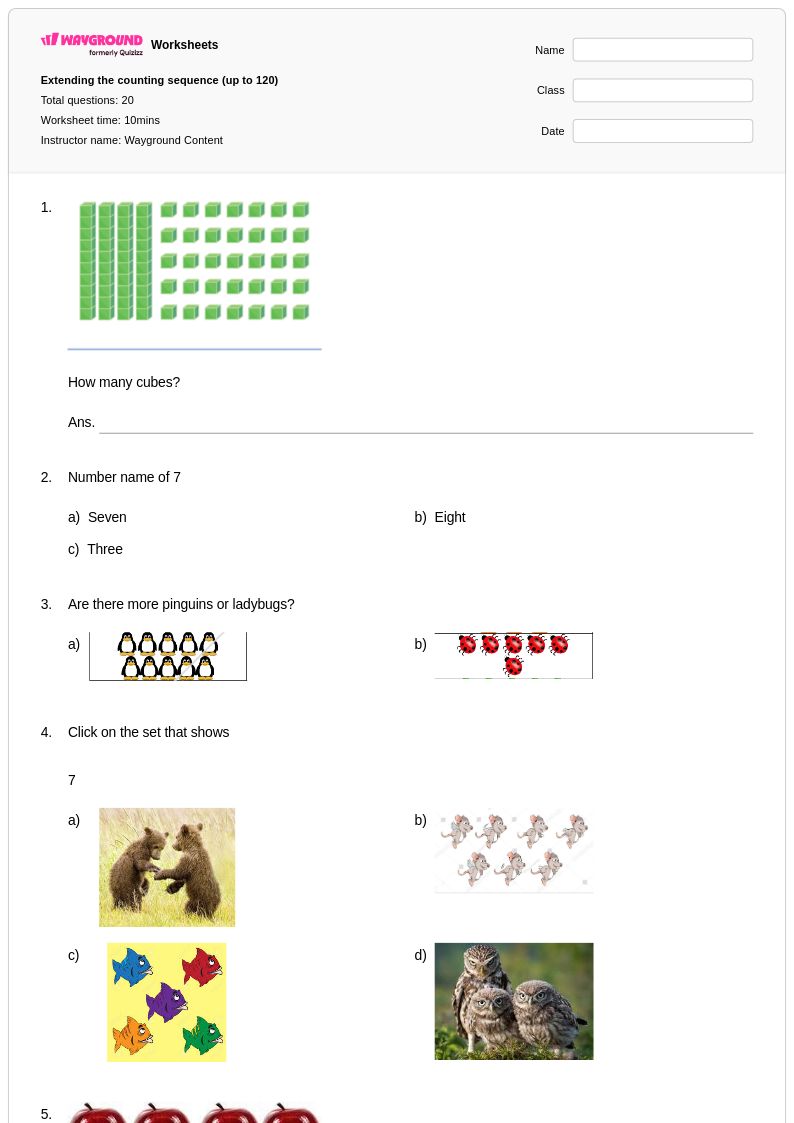
20 Q
1st
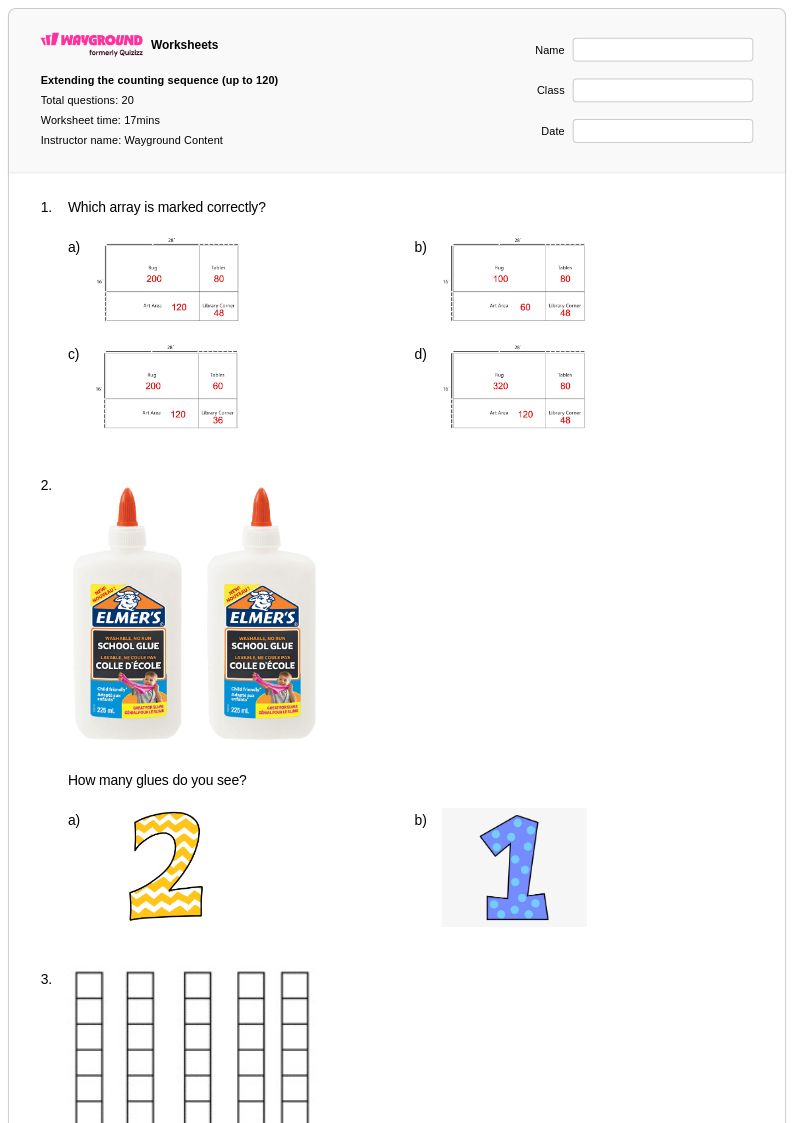
20 Q
1st
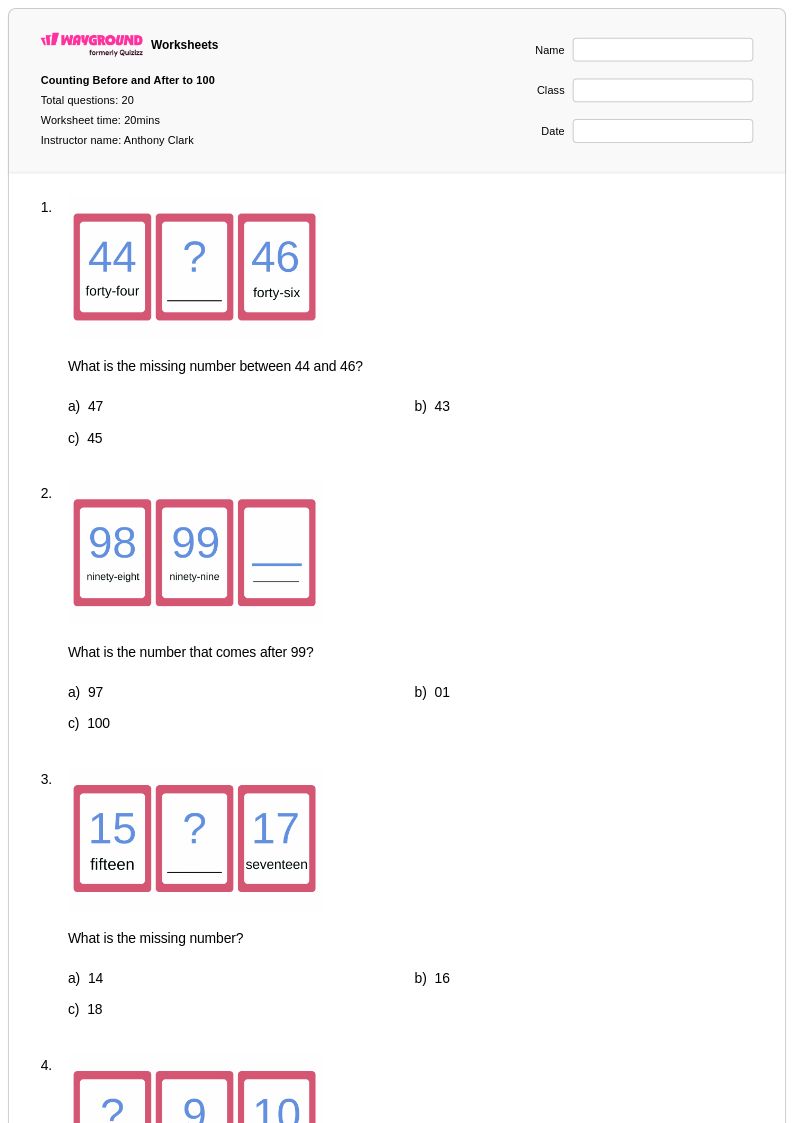
20 Q
1st - Uni
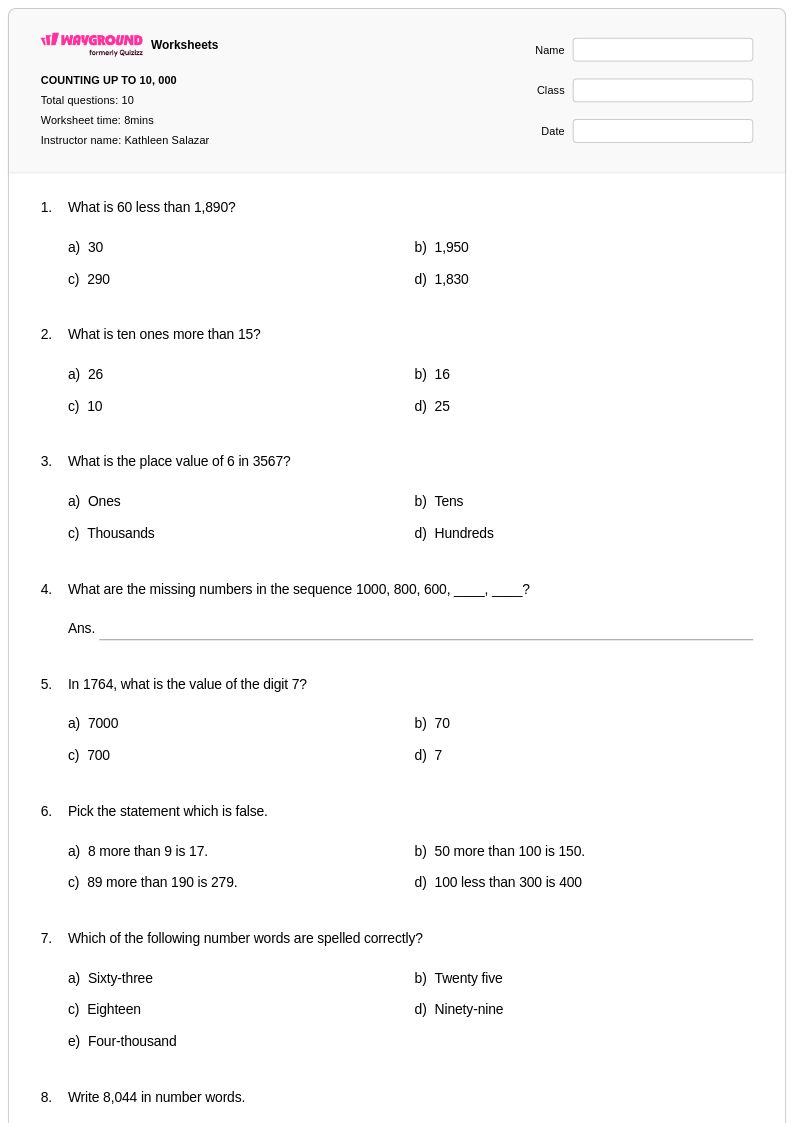
10 Q
1st - 3rd
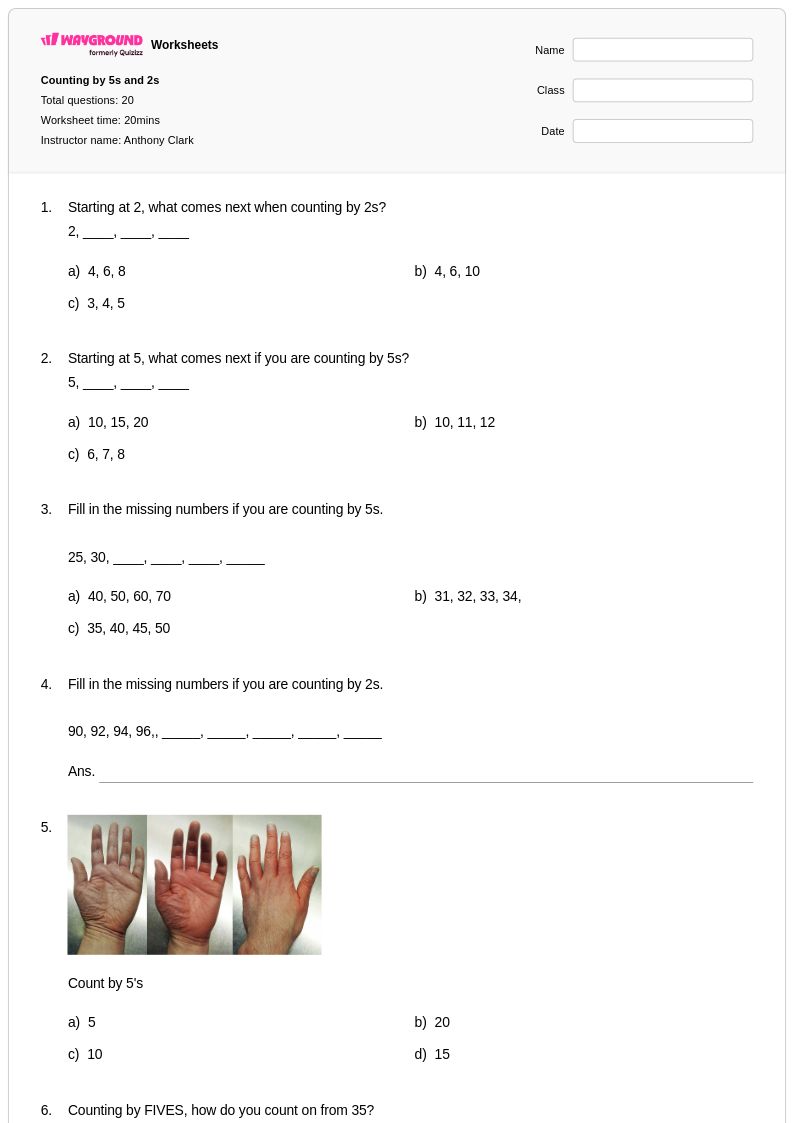
20 Q
1st - Uni
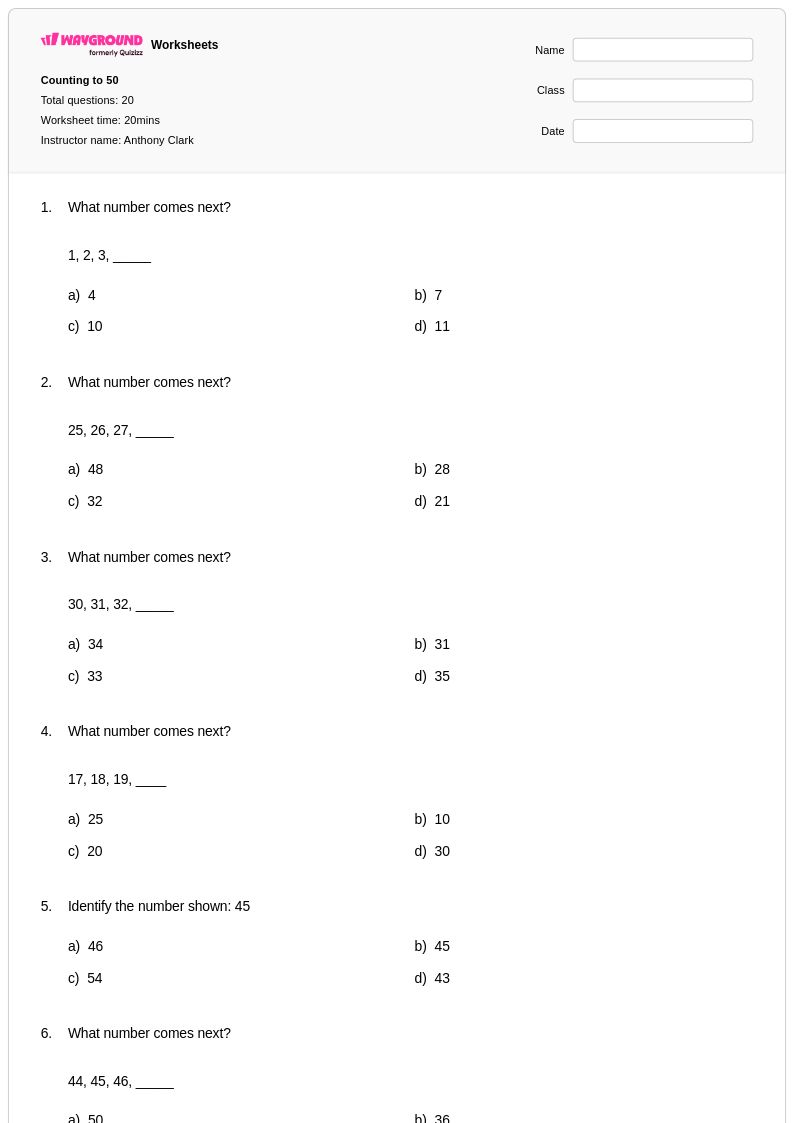
20 Q
1st - Uni
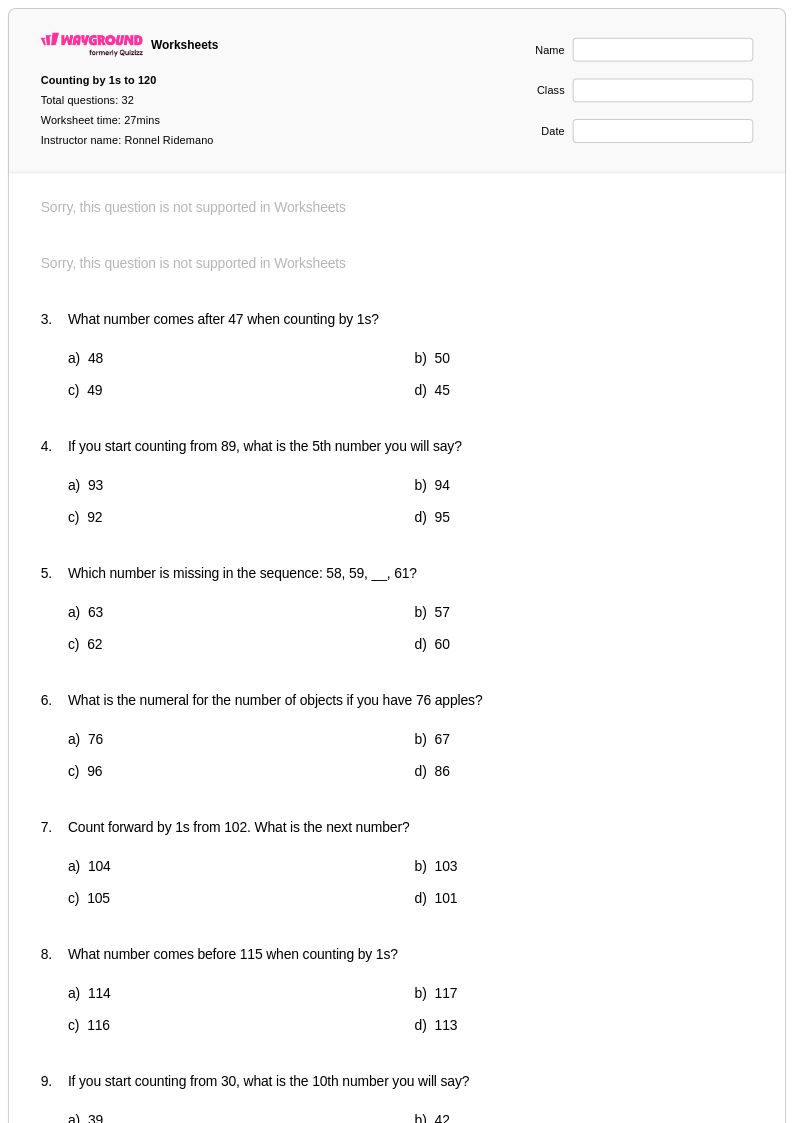
34 Q
1st
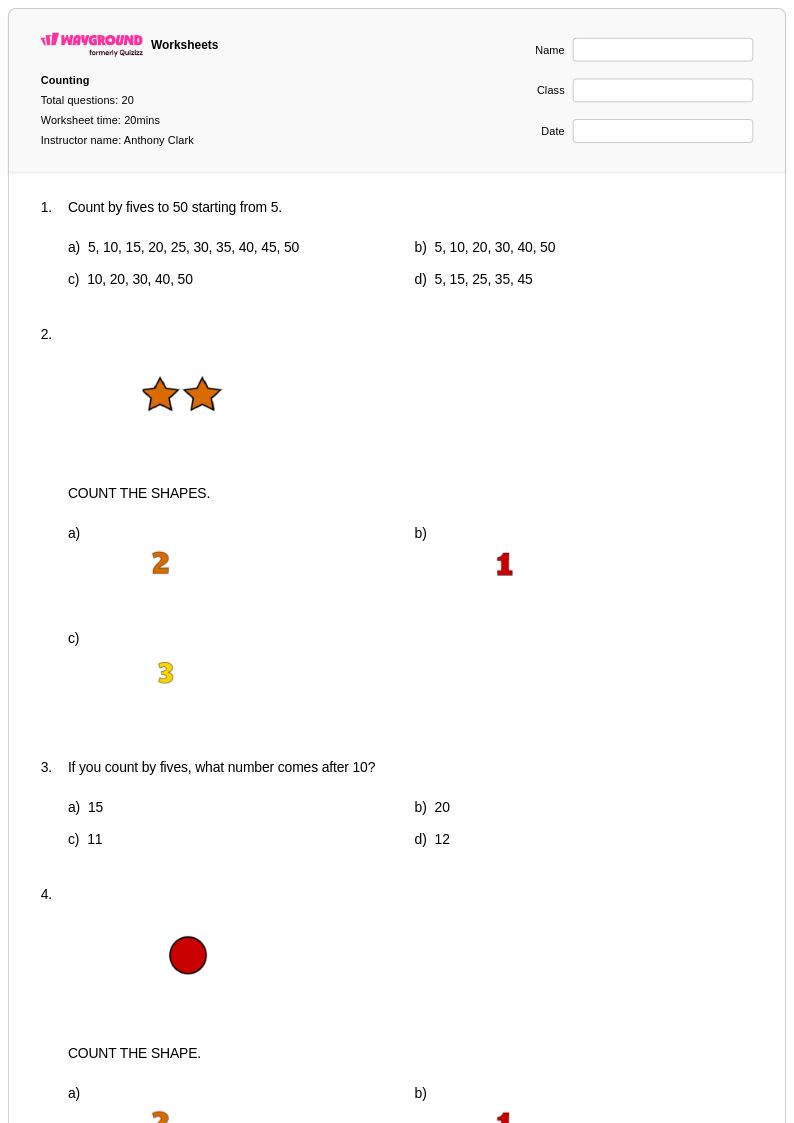
20 Q
1st - Uni
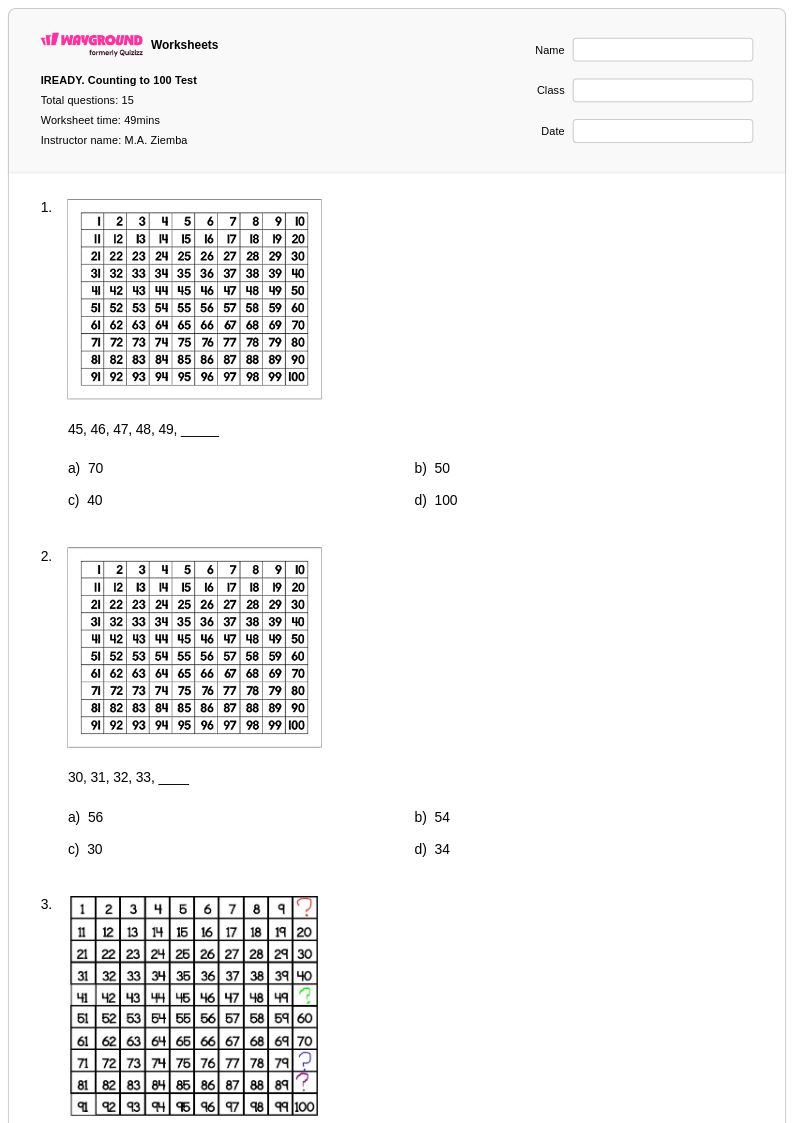
15 Q
KG - 1st
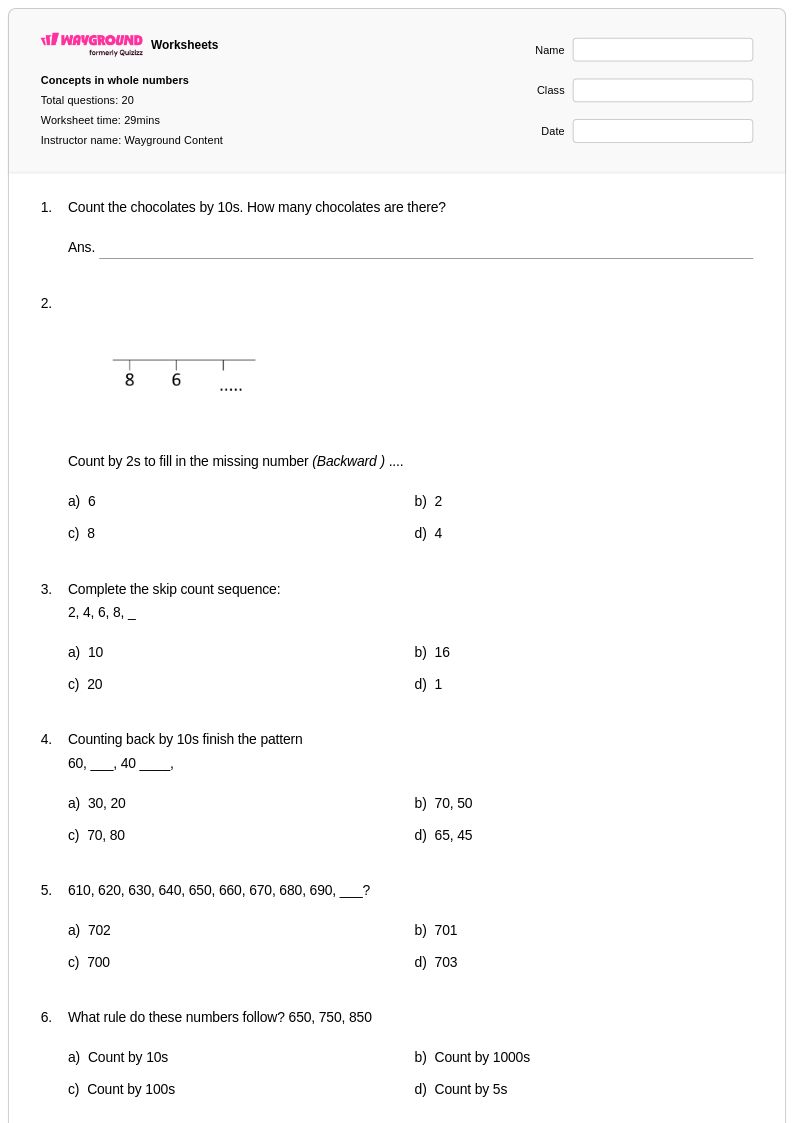
20 Q
1st
Explore Counting to 30 Worksheets by Grades
Explore Other Subject Worksheets for class 1
Explore printable Counting to 30 worksheets for Class 1
Counting to 30 worksheets for Class 1 students available through Wayground (formerly Quizizz) provide essential foundational practice for developing numerical fluency and number recognition skills. These comprehensive printables focus on sequential counting, number identification, and quantity relationships within the critical 0-30 range that forms the cornerstone of elementary mathematics education. Students engage with carefully structured practice problems that progress systematically through counting exercises, missing number sequences, and visual quantity matching activities. Each worksheet includes a complete answer key and is available as a free pdf download, making it simple for educators to implement immediate assessment and provide targeted feedback on student progress in this fundamental number sense skill.
Wayground (formerly Quizizz) supports mathematics teachers with an extensive collection of counting to 30 resources created by millions of educators worldwide, offering robust search and filtering capabilities that align with state and national mathematics standards. Teachers can easily differentiate instruction by selecting from various difficulty levels and problem formats, while the platform's flexible customization tools allow for modification of existing worksheets to meet specific classroom needs. Available in both printable pdf format and interactive digital versions, these resources streamline lesson planning while providing versatile options for skill practice, remediation for struggling learners, and enrichment opportunities for advanced students. The comprehensive worksheet library ensures educators have immediate access to high-quality materials that support systematic number sense development and help students build confidence in early counting competencies.
FAQs
How should I teach counting to 30 in first grade?
What exercises help first graders practice counting to 30?
What mistakes do first graders make when counting to 30?
How can I use a Grade 1 counting to 30 worksheet on Wayground?
How does counting to 30 support the Common Core Grade 1 math progression?
Is counting to 30 suitable for Grade 1 students?
How can I differentiate counting-to-30 practice in a Grade 1 classroom?