Explore Class 7 energy flow worksheets and printables that help students master how energy moves through ecosystems, featuring free PDF practice problems with comprehensive answer keys.
Explore printable Energy Flow worksheets for Class 7
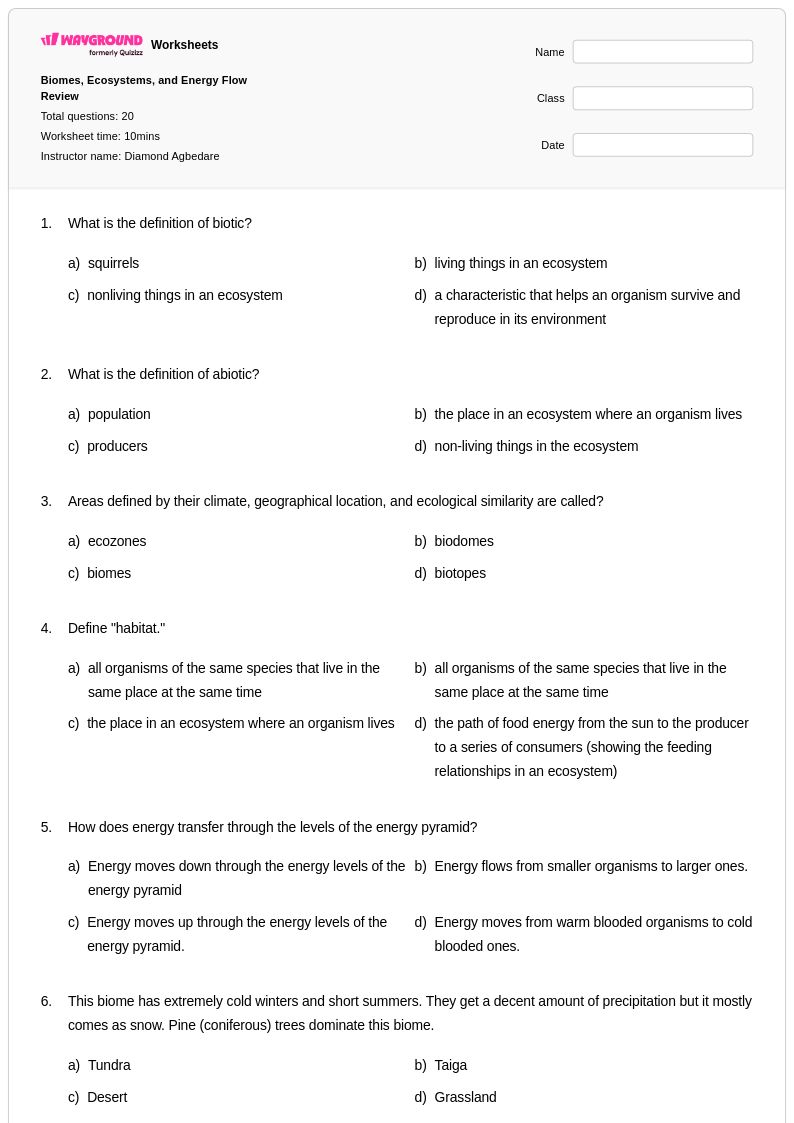
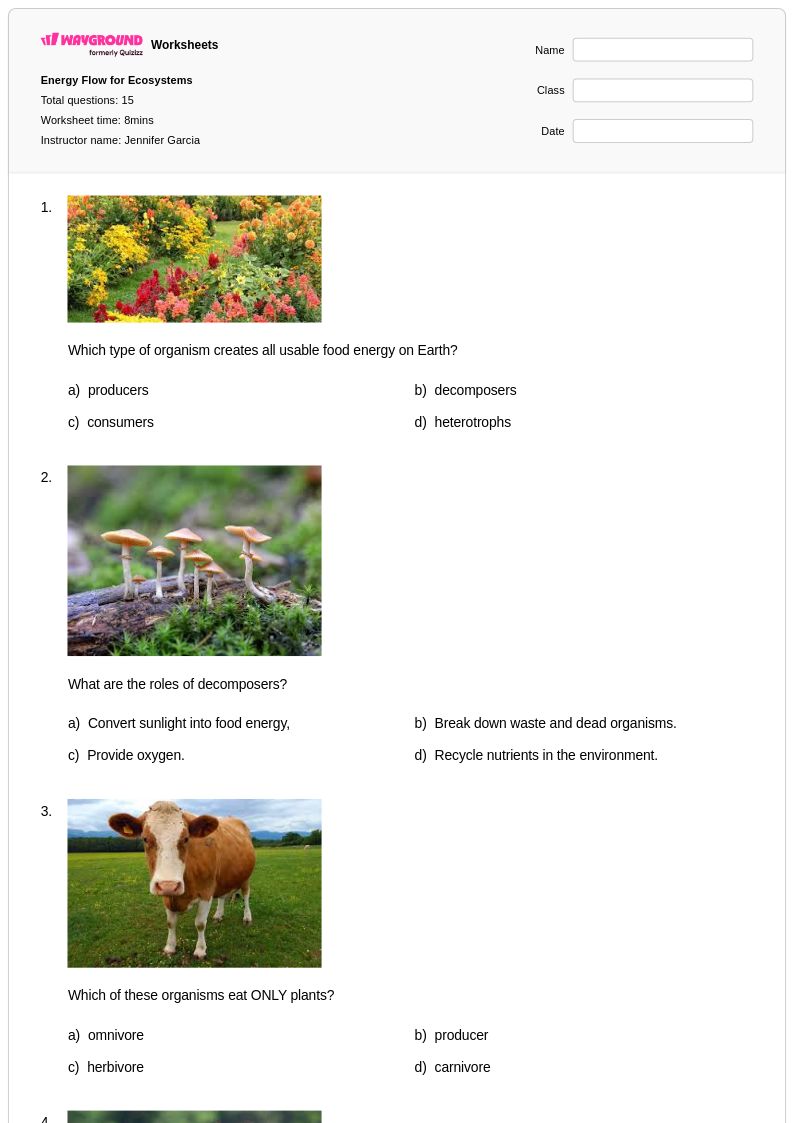
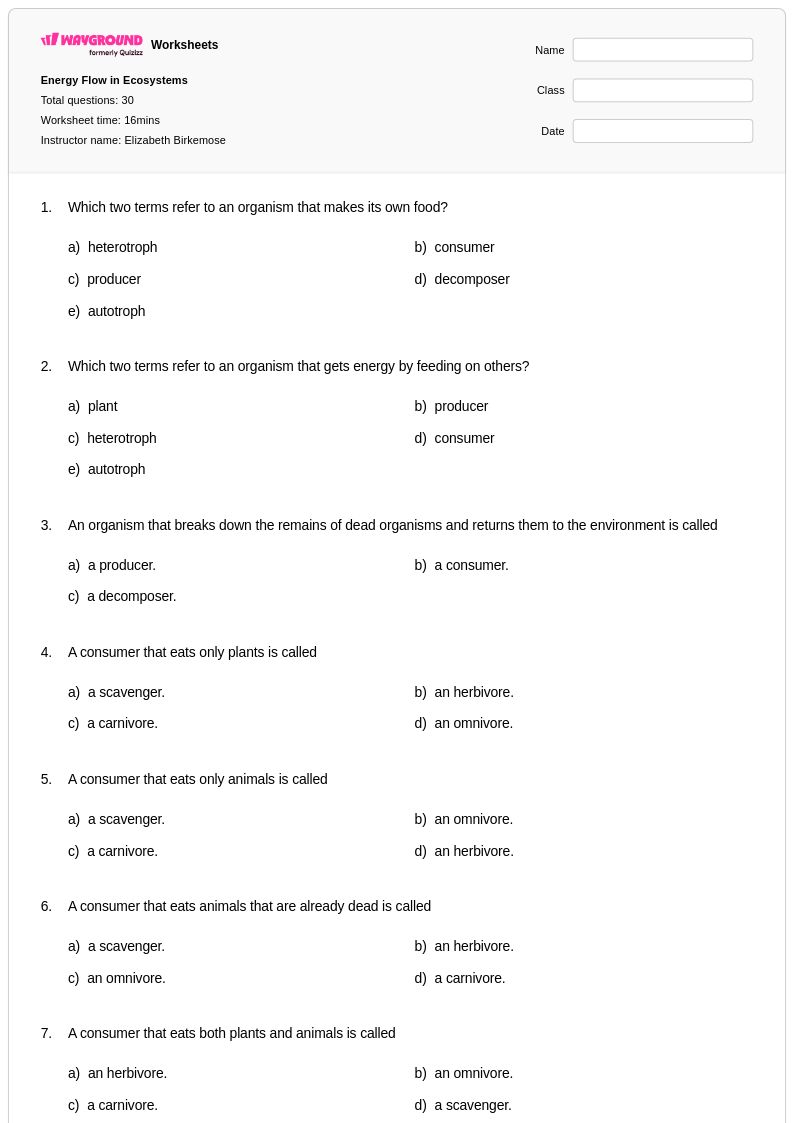
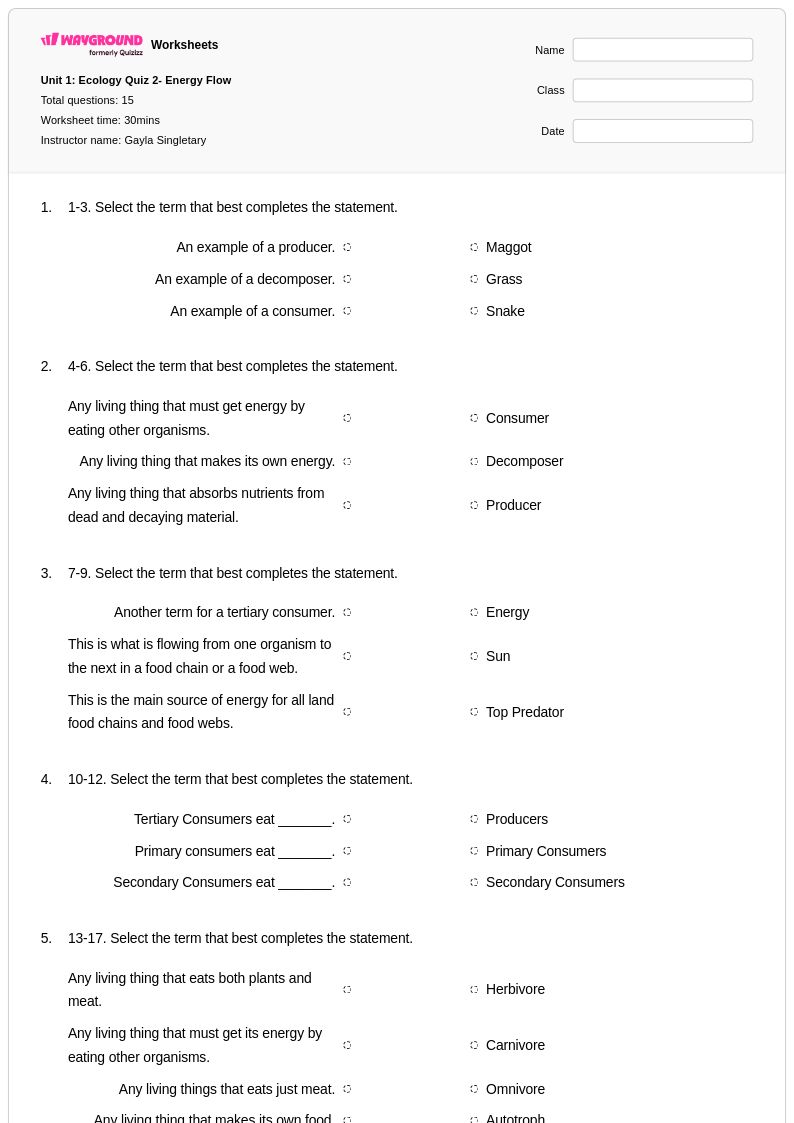
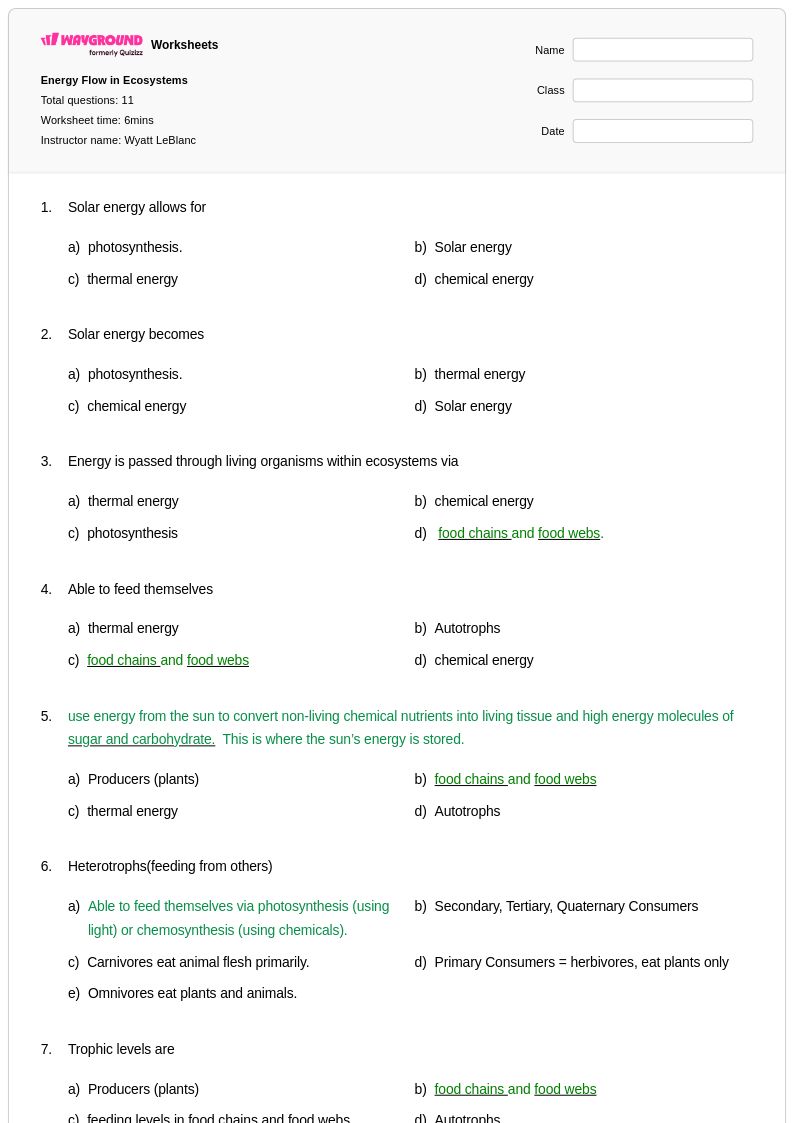
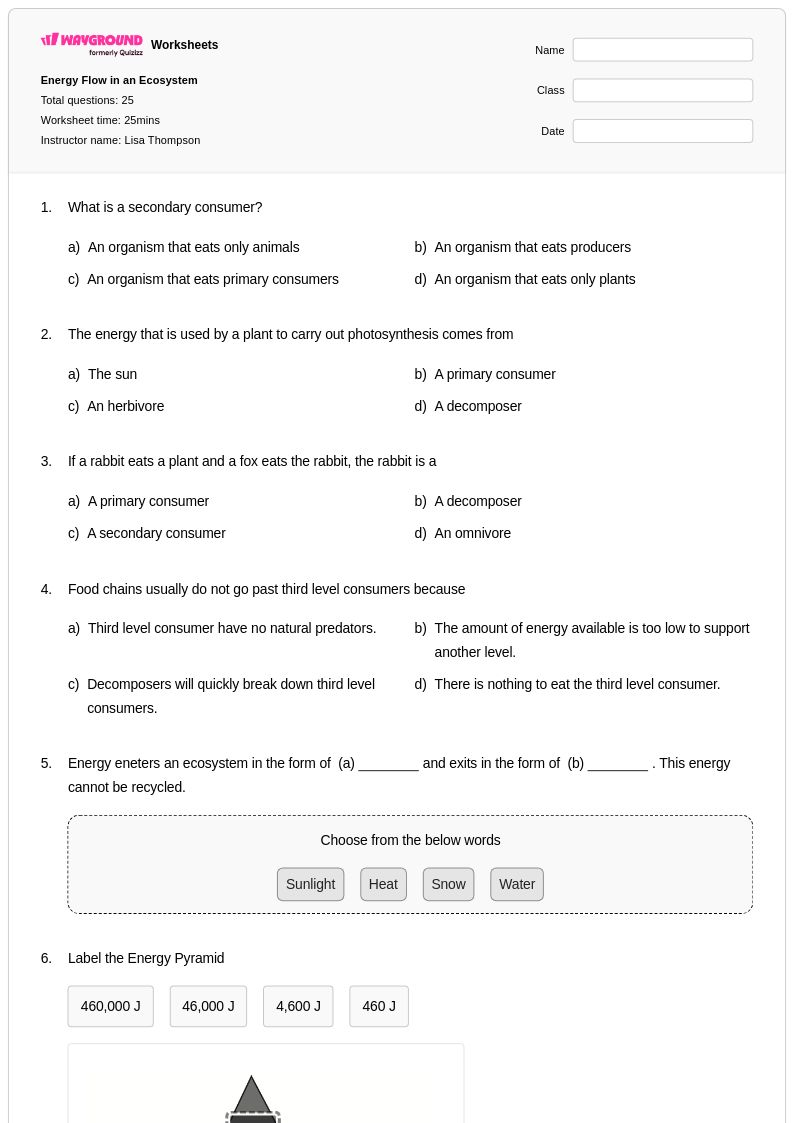
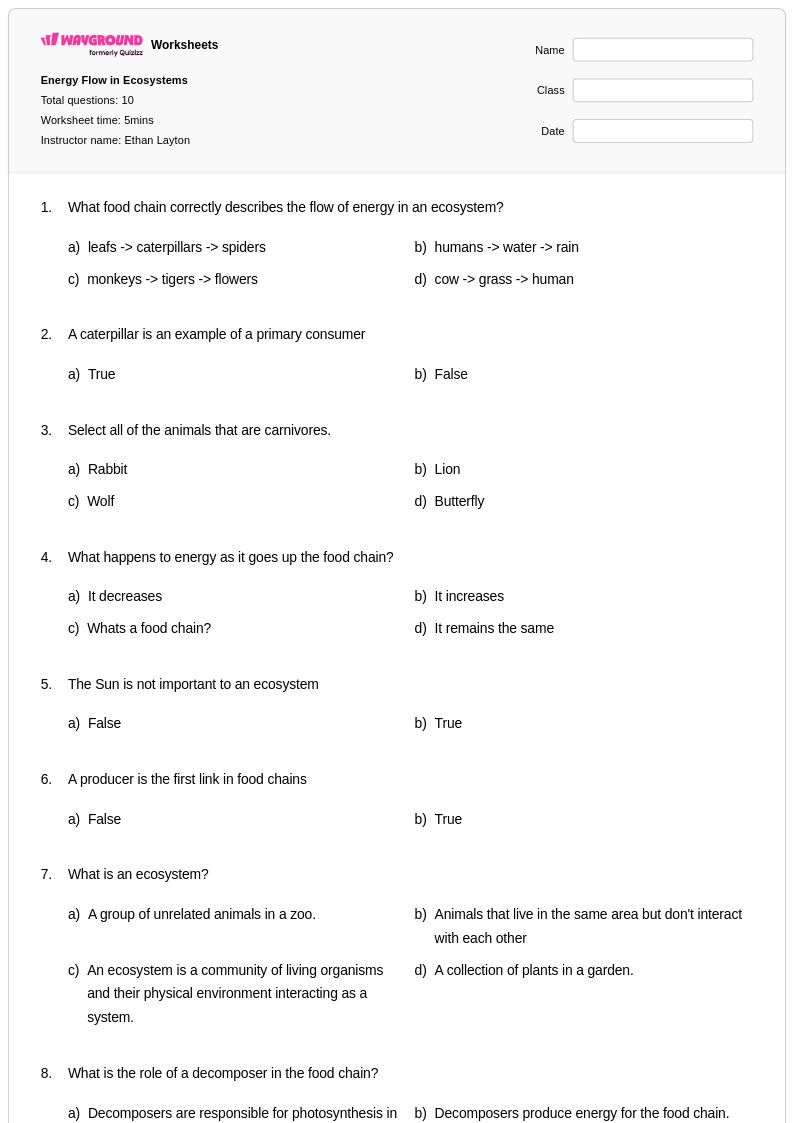
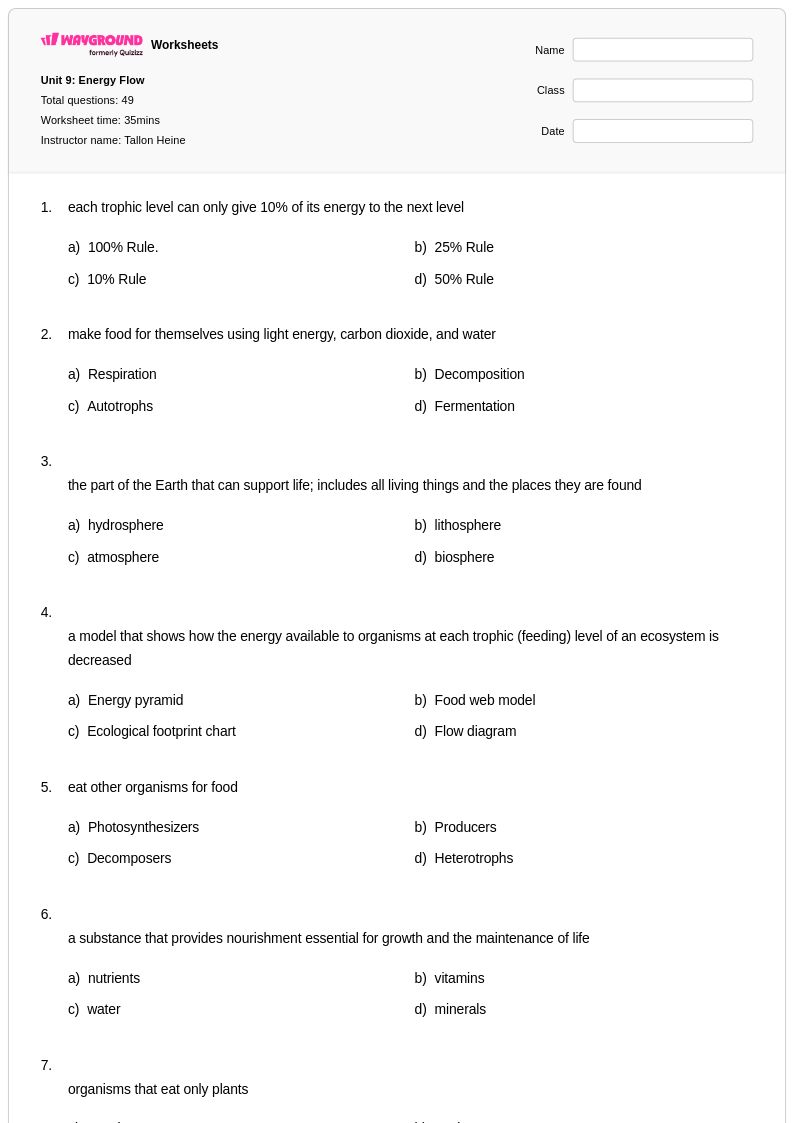
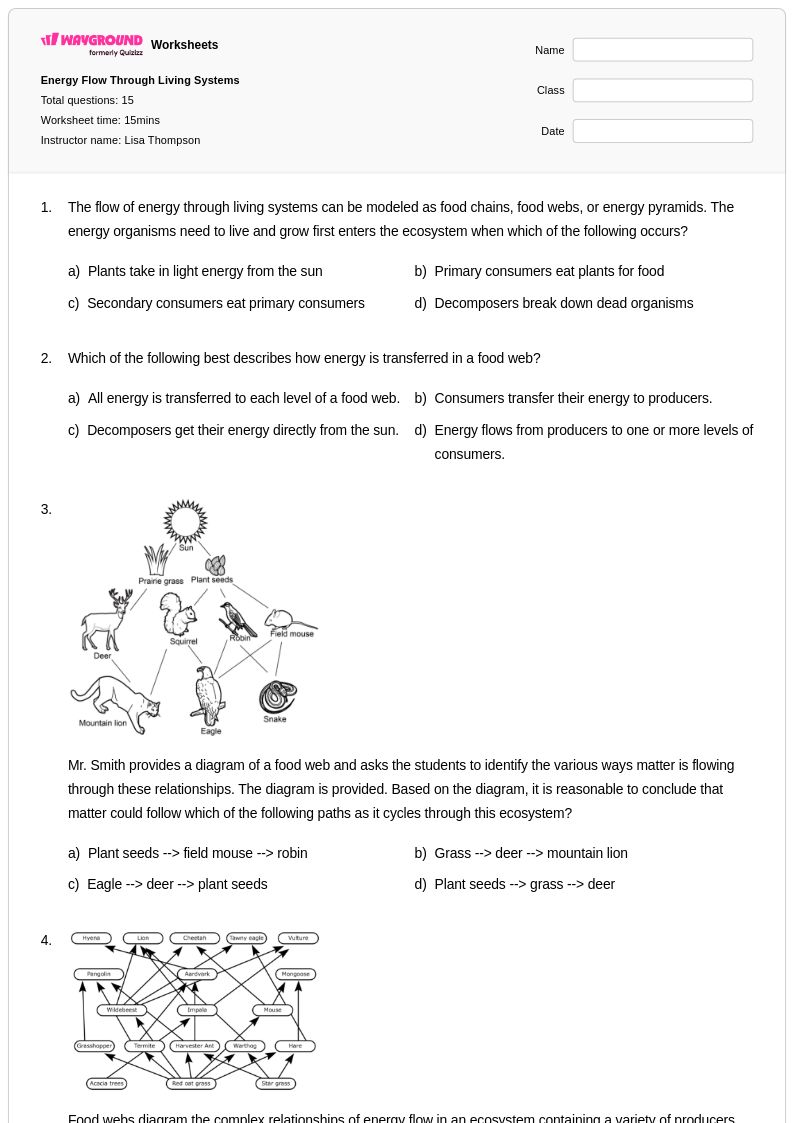
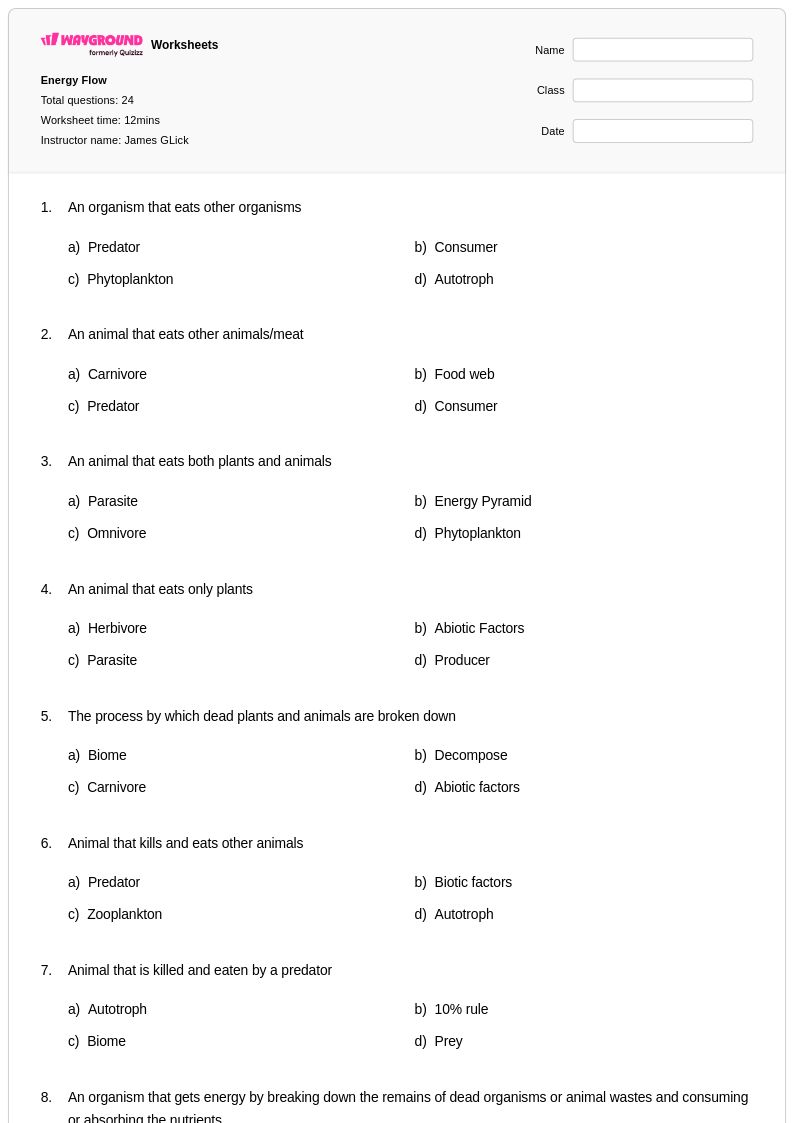
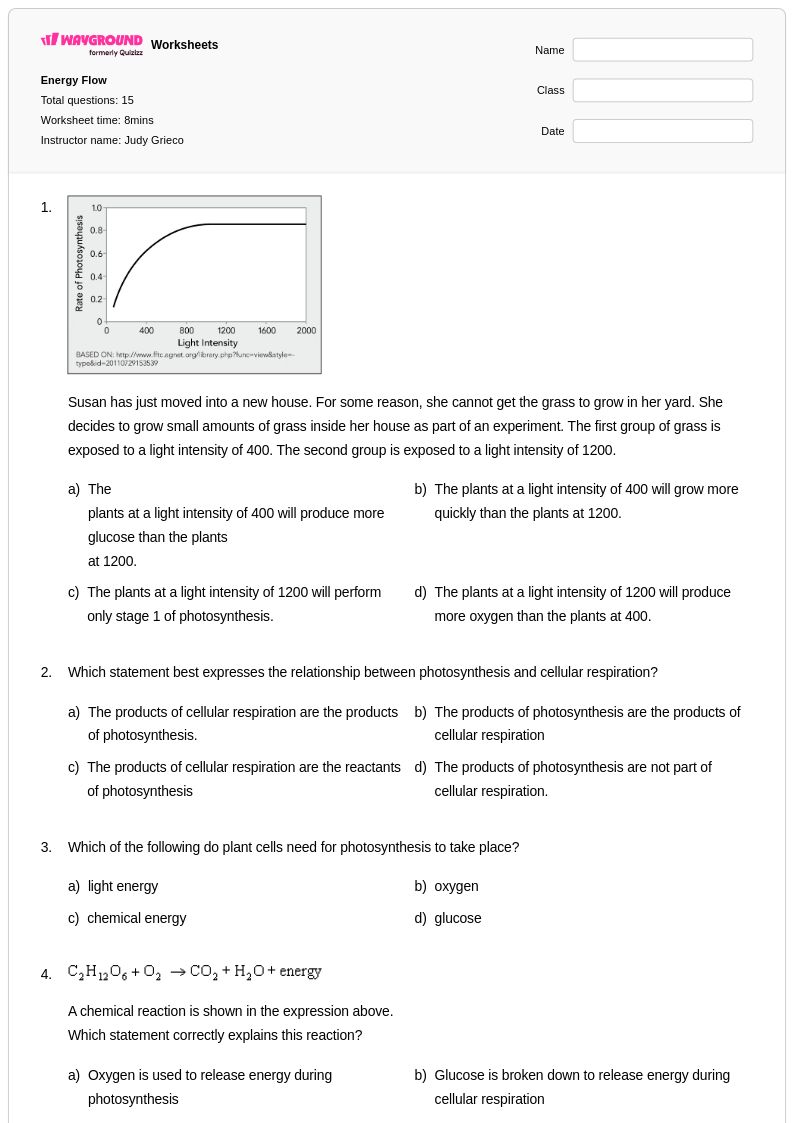
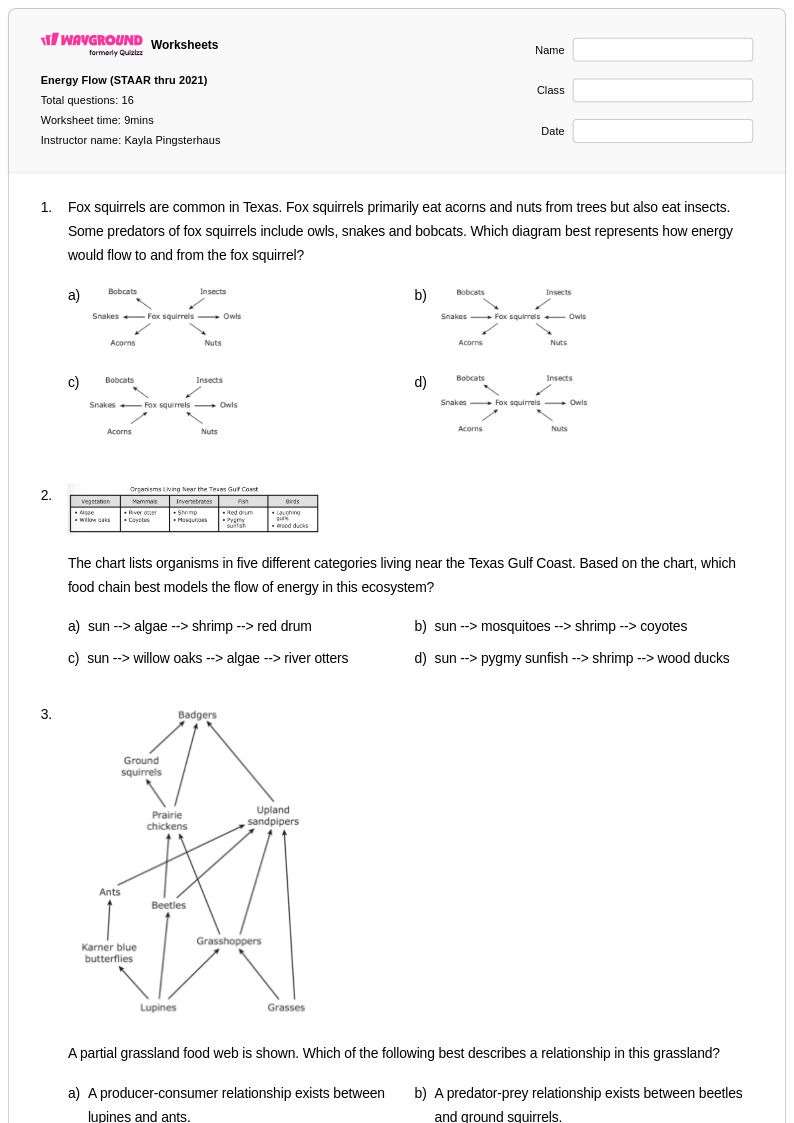
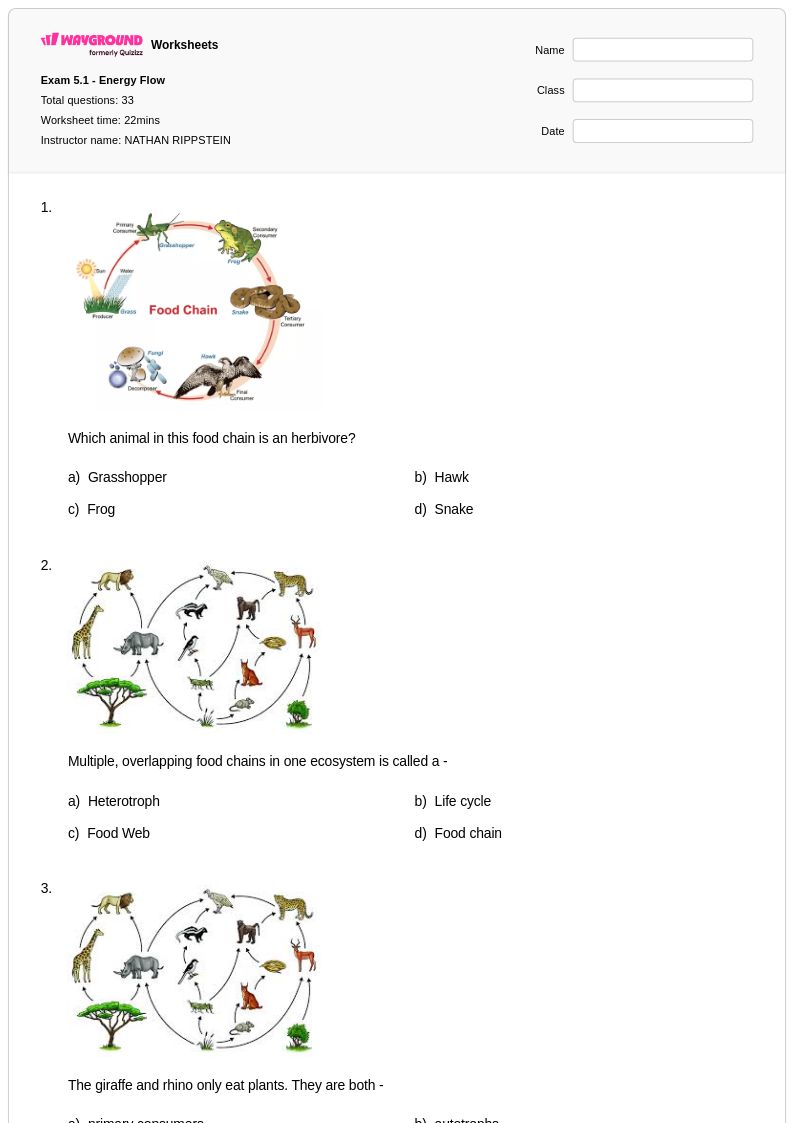
Energy flow worksheets for Class 7 students available through Wayground (formerly Quizizz) provide comprehensive practice with the fundamental concepts of how energy moves through ecosystems and biological systems. These expertly crafted resources help seventh-grade students master essential skills including tracing energy pathways from producers to consumers, analyzing food chains and food webs, understanding energy transfer efficiency, and exploring the role of decomposers in nutrient cycling. The worksheets feature diverse practice problems that challenge students to identify energy sources, calculate energy loss between trophic levels, and explain how energy flow differs from nutrient cycling in ecosystems. Each worksheet comes with a detailed answer key and is available as a free printable pdf, making it easy for educators to integrate these materials into their biology curriculum while providing students with immediate feedback on their understanding of energy flow concepts.
Wayground (formerly Quizizz) empowers educators with millions of teacher-created resources specifically designed to support Class 7 energy flow instruction through robust search and filtering capabilities that align with state and national science standards. The platform's differentiation tools allow teachers to customize worksheets based on individual student needs, offering both remediation support for struggling learners and enrichment opportunities for advanced students. These energy flow worksheet collections are available in both printable pdf format and interactive digital versions, providing flexibility for classroom instruction, homework assignments, and independent study. Teachers can efficiently plan lessons by accessing pre-made materials while having the option to modify content to match their specific curriculum requirements, ensuring that students receive targeted practice with energy pyramids, trophic levels, and the quantitative aspects of energy transfer that are crucial for building a strong foundation in ecological principles.
FAQs
How do I teach energy flow through ecosystems?
Start by establishing producers as the entry point for solar energy, then trace that energy through herbivores, carnivores, and decomposers using food chains and food webs. Introduce energy pyramids early to give students a visual framework for understanding why energy decreases at each trophic level. Connecting photosynthesis and cellular respiration to ecosystem-level energy movement helps students see these processes as parts of a larger system rather than isolated biochemical events.
What exercises help students practice calculating energy transfer between trophic levels?
The most effective practice involves applying the 10% rule to multi-step food chains, where students calculate how much energy is available at each successive trophic level. Worksheets that require students to work both forward (from producers to top consumers) and backward (explaining why apex predators are rare) build stronger conceptual fluency. Including problems that ask students to identify where the remaining 90% of energy goes — lost as heat through cellular respiration — reinforces the thermodynamic principles underlying energy transfer.
What mistakes do students commonly make when analyzing energy pyramids?
The most common misconception is that energy pyramids represent population size rather than energy availability, leading students to misread why upper trophic levels are smaller. Students also frequently confuse biomass pyramids with energy pyramids and treat them as interchangeable. Another persistent error is assuming that energy is recycled through ecosystems the way matter is, failing to recognize that energy flows in one direction and is continuously lost as heat.
How do energy flow worksheets connect to food web analysis?
Food web analysis is a natural extension of energy flow because it requires students to identify multiple pathways through which energy can move rather than a single linear chain. When students overlay energy transfer efficiency onto a food web, they can evaluate which pathways are most energetically efficient and predict how removing one species affects energy availability throughout the system. This integration deepens systems thinking and strengthens students' ability to reason about ecosystem stability.
How can I use Wayground's energy flow worksheets in my classroom?
Wayground's energy flow worksheets are available as printable PDFs for traditional classroom use and in digital formats for technology-integrated learning environments, giving you flexibility regardless of your setup. You can also host them directly as a quiz on Wayground, which allows for interactive student engagement and easier tracking of responses. Every worksheet includes a complete answer key, so grading and follow-up instruction are straightforward whether you're assigning independent practice, small group work, or formative assessment.
How do I differentiate energy flow instruction for students at different skill levels?
For struggling students, scaffolded worksheets that pre-label trophic levels and provide a partially completed energy pyramid reduce cognitive load while keeping the core task intact. Advanced learners benefit from open-ended problems that ask them to design a hypothetical ecosystem and calculate maximum sustainable consumer populations based on primary productivity. On Wayground, teachers can apply accommodations such as read aloud support, reduced answer choices, and extended time to individual students, ensuring the same activity can serve the full range of learners without requiring separate lesson plans.