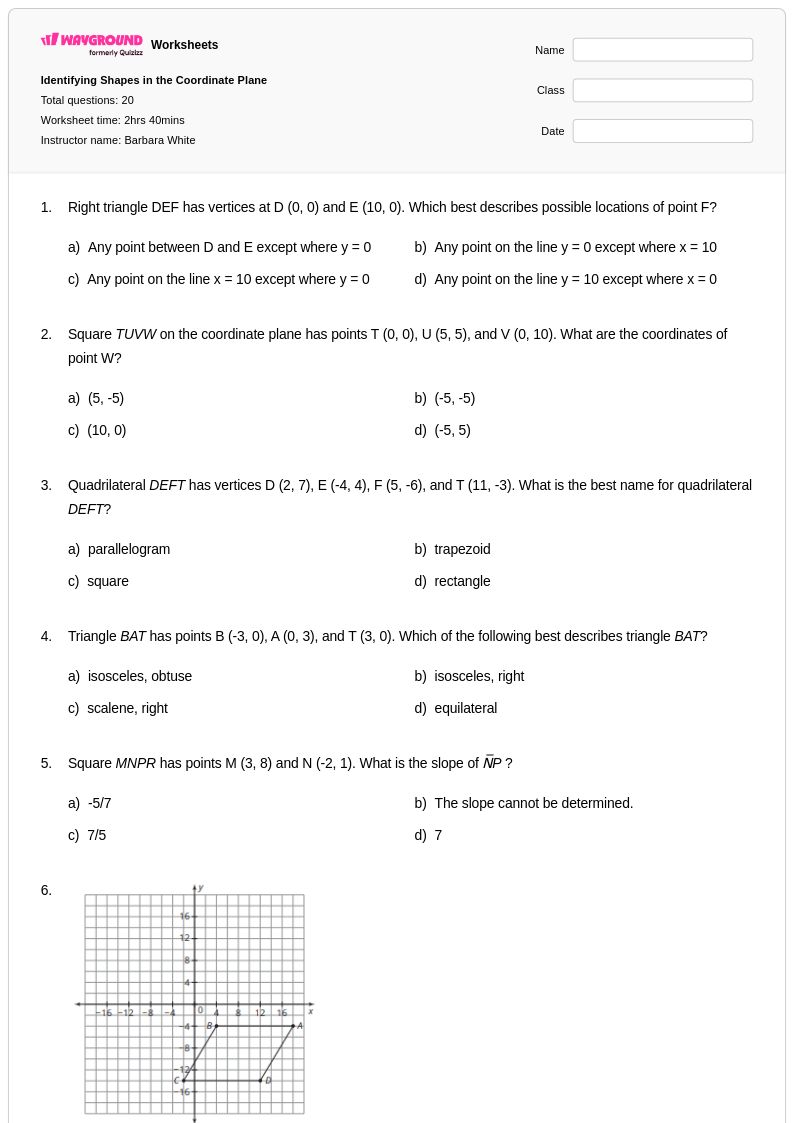
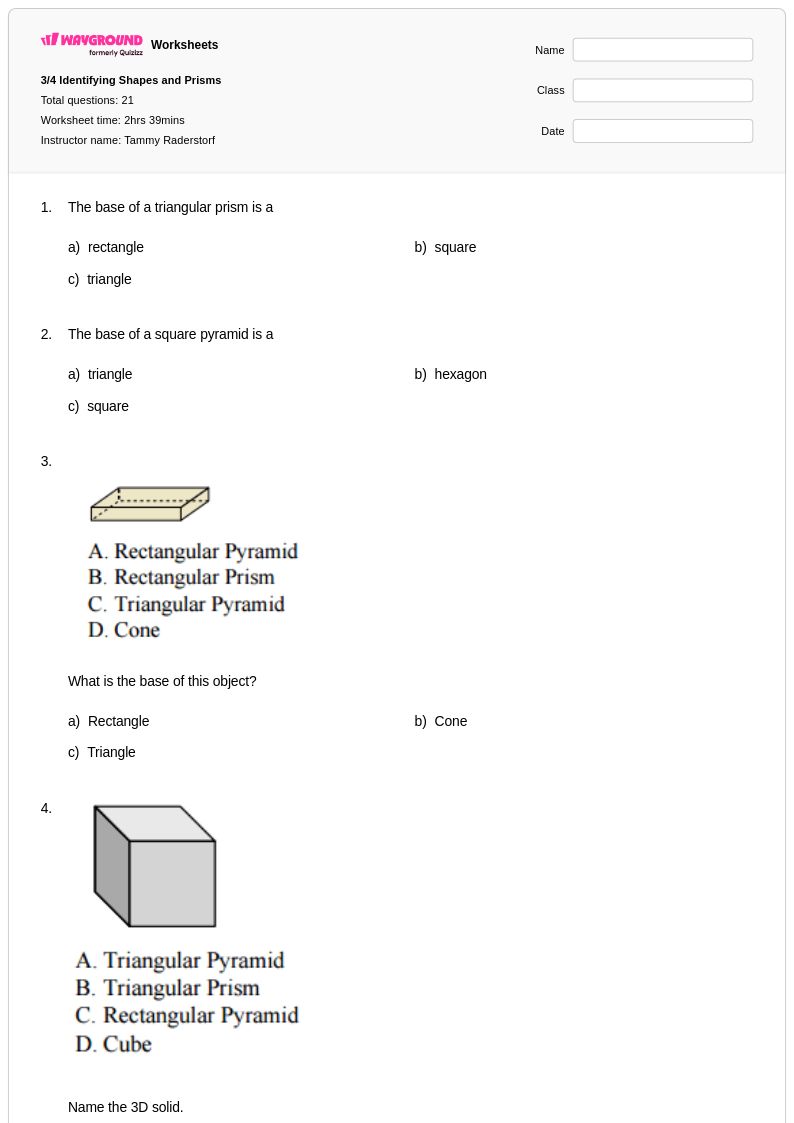
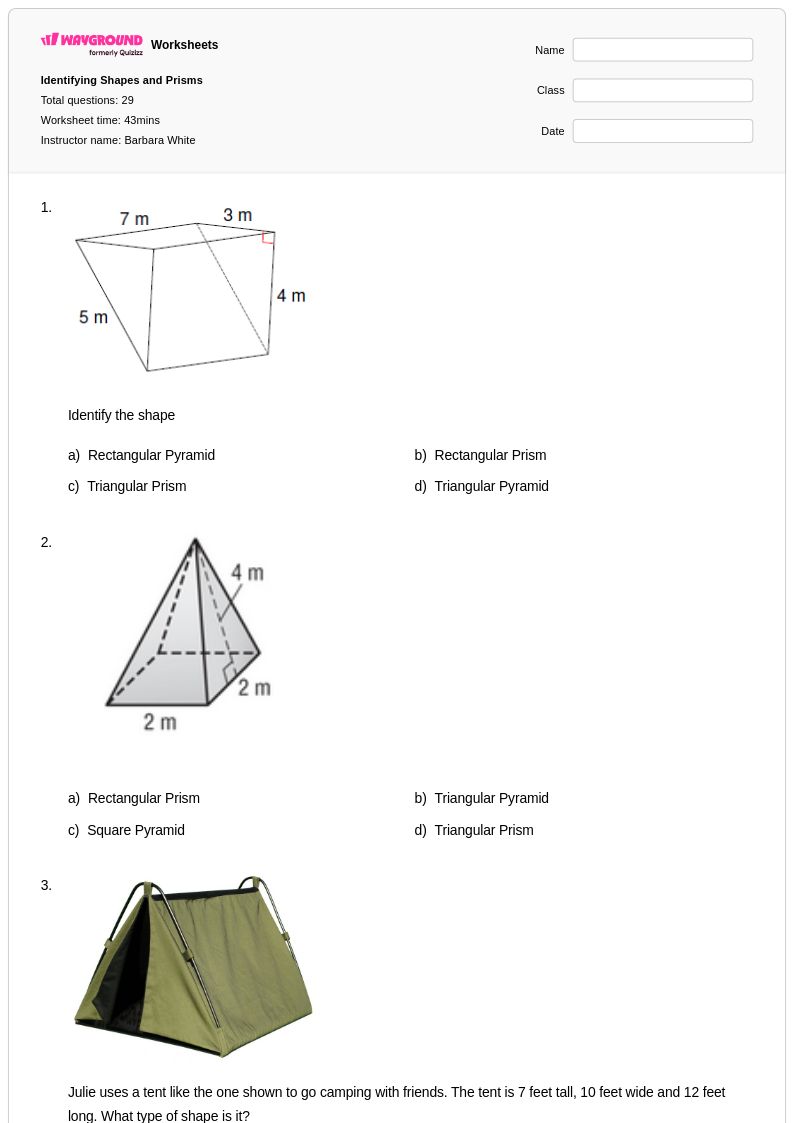
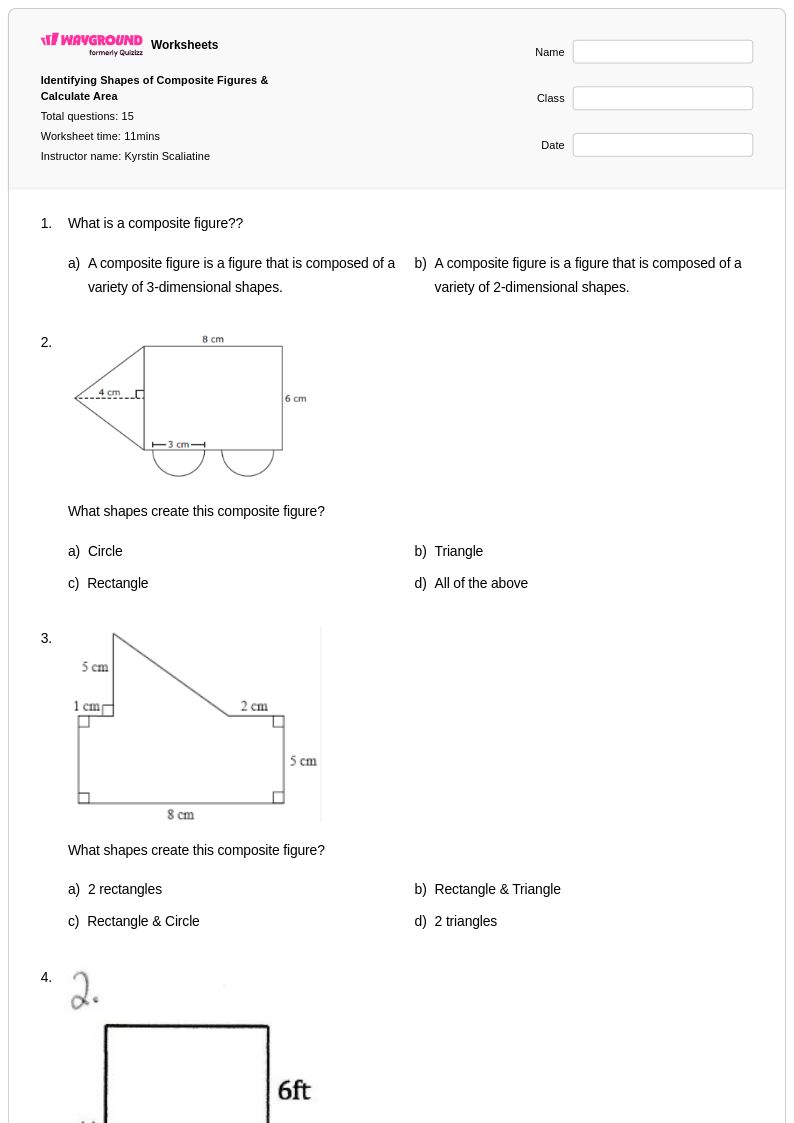
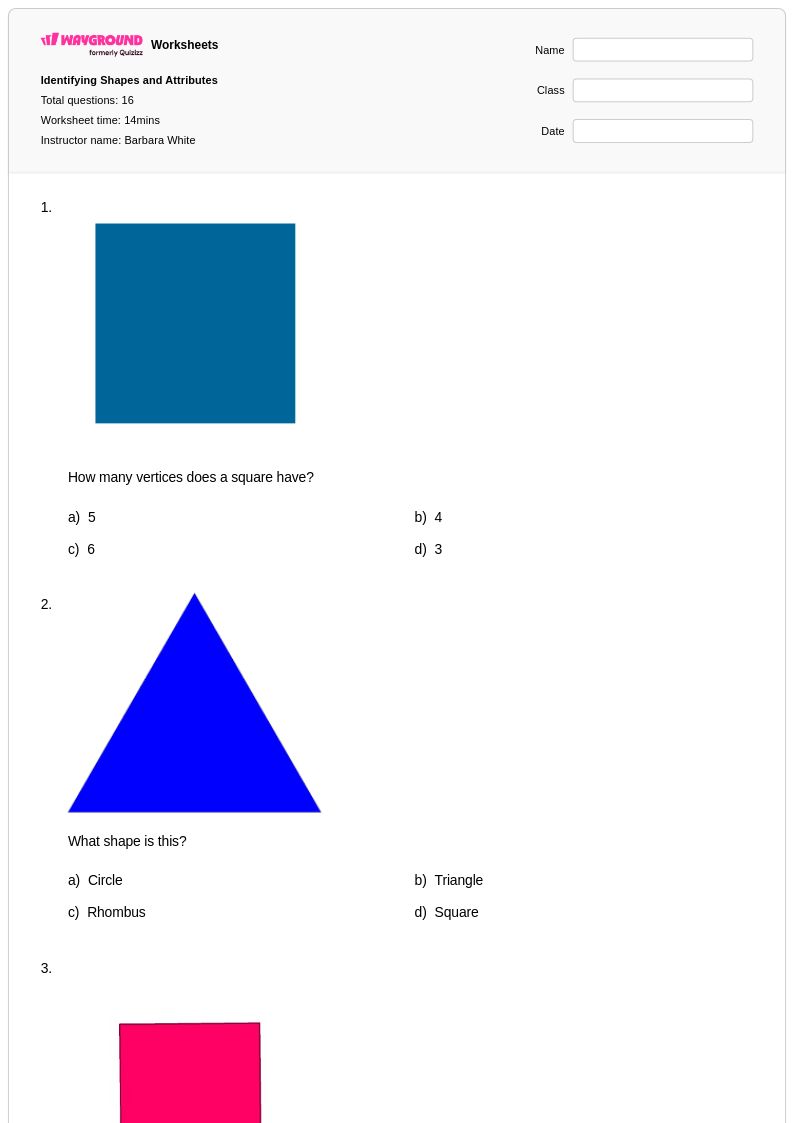
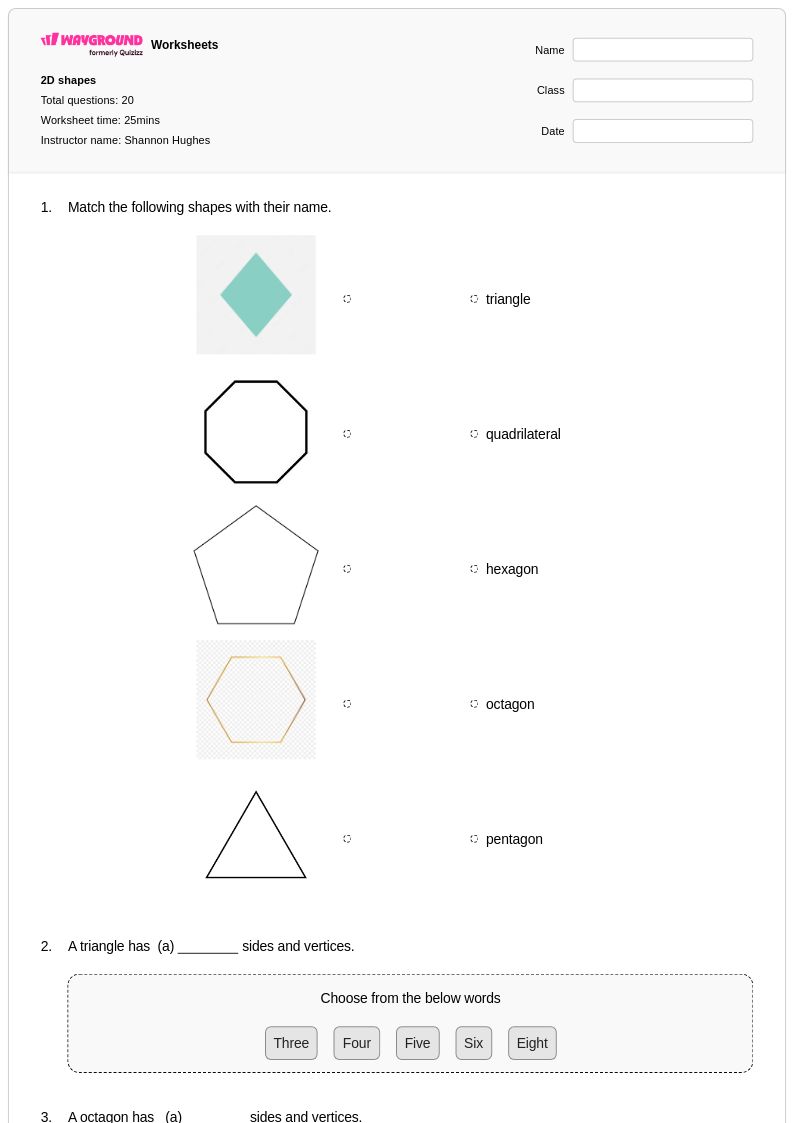
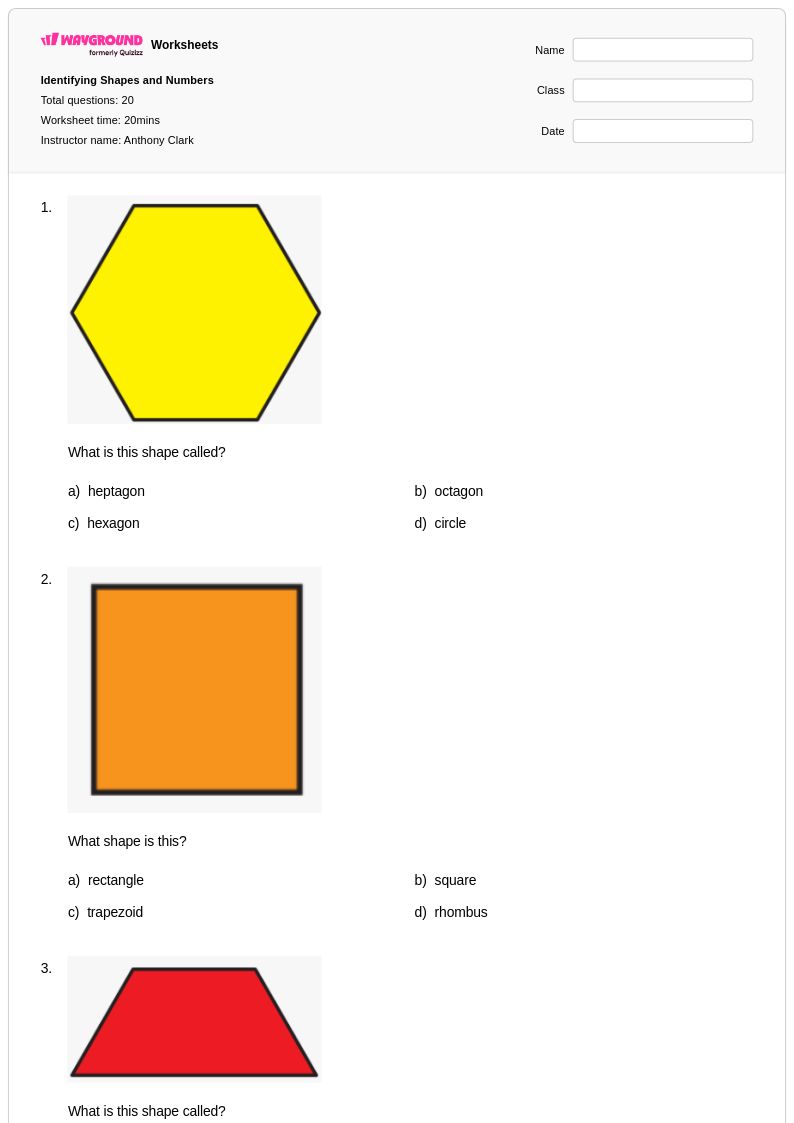
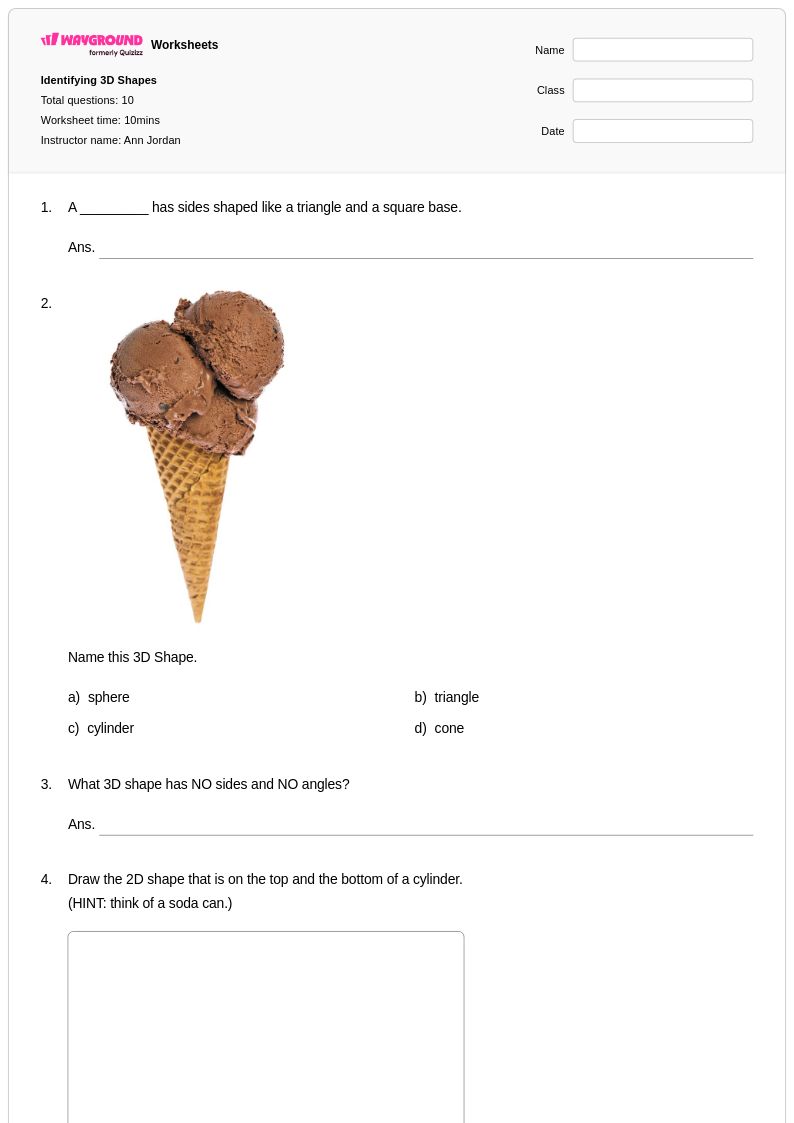
Free printable worksheets and practice problems help students master identifying 2D shapes through engaging geometry exercises with comprehensive answer keys and PDF resources from Wayground.
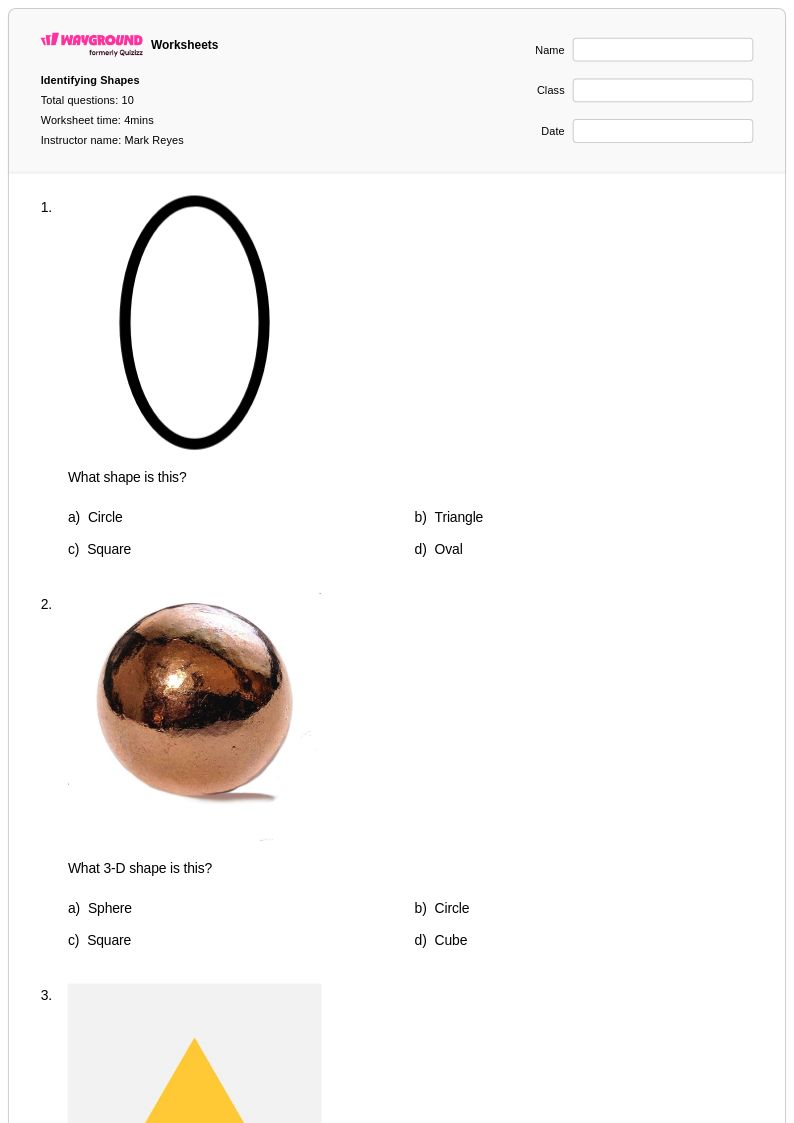
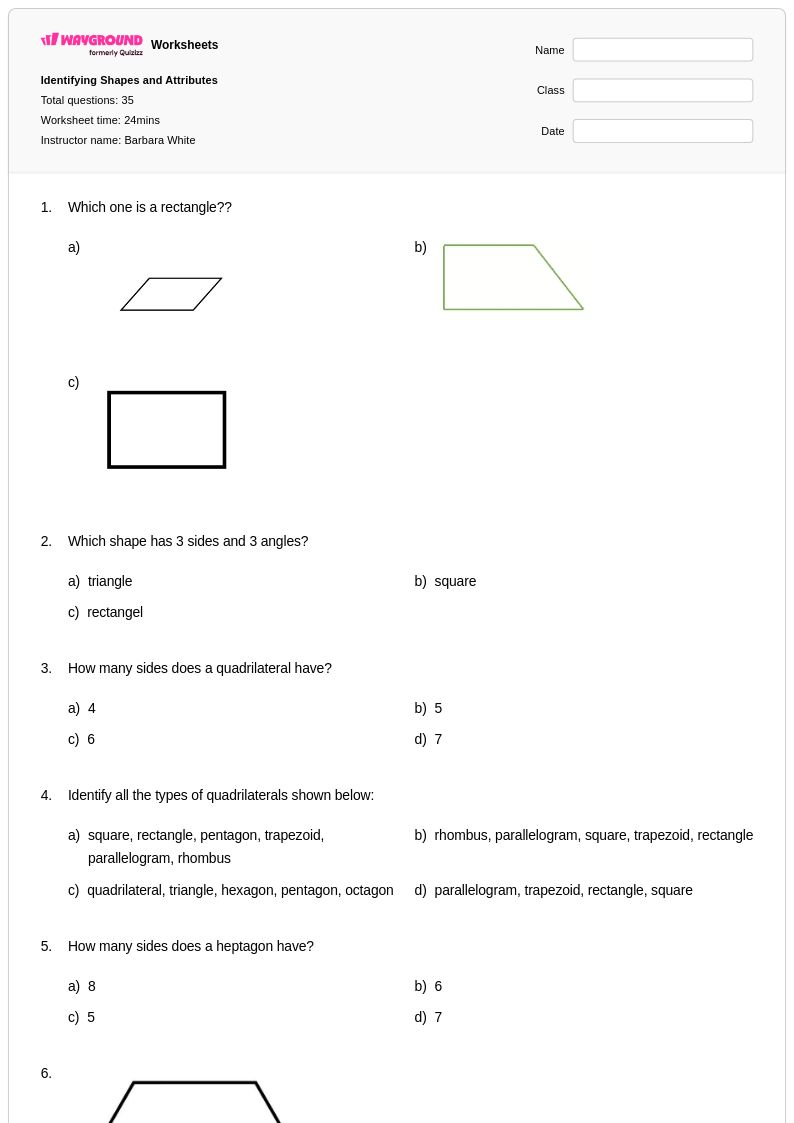
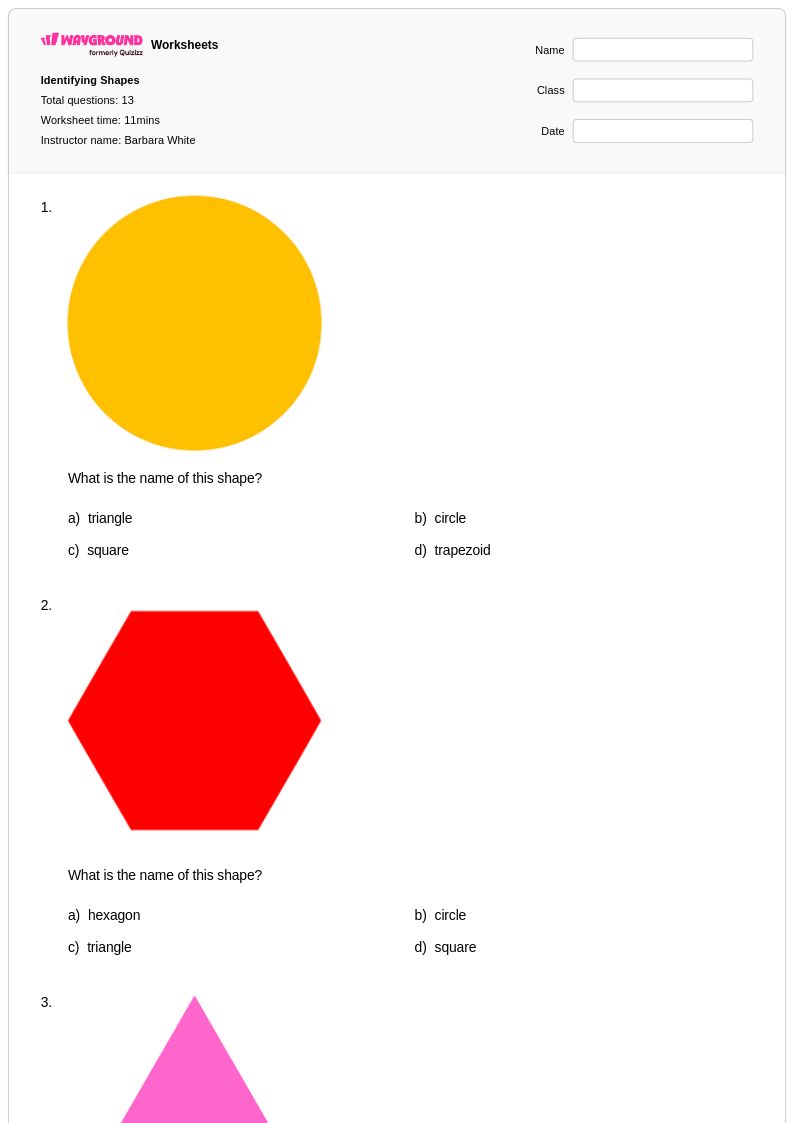
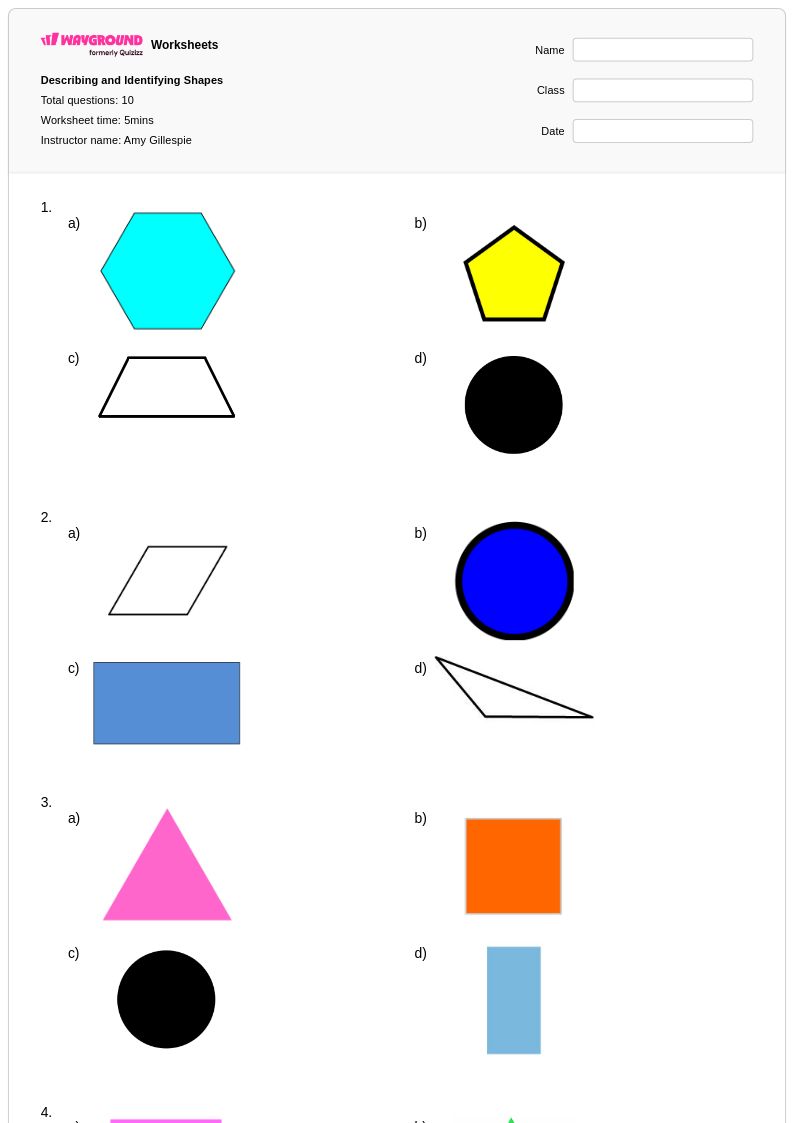
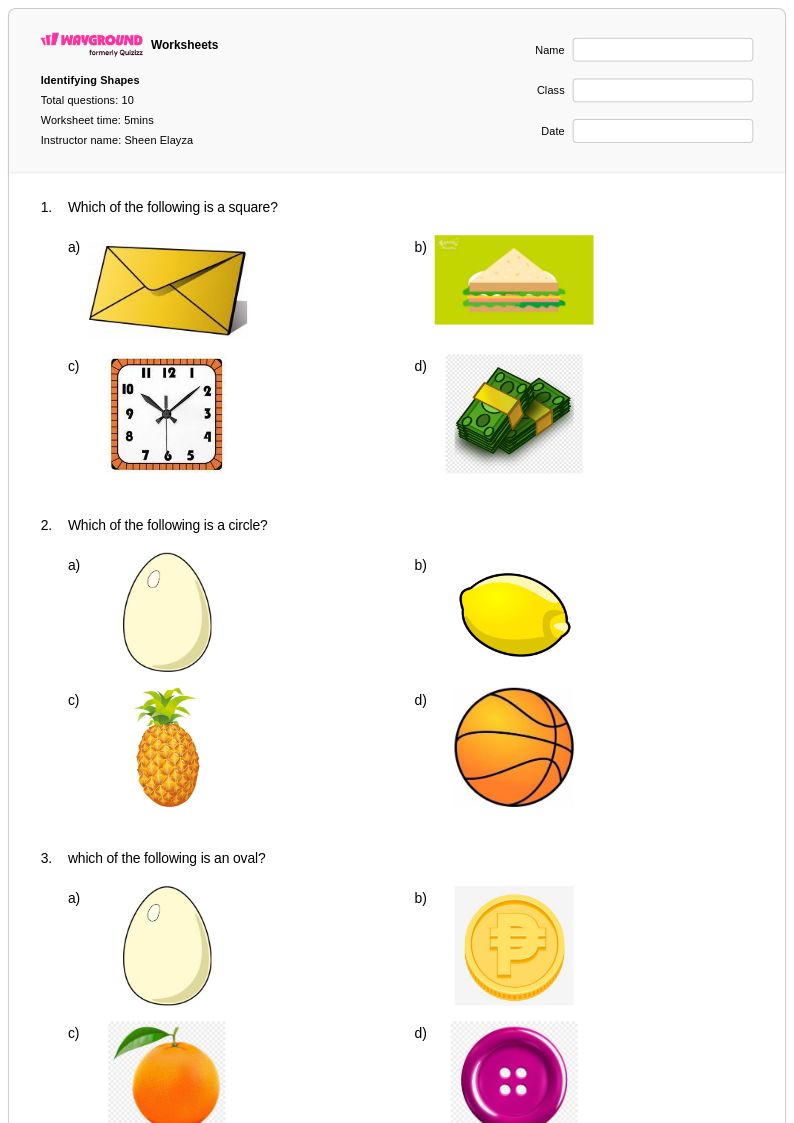
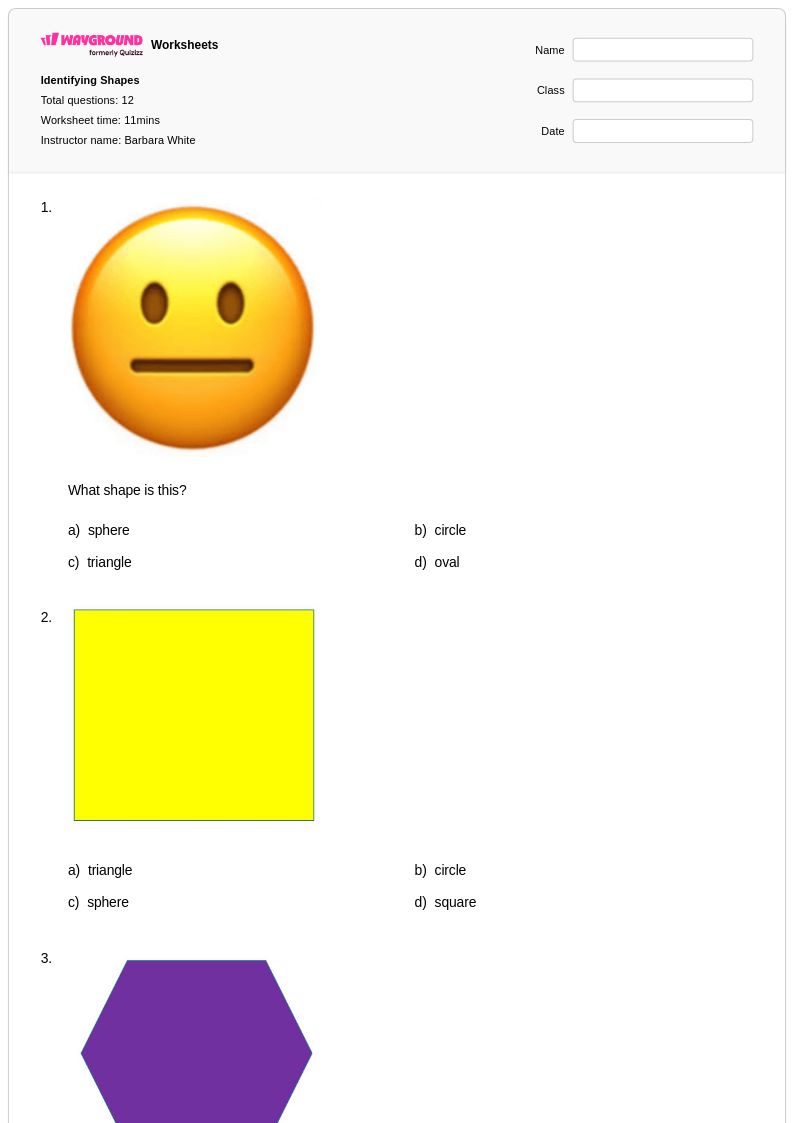
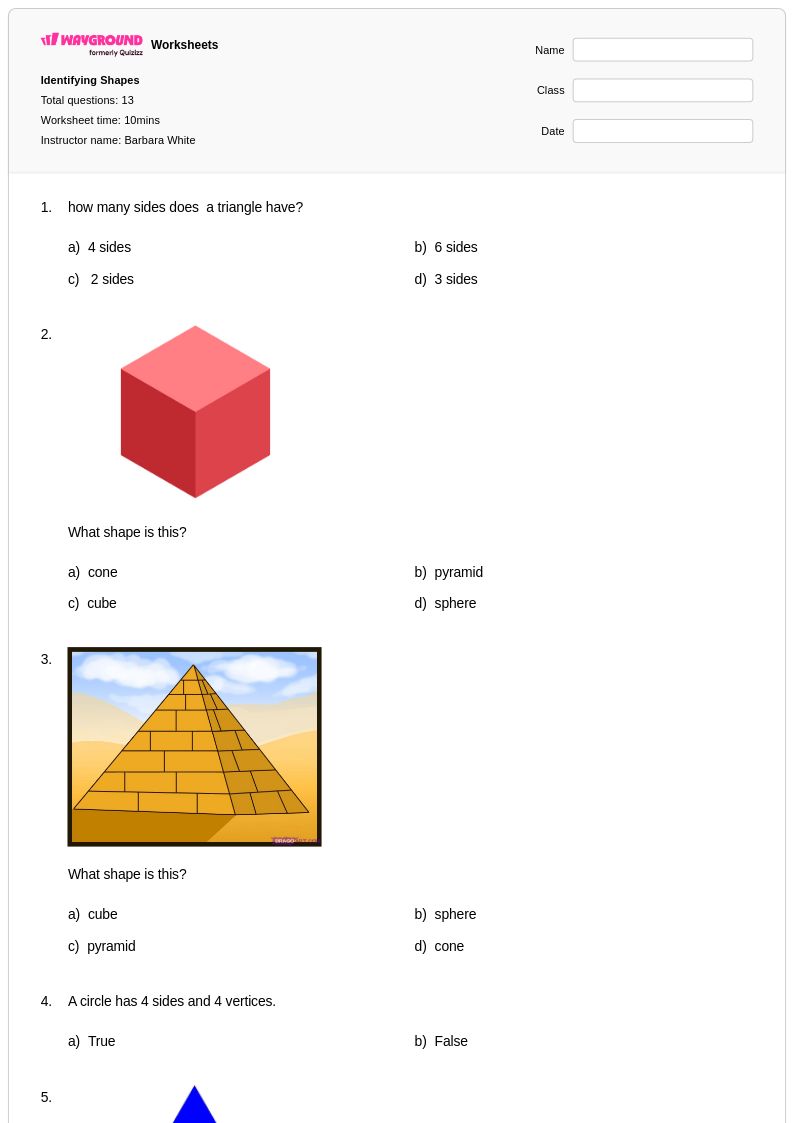
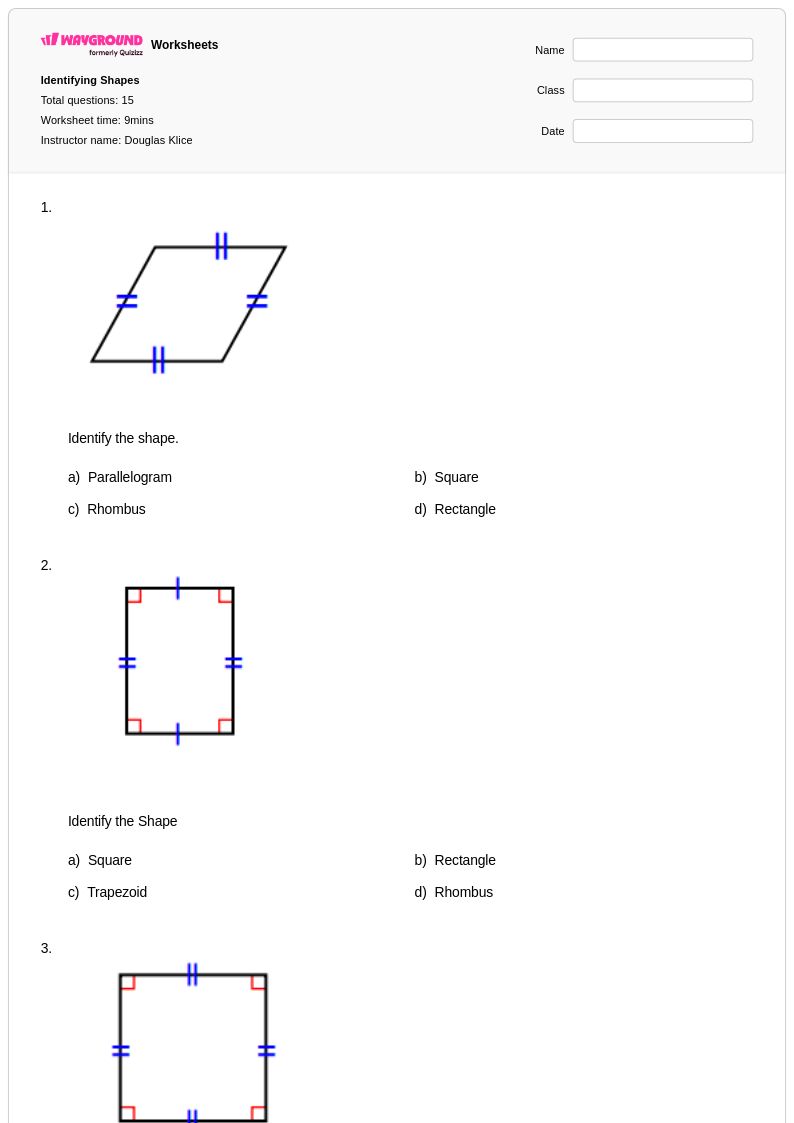
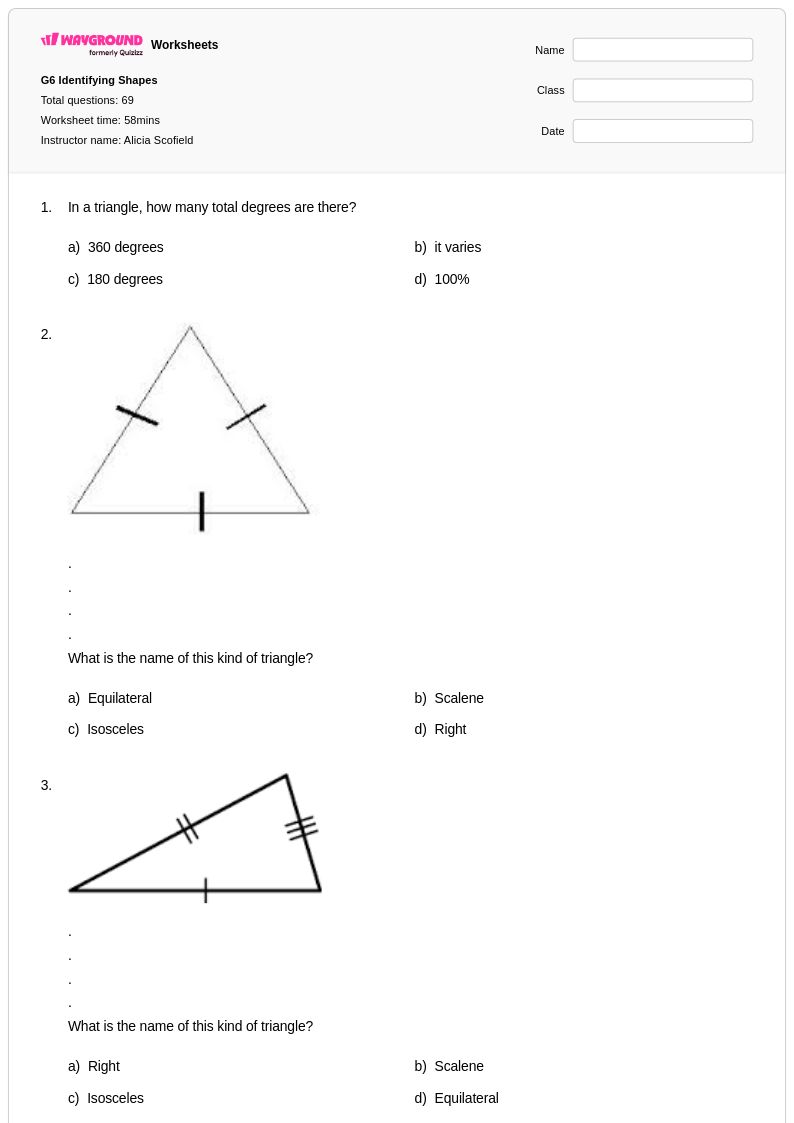
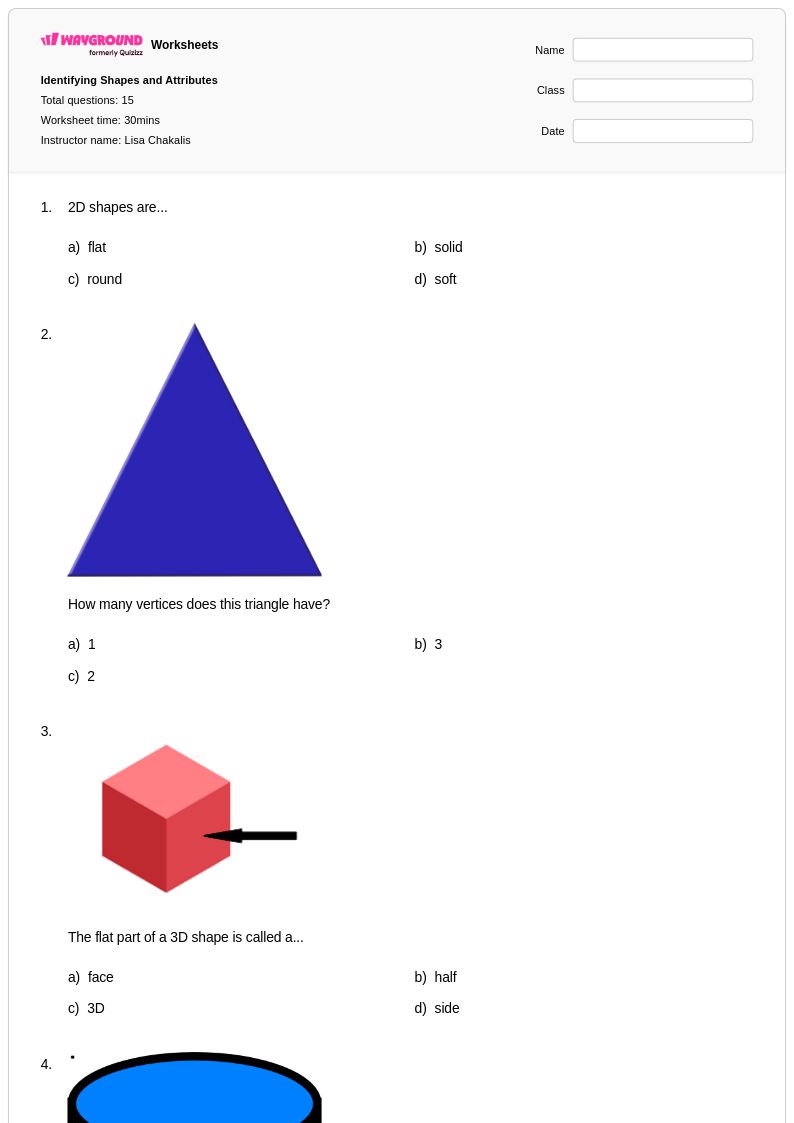
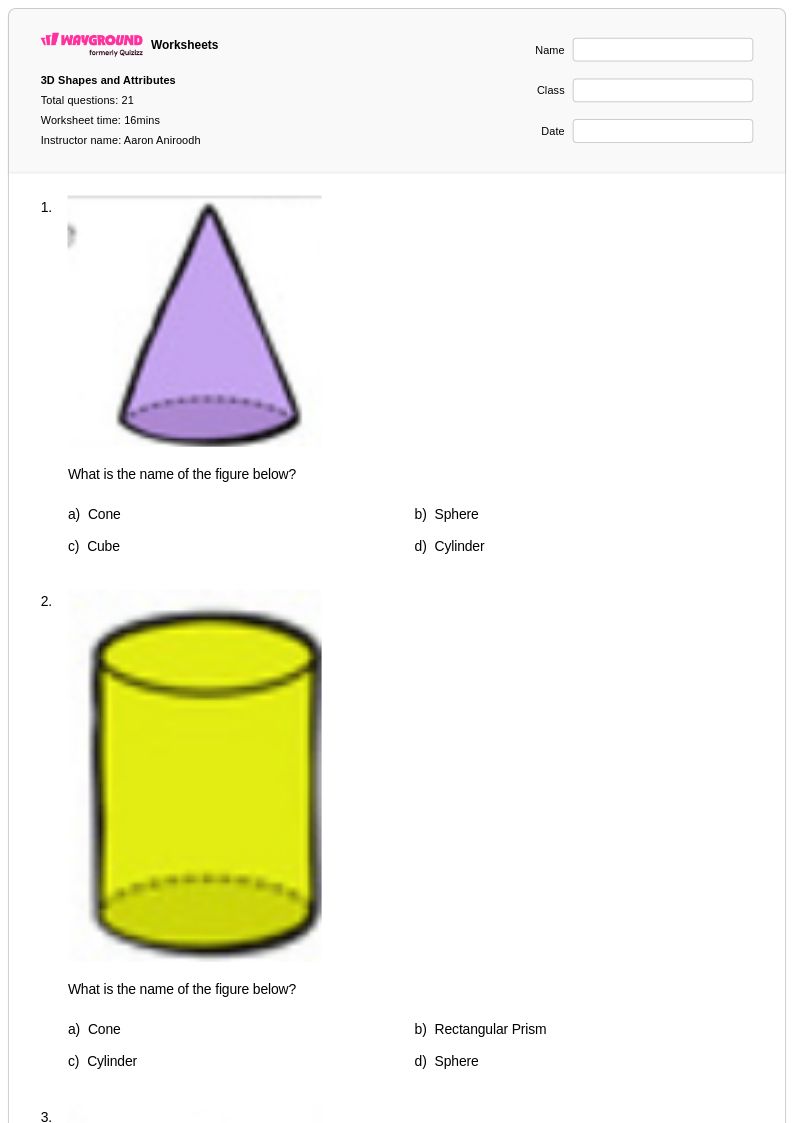
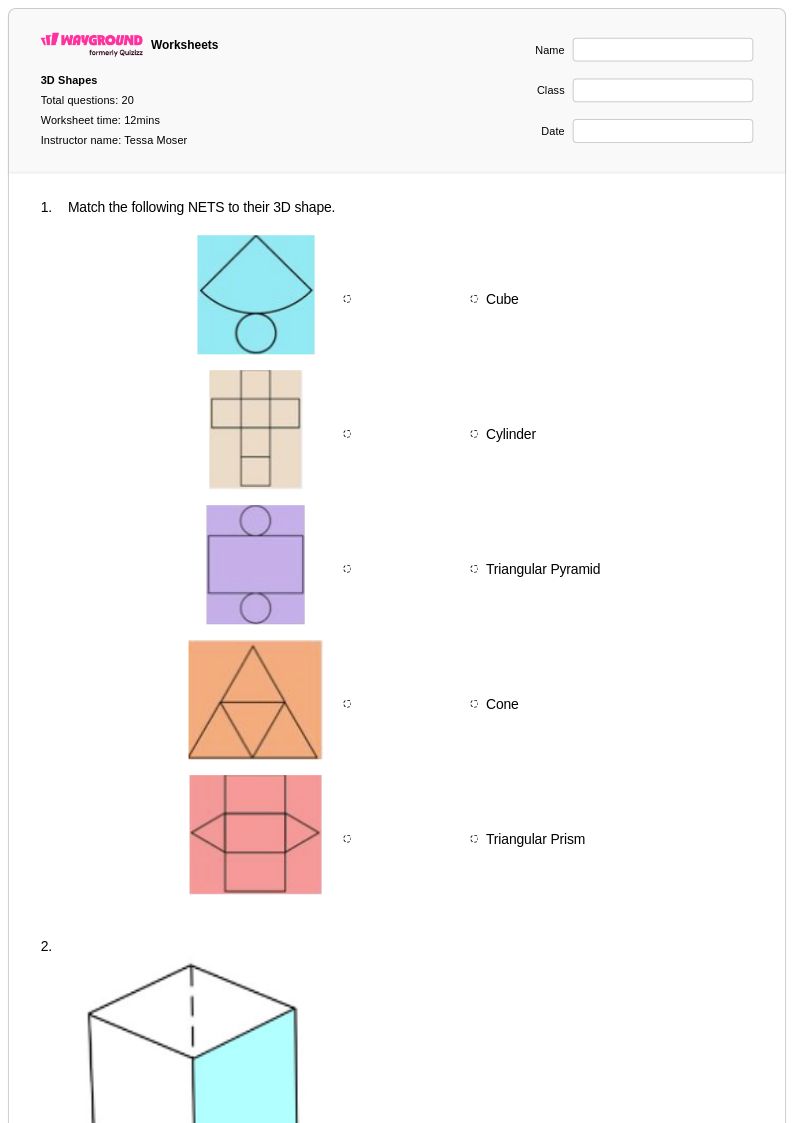
Identifying shapes worksheets available through Wayground (formerly Quizizz) provide students with essential foundational practice in recognizing and categorizing two-dimensional geometric figures. These comprehensive resources strengthen critical visual discrimination skills as learners distinguish between circles, squares, rectangles, triangles, and other polygons through varied exercises that progress from basic shape recognition to more complex classification tasks. The worksheet collections include detailed answer keys and are offered as free printables in convenient PDF format, allowing educators to seamlessly integrate shape identification practice problems into their geometry curriculum while building students' spatial reasoning abilities and geometric vocabulary.
Wayground (formerly Quizizz) empowers educators with millions of teacher-created identifying shapes resources that feature robust search and filtering capabilities, enabling quick access to materials that align with specific curriculum standards and learning objectives. The platform's differentiation tools and flexible customization options allow teachers to modify worksheets for diverse learning needs, supporting both remediation for struggling students and enrichment opportunities for advanced learners. Available in both printable PDF formats and interactive digital versions, these identifying shapes worksheet collections streamline lesson planning while providing targeted skill practice that helps students master fundamental geometry concepts through engaging, systematic instruction that builds confidence in mathematical reasoning.
FAQs
How can I teach students to identify shapes?
Start by connecting abstract shapes to real-world objects, like a clock for a circle or a door for a rectangle. Use multi-sensory activities like tracing shapes in sand or building them with craft sticks. Progress from physical objects to pictorial representations, using sorting games to help students group shapes by their defining attributes.
What exercises help students practice identifying shapes?
Effective practice moves from simple recognition to classification. Use activities like shape hunts in the classroom, matching games, and coloring sheets where specific shapes are assigned certain colors. Worksheets that ask students to sort a collection of mixed shapes by their properties (e.g., number of sides) are excellent for reinforcing their understanding.
What are common mistakes when learning to identify shapes?
Students often struggle with non-prototypical examples, like a long, thin rectangle or a triangle that isn't equilateral. They may also fail to recognize a shape when its orientation is changed, for instance, not identifying a square when it's tilted to look like a diamond. Another common issue is confusion between a square and a rectangle.
How can I use these identifying shapes worksheets in my class?
Wayground worksheets are flexible for any classroom setup. You can assign them as an interactive digital quiz on the platform for immediate feedback, or print them as PDFs for hands-on practice at student desks. Every worksheet includes a complete answer key for easy grading.
How does identifying shapes fit into the math curriculum?
Aligned with Common Core standards, identifying shapes is a foundational geometry skill. It begins in Kindergarten with naming basic shapes like circles and squares. In later grades, the focus shifts to analyzing and classifying shapes by their attributes, such as the number of sides or the presence of right angles, which prepares students for more complex topics like area and geometric reasoning.
How can I differentiate shape identification practice for diverse learners?
For digital assignments on Wayground, you can enable accommodations like 'Read Aloud' for students with reading difficulties or 'Reduced answer choices' to lower cognitive load. When printing worksheets, you can use platform tools to apply a dyslexia-friendly font or increase font size and spacing to improve readability for students with visual processing challenges.