
28 Q
3rd - Uni
47 Q
6th - 8th
15 Q
6th - 8th
15 Q
6th - 8th
25 Q
3rd - Uni
17 Q
6th - 8th
9 Q
6th - 8th
14 Q
6th - 8th
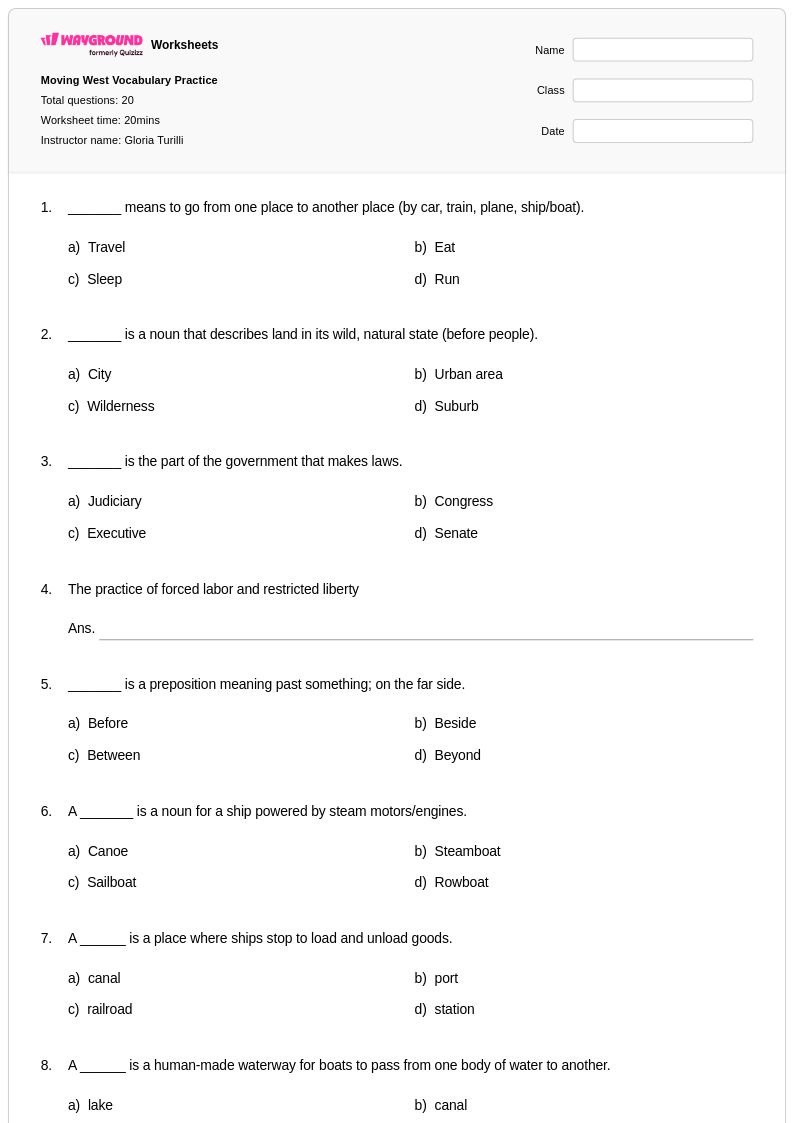
20 Q
6th
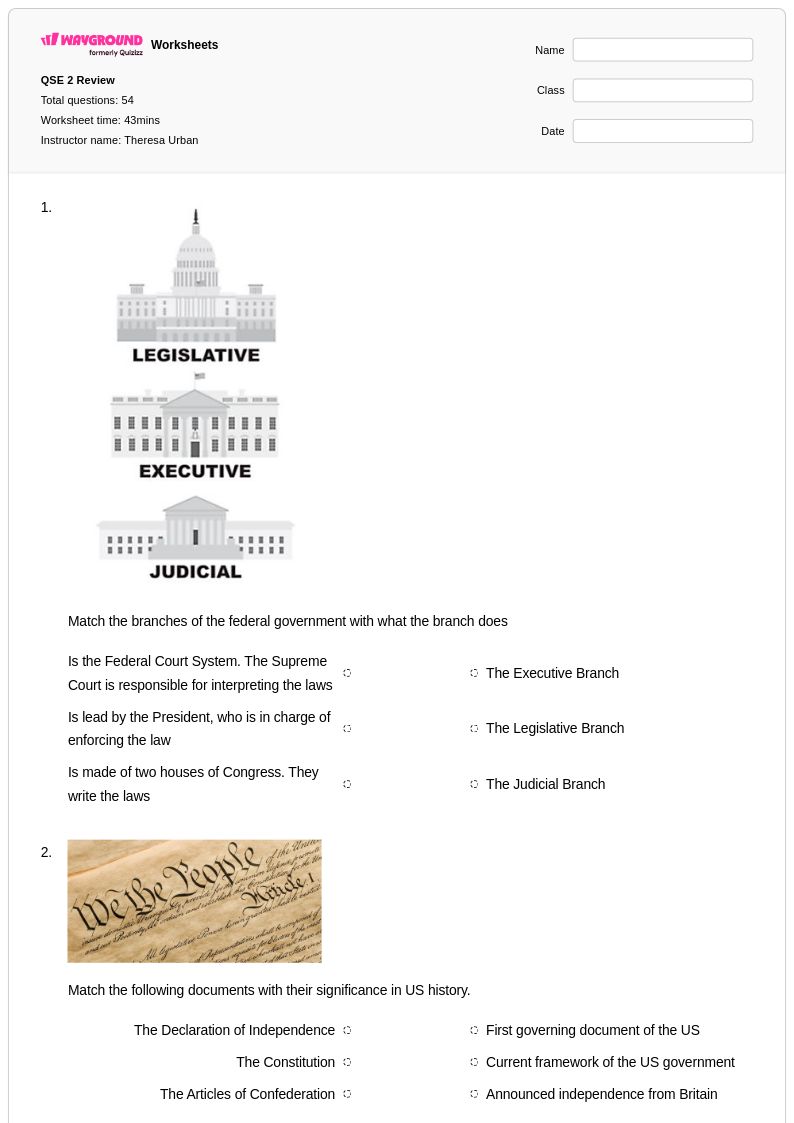
54 Q
6th - 8th
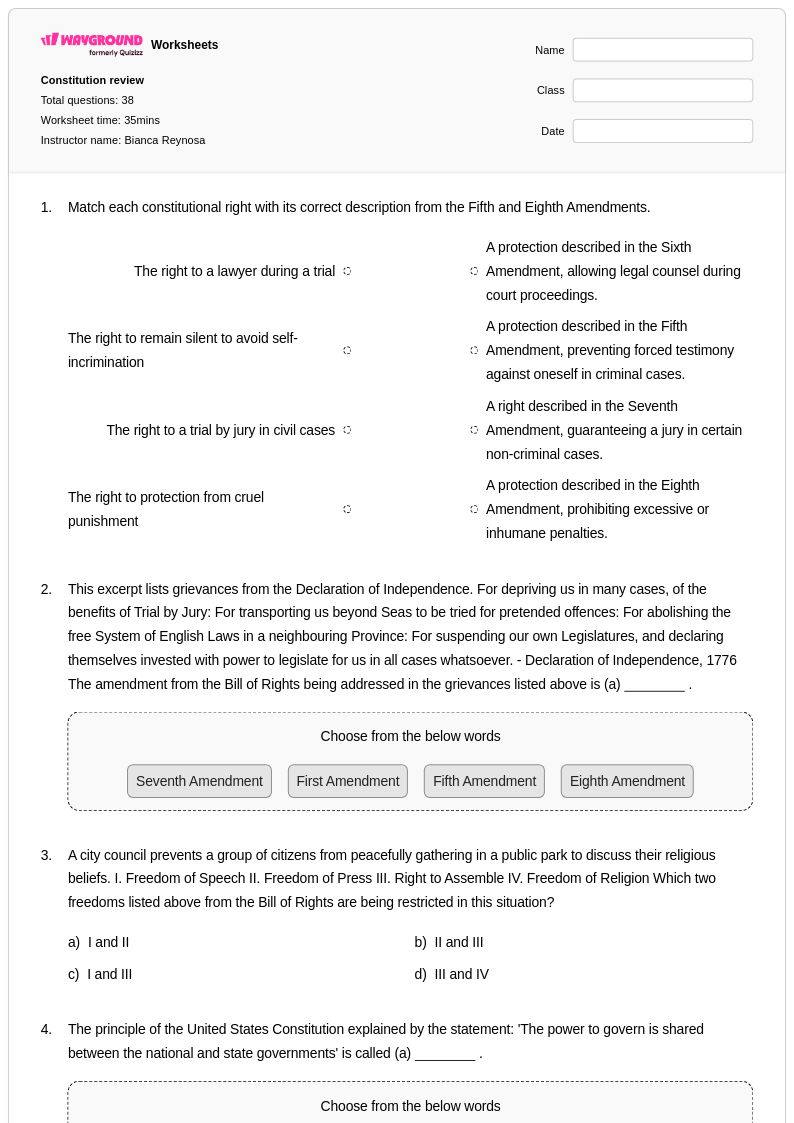
38 Q
6th - 8th
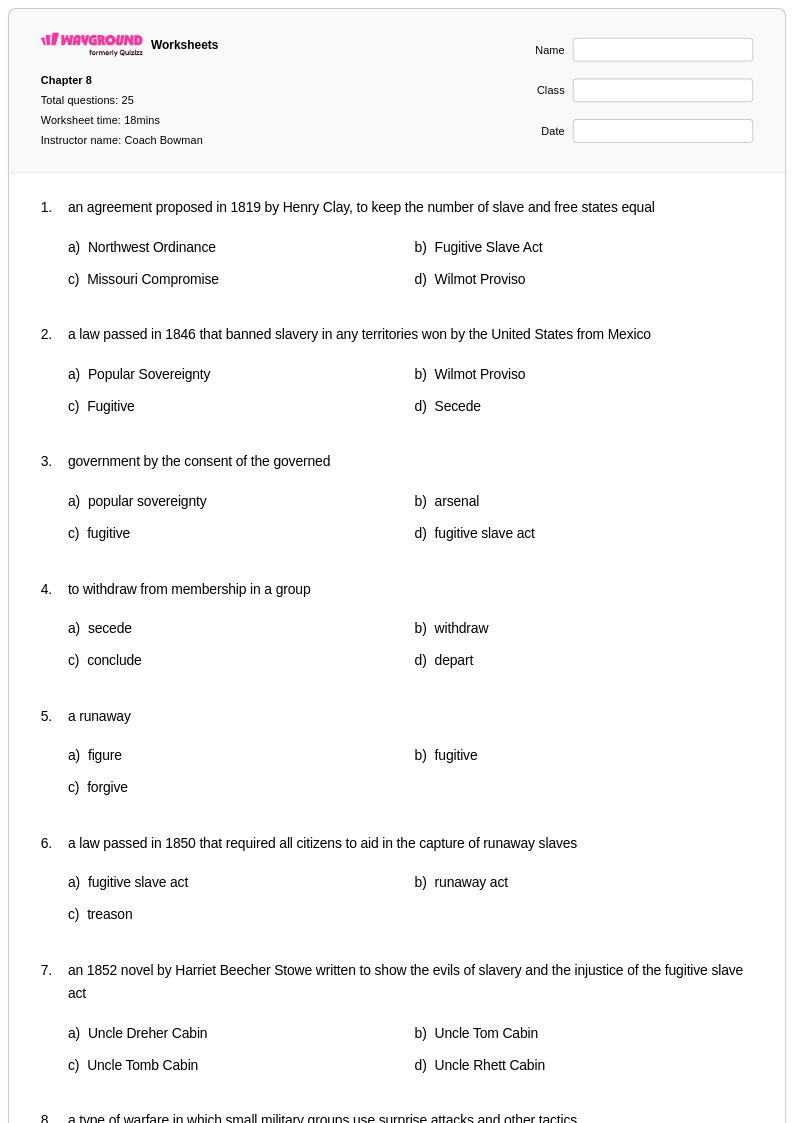
25 Q
6th - 8th
16 Q
6th - 8th
25 Q
6th - Uni
12 Q
6th - 8th
25 Q
6th
16 Q
6th
24 Q
6th
11 Q
6th - 8th
26 Q
6th - 8th
12 Q
6th - 8th
10 Q
6th
8 Q
6th - 8th
20 Q
6th - 8th
Explore Missouri Compromise Worksheets by Grades
Explore Other Subject Worksheets for class 6
Explore printable Missouri Compromise worksheets for Class 6
Missouri Compromise worksheets available through Wayground (formerly Quizizz) provide Class 6 students with comprehensive practice materials that explore this pivotal 1820 legislative agreement and its lasting impact on American history. These carefully designed resources strengthen students' analytical thinking skills as they examine how the Missouri Compromise temporarily resolved the heated debate over slavery's expansion into new territories, maintaining the delicate balance between free and slave states in the Union. The worksheet collection includes diverse practice problems that guide students through the political tensions surrounding Missouri's statehood application, the role of Speaker Henry Clay in brokering the agreement, and the significance of the 36°30' parallel as a dividing line. Each printable resource comes with a detailed answer key, allowing students to verify their understanding of complex historical concepts while teachers can efficiently assess comprehension of this crucial period in antebellum America.
Wayground (formerly Quizizz) supports educators with an extensive collection of teacher-created Missouri Compromise resources, drawing from millions of high-quality materials developed by experienced social studies professionals nationwide. The platform's robust search and filtering capabilities enable teachers to quickly locate age-appropriate content that aligns with Class 6 curriculum standards, while differentiation tools allow for seamless customization based on individual student needs and learning objectives. These versatile worksheets are available in both printable PDF format and interactive digital versions, providing flexibility for classroom instruction, homework assignments, or remote learning environments. Teachers can effectively utilize these resources for lesson planning, targeted remediation for struggling learners, enrichment activities for advanced students, and regular skill practice that reinforces understanding of how the Missouri Compromise influenced subsequent political developments leading to the Civil War.
FAQs
How do I teach the Missouri Compromise to middle or high school students?
What exercises help students practice and retain key facts about the Missouri Compromise?
What mistakes do students commonly make when learning about the Missouri Compromise?
How does the Missouri Compromise connect to other events in U.S. history?
How can I use Missouri Compromise worksheets in my classroom?