
15 Q
3rd - 4th
15 Q
3rd - 5th
15 Q
3rd - 4th
63 Q
3rd
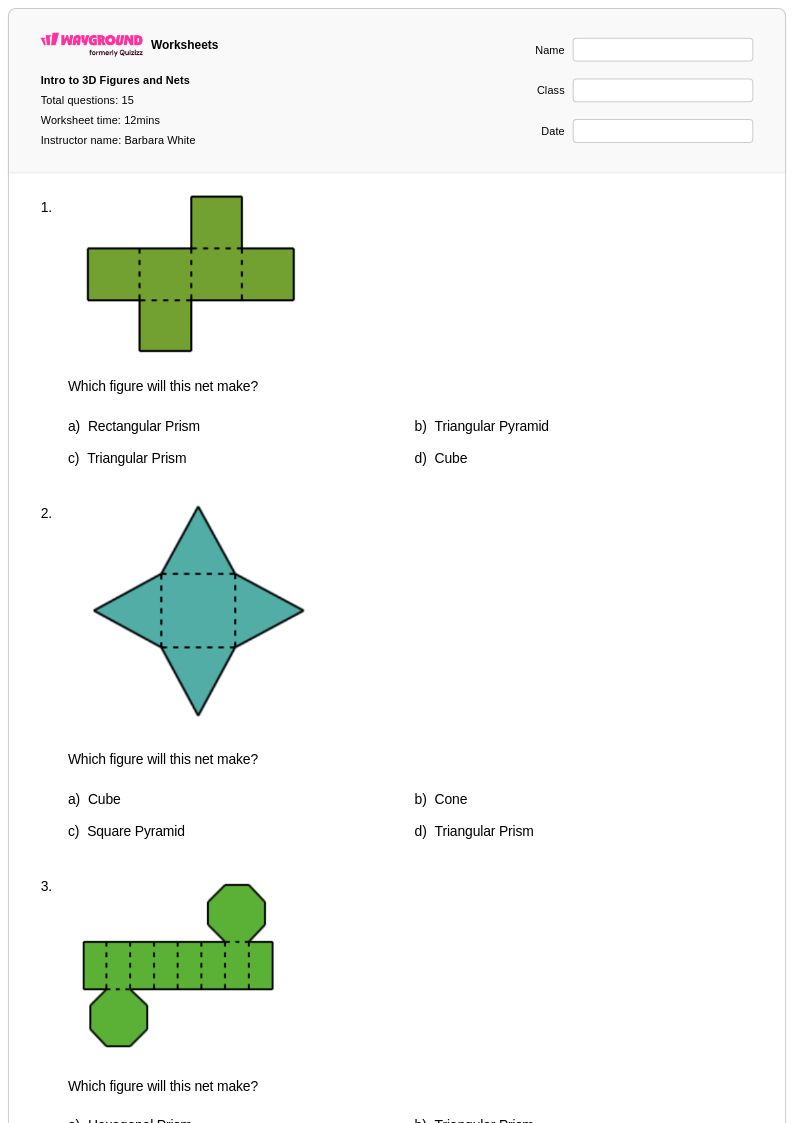
15 Q
3rd - 5th
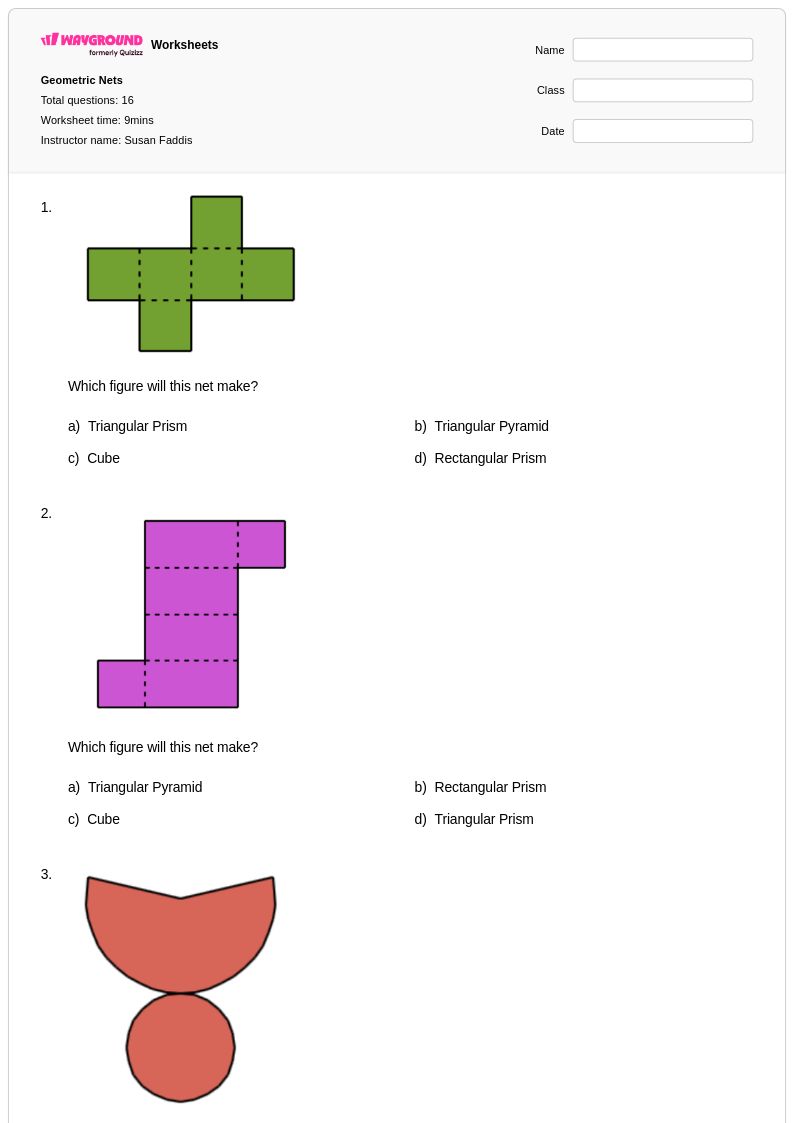
16 Q
3rd
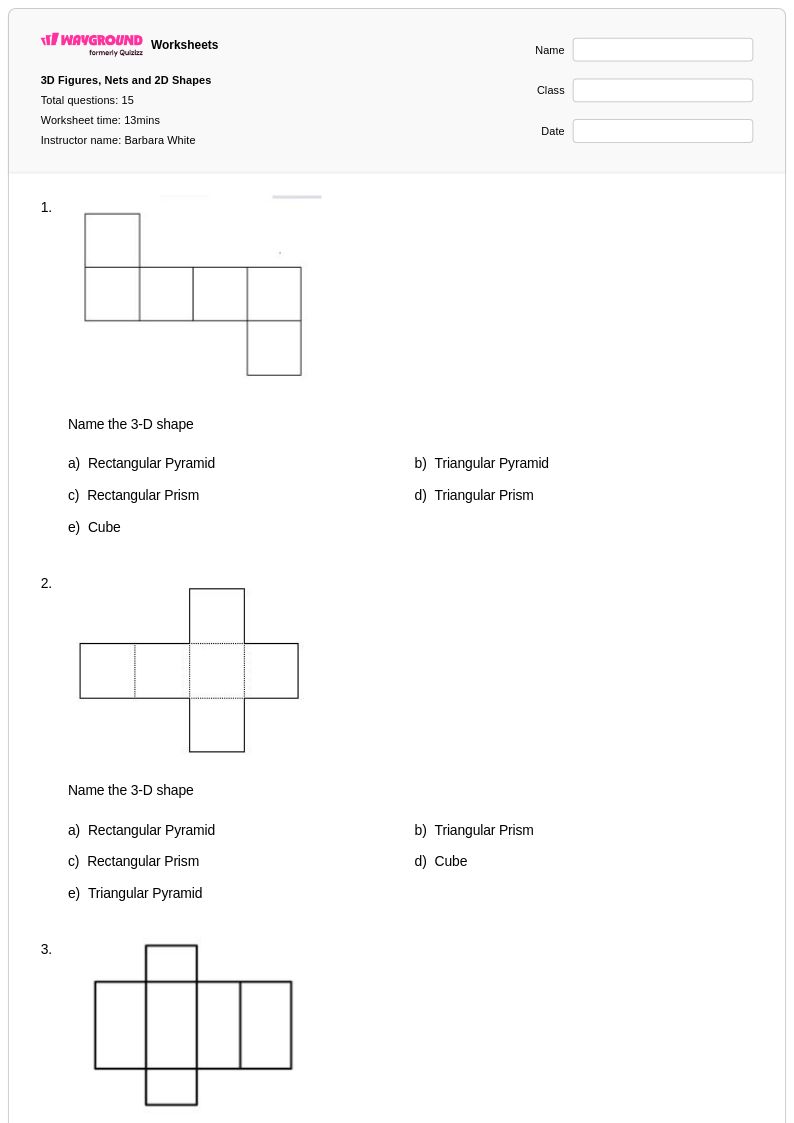
15 Q
3rd - 4th
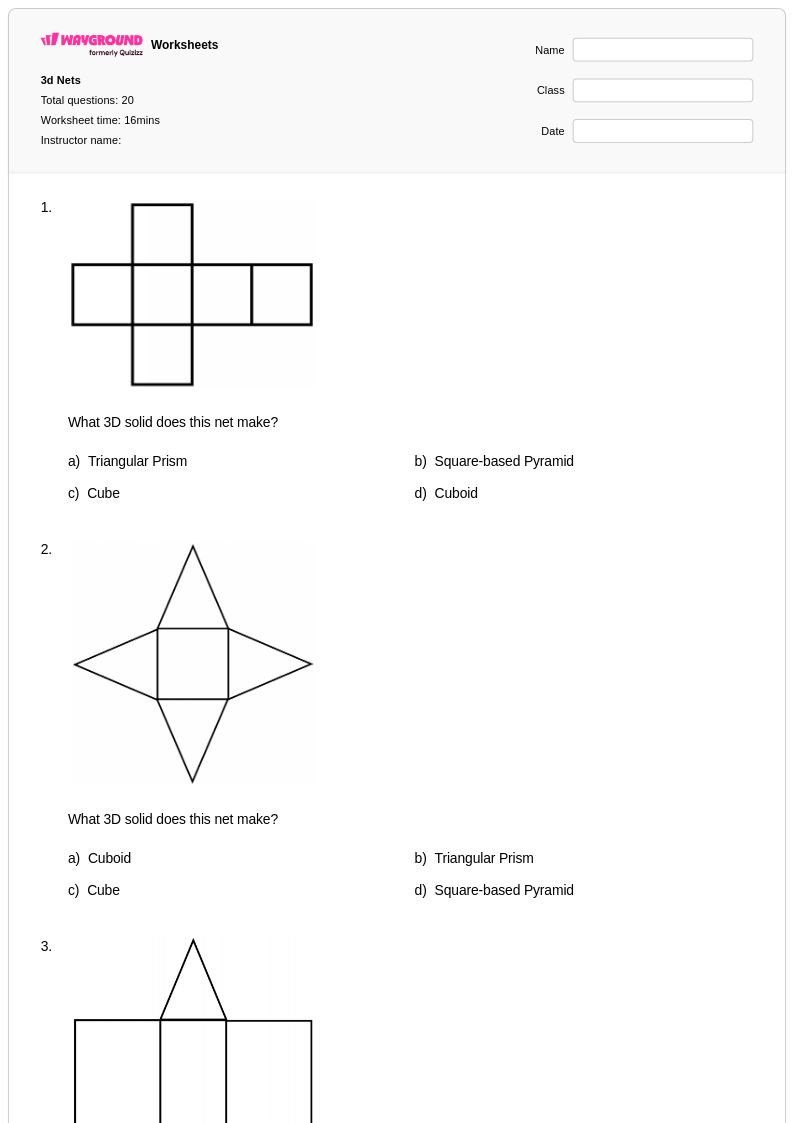
20 Q
3rd
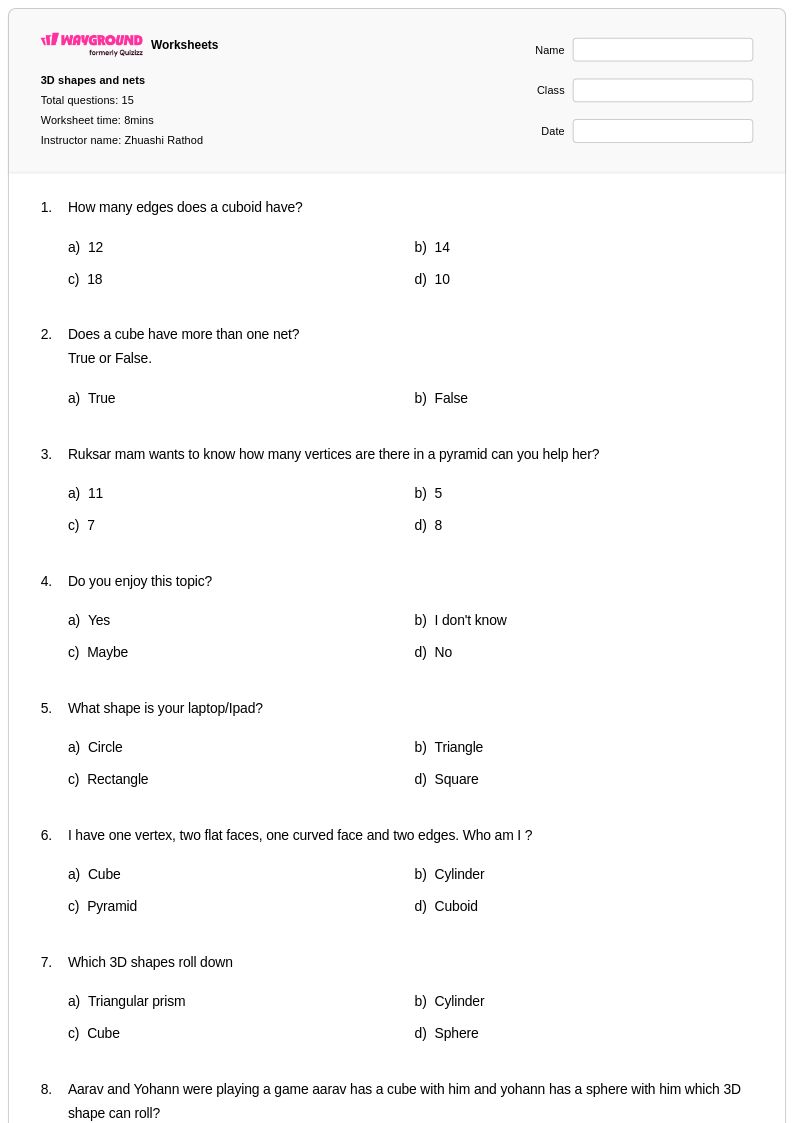
15 Q
3rd
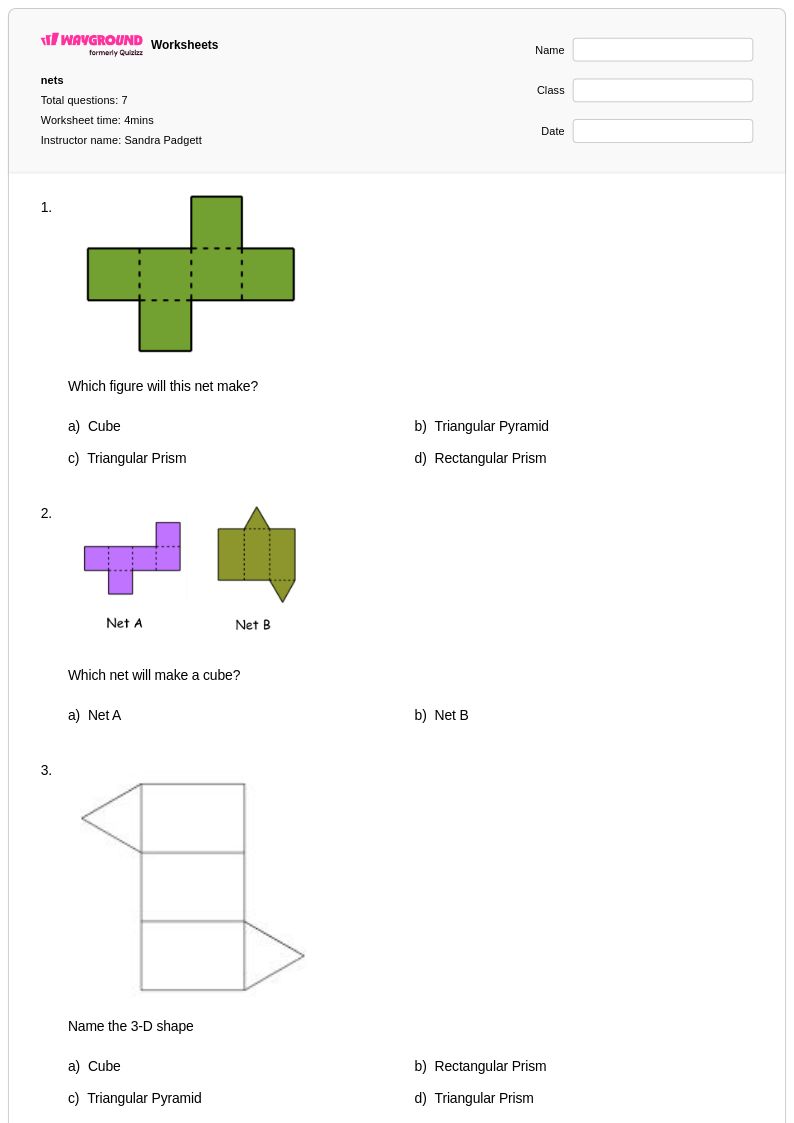
7 Q
3rd
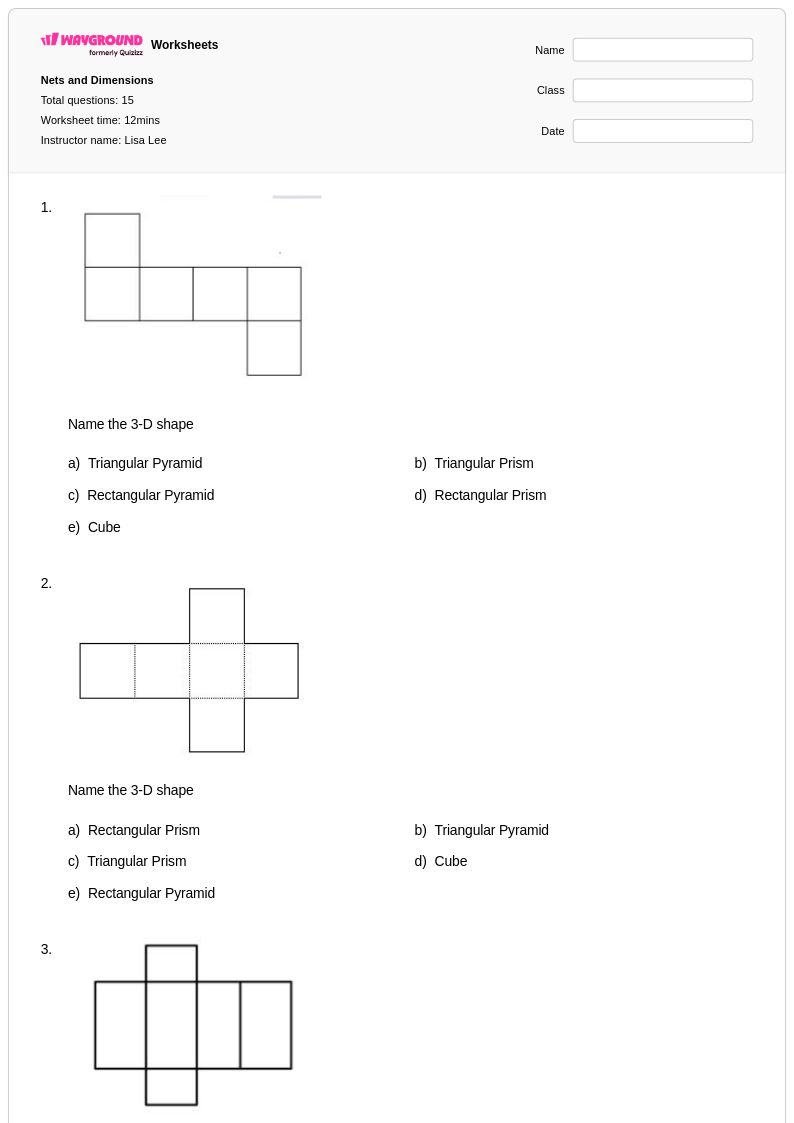
15 Q
3rd - 4th
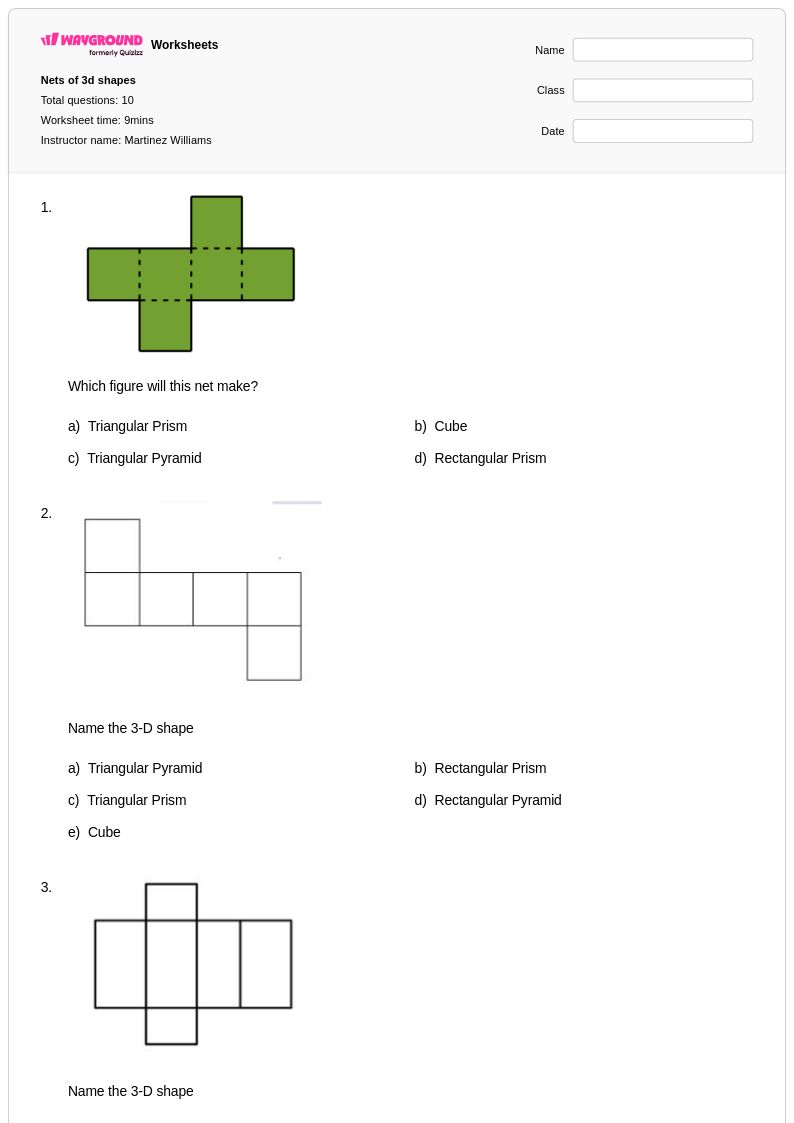
10 Q
3rd - 7th
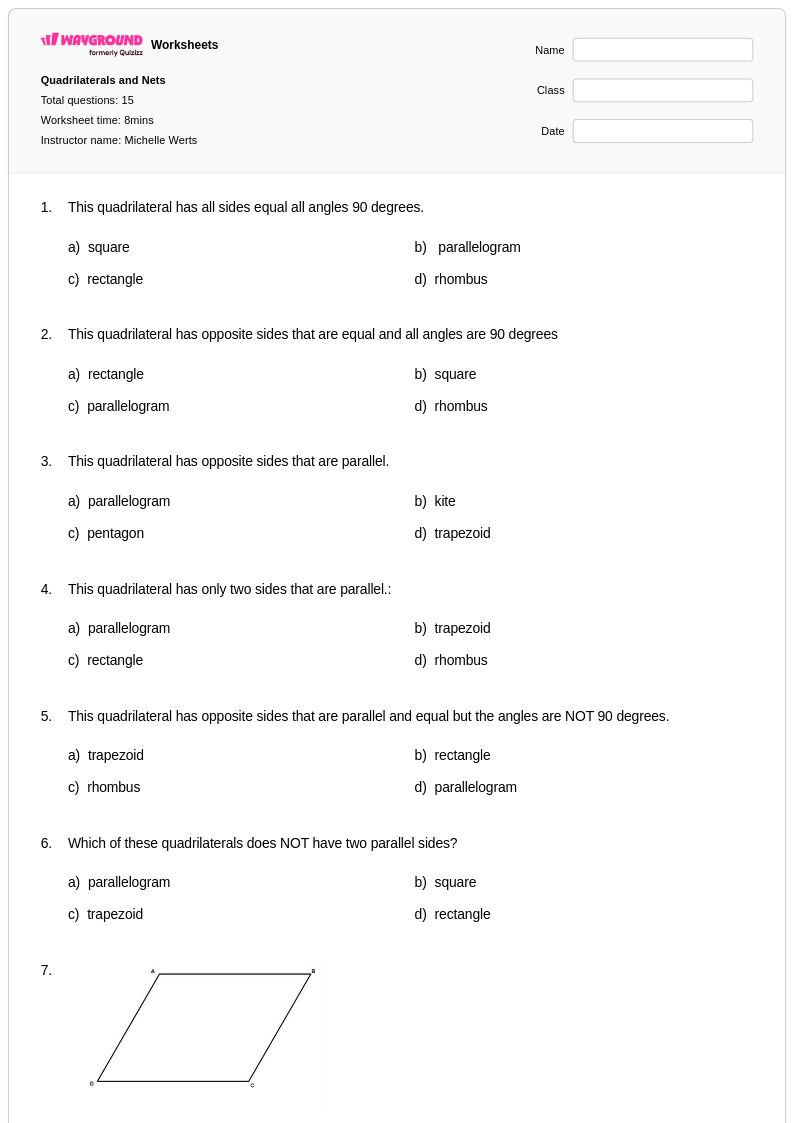
15 Q
3rd
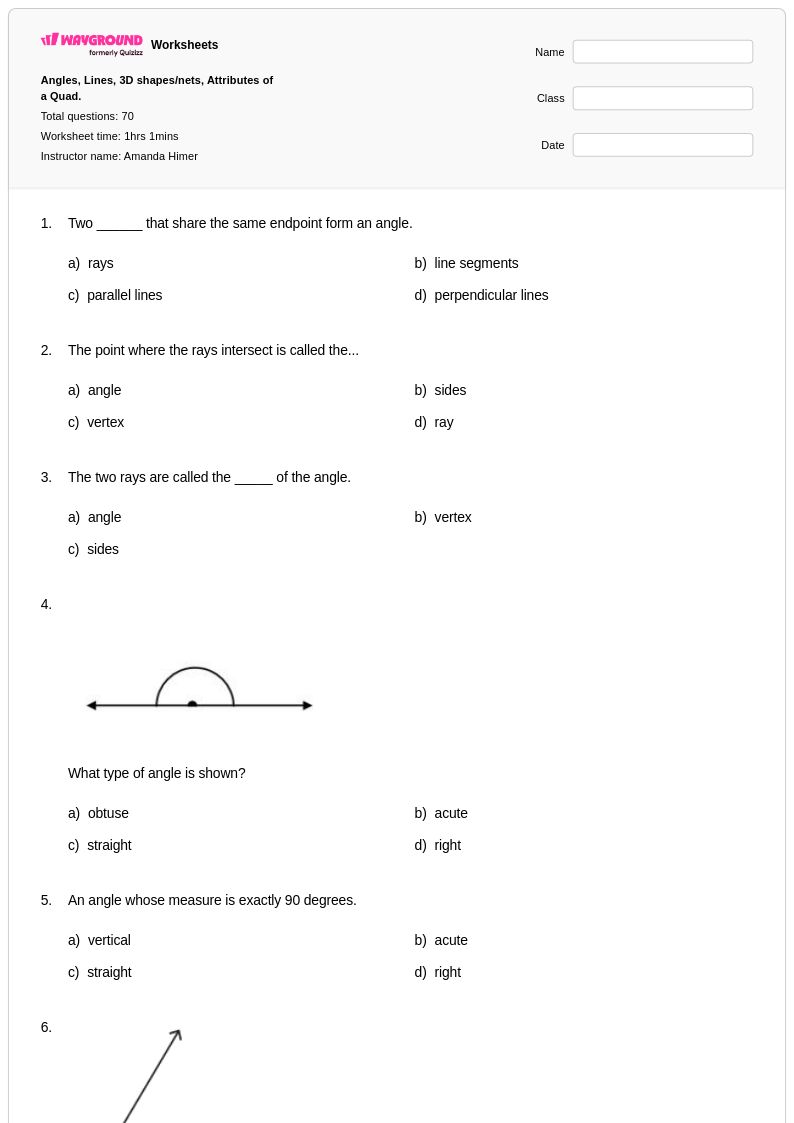
70 Q
3rd
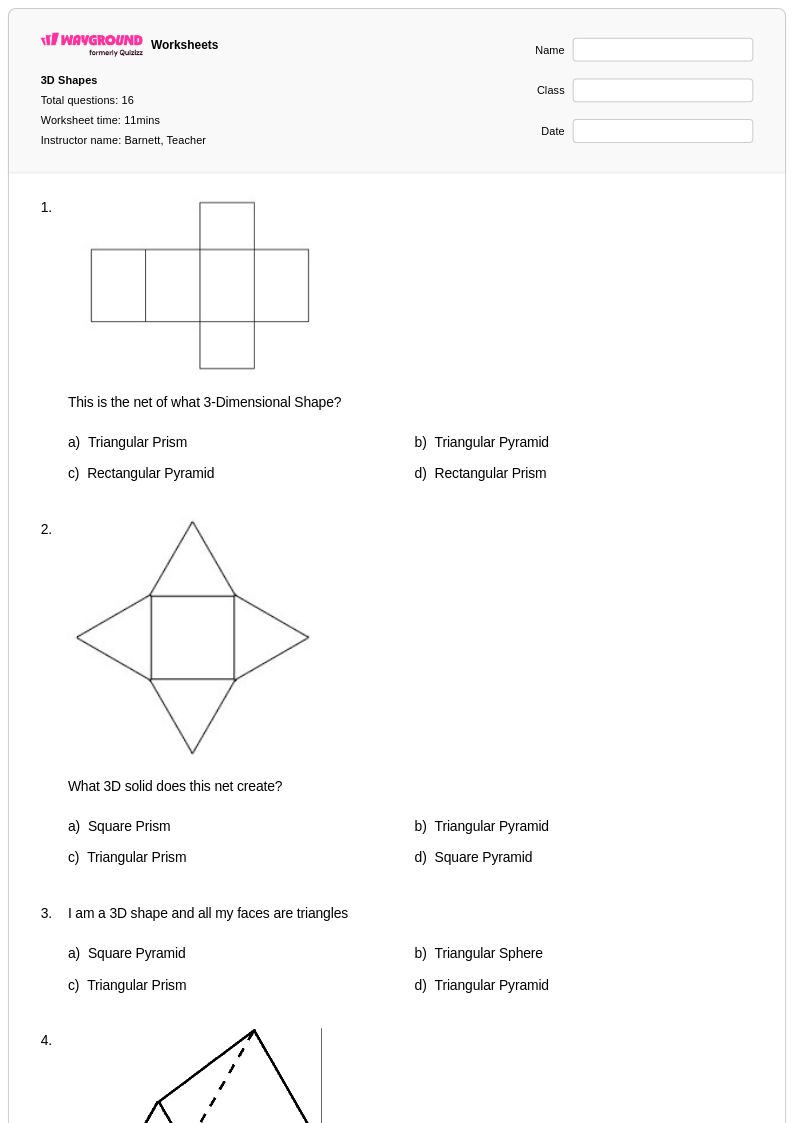
16 Q
3rd
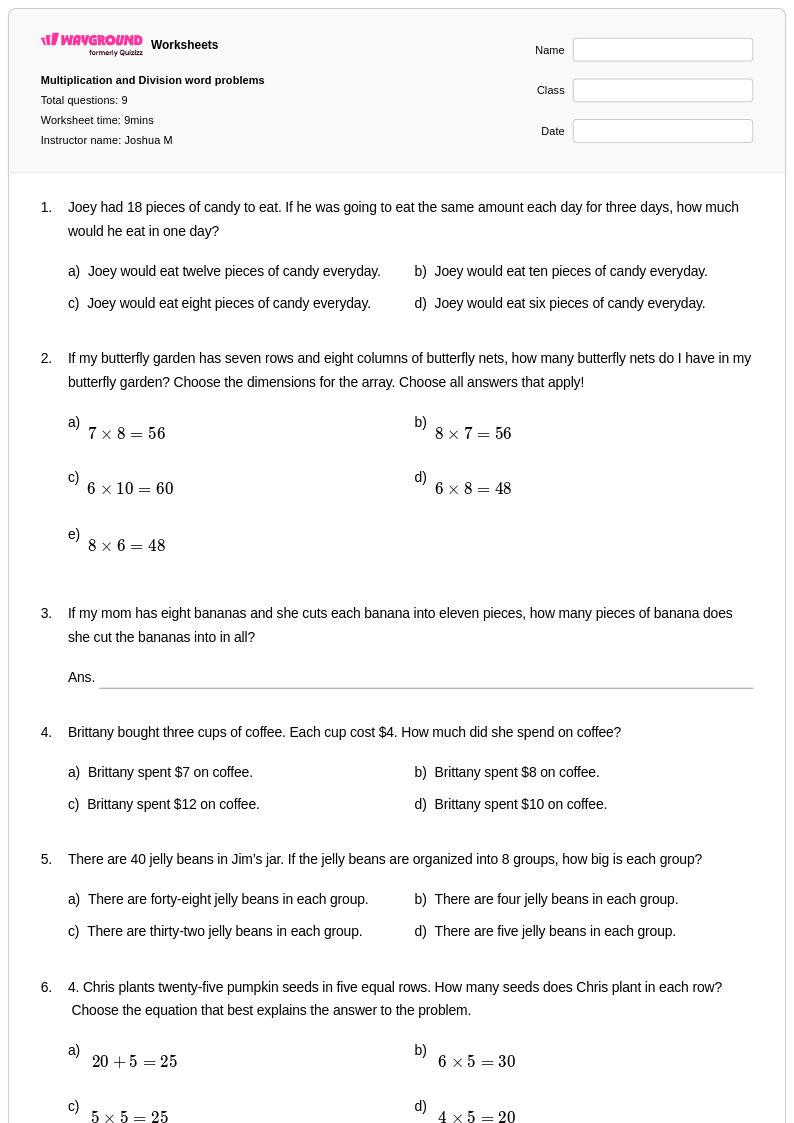
9 Q
2nd - Uni
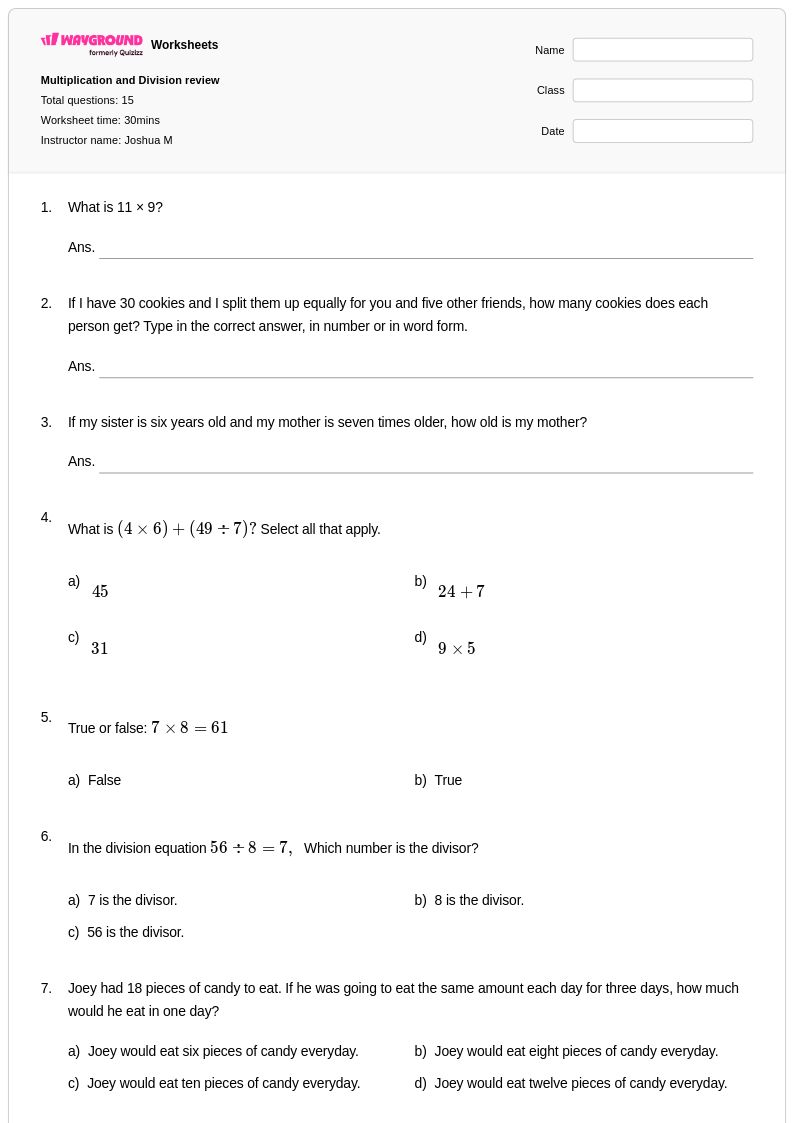
15 Q
3rd
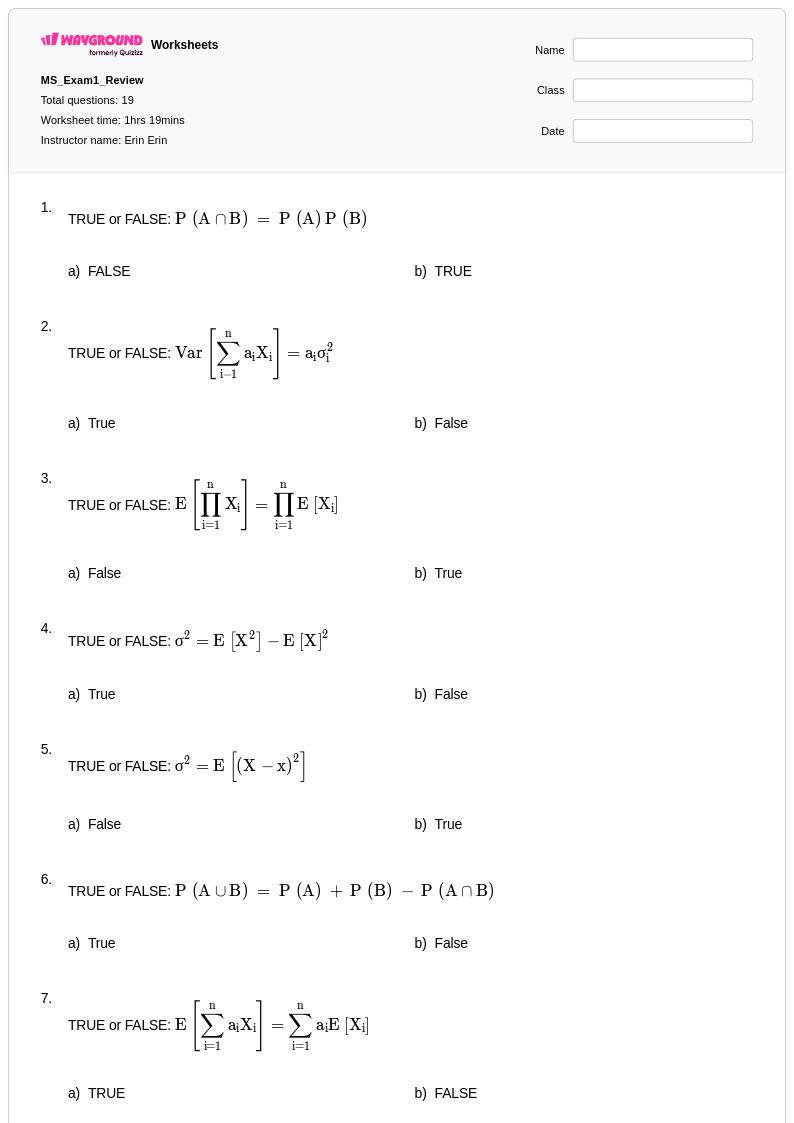
19 Q
KG - 3rd
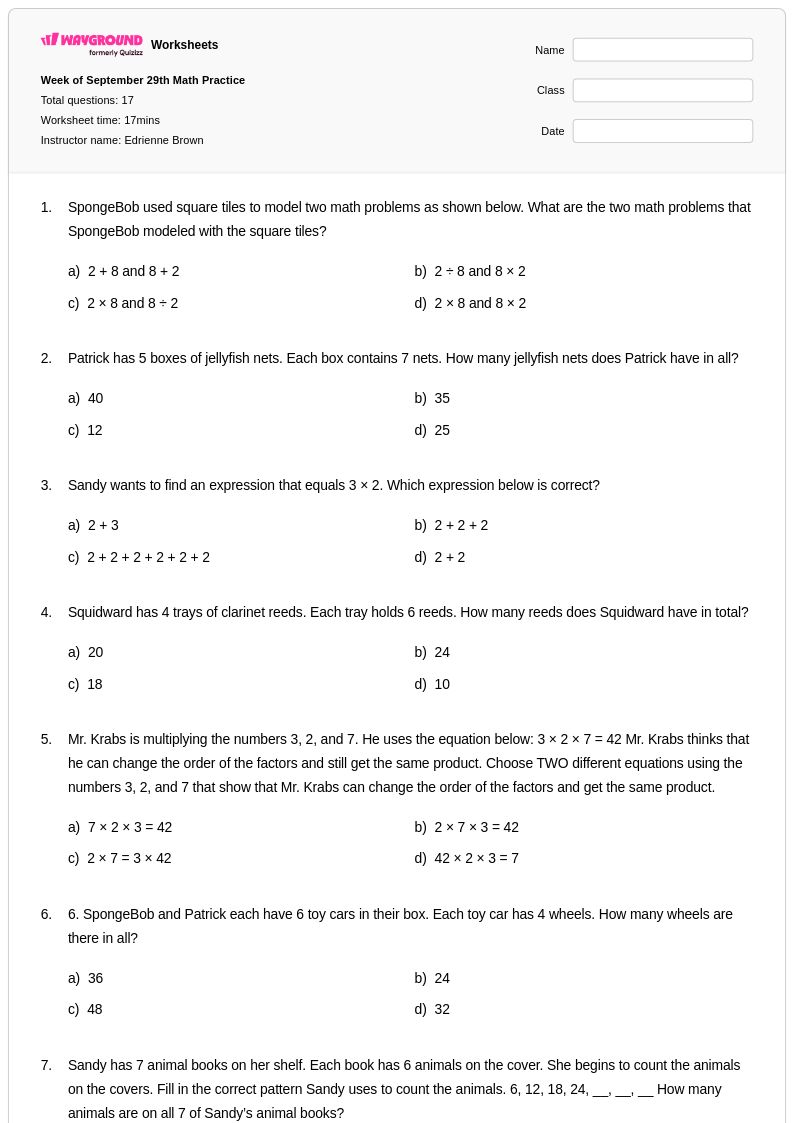
17 Q
3rd
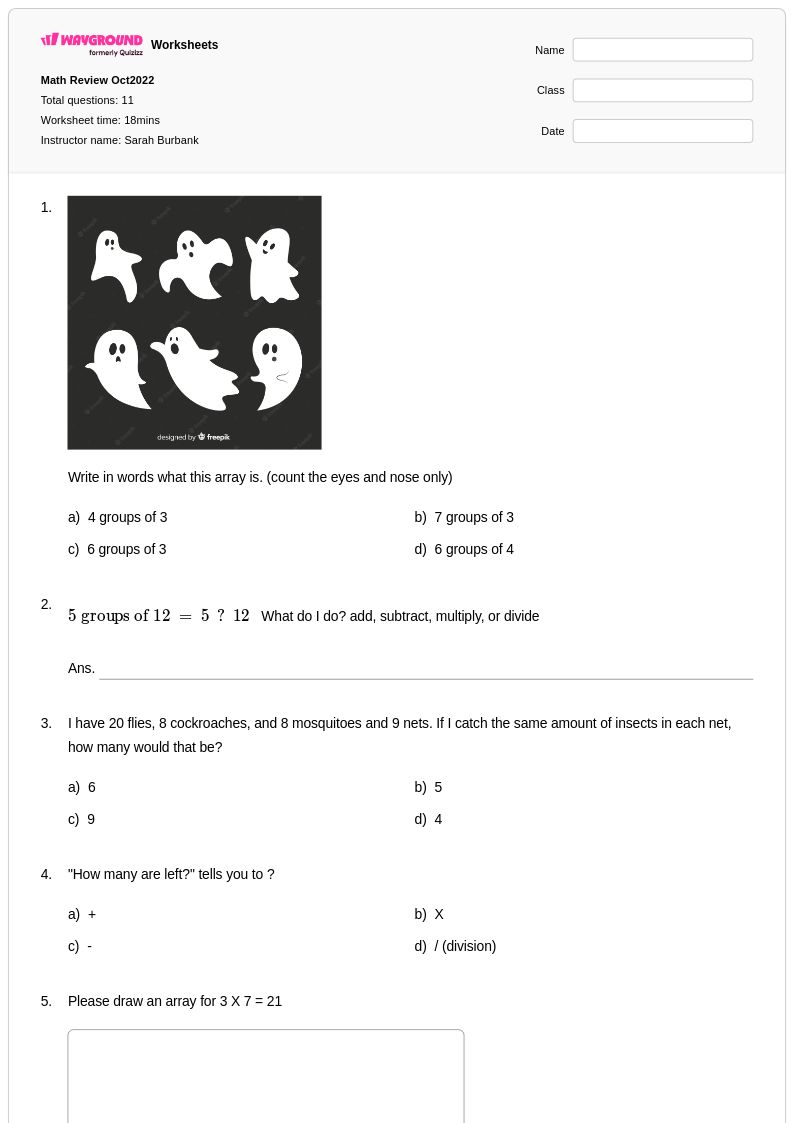
11 Q
3rd
14 Q
3rd
17 Q
3rd - 4th
20 Q
3rd
20 Q
3rd - Uni
Explore Other Subject Worksheets for class 3
Explore printable Nets worksheets for Class 3
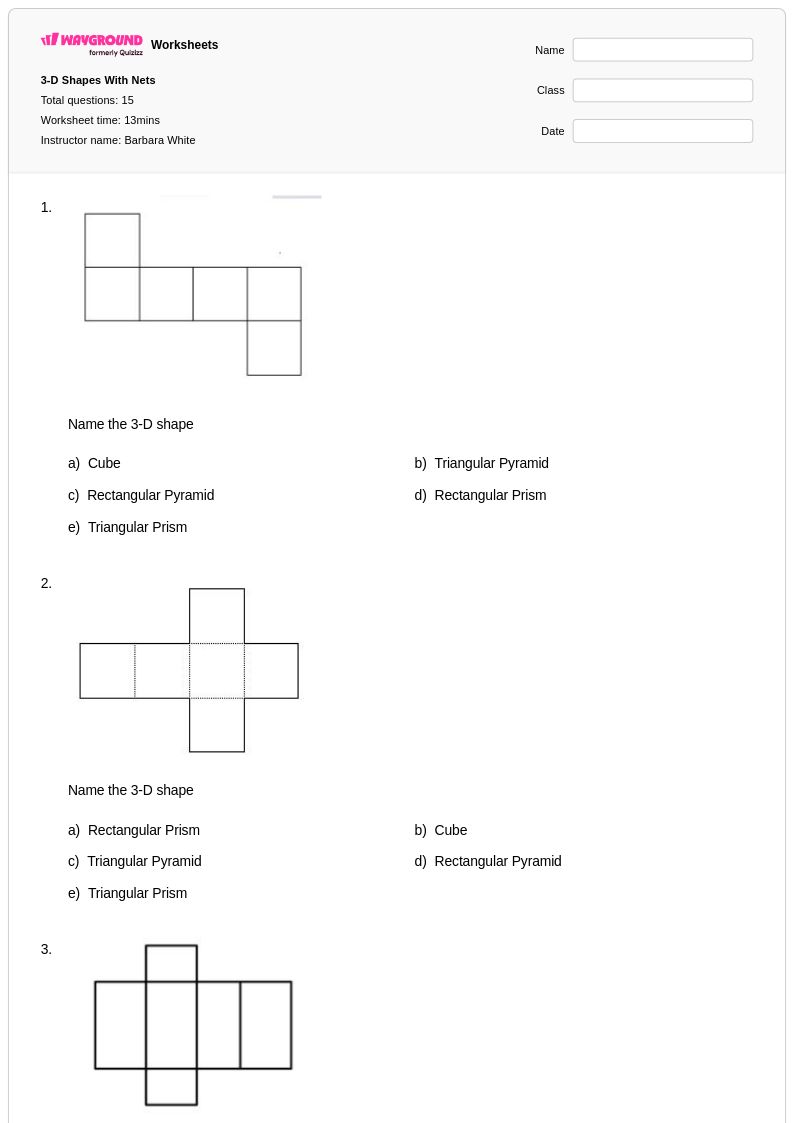
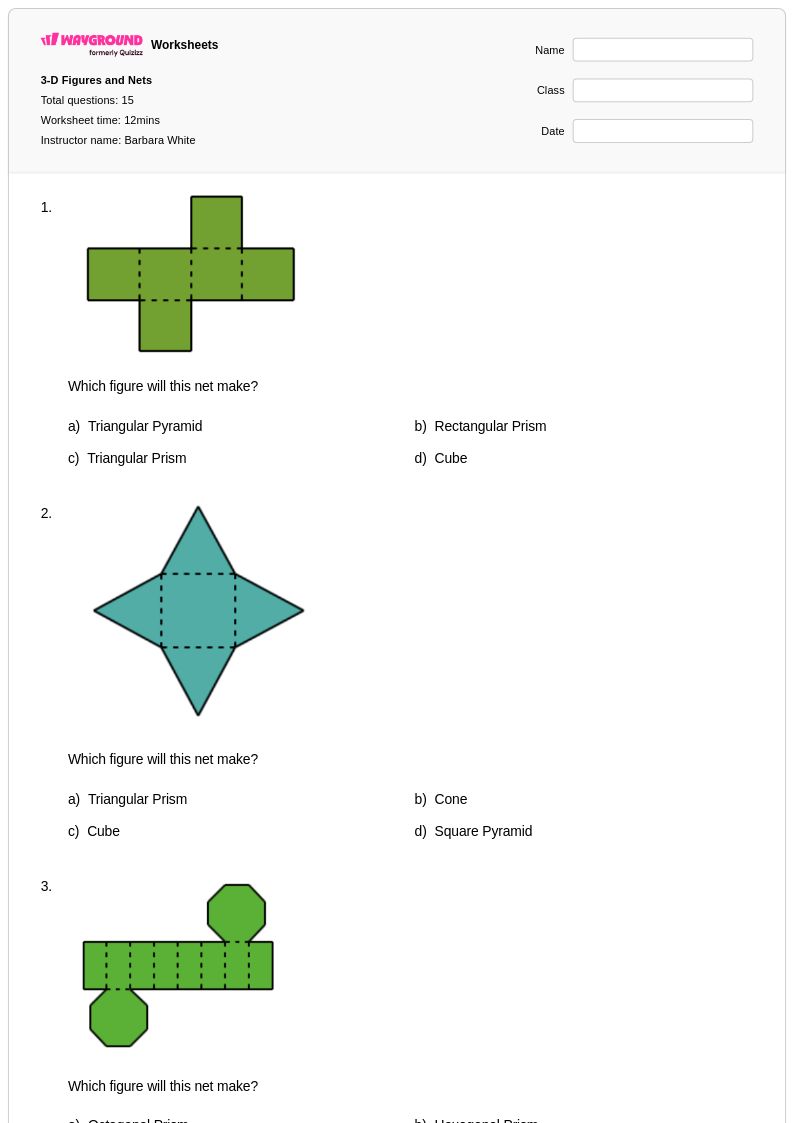
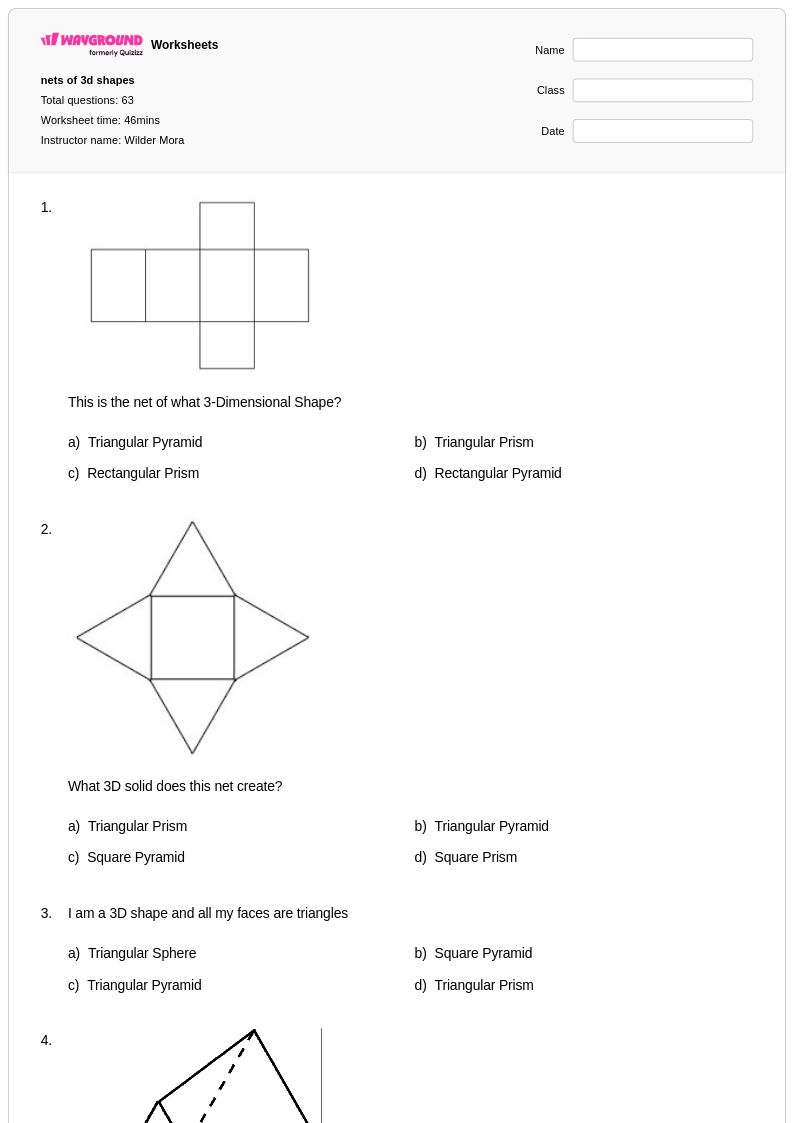
Nets worksheets for Class 3 students available through Wayground (formerly Quizizz) provide essential practice in visualizing and understanding three-dimensional shapes through their two-dimensional representations. These carefully crafted printables help young learners develop spatial reasoning skills by teaching them to identify which flat patterns can be folded to create cubes, rectangular prisms, and other basic geometric solids. The practice problems systematically guide students through recognizing the relationship between 2D nets and 3D objects, strengthening their ability to mentally manipulate shapes and understand fundamental geometric concepts. Each worksheet includes comprehensive answer keys and is available as free pdf downloads, making it easy for educators to incorporate this critical geometry skill into their mathematics instruction.
Wayground (formerly Quizizz) supports teachers with an extensive collection of nets worksheets drawn from millions of educator-created resources, ensuring comprehensive coverage of this important Class 3 geometry concept. The platform's robust search and filtering capabilities allow teachers to quickly locate materials that align with specific learning standards and match their students' skill levels. These differentiation tools enable educators to customize worksheets for remediation, enrichment, or targeted skill practice, while the flexible format options include both printable and digital versions to accommodate various classroom needs. Teachers can efficiently plan geometry lessons, assess student understanding of spatial relationships, and provide meaningful practice opportunities that build confidence in working with three-dimensional concepts through two-dimensional representations.
FAQs
What new skills involving nets are introduced in Grade 3?
How can I challenge my third graders when teaching geometric nets?
What is a common difficulty for third graders when working with nets?
What types of exercises are effective for Grade 3 nets practice?
How can I use this Wayground worksheet for practice or assessment?