
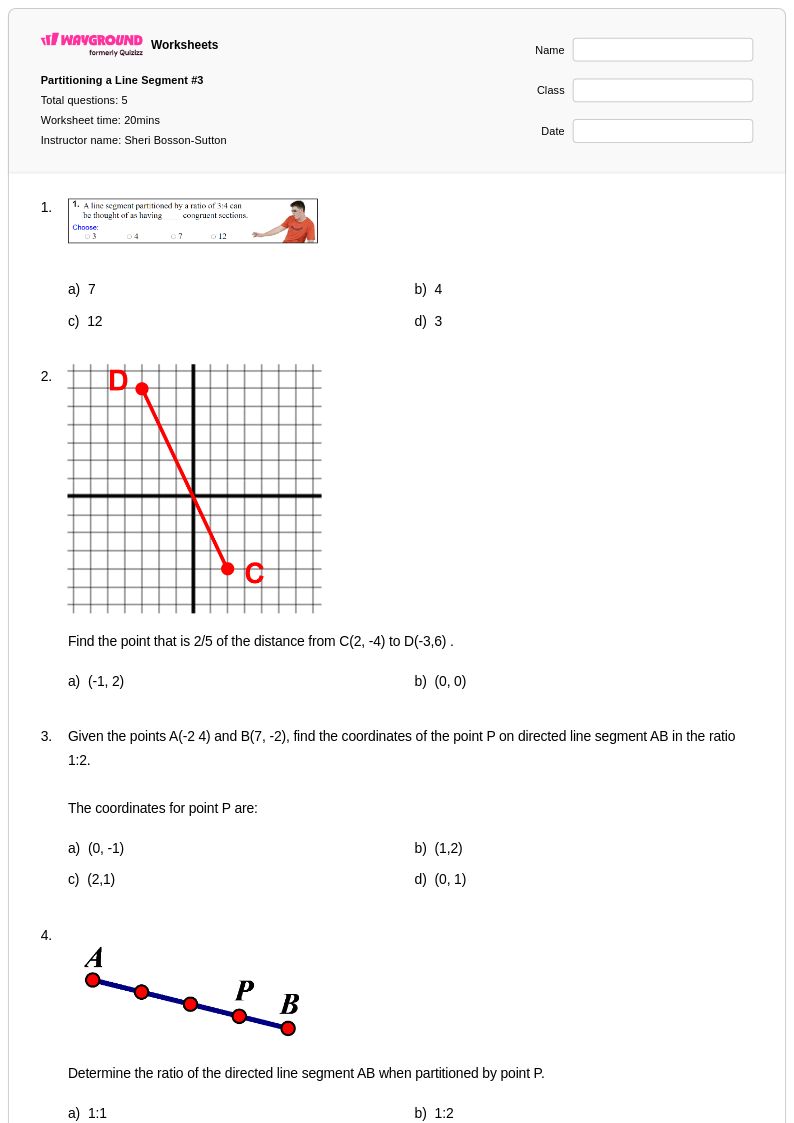
5 Q
9th - 12th
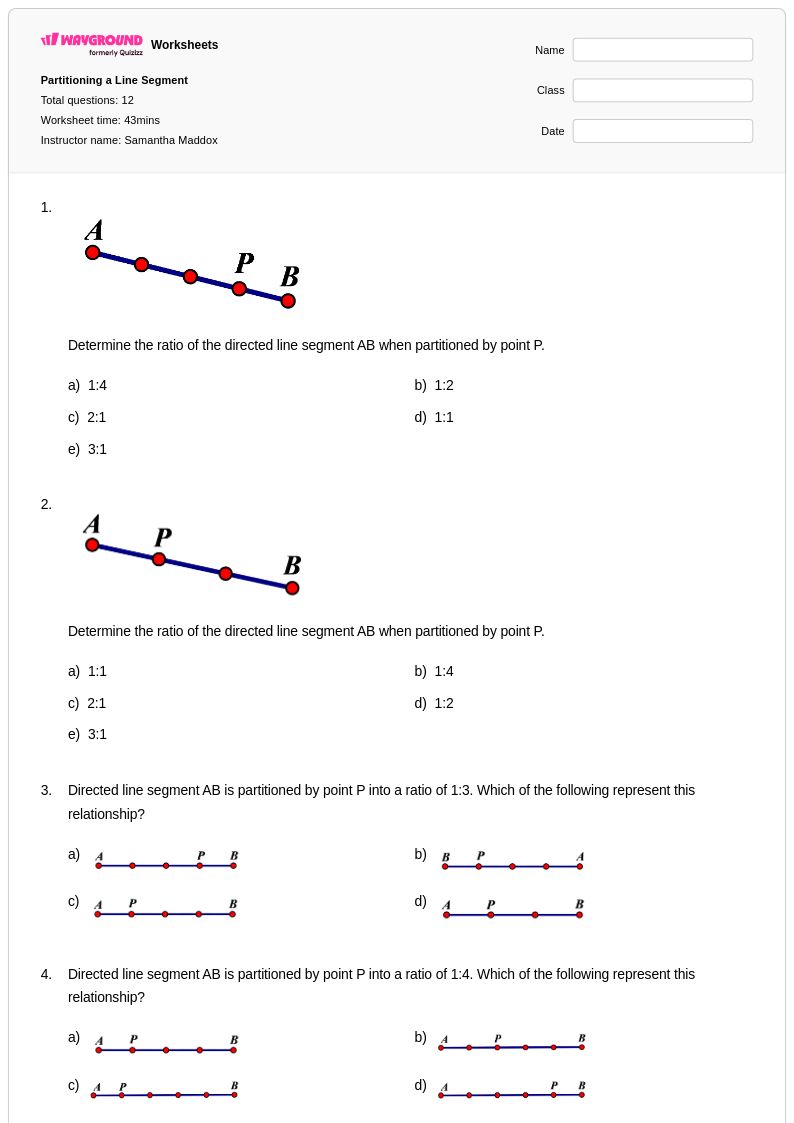
12 Q
9th
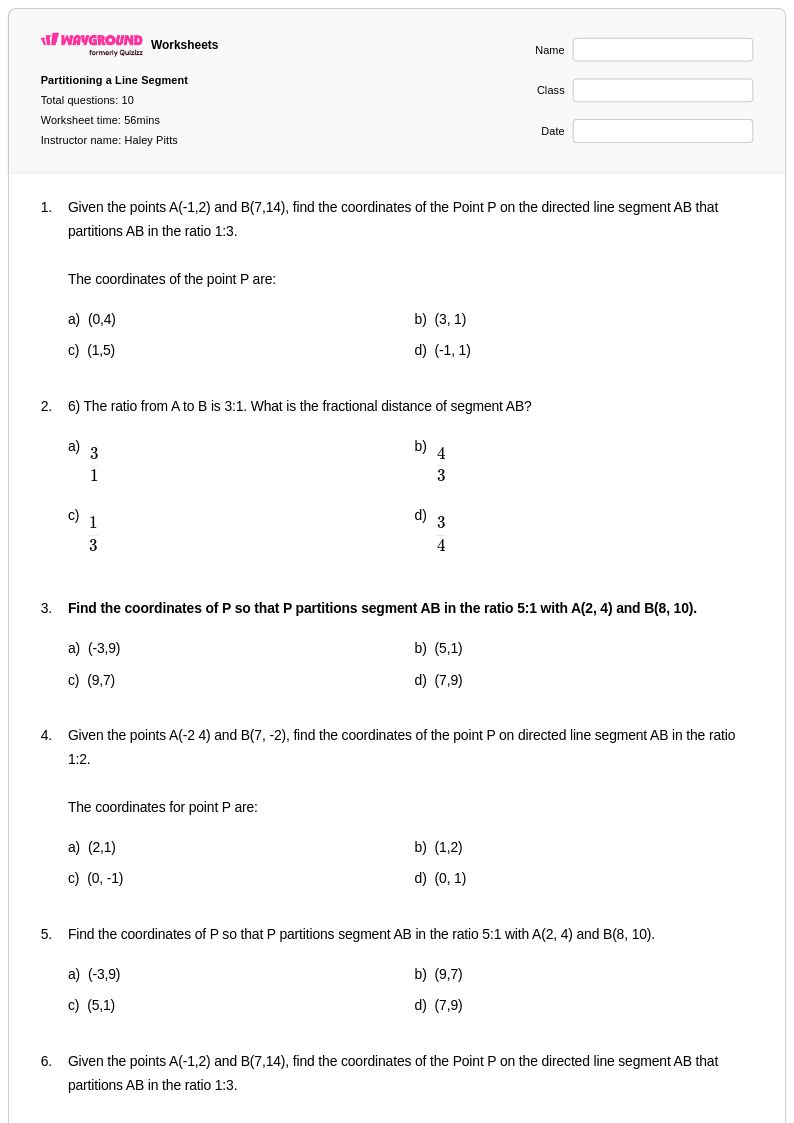
10 Q
10th
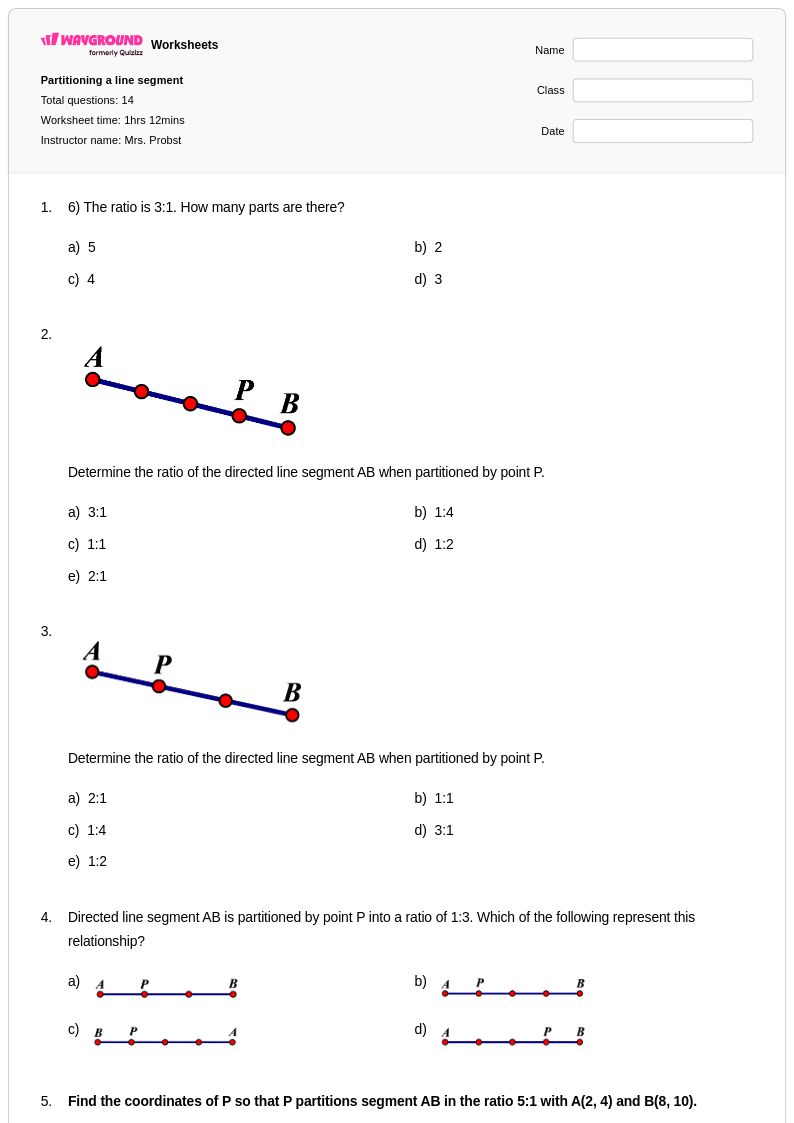
14 Q
10th
10 Q
9th
10 Q
10th
8 Q
12th
11 Q
3rd
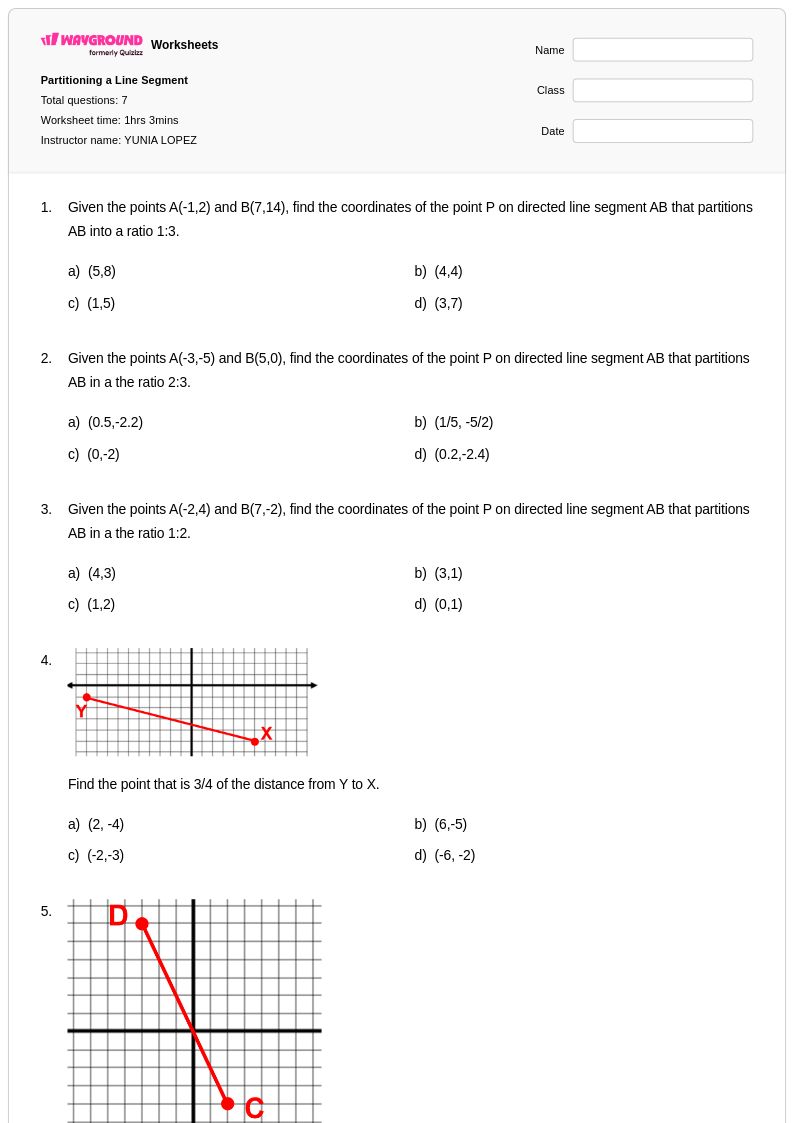
7 Q
10th
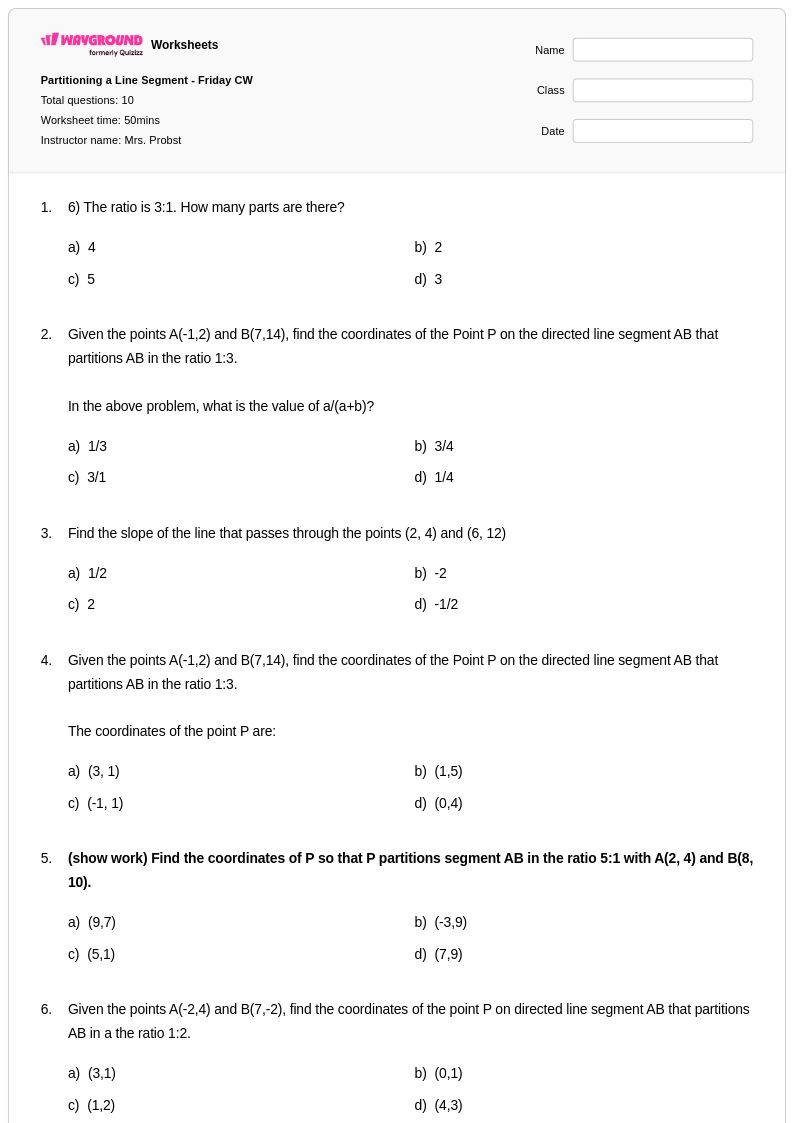
10 Q
10th
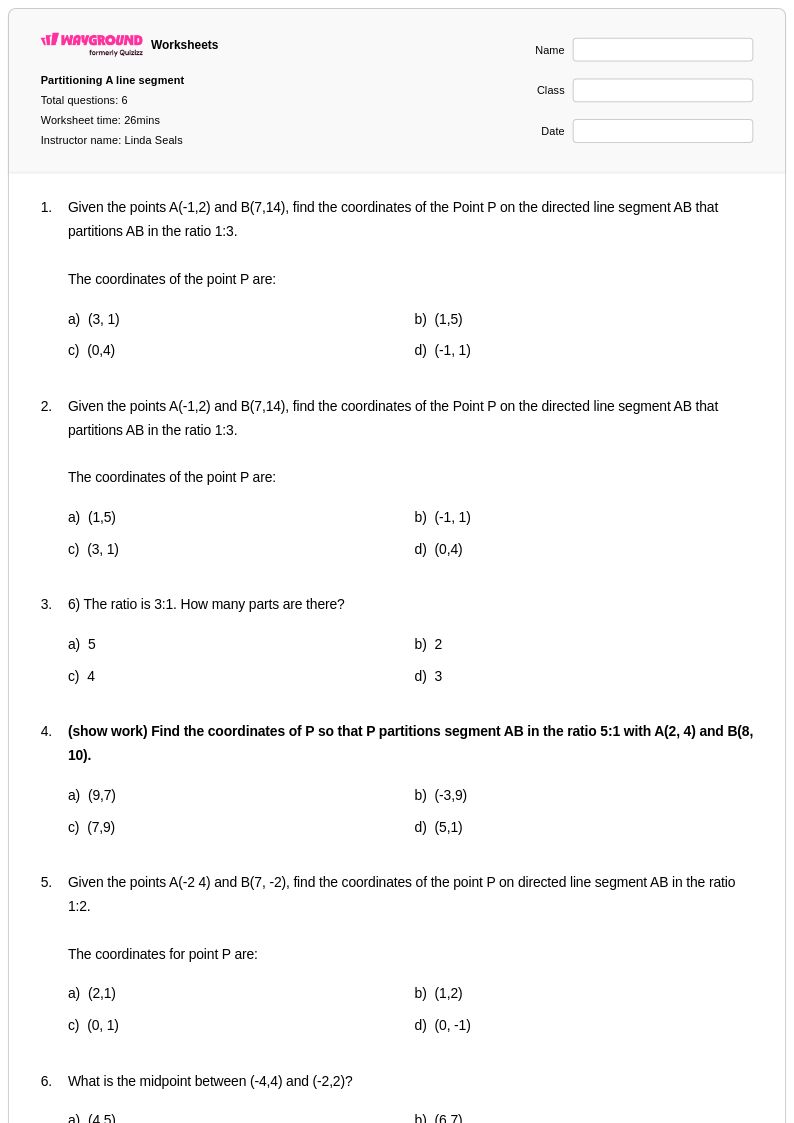
6 Q
10th
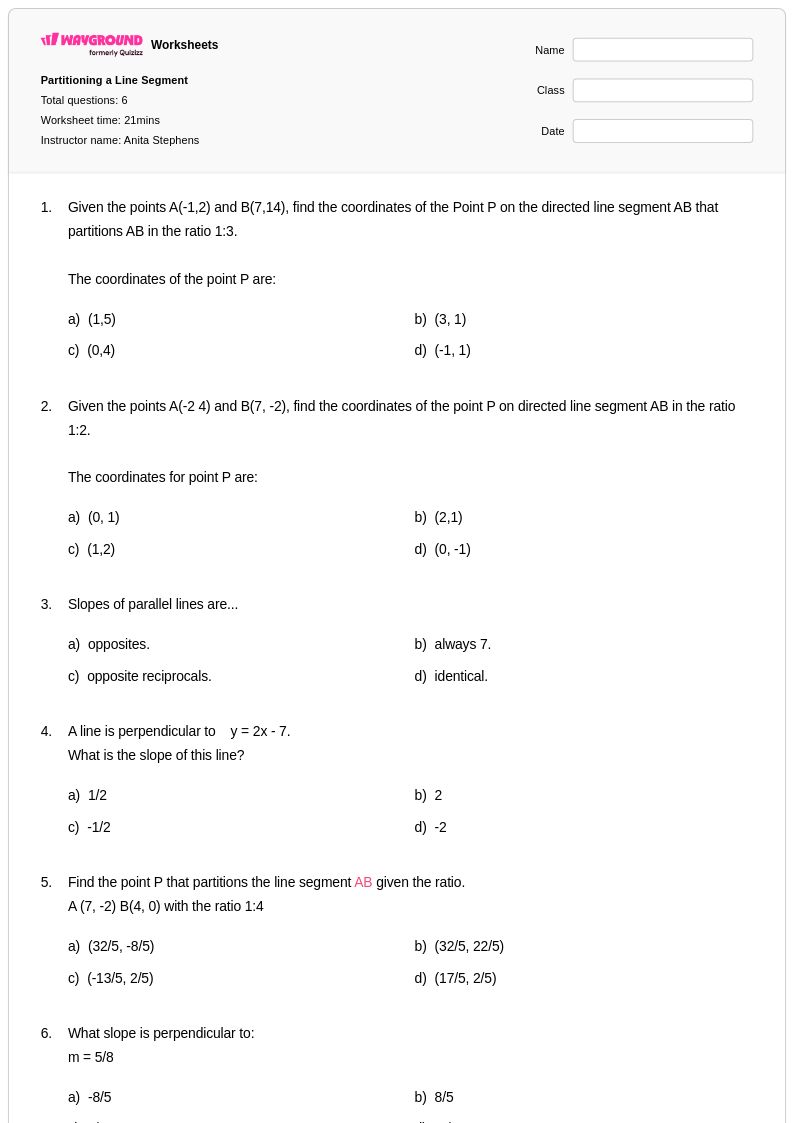
6 Q
10th
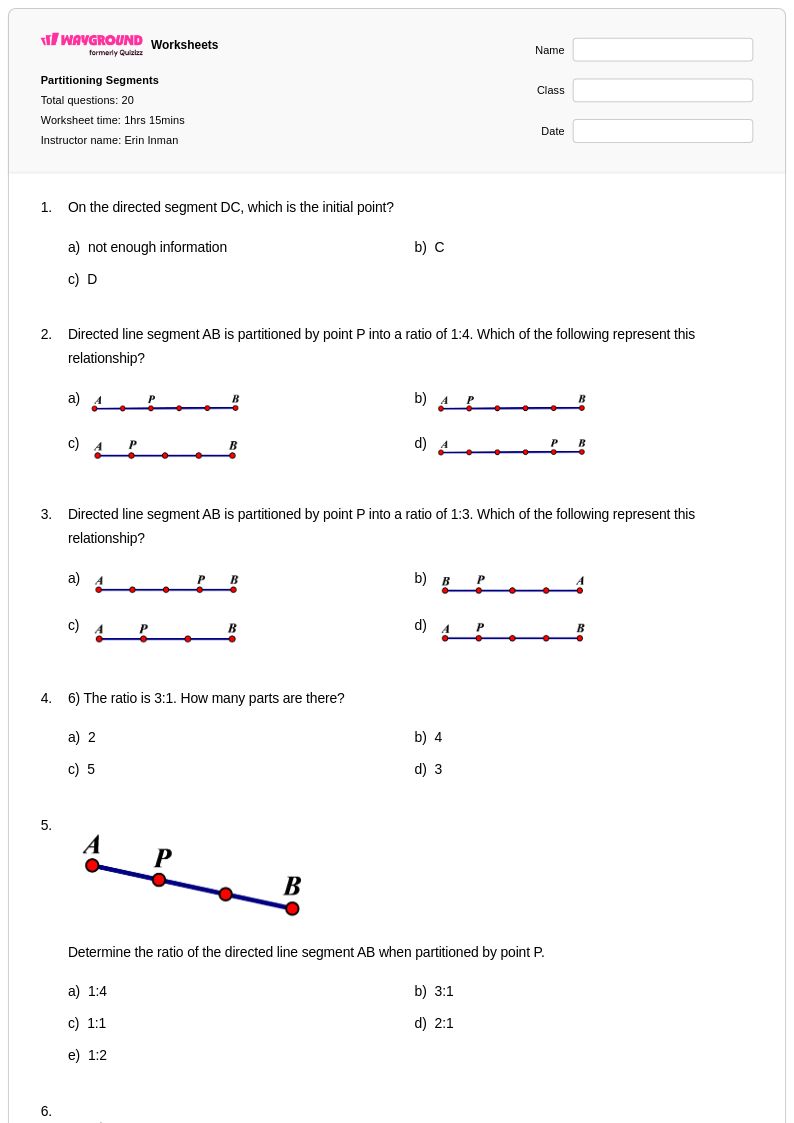
20 Q
8th - 10th
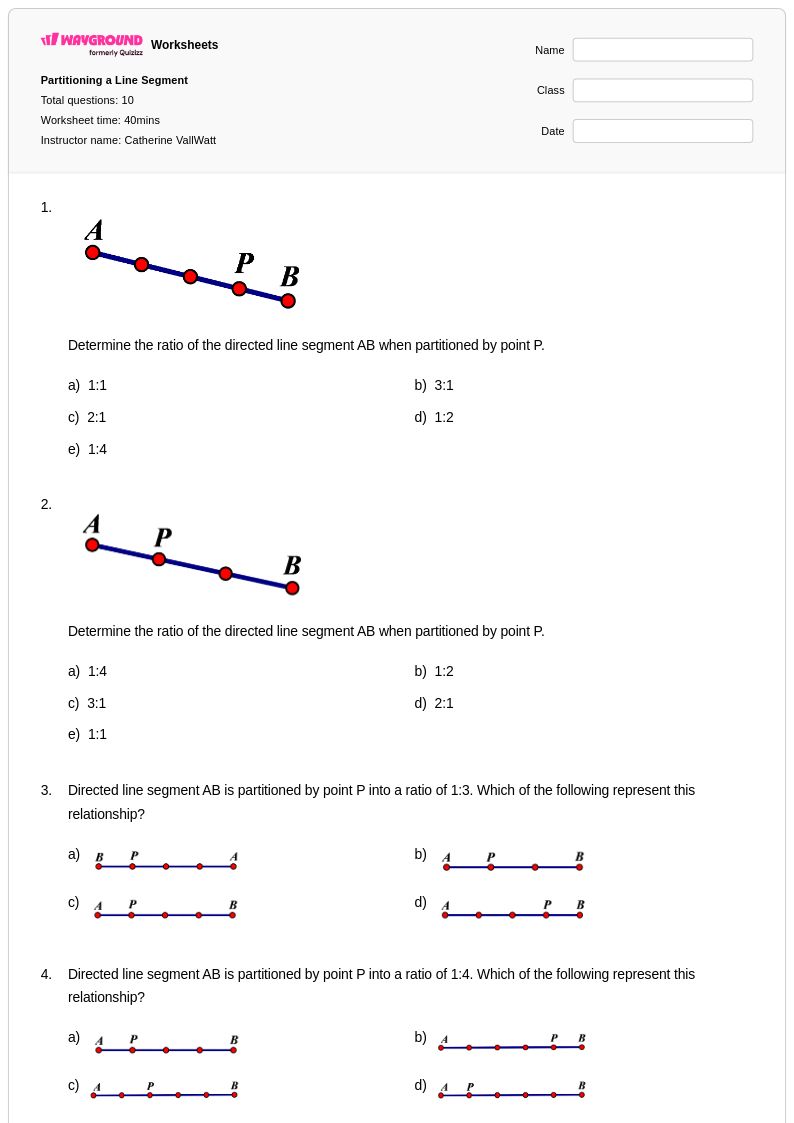
10 Q
8th - 10th
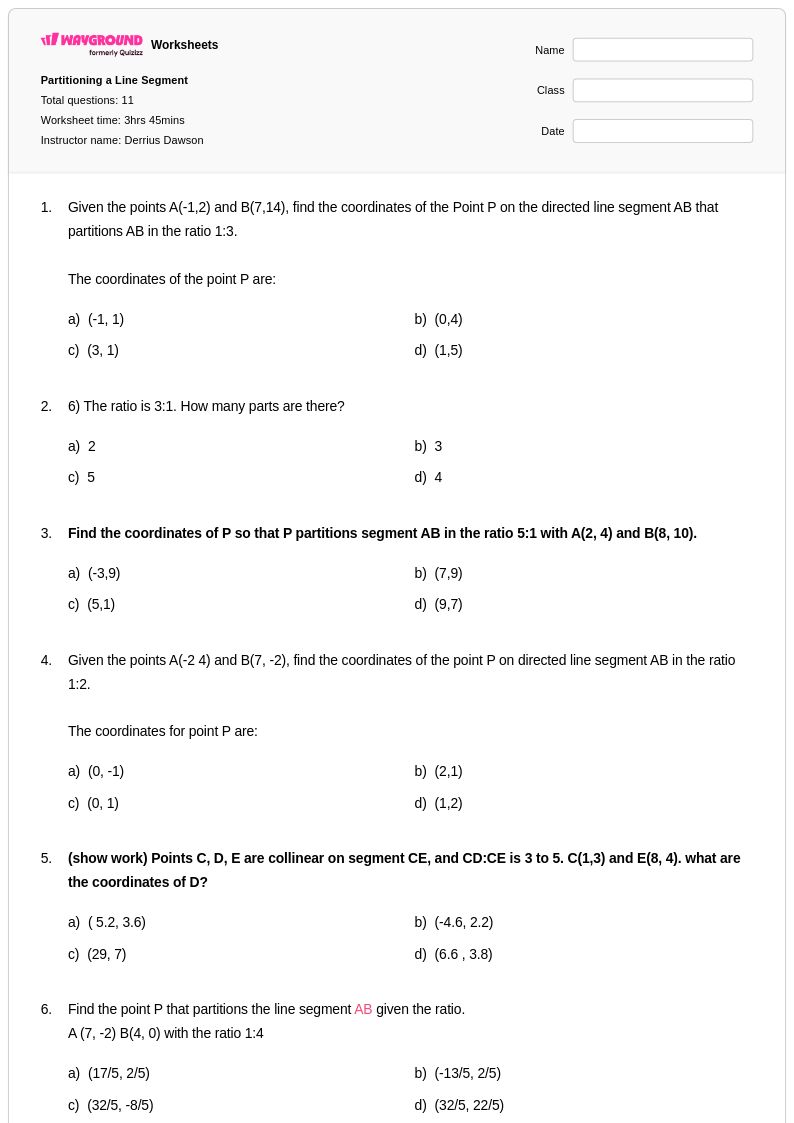
11 Q
9th - 10th
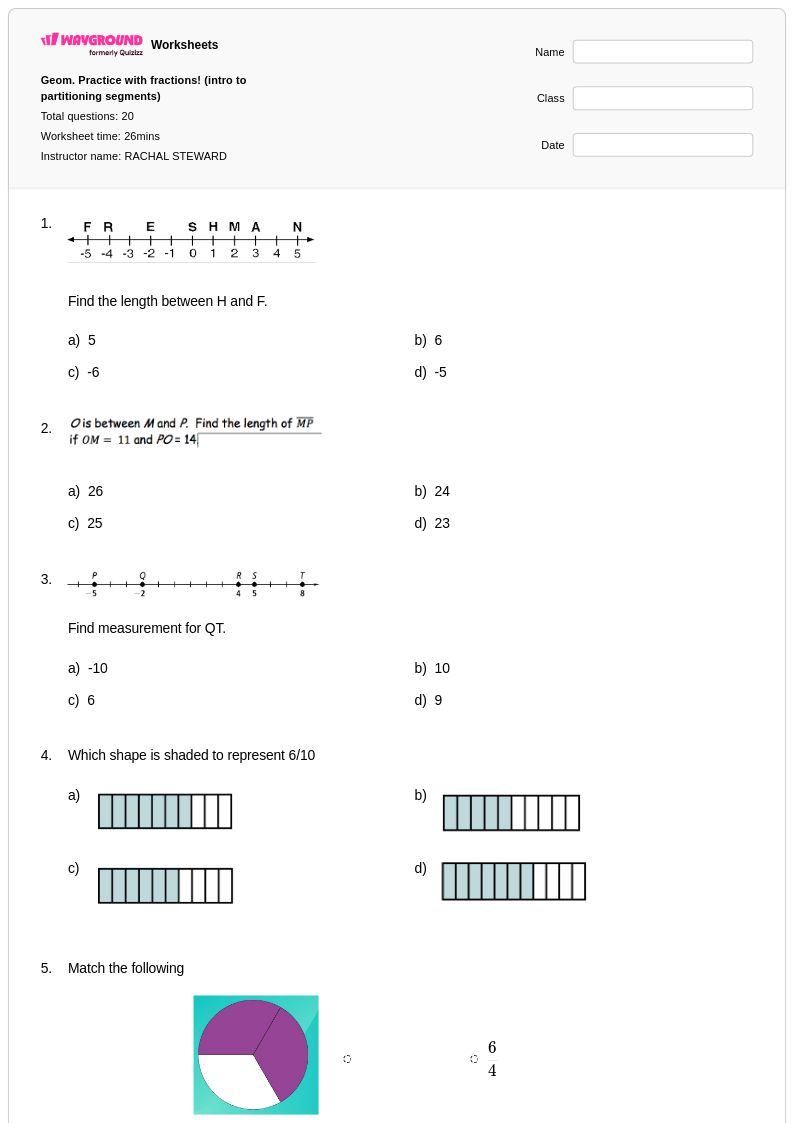
20 Q
9th
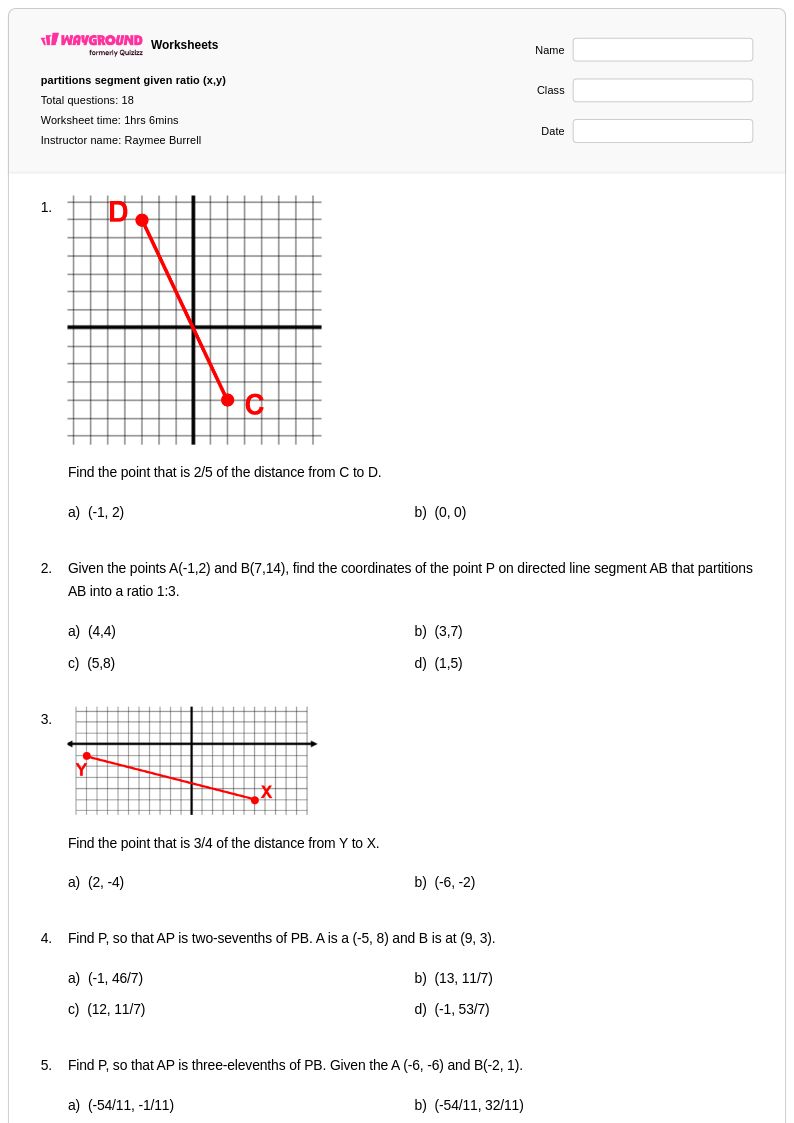
18 Q
9th - 10th
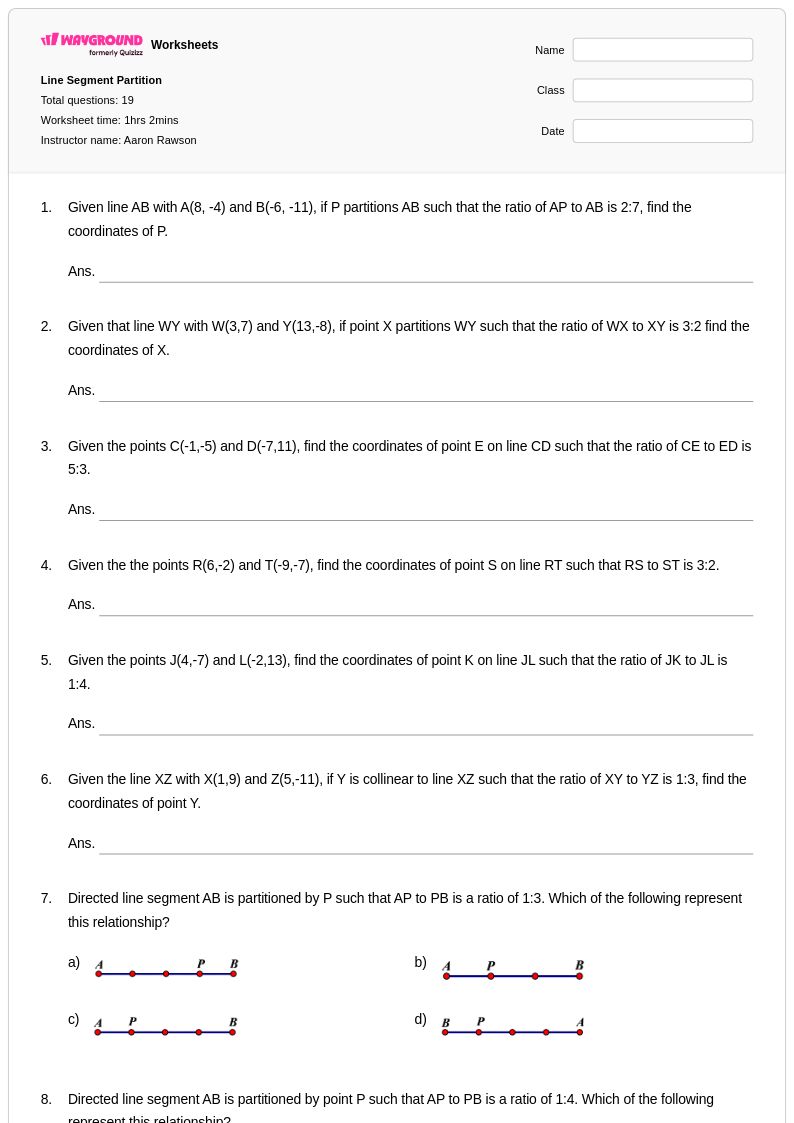
19 Q
10th
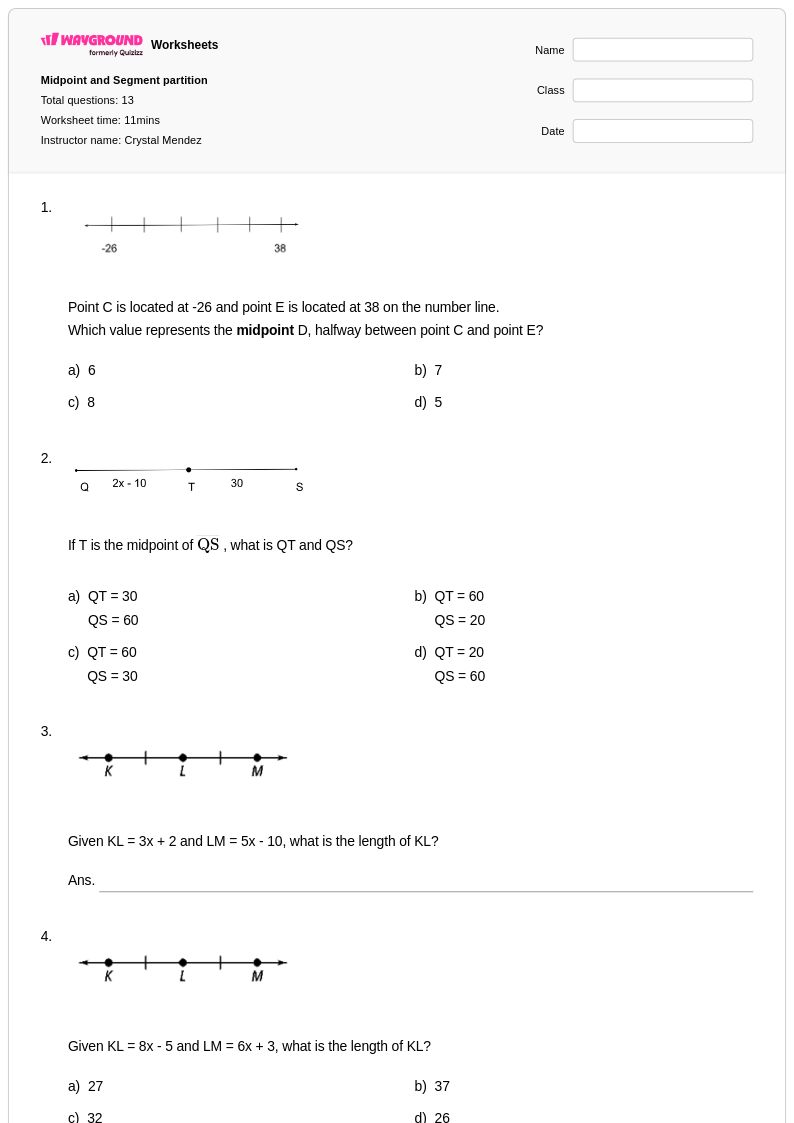
13 Q
10th
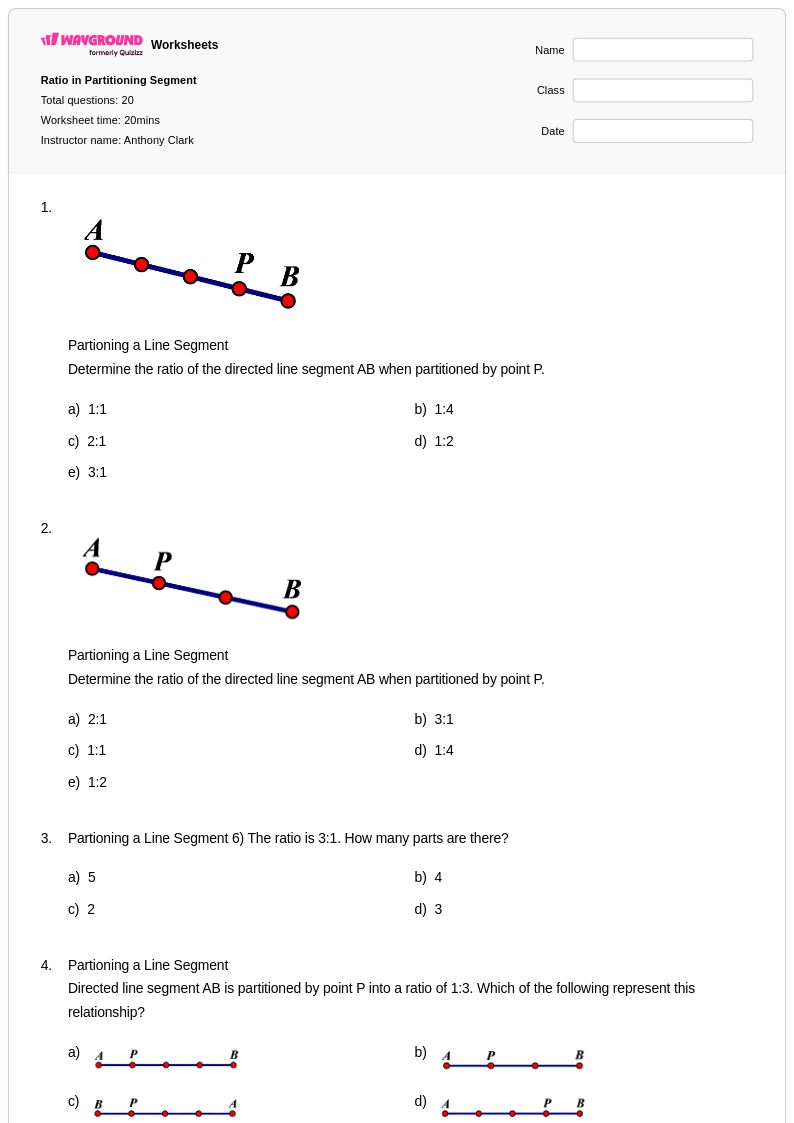
20 Q
9th - Uni
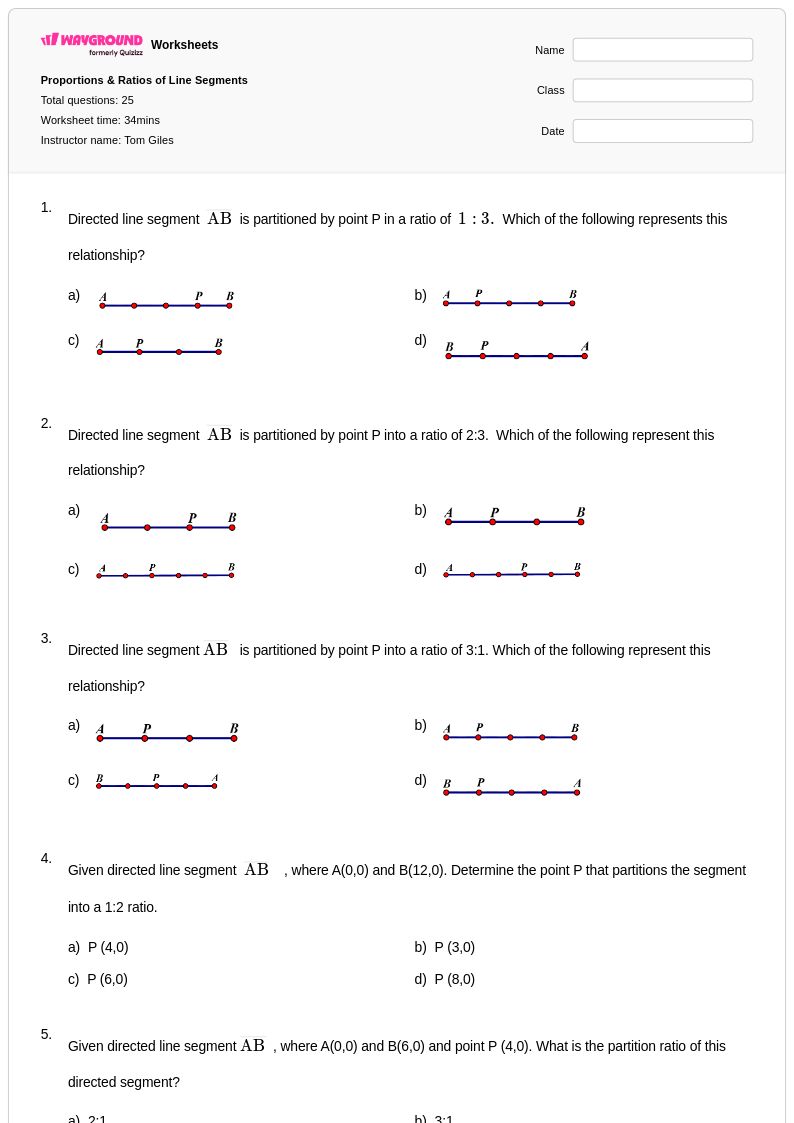
25 Q
10th
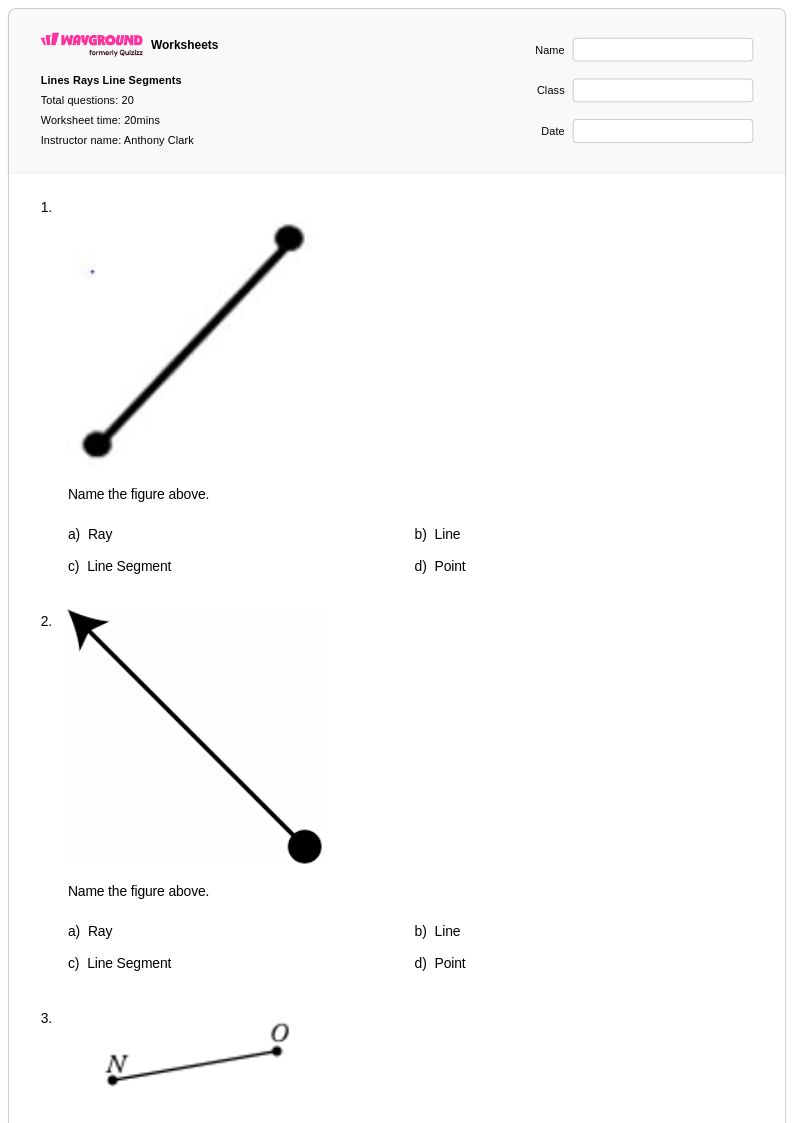
20 Q
4th - Uni
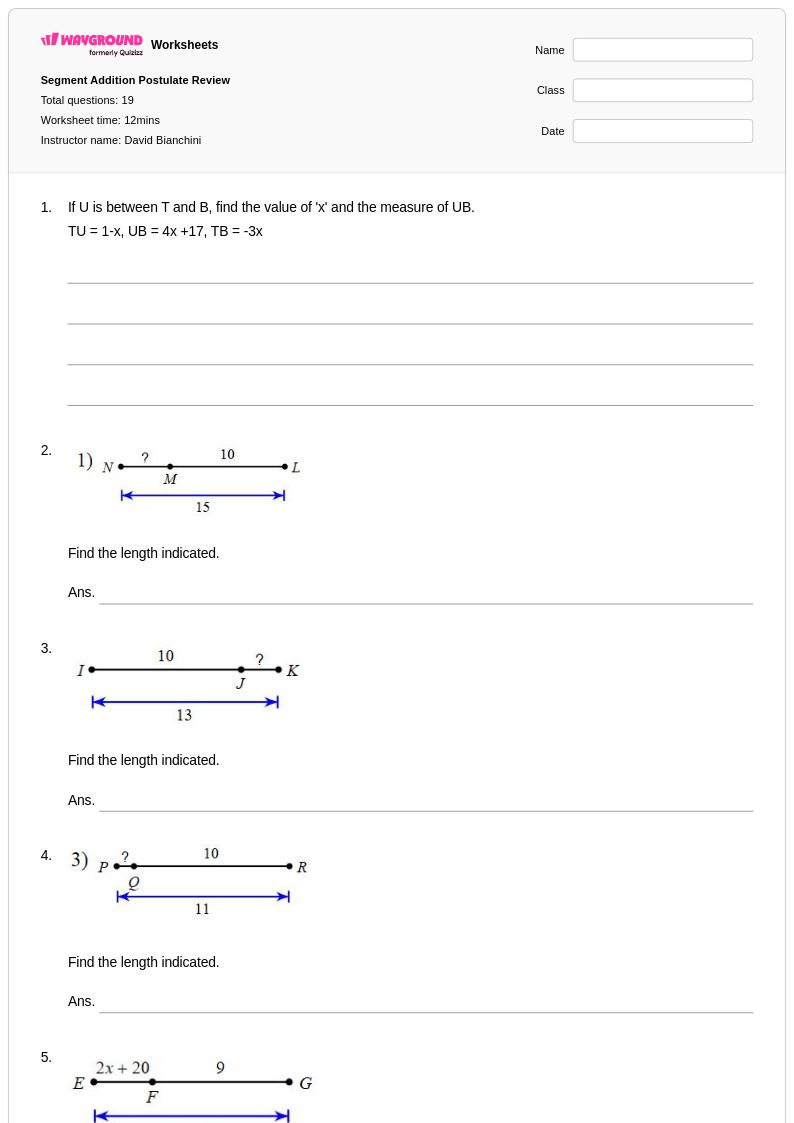
19 Q
10th
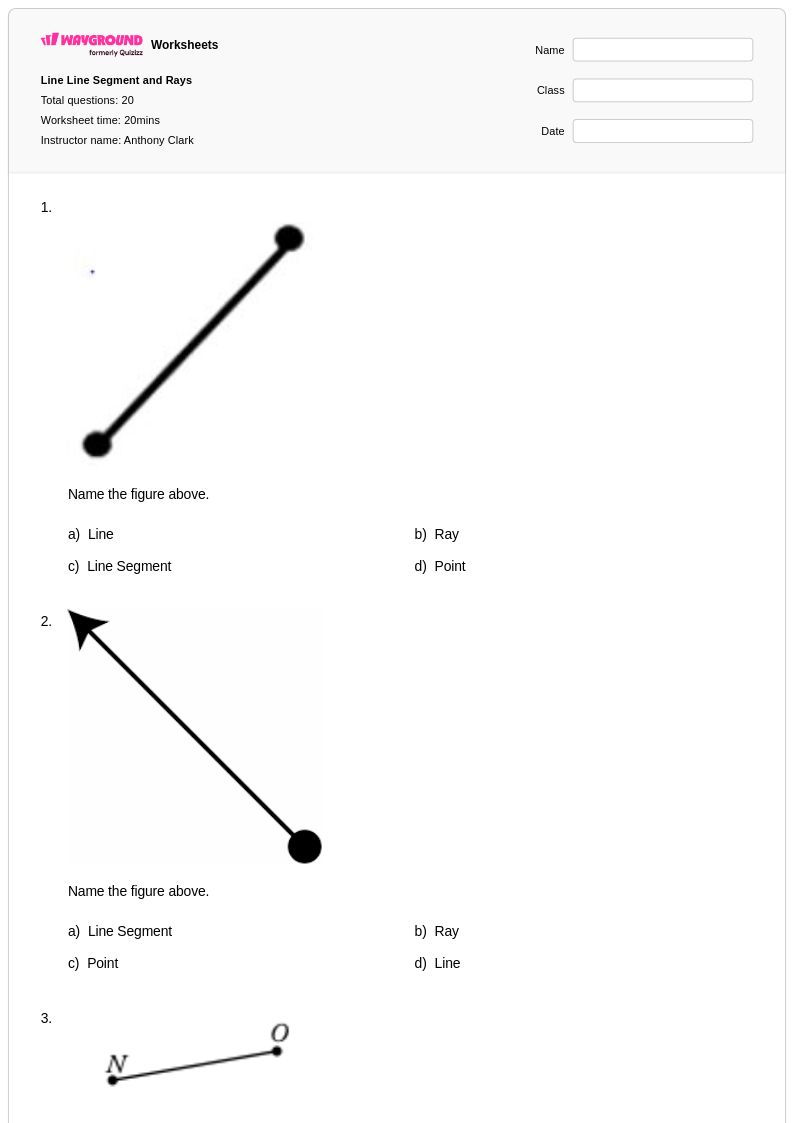
20 Q
4th - Uni
Explore Worksheets by Subjects
Explore printable Partitioning a Line Segment worksheets
Partitioning a line segment worksheets available through Wayground (formerly Quizizz) provide comprehensive practice for students learning to divide line segments into specific ratios and locate points along given segments. These expertly designed resources strengthen essential coordinate geometry skills, including applying the section formula, understanding directed distances, and calculating coordinates of points that divide segments internally and externally. Students develop proficiency in working with ratios, proportional reasoning, and algebraic manipulation while mastering both graphical and analytical approaches to segment division. Each worksheet collection includes detailed answer keys and step-by-step solutions, with free printable options and practice problems ranging from basic internal division to complex external partition scenarios that challenge students to apply multiple geometric concepts simultaneously.
Wayground (formerly Quizizz) supports mathematics educators with an extensive library of millions of teacher-created partitioning a line segment resources that streamline lesson planning and differentiated instruction. The platform's robust search and filtering capabilities allow teachers to quickly locate worksheets aligned with specific curriculum standards, difficulty levels, and learning objectives, while customization tools enable educators to modify existing materials or create original assessments tailored to their students' needs. These versatile resources are available in both printable PDF formats for traditional classroom use and interactive digital versions for online learning environments, making them invaluable for targeted skill practice, remediation sessions, and enrichment activities. Teachers can efficiently address diverse learning needs by selecting from foundational exercises that introduce the concept through visual representations to advanced applications involving coordinate geometry and algebraic problem-solving techniques.
FAQs
How can I introduce partitioning a line segment to my students?
What types of problems help students practice partitioning a line segment?
What are the most common student errors when partitioning a line segment?
How can I use this partitioning a line segment worksheet in my class?
How does partitioning a line segment fit into the high school geometry curriculum?
How can I differentiate this topic for diverse learners?