
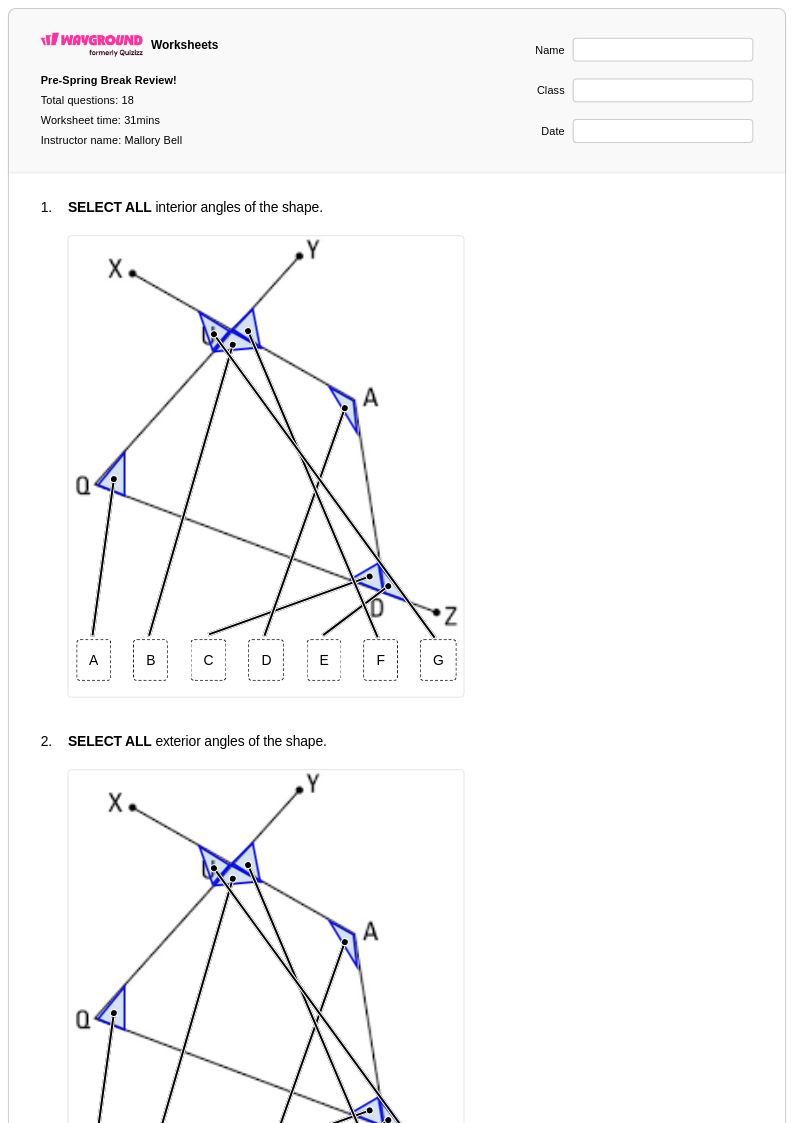
18 Q
9th - 12th
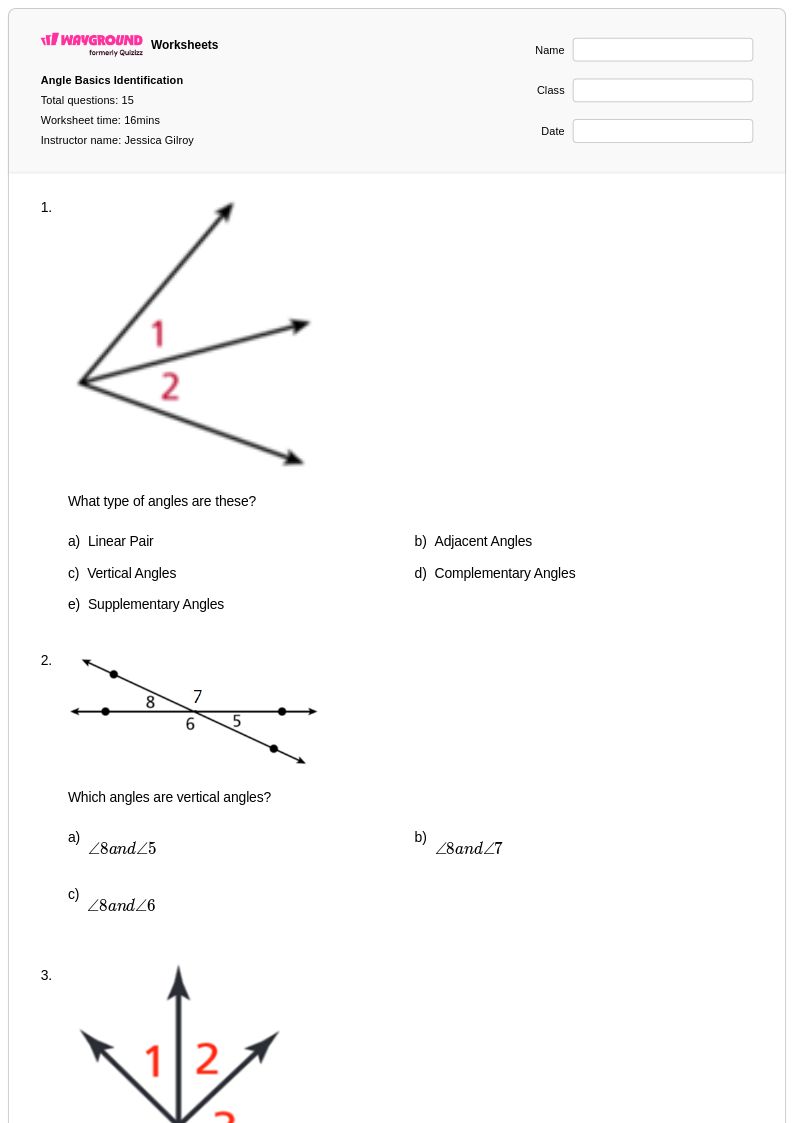
15 Q
9th
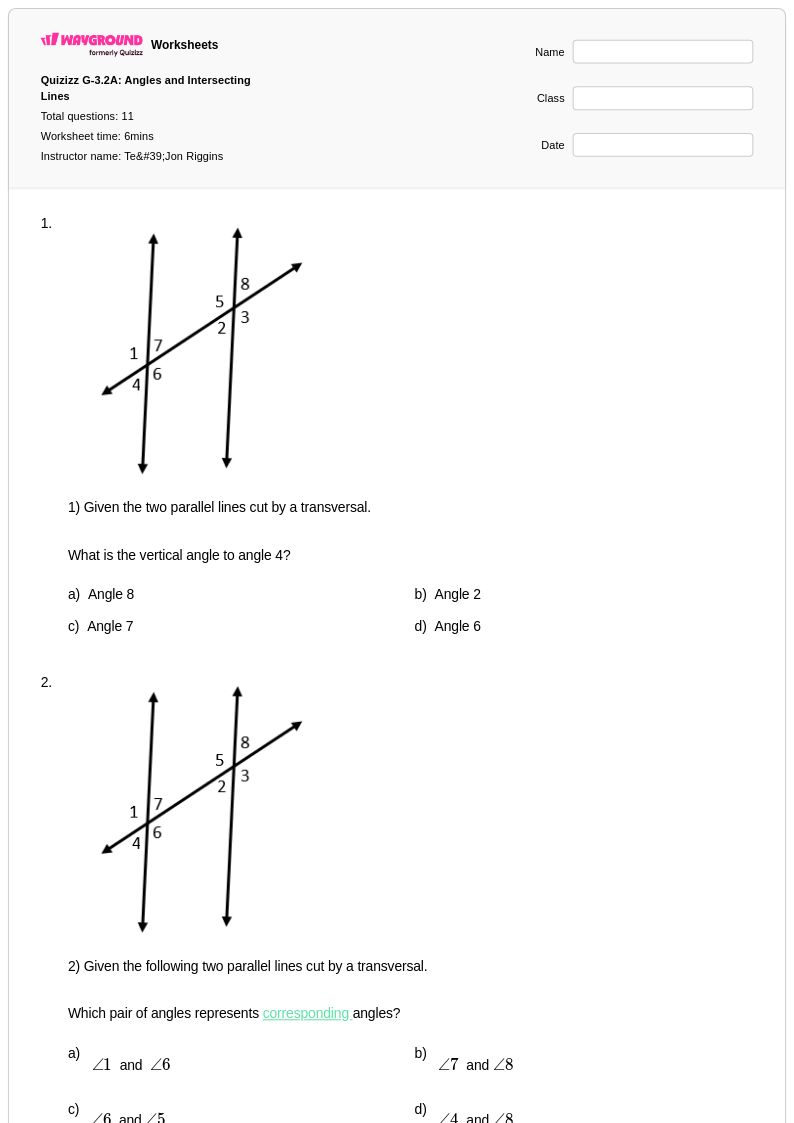
11 Q
9th
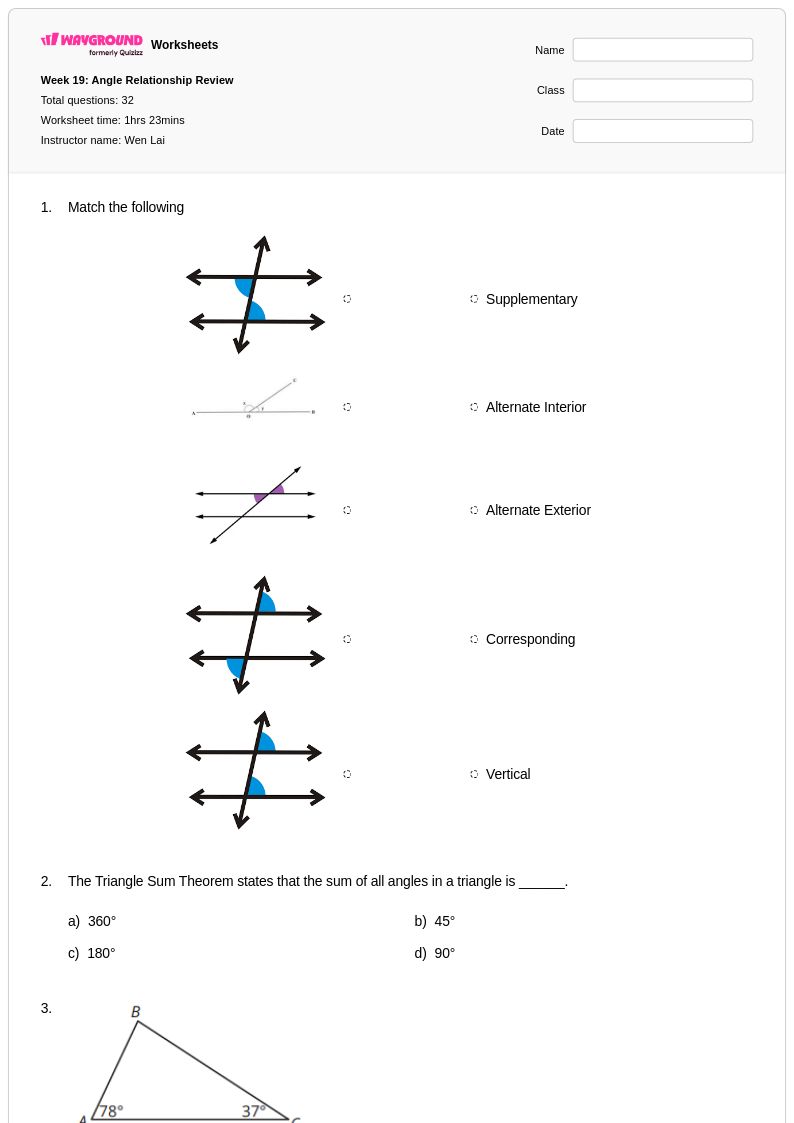
32 Q
8th
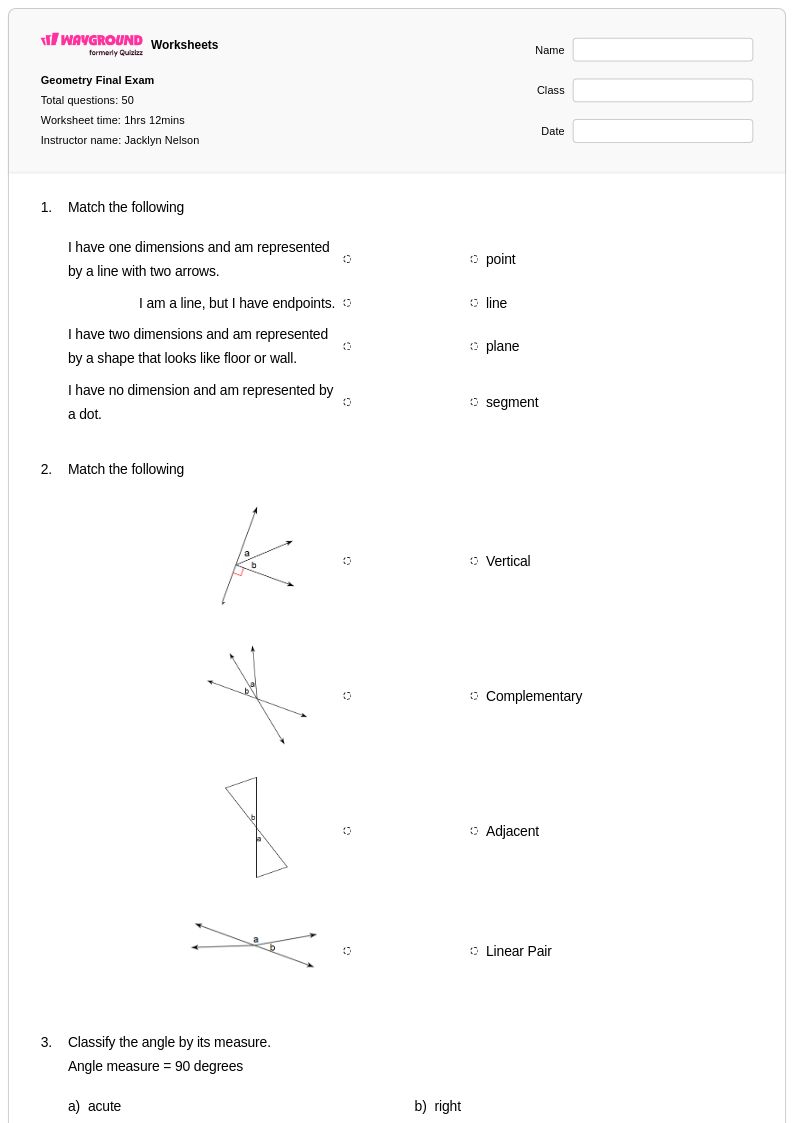
50 Q
10th
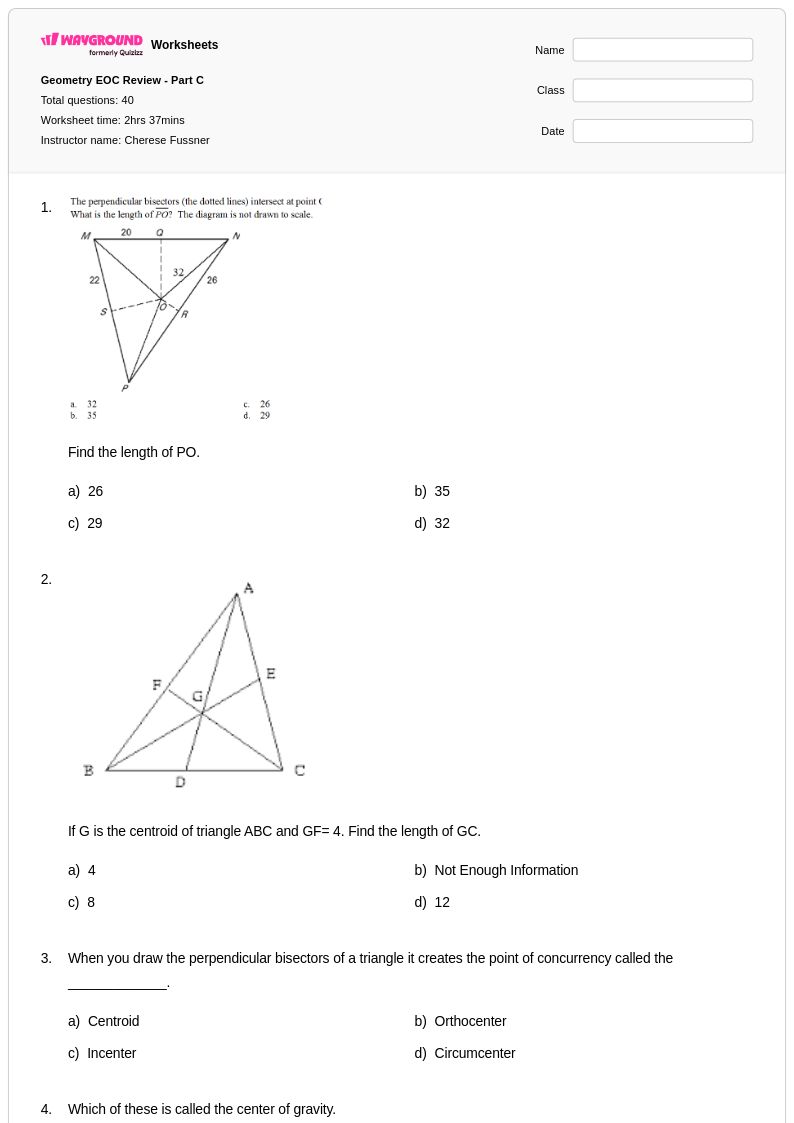
40 Q
9th - 12th
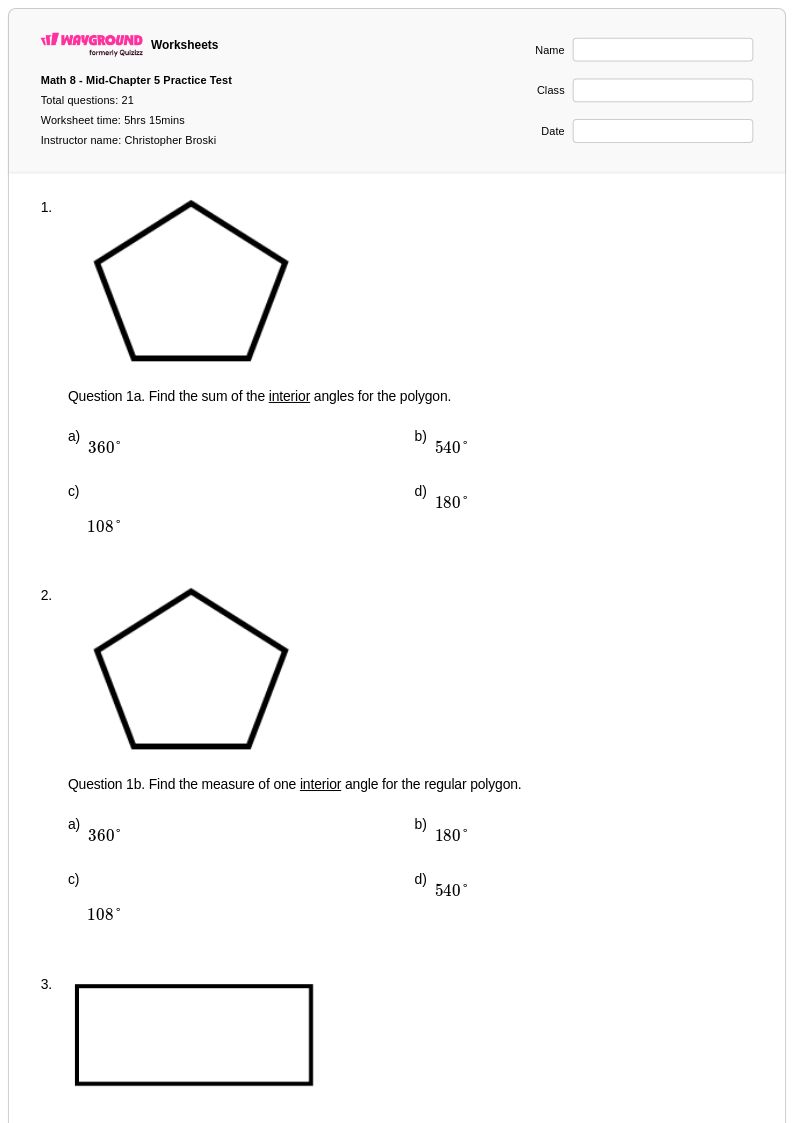
21 Q
8th
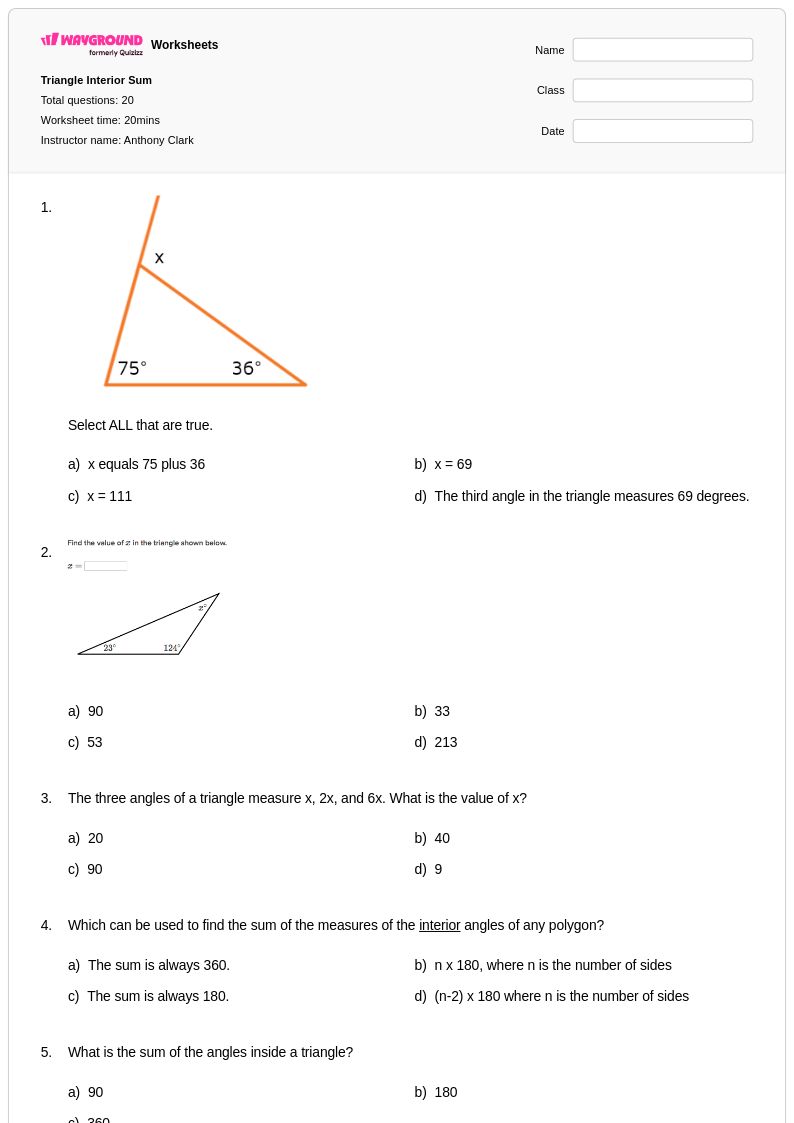
20 Q
8th - Uni
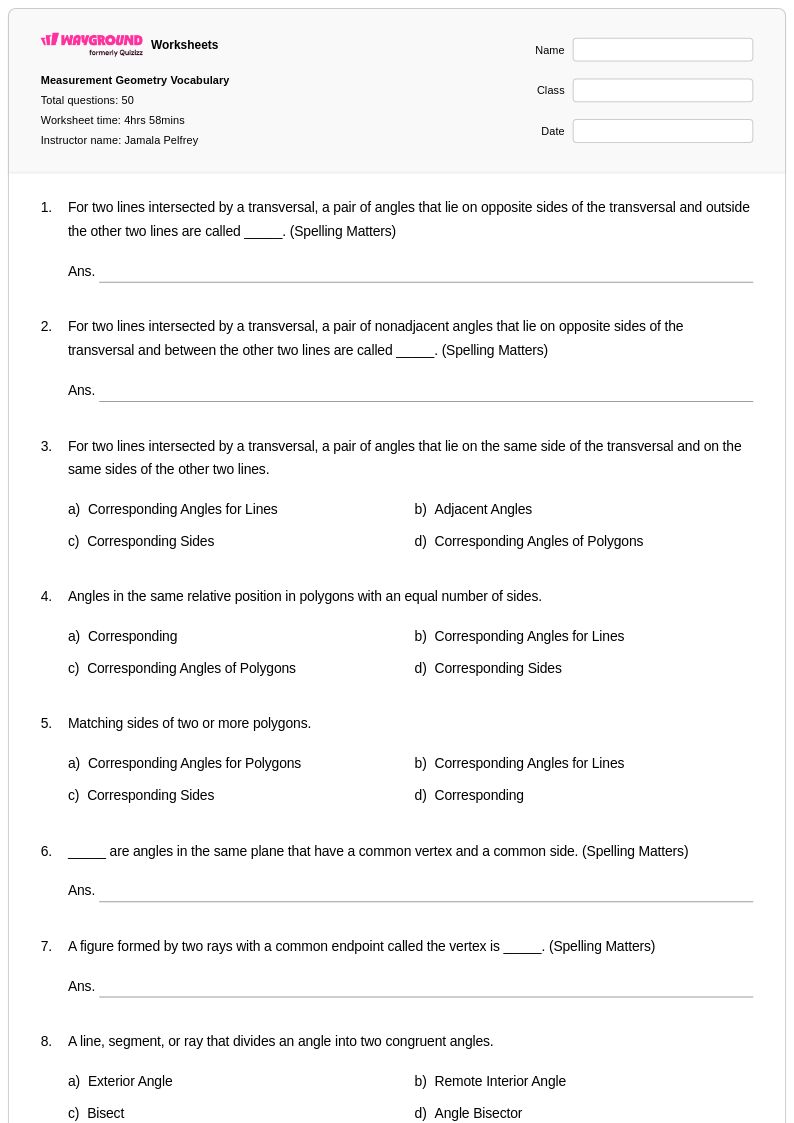
50 Q
8th - 9th
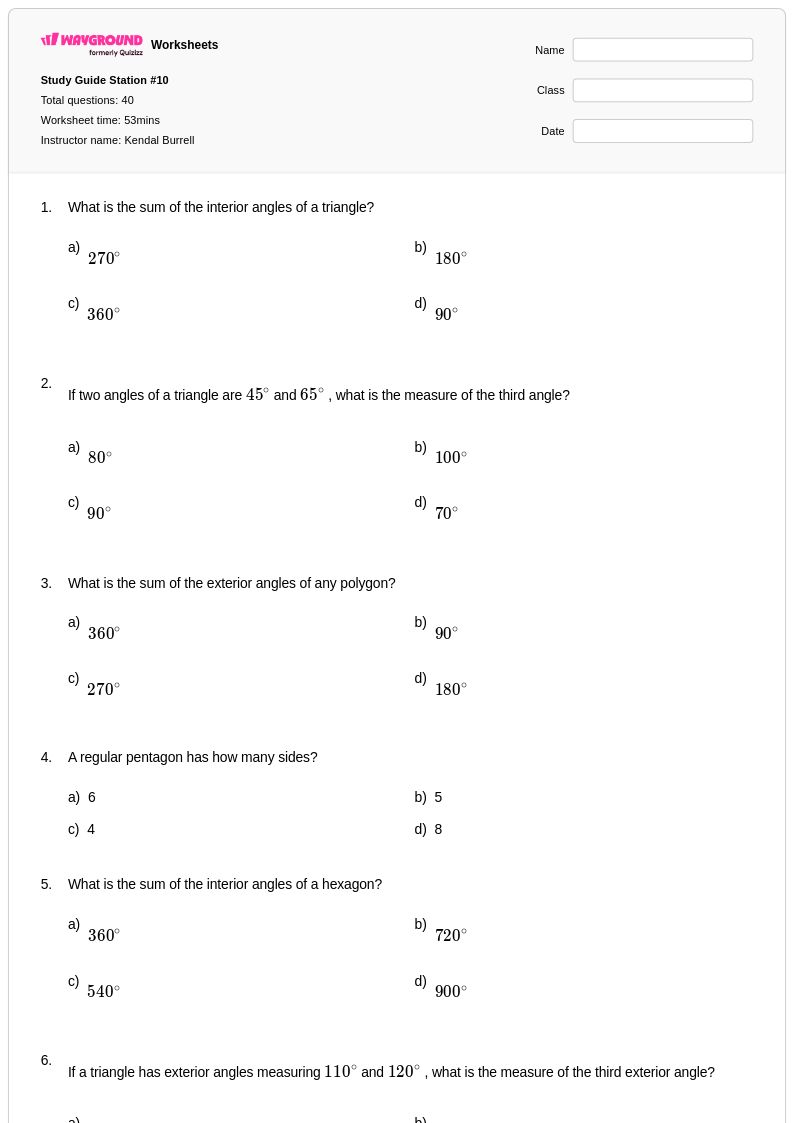
40 Q
9th
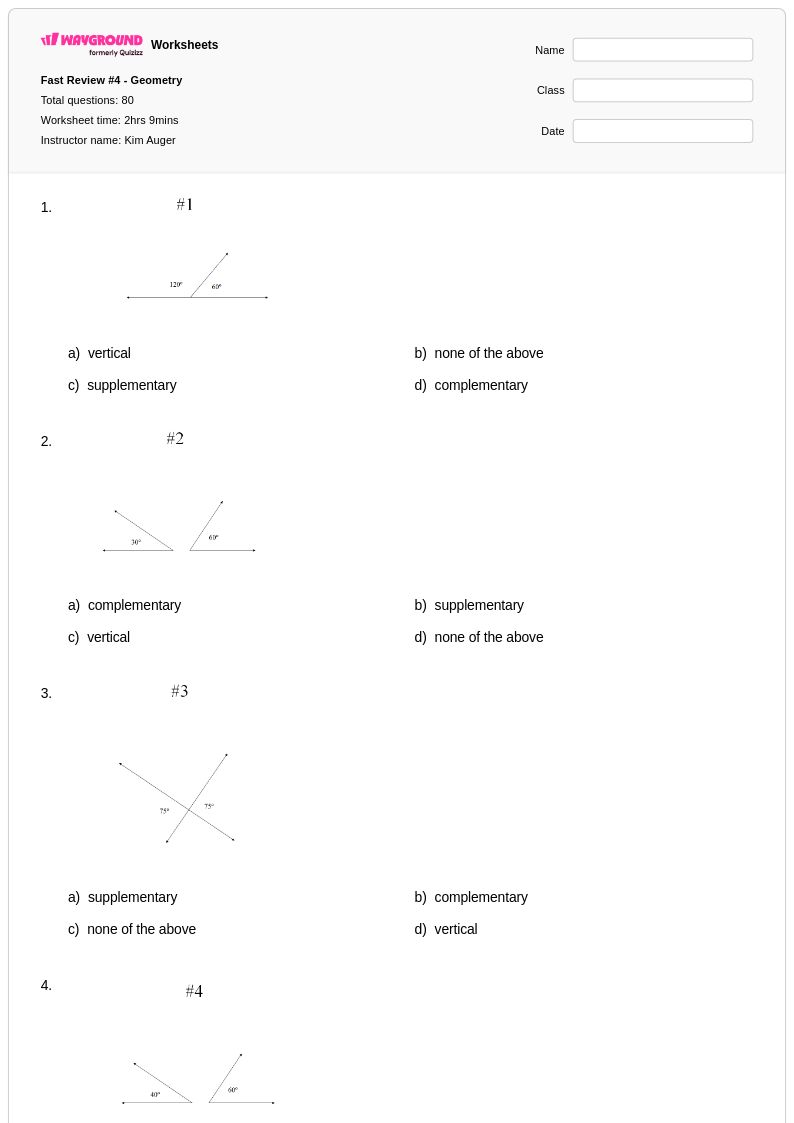
80 Q
8th
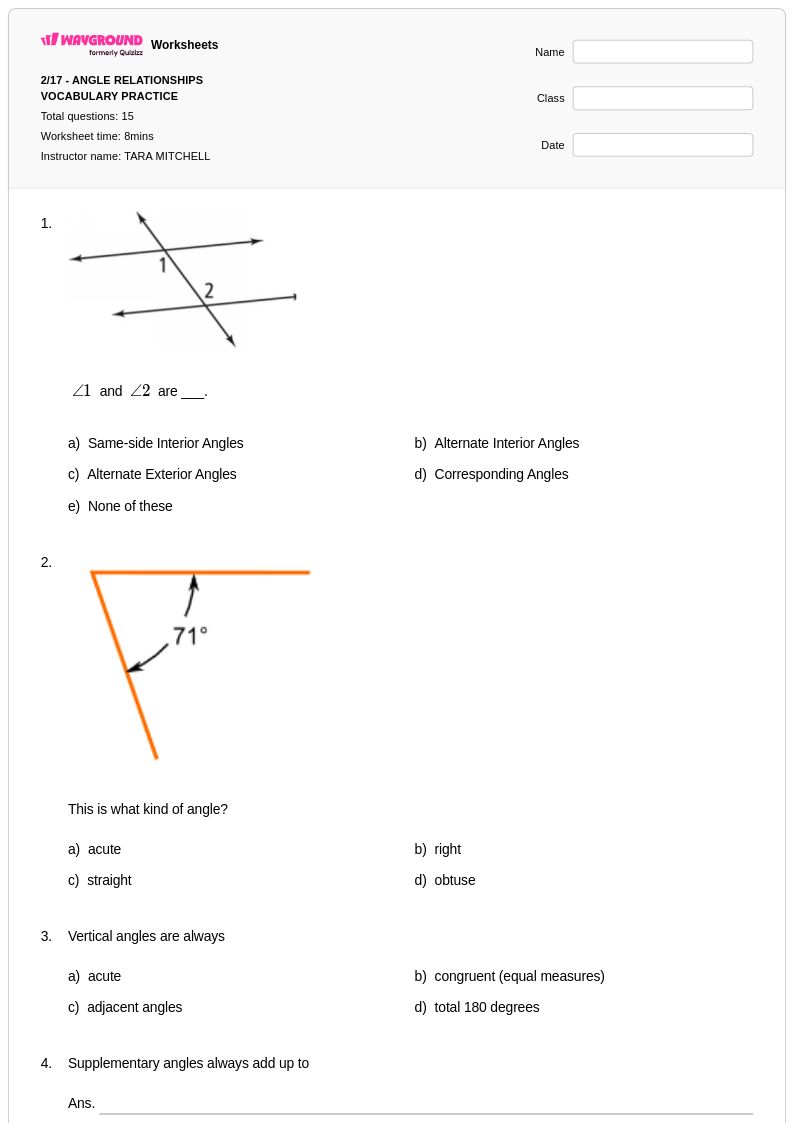
15 Q
8th
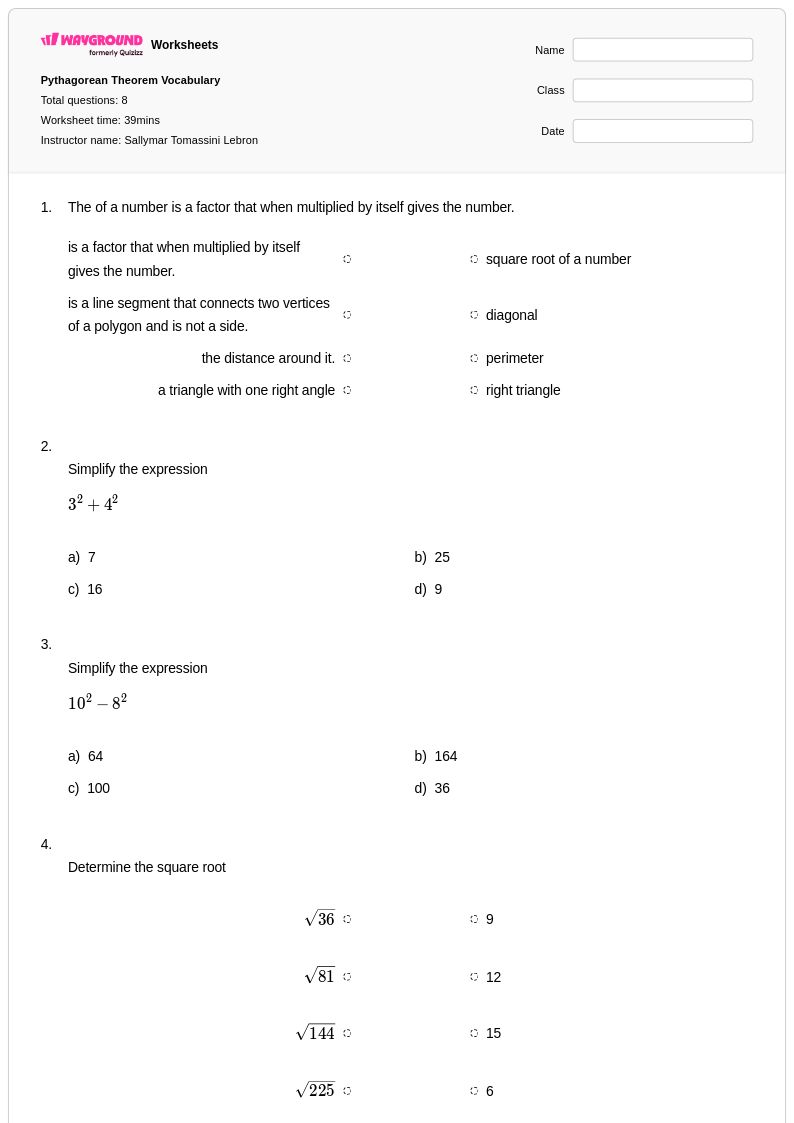
17 Q
8th
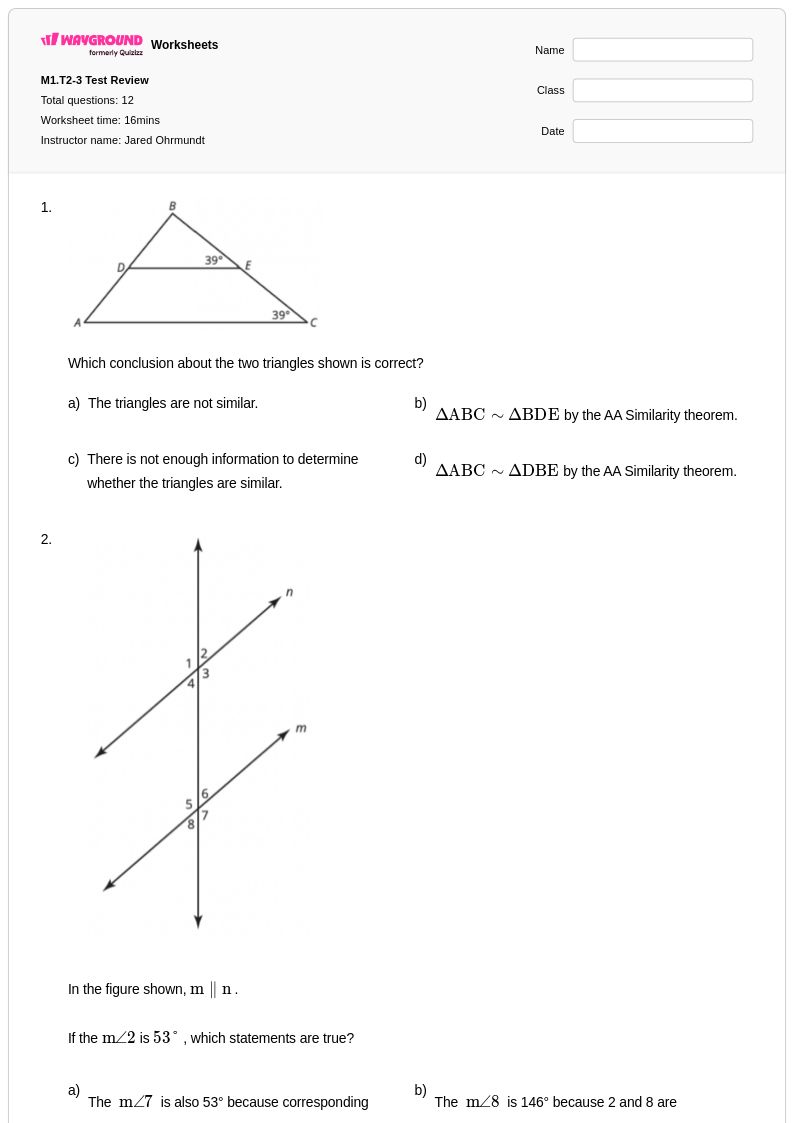
14 Q
8th
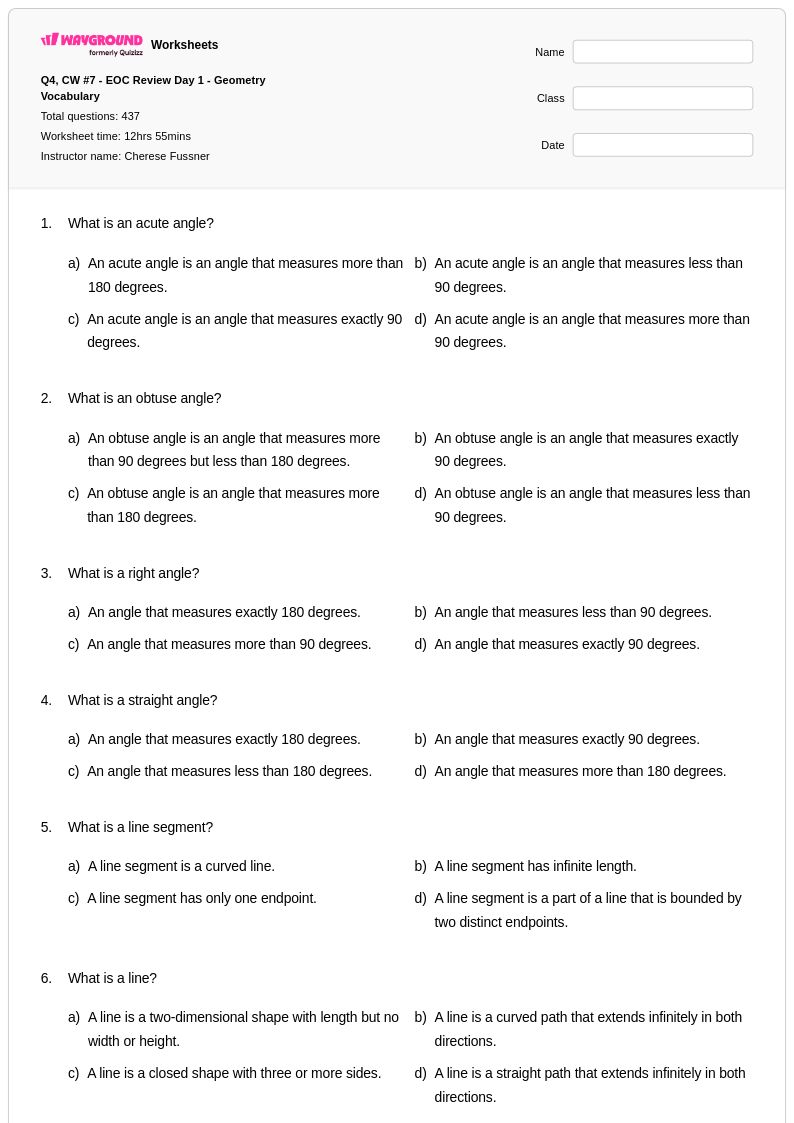
437 Q
9th - 12th
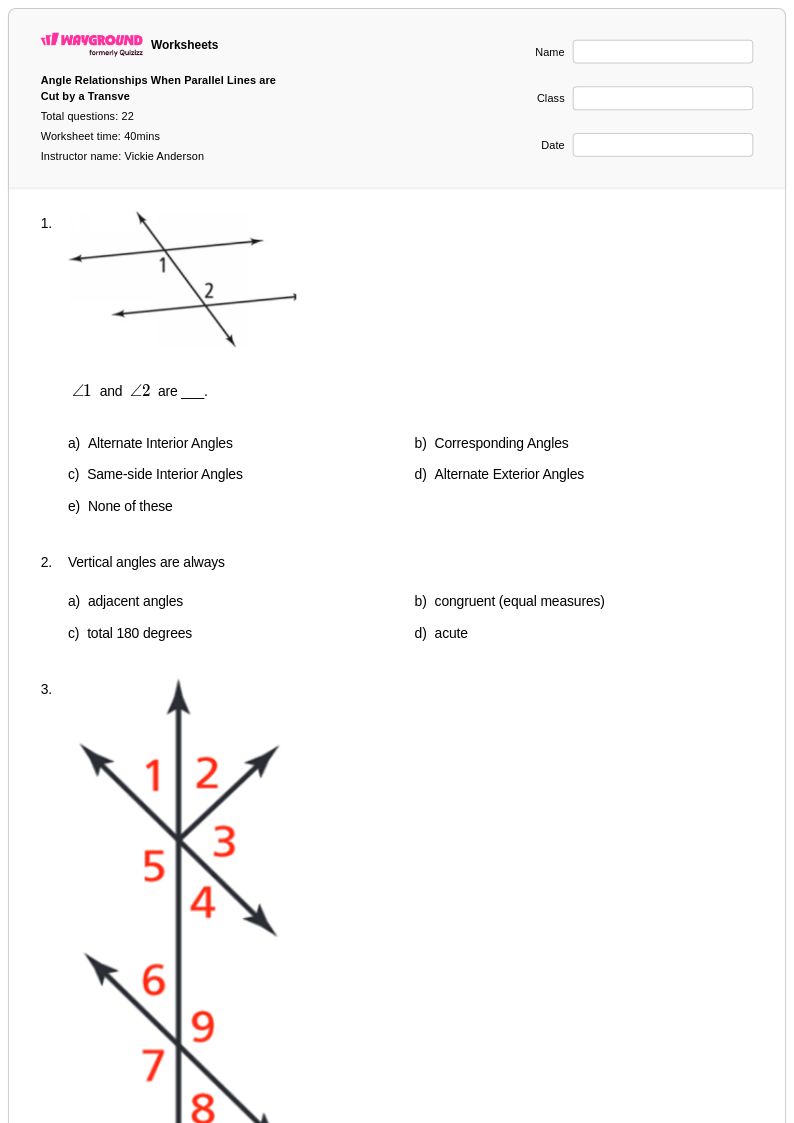
22 Q
8th
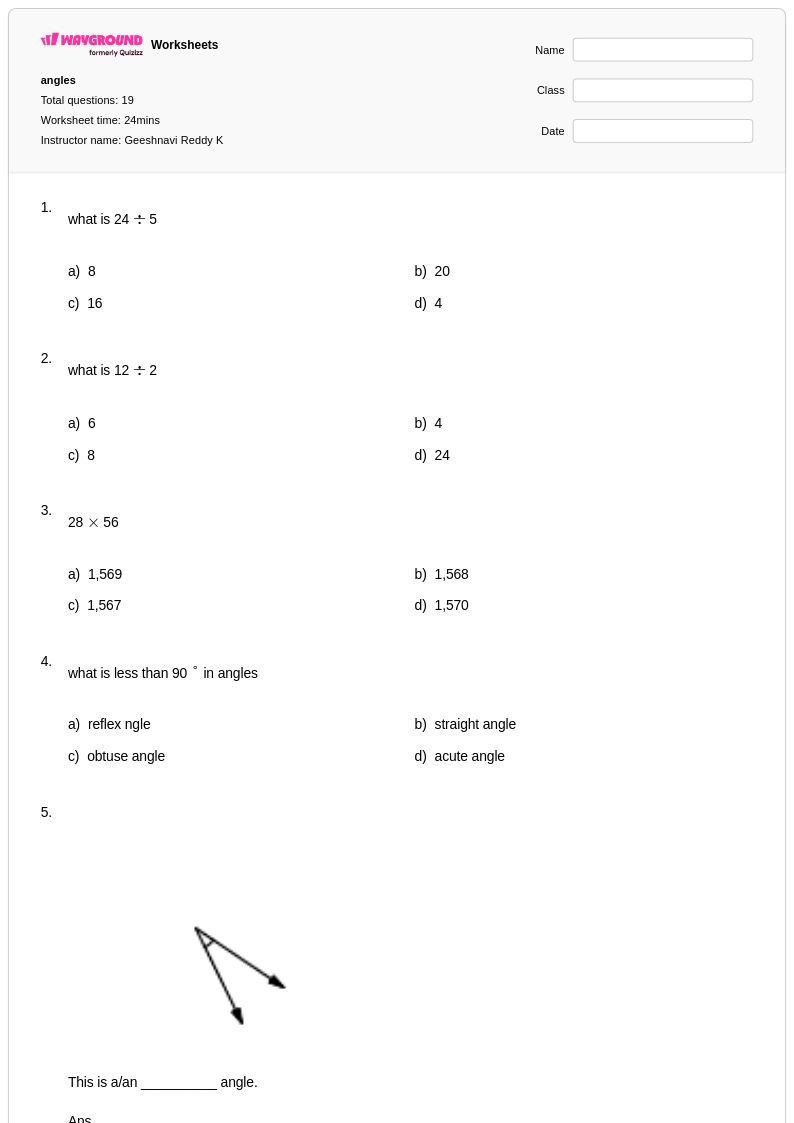
19 Q
4th
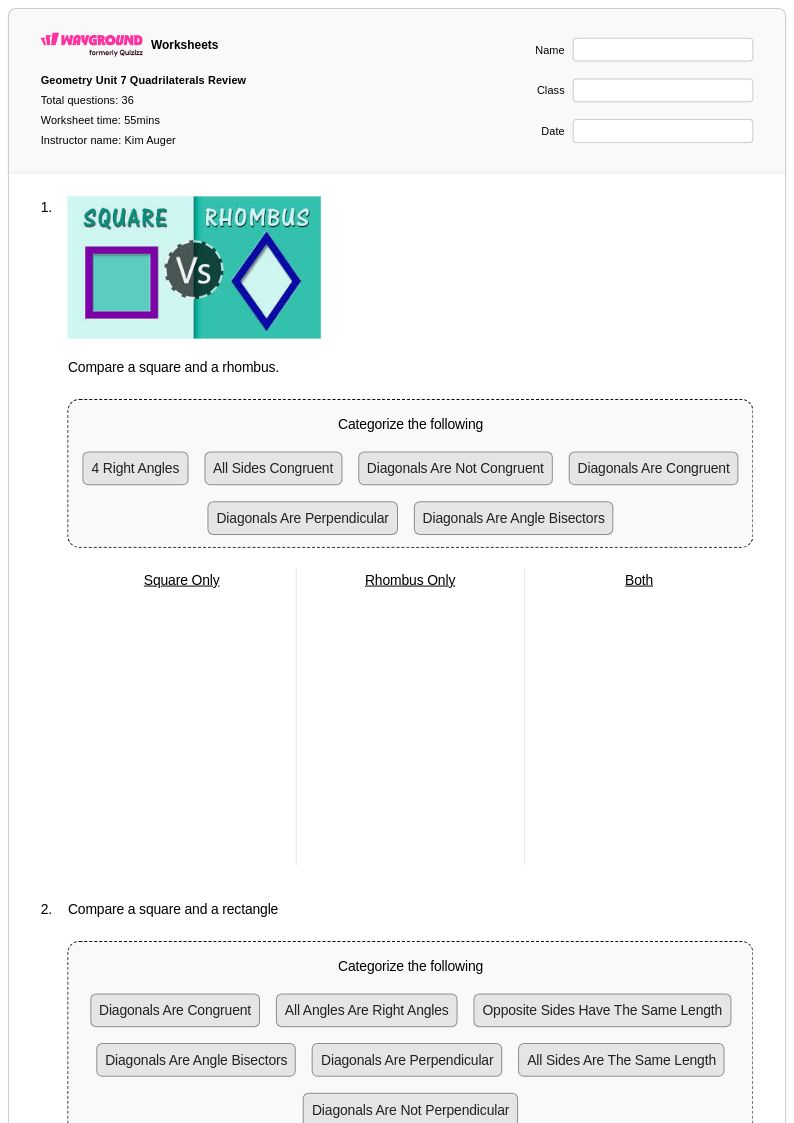
33 Q
8th - 10th
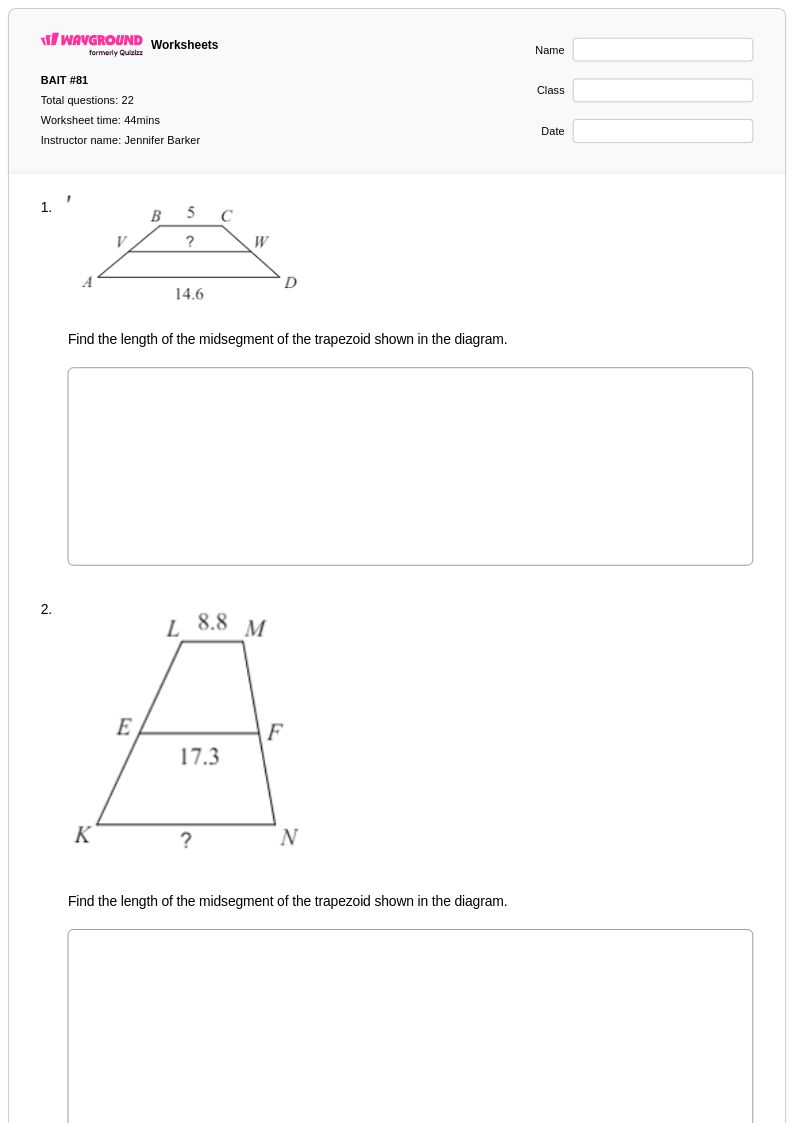
22 Q
9th
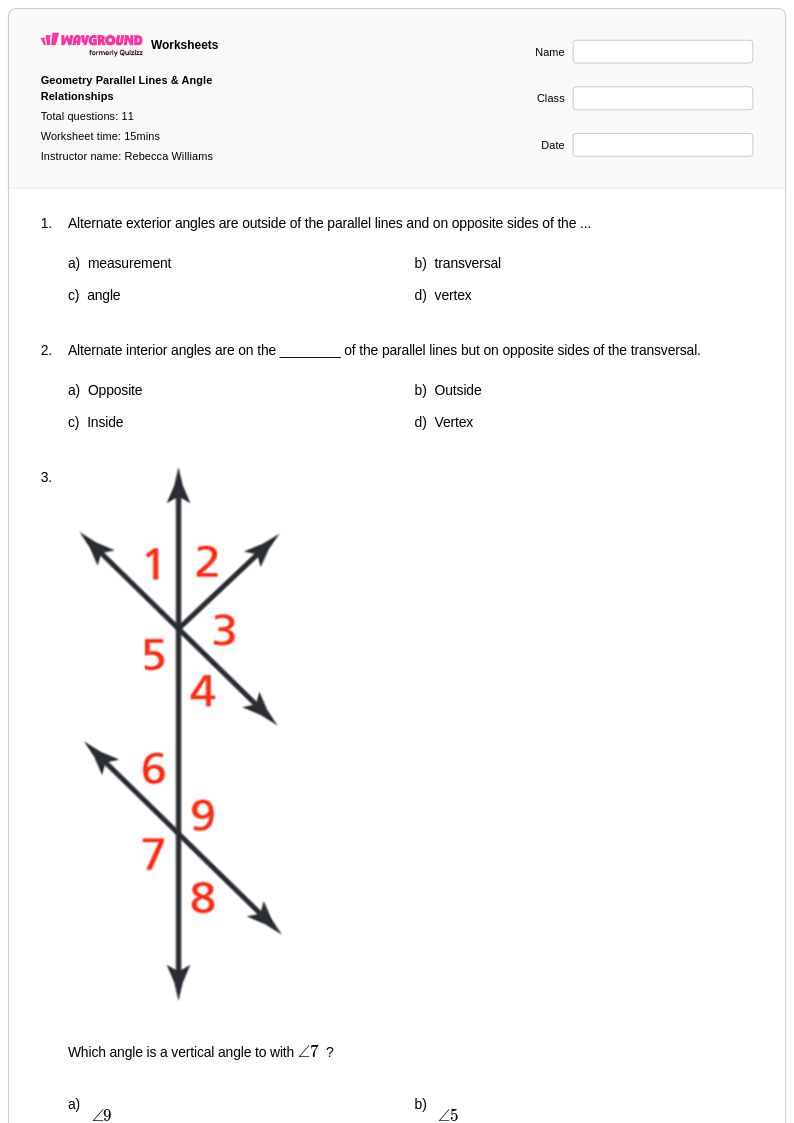
11 Q
9th - 10th
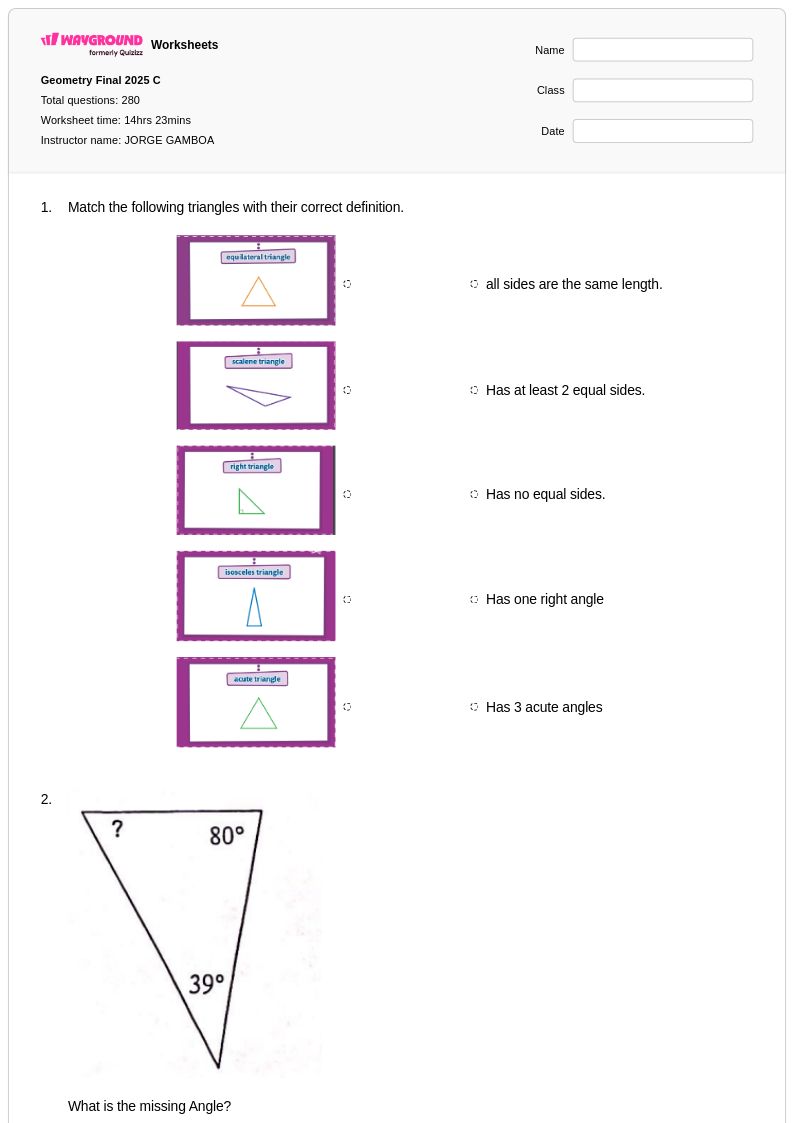
280 Q
9th - 12th
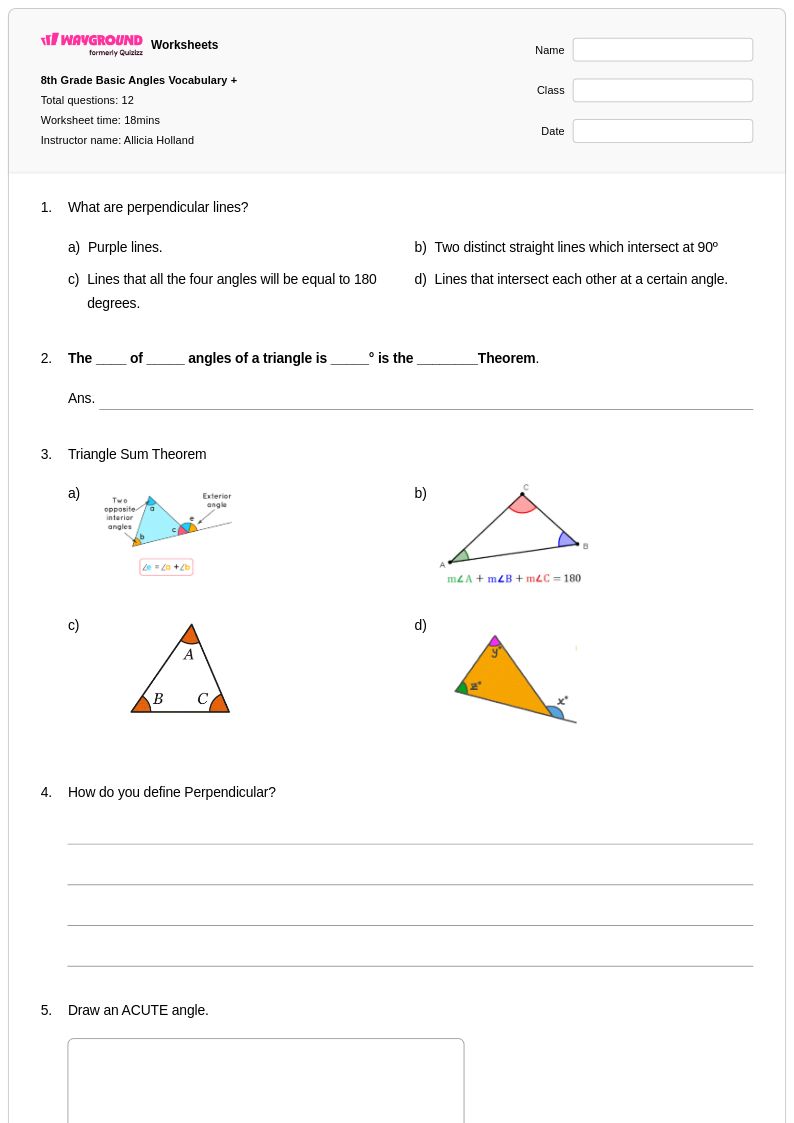
12 Q
8th
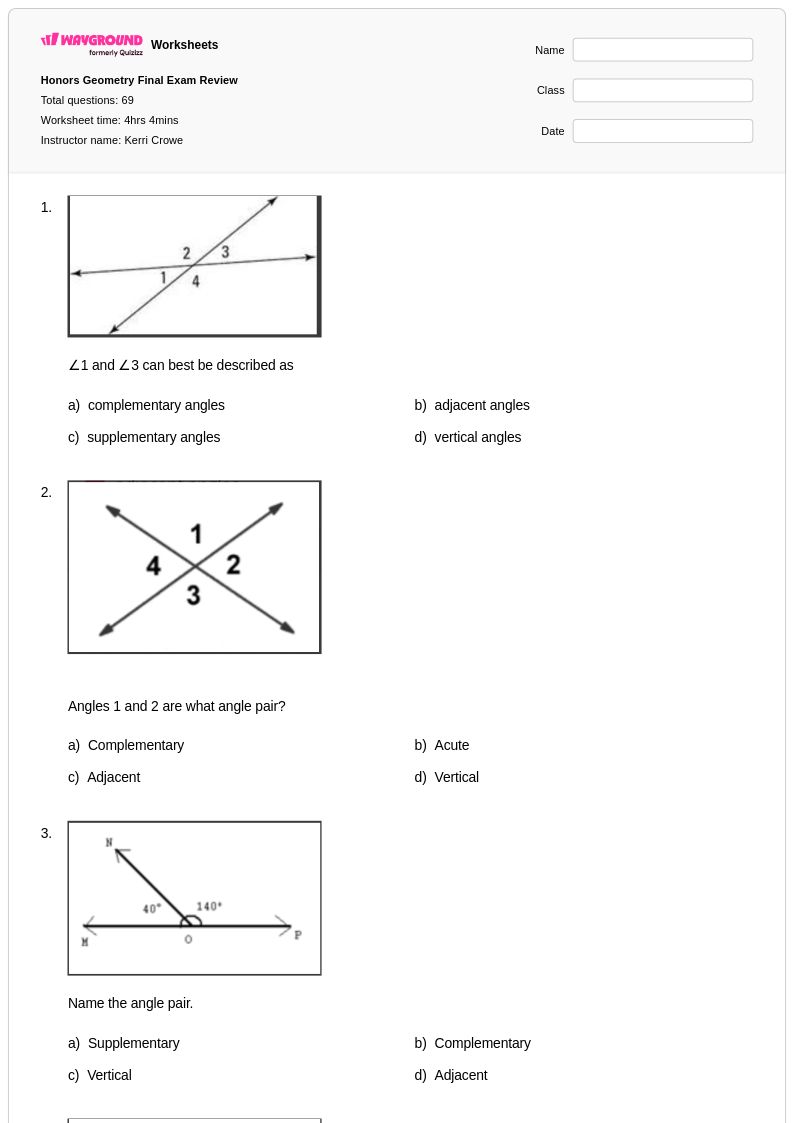
69 Q
10th
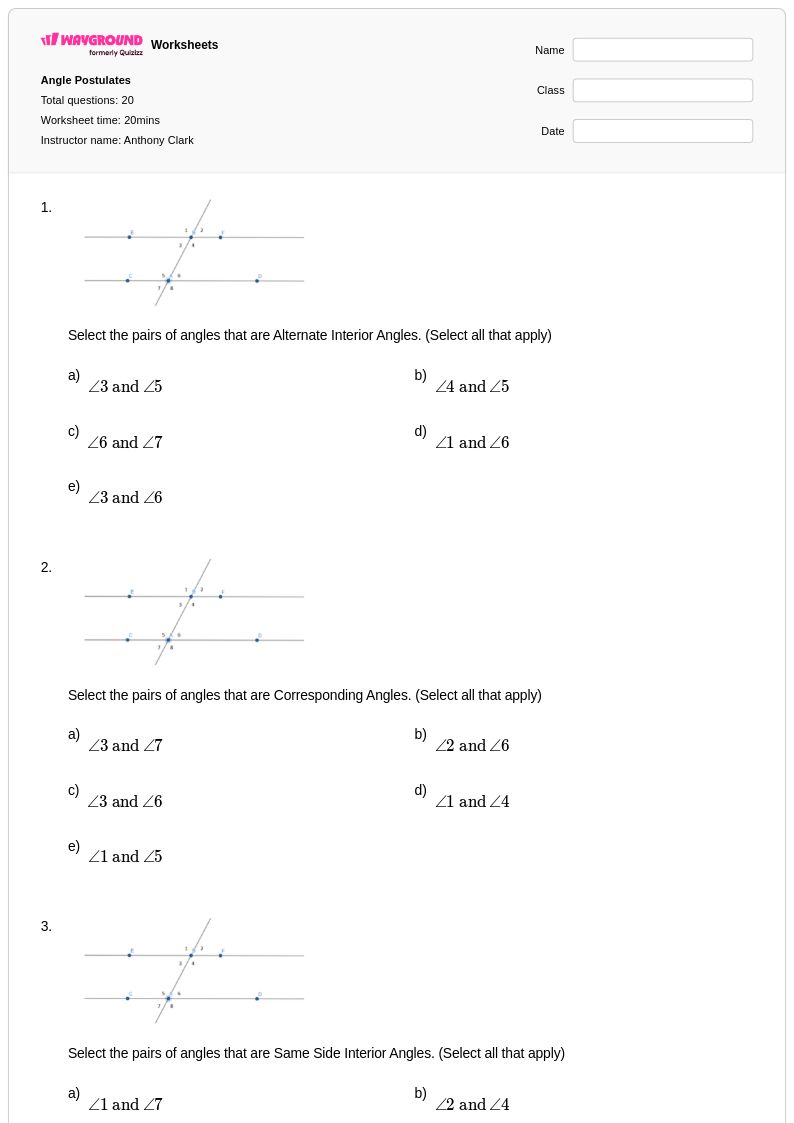
20 Q
10th - Uni
Explore Worksheets by Subjects
Explore printable Polygon Angle Sum Theorem worksheets
Polygon Angle Sum Theorem worksheets available through Wayground (formerly Quizizz) provide comprehensive practice opportunities for students to master this fundamental geometric principle. These carefully crafted resources help students develop critical skills in calculating interior angles of polygons using the formula (n-2) × 180°, where n represents the number of sides. The worksheets strengthen mathematical reasoning through diverse practice problems that range from basic polygon identification to complex multi-step calculations involving regular and irregular polygons. Students gain proficiency in applying the theorem to triangles, quadrilaterals, pentagons, hexagons, and higher-order polygons while building confidence through systematic practice. Each worksheet comes complete with detailed answer keys, making them ideal as free printables for classroom instruction, homework assignments, or independent study sessions.
Wayground (formerly Quizizz) empowers educators with an extensive collection of millions of teacher-created Polygon Angle Sum Theorem resources that streamline lesson planning and enhance mathematical instruction. The platform's robust search and filtering capabilities allow teachers to quickly locate worksheets aligned with specific curriculum standards and learning objectives. Advanced differentiation tools enable seamless customization of practice problems to meet diverse student needs, from remediation support for struggling learners to enrichment activities for advanced students. Teachers can access these resources in both printable pdf formats for traditional classroom use and digital formats for interactive online learning environments. This flexibility supports comprehensive skill practice across multiple learning modalities while providing educators with the tools necessary to reinforce geometric concepts through targeted, standards-aligned instruction that builds computational fluency and conceptual understanding.
FAQs
How do I teach the Polygon Angle Sum Theorem?
What types of problems help students practice the Polygon Angle Sum Theorem?
What are common student mistakes when applying the Polygon Angle Sum Theorem?
How can I use this Polygon Angle Sum Theorem worksheet with my class?
How does this topic fit into the middle school math curriculum?
How can I differentiate this worksheet for diverse learners?